Skip to Content

Advancing Open Science

A global leader in open access publishing, supporting research communities and accelerating scientific discovery

  • 7.5 billion
    Article Views
  • 4.5 million
    Total Authors
  • 97%
    Web of Science Coverage

News & Announcements

Journals

Most Recent Articles

    • Article
    • Open Access

    Recommender systems are widely used in e-commerce to alleviate information overload, yet the nonlinear decision mechanisms of neural recommenders make it difficult to verify whether an identified feature is genuinely responsible for a recommendation. To address this problem, this study proposes a counterfactual-empowered causal analysis and trustworthiness verification framework that operates on interpretable semantic attributes extracted from review text. DeepSeek is used as a constrained semantic annotator to extract aspect–opinion–sentiment triplets from Amazon Cell Phones and Accessories reviews, thereby constructing an explicit semantic intervention space. A symmetric multilayer perceptron (MLP) is trained as the recommendation predictor and is kept fixed during verification; the verifier assumes gradient access with respect to the semantic input representation but does not update the predictor parameters. Three mechanisms are introduced to improve counterfactual verification: (1) AdamW optimization with cosine-annealing scheduling for stable continuous perturbation search; (2) a gradient-guided greedy strategy that maps continuous perturbations to discrete human-understandable semantic attributes; and (3) Elastic Net regularization that jointly constrains explanation sparsity and perturbation magnitude. Experiments on the processed Amazon Cell Phones and Accessories dataset show that the proposed components improve Precision, Probability of Necessity (PN), Probability of Sufficiency (PS), and Feature Necessity Score (FNS) relative to the evaluated optimization and ablation variants. These results indicate that semantic counterfactual intervention provides a practical post-hoc mechanism for assessing whether recommendation rationales are causally effective rather than merely correlated with model outputs.

    Symmetry

    23 September 2026

    • Article
    • Open Access

    Background: Multidrug-resistant Klebsiella pneumoniae (MDR-KP) is a global health threat with limited treatment options. Comparative in vitro data for imipenem-relebactam (I/R) and ceftolozane-tazobactam (C/T) across diverse MDR-KP clinical populations remain limited. Methods: Susceptibility to I/R and C/T was determined by Etest. Whole-genome sequencing was used to identify sequence types, resistance genes, and virulence genes, with hypervirulent K. pneumoniae (hvKP) defined by genomic criteria. Results: A total of 312 nonduplicate MDR-KP clinical isolates, including 70.8% carbapenem-resistant K. pneumoniae (CR-KP), 56.7% difficult-to-treat resistant K. pneumoniae (DTR-KP), and 28.2% carbapenem-resistant hvKP (CR-hvKP), were retrospectively analyzed. I/R resistance was low across all subgroups (overall 3.8%, CR-KP 5.0%, DTR-KP 6.2%, CR-hvKP 2.3%) and across specimen types (0–9.6%; blood 3.8%). In contrast, C/T resistance was higher (overall 57.7%, CR-KP 79.2%, DTR-KP 91.0%, CR-hvKP 84.1%), with the highest rate in respiratory isolates (63.0%), followed by blood (57.7%) and urine (50.0%). Among extended-spectrum β-lactamase (ESBL)-producing isolates, I/R and C/T resistance rates were 2.1% and 12.4%, respectively. Although C/T resistance was higher in hvKP than in classic K. pneumoniae in unadjusted analysis, hvKP was not independently associated with increased C/T resistance after adjustment. Instead, ST11, ST15, ST307, blaKPC-2, and blaNDM-1 were independently associated with C/T resistance. For I/R, blaNDM-1 was associated with resistance. Conclusions: I/R was active across MDR-KP subgroups including CR-hvKP and DTR-KP. C/T worked mainly against ESBL-producers. These findings highlight the importance of resistance genotyping when interpreting susceptibility to these agents.

    Antibiotics

    23 September 2026

    • Article
    • Open Access

    Background/Objectives: Establishing drowning as the cause of death remains one of the most challenging tasks in forensic pathology, particularly when classical autopsy findings are absent, nonspecific, or compromised by decomposition. Molecular biomarkers may provide objective adjunctive evidence in such cases. This study investigated the diagnostic utility of Aquaporin-5 (AQP5) and Surfactant Protein A2 (SP-A2) measured in renal tissue as potential biomarkers of freshwater drowning and evaluated the influence of different freshwater environments on their expression. Methods: A controlled experimental study was performed using 29 adult Wistar rats allocated to freshwater drowning groups (Boračko Lake, n = 11; Jablaničko Lake, n = 11) and non-drowning control groups subjected to mechanical asphyxia followed by one hour of postmortem immersion (n = 7). Kidney tissues were collected within a maximum of 5 min after death and analyzed for AQP5 and SP-A2 concentrations using enzyme-linked immunosorbent assay (ELISA). Group differences were evaluated using Kruskal–Wallis and Dunn’s post hoc tests, while effect sizes were estimated using Cliff’s delta. Receiver operating characteristic (ROC) curve analysis was performed to assess the diagnostic performance of each biomarker in distinguishing drowning from non-drowning deaths. Results: AQP5 concentrations differed significantly among groups (χ2 = 16.05, p = 0.00033), with large effect sizes observed in all pairwise comparisons. However, diagnostic performance was poor, as ROC analysis demonstrated no significant discrimination between drowning and non-drowning cases (AUC = 0.534, 95% CI: 0.314–0.754; p = 0.762). In contrast, SP-A2 showed significant intergroup differences (χ2 = 6.69, p = 0.035) and moderate diagnostic accuracy for drowning identification (AUC = 0.752, 95% CI: 0.567–0.937; p = 0.008), with a sensitivity of 77.2% and specificity of 81.8% at the optimal threshold. Notably, AQP5 expression appeared suggestive of environmental modulation, whereas SP-A2 demonstrated greater relevance to the drowning process itself. Conclusions: Renal SP-A2 showed moderate diagnostic utility as a supportive biomarker for drowning, whereas AQP5 lacked sufficient discriminatory power for cause-of-death determination. The marked variability of AQP5 across freshwater environments suggests that it reflects environmental modulation rather than drowning-specific biological responses. Although neither marker is suitable as a standalone diagnostic tool, renal SP-A2 may represent a useful adjunct in forensic drowning investigations, particularly when pulmonary tissue is unavailable or unsuitable for analysis. These findings should be considered preliminary and applicable only to freshwater drowning conditions, as saltwater drowning was not investigated in the present study. Further validation in human forensic casework and larger experimental cohorts is warranted.

    Diagnostics

    23 September 2026

    • Article
    • Open Access

    Rosemary (Rosmarinus officinalis L., syn. Salvia rosmarinus Spenn., Lamiaceae) is a Mediterranean perennial herb with high tolerance to environmental stress, but its long-term response to combined drought and salinity and the potential of biostimulants to modulate acclimation remain insufficiently understood. This study evaluated the effects of chronic drought and salinity, applied individually or in combination, on rosemary growth, water status, ion homeostasis, physiological stability, and essential oil composition, and assessed the mitigating effects of foliar nano-chitosan and seaweed extract. The experiment was conducted under arid Mediterranean conditions over two consecutive years (2024–2025) with four harvests, using a split–split–plot randomized complete block design with three irrigation levels, three salinity levels, and three biostimulant treatments. Drought, salinity, and their interaction significantly affected all evaluated traits. Severe combined stress reduced dry weight by 33.3%, while overall physiological performance remained relatively stable. Under severe combined stress, B2 treatment increased relative water content and the K+/Na+ ratio by 14.9% and 66.7%, respectively, and reduced Na+ accumulation by 17.9%. B2 showed a consistently higher Biostimulant Efficiency Index than B1, indicating a greater response to the higher-concentration combined formulation. Moderate drought with B2 increased essential oil contents of camphor, a-pinene, and 1,8-cineole. Overall, rosemary maintained relatively stable physiological performance despite significant stress-induced changes in individual traits, indicating a degree of physiological resilience to chronic combined stress while the nano-chitosan–seaweed formulation was associated with improved water relations and ionic balance under severe combined stress, although these changes did not translate into biomass recovery.

    Plants

    23 September 2026

    • Article
    • Open Access

    Scleranthus perennis L.: Towards Comprehensive Metabolite Profiling, Antioxidant and Enzyme Inhibitory Activity

    • Reneta Gevrenova,
    • Inci Kurt-Celep and
    • Dimitrina Zheleva-Dimitrova
    • + 1 author

    Scleranthus perennis L. is an Eurasian species from Caryophyllaceae family, Sclerantheae tribe. The work aimed at investigating the profiling of secondary metabolites in S. perennis aerial parts by means of ultra-high-performance liquid chromatography–high-resolution mass spectrometry (UHPLC–HRMS). The profile was delineated by phenolic compounds with a γ-pyrone core, including 49 C-glycosyl flavones O-glycosylated on the sugar of the C-glycosylation and their acetyl, galloyl, and methoxycinnamoyl esters alongside di-C-flavone glycosides. For the first time, a variety of maltol-glycosides was annotated together with phenolic acids and their glycosides. The total phenolic and flavonoid contents were 27.7 ± 0.4 mg gallic acid equivalents/g dry extract (de) and 31.6 ± 0.1 mg rutin equivalents/g de. Moderate ABTS radical scavenging activity (IC50: 1.21 mg/mL) and reducing power in CUPRAC (EC50: 1.40 mg/mL) and FRAP (EC50: 0.61mg/mL) assays were observed. Pronounced inhibitory activity towards α-glucoside (IC50: 1.03 mg/mL) and acetylcholinesterase (IC50: 1.45 mg/mL) was established. Our results are a prerequisite for further phytopharmacological and chemophenetic studies.

    Plants

    23 September 2026

    • Review
    • Open Access

    Hyperspectral imaging (HSI) combines spatial and spectral information and has been widely investigated for nondestructive sensing in agriculture and food. This review examines HSI applications in crop growth monitoring, abiotic and biotic stress detection, soil assessment, and postharvest quality and safety inspection. Particular attention is given to how acquisition configuration, spectral preprocessing, feature extraction, and machine- or deep-learning models affect performance across laboratory, field, and production-line settings. Recent studies show that red-edge and shortwave-infrared features are useful for estimating chlorophyll, nitrogen, and water status, while learning-based models have been applied to disease detection, contaminant identification, and quality grading. However, transfer across years, sites, and instruments remains difficult, and practical deployment is further limited by calibration inconsistency, hardware cost, and operational complexity. We therefore discuss instrument-aware calibration and preprocessing, model generalization, lower-cost sensing, and deployment strategies that may improve reproducibility and field applicability.

    Foods

    23 September 2026

    • Article
    • Open Access

    Background/Objectives: Ethanol-induced gastric injury is a widely used experimental model for evaluating gastroprotective interventions because it reproduces key features of gastric mucosal damage, including oxidative stress, lipid peroxidation, inflammation, and epithelial disruption. Previous phytochemical characterization of Montanoa bipinnatifida leaves revealed a rich profile of bioactive polyphenols with antioxidant potential. Therefore, this study investigated the gastroprotective effects of a hydroethanolic leaf extract of M. bipinnatifida in female CD-1 mice subjected to ethanol-induced gastric injury. Methods: Animals received the extract orally for seven consecutive days before administration of 50% ethanol. Gastric tissues were subsequently evaluated by macroscopic, histopathological, biochemical, and phytochemical analyses. Results: Ethanol exposure induced severe gastric damage characterized by hemorrhagic lesions, epithelial degeneration, mucosal edema, and inflammatory cell in-filtration. In contrast, pretreatment with the extract significantly reduced gastric injury, preserving tissue architecture, and attenuating histopathological alterations. Biochemical and molecular analyses revealed a marked decrease in malondialdehyde levels and IL-1β expression following extract pretreatment, whereas TNF-α expression was not significantly reduced; SOD2 and catalase protein expression showed no significant treatment-associated changes. HPLC-DAD analysis confirmed the presence of catechin and procyanidin B2 in the extract. Conclusions: Overall, these findings indicate that M. bipinnatifida leaf extract attenuates acute ethanol-induced gastric injury and that this gastroprotective response is associated with reduced lipid peroxidation and selective attenuation of IL-1β rather than generalized suppression of the inflammatory markers examined. These results support further investigation of M. bipinnatifida as a potential source of gastroprotective bioactive compounds.

    Nutrients

    23 September 2026

    • Article
    • Open Access

    To tackle frequent voltage violations in distribution networks with high photovoltaic penetration ratios, voltage regulation methods that dispatch the active and reactive powers of PV panels are widely studied. Because of the costly global communication networks, in current distributed voltage regulation methods based on multi-agent reinforcement learning, each agent determines control actions according to its individual observation, which implies a partially observable Markov decision process. However, the determined control actions are far from optimal, resulting in less active power generated by PV panels and voltage violations. Some recent voltage regulation methods, where each agent determines control actions according to its historical data of the most recent time steps, can improve the optimality, but the improvement is still not enough. This paper proposes a spatiotemporal multi-agent reinforcement learning voltage regulation (ST-MARL-VR) method where each agent determines control actions according to its historical observations and those of the neighboring agents. Historical observations of neighboring agents are transferred through a point-to-point communication network, which can largely reduce the costs for communication network establishment and improve the communication robustness compared to global communication networks. Furthermore, in practice, our proposed method can be deployed on the terminal units in distribution networks. Subsequently, we validate the proposed ST-MARL-VR method under two test scenarios, and the quantitative performance improvements are above 20% compared with the two comparative methods. Comparative analyses against state-of-the-art benchmarks demonstrate that the developed ST-MARL-VR algorithm substantially enhances the optimality of the determined control actions.

    Energies

    23 September 2026

Partnerships

Special Issues

Topics

Highly Accessed Articles

  • Article
  • Open Access

I argue that the emerging sciences of synthetic morphology and diverse intelligence suggest non-physicalist models of mind and show how they can be empirically investigated. Whence the anatomical, physiological, molecular-biological, and behavioral properties of engineered new beings that have never before existed, and do not have a history of selection? Understanding, predicting, and guiding new forms of life and mind requires characterizing a structured latent space of patterns. Developmental, synthetic, and behavioral biology should take seriously, and exploit, the kinds of non-physicalist ideas that are already a staple of Platonist mathematics. I propose the following hypotheses. (1) Patterns in this space span a highly variable degree of agency, comprising a spectrum ranging from static truths studied by mathematicians to active ones studied by behavioral scientists (i.e., some patterns on the same spectrum as mathematical truths are kinds of minds). (2) The relationship between mind and body is the same as the relationship between causally instructive mathematical facts and physics. (3) Living beings have no monopoly on the “free lunches” provided by the ingression of these patterns into the physical world. While traditional computationalist views of living and cognitive systems are insufficient, my framework erases artificial distinctions between organisms and machines, framing all physical constructs (natural or engineered) as being, to various degrees, in-formed by patterns from the latent space. I sketch a research program, already begun, inspired by these ideas. Such frameworks, while contradicting long-held assumptions of both mechanists and organicists, could have many implications for evolutionary biology, regenerative medicine, AI, and the ethics of synthbiosis with the forthcoming immense diversity of morally important beings.

Philosophies

9 September 2026

59,157 Views
Bodies and minds self-assemble from single cells as a process of alignment and autopoiesis. (A) Most complex biological forms begin as one cell—a fertilized oocyte, commonly thought to be well-described by the laws of physics and chemistry. (B) A gradual, slow process of developmental morphogenesis results in the final form of the organism, which may have complex structure and a mind which may not believe it is a “machine”. Our transformation from a chemical soup into an active embodied mind is continuous but heterogeneous: (C) while we commonly think of ourselves as a unified intelligence with a “centralized” brain, the fact is that even the pineal gland, of which there is only one in the brain, is made of cells (C′) and those cells in turn are made of myriad other active components (C″)—we are a collective intelligence at all scales. (D) The creation of an “individual” out of an excitable medium such as an embryonic blastoderm with hundreds of thousands of cells is a dynamic process that is not hardwired: scratches made in that blastoderm would result in independent self-organization in each island, resulting in multiple embryos forming. This reveals the potentiality for some non-pre-determined number of minds to arise out of the same substrate. Images in (A,B,D) courtesy of Jeremy Guay of Peregrine Creative, used previously in [29]. Image (B) used with permission from [30]. Image in (C′) courtesy of Jose Calvo, Science Photo Library. Image in (C″) courtesy of Evan Ingersoll and Gaël McGill. Image (D) used with permission from [31].
  • Review
  • Open Access

Insulin resistance (IR) represents one of the most pressing problems in contemporary public health. Its estimated global prevalence ranges from approximately 15.5% to over 61%, depending on the population studied, the diagnostic criteria applied, and the method used for its assessment. Despite the scale of the problem, IR remains underrecognized and lacks formal definition as a distinct disease entity, even as a growing number of clinicians and researchers worldwide describe it as such. Its asymptomatic or mildly symptomatic course allows it to remain undetected for years, during which it makes a significant contribution to the development of type 2 diabetes, cardiovascular disease (CVD) and metabolic dysfunction-associated steatotic liver disease (MASLD, formerly NAFLD), and has been increasingly linked to cellular senescence, certain cancers, neuropsychiatric disorders, and other metabolic conditions. The aim of this review was to summarize current knowledge on the pathophysiology, diagnosis, and clinical implications of insulin resistance, to discuss current challenges in its diagnosis, and to evaluate whether available scientific evidence supports its recognition as a distinct disease entity. This narrative review is based on clinical, epidemiological, and mechanistic data retrieved from PubMed and Google Scholar. Meta-analyses, systematic reviews, clinical and observational studies, clinical guidelines, and expert position statements were analyzed. Animal studies were excluded to maintain a focus on human public health implications. The diagnostic gold standard—the hyperinsulinemic-euglycemic clamp—was discussed, along with surrogate methods used in clinical practice (HOMA-IR, OGTT with insulin measurements, the TyG index, and the TG/HDL-C ratio). Factors potentially contributing to the pathogenesis of IR were examined, including hyperinsulinemia (HI), high-carbohydrate diets, inflammation, stress, and sleep disturbances, as well as conditions in which IR occurs physiologically. The findings indicate that current evidence supports the need for a clearer clinical and diagnostic framework for insulin resistance and suggest that its recognition as a distinct disease entity could facilitate earlier diagnosis, improve the standardization of clinical management, and enable earlier metabolic intervention. Given the steadily rising prevalence of metabolic disease, systemic efforts directed at the early identification and treatment of IR may be a key component of strategies aimed at reducing the population-level burden of metabolic disease and its negative consequences.

Nutrients

14 August 2026

15,223 Views
Physiological insulin resistance.
  • Communication
  • Open Access

Background/objectives: Melatonin has circadian, antioxidant, mitochondrial, and immunomodulatory functions, but human data linking relative melatonergic status to coordinated systemic biomarker burden remain limited. We examined this association and tested its internal robustness to alternative score construction, outlier handling, and missing-data assumptions. Methods: We performed an adult-only cross-sectional secondary analysis of a deidentified biomarker dataset. Of 322 source records, six participants younger than 18 years and two records without age were excluded, yielding 314 adults. Plasma melatonin and 24 h urinary aMT6s were converted to within-cohort rank percentiles and averaged to form a relative melatonergic-axis score. Equal-weight z-score composites represented inflammation, oxidative damage, antioxidant deficit, and biological aging/biological injury; their mean was the integrated systemic biomarker-burden score. Analyses included Kruskal–Wallis tests; Spearman correlations with bootstrap confidence intervals; standardized regression adjusted for age, sex, and BMI; robust covariance estimates; principal component analysis (PCA), winsorization, leave-one-domain/marker-out analyses, and missing-BMI sensitivity models. Results: The lower, intermediate, and higher relative melatonergic tertiles included 105, 104, and 105 adults, respectively. The melatonergic-axis score correlated inversely with integrated systemic burden (Spearman ρ = −0.944; 5000-resample bootstrap 95% CI, −0.953 to −0.931; p < 0.001). In age-, sex-, and BMI-adjusted complete-case models (N = 250), each 1 SD higher axis score was associated with a 0.95 SD lower integrated burden (β = −0.949; HC3 95% CI, −0.983 to −0.915; p < 0.001). Results were similar for separate plasma melatonin and aMT6s models, winsorized composites, a PCA-derived score (PC1 explained 75.5% of marker variance; ρ = −0.947), leave-one-domain/marker-out analyses, and missing-BMI sensitivity models. Conclusions: Lower relative melatonergic status was associated with a highly coordinated adverse systemic biomarker pattern. The exceptional magnitude of the association requires audit of primary assay provenance and independent external replication. Because cancer, microbiome, and liquid biopsy endpoints were not measured, oncology implications remain untested prospective hypotheses.

Cancers

12 August 2026

14,628 Views
Study design, measured variables, analytic workflow, and interpretation boundary. Solid arrows denote derivation steps. The bidirectional symbol identifies the cross-sectional association tested; no causal direction is inferred. Variables listed in the interpretation-boundary box were not measured in the source dataset.
  • Article
  • Open Access

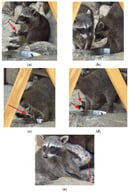
Animal material culture is most often discussed in relation to tool use and foraging, while non-foraging object use remains poorly documented in many taxa. This study reports opportunistic observations of a novel object-directed behavior in the critically endangered pygmy raccoon (Procyon pygmaeus), an island-endemic species restricted to Cozumel, Mexico. During fieldwork on tourism effects between January and February 2026, researchers used direct observation, site assessment, photography, videography, and interviews to document raccoon behavior at several sites. At one beach club, two juvenile female siblings were observed retrieving paper waste, dipping it in water, rolling and compacting it with sand, and using the resulting balls in play. One juvenile first performed the full sequence while the other observed and then attempted the behavior; the second juvenile later completed the sequence independently after her sister had been removed from the site. However, at a comparable tourism site with juvenile raccoons and access to paper and water, this behavior was not observed. These observations provide potential evidence of socially mediated material engagement in pygmy raccoons. The findings expand the known behavioral repertoire of the species and support continued field-based behavioral monitoring, especially where tourism, waste exposure, and juvenile development overlap.

Wild

25 August 2026

10,331 Views
Paper transformation behavior in two juvenile pygmy raccoons: (a) Juvenile 1 making a paper ball. (b) Juvenile 2 observing and approaching. (c) Juvenile 2 retrieves paper from the trash and attempts to make a ball without success. Juvenile 1 watches this attempt. (d) Juvenile 1 takes the paper from Juvenile 2 and begins to make a ball while Juvenile 2 plays with Juvenile 1’s first ball. (e) After the illness and subsequent removal of Juvenile 1, Juvenile 2 is seen turning a hamburger wrapper into a ball.

Editor's Choice Articles

  • Article
  • Open Access

The reserves of non-refractory gold ores are continuously declining, while refractory gold ore deposits remain abundant. Therefore, developing more efficient technologies to utilize these ores is crucial for gold-related industries. Oxidation roasting is commonly used to eliminate the adverse effects of sulfur- and arsenic-bearing minerals, but its underlying mechanisms are still not fully understood. To address this gap, the present study investigated the effect of oxidation roasting on gold leaching rate. A combination of roasting–leaching experiments, X-ray diffraction (XRD), pore structure analysis, and scanning electron microscopy (SEM) was employed to examine the evolution of surface pore structures and their impact on leaching performance. The gold leaching rate of the raw material was only 10.13%, due to the encapsulation of gold particles within pyrite. Under optimal roasting conditions—600 °C for 2 h—the gold leaching rate reached a peak value of 88.06%. At this temperature, the dense surface of pyrite decomposed, forming a highly porous structure that allowed the JinChan lixiviant to fully contact the gold particles. However, increasing the roasting temperature or extending the roasting time promoted the formation of CaSO4 and Mg2SiO4. These newly formed phases may have contributed to pore blockage on the hematite surface, which could explain the more compact structure and the subsequent decline in gold extraction. Based on these observations, a possible mechanism is proposed linking pore structure evolution and phase transformation during roasting to the leaching performance.

Minerals

31 August 2026

Mineral composition maps of gold flotation concentrate determined by AMICS.
  • Article
  • Open Access

Technological advancements have transformed the ways in which individuals interact with digital platforms, giving rise to data-driven ecosystems in which interface design plays a central role. Within these environments, dark patterns and manipulative and deceptive design techniques shape user behaviour in ways that undermine privacy, autonomy, and informed consent. This paper develops a harm-based analytical framework for privacy dark patterns by deriving a typology of privacy-relevant design mechanisms through a structured consolidation of four independently produced taxonomies. It then constructs a harm typology by combining an injury-based framework with the harm categories developed by regulatory authorities and maps each design mechanism to the harms it is structurally apt to produce. Finally, it identifies the provisions of EU law that each mechanism engages, across the GDPR, consumer protection law, the Digital Services Act, the Digital Markets Act, the Data Act and the AI Act. The analysis finds that the GDPR engages every mechanism identified, that coverage by post-GDPR instruments is uneven, and that one mechanism—the exploitation of relational and third-party data—engages no post-GDPR instrument squarely. The deficiency in the EU framework therefore lies not in the substance of its prohibitions but in the coordination of enforcement and in the evidentiary architecture through which non-material harm must be established.

Platforms

3 September 2026

  • Article
  • Open Access

Lepidolite, as a lithium-rich mineral, plays a crucial role in the recovery of lithium resources. This study presents the use of alkali corrosion as a surface pretreatment technique for lepidolite to improve its flotation recovery, and investigates its mechanism on the lepidolite surface. The flotation results demonstrate that, using NaOl as the collector and with the synergistic activation of alkali corrosion and Ca2+, the maximum recovery of lepidolite can reach 92.61%. Contact angle measurements, high-speed cameras, scanning electron microscope (SEM-EDS), atomic force microscopy (AFM) and X-ray photoelectron spectroscopy (XPS) were employed to observe changes in surface wettability, flocculation, morphology, and reagent adsorption. The findings indicated that alkali corrosion pretreatment, in conjunction with Ca2+ activation, modifies the lepidolite surface and enhances the adsorption of the collector on its surface.

Minerals

31 August 2026

  • Article
  • Open Access

Cloud platforms must hold utilisation and latency targets while demand shifts and attack traffic arrive together. Reactive threshold scaling meets neither pressure, and an autoscaler blind to attacks funds the load an adversary requested. Recent work shows adversaries can drive this loop into economic denial of sustainability, so the controller sits inside the attack surface. No prior orchestrator couples workload forecasting, unsupervised anomaly detection and learned scaling in one loop, and none reports multi-seed significance testing. This article extends SARO, presented at IMCOM 2026, to close that gap. We formalise the problem as a Markov decision process with a corrected multi-objective reward, and replace the tabular agent with SARO-DQN, a continuous-state controller trained by three-step Double Q-learning. Across ten held-out days and five seeds, SARO-DQN reaches the highest composite reward (200.1 ± 16.5) and the highest utilisation (68.2%) against eight alternatives, and every reward difference is significant under Welch tests (p<0.05). Ablations attribute 23.6 reward points to the detector ( ) and 8.9 to the forecast (p=0.016). On UNSW-NB15, the detector attains an AUC of 0.888. Two principles follow. Detectors must consume exogenous traffic-shape signals, and detector and policy must be trained as a coupled system.

Electronics

31 August 2026