Platforms 2026, 4(3), 17; https://doi.org/10.3390/platforms4030017 - 6 Aug 2026
Abstract
Artificial intelligence has become increasingly embedded in digital marketing, reshaping how firms collect consumer data, personalize content, automate persuasion, and evaluate campaign performance. While these developments offer clear strategic benefits, they also raise important ethical questions concerning privacy, transparency, fairness, manipulation, and accountability
[...] Read more.
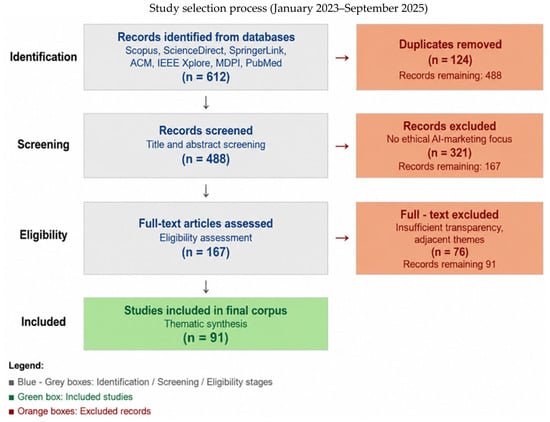
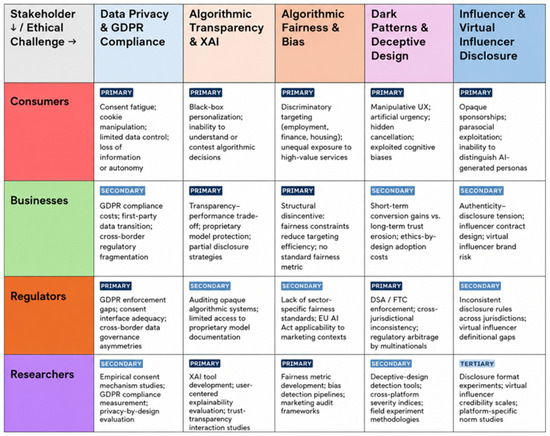
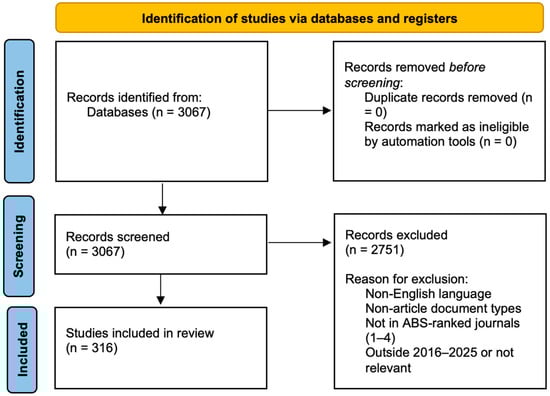
Artificial intelligence has become increasingly embedded in digital marketing, reshaping how firms collect consumer data, personalize content, automate persuasion, and evaluate campaign performance. While these developments offer clear strategic benefits, they also raise important ethical questions concerning privacy, transparency, fairness, manipulation, and accountability within platform-mediated marketing environments. This article presents a structured thematic review of recent research on the ethics of AI-driven digital marketing. The review focuses on English-language peer-reviewed journal articles and high-quality conference proceedings published between January 2023 and September 2025. Searches were conducted across Scopus, ScienceDirect, SpringerLink, ACM Digital Library, IEEE Xplore, MDPI, PubMed, and selected academic repositories. After deduplication, screening, and full-text assessment, 91 studies were included in the final synthesis. Methodological quality was appraised using the Mixed Methods Appraisal Tool and Joanna Briggs Institute critical appraisal criteria, while the findings were examined through thematic synthesis. The review identifies five recurring ethical domains in the literature: data privacy and GDPR compliance, algorithmic transparency and explainable AI, algorithmic fairness in targeting and automated decision-making, dark patterns and deceptive interface design, and influencer or virtual influencer disclosure. The evidence suggests that privacy, consent, deceptive design, and transparency are the most extensively discussed areas, whereas the practical effectiveness of fairness interventions, explainability tools, and disclosure mechanisms remains more mixed and context-dependent. Across these themes, ethical risks appear not only as the result of individual corporate decisions but also as outcomes shaped by platform infrastructures, ranking systems, data access arrangements, and performance-oriented advertising metrics. The article contributes by organizing recent scholarship into a coherent thematic framework and by situating AI-driven digital marketing ethics within a broader platform-governance perspective. It argues that responsible implementation requires clearer distribution of accountability among businesses, platforms, regulators, and researchers. The review is limited by its focus on the 2023–2025 period, its English-language scope, and the methodological heterogeneity of the included studies, which prevents statistical meta-analysis.
Full article
(This article belongs to the Special Issue Sustainability and Social Impact in Platform-Based Marketing and Communication)
►
Show Figures
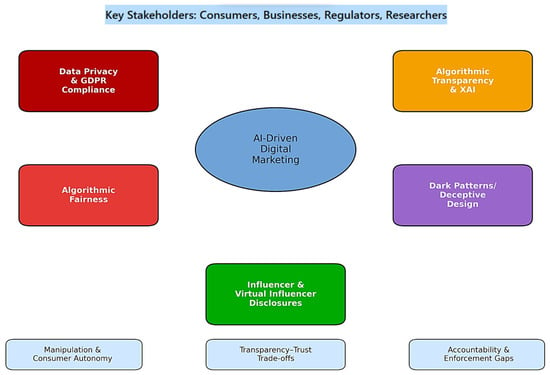
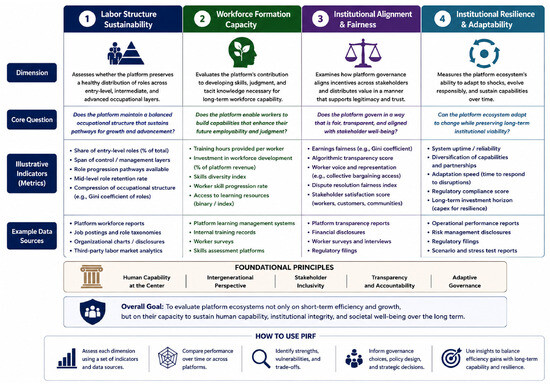
Figure 1