


- Editorial
Acknowledgement to Reviewers of Metabolites in 2019
- Metabolites Editorial Office
2020 January - 41 articles
Carotenoids are natural potent antioxidants and free radical scavengers which are able to modulate the pathogenesis of some cancers and heart diseases in human, indicating their importance in being provided through the diet. Mucor circinelloides accu...
The critical CO2 hydration reaction to bicarbonate and protons is catalyzed by carbonic anhydrases (CAs, EC 4.2.1.1). Their physiological role is to assist the transport of the CO2 and HCO3− at the cellular level, which will not be ensured by t...
The lipidome of royal jelly (RJ) consists of medium-chained (8–12 carbon atoms) free fatty acids. We present herein a liquid chromatography-high resolution mass spectrometry (HRMS) method that permits the determination of RJ fatty acids and at...
In this study, we evaluate the association between vaginal and cervical human papillomavirus infections high-risk types (HPV+H), negative controls (HPV−), the bacterial biota, and urinary metabolites via integration of metagenomics, metabolomic...
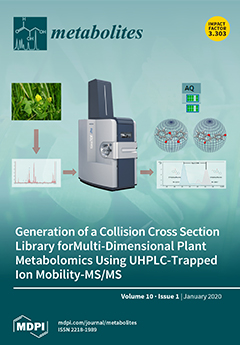
Plant-derived natural products have long been considered a valuable source of lead compounds for drug development. Natural extracts are usually composed of hundreds to thousands of metabolites, whereby the bioactivity of natural extracts can be repre...
The latest worldwide prevalence rate projects that over 65 million patients suffer from myalgic encephalomyelitis/chronic fatigue syndrome (ME/CFS), an illness with known effects on the functioning of the immune and nervous systems. We performed an e...
Ginseng root is an economically valuable crop in Canada at high risk of yield loss caused by the pathogenic fungus Ilyonectria mors-panacis, formerly known as Cylindrocarpon destructans. While this pathogen has been well-characterized from morphologi...
Temporal associations in longitudinal nontargeted metabolomics data are generally ignored by common pattern recognition methods such as partial least squares discriminant analysis (PLS-DA) and orthogonal partial least squares discriminant analysis (O...
Many routes have been explored to search for effective, safe, and affordable alternatives to hazardous female contraceptives. Herbal extracts and their secondary metabolites are some of the interesting research areas to address this growing issue. Th...
Adipose tissue is a complex structure responsible for fat storage and releasing polypeptides (adipokines) and metabolites, with systemic actions including body weight balance, appetite regulation, glucose homeostasis, and blood pressure control. Sign...
Subcellular compartmentation has been challenging in plant 13C-metabolic flux analysis. Indeed, plant cells are highly compartmented: they contain vacuoles and plastids in addition to the regular organelles found in other eukaryotes. The distinction...
Flavonolignans occur typically in Silybum marianum (milk thistle) fruit extract, silymarin, which contains silybin, isosilybin, silychristin, silydianin, and their 2,3-dehydroderivatives, together with other minor flavonoids and a polymeric phenolic...
Data pre-processing of the LC-MS data is a critical step in untargeted metabolomics studies in order to achieve correct biological interpretations. Several tools have been developed for pre-processing, and these can be classified into either commerci...
Bile acids represent a large class of steroid acids synthesized in the liver and further metabolized by many bacterial and mammalian enzymes. Variations in bile acid levels can be used as a measure of liver function. There still exists, however, a ne...
Thymoquinone is one of the main components present in Nigella sativa seeds and is known to have various biological functions in inflammation, oxidative stress, tumors, aging, and in lowering blood glucose levels. Few studies have focused on its neuro...
This exploratory study aims to investigate the health of sand flathead (Platycephalus bassensis) sampled from five sites in Port Phillip Bay, Australia using gas chromatography-mass spectrometry (GC-MS) metabolomics approaches. Three of the sites wer...
The authors wish to make the following correction to this paper [...]
Following cell division, fruit growth is characterized by both expansion through increases in cell volume and biomass accumulation in cells. Fruit growth is limited by carbon starvation; however, the mechanism controlling fruit growth under restricte...
This study aimed to explore the dynamic changes in metabolite profiles and metabolism pathways in the serum of growing pigs by intravenous infusion of sodium butyrate (SB). Fourteen crossbred growing barrows (BW = 23.70 ± 1.29 kg) fitted with...
Background: Styrax tonkinensis is an economic tree species with high timber, medicine, oil, and ornamental value. Its seed, containing a particularly high oil content, are widely studied for their biodiesel properties by nutritional components and oi...
Measurement of intestinal permeability (IP) is often used in the examination of inflammatory gastrointestinal disorders. IP can be assessed by measurement of urinary recovery of ingested non-metabolizable lactulose (L) and mannitol (M). The present s...
Protein and oil levels measured at maturity are inversely correlated across soybean lines; however, carbon is in limited supply during maturation resulting in tradeoffs for the production of other reserves including oligosaccharides. During the late...
Parkinson’s disease (PD) is associated with brain mitochondrial dysfunction. High-energy phosphates (HEPs), which rely on mitochondrial functioning, may be considered potential biomarkers for PD. Phosphorus magnetic resonance spectroscopy (31P-...
A class of aliphatic short chain nitrocompounds have been reported as being capable of CH4 reduction both in vitro and in vivo. However, the laboratory evidence associated with the metabolic fate of nitrocompounds in the rumen has not been well docum...
Although cancer has historically been regarded as a cell proliferation disorder, it has recently been considered a metabolic disease. The first discovery of metabolic alterations in cancer cells refers to Otto Warburg’s observations. Cancer met...
Asparagus (Asparagus officinalis) is one of the world’s top 20 vegetable crops. Both green and white shoots (spears) are produced; the latter being harvested before becoming exposed to light. The crop is grown in nearly all areas of the world,...
In Salmonella enterica, 2-aminoacrylate (2AA) is a reactive enamine intermediate generated during a number of biochemical reactions. When the 2-iminobutanoate/2-iminopropanoate deaminase (RidA; EC: 3.5.99.10) is eliminated, 2AA accumulates and inhibi...
The utility of metabolomics is well documented; however, its full scientific promise has not yet been realized due to multiple technical challenges. These grand challenges include accurate chemical identification of all observable metabolites and the...
Flax (Linum usitatissinum L.) oil is an important source of α-linolenic (C18:3 ω-3). This polyunsaturated fatty acid is well known for its nutritional role in human and animal diets. Understanding storage lipid biosynthesis in developing...
Copper (Cu) is widely used in the swine industry to improve the growth performance of pigs. However, high doses of copper will induce cell damage and toxicity. The aim of this study was to evaluate toxicity, bioavailability, and effects on metabolic...
To clarify the relationship between the fiber type composition and meat quality, we performed metabolomic analysis using porcine longissimus dorsi (LD) muscles. In the LD of pigs raised outdoors, the expression of myosin heavy chain (MyHC)1 (slow-twi...
Hepatic metabolites provide valuable information on the physiological state of an organism, and thus, they are monitored in many clinical situations. Typically, monitoring requires several analyses for each class of targeted metabolite, which is time...
Metabolomics has the potential to greatly impact biomedical research in areas such as biomarker discovery and understanding molecular mechanisms of disease. However, compound identification (ID) remains a major challenge in liquid chromatography mass...
Mulberries are consumed either freshly or as processed fruits and are traditionally used to tackle several diseases, especially type II diabetes. Here, we investigated the metabolite compositions of ripe fruits of both white (Morus alba) and black (M...
This study aimed to assess the changes in red blood cell (RBC) energy status and plasma purine metabolites concentration over a one-year training cycle in endurance-trained (EN; n = 11, 20–26 years), and sprint-trained (SP; n = 11, 20–30...
Coronary heart disease (CHD) is the major cause of death in sudden unexpected death (SUD) cases. Tryptophan (TRP) and its metabolites are correlated with the CHD patient but less studies in the SUD. The aim of this study was to evaluate the relations...
Persistent organic pollutants (POPs) are important environmental chemicals and continued study of their mechanism of action remains a high priority. POPs, such as 2,3,7,8-tetrachlorodibenzo-p-dioxin (TCDD), 2,3,7,8-tetrachlorodibenzofuran (TCDF), and...
A gas chromatography mass spectrometry (GC-MS) metabolomics protocol was modified for quenching, harvesting, and extraction of metabolites from adherent cells grown under high (20%) fetal calf serum conditions. The reproducibility of using either 50%...
Continuous increases in water temperature disturb homeostasis and increase oxidative stress in fish. Glutathione (GSH) is an intracellular antioxidant that helps to relieve stress in animals. In this study, we observed the effect of GSH on olive flou...
Cardiovascular diseases (CVDs) represent a major concern in today’s society, with more than 17.5 million deaths reported annually worldwide. Recently, five metabolites related to the gut metabolism of phospholipids were identified as promising...