




Next Issue
Volume 15, January
Previous Issue
Volume 14, November


Pathogens, Volume 14, Issue 12 (December 2025) – 115 articles
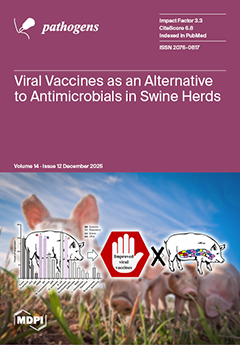
Cover Story (view full-size image): Antimicrobial resistance (AMR) is an increasing concern in food animal production, as viral diseases in swine herd frequently drive secondary bacterial infections and antimicrobial use. This study examined U.S. swine veterinarians’ perspectives on the role of viral vaccines in reducing antimicrobial use and mitigating AMR. Through a national survey and follow-up interviews, veterinarians identified porcine reproductive and respiratory syndrome, swine influenza, and rotaviral enteritis as priority targets for vaccine improvement due to their economic impact and frequent association with antimicrobial treatment. The respondents highlighted limitations of current vaccines, including limited cross protection and short duration of immunity. Despite these challenges, veterinarians supported vaccination as a key strategy to reduce antimicrobial use. View this paper
  • Issues are regarded as officially published after their release is announced to the table of contents alert mailing list.
  • You may sign up for e-mail alerts to receive table of contents of newly released issues.
  • PDF is the official format for papers published in both, html and pdf forms. To view the papers in pdf format, click on the "PDF Full-text" link, and use the free Adobe Reader to open them.
Order results
Result details
Section
Select all
Export citation of selected articles as:
24 pages, 4265 KB  
Article
Prevalence and Intensity of Perkinsus sp. Infection in Mizuhopecten yessoensis and Its Impact on the Immune Status of Bivalves
by Elizaveta Tsoy, Ayna Tumas, Mariia Mokrina, Andrei Grinchenko, Vadim Kumeiko, Daria Lanskikh and Yulia Sokolnikova
Pathogens 2025, 14(12), 1303; https://doi.org/10.3390/pathogens14121303 - 18 Dec 2025
Viewed by 266
Abstract
Despite the economic importance of Mizuhopecten yessoensis, little is known about their parasites and immunity. This study, the first to examine the prevalence and intensity of Perkinsus across three age groups of scallops from four locations in the Sea of Japan, revealed [...] Read more.
Despite the economic importance of Mizuhopecten yessoensis, little is known about their parasites and immunity. This study, the first to examine the prevalence and intensity of Perkinsus across three age groups of scallops from four locations in the Sea of Japan, revealed that the gills, mantle, and digestive glands of one-year-old specimens from mariculture farms are heavily colonized. The cases of infection were notably higher in older specimens (mostly hemolymph and shell), suggesting that they act as carriers of Perkinsus. An immunological analysis indicated that when the pathogen is found only in the hemolymph and mantle, there is an increase in plasma protein concentrations, which likely plays a crucial role in resisting infection. However, when hypnospores were present in the mantle and gills, a decrease in reactive oxygen species and granulocytes occurred, accompanied by an increase in hemoblasts and agranulocytes. Phagocytic activity increased only when the pathogen appeared in the digestive gland. This evidence highlights the heightened vulnerability of young scallops, emphasizing the necessity for preventive measures against infection. The current troubling epidemiological situation regarding scallop diseases in the region suggests a rise in epizootics, raising doubts about the sustainability of the scallop farming industry unless timely interventions are implemented. Full article
(This article belongs to the Special Issue Aquatic Pathogens and Host Immune Responses)
Show Figures

Figure 1

25 pages, 360 KB  
Review
Detection, Isolation, and Identification of Mycobacteria That Cause Nontuberculous Mycobacterial Disease and Tuberculosis
by Lyudmila Severova, Dmitrii Giller, Inga Enilenis, Patimat Gadzhieva, Galina Shcherbakova, Oleg Kesaev, Vadim Koroev, Olga Frolova, Anna Popova, Alexandr Ilyukhin, Valeria Basangova, Elena Belova, Elham Pahlevani Gazi, Irina Taushkanova and Ivan Martel
Pathogens 2025, 14(12), 1302; https://doi.org/10.3390/pathogens14121302 - 18 Dec 2025
Viewed by 377
Abstract
Pulmonary diseases caused by nontuberculous mycobacteria are increasingly becoming common worldwide and are occurring more frequently alongside pulmonary tuberculosis. Given that pulmonary diseases resulting from nontuberculous mycobacteria and pulmonary tuberculosis display similar features—such as clinical manifestations, imaging findings, and laboratory results—the accurate differentiation [...] Read more.
Pulmonary diseases caused by nontuberculous mycobacteria are increasingly becoming common worldwide and are occurring more frequently alongside pulmonary tuberculosis. Given that pulmonary diseases resulting from nontuberculous mycobacteria and pulmonary tuberculosis display similar features—such as clinical manifestations, imaging findings, and laboratory results—the accurate differentiation of each disease type is highly challenging. Mycobacterial culture, as a gold standard method, cannot be considered completely trustworthy because of low bacterioexcretion rates among nontuberculous mycobacterial pulmonary patients. Additional problems result from poor diagnosis. The treatment of lung diseases caused by nontuberculous mycobacteria is also difficult. This could be due to the wide spectrum of bacteria belonging to nontuberculous mycobacteria, as well as low bacterioexcretion. Therefore, bacterial sensitivity to drugs is insufficient. As a result, in this article, our intention is to explain the diagnostic difficulties of pulmonary diseases caused by nontuberculous mycobacteria and the Mycobacterium tuberculosis complex. The review seeks to outline promising directions for the development of novel diagnostic approaches in order to improve clinical decision-making and ultimately treatment outcomes. Full article
(This article belongs to the Special Issue Mycobacterial Infection: Pathogenesis and Drug Development)
21 pages, 282 KB  
Article
Bacterial Contaminants in Ambulances from a Tertiary Care Hospital as Potential Threats to Patients and Medical Staff in Al-Qassim Region, Saudi Arabia—Effect of Decontamination
by Ahmed E. Taha, Ahmad R. Alharbi, Omar N. Alharbi, Alaaeldin M. Komila, Abdullah Almushawwah, Solaiman Aldeghaim, Ahmed N. Algefary, Majed Allahim, Khalid Alzaben and Faisal M. Alharbi
Pathogens 2025, 14(12), 1301; https://doi.org/10.3390/pathogens14121301 - 18 Dec 2025
Viewed by 291
Abstract
Bacterial contaminants in ambulances could have a major impact on morbidities, mortalities, and healthcare resources, especially if these bacteria are antimicrobial-resistant. As far as we know, this is the first study in Al-Qassim region to evaluate the prevalence of bacterial contaminants in swab [...] Read more.
Bacterial contaminants in ambulances could have a major impact on morbidities, mortalities, and healthcare resources, especially if these bacteria are antimicrobial-resistant. As far as we know, this is the first study in Al-Qassim region to evaluate the prevalence of bacterial contaminants in swab samples obtained from ambulances from Alqwarah General Hospital, Al-Qassim region, Saudi Arabia as an indicator for evaluation of the implemented infection control measures, and screen the antibiotics profiles of the isolates against the most regularly used antimicrobials. In total, 204 samples were collected from the ambulances following patient transport. To evaluate the effect of vehicle decontamination, 204 swabs were collected from the same sites of the ambulances immediately after cleaning and disinfection. The isolates were identified using standard bacteriological and biochemical methods, as recommended by the Clinical Laboratory Standard Institute (CLSI). The antibiotic susceptibility patterns were assessed using the Kirby–Bauer disc diffusion method. The prevalence of bacterial contamination in the samples collected following patient transport was 46.08%. In total, 83.33%, 75.00%, and 66.66% of the samples collected from DC shock apparatuses, ceilings, and emergency personnel seats, respectively, were contaminated. Furthermore, ceilings, DC shock apparatuses, emergency personnel seats, cervical collars, and monitors were found to harbor 10.8%, 9.8%, 7.8%, 6.8%, and 6.8% of the 102 bacterial isolates, respectively. Gram-positive organisms represented 96.1% of all bacterial isolates. Bacillus spp. was the most common isolate, accounting for 60.8% of all bacterial isolates. Although Pseudomonas aeruginosa and Proteus spp. isolates were sensitive to all the tested antimicrobials, many Gram-positive bacterial isolates were resistant to some antibiotics in variable frequencies. After 48 h of aerobic incubation (with or without 5–10% CO2) on nutrient, blood, chocolate, and MacConkey agar plates at 37 °C, no bacterial growth was detected in the samples collected immediately following cleaning and disinfection. This is the second Saudi study to evaluate the prevalence of bacterial contaminants in Saudi Arabian ambulances, and it could help health policy makers in improving the implemented infection prevention and control measures in Saudi Arabian ambulances. The samples taken after patient transport revealed bacterial contaminants with varying rates of antimicrobial resistance. Policies ensuring the optimal cleaning and disinfection of ambulances can minimize the potential of bacterial infection for high-risk patients, their relatives, and healthcare providers. Full article
16 pages, 600 KB  
Article
Ceftazidime-Avibactam Regimens for the Treatment of Bacteremic and Non-Bacteremic Episodes of Carbapenemase-Producing Enterobacterales Infections in Immunosuppressed Patients
by Fabián Herrera, Diego Torres, María Leone, Maximiliano Gabriel Castro, Jorge López Camelo, Elena Temporiti, Natalin Grippo, Silvia Relloso and Pablo Bonvehí
Pathogens 2025, 14(12), 1300; https://doi.org/10.3390/pathogens14121300 - 18 Dec 2025
Viewed by 323
Abstract
Ceftazidime-avibactam (CA) and CA plus aztreonam (ATM) are the preferred treatment options for KPC and MBL carbapenemase-producing Enterobacterales infections (CPEis). All episodes of monomicrobial CPEis in immunosuppressed patients (IPs) admitted from May 2019 to November 2024, who received definitive antibiotic therapy (AT) with [...] Read more.
Ceftazidime-avibactam (CA) and CA plus aztreonam (ATM) are the preferred treatment options for KPC and MBL carbapenemase-producing Enterobacterales infections (CPEis). All episodes of monomicrobial CPEis in immunosuppressed patients (IPs) admitted from May 2019 to November 2024, who received definitive antibiotic therapy (AT) with CA or CA + ATM for at least 72 h, were prospectively included. Bacteremic episodes (BEs) and non-bacteremic episodes (NBEs) were compared. Logistic regressions adjusted by propensity score were used to identify variables associated with 30-day overall mortality. In total, 82 CPEis were included (38 NBEs and 44 BEs). BEs more frequently occurred in hematological malignancies (52.3% vs. 15.8%, p = 0.0006), while NBEs were more commonly observed in solid organ transplantation (73.7% vs. 34.1%, p = 0.001). K. pneumoniae was the main isolated microorganism; KPC-CPE was the most common resistance mechanism in both groups, followed by MBL-CPE. The 7-day clinical response, 30-day overall and infection-related mortality between NBEs and BEs were 92.1% vs. 88.6%, p = 0.59, 10.5% vs. 27.3%, p = 0.09, and 2.6% vs. 13.6%, p = 0.11. Septic shock, OR 6.5, 95% CI, 1.58–26.72 (p = 0.01), and refractory malignancy, OR 5.6, 95% CI, 1.03–30.14 (p = 0.046), were associated with 30-day mortality, whereas BEs were not, OR 1.5, 95% CI, 0.36–6.2 (p = 0.56). CPEis in both NBE and BE IPs who received definitive AT with CA or CA + ATM correlated with a high rate of 7-day clinical response and low 30-day infection-related mortality. Underlying malignancy and disease severity were associated with 30-day overall mortality. Regional knowledge of bacterial antibiotic resistance enables the implementation of individualized AT to improve patient survival. Full article
(This article belongs to the Special Issue Emerging Infectious Diseases: A Perpetual Challenge)
Show Figures

Figure 1

13 pages, 1100 KB  
Article
Pentraxin 3 Levels Reflect Inflammatory and Parasitic Activity in Human Visceral Leishmaniasis
by Lucyo Flávio Bezerra Diniz, Milena Xavier Silva Barbosa, Samuel Ricarte de Aquino, Anderson da Costa Armstrong, Carlos Dornels Freire de Souza and Rodrigo Feliciano Carmo
Pathogens 2025, 14(12), 1299; https://doi.org/10.3390/pathogens14121299 - 18 Dec 2025
Viewed by 260
Abstract
Visceral leishmaniasis (VL) is a severe zoonotic disease characterized by high mortality and a pronounced systemic inflammatory response. Although Pentraxin 3 (PTX3) has been implicated in infectious and inflammatory disorders, its role in human VL remains poorly defined, and host-derived indicators that simultaneously [...] Read more.
Visceral leishmaniasis (VL) is a severe zoonotic disease characterized by high mortality and a pronounced systemic inflammatory response. Although Pentraxin 3 (PTX3) has been implicated in infectious and inflammatory disorders, its role in human VL remains poorly defined, and host-derived indicators that simultaneously reflect inflammatory and parasitic activity are limited. This study investigated the association between plasma PTX3 levels, parasite load, and PTX3 gene polymorphisms (rs1840680 and rs2305619) in patients with VL. An observational study was conducted between 2017 and 2021, including 36 patients with confirmed VL and 45 healthy controls matched by age and sex. Plasma PTX3 concentrations were determined by ELISA, parasite load by quantitative PCR (qPCR), and cytokines (IL-2, IL-6, IL-10, IL-17A, IFN-γ and TNF-α) by flow cytometry. PTX3 levels were significantly higher in VL patients than in controls (23.2 ng/mL vs. 0.80 ng/mL; p < 0.0001) and correlated positively with parasite load (r = 0.39; p = 0.02) and cytokines IL-6, IL-10 and IFN-γ. No associations were observed between PTX3 polymorphisms and disease susceptibility. These findings suggest that PTX3 reflects both inflammatory responses and parasitic burden in VL and may serve as a potential indicator of disease activity. Full article
Show Figures

Figure 1

11 pages, 1172 KB  
Article
Development of a Novel Sandwich ELISA Test for the Detection of Antibodies Against Rickettsia
by Marco Quevedo-Diaz, Semen Kaliukanov, Frantisek Csicsay, Diana Hopkova and Ludovit Skultety
Pathogens 2025, 14(12), 1298; https://doi.org/10.3390/pathogens14121298 - 18 Dec 2025
Viewed by 321
Abstract
Diagnosis of rickettsial infections is challenging due to nonspecific clinical symptoms and limitations of current diagnostic methods. Molecular assays allow early detection but are limited by cost and technical demands, whereas conventional serological tests often exhibit cross-reactivity and low sensitivity during the early [...] Read more.
Diagnosis of rickettsial infections is challenging due to nonspecific clinical symptoms and limitations of current diagnostic methods. Molecular assays allow early detection but are limited by cost and technical demands, whereas conventional serological tests often exhibit cross-reactivity and low sensitivity during the early stages of infection. This study aimed to develop and evaluate a recombinant-antigen sandwich ELISA for improved antibody detection against Rickettsia spp. Three Rickettsia akari proteins, rGroEL, rDnaK, and rA8GP63 (uncharacterized protein), were produced and validated for immunogenicity. The assay was evaluated using 94 patient serum samples, including those with positive, negative, and unknown clinical course. The optimized ELISA demonstrated high reproducibility, with IgG sensitivity of 89.47–95.39% and specificity of 90%. IgM detection, also assessed, showed lower sensitivity (42.11–82.89%) but maintained strong specificity (83.33%). The diagnostic performance was comparable to that of a commercial indirect immunofluorescence assay, with no cross-reactivity detected in sera from patients with unrelated infections. rDnaK and rA8GP63 represent newly explored diagnostic candidates. These findings highlight the potential of this recombinant protein-based ELISA as an accessible, sensitive and specific diagnostic tool, with a meaningful clinical impact for improving the early and accurate detection of rickettsial infections. Full article
(This article belongs to the Special Issue New Insights into Host-Vector-Pathogen Interactions)
Show Figures

Figure 1

22 pages, 438 KB  
Article
Antimicrobial Resistance in Urinary Tract Infections Among Patients with and Without Renal Comorbidities: A Retrospective Study from Al-Baha, Saudi Arabia
by Shazia Shaheen Mir, Eman Ali, Samiyah Ahmad Abdullah Alghamdi, Nora Mohamed Alghamdi, Raed A. Alharbi, Abdulmajeed A. A. Sindi and Ali A. Zaeri
Pathogens 2025, 14(12), 1297; https://doi.org/10.3390/pathogens14121297 - 17 Dec 2025
Viewed by 429
Abstract
Urinary tract infections are among the most common bacterial infections worldwide, with increasing antimicrobial resistance posing a significant public health challenge. This study aimed to determine the demographic distribution, antimicrobial susceptibility patterns of uropathogens, and the clinical implications of UTIs in patients with [...] Read more.
Urinary tract infections are among the most common bacterial infections worldwide, with increasing antimicrobial resistance posing a significant public health challenge. This study aimed to determine the demographic distribution, antimicrobial susceptibility patterns of uropathogens, and the clinical implications of UTIs in patients with renal comorbidities in the Al-Baha region of Saudi Arabia. A retrospective, cross-sectional study was conducted at King Fahad Hospital, Al-Baha, from January 2021 to September 2022. A total of 1126 culture-positive UTI cases were included. Patient demographics, uropathogen distribution, antimicrobial resistance profiles, and clinical characteristics were extracted from hospital records. Subgroup analysis was performed for 32 patients with renal comorbidities, including end-stage renal disease (ESRD), glomerulonephritis (GN), and kidney transplant recipients (KTs). Statistical analysis was performed using SPSS version 25. Most cases occurred in patients aged >70 years (43.2%) and females (68.29%). Escherichia coli (38.09%) and Klebsiella pneumoniae (14.02%) were the leading pathogens. High resistance to ampicillin (47–67%), cotrimoxazole (35–37%), and third-generation cephalosporins (34–47%) was observed, whereas carbapenems and aminoglycosides remained largely effective. Among the 32 patients with renal comorbidities, E. coli (43.8%), Staphylococcus aureus (25%), and Enterococcus spp. (18.8%) were the most common isolates. Dysuria (46.87%) and fever (31.25%) were the most frequent clinical presentations. Treatment regimens in this subgroup often required multidrug combinations, reflecting higher resistance burdens. Uropathogens in the Al-Baha region shows rising resistance to first-line antibiotics, with vulnerable populations such as patients with renal comorbidities experiencing distinct pathogen distributions and treatment challenges. Continuous surveillance, prudent antibiotic use, and targeted strategies for high-risk patients are essential to mitigate the impact of multidrug-resistant UTIs in Saudi Arabia. Full article
(This article belongs to the Special Issue Advances in the Epidemiology of Human Infectious Diseases)
Show Figures

Figure 1

13 pages, 279 KB  
Article
Genetic Characterization of Hepatitis C Virus Among People Who Use Crack Cocaine: A Study Conducted on the Brazilian Amazon Coast
by João Alphonse A. Heymbeeck, Wilker Leite do Nascimento, Marina Cristina S. Freitas, Leticia de Sousa Rocha, Franciane Ferreira Costa, Jocilena Pamela Q. de Queiroz, Diego Simeone, Luísa Caricio Martins, Luiz Fernando A. Machado, Benedikt Fischer, Emil Kupek and Aldemir B. Oliveira-Filho
Pathogens 2025, 14(12), 1296; https://doi.org/10.3390/pathogens14121296 - 17 Dec 2025
Viewed by 439
Abstract
People who use crack cocaine (PWUCC) constitute a key population due to vulnerability and marginalization, especially in a socio-ecologically diverse, relatively isolated region with limited public health infrastructure. This study aimed to perform a genetic characterization of circulating HCV among PWUCC in the [...] Read more.
People who use crack cocaine (PWUCC) constitute a key population due to vulnerability and marginalization, especially in a socio-ecologically diverse, relatively isolated region with limited public health infrastructure. This study aimed to perform a genetic characterization of circulating HCV among PWUCC in the municipality of Bragança, situated on the Brazilian Amazon coast, identifying viral genotypes, subtypes, resistance-associated substitutions (RAS)—naturally occurring mutations in the viral genome that can reduce the efficacy of direct-acting antiviral (DAA) agents—and predictions of phenotypic resistance. Methods: Between 2016 and 2018, biological samples and epidemiological data were obtained from 165 PWUCC. Viral detection was performed using RT-PCR, while genotyping, subtyping, and RAS profiling were conducted through nucleotide sequencing and fragment analysis. Results: In 165 PWUCC, 22 (13.3%) tested positive for HCV RNA. Most of them had not had access to public health services (91.5%), and more than half (57.0%) reported living in unstable housing conditions. HCV subtypes 1a (27.3%), 1b (40.9%), and 3a (31.8%) were detected. Evidence of resistance associated with DAAs, such as daclatasvir and dasabuvir, was detected in five PWUCC with HCV (22.7%). Conclusions: The high prevalence of HCV infection, predominantly subtype 1b, and significant levels of resistance are very concerning. This demonstrates the urgent need for targeted public health interventions to expand access to testing, treatment, and effective antiviral therapy in this vulnerable population of the Brazilian Amazon. Full article
10 pages, 423 KB  
Review
Diagnostic Approaches for Measles Virus: Methods, Advances, and Ongoing Challenges
by Yuan-Chao Xue and Ping Ren
Pathogens 2025, 14(12), 1295; https://doi.org/10.3390/pathogens14121295 - 17 Dec 2025
Viewed by 414
Abstract
Measles, also known as rubeola, is a highly contagious and potentially life-threatening disease caused by the measles virus. It classically presents with fever, cough, coryza, conjunctivitis, and a maculopapular rash. Despite the availability of an effective vaccine for decades, measles outbreaks continue to [...] Read more.
Measles, also known as rubeola, is a highly contagious and potentially life-threatening disease caused by the measles virus. It classically presents with fever, cough, coryza, conjunctivitis, and a maculopapular rash. Despite the availability of an effective vaccine for decades, measles outbreaks continue to occur globally, largely driven by declining vaccination coverage and increased international travel. With no specific antiviral therapy available, rapid and accurate diagnosis remains essential for timely clinical management and effective outbreak control. Diagnostic methods have evolved from traditional virus isolation in cell culture to serologic assays and, more recently, to molecular techniques such as real-time reverse transcriptase polymerase chain reaction (rRT-PCR). Each diagnostic method has unique advantages and limitations influenced by specimen type, timing of collection, and laboratory capacity. This minireview summarizes the progress of measles virus diagnostics, outlines current laboratory detection strategies, and discusses emerging technologies and ongoing challenges amid global measles resurgence and increasing public health demands. Full article
Show Figures

Figure 1

22 pages, 3013 KB  
Article
Identification of Oral Microbiome Biomarkers Associated with Lung Cancer Diagnosis and Radiotherapy Response Prediction
by Xiaoqian Shi, Nan Bi, Wenyang Liu, Liying Ma, Mingyang Liu, Tongzhen Xu, Xingmei Shu, Linrui Gao, Ranjiaxi Wang, Yinan Chen, Li Li, Yu Zhu and Dan Li
Pathogens 2025, 14(12), 1294; https://doi.org/10.3390/pathogens14121294 - 16 Dec 2025
Viewed by 343
Abstract
The oral cavity acts as the anatomical gateway to the respiratory tract, sharing both microbiological and pathophysiological links with the lower airways. Although radiotherapy is a cornerstone treatment for lung cancer, reliable oral microbiome biomarkers for predicting patient outcomes remain lacking. We analyzed [...] Read more.
The oral cavity acts as the anatomical gateway to the respiratory tract, sharing both microbiological and pathophysiological links with the lower airways. Although radiotherapy is a cornerstone treatment for lung cancer, reliable oral microbiome biomarkers for predicting patient outcomes remain lacking. We analyzed the oral microbiome of 136 lung cancer patients and 199 healthy controls across discovery and two validation cohorts via 16S rRNA sequencing. Healthy controls exhibited a significantly higher abundance of Streptococcus compared to patients (p = 0.049, p < 0.001, p < 0.001, respectively). The structure of the microbial community exhibited substantial dynamic changes during treatment. Responders showed enrichment of Rothia aeria (p = 0.027) and Prevotella salivae (p = 0.043), associated with prolonged overall survival (OS) and progression-free survival (PFS), whereas non-responders exhibited elevated Porphyromonas endodontalis (p = 0.037) correlating with shorter OS and PFS. According to Analysis of Compositions of Microbiomes with Bias Correction 2 (ANCOM-BC2) analysis, Akkermansia and Alistipes were nearly absent in non-responders, while Desulfovibrio and Moraxella were virtually absent in responders. A diagnostic model based on Streptococcus achieved area under the curve (AUC) values of 0.85 (95% CI: 0.78–0.91) and 0.99 (95% CI: 0.98–1) in the validation cohorts, and a response prediction model incorporating Prevotella salivae and Neisseria oralis yielded an AUC of 0.74 (95% CI: 0.58–0.90). Furthermore, in small cell lung cancer, microbiota richness and diversity were inversely correlated with Eastern Cooperative Oncology Group (ECOG) performance status (p = 0.008, p < 0.001, respectively) and pro-gastrin-releasing peptide (ProGRP) levels (p = 0.065, p = 0.084, respectively). These results demonstrate that lung cancer-associated oral microbiota signatures dynamically reflect therapeutic response and survival outcomes, supporting their potential role as non-invasive biomarkers for diagnosis and prognosis. Full article
Show Figures

Figure 1

16 pages, 2931 KB  
Article
Immune Responses and Protective Efficacy of Nanoemulsion-Adjuvanted Monkeypox Virus Recombinant Vaccines Against Lethal Challenge in Mice
by Congcong Zhang, Nuo Liu, Yanqi Zhao, Zhendong Pan, Dawei Wang, Wanda Tang, Yanhua He, Xu Zheng, Zhongtian Qi, Xinxin Zhang and Ping Zhao
Pathogens 2025, 14(12), 1293; https://doi.org/10.3390/pathogens14121293 - 16 Dec 2025
Viewed by 332
Abstract
The ongoing global monkeypox outbreak since 2022 has highlighted the urgent need for vaccine development. Current vaccination strategies rely on cross-protective immunity provided by orthopoxvirus-based live-attenuated vaccines. However, these vaccines not only exhibit suboptimal efficacy against monkeypox virus (MPXV) but also raise safety [...] Read more.
The ongoing global monkeypox outbreak since 2022 has highlighted the urgent need for vaccine development. Current vaccination strategies rely on cross-protective immunity provided by orthopoxvirus-based live-attenuated vaccines. However, these vaccines not only exhibit suboptimal efficacy against monkeypox virus (MPXV) but also raise safety concerns, particularly given the significant global overlap between MPXV infections and HIV. Owing to their superior safety profile and accessibility, recombinant subunit vaccines represent a highly promising platform for monkeypox vaccine development. In this study, we developed a subunit vaccine comprising A29L, B6R, and M1R antigens formulated with a proprietary nanoemulsion adjuvant and evaluated its immunogenicity and protective efficacy. In mice immunized with a prime-boost regimen of the three individual antigens combined with the nanoemulsion adjuvant, comparable serum IgG levels against each antigen were elicited. Both A29 and M1 formulations induced serum antibodies with potent neutralizing activity against MPXV and Vaccinia virus Western Reserve strain (VACV-WR). Notably, M1 antiserum exhibited stronger neutralization than A29 antiserum, whereas B6R immune serum showed no significant neutralizing activity. Splenocytes from B6R-immunized mice mounted a robust IFN-γ response, which was markedly lower in those immunized with A29 or M1. All three monovalent vaccines conferred complete survival following an intranasal lethal MPXV challenge, with M1 providing the strongest protection. In a lethal VACV-WR challenge model, only M1 immunization conferred significant protection. Histopathological analysis of lung tissues on day 5 post-infection revealed more pronounced inflammatory features in B6R-immunized mice compared to the nanoemulsion adjuvant control group. Furthermore, the nanoemulsion-adjuvanted bivalent A29L + B6R formulation induced significantly higher IgG and neutralizing antibody titers and demonstrated superior protective efficacy compared to the aluminum hydroxide-adjuvanted formulation. This comparative preclinical evaluation provides important evidence to support the development of a safe and effective subunit vaccine against monkeypox. Full article
Show Figures

Figure 1

17 pages, 2645 KB  
Article
Interplay Between NLRP3 Activation by DENV-2 and Autophagy and Its Impact on Lipid Metabolism in HMEC-1 Cells
by Giovani Visoso-Carvajal, Julio García-Cordero, Yandy Ybalmea-Gómez, Margarita Diaz-Flores, Moisés León-Juárez, Rosaura Hernández-Rivas, Porfirio Nava, Nicolás Villegas-Sepúlveda and Leticia Cedillo-Barrón
Pathogens 2025, 14(12), 1292; https://doi.org/10.3390/pathogens14121292 - 16 Dec 2025
Viewed by 323
Abstract
Dengue Virus (DENV) induces assembly of the NOD-like receptor (NLR) family pyrin domain containing-3 (NLRP3) inflammasome and autophagy, which are closely interconnected processes playing crucial roles in lipid metabolism and DENV replication. However, the autophagy–NLRP3 activation interplay during DENV infection in human endothelial [...] Read more.
Dengue Virus (DENV) induces assembly of the NOD-like receptor (NLR) family pyrin domain containing-3 (NLRP3) inflammasome and autophagy, which are closely interconnected processes playing crucial roles in lipid metabolism and DENV replication. However, the autophagy–NLRP3 activation interplay during DENV infection in human endothelial cells remains incompletely understood. We aimed to elucidate effects of NLRP3 activation on autophagy during DENV-2 infection. We investigated how autophagy-related molecules are altered by NLRP3 inhibition and how this regulation affects lipid metabolism, through the master lipid transcription factors SREBP-1 and 2, which increase the expression of their target lipid-synthesizing genes such as fatty acid synthase (FAS) in a model of microvascular endothelial cells (HMEC-1). We demonstrated a dynamic interplay between inflammasome activity and autophagy in DENV-infected HMEC-1 cells: autophagy increases early during infection and decreases as inflammasome activity increases. NLRP3 inflammasome inhibition affects viral replication. Glyburide (an inflammasome inhibitor) treatment partially inhibited DENV-induced NLRP3 inflammasome activation. Non-structural viral protein expression (NS3 and NS5) and infectious viral-particle formation were significantly reduced. NLRP3 inhibition also downregulated SREBP-1 and SREBP-2 activation. These findings provide new insights into the modulation of the interconnected NLRP3 inflammasome, autophagy, and lipid metabolism pathways, presenting a promising therapeutic strategy for severe clinical forms of dengue. Full article
Show Figures

Graphical abstract

10 pages, 524 KB  
Opinion
Targeting Human Cytomegalovirus as a Novel Approach for Glioblastoma Treatment
by Thelma Flores, Eloïse Delpierre, Ghislain Male, Claire Gourin, Sébastien Hantz, Alexia Damour and Gaëtan Ligat
Pathogens 2025, 14(12), 1291; https://doi.org/10.3390/pathogens14121291 - 16 Dec 2025
Viewed by 331
Abstract
Glioblastoma (GB) is a highly aggressive brain tumor with a very poor prognosis. Treatment usually consists of surgery, followed by radiotherapy and chemotherapy, but the prognosis remains poor due to its resistance to therapies and a high recurrence rate. Multiple studies have reported [...] Read more.
Glioblastoma (GB) is a highly aggressive brain tumor with a very poor prognosis. Treatment usually consists of surgery, followed by radiotherapy and chemotherapy, but the prognosis remains poor due to its resistance to therapies and a high recurrence rate. Multiple studies have reported the presence of human cytomegalovirus (HCMV) proteins and/or nucleic acids in GB tissues, suggesting its possible implication. These findings have led to the hypothesis that HCMV may contribute to tumor progression, immune evasion, angiogenesis, and resistance to therapy. Clinical trials using anti-HCMV therapies have shown promising preliminary results, indicating a potential therapeutic benefit. This review aims to provide a comprehensive overview of the current evidence linking HCMV to GB and the therapeutic implications. A deeper understanding of this complex interaction could unveil novel strategies for GB treatment. Full article
Show Figures

Figure 1

11 pages, 1394 KB  
Article
Effects of MAPK Homologous Genes on Chemotaxis and Egg Hatching in Meloidogyne incognita
by Youjing Wang, Mingxin Liu, Jiefang Li, Caiwei Hu and Yajun Liu
Pathogens 2025, 14(12), 1290; https://doi.org/10.3390/pathogens14121290 - 16 Dec 2025
Viewed by 240
Abstract
Root-knot nematodes, known for their broad host range and the challenges associated with their control, cause significant losses in global agricultural productivity. The mitogen-activated protein kinase (MAPK) pathway amplifies signals through a phosphorylation cascade to regulate downstream transcription factors or effector proteins, which [...] Read more.
Root-knot nematodes, known for their broad host range and the challenges associated with their control, cause significant losses in global agricultural productivity. The mitogen-activated protein kinase (MAPK) pathway amplifies signals through a phosphorylation cascade to regulate downstream transcription factors or effector proteins, which is essential for maintaining normal physiological functions in nematodes. This study presents a comprehensive characterization of the MAPK signaling cascade regulatory network in Meloidogyne incognita, elucidating the regulatory roles of Mi-let-60, Mi-lin-45, Mi-mek-2, and Mi-mpk-1 in host chemotaxis and egg hatching behavior. Importantly, RNAi-mediated silencing of Mi-mpk-1 resulted in a 17-fold increase in egg hatching rate and significantly impaired chemotactic responses while silencing of Mi-let-60 led to a marked reduction in root gall formation and egg mass production. These results not only confirmed the evolutionary conservation of this pathway but also identified a feedback regulation mechanism unique to parasitic nematodes. These findings provide valuable insights for future research on signal transduction pathways and the sustainable management of root-knot nematodes. Full article
Show Figures

Figure 1

14 pages, 1234 KB  
Article
Staphylococci: What Has Changed in the Antibiotic Resistance Profile in the Last Decade—Analysis of Strains Isolated from Hospitalised Patients
by Alessio Facciolà, Antonio Laganà, Maria Eufemia Gioffrè, Alessandro Morabito, Domenico Chiera, Marco Ferlazzo and Pasqualina Laganà
Pathogens 2025, 14(12), 1289; https://doi.org/10.3390/pathogens14121289 - 15 Dec 2025
Viewed by 261
Abstract
Antibiotic resistance can be considered one of the major bacterial pathogenesis factors, and its increase is an important public health concern. Among resistant bacteria, staphylococci can express high levels of resistance, representing some of the most common human pathogens that are important causes [...] Read more.
Antibiotic resistance can be considered one of the major bacterial pathogenesis factors, and its increase is an important public health concern. Among resistant bacteria, staphylococci can express high levels of resistance, representing some of the most common human pathogens that are important causes of infection at any level. This paper aims to assess the burden of staphylococcal infections, in light of the growing phenomenon of antibiotic resistance, in a high-risk hospital setting. We carried out a cross-sectional study on data obtained from clinical specimens from an Italian healthcare facility particularly specialised in orthopaedics and traumatology. Specifically, we evaluated the trends in the Staphylococcus spp. detection rates and antibiotic resistance in the ten-year period of 2012–2024. The number of specimens increased over time but remarkably decreased during the COVID-19 pandemic. Despite this, the detection rate of Staphylococcus spp. remained quite constant, confirming the common circulation of these pathogens in such nosocomial environments. Antibiotic resistance concomitantly decreased, but a novel increase was found in recent years. Our findings highlight the importance of continuous monitoring of the antibiotic resistance rates of staphylococci due to the importance of these pathogens in human pathology and their ability to cause life-threatening antibiotic-resistant infections. Full article
(This article belongs to the Collection New Insights into Bacterial Pathogenesis)
Show Figures

Figure 1

16 pages, 1951 KB  
Article
Development of a Double-Antigen Sandwich ELISA for Oz Virus and a Seroepidemiological Survey in Wild Boars in Miyazaki, Japan
by Hirohisa Mekata, Mari Yamamoto, Aya Matsuu, Ken Maeda, Haruhiko Isawa, Kentaro Yoshii, Kazumi Umeki and Tamaki Okabayashi
Pathogens 2025, 14(12), 1288; https://doi.org/10.3390/pathogens14121288 - 14 Dec 2025
Viewed by 371
Abstract
Oz virus, an emerging tick-borne thogotovirus, has been reported to cause fatal human infection in Japan. However, its ecology and geographic distribution remain largely unknown. In this study, we developed a double-antigen sandwich enzyme-linked immunosorbent assay (DAgS ELISA) for detecting Oz virus antibodies [...] Read more.
Oz virus, an emerging tick-borne thogotovirus, has been reported to cause fatal human infection in Japan. However, its ecology and geographic distribution remain largely unknown. In this study, we developed a double-antigen sandwich enzyme-linked immunosorbent assay (DAgS ELISA) for detecting Oz virus antibodies in animals and used it to conduct a seroepidemiological survey of wild boars (Sus scrofa) in Miyazaki Prefecture, Japan. Recombinant Oz virus nucleoprotein was expressed in E. coli and used as both the capture and detection antigen. Relative to the neutralization test, the DAgS ELISA showed a sensitivity of 72.2%, a specificity of 88.2%, and an overall concordance rate of 79.0%. We used this assay to examine 1045 wild boar serum samples collected between November 2022 and May 2025, finding a seroprevalence of 33.5%. The seroprevalence did not significantly differ by sex, age, or region, but showed significant seasonal variation, peaking in summer (p < 0.0001). Oz virus RNA was detected by quantitative RT-PCR in one serum sample (0.09%). Phylogenetic analysis of the partial Oz virus glycoprotein gene showed that this strain shared 98.8% nucleotide identity with the EH8 strain, which was the first Oz virus isolate obtained from ticks in Ehime Prefecture. These findings suggest that wild boars in Miyazaki are frequently exposed to Oz virus and that ticks in the region harbor the virus. However, no human cases have been reported to date. The DAgS ELISA developed in this study provides a practical tool for serological surveillance in animals. Continuous monitoring of animal populations is warranted to clarify the epidemiology of Oz virus in the region and to identify potential reservoir species. Full article
(This article belongs to the Special Issue Epidemiology of Vector-Borne Pathogens)
Show Figures

Figure 1

16 pages, 3144 KB  
Article
Er:YAG Laser Energy Optimization for Reducing Single-Species Microbial Growth on Agar Surfaces In Vitro
by Jakub Fiegler-Rudol, Małgorzata Kępa, Dariusz Skaba and Rafał Wiench
Pathogens 2025, 14(12), 1287; https://doi.org/10.3390/pathogens14121287 - 14 Dec 2025
Viewed by 288
Abstract
Background: Standardized Er:YAG laser settings for microbial reduction remain undefined, and existing studies rarely compare multiple species under identical conditions. This work aimed to characterize susceptibility across selected microorganisms using a controlled agar-based surface growth model. Methods: Six reference strains (E. coli [...] Read more.
Background: Standardized Er:YAG laser settings for microbial reduction remain undefined, and existing studies rarely compare multiple species under identical conditions. This work aimed to characterize susceptibility across selected microorganisms using a controlled agar-based surface growth model. Methods: Six reference strains (E. coli, S. aureus MSSA, S. aureus MRSA, E. faecalis, P. aeruginosa, and C. albicans) were cultured on agar and exposed to Er:YAG irradiation. Two experimental phases were conducted: (1) inhibition zone mapping using energies between 30 and 400 mJ at 1 Hz, with tapered and flat laser tips; and (2) quantification of viable surface coverage after irradiating mature 96 h cultures with 80, 130, 180, and 230 mJ at 10 Hz in contact mode. ImageJ analysis was used to measure inhibition diameters and remaining coverage. Data were evaluated using two-way ANOVA. Results: All microorganisms showed measurable inhibition at every tested energy level, with diameter increasing proportionally to energy. E. coli and E. faecalis produced the largest inhibition zones in the mapping phase, while P. aeruginosa and C. albicans required higher energies to reach comparable levels. Mature surface cultures showed progressive reductions in viable coverage; the strongest effects occurred at 230 mJ. The tapered tip generated broader inhibition zones at lower energies compared with the flat tip. Conclusions: Er:YAG laser irradiation produces consistent, energy-dependent antimicrobial effects on single-species agar-based surface growth, with clear differences in species susceptibility and tip performance. The identified parameter ranges provide a quantitative foundation for future in vitro studies aiming to refine Er:YAG-based microbial reduction strategies. Full article
Show Figures

Figure 1

18 pages, 9427 KB  
Article
Unraveling the Diversity of Haemosporidians in Brazilian Non-Passerine Birds: Insights from Midwestern Brazil
by Morgana Maira Hennig, Luiz Gustavo Magalhães Alves, Marcela Natacha Aparecida Rocha, Victória Luiza de Barros Silva, Brenda Madruga Rosa, Rosa Helena dos Santos Ferraz, Sandra Helena Ramiro Corrêa, Érika Martins Braga and Richard de Campos Pacheco
Pathogens 2025, 14(12), 1286; https://doi.org/10.3390/pathogens14121286 - 13 Dec 2025
Viewed by 381
Abstract
Avian haemosporidians have been widely studied because they provide important insights into parasite distribution and diversity. However, most available data come from passerines, resulting in gaps regarding other bird groups, primarily due to the difficulty of sampling non-passerines in natural environments. Thus, we [...] Read more.
Avian haemosporidians have been widely studied because they provide important insights into parasite distribution and diversity. However, most available data come from passerines, resulting in gaps regarding other bird groups, primarily due to the difficulty of sampling non-passerines in natural environments. Thus, we aimed to detect infections caused by Plasmodium spp. and Haemoproteus spp. through molecular and morphological analyses of blood samples from non-passerine birds in Midwestern Brazil. We evaluated 344 individuals from 60 species across 16 non-passerine orders. Among them, 18.89% (n = 65) were infected with haemosporidians. Molecular analyses identified four Plasmodium species: P. nucleophilum, which was detected in a broad range of host species; P. juxtanucleare, detected in Gallus gallus; P. paranucleophilum, found to infect Rupornis magnirostris; and P. elongatum in Mustelirallus albicollis. Additionally, an undescribed Plasmodium lineage was detected in Nycticorax nycticorax. We also identified four new Haemoproteus lineages infecting Patagioenas picazuro, Asio clamator, Athene cunicularia, and Tyto furcata. Additionally, the haplotype previously described in Mycteria americana was detected once more in this host. By revealing new lineages and expanding knowledge of parasite biodiversity, this study underscores the importance of non-passerine hosts and the need for further research on their evolutionary and host–parasite relationships. Full article
Show Figures

Figure 1

17 pages, 867 KB  
Article
One Health Investigation of a Household Salmonella Thompson Outbreak in Italy: Genomic and Epidemiological Characterization of an Emerging Serotype
by Marta Bivona, Andrea Francesco De Bene, Valeria Russini, Maria Laura De Marchis, Ilaria Di Domenico, Francesca Riccardi, Matteo Senese, Laura Gasperetti, Francesca Campeis, Luca Di Blasi, Virginia Carfora, Barbara Middei, Gessica Cordaro, Giuseppe Adreani, Paola Marconi and Teresa Bossù
Pathogens 2025, 14(12), 1285; https://doi.org/10.3390/pathogens14121285 - 13 Dec 2025
Viewed by 429
Abstract
Salmonella is a Gram-negative enteric bacterium responsible for the foodborne and waterborne disease salmonellosis, which was the second most reported foodborne gastrointestinal infection in humans in the European Union in 2023. Animals represent the principal reservoir of this pathogen, with animal-derived food products [...] Read more.
Salmonella is a Gram-negative enteric bacterium responsible for the foodborne and waterborne disease salmonellosis, which was the second most reported foodborne gastrointestinal infection in humans in the European Union in 2023. Animals represent the principal reservoir of this pathogen, with animal-derived food products serving as the main route of transmission to humans. In a household context, having numerous animals can be a crucial factor for contracting Salmonella spp. infection. In the present study, we report a case of a familiar outbreak of Salmonella Thompson that occurred in 2024 in central Italy, involving an infant and the companion animals (a dog, a cat and ten birds) of the family’s farm. To support the epidemiological investigations, antimicrobial susceptibility testing and whole-genome sequencing (WGS) were conducted on strains from the human case and from animals. Eleven strains were isolated in total, from fecal samples collected from the child and the animals at different times. WGS confirmed the genetic relatedness between human and animal isolates, supporting the hypothesis of a shared source of infection, but genes or plasmid involved in antibiotic resistance were not found. Moreover, AST revealed that isolates were fully susceptible to major antimicrobial classes tested. Despite being an uncommon serotype, the involved Salmonella Thompson serovar 6,7: k:1,5 O:7 (C1) demonstrated a high pathogenic potential, emphasizing the need for vigilance even toward serotypes not typically associated with major public health concerns. Moreover, these findings underscore the critical need for an integrated One Health approach to effectively monitor, prevent, and control zoonotic infections. Full article
Show Figures

Figure 1

17 pages, 713 KB  
Article
The Use of Point-of-Care Tests and Multiplex PCR Tests in the Pediatric Emergency Department Reduces Antibiotic Prescription in Patients with Febrile Acute Respiratory Infections
by Luca Pierantoni, Arianna Dondi, Liliana Gabrielli, Valentina Lasala, Laura Andreozzi, Laura Bruni, Fiorentina Guida, Eleonora Battelli, Giulia Piccirilli, Ilaria Corsini, Tiziana Lazzarotto, Marcello Lanari and Daniele Zama
Pathogens 2025, 14(12), 1284; https://doi.org/10.3390/pathogens14121284 - 13 Dec 2025
Viewed by 423
Abstract
Background: Acute Respiratory Infections are a common reason for Pediatric Emergency Department (PED) visits. Differentiating bacterial and viral infections may be challenging and might result in incorrect antibiotic prescriptions and exacerbation of antimicrobial resistance. This study evaluated the impact of new diagnostic tests [...] Read more.
Background: Acute Respiratory Infections are a common reason for Pediatric Emergency Department (PED) visits. Differentiating bacterial and viral infections may be challenging and might result in incorrect antibiotic prescriptions and exacerbation of antimicrobial resistance. This study evaluated the impact of new diagnostic tests in PED. Methods: A retrospective cohort of 4882 acute febrile respiratory infection cases presenting to the PED was analyzed, comparing two periods: Period 1 (October 2016–March 2017, n = 2181) and Period 2 (October 2023–March 2024, n = 2701). During Period 1, Group A Streptococcus and Respiratory Syncytial Virus rapid antigen detection tests were available. During Period 2, new point-of-care tests (POCTs), including rapid C-reactive protein and rapid antigen detection for Influenza A, Influenza B, and SARS-CoV-2, and a multiplex PCR nasal swab, were introduced. Results: In Period 2, antibiotic prescriptions decreased by 28.4%, along with a reduction in broad-spectrum antibiotic use. A significant correlation was observed between reduced antibiotic prescription and the use of new POCTs and multiplex PCR tests. Performance of blood tests and chest radiographs also decreased. Conclusions: Implementing novel diagnostic tests in PED helps clinicians select more appropriate management options with an impact on reduced stress and radiation exposure and antibiotic prescription. Full article
Show Figures

Figure 1

16 pages, 18565 KB  
Article
Evidence of Spillover and Recombination Between Domestic Pigs and Wild Boars Provides New Insights into Porcine Circoviruses
by Bernardo Almeida, Margarida D. Duarte, Ana Duarte, Sílvia C. Barros, Fábio Abade dos Santos and Ana Margarida Henriques
Pathogens 2025, 14(12), 1283; https://doi.org/10.3390/pathogens14121283 - 13 Dec 2025
Viewed by 362
Abstract
Porcine circovirus types 2 (PCV2) and 3 (PCV3) are major pathogens affecting swine health and productivity, yet important gaps remain in understanding their evolution and circulation in Europe, particularly within wild boar populations that may serve as reservoirs. This study examined the genetic [...] Read more.
Porcine circovirus types 2 (PCV2) and 3 (PCV3) are major pathogens affecting swine health and productivity, yet important gaps remain in understanding their evolution and circulation in Europe, particularly within wild boar populations that may serve as reservoirs. This study examined the genetic diversity and evolutionary dynamics of PCV2 and PCV3 in Portugal, drawing on viral genomes obtained from domestic pigs and wild boars to explore transmission patterns, spillover events and the contribution of recombination to viral emergence. We identified two PCV2 genotypes (PCV2a and PCV2d) and two PCV3 genotypes (PCV3-2a and PCV3-3g) circulating in Portuguese swine. Phylogeographic reconstruction revealed multiple introductions of both PCV2 and PCV3 from China into Europe, followed by regional diversification and subsequent spread within European wild boar populations. Evidence of bidirectional viral exchange between domestic pigs and wild boars was also observed. Recombination played a notable role in PCV2 evolution, with consistent signals detected among PCV2a sequences and indications that the PCV2h genotype likely originated from a recombinant event involving a Portuguese PCV2a strain and a Chinese PCV2d strain. By contrast, no recombination was detected in PCV3, suggesting that its evolution is primarily mutation-driven. Overall, these findings highlight the complex evolutionary history of swine circoviruses in Europe and underscore the importance of continuous genomic surveillance in both domestic and wild hosts. The study reinforces the value of a One Health approach for monitoring and controlling emerging circoviruses with implications for animal health and livestock production. Full article
(This article belongs to the Special Issue Neglected Infectious Diseases of Swine)
Show Figures

Figure 1

14 pages, 1027 KB  
Article
Importance of Different Parameters for Monitoring Dogs with Leishmania infantum Infections in a Non-Endemic Country
by Melanie Kaempfle, Roswitha Dorsch, Yury Zablotski, Katrin Hartmann and Michèle Bergmann
Pathogens 2025, 14(12), 1282; https://doi.org/10.3390/pathogens14121282 - 12 Dec 2025
Viewed by 285
Abstract
Leishmania (L.) infantum infections in dogs can cause severe recurrent disease. The aim of this study was to investigate different parameters for early detection of disease relapses in L. infantum-infected dogs in Germany. Fifty-two dogs naturally infected with L. infantum were enrolled. [...] Read more.
Leishmania (L.) infantum infections in dogs can cause severe recurrent disease. The aim of this study was to investigate different parameters for early detection of disease relapses in L. infantum-infected dogs in Germany. Fifty-two dogs naturally infected with L. infantum were enrolled. During the one-year study period, all dogs remained outside of endemic areas and attended study appointments every three months, including physical examination, blood pressure measurement, complete blood count with differential, serum biochemistry with symmetrical dimethylarginine and C-reactive protein, complete urinalysis including urine protein-to-creatinine ratio, L. infantum PCR, and antibody ELISA. Disease relapse was defined as deterioration of clinical or laboratory parameters in dogs that had achieved complete or partial remission before. Univariable and multivariable Bayesian logistic regression were used to identify predictors of disease relapse. Lymphadenopathy (p < 0.01; OR = 6.93), seborrhea/hypotrichosis (p = 0.02; OR = 8.02), and proteinuria (p < 0.01; OR = 9.14) were significantly associated with upcoming disease relapses (n = 10; 9/52 dogs), while associations between higher antibody levels and upcoming disease relapses trended towards significance (p = 0.06; OR = 1.03). Different parameters are important for an early diagnosis of disease relapse in canine leishmaniosis and should thus be regularly assessed and interpreted accordingly in the monitoring of L. infantum-infected dogs. Full article
(This article belongs to the Special Issue Leishmania & Leishmaniasis)
Show Figures

Figure 1

18 pages, 1042 KB  
Communication
Interlaboratory Concordance of a Multiplex ELISA for Lyme and Lyme-like Illness Using Australian Samples and Commercial Reference Panels: A Proof-of-Concept Study
by Kunal Garg, Fausto Villavicencio-Aguilar, Flora Solano-Rivera and Leona Gilbert
Pathogens 2025, 14(12), 1281; https://doi.org/10.3390/pathogens14121281 - 12 Dec 2025
Viewed by 452
Abstract
Tick bites acquired in the northern or southern hemisphere can transmit microbes that may cause illness. The most prevalent infection is Lyme borreliosis (LB), with all proven cases to date having been acquired in the northern hemisphere. The existence of endemic LB in [...] Read more.
Tick bites acquired in the northern or southern hemisphere can transmit microbes that may cause illness. The most prevalent infection is Lyme borreliosis (LB), with all proven cases to date having been acquired in the northern hemisphere. The existence of endemic LB in Australia has not been proven explicitly, and there is uncertainty concerning the cause of “Lyme-like” disease (LLD) in Australia. As many tick-borne diseases (TBDs) are diagnosed by serology, validated assays for use in both the northern and southern hemispheres are required. Using a multiplex enzyme-linked immunosorbent assay (TICKPLEX®), two independent laboratories tested a total of 53 well-characterized reference sera that consisted of 33 samples from northern hemisphere patients with confirmed tick-borne disease (TBD) and 20 randomly selected sera from Australian patients with suspected TBDs, presenting with or without LLD. Antibody responses to multiple microbial antigens from causative agents of TBDs were found. High concordance between laboratories was demonstrated on this small set of samples. The results obtained provide the basis for further evaluation of TICKPLEX® on a larger number of samples from Australian patients with suspected TBDs. These findings should be considered preliminary, providing proof-of-concept evidence that warrants validation in larger, clinically diverse cohorts. Full article
(This article belongs to the Special Issue Ticks and Tick-Borne Pathogens in a Changing World)
Show Figures

Figure 1

17 pages, 2713 KB  
Article
Potential Use of Biosensors for the Rapid and Specific Isolation of Listeria monocytogenes from Ready-to-Eat (RTE) Foods
by McCoy Williams, Rawah Faraj, Rejoice Nyarku, Savannah Simon, Kingsley E. Bentum, Ahmed Ghazy, Yilkal Woube, Temesgen Samuel, Evangelyn Alocija and Woubit Abebe
Pathogens 2025, 14(12), 1280; https://doi.org/10.3390/pathogens14121280 - 12 Dec 2025
Viewed by 438
Abstract
Listeria monocytogenes is a major foodborne pathogen associated with increasing global public health concern due to numerous outbreaks. Rapid pathogen detection is critical for reducing both the incidence and severity of foodborne illnesses. Recent advances in nanotechnology are transforming analytical methods, particularly for [...] Read more.
Listeria monocytogenes is a major foodborne pathogen associated with increasing global public health concern due to numerous outbreaks. Rapid pathogen detection is critical for reducing both the incidence and severity of foodborne illnesses. Recent advances in nanotechnology are transforming analytical methods, particularly for detecting foodborne pathogens. Magnetic nanoparticles (MNPs) and gold nanoparticles (GNPs) are among the most widely used nanomaterials in this field. This study investigated the potential use of MNPs and GNPs for the rapid and specific isolation of L. monocytogenes from fresh salad, deli meat, and frozen vegetables. L. monocytogenes (ATCC 19117) served as the model organism for biosensing and target capture. Results showed that the limits of detection (LoDs) for the GNP-based plasmonic/colorimetric biosensor and the MNP-based biosensor were 2.5 ng/µL DNA and 1.5 CFU/mL, respectively. Both GNPs and MNPs specifically detected L. monocytogenes even in the presence of closely related pathogens. Integration of MNPs and GNPs significantly enhanced the sensitivity of L. monocytogenes detection. Within one hour, naturally contaminated pre-packaged salad samples demonstrated clear evidence of effective direct capture by MNPs and specific identification by GNPs. This combined approach enables rapid and accurate on-site detection of L. monocytogenes, facilitating timely intervention and reducing the risk of contaminated foods reaching consumers. Full article
(This article belongs to the Section Bacterial Pathogens)
Show Figures

Figure 1

12 pages, 2309 KB  
Article
Complete Genome Sequences of Human Japanese Encephalitis Virus Genotype V Isolates in Korea Reveal Genotype-Specific Amino Acid Signatures
by Seung-Rye Cho, Ye-Ji Lee, Myung Guk Han and Heui Man Kim
Pathogens 2025, 14(12), 1279; https://doi.org/10.3390/pathogens14121279 - 12 Dec 2025
Viewed by 402
Abstract
Japanese encephalitis virus (JEV) is a mosquito-borne zoonotic flavivirus causing severe neurological disease across Asia, and genotype V (GV) is now predominant in Korea. Despite frequent detection of GV in mosquitoes, human-derived complete genome data remain scarce. To elucidate the molecular and antigenic [...] Read more.
Japanese encephalitis virus (JEV) is a mosquito-borne zoonotic flavivirus causing severe neurological disease across Asia, and genotype V (GV) is now predominant in Korea. Despite frequent detection of GV in mosquitoes, human-derived complete genome data remain scarce. To elucidate the molecular and antigenic characteristics of human GV infections, cerebrospinal fluid samples from unvaccinated patients positive for JEV RNA during 2018–2023 were subjected to virus isolation in LLC-MK2 cells (rhesus monkey kidney-derived epithelial cell line). Three human GV isolates (K18P80, K23P84, K23P88) were successfully obtained and their complete open reading frames (~10.3 kb) sequenced. Phylogenetic analysis with representative JEV strains (GI–GV) revealed that these isolates form a distinct lineage, clustering into two domestic clades (Clade I and II), suggesting endemic circulation and local evolution in Korea. Sequence identities with GIII-based vaccine strains were low (79% nucleotide, 91.1% amino acid), with notable divergence in nonstructural regions. Three consistent E protein substitutions (Q52E, S156T, D292E) near antigenic epitopes indicate possible immune escape. Additional clade-defining substitutions in NS3 (L31F) and NS5 (K269R, M330I) were shared with mosquito isolates, supporting human–vector molecular continuity. These findings provide fundamental genomic evidence of human JEV GV in Korea and highlight the need for genotype-specific surveillance and next-generation vaccine evaluation. Full article
Show Figures

Graphical abstract

5 pages, 489 KB  
Editorial
The Evolving Threat of African Swine Fever in Asia
by Wen-Hung Wang, Arunee Thitithanyanont and Sheng-Fan Wang
Pathogens 2025, 14(12), 1278; https://doi.org/10.3390/pathogens14121278 - 12 Dec 2025
Viewed by 669
Abstract
Originally identified in Kenya in 1921, African swine fever (ASF) primarily remained a sub-Saharan concern for nearly a century [...] Full article
(This article belongs to the Collection Emerging and Re-emerging Pathogens)
Show Figures

Figure 1

18 pages, 665 KB  
Review
Advances in Human Metapneumovirus Research: Clinical Impact, Diagnostic Innovations, and Therapeutic Challenges
by Md Mostafizur Rahman, Parul Suri, Mimnu Tasnim, Moushumi Afroza Mou, Amatun Noor Prapty and Rakhee Rathnam Kalari Kandy
Pathogens 2025, 14(12), 1277; https://doi.org/10.3390/pathogens14121277 - 12 Dec 2025
Viewed by 630
Abstract
Since its discovery in 2001, Human Metapneumovirus (hMPV) has been identified globally, exhibiting predictable seasonal outbreaks primarily affecting young children, the elderly, and individuals with preexisting health conditions. The virus is transmitted through airborne droplets and is responsible for a notable percentage of [...] Read more.
Since its discovery in 2001, Human Metapneumovirus (hMPV) has been identified globally, exhibiting predictable seasonal outbreaks primarily affecting young children, the elderly, and individuals with preexisting health conditions. The virus is transmitted through airborne droplets and is responsible for a notable percentage of respiratory illnesses, particularly in children under five years of age, with hospitalization rates peaking in the first year of life. The complex immune response elicited by hMPV, characterized by a Th17-like profile and excessive mucus production, contributes to respiratory complications, emphasizing the need for effective management strategies. This review discusses various diagnostic methods, emphasizing the potential of combining serology with RT-PCR to enhance diagnostic accuracy during outbreaks. Furthermore, it addresses the therapeutic approaches, including the promise of recombinant interferons and ongoing research on the use of passive immunity through neutralizing antibodies. A comprehensive overview of hMPV, emphasizing the importance of continued research to improve diagnostic and therapeutic options for this significant respiratory pathogen, offers promising strategies for manipulating responses through targeted interventions. Full article
(This article belongs to the Section Viral Pathogens)
Show Figures

Figure 1

17 pages, 1509 KB  
Article
IL-10 Plays a Critical Role in Mitigating Acute Anaemia Development During African Trypanosome Infection
by Maida Živalj, Anaïs St. Martin, Patrick De Baetselier, Liudmyla Maksymova, Fara Berghmans, Louis Boon, Jo A. Van Ginderachter, Stefan Magez, Carl De Trez and Benoit Stijlemans
Pathogens 2025, 14(12), 1276; https://doi.org/10.3390/pathogens14121276 - 12 Dec 2025
Viewed by 310
Abstract
During the first week of T. b. brucei infection, pro-inflammatory IFN-γ production drives acute anaemia by promoting red blood cell clearance by activated macrophages in concert with insufficient bone marrow compensation. The latter is followed by a partial recovery phase, which later progresses [...] Read more.
During the first week of T. b. brucei infection, pro-inflammatory IFN-γ production drives acute anaemia by promoting red blood cell clearance by activated macrophages in concert with insufficient bone marrow compensation. The latter is followed by a partial recovery phase, which later progresses to chronic anaemia. To compensate for acute anaemia, stress-induced extramedullary erythropoiesis occurs in the spleen. However, the role of IL-10, a key anti-inflammatory cytokine in regulating stress-induced acute anaemia during African trypanosomosis (AT), remains unclear. Using both genetic and pharmacological approaches, we show that IL-10 is essential to limit acute anaemia by dampening inflammation and promoting splenic erythropoiesis, enabling recovery. More specifically, IL-10 blockade impairs erythropoiesis in both bone marrow and spleen, particularly at early erythroid differentiation stages, and associates with reduced central macrophage (CM) numbers in the bone marrow. In contrast, the co-inhibition of IL-10 and IFN-γ reduces inflammation and partially restores splenic CM numbers and erythropoiesis, highlighting IFN-γ’s suppressive role in erythropoiesis. Overall, these findings underscore IL-10’s key role in regulating stress-induced erythropoiesis during AT by modulating erythroid differentiation and CM abundance, thereby limiting immune-mediated acute anaemia. Consequently, timely adjustment of the IL-10/IFN-γ balance may enhance erythropoiesis and offer a potential therapeutic strategy to mitigate anaemia development. Full article
(This article belongs to the Section Parasitic Pathogens)
Show Figures

Figure 1

19 pages, 1297 KB  
Article
Unveiling Equine Abortion Pathogens: A One Health Perspective on Prevalence and Resistance in Northwest China
by Wei Gao, Mengyao Liu, Kastai Nurdaly, Duojie Caidan, Yunlong Sun, Jingang Duan, Jiangshan Zhao, Xiaowei Gong, Jizhang Zhou, Yong Zhang and Qiwei Chen
Pathogens 2025, 14(12), 1275; https://doi.org/10.3390/pathogens14121275 - 11 Dec 2025
Viewed by 276
Abstract
Equine bacterial abortion presents substantial economic and One Health challenges; however, comprehensive epidemiological data from China are limited. This study sought to ascertain the overall prevalence of key pathogens—namely, Chlamydia spp., Coxiella burnetii, Salmonella abortus equi, and Brucella spp.—in equine populations [...] Read more.
Equine bacterial abortion presents substantial economic and One Health challenges; however, comprehensive epidemiological data from China are limited. This study sought to ascertain the overall prevalence of key pathogens—namely, Chlamydia spp., Coxiella burnetii, Salmonella abortus equi, and Brucella spp.—in equine populations in northwestern China. In this study, we aimed to further elucidate the characteristics of co-infections, profile antimicrobial resistance genes, and identify associated risk factors. Conducted as a cross-sectional analysis across four provinces, we collected 508 blood samples and 24 abortion tissue samples from 15 farms. Pathogen detection was performed using ELISA and real-time PCR, complemented by a targeted PCR panel screening for 29 AMR genes. The highest prevalence was observed for S. abortus equi (serology: 35.03%; molecular: 23.03%), followed by C. burnetii (28.94%; 15.35%) and Chlamydia spp. (18.90%; 14.17%). No PCR-confirmed cases of Brucella spp. were detected, despite low-level seropositivity. Notably, donkeys and horses aged 5–10 years exhibited higher positivity rates, and co-infections were common, particularly S. abortus equi + C. burnetii (n = 44). Among the 196 PCR-positive samples, extended-spectrum beta-lactamase (ESBL) genes were predominant, with CTX-M (n = 158) and TEM-1 (n = 106) being the most prevalent. Additionally, we identified a high prevalence of genes conferring resistance to fluoroquinolones (qnrA/B), tetracyclines (tetM), macrolides (ermA/B/C), and sulfonamides (sul1), along with sporadic occurrences of carbapenemase genes. This study presents the inaugural comprehensive analysis of pathogen prevalence and associated antimicrobial resistance (AMR) gene carriage in equine abortion cases in northwest China. The findings highlight the imperative for integrated serological and molecular surveillance, revealing a significant discrepancy between empirical therapeutic approaches and the prevalent resistance genotypes. Consequently, this research lays the groundwork for evidence-based biosecurity measures and antimicrobial stewardship within a One Health framework. Full article
(This article belongs to the Section Epidemiology of Infectious Diseases)
Show Figures

Figure 1

11 pages, 233 KB  
Article
Distribution of High-Risk HPV in Cervical Versus Oropharyngeal Samples: Results from a Prospective Screening Study in a Cohort of European Women of Reproductive Age
by Dagmara Lisman, Andrzej Ossowski, Bartłomiej Grygorcewicz, Łukasz Tyszler, Rafał Becht, Mateusz Kozłowski and Aneta Cymbaluk-Płoska
Pathogens 2025, 14(12), 1274; https://doi.org/10.3390/pathogens14121274 - 11 Dec 2025
Viewed by 373
Abstract
High-risk human papillomavirus (HR-HPV) infection with genotypes such as HPV-16 and HPV-18 is a well-established risk factor for cervical cancer; however, its prevalence in oropharyngeal sites among asymptomatic women remains less clearly defined. We evaluated 400 women aged 20–40 years (mean age 29.6 [...] Read more.
High-risk human papillomavirus (HR-HPV) infection with genotypes such as HPV-16 and HPV-18 is a well-established risk factor for cervical cancer; however, its prevalence in oropharyngeal sites among asymptomatic women remains less clearly defined. We evaluated 400 women aged 20–40 years (mean age 29.6 years) for the presence of HPV-16, HPV-18, and other HR-HPV genotypes in both cervical and oropharyngeal samples. Cervical specimens were collected using flocked swabs, and oropharyngeal specimens using flocked nylon swabs. Samples were preserved in transport medium, transported at 4–8 °C, and stored at –20 °C until DNA extraction. Viral DNA was isolated with the AA Viral DNA Kit and analyzed using the GenoProf HPV Screening Test, which employs multiplex PCR and reverse hybridization. HPV-16 was detected in 9.5% of participants, HPV-18 in 7.3%, and other HR-HPV genotypes in 14.3%. No statistically significant variation in prevalence across age groups was observed (HPV-16: χ2 = 0.10, p = 0.992; HPV-18: χ2 = 0.10, p = 0.992; HR-HPV: χ2 = 0.15, p = 0.985). Importantly, no HPV DNA was detected in oropharyngeal swabs. These findings indicate that, in this cohort of reproductive-age women, HR-HPV infection was confined to the cervix, with oropharyngeal infection being rare or undetectable. The results underscore the importance of prioritizing cervical screening initiatives in similar populations. Full article
Previous Issue
Next Issue
Back to TopTop
