Article

The Use of Point-of-Care Tests and Multiplex PCR Tests in the Pediatric Emergency Department Reduces Antibiotic Prescription in Patients with Febrile Acute Respiratory Infections


1
Pediatric Unit, IRCCS Azienda Ospedaliero-Universitaria of Bologna, 40138 Bologna, Italy
2
Microbiology Unit, IRCCS Azienda Ospedaliero-Universitaria di Bologna, 40138 Bologna, Italy
3
Speciality School of Paediatrics, Alma Mater Studiorum, University of Bologna, 40138 Bologna, Italy
4
Department of Medical and Surgical Sciences, Alma Mater Studiorum, University of Bologna, 40138 Bologna, Italy
*
Author to whom correspondence should be addressed.
These authors contributed equally to this work as co-first author.
These authors contributed equally to this work as co-last author.
Pathogens 2025, 14(12), 1284; https://doi.org/10.3390/pathogens14121284 (registering DOI)
Submission received: 3 November 2025 / Revised: 4 December 2025 / Accepted: 9 December 2025 / Published: 13 December 2025

Abstract

Background: Acute Respiratory Infections are a common reason for Pediatric Emergency Department (PED) visits. Differentiating bacterial and viral infections may be challenging and might result in incorrect antibiotic prescriptions and exacerbation of antimicrobial resistance. This study evaluated the impact of new diagnostic tests in PED. Methods: A retrospective cohort of 4882 acute febrile respiratory infection cases presenting to the PED was analyzed, comparing two periods: Period 1 (October 2016–March 2017, n = 2181) and Period 2 (October 2023–March 2024, n = 2701). During Period 1, Group A Streptococcus and Respiratory Syncytial Virus rapid antigen detection tests were available. During Period 2, new point-of-care tests (POCTs), including rapid C-reactive protein and rapid antigen detection for Influenza A, Influenza B, and SARS-CoV-2, and a multiplex PCR nasal swab, were introduced. Results: In Period 2, antibiotic prescriptions decreased by 28.4%, along with a reduction in broad-spectrum antibiotic use. A significant correlation was observed between reduced antibiotic prescription and the use of new POCTs and multiplex PCR tests. Performance of blood tests and chest radiographs also decreased. Conclusions: Implementing novel diagnostic tests in PED helps clinicians select more appropriate management options with an impact on reduced stress and radiation exposure and antibiotic prescription.

1. Introduction

Fever and acute respiratory infections (ARIs) are the most common reasons for attending a paediatric emergency department (PED). In particular, upper respiratory tract infections (URTIs), which are generally mild and self-limiting, account for about 50% of fever-related evaluations in PED [1,2]. Most cases of ARIs require only supportive therapy, as the aetiology is viral [3,4,5,6]. Timely recognition of bacterial infections is essential to initiate appropriate antibiotic therapy. However, differentiating bacterial from viral infections based solely on clinical presentation remains challenging due to the considerable overlap of signs and symptoms. In the context of respiratory infections with suspected or confirmed bacterial aetiology, there is a consensus among guidelines on the use of narrow-spectrum antibiotics, such as amoxicillin, as the first-line treatment option. Broad-spectrum antibiotics are reserved for complicated cases, unvaccinated children, or in the event of allergies [7,8]
Antibiotics are among the most frequently prescribed medications in paediatrics. Nevertheless, a substantial proportion of these prescriptions has been reported to be unnecessary or inappropriate. The multicenter study “MOFICHE”, which evaluated uncomplicated cases of respiratory infections presenting at various European PEDs, highlighted that 42% of antibiotic prescriptions were inappropriate in terms of duration, indications, and/or adherence to guidelines [2].
The inappropriate use of antibiotic therapy has contributed to the escalating prevalence of antimicrobial resistance and may be associated with avoidable adverse events [9,10]. In recent years, major global organizations have expressed concern over the rising rates of antimicrobial resistance and have urged the adoption of programs to limit the spread of multidrug-resistant organisms. These programs, known as antimicrobial stewardship programs [11,12,13], should be proactive and aimed at optimizing antibiotic prescribing practices. Diagnostic stewardship was designed to enhance the appropriate utilization of diagnostic tests across different clinical settings, thereby ensuring optimal patient management and treatment [11,13,14,15]. Moreover, clinical uncertainty contributes to prolonged waiting times in the PED, heightens the likelihood of hospital admission, and increases the financial burden on patients. The decision-making process can be further influenced by external pressures, including those exerted on healthcare providers and parents [16].
Point-of-care tests (POCTs) are diagnostic procedures that are performed in proximity to the patient, with the notable advantage of providing rapid results [11,17]. Their implementation has been suggested to help reduce inappropriate antibiotic prescriptions [11,15,17], a shorter duration of antibiotic therapy [18], and decreased hospital bed utilization, potentially resulting in cost savings [11,17,19,20]. Current scientific literature is inconclusive and presents conflicting data on the real impact of POCTs on PED. It remains unclear whether the availability of such methods provides real advantages in selecting the most appropriate therapy and in reducing the need for additional diagnostic tests [11,15,21,22,23].
This study aims to evaluate the impact of new diagnostic tools on the management of pediatric patients with febrile ARIs attending PED, specifically assessing whether the introduction of these new diagnostic tools contributed to a reduction in antibiotic prescriptions and diagnostic examinations.

2. Materials and Methods

2.1. Study Design

This is a monocentric, observational, retrospective cohort study that included patients aged between 0 and 14 years who were referred to the PED at the IRCCS Azienda Ospedaliero-Universitaria in Bologna (Italy), Policlinico of Sant’Orsola, a tertiary-level, university-affiliated hospital, which manages approximately 25,000 visits per year.
The inclusion criteria comprised the following: (1) age between 0 and 14 years; (2) body temperature > 37 °C; (3) diagnosis of ARIs at discharge: URTIs (including rhinitis, tonsillitis and pharyngitis) croup, bronchiolitis, bronchitis, and pneumonia. Patients with SARS-CoV-2 infection were excluded, whereas patients with comorbidities were included.
The study population was divided into two distinct periods, defined as before or after the implementation of new diagnostic tools. In Period 1 (October 2016–March 2017), the available POCT methods included only the Group A Streptococcus rapid antigen detection (GAS-RAD) test and the Respiratory Syncytial Virus rapid antigenic detection (RSV-RAD) test. In addition, the Virology Laboratory had direct immunofluorescence assays (DFAs) available for Respiratory Syncytial Virus, Influenza A and Influenza B viruses, Parainfluenza viruses 1–3, Metapneumovirus, and Adenovirus, which could be used, although it was not systematically used, mainly for logistic reasons.
Period 2 (October 2023–March 2024) incorporates novel diagnostic instruments, including C-Reactive Protein Point-of-Care (CRP-POC) test, a rapid multiple antigen test for SARS-CoV-2, Influenza A and Influenza B (COMBO test) and a multiplex Polymerase Chain Reaction (PCR) test for Respiratory Syncytial virus, Influenza A and Influenza B viruses, Parainfluenza viruses 1–4, Metapneumovirus, Adenovirus, and Rhinovirus.
The primary objective of this study was to compare the impact of POCTs and multiplex PCR tests implementation on antibiotic prescriptions for febrile pediatric patients with ARIs admitted to the PED between Period 1 and Period 2. The secondary objectives were to assess differences in the utilization of diagnostic tests, length of stay (LOS) in the PED, the number of hospitalizations, and admissions to short-stay observation (SSO) between the two periods. Additionally, the study aimed to identify variables associated with antibiotic prescribing.

2.2. Data Collection

Study personnel reviewed electronic medical records to collect demographic and clinical data. These included age, gender, weight, heart rate, body temperature, peripheral oxygen saturation, presence of body temperature ≥ 38 °C, fever duration in days, presence and type of antibiotic therapy at the time of admission to the PED, and presence and type of comorbidity at the time of admission to the PED. The study staff also reviewed the investigations performed in the PED, including laboratory blood tests, chest X-rays (CXRs), GAS-RAD tests, RSV-RAD tests, COMBO tests, multiplex PCR tests, and CRP-POC tests. Furthermore, the outcomes of the patients’ visits, such as discharge diagnosis, antibiotic therapy prescribed at discharge, hospitalizations or admissions to SSO, and LOS at the PED, were thoroughly assessed. Regarding the antibiotic prescription, data on the type of molecule used and the length of therapy were also collected.

2.3. Rapid and Microbiological Diagnostic Test

In both Period 1 and Period 2, GAS-RAD and RSV-RAD tests were available. The former immunochromatographic test was conducted using the OneCheck STREPTO-A kit (DeltaChemie Biotechnology, Naples, Italy) through the collection of a throat swab specimen, with results available within 5 min. The latter is a rapid immunochromatographic immunoassay for the detection of RSV antigens in nasal wash samples, which was performed by medical staff during the clinical visit using the tru-RSV kit (Meridian Bioscience, Newtown, OH, USA), with results available within 15 min.
Before 2022 in the Virology Laboratory on nasopharyngeal aspirates, antigens from eight respiratory viruses were detected using DFAs: Respiratory Syncytial virus, Influenza A and Influenza B viruses, Parainfluenza viruses 1–3, and Adenovirus were identified using the SimulFluor® Respiratory Screening Kit (Light Diagnostics™ Chemicon International, Temecula, CA, USA), while Human Metapneumovirus was detected using a Human Metapneumovirus direct immunofluorescence assay (Light Diagnostics™).
In Period 2, three additional tests were introduced: the CRP-POC, the COMBO test, and direct immunofluorescence assays were replaced by a multiplex PCR test, which was also validated for use on nasopharyngeal swabs (Table 1).
The CRP-POC was carried out using the CRP kit from EUROLyser Diagnostica GmbH (Salzburg, Austria), using a finger-prick, with results available within 5 min. The COMBO test is performed on a nasopharyngeal swab to detect antigens of SARS-CoV-2, Influenza A, and Influenza B. It was carried out using the AFIAS-6 COVID-19/Flu A + B Combo kits (BioTechnology Boditech, Chuncheon-si, Republic of Korea), with results available within 20 min. In PED in the months following Period 2, the detection of Respiratory Syncytial virus antigens was also added to the COMBO test, using the AFIAS-6 COVID-19/Flu A + B/VRS Combo kits (BioTechnology Boditech).
Regarding the multiplex PCR test, biological samples were collected via nasopharyngeal swab and sent to the Microbiology Unit for PCR testing, performed using the Allplex™ RV Essential Assay kit (Seegene, Seoul, Republic of Korea). Sample processing occurred within 6 h, and results were available within 24 h. This system enables the simultaneous detection of the genomes of Respiratory Syncytial virus, Influenza A and Influenza B viruses, Parainfluenza types 1–4 viruses, Human Metapneumovirus, Adenovirus, and Rhinovirus.
PED pediatricians received technical training on sample collection and processing, but the decision to perform the test, as well as the choice of which test to use, and the interpretation of the result, were at the discretion of the pediatrician.

2.4. Statistical Analysis

The statistical analysis was conducted using R version 4.4.2 (31 October 2024). In view of the large sample size, the normality of the analyzed variables was ascertained through the utilization of visual inspection methods, including histograms and Q-Q plots. Categorical variables were reported as absolute frequencies and percentages, whereas continuous variables were presented as mean and standard deviation (SD) or median and interquartile range (IQR), depending on whether their distribution was normal or non-normal, respectively. Patients were divided into two groups based on the period of admission to the PED: before or after the implementation of point-of-care tests.
The differences between categorical variables in the group data were analyzed using the chi-square test, and continuous variables were compared using either Student’s t-test or Mann–Whitney U test, as appropriate. A detailed investigation was conducted on standardized residuals, specifically in instances where the non-binomial chi-square test demonstrated statistical significance.
Missing data were handled through listwise deletion, given the low proportion of missing values.
The effect sizes were reported for all primary group comparisons, using Cohen’s d for t-tests, rank-biserial correlation for Mann–Whitney U tests, and Cramer’s V for chi-square analyses. Cohen’s d effect sizes of 0.2, 0.5, and 0.8 were interpreted as representing small, medium, and large effects for comparisons, respectively. Effect sizes were interpreted based on the following thresholds: values below 0.1 were considered negligible or likely to represent random variation; values between 0.1 and 0.3 were regarded as small, potentially relevant in large samples or for sensitive outcomes; values between 0.3 and 0.5 were interpreted as moderate and likely to have clinical relevance; values between 0.5 and 0.7 were considered moderately strong, indicating a consistent and clinically useful effect; and values greater than 0.7 were interpreted as large, reflecting a strong and potentially impactful association. These thresholds were defined a priori based on expected clinical relevance and empirical considerations within pediatric research contexts. The effect size measure calculated for Chi2-tests was Cramer’s V (>0.1 = small; >0.3 = medium; >0.5 = large effect [24].
Univariate and multivariate logistic regression analyses were performed to assess the determinants of systemic antibiotic prescription in the study population. Variables with p < 0.20 in unadjusted analyses were considered for inclusion in the multivariable model. The independent variables included in unadjusted analyses were period of admission to the PED, LOS in PED, age in months, gender, days of fever, body temperature ≥ 38 °C, presence of comorbidities, performance of blood tests, performance of CXRs, performance of POCTs, performance of multiplex PCR test, and discharge diagnosis. The reference category for the variable “diagnosis” was set to “pneumonia” in the logistic regression model. Collinearity was assessed using the variance inflation factor, which remained consistently below 2. Odds ratios and 95% confidence intervals were calculated, and a p-value < 0.05 was considered statistically significant.

2.5. Ethical Approval

The study was approved by the Ethics Committee of the Emilia Centro Area Vasta (CE-AVEC), protocol DIARIO, with registration number 229/2025/Oss/AOUBo.

3. Results

During the two epidemic seasons, a total of 4882 patients presenting in PED with febrile ARIs were enrolled: 2181 patients in Period 1 and 2701 in Period 2.
The clinical and demographic characteristics of the study cohort are summarized in Table 2. Over the entire study period, 793 (16.2%) subjects were already receiving antibiotic therapy at the time of admission to the PED, with no statistically significant difference between the two periods. Additionally, 225 (10.3%) patients in Period 1 and 341 (12.6%) patients in Period 2 had comorbidities (p = 0.014). In the post hoc analysis, lung disease comorbidity mainly contributed to the statistically significant difference between the two periods (p = 0.032).
Regarding diagnosis, the post hoc analysis of diagnoses at discharge showed an increase in diagnoses of URTI during Period 2 (p < 0.001) and of croup and bronchitis during Period 1 (p = 0.003 for both). No statistically significant differences were observed for bronchiolitis and pneumonia.
Table 3 reports data concerning primary and secondary objectives of the study. Regarding the primary objective, systemic antibiotic therapy at discharge was recommended for 2333 (47.8%) patients of the total population; 1236 (56.7%) and 1096 (40.6%) in Periods 1 and 2, respectively (p < 0.001). Figure 1 and Figure 2 show differences in antibiotic prescriptions between the two study periods.
A statistically significant reduction was observed in the utilization of other diagnostic tests, with laboratory blood tests decreasing by 20.2% and CXRs by 37% (p < 0.001). Median (IQR) values of CRP at laboratory blood test were 1.97 (0.77–5.45) mg/dL in the total population, 1.99 (0.72–5.21) mg/dL in Period 1, and 1.94 (0.84–5.58) mg/dL in Period 2 (p > 0.05). Even the post hoc analysis of discharge types from PED revealed a statistically significant increase in the proportion of patients discharged home (p < 0.001) and a reduction in those admitted to the SSO (p = 0.002), during Period 2.
Table 4 describes the data related to the diagnostic assessments (POCTs and multiplex PCR tests) carried out in PED. In Period 2, there was a 76.5% and a 56.6% increase in the utilization of the GAS-RAD and of the RSV-RAD tests, respectively (p < 0.001). GAS-RAD tests yielded positive results in 173 (69.2%) and 302 (55.1%) cases in Periods 1 and 2, respectively. In particular, in patients with a diagnosis of URTI, this test was positive in 176 (25.7%) and 302 (49.4%) cases in Periods 1 and 2, respectively.
The RSV-RAD test yielded positive results in 36 (31.3%) and 125 (55.8%) cases in Periods 1 and 2, respectively.
In Period 2, COMBO tests resulted positive for Influenza A in 303 patients (38%) and for Influenza B in 6 patients (0.8%). Median (IQR) values of CRP-POC were 1.61 (0.5–3.5) mg/dL.
In Table S1, we compared subgroups of patients in Period 2 who did and did not use the new POCTs (PCR-POC and COMBO tests). There was a statistically significant difference between the two periods for the following variables: age (p < 0.001), weight (p < 0.001), heart rate (p < 0.001), body temperature (p < 0.001), fever duration (p < 0.001), body temperature ≥ 38 °C (p < 0.001), comorbidity (p = 0.005), type of comorbidity (p = 0.006) and discharge diagnosis (p < 0.001). Regarding diagnosis, the post hoc analysis of diagnoses at discharge showed that we performed fewer POCTs on patients with croup (p < 0.001) and more POCTs on patients with bronchiolitis (p < 0.001). No statistically significant differences were observed for URTI, bronchitis, and pneumonia. All effect sizes are small.
The comparison between the variables of the two periods in Table 2, Table 3 and Table 4 showed that all effect sizes are small.
Univariate and multivariate logistic regression analyses are reported in Table 5.

4. Discussion

The present study investigates the impact of POCTs and multiplex-PCR tests on the routine clinical practice of children with febrile ARIs in a PED of a tertiary care university hospital.
The main finding is that prescriptions of systemic antibiotic therapy at PED discharge in children admitted for ARIs significantly decreased in Period 2, when the tests were implemented. Furthermore, it is important to note that in our subgroup of patients with URTIs, almost half of the antibiotic prescriptions are likely due to GAS-RAD positivity. These data suggest that, in PED at the IRCCS Azienda Ospedaliero-Universitaria, there is an improvement in the appropriateness of antibiotic prescriptions and adherence to national clinical guidelines [7,8,25,26]. Antibiotic prescription rates in the pediatric population in 2016–2017 were comparable to those seen in 2023–2024, according to the Emilia Romagna Region’s 2024 report on antibiotic use and antimicrobial resistance in children. Prescriptions actually decreased during the SARS-CoV-2 pandemic before rising once more after 2021 due to the removal of containment measures that had prevented the spread of infectious pathogens in the area [27].
Amoxicillin remained the most frequently prescribed antibiotic in both periods, with an improvement in the ratio of narrow-spectrum to broad-spectrum antibiotics in Period 2. Concurrently, the median duration of antibiotic therapy prescription for uncomplicated ARIs remains higher than that currently suggested in the literature. However, the assessment of prescriptive appropriateness lies beyond the scope of this study. This necessitates the implementation of targeted improvement measures that encompass multiple factors, which cannot be addressed only by a single resource such as POCTs [28,29].
A number of studies have been conducted with the objective of identifying the factors that influence antibiotic prescription in paediatric patients [30,31,32]. The present study shows a positive correlation between age and the likelihood of antibiotic prescription. Although younger children experience a higher incidence of viral respiratory infections, which generally do not require antibiotic therapy [33], several studies have reported higher rates of antibiotic prescribing in this age group [34,35]. A European study among febrile children referred to the PED reported findings consistent with our results, indicating that a longer duration of fever and older age are associated with an increased likelihood of antibiotic prescription [31]. In our cohort, the presence of fever, defined as a body temperature of at least 38 °C, significantly increased the likelihood of antibiotic use. Moreover, each additional day of fever prior to PED presentation was associated with a further increase in this probability. Contrary to some previous reports, comorbidities were not significantly associated with antibiotic prescribing [36]. This finding aligns with the study by Covino et al., which identified older age, performance of CXRs, fever > 40 °C, and overall poor clinical condition as significant predictors of antibiotic use, rather than the presence of comorbidities [32].
About the diagnosis, patients with URTI, croup, bronchitis, and bronchiolitis were found to be significantly less likely to receive antibiotic therapy than those with pneumonia. This finding is in accordance with the literature and current guidelines [8,25,26].
Interestingly, the likelihood of receiving an antibiotic prescription was lower when certain diagnostic tools were used, including laboratory blood tests, multiplex PCR testing, and the newly introduced POCTs during Period 2 (CRP-POC and COMBO test). In particular, our analysis considered whether diagnostic tests were performed, rather than the results obtained from them. However, it is important to note that median CRP values are not elevated and are comparable in the two periods. At the same time, supporting the high prevalence of ARIs in children [3,4], the positivity rates of the COMBO test and multiplex PCR test are relatively high.
In recent years, several studies have investigated the usefulness of POCTs and multiplex PCR tests in reducing antibiotic prescriptions. A 2022 systematic review and meta-analysis of 57 paediatric studies on respiratory panel film arrays and rapid Influenza tests found that patients who tested positive for Influenza had a significantly lower rate of antibiotic prescriptions than those who tested negative [15].
The utility of multiplex PCR tests has been the subject of conflicting results in the extant literature [37]. It is important to note that randomized clinical trials by Mattila et al. and Rao et al. found no significant reduction in antibiotic prescription rates among pediatric patients who underwent virological diagnostic testing compared to control groups [23,38]. Conversely, other studies advocated for the utilization and implementation of such microbiological tests, underscoring their significance in establishing etiological diagnosis and their capacity to enhance appropriate antibiotic prescriptions [11,39].
In the context of CRP-POC tests, recent studies have sought to elucidate the role of biomarkers (CRP and procalcitonin) in paediatric ARIs. Even though their role in distinguishing bacterial from viral etiology is not yet fully established, biomarkers are widely utilized by clinicians to support diagnostic decision-making. Notably, the implementation of CRP-POC tests in the PED has increased in recent years, reflecting their potential utility in guiding antibiotic prescribing [8,11,40].
Indeed, in paediatric patients, the use of CRP-POC tests with a predefined cut-off value as a guiding threshold seems to be associated with a reduction in antibiotic prescriptions.
This association was highlighted in a recent systematic review encompassing 13 studies and a total of 9844 subjects, which evaluated the impact of CRP-POC testing on antibiotic prescribing in adults and children with upper and lower respiratory tract infections [41].
Furthermore, a 2022 Cochrane systematic review examining the use of POCTs in respiratory infections demonstrated that CRP-POC testing, when used alongside clinical assessment and patient history, led to decreased antibiotic prescriptions both immediately and within 28 days of follow-up [21].
During Period 2, the use of CXRs and laboratory blood tests (excluding CRP-POC) showed a statistically significant reduction, while the utilization of existing POCTs increased, alongside the introduction of novel POCTs and the implementation of multiplex PCR tests. In accordance with the findings of the present study, other authors have indicated a decline in the utilization of blood tests and CXRs subsequent to the implementation of virological tests [22,42]. In line with the observations of Bellini et al., the frequency of laboratory blood tests was found to be significantly lower than in children who tested positive for respiratory viruses using POCTs compared to those who tested negative (38.2% vs. 51.7%) [43].
Nevertheless, in Period 2, an increase in blood test utilization was observed when CRP-POC tests were included. This likely reflects the ability of CRP-POC testing to reduce diagnostic uncertainty and provide rapid results, thereby promoting more frequent use. Supporting this, a study conducted in England, based on interviews with 24 healthcare professionals, identified key factors influencing POCTs’ utilization: minimal invasiveness, ease of use, rapid result availability, and the capacity to facilitate more targeted antibiotic therapy [44].
During Period 2, there was an increase in the number of patients discharged home and a decrease in the number of patients admitted to the SSO. These changes may be associated with the greater etiological certainty provided by diagnostic information obtained from POCTs [32]. Concurrently, the LOS in the PED exhibited a slight increase, with a median rise of 16 min, though this change is not deemed to be clinically significant. This could be attributed to several factors that are not easily identifiable, including the additional time required to perform POCT and multiplex PCR tests, a higher number of patients in the PED, or greater case complexity. [23]. This is in contrast to other findings in which the use of POCTs is associated with a reduction in LOS [15].
A marginal rise has been observed in the utilization of PED access for cases of febrile ARIs in Period 2. It is important to note that following the considerable decrease in PED visits that was observed during the period of the SARS-CoV-2 pandemic, the 2023–2024 epidemic season has returned to pre-pandemic levels [28,45].
With regard to diagnostic investigations, Period 2 witnessed a substantial rise in the utilization of GAS-RAD and RSV-RAD tests. Indeed, in the post-pandemic era of SARS-CoV-2, there has been a heightened focus on microbiological diagnostic tests, accompanied by the integration of POCTs in PEDs and the increased utilization of existing diagnostic tools [15].
Furthermore, approximately one-third of the study population underwent rapid COMBO testing during Period 2. The positivity for Influenza A was found to be significantly higher in comparison to Influenza B, thereby confirming data from the RespiVirNet integrated respiratory virus surveillance in Italy for the 2023–2024 season. This surveillance demonstrated a clear predominance of Influenza A virus during that season [29].
The multiplex PCR test was performed in approximately one-third of patients, with higher positivity rates than those reported in other studies [33]. Specifically, the most prevalent virus identified in Period 2 was Influenza A, followed by Rhinovirus, Respiratory Syncytial virus, and Adenovirus. With regard to the 2023–2024 season, there is a slight discrepancy between our data and the RespiVirNet integrated respiratory virus surveillance in Italy. In Italy, the most prevalent virus is Influenza A, followed by SARS-CoV-2, Respiratory Syncytial virus, and Rhinovirus. However, it is important to note that the time period is slightly different and also includes data on adult patients and SARS-CoV-2 infections [29].
Over the years, the Microbiology Unit has moved from using direct immunofluorescence assays to detect respiratory virus antigens in nasopharyngeal aspirates to multiplex PCR testing, which was also validated for use on nasopharyngeal swabs. The use of nasopharyngeal swabs rather than aspirates is less invasive for the patient and quicker to perform for healthcare personnel.
The strengths of this study include its substantial sample size, the collection of a plethora of variables and data, and the comparison with a pre-implementation period. The primary limitations of the study arise from its retrospective and monocenter design, and from the potential bias related to the study design. Another limitation is the potential impact of confounding factors, such as changes in pathogen circulation and viral epidemiology over time, which may influence prescribing patterns. Additionally, shifts in clinical practice, including updates to pediatric guidelines and increased awareness of antimicrobial resistance, could also affect antibiotic prescribing trends. The present study lends support to the notion that rapid diagnostics and multiplex PCR tests can function as tools in the field of PED, given that they could have the capacity to reduce diagnostic uncertainty, decrease the potential inappropriate prescription of antibiotics, and reduce the utilization of conventional diagnostic tests (e.g., laboratory blood tests and CXRs).

5. Conclusions

In recent years, there has been significant development in the field of diagnostic stewardship, alongside the integration of POCTs in PEDs. These tests are valuable for differentiating between bacterial and viral infections and determining the etiology of ARIs. In addition, they could assist clinicians in selecting the most appropriate therapeutic approach. In the context of the PED, the implementation of POCTs and the multiplex PCR test could be a valuable tool for reducing antibiotic prescriptions, as well as the use of laboratory blood tests and CXRs in patients presenting with febrile ARIs. This has not been without its advantages for children, the community, and the healthcare system.
Furthermore, these data facilitate the development of protocols in PED to standardize the use of POCTs and multiplex PCR testing. Moreover, conducting a cost–benefit analysis would be advantageous in order to ascertain whether the implementation of new diagnostic tests would result in a favorable impact on healthcare costs.

Supplementary Materials

The following supporting information can be downloaded at https://www.mdpi.com/article/10.3390/pathogens14121284/s1. Table S1: Comparison between the subgroup in period 2 that received new POCTs (PCR-POC and COMBO test) and the subgroup in period 2 that did not receive POCTs. POCT = point-of-care test, SD = standard deviation, IQR = interquartile range, SpO2 = saturation of peripheral oxygen, URTI = upper respiratory tract infection, n.s. = non significant.

Author Contributions

Conceptualization, L.P., A.D., D.Z., and M.L.; methodology, L.P., D.Z., A.D., L.A., V.L., and T.L.; software, L.P. and L.A.; validation, D.Z., M.L., and T.L.; formal analysis, L.P. and L.A.; investigation, L.P., A.D., L.G., G.P., E.B., L.B., and V.L.; resources, L.P., A.D., I.C., T.L., and M.L.; data curation, L.B., L.A., E.B., L.G., and V.L.; writing—original draft preparation, L.B., V.L., and L.G.; writing—review and editing, L.P., A.D., V.L., F.G., L.A., D.Z., L.G., G.P., T.L., and I.C.; visualization, V.L., L.A., and F.G.; supervision, D.Z., M.L., I.C., L.G., and T.L.; project administration, D.Z. and M.L.; funding acquisition, A.D. and M.L. All authors have read and agreed to the published version of the manuscript.

Funding

This research received no external funding.

Institutional Review Board Statement

The study was conducted in accordance with the Declaration of Helsinki and approved by the Ethics Committee of the Emilia Centro Area Vasta (CE-AVEC) on 21 May 2025, protocol DIARIO, with registration number 229/2025/Oss/AOUBo.

Informed Consent Statement

Informed consent was obtained from all subjects involved in the study. For the retrospective part of the study, patients will be asked to provide informed consent during a follow-up visit. However, data from deceased or untraceable patients may also be used, as their exclusion could compromise the statistical validity of the study. In accordance with Article 110(1) of Legislative Decree 196/2003 and Provision No. 146/2019 of the Italian Data Protection Authority, the processing of such data without consent is permitted when all reasonable efforts to contact the individuals have been made. Whenever possible during the study, information will be provided to participants to ensure that they can exercise their rights under EU Regulation 2016/679 (GDPR).

Data Availability Statement

The data presented in the study are available from the corresponding author upon reasonable request.

Conflicts of Interest

The authors declare no conflicts of interest.

Abbreviations

The following abbreviations are used in this manuscript:
ARIsAcute Respiratory Infections
PEDPediatric Emergency Department
URTIsUpper Respiratory Tract Infections
POCTsPoint-of-Care Tests
GAS-RADGroup A Streptococcus rapid antigen detection
RSV-RADRespiratory Syncytial Virus rapid antigen detection
DFAsDirect Immunofluorescence Assays
PCRPolymerase Chain Reaction
CRP-POCC-Reactive Protein Point-of-Care
LOSLength Of Stay
SSOShort-Stay Observation
CXRsChest X-rays
CRREMRegional Reference Center for Microbiological Emergencies
SDStandard Deviation
IQRInterquartile Range
SpO2Saturation of Peripheral Oxygen
CRPC-Reactive Protein
OROdds Rate
CIConfidence Interval

References

  1. Sands, R.; Shanmugavadivel, D.; Stephenson, T.; Wood, D. Medical Problems Presenting to Paediatric Emergency Departments: 10 Years On. Emerg. Med. J. 2012, 29, 379–382. [Google Scholar] [CrossRef]
  2. Hagedoorn, N.N.; Borensztajn, D.M.; Nijman, R.; Balode, A.; Von Both, U.; Carrol, E.D.; Eleftheriou, I.; Emonts, M.; Van Der Flier, M.; De Groot, R.; et al. Variation in Antibiotic Prescription Rates in Febrile Children Presenting to Emergency Departments across Europe (MOFICHE): A Multicentre Observational Study. PLoS Med. 2020, 17, e1003208. [Google Scholar] [CrossRef]
  3. Miller, E.K.; Gebretsadik, T.; Carroll, K.N.; Dupont, W.D.; Mohamed, Y.A.; Morin, L.-L.; Heil, L.; Minton, P.A.; Woodward, K.; Liu, Z.; et al. Viral Etiologies of Infant Bronchiolitis, Croup and Upper Respiratory Illness During 4 Consecutive Years. Pediatr. Infect. Dis. J. 2013, 32, 950–955. [Google Scholar] [CrossRef]
  4. Lei, C.; Yang, L.; Lou, C.T.; Yang, F.; SiTou, K.I.; Hu, H.; Io, K.; Cheok, K.T.; Pan, B.; Ung, C.O.L. Viral Etiology and Epidemiology of Pediatric Patients Hospitalized for Acute Respiratory Tract Infections in Macao: A Retrospective Study from 2014 to 2017. BMC Infect. Dis. 2021, 21, 306. [Google Scholar] [CrossRef]
  5. Meyer Sauteur, P.M. Childhood Community-Acquired Pneumonia. Eur. J. Pediatr. 2023, 183, 1129–1136. [Google Scholar] [CrossRef]
  6. Bezerra, P.G.M.; Britto, M.C.A.; Correia, J.B.; Duarte, M.D.C.M.B.; Fonceca, A.M.; Rose, K.; Hopkins, M.J.; Cuevas, L.E.; McNamara, P.S. Viral and Atypical Bacterial Detection in Acute Respiratory Infection in Children Under Five Years. PLoS ONE 2011, 6, e18928. [Google Scholar] [CrossRef]
  7. Zeng, L.; Zhang, L.; Hu, Z.; Ehle, E.A.; Chen, Y.; Liu, L.; Chen, M. Systematic Review of Evidence-Based Guidelines on Medication Therapy for Upper Respiratory Tract Infection in Children with AGREE Instrument. PLoS ONE 2014, 9, e87711. [Google Scholar] [CrossRef] [PubMed]
  8. Bradley, J.S.; Byington, C.L.; Shah, S.S.; Alverson, B.; Carter, E.R.; Harrison, C.; Kaplan, S.L.; Mace, S.E.; McCracken, G.H.; Moore, M.R.; et al. The Management of Community-Acquired Pneumonia in Infants and Children Older Than 3 Months of Age: Clinical Practice Guidelines by the Pediatric Infectious Diseases Society and the Infectious Diseases Society of America. Clin. Infect. Dis. 2011, 53, e25–e76. [Google Scholar] [CrossRef] [PubMed]
  9. Murray, C.J.L.; Ikuta, K.S.; Sharara, F.; Swetschinski, L.; Robles Aguilar, G.; Gray, A.; Han, C.; Bisignano, C.; Rao, P.; Wool, E.; et al. Global Burden of Bacterial Antimicrobial Resistance in 2019: A Systematic Analysis. Lancet 2022, 399, 629–655. [Google Scholar] [CrossRef] [PubMed]
  10. Cassini, A.; Högberg, L.D.; Plachouras, D.; Quattrocchi, A.; Hoxha, A.; Simonsen, G.S.; Colomb-Cotinat, M.; Kretzschmar, M.E.; Devleesschauwer, B.; Cecchini, M.; et al. Attributable Deaths and Disability-Adjusted Life-Years Caused by Infections with Antibiotic-Resistant Bacteria in the EU and the European Economic Area in 2015: A Population-Level Modelling Analysis. Lancet Infect. Dis. 2019, 19, 56–66. [Google Scholar] [CrossRef]
  11. Donà, D.; Barbieri, E.; Brigadoi, G.; Liberati, C.; Bosis, S.; Castagnola, E.; Colomba, C.; Galli, L.; Lancella, L.; Lo Vecchio, A.; et al. State of the Art of Antimicrobial and Diagnostic Stewardship in Pediatric Setting. Antibiotics 2025, 14, 132. [Google Scholar] [CrossRef]
  12. Dellit, T.H.; Owens, R.C.; McGowan, J.E.; Gerding, D.N.; Weinstein, R.A.; Burke, J.P.; Huskins, W.C.; Paterson, D.L.; Fishman, N.O.; Carpenter, C.F.; et al. Infectious Diseases Society of America and the Society for Healthcare Epidemiology of America Guidelines for Developing an Institutional Program to Enhance Antimicrobial Stewardship. Clin. Infect. Dis. 2007, 44, 159–177. [Google Scholar] [CrossRef]
  13. Meesters, K.; Buonsenso, D. Antimicrobial Stewardship in Pediatric Emergency Medicine: A Narrative Exploration of Antibiotic Overprescribing, Stewardship Interventions, and Performance Metrics. Children 2024, 11, 276. [Google Scholar] [CrossRef]
  14. Drancourt, M.; Michel-Lepage, A.; Boyer, S.; Raoult, D. The Point-of-Care Laboratory in Clinical Microbiology. Clin. Microbiol. Rev. 2016, 29, 429–447. [Google Scholar] [CrossRef] [PubMed]
  15. Brigadoi, G.; Gastaldi, A.; Moi, M.; Barbieri, E.; Rossin, S.; Biffi, A.; Cantarutti, A.; Giaquinto, C.; Da Dalt, L.; Donà, D. Point-of-Care and Rapid Tests for the Etiological Diagnosis of Respiratory Tract Infections in Children: A Systematic Review and Meta-Analysis. Antibiotics 2022, 11, 1192. [Google Scholar] [CrossRef] [PubMed]
  16. Butler, A.M.; Brown, D.S.; Durkin, M.J.; Sahrmann, J.M.; Nickel, K.B.; O’neil, C.A.; Olsen, M.A.; Hyun, D.Y.; Zetts, R.M.; Newland, J.G. Association of Inappropriate Outpatient Pediatric Antibiotic Prescriptions with Adverse Drug Events and Health Care Expenditures. JAMA Netw. Open 2022, 5, E2214153. [Google Scholar] [CrossRef]
  17. Samuel, L. Point-of-Care Testing in Microbiology. Clin. Lab. Med. 2020, 40, 483–494. [Google Scholar] [CrossRef] [PubMed]
  18. Tonkin-Crine, S.K.; Tan, P.S.; Van Hecke, O.; Wang, K.; Roberts, N.W.; McCullough, A.; Hansen, M.P.; Butler, C.C.; Del Mar, C.B. Clinician-Targeted Interventions to Influence Antibiotic Prescribing Behaviour for Acute Respiratory Infections in Primary Care: An Overview of Systematic Reviews. Cochrane Database Syst. Rev. 2017, 2019, CD012252. [Google Scholar] [CrossRef]
  19. Mills, J.M.; Harper, J.; Broomfield, D.; Templeton, K.E. Rapid Testing for Respiratory Syncytial Virus in a Paediatric Emergency Department: Benefits for Infection Control and Bed Management. J. Hosp. Infect. 2011, 77, 248–251. [Google Scholar] [CrossRef]
  20. Schneider, U.V.; Holm, M.K.A.; Bang, D.; Petersen, R.F.; Mortensen, S.; Trebbien, R.; Lisby, J.G. Point-of-Care Tests for Influenza A and B Viruses and RSV in Emergency Departments—Indications, Impact on Patient Management and Possible Gains by Syndromic Respiratory Testing, Capital Region, Denmark, 2018. Eurosurveillance 2020, 25, 1900430. [Google Scholar] [CrossRef]
  21. Smedemark, S.A.; Aabenhus, R.; Llor, C.; Fournaise, A.; Olsen, O.; Jørgensen, K.J. Biomarkers as Point-of-Care Tests to Guide Prescription of Antibiotics in People with Acute Respiratory Infections in Primary Care. Cochrane Database Syst. Rev. 2022, 2022, CD010130. [Google Scholar] [CrossRef]
  22. Patel, P.; Laurich, V.M.; Smith, S.; Sturm, J. Point-of-Care Influenza Testing in the Pediatric Emergency Department. Pediatr. Emerg. Care 2020, 36, 515–518. [Google Scholar] [CrossRef] [PubMed]
  23. Mattila, S.; Paalanne, N.; Honkila, M.; Pokka, T.; Tapiainen, T. Effect of Point-of-Care Testing for Respiratory Pathogens on Antibiotic Use in Children: A Randomized Clinical Trial. JAMA Netw. Open 2022, 5, e2216162. [Google Scholar] [CrossRef] [PubMed]
  24. Cohen, J. Statistical Power Analysis for the Behavioral Sciences.; Lawrence Earlbaum Associates: Mahwah, NJ, USA, 1988. [Google Scholar]
  25. National Institute for Health and Care Excellence. Bronchiolitis in Children: Diagnosis and Management; National Institute for Health and Care Excellence: London, UK, 2021. [Google Scholar]
  26. Ortiz-Alvarez, O. Acute Management of Croup in the Emergency Department. Paediatr. Child Health 2017, 22, 166–169. [Google Scholar] [CrossRef]
  27. Rossella, B.; Gagliotti, C.; Ricchizzi, E. Uso di Antibiotici e Resistenze Antimicrobiche in età Pediatrica; Rapporto Emilia-Romagna: Bologna, Italy, 2024. [Google Scholar]
  28. Puntoni, M.; Caminiti, C.; Maglietta, G.; Lanari, M.; Biasucci, G.; Suppiej, A.; Marchetti, F.; De Fanti, A.; Caramelli, F.; Iughetti, L.; et al. Pediatric Healthcare Service Utilization after the End of COVID-19 State of Emergency in Northern Italy: A 6-Year Quasi-Experimental Study Using Interrupted Time-Series Analysis. Front. Public Health 2025, 13, 1575047. [Google Scholar] [CrossRef]
  29. Bella, A.; Giombini, E.; Mateo Urdiales, A.; Caraglia, A.; Maraglino, F.; Facchini, M.; di Mario, G.; Piacentini, S.; Di Martino, A.; Fabiani, C.; et al. La sorveglianza integrata dei virus respiratori “RespiVirNet” in Italia: I risultati della stagione 2023–2024. Boll. Epidemiol. Naz. 2025, 5, 19–27. [Google Scholar] [CrossRef]
  30. Pierantoni, L.; Lasala, V.; Dondi, A.; Cifaldi, M.; Corsini, I.; Lanari, M.; Zama, D. Antibiotic Prescribing for Lower Respiratory Tract Infections and Community-Acquired Pneumonia: An Italian Pediatric Emergency Department’s Real-Life Experience. Life 2023, 13, 1922. [Google Scholar] [CrossRef]
  31. Van De Maat, J.; Van De Voort, E.; Mintegi, S.; Gervaix, A.; Nieboer, D.; Moll, H.; Oostenbrink, R.; Moll, H.A.; Oostenbrink, R.; Van Veen, M.; et al. Antibiotic Prescription for Febrile Children in European Emergency Departments: A Cross-Sectional, Observational Study. Lancet Infect. Dis. 2019, 19, 382–391. [Google Scholar] [CrossRef]
  32. Covino, M.; Buonsenso, D.; Gatto, A.; Morello, R.; Curatole, A.; Simeoni, B.; Franceschi, F.; Chiaretti, A. Determinants of Antibiotic Prescriptions in a Large Cohort of Children Discharged from a Pediatric Emergency Department. Eur. J. Pediatr. 2022, 181, 2017–2030. [Google Scholar] [CrossRef]
  33. Wu, Y.; Zhou, J.; Shu, T.; Li, W.; Shang, S.; Du, L. Epidemiological Study of Post-Pandemic Pediatric Common Respiratory Pathogens Using Multiplex Detection. Virol. J. 2024, 21, 168. [Google Scholar] [CrossRef]
  34. Barbieri, E.; Di Chiara, C.; Costenaro, P.; Cantarutti, A.; Giaquinto, C.; Hsia, Y.; Doná, D. Antibiotic Prescribing Patterns in Paediatric Primary Care in Italy: Findings from 2012–2018. Antibiotics 2021, 11, 18. [Google Scholar] [CrossRef]
  35. Di Martino, M.; Lallo, A.; Kirchmayer, U.; Davoli, M.; Fusco, D. Prevalence of Antibiotic Prescription in Pediatric Outpatients in Italy: The Role of Local Health Districts and Primary Care Physicians in Determining Variation. A Multilevel Design for Healthcare Decision Support. BMC Public Health 2017, 17, 886. [Google Scholar] [CrossRef]
  36. Grammatico-Guillon, L.; Shea, K.; Jafarzadeh, S.R.; Camelo, I.; Maakaroun-Vermesse, Z.; Figueira, M.; Adams, W.G.; Pelton, S. Antibiotic Prescribing in Outpatient Children: A Cohort From a Clinical Data Warehouse. Clin. Pediatr. 2019, 58, 681–690. [Google Scholar] [CrossRef]
  37. Esposito, S.; Mencacci, A.; Cenci, E.; Camilloni, B.; Silvestri, E.; Principi, N. Multiplex Platforms for the Identification of Respiratory Pathogens: Are They Useful in Pediatric Clinical Practice? Front. Cell. Infect. Microbiol. 2019, 9, 196. [Google Scholar] [CrossRef]
  38. Rao, S.; Lamb, M.M.; Moss, A.; Mistry, R.D.; Grice, K.; Ahmed, W.; Santos-Cantu, D.; Kitchen, E.; Patel, C.; Ferrari, I.; et al. Effect of Rapid Respiratory Virus Testing on Antibiotic Prescribing Among Children Presenting to the Emergency Department With Acute Respiratory Illness: A Randomized Clinical Trial. JAMA Netw. Open 2021, 4, e2111836. [Google Scholar] [CrossRef] [PubMed]
  39. Sherif, B.; Hamza, H.M.; Abdelwahab, H.E.E. Impact of Nested Multiplex Polymerase Chain Reaction Assay in the Management of Pediatric Patients with Acute Respiratory Tract Infections: A Single Center Experience. Infez. Med. 2023, 31, 539–552. [Google Scholar] [CrossRef] [PubMed]
  40. Gunaratnam, L.C.; Robinson, J.L.; Hawkes, M.T. Systematic Review and Meta-Analysis of Diagnostic Biomarkers for Pediatric Pneumonia. J. Pediatr. Infect. Dis. Soc. 2021, 10, 891–900. [Google Scholar] [CrossRef] [PubMed]
  41. Martínez-González, N.A.; Keizer, E.; Plate, A.; Coenen, S.; Valeri, F.; Verbakel, J.Y.J.; Rosemann, T.; Neuner-Jehle, S.; Senn, O. Point-of-Care C-Reactive Protein Testing to Reduce Antibiotic Prescribing for Respiratory Tract Infections in Primary Care: Systematic Review and Meta-Analysis of Randomised Controlled Trials. Antibiotics 2020, 9, 610. [Google Scholar] [CrossRef]
  42. Diallo, D.; Hochart, A.; Lagree, M.; Dervaux, B.; Martinot, A.; Dubos, F. Impact of the Sofia® Influenza A+B FIA Rapid Diagnostic Test in a Pediatric Emergency Department. Arch. Pédiatr. 2019, 26, 6–11. [Google Scholar] [CrossRef]
  43. Bellini, T.; Fueri, E.; Formigoni, C.; Mariani, M.; Villa, G.; Finetti, M.; Marin, M.; De Chiara, E.; Bratta, A.; Vanorio, B.; et al. Usefulness of Point-of-Care Testing for Respiratory Viruses in a Pediatric Emergency Department Setting. J. Clin. Med. 2024, 13, 7368. [Google Scholar] [CrossRef]
  44. Li, E.; Dewez, J.E.; Luu, Q.; Emonts, M.; Maconochie, I.; Nijman, R.; Yeung, S. Role of Point-of-Care Tests in the Management of Febrile Children: A Qualitative Study of Hospital-Based Doctors and Nurses in England. BMJ Open 2021, 11, e044510. [Google Scholar] [CrossRef] [PubMed]
  45. Zama, D.; Leardini, D.; Biscardi, L.; Corsini, I.; Pierantoni, L.; Andreozzi, L.; Lanari, M. Activity of a Pediatric Emergency Department of a Tertiary Center in Bologna, Italy, during SARS-CoV-2 Pandemic. Pediatr. Rep. 2022, 14, 366–374. [Google Scholar] [CrossRef] [PubMed]
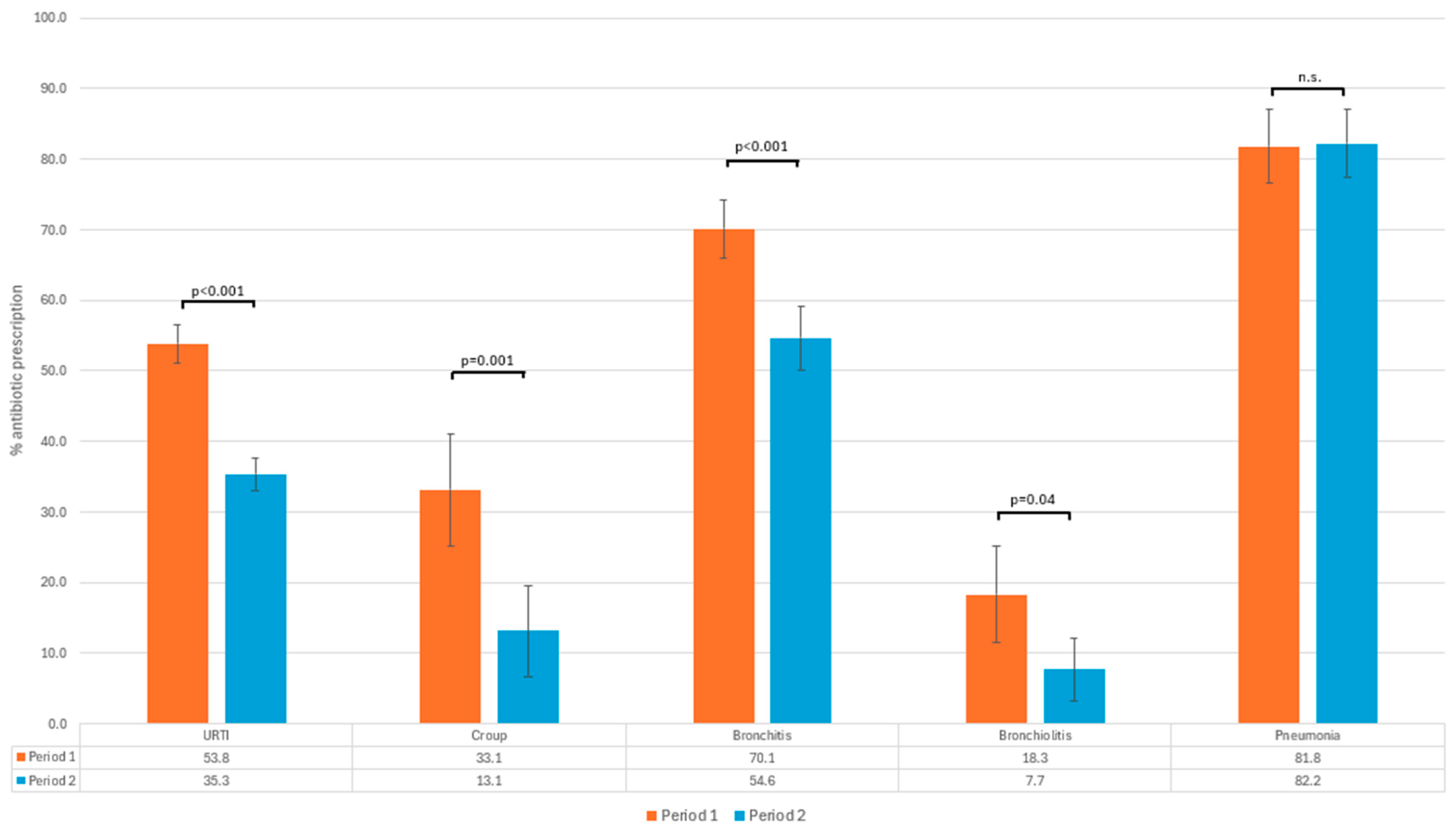
Figure 1. Post hoc analysis about differences in antibiotic prescription according to diagnosis of discharge (URTI, croup, bronchitis, bronchiolitis, and pneumonia) in Period 1 and Period 2. Error bars representing 95% confidence intervals and p-values were included. URTI = upper respiratory tract infection.
Pathogens 14 01284 g001
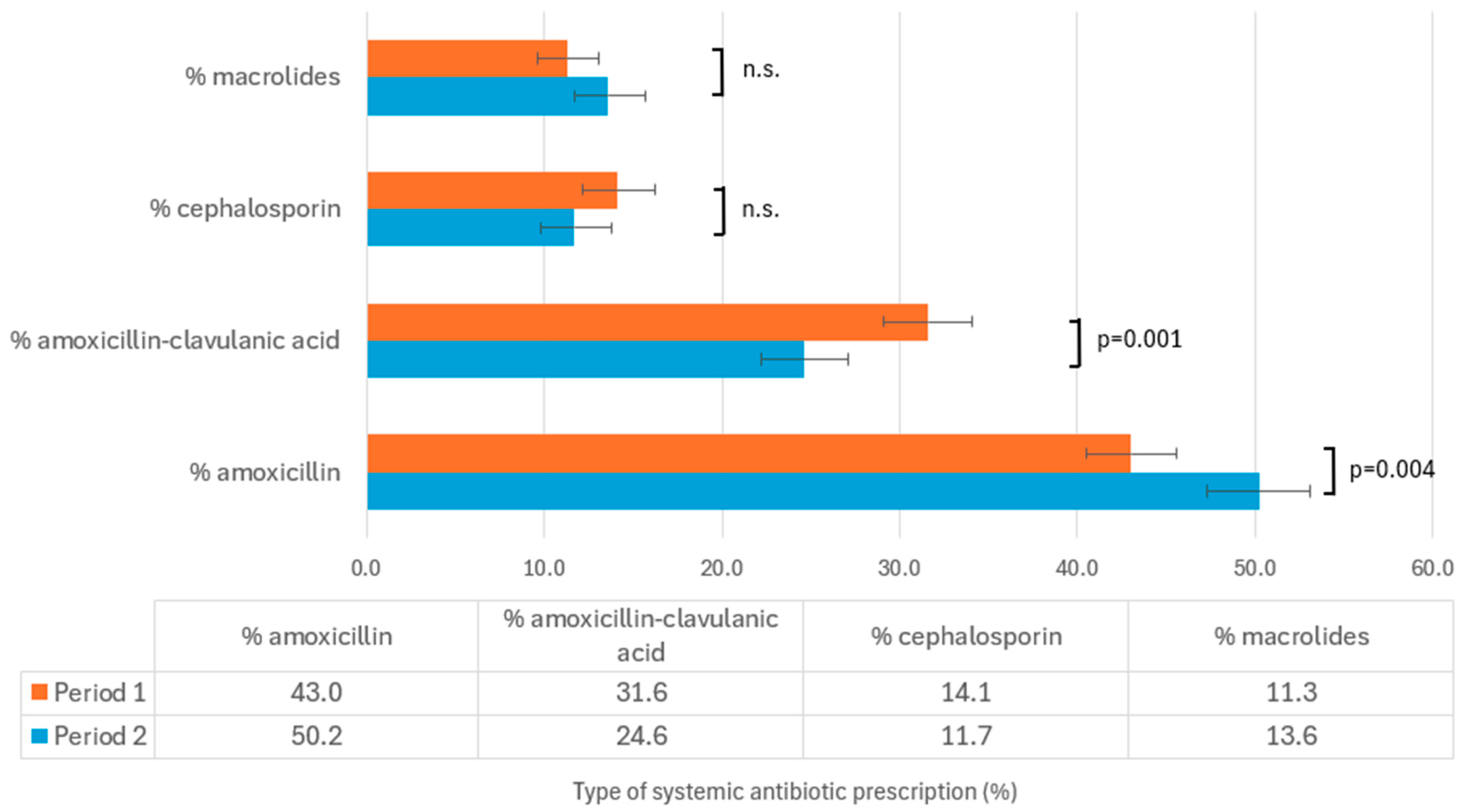
Figure 2. Post hoc analysis about differences in the type of antibiotic prescription (amoxicillin, amoxicillin-clavulanic acid, cephalosporin, and macrolides) in Period 1 and Period 2. Error bars representing 95% confidence intervals and p-values were included.
Pathogens 14 01284 g002
Table 1. Type of tests present in Period 1 and Period 2 in the Pediatric Emergency Department of IRCCS Azienda Ospedaliero-Universitaria, and the type of tests present in Period 1 and Period 2. GAS-RAD = Group A Streptococcus rapid antigen detection; RSV-RAD = Respiratory Syncytial virus rapid antigen detection; DFAs = direct immunofluorescence assays; PCR = polymerase chain reaction; COMBO = rapid multiple antigen test for SARS-CoV-2, Influenza A, and Influenza B; CPR-POC = C-Reactive protein point-of-care.
Period 1Period 2
GAS-RAD testXX
RSV-RAD testXX
DFAsX
SARS-CoV-2 antigenic test X
Multiplex PCR test X
CRP-POC X
COMBO test X
Table 2. Characteristics of the study cohort compared by Period 1 and Period 2. SD = standard deviation, IQR = interquartile range, SpO2 = saturation of peripheral oxygen, URTI = upper respiratory tract infection, n.s. = not significant.
Total Population
n = 4882
Period 1
n = 2181
Period 2
n = 2701
p
Female, n (%)2206 (45.2%)975 (44.7%)1231 (45.6%)n.s.
Age [months],
Median (IQR)
32 (15–62)28 (14–53)37 (16–70)<0.001
Weight [kg],
Median (IQR)
14 (10–20)13 (10–18)14 (10.5–20)<0.001
Heart Rate [bpm],
Mean (SD)
137 (23.34)139 (23.52)135 (23.02)<0.001
SpO2 [%],
Median (IQR)
98 (97–99)98 (97–99)98 (97–99)<0.001
Body Temperature [°C],
Mean (SD)
37.7 (1.1)37.8 (1.1)37.6 (1.1)<0.001
Fever duration [days],
Median (IQR)
2 (1–3)2 (1–3)2 (1–4)<0.001
Body temperature ≥ 38°C,
n (%)
4216 (86.4%)1856 (85.1%)2360 (87.4%)0.024
Antibiotic prior to PED,
n (%)
n.s.
-Amoxicillin 348 (44%)150 (40.9%)198 (46.8%)
-Amoxicillin-clavulanic acid 227 (28.7%)106 (28.9%)121 (28.6%)
-Cephalosporin106 (13.5%)54 (14.7%)52 (12.3%)
-Macrolides109 (13.8%)57 (15.5%)52 (12.3%)
Type of comorbidity, n (%) <0.001
-Heart disease56 (1.2%)25 (1.2%)31 (1.2%)
-Neurological disease51 (1.0%)22 (1%)29 (1.1%)
-Metabolic disease14 (0.3%)7 (0.3%)7 (0.3%)
-Genetic syndrome44 (1%)8 (0.4%)36 (1.3%)
-Kidney disease36 (0.7%)19 (0.9%)17 (0.6%)
-Immunodeficiency5 (0.1%)2 (0.1%)3 (0.1%)
-Oncological disease25 (0.5%)12 (0.6%)13 (0.5%)
-Autoimmune disease4 (0.1%)1 (0.1%)3 (0.1%)
-Lung disease150 (3.1%)43 (2%)107 (4%)
-Prematurity 54 (1.1%)19 (0.9%)35 (1.3%)
-Endocrine disease10 (0.2%)6 (0.3%)4 (0.2%)
-Febrile seizure 116 (2.4%)60 (2.8%)56 (2.1%)
Discharge diagnosis, n (%) <0.001
-URTI2986 (61.2%)1253 (57.5%)1733 (64.2%)
-Croup243 (5%)136 (6.2%)107 (4%)
-Bronchitis940 (19.2%)469 (21.5%)471 (17.4%)
-Bronchiolitis263 (5.4%)120 (5.5%)142 (5.3%)
-Pneumonia450 (9.2%)203 (9.3%)247 (9.1%)
Table 3. Antibiotic prescription, type of antibiotic prescription, execution of blood test and chest radiographs, access duration, and type of discharge between Period 1 and Period 2. IQR = interquartile range, URTI = upper respiratory tract infection, SSO = short-stay observation, LOS = length of stay; CXR = chest X-ray. ° New prescription refers to starting antibiotic therapy in untreated patients. * The percentage is relative to the respective diagnosis of discharge.
Total Population
n = 4882
Period 1
n = 2181
Period 2
n = 2701
p
Antibiotic prescription, n (%) <0.001
-new prescription °1909 (39.1%)1053 (48.3%)855 (31.7%)
-continue antibiotic424 (8.7%)183 (8.4%)241 (8.9%)
Antibiotic prescription by diagnosis, n (% *): <0.001
-URTI1286 (43.1%)674 (53.8%)612 (35.3%)
-Croup59 (24.3%)45 (33.1%)14 (13.1%)
-Bronchitis586 (62.3%) 329 (70.1%)257 (54.6%)
-Bronchiolitis33 (12.5%) 22 (18.3%)11 (7.7%)
-Pneumonia369 (82%)166 (81.8%)203 (82.2%)
Type of systemic antibiotic,
n (%)
<0.001
-Amoxicillin1082 (46.4%)532 (43%)550 (50.2%)
-Amoxicillin-clavulanic acid659 (28.3%)390 (31.6%)269 (24.5%)
-Cephalosporin302 (12.9%)174 (14.1%)128 (11.7%)
-Macrolides289 (12.4%)140 (11.3%)149 (13.6%)
Length of therapy [days], Median (IQR)7 (6–7)7 (7–7)7 (6–7)0.004
Laboratory blood tests performance, n (%)835 (17.1%)420 (19.3%)415 (15.4%)<0.001
CXRs performance, n (%)807 (16.5%)454 (20.8%)353 (13.1%) <0.001
LOS [minutes],
Median (IQR)
107 (54–193)97 (45–192)113 (60–194)<0.001
Type of discharge, n (%) 0.001
-Home4235 (86.8%)1845 (84.6%)2390 (88.5%)
-SSO289 (5.9%)159 (7.3%)130 (4.8%)
-Hospitalization358 (7.3%)177 (8.1%)181 (6.7%)
Table 4. Rapid diagnostic tests and multiplex PCR tests in PSP between Period 1 and Period 2. CRP-POC = C-Reactive Protein Point-of-Care, GAS-RAD = Group A Streptococcus rapid antigenic detection; RSV-RAD = Respiratory Syncytial virus rapid antigenic detection; PCR = Polymerase Chain Reaction; COMBO test = rapid multiple antigen test for SARS-CoV-2, Influenza A and Influenza B.
Total Population
n = 4882
Period 1
n = 2181
Period 2
n = 2701
p
CRP-POC, n (%) 447 (16.5%)
GAS-RAD, n (%)798 (16.3%)250 (11.5%)548 (20.3%)<0.001
RSV-RAD, n (%)339 (6.9%)115 (5.3%)224 (8.3%)<0.001
Rapid COMBO test, n (%) 796 (29.5%)
Multiplex PCR test, n (%) 783 (29%)
-Influenza A positive, n (%) 269(34.4%)
-Influenza B positive, n (%) 6 (0.8%)
-Parainfluenza positive, n (%) 31 (4%)
-Rhinovirus positive, n (%) 160 (20.4%)
-Metapneumovirus positive, n (%) 43 (5.5%)
-Adenovirus positive, n (%) 81 (10.3%)
-Respiratory Syncytial virus positive, n (%) 149 (19%)
Table 5. Univariate and multivariate logistic regression analysis considering antibiotic prescription as the dependent variable. OR = Odds Rate, CI = confidence interval, LOS = length of stay; CXR = Chest X-ray; CRP = C-reactive Protein; PCR = Polymerase Chain Reaction; URTI = upper respiratory tract infection; COMBO test = rapid multiple antigen test for SARS-CoV-2, Influenza A and Influenza B; POCTs = point-of-care tests; n.s. = not significant.
UnivariateMultivariate
ORIC 95%pORIC 95%p
Period 11.911.71–2.14<0.0012.011.73–2.33<0.001
LOS11.00–1.00n.s.
Age (months)1.011.01–1.01<0.0011.011.01–1.01<0.001
Sex1.050.94–1.18n.s.
Days of fever1.211.18–1.25<0.0011.191.16–1.24<0.001
Body temperature ≥ 38 °C2.21.85–2.63<0.0012.141.76–2.62<0.001
Comorbidity0.90.76–1.08n.s.
Laboratory blood tests0.880.76–1.020.0930.660.56–0.79<0.001
CXR2.472.11–2.90<0.0011.030.83–1.28n.s.
POCTs (CRP + COMBO test)0.550.48–0.63<0.0010.760.63–0.920.004
Multiplex PCR test0.50.43–0.59<0.0010.660.54–0.81<0.001
Diagnosis (ref pneumonia):1.291.23–1.34<0.001
  -URTI0.170.12–0.21<0.0010.180.13–0.24<0.001
  -croup0.070.05–0.1<0.0010.070.05–0.11<0.001
  -bronchitis 0.360.27–0.48<0.0010.410.3–0.55<0.001
  -bronchiolitis0.030.02–0.05<0.0010.050.03–0.09<0.001
Disclaimer/Publisher’s Note: The statements, opinions and data contained in all publications are solely those of the individual author(s) and contributor(s) and not of MDPI and/or the editor(s). MDPI and/or the editor(s) disclaim responsibility for any injury to people or property resulting from any ideas, methods, instructions or products referred to in the content.