



Cells, Volume 15, Issue 1 (January-1 2026) – 92 articles
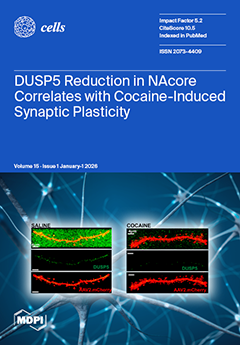
Cover Story (view full-size image):
Drug overdose remains a leading cause of preventable death in the United States, underscoring the urgent need to identify the neurobiological mechanisms that drive substance use disorders. Addiction is characterized by persistent changes in brain circuits that govern reward, motivation, and aversion, with the nucleus accumbens core (NAcore) serving as a critical locus for these adaptations. Chronic exposure to drugs of abuse produces long-lasting structural and functional synaptic modifications within the NAcore that promote compulsive drug seeking and relapse. However, the intracellular signaling mechanisms that constrain or exacerbate these maladaptive synaptic changes remain incompletely understood. View this paper
- Issues are regarded as officially published after their release is announced to the table of contents alert mailing list.
- You may sign up for e-mail alerts to receive table of contents of newly released issues.
- PDF is the official format for papers published in both, html and pdf forms. To view the papers in pdf format, click on the "PDF Full-text" link, and use the free Adobe Reader to open them.
Previous Issue
Next Issue
