




Journal Menu
► ▼ Journal Menu-
- Biomimetics Home
- Aims & Scope
- Editorial Board
- Topical Advisory Panel
- Instructions for Authors
- Special Issues
- Topics
- Sections
- Article Processing Charge
- Indexing & Archiving
- Editor’s Choice Articles
- Most Cited & Viewed
- Journal Statistics
- Journal History
- Journal Awards
- Conferences
- Editorial Office
- 10th Anniversary
Journal Browser
► ▼ Journal BrowserNeed Help?
Announcements
5 June 2026
MDPI Canada | Summary of the MDPI Subject Workshop—Crossing Boundaries: Transdisciplinarity in the Humanities
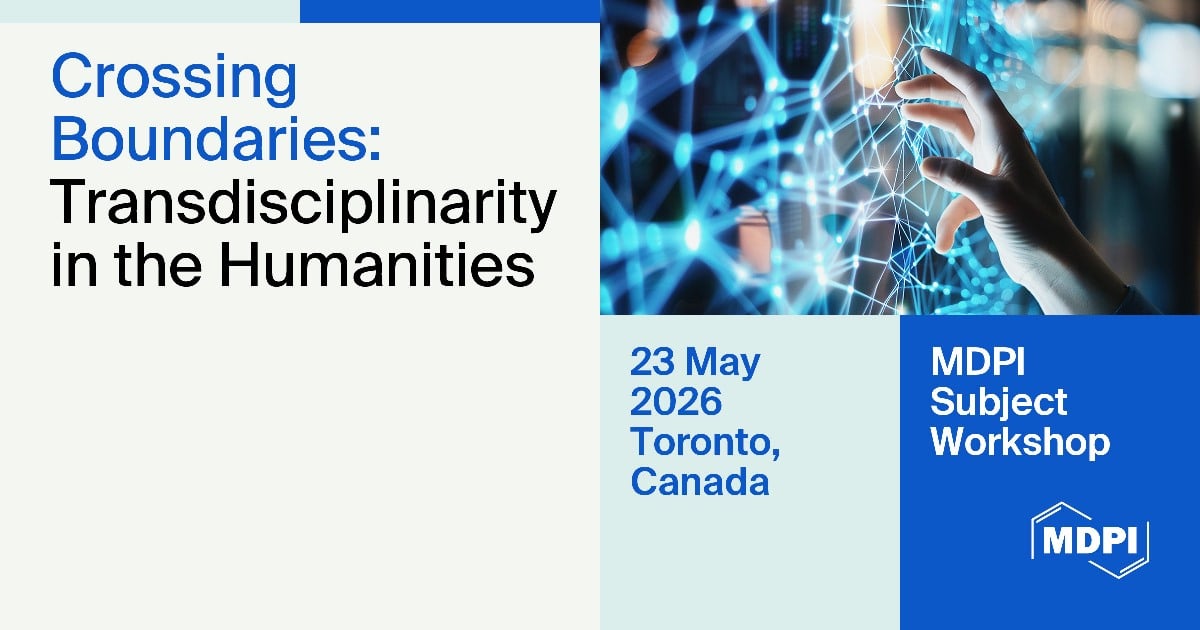
On 23 May 2026, MDPI Canada hosted their third North American subject workshop entitled “Crossing Boundaries: Transdisciplinarity in the Humanities”. This event brought together nearly 30 students and experts in the field of humanities to explore innovative, cross-disciplinary research shaping the future of the field. This meeting, held at the Sheraton Centre Toronto Hotel, located in downtown Toronto, provided a platform for in-depth scientific exchange.
Our workshop host, Summer Huggard, Operations Manager of MDPI Canada, opened the event with an introduction to our conference chair, Prof. Dr. Albrecht Classen of the University of Arizona. Prof. Dr. Classen welcomed our attendees to the event, outlining three subtopics of the workshop: AI and data in the humanities; environmental humanities; and humanities, literature, and identity. These topics emphasize the importance of interdisciplinary collaboration in addressing the direction of the humanities in our rapidly changing world. MDPI Canada’s Operating Director, Elvis Wang, then thanked all contributors and spoke about MDPI’s core principles of transparency, trusted service, integrity, and role in promoting excellence and advancing open science.
 |
 |
 |
The day’s presentations were full of exciting discussion as eleven speakers spoke about their research findings. These eleven presenters included Dr. Michael Bryson, Prof. Dr. Ahmed Elgammal, Prof. Dr. Avi Friedman, Prof. Dr. Nancy S. Steinhardt, Prof. Dr. Tom Roeper, Prof. Dr. Salikoko S. Mufwene, Dr. Lindsay Stern, Prof. Dr. Jeffrey R. Di Leo, Prof. Dr. Albrecht Classen, Dr. Ronald B. Brown, and Dr. Robert Brazeau.
The reports given covered many interesting topics, including the following: AI and data in the humanities; environmental humanities; and humanities, literature, and identity. The talks covered hot topics such as the state of the humanities with the growing prevalence of AI, architecture and urban planning as a tool to understand globalization and exercise habits, the critical role of literature studies in language development, and environmental and health studies.
 |
 |
 |
 |
 |
 |
 |
 |
 |
 |
 |
 |
 |
The second half of the day began with presentations covering the value of the humanities from a philosophical lens, literature and health study to analyze environmental protection, and concluded with an in-depth analysis of the new interconnected approach to human health studies post-pandemic.Dr. Barnaby Crook, Regional Engagement Editor at MDPI, introduced MDPI, market dynamics, and discussed relevant publishing trends in the humanities field. His presentation allowed audience members to gain greater insight into how MDPI’s journals can support researchers whose work falls within this subject and provided transparency regarding MDPI’s practices.
 |
 |
During the day’s proceedings, multiple Q&A sessions were held, allowing valuable engagement between speakers and attendees to occur. During these discussions, attendees could further develop conversations around addressing the influence of culture on human health, the effect of politics on environmental care, the benefits of open access publishing, and more. These sessions were a highlight of the event and helped build a platform for meaningful scientific exchange.
 |
 |
 |
 |
Looking Ahead
The MDPI 2026 Toronto Subject Workshop Crossing Boundaries: Transdisciplinarity in the Humanities was a successful collaboration between MDPI and local academics. We are thankful to all attendees for their part in making this event possible and for contributing to its success.
 |
 |
We have received positive feedback regarding this event and look forward to continuing to host these subject workshops, with the next being the Montreal Subject Workshop “Microelectronics, Microsystems, Sensors, and Their Applications” in September. For more updates regarding this event and other upcoming workshops, follow MDPI Canada on LinkedIn and Facebook.
4 June 2026
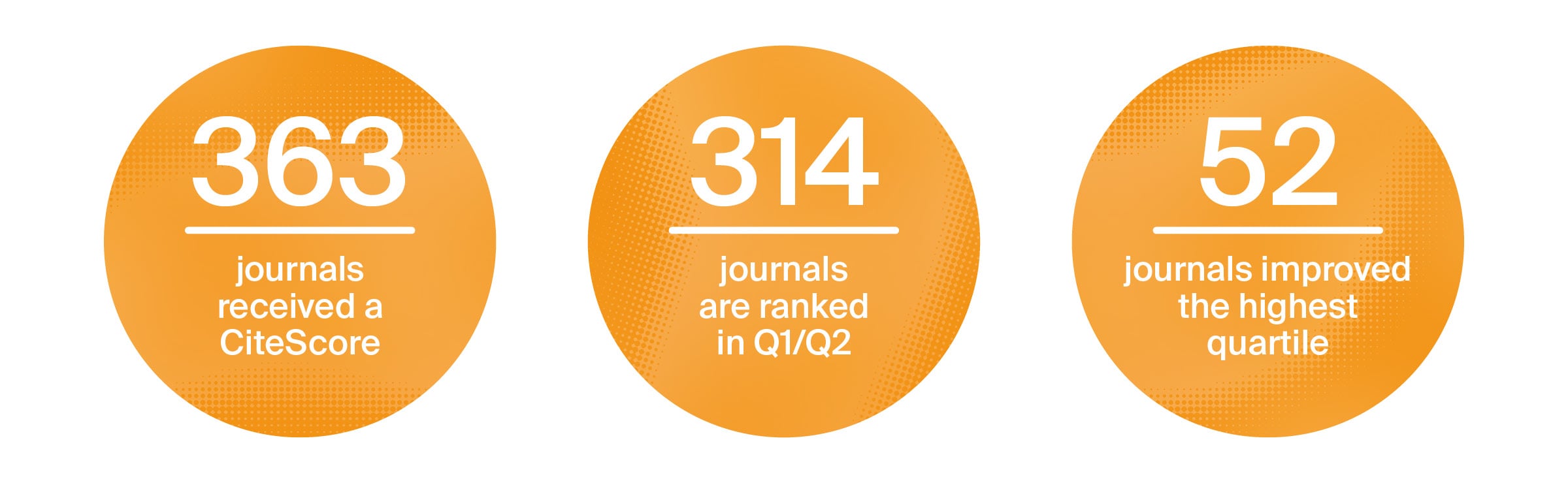
Open Access, Broadly Recognized: 363 MDPI Journals Receive CiteScores for 2025
The 2025 CiteScore metrics have been officially released by Scopus, and the results confirm what has become a consistent pattern for MDPI's journal portfolio: broad recognition across disciplines, steady improvement across the majority of ranked titles, and a growing presence at the top of subject category rankings.
CiteScore, published annually by Elsevier's Scopus database, measures the average citations received by articles published in a journal over a four-year window. As a complement to the Journal Impact Factor, which uses a two-year window based on the Web of Science database, CiteScore provides an alternative, long-term perspective on citation performance.
The 365 MDPI journals in Scopus (as of May 2026) are indexed across a wide range of subject categories, ensuring that open access research remains highly discoverable to a global readership through one of the most widely used platforms in academic publishing.
Data Summary (2025 CiteScores)
- New Additions: 41 MDPI journals received a CiteScore for the first time.
- Trending Upward: 234 of 322 previously ranked journals (73%) saw an increase in their CiteScore compared to last year.
- High Visibility: 314 journals (86%) rank in Q1 or Q2 in at least one subject category.
- Elite Performance: 42 journals rank in the top 10% of their subject categories.
Portfolio Performance
Among the 322 journals that held a CiteScore in 2024, 234 saw an increase this year. Quartile improvements outnumbered declines across the portfolio, with 52 journals moving to a higher quartile and only 20 seeing a decline. Furthermore, no previously ranked journals were removed. The 42 journals now ranked in the top 10% of their subject categories are drawn from a strong foundation of 178 journals holding a Q1 position.
With the large majority of our indexed portfolio ranked in the top half of research fields, researchers can confidently choose MDPI to meet funder mandates for high-quality, fully compliant Open Access publishing.
Exceptional Achievements for Foods and Life
Notably, both Foods and Life achieved a 99th percentile ranking in their respective subject categories for the 2025 CiteScores. This outstanding placement positions them as leading journals in their fields and highlights the high visibility and global impact of the open access research they publish.
Journal Metrics and Beyond
Journal-level metrics describe outlets, not individual articles. An increasing number of funders and institutions—including signatories of DORA and the Coalition for Advancing Research Assessment—now explicitly encourage evaluation at the article level rather than by the journal in which research appears. MDPI supports this direction: we report CiteScore alongside the Journal Impact Factor, Journal Citation Indicator, and article-level usage data because no single number captures the full reach and contribution of published research.
Thank You
These results reflect the sustained effort of thousands of editors-in-chief, editorial board members, reviewers, and authors across every field MDPI serves. The metrics are the outcome; the work is yours.
1 June 2026
MDPI INSIGHTS: The CEO’s Letter #35 – 30 Years of Open Science, Open Access Policies, Spain Summit, MMCS 2026 & Antibiotics 2026

Welcome to the MDPI Insights: The CEO's Letter.
In these monthly letters, I will showcase two key aspects of our work at MDPI: our commitment to empowering researchers and our determination to facilitating open scientific exchange.
Opening Thoughts

30 Years of Open Science, Built Together
This month, we officially launched MDPI’s 30th Anniversary campaign and dedicated anniversary website, marking an important milestone in our journey as an open access publisher. What began in 1996 with a single journal and the simple belief that scientific knowledge should be shared openly and freely has grown into a global publishing organization supporting more than 500 journals, 68,000 Editorial Board Members, and millions of researchers worldwide.
The anniversary page, entitled 30 Years of Open Science, Built Together, reflects on the people, milestones, and partnerships that have shaped MDPI over the past three decades. It includes a retrospective of our development, key moments in the evolution of open access, landmark research articles, journal anniversaries, an interview with the CEO, and perspectives from colleagues and partners who have contributed to our success.

Looking back, one of the most striking aspects of our journey is not simply our growth, but the broader transformation of scholarly publishing itself.
Open access has moved from a niche concept to a widely adopted publishing model, helping make research more accessible, discoverable, and impactful for researchers, institutions, policymakers, and society.
MDPI has been part of this transition and continues to invest in the people, technology, partnerships, and research integrity infrastructure needed to support high-quality open science at scale.
While anniversaries naturally encourage reflection, they are also an opportunity to look ahead. The challenges facing scholarly publishing today, including research integrity, artificial intelligence, accessibility, and global participation in science, will require continued collaboration across the research ecosystem. As we celebrate 30 years of publishing, our focus remains on supporting researchers, strengthening trust in open science, and helping shape the future of scholarly communication together.
I encourage you to visit the anniversary page, explore the milestones, and take a moment to reflect on the role each of us has played in contributing to MDPI’s story.
Thank you for being part of this journey.
Impactful Research

Highlights from MMCS 2026 in Beijing (14-17 May)
From 14–17 May, MDPI hosted The 5th Molecules Medicinal Chemistry Symposium (MMCS 2026) in Beijing, China, bringing together academia and industry to explore advances in chemical biology, medicinal chemistry, and drug discovery.
The conference hosted more than 230 attendees from 37 countries and regions, alongside 257 submissions and 145 accepted abstracts. With a significant increase in attendance – up by 100 participants compared with the previous edition – the popularity of MMCS continues to grow in terms of its international profile and scientific relevance within this rapidly evolving field.

The scientific program covered seven themes:
- Chemical Biology for Drug Discovery
- Medicinal Chemistry Research Progress
- Natural Products in Drug Discovery
- AI-enabled Drug Discovery
- GPCR & Ion Channel Targeted Drug Development
- Innovative Proximity-Based Drug Modalities
- Biocatalysis for Natural Product & Drug Synthesis
The event featured three plenary speakers, 14 keynote speakers, 35 selected oral presentations, and 98 poster presentations, creating opportunities for open scientific exchange and collaboration. Conference Chair Prof. Dr. Diego Muñoz-Torrero described this edition as one of the most successful MMCS events to date.
|
|
|


Thanks to our Sponsors
MMCS 2026 secured sponsorship support from 12 industrial partners, 11 of which set up on-site exhibition booths. Covering biopharmaceutical R&D, life science supplies, pharmaceutical experimental instruments, and industrial service sectors, exhibitors were able to connect their businesses directly with attendees and make connections at the conference.

30th Anniversary Celebration of Molecules
During the conference, we also celebrated the 30th anniversary of Molecules, one of MDPI’s flagship journals. The celebration brought together Section Editors-in-Chief, Editorial Board Members, MDPI leadership, and editorial colleagues to reflect on the journal’s development, achievements, and continued future growth.

Events such as MMCS 2026 highlight the important role conferences play in creating scientific exchange and collaboration, and in connecting our research communities in person.
They also reflect the continued development of MDPI’s conference portfolio and our commitment to supporting academic engagement beyond publishing alone. Thanks to everyone involved in organizing and contributing to the success of this event.
Inside MDPI

Open Access Policies Continue to Accelerate Globally
One of the clearest indicators of the continued momentum behind open access is the growing number of national and institutional policies supporting, and increasingly requiring, open dissemination of research.
Around the world, governments, funding agencies, and universities are building their open access mandates, with increasing focus on transparency, rights retention, and public accessibility of publicly funded research. While these policies vary across regions, the broader direction is clear: expectations around openness and compliance continue to accelerate.
For researchers, navigating these evolving requirements can be complex and time-consuming. Supporting the research community therefore means not only publishing high-quality open access content but also helping stakeholders better understand changing requirements and emerging opportunities. At MDPI, we see this as an important part of our role within scholarly communication.
“Expectations around openness and compliance continue to accelerate”
Through the MDPI Blog, our Content team continues to publish monthly articles overviewing different countries’ relationships with open access, exploring their histories, policies, opportunities, and statistics. All this information is centralized into an article which contains brief summaries of each country, with links to all the full articles, and is updated monthly.
Recent Policy Developments
South Africa
In 2026, South Africa’s Department of Science and Innovation introduced the South African Open Science Policy. The policy states that: “Open access shall be required for publications arising from publicly funded research, and desirable for research from all sources of funding.”
The policy envisions a coordinated and broad approach to open science that will sustainably and ethically drive socio-economic development by increasing the practice of open science through policy, training, incentivization, and infrastructure.
Canada
In Canada, the Tri-Agency OA Policy on Publications was revised, removing the 12-month embargo for research that must be deposited in a repository with an open license and with author rights retained.
The Agencies argue that “societal advancement is made possible through widespread and barrier-free access to cutting-edge research and knowledge.”
Chile
Chile is a collaborative and engaged member of the global open access movement.
The National Research and Development Agency (Agencia Nacional de Investigación y Desarrollo, or ANID) is Chile’s main funding agency for R&D. It mandates that all beneficiaries must deposit the final version of their published scientific output, with an embargo period of up to 12 months, into a repository.
ANID also supports the InES Open Science funding program, which allows universities to request funding for capacity and infrastructure building. Further, Chile is an active participant in various international initiatives, such as Redalyc, SciELO, and Red de Repositorios Latinoamericanos.
Openness Beyond Research
At MDPI, openness remains one of our core values, ensuring that research outputs are freely accessible to anyone. This commitment also extends to sharing knowledge about the scholarly publishing landscape itself, which we practice on the MDPI Blog through various topics, including open access, recent advances in science, and opportunities for researchers.
As the open access landscape continues to evolve, helping researchers, institutions, editors, and partners navigate these changes will remain an important priority for us.

Thank You
I would like to thank Jack McKenna (Senior Content Specialist, MDPI) from our Content team for his ongoing work on the MDPI Blog series covering global open access policy developments. Initiatives such as this help make complex policy discussions more accessible and useful to the wider research community.
Coming Together for Science

Reflections from the MDPI Spain Summit 2026 in Valencia (21 May)

On 21 May, we hosted the MDPI Spain Summit 2026 in Valencia.
The Summit brought together 30 Editorial Board Members and MDPI colleagues for a discussions on the future of publishing, research integrity, peer review, artificial intelligence, and the evolving research landscape in Spain.
We hosted participants from leading Spanish institutions and spoke on the importance of Spain as a major contributor to global open access (OA) research. In 2025 alone, Spain ranked among the leading countries worldwide for OA publishing, with more than 85% of publications made openly accessible. MDPI also continues to play a significant role within the Spanish research ecosystem.
MDPI in Spain
Spain remains one of MDPI's most important academic markets and a leading contributor to OA research globally. Ever since our Barcelona office opened in 2016 (Happy 10th Anniversary!), MDPI Spain has been actively supporting researchers, institutions, societies, and academic partners across the country. Today, the office plays an important role in creating engagement with the Spanish scholarly community through editorial support, partnerships, conferences, training initiatives, and outreach activities.
A cluster of high-level indicators highlight both the strength of the local research ecosystem and MDPI’s role within it:
- 43,218 total publications in Spain in 2025, of which 35,728 (83%) were open access (49% Gold OA).
- 211,200+ total publications (2021–2025), with 84% published open access.
- 13,444 MDPI publications from Spanish institutions in 2025, representing 14% of all open access publications in Spain.
- More than115,100 MDPI publications from Spanish institutions since 1996.
- More than 4,500 Editorial Board Members from Spain, including more than 150 Chief Editors and 57 Associate Editors.
- 42 institutional partners participating in MDPI’s Institutional Open Access Program (IOAP).
- Spain ranks second globally for MDPI society affiliations, with 26 affiliated society agreements currently in place.
Program Overview
What made this summit special was the openness of the discussions around the research landscape in Spain and the role MDPI plays within the market. General topics of the presentations included:
- MDPI Introduction – Stefan Tochev (CEO).
- Engagement with the Academic Community – Dr. Marta Colomer (External Affairs Lead).
- Latest Developments in the Editorial Process – Dr. Jordi Martinez (Deputy Managing Editor).
- Research integrity and Publication Ethics – Slavomir Nikodijevic (Research Integrity Specialist).
- A 360 View of Academic Publishing – Prof. Dr. Luis Angel Ruiz Fernandez (EBM of Remote Sensing).
|
|
|
|
|
|
|
|


Panel Discussion
We also hosted a panel discussion moderated by Marta, entitled “The Future of Academic Publishing” with Prof. Luis Ruiz, Prof. Marta Feliz (EBM of the journal Catalysts), Dr. Enric Sayas (Product Owner, AI & Technology Innovation), and myself. The discussion looked at the evolving role of editors, the future of peer review, and the growing importance of maintaining trust, ethics, and research integrity in an era increasingly influenced by artificial intelligence.
|
|
|
|


Themes from the Summit
Several themes emerged throughout the discussions, reflecting broader conversations taking place across publishing:
- The academic community values efficient publishing workflows, but expectations around scientific quality and editorial rigor continue to rise.
- Reviewer fatigue and long-term sustainability of peer review remain major challenges across the industry.
- AI is rapidly changing scholarly communication and requires transparent and responsible governance.
- Reputation and trust continue to depend on long-term engagement, transparency, and quality-focused decision-making.
“Maintaining an open dialogue with researchers, editors, reviewers, and institutions remains a priority for MDPI”
It was constructive to see the willingness of participants to engage directly and candidly with us. These conversations provide insights that help inform how we continue to develop our editorial processes, engagement activities, and support for the research community. While certain discussions included concerns, there was also recognition that open dialogue between publishers and the research community is essential if we want to improve scholarly communication together.
|
|
|
|


Events such as this are increasingly important for MDPI. They allow us to present our perspective, to listen to the experiences, expectations, and concerns of editors, reviewers, and researchers, and to address these accordingly.
Thank You
Thank you to our Barcelona Office and all colleagues involved in organizing the summit, as well as all participants for contributing to these thoughtful and constructive discussions.
|
|
|
|
|
|
|
|


As publishing continues to evolve, maintaining an open dialogue with researchers, editors, reviewers, and institutions remains an important priority for MDPI. Events such as the Spain Summit play an important role in helping us to build relationships, foster trust, and better understand the needs of our community.
Closing Thoughts

Highlights from Antibiotics 2026 in Barcelona (11–14 May)
This week, MDPI hosted the Antibiotics 2026 — Advances in Antimicrobial Action and Resistance conference in Barcelona, bringing together academics and industry experts to discuss one of the most important scientific and public health challenges of our time: antimicrobial resistance.
The conference welcomed 145 attendees from 42 different countries and territories, alongside 265 submissions and 127 accepted abstracts, showing the international reach of the event and the strong scientific interest in this rapidly evolving field.

Scientific Exchange on a Global Challenge
Antimicrobial resistance continues to be a global concern, creating collaboration across disciplines, institutions, and regions. The conference program focused on a range of topics including:
- Antimicrobial resistance mechanisms
- One Health approaches to antimicrobial stewardship
- Discovery of novel antimicrobial agents
- Innovation in clinical strategies and treatment approaches
- Ethnopharmacology and emerging therapies
Through keynote plenaries, invited lectures, oral presentations, and poster sessions, the conference created a platform for dialogue and scientific exchange.
|
|
|


International Participation and Collaboration
One of the highlights of the event was the diversity of participation across both geography and expertise. Researchers and speakers from Europe, North America, Asia, Africa, Australia, and Latin America took part in discussions throughout the conference, highlighting the global nature of both the challenge and the scientific response.
The scientific program included:
- 2 keynote speakers
- 10 invited speakers
- 36 selected talks
- 78 posters
The conference brought together perspectives from academia, healthcare, and industry, helping facilitate interdisciplinary collaboration around future approaches to antimicrobial research and resistance management.
|
|
|
|


The Role of Conferences in Scholarly Communication
Conferences are an important platform for collaboration, scientific exchange, and community-building. Events such as Antibiotics 2026 show the value of bringing researchers together in person to discuss emerging challenges, share new findings, and strengthen international networks across disciplines and regions.

Thank You
I would like to thank the conference chairs, speakers, participants, sponsors, and the entire MDPI conference team for their work in making this event a success. The engagement and positive feedback from attendees highlight the importance of our events in addressing some of the most pressing scientific challenges facing society today.

Chief Executive Officer
MDPI AG
27 May 2026
Biomimetics | Issue Cover Articles in the Second Half of 2024

The articles listed below have been selected by the Editorial Office of Biomimetics (ISSN: 2313-7673) as the cover articles for Issues 7–12 of Volume 9. These papers showcase the latest research developments within the journal’s scope, and we hope they will inspire new ideas and directions for scholars and authors working in these fields. For full access to all articles in Volume 9, please visit https://www.mdpi.com/2313-7673/9.
 |
“Biomimetic Approaches in Scaffold-Based Blood Vessel Tissue Engineering” Cover story: Aorto-coronary bypass, the most common surgery for coronary artery disease, faces challenges due to limitations in autologous tissue availability and the shortcomings of synthetic grafts. Consequently, there is a growing interest in tissue engineering approaches to developing vascular substitutes. This review provides an updated overview of vascular tissue engineering, emphasizing the design of scaffolds and dynamic culture conditions through a biomimetic approach. Although there is still a gap between benchtop innovation and clinical translation, the use of biomimicry to replicate the structure–function relationships of the arterial wall has shown promising results. Thus, a multifaceted biomimetic approach could be key to ensuring the successful translation of vascular tissue engineering into clinical practice. |
 |
“Fabrication and Characterization of Graphene–Mesoporous Carbon–Nickel–Poly(Vinyl Alcohol)-Coated Mandrel-Coiled TCPFLNR Artificial Muscle” Cover story: The study explores enhancing mandrel-coiled twisted and coiled polymer fibers with a nichrome heater (TCPFLNR) by coating them with a graphene-mesoporous Carbon–Nickel–Polyvinyl Alcohol (PVA) solution. The one-pot synthesis involved graphene, Ni nanoparticles, mesoporous carbon, and PVA. The coated TCPFLNR, after annealing, showed improved thermal conductivity and actuation. Experiments on 60 mm actuators revealed significant improvements in actuation displacement (18% to 36%) and strain (20% to 42%) under various loads with a 2.16 W input. The nanomaterial coating enhances reliability, enabling over 75,000 actuation cycles and reducing power consumption from 6% to 9%. This research paves the way for optimizing electrothermally operated TCP actuators. |
 |
“How Multifunctioning Joints Produce Highly Agile Limbs in Animals with Lessons for Robotics” Cover story: This study reviews how multifunctioning joints produce highly agile limbs in animals and, in doing so, offers lessons for robotics. Multifunctioning joints lead to a high degree of compactness, which then leads to a host of benefits such as low mass, low moment of inertia and low drag. This study presents three case studies—the human wrist joint, knee joint and foot joints—in order to identify how multifunctioning is achieved. A key finding is that multifunctioning is achieved through various means: multiple degrees of freedom, multifunctioning parts, over-actuation and reconfiguration. Muscle also makes an important contribution to animal agility by performing multiple functions including providing shape and protection. This study reviews the field’s progress in achieving multifunctioning in robot joints particularly for the wrist, knee and foot. |
 |
“A Microfluidic Design for Quantitative Measurements of Shear Stress-Dependent Adhesion and Motion of Dictyostelium discoideum Cells” Cover story: The mechanical aspects of cell adhesion and motility are under intensive investigation due to their crucial relation to the behavior of many natural and synthetic cellular biosystems. To move this field forward, new platforms to study cellular adhesion are required. Amoebae are excellent model microorganisms for further biomimetic development. To move this field forward, this work proposes and tests a new microfluidic platform coupled with time-lapse video microscopy to study cell adhesion and motility under highly controlled shear forces. The detachment and movement of the adhesion-competent and adhesion-deficient mutant strains were analysed. In addition to validating the tool’s functionality, it revealed the effect of cell density on adhesion properties, which we attributed to a never-before-reported hydrodynamic shielding effect. |
20 May 2026
Meet Us at the 10th World Congress of Biomechanics 2026, 11–15 July, Vancouver, BC, Canada

We are pleased to announce that MDPI will be exhibiting at the 10th World Congress of Biomechanics 2026, taking place from 11 to 15 July 2026 in Vancouver, BC, Canada.
The 10th World Congress of Biomechanics is one of the premier global gatherings in the field of biomechanics, bringing together leading researchers, engineers, clinicians, and industry experts to share knowledge and explore the latest scientific and technological advances.
With a diverse and forward-looking scientific program, the congress will highlight cutting-edge research across areas such as musculoskeletal biomechanics, injury prevention, rehabilitation engineering, biomedical devices, tissue engineering, human movement science, and emerging innovations, including artificial intelligence and data-driven approaches in biomechanics.
Why visit MDPI’s booth?
Join us at MDPI’s booth to discover how we are advancing open science by supporting rapid, transparent, and accessible research dissemination.
- Learn more about MDPI’s open access publishing model and commitment to advancing open science;
- Explore journals covering biomechanics, biomedical engineering, and clinical sciences;
- Connect with the MDPI editorial team to discuss publishing opportunities and collaborations;
- Pick up conference materials and MDPI giveaways.
The following MDPI journals will be represented:
- Biomechanics;
- Biomimetics;
- Muscles;
- Prosthesis;
- Sports;
- Applied Bioscience;
- Biophysica;
- Bioengineering;
- Journal of Functional Morphology and Kinesiology;
- Robotics.
If you are planning to attend the 10th World Congress of Biomechanics, we would be delighted to meet you in person. Visit us at booth 41 to speak with our team and learn how MDPI can support the visibility and impact of your research.
We look forward to welcoming you in Vancouver!
7 May 2026
Meet Us at the 2026 International Conference on Unmanned Aircraft Systems (ICUAS 2026), 15–18 June 2026, Corfu, Greece

MDPI will be attending the 2026 International Conference on Unmanned Aircraft Systems, ICUAS 2026, from 15 to 18 June 2026 in Corfu, Greece. We welcome researchers from diverse backgrounds to visit our booth and share their latest ideas with us.
Organized by the ICUAS Association, Inc., ICUAS 2026 will offer unique opportunities to meet, interact, and shape the future of unmanned aviation worldwide, bringing together technical, regulatory, and legal communities.
ICUAS 2026 centers around a wide spectrum of topics, with emphasis given to:
- Soft aerial robots;
- Cooperative aerial manipulation;
- Bio-inspired aerial robots;
- Aerial robot aerodynamics;
- Multi-mode unmanned platforms;
- Reconfigurable UAVs;
- Multi-mode unmanned platforms;
- Learning-based perception;
- Navigation and control;
- Online autonomy;
- Real-time applications;
- Human factors and ethical AI for aerial robots;
- Regulations, policies, and safety.
In addition to the technical sessions, a twofold objective is:
- Industry and company participation for attendees to find out about the current state of technology and of commercially available products for civil and public domain applications;
- Understanding technical requirements and standards that are prerequisites to UAS full utilization and integration into the national airspace.
The following MDPI journals will be represented:
- Drones;
- Aerospace;
- Standards;
- Telecom;
- Robotics;
- Safety;
- Electronics;
- Biomimetics;
- Applied Mechanics;
- Journal of Imaging;
- Actuators;
- Signals;
- Sensors;
- Inventions;
- Automation;
- Journal of Sensor and Actuator Networks;
- Technologies;
- IoT.
We welcome you to visit the MDPI booth in Corfu at the Divani Corfu Palace. Our representatives are excited to meet you in person and will address any questions you may have. For further details about the conference, please visit the following website: https://uasconferences.com/2026_icuas/.
6 May 2026
Biomimetics Best Paper Award—Winners Announced
The editorial team would like to congratulate the winners of the Biomimetics 2024 Best Paper Award, chosen by a selection committee chaired by the journal’s Associate Editor, Dr. Marc Weissburg. All papers published in 2024 in Biomimetics (ISSN: 2313-7673) were considered for the award. After a thorough evaluation of the papers’ originality and significance, citations, and downloads, two winners were selected.
Prize:
- One research article and one review will be selected;
- Each winner will receive CHF 500, a certificate, and a voucher to waive the Article Processing Charges (APCs) for one submission to the journal (subject to peer review), valid for one year.
Article:
“Bioinspired Design and Experimental Validation of an Aquatic Snake Robot”
by Giovanni Bianchi, Luca Lanzetti, Daniele Mariana and Simone Cinquemani
Biomimetics 2024, 9(2), 87; https://doi.org/10.3390/biomimetics9020087
Available online: https://www.mdpi.com/2313-7673/9/2/87
Review:
“Transforming Object Design and Creation: Biomaterials and Contemporary Manufacturing Leading the Way”
by Antreas Kantaros, Theodore Ganetsos and Florian Ion Tiberiu Petrescu
Biomimetics 2024, 9(1), 48; https://doi.org/10.3390/biomimetics9010048
Available online: https://www.mdpi.com/2313-7673/9/1/48
Please join us in congratulating the winners of the Biomimetics Best Paper Award. We would also like to take this opportunity to thank all of our authors for their continued support.
Biomimetics Editorial Office
6 May 2026
Biomimetics Travel Award—Winner Announced

We are delighted to announce the winner of the Biomimetics 2026 Travel Award. This award is presented every year to encourage junior scientists to present their latest research at academic conferences in the field of materials science, mechanical engineering, nanotechnology, and biomedicine, helping to grow their profile.
Please join us in congratulating the following winner:
Name: Jianhui Liu (Harvard University, USA)
Conference: 75th Lindau Nobel Laureate Meeting (Interdisciplinary)
Presentation title: “Nature-Inspired Hybrid Materials for Biomedical Innovation”
We extend our warmest congratulations to the winner. Biomimetics (ISSN: 2313-7673) is proud to support their research dissemination and looks forward to the impact of their presented work. We also thank all applicants for their high-quality submissions.
Biomimetics Editorial Office
6 May 2026
Meet Us at the 2026 IEEE International Symposium on Circuits and Systems, 24–27 May 2026, Shanghai, China

Conference: 2026 IEEE International Symposium on Circuits and Systems
Date: 24–27 May 2026
Location: Shanghai, China
The IEEE International Symposium on Circuits and Systems (ISCAS) is the flagship conference of the IEEE Circuits and Systems Society and the world’s premier forum for researchers in the active fields of theory, design and implementation of circuits and systems.
ISCAS 2026 is driven by the theme “Circuits and Systems for Intelligent Society”, catalyzing transformative innovation at the intersection of circuits, systems, and artificial intelligence to faster the development of a smart and sustainable society.
The symposium highlights a wide range of innovation themes, including artificial intelligence and deep learning, smart systems for automotive, brain innovation neurotechnologies, intelligent cyber security systems, food security and climate change, ultra-low-power circuits and systems.
MDPI will be attending this event as an exhibitor, welcoming researchers from diverse backgrounds to visit and share their latest ideas.
The following open access journals will be represented at this conference:
- Electronics;
- JLPEA;
- ASI;
- Micromachines;
- Analog;
- Biomimetics;
- Chips;
- Hardware;
- JETA;
- Microelectronics;
- Semiconductors and Heterogeneous Integration;
- Signals.
6 May 2026
Biomimetics Outstanding Reviewer Award—Winners Announced
We are pleased to announce the winners of the Biomimetics 2025 Outstanding Reviewer Award. The Editorial Board and editorial team of Biomimetics (ISSN: 2313-7673) would like to acknowledge the time and effort dedicated by reviewers in evaluating manuscripts submitted to this journal, which has maintained Biomimetics’ reputation for high quality and quick turnaround.
Winners:
- Fiaz Hussain, from Gachon University, Republic of Korea;
- Jingfeng Yang, from Shenzhen Polytechnic University, China;
- Nikolaos P. Theodorakatos, from National Technical University of Athens, Greece;
- Guangchao Wan, from College of Engineering and Computer Science, United States.
Prize:
- CHF 500;
- A certificate;
- A voucher to waive the Article Processing Charges (APCs) for one submission to the journal (subject to peer review), valid for one year.
Biomimetics Editorial Office
