




Next Issue
Volume 18, December-2
Previous Issue
Volume 18, November-2
 
 
materials-logo

Journal Browser

Journal Browser

Materials, Volume 18, Issue 23 (December-1 2025) – 220 articles
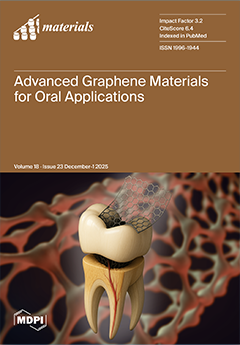
Cover Story (view full-size image): Graphene is a highly promising material for advanced oral applications owing to its exceptional physicochemical and mechanical properties. However, conventional production routes raise safety concerns, which limits its integration into dental formulations. In this context, we employ biomolecule-mediated exfoliation strategies using natural polyphenols, proteins, and polysaccharides to obtain biocompatible graphene materials suitable for dental applications. The practical relevance of these materials in dentistry is demonstrated through their application as functional fillers in dental cements, luting agents, endodontic sealers, and restorative composites, as well as advanced protective coatings for dental substrates and devices. Furthermore, mechanistic insights are provided into how exfoliation-driven structural modifications dictate material performance in specific dental contexts. View this paper
  • Issues are regarded as officially published after their release is announced to the table of contents alert mailing list.
  • You may sign up for e-mail alerts to receive table of contents of newly released issues.
  • PDF is the official format for papers published in both, html and pdf forms. To view the papers in pdf format, click on the "PDF Full-text" link, and use the free Adobe Reader to open them.
Order results
Result details
Section
Select all
Export citation of selected articles as:
19 pages, 4564 KB  
Article
Efficient Removal of Fluorine from Leachate of Spent Lithium Iron Phosphate Calcine by Porous Zirconium-Based Adsorbent
by Shengqi Gong, Haijun Huang, Yizheng Wang, Fupeng Liu, Zaoming Chen, Tao Jiang, Ruzhen Peng, Jinliang Wang and Xirong Chen
Materials 2025, 18(23), 5475; https://doi.org/10.3390/ma18235475 - 4 Dec 2025
Viewed by 391
Abstract
During the recycling process of spent lithium-ion batteries (LIBs), there is a large number of fluoride ions in the leaching solution. These fluoride ions not only affect the quality of lithium products, but they also have adverse effects on the environment. Therefore, the [...] Read more.
During the recycling process of spent lithium-ion batteries (LIBs), there is a large number of fluoride ions in the leaching solution. These fluoride ions not only affect the quality of lithium products, but they also have adverse effects on the environment. Therefore, the efficient and deep removal of the characteristic pollutant fluoride ions is currently a hot topic in the field of recycling spent LIBs. In this study, a porous zirconium-based adsorbent was prepared and its adsorptive properties were characterized. Due to the excellent affinity between zirconium and fluorine, the zirconium-based adsorbent exhibited excellent adsorption performance in the leaching solution of spent lithium iron phosphate (SLFP) batteries. Under the optimal adsorption conditions, the adsorption capacity reached 113.78 mg/g, and it surpassed most commercial adsorbents. The zirconium-based adsorbent followed the Langmuir isotherm model for fluoride adsorption with correlation coefficients consistently exceeding 0.95, and exhibited pseudo-second-order kinetics, demonstrating goodness-of-fit values above 0.998. The negative Gibbs free energy change thermodynamically confirms the spontaneous nature of the adsorption process. The structure of the adsorbent before and after adsorption was characterized, and the adsorption mechanism was elaborated in detail. Furthermore, the influence of the coexistence of different anions on the adsorption of fluoride ions by zirconium-based adsorbent was studied in a real leaching solution from SLFP calcine. This study provides a feasible approach to deep defluoridation for leachate from spent LIBs, and has the advantages of simple operation and high adsorption capacity. Full article
(This article belongs to the Special Issue Adsorption Materials and Their Applications (3rd Edition))
Show Figures

Graphical abstract

21 pages, 2243 KB  
Review
Antimicrobial Biomaterials Based on Composites of Metal Nanoparticles and Plant Extracts
by Assem Mukhtarkhanovna Kaliyeva and John G. Hardy
Materials 2025, 18(23), 5474; https://doi.org/10.3390/ma18235474 - 4 Dec 2025
Viewed by 523
Abstract
The global challenge of antimicrobial resistance, as well as the need to develop safe and environmentally sustainable materials, has served to stimulate research interest in antimicrobial technologies. The abundance, degradability and environmental friendliness of biopolymers means that they are widely used in medicine, [...] Read more.
The global challenge of antimicrobial resistance, as well as the need to develop safe and environmentally sustainable materials, has served to stimulate research interest in antimicrobial technologies. The abundance, degradability and environmental friendliness of biopolymers means that they are widely used in medicine, pharmacy, and cosmetology. The focus of this mini review is the development of biopolymer matrices with antimicrobial properties imparted via the inclusion of metal nanoparticles and plant extracts. The review also examines innovative technologies, including photocatalytic systems and intelligent coatings with mechanisms for the controlled release of active substances that can be used to combat microbial infections. We believe that such materials have significant potential for eventual translation to products in the real world. Full article
Show Figures

Graphical abstract

18 pages, 5271 KB  
Article
Distinct Responses of Corrosion Behavior to the Intermetallic/Impurity Redistribution During Hot Processing in Micro-Alloyed Mg Alloys
by Yiming Jin, Hong Yang, Jan Bohlen, Björn Wiese and Yan Su
Materials 2025, 18(23), 5473; https://doi.org/10.3390/ma18235473 - 4 Dec 2025
Viewed by 305
Abstract
By tuning the extrusion parameters, the corrosion performances of as-extruded Mg-0.5Zn(-0.2X) alloys (X: Ca/Sr/Ag/In/Cu, denoted as Z05, Z0502-Ca, Z0502-Sr, Z0502-Ag, Z0502-In and Z0502-Cu, respectively) with similar grain sizes were investigated and compared with their as-cast counterparts. The formed Fe-Si precipitates after hot processing [...] Read more.
By tuning the extrusion parameters, the corrosion performances of as-extruded Mg-0.5Zn(-0.2X) alloys (X: Ca/Sr/Ag/In/Cu, denoted as Z05, Z0502-Ca, Z0502-Sr, Z0502-Ag, Z0502-In and Z0502-Cu, respectively) with similar grain sizes were investigated and compared with their as-cast counterparts. The formed Fe-Si precipitates after hot processing significantly accelerate the corrosion rates of Z05, Z0502-Ag and Z0502-In, whereas the driving force from the Fe-encapsulated MgCaSi(Fe) and MgSrSi(Fe) precipitates are not as strong in Z0502-Ca and Z0502-Sr. Impacts from Fe impurity in Z0502-Cu are masked in the fast corrosion due to the noble Mg2Cu intermetallics. Fe precipitation during hot processing is critical for micro-alloyed systems, as the changes in intermetallic/impurity distributions impact the corrosion performances profoundly. The enthalpy of formation and the potential difference are the key factors that influence the distribution of precipitate during hot processing. Full article
(This article belongs to the Section Metals and Alloys)
Show Figures

Figure 1

20 pages, 4077 KB  
Article
Influence of Cooling Strategies on Surface Integrity After Milling of NiTi Alloy
by Małgorzata Kowalczyk
Materials 2025, 18(23), 5472; https://doi.org/10.3390/ma18235472 - 4 Dec 2025
Viewed by 304
Abstract
Nickel–titanium (NiTi) alloys are extensively utilised in aerospace, biomedical, and precision engineering applications due to their distinctive functional properties, including superelasticity and the shape memory effect. However, their poor machinability and strong sensitivity to cutting conditions render it challenging to obtain surfaces with [...] Read more.
Nickel–titanium (NiTi) alloys are extensively utilised in aerospace, biomedical, and precision engineering applications due to their distinctive functional properties, including superelasticity and the shape memory effect. However, their poor machinability and strong sensitivity to cutting conditions render it challenging to obtain surfaces with stable functional integrity. The present study investigates the impact of diverse cooling methodologies—namely dry machining, minimum quantity lubrication (MQL) and cryogenic cooling employing liquid nitrogen (LN2)—on the three-dimensional (3D) surface topography of NiTi alloy following milling. A comprehensive set of three-dimensional surface roughness parameters was employed to quantify the surface geometry and evaluate its potential functional performance. The findings indicated that both dry milling and MQL yielded significantly divergent surface parameters, suggesting unstable surface formation, which may potentially compromise component durability. MQL frequently resulted in topographies that were functionally detrimental and characterised by high parameter dispersion. In contrast, cryogenic cooling (LN2) resulted in the most homogeneous surface topography, as evidenced by the lowest dispersion of 3D roughness indicators. To strengthen the analysis, a Taguchi–TOPSIS multi-criteria optimisation was also performed on ten 3D surface parameters, enabling an integrated ranking of all machining trials. The optimisation process confirmed the superior performance of cryogenic machining, with LN2 conditions achieving the highest overall surface quality index. Full article
(This article belongs to the Section Manufacturing Processes and Systems)
Show Figures

Figure 1

20 pages, 4254 KB  
Article
Increasing Cathode Potential of Homogeneous Low Voltage Electron Beam Irradiation (HLEBI) to Increase Impact Strength of Carbon Fiber Reinforced Polycarbonate and Characterization by XPS C1s and O1s Peaks
by Fumiya Sato, Kouhei Sagawa, Helmut Takahiro Uchida, Hirotaka Irie, Michael C. Faudree, Michelle Salvia, Akira Tonegawa, Satoru Kaneko, Hideki Kimura and Yoshitake Nishi
Materials 2025, 18(23), 5471; https://doi.org/10.3390/ma18235471 - 4 Dec 2025
Viewed by 304
Abstract
In an interlayered carbon fiber reinforced polycarbonate (CFRPC) composite constructed of nine CF plies alternating between ten PC sheets, designated [PC]10[CF]9, applying homogeneous low voltage electron beam irradiation (HLEBI) at 200 kV cathode potential, with Vc setting at [...] Read more.
In an interlayered carbon fiber reinforced polycarbonate (CFRPC) composite constructed of nine CF plies alternating between ten PC sheets, designated [PC]10[CF]9, applying homogeneous low voltage electron beam irradiation (HLEBI) at 200 kV cathode potential, with Vc setting at a 43.2 kGy dose, to both finished sample surfaces resulted in a 47% increase in Charpy impact strength and auc at median fracture probability (Pf) of 0.50 over that of untreated, from 118 kJm−2 to 173 kJm−2. Increasingly higher Vc settings of 150, 175, and 200 kV successively increased auc at median-Pf of 0.50 to 128, 155, and 173 kJm−2, respectively. Strengthening is attributed to increasing the HLEBI penetration depth, Dth, into the sample thickness. Since the [PC]10[CF]9 has an inhomogeneous structure, Dth is calculated for each ply successively into the thickness. Scanning electron microscopy (SEM) photos showed a hierarchy of fracture mechanisms from poor PC/CF adhesion in untreated; to sporadic PC adhesion with aggregated CF at 150 kV; to high consolidation of CFs by PC at 200 kV. X-ray photoelectron spectroscopy (XPS) examination of the CF surface in the fracture area showed C1s carbonate O–(C=O)–O and ester O–(C=O)–R peak generation at 289 to 292 eV to be non-existent in untreated; well-defined at 150 kV; and increased in intensity at 200 kV, after which a reduction was observed at 225 kV. Moreover, the 200 kV yielded the largest area sp3 peak at 49.5%, signifying an increase in graphitic edge planes in the CF, apparently as dangling bonds, for increased adhesion sites to PC. For O1s scan, 200 kV yielded the largest area O–(C=O)–O peak at 34%, indicating maximum PC adhesion to CF. At the higher 225 kV, increase in auc at Pf of 0.50 was less, to 149 kJm−2, and XPS indicated a lower amount of O–(C=O)–O groups, apparently by excess bond severing by the higher Vc setting. Full article
Show Figures

Figure 1

21 pages, 5748 KB  
Article
Performance Evaluation of Eco-Friendly Recycled Powder in Foamed Concrete: Influence of Powder Types and Replacement Ratios
by Xiaofang Tong, Zhiyu Zhang, Mingyi Zhang, Zhenxiang Jie and Yongfan Gong
Materials 2025, 18(23), 5470; https://doi.org/10.3390/ma18235470 - 4 Dec 2025
Viewed by 264
Abstract
The preparation of construction waste into eco-friendly recycled powder (RP), partially replacing cement to produce foam concrete with thermal insulation properties, provides a new approach for the resource utilization of RP. In this study, different components of construction waste were used to prepare [...] Read more.
The preparation of construction waste into eco-friendly recycled powder (RP), partially replacing cement to produce foam concrete with thermal insulation properties, provides a new approach for the resource utilization of RP. In this study, different components of construction waste were used to prepare recycled paste powder (RPP), recycled brick powder (RBP), and recycled concrete powder (RCP). The effects of RP on the microstructural and macroscopic properties of foam concrete were investigated at replacement rates ranging from 0% to 30%. The research results indicate that the microstructure of all three types of RP exhibits irregular shapes, and their chemical compositions show significant differences. Partial replacement of cement with these RP leads to the deterioration of the matrix microstructure, which negatively affects the workability and mechanical properties of the foam concrete. However, the addition of RP effectively mitigates the drying shrinkage of the foam concrete, with RBP showing particularly outstanding performance in this regard. Specifically, the maximum drying shrinkage rate of F-30RBP is 9.33% and 11.31% lower than that of F-30RPP and F-30RCP, respectively. Furthermore, the incorporation of RP has a minimal effect on the thermal conductivity of the foam concrete, indicating that RP is well-suited for use in foam concrete. Full article
(This article belongs to the Special Issue Recent Progress in Sustainable Construction Materials)
Show Figures

Figure 1

37 pages, 4778 KB  
Review
Recent Advances on Aluminum-Based Boron Carbide Composites: Performance, Fabrication, and Applications
by Caixia Chen, Baocheng Li, Yun Wang, Ming Bian, Xiaomin Kang and Xun Yang
Materials 2025, 18(23), 5469; https://doi.org/10.3390/ma18235469 - 4 Dec 2025
Viewed by 425
Abstract
As a promising class of structure/function integrated materials, aluminum-based boron carbide composites exhibit exceptional mechanical properties, neutron shielding capabilities, and excellent thermophysical properties, demonstrating significant potential for applications in nuclear energy, aerospace, and national defense industries. This paper systematically reviews recent research progress [...] Read more.
As a promising class of structure/function integrated materials, aluminum-based boron carbide composites exhibit exceptional mechanical properties, neutron shielding capabilities, and excellent thermophysical properties, demonstrating significant potential for applications in nuclear energy, aerospace, and national defense industries. This paper systematically reviews recent research progress on aluminum-based boron carbide composites with a focus on technical advancements and persistent challenges in fabrication, material properties, and applications. Future research directions are outlined, aiming to provide a guideline for further advancing this field. Full article
(This article belongs to the Section Advanced Composites)
Show Figures

Graphical abstract

12 pages, 2304 KB  
Article
Analysis of Superjunction MOSFET (CoolMOSTM) Concept Limitations—Part II: Simulations
by Zbigniew Lisik and Jacek Podgórski
Materials 2025, 18(23), 5468; https://doi.org/10.3390/ma18235468 - 4 Dec 2025
Viewed by 384
Abstract
The CoolMOSTM (Infineon Technologies AG, Munich, Germany) has been regarded as a device that alleviates high-voltage limitations of unipolar power devices. However, although the theoretical considerations seem to confirm this possibility, this expectation has not been fulfilled to date. It appears that [...] Read more.
The CoolMOSTM (Infineon Technologies AG, Munich, Germany) has been regarded as a device that alleviates high-voltage limitations of unipolar power devices. However, although the theoretical considerations seem to confirm this possibility, this expectation has not been fulfilled to date. It appears that there are some limitations in the CoolMOSTM concept, and the paper deals with their identification. Part I concentrated on the theory of high-voltage superjunction and its implementation into a power VDMOS transistor, which resulted in the CoolMOSTM structure. This part is aimed at the physical and technological limitations that have been identified, taking advantage of numerical investigations of CoolMOSTM structures developed on the basis of a typical VDMOS one. Full article
(This article belongs to the Special Issue Metal Oxide Semiconductors: Synthesis, Structure, and Applications)
Show Figures

Figure 1

10 pages, 1866 KB  
Communication
Mechanistic Identification of Oxygen Species in the Degradation of CsPbBr3 Quantum Dot Films Through Real-Time In Situ Monitoring
by Zewen Lin, Jie Song, Haixia Wu, Hongliang Li and Rui Huang
Materials 2025, 18(23), 5467; https://doi.org/10.3390/ma18235467 - 4 Dec 2025
Viewed by 301
Abstract
The chemical identity of oxygen species plays a decisive role in determining the optical stability of halide perovskite QD films. Here, real-time in situ spectroscopic monitoring, together with steady-state and time-resolved photoluminescence measurements, is utilized to differentiate the effects of molecular oxygen and [...] Read more.
The chemical identity of oxygen species plays a decisive role in determining the optical stability of halide perovskite QD films. Here, real-time in situ spectroscopic monitoring, together with steady-state and time-resolved photoluminescence measurements, is utilized to differentiate the effects of molecular oxygen and plasma-activated oxygen species on CsPbBr3 QD films. The films maintain nearly unchanged emission intensity, spectral profile, and carrier lifetimes when stored in vacuum or exposed to molecular O2 even under UV illumination, demonstrating that neutral O2 exhibits minimal reactivity toward the [PbBr6]4− framework. In contrast, oxygen plasma generates highly reactive atomic and ionic oxygen species that induce rapid and spatially heterogeneous photoluminescence quenching. This degradation is attributed to Br extraction, Br-vacancy formation, and subsequent Pb–O bond generation, which collectively introduce deep trap states and enhance nonradiative recombination. These findings clearly indicate that reactive oxygen species rather than molecular O2 are the dominant driver of oxygen-induced luminescence degradation, providing mechanistic insight and offering processing guidelines for the reliable integration of perovskite nanomaterials in optoelectronic devices. Full article
(This article belongs to the Topic Surface Science of Materials)
Show Figures

Figure 1

13 pages, 4242 KB  
Article
Phase Transition Behavior and Threshold Characteristics of GeTe Thin Films Under Single-Pulse Nanosecond Laser Irradiation
by Yajing Li, Xinyu Ma, Qiang Chen, Sixian Qian, Yixuan Jiang, Yuejun Zheng and Yunqi Fu
Materials 2025, 18(23), 5466; https://doi.org/10.3390/ma18235466 - 4 Dec 2025
Viewed by 291
Abstract
Realizing the full potential of optical actuation for high-speed phase-change radio-frequency (RF) switches requires a shift to single-pulse operation. This work presents a systematic investigation of reversible phase transitions in GeTe thin films induced by single 10 ns laser pulses, utilizing spatially resolved [...] Read more.
Realizing the full potential of optical actuation for high-speed phase-change radio-frequency (RF) switches requires a shift to single-pulse operation. This work presents a systematic investigation of reversible phase transitions in GeTe thin films induced by single 10 ns laser pulses, utilizing spatially resolved characterization techniques, including atomic force microscopy (AFM) and micro-spectroscopy. Precise laser fluence windows for crystallization (12.7–16 mJ/cm2) and amorphization (25.44–41.28 mJ/cm2) are established. A critical finding is that the amorphization process is governed by rapid thermal accumulation, which creates a direct trade-off between achieving the phase transition and avoiding detrimental surface morphology. Specifically, we observe that excessive energy leads to the formation of laser-induced ridges and ablation craters, which are identified as primary causes of device performance degradation. This study elucidates the underlying mechanism of single-pulse-induced phase transitions and provides a practical processing window and design guidelines for developing high-performance, optically actuated GeTe-based RF switches. Full article
Show Figures

Figure 1

18 pages, 7491 KB  
Article
Topography and Corrosion Resistance Characteristics of Fe40Al5Cr0.2ZrB Alloy and X18CrN28 Steel
by Janusz Cebulski, Dorota Pasek, Stanisław Roskosz, Magdalena Popczyk, Jadwiga Gabor, Sebastian Stach, Roman Wrzalik, Marcin Wojtyniak, Michał Simlot and Andrzej S. Swinarew
Materials 2025, 18(23), 5465; https://doi.org/10.3390/ma18235465 - 4 Dec 2025
Viewed by 335
Abstract
This paper presents the results of corrosion resistance tests of materials (Fe40Al5Cr0.2ZrB alloy and X18CrN28 steel) in a 5% NaCl solution at room temperature using electrochemical impedance spectroscopy (EIS) and potentiodynamic polarization, complemented by confocal/AFM topography and SEM/EDS analysis. Confocal/AFM mapping showed pronounced [...] Read more.
This paper presents the results of corrosion resistance tests of materials (Fe40Al5Cr0.2ZrB alloy and X18CrN28 steel) in a 5% NaCl solution at room temperature using electrochemical impedance spectroscopy (EIS) and potentiodynamic polarization, complemented by confocal/AFM topography and SEM/EDS analysis. Confocal/AFM mapping showed pronounced roughening and localized features on Fe40Al5Cr0.2ZrB alloy (e.g., Sa rising locally to ~1.63 μm), consistent with heterogeneous chloride-induced attack, whereas X18CrN28 steel exhibited only minor roughness changes (Sa ~ 13–19 nm). SEM/EDS of Fe40Al5Cr0.2ZrB alloy revealed mixed oxides with detectable chlorine at corroded sites, while the steel retained a thin, Cr-rich passive layer with negligible Cl signal. Overall, X18CrN28 steel demonstrates significantly higher resistance to localized corrosion in neutral chloride media than Fe40Al5Cr0.2ZrB alloy, aligning electrochemical metrics with surface and chemical analyses. Full article
(This article belongs to the Special Issue Achievements in Foundry Materials and Technologies)
Show Figures

Figure 1

24 pages, 7231 KB  
Article
UV Light-Curable Epoxy Coatings with Natural Plant-Based Fillers—Evaluation of Antibacterial and Functional Properties
by Wojciech Żyłka, Barbara Pilch-Pitera, Katarzyna Krawczyk, Ewa Ciszkowicz, Beata Grabowska and Artur Bobrowski
Materials 2025, 18(23), 5464; https://doi.org/10.3390/ma18235464 - 4 Dec 2025
Viewed by 391
Abstract
This article presents the results of research on UV-curable epoxy coatings developed with selected plant modifiers such as garlic (Allium sativum), turmeric (Curcuma longa), common nettle (Urtica dioica), and privet (Ligustrum vulgare). This study aimed [...] Read more.
This article presents the results of research on UV-curable epoxy coatings developed with selected plant modifiers such as garlic (Allium sativum), turmeric (Curcuma longa), common nettle (Urtica dioica), and privet (Ligustrum vulgare). This study aimed to evaluate the influence of these natural components on the functional properties of UV-cured coatings and to assess their potential as bio-based modifiers. The coatings were formulated using Epidian® 5 epoxy resin, a safe and non-toxic material approved for food-contact applications, and cured with a commercial cationic photoinitiator. Their mechanical, surface, optical, and antibacterial properties were investigated. The results showed that all plant-based additives modified both the mechanical and esthetic characteristics of the coatings; however, garlic demonstrated outstanding antibacterial activity, achieving nearly complete inhibition of Staphylococcus aureus growth with a reduction rate of 99.998%. These findings highlight that natural modifiers, especially garlic, can serve as highly effective functional components, while future work should focus on implementing these coatings for surfaces exposed to bacteria, such as public utility items and shop, hospital, sports, and rehabilitation equipment. Full article
Show Figures

Graphical abstract

20 pages, 16572 KB  
Article
A Method for Determining the Coefficients of Inter-Yarn Friction in Sateen Fabric with ZnO Nanowires
by Yanyan Chu, Yue Zhang, Chenhui Jiao, Baokun Zhu, Jingyu Xu, Weihan Huang, Long Gao and Xiaogang Chen
Materials 2025, 18(23), 5463; https://doi.org/10.3390/ma18235463 - 4 Dec 2025
Viewed by 322
Abstract
Zinc oxide nanowires are often used to improve the bulletproof performance of high-performance fabrics, but determining the coefficients of inter-yarn friction (CIFs) of those fabrics in numerical ballistic models is a challenge. In this article, the linear method is adopted to obtain the [...] Read more.
Zinc oxide nanowires are often used to improve the bulletproof performance of high-performance fabrics, but determining the coefficients of inter-yarn friction (CIFs) of those fabrics in numerical ballistic models is a challenge. In this article, the linear method is adopted to obtain the CIF of sateen fabrics with two thread densities treated with zinc oxide nanowires. For treated sateen fabrics with a thread density of 8 ends/cm (S-8-ZnO), the coefficient of static friction (CSF) and coefficient of kinetic friction (CKF) obtained by the linear method are 1.85 and 1.83, respectively. For treated sateen fabrics with a thread density of 13 ends/cm (S-13-ZnO), the CSF and CKF obtained by the linear method are 0.76 and 0.74, respectively. The obtained coefficients are input into the yarn pull-out models of the above two types of sateen fabrics. It is found that for both S-8-ZnO and S-13-ZnO fabrics, the errors of the yarn pull-out force by the linear method are 0.43% and 6.56%, respectively. The method presented in this study provides a more feasible approach for determining the CIF of chemically treated fabrics in future FE simulations. Full article
(This article belongs to the Section Advanced Nanomaterials and Nanotechnology)
Show Figures

Graphical abstract

23 pages, 4646 KB  
Article
Synthesis and Application of Thiourea–Poly(Acrylic Acid)–Formaldehyde Composites for Removal of Crystal Violet Dye
by Adel Elamri, Khmais Zdiri, Kamila Bourkaib, Mahjoub Jabli, Adnane Labed, Sophie Bistac and Omar Anis Harzallah
Materials 2025, 18(23), 5462; https://doi.org/10.3390/ma18235462 - 4 Dec 2025
Viewed by 405
Abstract
Textile dye effluents, particularly cationic dyes, pose a major environmental challenge, demanding efficient and sustainable adsorbent materials to remove harmful synthetic dyes. In this study, a reference thiourea–formaldehyde (TU/FA) composite and a series of thiourea–poly(acrylic acid)–formaldehyde (TU/PAA/FA) composites were synthesized and systematically characterized. [...] Read more.
Textile dye effluents, particularly cationic dyes, pose a major environmental challenge, demanding efficient and sustainable adsorbent materials to remove harmful synthetic dyes. In this study, a reference thiourea–formaldehyde (TU/FA) composite and a series of thiourea–poly(acrylic acid)–formaldehyde (TU/PAA/FA) composites were synthesized and systematically characterized. The composites were prepared by varying the volume of poly(acrylic acid) PAA (from 1 to 7.5 mL) to assess how PAA incorporation influences morphology, crystallinity, surface chemistry, charge, and thermal stability. Analytical techniques including SEM, XRD, FT-IR, particle size distribution, zeta potential, and TGA/DTG revealed that increasing PAA content induced more porous and amorphous microstructures, intensified carbonyl absorption, reduced particle size (optimal at 2.5–5 mL PAA), and shifted the zeta potential from near-neutral to highly negative values (−37 to −41 mV). From TU/PAA/FA composite analysis, it was depicted that the TU/PAA-5/FA material has the better characteristics as a potential cationic dye absorbent. Thus, the adsorption performance of this composite toward crystal violet dye was subsequently investigated and compared to the reference material thiourea–formaldehyde (TU/FA). The TU/PAA-5/FA material exhibited the highest capacity (145 mg/g), nearly twice that of TU/FA (74 mg/g), due to the higher density of carboxylic groups facilitating electrostatic attraction. Adsorption was pH-dependent, maximized at pH 6, and decreased with temperature, confirming an exothermic process. Kinetic data followed a pseudo-second-order model (R2 = 0.99), implying chemisorption as the rate-limiting step, while Langmuir isotherms (R2 > 0.97) indicated monolayer adsorption. Thermodynamic analysis (ΔH° < 0, ΔS° < 0, ΔG° > 0) further supported an exothermic, non-spontaneous mechanism. Overall, the TU/PAA-5/FA composite combines enhanced structural stability with high adsorption efficiency, highlighting its potential as a promising, low-cost material for the removal of cationic dyes from textile effluents. Full article
Show Figures

Figure 1

14 pages, 2489 KB  
Article
Facile Fabrication of Wood Fiber–Hydrogel Composites for Enhanced Water and Nutrient Efficiency in Soilless Cultivation
by Zhengyong Yang, Yao Qu, Longqing Chen, Huishu Mo, Chunyu Ji, Nicolas Brosse, Mahdi Mubarok, Xiaojian Zhou, Yining Di and Jingjing Liao
Materials 2025, 18(23), 5461; https://doi.org/10.3390/ma18235461 - 4 Dec 2025
Viewed by 370
Abstract
Restrictive regulations on the use of peat and increasing consumption in modern horticulture production have created an irreconcilable contradiction. Wood fibers (WF) produced from forestry residues are considered as a promising peat substitution. However, their poor water- and nutrient-holding capacity limit their application. [...] Read more.
Restrictive regulations on the use of peat and increasing consumption in modern horticulture production have created an irreconcilable contradiction. Wood fibers (WF) produced from forestry residues are considered as a promising peat substitution. However, their poor water- and nutrient-holding capacity limit their application. Here, wood fiber–hydrogel composite (WF-Gel) was developed via a one-pot strategy by grafting poly(acrylic acid-co-acrylamide) (P(AA-co-AM)) onto WF. The structure of the hydrogel network incorporated with WF was confirmed by FTIR spectrophotometry, scanning electron microscopy, X-ray diffractometry, and thermogravimetric analysis. The growing substrate amended with WF-Gel showed higher physical properties, including water-filled porosity (~62.33%) and water-holding capacity (~44.93%) compared with peat incorporated with WF. The pot experiment revealed that WF-Gel significantly increases the chlorophyll content and relative growth rate of choy sum (Brassica rapa var. parachinensis), especially at the initial transplanting stage. Moreover, choy sum grown in a substrate containing WF-Gel showed a significant increase in biomass accumulation. Additionally, nutrient content and irrigation water-use efficiency data indicated that WF-Gel as a growing medium strongly promotes the water and nutrient efficiency of choy sum. Therefore, the incorporation of this hydrogel modification strategy is a promising approach to promote the water- and nutrient-use efficiency of WF as a soilless substrate component. Full article
Show Figures

Graphical abstract

21 pages, 2757 KB  
Article
Machine Learning-Based Multi-Objective Composition Optimization of High-Nitrogen Austenitic Stainless Steels
by Yinghu Wang, Long Chen, Limei Cheng, Enuo Wang, Zhendong Sheng and Ligang Zhang
Materials 2025, 18(23), 5460; https://doi.org/10.3390/ma18235460 - 3 Dec 2025
Viewed by 471
Abstract
High-nitrogen austenitic stainless steels (HNASS) require compositional strategies that simultaneously maximize corrosion resistance and microstructural stability while suppressing delta (δ) ferrite and deleterious precipitates. Here, an explainable multi-objective design workflow is developed that couples thermodynamic descriptors from the Calculation of Phase Diagrams (CALPHAD) [...] Read more.
High-nitrogen austenitic stainless steels (HNASS) require compositional strategies that simultaneously maximize corrosion resistance and microstructural stability while suppressing delta (δ) ferrite and deleterious precipitates. Here, an explainable multi-objective design workflow is developed that couples thermodynamic descriptors from the Calculation of Phase Diagrams (CALPHAD) approach—using both equilibrium and Scheil solidification calculations—with machine learning surrogate models, random forest (RF) and Extreme Gradient Boosting (XGBoost), trained on 60,480 compositions in the Fe–C–N–Cr–Mn–Mo–Ni–Si space. The physics-informed feature set comprises phase fractions; transformation and precipitation temperatures for δ-ferrite, chromium nitride (Cr2N), sigma (σ) phase and M23C6 carbides; liquidus and solidus temperatures; and the pitting-resistance equivalent number (PREN). The RF model achieves consistently low prediction errors, with a PREN root-mean-square error (RMSE) of ≈0.004, and exhibits strong generalization. Shapley additive explanations (SHAP) reveal metallurgically consistent trends: increasing nitrogen (N) suppresses δ-ferrite and promotes Cr2N; carbon (C) promotes M23C6; molybdenum (Mo) promotes the σ-phase; and C and silicon (Si) widen the freezing range. Using the trained surrogate as the objective evaluator, the non-dominated sorting genetic algorithm III (NSGA-III) builds Pareto fronts that minimize the δ-ferrite range, Cr2N, σ-phase, M23C6 and the freezing range (ΔT) while maximizing PREN. The Technique for Order Preference by Similarity to Ideal Solution (TOPSIS) is then applied to rank the Pareto-optimal candidates and to select compositions that combine elevated PREN with controlled precipitation windows. This workflow is efficient, reproducible and interpretable and provides actionable composition candidates together with a transferable methodology for data-driven stainless steel design. Full article
(This article belongs to the Special Issue From Materials to Applications: High-Performance Steel Structures)
Show Figures

Figure 1

32 pages, 5673 KB  
Article
Modeling of Heat Treatment Processes in a Vortex Layer of Dispersed Materials
by Hanna Koshlak, Anatoliy Pavlenko, Borys Basok and Janusz Telega
Materials 2025, 18(23), 5459; https://doi.org/10.3390/ma18235459 - 3 Dec 2025
Viewed by 327
Abstract
Sustainable materials engineering necessitates the valorization of industrial by-products, such as coal fly ash, into functional, high-performance materials. This research addresses a core challenge in materials synthesis: establishing a deterministic technology for controlled porous structure formation to optimize the thermophysical properties of lightweight [...] Read more.
Sustainable materials engineering necessitates the valorization of industrial by-products, such as coal fly ash, into functional, high-performance materials. This research addresses a core challenge in materials synthesis: establishing a deterministic technology for controlled porous structure formation to optimize the thermophysical properties of lightweight thermal insulation composites. The primary objective was to investigate the structural evolution kinetics during the high-intensity thermal processing of fly ash-based precursors to facilitate precise property regulation. We developed a novel, integrated process, underpinned by mathematical modeling of simultaneous bloating and non-equilibrium heat transfer, to evaluate key operational parameters within a vortex-layer reactor (VLR). This framework enables the a priori prediction of structural outcomes. The synthesized composite granules were subjected to comprehensive characterization, quantifying apparent density, total porosity, static compressive strength, and effective thermal conductivity. The developed models and VLR technology successfully identified critical thermal exposure windows and heat flux intensities of the heating medium required for the reproducible regulation of the composite’s porous architecture. This precise structure process control yielded materials exhibiting an optimal balance between low density (<400 kg/m3) and adequate mechanical integrity (>1.0 MPa). This work validates a scalable, energy-efficient production technology for fly ash-derived porous media. The established capability for predictive control over microstructural development provides a robust engineering solution for producing porous materials, significantly contributing to waste reduction and sustainable building practices. Full article
Show Figures

Figure 1

16 pages, 5751 KB  
Article
Tunable Superconductivity in BSCCO via GaP Quantum Dots
by Qingyu Hai, Duo Chen, Ruiyuan Bi, Yao Qi, Lifeng Xun, Xiaoyan Li and Xiaopeng Zhao
Materials 2025, 18(23), 5458; https://doi.org/10.3390/ma18235458 - 3 Dec 2025
Viewed by 631
Abstract
The enhancement of superconducting properties of high-temperature copper-oxide superconductors like B(P)SCCO remains a hot research topic in the field of superconducting materials. This study introduces GaP quantum dots (QDs) as a heterophase, leveraging their electroluminescent properties to enhance the superconductivity of B(P)SCCO. Experimental [...] Read more.
The enhancement of superconducting properties of high-temperature copper-oxide superconductors like B(P)SCCO remains a hot research topic in the field of superconducting materials. This study introduces GaP quantum dots (QDs) as a heterophase, leveraging their electroluminescent properties to enhance the superconductivity of B(P)SCCO. Experimental results demonstrate that the electroluminescence generated by GaP quantum dots (QDs) under an applied electric field induces tunable superconducting enhancement of B(P)SCCO. A reproducible trend of enhancement in the critical transition temperature (Tc) and depairing current density (Jd) is observed with increasing QD electroluminescent intensity, suggesting a positive correlation. This electroluminescence-induced enhancement dominates over the inherent impurity effects at optimal QD content. Full article
Show Figures

Graphical abstract

23 pages, 6079 KB  
Article
Structural Effects of Concrete Creep in a Prestressed Balanced Cantilever Bridge Based on Classical and Fractional Rheological Models
by Krzysztof Nowak, Radosław Oleszek and Artur Zbiciak
Materials 2025, 18(23), 5457; https://doi.org/10.3390/ma18235457 - 3 Dec 2025
Viewed by 285
Abstract
This paper discusses the phenomenon of concrete creep and its impact on bridge structures, with particular emphasis on the mechanical models used to describe it. Classical rheological models, such as the Maxwell and Kelvin–Voigt, along with their generalized and fractional extensions incorporating fractional-order [...] Read more.
This paper discusses the phenomenon of concrete creep and its impact on bridge structures, with particular emphasis on the mechanical models used to describe it. Classical rheological models, such as the Maxwell and Kelvin–Voigt, along with their generalized and fractional extensions incorporating fractional-order derivatives, are presented. These models differ in their complexity and in the accuracy of fit to laboratory test results. The use of non-classical, fractional-order rheological models (the fractional Kelvin–Voigt model and the fractional Zener model) enables better model fitting. The paper further describes methods for estimating creep effects in bridge design. The most popular is the effective modulus method, which is easy to implement but does not account for the load application history. More accurate approaches (e.g., Trost, Bažant, incremental method according to linear elasticity theory) are based on iterative procedures and require advanced computer implementation. The consequences of creep in bridge structures are highlighted: geometric (changes in elevation) and static (redistribution of internal forces and support reactions, changes in sectional stresses). These effects are particularly important in structures erected in stages, such as bridges built using the balanced cantilever method. The analytical section presents the influence of various creep models on changes in static quantities for a three-span prestressed bridge constructed by the cantilever method. The importance of proper selection of the creep model for the accuracy of engineering calculations and for the correct assessment of the long-term behavior of the structure is emphasized. Full article
Show Figures

Figure 1

15 pages, 2807 KB  
Article
Flash Lamp Sintering and Optoelectronic Performance of Silver Nanowire Transparent Conductive Films
by Jiaqi Shan, Ye Hong, Kaixuan Cui, Yifan Xiao and Xingzhong Guo
Materials 2025, 18(23), 5456; https://doi.org/10.3390/ma18235456 - 3 Dec 2025
Viewed by 384
Abstract
Silver nanowire transparent conductive films (AgNW TCFs), as a promising new generation of transparent electrode materials poised to replace ITO, have long been plagued by inadequate optoelectronic performance. Herein, flash lamp sintering was used to facilitate rapid welding of TCFs, and the effects [...] Read more.
Silver nanowire transparent conductive films (AgNW TCFs), as a promising new generation of transparent electrode materials poised to replace ITO, have long been plagued by inadequate optoelectronic performance. Herein, flash lamp sintering was used to facilitate rapid welding of TCFs, and the effects of process parameters and TCFs’ characteristics on the sintering outcomes were investigated. The leveraging of millisecond-scale intense light pulses of flash lamp sintering can achieve the rapid welding of AgNWs, thereby enhancing the optoelectronic performance of TCFs. The TCFs fabricated from 30 nm diameter AgNWs with an initial sheet resistance of 111 Ω/sq exhibited a reduced sheet resistance of 57 Ω/sq post-sintering, while maintaining a transmittance of 93.3%. The quality factor increased from 4.56 × 10⁻³ to 9.09 × 10⁻³ Ω−1, and the surface roughness decreased from 6.12 to 5.19 nm after sintering. This work holds significant promise for advancing the continuous production of AgNW TCFs using flash lamp sintering technology, potentially paving the way for high-quality, low-cost, and rapid manufacturing of AgNW TCFs. Full article
(This article belongs to the Special Issue Advanced Thin Films: Structural, Optical, and Electrical Properties)
Show Figures

Figure 1

13 pages, 3464 KB  
Communication
Additive Manufacturing of Steel-Reinforced Concrete by Combination of Selective Paste Intrusion and Wire Arc Additive Manufacturing: Impact of Heat Generated by WAAM on Bond Behavior of the Reinforcement
by Alexander Straßer, Felix Riegger, Thomas Kränkel and Christoph Gehlen
Materials 2025, 18(23), 5455; https://doi.org/10.3390/ma18235455 - 3 Dec 2025
Viewed by 390
Abstract
Integrating Wire Arc Additive Manufacturing (WAAM) into the Selective Paste Intrusion (SPI) process represents a groundbreaking approach for fabricating reinforced concrete structures with complex geometries. This study investigates the bond strength between concrete and WAAM reinforcement under varying temperature conditions to understand the [...] Read more.
Integrating Wire Arc Additive Manufacturing (WAAM) into the Selective Paste Intrusion (SPI) process represents a groundbreaking approach for fabricating reinforced concrete structures with complex geometries. This study investigates the bond strength between concrete and WAAM reinforcement under varying temperature conditions to understand the behavior of heated reinforcement bars within fresh concrete and its effect on the related bond strength. By conducting pull-out tests according to RILEM RC6, WAAM reinforcement bars were heated to predefined temperatures of 20 °C (ambient), 60 °C, 80 °C, and 200 °C for 18 min. The results show that while moderate thermal exposure (60 °C and 80 °C) led to a slight reduction in the maximum bond strength, a notable degradation occurred at 200 °C, indicated by a marked decrease in both maximum bond stress and early bond development. These findings provide initial insights into the thermal limitations of WAAM integration within SPI processes. The goal is to address the challenges associated with integrating WAAM into SPI, particularly the adverse effects of high temperatures generated during the welding process on the rheological properties of the cement paste, the penetration behavior of the paste in the particle bed, and ultimately, the mechanical properties of the hardened concrete. This technique allows for producing nearly free-formed reinforcements, thus complementing the advantage of SPI in producing free-formed structures of almost any geometry. Full article
(This article belongs to the Special Issue 3D Printing Materials in Civil Engineering)
Show Figures

Figure 1

14 pages, 4547 KB  
Article
Effect of Heat Treatment on the Microstructure and Mechanical Properties of Mg-3.2Nd-2.5Gd-0.4Zn-0.5Zr (wt.%) Alloy
by Yao Li, Jingya Cui, Honghui Liu, Tong Mu, Lingyun An, Yongcai Zhang, Qiang Yu, Hailong Zhang and Xiushen Ye
Materials 2025, 18(23), 5454; https://doi.org/10.3390/ma18235454 - 3 Dec 2025
Viewed by 347
Abstract
This study systematically examines the influence of heat treatment on the microstructure and mechanical properties of the Mg-3.2Nd-2.5Gd-0.4Zn-0.5Zr (wt.%) alloy using optical microscopy (OM), scanning electron microscopy (SEM), transmission electron microscopy (TEM), and mechanical testing. The as-cast alloy consists mainly of an α-Mg [...] Read more.
This study systematically examines the influence of heat treatment on the microstructure and mechanical properties of the Mg-3.2Nd-2.5Gd-0.4Zn-0.5Zr (wt.%) alloy using optical microscopy (OM), scanning electron microscopy (SEM), transmission electron microscopy (TEM), and mechanical testing. The as-cast alloy consists mainly of an α-Mg matrix and Mg3RE intermetallic phases. Solution treatment markedly improves microstructural homogeneity by dissolving most Mg-RE phases into the α-Mg matrix. Subsequent aging induces the formation of finely dispersed rare-earth precipitates, which contribute significantly to the improvement in hardness and strength. The optimal heat-treatment parameters are a solution treatment at 520 °C for 10 h followed by aging at 200 °C for 16 h (T6). After T6 treatment, the alloy exhibits an ultimate tensile strength (UTS) of 322 ± 2.0 MPa, a yield strength (YS) of 220 ± 23.0 MPa (increases of 53% and 88% relative to the as-cast alloy), and an elongation (EL) of 8.7 ± 0.2% at room temperature. At 150 °C, the UTS, YS, and EL reach 292 ± 2.6 MPa, 185 ± 1.1 MPa (41% and 62% improvements over the as-cast state), and 16 ± 1.0%, respectively, indicating excellent mechanical performance at elevated temperatures. Full article
(This article belongs to the Section Metals and Alloys)
Show Figures

Figure 1

18 pages, 7779 KB  
Article
Unveiling GaN Prismatic Edge Dislocations at the Atomic Scale via P-N Theory Combined with DFT
by Li Peng, Lili Huang, Shi Chen, Chengjin Huang, Rui Wang and Mu Li
Materials 2025, 18(23), 5453; https://doi.org/10.3390/ma18235453 - 3 Dec 2025
Viewed by 355
Abstract
Dislocations in third-generation semiconductor gallium nitride (GaN) have always been a subject of intense study. Here, we investigate the core structures and electronic properties of prismatic edge dislocations in wurtzite GaN using a combination of the discrete Peierls theory and first-principles calculations. We [...] Read more.
Dislocations in third-generation semiconductor gallium nitride (GaN) have always been a subject of intense study. Here, we investigate the core structures and electronic properties of prismatic edge dislocations in wurtzite GaN using a combination of the discrete Peierls theory and first-principles calculations. We identify four primary analytical core configurations, some of which exhibit reconstruction. Stable glide dislocations are found to be dangling-bond-free, whereas shuffle dislocations typically possess dangling bonds yet exhibit limited electronic activity. Different shuffle-type cores show similar electronic properties, consistent with their structural similarities. The intermediate states during glide dislocation motion may significantly influence GaN’s electronic behavior. This work validates the accuracy of our combined theoretical and computational approach for atomic-scale dislocation characterization and establishes a foundation for dislocation engineering in high-performance GaN devices. Full article
(This article belongs to the Section Materials Simulation and Design)
Show Figures

Figure 1

44 pages, 5249 KB  
Review
Sustainable Cold Mix Asphalt: A Comprehensive Review of Mechanical Innovations, Circular Economy Integration, Field Performance, and Decarbonization Pathways
by Muhammad Danyal Malik, Yongsheng Chen, Jian Mu and Ruikun Dong
Materials 2025, 18(23), 5452; https://doi.org/10.3390/ma18235452 - 3 Dec 2025
Viewed by 525
Abstract
Climate change presents a major challenge of the Anthropocene, with construction activities contributing about 23% of global CO2 emissions. Pavement engineering, particularly hot mix asphalt (HMA) production, generates roughly 350 million tons of CO2 annually due to high-temperature processes. Cold mix [...] Read more.
Climate change presents a major challenge of the Anthropocene, with construction activities contributing about 23% of global CO2 emissions. Pavement engineering, particularly hot mix asphalt (HMA) production, generates roughly 350 million tons of CO2 annually due to high-temperature processes. Cold mix asphalt (CMA) has emerged as a sustainable alternative, reducing energy use by 35–50% and emissions by 40–60% through ambient-temperature production with emulsified or cutback binders. Although early CMA formulations suffered from low mechanical strength, long curing times, and poor moisture resistance, recent innovations such as nano-modified binders, polymer and rubber additives, and optimized RAP utilization have greatly improved performance. Modern CMA now achieves enhanced rutting resistance (>4000 cycles/mm), moisture resistance (TSR > 85%), and rapid strength gain (24 h). This review synthesizes findings from over 160 studies to examine composition, property relationships, performance evaluation methods, life-cycle comparisons, and global field validations. Furthermore, it highlights gaps in predictive modeling, mix-design standardization, and circular economy integration to support the evolution of next-generation CMA technologies aligned with UN Sustainable Development Goals 9, 11, and 13. Full article
Show Figures

Graphical abstract

16 pages, 2120 KB  
Article
Analysis of Superjunction MOSFET (CoolMOS™) Concept Limitations—Part I: Theory
by Zbigniew Lisik and Jacek Podgórski
Materials 2025, 18(23), 5451; https://doi.org/10.3390/ma18235451 - 3 Dec 2025
Cited by 1 | Viewed by 407
Abstract
The CoolMOS™ (Infineon Technologies AG, Munich, Germany) has been considered a device that alleviates high-voltage limitations of unipolar power devices, but although the theoretical considerations seem to confirm such a possibility, this expectation has not been fulfilled until now. This paper identifies limitations [...] Read more.
The CoolMOS™ (Infineon Technologies AG, Munich, Germany) has been considered a device that alleviates high-voltage limitations of unipolar power devices, but although the theoretical considerations seem to confirm such a possibility, this expectation has not been fulfilled until now. This paper identifies limitations of the CoolMOS™ concept. The analysis was carried out in two steps. The first step aimed at the theory of high-voltage superjunction and its implementation into a power VDMOS transistor, which resulted in the modified construction called CoolMOS™. The investigations have shown that the superjunction effect is not an inherent feature of high voltage junctions formed as a characteristic meander-like p-n junction. Such a junction starts to work in SuperJunction Mode (SJM) just when the electric field strength reaches the magnitude of the threshold electric field Eth. Also, other theoretical constraints concerning the SJ diode and CoolMOS™ design have been presented. The second step aimed at the physical and technological limitations that have been identified, taking advantage of numerical investigations for CoolMOS™ structures developed on the basis of a typical VDMOS one. Full article
(This article belongs to the Special Issue Metal Oxide Semiconductors: Synthesis, Structure, and Applications)
Show Figures

Figure 1

21 pages, 24003 KB  
Article
On the Heterogeneity of Deformation and Fracture in Bimetallic Specimens of the C11000-Inconel 625 System
by Kseniya Osipovich, Vyacheslav Semenchuk, Andrey Chumaevskii, Alexander M. Korsunsky, Yuri Kushnarev, Evgeny Moskvichev, Alihan Amirov, Denis Gurianov, Sergei Tarasov and Evgeny Kolubaev
Materials 2025, 18(23), 5450; https://doi.org/10.3390/ma18235450 - 3 Dec 2025
Viewed by 344
Abstract
In this work, bimetallic specimens of the copper C11000-Inconel 625 system were fabricated using multi-wire electron beam additive technology. Three different sequences of component deposition were employed to produce the bimetallic specimens for investigation: Type A—nickel and pure copper were deposited side by [...] Read more.
In this work, bimetallic specimens of the copper C11000-Inconel 625 system were fabricated using multi-wire electron beam additive technology. Three different sequences of component deposition were employed to produce the bimetallic specimens for investigation: Type A—nickel and pure copper were deposited side by side in parallel; Type B—layers of nickel-based superalloy were printed first, followed by the deposition of copper on top; Type C—copper layers were printed first, with nickel-based superalloy subsequently deposited on top. The influence of additive manufacturing conditions and sequence on the microstructure, static and fatigue strength, and impact toughness of the test pieces was studied. The results indicate the formation of a complex anisotropic structure in bimetals of various types during printing, driven by directional heat dissipation toward the substrate. The microstructure comprising large primary grains or dendrites elongated along the heat flow direction leads to significant differences in material properties along the printing (scanning) direction, the build (growth) direction, and at intermediate angles. Studies of the copper C11000-Inconel 625 bimetallic samples have shown that the interface between components does not exhibit inherent weakness compared to the base materials: pure copper or nickel superalloy. Tensile testing consistently reveals that fracture occurs by the adhesive mechanism in the weaker constituent, rather than at the interface. Full article
(This article belongs to the Section Metals and Alloys)
Show Figures

Figure 1

3 pages, 147 KB  
Editorial
Advanced Light Metal and Alloys: Preparation, Characterization, and Applications
by Pingping Liu, Zhenyu Tian, Qian Zhan and Farong Wan
Materials 2025, 18(23), 5449; https://doi.org/10.3390/ma18235449 - 3 Dec 2025
Viewed by 331
Abstract
Driven by the continuous pursuit of lightweight, high-performance, and long-lasting structural materials in fields such as aerospace and transportation, research and development of advanced light metals and their alloys have become increasingly active [...] Full article
11 pages, 2570 KB  
Article
Fabrication and Wear Behavior of TiCN-Based Cermets with Nano-Diamond Addition
by Xiaoyong Ren, Xuyang Leng, Hong Deng and Guangxuan Yin
Materials 2025, 18(23), 5448; https://doi.org/10.3390/ma18235448 - 3 Dec 2025
Viewed by 260
Abstract
TiCN-based cermets have been widely used as cutting tools and wear-resistant coatings due to their excellent performance. New kinds of TiCN-based cermets that are being developed to have high performance have attracted extensive attention. In this work, TiCN-based cermets with nano-diamonds (NDs) as [...] Read more.
TiCN-based cermets have been widely used as cutting tools and wear-resistant coatings due to their excellent performance. New kinds of TiCN-based cermets that are being developed to have high performance have attracted extensive attention. In this work, TiCN-based cermets with nano-diamonds (NDs) as an additive were prepared by spark plasma sintering (SPS). The phase composition, microstructure, mechanical properties and wear behavior of the samples with different ND contents were systematically studied. The results show that a large fraction of the added nano-diamonds was transformed into graphite, while part of the diamond phase remained. The aggregation of the graphite became serious with more than 7 wt.% added nano-diamond. The relative density of the samples was approximately 87% and the hardness decreased with an increase in the added amount of nano-diamond. The average coefficient of friction of the samples ranged from 0.4 to 0.5. The graphite generated from nano-diamond lead to a deterioration in the mechanical properties of the prepared cermets and a reduction in their wear resistance. How to reduce the graphitization of diamond during the preparation of cermets should be considered in the follow-up study. Full article
Show Figures

Figure 1

14 pages, 4236 KB  
Article
Effects of Solution Treatment on the Microstructure and Mechanical Properties of UNS S32750/F53/1.4410 SDSS (Super Duplex Stainless Steel) Alloy
by Vasile Dănuț Cojocaru, Mariana Lucia Angelescu, Nicolae Șerban, Nicoleta Zărnescu-Ivan and Elisabeta Mirela Cojocaru
Materials 2025, 18(23), 5447; https://doi.org/10.3390/ma18235447 - 3 Dec 2025
Viewed by 338
Abstract
The influence of solution treatment time on the microstructural and mechanical properties of a super duplex stainless steel was investigated. A solution annealing treatment at 1120 °C was applied to the hot-rolled alloy, with soaking times varying between 10 and 30 min. The [...] Read more.
The influence of solution treatment time on the microstructural and mechanical properties of a super duplex stainless steel was investigated. A solution annealing treatment at 1120 °C was applied to the hot-rolled alloy, with soaking times varying between 10 and 30 min. The microstructural characteristics before and after solution treatment were examined using XRD and EBSD techniques by measuring lattice parameters and micro-strains, weight fraction, average grain size, and maximum misorientation angle. The experimental results showed that the constituent phases are δ-Fe and γ-Fe, regardless of the alloy state. The mechanical properties of the solution-treated alloy were evaluated by tensile testing, measuring the ultimate tensile strength (σUTS), yield strength (σ0.2), fracture strain (εf), and impact toughness (KCV). Increasing the solution treatment time from 10 min to 30 min leads to improved ductility and reduced mechanical strength, with the volume of the ferrite phase increasing, the average austenite grain size decreasing, and the maximum misorientation angle decreasing. This is due to the ability of ferrite to absorb stress and to the greater participation of grains in the deformation process. Important decreases in high elastic strains and residual stress fields after solution treatment were also noted. Full article
Show Figures

Figure 1

11 pages, 1327 KB  
Article
Study on the Structure and Antioxidant Properties of Seamless Knitted Fabrics with Antioxidant Fibers
by Lei Yan, Lu Chang, Shuhan Shen, Zimin Jin and Mingtao Zhao
Materials 2025, 18(23), 5446; https://doi.org/10.3390/ma18235446 - 3 Dec 2025
Viewed by 249
Abstract
The antioxidant properties of seamless knitted fabrics with antioxidant fibers determine their antioxidant effects. In this paper, we used five kinds of raw yarn materials, namely mint nylon filament, tea carbon nylon filament, coffee carbon nylon filament, collagen nylon filament, and nylon filament, [...] Read more.
The antioxidant properties of seamless knitted fabrics with antioxidant fibers determine their antioxidant effects. In this paper, we used five kinds of raw yarn materials, namely mint nylon filament, tea carbon nylon filament, coffee carbon nylon filament, collagen nylon filament, and nylon filament, and chose three kinds of fabric microstructure, namely weft flat knit, 1+1 false rib, and 1+3 false rib, to obtain 15 seamless knitted samples with antioxidant fiber by establishing the sample scheme through the full factorial experimental method and weaving them on the seamless loom. DPPH and ABTS free radical scavenging tests were performed on the 15 seamless knitted samples of antioxidant fiber according to the standards, and the results showed that, in terms of the type of yarns, the antioxidant performance of tea carbon nylon filament was the best, followed by coffee carbon nylon filament and mint nylon filament, and the antioxidant performances of collagen nylon and ordinary nylon yarn were relatively weak; in terms of the fabric structure, the 1+1 false rib structure was slightly better than the weft flat knit structure, while the 1+3 false rib structure was relatively poor. Overall, the antioxidant performance of sample No. 5, with the 1+1 false rib structure and tea carbon nylon thread, was the best. Full article
(This article belongs to the Section Biomaterials)
Show Figures

Figure 1

Previous Issue
Back to TopTop
