Article

Increasing Cathode Potential of Homogeneous Low Voltage Electron Beam Irradiation (HLEBI) to Increase Impact Strength of Carbon Fiber Reinforced Polycarbonate and Characterization by XPS C1s and O1s Peaks

1
Graduate School of Engineering, Tokai University, 4-1, Kitakaname, Hiratsuka 259-1292, Japan
2
Doctoral Graduate School of Science & Technology, Tokai University, 4-1, Kitakaname, Hiratsuka 259-1292, Japan
3
Faculty of Liberal Arts and Science, Tokyo City University (TCU), 3-3-18, Ushikubo West Tsuzuki-ku, Yokohama 224-8551, Japan
4
Laboratory of Tribology and Dynamics of Systems (LTDS), Ecole Centrale de Lyon (ECL), Cedex, 69134 Ecully, France
5
Kanagawa Institute of Industrial Science & Technology (KISTEC), 705-1, Shimoimaizumi, Ebina 243-0435, Japan
*
Authors to whom correspondence should be addressed.
Materials 2025, 18(23), 5471; https://doi.org/10.3390/ma18235471 (registering DOI)
Submission received: 14 February 2025 / Revised: 24 November 2025 / Accepted: 1 December 2025 / Published: 4 December 2025

Abstract

In an interlayered carbon fiber reinforced polycarbonate (CFRPC) composite constructed of nine CF plies alternating between ten PC sheets, designated [PC]10[CF]9, applying homogeneous low voltage electron beam irradiation (HLEBI) at 200 kV cathode potential, with Vc setting at a 43.2 kGy dose, to both finished sample surfaces resulted in a 47% increase in Charpy impact strength and auc at median fracture probability (Pf) of 0.50 over that of untreated, from 118 kJm−2 to 173 kJm−2. Increasingly higher Vc settings of 150, 175, and 200 kV successively increased auc at median-Pf of 0.50 to 128, 155, and 173 kJm−2, respectively. Strengthening is attributed to increasing the HLEBI penetration depth, Dth, into the sample thickness. Since the [PC]10[CF]9 has an inhomogeneous structure, Dth is calculated for each ply successively into the thickness. Scanning electron microscopy (SEM) photos showed a hierarchy of fracture mechanisms from poor PC/CF adhesion in untreated; to sporadic PC adhesion with aggregated CF at 150 kV; to high consolidation of CFs by PC at 200 kV. X-ray photoelectron spectroscopy (XPS) examination of the CF surface in the fracture area showed C1s carbonate O–(C=O)–O and ester O–(C=O)–R peak generation at 289 to 292 eV to be non-existent in untreated; well-defined at 150 kV; and increased in intensity at 200 kV, after which a reduction was observed at 225 kV. Moreover, the 200 kV yielded the largest area sp3 peak at 49.5%, signifying an increase in graphitic edge planes in the CF, apparently as dangling bonds, for increased adhesion sites to PC. For O1s scan, 200 kV yielded the largest area O–(C=O)–O peak at 34%, indicating maximum PC adhesion to CF. At the higher 225 kV, increase in auc at Pf of 0.50 was less, to 149 kJm−2, and XPS indicated a lower amount of O–(C=O)–O groups, apparently by excess bond severing by the higher Vc setting.

1. Introduction

Carbon fiber reinforced polymer (CFRP) composites, in general, have been used for numerous applications due to their superior strength and stiffness while being lightweight to save on fuel consumption. Parts include sports equipment such as bicycle frames and snowboards, automobile parts such as chassis and brake parts, and dream-worthy aerospace vehicles. Aerospace applications include giant wings for the Boeing 777X and A380 Airbus and launch and re-entry vehicles and satellites [1]. Mars exploration vehicles have CFRP parts, such as the Curiosity Rover’s protective shield and the long CFRP propellers of Perseverance helicopter [2].
Carbon fiber reinforced thermoset (CFRTS) composites, particularly epoxies, have seen wide application, although a serious drawback is their non-recyclability. Various types of strengthening methods for CFRTS are covered here. Pre-stressing of long continuous fiber CF, used to generate compressive strength in epoxy polymer matrix, has been reported to increase both impact resistance and flexural strength in beam structures [3,4,5] and increase tensile strength in unidirectional CFRTS [6,7]. Adjusting the CF configuration, for example, ultra-thinning CF plies, in a unidirectional CFRTS laminate was found to lower fiber deflection and resin rich areas, improving mechanical properties [8], while unidirectional CF orientation at zero degrees was found to increase longitudinal stress from high velocity impact over that at 90 degrees [9]. To strengthen interlaminar strength in the z-direction of CFRTS laminates, co-woven carbon–liquid crystal polymer (CLCP) intralaminar hybrid composites [10] and Z-pinned composites have been engineered [11,12,13]. Various treatments for strengthening the interphase at the TS/CF interface have been reported [14] including plasma treatment [15,16,17,18,19,20], high energy irradiation [21,22,23,24], nickel surface coating [25,26,27], thermal treatment [28], building surface roughness [29], electro-polymer coating [30,31], sizing [32], electrochemical modification [33,34], and electro-spinning [35]. Also included have been acidic modification [36,37,38], aqueous ammonia treatment [39], ion addition [21], rare earth metal modification [40,41], graphene oxide (GO) dip coating [42], carbon nanotubes (CNTs) [43,44,45,46], controlling CNT orientation and length [47], and different procedures to deposit multi-walled CNTs (MWCNTs) on the CF surface [48,49,50]. In addition, modifying epoxy resin itself, for instance, novolak epoxy resin mixed with anime hardener and deposited on CFs for a 3D printing filament, produced a CFRTS composite with high glass transition temperature and tensile and flexural strength [51].
However, although CFRTSs are widely used for heavier load-bearing parts, the non-recyclability and inability to melt due to their crosslinked molecular network makes them extremely harmful to the environment. CFRTSs are usually incinerated or discarded in landfills.
A viable alternative has been the use of thermoplastic (TP) matrices since they are recyclable and can be repeatedly melted and solidified. However, a major drawback with carbon fiber reinforced thermoplastic (CFRTP) composites has been their significantly lower mechanical strength than their epoxy CFRTS counterparts. This is due to both PC and CF being non-polar and having hydrophobicity, poor wettability, and surfaces that are chemically inert, rendering adhesion difficult.
To strengthen the recyclable CFRTPs while accelerating Sustainable Development Goals (SDGs), a wide body of research has been carried out, mostly on treatments to CF to strengthen the TP/CF interface. These have included the following: investigating sizing agents [52,53,54]; increasing CF wettability by polymer colloid dispersion [55]; polymer compatibilizer coatings [56]; applying MWCNTs [57]; electrochemical treatment [33]; acid treatment [58]; plasma activation [59]; cold remote nitrogen oxygen plasma [60]; hybrid methods such as cryo-treatment, plasma, and acid [61]; γ-ray irradiation [24]; and low energy electron beam [62]. Modifying the TP matrix by blending to increase mechanical properties has also been carried out [63]. This list is not all-inclusive.
One of the widely used TPs has been the PC polymer with its recyclability, easy moldability and reforming, high impact strength, good electrical insulation, heat and flame resistance, and transparency. PC is typically used for electronic components, 3D printing, building construction materials, and aircraft windows, to name a few. Although the price of PC in September 2025 (USD 1.94/kg, Northeast Asia) [64] is reported to be close to that of epoxies (USD 1.98/kg, Northeast Asia)) [65], the recyclable PC has a solidification time which is much lower, about 1/10 that of epoxies, to reduce waste and energy consumption.
To increase the mechanical strength and other desirable properties of CFRPs, applying HLEBI has been one of the useful tools that works by activating the formation of terminated atoms, known as “dangling bonds, (DBs)” [66,67]. DBs are severed bonds of lone pair electrons that can strengthen materials by (1) creating internal compressive stress sites by repulsive forces between lone pair electrons as in CF or PC bulk, and (2) creating stronger adhesion between materials by bonding of DBs as lone pair electrons at the surface as at the PC/CF interface in carbon fiber reinforced thermoplastic (CFRPC). Although an excess HLEBI dose can generally decay materials by radiation damage, the optimum dose has been found to generate a strong adhesion force with covalent bonding at the CF/PC interface [68]. However, increasing the strength of CFRTPs to that of epoxy CFRTS remains a serious challenge. For the property of ultimate tensile strength (UTS) (σb), untreated CFRPC (95.0 MPa) is reported to be 23% that of untreated epoxy CFRTS at 413 MPa, as shown in Table 1 [69]. The lower strength is attributed to the easy CF pullout due to the low wettability and insufficient bonding sites of PC with CF by their inertness, while epoxies have increased bonding site density, with higher wettability on CF [69]. To increase bonding site density, applying HLEBI directly to the CFs prior to dipping in PC has raised UTS to 290 MPa, closer to 70% of that of epoxy [68,69], as shown in Table 1.
Up to now, HLEBI has been successful in improving the material and physical properties of numerous materials, such as wetting and mist resistance [71,72], adhesion of glass fibers to polymers [73,74], adhering metal/polymer joints [75,76] and metal/CFRP joints [77], and increasing the strength of polymer/CF interlayered composites [66].
HLEBI at the low Vc of 170 kV is reported to strengthen the CF [78,79] and PC resin itself [80]. Interestingly, applying 1.12 MGy HLEBI at 170 kV has increased the tensile strength of CF to above 10 GPa [78], while PC impact strength at a median fracture probability (Pf) of 0.50 has been reported to max out at 29.8 kJm−2 by applying 129 kGy (170 kV) HLEBI, above which significant reduction occurs [80]. DBs by the HLEBI has been proven to be a cause of strength enhancement in both CF [78,81] and PC [80] as evidenced by peaks generated by electron spin resonance (ESR) imaging of HLEBI-treated samples.
As for strengthening CFRPC by HLEBI, as far as the authors know, outside of our research group there has been no or little literature found [66]; therefore, our research up to now [66,80,81,82] is summarized in Table 2, with this study also listed. For the interlayered [PC]4[CF]3 composite composed of three CF plies alternating between four PC plies, applying HLEBI at Vc of 170 kV at 216 kGy dose to CF plies prior to lamination assembly and hot press is reported to increase the statistically lowest Charpy impact strength, auc (as at Pf = 0) 6% [66]. However, higher doses of 302 or 432 kGy to CF degraded the weakest [PC]4[CF]3 samples in their data sets, possibly due to PC ply damage by excess dose [80]. For the [PC]4[CF]3, the same level, 216 kGy, of HLEBI treatment was found to increase bending strength; σb at median-Pf = 0.50 25% [81]. Charge transfer from the CF to PC apparently occurs, creating DBs that bond and strengthen the PC/CF interface, along with strengthening the CF and PC components [66,81,82]. Another study showed that when an interlayered [PC]10[CF]9 composite was HLEBI-treated at Vc of 250 kV at doses from 86 to 172 kGy to finished specimen surfaces, the mean auc at Pf = 0.50 was increased up to 25 to 30% over those of untreated [82]. The HLEBI to the finished specimen surfaces, instead of every CF ply before assembly, lowers the number of steps and required energy use.
Therefore, the goal of this study is to obtain a further increase in auc of the [PC]10[CF]9 by setting Vc to intermediary values of 150, 200, and 225 kV, at the low dose of 43.2 kGy to prevent excess damage to the PC component. The novel part of this study is using HLEBI to increase the strength of the CFRPC since, presently, few studies are found in the literature. For maximum safety, utmost care to attain optimum HLEBI settings is highly recommended for each situation since excess Vc, dose, or a combination thereof can weaken the composite.

2. Experimental Procedure

2.1. Composite Fabrication

The CFRPC (the 55.3 vol% CF) samples were prepared in Formosa (TAIRYFIL [FTC:EC3C], Formosa Plastics Co., Formosa, Kaohsiung City, Taiwan), with sized plain cross-weave CF plies (TR3110M, Mitsubishi Rayon Ltd., Tokyo, Japan) 230 µm in thickness prior to molding. Areal weight of CF was 198 to 200 gm−2 [83]. TP PC sheets (110 mm × 170 mm × ~286 µm) (Sugawara Kougei Ltd., Tokyo, Japan) were fabricated by hot-pressing PC particles (3 g) under 15 MPa at 418 Kfor 3 min. As illustrated in Figure 1, specimens were assembled as 9 CF plies alternating between 10 PC sheets (19 plies total), designated “[PC]10[CF]9”, then hot-pressed at 2.45 MPa at 508 K for 15 min. Sample dimensions were cut into 10 × 2.0 × 80 mm dimensions prior to HLEBI. It is assumed that after hot press, PC and CF layer thicknesses were 79 μm and 139 μm, respectively. As shown, outer plies going into the thickness from both sides will be designated as follows: “PC1”, “CF1”, “PC2”, and “CF2”. Samples were unnotched.

2.2. Conditions of HLEBI

An electron-curtain processor: Type CB 250/30/20 mA, Energy Science Inc. Woburn, MA, USA, Iwasaki Electric Group Co., Ltd., Tokyo, Japan) [66]. Samples were homogeneously irradiated by the linear electron beam gun with low energy through a titanium thin film window (thickness, TTi = 10 μm) attached to a 240 mm diameter vacuum chamber. Distance between the sample position and window was TN2 = 25 mm. A tungsten filament in a vacuum was used to generate the electron beam at a low energy condition, with irradiating current density (I) of 0.089 A·m−2 for one operation time. Although the electron beam is generated in a vacuum, the irradiated sample was kept under protective N2 gas with a residual concentration of O2 gas below 300 ppm. The constant flow rate of N2 was set to be 1.5 L/s at 0.1 MPa N2 pressure. Each irradiation dose was applied for only a short time (0.23 s) to avoid excessive heating of the sample; the temperature of the sample surface remained below 323 K just after irradiation. The sample in the aluminum plate holder (15 cm × 15 cm) was transported on a conveyor at a constant speed of 10 m/min. The sheet electron beam irradiation was applied intermittently: one sweep going one way was 0.0432 MGy. Repeated irradiations were used to increase total irradiation dose. The interval condition of 30 s was applied between each sweep. Total irradiation dose, D, is proportional to irradiation current (I, mA) and number of irradiations (N), whereas it is inversely proportional to conveyor speed (S, m/min). Irradiation dose is controlled by integrated irradiation time in each sample. Here, irradiation dose was corrected by using a nylon dosimeter of RCD radiometer film (Far West Technology, Inc. 330-D South Kellogg, Goleta, CA, USA) Model FWT-60-00, with an irradiation reader, Model FWT-92D.
To investigate effects of Vc on Charpy impact strength, auc, both sides of finished [PC]10[CF]9 samples were treated with HLEBI at cathode potential, with Vc settings at 150, 175, 200, or 225 kV, and compared with untreated. HLEBI dose, D, was held constant at 43.2 kGy. Five samples were tested at each experimental condition as listed in Table 3.

2.3. Penetration Depth, Dth, and Calculations for Interlayered Samples

When Vc (kV) is defined as surface electrical potential, and ρ (kg·m−3) is density, Dth (m) of HLEBI is expressed by the Christenhusz and Reimer equation [84]:
Dth = 66.7 Vc5/3/ρ
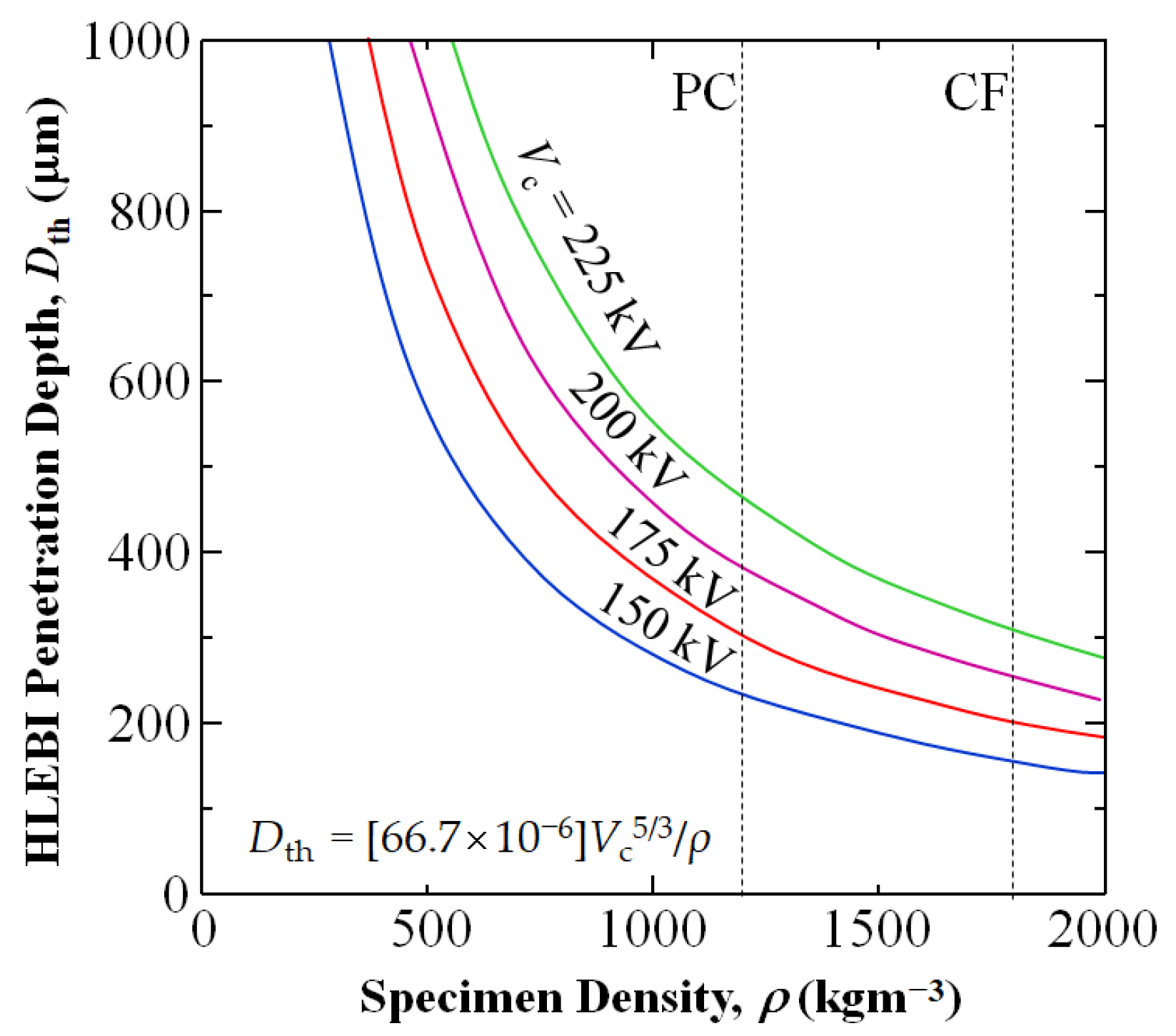
Figure 2 shows calculated plots of Dth vs. ρ [84] for Vc of 150, 175, 200, and 225 kV with vertical lines indicating ρ of PC and CF, whose intersections yield Dth values.
The Dth values are calculated for each successive layer into the [PC]10[CF]9 sample thickness, assumed as an inhomogeneous interlayered structure, beginning with the outer PC1 plies. Using the principal form of Equation (1), Vc is decreased to surface electrical potential at the PC1 ply, Vx(PC1), where x = Vc, by dropped potentials from passing through the Ti window, ΔVTi, and N2 protective gas atmosphere, ΔVN2, respectively [80]:
Vx(PC1) = Vc − ΔVTi − ΔVN2
When Vc is set to 150 kV, Vx(PC1) becomes V150(PC1). Given that the densities of Ti (ρTi) and N2 (ρN2) are 4540 kgm−3 and 1.13 kgm−3, respectively, ΔVTi of 24.1 kV and ΔVN2 of 16.9 kV are obtained in Equations (3) and (4) [80]:
ΔVTi = TTi/DthTi × Vc = TTiρTi/[66.7 × (Vc)2/3]
=(10−5 m) × (4540 kgm−3)/[66.7 × (Vc)2/3] = 24.1 kV
ΔVN2 = TN2/DthN2 × VTi = TN2ρN2/[66.7 × (VTi)2/3]
= (25 × 10−3 m) × (1.13 kgm−3)/[66.7 × (Vc − ΔVTi)2/3] = 16.9 kV
The surface potential at PC1 is
V150(PC1) = 150 kV − 24.1 kV − 16.9 kV = 109.0 kV
Therefore, Dth of HLEBI into PC1 is calculated from the density of PC, ρPC (1200 kgm−3):
Dth = 66.7 V150(PC1)5/3/ρ = 138 μm
This is greater than the 75 μm thickness, indicating full penetration. Table 4 lists Dth values into PC1 for Vc settings of 150, 175, 200, and 225 kV, along with their ΔVTi, ΔVN2, and Vx(PC1) values, respectively, from Equations (1)–(6). As expected, Dth values increase with Vc. Since all Dth values are greater than the 75 μm PC1 thickness, HLEBI will penetrate into the next ply, CF1. Therefore, to estimate Dth into CF1 and PC2, the same procedures of using Equation (3) (or Equation (4)) and Equation (1) are employed (see Section 4).

2.4. Charpy Impact Test

The Charpy impact test was chosen since it is regarded as a primary test to evaluate structural materials used in airplanes, space vehicles, and automobiles to provide information on reaction and resistance to high velocity impact, such as bird-strike, hailstones, or volcanic rock, for maximum safety [85,86]. Conventionally, the impact test for CFRP laminates is conducted with a hemispherical impactor as a slow point force to the center of a square or rectangular specimen ~70 to 150 mm2 [52] by drop tower or projectile [87,88,89,90]. This is followed by non-destructive testing (NDT), such as by ultrasonic sensor, to detect damage undetectable to the eye, for example, ply delamination. Subsequently, mechanical testing, for instance, compression after impact (CAI), or fatigue, is typically carried out on the laminates for safety design [91,92].
On the other hand, the Charpy impact test utilizes a drop weight pendulum to determine impact absorption mechanisms and is used to evaluate the impact toughness of materials for quality control (QC). We do not claim Charpy impact to be a replacement for point impact followed by CAI. Rather, Charpy can be used as a quick and inexpensive way to investigate the reaction of CFRP to high velocity impact. This is to screen new candidate materials for aircrafts or automobiles for possible extensive testing, such as CAI, tensile, open hole compression, shear, fatigue, and environmental such as ultraviolet rays, temperature, and humidity. One reviewer suggested that micro-hardness tests should be conducted for the [PC]10[CF]9. Vickers hardness is traditionally employed for homogeneous materials such as metals and neat resins, but the 2-phase PC–CF system poses many challenges such as inhomogeneous CF distribution, small CF diameter, and large indenter, making it difficult to obtain clear and reliable indentations. In addition, tensile and shear tests are highly required for selecting new, strong materials, but are beyond the scope of this study. Hence, we focus on the Charpy impact test for the [PC]10[CF]9 specimens.
Charpy impact values (auc) of the [PC]4[CF]3 samples were obtained using a standard impact fracture energy measurement system (Shimadzu Corporation, Tokyo, Japan, Model No.51735) according to Japanese industrial standard (JIS) K 7077 [93]. The impact fracture energy, E (kJ), is expressed by the following [94]:
E = WR[(cosβ − cosα) − (cosα’ − cosα)(α + β)/(αα’)]
Here, E, W, R, β, α, and α’ are impact fracture energy (kJ), hammer mass (0.86 kg), length (0.25 m) of hammer weight point from rolling center, maximum angle (150°) after impact (Radians), start angle before impact (α = 2.3 Radians or 150°), and maximum angle of the blank test, respectively. Usually, three blank tests are performed and the average is taken to calibrate the instrument for temperature, humidity, and atmospheric pressure. The Charpy impact value (kJm−2) is expressed by the following [74]:
auc = E/(b × t)
Here, E, b (=10 ± 0.2 mm), and t (=2 ± 0.15 mm) are impact fracture energy (J), sample width (mm), and thickness (mm). The distance between supporting points was 80 mm.
Evaluating the Pf has been a convenient method of quantitatively analyzing experimental values relating to fracture, often used in industry to determine manufacturing reliability in QC. Pf is expressed by the following equation, which is a generalized form of the median rank method [80]:
Pf = (I − 0.3)/(Ns + 0.4)
where Ns and I are the total number of samples and the ascending strength order of each sample, respectively. Impact tests were carried out 30 ± 0.5 h after HLEBI treatments.

2.5. Scanning Electron Microscopy (SEM) and Energy Dispersive X-Ray Spectroscopy (EDS)

A tabletop SEM Model JCM-6000 Plus Neoscope (JEOL, Ltd., Tokyo, Japan) was used to analyze fracture surfaces of the samples at magnification of 600×, with acceleration voltage of 15.0 kV, and sweep count of 50. Elemental analysis scans for oxygen (O) and carbon (C) were performed by the energy dispersive X-ray spectroscopy (EDS) component in the SEM JCM-6000 with 360 deg tilt rotation motor, and 2-axis motor-driven stage in x and y directions. Win 7 EDS elemental analysis software was used.

2.6. X-Ray Spectroscopy (XPS)

XPS tests were conducted on CF surface at the fracture areas of the samples using a Model PHI Quantera II XPS instrument from ULVAC-PHI, Inc., Chigasaki, Kanagawa, Japan.

3. Results

3.1. Impact Strengthening

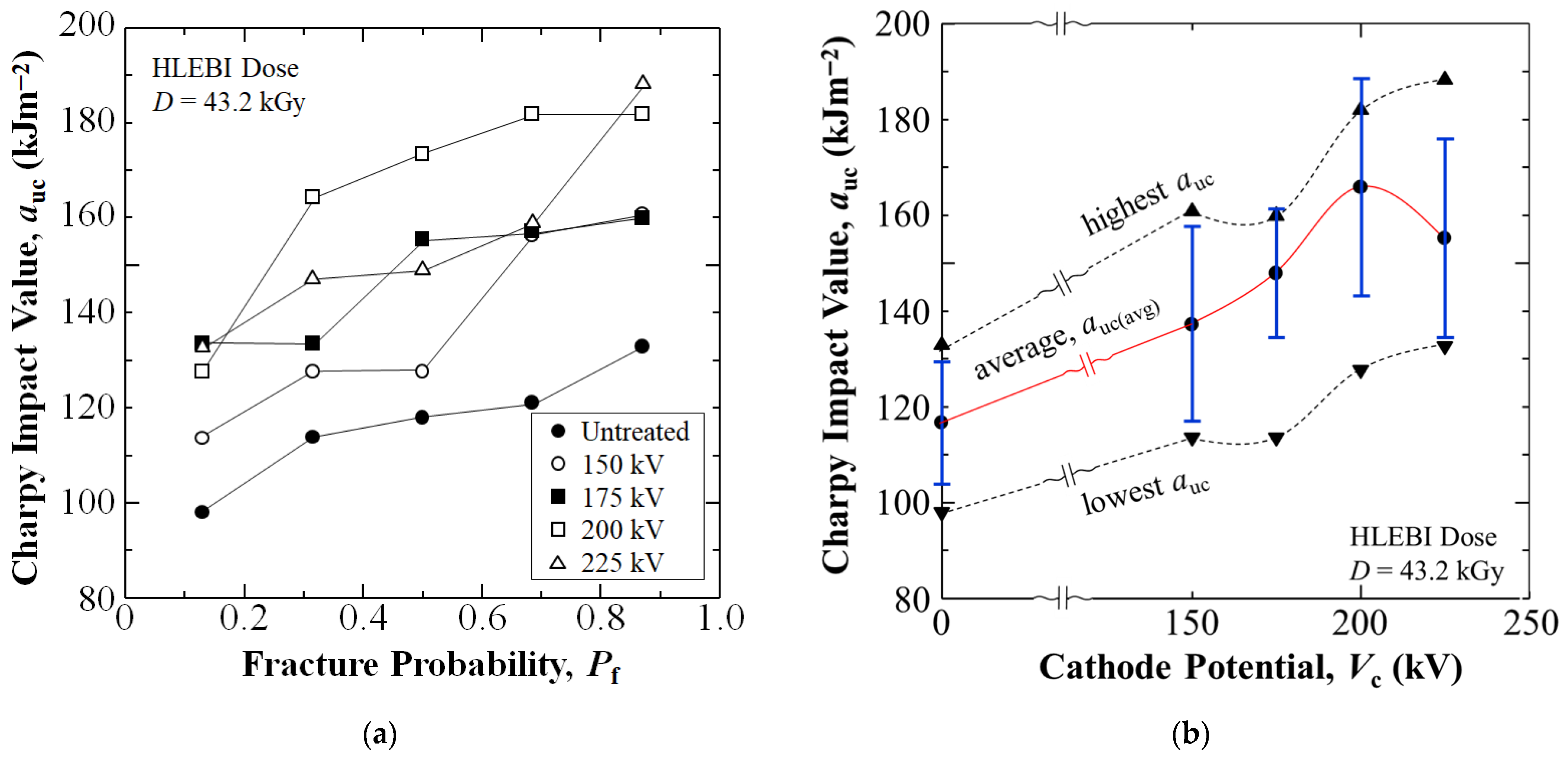
Figure 3a shows that when applying a 43.2 kGy HLEBI dose to [PC]10[CF]9 finished sample surfaces, the Vc setting of 200 kV increases Charpy impact value, auc (at median-Pf of 0.50), 47% over that of untreated, from 118 kJm−2 to 173 kJm−2. In addition, Figure 3a shows that increasingly higher Vc settings of 150, 175, and 200 kV successively increase auc at median-Pf of 0.50 from 118 kJm−2 for untreated to 128, 155, and 173 kJm−2, respectively. However, the higher 225 kV Vc setting results in a decrease in auc at Pf of 0.50 to 149 kJm−2.
Figure 3b shows that the 200 kV setting raises the average auc (auc,avg) (red curve) 42% from 117 to 166 kJm−2. Moreover, the 200 kV setting increases the highest auc value (Pf = 0.87) 37% from 133 to 182 kJm−2 and lowest auc value (Pf = 0.13) 30% from 98 to 128 kJm−2. Therefore, for the Vc settings tested, 200 kV appears to be optimum for auc.

3.2. Fracture Surface Observation by SEM and EDS

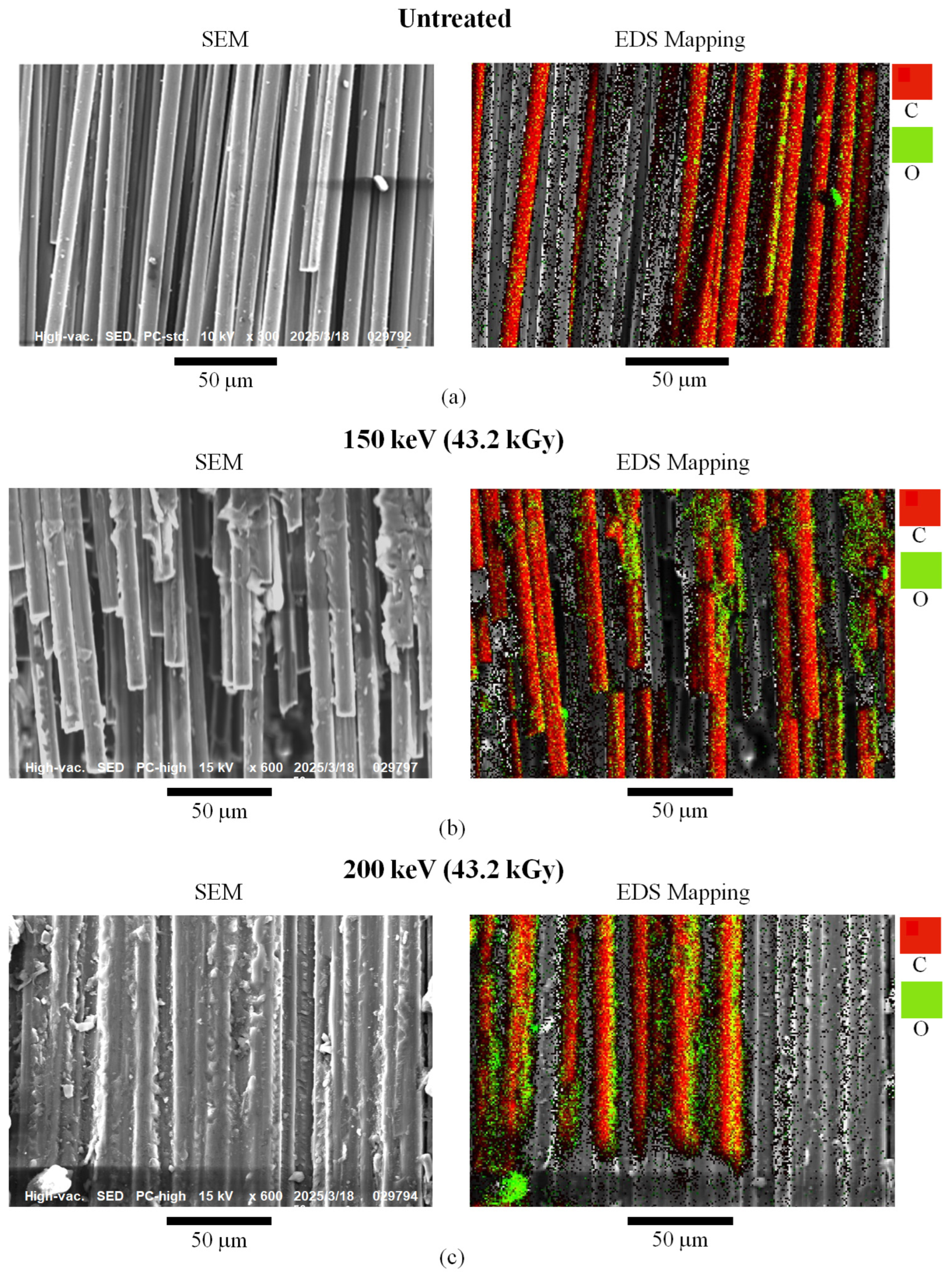
Figure 4a–c, left side, shows the SEM of the fracture surfaces of untreated, 150, and 200 kV samples (43.2 kGy), respectively. A hierarchy of strengthening mechanisms is apparent in Figure 4 with increasing Vc from (a) poor adhesion of bare CF for the untreated sample (0 kV), to (b) sporadic PC adhesion with aggregated CF at 150 kV, to (c) high consolidation of CFs by the PC matrix with a substantially increased PC/CF adhesion area for 200 kV. In Figure 4a, the untreated sample shows a nearly clean fracture with no PC adhesion to CF, i.e., delamination occurs between the CF1 and PC2 plies. In the 150 kV sample of Figure 4b, some CF bundling is evident with the generation of PC adhesion to CF, along with possible CF breakage, indicating a more jagged delamination between CF1 and PC2. The 200 kV sample in Figure 4c apparently shows complete PC adhesion to CF, with high consolidation of PC within the CF network, and no air spaces between the CFs observed.
EDS mappings in Figure 4a–c (right side) show increased O atoms (green) from the PC bonding with CFs (C in red) from untreated to 150 kV, with the most at 200 kV. A reviewer suggested that elemental composition analysis be carried out, but Figure 4 clearly shows increased O atoms adhering to the HLEBI samples supporting enhanced adhesion. HLEBI activation does not change the overall C/O ratio in the samples and SEM observations already confirm that strong adhesion is achieved by HLEBI by surface and bonding interactions.

4. Discussion

4.1. Penetration Depth, Dth, by HLEBI

Strengthening by raising the Vc of the HLEBI can be explained by the increased Dth into the interlayered [PC]10[CF]9 thickness. As mentioned earlier, Dth into the PC1 outer ply for Vc of 150 kV was calculated to be 138 μm, greater than the 75 μm ply thickness. Therefore, Dth into the CF1 ply is estimated by first calculating ΔVPC1 and V150(CF1):
ΔVPC1 = TPC1/DthPC1 × VN2 = TPC1ρPC1/[66.7 × (VN2)2/3]
=(7.5 × 10⁻⁵ m) × (1200 kgm−3)/[66.7 × (Vc − ΔVTi − ΔV PC1)2/3] = 59.1 kV
V150(CF1) = 150 kV − 24.1 kV − 16.9 kV − 59.1 kV = 49.9 kV
Therefore, by Equation (1), using V150(CF1) = 49.9 kV, Dth into the CF1 ply is 25 μm.
Hence, theoretically, the 150 kV HLEBI does not penetrate through the CF1 ply to the CF1/PC2 interface as shown in Table 5. However, the CF with a 6.5 μm diameter and 10 mm length is reported to have decent electrical conductivity of 6.67 × 10⁴ S/m [95], lower than common metals such as annealed Al or 99.99+% Fe at 107 S/m [96], but much higher than that reported for PC at:10−14 S/m [97]. Therefore, charge transfer apparently occurs, reaching the CF1/PC2 interface, to raise the auc over untreated.
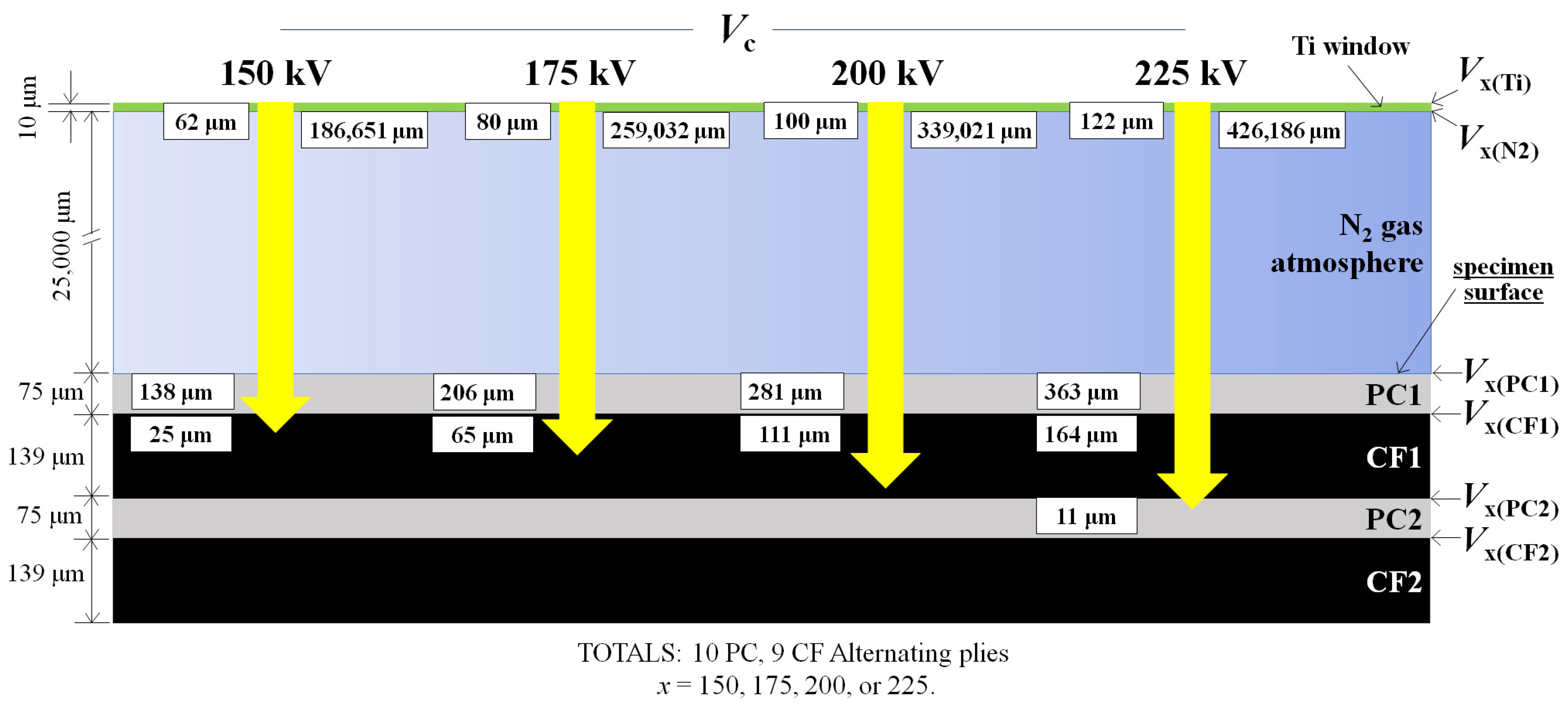
Similarly, Dth values are calculated layer by layer for 175, 200, and 225 kV specimens using Equations (10) and (11) in Table 5 along with Vx values. Table 5 shows that as Vc is increased from 150 to 175 to 200 kV, after fully penetrating the outer PC1 ply, Dth into the next deeper CF1 ply thickness increases from 25 to 65 to 111 μm (bold underlined). The successive increase in auc maxing out at 200 kV can be explained by HLEBI activation throughout increasingly high portions of the 139 μm CF1 ply thickness, culminating at 200 kV with 111 μm/139 μm, or 80% of activation, apparently with enhanced charge transfer to the CF1/PC2 interface.
However, at the higher 225 kV HLEBI setting, although Table 5 shows it activates the PC1 ply throughout its 139 μm thickness with Dth estimated at 164 μm, and 11 μm into the PC2 ply, the auc is reduced. The excess HLEBI can break newly formed bonds at the interface and weaken PC plies by chain severing [66,80].
To illustrate the action of HLEBI clearly, Figure 5 is a schematic from Table 5 of successively higher Dth into the outer plies for the HLEBI data sets. The non-homogeneity of the layered composite structure is depicted, showing PC1, CF1, PC2, and CF2 plies with locations of Vx and Dth calculated at each interface, along with those of the Ti window and N2. Figure 5 shows the Dth of 111 μm into the CF1 ply.
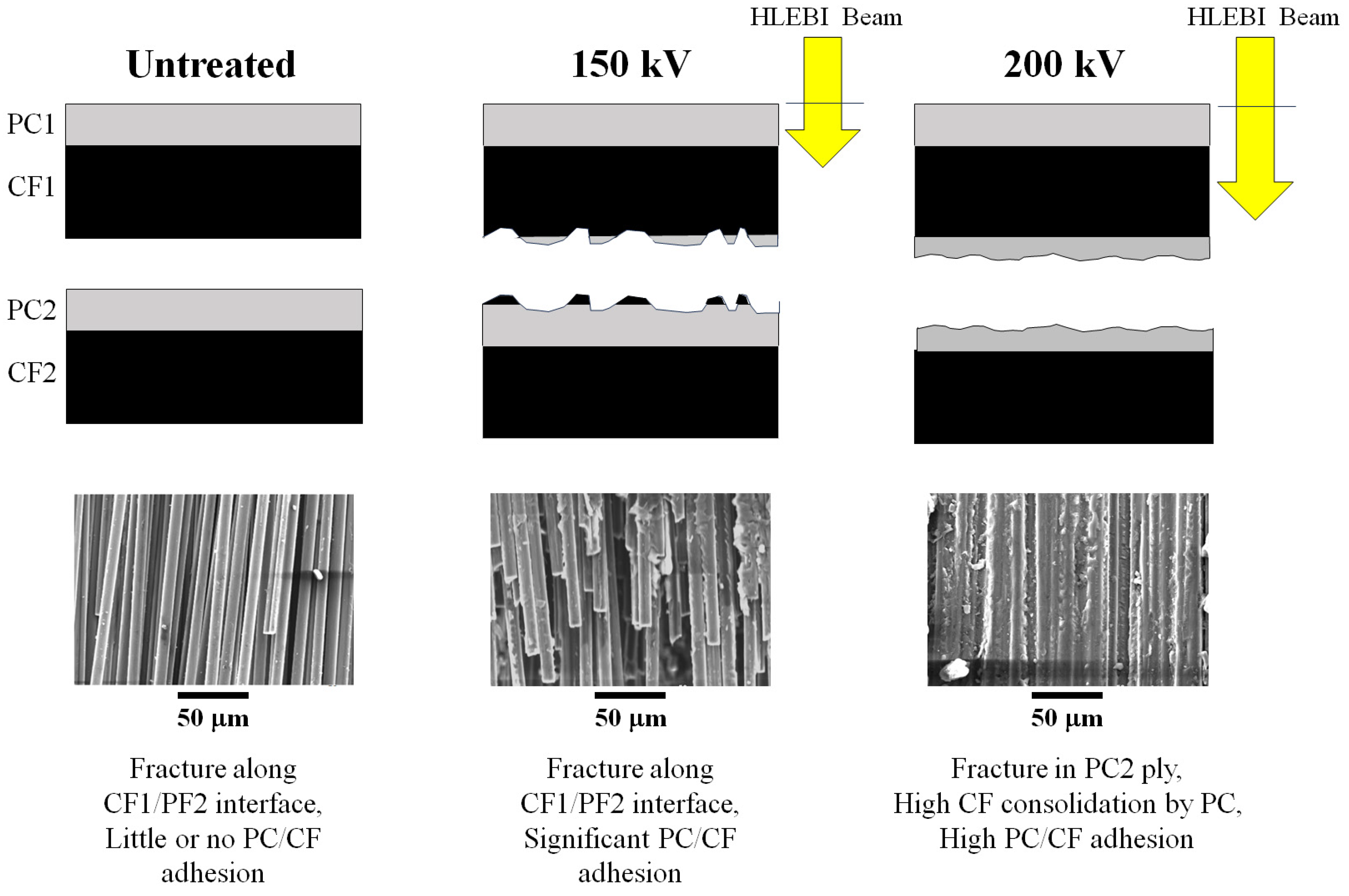
Figure 6 relates the increasing HLEBI Dth with the SEM photos from Figure 4 to show the transition in fracture mechanisms to strengthen the [PC]10[CF]9. First, the untreated sample shows a clean fracture along the CF1/PC2 interface in the form of ply delamination by poor adhesion as evidenced by the bare CF in the SEM photo. However, by applying the 150 kV Vc setting (D = 43.2 kGy), the fracture is transitioned into a more jagged form, partially propagating through the PC matrix and exhibiting significant adhesion along the CF1/PC2 interface to take on the load raising the auc. Despite the Dth of HLEBI (yellow arrows) into the CF1 ply being only about one third (65 μm) of the thickness (139 μm), the CF1/PC2 interface is apparently activated by the charge transfer due to the decent conductivity of CF [96].
On the other hand, when Vc is increased to 200 kV, Dth becomes 111 μm, about 80% into the CF1 ply. Here, the increased electron charge will transfer at a stronger level by the conductive CF [95] to the CF1/PC2 ply interface causing increased adhesive bonding sites. The sites act to divert cracks from the PC1/CF2 interface into PC to take on higher load and raise the auc. Hence, the 200 kV apparently allows the adhesive force between PC and CF to be greater than the cohesive force in the PC itself. The HLEBI with Vc of 200 kV thus diverts the fracture from the CF1/PC2 interface to the PC2 ply to increase auc higher than that of the 150 kV or the untreated. The SEM photos support that the 200 kV allows higher generation of PC/CF adhesion surface area than 150 kV. However, 225 kV (not pictured) results in the weakening of the composite due to excess DB generation.

4.2. XPS C1s and O1s Results

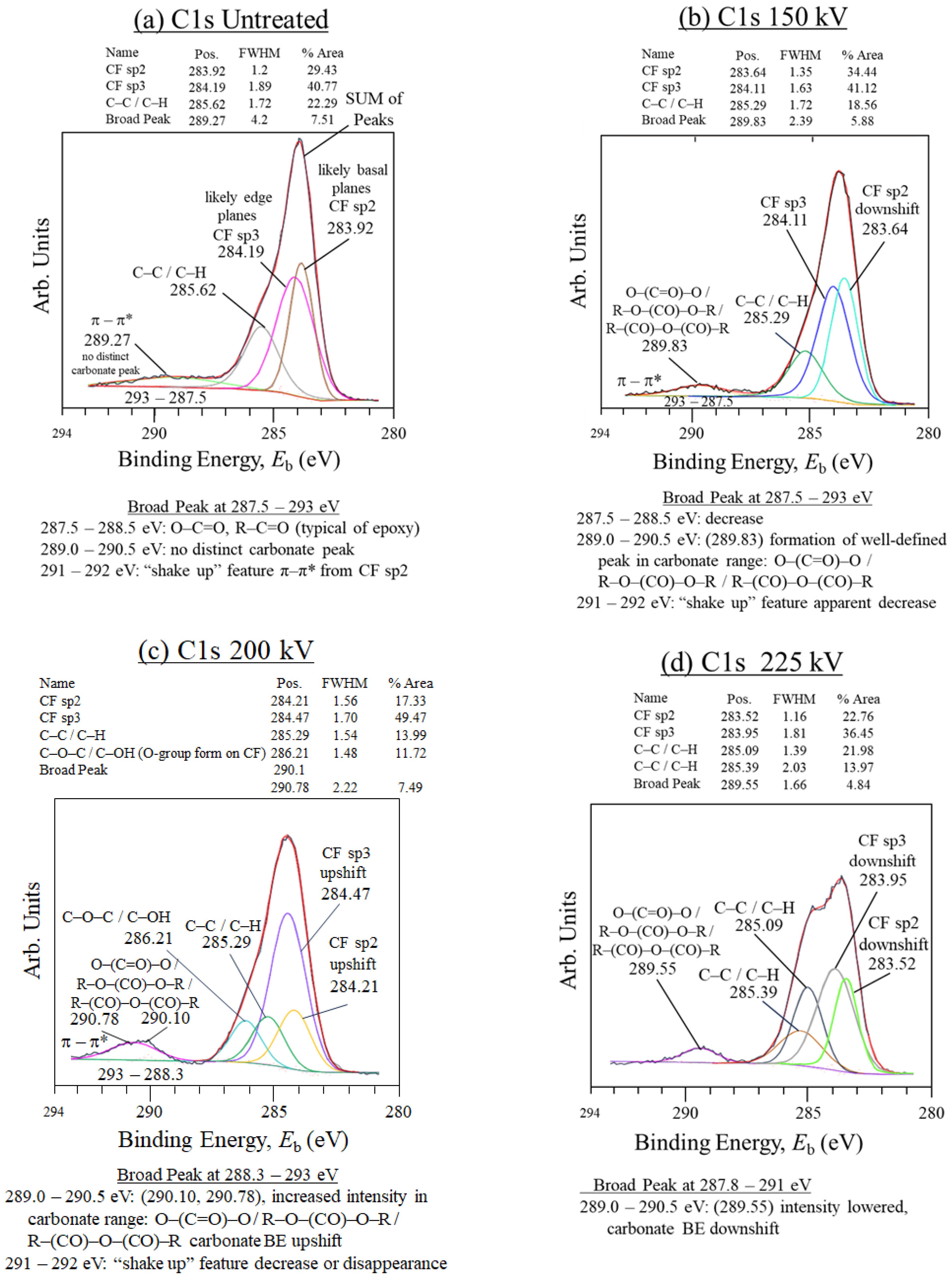
The reviewers suggested that in addition to SEM and EDS, XPS, Fourier Transform Infrared (FTIR) spectroscopy, and/or Raman characterizations should be included to explain the interfacial interactions. Therefore, XPS scans were carried out. The results in Figure 7a–d and Figure 8a–d indicate that applying 200 kV HLEBI increases PC adhesion with CF to increase the auc in the [PC]10[CF]9 samples. Figure 7a–d shows the C1s carbonate O–(C=O)–O and ester O–(C=O)–R binding energy (Eb or BE) peak generation at 289 to 292 eV to be non-existent in untreated; well-defined at 150 kV; and increased in intensity at 200 kV, after which a reduction was observed at 225 kV. Moreover, the 200 kV yielded the largest area sp3 peak at 49.5%, and lowest sp2 at 17.3%, signifying an increase in graphitic edge planes in the CF structure apparently as DBs for increased adhesion sites to PC. Downshifts and upshifts in binding energy (Eb) were observed in sp2 and sp3 peaks and can apparently be attributed to DB generation and dissipation in CF by the HLEBI. Electron spin resonance (ESR) results of 170 kV HLEBI-treated CF showed that naturally occurring DBs existing in untreated CF by peak generation. With an increasing dose, the peak reduces at 43.2 kGy, then increases at 129 kGy and above [81].
C1s scans in Figure 7a,b show that for the untreated sample, a π-π* shake up peak from sp2 bonds is evident between about 288 and 293 eV as a flat shape with no distinct carbonate peak. However, at 150 kV there appears the formation of a well-defined carbonate peak at 289.83 eV of O–(C=O)–O and R–O–(C=O)–O–R, along with variation in R–(C–O)–O–(C–O)–R indicating increased PC adhesion to CF. This phenomenon is most prominent in the 200 kV sample with the peaks upshifted to 290.10 and 290.78 eV indicating larger carbonate and related groups for yet higher PC adhesion to CF. Also, for the 200 kV sample, the π-π* peak apparently disappears or is mostly overlapped by the carbonate peaks.
Finally, compared with 200 kV, at 225 kV, the carbonate peak is reduced, apparently from severed PC chains from the excess Vc setting: full width at half maximum (FWHM) is decreased from 2.22 to 1.66; and % area is decreased from 7.49% to 4.84%. A portion of the emissions at 290.0–291.0 eV can possibly be from trace CF2 oil cleaner.
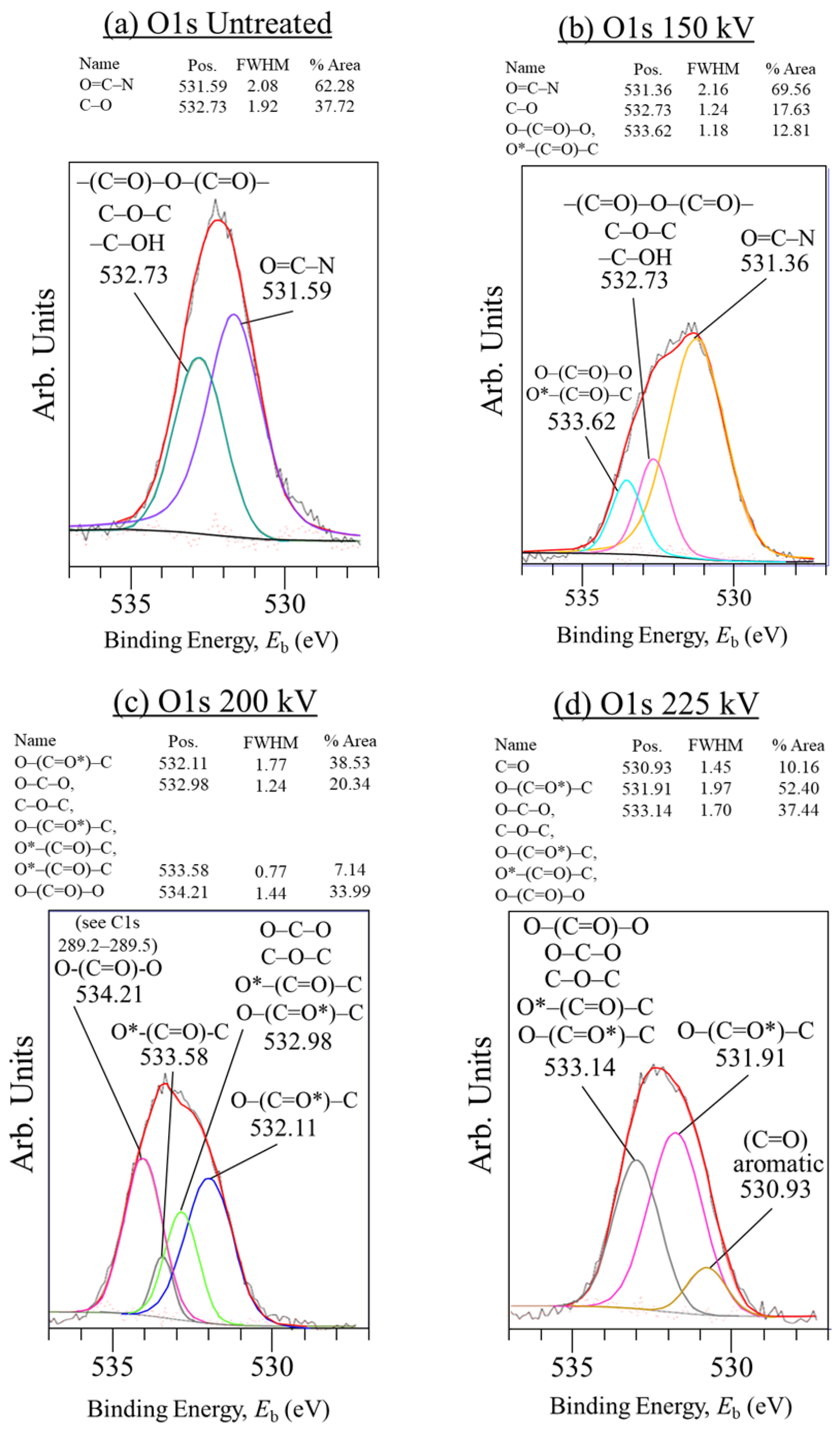
Figure 8a–d shows that for the O1s scan, the 200 kV yielded the largest area O–(C=O)–O peak at 34% at the high BE of 534.2 eV, indicating maximum PC adhesion to CF. In contrast, the 150 and 225 eV plots do not appear to have a definite O–(C=O)–O peak, but peaks with mixed groups at lower BE in the 532 to 533 eV range. In addition, the untreated and 150 kV samples exhibited O=C–N peaks at 531.59 and 531.56 eV, respectively. This indicates hardening agent in epoxy sizing remaining on the CFs, in turn confirming the presence of epoxy sizing. Although the 150 kV HLEBI apparently does not remove the sizing, the 200 and 255 kV do, as evidenced by the disappearance of the O=C–N peaks. At the higher 225 kV, the amount of O–(C=O)–O is reduced into ester and other groups, evidence of excess bond severing by the higher Vc setting, resulting in the lower auc at Pf of 0.50 of 149 kJm−2.
Peaks were designated according to classifications in the literature for C1s [98,99,100], O1s [98,101], sp2 and sp3 [102], and epoxy [98,100]. Together, the C1s and O1s scan results are consistent with the SEM, that 200 kV HLEBI (at 43.2 kGy dose) is the optimum Vc out of those tested to increase bonding at the PC/CF interface, raising the impact strength of the [PC]10[CF]9 samples.

5. Conclusions

As far as the authors know, up to now there have been no or few studies on HLEBI to CFRPC found outside of our research group. Experimental results showed that when HLEBI cathode potential is fine tuned to 200 kV at a 43.2 kGy dose to both sides of the finished specimens, the impact strength of an interlayered CFRPC could be increased by 47% over untreated. Increasingly higher settings of 150, 175, and 200 kV successively increased auc at median-Pf of 0.50 from 118 kJm−2 for untreated to 128, 155, and 173 kJm−2, respectively. However, the higher 225 kV Vc setting resulted in a decrease in auc at Pf of 0.50 to 149 kJm−2; therefore, 200 kV appears to be optimum for the cathode potentials tested. SEM showed substantial adhesion of PC to CF by the 200 kV. While XPS C1s and O1s scans of CF in the fracture area detected no carbonate groups for the untreated, carbonate groups were detected for all HLEBI samples, with the highest percentage area at 200 kV.
Specific applications of the CFRPS can include light load-bearing components in airplanes, those of racing car parts, bicycle frames, arrows and crossbow parts in archery, tennis racquets, fishing rods, tent poles, and walking sticks. Other applications can include laptop and cell phone cases, electrical components, due to conductivity and shielding, and musical instruments. In addition, with the recyclability of PC, uses for dwelling on the Moon or Mars are recommended to overcome any lack of resources.
For this research, although detailed potential future research directions are proprietary, they should include tests of tensile and bending, along with temperature, aging studies, microplastic emissions, and life cycle assessment (LCA).

Author Contributions

Conceptualization, F.S. and Y.N.; methodology, F.S., H.T.U. and H.I.; software, F.S., K.S. and H.I.; validation, Y.N., M.C.F., H.T.U. and H.K.; formal analysis, F.S. and Y.N.; investigation, F.S. and H.T.U.; resources, M.S., S.K. and Y.N.; data curation, Y.N. and M.C.F.; writing—original draft preparation, F.S., Y.N. and M.C.F.; writing—review and editing, F.S., M.C.F. and Y.N.; visualization, M.S., A.T., S.K., H.K. and Y.N.; supervision, Y.N., S.K., H.K. and M.S.; project administration, Y.N., M.S., A.T. and H.T.U.; funding acquisition, Y.N., M.S. and H.K. All authors have read and agreed to the published version of the manuscript.

Funding

This research received no external funding.

Data Availability Statement

The original contributions presented in this study are included in the article. Further inquiries can be directed to the corresponding authors.

Acknowledgments

The authors extend their sincere gratitude to Formosa Plastics Co., Formosa, for providing the polycarbonate material.

Conflicts of Interest

The authors declare no conflicts of interest.

References

  1. New Space Economy: Business, Technology and Trends. Available online: https://newspaceeconomy.ca/2024/05/06/launch-vehicle-fairings-protecting-precious-payloads/ (accessed on 3 October 2025).
  2. Sage Zander, Ltd. Carbon Fiber in Space. Available online: https://sagezander.com/carbon-fibre-composite-cfrp-space-rocket/ (accessed on 3 October 2025).
  3. Pang, J.; Fancey, K. Analysis of the tensile behaviour of viscoelastically prestressed polymeric matrix composites. Compos. Sci. Tech. 2008, 68, 1903–1910. [Google Scholar] [CrossRef]
  4. Motahari, S.; Cameron, J. Impact Strength of Fiber Pre-Stressed Composites. J. Reinf. Plast. Compos. 1998, 17, 123–130. [Google Scholar] [CrossRef]
  5. Motahari, S.; Cameron, J. Fibre Prestressed Composites: Improvement of Flexural Properties through Fibre Prestressing. J. Reinf. Plast. Compos. 1999, 18, 279–288. [Google Scholar] [CrossRef]
  6. Hadi, A.S.; Ashton, J.N. On the influence of pre-stress on the mechanical properties of a unidirectional GRE composite. Compos. Struct. 1997, 40, 305–311. [Google Scholar] [CrossRef]
  7. Nishi, Y.; Okada, T.; Okada, S.; Hirano, M.; Matsuda, M.; Matsuo, A.; Faudree, M.C. Effects of Tensile Prestress Level on Impact Value of 50 vol% Continuous Unidirectional 0 Degree Oriented Carbon Fiber Reinforced Epoxy Polymer (CFRP). Mater. Trans. 2014, 55, 318–322. [Google Scholar] [CrossRef]
  8. Zhou, Y.-G.; Wang, C.Y.; Zhang, J.N.; Wu, H.-H. Experimental and theoretical investigation on tensile properties and fracture behavior of carbon fiber composite laminates with varied ply thickness. Compos. Struct. 2020, 249, 112543. [Google Scholar] [CrossRef]
  9. Shah, S.; Hazell, P.J.; Wang, H.; Escobedo, J.P. Shock response of unidirectional carbon fibre-reinforced polymer composites: Influence of fibre orientation and volume fraction. Compos. B 2025, 299, 112438. [Google Scholar] [CrossRef]
  10. Tian, K.; Tay, T.E.; Tan, V.B.C.; Haris, A.; Chew, E.; Pham, V.N.H.; Huang, J.Z.; Raju, K.; Sugahara, T.; Fujihara, K.; et al. Improving the impact performance and residual strength of carbon fibre reinforced polymer composite through intralaminar hybridization. Compos Part A 2023, 171, 107590. [Google Scholar] [CrossRef]
  11. Finlay, J.G.; Waas, A.M.; Bartley-Cho, J.; Muraliraj, N. Combined loading of unreinforced and Z-pin reinforced composite pi joints: An experimental and numerical study. Compos. Part B 2024, 287, 111796. [Google Scholar] [CrossRef]
  12. Teng, X.; Xu, Y.; Zhang, W.; Hui, X.; Liu, W.; Ma, C. Improving Mode II delamination resistance of curved CFRP laminates by a Pre-Hole Z-pinning (PHZ) process. Chin. J. Aeronaut. 2023, 36, 316–324. [Google Scholar] [CrossRef]
  13. Mouritz, A.P. Review of z-pinned laminates and sandwich composites. Compos. Part A 2020, 139, 106128. [Google Scholar] [CrossRef]
  14. Sharma, M.; Gao, S.; Mäder, E.; Sharma, H.; Wei, L.Y.; Bijwe, J. Carbon fiber surfaces and composite interphases. Compos. Sci. Tech. 2014, 102, 35–50. [Google Scholar] [CrossRef]
  15. Wan, H.; Qi, M.; Yu, Y.; Xu, X.; Hu, J.; Chen, J.; Lin, J. Laser-induced synergistic modifications to enhance mode-I fracture toughness for adhesively bonded thermoset CFRP joints. Compos. Comm. 2025, 59, 102590. [Google Scholar] [CrossRef]
  16. Wang, S.; Duan, Z.; Wang, Z.; Li, Y.; Liu, J.; Song, J.; Liu, X. Cold plasma-coupled nano-lubricant minimum quantity lubrication micro-milling for CFRP removal mechanism study and machining performance evaluation. Appl. Surf. Sci. 2026, 716, 164651. [Google Scholar] [CrossRef]
  17. Dilsiz, N. Plasma surface modification of carbon fibers: A review. J. Adhes. Sci. Technol. 2000, 14, 975–987. [Google Scholar] [CrossRef]
  18. Hughes, J.D.H. The carbon fibre/epoxy interface—A review. Compos. Sci. Technol. 1999, 41, 13–45. [Google Scholar] [CrossRef]
  19. Senol, H.; Ulus, H.; Al-Nadhari, A.; Topal, D.; Yildiz, M. Meliorating tensile and fracture performance of carbon fiber-epoxy composites via atmospheric plasma activation: Insights into damage modes through in-situ acoustic emission inspection. Comps. A Appl. Sci. Manuf. 2025, 195, 108929. [Google Scholar] [CrossRef]
  20. Hayne, D.J.; Singleton, M.; Patterson, B.A.; Knorr, D.B.; Stojcevski, F.; Henderson, L.C. Carbon fiber surface treatment for improved adhesion and performance of polydicyclopentadiene composites synthesized by ring opening metathesis polymerization. Compos. Commun. 2024, 47, 101872. [Google Scholar] [CrossRef]
  21. Park, S.J.; Seo, M.K.; Rhee, K.Y. Effect of Ar+ ion beam irradiation on the physicochemical characteristics of carbon fibers. Carbon 2003, 41, 579–625. [Google Scholar] [CrossRef]
  22. Xu, Z.; Huang, Y.; Zhang, C.; Liu, L.; Zhang, Y.; Wang, L. Effect of g-ray irradiation grafting on the carbon fibers and interfacial adhesion of epoxy composites. Compos. Sci. Technol. 2007, 67, 3261–3270. [Google Scholar] [CrossRef]
  23. Li, J.Q.; Huang, Y.D.; Fu, S.Y.; Yang, L.H.; Qu, H.; Wu, G. Study on the surface performance of carbon fibres irradiated by g -ray under different irradiation dose. App. Surf. Sci. 2010, 256, 2000–2004. [Google Scholar] [CrossRef]
  24. Tiwari, S.; Bijwe, J.; Panier, S. Gamma radiation treatment of carbon fabric to improve the fiber–matrix adhesion and tribo-performance of composites. Wear 2011, 271, 2184–2192. [Google Scholar] [CrossRef]
  25. Park, S.J.; Lee, J.R. Bending fracture and acoustic emission studies on carbon– carbon composites: Effect of sizing treatment on carbon fibres. J. Mater. Sci. 1998, 33, 647–654. [Google Scholar] [CrossRef]
  26. Park, S.J.; Jang, Y.S. Interfacial characteristics and fracture toughness of electrolytically Ni-plated carbon fiber-reinforced phenolic resin matrix composites. Colloid Interf. Sci. 2001, 237, 91–97. [Google Scholar] [CrossRef]
  27. Nishi, Y.; Ishii, S.; Inui, S.; Kasai, A.; Faudree, M.C. Impact value of CFRP/Ti joint reinforced by nickel coated carbon fiber. Mater Trans. 2014, 55, 323–326. [Google Scholar] [CrossRef]
  28. Ramanathan, T.; Bismarck, A.; Schulz, E.; Subramanian, K. Investigation on the influence of acidic and basic surface groups on carbon fibres on the interfacial shear strength in an epoxy matrix by mean of single fibre pull-out test. Compos. Sci. Technol. 2001, 61, 599–605. [Google Scholar] [CrossRef]
  29. Li, M.; Zhang, L.; Li, X.; Wang, R.; Wu, X.; Zhang, D.; Chen, Y. Improvements of adhesion strength of water-based epoxy resin on carbon fiber reinforced polymer (CFRP) composites via building surface roughness using modified silica particles. Compos. Part A 2023, 169, 107511. [Google Scholar] [CrossRef]
  30. Dai, Y.Q.; Zhou, D.M.; Shiu, K.K. Permeability and permselectivity of polyohenylenediamine films synthesized at a palladium disk electrode. Electrochim. Acta 2006, 52, 297–303. [Google Scholar] [CrossRef]
  31. Hung, K.B.; Li, J.; Fan, Q.; Chen, Z.H. The enhancement of carbon fiber modified with electropolymer coating to the mechanical properties of epoxy resin composites. Compos. Part A 2008, 39, 1133–1140. [Google Scholar] [CrossRef]
  32. Zinger, B.; Shkolnik, S.; Hoecker, H. Electrocoating of carbon fibres with polyaniline and poly(hydroxyalkyl methacrylates. Polymer 1989, 30, 628–635. [Google Scholar] [CrossRef]
  33. Rashkovan, I.A.; Korabelnikov, Y.G. The effect of fiber surface treatment on its strength and adhesion to the matrix. Compos. Sci. Technol. 1997, 57, 1017–1022. [Google Scholar] [CrossRef]
  34. Ishitani, A. Application of X-ray photoelectron spectroscopy to surface analysis of carbon fiber. Carbon 1981, 19, 269–275. [Google Scholar] [CrossRef]
  35. Hong, S.; Minary-Jolandan, M.; Naraghi, M. Controlling the wettability and adhesion of carbon fibers with polymer interfaces via grafted nanofibers. Comp. Sci. Tech. 2015, 117, 130–138. [Google Scholar] [CrossRef]
  36. Gulyás, J.; Földes, E.; Lázár, A.; Pukánszky, B. Electrochemical oxidation of carbon fibres: Surface chemistry and adhesion. Compos. Part A 2001, 32, 353–360. [Google Scholar] [CrossRef]
  37. Ma, Y.J.; Wang, J.L.; Cai, X.P. The effect of electrolyte on surface composite and microstructure of carbon fiber by electrochemical treatment. Int. J. Electrochem. Sci. 2013, 8, 2806–2815. [Google Scholar] [CrossRef]
  38. Liu, J.; Tian, Y.; Chen, Y.; Liang, J. Interfacial and mechanical properties of carbon fibers modified by electrochemical oxidation in (NH4HCO3)/(NH4)2C2O4H2O aqueous compound solution. Appl. Surf. Sci. 2010, 256, 6199–6204. [Google Scholar] [CrossRef]
  39. Song, W.; Gu, A.; Liang, G.; Yuan, L. Effect of the surface roughness on interfacial properties of carbon fibers reinforced epoxy resin composites. Appl. Surf. Sci. 2011, 257, 4069–4074. [Google Scholar] [CrossRef]
  40. Xu, Z.; Huang, Y.; Zhang, C.; Chen, G. Influence of rare earth treatment on interfacial properties of carbon fiber/epoxy composites. Mater. Sci. Eng. A 2007, 444, 170–177. [Google Scholar] [CrossRef]
  41. Xu, Z.; Huang, Y.; Song, Y.; Zhang, C.; Liu, L. Surface characteristics of rare earth treated carbon fibers and interfacial properties of composites. J. Rare Earths 2007, 25, 462–468. [Google Scholar] [CrossRef]
  42. Zhang, X.; Fan, X.; Yan, C.; Li, H.; Zhu, Y.; Li, X.; Yu, L. Interfacial microstructure and properties of carbon fiber composites modified with graphene oxide. Appl. Mater. Interf. 2012, 4, 1543–1552. [Google Scholar] [CrossRef]
  43. Qian, H.; Greenhalgh, E.S.; Shaffer, M.S.P.; Bismarck, A. Carbon nanotube-based hierarchical composites: A review. J. Mater. Chem. 2010, 20, 4729–4756. [Google Scholar] [CrossRef]
  44. Wagner, H.D. Nanotube-polymer adhesion: A mechanics approach. Chem. Phys. Lett. 2002, 361, 57–61. [Google Scholar] [CrossRef]
  45. Zhang, Q.; Liu, J.; Sager, R.; Dai, L.; Baur, J. Hierarchical composites of carbon nanotubes on carbon fiber: Influence of growth condition on fiber tensile properties. Compos. Sci. Technol. 2009, 69, 594–601. [Google Scholar] [CrossRef]
  46. Sager, R.J.; Klein, P.J.; Lagoudas, D.C.; Zhang, Q.; Liu, J.; Dai, L.; Baur, J. Effect of carbon nanotubes on the interfacial shear strength of T650 carbon fiber in an epoxy matrix. Compos. Sci. Technol. 2009, 69, 898–904. [Google Scholar] [CrossRef]
  47. Lv, P.; Feng, Y.; Zhang, P.; Chen, H.; Zhao, N.; Feng, W. Increasing the interfacial strength in carbon fiber/epoxy composites by controlling the orientation and length of carbon nanotubes grown on the fibers. Carbon 2011, 49, 4665–4673. [Google Scholar] [CrossRef]
  48. Karapappas, P.; Tsantzalis, S.; Fiamegou, E.; Vavouliotis, A.; Dassios, K.; Kostopoulos, V. Multi-wall carbon nanotubes chemically grafted and physical adsorpted on reinforcing carbon fibres. Adv. Compos. Lett. 2008, 17, 103–107. [Google Scholar] [CrossRef]
  49. Riccardis, M.F.; Carbone, D.; Makris, T.D.; Giorgi, R.; Lisi, N.; Salernitano, E. Anchorage of carbon nanotubes grown on carbon fibres. Carbon 2006, 44, 671–674. [Google Scholar] [CrossRef]
  50. Varghese, A.S.; Parasuram, S.; Bose, S.; Sumangala, T.P.; Sreekanth, M.S. Tailoring the interfacial performance of epoxy nanocomposites reinforced with modified carbon fibre grafted MWCNTs—MoS2 hybrid. Results Eng. 2025, 27, 106500. [Google Scholar] [CrossRef]
  51. Lyu, Y.; Li, A.; Wu, J.; Yang, D. 3D printing of continuous carbon fibre reinforced high-temperature epoxy composites. Compos. Comm. 2025, 56, 102397. [Google Scholar] [CrossRef]
  52. Drzal, L.T.; Raghavendran, V.K. Adhesion of thermoplastic matrices to carbon fibers: Effect of polymer molecular weight and fiber surface chemistry. J Thermoplast. Compos. Mater. 2003, 16, 21–30. [Google Scholar] [CrossRef]
  53. Liu, W.B.; Zhang, S.; Hao, L.F.; Jiao, W.C.; Yang, F.; Li, X.F.; Wang, R.G. Properties of carbon fiber sized with poly(phthalazinoneether ketone) resin. J. Appl. Polym. Sci. 2013, 128, 3702–3709. [Google Scholar] [CrossRef]
  54. Ozkan, C.; Gamze Karsli, N.; Aytac, A.; Deniz, V. Short carbon fiber reinforced polycarbonate composites: Effects of different sizing materials. Compos. B Eng. 2014, 62, 230–235. [Google Scholar] [CrossRef]
  55. Yamamoto, T.; Yabushita, S. Enhancement of surface adhesion between carbon fiber and thermoplastic using polymer colloid dispersed in n-butanol. Results Mater. 2022, 16, 100322. [Google Scholar] [CrossRef]
  56. Seo, H.-Y.; Cho, K.-Y.; Im, D.; Kwon, Y.-J.; Shon, M.; Baek, K.-Y.; Yoon, H.G. High mechanical properties of covalently functionalized carbon fiber and polypropylene composites by enhanced interfacial adhesion derived from rationally designed polymer compatibilizers. Compos. Part B 2022, 228, 109439. [Google Scholar] [CrossRef]
  57. Qian, H.; Bismarck, A.; Greenhalgh, E.S.; Shaffer, S.P. Carbon nanotube grafted carbon fibres: A study of wetting and fibre fragmentation. Compos. Part A 2010, 41, 1107–1114. [Google Scholar] [CrossRef]
  58. Tiwari, S.; Bijwe, J.; Panier, S. Optimization of surface treatment to enhance fiber–matrix interface and performance of composites. Wear 2012, 274–275, 326–334. [Google Scholar] [CrossRef]
  59. Zhang, X.; Huang, Y.; Wang, T. Plasma activation of carbon fibres for polyarylacetylene composites. Surf. Coat. Technol. 2007, 201, 4965–4968. [Google Scholar] [CrossRef]
  60. Tiwari, S.; Sharma, M.; Panier, S.; Mutel, B.; Mitschang, P.; Bijwe, J. Influence of cold remote nitrogen oxygen plasma treatment on carbon fabric and its composites with specialty polymers. J. Mater. Sci. 2011, 46, 964–974. [Google Scholar] [CrossRef]
  61. Kim, S.Y.; Baek, S.J.; Youn, J.R. New hybrid method for simultaneous improvement of tensile and impact properties of carbon fiber reinforced composites. Carbon 2011, 49, 5329–5338. [Google Scholar] [CrossRef]
  62. Hasegawa, H.; Faudree, M.C.; Matsumura, Y.; Jimbo, I.; Nishi, Y. Tensile strength of a Ti/thermoplastic ABS matrix CFRTP joint connected by surface activated carbon fiber cross-weave irradiated by electron beam. Mater. Trans. 2016, 57, 1202–1208. [Google Scholar] [CrossRef]
  63. Hirai, T.; Amano, K.; Onochi, Y.; Inoue, Y. Superior hygrothermal resistance and interfacial adhesion by ternary thermoplastic polymer blend matrix for carbon fiber composite. Compos. Part A 2021, 144, 106338. [Google Scholar] [CrossRef]
  64. AnylytIQ. Polycarbonate Price Index. Available online: https://businessanalytiq.com/procurementanalytics/index/polycarbonate-price-index/ (accessed on 24 September 2025).
  65. Business AnalytIQ. Epoxy Resin Price Index. Available online: https://businessanalytiq.com/procurementanalytics/index/epoxy-resin-price-index/ (accessed on 24 September 2025).
  66. Nishi, Y.; Tsuyuki, N.; Faudree, M.C.; Uchida, H.T.; Sagawa, K.; Matsumura, Y.; Salvia, M.; Kimura, H. Impact Value Improvement of Polycarbonate by Addition of Layered Carbon Fiber Reinforcement and Effect of Electron Beam Treatment. Polymers 2025, 17, 1034. [Google Scholar] [CrossRef] [PubMed]
  67. Lemke, B.; Haneman, D. Dangling bonds on silicon. Phys. Rev. B 1978, 17, 1893–1907. [Google Scholar] [CrossRef]
  68. Hasegawa, H.; Faudree, M.C.; Enomoto, Y.; Takase, S.; Kimura, H.; Tonegawa, A.; Matsumura, Y.; Jimbo, I.; Salvia, M.; Nishi, Y. Enhanced Tensile Strength of Titanium/Polycarbonate Joint Connected by Electron Beam Activated Cross-Weave Carbon Fiber Cloth Insert. Mater. Trans. 2017, 58, 1606–1615. [Google Scholar] [CrossRef]
  69. Faudree, M.C.; Uchida, H.T.; Kimura, H.; Kaneko, S.; Salvia, M.; Nishi, Y. Advances in Titanium/Polymer Hybrid Joints by Carbon Fiber Plug Insert: Current Status and Review. Materials 2022, 15, 3220. [Google Scholar] [CrossRef]
  70. Nishi, Y.; Uchida, H.T.; Kaneko, S.; Faudree, M.C. Fracture toughness of CF-Plug joints of Ti and epoxy matrix CFRP. Key Eng. Mater. 2019, 821, 131–134. [Google Scholar]
  71. Oguri, K.; Iwataka, N.; Tonegawa, A.; Hirose, Y.; Takayama, K.; Nishi, Y. Misting-free diamond surface created by sheet electron beam irradiation. J. Mater. Res. 2001, 16, 553–557. [Google Scholar] [CrossRef]
  72. Oguri, K.; Irisawa, Y.; Tonegawa, A.; Nishi, Y. Influences of electron beam irradiation on misting and related surface condition on sapphire lens. J. Intell. Mater. Struct. 2006, 17, 761–765. [Google Scholar] [CrossRef]
  73. Nishi, Y.; Kobayashi, H.; Salvia, M. Effects of electron beam irradiation on Charpy impact value of GFRP. Mater. Trans. 2007, 48, 1924–1927. [Google Scholar] [CrossRef]
  74. Faudree, M.C.; Nishi, Y.; Gruskiewicz, M. Effects of Electron Beam Irradiation on Charpy Impact Value of Short Glass Fiber (GFRP) Samples with Random Distribution of Solidification Texture Angles from Zero to 90 Degrees. Mater. Trans. 2012, 53, 1412–1419. [Google Scholar] [CrossRef]
  75. Kanda, M.; Miyazawa, Y.; Uyama, M.; Nishi, Y. Creation of Adhesive Force between Laminated Sheets of Aluminum and Polyurethane by Homogeneous Low Energy Electron Beam Irradiation Prior to Hot-Press. Mater. Trans. 2013, 54, 1795–1799. [Google Scholar] [CrossRef]
  76. Uyama, M.; Fujiyama, N.; Okada, T.; Kanda, M.; Nishi, Y. High Adhesive Force between Laminated Sheets of Copper and Polyurethane Improved by Homogeneous Low Energy Electron Beam Irradiation (HLEBI) Prior to Hot-Press. Mater. Trans. 2014, 55, 561–565. [Google Scholar] [CrossRef]
  77. Minegishi, A.; Okada, T.; Kanda, M.; Faudree, M.C.; Nishi, Y. Tensile Shear Strength Improvement of 18-8 Stainless Steel/CFRP Joint Irradiated by Electron Beam Prior to Lamination Assembly and Hot-Pressing. Mater. Trans. 2015, 56, 1169–1173. [Google Scholar] [CrossRef]
  78. Nishi, Y.; Mizutani, A.; Kimura, A.; Toriyama, T.; Oguri, K.; Tonegawa, A. Effects of sheet electron beam irradiation on aircraft design stress of carbon fiber. J. Mater. Sci. 2003, 38, 89–92. [Google Scholar] [CrossRef]
  79. Nishi, Y.; Toriyama, T.; Oguri, K.; Tonegawa, A.; Takayama, K. High fracture resistance of carbon fiber treated by electron beam irradiation. J. Mater. Rsch. 2001, 16, 1632–1635. [Google Scholar] [CrossRef]
  80. Nishi, Y.; Faudree, M.C.; Quan, J.; Yamazaki, Y.; Takahashi, A.; Ogawa, S.; Iwata, K.; Tonegawa, A.; Salvia, M. Increasing Charpy Impact Value of Polycarbonate (PC) Sheets Irradiated by Electron Beam. Mater. Trans. 2018, 59, 1304–1309. [Google Scholar] [CrossRef]
  81. Nishi, Y.; Tsuyuki, N.; Uchida, H.T.; Faudree, M.C.; Sagawa, K.; Kanda, M.; Matsumura, Y.; Salvia, M.; Kimura, H. Increasing Bending Strength of Polycarbonate Reinforced by Carbon Fiber Irradiated by Electron Beam. Polymers 2023, 15, 4350. [Google Scholar] [CrossRef]
  82. Satoh, F.; Sagawa, K.; Uchida, H.T.; Faudree, M.C.; Kimura, H.; Nishi, Y. Effect of EB-Irradiation of Finishing Process on Charpy Impact value of Carbon Fiber Reinforced Thermoplastic Polycarbonate (CFRTP-PC). In Proceedings of the 8th ICAMSME 2024, International Conference on Advanced Materials, Structures, and Mechanical Engineering, Seoul, Republic of Korea, 15–17 March 2024; pp. 1–6. [Google Scholar]
  83. Technical Sheet for CF. Available online: https://shop.lab-cast.com/?pid=93479046 (accessed on 14 October 2025).
  84. Christenhusz, R.; Reimer, L. Schichtdickenabhangigkeit der warmerzeugungdurch elektronenbestrahlung im energiebereichzwischen 9 und 100 kV (Layer thickness dependency of heat generation by electron irradiation in the energy range between9 and 100 kV). Z. Angew. Phys. 1967, 23, 396–404. [Google Scholar]
  85. Gao, S.-L.; Kim, J.-K. Cooling rate influences in carbon fibre/PEEK composites. Part III: Impact damage performance. Compos. Part A Appl. Sci. Manuf. 2001, 32, 775–785. [Google Scholar] [CrossRef]
  86. Kostopoulos, V.; Baltopoulos, A.; Karapappas, P.; Vavouliotis, A.; Paipetis, A. Impact and after-impact properties of carbon fibre reinforced composites enhanced with multi-wall carbon nanotubes. Compos. Sci. Tech. 2010, 70, 553–563. [Google Scholar] [CrossRef]
  87. Imielińska, K.; Guillaumat, L.; Wojtyra, R.; Castaings, M. Effects of manufacturing and face/core bonding on impact damage in glass/polyester–PVC foam core sandwich panels. Compos. Part B 2008, 39, 1034–1041. [Google Scholar] [CrossRef]
  88. Vaidya, A.S.; Vaidya, U.K.; Uddin, N. Impact response of three-dimensional multifunctional sandwich composite. Mater. Sci. Eng. A 2008, 472, 52–58. [Google Scholar] [CrossRef]
  89. David-West, O.S.; Nash, D.H.; Banks, W.W. An experimental study of damage accumulation in balanced CFRP laminates due to repeated impact. Compos. Struct. 2008, 83, 247–258. [Google Scholar] [CrossRef]
  90. Aktay, L.; Johnson, A.F.; Holzapfel, M. Prediction of impact damage on sandwich composite panels. Computat. Mater. Sci. 2005, 32, 252–260. [Google Scholar] [CrossRef]
  91. Komai, K.; Minoshima, K.; Tanaka, K.; Nakaike, K. Influence of Electron Radiation and Water Absorption on Impact and CAI Fracture Behavior of Carbon/Epoxy Composite. In Proceedings of the 12th International Conference on Composite Materials, Paris, France, 5–9 July 1999; pp. 1–10. [Google Scholar]
  92. Aktaş, M.; Karakuzu, R.; Arman, Y. Compression-after impact behavior of laminated composite plates subjected to low velocity impact in high temperatures. Compos. Struct. 2009, 89, 77–82. [Google Scholar] [CrossRef]
  93. Japanese Industrial Standard JIS K 7077; Testing Method for Charpy Impact Strength of Carbon Fiber Reinforced Plastics. Japanese Standards Association: Tokyo, Japan, 1991.
  94. Splett, J.; Iyer, H.; Wang, C. McCowan: National Institute of Standards and Technology (NIST) Recommended Practice Guide, Computing Uncertainty for Charpy Impact Test Machine Test Results; Special Publication 960-18; US Department of Commerce: Boulder, CO, USA, 2008; pp. 27–29.
  95. Zhao, Y.; Zhang, J.; Qiang, S.; Lu, H.; Li, J. Effect of carbon fibers and graphite particles on mechanical properties and electrical conductivity of cement composite. J. Build. Eng. 2024, 94, 110036. [Google Scholar] [CrossRef]
  96. Shackelford, J.F. Introduction to Materials Science for Engineers, 5th ed.; Prentice Hall: Hoboken, NJ, USA, 2000; p. 549. [Google Scholar]
  97. James, A.; Lord, M. Macmillan’s Chemical and Physical Data, London and Basingstoke; The Macmillan Press, Ltd.: London, UK, 1992; pp. 398–399, 484–485. [Google Scholar]
  98. Beamson, G.; Briggs, D. High Resolution XPS of Organic Polymers—The Scienta ESCA300 Database; Wiley Interscience: Hoboken, NJ, USA, 1992; Appendices 1, 2, 3.1 and 3.2. [Google Scholar]
  99. Grey, L.H.; Nie, H.-Y.; Biesinger, M.C. Defining the nature of adventitious carbon and improving its merit as a charge correction reference for XPS. Appl. Surf. Sci. 2024, 653, 159319. [Google Scholar] [CrossRef]
  100. Zheng, L.; Liu, X.; Chen, X.; Soutis, C. π—π interaction between carbon fibre and epoxy resin for interface improvement in composites. Compos. B 2021, 220, 108983. [Google Scholar] [CrossRef]
  101. Henderson, J.D.; Payne, B.P.; McIntyre, N.S.; Biesinger, M.C. Enhancing Oxygen Spectra Interpretation by Calculating Oxygen Linked to Adventitious Carbon. Surf. Interface Anal. 2025, 57, 214–220. [Google Scholar] [CrossRef]
  102. Fujimoto, A.; Yamada, Y.; Koinuma, M.; Sato, S. Origins of sp(3)C peaks in C1s X-ray Photoelectron Spectra of Carbon Materials. Anal. Chem. 2016, 88, 6110–6114. [Google Scholar] [CrossRef]
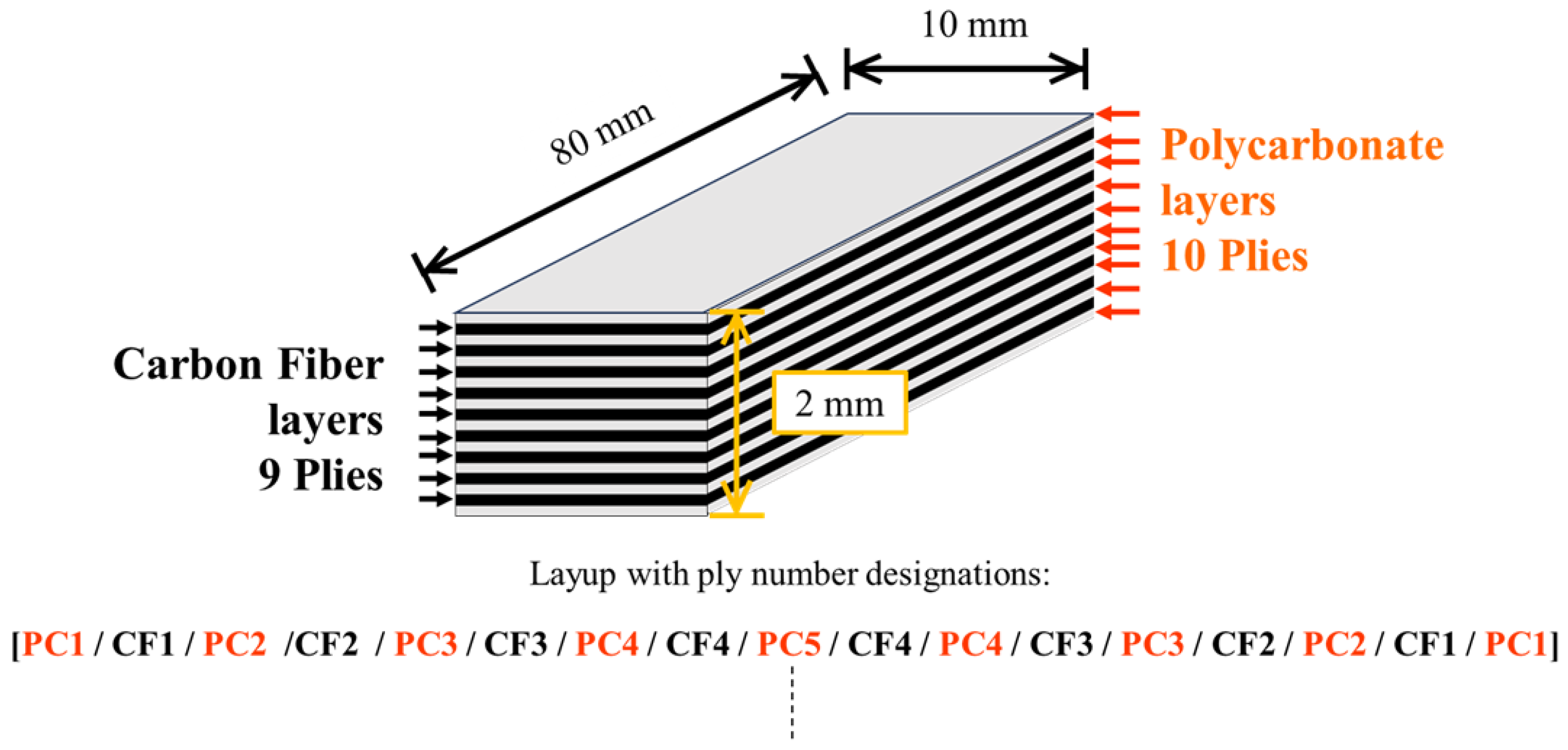
Figure 1. Schematic drawing of [PC]10]CF]9 CFRPC laminate sample showing dimensions (not to scale) and layup with ply number designations. Dashed line represents centerline of thickness.
Materials 18 05471 g001
Figure 2. Change in calculated HLEBI penetration depth, Dth (μm), as a function of specimen density, ρ (kgm−3). Densities of PC and CF are indicated by horizontal lines.
Materials 18 05471 g002
Figure 3. Changes in Charpy impact value, auc (kJ/m2) vs. (a) Pf for untreated and HLEBI data sets; and (b) auc vs. cathode potential, Vc, respectively, of the [PC]10[CF]9 samples. In (b), the red curve indicates auc,avg values; dotted lines indicate highest and lowest auc values; and blue bars indicate standard deviations. HLEBI dose was 43.2 kGy for all HLEBI-treated samples.
Materials 18 05471 g003
Figure 4. SEM photographs (left) and EDS mappings (right) of fracture surface of {PC}10[CF]9 samples: (a) untreated; and HLEBI-treated by 43.2 kGy dose at Vc setting of (b) 150 kV and (c) 200 kV.
Materials 18 05471 g004
Figure 5. Schematic of HLEBI penetration (yellow arrows) into the surface plies of the interlayered [PC]10[CF]9 specimen cross-sections for Vc of 150, 175, 200, and 255 kV data sets, respectively. Dth and Vx are shown for each interface. Only the outer 4 plies of one side are shown. Specimens were HLEBI-treated on both sides.
Materials 18 05471 g005
Figure 6. Schematic drawing of fractured CFRPC: untreated, 150 kV, and 200 kV HLEBI samples along with SEM photos.
Materials 18 05471 g006
Figure 7. (ad) XPS C1s scans of CF in the specimen fracture area. “Downshift” and “upshift” refer to shift in BE of CF sp2 and sp3 as HLEBI Vc is increased.
Materials 18 05471 g007
Figure 8. (ad) XPS O1s scans of CF in the specimen fracture area. Asterisks (*) designate XPS peak assignments.
Materials 18 05471 g008
Table 1. Ultimate tensile strength (UTS) and its strain of untreated CFRTS (epoxy) [70], CFRPC, along with HLEBI-treated CFRPC [68,69]. Values are calculated according to CF containing portion of specimen cross-section by rule of mixtures [68,69].
SpecimenEpoxy CFRTSCFRPCHLEBI-Treated CFRPC
UTS (σb: MPa)41395.0290
Strain at σb (εb)0.0320.0150.018
Table 2. Studies on strengthening CFRPC with HLEBI [66,81,82].
MaterialVc (kV)D (kGy)LocationResult
[PC]4[CF]3170216all CF pliesimpact as at Pf = 0
inc. 6%
[PC]4[CF]3170216all CF pliesbending σb at Pa = 0.50 inc. 25%
[PC]10[CF]925086 to 172finished surfacesimpact auc at Pa = 0.50
inc. up to 25 to 30%
[PC]10[CF]9
(this study)
150, 175, 200, 22543.2finished surfacesimpact auc at Pa = 0.50
inc. up to 47%
(200 kV)
Table 3. Vc settings investigated with number of specimens (D = 43.2 kGy).
Vc (kV)0 (Untreated)150175200225
Number of Specimens55555
Table 4. Estimated Vx(PC1) (kV) at PC1 ply outer surface of sample from Vc setting and dropped potentials (ΔVTi and ΔVN2) across Ti window and N2 atmosphere of the HLEBI processor.
Cathode Potential (Vc: kV)Dropped PotentialSurface Electrical Potential
at PC1 (Vx(PC1): kV)
(x = 150, 175, 200, or 225)
Calculated Penetration Depth into PC1 Ply (Dth: μm)
In Ti-Window
VTi: kV)
In N2 Gas Atmosphere (ΔVN2: kV)
15024.116.9109.0138
17521.814.8138.5206
20019.913.3166.8281
22518.412.1194.5363
Table 5. Thicknesses, densities, along with Vx and Dth values at each Vc setting for each successive layer into specimen thickness according to Equations (10) and (11). (HLEBI dose is 43.2 kGy in all cases.)
ThicknessDensityVoltage at Top Surface of Layer (VX: kV)/
Penetration Depth from Top Surfaces (Dth: μm)
MaterialT (μm)ρ (kg/m3)Vc = 150 kV175 kV200 kV225 kV
(layer) V150DthV175DthV200DthV225Dth
Ti window1045401506217580200100225122
N225,0001.13125186,651153259,032180339,021207426,186
PC1751200109138138206167281194363
CF1139180050258865122111154164
PC27512000000002411
CF21391800 000-00000
Disclaimer/Publisher’s Note: The statements, opinions and data contained in all publications are solely those of the individual author(s) and contributor(s) and not of MDPI and/or the editor(s). MDPI and/or the editor(s) disclaim responsibility for any injury to people or property resulting from any ideas, methods, instructions or products referred to in the content.