Abstract
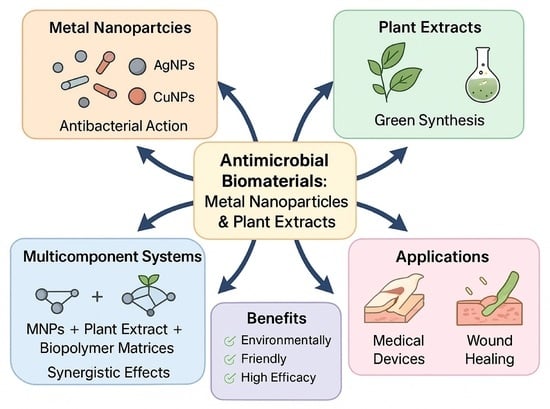
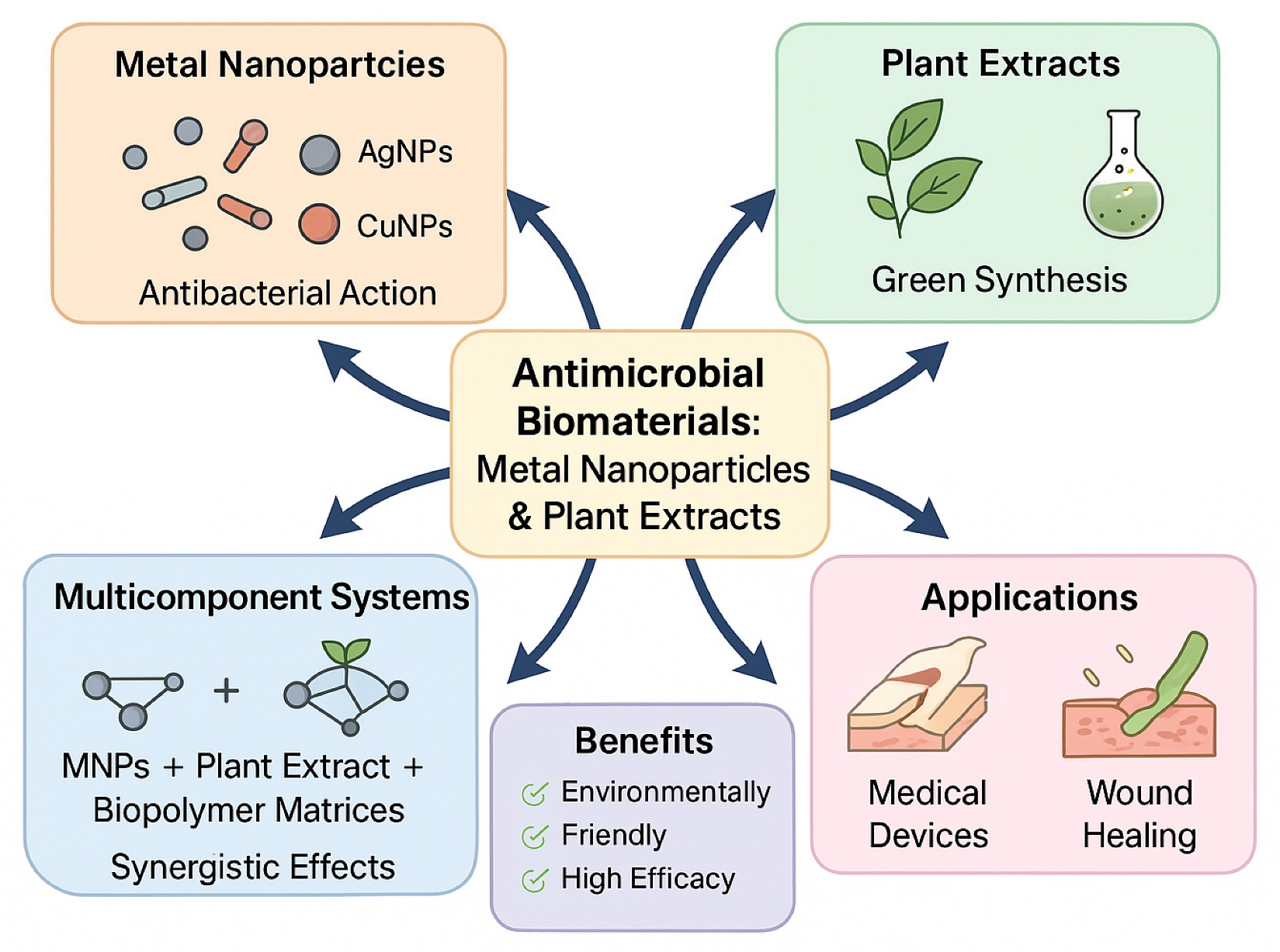
The global challenge of antimicrobial resistance, as well as the need to develop safe and environmentally sustainable materials, has served to stimulate research interest in antimicrobial technologies. The abundance, degradability and environmental friendliness of biopolymers means that they are widely used in medicine, pharmacy, and cosmetology. The focus of this mini review is the development of biopolymer matrices with antimicrobial properties imparted via the inclusion of metal nanoparticles and plant extracts. The review also examines innovative technologies, including photocatalytic systems and intelligent coatings with mechanisms for the controlled release of active substances that can be used to combat microbial infections. We believe that such materials have significant potential for eventual translation to products in the real world.
1. Introduction
According to the World Health Organization, antimicrobial resistance (AMR) is responsible for over 700,000 deaths annually worldwide, with projections suggesting this number could rise to 10 million by 2050 if no effective solutions are implemented [1]. The growing resistance of microorganisms to existing antibiotics poses a serious global challenge, leading to more complicated treatments, longer hospitalizations, and increased healthcare costs [2,3]. This urgent situation underscores the need for innovative strategies, including the development of biodegradable and environmentally friendly antimicrobial materials, which can help combat resistant pathogens while minimizing ecological impact [4,5,6,7]. These challenges have driven the search for environmentally friendly and multifunctional antimicrobial materials. In this context, multicomponent systems based on biopolymers have emerged as a promising strategy. By integrating biopolymer matrices with metal nanoparticles, plant-derived bioactive compounds, and stimuli-responsive or encapsulated delivery systems, it is possible to create “smart” materials with enhanced antimicrobial efficacy, controlled release of active agents, and adaptive responses to environmental stimuli. Such multifunctional systems offer effective, sustainable, and targeted solutions for medical devices, biomedical coatings, and other applications where reliable microbial control is essential [8,9,10,11,12,13,14,15,16].
Recent advancements in the development of antimicrobial materials focus on creating systems that combine biopolymers with metal-based nanoparticles (NPs) and plant extracts. These materials employ a multi-pronged approach to combat bacteria, including physical damage to cell walls, membrane disruption, generation of reactive oxygen species (ROS), and interference with cellular processes such as DNA and protein synthesis [17]. Key achievements include the development of “green synthesis” methods that use plant extracts to produce nanoparticles, functionalizing biopolymer matrices with nanoparticles to enhance mechanical and biological properties and improving efficacy against multidrug-resistant bacteria. Special attention is given to “green synthesis” of nanoparticles, where plant extracts serve as both antimicrobial agents and reducing and stabilizing agents for nanoparticle formation. These methods are significantly more environmentally friendly than traditional chemical synthesis [18,19,20,21,22,23,24,25].
Moreover, the integration of nanoparticles into biopolymer matrices allows for the controlled release of antibacterial agents, improving therapeutic efficacy and reducing side effects [26,27,28,29]. Examples of nanoparticles such as silver (Ag), gold (Au), zinc oxide (ZnO), and copper oxide (CuO) have already demonstrated high effectiveness against a wide range of bacteria, including multidrug-resistant strains. In multi-component nanoparticles, such as Au–Pt–Ag composites, these effects are enhanced through the combined targeting of multiple mechanisms [30,31,32,33,34].
Biopolymer matrices including nanoparticles stabilized by polymers can be further enriched with plant extracts, which contain flavonoids, terpenes, alkaloids, and other active compounds, contributing to the development of multifunctional biomaterials. These active substances have antiseptic and antioxidant properties [35,36,37]. The interaction of plant extracts with metal nanoparticles and polymers can significantly enhance the antimicrobial activity of the materials. For example, extracts of plants such as tea tree, turmeric, thyme and turnip are used as part of multicomponent systems to enhance their antimicrobial and antioxidant properties [38,39]. For example, the combination of silver nanoparticles (AgNPs) with chitosan improves the mechanical characteristics of the materials (i.e., shear strength and tensile strength) and increases antimicrobial activity [40,41,42]. The addition of plant extracts can increase a material’s antioxidant properties, which may help protect against degradation of the material under the influence of external factors such as ultraviolet radiation or oxygen [43,44,45,46,47]. For example, nanostructured titanium dioxide (TiO2), which exhibits strong photocatalytic and antimicrobial activity when exposed to ultraviolet or visible light. The generated reactive oxygen species (ROS) effectively disrupt bacterial membranes and biofilms, while the material itself remains chemically stable and cytocompatible. Furthermore, TiO2 nanoparticles can be synthesized via green chemistry approaches using plant extracts as natural reducing and stabilizing agents, minimizing the use of toxic reagents and enhancing the environmental safety of the process [48,49].
These materials find wide applications in healthcare (e.g., wound dressings, medical device coatings), food packaging, and other areas where controlling microbial growth is essential [50,51]. Thus, the creation of multicomponent systems, including metal nanoparticles, biopolymers and plant extracts, enables the development of effective and environmentally friendly antimicrobial materials. Such combined systems have potential for the creation of environmentally safe and effective antimicrobial materials.
Recent studies have demonstrated that these multicomponent biopolymer-based systems can be engineered to respond to specific environmental stimuli, such as pH changes, light, or the presence of enzymes [52]. For instance, nanoparticles coated with chitosan and hyaluronic acid selectively degrade in the acidic microenvironment of bacterial biofilms, facilitating penetration and eradication [53]. Similarly, a range of stimuli-responsive nanoplatforms has been developed to release antimicrobial agents in response to external cues, providing controlled and targeted antibacterial action [54].
Intelligent coatings that can control the release of active substances are exciting. These coatings can respond to changes in external factors such as pH, temperature, or the presence of pathogens [55,56,57,58]. Bacterial colonization and biofilm formation on medical devices continue to pose a major challenge in modern healthcare. Addressing this issue effectively requires the development of smart, personalized biomaterials tailored for use in medical device manufacturing. Particular focus is placed on surface modification strategies that inhibit bacterial adhesion and prevent the development of mature biofilms.
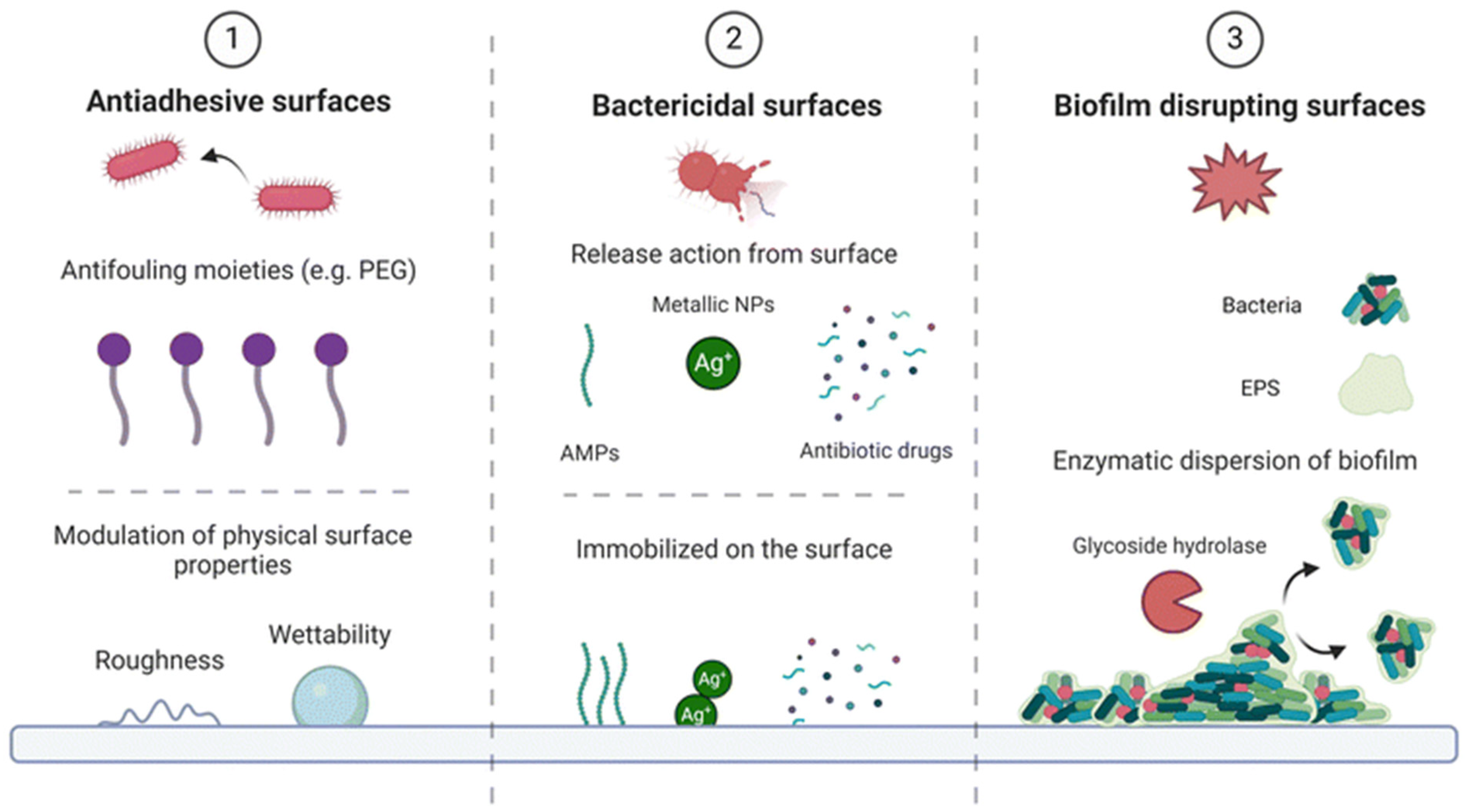
The authors of the review in [58] provide three bioinspired strategies for engineering antibacterial and anti-adhesive coatings that are capable of responding to external stimuli. Such stimulus-responsiveness enables coatings to exhibit controlled antibacterial activity that is selectively triggered in the presence of bacterial agents, thereby acting as a self-protective mechanism. Given that bacterial adhesion, proliferation, and subsequent colonization occur at the interface between microorganisms and medical devices, functionalizing biomaterial surfaces with antimicrobial properties presents a promising strategy to address this challenge. Various approaches can be employed to combat infection, targeting different stages of surface colonization and utilizing distinct mechanisms of action. Three such strategies are illustrated in Figure 1 [58].
Figure 1.
Scheme summarizing the three conventional defense mechanisms adopted in the design of (1) anti-adhesive surfaces, exploiting physical and chemical modifications, (2) bactericidal surfaces and (3) biofilm disrupting antimicrobial coatings that exploit immobilization or release of active molecules. The strategies and/or molecules mentioned are a few examples of the several options available in the literature [58]. Adapted from Cassa, M.A. et al. Biomater. Sci. 2024, 12, 5433–5449. https://doi.org/10.1039/D4BM00936C. © 2024, licensed under CC BY-NC 3.0. (https://creativecommons.org/licenses/by-nc/3.0/ accessed on 11 November 2025).
Thus, the development of multicomponent antimicrobial systems based on biopolymers enables the creation of effective, environmentally friendly, and “smart” materials. In these systems, the biopolymer matrices provide a cytocompatible framework for stabilizing metal nanoparticles and incorporating biologically active plant-derived components, such as polyphenols and essential oils [59,60,61]. To enhance stability, bioavailability, and controlled release, active substances can be encapsulated in nano- or microcarriers, protecting them from oxidative degradation and ensuring targeted delivery. The integration of stimulus-responsive mechanisms allows these materials to function as intelligent coatings, releasing antimicrobial agents in response to changes in pH, temperature, or the presence of pathogens [62,63,64]. Additionally, the use of mechanical nanostructures that physically disrupt microorganisms contributes to the creation of adaptive and self-defensive surfaces [65,66]. These multifunctional systems improve the effectiveness against resistant bacteria and biofilms, offering sustainable and adaptable solutions for medical devices, biomedical coatings, and other applications where microbial control is critical [67,68]. The following sections of this article review current research and development in these areas, as well as the prospects for applying such systems to produce effective and environmentally sustainable antimicrobial materials.
Multifunctional and stimuli-responsive biopolymer-based systems represent the next generation of antimicrobial materials [69,70,71,72]. By combining biopolymer matrices with metal nanoparticles [73], plant-derived bioactive compounds [74], and smart delivery mechanisms, these systems bridge biotechnology and materials science, offering enhanced antimicrobial efficacy, targeted action, and adaptive responses to environmental stimuli.
2. Methodology
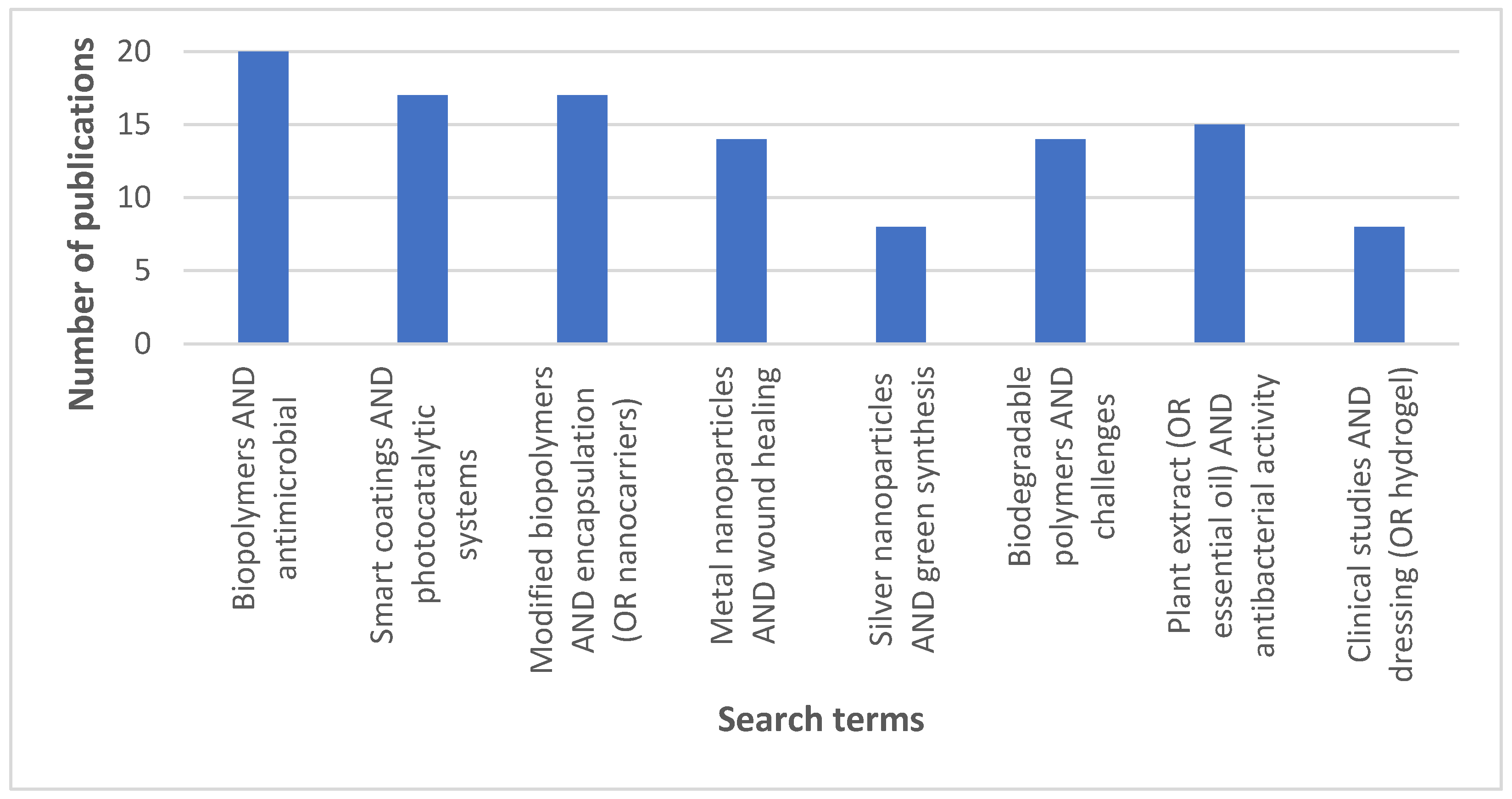
A literature search was performed in leading international scientific databases, including PubMed, Scopus, and Web of Science, covering publications from 2015 to 2025. A predefined set of keywords and logical operators (AND, OR) was applied to identify the most relevant studies on the development of antimicrobial biopolymer matrices. Key search terms included: biopolymer matrix, antimicrobial, metal nanoparticles, plant extract, smart coatings, photocatalytic systems, and their various combinations (Figure 2). Selection criteria focused on original research reporting experimental results, as well as review articles providing structured analyses of current trends and approaches.
Figure 2.
Number of publications retrieved from Scopus for different keyword combinations used in the literature search.
The selected studies were analyzed comparatively, with attention to methodological approaches, material compositions, reported antimicrobial performance and geographical reach (ensuring inclusion of research from authors from the global north and south). This approach allowed for an overview of the literature, facilitating observation of patterns, innovative strategies, and emerging directions in the field of antimicrobial bionanocomposite materials.
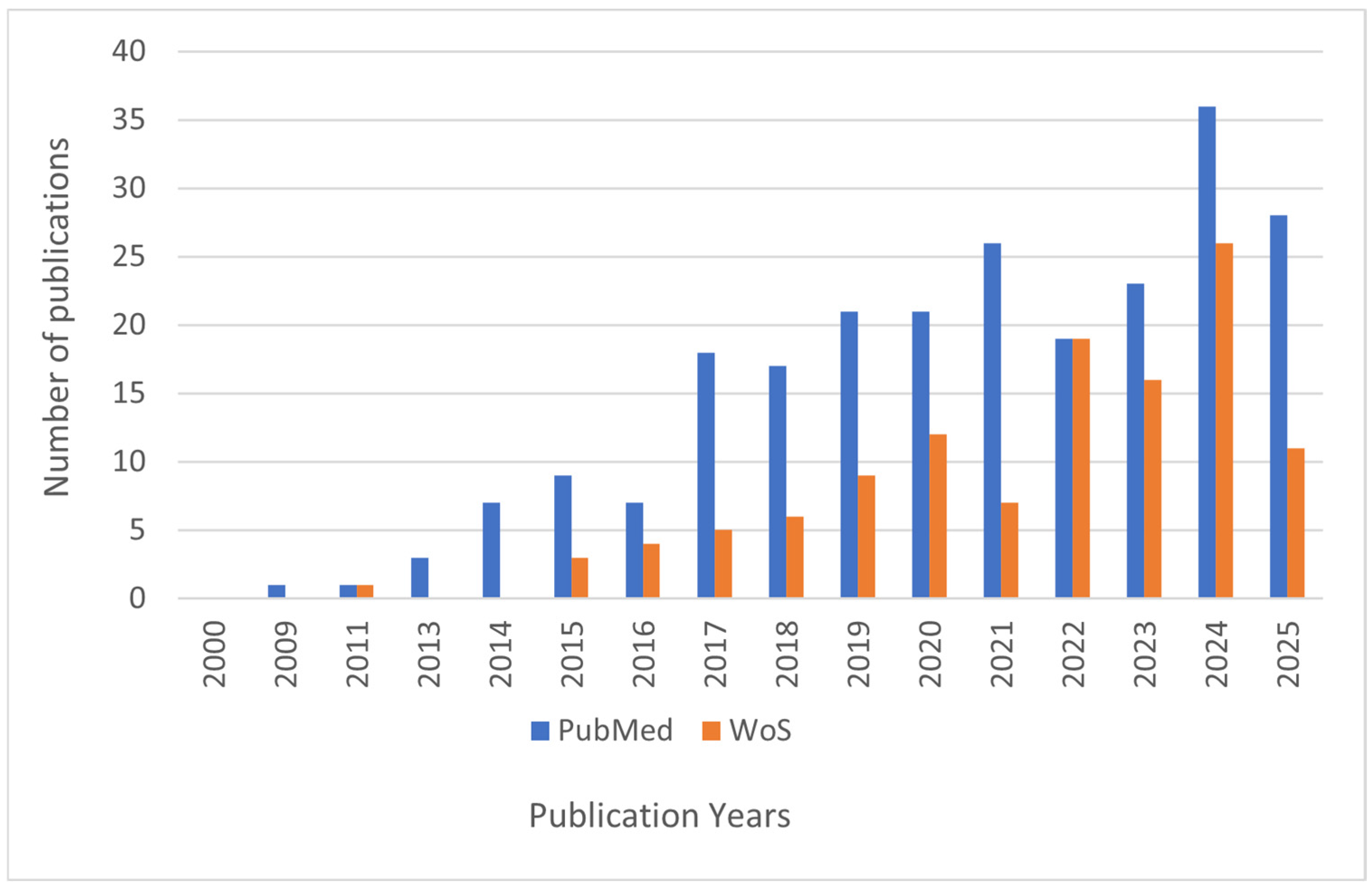
Figure 3 shows the annual number of publications from 2000 to 2025 related to antimicrobial composites based on metal nanoparticles and plant extracts, according to searches in two major scientific databases, PubMed and Web of Science (WoS). The data reveal a clear upward trend in research activity in this field over the last decade, reflecting growing scientific interest and recognition of the potential of these materials.
Figure 3.
Annual number of publications (2000–2025) on antimicrobial composites based on metal nanoparticles and plant extracts indexed in PubMed (blue bars) and Web of Science (WoS, orange bars). The data show a significant increase in research interest over time, especially after 2013.
Publications indexed in PubMed demonstrate a steady increase starting around 2013, with a notable surge after 2017. Similarly, WoS publications show a consistent growth pattern, though in smaller absolute numbers compared to PubMed, indicating complementary but distinct indexing scopes.
This increasing volume of research underscores the expanding exploration of multifunctional antimicrobial composites, highlighting the integration of metal nanoparticles and plant extracts as promising strategies to address antimicrobial resistance. The upward trend also suggests the maturation of this interdisciplinary field, combining nanotechnology, biotechnology, and materials science.
The Cochrane review findings indicate that the success of new health technologies in laboratory settings often does not translate into real-world effectiveness [75,76,77]. Key barriers include weak infrastructure, insufficient real-world data, misleading assumptions about ease of implementation, and the need for parallel investment in system capacity. Applied to antimicrobial materials, this highlights that while biopolymer–nanoparticle composites show strong in vitro efficacy, their practical application and clinical validation remain limited, emphasizing the need for translational studies and implementation-focused research.
3. Multicomponent Antimicrobial Systems Based on Biopolymers and Nanomaterials
A multicomponent system is a structure in which the inclusion of two or more components achieves enhanced and/or prolonged functional effects. In such systems, biopolymer matrices—such as chitosan, alginate, carboxymethylcellulose, or gelatin are commonly employed as carriers [78,79]. These biopolymers serve not only as structural support but may also facilitate the encapsulation and controlled release of active compounds. A widely studied approach involves the incorporation of metallic nanoparticles (e.g., AgNPs, CuNPs, ZnNPs) and plant-derived bioactives (e.g., essential oils, polyphenols) into such polymeric matrices.
Multicomponent systems can be implemented through the encapsulation of active substances in nanostructures, such as nanoemulsions of essential oils with antibacterial nanoparticles, liposomes containing flavonoids and silver ions, or chitosan-based micelles and nanocapsules with the addition of peptides and phenolic compounds. These nanosystems contribute to improving the bioavailability of active substances, increasing the selectivity of their action, the possibility of targeted release (for example, depending on pH changes in the infection zone), reducing cytotoxicity and increasing storage stability [80,81,82,83].
The relevance of these multifunctional systems lies in their sustainable and efficient green synthesis, which uses plant extracts as a bio-based alternative to toxic chemicals for creating nanocomposites. Plant biomolecules like polyphenols, flavonoids, and alkaloids act as natural reducing and stabilizing agents to form uniform nanoparticles under mild conditions. When these nanoparticles are combined with biopolymer matrices like chitosan, the resulting nanocomposites exhibit enhanced stability, controlled particle size, and tunable properties suitable for applications such as catalysis, drug delivery, and antimicrobial agents [84,85].
Various types of green nanomaterials, including biogenic nanoparticles, nanocellulose, and green quantum dots, have been developed to address environmental challenges. Biogenic nanomaterials are produced using biological sources such as plants, bacteria, or fungi, offering low-cost and eco-friendly synthesis [86]. Nanocellulose exhibits excellent biodegradability and mechanical strength, while green quantum dots, made from non-toxic materials, show promising applications in bioimaging, energy, and sensing technologies [87].
Moreover, recent works have demonstrated the potential of plant-mediated synthesis—for example, the use of lemon leaf extracts to prepare g-C3N4–Cu2O nanocomposites with improved photocatalytic and antibacterial activities [88], or P. granatum extract for the green fabrication of copper nanoparticles with high electrical conductivity [89]. These approaches underline the possibility of combining renewable biological sources with nanotechnology to achieve highly functional antimicrobial properties [90].
A recent study demonstrated a green and cost-effective approach for the synthesis of gold nanoparticles (AuNPs) supported on cross-linked chitosan beads, using Solenostemma argel leaf extract as a phyto-reducing agent [91]. The chitosan matrix was cross-linked with glutaraldehyde to coordinate and stabilize Au(III) ions. Physicochemical analyses confirmed the successful incorporation of uniform spherical nanoparticles (<10 nm) into the polymer network. The resulting nanocomposite exhibited high catalytic activity, achieving 97% conversion and 99% selectivity in the oxidation of benzyl alcohol to benzaldehyde. This work highlights the potential of biopolymer-based nanocomposites synthesized with plant extracts as multifunctional and eco-friendly systems, while SEM and TEM images provide valuable insights into the uniform distribution and morphology of nanoparticles within the polymer matrix.
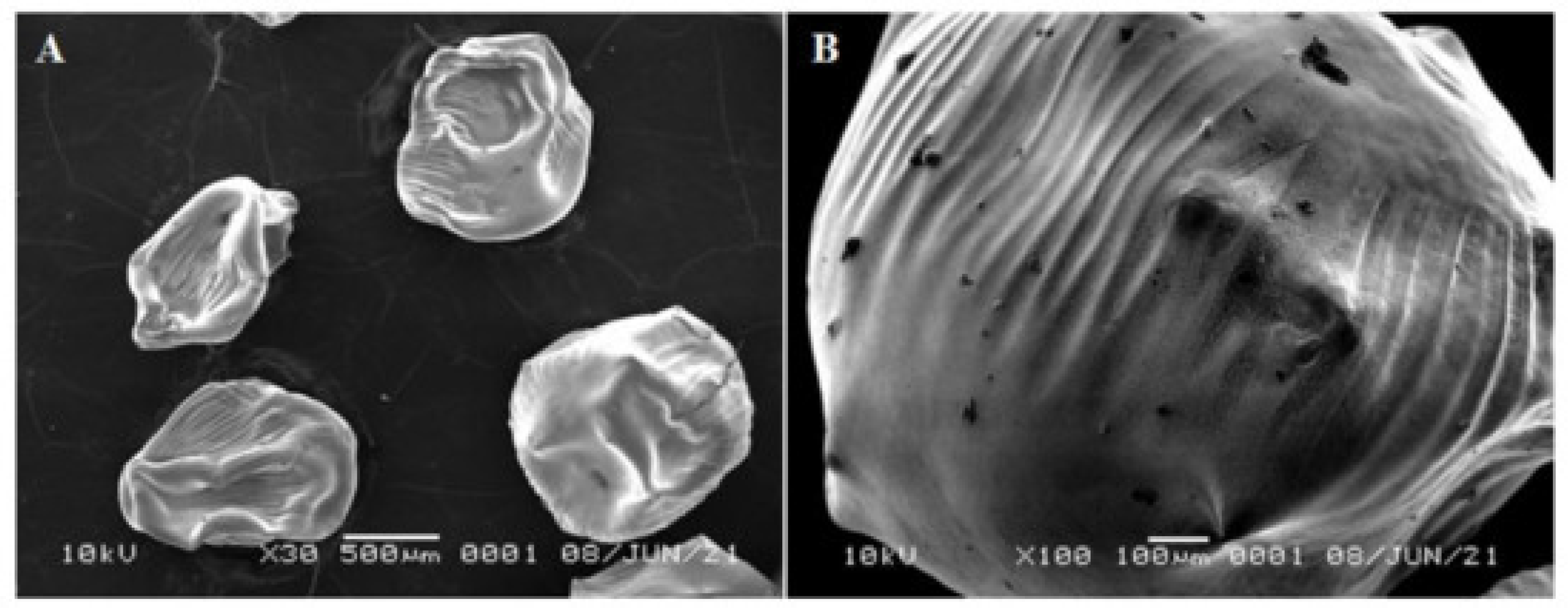
In [92], the synthesis of silver nanoparticles–chitosan composite spheres (AgNPs-chi-spheres) was characterized using UV-Vis, FT-IR, XRD, SEM, and zetasizer nano. UV-Vis analysis showed optimal absorption at 410 nm, and XRD confirmed that the particles were crystalline and spherical. SEM analysis revealed the smallest particle size of 46.91 nm when 20% NaOH was added (Figure 4). EDX analysis showed that these particles had a smooth, non-porous structure. Zetasizer measurements indicated that the zeta potential and polydispersity index increased with higher NaOH concentrations. Microbial screening showed that AgNPs-chi-spheres with the highest NaOH concentration exhibited the largest inhibition zones against S. aureus, E. coli, and C. albicans, with inhibition zone diameters of 19.5, 18.56, and 12.25 mm, respectively.
Figure 4.
SEM spectrum of AgNP-chi-spheres using 20% NaOH, (A) 30×; (B) 100× [92]. Adapted from Mirda, E. et al. Synthesis of Chitosan-Silver Nanoparticle Composite Spheres and Their Antimicrobial Activities. Polymers 2021, 13, 3990. © 2021, licensed under CC BY 4.0 (https://creativecommons.org/licenses/by/4.0/ accessed on 11 November 2025).
Thus, multifunctional, and smart biopolymer-based systems are increasingly recognized as the next generation of antimicrobial materials, acting at the interface of biotechnology and materials science. These systems integrate bioresponsiveness, self-regulation, and targeted delivery capabilities, offering advanced control over antimicrobial performance and cytocompatibility.
4. Encapsulated Systems and Nanocarriers
Biologically active compounds such as metal nanoparticles (MNps) and bioactive substances of plant origin (essential oils, polyphenols) have potentially significant health benefits; however, these substances are susceptible to oxidative decomposition, which can lead to rapid release, low solubility, and poor bioavailability. The encapsulation of bioactive substances (e.g., in nanoemulsions) can protect them from the negative effects of the external environment (e.g., oxidative decomposition) and improve their physio-chemical properties, enhancing their therapeutic potential. Consequently, microencapsulation and nanoencapsulation technologies are used in the cosmetics, food, and pharmaceuticals industries, where they play a crucial role in ensuring the stability and efficacy of active ingredients [93].
Encapsulation of bioactive compounds within a matrix or protective “wall” material with the formation of microscale or nanoscale structures is widely used in the food, agricultural, pharmaceutical and cosmetic industries due to its ability to effectively protect unstable substances from the effects of adverse factors such as high temperature and oxygen, as well as to prevent the loss of volatile components, such as essential oils. Encapsulation makes it possible to create delivery systems with controlled release of the active substance, potentially improving the physio-chemical properties of products (for example, by converting liquid substances into a solid form), helps mask unpleasant tastes and odors, and increases the water solubility of difficult-to-dissolve compounds, thereby significantly expanding the possibilities of their use [94].
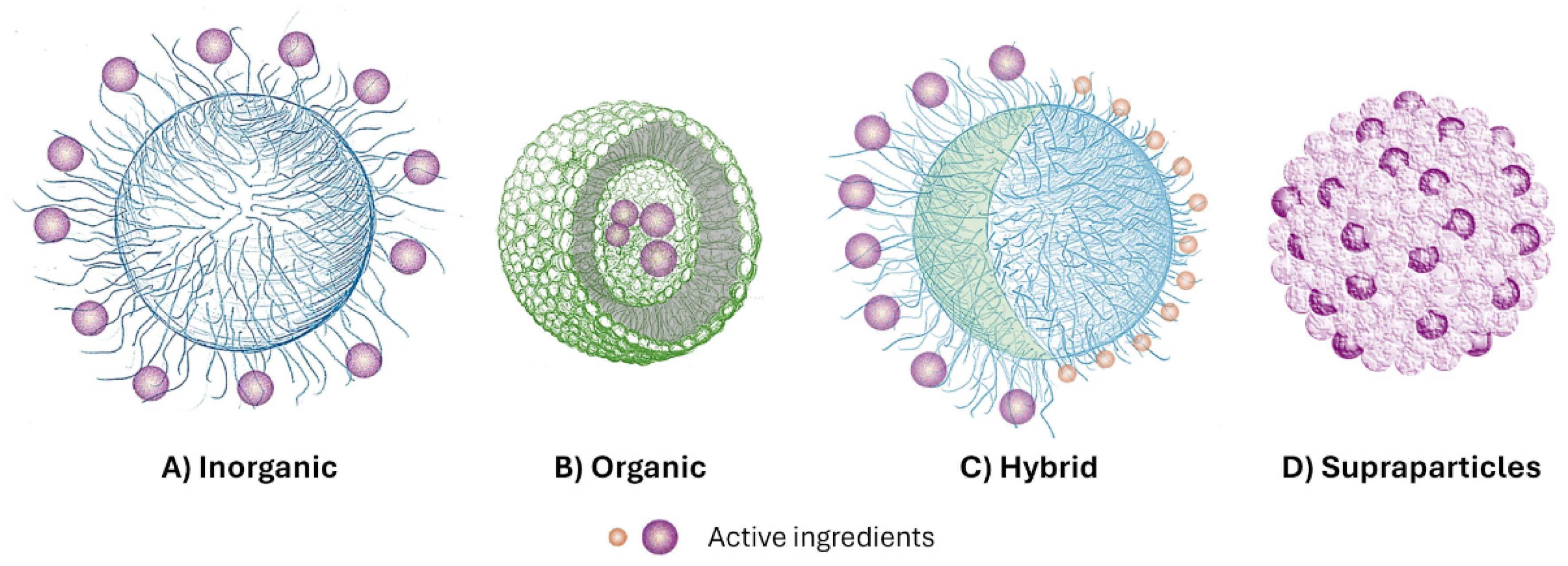
To date, research in the field of hydrophobic bioactive substance delivery highlights the key challenges associated with the development of colloidal systems that can be used in pharmaceutical preparations as carriers. Special attention is paid to the basic physio-chemical processes related to the encapsulation, stabilization, and release of bioactive components, such as solubility, phase separation, barrier properties, and mass transfer processes. Various delivery systems suitable for encapsulating hydrophilic bioactive substances are also being considered, including liposomes, multiple emulsions, fat solids, biopolymer particles, cubosomes, and biological materials-based systems. The advantages and limitations of each of these delivery systems have been reviewed [95]; likewise, nanocarriers based on the origin and chemical composition of their materials (Figure 5), as well as their size (1–1000 nm) and functional purpose, which facilitates an accurate assessment of the risks associated with the use of these systems [96].
Figure 5.
Schematic illustration of examples of: (A) inorganic; (B) organic; (C) hybrid nanocarriers; (D) supraparticles. Active ingredients (purple dots) can be covalently bound or electrostatically attached to the particle surface ((A) or (C)), encapsulated in vesicles (B) or trapped in the pores of nanostructured materials (D) [96]. Adapted from Gressler et al., Journal of Nanobiotechnology 2025, 23:45. © 2025, licensed under CC BY 4.0 (https://creativecommons.org/licenses/by/4.0/ accessed on 11 November 2025).
Polymer-based nanocarriers exist in a variety of forms including micelles, vesicles, nano emulsions, and nanohydrogels, each representing potentially effective platforms for drug delivery to specific locations (e.g., cancer tumors via the enhanced permeability and retention (EPR) mechanism). These systems potentially allow both hydrophobic and hydrophilic substances to be encapsulated (ensuring their stability, protection from premature destruction), and release in the desired area.
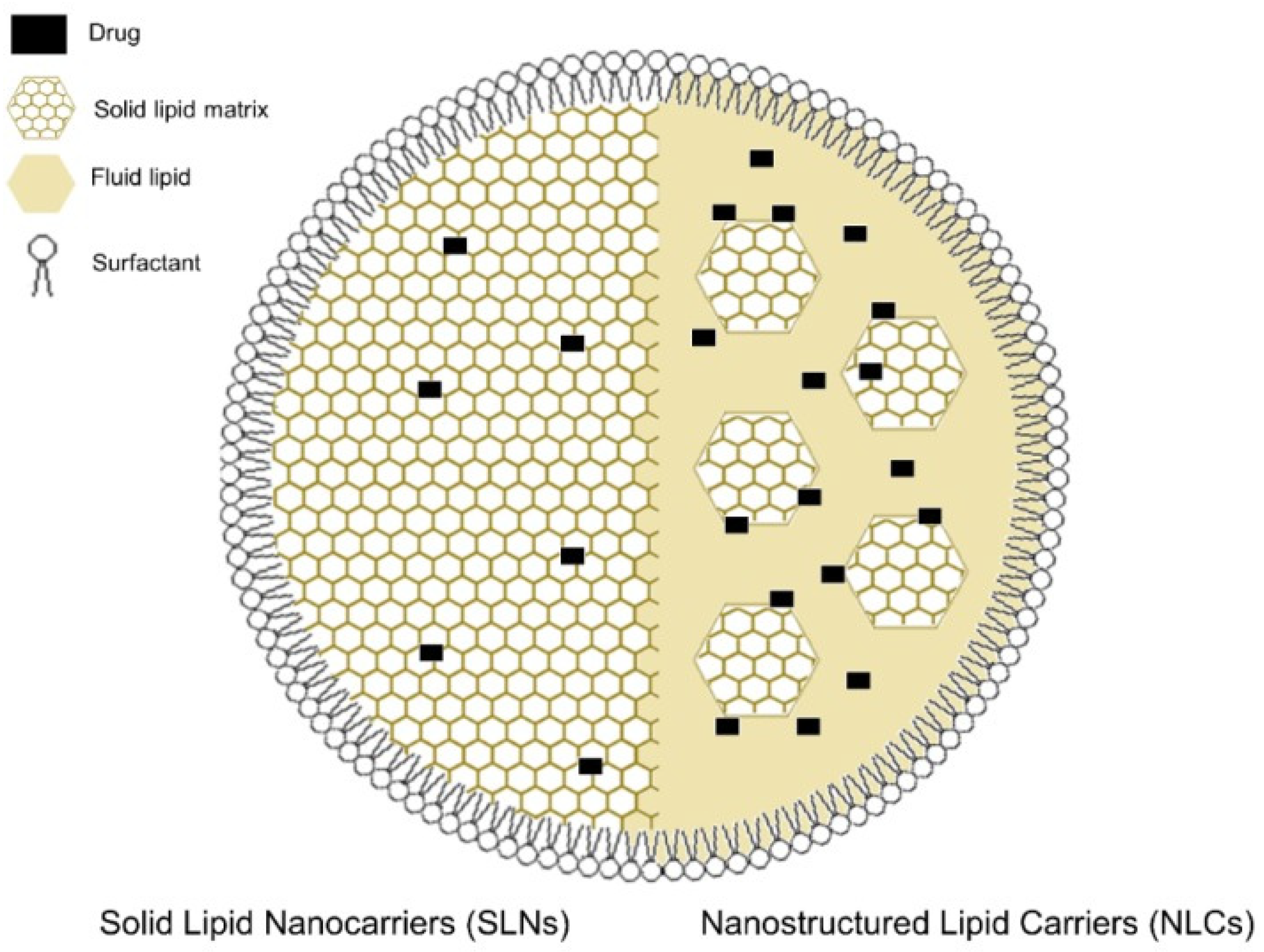
Liposomal nanocarriers, including solid lipid nanoparticles (SLN) and nanostructured lipid carriers (NLC), are actively used to transport peptides, metallic nanoparticles, and extracts, improving their stability and bioavailability [97]. SLNs consist of a solid lipid matrix stabilized by surfactants, whereas NLCs contain solid lipids combined with oil droplets and are also stabilized by surfactants. Compared to SLNs, NLCs offer higher drug loading capacity and more uniform drug release. Both systems are suitable for various routes of administration, especially for dermal applications (Figure 6).
Figure 6.
Schematic representation of the structure of a solid lipid nanoparticle (SLNs; left half) and a nanostructured lipid carrier (NLCs; right half). In SLNs, the localization of the loaded drugs is much more restricted, due to the solid lipid matrix that makes up its core, which usually translates into lower encapsulation efficiencies. The inclusion of a fluid lipid besides the solid lipid matrix in NLCs usually results in an increased drug load capacity [97]. Adapted from Makowski et al., Pharmaceutics 2019, 11(11), 588. © 2019, licensed under CC BY 4.0 (https://creativecommons.org/licenses/by/4.0/ accessed on 11 November 2025).
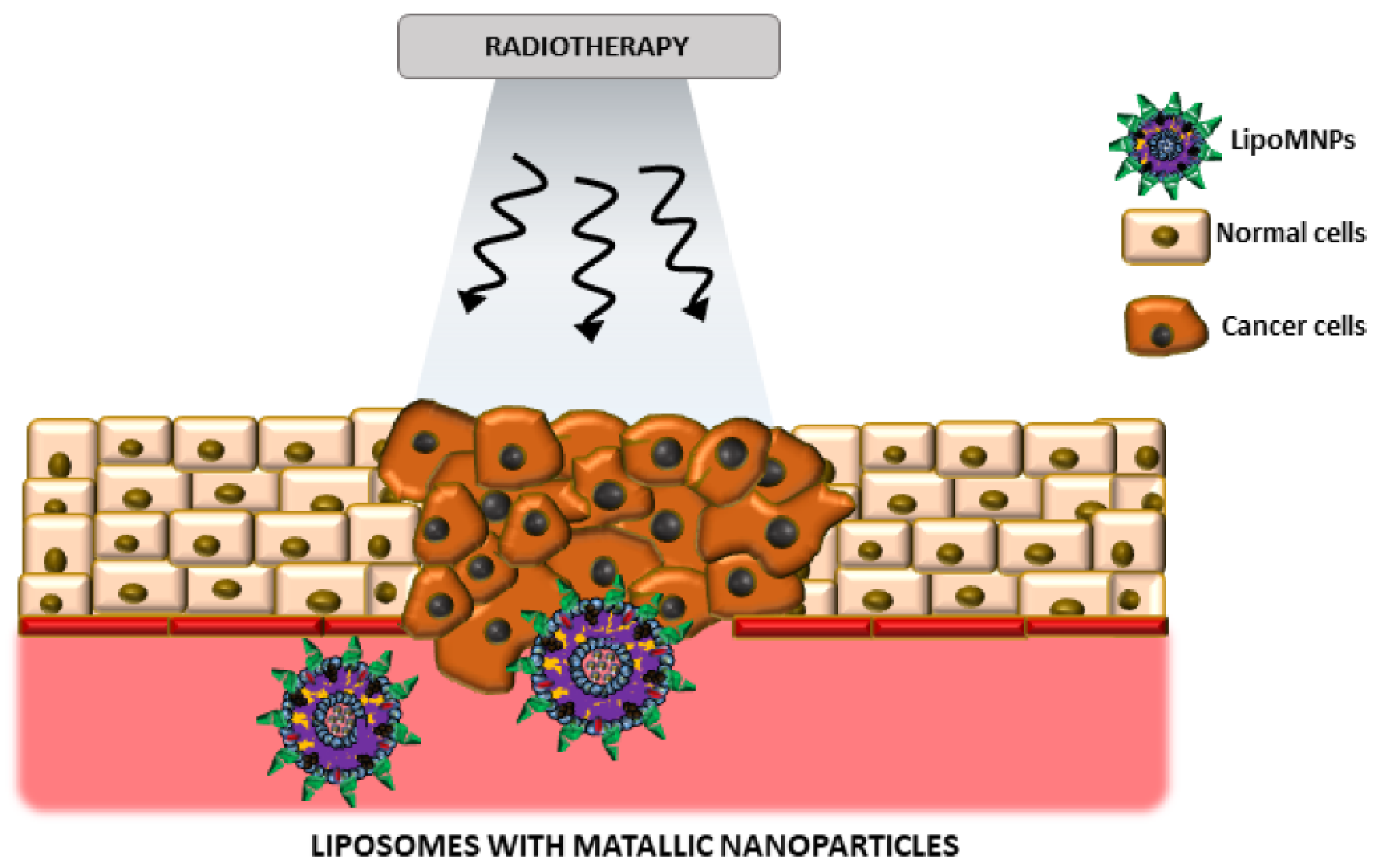
Liposomal and lipid nanocarriers effectively encapsulate metal nanoparticles (such as Ag, Au, or Cu), protecting them from aggregation and premature destruction [97,98]. Metal nanoparticles are actively used as agents to increase the sensitivity of cancer cells to ionizing radiation during radiation therapy. For example, gold nanorods are specifically highlighted for their unique properties that enhance radio sensitization by increasing reactive oxygen species (ROS) generation and improving treatment selectivity [98]. For interested readers we recommend an informative review of liposomal carriers, including their use in treatment and medical imaging [99]. The review emphasizes the importance of further studying the biological interactions between nanostructures and cells, which is the key to overcoming existing limitations in the clinical application of these technologies (e.g., limited understanding of biodistribution, low targeting specificity, potential long-term toxicity, and immune responses). The review also highlights the role of hybrid nanostructures, such as liposomes and metal nanoparticles, in the treatment of cancer and magnetic resonance imaging, with the possibility of using theranostic approaches. It is important that the introduction of radiosensitizers does not affect the physio-chemical properties of liposomes, and stimulating factors such as temperature, pH or light contribute to their decomposition without destroying healthy tissues (Figure 7).
Figure 7.
The schematic representation of LipoMNPs (Liposomes with metallic nanoparticles) usage as radiosensitizers in radiotherapy. Arrows are symbols of photons in ionizing radiation during radiotherapy [99]. Adapted from Musielak et al., Int. J. Mol. Sci. 2021, 22, 6229. © 2021, licensed under CC BY 4.0 (https://creativecommons.org/licenses/by/4.0/ accessed on 11 November 2025).
Liposomes and lipid nanoparticles also serve as excellent carriers for plant extracts (for example, extracts of turmeric, tea or other natural antioxidants), improving their solubility and bioavailability. Extracts, which are often poorly soluble in water, can be encapsulated in hydrophobic regions of liposomes or SLN, which contributes to their stability and protection from oxidation. This allows the extracts to be used for various therapeutic purposes, such as antioxidant, anti-inflammatory, or antimicrobial therapy, with improved efficacy and controlled release of active substances. Thus, liposomal and lipid nanocarriers provide efficient transport of metal nanoparticles and extracts, improving their therapeutic properties, stability, and targeted delivery to the desired areas of the body.
Thus, liposomal and lipid nanocarriers provide efficient transport of metal nanoparticles and extracts, improving their therapeutic properties, stability, and targeted delivery to the desired areas of the body.
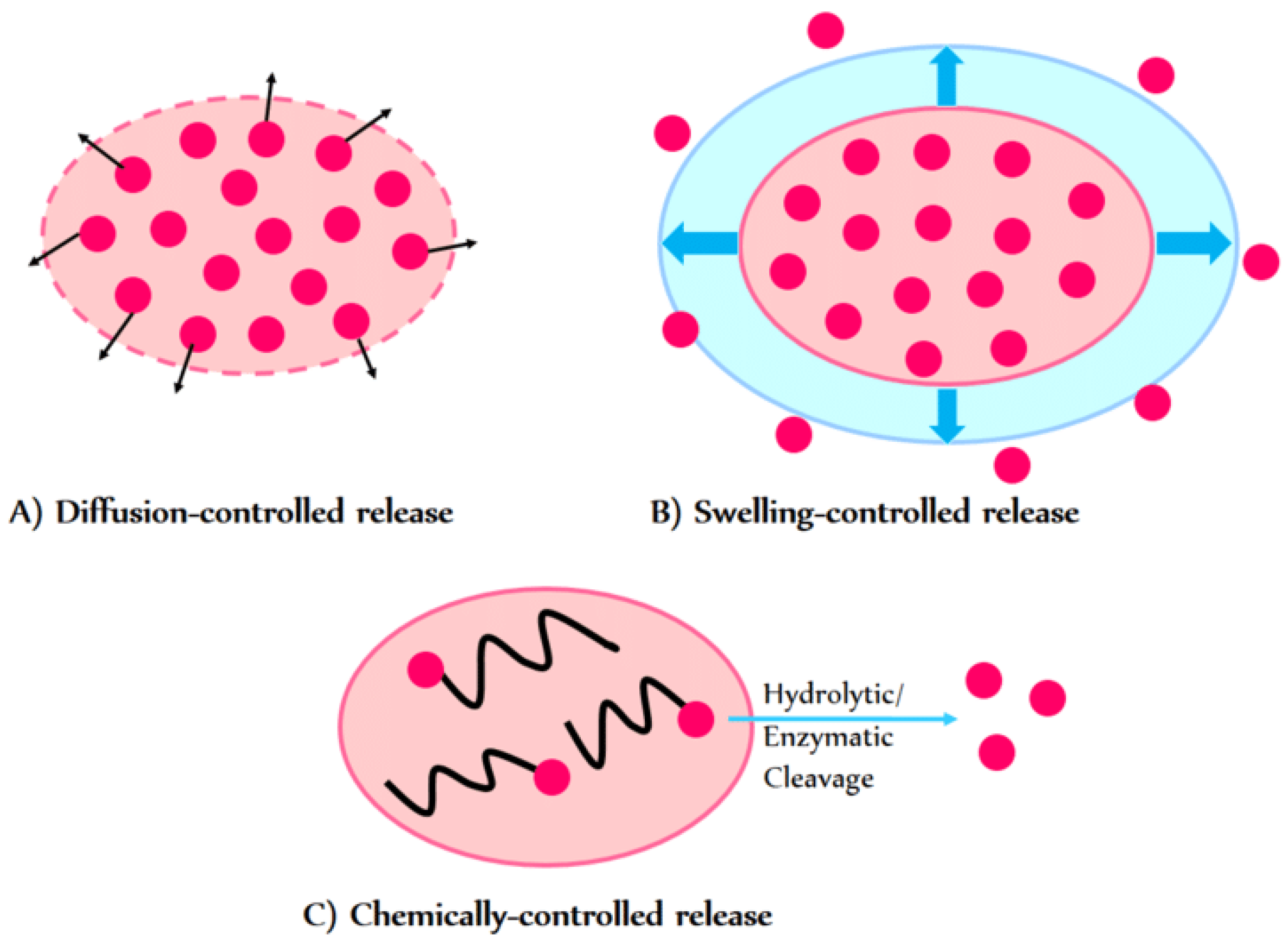
Alongside lipid-based carriers, biologically derived materials such as polysaccharides and proteins are increasingly explored as encapsulation matrices due to their degradability and tunable properties. In such systems, understanding the release kinetics of bioactive compounds is crucial for achieving controlled and sustained delivery. The release process is mainly governed by diffusion, polymer swelling, and degradation, often following Fickian or anomalous transport behavior. These mechanisms are commonly analyzed using models such as the Higuchi and Korsmeyer–Peppas equations, which help identify the dominant release pathways and optimize carrier performance (Figure 8) [100].
Figure 8.
Schematic view of drug release mechanisms from hydrogels. (A) Diffusion-controlled release. (B) Swelling-controlled release. (C) Chemically controlled release [100]. Adapted from Ghasemiyeh, P. et al. Hydrogels as Drug Delivery Systems; Pros and Cons. Trends Pharm. Sci. Technol. 2019, 5, 7–24. © 2019, licensed under CC BY 4.0 (https://creativecommons.org/licenses/by/4.0/ accessed on 11 November 2025).
Research into the use of micelles and nanocapsules based on biopolymers for the encapsulation of active substances is also a significant area of scientific development. These approaches make it possible to effectively protect and deliver biologically active components, which is important for various fields, including the food and pharmaceutical industries. An investigation of the formation of complex coacervates formed by carboxymethylcellulose (CMC) and lactoferrin (Lf) for the encapsulation of β-carotene from Sacha inchi oil showed that the optimal conditions for the formation of coacervates are pH 5.0 and a component ratio of 1:14. Capsules obtained from these coacervates showed high encapsulation (97% of beta-carotene) and good bioavailability (67%) after digestion in an in vitro gastrointestinal model with Fickian release kinetics, highlighting the potential of using CMC complex coacervates/Lf for the protection and delivery of beta-carotene in food products [101].
Studies have also shown that cabreuva essential oil, obtained from the wood of Myrocarpus fastigiatus, has the potential for use in pharmaceuticals and food packaging [102]. To improve the solubility and protection of the oil, a two-stage process of forming emulsions with chitosan, SDS and PVA was proposed, followed by ion crosslinking with sodium citrate, in which the system with 0.75% chitosan and 1% SDS proved to be the most stable. As an alternative to essential oil encapsulation, the electrospinning method was used, which made it possible to create nanofibers that effectively control the release of oil with demonstrable activity against a variety of microorganisms (Candida albicans, Escherichia coli, Staphylococcus aureus and Staphylococcus epidermidis).
Thus, the encapsulation of active compounds using biopolymers, nanoemulsions, liposomes, micelles, and other nanostructured carriers have significant potential for applications in pharmaceuticals, the food industry, and other fields. However, for the effective and safe use of these delivery systems, additional research is needed to improve their properties and optimize them.
5. Biotechnological Approaches: Microorganisms for the Creation of Antimicrobial Biopolymers
In recent decades, biotechnologies have made significant progress in the development of innovative methods for the production of antimicrobial materials, including biopolymers. One of the most promising approaches is the use of microorganisms for the synthesis of biopolymers with antimicrobial activity [103,104,105,106]. Microorganisms such as bacteria, fungi, and algae are natural sources for the synthesis of bioactive compounds. These organisms can produce biopolymers that have antimicrobial properties, contributing to the creation of new materials for medical, pharmaceutical, and environmental applications [107].
Modern research is aimed at identifying and optimizing microorganisms capable of producing such biopolymers, as well as understanding the mechanisms of their antimicrobial activity. As a result, new ways of using antimicrobial biopolymers are being developed in the fields of medicine, packaging, pollution protection and other fields [108,109]. It is possible to purify bacterial cellulose (BC) produced by Komagataeibacter xylinus and generate BC-based biomaterials (e.g., films) and improve the mechanical properties of these films by immersion in solutions of polyvinyl alcohol and chitosan [110]. Parameters such as moisture content, mechanical properties, vapor permeability, as well as morphology and structural characteristics were evaluated using various analytical methods. The results showed that the addition of chitosan significantly increases the strength of the films, reaching values similar to synthetic polymer films. Also, the addition of polyvinyl alcohol reduced the permeability to water vapor. The developed films have protective properties against ultraviolet radiation and an optimal appearance, which opens up prospects for their application in various fields, including medical and packaging technologies.
Biomaterials in which biopolymers are integrated with metal nanoparticles (for example, Ag, Cu or Zn) and plant extracts. Metal nanoparticles, due to their powerful antimicrobial properties, provide active protection against pathogens, while plant extracts containing phytochemical compounds can enhance the antimicrobial effect and contribute to additional biological activity. This combination of natural and synthetic components has prospects for the development of sustainable and environmentally friendly materials with a wide range of applications in medicine, pharmaceuticals, and the food industry [111,112]. The antibacterial and antioxidant properties of chitosan (CS) nanoparticles with the addition of copper oxide (CuONPs) and grape seed extract (GSE) were studied [113]. The nanocomposites effectively absorb the DPPH radical (74.2% at 100 µg/mL), which is comparable to ascorbic acid, and have pronounced antibacterial activity. The CS/CuO/GSE composites demonstrated inhibitory activity against E. (9 mm inhibition zone) and Streptococcus mutans (14 mm inhibition zone) at a concentration of 100 µg/mL. The minimum inhibitory concentrations were 312 µg/mL for S. mutans and 5 mg/mL (5000 µg/mL) for E. coli. Thus, the developed nanocomposite has a high potential for use in the fight against resistant bacteria, as well as an antioxidant.
Modern methods for modifying biodegradable polymers using chemical elements, microorganisms, and enzymes to enhance their antibacterial activity were reviewed [114], covering the processing of biopolymers, the creation of composites and the modeling of their properties, which contributes to improving efficiency in the fight against microbial pollutants. The issues of environmental safety of these materials and their disposal without harm to the environment were also considered.
6. Current Issues and Challenges
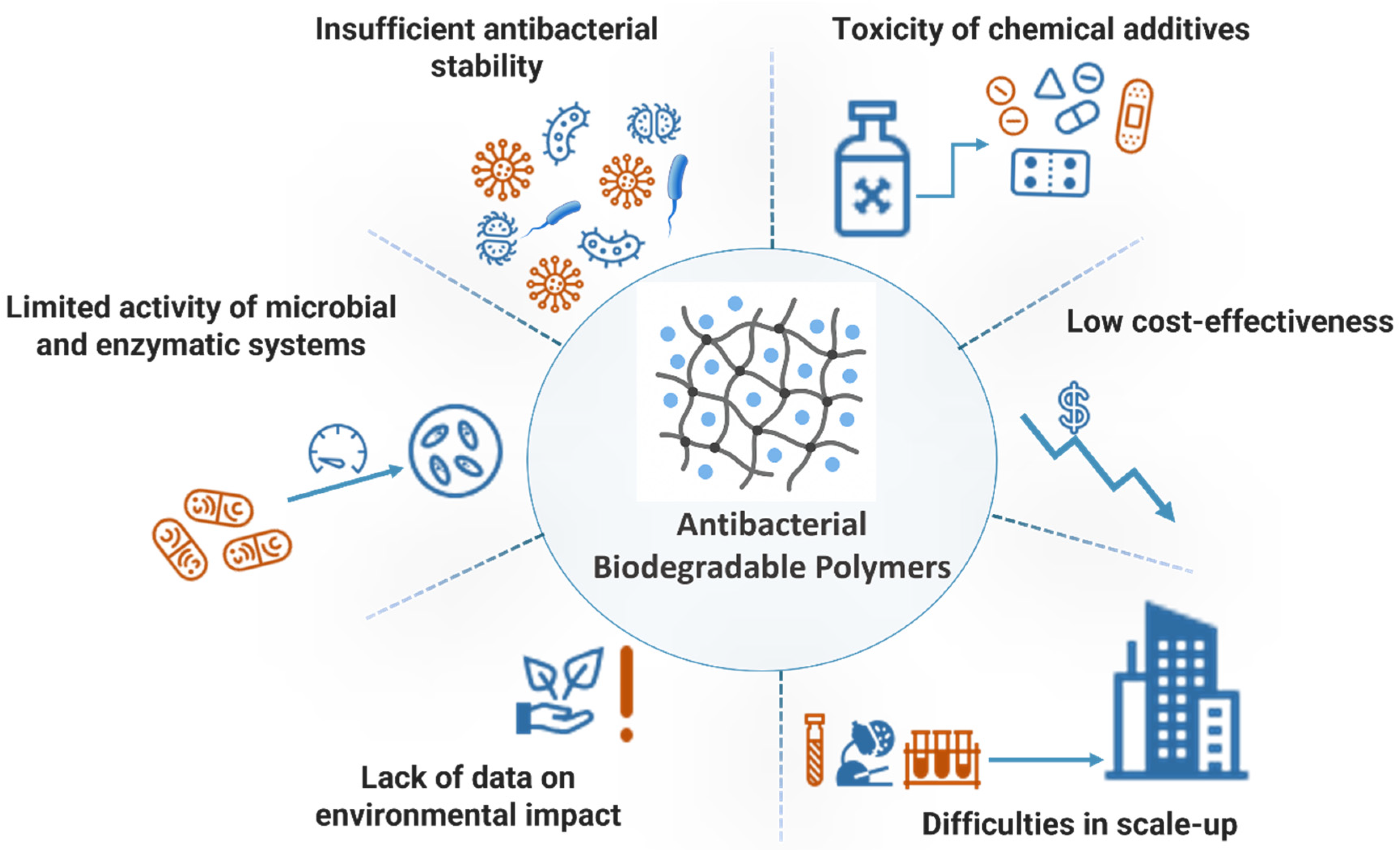
Despite the progress in the modification of biodegradable polymers, modern methods of chemical modification, as well as the use of microorganisms and enzymes, require further improvement [115]. Under real-world operating conditions, it is often not possible to achieve the necessary stability and durability of antibacterial properties [116], which underscores the need to develop more effective and versatile methods.
From the point of view of environmental and economic aspects regarding polymer production/disposal there are challenges [117], likewise with their current costs [118].
The interaction of new polymers with the environment (particularly understanding of the long-term effects of application of such polymers on the ecosystem and the biosphere) is an area of ongoing research [119]. Thus, despite significant progress, the industry is facing several challenges (Figure 9), the solution of which will require interdisciplinary research approaches.
Figure 9.
Current problems and challenges related to the development and application of antibacterial biodegradable polymers.
7. Prospects for the Development of Antimicrobial Biopolymer Matrices
The problem of antimicrobial resistance and the need to develop safe, environmentally sustainable and highly effective materials stimulates research into the creation of biopolymer matrices with improved antimicrobial properties. In the future, this field will be developed using new approaches aimed at creating materials that will not only effectively fight infections, but also ensure environmental safety [120].
The introduction of metal nanoparticles will open new opportunities for the creation of medical and pharmaceutical products such as antiseptic coatings, implants and bandages for wound healing, minimizing the risk of infection and accelerating regeneration processes. Several clinical products incorporating metal nanoparticles are currently available [121,122,123]. For example, Atrauman Ag is a silver-impregnated tulle dressing, providing antibacterial activity and widely used for the management of acute and chronic wounds. A summary of commercially available hydrogels and dressings containing metal nanoparticles is presented in Table 1.
Table 1.
Commercially available metal nanoparticle-containing hydrogels and dressings.
Several novel products are either currently being evaluated or have already been assessed in clinical studies. Hydrogels containing metal nanoparticles have exhibited promising antimicrobial activity and favorable wound healing performance outcomes [124,125,126,127,128]. The use of plant extracts for the synthesis of metal nanoparticles and their integration into biopolymer matrices will not only improve antimicrobial properties, but also increase environmental safety, making materials more natural and safer for use in cosmetology and pharmaceuticals. Plant extracts with activity can become part of complex formulas, opening up new perspectives in the development of natural therapeutic and preventive agents [129,130]. Innovative technologies such as encapsulation and the use of nanocarriers will play a key role in the fight against microbial infections. These technologies will make it possible to create devices with a long service life, effectively controlling the release of antimicrobial agents, which will significantly increase their effectiveness, especially in medical devices and patches [131,132,133]. The transition to biodegradable biopolymers and the use of environmentally friendly components will help protect the environment, reducing the negative impact on nature and minimizing pollution. Modified biopolymers with improved antimicrobial properties will be widely used in the medical and pharmaceutical industries, as well as in areas such as the food industry, agriculture and environmental protection. Their use is especially relevant for the protection of medical devices, the delivery of medicines and the removal of microbial contamination [134]. Future advances in antimicrobial biopolymers will be closely linked to the development of nanotechnology, biotechnology, materials science, and environmental sciences. An interdisciplinary approach will form the basis for creating innovative solutions combining microbiological safety, environmental friendliness and high efficiency [135].
Cochrane reviews are evidence-based healthcare reviews, which are reliable and based on independent evidence to inform healthcare decisions for professionals, patients, and policymakers worldwide. There are currently 134 Cochrane reviews featuring the keyword antimicrobial for the treatment of a variety of conditions (associated with infections, devices, e.g., catheters, surgeries, etc.), and sales practices to address issues like antimicrobial resistance [136]. The conclusion of the Cochrane reviews was that there is currently insufficient evidence from randomized control trials to suggest that hydrogel dressings are effective in treating foot/leg ulcers or indeed as skin grafts [137], likewise there is insufficient evidence to recommend the use of silver-containing dressings or topical agents for treatment of infected or contaminated chronic wounds or diabetic foot ulcers [138]. Clearly, if such biomaterials are to find real world applications, there is a need for further well-designed systematic studies in the future.
8. Conclusions
The creation of biopolymer matrices with improved antimicrobial properties is a promising direction in the fight against infections and microbial contamination. The development of these technologies, supported by innovative methods and interdisciplinary research, will open up wide opportunities for the use of such materials in medical, pharmaceutical, and environmental practice, providing not only effective treatment, but also support for sustainable development in various industries.
Recent advances demonstrate that the incorporation of natural antimicrobial agents, such as metal nanoparticles and plant-derived extracts, can significantly enhance the functional performance of biopolymers. These hybrid systems combine the advantages of biodegradability, safety, and environmental friendliness with strong antimicrobial efficacy, making them attractive alternatives to conventional synthetic materials. However, challenges remain in achieving controlled release, maintaining stability of active components, and ensuring the reproducibility of antimicrobial activity across different systems. Recent systematic reviews indicate that antimicrobial efficacy observed in controlled laboratory studies frequently does not translate reliably to real-world applications, largely due to experimental variability and the absence of standardized assessment protocols, underscoring the necessity for rigorous in vivo validation and translational studies.
Future research should therefore focus on optimizing composition–structure–function relationships to balance antimicrobial efficiency, mechanical performance, and biocompatibility. Moreover, attention should be given to regulatory compliance, for example, comprehensive biocompatibility testing, via the implementation of standardized antimicrobial assays (e.g., ISO or ASTM protocols). Addressing these aspects will facilitate the safe translation of laboratory results into real-world applications and accelerate the development of next-generation antimicrobial biopolymer materials.
Author Contributions
Conceptualization, A.M.K.; methodology, A.M.K.; formal analysis, A.M.K.; investigation, A.M.K.; resources, A.M.K. and J.G.H.; data curation, A.M.K.; writing—original draft preparation, A.M.K.; writing—review and editing, A.M.K. and J.G.H.; supervision, J.G.H.; project administration, A.M.K. and J.G.H.; funding acquisition, A.M.K. and J.G.H. All authors have read and agreed to the published version of the manuscript.
Funding
This research was funded by the Ministry of Science and Higher Education of the Republic of Kazakhstan under the grant funding program for young scientists “Zhas Galym” for 2024–2026, project title “Development of new bactericidal biocomposites based on biopolymers with silver nanoparticles, stabilized with plant extracts with a fast wound healing effect”, grant number AP22684163 which covered the APC.
Conflicts of Interest
The authors declare no conflicts of interest. The funders had no role in the design of the study; in the collection, analyses, or interpretation of data; in the writing of the manuscript; or in the decision to publish the results.
References
- Naghavi, M.; Vollset, S.E.; Ikuta, K.S.; Swetschinski, L.R.; Gray, A.P.; Wool, E.E.; Aguilar, G.R.; Mestrovic, T.; Smith, G.; Han, C.; et al. Global burden of bacterial antimicrobial resistance 1990–2021: A systematic analysis with forecasts to 2050. Lancet 2024, 404, 1199–1226. [Google Scholar] [CrossRef]
- Salam, M.A.; Al-Amin, M.Y.; Salam, M.T.; Pawar, J.S.; Akhter, N.; Rabaan, A.A.; Alqumber, M.A.A. Antimicrobial Resistance: A Growing Serious Threat for Global Public Health. Healthcare 2023, 11, 1946. [Google Scholar] [CrossRef]
- Uddin, T.M.; Chakraborty, A.J.; Khusro, A.; Zidan, B.R.M.; Mitra, S.; Emran, T.B.; Dhama, K.; Ripon, M.K.H.; Gajdács, M.; Sahibzada, M.U.K.; et al. Antibiotic Resistance in Microbes: History, Mechanisms, Therapeutic Strategies and Future Prospects. J. Infect. Public Health 2021, 14, 1750–1766. [Google Scholar] [CrossRef]
- Elshobary, M.E.; Badawy, N.K.; Ashraf, Y.; Zatioun, A.A.; Masriya, H.H.; Ammar, M.M.; Mohamed, N.A.; Mourad, S.; Assy, A.M. Combating Antibiotic Resistance: Mechanisms, Multidrug-Resistant Pathogens, and Novel Therapeutic Approaches: An Updated Review. Pharmaceuticals 2025, 18, 402. [Google Scholar] [CrossRef] [PubMed]
- Jacobowski, A.C.; Boleti, A.P.A.; Cruz, M.V.; Santos, K.F.D.P.; de Andrade, L.R.M.; Frihling, B.E.F.; Migliolo, L.; Paiva, P.M.G.; Teodoro, P.E.; Teodoro, L.P.R.; et al. Combating Antimicrobial Resistance: Innovative Strategies Using Peptides, Nanotechnology, Phages, Quorum Sensing Interference, and CRISPR-Cas Systems. Pharmaceuticals 2025, 18, 1119. [Google Scholar] [CrossRef] [PubMed]
- Kolawole, T.; Mustapha, A.; Mbata, A.; Tomoh, B.; Forkuo, A.; Chinyeaka, M.; Agwu, K. Innovative Strategies for Reducing Antimicrobial Resistance: A Review of Global Policy and Practice. J. Front. Multidiscip. Res. 2025, 4, 25–38. [Google Scholar] [CrossRef]
- AlQurashi, D.M.; AlQurashi, T.F.; Alam, R.I.; Shaikh, S.; Tarkistani, M.A.M. Advanced Nanoparticles in Combating Antibiotic Resistance: Current Innovations and Future Directions. J. Nanotheranostics 2025, 6, 9. [Google Scholar] [CrossRef]
- Nowotnick, A.G.; Xi, Z.; Jin, Z.; Khalatbarizamanpoor, S.; Brauer, D.S.; Löffler, B.; Jandt, K.D. Antimicrobial Biomaterials Based on Physical and Physicochemical Action. Adv. Healthc. Mater. 2024, 13, e2402001. [Google Scholar] [CrossRef]
- Bamisaye, A.; Adekola, M.A.; Abati, S.M.; Etafo, N.O.; Ademola, O.S.; Joseph, P.T.; Samuel, O.; Ogunlaja, O.O.; Langmi, H.; Idowu, M.A. Recent advances in metal/metal-oxide nanoparticle-polymer nanohybrid for biomedical applications. Mater. Today Chem. 2025, 49, 103086. [Google Scholar] [CrossRef]
- Murugaiyan, J.; Kumar, P.A.; Rao, G.S.; Iskandar, K.; Hawser, S.; Hays, J.P.; Mohsen, Y.; Adukkadukkam, S.; Awuah, W.A.; Jose, R.A.M.; et al. Progress in Alternative Strategies to Combat Antimicrobial Resistance: Focus on Antibiotics. Antibiotics 2022, 11, 200. [Google Scholar] [CrossRef]
- Turner, R.J. The good, the bad, and the ugly of metals as antimicrobials. Biometals 2024, 37, 545–559. [Google Scholar] [CrossRef]
- Balasubramaniam, B.; Prateek Ranjan, S.; Saraf, M.; Kar, P.; Singh, S.P.; Thakur, V.K.; Singh, A.; Gupta, R.K. Antibacterial and Antiviral Functional Materials: Chemistry and Biological Activity toward Tackling COVID-19-like Pandemics. ACS Pharmacol. Transl. Sci. 2020, 4, 8–54. [Google Scholar] [CrossRef]
- Chug, M.K.; Brisbois, E.J. Recent Developments in Multifunctional Antimicrobial Surfaces and Applications toward Advanced Nitric Oxide-Based Biomaterials. ACS Mater. Au 2022, 2, 525–551. [Google Scholar] [CrossRef] [PubMed]
- Parvin, N.; Joo, S.W.; Mandal, T.K. Nanomaterial-Based Strategies to Combat Antibiotic Resistance: Mechanisms and Applications. Antibiotics 2025, 14, 207. [Google Scholar] [CrossRef] [PubMed]
- de Castro, K.C.; Costa, J.M. Polymeric surfaces witOsmanh biocidal action: Challenges imposed by the SARS-CoV-2, technologies employed, and future perspectives. J. Polym. Res. 2021, 28, 230. [Google Scholar] [CrossRef]
- Visan, A.I.; Negut, I. Coatings Based on Essential Oils for Combating Antibiotic Resistance. Antibiotics 2024, 13, 625. [Google Scholar] [CrossRef]
- Skłodowski, K.; Chmielewska-Deptuła, S.J.; Piktel, E.; Wolak, P.; Wollny, T.; Bucki, R. Metallic Nanosystems in the Development of Antimicrobial Strategies with High Antimicrobial Activity and High Biocompatibility. Int. J. Mol. Sci. 2023, 24, 2104. [Google Scholar] [CrossRef]
- Osman, A.I.; Zhang, Y.; Farghali, M.; Rashwan, A.K.; Eltaweil, A.S.; Abd El-Monaem, E.M.; Mohamed, I.M.A.; Badr, M.M.; Ihara, I.; Rooney, D.W.; et al. Synthesis of Green Nanoparticles for Energy, Biomedical, Environmental, Agricultural, and Food Applications: A Review. Environ. Chem. Lett. 2024, 22, 841–887. [Google Scholar] [CrossRef]
- Madhusudanan, M.; Zhang, J.; Pandit, S.; Singh, P.; Jeong, G.-J.; Khan, F.; Mijakovic, I. Green Synthesis of Silver Nanoparticles: A Review of Polymer and Antimicrobial Drug Combinations for Enhanced Antimicrobial Applications. Adv. NanoBiomed. Res. 2025, 2025, 2000194. [Google Scholar] [CrossRef]
- Gunasena, M.D.K.M.; Galpaya, G.D.C.P.; Abeygunawardena, C.J.; Induranga, D.K.A.; Priyadarshana, H.V.V.; Millavithanachchi, S.S.; Bandara, P.K.G.S.S.; Koswattage, K.R. Advancements in Bio-Nanotechnology: Green Synthesis and Emerging Applications of Bio-Nanoparticles. Nanomaterials 2025, 15, 528. [Google Scholar] [CrossRef]
- Karnwal, A.; Jassim, A.Y.; Mohammed, A.A.; Sharma, V.; Al-Tawaha, A.R.M.S.; Sivanesan, I. Nanotechnology for Healthcare: Plant-Derived Nanoparticles in Disease Treatment and Regenerative Medicine. Pharmaceuticals 2024, 17, 1711. [Google Scholar] [CrossRef]
- He, S.; Wu, L.; Li, X.; Sun, H.; Xiong, T.; Liu, J.; Huang, C.; Xu, H.; Sun, H.; Chen, W.; et al. Metal-Organic Frameworks for Advanced Drug Delivery. Acta Pharm. Sin. B 2021, 11, 2362–2395. [Google Scholar] [CrossRef] [PubMed]
- Borehalli Mayegowda, S.; Roy, A.; N G, M.; Pandit, S.; Alghamdi, S.; Almehmadi, M.; Allahyani, M.; Awwad, N.S.; Sharma, R. Eco-Friendly Synthesized Nanoparticles as Antimicrobial Agents: An Updated Review. Front. Cell. Infect. Microbiol. 2023, 13, 1224778. [Google Scholar] [CrossRef] [PubMed]
- Sam, S.; Joseph, B.; Thomas, S. Exploring the Antimicrobial Features of Biomaterials for Biomedical Applications. Results Eng. 2023, 17, 100979. [Google Scholar] [CrossRef]
- Singh, H.; Desimone, M.F.; Pandya, S.; Jasani, S.; George, N.; Adnan, M.; Aldarhami, A.; Bazaid, A.S.; Alderhami, S.A. Revisiting the Green Synthesis of Nanoparticles: Uncovering Influences of Plant Extracts as Reducing Agents for Enhanced Synthesis Efficiency and Its Biomedical Applications. Int. J. Nanomed. 2023, 18, 4727–4750. [Google Scholar] [CrossRef]
- Caracciolo, P.C.; Abraham, G.A.; Battaglia, E.S.; Bongiovanni Abel, S. Recent Progress and Trends in the Development of Electrospun and 3D Printed Polymeric-Based Materials to Overcome Antimicrobial Resistance (AMR). Pharmaceutics 2023, 15, 1964. [Google Scholar] [CrossRef]
- Österberg, M.; Henn, K.A.; Farooq, M.; Valle-Delgado, J.J. Biobased Nanomaterials─The Role of Interfacial Interactions for Advanced Materials. Chem. Rev. 2023, 123, 2200–2241. [Google Scholar] [CrossRef]
- Wang, M.; Wang, Y.; Chen, G.; Gao, H.; Peng, Q. Chitosan-Based Multifunctional Biomaterials as Active Agents or Delivery Systems for Antibacterial Therapy. Bioengineering 2024, 11, 1278. [Google Scholar] [CrossRef]
- Ke, C.-L.; Deng, F.-S.; Chuang, C.-Y.; Lin, C.-H. Antimicrobial Actions and Applications of Chitosan. Polymers 2021, 13, 904. [Google Scholar] [CrossRef]
- Villegas, C.; Torres, A.; Bruna, J.; Bustos, M.I.; Díaz-Barrera, A.; Romero, J.; Rojas, A.; Guarda, A. Obtaining Active Polylactide (PLA) and Polyhydroxybutyrate (PHB) Blends Based Bionanocomposites Modified with Graphene Oxide and Supercritical Carbon Dioxide (scCO2)-Assisted Cinnamaldehyde: Effect on Thermal-Mechanical, Disintegration and Mass Transport Properties. Polymers 2021, 13, 3968. [Google Scholar] [CrossRef]
- Tabassum, Z.; Girdhar, M.; Kumar, A.; Malik, T.; Mohan, A. ZnO Nanoparticles-Reinforced Chitosan–Xanthan Gum Blend Novel Film with Enhanced Properties and Degradability for Application in Food Packaging. ACS Omega 2023, 8, 31318–31332. [Google Scholar] [CrossRef] [PubMed]
- Bin Rashid, A.; Haque, M.; Islam, S.M.M.; Uddin Labib, K.M.R. Nanotechnology-Enhanced Fiber-Reinforced Polymer Composites: Recent Advancements on Processing Techniques and Applications. Heliyon 2024, 10, e24692. [Google Scholar] [CrossRef] [PubMed]
- Caicedo Chacon, W.D.; Verruck, S.; Monteiro, A.R.; Ayala Valencia, G. The Mechanism, Biopolymers and Active Compounds for the Production of Nanoparticles by Anti-Solvent Precipitation: A Review. Food Res. Int. 2023, 168, 112728. [Google Scholar] [CrossRef] [PubMed]
- Kučuk, N.; Primožič, M.; Knez, Ž.; Leitgeb, M. Sustainable Biodegradable Biopolymer-Based Nanoparticles for Healthcare Applications. Int. J. Mol. Sci. 2023, 24, 3188. [Google Scholar] [CrossRef]
- Kawee-ai, A. Advancing Gel Systems with Natural Extracts: Antioxidant, Antimicrobial Applications, and Sustainable Innovations. Gels 2025, 11, 125. [Google Scholar] [CrossRef]
- Zahra, M.; Abrahamse, H.; George, B.P. Flavonoids: Antioxidant Powerhouses and Their Role in Nanomedicine. Antioxidants 2024, 13, 922. [Google Scholar] [CrossRef]
- Anal, A.; Boonlao, N.; Ruktanonchai, U. Emulsion Systems Stabilized with Biopolymers to Enhance Oral Bioaccessibility and Bioavailability of Lipophilic Bioactive Compounds. Curr. Opin. Food Sci. 2023, 50, 101001. [Google Scholar] [CrossRef]
- Ricardo-Rodrigues, S.; Rouxinol, M.I.; Agulheiro-Santos, A.C.; Potes, M.E.; Laranjo, M.; Elias, M. The Antioxidant and Antibacterial Potential of Thyme and Clove Essential Oils for Meat Preservation—An Overview. Appl. Biosci. 2024, 3, 87–101. [Google Scholar] [CrossRef]
- Sandulachi, E.; Macari, A.; Ghendov-Mosanu, A.; Cojocari, D.; Sturza, R. Antioxidant and Antimicrobial Activity of Basil, Thyme, and Tarragon Used in Meat Products. Adv. Microbiol. 2021, 11, 483–493. [Google Scholar] [CrossRef]
- Alven, S.; Aderibigbe, B.A. Chitosan-Based Scaffolds Incorporated with Silver Nanoparticles for the Treatment of Infected Wounds. Pharmaceutics 2024, 16, 327. [Google Scholar] [CrossRef]
- Yoksan, R.; Chirachanchai, S. Silver Nanoparticle-Loaded Chitosan-Starch Based Films: Fabrication and Evaluation of Tensile, Barrier and Antimicrobial Properties. Mater. Sci. Eng. C 2010, 30, 891–897. [Google Scholar] [CrossRef]
- Todorova, D.; Yavorov, N.; Vrabič-Brodnjak, U. Impact of Silver Nanoparticle Treatment and Chitosan on Packaging Paper’s Barrier Effectiveness. Polymers 2024, 16, 2127. [Google Scholar] [CrossRef]
- Hoang, H.T.; Moon, J.-Y.; Lee, Y.-C. Natural Antioxidants from Plant Extracts in Skincare Cosmetics: Recent Applications, Challenges and Perspectives. Cosmetics 2021, 8, 106. [Google Scholar] [CrossRef]
- Michalak, M. Plant-Derived Antioxidants: Significance in Skin Health and the Ageing Process. Int. J. Mol. Sci. 2022, 23, 585. [Google Scholar] [CrossRef]
- Yurdunuseven Yildiz, A.; Öztekin, S.; Anaya, K. Effects of Plant-Derived Antioxidants on the Oxidative Stability of Edible Oils under Thermal and Storage Conditions: Benefits, Challenges, and Sustainable Solutions. Food Chem. 2025, 479, 143752. [Google Scholar] [CrossRef]
- Shubayr, N. Phytochemical Properties of Herbal Extracts for Ultraviolet Protection and Skin Health: A Narrative Review. J. Radiat. Res. Appl. Sci. 2023, 16, 100729. [Google Scholar] [CrossRef]
- Chakravorty, A.; Roy, S. A Review of Photocatalysis, Basic Principles, Processes, and Materials. Sustain. Chem. Environ. 2024, 8, 100155. [Google Scholar] [CrossRef]
- Ono, Y.; Iwahashi, H. Titanium Dioxide Nanoparticles Impart Protection from Ultraviolet Irradiation to Fermenting Yeast Cells. Biochem. Biophys. Rep. 2022, 30, 101221. [Google Scholar] [CrossRef] [PubMed]
- Anucha, C.B.; Altin, I.; Bacaksiz, E.; Stathopoulos, V.N. Titanium Dioxide (TiO2)-Based Photocatalyst Materials Activity Enhancement for Contaminants of Emerging Concern (CECs) Degradation: In the Light of Modification Strategies. Chem. Eng. J. Adv. 2022, 10, 100262. [Google Scholar] [CrossRef]
- Oliveira, M.; Antunes, W.; Mota, S.; Madureira-Carvalho, Á.; Dinis-Oliveira, R.J.; Dias da Silva, D. An Overview of the Recent Advances in Antimicrobial Resistance. Microorganisms 2024, 12, 1920. [Google Scholar] [CrossRef]
- Sheridan, M.; Winters, C.; Zamboni, F.; Collins, M. Biomaterials: Antimicrobial Surfaces in Biomedical Engineering and Healthcare. Curr. Opin. Biomed. Eng. 2022, 22, 100373. [Google Scholar] [CrossRef]
- Wang, Y.; Shukla, A. Bacteria-Responsive Biopolymer-Coated Nanoparticles for Biofilm Penetration and Eradication. Biomater. Sci. 2022, 10, 2831–2843. [Google Scholar] [CrossRef]
- Puluhulawa, L.E.; Joni, I.M.; Elamin, K.M.; Mohammed, A.F.A.; Muchtaridi, M.; Wathoni, N. Chitosan–Hyaluronic Acid Nanoparticles for Active Targeting in Cancer Therapy. Polymers 2022, 14, 3410. [Google Scholar] [CrossRef]
- Huang, Y.; Zou, L.; Wang, J.; Jin, Q.; Ji, J. Stimuli-Responsive Nanoplatforms for Antibacterial Applications. Wiley Interdiscip. Rev. Nanomed. Nanobiotechnol. 2022, 14, e1775. [Google Scholar] [CrossRef]
- Chen, X.; Zheng, B.; Zhou, S.; Shi, C.; Liang, Y.; Hu, L. Development and Application of Intelligent Coating Technology: A Review. Coatings 2024, 14, 597. [Google Scholar] [CrossRef]
- Joshi, M.U.; Kulkarni, S.P.; Choppadandi, M.; Keerthana, M.; Kapusetti, G. Current State of Art Smart Coatings for Orthopedic Implants: A Comprehensive Review. Smart Mater. Med. 2023, 4, 661–679. [Google Scholar] [CrossRef]
- Dumontel, B.; Conejo-Rodríguez, V.; Vallet-Regí, M.; Manzano, M. Natural Biopolymers as Smart Coating Materials of Mesoporous Silica Nanoparticles for Drug Delivery. Pharmaceutics 2023, 15, 447. [Google Scholar] [CrossRef]
- Cassa, M.A.; Gentile, P.; Girón-Hernández, J.; Ciardelli, G.; Carmagnola, I. Smart Self-Defensive Coatings with Bacteria-Triggered Antimicrobial Response for Medical Devices. Biomater. Sci. 2024, 12, 5433–5449. [Google Scholar] [CrossRef] [PubMed]
- Altuntaş, E.; Özkan, B.; Güngör, S.; Ozsoy, Y. Biopolymer-Based Nanogel Approach in Drug Delivery: Basic Concept and Current Developments. Preprints 2023. [Google Scholar] [CrossRef]
- Stevanović, M.; Jović, M.; Filipović, N.; Lukač, S.; Tomić, N.; Popović Maneski, L.; Stojanović, Z. Multifunctional Nanomaterial-Integrated Hydrogels for Sustained Drug Delivery: From Synthesis and Characterization to Biomedical Application. Gels 2025, 11, 892. [Google Scholar] [CrossRef]
- Buriti, B.M.A.d.B.; Figueiredo, P.L.B.; Passos, M.F.; da Silva, J.K.R. Polymer-Based Wound Dressings Loaded with Essential Oil for the Treatment of Wounds: A Review. Pharmaceuticals 2024, 17, 897. [Google Scholar] [CrossRef] [PubMed]
- Negut, I.; Albu, C.; Bita, B. Advances in Antimicrobial Coatings for Preventing Infections of Head-Related Implantable Medical Devices. Coatings 2024, 14, 256. [Google Scholar] [CrossRef]
- Singh, P.; Ali, S.W.; Kale, R.D. Antimicrobial Nanomaterials as Advanced Coatings for Self-Sanitizing of Textile Clothing and Personal Protective Equipment. ACS Omega 2023, 8, 8159–8171. [Google Scholar] [CrossRef] [PubMed]
- Jose, A.; Gizdavic-Nikolaidis, M.; Swift, S. Antimicrobial Coatings: Reviewing Options for Healthcare Applications. Appl. Microbiol. 2023, 3, 145–174. [Google Scholar] [CrossRef]
- Uneputty, A.; Dávila-Lezama, A.; Garibo, D.; Oknianska, A.; Bogdanchikova, N.; Hernández-Sánchez, J.F.; Susarrey-Arce, A. Strategies Applied to Modify Structured and Smooth Surfaces: A Step Closer to Reduce Bacterial Adhesion and Biofilm Formation. Colloid Interface Sci. Commun. 2022, 46, 100560. [Google Scholar] [CrossRef]
- Fu, H.; Gray, K.A. The Key to Maximizing the Benefits of Antimicrobial and Self-Cleaning Coatings Is to Fully Determine Their Risks. Curr. Opin. Chem. Eng. 2021, 34, 100761. [Google Scholar] [CrossRef]
- Fernandes, M.; Martins, P.; Correia, D.M.; Carvalho, E.O.; Gama, F.; Vazquez, M.; Bran, C.; Lanceros-Méndez, S. Magnetoelectric Polymer-Based Nanocomposites with Magnetically Controlled Antimicrobial Activity. ACS Appl. Bio Mater. 2021, 4, 559–570. [Google Scholar] [CrossRef]
- Yang, X.; Zhang, W.; Qin, X.; Cui, M.; Guo, Y.; Wang, T.; Wang, K.; Shi, Z.; Zhang, C.; Li, W.; et al. Recent Progress on Bioinspired Antibacterial Surfaces for Biomedical Application. Biomimetics 2022, 7, 88. [Google Scholar] [CrossRef] [PubMed]
- Gao, S.; Tang, G.; Hua, D.; Xiong, R.; Han, J.; Jiang, S.; Zhang, Q.; Huang, C. Stimuli-responsive bio-based polymeric systems and their applications. J. Mater. Chem. B 2019, 7, 709–729. [Google Scholar] [CrossRef]
- Muñoz-Bonilla, A.; Echeverria, C.; Sonseca, Á.; Arrieta, M.P.; Fernández-García, M. Bio-Based Polymers with Antimicrobial Properties towards Sustainable Development. Materials 2019, 12, 641. [Google Scholar] [CrossRef]
- Guo, J.; Tao, Y.; Du, Z.; Zhang, S.; Zheng, W.; Wang, Z.; Yi, Z.; Gou, Y.; Tang, W. Stimuli-responsive antimicrobial polymer systems: From structural design to biomedical applications. Giant 2025, 24, 100366. [Google Scholar] [CrossRef]
- Wang, X.; Shan, M.; Zhang, S.; Chen, X.; Liu, W.; Chen, J.; Liu, X. Stimuli-Responsive Antibacterial Materials: Molecular Structures, Design Principles, and Biomedical Applications. Adv. Sci. 2022, 9, e2104843. [Google Scholar] [CrossRef]
- Wawrzyńczak, A.; Chudzińska, J.; Feliczak-Guzik, A. Metal and Metal Oxides Nanoparticles as Nanofillers for Biodegradable Polymers. ChemPhysChem 2024, 25, e202300823. [Google Scholar] [CrossRef]
- Kapadia, P.; Newell, A.S.; Cunningham, J.; Roberts, M.R.; Hardy, J.G. Extraction of High-Value Chemicals from Plants for Technical and Medical Applications. Int. J. Mol. Sci. 2022, 23, 10334. [Google Scholar] [CrossRef]
- Murthy, L.; Shepperd, S.; Clarke, M.J.; Garner, S.E.; Lavis, J.N.; Perrier, L.; Roberts, N.W.; Straus, S.E. Interventions to Improve the Use of Systematic Reviews in Decision-Making by Health System Managers, Policy Makers and Clinicians. Cochrane Database Syst. Rev. 2022, 3, CD009401. [Google Scholar] [CrossRef] [PubMed]
- Pantoja, T.; Opiyo, N.; Lewin, S.; Paulsen, E.; Ciapponi, A.; Wiysonge, C.S.; Herrera, C.A.; Rada, G.; Peñaloza, B.; Dudley, L.; et al. Implementation Strategies for Health Systems in Low-Income Countries: An Overview of Systematic Reviews. Cochrane Database Syst. Rev. 2017, 9, CD011086. [Google Scholar] [CrossRef] [PubMed]
- Baker, R.; Camosso-Stefinovic, J.; Gillies, C.; Shaw, E.J.; Cheater, F.; Flottorp, S.; Robertson, N.; Wensing, M.; Fiander, M.; Eccles, M.P.; et al. Tailored Interventions to Address Determinants of Practice. Cochrane Database Syst. Rev. 2015, 4, CD005470. [Google Scholar] [CrossRef] [PubMed]
- Pérez-Luna, V.H.; González-Reynoso, O. Encapsulation of Biological Agents in Hydrogels for Therapeutic Applications. Gels 2018, 4, 61. [Google Scholar] [CrossRef]
- de Sousa Victor, R.; da Cunha Santos, A.M.; de Sousa, B.V.; de Araújo Neves, G.; de Lima Santana, L.N.; Rodrigues Menezes, R. A Review on Chitosan’s Uses as Biomaterial: Tissue Engineering, Drug Delivery Systems and Cancer Treatment. Materials 2020, 13, 4995. [Google Scholar] [CrossRef]
- Gonzales, C.M.; Dalmolin, L.F.; da Silva, K.A.; Slade, N.B.L.; Lopez, R.F.V.; Moreto, J.A.; Schwarz, K. New Insights of Turmeric Extract-Loaded PLGA Nanoparticles: Development, Characterization and In Vitro Evaluation of Antioxidant Activity. Plant Foods Hum. Nutr. 2021, 76, 507–515. [Google Scholar] [CrossRef]
- Chuysinuan, P.; Pengsuk, C.; Lirdprapamongkol, K.; Thanyacharoen, T.; Techasakul, S.; Svasti, J.; Nooeaid, P. Turmeric Herb Extract-Incorporated Biopolymer Dressings with Beneficial Antibacterial, Antioxidant and Anti-Inflammatory Properties for Wound Healing. Polymers 2023, 15, 1090. [Google Scholar] [CrossRef]
- Dejene, B.K. Leveraging Synergistic Effects of Metallic Nanoparticles and Essential Oils in Biopolymers: Emerging Nanocomposites for Food Packaging Applications—A Review. J. Agric. Food Res. 2025, 21, 101885. [Google Scholar] [CrossRef]
- Ahmadi, Y.; Sadeghi, Z.; Kikhavani, T.; Alibak, A.H.; Vaferi, B. Synthesis and Application of Eucalyptus Plant- and Walnut Shell-Based CuO/Fe3O4/Xanthan Polymeric Nanocomposites for Enhanced Oil Recovery in Carbonate Reservoirs. J. Petrol. Explor. Prod. Technol. 2024, 14, 3045–3054. [Google Scholar] [CrossRef]
- Dini, I. Contribution of Nanoscience Research in Antioxidants Delivery Used in Nutricosmetic Sector. Antioxidants 2022, 11, 563. [Google Scholar] [CrossRef] [PubMed]
- Guidotti-Takeuchi, M.; Ribeiro, L.N.D.M.; Dos Santos, F.A.L.; Rossi, D.A.; Lucia, F.D.; de Melo, R.T. Essential Oil-Based Nanoparticles as Antimicrobial Agents in the Food Industry. Microorganisms 2022, 10, 1504. [Google Scholar] [CrossRef] [PubMed]
- Ayub, A.; Wani, A.K.; Malik, S.M.; Ayub, M.; Singh, R.; Chopra, C.; Malik, T. Green Nanoscience for Healthcare: Advancing Biomedical Innovation through Eco-Synthesized Nanoparticles. Biotechnol. Rep. 2025, 47, e00913. [Google Scholar] [CrossRef] [PubMed]
- Khan, S.; Wang, A.; Liu, J.; Khan, I.; Sadiq, S.; Khan, A.; Humayun, M.; Khan, A.; Abumousa, R.A.; Bououdina, M. Bio-Inspired Green Nanomaterials for Tomato Plant Cultivation: An Innovative Approach of Green Nanotechnology in Agriculture. Chem. Eng. J. Adv. 2024, 20, 100677. [Google Scholar] [CrossRef]
- Khan, S.; Qi, K.; Khan, I.; Wang, A.; Liu, J.; Humayun, M.; Khan, A.; Bahadur, A.; Alanazi, A.F.; Bououdina, M. Eco-Friendly Graphitic Carbon Nitride Nanomaterials for the Development of Innovative Biomaterials: Preparation, Properties, Opportunities, Current Trends, and Future Outlook. J. Saudi Chem. Soc. 2023, 27, 101753. [Google Scholar] [CrossRef]
- Padma, N.; Banu, S.; Kumari, S. Studies on Green Synthesis of Copper Nanoparticles Using Punica granatum. Annu. Res. Rev. Biol. 2018, 23, 1–10. [Google Scholar] [CrossRef]
- Ribeiro, A.I.; Dias, A.M.; Zille, A. Synergistic Effects Between Metal Nanoparticles and Commercial Antimicrobial Agents: A Review. ACS Appl. Nano Mater. 2022, 5, 3030–3064. [Google Scholar] [CrossRef]
- Taha, A.; Da’na, E. Phyto-Assisted Assembly of Metal Nanoparticles in Chitosan Matrix Using S. argel Leaf Extract and Its Application for Catalytic Oxidation of Benzyl Alcohol. Polymers 2022, 14, 766. [Google Scholar] [CrossRef]
- Mirda, E.; Idroes, R.; Khairan, K.; Tallei, T.E.; Ramli, M.; Earlia, N.; Maulana, A.; Idroes, G.M.; Muslem, M.; Jalil, Z. Synthesis of Chitosan-Silver Nanoparticle Composite Spheres and Their Antimicrobial Activities. Polymers 2021, 13, 3990. [Google Scholar] [CrossRef] [PubMed]
- Shishir, M.R.I.; Xie, L.; Sun, C.; Zheng, X.; Chen, W. Advances in Micro and Nano-Encapsulation of Bioactive Compounds Using Biopolymer and Lipid-Based Transporters. Trends Food Sci. Technol. 2018, 78, 34–60. [Google Scholar] [CrossRef]
- Huang, K.; Yuan, Y.; Xu, B. A Critical Review on the Microencapsulation of Bioactive Compounds and Their Application. Food Rev. Int. 2021, 39, 2594–2634. [Google Scholar] [CrossRef]
- Bujak, T.; Zagórska-Dziok, M.; Ziemlewska, A.; Nizioł-Łukaszewska, Z.; Lal, K.; Wasilewski, T.; Hordyjewicz-Baran, Z. Flower Extracts as Multifunctional Dyes in the Cosmetics Industry. Molecules 2022, 27, 922. [Google Scholar] [CrossRef]
- Gressler, S.; Hipfinger, C.; Part, F.; Pavlicek, A.; Zafiu, C.; Giese, B. A Systematic Review of Nanocarriers Used in Medicine and Beyond—Definition and Categorization Framework. J. Nanobiotechnol. 2025, 23, 90. [Google Scholar] [CrossRef] [PubMed]
- Makowski, M.; Silva, Í.C.; Pais do Amaral, C.; Gonçalves, S.; Santos, N.C. Advances in Lipid and Metal Nanoparticles for Antimicrobial Peptide Delivery. Pharmaceutics 2019, 11, 588. [Google Scholar] [CrossRef]
- Musielak, M.; Boś-Liedke, A.; Piotrowski, I.; Kozak, M.; Suchorska, W. The Role of Gold Nanorods in the Response of Prostate Cancer and Normal Prostate Cells to Ionizing Radiation—In Vitro Model. Int. J. Mol. Sci. 2021, 22, 16. [Google Scholar] [CrossRef]
- Musielak, M.; Potoczny, J.; Boś-Liedke, A.; Kozak, M. The Combination of Liposomes and Metallic Nanoparticles as Multifunctional Nanostructures in the Therapy and Medical Imaging—A Review. Int. J. Mol. Sci. 2021, 22, 6229. [Google Scholar] [CrossRef] [PubMed]
- Ghasemiyeh, P.; Mohammadi-Samani, S. Hydrogels as Drug Delivery Systems; Pros and Cons. Trends Pharm. Sci. Technol. 2019, 5, 7–24. [Google Scholar] [CrossRef]
- Barbosa, A.E.G.; Constantino, A.B.T.; Bastos, L.P.H.; Garcia-Rojas, E.E. Encapsulation of Sacha Inchi Oil in Complex Coacervates Formed by Carboxymethylcellulose and Lactoferrin for Controlled Release of β-Carotene. Food Hydrocoll. Health 2022, 2, 100047. [Google Scholar] [CrossRef]
- Lamarra, J.; Calienni, M.N.; Rivero, S.; Pinotti, A. Electrospun Nanofibers of Poly(Vinyl Alcohol) and Chitosan-Based Emulsions Functionalized with Cabreuva Essential Oil. Int. J. Biol. Macromol. 2020, 160, 307–318. [Google Scholar] [CrossRef] [PubMed]
- Bustamante-Torres, M.; Arcentales-Vera, B.; Estrella-Nuñez, J.; Yánez-Vega, H.; Bucio, E. Antimicrobial Activity of Composites-Based on Biopolymers. Macromol 2022, 2, 258–283. [Google Scholar] [CrossRef]
- Sivakanthan, S.; Rajendran, S.; Gamage, A.; Madhujith, T.; Mani, S. Antioxidant and Antimicrobial Applications of Biopolymers: A Review. Food Res. Int. 2020, 136, 109327. [Google Scholar] [CrossRef]
- Drishya, P.K.; Reddy, M.V.; Mohanakrishna, G.; Sarkar, O.; Isha; Rohit, M.V.; Patel, A.; Chang, Y.-C. Advances in Microbial and Plant-Based Biopolymers: Synthesis and Applications in Next-Generation Materials. Macromol 2025, 5, 21. [Google Scholar] [CrossRef]
- Iruoghene Edo, G.; Ndudi, W.; Ali, A.B.M.; Yousif, E.; Jikah, A.N.; Isoje, E.F.; Igbuku, U.A.; Mafe, A.N.; Opiti, R.A.; Madueke, C.J.; et al. Biopolymers: An Inclusive Review. Hybrid Adv. 2025, 9, 100418. [Google Scholar] [CrossRef]
- Kaur, R.; Pathak, L.; Vyas, P. Biobased Polymers of Plant and Microbial Origin and Their Applications—A Review. Biotechnol. Sustain. Mater. 2024, 1, 13. [Google Scholar] [CrossRef]
- Parvez, A.K.; Jubyda, F.T.; Karmakar, J.; Jahan, A.; Akter, N.E.; Ayaz, M.; Kabir, T.; Akter, S.; Huq, M.A. Antimicrobial Potential of Biopolymers Against Foodborne Pathogens: An Updated Review. Microb. Pathog. 2025, 204, 107583. [Google Scholar] [CrossRef] [PubMed]
- Sharma, M.; Tellili, N.; Kacem, I.; Rouissi, T. Microbial Biopolymers: From Production to Environmental Applications—A Review. Appl. Sci. 2024, 14, 5081. [Google Scholar] [CrossRef]
- Volova, T.; Prudnikova, S.; Kiselev, E.; Nemtsev, I.; Vasiliev, A.; Kuzmin, A.; Shishatskaya, E. Bacterial Cellulose (BC) and BC Composites: Production and Properties. Nanomaterials 2022, 12, 192. [Google Scholar] [CrossRef]
- Ebenezer, P.; Kumara, S.P.S.N.B.S.; Senevirathne, S.W.M.A.I.; Bray, L.J.; Wangchuk, P.; Mathew, A.; Yarlagadda, P.K.D.V. Advancements in Antimicrobial Surface Coatings Using Metal/Metaloxide Nanoparticles, Antibiotics, and Phytochemicals. Nanomaterials 2025, 15, 1023. [Google Scholar] [CrossRef]
- Jamil, N.; Saad Ali, H.M.; Yasir, M.; Hamza, M.; Sagheer, M.; Ahmed, T.; Kanwal, Q.; Bukhari, A.; Al-Ahmary, K.M.; Ahmed, M. Biosynthesized Metallic and Bimetallic Nanoparticles as Effective Biocides for Plant Protection: Plausible Mechanisms and Challenges. J. Chem. 2024, 2024, 3328223. [Google Scholar] [CrossRef]
- Abd Alelah, S.M.; Muthanna, O.; Hussein, A.A.K. Fabrication of Chitosan/CuO/Grape Seed Extract Biocomposite Exhibiting Synergistic Antioxidant and Antibacterial Activity. Carbohydr. Polym. Technol. Appl. 2025, 10, 100844. [Google Scholar] [CrossRef]
- Samir, A.; Ashour, F.H.; Hakim, A.A.A.; Bassyouni, M. Recent advances in biodegradable polymers for sustainable applications. npj Mater. Degrad. 2022, 6, 68. [Google Scholar] [CrossRef]
- Iqbal, N.; Khan, A.S.; Asif, A.; Yar, M.; Haycock, J.W.; Rehman, I.U. Recent concepts in biodegradable polymers for tissue engineering paradigms: A critical review. Int. Mater. Rev. 2019, 64, 91–126. [Google Scholar] [CrossRef]
- Cloutier, M.; Mantovani, D.; Rosei, F. Antibacterial Coatings: Challenges, Perspectives, and Opportunities. Trends Biotechnol. 2015, 33, 637–652. [Google Scholar] [CrossRef] [PubMed]
- Nanda, D.; Behera, D.; Pattnaik, S.S.; Behera, A.K. Advances in Natural Polymer-Based Hydrogels: Synthesis, Applications, and Future Directions in Biomedical and Environmental Fields. Discov. Polym. 2025, 2, 6. [Google Scholar] [CrossRef]
- Joye, I.J.; McClements, D.J. Biopolymer-Based Delivery Systems: Challenges and Opportunities. Curr. Top. Med. Chem. 2016, 16, 1026–1039. [Google Scholar] [CrossRef]
- Hosseinzadeh, B.; Ahmadi, M. Degradable Hydrogels: Design Mechanisms and Versatile Applications. Mater. Today Sustain. 2023, 23, 100468. [Google Scholar] [CrossRef]
- Segneanu, A.-E.; Bejenaru, L.E.; Bejenaru, C.; Blendea, A.; Mogoşanu, G.D.; Biţă, A.; Boia, E.R. Advancements in Hydrogels: A Comprehensive Review of Natural and Synthetic Innovations for Biomedical Applications. Polymers 2025, 17, 2026. [Google Scholar] [CrossRef]
- Sangnim, T.; Puri, V.; Dheer, D.; Venkatesh, D.N.; Huanbutta, K.; Sharma, A. Nanomaterials in the Wound Healing Process: New Insights and Advancements. Pharmaceutics 2024, 16, 300. [Google Scholar] [CrossRef]
- Bentaleb, M.; Abdulrahman, M.; Ribeiro, M.A.F., Jr. Nanomedicine and Its Role in Surgical Wound Infections: A Practical Approach. Bioengineering 2025, 12, 137. [Google Scholar] [CrossRef] [PubMed]
- Sahoo, J.; Sarkhel, S.; Mukherjee, N.; Jaiswal, A. Nanomaterial-Based Antimicrobial Coating for Biomedical Implants: New Age Solution for Biofilm-Associated Infections. ACS Omega 2022, 7, 45962–45980. [Google Scholar] [CrossRef]
- Comparing How Burn Wounds and Scars Heal in Children Using Chitosan and Silver Dressings; Identifier NCT06987981; U.S. National Library of Medicine: Bethesda, MD, USA, 2025. Available online: https://clinicaltrials.gov/ct2/show/NCT06987981 (accessed on 10 October 2025).
- A Clinical Investigation to Evaluate Efficacy of Mepitel Ag in Partial Thickness Second Degree Burns; Identifier NCT01636362; U.S. National Library of Medicine: Bethesda, MD, USA, 2014. Available online: https://clinicaltrials.gov/ct2/show/NCT01636362 (accessed on 10 October 2025).
- Investigation of the Clinical Performance of Biatain Fiber Ag on Venous Leg Ulcers; Identifier NCT05873257; U.S. National Library of Medicine: Bethesda, MD, USA, 2025. Available online: https://clinicaltrials.gov/ct2/show/NCT05873257 (accessed on 10 October 2025).
- Comparative Study Using Negative Pressure Dressing With & Without Silver Alginate to Promote Healing in Chronic Wounds; Identifier NCT05009576; U.S. National Library of Medicine: Bethesda, MD, USA, 2021. Available online: https://clinicaltrials.gov/ct2/show/NCT05009576 (accessed on 10 October 2025).
- Kumarasamy, R.V.; Natarajan, P.M.; Umapathy, V.R.; Roy, J.R.; Mironescu, M.; Palanisamy, C.P. Clinical Applications and Therapeutic Potentials of Advanced Nanoparticles: A Comprehensive Review on Completed Human Clinical Trials. Front. Nanotechnol. 2024, 6, 1479993. [Google Scholar] [CrossRef]
- Radulescu, D.-M.; Surdu, V.-A.; Ficai, A.; Ficai, D.; Grumezescu, A.-M.; Andronescu, E. Green Synthesis of Metal and Metal Oxide Nanoparticles: A Review of the Principles and Biomedical Applications. Int. J. Mol. Sci. 2023, 24, 15397. [Google Scholar] [CrossRef]
- Castillo-Henríquez, L.; Alfaro-Aguilar, K.; Ugalde-Álvarez, J.; Vega-Fernández, L.; Montes de Oca-Vásquez, G.; Vega-Baudrit, J.R. Green Synthesis of Gold and Silver Nanoparticles from Plant Extracts and Their Possible Applications as Antimicrobial Agents in the Agricultural Area. Nanomaterials 2020, 10, 1763. [Google Scholar] [CrossRef] [PubMed]
- Silva, E.F.d.; Santos, F.A.L.d.; Pires, H.M.; Bastos, L.M.; Ribeiro, L.N.d.M. Lipid Nanoparticles Carrying Essential Oils for Multiple Applications as Antimicrobials. Pharmaceutics 2025, 17, 178. [Google Scholar] [CrossRef]
- Bochicchio, S.; Lamberti, G.; Barba, A.A. Polymer–Lipid Pharmaceutical Nanocarriers: Innovations by New Formulations and Production Technologies. Pharmaceutics 2021, 13, 198. [Google Scholar] [CrossRef] [PubMed]
- Kirtane, A.R.; Verma, M.; Karandikar, P.; Furin, J.; Langer, R.; Traverso, G. Nanotechnology Approaches for Global Infectious Diseases. Nat. Nanotechnol. 2021, 16, 369–384. [Google Scholar] [CrossRef]
- Rofeal, M.; Abdelmalek, F.; Steinbüchel, A. Naturally-Sourced Antibacterial Polymeric Nanomaterials with Special Reference to Modified Polymer Variants. Int. J. Mol. Sci. 2022, 23, 4101. [Google Scholar] [CrossRef]
- Sceglovs, A.; Skadins, I.; Chitto, M.; Kroica, J.; Salma-Ancane, K. Failure or Future? Exploring Alternative Antibacterials: A Comparative Analysis of Antibiotics and Naturally Derived Biopolymers. Front. Microbiol. 2025, 16, 1526250. [Google Scholar] [CrossRef] [PubMed]
- Thandar, M.M.; Baba, T.; Matsuoka, S.; Ota, E. Interventions to Reduce Non-Prescription Antimicrobial Sales in Community Pharmacies. Cochrane Database Syst. Rev. 2025, 1, CD013722. [Google Scholar] [CrossRef]
- Dumville, J.C.; O’Meara, S.; Deshpande, S.; Speak, K. Alginate Dressings for Healing Diabetic Foot Ulcers. Cochrane Database Syst. Rev. 2013, 6, CD009110. [Google Scholar] [CrossRef] [PubMed]
- Bergin, S.; Wraight, P. Silver Based Wound Dressings and Topical Agents for Treating Diabetic Foot Ulcers. Cochrane Database Syst. Rev. 2006, 1, CD005082. [Google Scholar] [CrossRef] [PubMed]
Disclaimer/Publisher’s Note: The statements, opinions and data contained in all publications are solely those of the individual author(s) and contributor(s) and not of MDPI and/or the editor(s). MDPI and/or the editor(s) disclaim responsibility for any injury to people or property resulting from any ideas, methods, instructions or products referred to in the content. |
© 2025 by the authors. Licensee MDPI, Basel, Switzerland. This article is an open access article distributed under the terms and conditions of the Creative Commons Attribution (CC BY) license (https://creativecommons.org/licenses/by/4.0/).