



Journal Menu
► ▼ Journal Menu-
- Materials Home
- Aims & Scope
- Editorial Board
- Reviewer Board
- Topical Advisory Panel
- Early Career Editorial Board
- Instructions for Authors
- Special Issues
- Topics
- Sections & Collections
- Article Processing Charge
- Indexing & Archiving
- Editor’s Choice Articles
- Most Cited & Viewed
- Journal Statistics
- Journal History
- Journal Awards
- Society Collaborations
- Conferences
- Editorial Office
Journal Browser
► ▼ Journal BrowserNeed Help?
Announcements
31 July 2026
Ursula Röthlisberger Receives the Inaugural Michele Parrinello Award
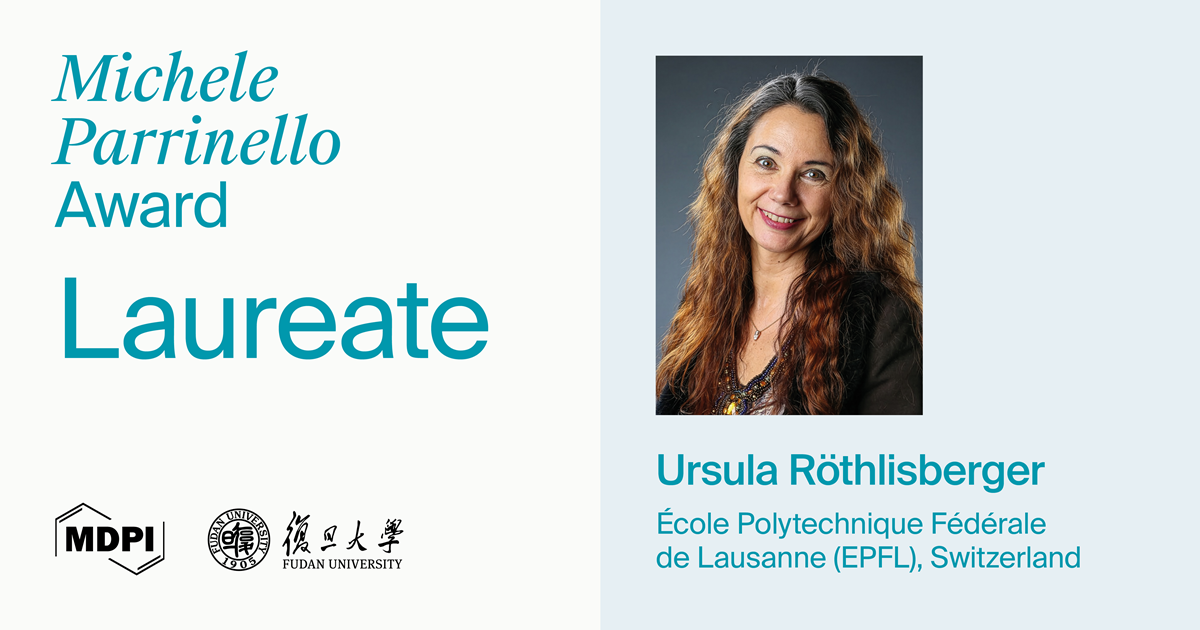
We are pleased to announce that the inaugural Michele Parrinello Award has been conferred upon Prof. Ursula Röthlisberger, in recognition of her outstanding contributions to computational chemistry and molecular simulation, particularly through her pioneering work in ab initio molecular dynamics and QM/MM multiscale simulation methods. This award celebrates researchers whose work embodies the spirit of scientific innovation and rigor that Professor Parrinello has championed throughout his career. We warmly congratulate Prof. Röthlisberger on this well-deserved recognition.
The achievements of Prof. Ursula Röthlisberger highlight the profound impact of computational methods on our understanding of complex chemical, biological, and materials systems. We invite the global scientific community to join us in celebrating her outstanding contributions to computational science.
“Professor Ursula Röthlisberger has been recognized by the 2026 Michele Parrinello Award Committee as an exceptional leader in computational chemistry and molecular simulation. Her innovative research has significantly advanced the predictive modeling of complex chemical and biological systems and has created lasting impact across multiple scientific disciplines. Through her outstanding scientific achievements, dedication to education, and leadership in the international research community, she has played a vital role in shaping the development of modern computational science.”
—Prof. Dr. Xin-Gao Gong, Chair of the Award Committee
2026 Michele Parrinello Award Laureate
|
Ursula Röthlisberger |
Prof. Ursula Röthlisberger is a professor at the Institute of Chemical Sciences and Engineering, EPFL, Switzerland, where she leads the Laboratory of Computational Chemistry and Biochemistry. Her research focuses on developing computational methods for molecular simulation, including ab initio molecular dynamics and quantum mechanical/molecular mechanical (QM/MM) multiscale approaches, to study complex chemical, biological, and materials systems. Her work has contributed to the advancement of computational frameworks for understanding molecular processes at the atomic level. She has also applied computational approaches to investigate next-generation photovoltaic materials, including dye-sensitized and perovskite solar cells, providing insights into material properties, stability, and performance through collaboration with experimental researchers. |

2026 Award Committee
Committee Chair:
- Prof. Dr. Xin-Gao Gong, Fudan University, China.
Committee Members (listed in alphabetical order):
- Prof. Alessandro Laio, Scuola Internazionale Superiore di Studi Avanzati, Italy;
- Prof. Michiel Sprik, University of Cambridge, UK;
- Prof. David J. Srolovitz, the University of Hong Kong, China;
- Prof. Mark E. Tuckerman, New York University, USA;Prof. Su-Huai Wei, Eastern Institute of Technology, Ningbo, China.
Note: The 2026 Award Committee comprises six members, including one anonymous member.
2026 Award Ceremony
The inaugural Michele Parrinello Award Ceremony will take place on 7 November 2026, at the Southern University of Science and Technology (SUSTech) in Shenzhen, China, as part of the 2026 MDPI Materials Science Conference. Further information and updates will be available on the official Michele Parrinello Award website.
About the Michele Parrinello Award
The Michele Parrinello Award was established in November 2025 to honor Professor Michele Parrinello’s enduring legacy in advancing computational science. This biennial international award recognizes senior researchers who have made outstanding contributions to computational physical sciences, encompassing physics, chemistry, and materials science. The recipient will receive a monetary prize of 50,000 EUR, a commemorative medal, and a certificate.
For further information about the award and the laureate, please visit the Michele Parrinello Award website.
31 July 2026
Announcing the Award Committee for the Inaugural Michele Parrinello Award
MDPI is pleased to announce the Award Committee for the inaugural Michele Parrinello Award, presented alongside the announcement of the 2026 laureate.
Established in 2025 in honor of Prof. Michele Parrinello’s pioneering contributions to atomistic simulation and computational science, the Michele Parrinello Award is presented biennially to recognize distinguished senior scientists who have made significant contributions to computational physical sciences, encompassing physics, chemistry, and materials science, with particular emphasis on fundamental research.
To ensure the highest standards of evaluation, the Award Committee brings together internationally recognized experts whose expertise spans computational physical sciences, including physics, chemistry, and materials science. Chaired by a distinguished scientist in the field, the committee provides independent perspectives to evaluate nominations based on rigor, integrity, and academic excellence.
Committee Chair:
|
|
Prof. Dr. Xin-Gao Gong |

Committee Members:
|
|
Prof. Alessandro Laio |
|
|
Prof. Michiel Sprik |
|
|
Prof. David J. Srolovitz |
|
|
Prof. Mark E. Tuckerman |
|
|
Prof. Su-Huai Wei |


Note: The 2026 Award Committee comprises six members, including one anonymous member.
We sincerely thank the committee members for their valuable contributions and dedication to the Michele Parrinello Award. Their expertise and commitment are essential to maintaining the academic excellence and integrity of this international award.
For more information about the Michele Parrinello Award, please visit the official award website: https://mparrinelloaward.org/.
31 July 2026
Materials | Highly Cited Papers Published in 2025 in the “Polymeric Materials” Section

Polymeric materials, owing to their versatile properties, have found numerous applications in various areas of our daily life, such as packaging (plastics), industry (fabrication of spaceships, airplanes, bridges, high-performance cars, boats, sports equipment, 3D printing, etc.), civil engineering (polymer concrete), energy (polymer solar cells), and pharmaceutical industries. Alongside this diversity of use, research into them covers many fields, e.g., soft matter, biomaterials, polymer chemistry, polymer physics, engineering, etc. The “Polymeric Materials” Section of Materials (ISSN 1996-1944) aims to rapidly publish contributions on all aspects of polymeric materials, covering the preparation, characterization, processing, properties, and application of plastics as well as fibers, rubbers, and their related composites.
As all of the articles published by our journal are shared in open access, you have free and unlimited access to the full texts. We encourage you to read our most highly cited papers published in 2025, which we have listed below:
“T700 Carbon Fiber/Epoxy Resin Composite Material Hygrothermal Aging Model”
by Jinjie Lu, Chuanxiang Zheng, Liang Wang, Yuchen Dai, Zhenyu Wang and Zhaobo Song
Materials 2025, 18(2), 369; https://doi.org/10.3390/ma18020369
Available online: https://www.mdpi.com/1996-1944/18/2/369
“Nano-Fibrillated Bacterial Cellulose Nanofiber Surface Modification with EDTA for the Effective Removal of Heavy Metal Ions in Aqueous Solutions”
by Sayaka Fujita, Ryosui Sasa, Nanami Kinoshita, Ryota Kishimoto and Hiroyuki Kono
Materials 2025, 18(2), 374; https://doi.org/10.3390/ma18020374
Available online: https://www.mdpi.com/1996-1944/18/2/374
“Effect of Plasma Treatment on Coating Adhesion and Tensile Strength in Uncoated and Coated Rubber Under Aging”
by Miguel Angel Martínez, Juana Abenojar and Daniel García-Pozuelo
Materials 2025, 18(2), 427; https://doi.org/10.3390/ma18020427
Available online: https://www.mdpi.com/1996-1944/18/2/427
“Anaerobic Biodegradation of Polylactic Acid-Based Items: A Specific Focus on Disposable Tableware Products”
by Marica Falzarano, Alessandra Polettini, Raffaella Pomi, Andreina Rossi, Tatiana Zonfa, Maria Paola Bracciale, Serena Gabrielli, Fabrizio Sarasini and Jacopo Tirillò
Materials 2025, 18(5), 1186; https://doi.org/10.3390/ma18051186
Available online: https://www.mdpi.com/1996-1944/18/5/1186
“Influence of Print Speed on the Mechanical Performance of 3D-Printed Bio-Polymer Polylactic Acid”
by Ludwik Lorkowski, Katarzyna Wybrzak, Emila Brancewicz-Steinmetz, Jacek Świniarski and Jacek Sawicki
Materials 2025, 18(8), 1765; https://doi.org/10.3390/ma18081765
Available online: https://www.mdpi.com/1996-1944/18/8/1765
“Biodegradability of Bioplastics in Managed and Unmanaged Environments: A Comprehensive Review”
by Giovanni Gadaleta, Johana Carolina Andrade-Chapal, Sara López-Ibáñez, María Mozo-Toledo and Ángela Navarro-Calderón
Materials 2025, 18(10), 2382; https://doi.org/10.3390/ma18102382
Available online: https://www.mdpi.com/1996-1944/18/10/2382
“Additive Manufacturing of Alumina-Based Ceramic Structures by Vat Photopolymerization: A Review of Strategies for Improving Shaping Accuracy and Properties”
by Jia-Jun Zhao, Yun-Zhuo Zhang, Jia-Hao Li, Zi-Heng Wang, Wei-Jian Miao, Fan-Bin Wu, Shu-Qi Wang and Jia-Hu Ouyang
Materials 2025, 18(11), 2445; https://doi.org/10.3390/ma18112445
Available online: https://www.mdpi.com/1996-1944/18/11/2445
“A Comprehensive Experimental, Simulation, and Characterization Mechanical Analysis of Ecoflex and Its Formulation Under Uniaxial Testing”
by Ranjith Janardhana, Fazli Akram, Zeynel Guler, Akanksha Adaval and Nathan Jackson
Materials 2025, 18(13), 3037; https://doi.org/10.3390/ma18133037
Available online: https://www.mdpi.com/1996-1944/18/13/3037
“PLA, PBS, and PBAT Biocomposites—Part A: Matrix–Filler Interactions with Agro-Industrial Waste Fillers (Brewer’s Spent Grain, Orange Peel) and Their Influence on Thermal, Mechanical, and Water Sorption Properties”
by Jules Bellon, Feriel Bacoup, Stéphane Marais and Richard Gattin
Materials 2025, 18(16), 3867; https://doi.org/10.3390/ma18163867
Available online: https://www.mdpi.com/1996-1944/18/16/3867
“Biodegradable Plastics as Sustainable Alternatives: Advances, Basics, Challenges, and Directions for the Future”
by Eunbin Hwang, Yung-Hun Yang, Jiho Choi, See-Hyoung Park, Kyungmoon Park and Jongbok Lee
Materials 2025, 18(18), 4247; https://doi.org/10.3390/ma18184247
Available online: https://www.mdpi.com/1996-1944/18/18/4247
31 July 2026
Materials | Highly Cited Papers Published in 2025 in the “Advanced Nanomaterials and Nanotechnology” Section

The “Advanced Nanomaterials and Nanotechnology” Section, of Materials (ISSN 1996-1944), is a forum for the rapid publication of works pertaining to nanomaterial preparation, characterization and application. The scope of “Advanced Nanomaterials and Nanotechnology” comprises, without being limited to, nanoparticles, nanocatalysts, nanoporous materials, nanocomposites, nanofilm and nanoscale technologies, providing a platform for both experimental and theoretical studies. Works on the development of novel characterization tools specifically designed to study the structural, spectroscopic and wider properties of new nanomaterials are also welcome in this Section.
As all of the articles published by our journal are shared in open access, you have free and unlimited access to the full texts. We encourage you to read our most highly cited papers published in 2025, which we have listed below:
“Enzyme Immobilization on Nanomaterials and Their Applications”
by Rahul Vikram Singh, Bakul Singh, Anurag Kumar, Krishika Sambyal, Karthikeyan Kugalur Karuppanan and Jung-Kul Lee
Materials 2025, 18(17), 4106; https://doi.org/10.3390/ma18174106
Available online: https://www.mdpi.com/1996-1944/18/17/4106
“An Overview of Biopolymer-Based Graphene Nanocomposites for Biotechnological Applications”
by Roya Binaymotlagh, Laura Chronopoulou and Cleofe Palocci
Materials 2025, 18(13), 2978; https://doi.org/10.3390/ma18132978
Available online: https://www.mdpi.com/1996-1944/18/13/2978
“Nanoarchitectonics of Sustainable Food Packaging: Materials, Methods, and Environmental Factors”
by Tangyu Yang and Andre G. Skirtach
Materials 2025, 18(5), 1167; https://doi.org/10.3390/ma18051167
Available online: https://www.mdpi.com/1996-1944/18/5/1167
“Size Distribution of Zinc Oxide Nanoparticles Depending on the Temperature of Electrochemical Synthesis”
by Michał Hajos, Maria Starowicz, Beata Brzychczyk, Grzegorz Basista and Sławomir Francik
Materials 2025, 18(2), 458; https://doi.org/10.3390/ma18020458
Available online: https://www.mdpi.com/1996-1944/18/2/458
“Highly Efficient Electrocatalyst of 2D–2D gC3N4–MoS2 Composites for Enhanced Overall Water Electrolysis”
by Sankar Sekar, Atsaya Shanmugam, Youngmin Lee and Sejoon Lee
Materials 2025, 18(16), 3775; https://doi.org/10.3390/ma18163775
Available online: https://www.mdpi.com/1996-1944/18/16/3775
“Recent Advances in pH-Responsive Liposomes: Lessons Learnt and New Directions in Nanomedicine Development”
by Antonia Georgia Tsirogianni, Maria Chountoulesi and Natassa Pippa
Materials 2025, 18(18), 4295; https://doi.org/10.3390/ma18184295
Available online: https://www.mdpi.com/1996-1944/18/18/4295
“Fascinating Frontier, Nanoarchitectonics, as Method for Everything in Materials Science”
by Katsuhiko Ariga
Materials 2025, 18(22), 5196; https://doi.org/10.3390/ma18225196
Available online: https://www.mdpi.com/1996-1944/18/22/5196
“A Review of Nanofiber Electrodes and the In Situ Exsolution of Nanoparticles for Solid Oxide Cells”
by Jakub Lach, Michał Gogacz, Piotr Winiarz, Yihan Ling, Mingjiong Zhou and Kun Zheng
Materials 2025, 18(6), 1272; https://doi.org/10.3390/ma18061272
Available online: https://www.mdpi.com/1996-1944/18/6/1272
“Smartphone-Assisted Plasmonic Nanosensor for Visual and Specific Sensing of Toxic Cyanide Ions by β−Cyclodextrin Templated Gold-Rich/Silver Bimetallic Alloy Nanoparticles”
by Nguyen Nam Phuong Truong, Ramar Rajamanikandan, Kandasamy Sasikumar and Heongkyu Ju
Materials 2025, 18(7), 1604; https://doi.org/10.3390/ma18071604
Available online: https://www.mdpi.com/1996-1944/18/7/1604
“Size Distribution of Zinc Oxide Nanoparticles Depending on the Temperature of Electrochemical Synthesis”
by Michał Hajos, Maria Starowicz, Beata Brzychczyk, Grzegorz Basista and Sławomir Francik
Materials 2025, 18(2), 458; https://doi.org/10.3390/ma18020458
Available online: https://www.mdpi.com/1996-1944/18/2/458
31 July 2026
Materials | Highly Cited Papers Published in 2025 in the “Energy Materials” Section

This Section of Materials (ISSN 1996-1944) is a platform for the publication of original articles and comprehensive reviews on all aspects of fundamental science and applied research on materials used for energy harvesting, conversion, storage, transmission, and utilization. Rapidly growing global energy demands, limited fossil fuel reserves and their associated environmental concerns, the intermittent nature of renewable energy sources, the limited efficiency of existing energy conversion systems—these are the challenges that society faces today. Advanced materials are key elements in the development of improved high-efficiency, low-cost, clean energy technologies.
As all of the articles published by our journal are shared in open access, you have free and unlimited access to the full texts. We encourage you to read our most highly cited papers published in 2025, which we have listed below:
“Progress in Surface and Interface Modification Strategies of MXene Materials for Energy Storage Applications”
by Yizhao Han, Junhua Hu, Xinhong Liu and Fanfan Liu
Materials 2025, 18(15), 3576; https://doi.org/10.3390/ma18153576
Available online: https://www.mdpi.com/1996-1944/18/15/3576
“Efficient Recycling Processes for Lithium-Ion Batteries”
by Sabyasachi Paul and Pranav Shrotriya
Materials 2025, 18(3), 613; https://doi.org/10.3390/ma18030613
Available online: https://www.mdpi.com/1996-1944/18/3/613
“Synergistic Nitrogen-Doping and Defect Engineering in Hard Carbon: Unlocking Ultrahigh Rate Capability and Long-Cycling Stability for Sodium-Ion Battery Anodes”
by Na Li, Hongpeng Li and Haibo Huang
Materials 2025, 18(10), 2397; https://doi.org/10.3390/ma18102397
Available online: https://www.mdpi.com/1996-1944/18/10/2397
“Advanced Crystallization Methods for Thin-Film Lithium Niobate and Its Device Applications”
by Rongbang Yang, Haoming Wei, Gongbin Tang, Bingqiang Cao and Kunfeng Chen
Materials 2025, 18(5), 951; https://doi.org/10.3390/ma18050951
Available online: https://www.mdpi.com/1996-1944/18/5/951
“Cationic Surfactant-Driven Evolution of NiFe₂O₄ Nanosheets for High-Performance Asymmetric Supercapacitors”
by Pritam J. Morankar, Rutuja U. Amate, Aviraj M. Teli, Mrunal K. Bhosale, Sonali A. Beknalkar and Chan-Wook Jeon
Materials 2025, 18(9), 1987; https://doi.org/10.3390/ma18091987
Available online: https://www.mdpi.com/1996-1944/18/9/1987
“Revisiting Intercalation Anode Materials for Potassium-Ion Batteries”
by María José Piernas-Muñoz and Maider Zarrabeitia
Materials 2025, 18(1), 190; https://doi.org/10.3390/ma18010190
Available online: https://www.mdpi.com/1996-1944/18/1/190
“Opportunities and Challenges for Next-Generation Thick Cathodes in Lithium-Ion Batteries”
by Shengkai Li, Yuxuan Luo, Kangchen Wang, Lihan Zhang, Pengfei Yan and Manling Sui
Materials 2025, 18(15), 3464; https://doi.org/10.3390/ma18153464
Available online: https://www.mdpi.com/1996-1944/18/15/3464
“Carbon-Based Electrodes for Supercapacitors, with a Focus on Carbon Nanotubes—A Brief Overview”
by Lilla Nánai and Klara Hernadi
Materials 2025, 18(22), 5215; https://doi.org/10.3390/ma18225215
Available online: https://www.mdpi.com/1996-1944/18/22/5215
“Valence Variability Induced in SrMoO₃ Perovskite by Mn Doping: Evaluation of a New Family of Anodes for Solid-Oxide Fuel Cells”
by Lucía Sánchez de Bustamante, Romualdo Santos Silva, Jr., José Luis Martínez, María Teresa Fernández-Díaz, Ainara Aguadero and José Antonio Alonso
Materials 2025, 18(3), 542; https://doi.org/10.3390/ma18030542
Available online: https://www.mdpi.com/1996-1944/18/3/542
“Photoluminescence Enhancement in Perovskite Nanocrystals via Compositional, Ligand, and Surface Engineering”
by Chae-Mi Lee, Eun-Hoo Jeong, Ho-Seong Kim, Seo-Yeon Choi and Min-Ho Park
Materials 2025, 18(17), 4195; https://doi.org/10.3390/ma18174195
Available online: https://www.mdpi.com/1996-1944/18/17/4195
30 July 2026
Materials Travel Award—Application Deadline Approaching

We are pleased to announce that Materials (ISSN 1996-1944) will be granting its annual Travel Award to junior scientists. This award provides financial support for winners to attend an international conference in 2027 in the fields of science and technology relating to the scope of Materials, thereby helping recipients strengthen their academic profiles.
Applications are currently open and will be accepted until 31 October 2026. Interested candidates are encouraged to submit their materials promptly to avoid missing this opportunity.
Prize:
- CHF 800;
- An electronic certificate.
Number of winners: 2.
Eligibility and requirements:
- Postdoctoral fellows or PhD students and research fellows;
- Plans to attend an international conference in 2027 (oral presentation or poster).
List of documents for application:
- Information on the conference the applicant is planning to attend and the abstract that will be submitted;
- Curriculum vitae and list of publications;
- Justification letter describing the focus of the research (max. 800 words);
- Letter of recommendation from a supervisor, research director, or department head, which also confirms the applicant’s status.
Application deadline: 31 October 2026.
Winner announcement: 31 December 2026.
For more information about the award, please visit the following link: https://www.mdpi.com/journal/materials/awards/4040.
Materials Editorial Office
30 July 2026
Materials | Highly Cited Papers Published in 2025 in the “Polymeric Materials” Section
Polymeric materials, owing to their versatile properties, have found numerous applications in various areas of our daily life, such as packaging (plastics), industry (in fabrication of spaceships, airplanes, bridges, high-performance cars, boats, sports equipment, 3D printing, etc.), civil engineering (polymer concrete), energy (polymer solar cells), and pharmaceutical industries. They cover many fields, e.g., soft matter, biomaterials, polymer chemistry, polymer physics, engineering, etc. The Section “Polymeric Materials” of Materials (ISSN 1996-1944) aims to rapidly publish contributions on all aspects of polymeric materials, including preparation, characterization, processing, property, and application of plastics, as well as fibers, rubbers, and their related composites.
Section Editor-in-Chief

Name: Prof. Dr. Xuming Xie
Affiliation: Department of Chemical Engineering, Tsinghua University, Beijing 100084, China
Interests: super tough hydrogels; nanomaterials and nanocomposites; polymer blends; plastic recycling and value-added reuse
As all of the articles published in our journal are shared in open access, you have free and unlimited access to the full texts. We encourage you to read our Most Highly Cited Papers published in 2025, listed below:
- “T700 Carbon Fiber/Epoxy Resin Composite Material Hygrothermal Aging Model”
by Jinjie Lu, Chuanxiang Zheng, Liang Wang, Yuchen Dai, Zhenyu Wang and Zhaobo Song
Materials 2025, 18(2), 369; https://doi.org/10.3390/ma18020369
Available online: https://www.mdpi.com/1996-1944/18/2/369 - “Nano-Fibrillated Bacterial Cellulose Nanofiber Surface Modification with EDTA for the Effective Removal of Heavy Metal Ions in Aqueous Solutions”
by Sayaka Fujita, Ryosui Sasa, Nanami Kinoshita, Ryota Kishimoto and Hiroyuki Kono
Materials 2025, 18(2), 374; https://doi.org/10.3390/ma18020374
Available online: https://www.mdpi.com/1996-1944/18/2/374 - “Effect of Plasma Treatment on Coating Adhesion and Tensile Strength in Uncoated and Coated Rubber Under Aging”
by Miguel Angel Martínez, Juana Abenojar and Daniel García-Pozuelo
Materials 2025, 18(2), 427; https://doi.org/10.3390/ma18020427
Available online: https://www.mdpi.com/1996-1944/18/2/427 - “Anaerobic Biodegradation of Polylactic Acid-Based Items: A Specific Focus on Disposable Tableware Products”
by Marica Falzarano, Alessandra Polettini, Raffaella Pomi, Andreina Rossi, Tatiana Zonfa, Maria Paola Bracciale, Serena Gabrielli, Fabrizio Sarasini and Jacopo Tirillò
Materials 2025, 18(5), 1186; https://doi.org/10.3390/ma18051186
Available online: https://www.mdpi.com/1996-1944/18/5/1186 - “Influence of Print Speed on the Mechanical Performance of 3D-Printed Bio-Polymer Polylactic Acid”
by Ludwik Lorkowski, Katarzyna Wybrzak, Emila Brancewicz-Steinmetz, Jacek Świniarski and Jacek Sawicki
Materials 2025, 18(8), 1765; https://doi.org/10.3390/ma18081765
Available online: https://www.mdpi.com/1996-1944/18/8/1765 - “Biodegradability of Bioplastics in Managed and Unmanaged Environments: A Comprehensive Review”
by Giovanni Gadaleta, Johana Carolina Andrade-Chapal, Sara López-Ibáñez, María Mozo-Toledo and Ángela Navarro-Calderón
Materials 2025, 18(10), 2382; https://doi.org/10.3390/ma18102382
Available online: https://www.mdpi.com/1996-1944/18/10/2382 - “Additive Manufacturing of Alumina-Based Ceramic Structures by Vat Photopolymerization: A Review of Strategies for Improving Shaping Accuracy and Properties”
by Jia-Jun Zhao, Yun-Zhuo Zhang, Jia-Hao Li, Zi-Heng Wang, Wei-Jian Miao, Fan-Bin Wu, Shu-Qi Wang and Jia-Hu Ouyang
Materials 2025, 18(11), 2445; https://doi.org/10.3390/ma18112445
Available online: https://www.mdpi.com/1996-1944/18/11/2445 - “A Comprehensive Experimental, Simulation, and Characterization Mechanical Analysis of Ecoflex and Its Formulation Under Uniaxial Testing”
by Ranjith Janardhana, Fazli Akram, Zeynel Guler, Akanksha Adaval and Nathan Jackson
Materials 2025, 18(13), 3037; https://doi.org/10.3390/ma18133037
Available online: https://www.mdpi.com/1996-1944/18/13/3037 - “PLA, PBS, and PBAT Biocomposites—Part A: Matrix–Filler Interactions with Agro-Industrial Waste Fillers (Brewer’s Spent Grain, Orange Peel) and Their Influence on Thermal, Mechanical, and Water Sorption Properties”
by Jules Bellon, Feriel Bacoup, Stéphane Marais and Richard Gattin
Materials 2025, 18(16), 3867; https://doi.org/10.3390/ma18163867
Available online: https://www.mdpi.com/1996-1944/18/16/3867 - “Biodegradable Plastics as Sustainable Alternatives: Advances, Basics, Challenges, and Directions for the Future”
by Eunbin Hwang, Yung-Hun Yang, Jiho Choi, See-Hyoung Park, Kyungmoon Park and Jongbok Lee
Materials 2025, 18(18), 4247; https://doi.org/10.3390/ma18184247
Available online: https://www.mdpi.com/1996-1944/18/18/4247
29 July 2026
Meet Us at the 15th International Conference on Mechanical Technologies and Structural Materials (MTSM 2026), 17–18 September 2026, Split, Croatia
We cordially invite you to participate in the 15th International Conference on Mechanical Technologies and Structural Materials (MTSM 2026), which will be held on 17–18 September 2026 at the Faculty of Electrical Engineering, Mechanical Engineering and Naval Architecture (FESB), University of Split, Croatia.
Organized by the Croatian Society for Mechanical Technologies (HDST) in cooperation with the University of Split – FESB, MTSM 2026 brings together researchers, scientists, engineers and industry professionals from around the world to exchange the latest scientific achievements and technological innovations in mechanical engineering, manufacturing technologies and structural materials.
President of the Organizing Committee:
- Assistant Professor Jure Krolo, Faculty of Electrical Engineering, Mechanical Engineering and Naval Architecture (FESB), University of Split, Croatia.
President of the Croatian Society for Mechanical Technologies:
- Assistant Professor Nikša Čatipović, Faculty of Electrical Engineering, Mechanical Engineering and Naval Architecture (FESB), University of Split, Croatia.
Topics of interest:
- Production Mechanical Technologies;
- Additive Manufacturing;
- Advanced Materials;
- Structural Materials;
- Industrial Engineering;
- Energy Engineering;
- Advanced Design Technology;
- Production Management;
- Quality Management;
- Environment Protection;
- Computer Simulations of Production Processes;
- Tribology.
Important dates:
- Abstract submission: 15 June 2026;
- Abstract acceptance notification: 20 June 2026;
- Full paper submission: 10 July 2026;
- Paper acceptance notification: 20 July 2026;
- Final registration: 1 September 2026;
- Conference: 17–18 September 2026.
Guide for Authors:
Authors are invited to submit a paper title and an abstract (maximum 200 words) via the EasyChair submission system. All accepted papers will undergo peer review and be published in the MTSM 2026 Conference Proceedings, indexed in Scopus (Elsevier).
For detailed information regarding paper submission, registration, conference fees, accommodation and the complete author guidelines, please visit:
- Conference website: https://mtsmconference.com/;
- EasyChair submission system: https://easychair.org/conferences/?conf=mtsm2026.
For any enquiries regarding the conference, please contact: mtsm@fesb.hr.
We look forward to welcoming you to Split, Croatia, for MTSM 2026!
27 July 2026
Meet Us Virtually at the 5th International Online Conference on Materials, 17–20 May 2027
Name: The 5th International Online Conference on Materials
Date: 17–20 May 2027 CEST, online
Website: https://sciforum.net/event/IOCM2027
We cordially invite you to attend this event organized by MDPI’s journal Materials (ISSN: 1996-1944, IF: 3.7). It will take place virtually from 17 to 20 May 2027, CEST.
Conference Chair:
Prof. Dr. Maryam Tabrizian, McGill University, Canada.
Topics of Interest:
S1. Advanced Functional Materials: Optical, Electronic and Magnetic Materials;
S2. Low-Dimensional and Quantum Materials: Nanomaterials, 2D Materials and Quantum Frontiers;
S3. Biomaterials, Soft Matter and Composites;
S4. Materials Design and Application: From Simulation and Artificial Intelligence to Experimental Realization;
S5. Energy and Sustainable Materials: From Harvesting to Storage;
S6. Structural Materials: Metals, Alloys, Ceramics and Construction Materials;
S7. Materials Processing, Manufacturing and Process Engineering;
S8. Materials Characterization, Physical Chemistry and Synthesis Fundamentals.
Important dates:
Abstract submission deadline: 18 January 2027;
Abstract acceptance notification: 17 February 2027;
Registration deadline: 11 May 2027.
Guide for authors:
To submit your abstract, please click on the following link: https://sciforum.net/user/submission/create/1778.
To register for the event, please click on the following link: https://sciforum.net/event/IOCM2027?subscribe§ion=#registration.
For details regarding Abstract Submission, Poster and Slide Submission, and Publication Opportunities, you may refer to the “Instructions for Authors” section: https://sciforum.net/event/IOCM2027?subscribe§ion=#instructions.
For any enquiries regarding the event, please contact iocm2027@mdpi.com.
We look forward to seeing you at the 5th International Online Conference on Materials.
23 July 2026
Recruiting Members for the Second Materials Early Career Editorial Board

To further enhance the international academic influence of Materials (ISSN 1996-1944), foster an active platform for exchange among early career scientists, and support the Editorial Board with additional expertise, Materials is pleased to announce the launch of the Second Early Career Editorial Board (ECEB) membership.
We plan to recruit a total of 200 Early Career Editorial Board Members. Early Career Editorial Board (ECEB) members will hold the position for two years with the possibility of renewal for a second term.
Application eligibility:
- Completed their doctorate/PhD degree in the past 10 years (considering exceptions for career interruptions, including medical and family leave);
- Evidence of significant research achievements in the field of materials science;
- Willingness to dedicate their time to the development of the journal with passion and enthusiasm;
- Researchers that are active and engaged in their community (e.g., experienced at presenting at academic conferences or involved in professional organizations).
Benefits of an Early Career Editorial Board Member:
- A certificate of appointment as an Early Career Editorial Board Member will be provided;
- The achievements of Early Career Editorial Board Members are publicized on journal media platforms to improve academic visibility;
- An opportunity to be promoted to Editorial Board Member based on contributions;
- The journal will regularly acknowledge those who participated in the peer-review process on the journal website;
- Opportunities to participate in or host annual meetings and online seminars organized by the Editor-in-Chief and the Editorial Board Members.
Responsibilities of an Early Career Editorial Board Member:
- Publicizing and promoting the journal at academic conferences and among peers;
- Selecting high-quality articles and preparing bilingual media content for promotion;
- Reviewing at least four manuscripts per year;
- Providing input on any new initiatives of journal development;
- Inviting submissions from local and overseas world-leading scientists in respective research fields.
Applications:
Please fill in the application form here.
Please send a completed application form and your academic resume to materials@mdpi.com with the subject “Materials Early Career Editorial Board Application + Name + Institute + Research Expertise”.
Application deadline: 31 December 2026.
Selection process: Initial screening of application materials → selection by the Editor-in-Chief and Editorial Board Members → email notification → issuing a certificate of appointment.
