
Skip to Content
You are currently on the new version of our website. Access the old version .
  • 2.4
    Impact Factor
  • 3.9
    CiteScore
  • 35 days
    Submission to First Decision
  • 7 days
    Acceptance to Publication

Safety

Safety is an international, peer-reviewed, open access journal on industrial and human health safety published bimonthly online by MDPI.

Get Alerted

Add your email address to receive forthcoming issues of this journal.

All Articles (905)

  • Article
  • Open Access

Building excavations in urban environments involve significant safety challenges arising from complex geotechnical conditions, adjacent structures, and construction uncertainties. This study proposes an integrated framework for identifying and prioritizing excavation safety risks and for quantitatively assessing their schedule consequences under uncertainty. An initial literature review identified 25 excavation-related safety risks, which were subsequently evaluated using the Fuzzy Delphi Method with input from 25 experts. The evaluated process resulted in the validation of 18 safety risks. The Shannon Entropy method was then employed to determine the relative importance of five project-performance criteria, while the VIKOR method was used to rank the identified risks based on expert assessments from 156 construction professionals. The five highest-ranked risks were transferred to a schedule-focused Monte Carlo Simulation (MCS) of a steel truss-supported excavation project in Karaj, Iran. The Delphi survey screening scores are interpreted as expert-derived plausibility scores and are converted to associated subjective scenario probabilities through proportional possibility-to-probability normalization. The simulation results demonstrated that the inclusion of risk-related uncertainties increased the project duration from 62 days to approximately 132.5 days. A robustness check against equal scenario weights produced only small changes in the representative Phase 1 and Phase 2 expected durations (1.42% and 1.81%, respectively), indicating limited local sensitivity to the selected probability transformation. The principal contribution of the study is the explicit, excavation-specific linkage between expert consensus, multi-criteria risk prioritization, and probabilistic schedule-consequence analysis, and an uncertainty-transformation robustness check.

Safety

2 November 2026

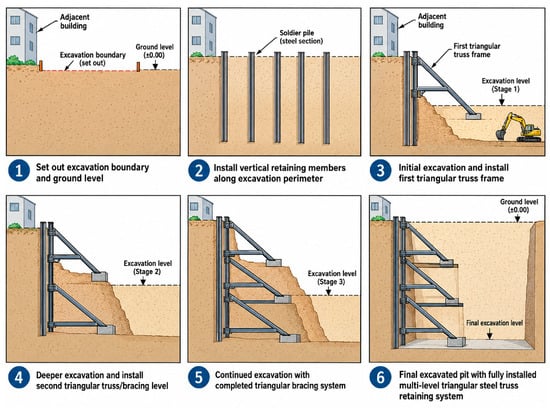
Details of typical steel truss retaining structures for stabilizing excavation walls.
  • Article
  • Open Access

Manual stair transport of bariatric patients imposes substantial physical demands on firefighters. This study evaluated the effects of manikin weight and transport direction on physiological responses during simulated stair transport. Twelve male professional firefighters, organised into three four-person teams, transported a bariatric (215.5 kg) and a standard-weight (85 kg) manikin up and down a staircase. Pulse rate and respiratory rate were measured before and immediately after transport, with pulse rate reassessed after one minute of recovery. Perceived exertion was assessed using the Borg scale. Data were analysed using two-way repeated-measures analysis of variance (ANOVA) and paired comparisons. Manikin type significantly affected changes in pulse rate and respiratory rate and short-term pulse rate recovery. Transport direction significantly affected pulse rate change and recovery, but not respiratory rate change. The mean increase in pulse rate was greater during upward than downward bariatric transport (48.17 ± 16.94 versus 25.83 ± 22.96 beats/min; p = 0.044). Borg scores indicated high perceived exertion in both directions, without a statistically significant difference between them. These findings support combined physiological and perceived-exertion monitoring in firefighter training and the development of safer bariatric transport procedures.

Safety

2 November 2026

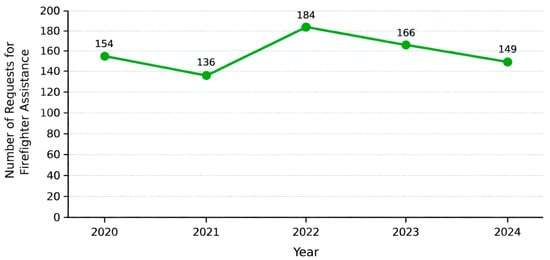
Number of cases requiring firefighter assistance with the transport of obese patients in Slovakia between 2020 and 2024 [32].
  • Article
  • Open Access

Powered pistol-grip fastening tools can produce substantial handle rotation during torque build-up, which may contribute to operator overuse injuries. This study developed and evaluated a human-stiffness-based physical simulator for a controlled relative comparison of fastening variables affecting peak handle rotation. The simulator used a DC-powered pistol-grip tool, which was constrained to rotate about its spindle axis, with a double-acting pneumatic cylinder providing resistance set according to a specified human-derived stiffness. The evaluation used stiffness data from 10 operators at 5 and 7.5 N·m, with simulator peak displacement compared to in vivo measurements using paired analyses. The simulator was then used as a screening platform to examine the effect of target torque and, at 7.5 N·m, the effects of fastener material, drive style, head type, and spindle speed. The simulator overpredicted human peak displacement, with mean biases of 14.72° at 5 N·m and 10.29° at 7.5 N·m. The peak rotation increased by 15.0% when torque was increased from 5 to 7.5 N·m (p = 0.022). Torx Plus style fasteners produced 11.5% less rotation than Hex drive fasteners; fastener material significantly affected rotation; head type did not; and rotation was substantially lower at 160 rpm. Although the simulator did not reproduce absolute human displacement without bias, the results support its use as a screening platform for relative comparison under fixed mechanical boundary conditions rather than as an absolute predictor of human displacement or injury risk.

Safety

28 October 2026

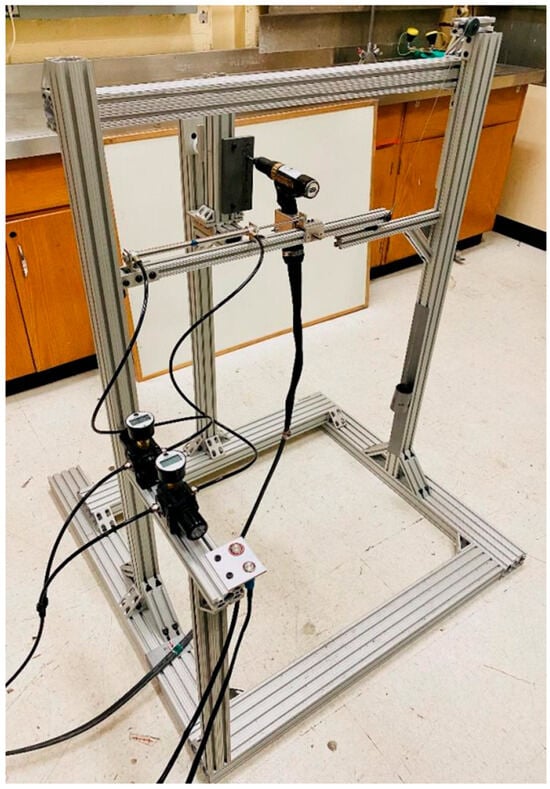
Pistol-grip power tool hand simulator. The double-acting pneumatic cylinder provides the adjustable resistance used to represent operator stiffness.
  • Article
  • Open Access

Work zones are essential for infrastructure maintenance, yet remain among the most hazardous environments for both workers and motorists. Despite widespread use of Temporary Traffic Control (TTC), incident rates remain elevated, suggesting limitations in current practices and insufficient integration of Internal Temporary Traffic Control (ITTC). This study employs a mixed-methods survey design to evaluate practitioner perceptions of TTC and ITTC effectiveness, identify perceived incident contributing factors, examine implementation challenges, and assess mitigation measures. Data were collected from 60 experienced transportation professionals using structured Likert-scale questions and open-ended responses. Quantitative data were analyzed using repeated-measures ANOVA to compare perceived incident contributors and mitigation effectiveness, while qualitative responses were analyzed using thematic analysis with affinity-based clustering of practitioner responses. Results indicate that distracted driving (M = 9.2) and speeding (M = 8.3) were perceived as the dominant contributors to work-zone crashes, significantly exceeding improper TTC and ITTC implementation. Among mitigation measures, visible police presence was rated most effective (M = 8.0, p < 0.001), outperforming automated ticketing and static pre-construction planning. Qualitative thematic analysis identified seven improvement domains: work-zone design and management, enforcement and speed control, driver education, worker training and certification, policy development, technology solutions, and inter-agency coordination. The findings demonstrate that sustainable work-zone safety requires an integrated socio-technical approach combining behavioral enforcement, adaptive TTC and ITTC management, structured inspection practices, and organizational accountability. The study provides practitioner-informed guidance for agencies and contractors to institutionalize ITTC within specifications, prioritize high-impact enforcement strategies, and adopt safety management frameworks shaped by field-tested professional expertise to address recurrent safety challenges in active construction environments.

Safety

26 October 2026

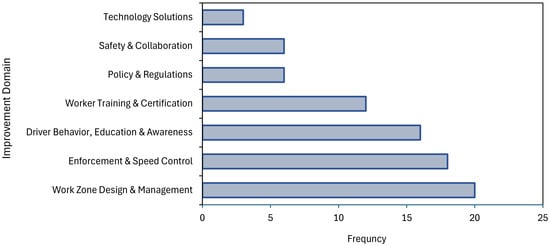
Improvement domains identified by participants (73 discrete coded items compiled from a unique respondent denominator of n = 42).

Highly Accessed Articles

News & Conferences

Latest Issues

Open for Submission

Journal Sections

XFacebookLinkedIn
Safety - ISSN 2313-576X