


Abstract
Heatwaves are becoming more frequent and intense, with well-established impacts on mortality and heat-related illness. However, their influence on unintentional injuries, including falls, is less understood. This study examined the association between heatwaves and fall-related ambulance attendances in Queensland, Australia. A retrospective population-based study was conducted using Queensland Ambulance Service attendance data from 2010–2019. Attendances were classified as fall-related if a fall was indicated in any of the dispatch, diagnosis, injury-cause, or case-classification fields, regardless of if this was based on caller report or paramedic assessment. Heatwaves were defined using the Bureau of Meteorology’s Excess Heat Factor and classified by severity. Incidence rate ratios (IRRs) compared fall-related ambulance attendances on heatwave and non-heatwave days, with stratification by age, sex, rurality, heatwave severity, and warm-season month. Across the study period, 323,254 fall-related ambulance attendances were recorded. Overall incidence did not differ between heatwave and non-heatwave days (IRR = 1.00; 95% CI: 0.99–1.00). Extreme heatwaves were associated with an 11% increase in attendances (IRR = 1.11; 95% CI: 1.06–1.17), with elevated risks observed among adults aged 45–74 years and residents of outer regional areas. Extreme heatwaves contribute to increased fall-related ambulance demand in Queensland. Recognising falls as part of the broader heat-related morbidity burden allows for targeted prevention strategies and enhances preparedness for extreme heat events.
Keywords:
heatwaves; falls; ambulance; injury; Queensland; climate change; vulnerability; public health 1. Introduction
Heatwaves are becoming more frequent, longer, and more intense [1]. Recent global estimates indicate that heat-related mortality among adults aged 65 years and older has increased by approximately 85% compared with 1990–2000 levels, while older adults and infants are now exposed to twice as many heatwave days as during 1986–2005 [2]. This trend poses a growing threat to population health. The impacts of heatwaves on mortality and morbidity are well established globally, with clear evidence demonstrating increases in heat-related illnesses, ambulance demand, emergency department attendances, and hospital admissions during extreme temperature events [3,4,5,6]. International studies have consistently demonstrated that heat exposure increases demand for emergency healthcare services. Studies from China and Japan have reported increases in emergency ambulance dispatches and heat-related ambulance transports during periods of high temperatures and heatwaves [7,8]. Similarly, research from Canada and the United Kingdom has identified increased acute-care demand and broader operational pressures on hospitals during extreme heat events [9,10]. Collectively, these findings demonstrate that the consequences of extreme heat extend beyond heat-related illnesses alone, placing additional pressure on emergency and acute healthcare services and reinforcing the need for effective heat-health preparedness and response strategies [3,5]. However, the potential contribution of heatwaves to unintentional injuries, particularly accidental falls, remains underexamined.
Heat exposure can impair thermoregulation, reduce cognitive performance, and contribute to dehydration, dizziness, and fatigue, all of which may compromise balance and increase susceptibility to falls [11,12,13]. These risks are shaped by social and environmental determinants that influence an individual’s ability to cope with heat, for example, inadequate housing quality, limited access to cooling, and greater exposure among people who work or spend prolonged periods outdoors [5,13]. Elderly people, children, and those with low socio-economic status are disproportionately affected because they experience both higher physiological vulnerability and reduced capacity to avoid hazardous conditions during heatwaves [14,15]. While there are existing mitigation strategies for dealing with heatwaves, it is crucial for policymakers to enact policies that are geographically and population-specific.
In Australia, emerging evidence suggests that heatwaves may influence patterns of unintentional injury. In Queensland, overall ambulance attendances rise during heatwaves, with King et al. reporting approximately a 7% increase in total injury-related callouts on heatwave days compared with non-heatwave periods [6]. However, findings are not uniform across jurisdictions. For example, research from Adelaide identified an inverse association between heatwaves and certain injury presentations such as childhood falls, sport-related injuries, and outdoor activity–related trauma, likely reflecting behavioural adaptation, reduced outdoor activity, or context-specific protective factors [16]. Despite this growing body of work, no Queensland-specific study has examined whether heatwaves influence fall-related ambulance attendances, representing a substantial gap in the evidence given both the high burden of falls [17] and the increasing frequency of extreme heat events in the state [18].
This study investigated the association between heatwave periods and fall-related ambulance attendances in Queensland over a 10-year period (2010–2019). Using statewide ambulance records linked with heatwave severity metrics, the purpose of this study was to quantify differences in fall-related attendances on heatwave versus non-heatwave days and examine how risks vary across age groups, sex, rurality, heatwave severity, and seasonal timing. This is to our understanding the first statewide analysis to explore heatwave–fall relationships in Queensland, addressing an important and under-recognised dimension of heatwave-related health burden.
2. Materials and Methods
This was a retrospective population-based study conducted in Queensland using statewide ambulance service attendance data from 2010–2019 linked with climate data from QFD data on heatwaves.
2.1. Study Setting
This study was conducted in Queensland, Australia, a geographically vast state occupying nearly one-quarter of the nation’s landmass with a population of over five million residents [19]. Queensland spans five diverse climatic zones, ranging from tropical in the north to subtropical in the south, resulting in substantial seasonal and regional variations in temperature [20]. The state regularly experiences prolonged periods of extreme heat, with heatwaves projected to increase in both frequency and intensity due to climate change [21]. Queensland’s health system is publicly funded, and emergency pre-hospital care is delivered by the Queensland Ambulance Service (QAS), a statewide organisation that provides 24 h paramedic coverage across metropolitan, regional, and remote communities [22]. Because QAS maintains electronic records of all ambulance attendances, these data provide a statewide population-level indicator of acute health impacts during extreme weather events.
2.2. Ambulance Data
Data encompassing information on paramedic-attended events were provided by the Queensland Ambulance Service (QAS) for the years 2010–2019 and sourced from routinely collected ambulance report forms [6]. The dataset comprised records from two reporting systems: the electronic ambulance report form (eARF; 1 January 2008–31 December 2017) and the digital ambulance report form (dARF; from 1 January 2018) [6]. In cases where there was more than one record per person, data were deduplicated. Variables extracted included patient age and sex, their postcode, and primary diagnosis (dARF) or final assessment (eARF) documented by the attending paramedic [6]. Additional variables included the patient’s reported complaint (recorded as primary complaint in dARF or patient complaint in eARF), the Medical Priority Dispatch System (MPDS) code assigned by the call-taker, case nature (eARF only, representing the paramedic’s assessment of the incident type), and cause of injury (dARF only, selected from predefined response categories) [6].
2.3. Inclusion and Exclusion Criteria
A multivariable extraction strategy was applied across both the eARF and dARF data to identify ambulance attendances related to falls. Cases were included if any one of the following criteria was met:
- -
- Case nature recorded as ‘Fall’.
- -
- Primary diagnosis recorded as ‘Fall’ or ‘Fall—Lift Assist’.
- -
- Medical Priority Dispatch System (MPDS) code recorded as 17 (Falls) [23].
- -
- Cause of injury recorded as ‘Fall’ in either primary or secondary injury category fields.
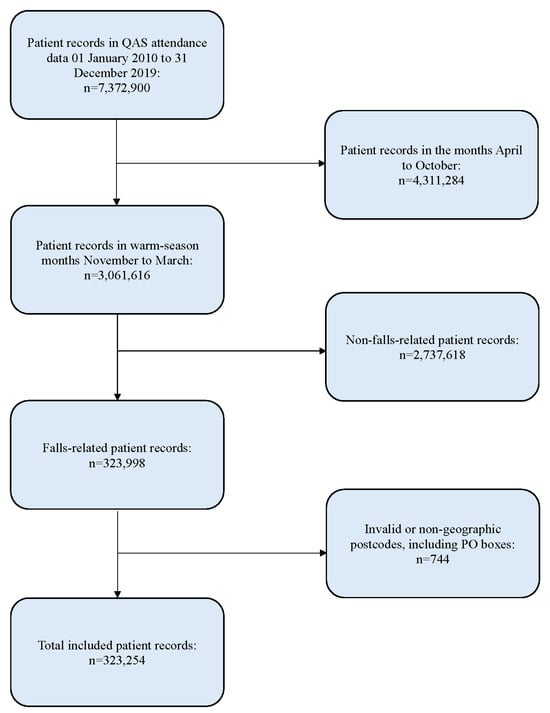
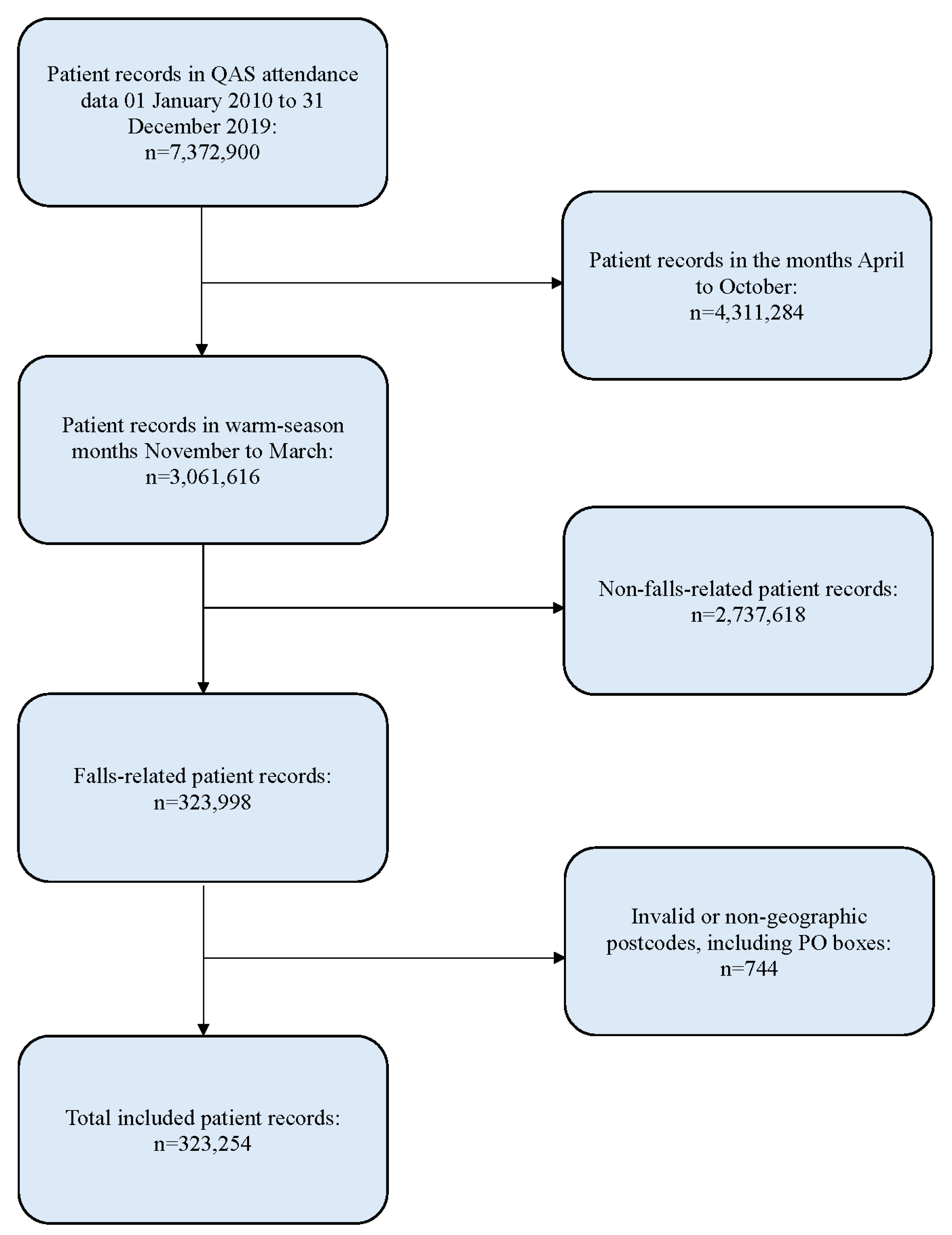
Cases were excluded if they occurred outside the warm season (November to March) or outside the study period (1 January 2010 to 31 December 2019). Cases were also excluded if the postcode was invalid (for example, a PO box) and could not be matched with the climate data (n = 744, 0.23%). The total number of patient records included was 323,254 (Figure 1).
Figure 1.
Flow diagram of QAS patient record selection and exclusion.
2.4. Climate Data
Daily heatwave data for the study period (2010–2019) were sourced from the Scientific Information for Land Owners (SILO) Climate Database, a nationally maintained climate data resource that generates spatially continuous meteorological data across Australia by interpolating observations from the Australian Bureau of Meteorology monitoring network, and were prepared by the Queensland Fire Department at the postcode level [24,25]. Heatwave periods were identified using the Bureau of Meteorology’s (BoM) Excess Heat Factor (EHF) index, a nationally standardised metric that accounts for both short-term temperature anomalies and long-term local acclimatisation [26]. For more detail on the calculation of the EHF, see Nairn & Fawcett (2015) [26]. The EHF combines the three-day mean temperature relative to the preceding 30-day average and the climatological norm for that location, classifying a heatwave when the index exceeds zero. Severity levels were defined according to BoM thresholds as low-intensity, severe, and extreme [27]. Given that the Excess Heat Factor (EHF) is calculated over a three-day period, any day with an EHF severity value greater than zero was classified as a heatwave day, along with the subsequent two days [15]. Days with negative EHF severity that did not fall within two days after a heatwave event were designated as non-heatwave days, consistent with the approach described by Franklin et al. [15].
2.5. Analysis
Ambulance attendances occurring during the warm season (November to March) were included in the analysis to align with the typical timing of heatwave events in Queensland [28]. Heatwave data were linked to corresponding QAS ambulance attendance records by postcode and date. Population data from the 2006, 2011, 2016, and 2021 Australian censuses for each postcode were retrieved via ABS TableBuilder, with linear interpolation applied between census years where applicable [29].
Incidence rate ratios and 95% confidence intervals (CI) were calculated using OpenEpi’s calculator (version 3.01) for comparing two person-time rates [30]. The formula was as follows:
To estimate absolute burden, where appropriate, the number of expected cases was calculated by dividing the number of observed cases on heatwave days by the IRR. Excess cases were calculated by subtracting the number of expected cases by the number of observed cases [30].
To assess the relationship between heatwaves and fall-related ambulance attendances, analyses were stratified by age group, sex, rurality, financial year, and month of occurrence. Rurality was determined according to postcode using the Australian Statistical Geography Standard Remoteness Structure (ASGS) [31]. Financial years were assigned based on the date of attendance using the Australian financial year calendar (1 July to 30 June) to ensure that each heatwave season was fully captured within a single 12-month period.
3. Results
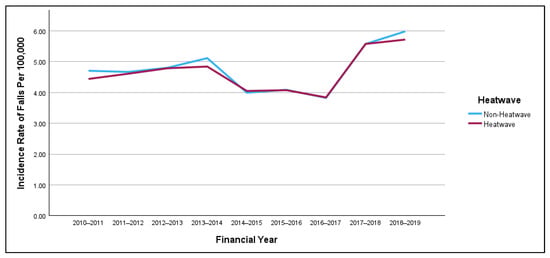
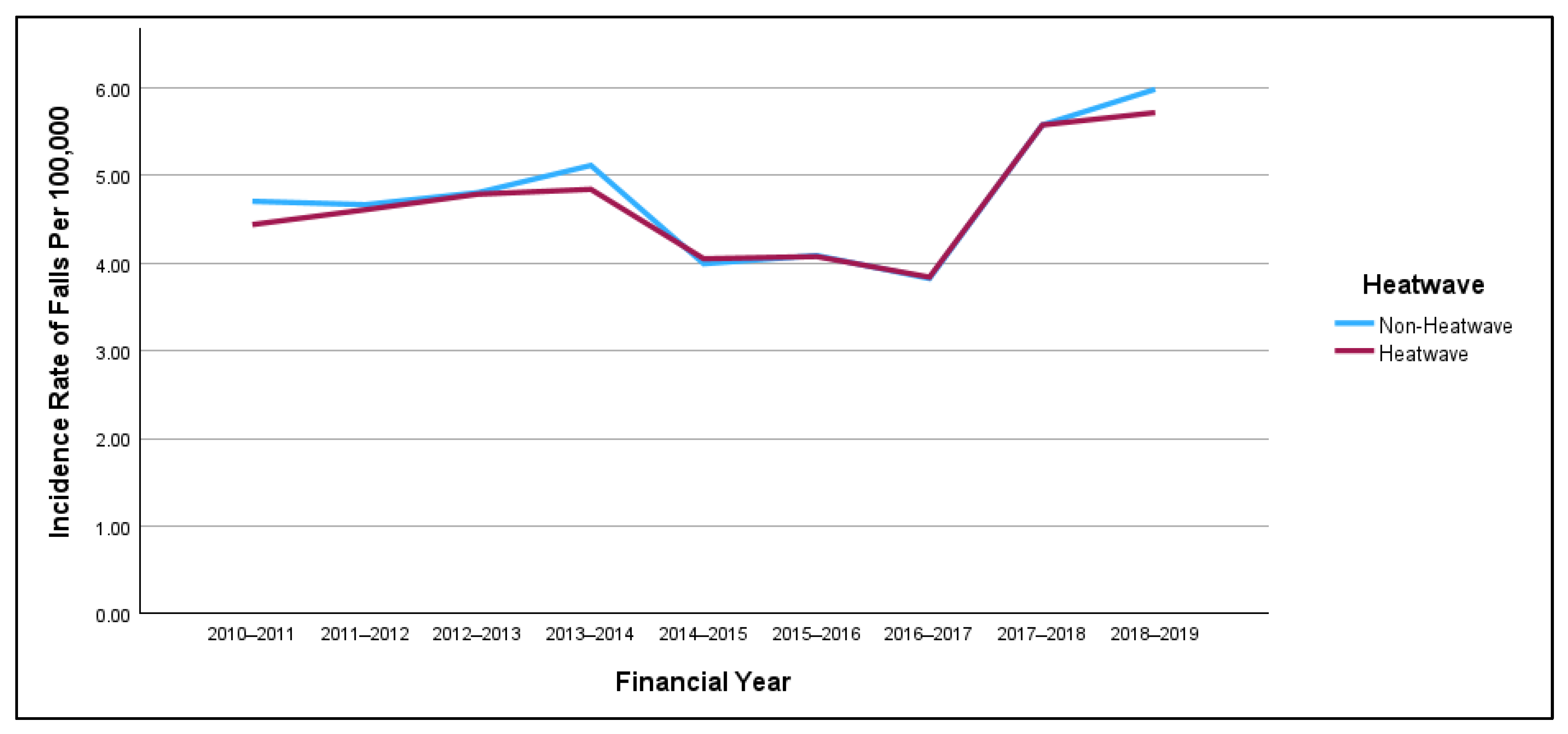
Between 2010 and 2019, there were 323,254 fall-related ambulance attendances in Queensland. Of these, 234,999 (72.70%) occurred on non-heatwave days and 88,255 (27.30%) during heatwave periods. The overall incidence of falls during heatwave days was similar to non-heatwave days (IRR = 1.00; 95% CI: 0.99–1.00) (Figure 2).
Figure 2.
Incidence rate of falls on heatwave and non-heatwave days across time per 100,000 population (Queensland; 2010–2019).
Stratified analyses showed no significant association during low-intensity (IRR = 0.99; 95% CI: 0.99–1.00) or severe heatwaves (IRR = 1.00; 95% CI: 0.98–1.01). However, extreme heatwaves were associated with an 11.1% increase in fall-related ambulance attendances (IRR = 1.11; 95% CI: 1.06–1.17). Based on the fall-related ambulance rate observed on non-heatwave days, an estimated 201 excess attendances occurred during extreme heatwave days across the study period.
3.1. Stratification by Sex
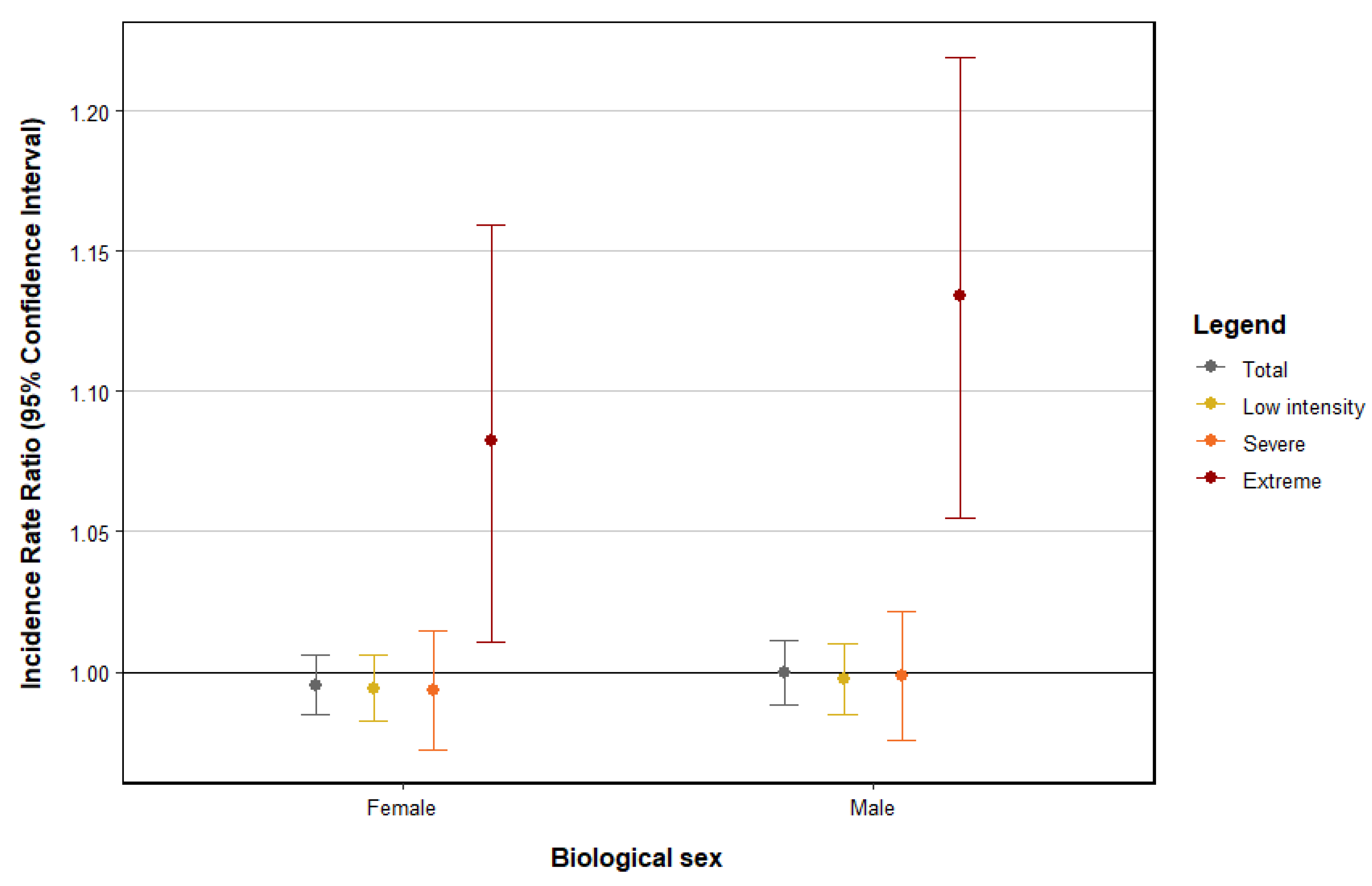
Sex-stratified analyses revealed negligible difference in the association between heatwaves and fall-related ambulance attendances for males (IRR = 1.00; 95% CI: 0.98–1.01) and females (IRR = 1.00; 95% CI: 0.98–1.01). A 13.40% increase in fall-related ambulance attendances for males was observed during extreme heatwaves (IRR = 1.13; 95% CI: 1.05–1.22), but increases were not observed during low-intensity or severe heatwaves. Similarly, an increase of 8.25% in fall-related ambulance attendances was observed among females during extreme heatwaves (IRR = 1.08; 95% CI: 1.01–1.16), but there were no increases observed during low-intensity or severe heatwaves (Figure 3).
Figure 3.
Incidence rate ratios for the association between heatwaves and fall-related ambulance attendances by biological sex (Queensland; 2010–2019).
3.2. Stratification by Age
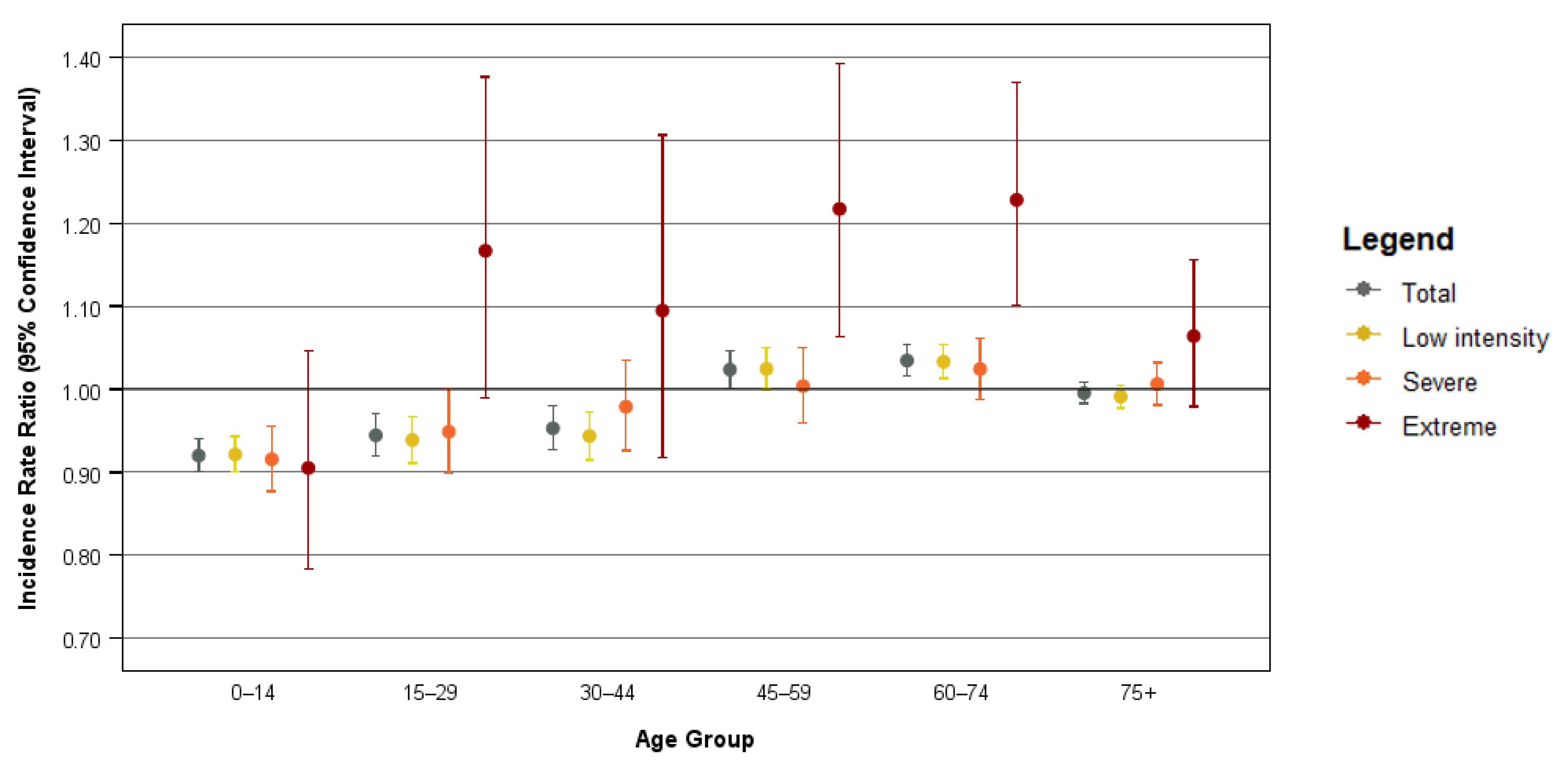
The age groups that experienced elevated fall-related ambulance attendances on heatwave versus non heatwave days were 45–59 (IRR= 1.02; 95% CI: 1.00–1.05) and 60–74 years (IRR= 1.03; 95% CI: 1.02–1.05). Inverse associations were found for 0- to 14-year-olds (IRR = 0.92; 95% CI: 0.90–0.94), 15- to 29-year-olds (IRR = 0.94; 95% CI: 0.92–0.97), and 30- to 44-year-olds (IRR = 0.95; 95% CI: 0.93–0.98). However, nonsignificant associations were found for those aged 75+ (IRR = 1.00; 95% CI: 0.98–1.01).
Across age groups, there were differences in the association between fall-related ambulance attendances and heatwaves depending on EHF severity (Figure 4). Inverse or null associations were found for nearly all age groups for low-intensity and severe heatwaves, with the exception of 60- to 74-year-olds during low-intensity heatwaves (IRR = 1.03; 95% CI: 1.01–1.05). During extreme heatwaves, both the 45- to 59-year age group (IRR = 1.22; 95% CI: 1.06–1.39) and the 60- to 74-year age group (IRR = 1.23; 95% CI: 1.10–1.37) experienced elevated risk.
Figure 4.
Incidence rate ratios for the association between heatwaves and fall-related ambulance attendances by age group (Queensland; 2010–2019).
3.3. Stratification by Rurality
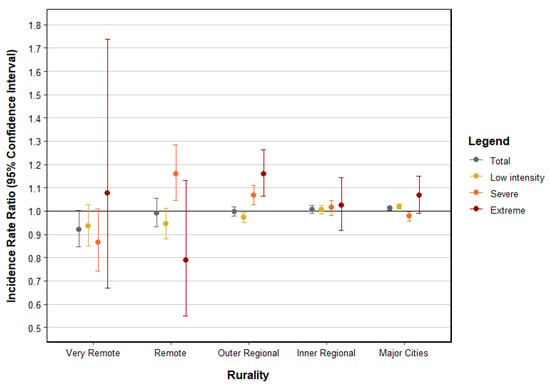
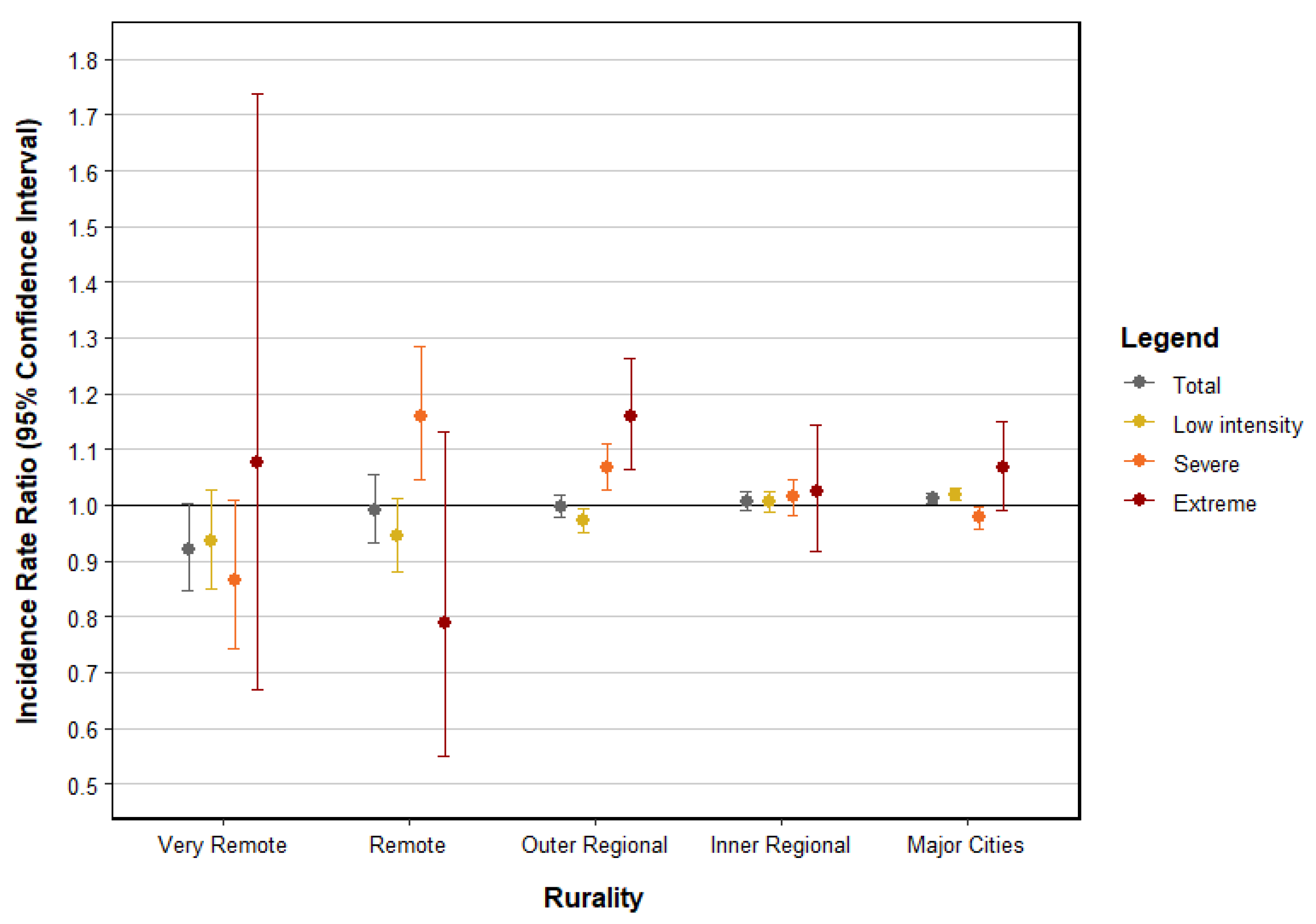
The association between heatwaves and fall-related ambulance attendances varied across levels of rurality (Figure 5). In major cities, the incidence rate ratio for heatwaves was 1.01 (95% CI: 1.00–1.02), indicating a marginally higher incidence rate on heatwave days. Similar small increases were observed during low-severity heatwaves (IRR = 1.02; 95% CI: 1.01–1.03), while no increase was evident during severe heatwaves (IRR = 0.98; 95% CI: 0.96–1.00). For extreme heatwaves, there was a modest increase in attendances (IRR = 1.07; 95% CI: 0.99–1.15), although this did not reach statistical significance.
Figure 5.
Incidence rate ratios for the association between heatwaves and fall-related ambulance attendances by rurality (Queensland; 2010–2019).
In inner regional areas, no significant associations were observed across the exposure levels, with IRRs of 1.00 (95% CI: 0.99–1.02) for heatwaves, 1.00 (95% CI: 0.99–1.02) for low-severity heatwaves, 1.01 (95% CI: 0.98–1.05) for severe heatwaves, and 1.02 (95% CI: 0.92–1.14) for extreme heatwaves.
For outer regional areas, the association was not significant for heatwaves (IRR = 1.00; 95% CI = 0.98–1.02) or low-severity heatwaves (IRR = 0.97; 95% CI: 0.95–0.99); however, there was a 6.24% increase in attendances during severe heatwaves (IRR = 1.06; 95% CI = 1.02–1.11) and a 16.04% increase during extreme heatwaves (IRR = 1.16; 95% CI: 1.07–1.26).
In remote areas, the association was not significant for heatwaves (IRR = 0.99; 95% CI: 0.93–1.05) or low-severity heatwaves (IRR = 0.97; 95% CI: 0.95–1.00), but there was a 6.78% increase on severe heatwave days (IRR = 1.07; 95% CI: 1.03–1.11) and a 15.94% increase on extreme heatwave days (IRR = 1.16; 95% CI: 1.06–1.26).
For very remote areas, the association indicated an 8% decrease in fall-related ambulance attendances with an IRR of 0.92 (95% CI: 0.85–1.00) for heatwaves, 0.94 (95% CI: 0.85–1.03) for low-severity heatwaves, 0.87 (95% CI: 0.74–1.01) for severe heatwaves, and 1.08 (95% CI: 0.67–1.74) for extreme heatwaves.
3.4. Stratification by Financial Year
Year-stratified analyses revealed minimal variability in the association between heatwaves and fall-related ambulance attendances across the study period (2010–2019). Most years demonstrated no association, including the 2011–2012, 2012–2013, 2014–2015, 2015–2016, 2016–2017, and 2017–2018 financial years. However, significant reductions in falls were observed in 2010–2011 (IRR = 0.94; 95% CI: 0.91–0.98), 2013–2014 (IRR = 0.94; 95% CI: 0.92–0.97), and 2018–2019 (IRR = 0.96; 95% CI: 0.94–0.97).
3.5. Stratification by Month
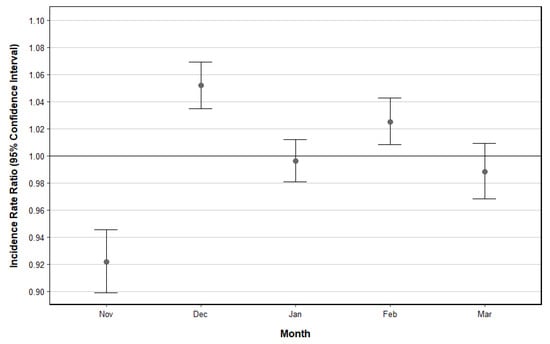
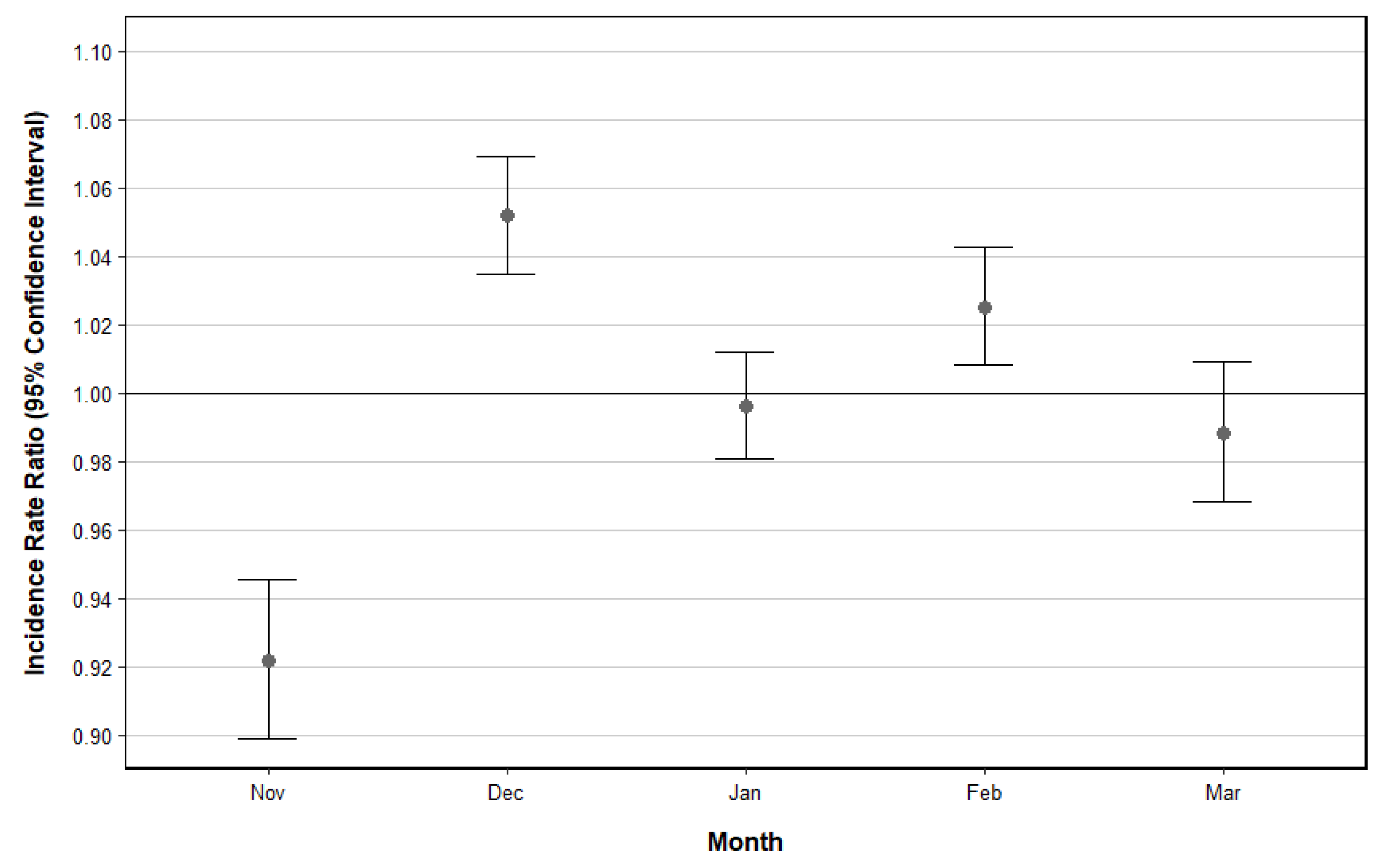
Stratification by month showed modest fluctuations in the association between heatwaves and fall-related ambulance attendances (Figure 6). Elevated risks were noted in February (IRR = 1.02; 95% CI: 1.01–1.04) and December (IRR = 1.05; 95% CI: 1.03–1.07). In contrast, a significant reduction in fall-related attendances was recorded in November (IRR = 0.92; 95% CI: 0.90–0.95), while January and March showed no meaningful deviation from non-heatwave periods.
Figure 6.
Incidence rate ratios for the association between heatwaves and fall-related ambulance attendances by warm season months (Queensland; 2010–2019).
4. Discussion
This study examined the association between heatwaves and fall-related ambulance attendances in Queensland over a decade. Overall, there was no difference in fall incidence between heatwave and non-heatwave days; however, extreme heatwaves were associated with a measurable increase in fall-related attendances, particularly among adults aged 45–74 years and residents of outer regional areas. These findings indicate that while most heatwave periods do not elevate fall risk, high-severity heat events may contribute to increased fall injuries in specific subgroups.
These results to a lesser degree align with international evidence showing increased fall-related mortality and morbidity during periods of extreme heat, particularly in China and Japan [32,33]. In contrast, studies from temperate settings such as Adelaide and Shanghai have reported null or inverse associations. In Adelaide, Nitschke et al. observed a reduction in childhood injury-related emergency department attendances, while in Shanghai, Hu et al. found no increase in fall-related ambulance dispatches during heatwaves [16,34]. These variations may be due to differences in heatwave definitions, climate zones, acclimatisation, environmental characteristics (including the built environment), or behavioural responses to heat. The elevated risks observed among adults aged 45–74 years in Queensland differ from some studies identifying the strongest effects among adults aged ≥ 75 years [33], potentially suggesting different activity patterns, exposure contexts, or adaptive behaviours in this age group. Adults aged 45–74 years may remain more occupationally active, mobile, and exposed to outdoor environments during extreme heat compared with older adults aged 75 years and over [35], who may reduce activity, remain indoors, or receive greater social and community support during heatwave periods [36]. These behavioural differences may partially explain the elevated risks observed in the middle-aged and younger-old populations.
Stronger associations observed in outer regional areas during severe and extreme heatwaves suggest geographic variation in heat-related fall risk. These findings do not indicate a consistently higher burden across all heatwave categories, but rather a context-specific increase under more intense heat conditions. Similar regional disparities have been reported in previous Queensland heat-health studies, where rural and regional communities experienced greater vulnerability to heat-related health impacts than metropolitan populations [37,38]. Importantly, these findings reflect increased risk within regional communities during heatwave periods compared with non-heatwave periods in the same regions, rather than direct comparisons between metropolitan and rural populations. Structural factors such as poor housing insulation, reliance on outdoor labour, limited access to cooling, limited health service availability, and older population profiles may contribute to this increased vulnerability [39,40,41]. These determinants likely compound physiological stress during extreme heat, which can increase susceptibility to falls.
Incorporating region-specific risk factors into Queensland’s heatwave preparedness strategies is therefore essential. The Queensland Ambulance Service is already working to strengthen this approach through initiatives that forecast the impact of heatwaves on ambulance demand and explore ways to integrate these insights into heat-health warning systems [42]. These findings suggest that heat-health preparedness strategies should consider not only heat-related illnesses but also secondary outcomes such as falls and injury-related ambulance attendances. Integrating local vulnerability profiles into heatwave planning may assist emergency services in anticipating demand during periods of extreme heat and allocating resources more effectively.
Year-stratified analyses demonstrated little variation in the association between heatwaves and fall-related ambulance attendances across the study period, with significant reductions observed in only three financial years (2010–2011, 2013–2014, and 2018–2019). In comparison, when considering all ambulance calls in Queensland during the same study period, elevated incidence rates were seen during heatwaves across these same seasons in comparison to non-heatwave days (2010–2011, 2013–2014, and 2018–2019) [22]. However, a study exploring emergency department presentations found no significant increase in demand during heatwaves for 2010–2011, increased demand for 2013–2014, and a significant reduction in demand in 2018–2019 [25]. While these studies examined different health service outcomes and are therefore not directly comparable, collectively they suggest that the impacts of heatwaves on healthcare utilisation vary between years, with no consistent temporal pattern evident. The observed year-to-year variation may reflect random fluctuation, differences in heatwave characteristics, or changes in population behaviour and healthcare utilisation. Nevertheless, the year-stratified analyses provide little evidence of systematic temporal changes in the association between heatwaves and fall-related ambulance attendances. Future studies using more advanced time-series methods may better characterise any longer-term temporal changes.
From a public health perspective, recognising falls as part of the broader heat-related morbidity burden is critical. Extreme heatwaves already place substantial pressure on ambulance and hospital services in Queensland [6,15,22]. Integrating fall-prevention messages into heat-health warnings, enhancing cooling access in regional communities, and supporting at-risk adults, particularly those aged 45–74 years, could reduce preventable injuries during high-severity heat events. Such measures may be particularly important, as climate change is expected to increase the frequency, intensity, and duration of extreme heat events across Australia. Improving awareness of heat-related injury risks among health professionals, emergency services, and vulnerable populations may therefore contribute to broader climate adaptation and injury prevention efforts.
4.1. Safety Implications for Policy and Practice
Heatwave preparedness must extend beyond traditional heat-illness messaging to include injury prevention, particularly falls. Evidence shows that extreme heat impairs balance, attention, and physical performance [11,12], which can heighten fall risk among vulnerable populations such as older adults and people with chronic illness [5]. Public safety communication should therefore highlight these mechanisms and ensure that education on fall prevention, such as maintaining hydration, avoiding hazardous environments, and ensuring adequate supervision, is incorporated into heat-health alerts [43].
Strengthening home and built-environment safety is also essential. Poor housing insulation, limited access to cooling, and unsafe indoor environments increase heat exposure and injury risk during hot periods [44,45]. Environmental modifications, including insulation upgrades, shading, and removal of tripping hazards, may help mitigate these risks. Similarly, occupational and outdoor-activity planning should account for heat stress, given strong evidence that high temperatures impair psychomotor performance and increase injury rates in outdoor workers [13]. Recommended measures include adjusting work schedules, increasing rest breaks, and promoting hydration during peak heat [46].
Regional differences in heatwave-related mortality in Queensland highlight the need for tailored adaptation strategies in rural and regional communities [15], such as improved cooling access, strengthened building standards, outdoor shade, and locally relevant emergency preparedness initiatives. Pre-hospital and ambulance services can also use temperature forecasts to anticipate surges in service demand, aligning with current Queensland Ambulance Service initiatives that aim to integrate heatwave forecasting into operational planning [42]. Collectively, these factors support a multisectoral approach to heatwave safety that incorporates falls as an emerging, but preventable contributor to the wider health impacts of extreme heat.
4.2. Strengths and Limitations
This study has several important strengths. It draws on a large, statewide population-level dataset spanning ten consecutive warm seasons across Queensland, enabling robust estimation of heatwave–fall associations and detailed stratified analyses by age, sex, rurality, and heatwave severity. Population denominators were derived from four censuses across the study period with interpolation between census years, allowing fall rates to account for demographic and population growth over time. The use of the Bureau of Meteorology’s Excess Heat Factor (EHF) provided a nationally standardised, policy-relevant measure of heatwave severity.
Despite these strengths, several limitations should be acknowledged. First, the study period included a transition between the eARF and dARF reporting systems within QAS. Although variables were carefully harmonised, differences in coding structures required construction of a composite fall case definition through triangulation across multiple fields. This approach was intended to maximise case ascertainment while reducing potential case-classification bias arising from differences in coding between two reporting systems; however, it may have done so at some cost to specificity, since the two systems may apply differing coding and interpretation standards for what constitutes a fall.
Second, the study relied on postcode-level EHF data to classify heatwave exposure. Postcodes in Queensland cover large and environmentally diverse areas, meaning that a single heatwave value may not accurately reflect the actual microclimatic exposure experienced by all residents. Consequently, some individuals may have been assigned exposure levels that differed from the conditions experienced at the specific location where the fall occurred. This introduces spatial exposure misclassification that is likely to be non-differential and therefore may bias estimates towards the null, which can attenuate the true strength of associations.
Third, this ecological study was conducted using population-level data (i.e., heatwaves at a postcode level and individual fall data aggregated to the postcode level) and therefore could not account for individual-level characteristics that may influence both heat exposure and fall risk. Information on comorbidities, medication use, socio-economic status, occupational exposures, behavioural factors, and access to cooling was not available within the ambulance dataset. Consequently, residual confounding may remain, and the observed associations should be interpreted at the population level rather than as evidence of individual-level risk.
Fourth, ambulance data capture only falls severe enough to trigger an emergency call, excluding events managed in primary care, aged care, or at home, and therefore likely underestimates the total burden.
This study used incidence rate ratios to compare fall-related ambulance attendances on heatwave versus non-heatwave days. This approach does not capture lagged effects or non-linear exposure-response relationships and has limited capacity to control for confounders compared with more advanced time-series methods [47]. While year-stratified analyses suggested the association was broadly stable over time, gradual adaptation effects, such as behavioural change or shifts in ambulance-seeking patterns occurring slowly within the ten-year window, cannot be entirely ruled out. These findings should be used for future hypothesis generation, and more advanced methods such as distributed lag non-linear models or autoregressive approaches are recommended in future research.
Future research should address under-reporting by linking ambulance data with emergency department, hospital, primary care, and aged-care incident records to capture the full spectrum of falls during heatwaves. Prospective and qualitative studies examining behaviour, hydration, medications, environmental hazard (e.g., shading and urban heat islands), and activity patterns during extreme heat could help explain mechanisms of risk. Evaluating targeted contextually designed interventions such as heat-specific fall-prevention messaging at a specific location, improved built and natural environments, and improved regional cooling support will be essential to strengthen public safety and guide heatwave preparedness policies.
5. Conclusions
Extreme heatwaves were associated with increased fall-related ambulance attendances in Queensland, particularly among adults aged 45–74 years and residents of outer regional areas. While most heatwave periods did not elevate fall risk, high-severity events pose meaningful public health concern. As climate change drives more frequent and intense heatwaves, integrating fall-prevention strategies into heat-health planning, emergency preparedness, and community adaptation measures will be essential to protect vulnerable populations and reduce pressure on emergency services.
Author Contributions
Conceptualization, H.M.M. and R.C.F.; methodology, E.A., H.M.M. and R.C.F.; formal analysis, E.A.; investigation, E.A.; resources, H.M.M. and R.C.F.; data curation, H.M.M. and R.C.F.; writing, original draft preparation, E.A.; writing, review and editing, E.A., H.M.M. and R.C.F.; visualization, E.A. and H.M.M.; supervision, H.M.M. and R.C.F.; project administration, H.M.M. and R.C.F. All authors have read and agreed to the published version of the manuscript.
Funding
This research received no external funding.
Institutional Review Board Statement
The study was conducted in accordance with the Declaration of Helsinki, and approved by the Institutional Review Board (or Ethics Committee) of Children’s Health Queensland HHS HREC [Brisbane, Queensland, Australia] (LNR/21/QCHQ/72461 and date of approval: 1 June 2026).
Data Availability Statement
Data are available via Queensland Ambulance Service once ethical approval for the use of the data has been granted.
Acknowledgments
The authors gratefully acknowledge the Queensland Ambulance Service (QAS) for providing access to the ambulance attendance data used in this study and for providing feedback on the manuscript.
Conflicts of Interest
The authors declare no conflicts of interest.
References
- Intergovernmental Panel on Climate Change. Chapter 11: Weather and climate extreme events in a changing climate. In Climate Change 2021: The Physical Science Basis. Contribution of Working Group I to the Sixth Assessment Report of the Intergovernmental Panel on Climate Change; Cambridge University Press: Cambridge, UK, 2021; pp. 1513–1766. [Google Scholar]
- Romanello, M.; Napoli, C.D.; Green, C.; Kennard, H.; Lampard, P.; Scamman, D.; Walawender, M.; Ali, Z.; Ameli, N.; Ayeb-Karlsson, S.; et al. The 2023 report of the Lancet Countdown on health and climate change: The imperative for a health-centred response in a world facing irreversible harms. Lancet 2023, 402, 2346–2394. [Google Scholar] [CrossRef] [Scilit] [PubMed]
- Mason, H.; C King, J.; E Peden, A.; C Franklin, R. Systematic review of the impact of heatwaves on health service demand in Australia. BMC Health Serv. Res. 2022, 22, 960. [Google Scholar] [CrossRef] [Scilit] [PubMed]
- Mora, C.; Dousset, B.; Caldwell, I.R.; Powell, F.E.; Geronimo, R.C.; Bielecki, C.R.; Counsell, C.W.W.; Dietrich, B.S.; Johnston, E.T.; Louis, L.V.; et al. Global risk of deadly heat. Nat. Clim. Change 2017, 7, 501–506. [Google Scholar] [CrossRef] [Scilit]
- Kovats, R.S.; Hajat, S. Heat stress and public health: A critical review. Annu. Rev. Public Health 2008, 29, 41–55. [Google Scholar] [CrossRef] [Scilit] [PubMed]
- King, J.C.; Mason, H.M.; Peden, A.E.; Fitzgerald, G.; Nairn, J.; Mandalios, N.; Watt, K.; Bosley, E.L.; Franklin, R.C. Ambulance Attendance in the State of Queensland, Australia: Exploring the Impacts of Heatwaves Using a Retrospective Population-Based Study. Prehosp. Disaster Med. 2025, 40, 147–155. [Google Scholar] [CrossRef] [Scilit] [PubMed]
- Iwasaki, Y.D.; Kasai, K.D.; Kenichi Hirukawa, D.; Kawakami, M. The Impact of Japan Heatwave on Community Emergency Medicine in 2018. Prehosp. Disaster Med. 2019, 34, s29–s30. [Google Scholar] [CrossRef] [Scilit]
- Sun, X.; Sun, Q.; Yang, M.; Zhou, X.; Li, X.; Yu, A.; Geng, F.; Guo, Y. Effects of temperature and heat waves on emergency department visits and emergency ambulance dispatches in Pudong New Area, China: A time series analysis. Environ. Health 2014, 13, 76. [Google Scholar] [CrossRef] [Scilit] [PubMed]
- Clark, D.G.; Jackson, E.H.; Hohl, C.M.; Liang, K.E. Extreme heat impacts on acute care: Examining emergency department visits and hospital admissions during the 2021 British Columbia heatwave. J. Clim. Change Health 2024, 17, 100310. [Google Scholar] [CrossRef] [Scilit] [PubMed]
- Sangkharat, K.; Mahmood, M.A.; Thornes, J.E.; Fisher, P.A.; Pope, F.D. Impact of extreme temperatures on ambulance dispatches in London, UK. Environ. Res. 2020, 182, 109100. [Google Scholar] [CrossRef] [Scilit] [PubMed]
- Kenny, G.P.; Yardley, J.; Brown, C.; Sigal, R.J.; Jay, O. Heat stress in older individuals and patients with common chronic diseases. Can. Med. Assoc. J. 2010, 182, 1053–1060. [Google Scholar] [CrossRef] [Scilit] [PubMed]
- Gaoua, N. Cognitive function in hot environments: A question of methodology. Scand. J. Med. Sci. Sports 2010, 20, 60–70. [Google Scholar] [CrossRef] [Scilit] [PubMed]
- Varghese, B.M.; Hansen, A.; Bi, P.; Pisaniello, D. Are workers at risk of occupational injuries due to heat exposure? A comprehensive literature review. Saf. Sci. 2018, 110, 380–392. [Google Scholar] [CrossRef] [Scilit]
- World Health Organization. 2021 WHO Health and Climate Change Survey Report; WHO: Geneva, Switzerland, 2021. [Google Scholar]
- Franklin, R.C.; Mason, H.M.; King, J.C.; Peden, A.E.; Nairn, J.; Miller, L.; Watt, K.; FitzGerald, G. Heatwaves and mortality in Queensland 2010–2019: Implications for a homogenous state-wide approach. Int. J. Biometeorol. 2023, 67, 503–515. [Google Scholar] [CrossRef] [Scilit] [PubMed]
- Nitschke, M.; Tucker, G.R.; Bi, P. Morbidity and mortality during heatwaves in metropolitan Adelaide. Med. J. Aust. 2007, 187, 662–665. [Google Scholar] [CrossRef] [Scilit] [PubMed]
- AIHW. Falls in Older Australians 2019–20: Hospitalisations and Deaths Among People Aged 65 and Over; AIHW, Australian Government: Canberra, Australia, 2022.
- Bureau of Meteorology. State of the Climate 2022; Australian Government: Canberra, Australia, 2022.
- Greenwood, R.H. Queensland State, Australia. Available online: https://www.britannica.com/place/Queensland-state-Australia (accessed on 3 August 2026).
- Queensland Government. Climate Change in Queensland: Impact Summary; Queensland Government: Brisbane, Australia, 2015.
- Queensland Fire Emergency Services. Queensland Heatwave Risk Assessment; Queensland Government: Brisbane, Australia, 2019.
- Mason, H.M.; King, J.C.; Peden, A.E.; Watt, K.; Bosley, E.; Fitzgerald, G.; Nairn, J.; Miller, L.; Mandalios, N.; Franklin, R.C. Determining the Impact of Heatwaves on Emergency Ambulance Calls in Queensland: A Retrospective Population-Based Study. Int. J. Environ. Res. Public Health 2023, 20, 4875. [Google Scholar] [CrossRef] [Scilit] [PubMed]
- Zavadsky, M.; Burnette, L.; Tracey Barron, B.; Patterson, B. Characterization of Call Prioritization Time in a Medical Priority Dispatch System. AEDR 2014, 4, 27–33. Available online: https://www.aedrjournal.org/characterization-of-call-prioritization-time-in-a-medical-priority-dispatch-system (accessed on 3 August 2026).
- Queensland Government. SILO—Climate Data Drill. Available online: https://longpaddock.qld.gov.au/silo/ (accessed on 8 March 2026).
- Franklin, R.C.; Peden, A.E.; King, J.C.; Varghese, B.; Mandalios, N.; Lawton, L.; Meehan, M.T.; Wong, K.K.-H.; Mason, H.M. Heatwaves and emergency department utilisation in Queensland: A 10-year retrospective study. BMC Health Serv. Res. 2025, 26, 7. [Google Scholar] [CrossRef] [Scilit] [PubMed]
- Nairn, J.R.; Fawcett, R.J.B. The Excess Heat Factor: A Metric for Heatwave Intensity and Its Use in Classifying Heatwave Severity. Int. J. Environ. Res. Public Health 2015, 12, 227–253. [Google Scholar] [CrossRef] [Scilit] [PubMed]
- Bureau of Meteorology. How Will I Know if a Heatwave Is Coming? Available online: https://media.bom.gov.au/social/blog/891/how-will-i-know-if-a-heatwave-is-coming/ (accessed on 31 October 2025).
- Bureau of Meteorology. About Heatwave Forecasting; Bureau of Meteorology: Melbourne, Australia, 2023.
- Australian Bureau of Statistics. Microdata and TableBuilder: TableBuilder. Available online: https://www.abs.gov.au/statistics/microdata-tablebuilder/tablebuilder (accessed on 31 October 2025).
- Dean, A.; Sullivan, K.; Soe, M. OpenEpi: Person-Time and Incidence Rate Calculations. Available online: https://www.openepi.com/PersonTime2/PersonTime2.htm (accessed on 31 October 2025).
- Australian Bureau of Statistics. Australian Statistical Geography Standard (ASGS): Volume 5—Remoteness Structure, July 2011; Australian Bureau of Statistics: Belconnen, Australia, 2011.
- Pan, R.; Honda, Y.; Minakuchi, E.; Kim, S.E.; Hashizume, M.; Kim, Y. Ambient Temperature and External Causes of Death in Japan from 1979 to 2015: A Time-Stratified Case-Crossover Analysis. Environ. Health Perspect. 2022, 130, 047004. [Google Scholar] [CrossRef] [Scilit] [PubMed]
- Lin, Y.; Qi, J.L.; Hu, J.X.; Liu, J.M.; He, G.H.; Yin, P.; Liu, T.; Lin, Z.Q.; Jing, F.R.; You, J.L.; et al. Age inequality in temperature-related fall mortality among old people in China in a warming climate. npj Clim. Atmos. Sci. 2025, 8, 58. [Google Scholar] [CrossRef] [Scilit]
- Hu, Y.; Zhang, Z.; Peng, L.; Lu, W.; Jiang, H.; Zhu, J.; Liu, X. Association between ambient temperature and injuries: A time series analysis using emergency ambulance dispatches in Shanghai. Prev. Med. Rep. 2025, 57, 103177. [Google Scholar] [CrossRef] [Scilit] [PubMed]
- Fransson, A.; Björklund Carlstedt, A.; Gustafsson, S. Older adults’ occupations in heat waves: A scoping review. Scand. J. Occup. Ther. 2023, 30, 1000–1015. [Google Scholar] [CrossRef] [PubMed]
- Doherty, F.C.; Rao, S.; Traver, A.; Dabelko-Schoeny, H. Extreme heat preparedness and coping among older adults: A rapid review. PLoS Clim. 2025, 4, e0000689. [Google Scholar] [CrossRef] [Scilit]
- Harvey, G.; Bain-Donohue, S.; Dewi, S.P. The impact of extreme heat on older regional and rural Australians: A systematic review. Aust. J. Rural Health 2024, 32, 216–226. [Google Scholar] [CrossRef] [Scilit] [PubMed]
- O’Donnell, E.; Honan, B.; Quilty, S.; Schultz, R. The Effect of Heat Events on Prehospital and Retrieval Service Utilization in Rural and Remote Areas: A Scoping Review. Prehosp. Disaster Med. 2021, 36, 782–787. [Google Scholar] [CrossRef] [Scilit] [PubMed]
- Queensland Council of Social Service. Energy Affordability and Cooling Access in Queensland Households; QCOSS: Brisbane, Australia, 2022. [Google Scholar]
- Safe Work Australia. Heat Stress in Outdoor Workers; Australian Government: Canberra, Australia, 2021.
- Quilty, S.; Frank Jupurrurla, N.; Bailie, R.S.; Gruen, R.L. Climate, housing, energy and Indigenous health: A call to action. Med. J. Aust. 2022, 217, 9–12. [Google Scholar] [CrossRef] [Scilit] [PubMed]
- Queensland Ambulance Service. Forecasting Impact of Heatwaves: Value-Adding to Heatwave Warnings; Queensland Ambulance Service: Brisbane, Australia, 2023.
- Brearley, M.; Heaney, M.F.; Norton, I.N. Physiological responses of medical team members to a simulated emergency in tropical heat. Prehosp. Disaster Med. 2013, 28, 139–144. [Google Scholar] [CrossRef] [Scilit] [PubMed]
- Nicholls, L.; McCann, H.; Strengers, Y.; Bosomworth, K. Heatwaves, Homes & Health: Why Household Vulnerability to Extreme Heat Is an Electricity Policy Issue; Centre for Urban Research, RMIT University: Melbourne, Australia, 2017. [Google Scholar]
- Loughnan, M.E.; Tapper, N.J.; Phan, T.; Lynch, K.; McInnes, J.A. A Spatial Vulnerability Analysis of Urban Populations During Extreme Heat Events in Australian Capital Cities; National Climate Change Adaptation Research Facility (NCCARF): Gold Coast, Australia, 2013. [Google Scholar]
- IPCC. Annex II: Glossary. In Climate Change 2022: Impacts, Adaptation and Vulnerability. Contribution of Working Group II to the Sixth Assessment Report of the Intergovernmental Panel on Climate Change; Pörtner, H.-O., Roberts, D.C., Tignor, M., Poloczanska, E.S., Mintenbeck, K., Alegría, A., Craig, M., Langsdorf, S., Löschke, S., Möller, V., et al., Eds.; Cambridge University Press: Cambridge, UK; New York, NY, USA, 2022; pp. 2897–2930. [Google Scholar]
- Gudziunaite, S.; Shabani, Z.; Weitensfelder, L.; Moshammer, H. Time series analysis in environmental epidemiology: Challenges and considerations. Int. J. Occup. Med. Environ. Health 2023, 36, 704–716. [Google Scholar] [CrossRef] [Scilit] [PubMed]
Disclaimer/Publisher’s Note: The statements, opinions and data contained in all publications are solely those of the individual author(s) and contributor(s) and not of MDPI and/or the editor(s). MDPI and/or the editor(s) disclaim responsibility for any injury to people or property resulting from any ideas, methods, instructions or products referred to in the content. |
© 2026 by the authors. Licensee MDPI, Basel, Switzerland. This article is an open access article distributed under the terms and conditions of the Creative Commons Attribution (CC BY) license.