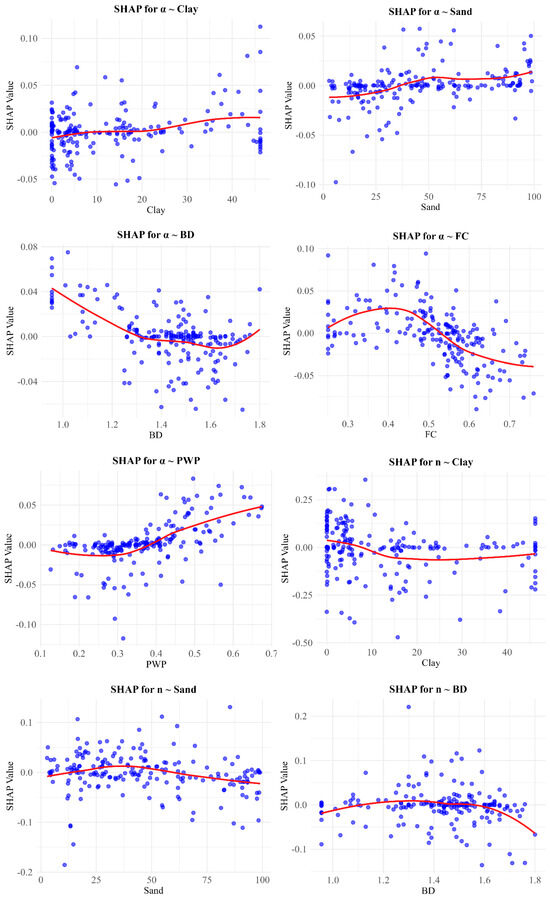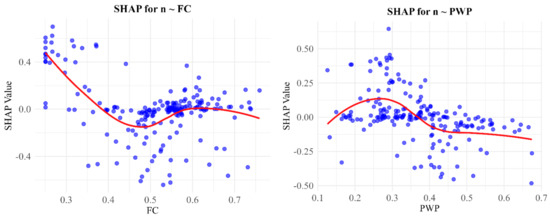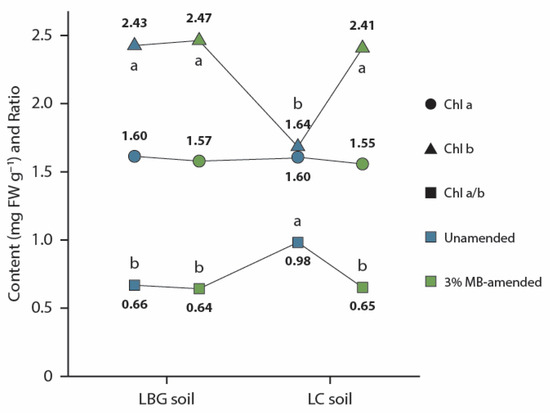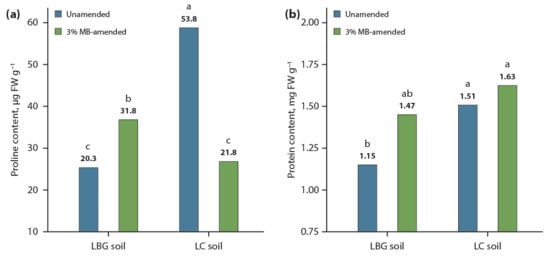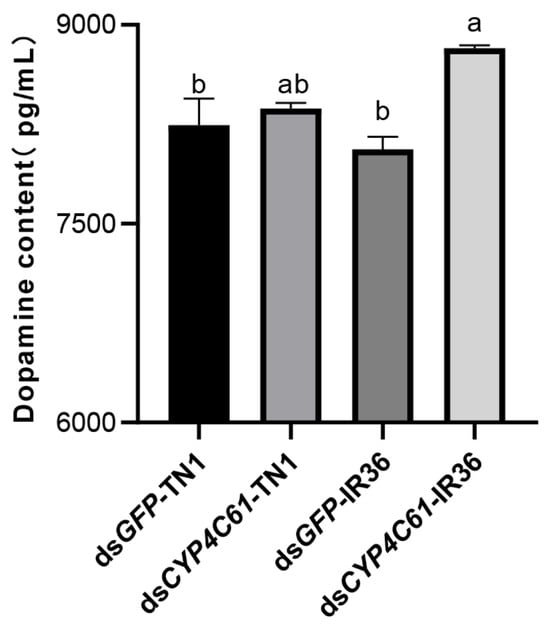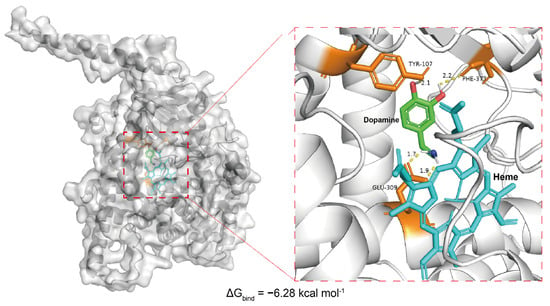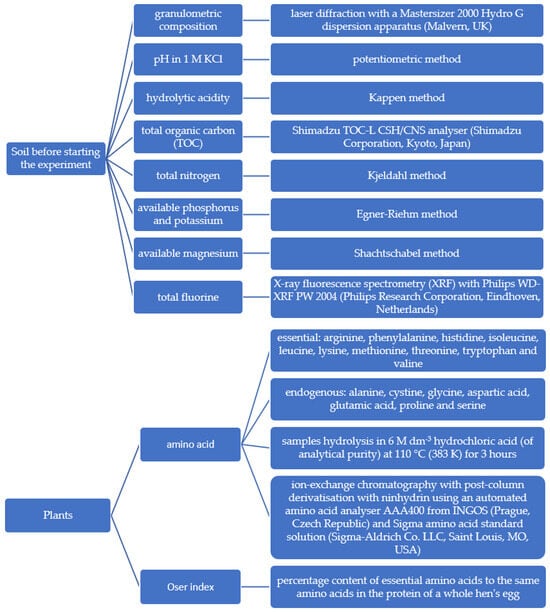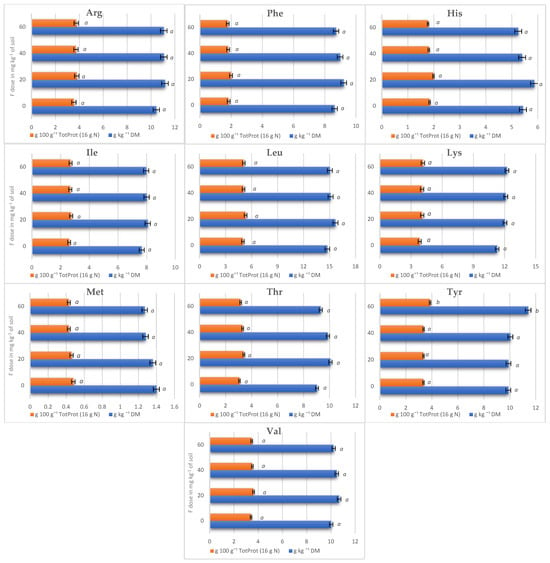


-
Mushroom Spawn and Its Effects on Mushroom Growth and Development: A Systematic Review -
Screening Almond Cultivars for Water Stress Tolerance Using Multiple Diagnostic Parameters -
Nature-Based Solutions (NbS) in Agricultural Soils for Greenhouse Gas Mitigation -
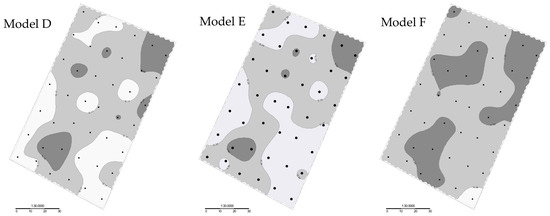
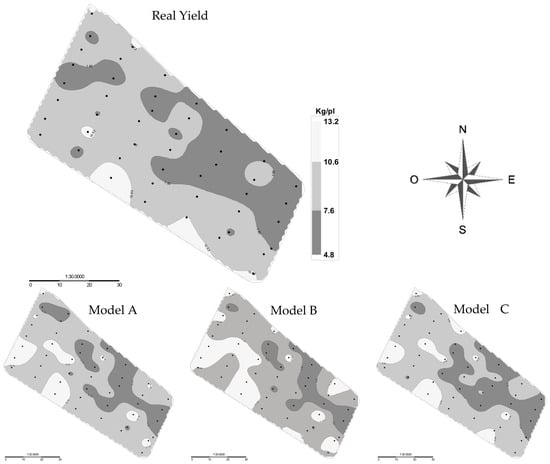
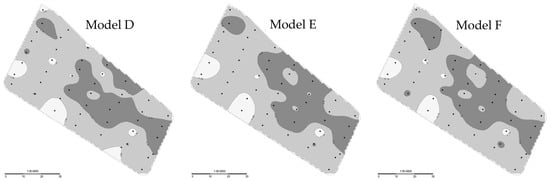
A Standardized Framework for Cleaning Non-Normal Yield Data from Wheat and Barley Crops, and Validation Using Machine Learning Models for Satellite Imagery
Journal Description
Agronomy
Agronomy
is an international, peer-reviewed, open access journal on agronomy and agroecology published semimonthly online by MDPI. The Spanish Society of Plant Biology (SEBP) is affiliated with Agronomy and their members receive discounts on the article processing charges.
- Open Access— free for readers, with article processing charges (APC) paid by authors or their institutions.
- High Visibility: indexed within Scopus, SCIE (Web of Science), GEOBASE, PubAg, AGRIS, and other databases.
- Journal Rank: JCR - Q1 (Agronomy) / CiteScore - Q1 (Agronomy and Crop Science)
- Rapid Publication: manuscripts are peer-reviewed and a first decision is provided to authors approximately 17 days after submission; acceptance to publication is undertaken in 1.8 days (median values for papers published in this journal in the second half of 2025).
- Recognition of Reviewers: reviewers who provide timely, thorough peer-review reports receive vouchers entitling them to a discount on the APC of their next publication in any MDPI journal, in appreciation of the work done.
- Companion journals for Agronomy include: Seeds, Agrochemicals, Grasses and Crops.
- Journal Cluster of Agricultural Science: Agriculture, Agronomy, Horticulturae, Soil Systems, AgriEngineering, Crops, Seeds, Grasses, Agrochemicals and AI and Precision Agriculture.
Impact Factor:
3.4 (2024);
5-Year Impact Factor:
3.8 (2024)
Latest Articles
Intra-Community Interactions in Annual Wild Soybean (Glycine soja): Stronger Intraspecific than Interspecific Competition with Implications for Its In Situ Conservation
Agronomy 2026, 16(11), 1120; https://doi.org/10.3390/agronomy16111120 (registering DOI) - 5 Jun 2026
Abstract
Glycine soja, the ancestor of cultivated soybean [Glycine max (L.) Merr.], is an important genetic resource for soybean improvement and a National Grade II Key Protected Wild Annual Plant in China. Understanding its intra- and interspecific interactions in natural communities is
[...] Read more.
Glycine soja, the ancestor of cultivated soybean [Glycine max (L.) Merr.], is an important genetic resource for soybean improvement and a National Grade II Key Protected Wild Annual Plant in China. Understanding its intra- and interspecific interactions in natural communities is critical for effective conservation, yet these dynamics remain poorly characterized in field settings. This study aims to characterize these interactions within herbaceous communities, providing insights to optimize the management of G. soja populations and conservation reserves. We surveyed twenty natural G. soja communities and revealed the following: (1) G. soja exhibited stronger intraspecific than interspecific competition. Spatial patterning among morphotypes and their proportional displacement provided direct evidence of intraspecific interactions within G. soja populations. (2) The annual associated plant group exhibited coexistence mechanisms similar to G. soja, characterized by stronger intragroup competition relative to the perennial group, which conversely displayed stronger intergroup competition. (3) A significant negative correlation existed between perennials and annuals. Perennials posed a greater threat to G. soja than annuals via distinct threat mechanisms: while annuals suppressed G. soja primarily through proportional dominance in species number, perennials reduced G. soja density by leveraging G. soja’s tendency toward stronger intraspecific competition. (4) G. soja exhibited intraspecific niche differentiation among morphotypes defined by functional traits (leaf shape, leaf size, and plant height), where morphological similarity correlated with niche overlap. Extreme morphotypes followed a bimodal pattern, with intermediate forms acting as ecological buffers, thereby enhancing adaptation to heterogeneous environments. This study yields important implications for effective in situ conservation, requiring the mediation of the trade-off between intra- and interspecific competition. Optimal strategies should either maintain moderately open communities accessible to humans and grazing animals, thereby allowing residual associated plants to mitigate excessive intraspecific competition in G. soja while reducing intense interspecific competition, or employ artificial interventions in closed nature reserves to prevent excessive intra- and interspecific competitive exclusion of G. soja.
Full article
(This article belongs to the Section Weed Science and Weed Management)
Open AccessArticle
Effects of Mineral Filler Composition on Pellet Properties, Seed Quality, and Seedling Establishment of Pelleted Chinese Cabbage Seeds
by
Mac Cheryl Sulan Charles Emparang, Sang-Rim Kim, Faraaz Ahmed Mohammad, Ji-Gu Lee, Min-Geon Cho, Min-Jae Kim, Dae-Geun Jeong, Kyung-Min Park and Jum-Soon Kang
Agronomy 2026, 16(11), 1119; https://doi.org/10.3390/agronomy16111119 (registering DOI) - 5 Jun 2026
Abstract
Seed pelleting improves seed handling and precision sowing, but its performance depends strongly on the physicochemical properties of filler materials. This study evaluated the effects of talc-based mineral filler combinations on pellet characteristics, germination, greenhouse emergence, seed vigor, and seedling growth of Chinese
[...] Read more.
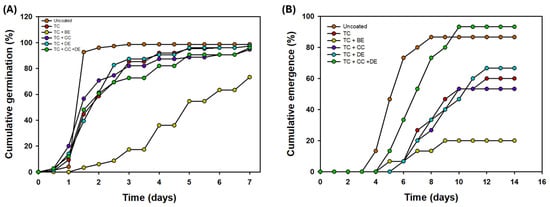
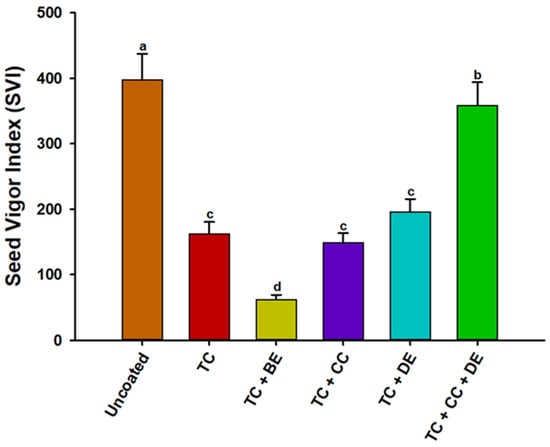
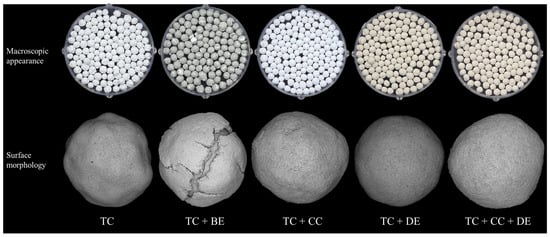
Seed pelleting improves seed handling and precision sowing, but its performance depends strongly on the physicochemical properties of filler materials. This study evaluated the effects of talc-based mineral filler combinations on pellet characteristics, germination, greenhouse emergence, seed vigor, and seedling growth of Chinese cabbage (Brassica rapa L. var. pekinensis). Talc (TC) was used alone or combined with bentonite (BE), calcium carbonate (CC), and diatomaceous earth (DE). Pellet physical properties, morphology, and surface elemental composition were analyzed using hardness measurements, porosity analysis, scanning electron microscopy, and energy-dispersive X-ray spectroscopy. TC + BE exhibited excessive swelling-driven water retention, prolonged disintegration time, and severe surface cracking, which were associated with reduced germination, delayed emergence, and poor seed vigor. In contrast, TC + CC + DE showed balanced physicochemical properties, including adequate hardness, moderate porosity, acceptable disintegration time, and improved water-holding capacity, producing superior greenhouse emergence while maintaining seedling growth comparable to the unpelleted control. Overall, successful seed pelleting depended on balancing structural integrity, water retention, and mass transfer properties within the pellet matrix. TC + CC + DE appears to be a promising formulation for Chinese cabbage seed pelleting.
Full article
(This article belongs to the Section Horticultural and Floricultural Crops)
►▼
Show Figures

Figure 1
Open AccessArticle
Soil-Based Attainable Yields of Winter Wheat on the Basis of Multi-Environment Trials Conducted in Poland
by
Michał Stępień and Marzena Iwańska
Agronomy 2026, 16(11), 1118; https://doi.org/10.3390/agronomy16111118 (registering DOI) - 5 Jun 2026
Abstract
Attainable yields represent the yields that can be achieved under production conditions and are used to determine the exploitable yield gap. However, these yields are constrained by multiple factors, including soil properties that vary across different spatial scales, even within a single field.
[...] Read more.
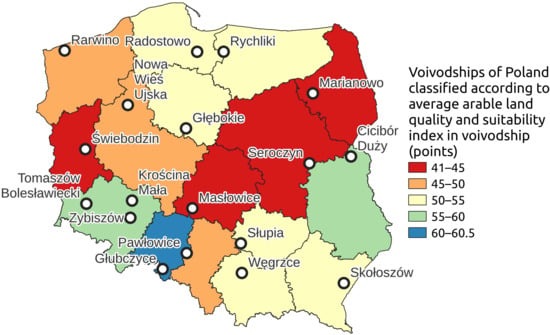
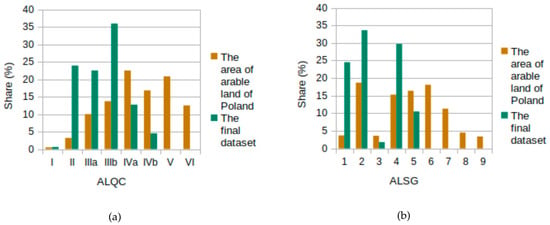
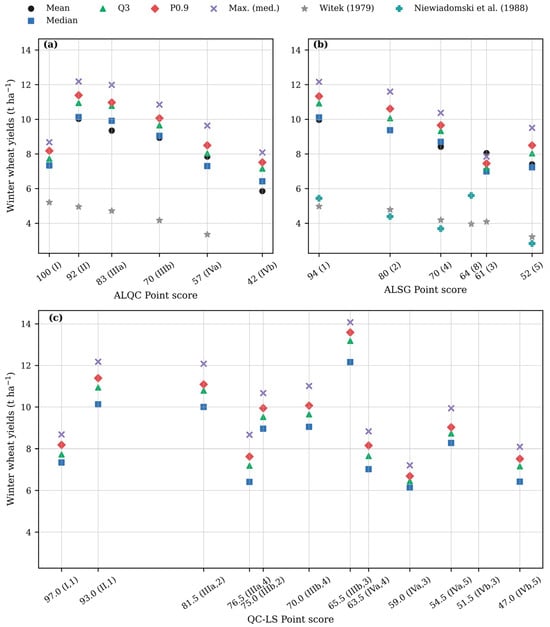
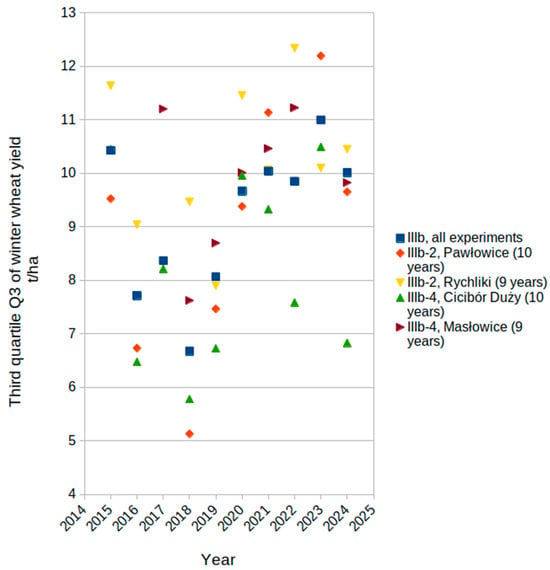
Attainable yields represent the yields that can be achieved under production conditions and are used to determine the exploitable yield gap. However, these yields are constrained by multiple factors, including soil properties that vary across different spatial scales, even within a single field. Thus, the attainable yields should be adjusted to specific soil units. This study uses results from multi-environment cultivar testing trials conducted by COBORU in Poland to estimate winter wheat attainable yields depending on arable land quality classes (ALQCs) and arable land suitability groups (ALSGs). The database comprises 10 years of observations from 18 locations and 156 experiments. The results indicate a clear relationship between the scores assigned to particular ALQCs and ALSGs in 1981. In contrast, the relationship between the average scores assigned to ALQCs within ALSGs was weaker. Attainable yields were estimated directly based on experimental data, using the median and 90th percentile (P0.9) of yields for well represented soil units, and regression analysis between the median and P0.9 and point scores for less-represented soil units. The results could be improved by using a more extensive dataset, particularly for underrepresented and not represented soils. The proposed method may be applied to estimate soil-adjusted attainable yields for other crops whose cultivars are tested by COBORU in multi-environment trials.
Full article
(This article belongs to the Special Issue The Revision of Production Potentials and Yield Gaps in Field Crops)
►▼
Show Figures

Figure 1
Open AccessArticle
Protective Effect of 1-Decen-3-ol in Maize Grains Against Fusarium verticillioides and Its Insect Vector Sitophilus zeamais
by
Vanessa Daniela Brito, Fernanda Achimón, María Paula Zunino and Romina P. Pizzolitto
Agronomy 2026, 16(11), 1117; https://doi.org/10.3390/agronomy16111117 (registering DOI) - 5 Jun 2026
Abstract
Fusarium verticillioides is a maize pathogenic fungus that produces the mycotoxin fumonisin B1 (FB1) and causes significant losses in grain quality and yield. In addition, the insect Sitophilus zeamais damages the grains and contributes to the dispersal of the fungus.
[...] Read more.
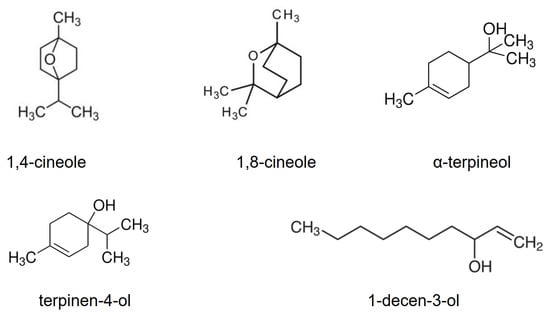
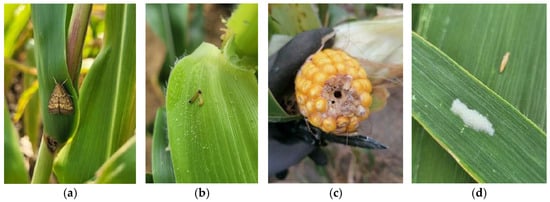
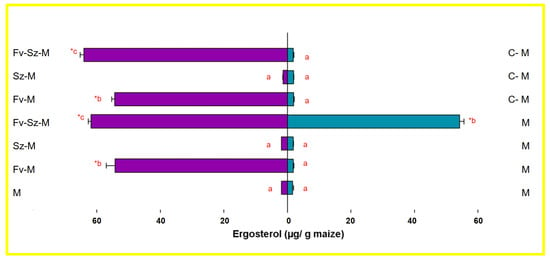
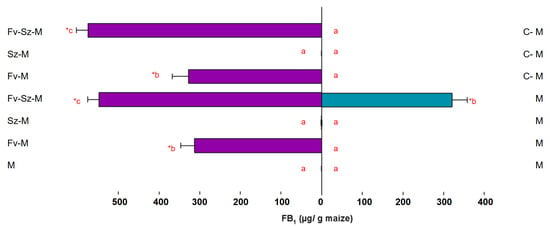
Fusarium verticillioides is a maize pathogenic fungus that produces the mycotoxin fumonisin B1 (FB1) and causes significant losses in grain quality and yield. In addition, the insect Sitophilus zeamais damages the grains and contributes to the dispersal of the fungus. Although synthetic pesticides provide effective pest control, their excessive use has raised concerns regarding environmental contamination and human health. Therefore, safer alternatives with biopesticide potential are being explored. The aim of this study was to identify an oxygenated volatile compound capable of protecting maize grains against fungal infection and fungal dispersal by the insect vector. The antifungal activity of 1,4-cineole, 1,8-cineole, α-terpineol, terpinen-4-ol, and 1-decen-3-ol against F. verticillioides was evaluated through the fumigant method. Among the tested compounds, 1-decen-3-ol and terpinen-4-ol showed the highest antifungal activity with minimum inhibitory concentration values of 0.5 and 0.9 mM, respectively, significantly affecting fungal growth rate and lag phase. The compound 1-decen-3-ol was selected for further evaluation in stored grains. The application of 1-decen-3-ol effectively prevented maize weight loss and reduced the accumulation of ergosterol and FB1. These findings suggest that 1-decen-3-ol could represent a potential candidate for the development of biocontrol strategies in grain storage systems.
Full article
(This article belongs to the Special Issue Agroecological Transitions: Integrating Soil–Pesticide–Microbe Interactions for Sustainable System Transformation)
►▼
Show Figures

Figure 1
Open AccessArticle
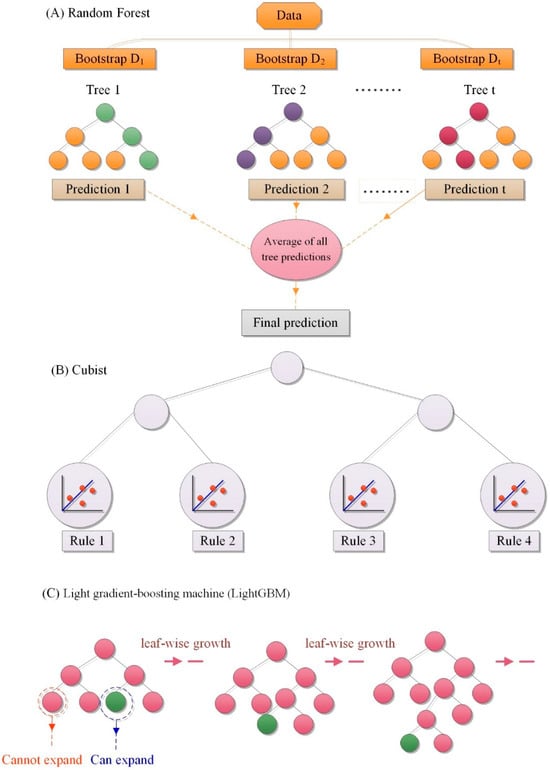
Parametric Modeling of the Unsaturated Soil Hydraulic Conductivity Function Using Tree-Based and Ensemble Machine Learning Algorithms: A Comparative Analysis of Cubist, Random Forest, and LightGBM
by
Peng Wang, Mostafa Rastgou, Zhiming Qi, Qianjing Jiang and Yong He
Agronomy 2026, 16(11), 1116; https://doi.org/10.3390/agronomy16111116 (registering DOI) - 5 Jun 2026
Abstract
Modeling the unsaturated soil hydraulic conductivity function (SHCF) is essential for understanding water movement in unsaturated zones and supporting effective agricultural and environmental management. Accurate estimation of SHCF parameters, particularly the α and n parameters of the van Genuchten–Mualem (VGM) model, remains a
[...] Read more.
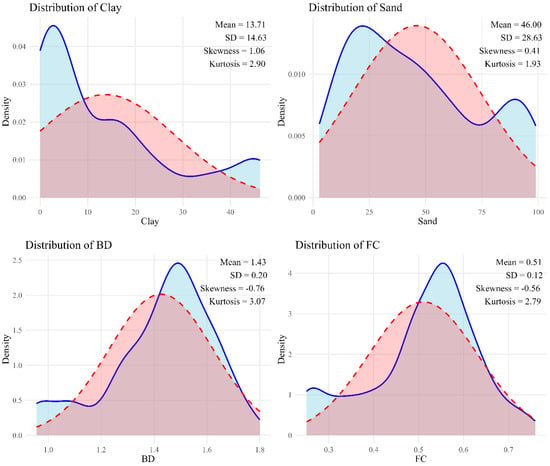
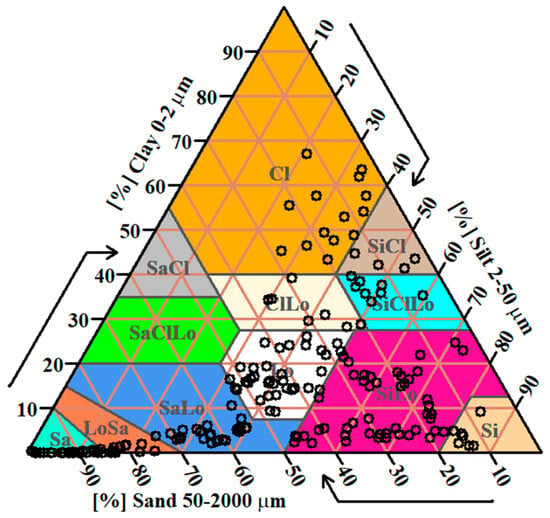
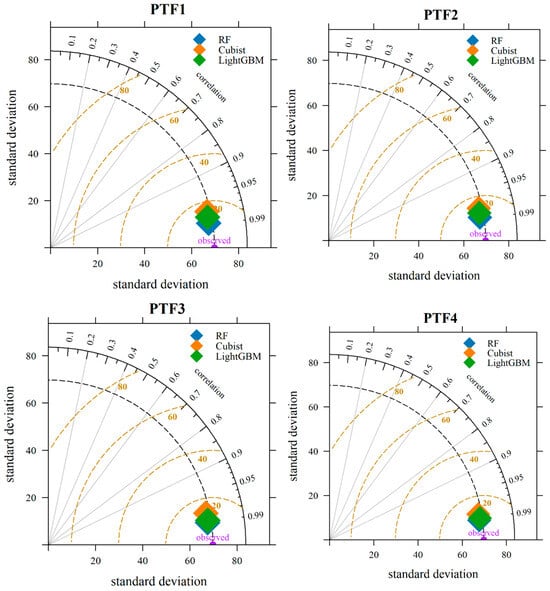
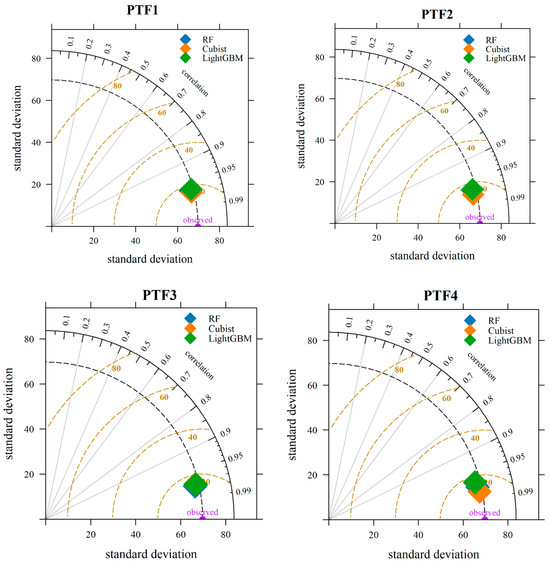
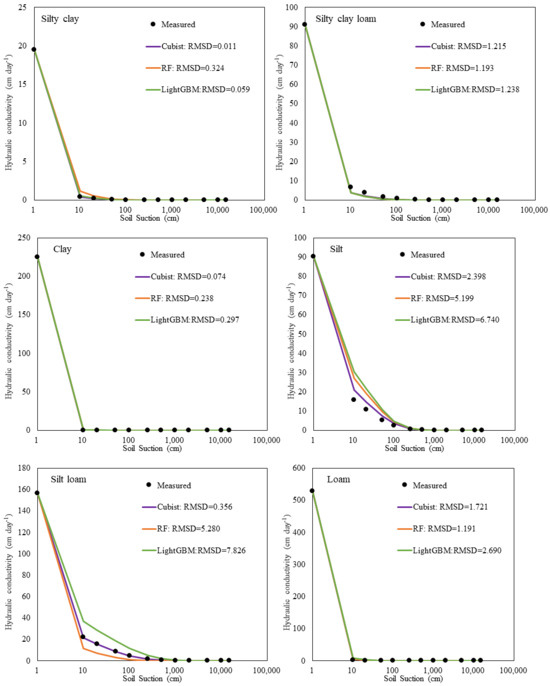
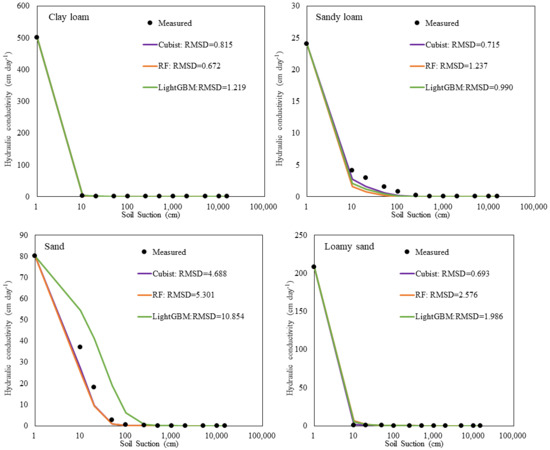
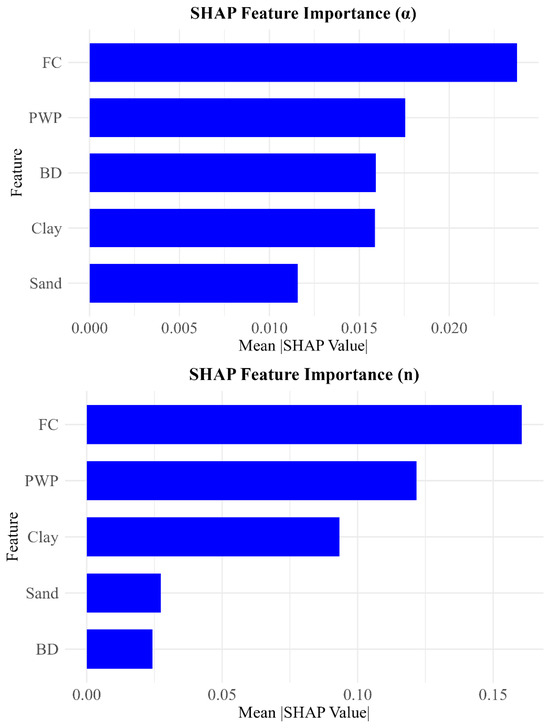
Modeling the unsaturated soil hydraulic conductivity function (SHCF) is essential for understanding water movement in unsaturated zones and supporting effective agricultural and environmental management. Accurate estimation of SHCF parameters, particularly the α and n parameters of the van Genuchten–Mualem (VGM) model, remains a challenging endeavor due to the complex interplay of soil physical properties. Tree-based machine learning methods have shown promising capabilities in this area. To further assess and compare the performance of tree-based approaches, this study aimed to evaluate the efficiency of three algorithms, Cubist, RF, and light gradient boosting machine (LightGBM), in the parametric estimation of SHCF using 196 soil samples from the UNSODA database. Input variables, including sand, clay, soil bulk density (BD), field capacity (FC), and permanent wilting point (PWP), were structured into four progressively complex pedotransfer functions (PTFs). Results indicate that Cubist demonstrated the best overall generalization during testing, achieving the lowest average RMSD (7.165) across the four PTFs compared to RF (7.602) and LightGBM (8.068), although RF and LightGBM achieved marginally better performance on individual PTF-metric combinations. All three algorithms achieved high coefficients of determination (R2 ≥ 0.95) across all PTFs. Specifically, in PTF4, the best-performing model, Cubist achieved a 6.8% lower RMSD than RF and a 12.4% improvement over LightGBM. Shapley additive explanations (SHAP) conducted via XGBoost surrogate models, suggested that FC and PWP were the most influential predictors of SHCF among the variables examined. These findings suggest that Cubist is a viable approach for estimating SHCF, particularly when input data are limited to basic soil properties.
Full article
(This article belongs to the Section Precision and Digital Agriculture)
►▼
Show Figures

Figure 1
Open AccessArticle
Post-Phytoremediation Feedstock-Derived Biochar in Supporting Miscanthus × giganteus Development on Post-Mining Soils
by
Asil A. Nurzhanova, Asiya S. Nurmagambetova, Alexander Zakharov, Zhadyra Zhumasheva and Aigerim Mamirova
Agronomy 2026, 16(11), 1115; https://doi.org/10.3390/agronomy16111115 (registering DOI) - 5 Jun 2026
Abstract
Environmental contamination by potentially toxic elements (PTEs) originating from industrial activities represents a major global challenge, necessitating the development of sustainable remediation strategies. While remediation of legacy (post-industrial) contamination has been relatively well studied, the remediation of ecosystems surrounding operating facilities subjected to
[...] Read more.
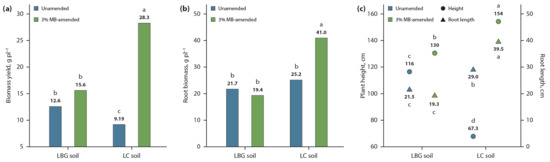
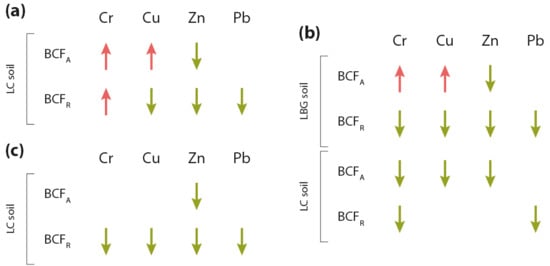
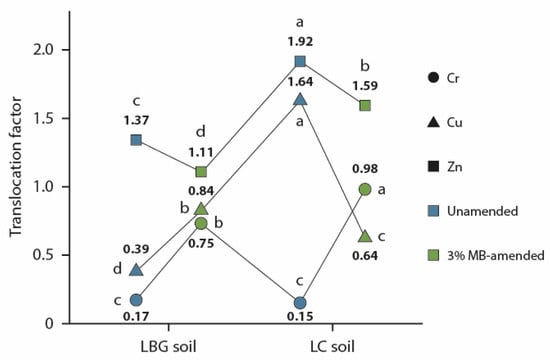
Environmental contamination by potentially toxic elements (PTEs) originating from industrial activities represents a major global challenge, necessitating the development of sustainable remediation strategies. While remediation of legacy (post-industrial) contamination has been relatively well studied, the remediation of ecosystems surrounding operating facilities subjected to increasing PTE loads remains insufficiently investigated. Therefore, the present study evaluated the efficacy of biochar derived from post-phytoremediation Miscanthus × giganteus (M×g) biomass to optimise the phytoremediation process using soil from an operating facility in a pot system. Valorisation of 29.0 kg of waste biomass yielded 12.8 kg of biochar (44.2%) with a high specific surface area (672 m2 g−1). Despite PTE enrichment during pyrolysis, the biochar was classified safe according to IBI thresholds. A pot experiment was conducted using contaminated and local background soils, amended with 3% (w/w) Miscanthus-derived biochar. Biochar application significantly improved plant performance in contaminated soil, increasing plant height, aboveground biomass, and root parameters by up to 208%, while restoring chlorophyll content and reducing stress indicators such as proline. Furthermore, biochar reduced PTE accumulation in plant tissues and supported the production of less contaminated biomass. These findings demonstrate that post-phytoremediation biomass-derived biochar enhances phytomanagement efficiency and supports sustainable biomass valorisation within a circular economy framework.
Full article
(This article belongs to the Special Issue Innovative Approaches for the Remediation of Polluted Soils in Agricultural Systems)
►▼
Show Figures

Figure 1
Open AccessArticle
Interpretable Multidimensional Meteorological Memory Modeling for Diamondback Moth Forecasting
by
Dong Zhang and Jiale Wang
Agronomy 2026, 16(11), 1114; https://doi.org/10.3390/agronomy16111114 - 4 Jun 2026
Abstract
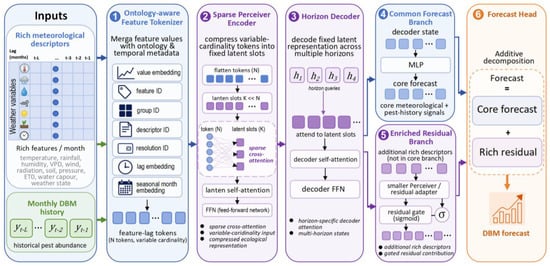
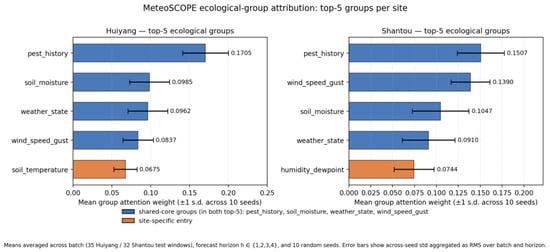
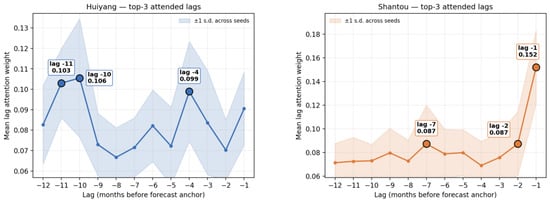
Diamondback moth (DBM, Plutella xylostella) outbreaks are shaped by delayed meteorological conditions, yet most forecasting models compress weather into a few monthly summaries and provide limited ecological interpretation. We propose MeteoSCOPE, an ontology-aware sparse Perceiver framework for interpretable, multi-horizon retrospective forecasting of
[...] Read more.
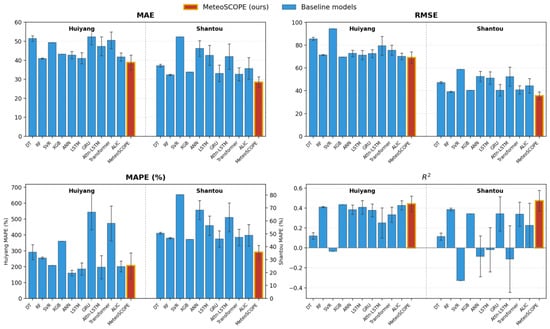
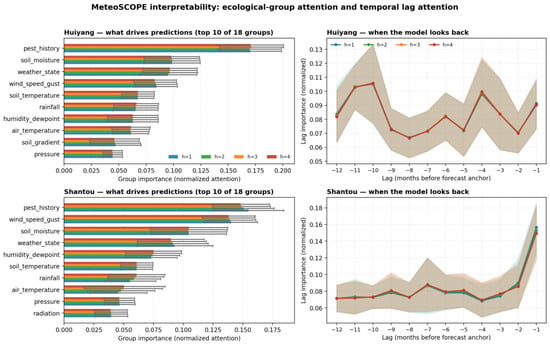
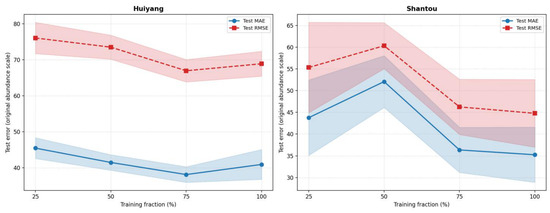
Diamondback moth (DBM, Plutella xylostella) outbreaks are shaped by delayed meteorological conditions, yet most forecasting models compress weather into a few monthly summaries and provide limited ecological interpretation. We propose MeteoSCOPE, an ontology-aware sparse Perceiver framework for interpretable, multi-horizon retrospective forecasting of DBM abundance from historical pest records and rich meteorological descriptors. Each feature-lag value is encoded as a token carrying feature identity, ecological group, descriptor type, lag position, and seasonal information; in the rich setting, 138 descriptors across 12 months yield 1656 tokens per sample. Sparse cross-attention compresses these tokens into a compact latent representation, while horizon-specific queries produce one- to four-month-ahead forecasts. Attention tensors and a common-plus-residual branch are aggregated into feature-, group-, descriptor-, lag-, horizon-, and residual-level explanations. Using DBM records from Huiyang and Shantou, Guangdong, MeteoSCOPE achieved the strongest overall retrospective performance, with robust gains at Shantou and metric-dependent gains at Huiyang. The explanations identified pest history as the leading attended group at both sites and surfaced site-specific secondary attributions for soil moisture, weather state, wind, soil temperature, and humidity, treated as model evidence rather than causal ecological effects and corroborated by independent occlusion and KernelSHAP analyses. Strict zero-shot cross-site transfer degrades substantially, so prospective field validation and broader multi-site testing remain required before operational deployment. MeteoSCOPE thus provides a transferable methodological framework (not a deployable forecaster) for interpretable analysis of high-dimensional agricultural time series.
Full article
(This article belongs to the Special Issue Strategies and Methods for Analyzing Multivariate–Multidimensional Data Resulting from Agricultural Research)
►▼
Show Figures

Figure 1
Open AccessArticle
Bio-Insecticidal Potential of Salvia spp. Against Tuta absoluta
by
Poonam Devi, Emanuele Rosa, Anna Paola Lanteri, Andrea Minuto, Valentina Parisi, Mauro Giacomini, Norbert Maggi and Angela Bisio
Agronomy 2026, 16(11), 1113; https://doi.org/10.3390/agronomy16111113 - 4 Jun 2026
Abstract
The tomato leaf miner (Tuta absoluta) is recognized as a highly destructive pest affecting members of the Solanaceae family, particularly tomato crops, where infestations may cause total crop loss. Its rapid spread and increasing resistance to chemical insecticides underscore the urgent
[...] Read more.
The tomato leaf miner (Tuta absoluta) is recognized as a highly destructive pest affecting members of the Solanaceae family, particularly tomato crops, where infestations may cause total crop loss. Its rapid spread and increasing resistance to chemical insecticides underscore the urgent need for innovative, environmentally compatible control strategies. In this context, the present study investigates the bioactivity of surface extracts derived from four Salvia species (S. buchananii, S. corrugata, S. discolor, and S. namaensis) against T. absoluta larvae, focusing on their insecticidal and feeding-deterrent effects. Chemical characterization through LC–MS analysis demonstrated that these Salvia species contain diverse secondary metabolites, including diterpenoids, triterpenoids, and flavonoids. Initial screening using a leaf-dip bioassay at a concentration of 2.50 mg/mL showed that S. discolor was particularly effective among the Salvia extracts tested. Subsequent dose–response assays with S. discolor extracts (0.16–5.00 mg/mL) confirmed strong larvicidal and feeding inhibitory effects, with LC50 and FI50 values of 0.12 and 0.13 mg/mL, respectively. Additionally, weak inhibition of acetylcholinesterase (AChE) was observed, suggesting a minor contribution of neurotoxic effects to the overall activity of the extract. The findings suggest that S. discolor extracts may be useful for managing T. absoluta infestations, pending evaluation of their effects on non-target organisms.
Full article
(This article belongs to the Section Pest and Disease Management)

Open AccessArticle
Enhancement of Ecosystem Multifunctionality in Altay Natural Mowing Grasslands by Mixed Grass Species Overseeding
by
Jiale Yan, Zhenyu Duan, Xianhua Zhang, Panpan Zhang, Chenghui Sa and Hui Xiong
Agronomy 2026, 16(11), 1112; https://doi.org/10.3390/agronomy16111112 - 4 Jun 2026
Abstract
Under the combined influence of climate change and long-term mowing pressure, natural mowing grasslands in the Altai Mountain meadow region of Xinjiang have undergone degradation, primarily manifested as a decline in the proportion of high-quality forage species and an increase in forbs, which
[...] Read more.
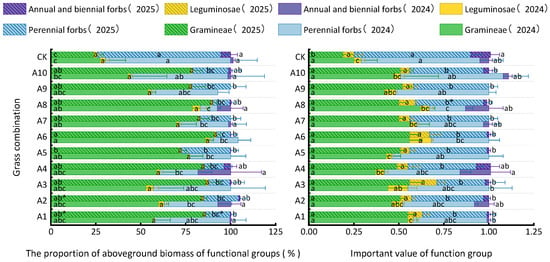
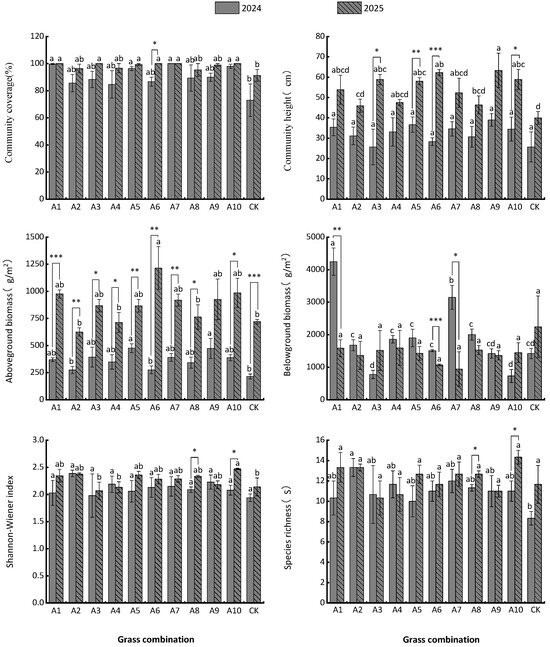
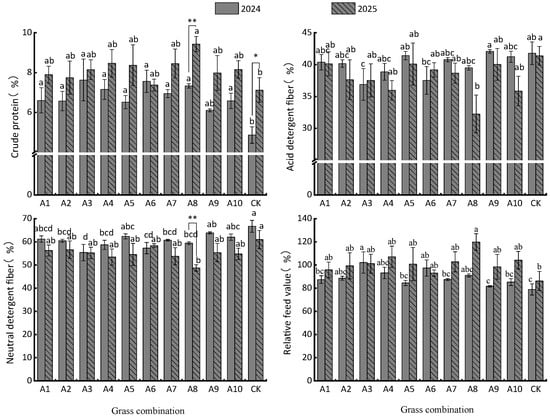
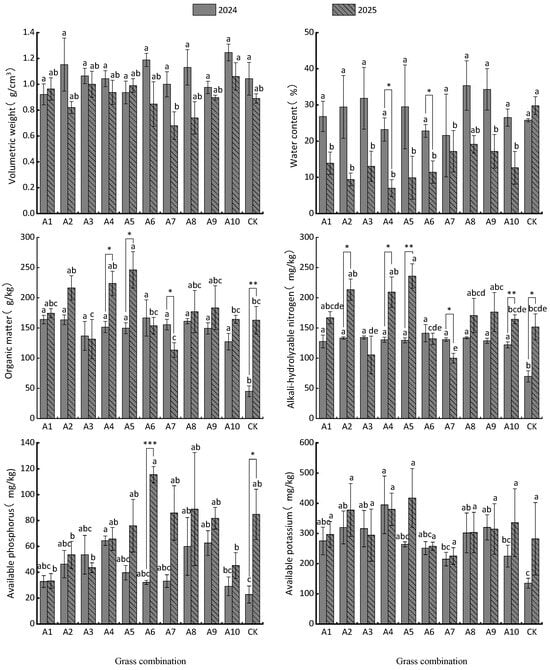
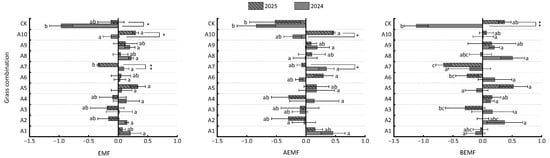
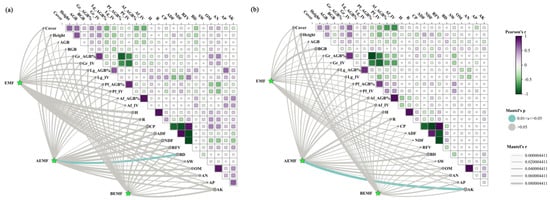
Under the combined influence of climate change and long-term mowing pressure, natural mowing grasslands in the Altai Mountain meadow region of Xinjiang have undergone degradation, primarily manifested as a decline in the proportion of high-quality forage species and an increase in forbs, which has severely constrained grassland-based livestock production and regional ecological security. For the restoration of degraded natural mowing grasslands, systematic assessments of the effects of legume–grass mixture overseeding on ecosystem multifunctionality (EMF) are still lacking; existing studies have mostly focused on single ecological functions, and the understanding of how different species mixtures drive synergistic vegetation–soil system recovery and the underlying mechanisms remains unclear. This study targeted degraded natural mowing grasslands in Altai and selected seven species: Onobrychis viciifolia cv. Qitai, Medicago sativa cv. Xinmu No. 4, Trifolium pratense cv. Minshan, Dactylis glomerata, Poa pratensis, Bromus inermis cv. Wusu No. 1, and Elymus dahuricus. Overseeding mixtures with different species compositions were established under a uniform legume–grass ratio of 2:8. Through a fixed-point field observation experiment conducted from 2024 to 2025, we integrated indicators of quantitative community characteristics, forage nutritional quality, soil physical properties, and soil chemical properties to construct aboveground EMF (AEMF), belowground EMF (BEMF), and overall EMF indices. The effects of different legume–grass mixtures on the restoration of degraded natural mowing grasslands were evaluated, candidate mixtures suitable for different restoration goals were screened, and the driving mechanisms were elucidated. The results showed that: (1) The restoration effects of different legume–grass mixtures on degraded natural mowing grasslands differed markedly. Community composition changed after overseeding, and some mixtures rapidly formed a grass-dominated community structure. (2) Superior mixtures significantly increased community cover and aboveground biomass, improved forage quality, and enhanced soil fertility to a certain extent. (3) Overseeding resulted in a greater improvement in aboveground EMF than in belowground EMF. In the first year, EMF exhibited synchronous enhancement across all functions, whereas in the second year, the system shifted to a phase of functional reorganization. (4) Based on the 2024–2025 field trial results, candidate legume–grass mixtures suitable for different restoration objectives were preliminarily identified: for comprehensive ecological restoration, a mixture of 5% Onobrychis viciifolia cv. Qitai + 15% Trifolium pratense cv. Minshan + 15% Dactylis glomerata + 15% Poa pratensis + 50% Bromus inermis cv. Wusu No. 1 is recommended; for rapid productivity recovery, a mixture of 10% Trifolium pratense cv. Minshan + 10% Medicago sativa cv. Xinmu No. 4 + 30% Poa pratensis + 50% Bromus inermis cv. Wusu No. 1 is recommended; and for producing high-quality forage, a mixture of 10% Medicago sativa cv. Xinmu No. 4 + 10% Trifolium pratense cv. Minshan + 30% Dactylis glomerata + 50% Bromus inermis cv. Wusu No. 1 is recommended. This study clarifies the goal-specific suitability of different legume–grass mixtures in terms of productivity enhancement, quality improvement, and soil function recovery, and provides a reference for the ecological restoration and subsequent regional verification of degraded natural mowing grasslands in the Altai Mountain meadow area.
Full article
(This article belongs to the Special Issue Grassland Ecosystems: Remote Sensing, Ecology and Sustainable Development)
►▼
Show Figures

Figure 1
Open AccessArticle
Assessing the Effects of Large-Span Flexible Photovoltaic Arrays on Farmland Microclimate and Wheat Productivity: A Two-Year Field Experiment
by
Yanfei You, Minli Yu, Xiayun Geng, Jiaxun Teng, Zhonghao Qu, Long Zhang and Encai Bao
Agronomy 2026, 16(11), 1111; https://doi.org/10.3390/agronomy16111111 - 4 Jun 2026
Abstract
Agrivoltaics is an important pathway for promoting the coordinated development of clean energy production and agricultural utilization. However, the structural characteristics of flexible agrivoltaic (AV) systems may significantly alter field light and thermal conditions, while their effects on crop growth and yield formation
[...] Read more.
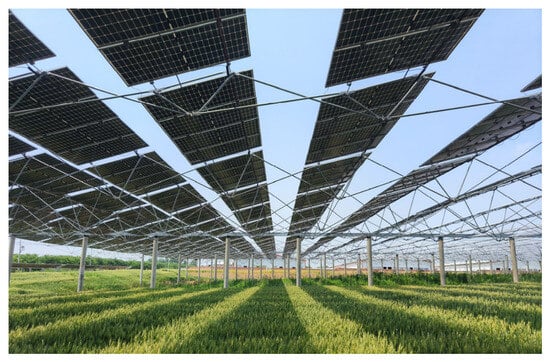
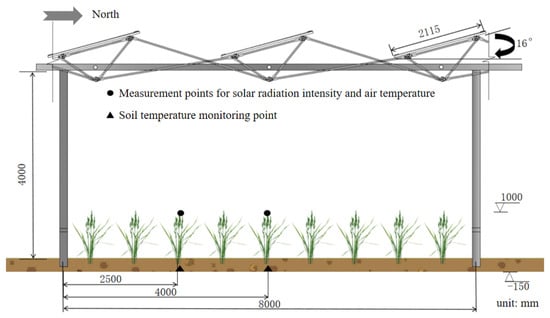
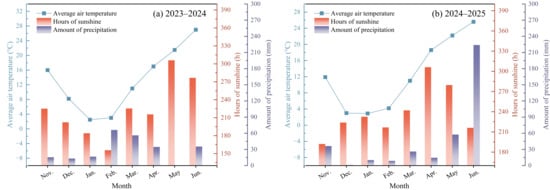
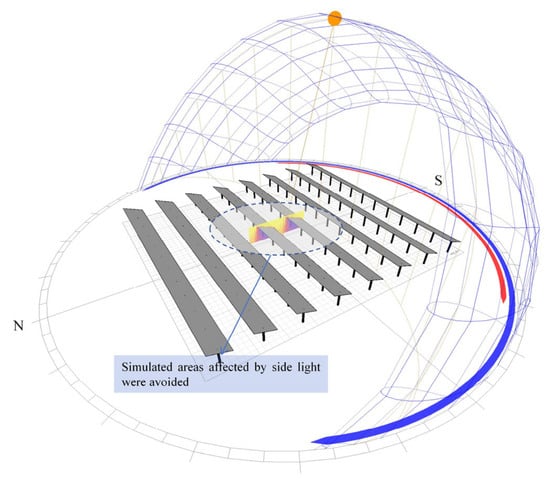
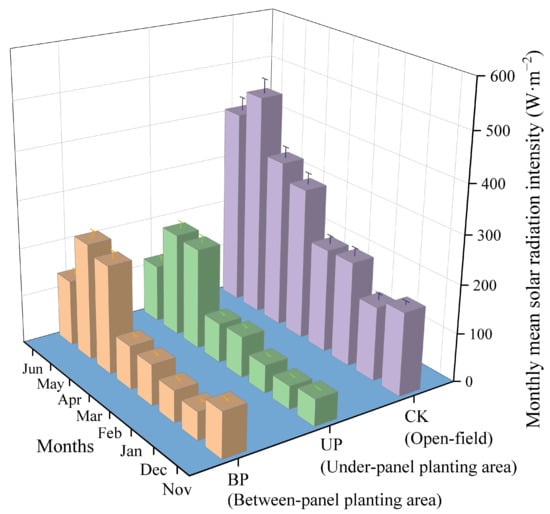
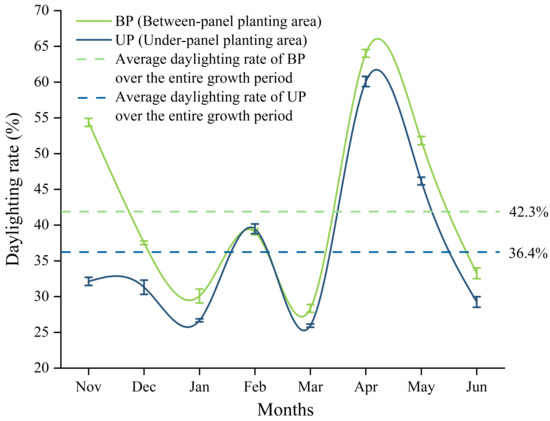
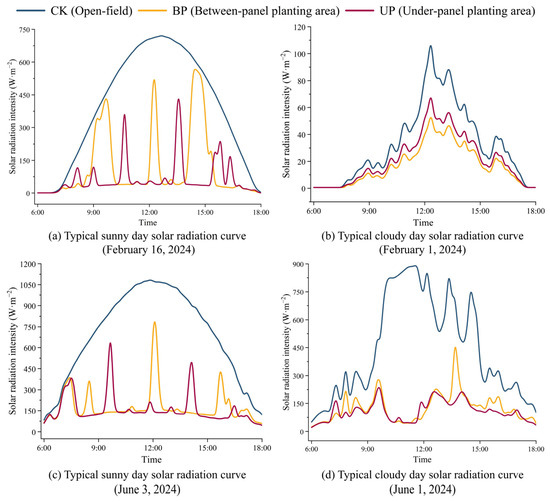
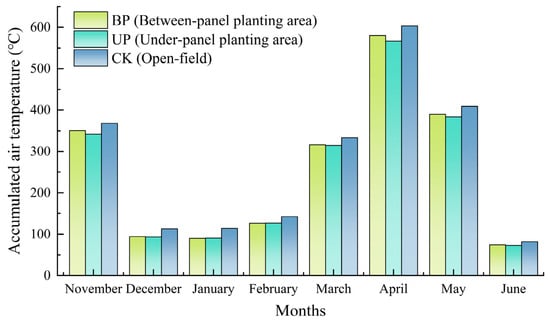
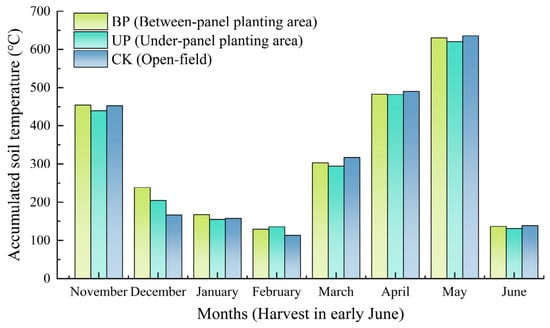
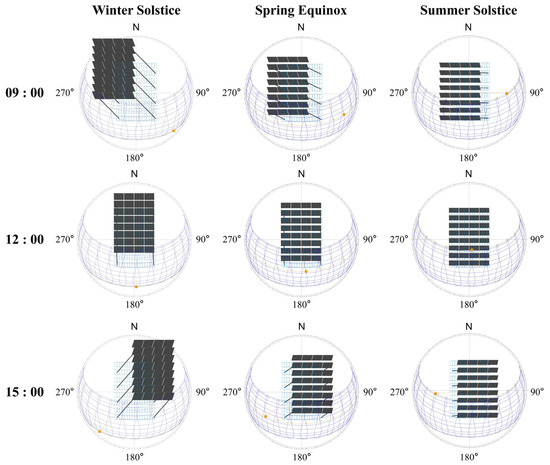
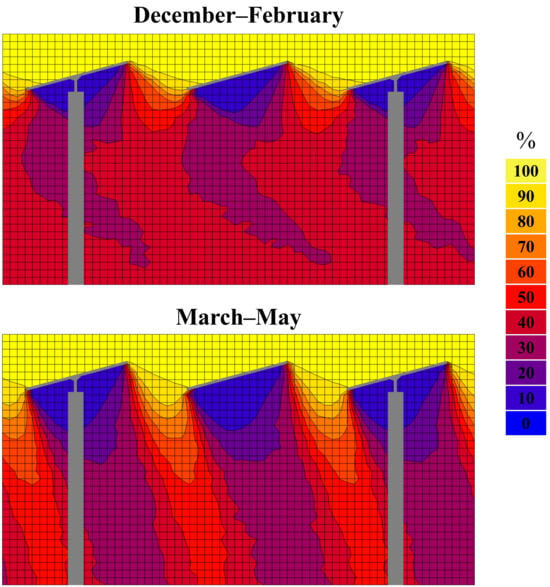
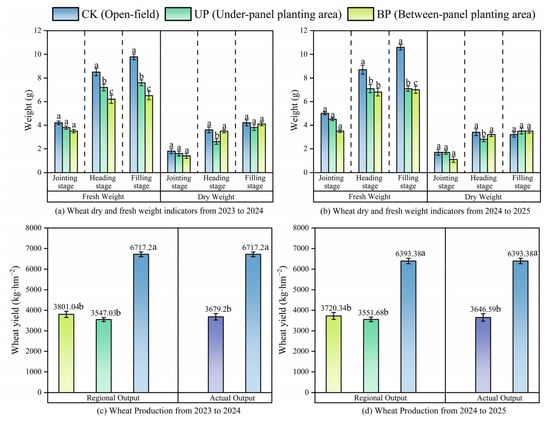
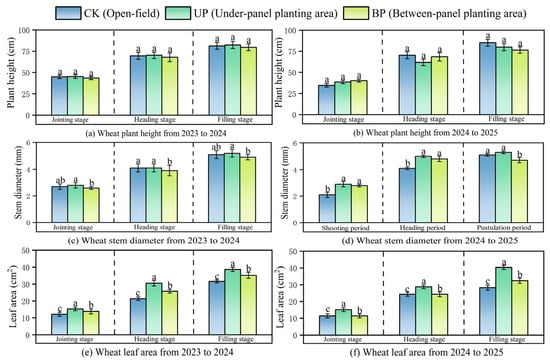
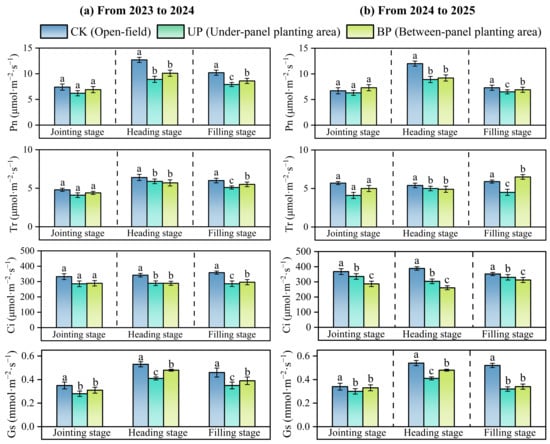
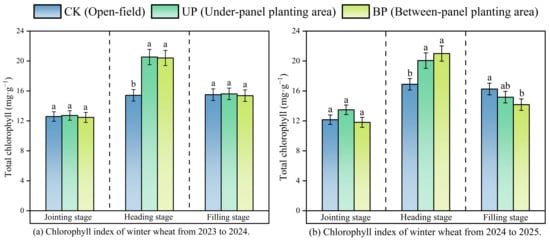
Agrivoltaics is an important pathway for promoting the coordinated development of clean energy production and agricultural utilization. However, the structural characteristics of flexible agrivoltaic (AV) systems may significantly alter field light and thermal conditions, while their effects on crop growth and yield formation remain unclear. To address this issue, a flexible AV system in Sihong County, Jiangsu Province, was selected as the study site, and continuous field monitoring combined with crop measurements was used to evaluate changes in microclimate, wheat physiological responses, and yield performance. The results showed that the flexible AV system significantly changed the field microclimate. During the wheat growing season, the monthly average solar radiation intensity under and between PV panels decreased by 62.0% and 56.9%, respectively, compared with that in the open field. The array also showed a certain thermal regulation effect, with heat preservation during the overwintering stage and cooling during the later growth stage. Shading reduced wheat net photosynthetic rate and stomatal conductance, but adaptive responses such as increased leaf area and chlorophyll content were observed. Wheat yield within the flexible AV system was significantly lower than that in the open field, with reductions of 43.4% and 47.2% in 2024 and 41.8% and 44.6% in 2025 for the areas under and between PV panels, respectively. Overall, light reduction under high coverage conditions remained the main factor limiting wheat yield. These results provide a theoretical basis for structural optimization and crop selection in flexible AV systems.
Full article
(This article belongs to the Section Farming Sustainability)
►▼
Show Figures

Figure 1
Open AccessArticle
Grain Sorghum as a Climate-Resilient Alternative to Maize: Evapotranspiration, Water-Use Efficiency, and Yield Under Weed Competition and Reproductive-Stage Drought
by
Ariel Tóth, Zoltán Tóth, Kristóf Kozma-Bognár and Brigitta Simon-Gáspár
Agronomy 2026, 16(11), 1110; https://doi.org/10.3390/agronomy16111110 - 4 Jun 2026
Abstract
Climate change is expected to increase the frequency and severity of drought events in Europe, necessitating the identification of more water-efficient cropping systems. This study compared the evapotranspiration dynamics, water-use efficiency, and yield performance of maize (Zea mays L.) and grain sorghum
[...] Read more.
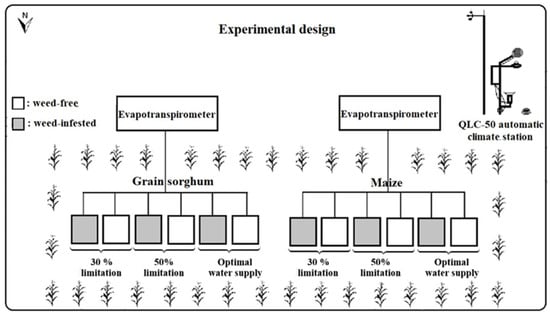
Climate change is expected to increase the frequency and severity of drought events in Europe, necessitating the identification of more water-efficient cropping systems. This study compared the evapotranspiration dynamics, water-use efficiency, and yield performance of maize (Zea mays L.) and grain sorghum (Sorghum bicolor L. Moench) under controlled field conditions using a Thornthwaite–Mather-type compensation evapotranspirometer. Three water regimes (100%, 50%, and 30% of optimal water supply) were applied during the reproductive stage, combined with weed-free and weed-infested treatments. Under moderate water deficit (50% water supply), grain sorghum maintained stable grain yield, while maize grain yield decreased by 17.98%. Under severe water deficit (30% water supply), grain yield reductions reached 36.04% in maize and 42.80% in sorghum. Grain sorghum consistently required less water and used 2.87–38.17% less water to produce 1 kg of grain compared to maize across treatments. Weed interference was associated with a lower yield and water-use efficiency in both species, while severe water deficit (70%) caused substantial declines in all measured parameters. Evapotranspiration was primarily driven by solar radiation and temperature, with reduced sensitivity under increasing water limitation. Overall, the results suggest that grain sorghum may represent a viable alternative to maize under moderate drought conditions; however, both crops require supplemental irrigation under severe water scarcity. The study highlights the importance of integrated weed management and provides novel insights into crop water-use dynamics under combined abiotic and biotic stress conditions.
Full article
(This article belongs to the Special Issue Optimizing Crop Water Use: Advances and Applications in Deficit Irrigation Strategies—2nd Edition)
►▼
Show Figures

Figure 1
Open AccessArticle
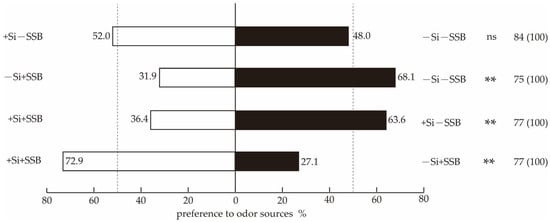
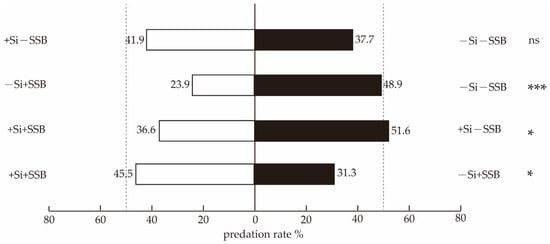
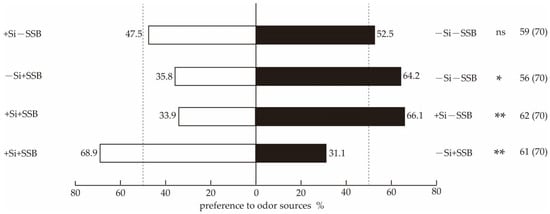
Silicon Alters Herbivore-Induced Rice Volatiles to Enhance Attraction to a Predaceous Mirid Bug
by
Yuqi Zhong, Dilawar Abbas, Guangchao Cui, Lan Zhao, Sainan Cao, Biangkham Souliyanonh and Maolin Hou
Agronomy 2026, 16(11), 1109; https://doi.org/10.3390/agronomy16111109 - 4 Jun 2026
Abstract
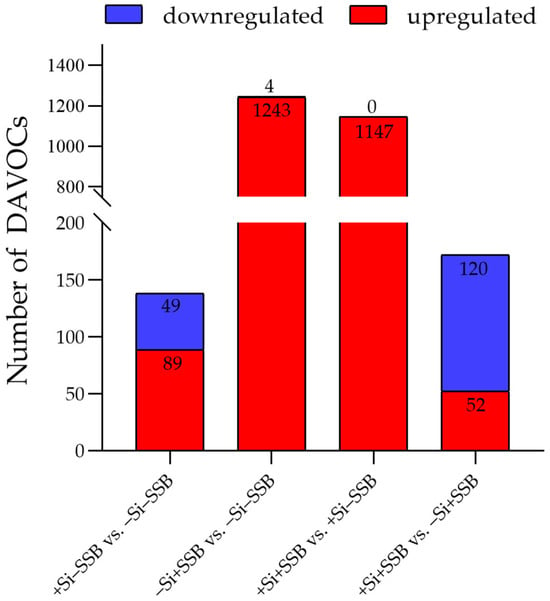
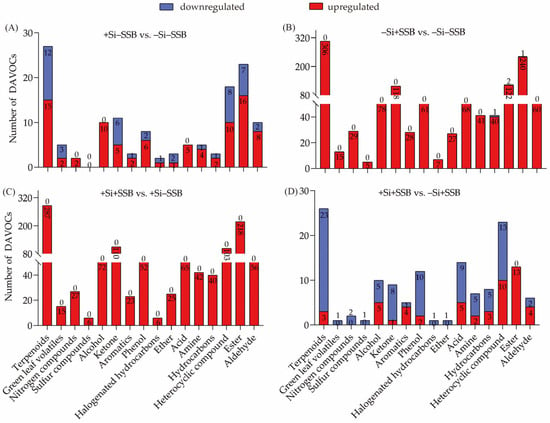
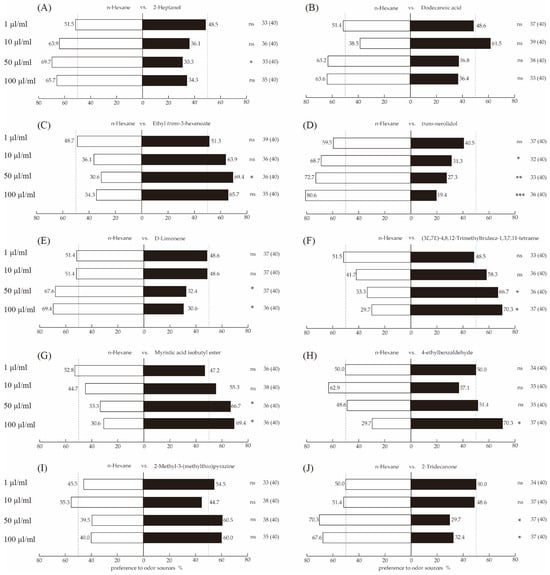
Silicon (Si) amendment can enhance plant resistance to biotic stress, yet its role in tri-trophic interactions under multiple herbivore attack remains unclear. This study examined how Si influences herbivore-induced plant volatiles (HIPVs) and the foraging behavior of the predatory mirid Cyrtorhinus lividipennis that
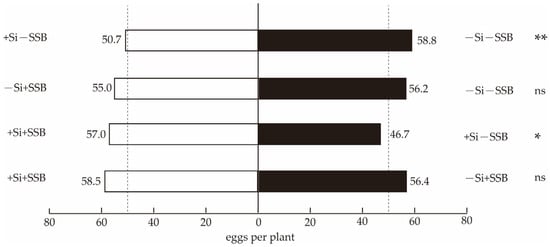
[...] Read more.
Silicon (Si) amendment can enhance plant resistance to biotic stress, yet its role in tri-trophic interactions under multiple herbivore attack remains unclear. This study examined how Si influences herbivore-induced plant volatiles (HIPVs) and the foraging behavior of the predatory mirid Cyrtorhinus lividipennis that preys on eggs of the white-backed planthopper (WBPH; Sogatella furcifera). A 2 × 2 factorial design was employed to test the effects of Si amendment (+Si vs. −Si) and the striped stem borer (SSB; Chilo suppressalis) infestation (+SSB vs. −SSB) on plant volatile emissions and predator behaviors, with WBPH infestation present in all treatments. Cage and Y-tube experiments showed higher predator attraction and increased WBPH egg predation in +Si+SSB treatment relative to −Si+SSB treatment. HS-SPME-GC/MS analysis revealed that, regardless of Si amendment, SSB infestation massively altered the overall volatile profile, while Si amendment reduced emission of many volatiles in SSB infested plants. Single compound bioassays further identified that, regardless of Si amendment, SSB infestation significantly up-regulated four repellents for C. lividipennis. Compared with the −Si+SSB treatment, the +Si+SSB treatment down-regulated one repellent volatile and up-regulated three attractant volatiles. These findings indicate that Si amendment potentially enhances biocontrol of the subsequent herbivore under dual herbivory through altering HIPV emissions induced by the prior herbivory.
Full article
(This article belongs to the Special Issue The Role of Silicon in Crop Stress Tolerance)
►▼
Show Figures

Figure 1
Open AccessArticle
Silencing of CYP4C61 Disrupts Dopamine Metabolism and Impairs Adaptation to Resistant Rice in the Virulent Brown Planthopper (Nilaparvata lugens)
by
Wenjie Lian, Suhang Wang, Yutao Hu, Liyan He, Shiqi Wang, Hongxin Wu, Zichun Zhong, Xiaoxia Xu, Fengliang Jin and Rui Pang
Agronomy 2026, 16(11), 1108; https://doi.org/10.3390/agronomy16111108 - 3 Jun 2026
Abstract
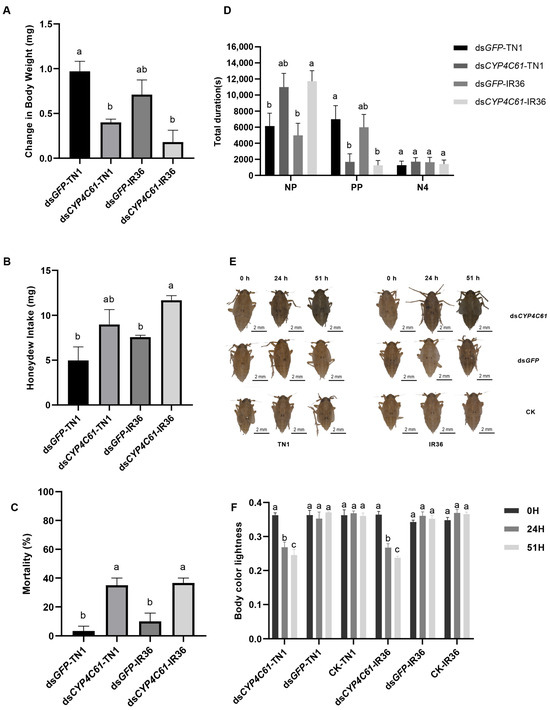
The deployment of insect-resistant rice cultivars is a sustainable strategy for pest control, while the adaptation of pest insects to resistance limits the efficiency of resistant rice varieties. The cytochrome P450 gene CYP4C61 was previously identified as a key locus underlying brown planthopper
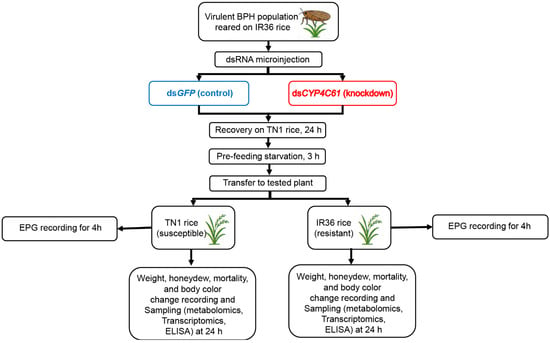
[...] Read more.
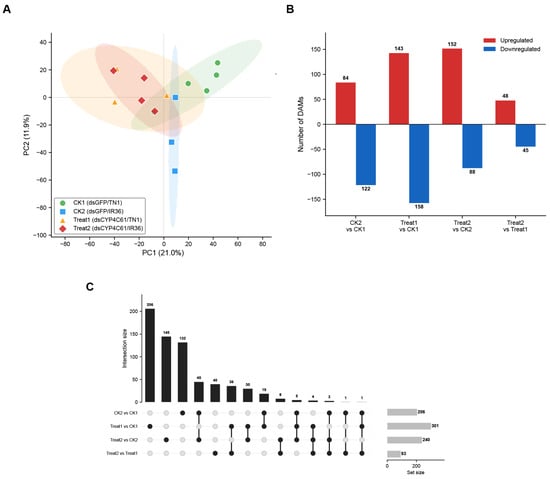
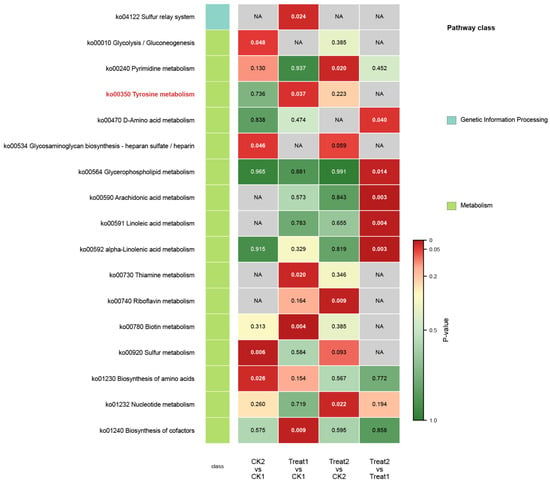
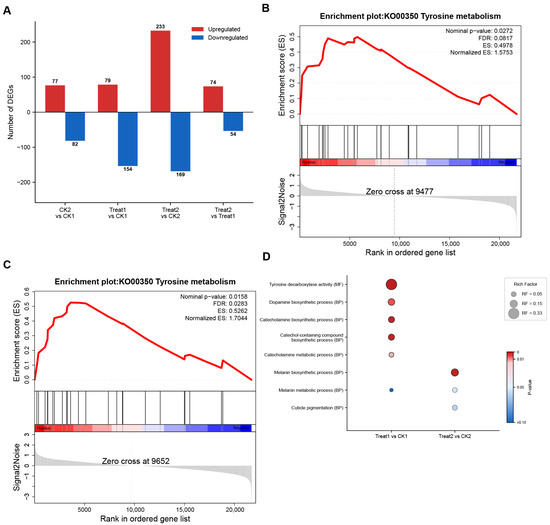
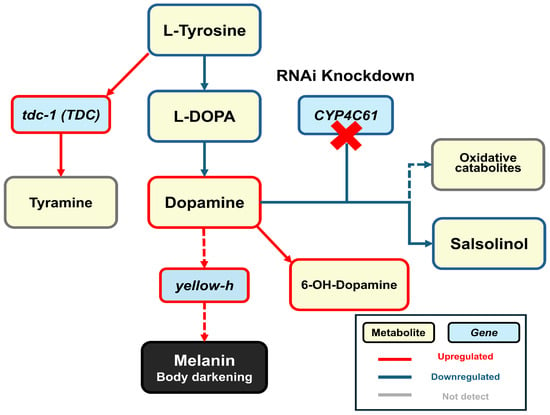
The deployment of insect-resistant rice cultivars is a sustainable strategy for pest control, while the adaptation of pest insects to resistance limits the efficiency of resistant rice varieties. The cytochrome P450 gene CYP4C61 was previously identified as a key locus underlying brown planthopper (BPH, Nilaparvata lugens) adaptation to the resistant rice variety IR36, but its metabolic function remained unknown. Here, we integrated RNAi-mediated gene silencing, untargeted metabolomics, and transcriptomics to elucidate the metabolic role of CYP4C61 in the BPH population virulent to resistant rice IR36. CYP4C61 silencing significantly impaired BPH fitness, including reduced body weight, increased mortality, disrupted feeding behavior, and a progressive body darkening of BPH reared on IR36 rice, reflecting dopamine accumulation entering the melanization branch. Metabolomic analysis identified 240 differentially abundant metabolites in silenced BPH on IR36, revealing a pattern of precursor reduction and product accumulation in the dopamine pathway. Transcriptomic analysis also revealed that CYP4C61 knockdown altered gene expression in the dopamine pathway in a host-dependent manner. Enzyme-linked immunosorbent assay validated dopamine accumulation after CYP4C61 knockdown exclusively in the IR36 background. Our integrated multi-omics evidence indicates that CYP4C61 contributes to dopamine homeostasis in the virulent BPH, providing a mechanistic link between a P450 gene and dopamine-mediated insect adaptation to resistant host plants.
Full article
(This article belongs to the Special Issue Adaptive Evolution and Resistance Mechanisms in Agricultural Pest Management)
►▼
Show Figures

Figure 1
Open AccessArticle
Fluorine as a Factor Determining the Amino Acid Content in Plants
by
Radosław Szostek, Mirosław Wyszkowski, Elżbieta Rolka and Zdzisław Ciećko
Agronomy 2026, 16(11), 1107; https://doi.org/10.3390/agronomy16111107 - 3 Jun 2026
Abstract
Plant quality is strongly influenced by environmental conditions, including the presence of micronutrients and potentially toxic elements in the soil. This study aimed to evaluate the effect of soil-applied fluorine on the content of exogenous (essential) and endogenous (non-essential) amino acids in black
[...] Read more.
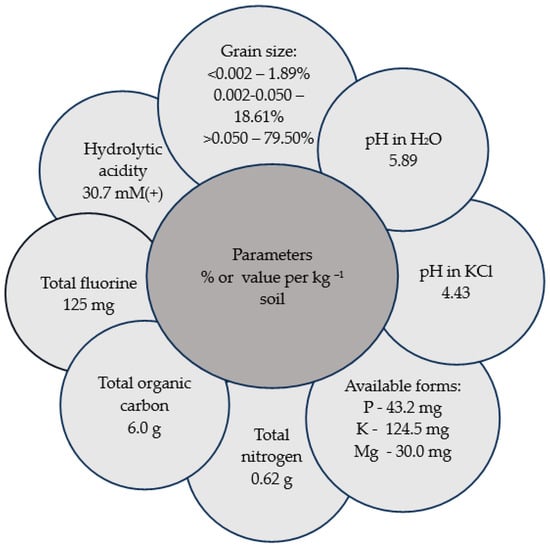
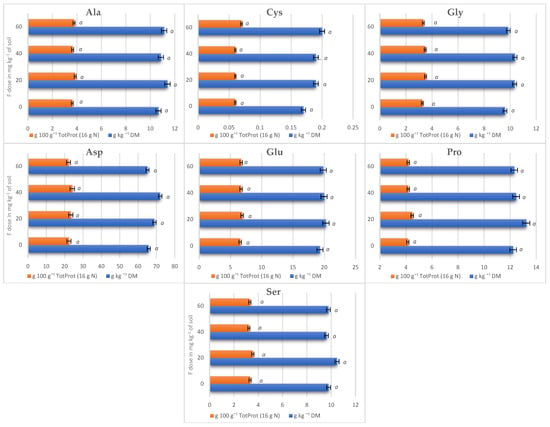
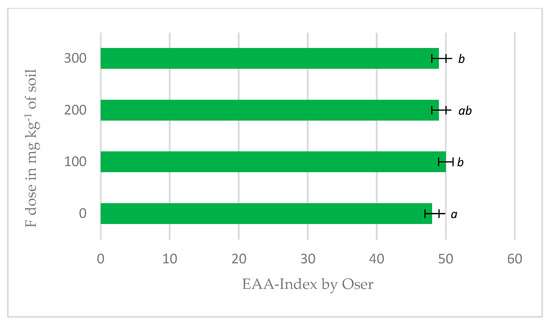
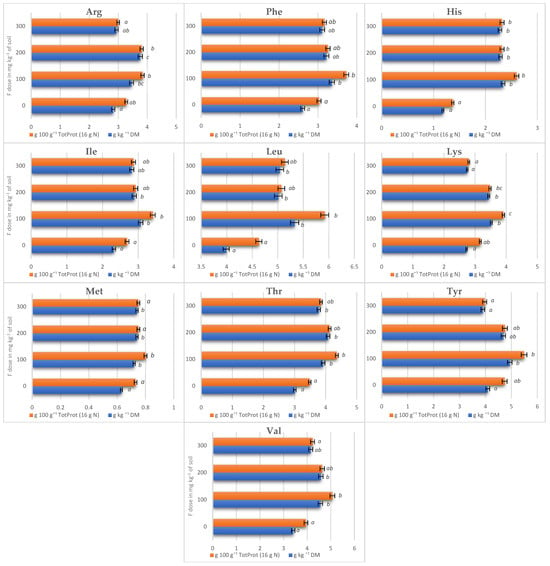
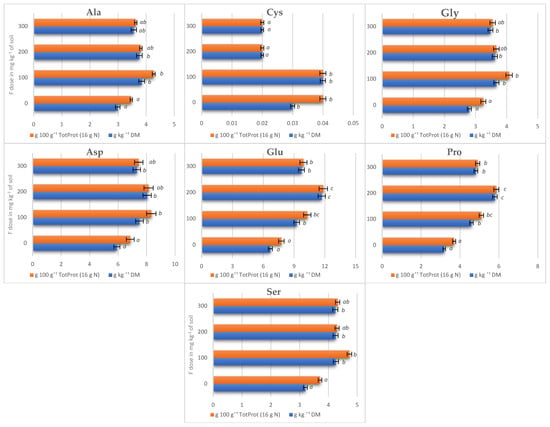
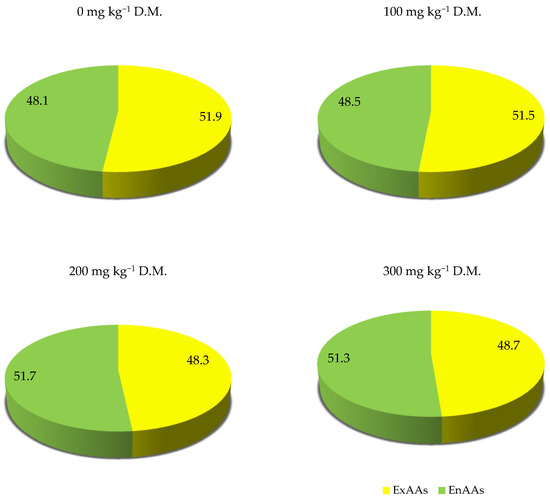
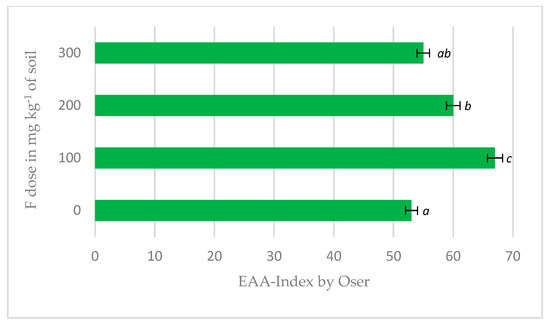
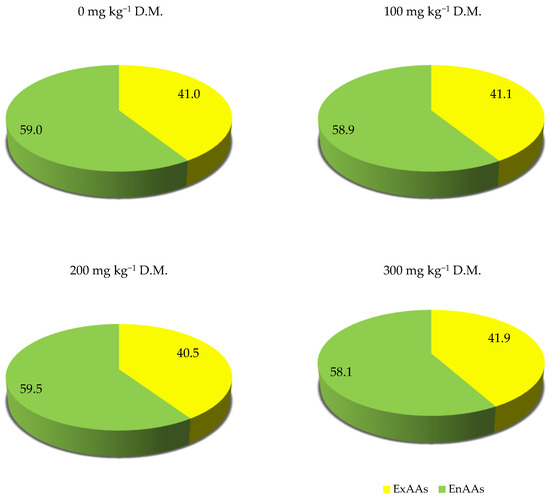
Plant quality is strongly influenced by environmental conditions, including the presence of micronutrients and potentially toxic elements in the soil. This study aimed to evaluate the effect of soil-applied fluorine on the content of exogenous (essential) and endogenous (non-essential) amino acids in black radish roots and the aerial biomass of narrow-leaved lupine. The following essential amino acids were identified: histidine, threonine, arginine, lysine, tyrosine, leucine, phenylalanine, isoleucine, methionine, and valine. The group of endogenous amino acids comprised cysteine, proline, serine, glutamic acid, aspartic acid, glycine, and alanine. Increasing fluorine application generally enhanced the accumulation of both essential and endogenous amino acids in lupine shoots and radish roots. The strongest stimulatory effect on the synthesis of most amino acids was observed at the lowest fluorine doses, i.e., 20 mg F kg−1 soil for narrow-leaved lupine and 100 mg F kg−1 soil for black radish. By contrast, the concentrations of certain endogenous amino acids, such as aspartic acid, glutamic acid and proline in radish roots and aspartic acid in lupine shoots, were highest at intermediate fluorine contamination levels. Moreover, the maximum contents of tyrosine and cysteine in lupine aerial parts were recorded under the highest fluorine dose. Overall, protein derived from black radish exhibited a higher nutritional value than that of narrow-leaved lupine. The results obtained show that simulated soil contamination with fluoride stimulates amino acid synthesis in both plants. The research enables a better assessment of the quality and nutritional value of crops grown under conditions of environmental contamination, and helps to explain the mechanisms by which plants defend themselves against chemical stress. The research suggests that moderate fluoride contamination causes changes in nitrogen metabolism, increasing amino acid production, which may be a defence mechanism in plants against stress.
Full article
(This article belongs to the Special Issue Advances in Mineral Nutrition for Improved Crop Yield, Quality, and Sustainability)
►▼
Show Figures

Figure 1
Open AccessArticle
Mid-Season Yield Estimation in High-Productivity Vineyards: A Preliminary Modeling Framework for Free-Canopy Systems
by
César Acevedo-Opazo, Paulo Cañete-Salinas, Miguel Araya-Alman, Cristian Ackerknecht-Espinosa, Lucas Vásquez and Yerko Moreno-Simunovic
Agronomy 2026, 16(11), 1106; https://doi.org/10.3390/agronomy16111106 - 3 Jun 2026
Abstract
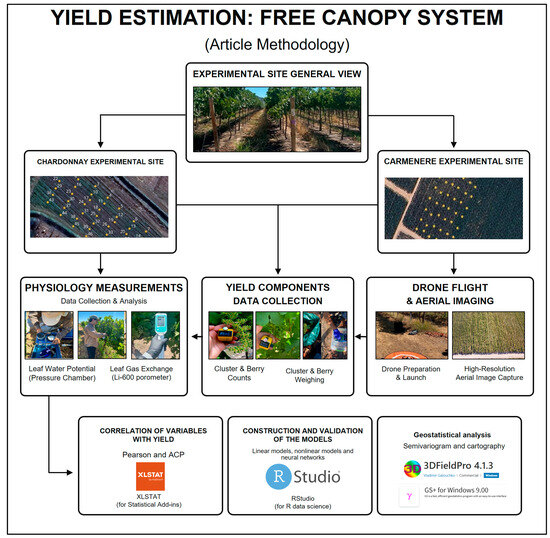
Accurate vineyard yield estimation is essential for harvest planning, resource allocation, and economic decision-making, particularly under conditions of high spatial variability. Traditional sampling-based methods are labor-intensive, destructive, and prone to error, especially in high-productivity free-canopy systems. This study developed and evaluated predictive models
[...] Read more.
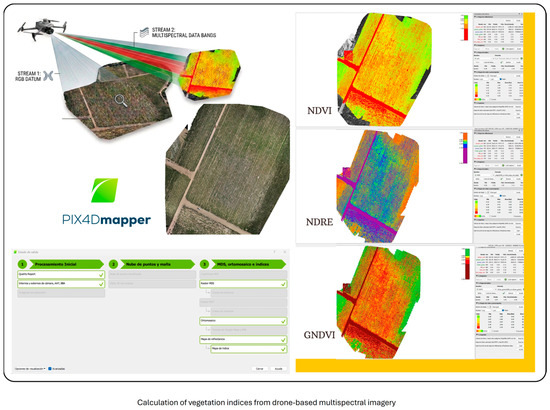
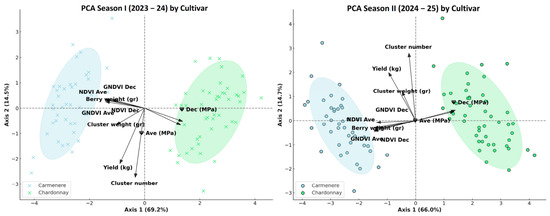
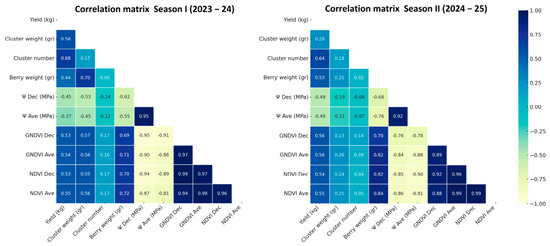
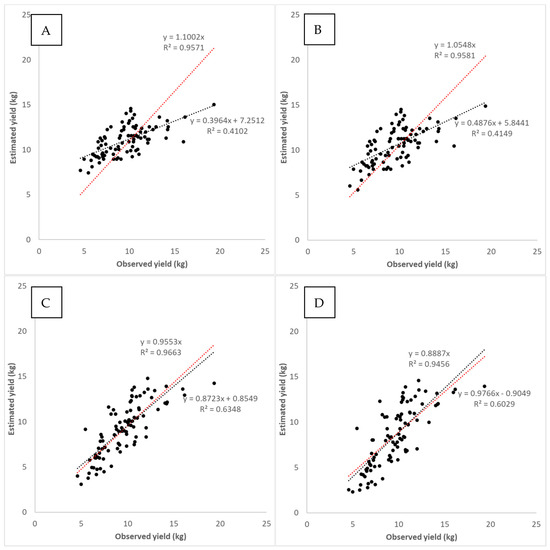
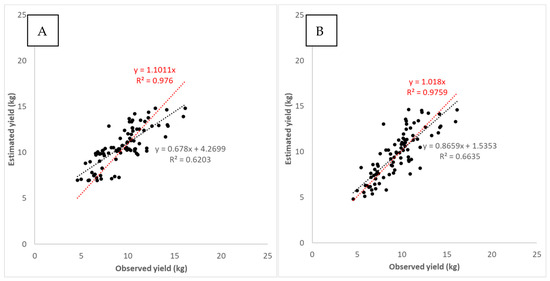
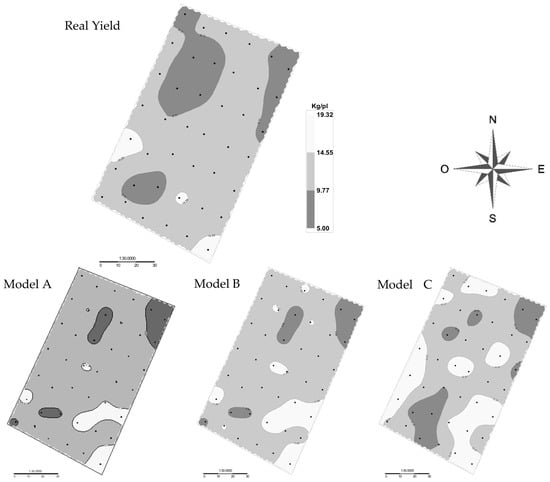
Accurate vineyard yield estimation is essential for harvest planning, resource allocation, and economic decision-making, particularly under conditions of high spatial variability. Traditional sampling-based methods are labor-intensive, destructive, and prone to error, especially in high-productivity free-canopy systems. This study developed and evaluated predictive models for commercial irrigated vineyards of Carménère and Chardonnay in Chile’s Maule Region across two growing seasons (2023–2025). Structural yield components, physiological measurements, and UAV-derived multispectral indices (NDVI, GNDVI, NDRE) were collected from georeferenced sampling grids. Modeling approaches included linear regression, stepwise selection, and machine learning algorithms (Random Forest, Multilayer Perceptron). Validation results showed that cluster number was the primary driver of yield variability, explaining up to 40% of variation. Incorporating physiological and spectral variables improved accuracy, with the best models (least squares and MLP) achieving R2 values up to 0.66 and reducing errors to 12–15%. Spatial yield maps reproduced intra-vineyard variability patterns, demonstrating that integrating plant-level and canopy-level data substantially enhances yield prediction. These findings provide a robust framework for precision viticulture applications.
Full article
(This article belongs to the Section Precision and Digital Agriculture)
►▼
Show Figures

Figure 1
Open AccessArticle
Comprehensive Assessment of Aluminum Tolerance in Celery (Apium graveolens L.) Germplasm and Its Physiological Basis
by
Gongkai Qiu, Xiaohan Lu, Qiuxia Li, Hu Wang, Xinyu Zhou, Zhiyuan Liu, Fenfen Luo, Mengyao Li, Wei Lu, Chengyao Jiang and Yangxia Zheng
Agronomy 2026, 16(11), 1105; https://doi.org/10.3390/agronomy16111105 - 3 Jun 2026
Abstract
Aluminum (Al) toxicity is an important factor limiting crop production in acidic soils; however, systematic evaluation of Al tolerance and its physiological basis in celery (Apium graveolens L.) remains limited. In this study, 400 μmol·L−1 AlCl3 was identified as the
[...] Read more.
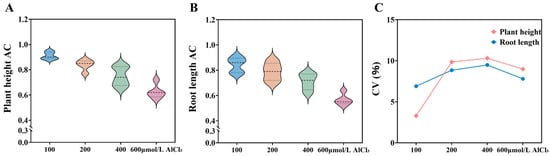
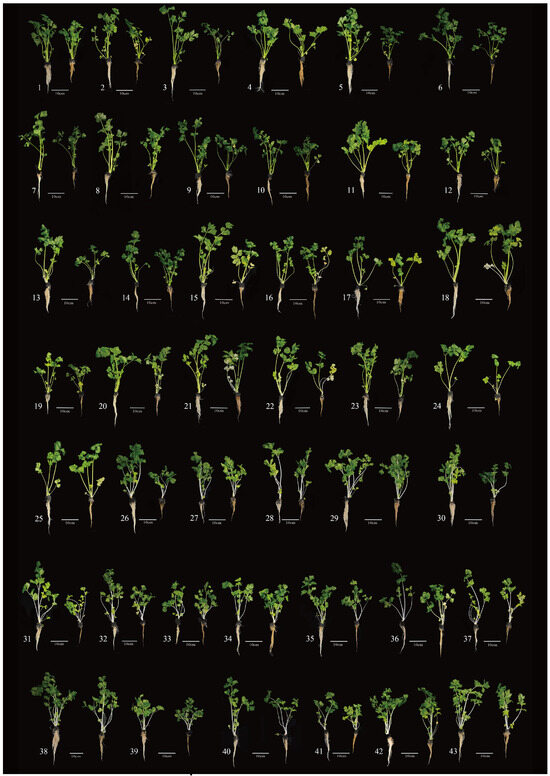
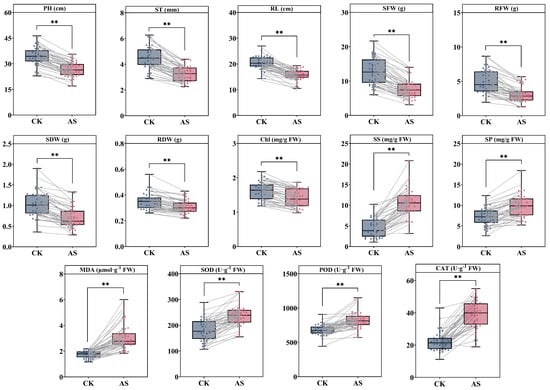
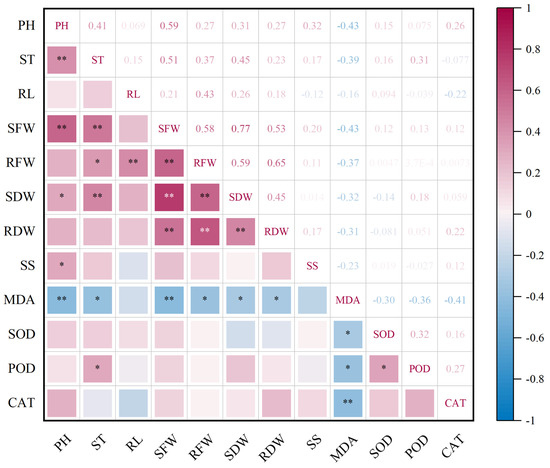
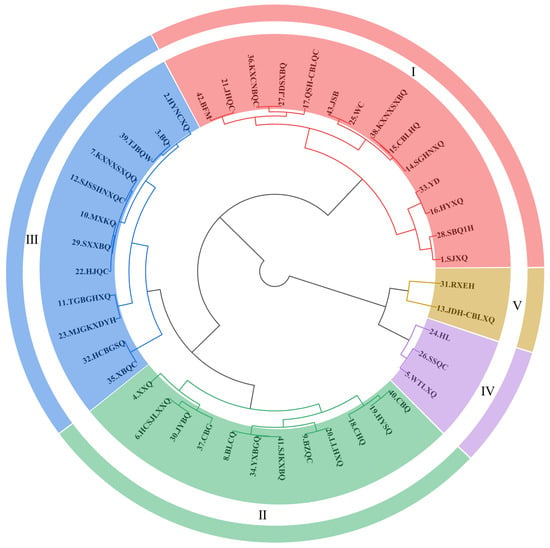
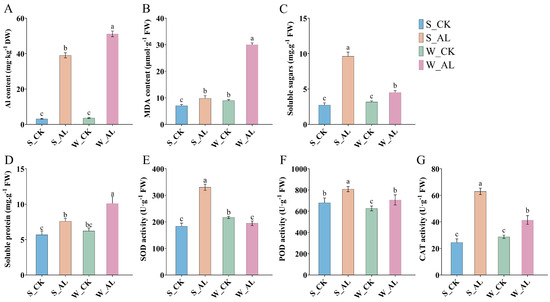
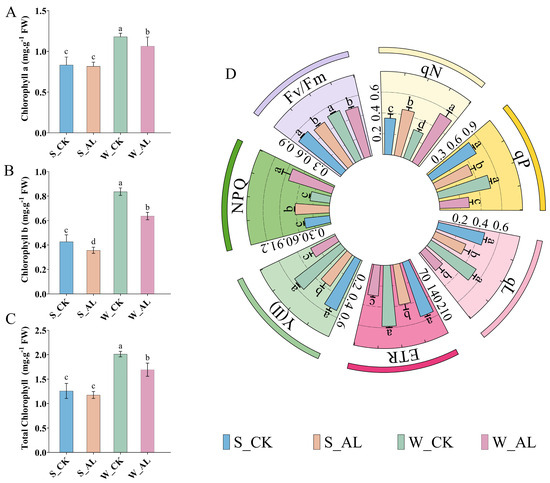
Aluminum (Al) toxicity is an important factor limiting crop production in acidic soils; however, systematic evaluation of Al tolerance and its physiological basis in celery (Apium graveolens L.) remains limited. In this study, 400 μmol·L−1 AlCl3 was identified as the appropriate concentration for Al-tolerance screening through a concentration-gradient experiment. Based on this concentration, 43 celery germplasm accessions were evaluated using 14 morphological and physiological traits. A comprehensive evaluation framework for Al tolerance was established using principal component analysis, membership function analysis, and hierarchical cluster analysis. The comprehensive A-value index enabled quantitative evaluation and classification of Al tolerance, and the accessions were divided into five categories ranging from highly Al-tolerant to highly Al-sensitive. Furthermore, key indicators were identified through stepwise regression analysis, which simplified the evaluation system while maintaining its assessment reliability. Physiological analysis of contrasting accessions showed that Al tolerance in celery was closely associated with restricted Al accumulation, enhanced redox homeostasis, and maintenance of photosynthetic system stability. Among these processes, the coordinated regulation of antioxidant defense and light energy utilization efficiency may represent an important physiological basis for tolerance differentiation. Overall, this study established an integrated framework from screening-concentration optimization to comprehensive evaluation and physiological characterization, providing a technical reference for the screening, evaluation, and breeding utilization of Al-tolerant celery germplasm.
Full article
(This article belongs to the Section Crop Breeding and Genetics)
►▼
Show Figures

Figure 1
Open AccessArticle
Environment-Dependent Control by Trichogramma-Based Preparations Against Ostrinia nubilalis and Helicoverpa armigera: Results from On-Farm Trials in Hungary
by
Laura Jávorszky, Árpád Szabó, Ferenc Tóth, Bernadett Gyekiczki, Ármin Gyuris, Bálint Bártfai, Anna Talmácsi, Réka Dóczi, András Fejes and Márta Ladányi
Agronomy 2026, 16(11), 1104; https://doi.org/10.3390/agronomy16111104 - 3 Jun 2026
Abstract
This study presents the findings of on-farm trials conducted in Hungary between 2023 and 2025, evaluating the efficacy of inundative Trichogramma releases against the European corn borer (ECB) and the cotton bollworm (CBW). The research assessed three Trichogramma preparations, including solo T. brassicae
[...] Read more.
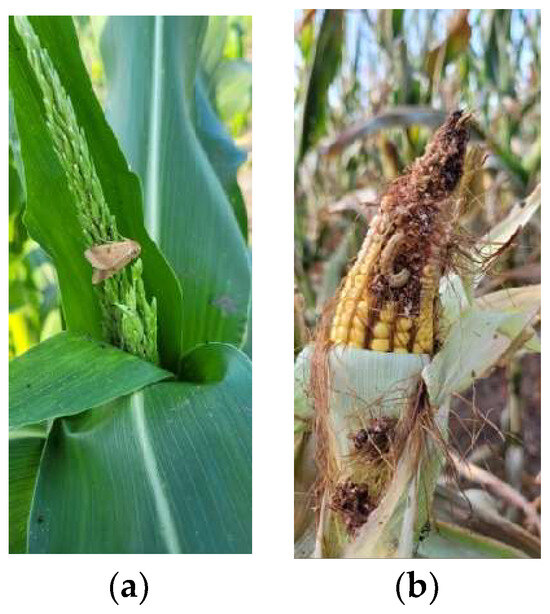
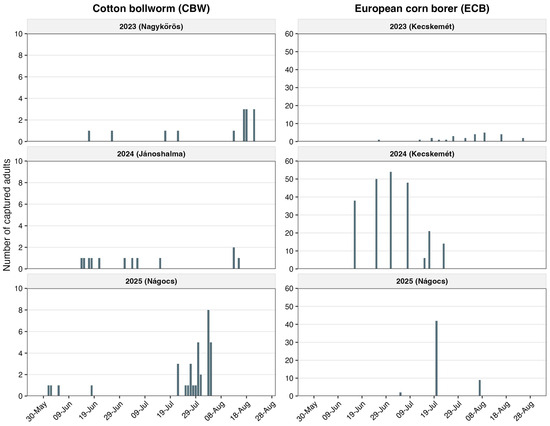
This study presents the findings of on-farm trials conducted in Hungary between 2023 and 2025, evaluating the efficacy of inundative Trichogramma releases against the European corn borer (ECB) and the cotton bollworm (CBW). The research assessed three Trichogramma preparations, including solo T. brassicae (TB) and two species mixtures: (1) T. dendrolimi, T. cacoeciae, and T. brassicae (TSM1) and (2) T. brassicae and T. pintoi (TSM2). The timing of the releases was synchronized with pest swarming and maize phenology. The efficacy of Trichogramma-based biological control was assessed by comparing the number of damaged plants and the number of pest larvae detected in treated and untreated plots. Statistical analyses revealed a significant association between the release of parasitoids and a reduction in pest damage. The efficacy of the Trichogramma releases was determined using Abbott’s formula. In our research, the following pattern emerged: (1) medium efficacy (ranging from 40% to 68.2%) occurred under low pest pressure and optimal weather conditions; (2) low efficacy (35.5% and 33.3%) occurred under medium pest pressure and suboptimal climatic conditions; and (3) no efficacy occurred under high pest abundance combined with unfavorable weather. Our findings suggest that Trichogramma-based products can serve as complementary components of Integrated Pest Management (IPM); however, they also emphasize that parasitism by Trichogramma wasps is influenced by several factors, such as climatic conditions and pest abundance, indicating that additional plant protection treatments may be necessary, for example, under high pest pressure and/or suboptimal climatic conditions.
Full article
(This article belongs to the Special Issue Comprehensive Impacts of Agrobiodiversity in Agricultural Ecosystems)
►▼
Show Figures

Figure 1
Open AccessArticle
Construction of an Accurate Evaluation Model for Apple Flowering Period Based on Multimodal Data
by
Ruoxin Qi, Zeyu Ye, Xuanzhang Tang, Desheng Jin, Dong Liang and Hui Xia
Agronomy 2026, 16(11), 1103; https://doi.org/10.3390/agronomy16111103 - 3 Jun 2026
Abstract
Flowering period management is a critical component of orchard production, significantly influencing the accuracy and timeliness of agricultural decisions such as flower and fruit thinning, yield stabilization, improvement in fruit commodity value, and control of mold core disease. Aiming at the problems of
[...] Read more.
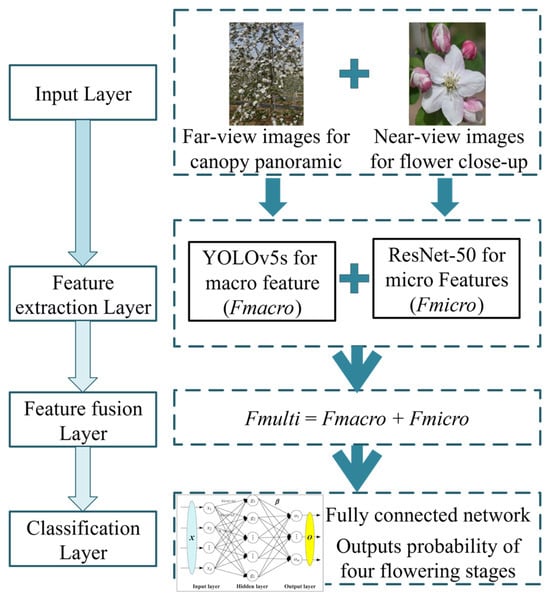
Flowering period management is a critical component of orchard production, significantly influencing the accuracy and timeliness of agricultural decisions such as flower and fruit thinning, yield stabilization, improvement in fruit commodity value, and control of mold core disease. Aiming at the problems of traditional flowering period judgment relying on manual experience, strong subjectivity, low efficiency, and difficulty in large-scale implementation, this study proposes an accurate evaluation model for apple flowering period based on near–far view multimodal visual data. A dedicated near–far view combined vision acquisition system was built to synchronously obtain panoramic images of fruit tree canopies and high-definition close-up images of single flowers/clusters, constructing a multimodal dataset covering the canopy spatial structure and fine floral organ morphology. YOLOv5s and ResNet-50 were employed to extract macro flowering proportion features from far views and micro morphological features from near views, respectively. A feature fusion strategy was introduced to realize the deep fusion of macro–micro features, and finally, a multimodal flowering period classification model was constructed to accurately divide the apple flowering period into four stages: bud stage, initial bloom stage, full bloom stage and late bloom stage. The overall recognition accuracy of the model reached 95.7%. The accurate apple flowering period evaluation system built based on this model has realized the paradigm shift in flowering period judgment from “qualitative manual experience” to “accurate quantification by machine vision”, providing a scientific time window basis for core orchard operations such as pre-flower re-pruning, flowering pollination, fruit setting evaluation and fruit thinning and bagging, and effectively promoting the intelligent and operational development of orchard management.
Full article
(This article belongs to the Section Precision and Digital Agriculture)
►▼
Show Figures

Figure 1
Open AccessArticle
Contributions of Plant- and Microbial-Derived Carbon to Soil Organic Carbon Across a Grassland Restoration Chronosequence in a Semi-Arid Typical Steppe of Inner Mongolia
by
Yiming Liu, Wenjun Li, Sihan Yang, Petri Nummi, Jiazheng Xu and Deli Wang
Agronomy 2026, 16(11), 1102; https://doi.org/10.3390/agronomy16111102 - 2 Jun 2026
Abstract
Grassland restoration through grazing exclusion is a key strategy for enhancing soil organic carbon (SOC) sequestration, yet the dynamic contributions of plant- versus microbial-derived carbon (C) remain incompletely understood. We hypothesized that with increasing restoration duration, microbial-derived C would become a major contributor
[...] Read more.
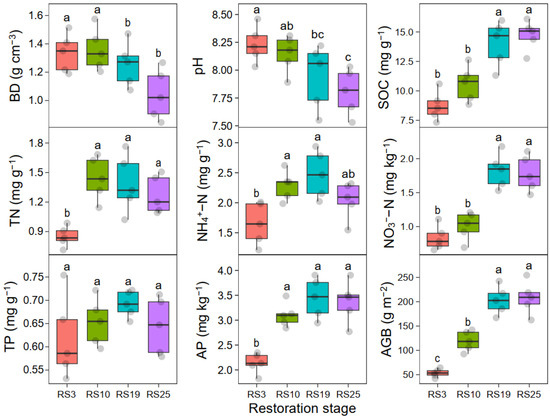
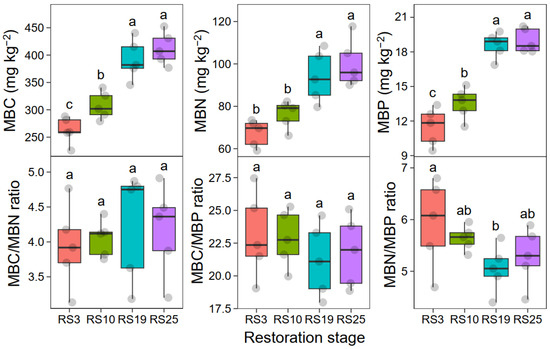
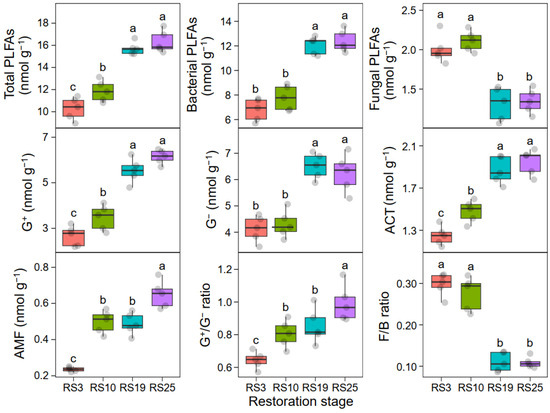
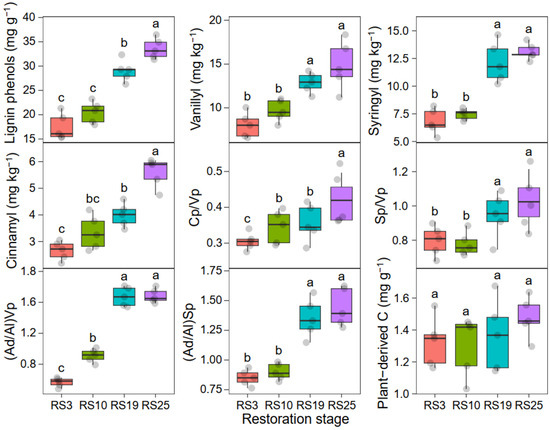
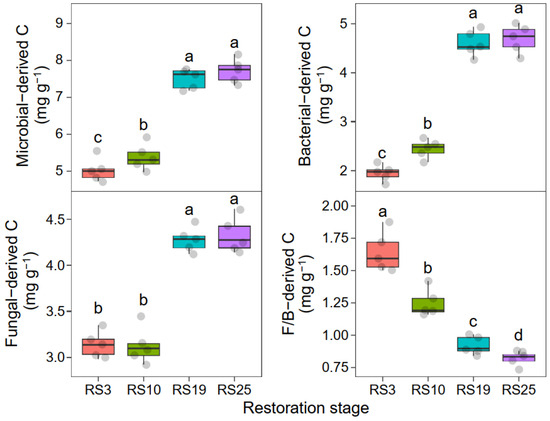
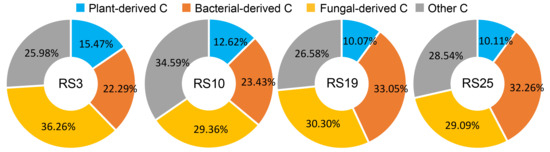
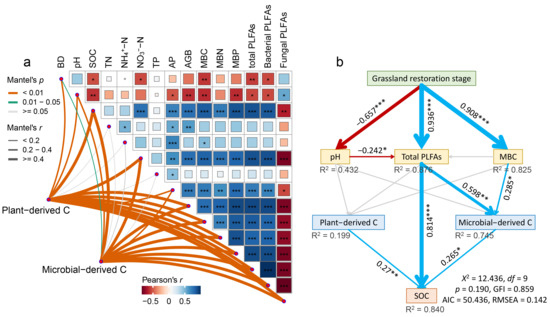
Grassland restoration through grazing exclusion is a key strategy for enhancing soil organic carbon (SOC) sequestration, yet the dynamic contributions of plant- versus microbial-derived carbon (C) remain incompletely understood. We hypothesized that with increasing restoration duration, microbial-derived C would become a major contributor to SOC relative to plant-derived C, and that the relative proportion of bacterial necromass would increase compared to fungal necromass. To explore this, we investigated a 25-year restoration chronosequence (3, 10, 19, 25 years) of a degraded typical steppe on Kastanozem soil in Inner Mongolia, China. While acknowledging the inherent limitations of a space-for-time substitution approach, such as potential unquantified variations in initial pre-enclosure soil conditions and plant species composition, we used lignin phenols, amino sugars, and PLFA analysis to estimate the dynamics of plant- and microbial-derived C. Grassland restoration was associated with significant increases in total PLFAs (15.4–58.8%), bacterial PLFAs (14.5–82.4%), lignin phenols (16.9–91.8%), and estimated microbial-derived C (5.0–8.8 g kg−1). Based on these specific biomarker estimates, which track only a subset of total C and do not equal 100% of the SOC pool, microbial-derived C accounted for 52.8–63.3% of SOC, compared to 10.1–15.5% for plant-derived C. Within the estimated microbial-derived C, the bacterial fraction increased over the restoration chronosequence, while the fungal fraction declined. Correlational analyses, including structural equation modeling, indicated that soil pH, bulk density, SOC, and microbial biomass were key factors closely associated with both C sources. Our findings suggest that microbial-necromass C, particularly from bacteria, is a major contributor to SOC accumulation during long-term grassland restoration in this semi-arid typical steppe, and that grazing exclusion can enhance SOC sequestration under the studied conditions and biomarker-based estimations.
Full article
(This article belongs to the Section Grassland and Pasture Science)
►▼
Show Figures

Figure 1
Open AccessArticle
Tailoring Nitrogen Input and Adjusting Seed Rates Can Optimize Yield and Quality of Commercial Spring Oat (Avena sativa) Varieties Grown in the UK and Canada
by
Peter W. Bright, Simon C. McWilliam, Katherine Cools, Stephen R. Strutt, Megan L. Roberts and Shaunagh L. Slack
Agronomy 2026, 16(11), 1101; https://doi.org/10.3390/agronomy16111101 - 2 Jun 2026
Abstract
Improving the efficiency of milling oat (Avena sativa L.) production is becoming increasingly important under rising input costs and variable climatic conditions. However, oat agronomy research remains underfunded, leading to knowledge gaps in optimizing yield and quality in commercially relevant varieties. The
[...] Read more.
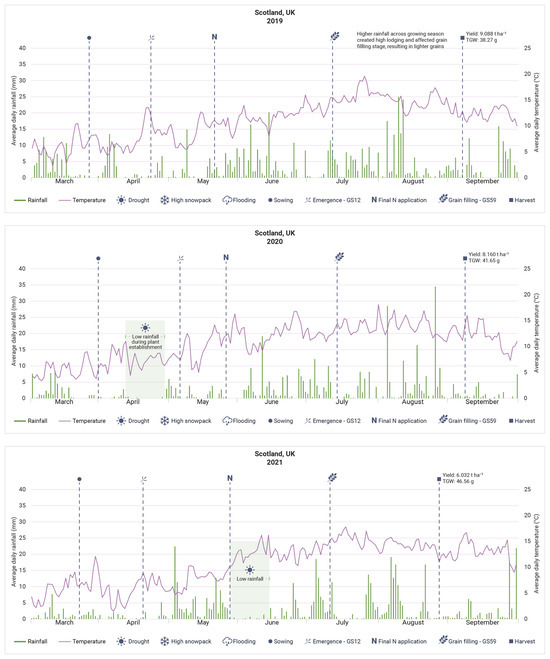
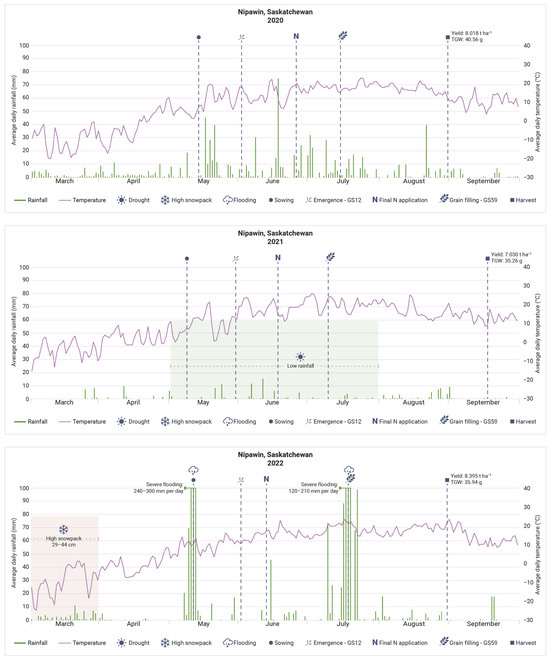
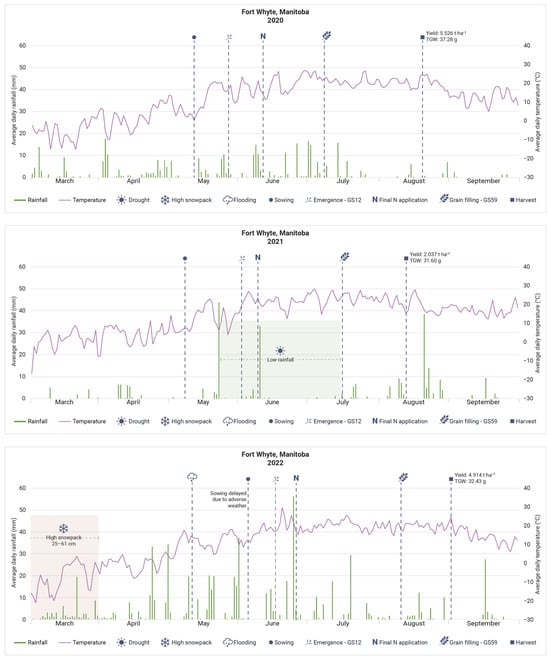
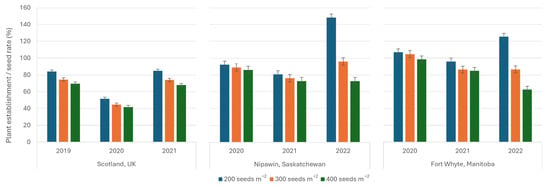
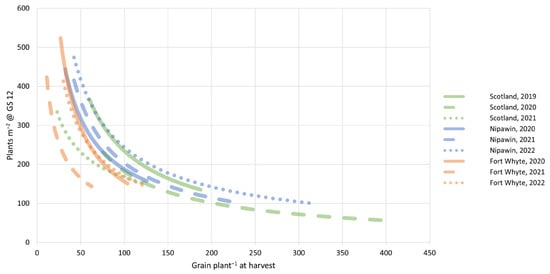
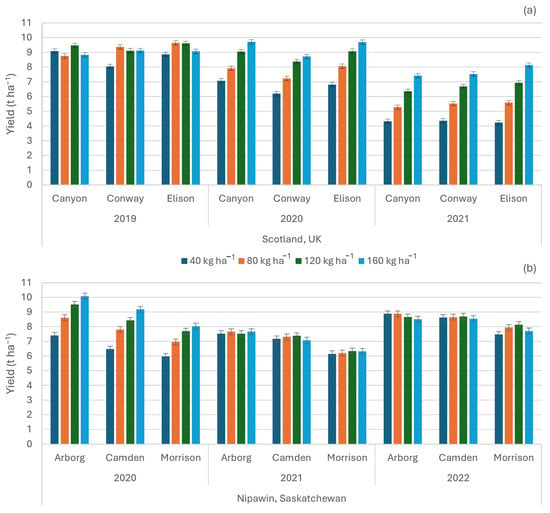
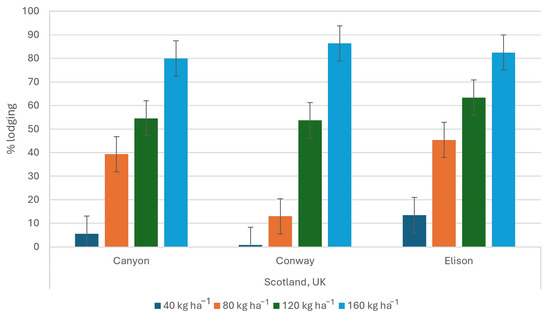
Improving the efficiency of milling oat (Avena sativa L.) production is becoming increasingly important under rising input costs and variable climatic conditions. However, oat agronomy research remains underfunded, leading to knowledge gaps in optimizing yield and quality in commercially relevant varieties. The aim of this work was to investigate the effects of seed rate and nitrogen (N) rates on commercial oat varieties across multiple environments in the UK and Canada over three growing seasons. Increasing seed rates reduced plant establishment rate, particularly under favorable growing conditions, while reducing seed rates maintained comparable yields through compensatory increases in plant productivity. A seed rate of 200 seeds m−2 improved establishment efficiency and reduced seed rate costs. N response was strongly influenced by environmental conditions and background soil N. In Fort Whyte, Manitoba, Canada, high residual soil N and a shorter growing season limited the benefit of additional fertilizer beyond 40 kg N ha−1, while site-specific N management in Nipawin, Saskatchewan, Canada, improved both yield and grain quality with minimal adverse effects on grain weight. In Scotland, UK, higher N rates increased lodging risk, although lodging-tolerant varieties such as Conway achieved improved yield responses under moderate additional N inputs. Overall, the findings demonstrate that oat yield and quality responses are highly site- and variety-specific. Optimizing oat production, therefore, requires locally tailored management strategies integrating seed rates, fertilizer, environmental conditions and varietal choices to maximize productivity, quality and input efficiency.
Full article
(This article belongs to the Section Farming Sustainability)
►▼
Show Figures

Figure 1
Journal Menu
► ▼ Journal Menu-
- Agronomy Home
- Aims & Scope
- Editorial Board
- Reviewer Board
- Topical Advisory Panel
- Early Career Editorial Board
- Instructions for Authors
- Special Issues
- Topics
- Sections & Collections
- Article Processing Charge
- Indexing & Archiving
- Editor’s Choice Articles
- Most Cited & Viewed
- Journal Statistics
- Journal History
- Journal Awards
- Society Collaborations
- Conferences
- Editorial Office
Journal Browser
► ▼ Journal BrowserHighly Accessed Articles
Latest Books
E-Mail Alert
News
Topics
Topic in
Agronomy, Crops, Foods, Plants, Agriculture, Horticulturae
Multidisciplinary Advances in Tea Science: Smart Cultivation, Digital Processing, and Health Innovation
Topic Editors: Chunwang Dong, Lin Chen, Yang LiDeadline: 30 June 2026
Topic in
Agriculture, Agronomy, Ecologies, IJPB, Plants, Soil Systems
The Role of Plant-Soil Interactions on Crop Yields and Carbon Sequestration
Topic Editors: Jifu Ma, Meng Zhou, Caiqing QinDeadline: 31 July 2026
Topic in
Agronomy, Drones, Geomatics, IJGI, Land, Remote Sensing
Advances in Multi-Scale Geographic Environmental Monitoring: Ecosystem Differences and Multi-Scale Comparisons
Topic Editors: Jingzhe Wang, Xiangyu Ge, Zipeng Zhang, Ivan Lizaga, Yinghui Zhang, Yangyi WuDeadline: 31 August 2026
Topic in
Agronomy, Agriculture, Plants, Horticulturae, Crops, IJPB
Bridging Plant Biochemistry and Food Innovation: From Metabolic Stress to Functional Food
Topic Editors: Tomasz Piechowiak, Dagmara MigutDeadline: 15 September 2026
Conferences
Special Issues
Special Issue in
Agronomy
Physiological and Molecular Mechanisms of Abiotic Stress Tolerance in Grass Species
Guest Editors: Zhou Li, Gang NieDeadline: 10 June 2026
Special Issue in
Agronomy
Sustainable Precision Agriculture with Wireless Sensor Networks in Crop Monitoring Aligned with SDGs
Guest Editors: Anikó Nyéki, Attila József Kovács, Miklós NeményiDeadline: 15 June 2026
Special Issue in
Agronomy
Legacy of Traditional Maize: Resilience, Quality and Lost Genes
Guest Editors: Martina Ghidoli, Roberto PiluDeadline: 15 June 2026
Special Issue in
Agronomy
Cold Stress Physiology and Adaptation Strategies in Crop Species
Guest Editors: Zhifu Guo, Pedro García CaparrósDeadline: 15 June 2026
Topical Collections
Topical Collection in
Agronomy
Towards Sustainable Intensification of Crop Production—Yield Gaps and Water Use Efficiency in Farming Systems
Collection Editors: Anita Ierna, Paula Paredes
Topical Collection in
Agronomy
Agricultural Water Conservation: Tools, Strategies, and Practices
Collection Editor: Aliasghar Montazar
Topical Collection in
Agronomy
Innovations for Sustainable Crop Production in the Mediterranean Region
Collection Editors: Leo Sabatino, Giuseppe Di Miceli, Beppe Benedetto Consentino