Systematic Review

Mushroom Spawn and Its Effects on Mushroom Growth and Development: A Systematic Review

1
Centre for Regional Economies and Supply Chains, Central Queensland University, Rockhampton, QLD 4701, Australia
2
Research Institute for the Environment and Livelihoods and Research Institute for Northern Agriculture, Charles Darwin University, Casuarina, NT 0810, Australia
*
Author to whom correspondence should be addressed.
Agronomy 2026, 16(3), 391; https://doi.org/10.3390/agronomy16030391
Submission received: 23 October 2025 / Revised: 14 November 2025 / Accepted: 21 November 2025 / Published: 6 February 2026
(This article belongs to the Section Agricultural Biosystem and Biological Engineering)

Abstract

Mushrooms are among the most important indoor-grown horticultural cash crops. Recent increases in consumption are driven by shifts toward healthier diets and a growing vegan population. Mushroom spawn is one of key factors that influence consistency, quality, and the yield of mushrooms. Many studies of mushroom spawn have been published but the performance of mushroom spawn under different conditions has not been summarised. Comprehensive literature searches were conducted to identify the effects of spawn on biological efficiency, and 40 publications were included in this systematic review. Most of the studies were conducted on oyster mushroom (Pleurotus spp.), and grain spawn was popularly used when studying mushroom. Spawn type and rate were demonstrated to affect mycelium growth, which directly influenced mushroom yield. The use of liquid spawn increased mycelium growth, reduced spawn running time, and enhanced mushroom yield. Most studied cases used spawn rates of 3–5% and the biological yield efficiency (BE) of Pleurotus spp. was varied from 5.18 to 173.38% if using grain spawn. The BEs of Hericicum erinacea and Volvariella volvacea inoculated with grain spawn were lower at 22.3–44.4% and 9.42–15.79%, respectively. Recently developed stick and block spawn types seem to be promising spawn with a BE ranging from 68.65 to 70.94%.

1. Introduction

Mushrooms are widely consumed due to their flavour, taste, nutritional benefits, and medical values. Mushrooms are fat- and cholesterol-free, low in sodium, and rich in protein, fibre, vitamins, and antioxidants [1,2]. As a result, mushrooms are utilised widely as food, medicine, and dietary supplements all over the world [3,4]. With an increasing vegan population and diet shift toward healthier food, the consumption and market growth of mushrooms is increasing at a significant rate. The calculation based on FAO’s data showed that average mushroom consumption per capita has increased significantly from around 4.7 kg in 2013 to around 6.2 kg annually in 2023 [5]. The largest market share is held by Asia-Pacific countries, driven by higher mushroom consumption per capita. For example, China consumed nearly 64 kg mushroom per capita in 2021 [6].
Commercial mushrooms are typically cultivated on lignocellulosic agricultural residues such as straw, sawdust, sugarcane bagasse, cotton seed hush, corn cob, and corn stalk. These agricultural wastes are used as the base substrate to grow mushrooms commercially. In addition, nitrogen supplement sources including bran, animal dung, and seed hulls are also added to improve mushroom yield [7,8,9]. Global mushroom production has risen significantly in recent years, driven by increased consumption, the adoption of modern cultivation techniques, and improvements in logistics and preservation [6,10]. While a few factors have been identified to influence the yield of mushrooms (e.g., spawn, substrate ingredients, supplements, and growing conditions) [11,12,13], spawn is one of the primary factors that contribute for the success of mushroom production, together with substrate formulation and environmental conditions [14].
Spawn refers to the cultured mycelium of a mushroom grown on a suitable substrate, which serves as the seed material for mushroom cultivation. It is a propagative material consisting of mushroom mycelium combined with a suitable substrate that supports the optimal growth of mushrooms. Mushroom spawn is one of the main factors that affect the consistent growth, quality, and efficiency of mushrooms [14]. Spawn rate (the proportion of mushroom spawn added into substrate), type of spawn, and spawn quality were recorded to affect mushroom yield. A higher dose of spawn reduced the duration for the full colonisation of the substrate and promoted primordia initiation [1]. High-quality spawn promoted mycelial growth and efficiently colonised the substrate, contributing to the development of a healthy and early crop [14]. However, the performances of mushroom spawn have not been summarised under different conditions (mushroom species, growing conditions, and experimental set-up). Therefore, the main objective of this review is to quantify and summarise the influence of mushroom spawn, including types, rate, preparation, quality, and application of spawn, on biological efficiency yield based on mushroom species, substrate materials, and supplements. This review aims to summarise current knowledge on mushroom spawn types, quality parameters, and their effects on yield and biological efficiency under various cultivation conditions, with a focus on identifying knowledge gaps and practical recommendations for growers.

2. Materials and Methods

2.1. Study Design

A systematic review was conducted to summarise the available evidence and provided an overview of different mushroom spawn types and inoculation rates to increase mycelium and mushroom yield as well as biological efficiency. The Preferred Reporting Items for Systematic Reviews and Meta-analysis statement 2020 (PRISMA 2020) was applied in this review [15].

2.2. Search Strategy

The literature search was conducted using five major databases. ScienceDirect (up to 30 April 2025), Google Scholar (up to 14 May 2025), Scopus® (up to 20 May 2025), CAB abstract (up to 30 October 2025), and Web of Science (up to 30 October 2025) databases were searched to identify the relevant literature published from 2015 to 2025 to ensure that the review reflects recent developments in mushroom spawn technology. It is acknowledged that earlier foundational studies exist and may provide additional context not covered in this review. The key search terms for mushroom spawn, “spawn type”, “spawn rate”, “spawn medium”, and “spawn culture”, were utilised in conjunction with “mushroom yield”.
The article search was “TITLE-ABS-KEY (“spawn type”) OR TITLE-ABS-KEY (“spawn rate”) OR TITLE-ABS-KEY (“spawn substrate”) OR TITLE-ABS-KEY (“spawn medium”) OR TITLE-ABS-KEY (“spawn culture”) AND TITLE-ABS-KEY (mushroom AND yield)) AND PUBYEAR > 2014 AND PUBYEAR < 2026 AND (EXCLUDE (LANGUAGE, “Chinese”) OR EXCLUDE (LANGUAGE, “Portuguese”) OR EXCLUDE (LANGUAGE, “Russian”) OR EXCLUDE (LANGUAGE, “Spanish”).
As the searched functions in the Web of Science and CAB abstract databases allowed for us to search for title and abstract but not key works, the article search query was “ab: (“spawn type”) OR Title: (“spawn type”) OR ab: (“spawn rate”) OR Title: (“spawn rate”) OR ab: (“spawn medium”) OR Title: (“spawn medium”) AND ab: (“mushroom yield”) OR Title: (“mushroom yield”)”.
To ensure completeness, the reference lists of all included studies were manually screened for additional relevant publications. Only English-language papers were considered, which may have excluded some regional studies—particularly from areas with active mushroom research such as Asia and Eastern Europe. The potential for publication and language bias is therefore acknowledged as a limitation of this review.

2.3. Study Selection and Quality Assessment

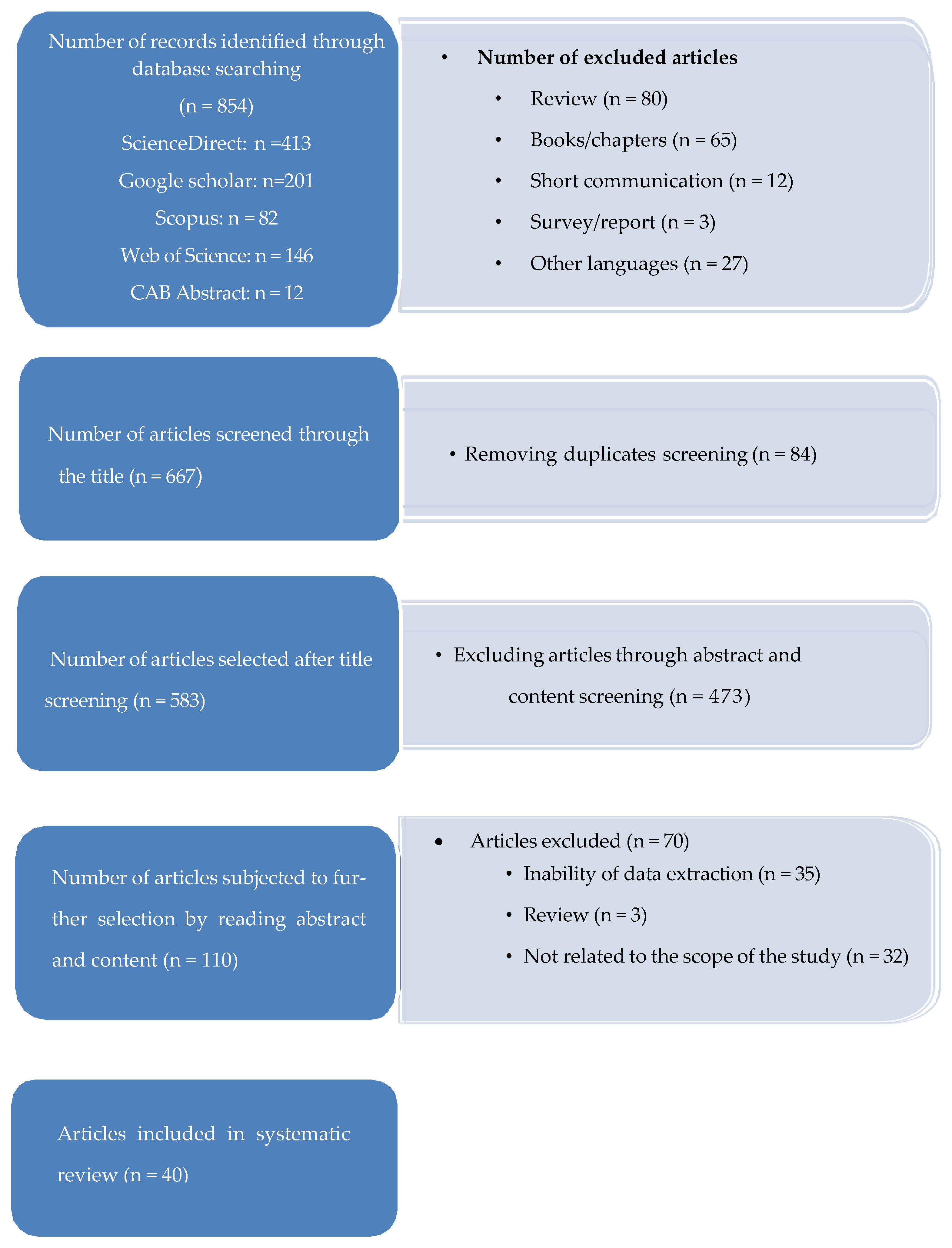
Articles were included in the review if they met all the following criteria: (i) original research papers published between 2015 and 2025; (ii) presented original and quantitative data on at least one of the aspects of mushroom spawn such as spawn types, spawn rates, spawn medium, application spawn, and mushroom yield; and (iii) were written in English. Articles were excluded from the review if (i) they were reviewed articles, books, and book chapters; (ii) conducted to test the growth of mycelium; (iii) data were not related to the scope of the study. The articles were first screened for titles. Next, abstract and content were reviewed based on above inclusion and exclusion criteria. A summary of the review is presented in the flow chart (Figure 1).
Each study was then qualitatively assessed for methodological rigour using a simplified risk-of-bias framework adapted for agronomic and mycological experiments. Key criteria included replication, randomization, and base-growing substrate. Most studies were small-scale trials conducted under controlled conditions; growing conditions were not always explicitly reported. Consequently, the findings summarised in this review are interpreted as hypothesis-generating rather than prescriptive, reflecting variability in experimental design and reporting standards across the included literature.

2.4. Data Extraction and Compilation

The mushroom spawns used in the experiments were categorised into four main groups: grain spawn, sawdust spawn, stick spawn, and liquid spawn. If one experiment had mixed types of spawn, various spawn rates, different mushroom species, or different growing medium to evaluate their effects on mushroom yield, it was separated into the main categories. Mushroom yield was generally recorded as gram per log. However, the weight logs were different among studies, so the yield was converted into gram per kg-growing substrate for consistent comparison.
The year of publication, experiment design, study location, duration, and mushroom yield parameters were collected. Some articles included multiple studies (e.g., multiple mushroom species or multiple types of spawn); the number of studies is higher than the number of articles. Priority was given to biological efficiency (BE); however, if BE was not available, mushroom yield data were extracted to see the effects of spawn on yield. Any missing information was recorded as “not reported” (NR) and were excluded from trend-based evaluations. When data or standard errors/standard deviations were not numerically reported, approximate values were extracted from published graphs using WebPlotDigitizer (version 5.0; developed by Ankit Rohatgi, Austin, TX, USA). The y-axis was calibrated using the figure’s scale and the mean bar height and the upper error bar were taken as the measure of variability (SD or SE, as indicated in the original figure legend). Endnote 21 (Clavirate, Los Angeles, CA, USA) was used to find duplicate articles. No statistical test was performed, considering the study’s aims.

3. Results and Discussion

The reviewed literature was dominated by studies on Pleurotus spp., particularly P. ostreatus and P. eryngii, which together represented more than half of all the included records. This dominance reflects the global prevalence of oyster mushroom cultivation and its adaptability to diverse agricultural residues. Evidence for other major cultivated mushrooms such as Agaricus bisporus, Lentinula edodes, and Ganoderma lucidum, was comparatively limited. Therefore, the conclusions drawn in this review primarily apply to Pleurotus species, and generalisations across all edible mushrooms should be made with caution until more balanced evidence becomes available.

3.1. General Characteristics of the Studies

A total of 110 articles were identified through databases and the literature search. After screening the abstract and content, only 40 articles met the inclusion criteria and were assessed for eligibility criteria. A total of 70 articles were excluded based on the following reasons: (1) if insufficient data were available for extraction; (2) if it was a review paper; and (3) its irrelevance to the review’s scope. Among the included articles, a majority were conducted in India (11 articles), followed by China (5) and Ethiopia (5).

3.2. Types of Mushroom Spawn

Mushroom spawn serves as the propagative unit in mushroom cultivation and is a critical factor influencing yield [13,16]. It can be produced by various methods including tissue culture, spore propagation, and cloning. Spawn consists of a carrier material infused with the vegetative mycelium of the target fungus, used to inoculate the cultivated substrate. Preparation of quality mushroom spawn requires knowledge, skill, variety of equipment, and aseptic and hygienic conditions [14,17]. A variety of materials and technologies have been developed for spawn production. In general, spawn-growing media need to be sterilised before inoculating pure mushroom mycelium. There are four main types of mushroom spawn, including grain spawn, sawdust spawn, stick spawn, and liquid spawn based on the growing carrier. Based on characteristics of growing media, spawn is divided into solid (grains, cellulosic materials, and others) and liquid spawn [18]. Solid spawn has been used since edible mushrooms were commercial cultivated in artificial logs in the early 20th century [18]. It consists of a pure culture of mycelium that grows on a solid substrate such as grain, sawdust, or agricultural waste, and is wildly used in most mushroom farms in China [18]. Submerged culture, which involves pure mushroom mycelium in liquid nutrient media, was developed more than 40 years ago [19].
In the last 10 years, studies of spawn on mushrooms have been conducted in various mushroom species, mainly focusing on oyster mushrooms, which are one of the most widely cultivated mushrooms (Table 1). Most of the recent studies used grain spawn supplements with wheat bran, gypsum, and/or calcium carbonate [20,21,22,23]. There were a few studies using stick, sawdust, and liquid spawns in mushroom cultivation. In addition, new types of spawn such as block, wood pallet, or agricultural waste have been developed recently to provide more choices to mushroom growers [7,16,24].

3.2.1. Grain Spawn

Grain spawns can be made using various grains such as wheat, barley, oat, sorghum, millet, and many others [14,31,39,40]. Grains contain sufficient carbohydrates which supply necessary nutrients for mycelium growth [14]. In this review, 45 out of the 56 studies used grain spawn to inoculate into growing substrate. This reflects its wide availability and favourable physical properties [14]. However, this trend may not be universal, as sawdust spawn are predominant in certain regions such as South Korea, depending on local cultivation practices and resource availability. Grain spawn preparation does not require expensive equipment. Grains are boiled and sterilised before inoculating with mushroom mycelium [14,25,31]. Spawn qualities depend on grain types, which is a critical factor for achieving faster mycelium growth, higher mushroom yield, and BE [14]. It was indicated that different grain spawn has influenced spawn running time and the number and weight of the fruiting body, as well as mushroom production [31]. The possible reasons for that would be grain characteristics, as grains work as mycelium carriers, with smaller grains providing a higher number of inoculation points due to their greater surface area [13,41]. However, larger grains contain more nutrients, which can support mycelial growth over a longer period [13,40]. Mushroom spawn performance is species-dependent and each mushroom has its own favourite grain carriers (Table 2). The choice of grain types for mushroom spawn depends on their local availability and cost [41].

3.2.2. Sawdust Spawn

Sawdust spawn was the most common spawn used for the mushroom industry in Korea because it is easy to prepare, is low cost, and has minimal equipment requirements [18]. However, despite these advantages, the availability of quality sawdust can be limited in certain regions or under large-scale mushroom production, prompting a growing interest in alternative spawn substrates [16,36]. Various types of sawdust are used for the spawn production of mushrooms, and each mushroom has its own favourite. Broad-leaf trees including eucalyptus, mango, mulberry, poplar, and tooni were utilised to produce the spawn of Lentinula edodes [46,47]. The types of sawdust differently influenced mycelium growth, mushroom yield, and quality [47]. Sawdust is generally poor in nutrients, especially nitrogen. Therefore, supplements such as wheat bran and rice bran were added [36,47]. The preferred sawdust types are different among mushroom species. It was reported that eucalyptus tree (Eucalyptus globulus) sawdust was the best substrate to produce the spawn of Lentinula edodes with shorter mycelium running time and higher rate of mycelium running [46]. For Pleurotus ostreatus, mango (Maggifera indica) and mahogany trees (Swietenia mahagoni) [47] were the best to produce spawn.

3.2.3. Stick Spawn

Stick spawn has been developed as an alternative method for mushroom spawn and has been used to cultivate different mushroom species [37,42]. Sticks for making mushroom spawn can be made from various lignocellulosic solid materials including wood, corn stalk, corn cob, and other plant-based solids [16,37,48]. These materials could be used to make spawn in sticked-shape or blocked/cured-shape spawn. A mixture of sawdust and cereal bran was used to fill the gaps between sticks to enhance mycelium development [37]. Stick spawn has been recorded to have positive effects on mycelium growth and improved mushroom BE [16,37]. As only one stick/block is used to inoculate stick spawn into growing substrate bags [16], it is convenient and less time consuming on inoculation compared to other solid spawns.

3.2.4. Liquid Spawn

Liquid spawn is innovative method for mushroom cultivation in large-scale urban areas where production space is limited and labour is costly [16,49]. Generally, carbohydrate and nitrogen sources, which act as nutrient-rich environments, were used to make growing medium for liquid spawn [38,49]. While sugar and/or starch can be used as suitable carbon sources for mushroom mycelium growing, some nitrogen-rich products including yeast extract, peptone, and in-organic nitrogen are also added to support the protein synthesis of mycelium [38,49]. The benefits of using liquid spawn were indicated in previous studies; however, there are not many studies focusing on this aspect in the last decade, with only three studies using it on oyster mushrooms (Pleurotus spp.) and shiitake mushrooms (L. edodes) [25,36,38].

3.3. The Use of Spawn Types for Mushroom Cultivation

Although spawn types affect mycelium growing, mushroom morphology, and mushroom quality and production [14,31], the type of spawn used for mushroom cultivation depends on the region, mushroom species, sizes of farms, or available technology. For example, sawdust was widely used for the cultivation of Lentinula edodes in Korea [36], while stick spawn was utilised in Pleurotus eryngii cultivation in China [16]. Liquid spawn seems be suitable with large-scale farms in developed regions [16], while grain spawn is more suitable within small-scale farms. The advantages and limitations of the spawn types are summarised in Table 3.

3.4. Quality Characteristics of Mushroom Spawn

Spawn quality is one of the main factors contributing to successful mushroom cultivation. It is directly related to mushroom yield and its biological efficiency, as high-quality spawn resulted in robust mycelial growth, shorter substrate colonisation, and produced healthy mushroom [14]. There are several factors that affect mushroom spawn quality including the purity of the culture, spawn growing materials for rapid mycelium colonisation, nutrients, and inoculum units, which should be considered to produce high-quality spawn [40]. High-quality is spawn characterised by optimal mycelial growth, vigour, and genetic purity [14]. Spawn with the above characteristics promotes quick and uniform colonisation of the substrate, facilitating effective nutrient uptake during the fruiting stage [50]. Such spawn supports the development of a dense mycelial network, which in turn enhances both the number and size of the fruiting bodies, ultimately leading to improved yields [51]. Moreover, using reliable spawn contributes to consistent crop performance, a key factor for both commercial producers and small-scale growers [14].
There are several factors that affect mushroom spawn quality, such as mushroom strains, purity of the culture, and growing medium [40]. The main criteria to qualify grain spawn is based on colour, odour, and texture [14]. High-quality spawn would be white or light cream-coloured specimens with a mushroomy or earthy odour, without brown, black, and yellow spawns or those with mouldy or sour odours. The texture should be consistent with cotton and be snow-like without any visible sign of contamination such as mould, off-colouring, and foreign sediments. Odour should be pleasant, light, sweet, and mushroomy or earthy. High-quality spawns resulted in faster colonisation, suppressed contamination, and enhanced yield efficiency [14,40,49].

3.5. Mycelium Growth Rate and Spawn Running Time

There are limited studies evaluating the mycelial growth rate of mushroom spawn. Mushroom mycelium growth rates were varied depending on mushroom species, mushroom strain, application methods, and spawn types. A study found that the growth rates of mycelium were significantly different among mushroom strains [25]. Results from this study indicated that the growth rate of liquid spawn was much higher compared to other types of spawn (Table 4).
A faster mycelium growing rate will result in a shorter time being required for the full colonisation of mycelium, which is beneficial for mushroom growers. This explains why the use of spawn types has been recorded to influence the spawn running time (the number of days required for the completion of mycelial growth). As the mycelium growth rate in liquid spawn is higher than in grain spawn [25], the spawn running time was shorter [36]. Stick spawn was recorded to reduce the spawn running time (the time from inoculation with spawn to complete mycelial colonisation) in oyster mushrooms (12.22 days), while using block spawn took a longer time to fully colonise the substrate (34–36 days) (Table 5). A possible reason could be related to the number of inoculum points. As myceliums develop on the surface of the carriers, a larger-surface spawn substrate carries more mycelium than a smaller one [13,41]. The surface sizes of the blocks are much smaller than the sticks; 1.5 cm3 [16] compared to 12–15 cm in length and 0.8–1 cm in wide [18,37]. Using grain spawn resulted in various spawn running times, varying from 7 to 60 days depending on mushroom species. Spawn running time for the king oyster mushroom took longer than other oyster species in most cases (32–38 days compared to approximately 18–25 days) [8,23,52]. It can be concluded that it is important to choose the type of spawn to optimise mycelium growth and minimise spawn running time, ultimately enhancing mushroom production efficiency.

3.6. Spawn Inoculation Rates

The inoculation rates for mushrooms are inconsistent in terms of units. While the inoculation rates of grain, sawdust, and liquid spawns were calculated based on the percentage of wet weight of growing substrate, the block and stick spawn rates were calculated based on the stick/block sizes. A piece of block spawn (1.5 cm3) or a stick of 15 cm length with a 1 cm width and 2 mm thickness was used to inoculate into a substrate bag [16,37].
Spawn inoculation rates have influenced mushroom morphology and the production of mushrooms, which is directly related to BE. A low level of spawn may not be sufficient to initiate growth, resulting in longer cultivation time and lower BE. In contrast, a higher spawn rate can suppress competing organisms [35], thereby reducing the risk of contamination and increasing yield. However, very high doses of spawn could have no impact on BE, leading to economic loss [35,54]. Our results indicated that most of the recent studies were conducted on oyster mushrooms (Pleurotus spp.). The spawn inoculation rates for Pleurotus spp. cultivation varied from 0.5 to 13% of wet substrate weight, with most study cases using 2–5% (Table 6). The optimum grain spawn that reduced incubation time and increased yield was 2–4% [1,54], while that of sawdust was 9% [35]. Higher rates of spawn (>10%) was recorded to insignificantly increase the BE of oyster mushrooms [35]. There were few studies examining the effect of spawn levels on other mushrooms including Lentinula edodes, Volvariella volvacea, Hericicum erinacea, and Hypsizygus ulmarius. The spawn rates used for these mushrooms were lower, from 1 to 2%. In summary, spawn inoculation rates are different among mushrooms, and inoculum rates for Pleurotus species should not be in excess of 10% as no significant increase in BE is observed.

3.7. Mushroom Characteristic and Yield as Affected by Spawn Types and Rates

The effects of spawn types on mushroom characteristics were studied with different results. Some studies have reported that the spawn-growing medium may influence the morphological characteristics of mushrooms [59]; there are others who claim that spawn types have no effect on mushroom morphology such as cap, gill, and stipe [36].
There is a large variation in the BE of mushroom evident in this review, varying from 5.18 to 173.38% (Table 7). This variation is likely influenced by many factors including mushroom species, growing conditions, growing substrate, and many others. Some of the highest BE values (146.01–173.38%) were reported for P. Florida growing on wheat straw supplemented with bran and soybean in a study from India [60]. In contrast, the lowest BE value (5.18%) was recorded for P. ostreatus growing on sorghum stalk in a study from Ethiopia [50]. In the same study, the BE reached 101.2% when P. ostreatus was cultivated on different substrates, highlighting the significant effect of substrate choice on yield. Both types and inoculation rates were recorded to influence mushroom yield by enhancing mycelium growth, fruiting body size, and mushroom yield [25,35,36]. Many studies suggested that the use of a spawn rate of 2–5% resulted in a higher BE [1,35,54]. Although there has not been many studies on liquid spawn in the last decade, it is indicated that liquid spawn produced a better yield of mushroom compared to solid spawn in most cases [25,36]. Using liquid spawn to cultivate shiitake mushroom reduced the spawn running time by 5% compared to sawdust spawn and mushroom production was higher [36]. Overall, liquid spawn tends to outperform solid spawns in both yield and incubation time, although outcomes vary by species and growing conditions.
Although the stick and liquid spawns required shorter incubation times (12–13 days compared to 28–36 days in grain spawn in most studies), the BE remains comparable (68.65–70–94%). This suggests that the spawn’s running period may not reduce yield performance. However, the interactions between spawn running time and yield or BE have not been comprehensively examined in the literature and contradictory findings have been recorded. For instance, a study on shiitake mushrooms showed that longer spawn running times resulted in a greater BE than shorter ones [62], whereas another study on milky mushrooms reported that the highest yield and BE were achieved in a treatment which required the lowest spawn running time [63]. In commercial mushroom cultivation, the spawn-running period is a critical economic factor influencing production efficiency. Prolonged incubation increases the duration that substrate bags must be stored before fruiting, thereby elevating space, energy, and labour costs. Although extended incubation may not compromise BE, it can negatively affect overall production turnover and profitability.
Given the limited data on stick/block and liquid spawn, these findings should be interpreted cautiously. Further research involving multiple strains, substrates, and environmental conditions is required to validate the relationship between incubation duration, substrate colonisation, and yield performance.

4. Limitations of the Study

Although the literature search was conducted on five different databases including Scopus, ScienceDirect, Google Scholar, Web of Science, and CAB abstracts, relevant studies may still exist in unindexed or non-English publications, particularly from regions where mushroom cultivation is active. The review focused on the literature published between 2015 and 2025, which may have excluded earlier studies containing valuable baseline data. The evidence base was dominated by Pleurotus spp., and considerable variation in substrates, spawn types, and cultivation methods among studies restricted direct comparisons. In addition, inconsistent reporting of replication and variability limited the assessment of methodological quality.

5. Conclusions

The diversity of mushroom spawn types is dominated by four main types, including grain, sawdust, stick, and liquid spawns, with emerging types such as wood pellet and cassava peel showing potential for innovation. This review indicated that spawn type significantly influences mushroom yield. Both the type and inoculation rate of spawn significantly influence mycelial growth and mushroom yield. The strongest evidence currently pertains to Pleurotus spp., for which cereal-based and liquid spawns show promising results in terms of colonisation speed and yield performance. However, the evidence base for other genera remains limited, and variations in methodology and reporting standards preclude broad generalisations. Future studies should broaden their focus beyond oysters to include other mushroom species. Despite the inherent limitations in language and database coverage, this review provides an updated synthesis of contemporary research and identifies key knowledge gaps for further investigation in mushroom spawn technology.

Author Contributions

Conceptualization, H.T.D. and D.A.; methodology, H.T.D., D.A., Y.L. and C.-Y.X.; validation, H.T.D.; formal analysis, H.T.D.; investigation, H.T.D.; resources, D.A.; data curation, H.T.D.; writing—original draft preparation, H.T.D.; writing—review and editing, Y.L., D.A. and C.-Y.X.; visualisation, D.A., Y.L. and C.-Y.X.; supervision, D.A.; project administration, H.T.D.; funding acquisition, H.T.D. and D.A. All authors have read and agreed to the published version of the manuscript.

Funding

The research was funded by Central Queensland University. Cheng-Yuan Xu’s position is funded by the Regional Research Collaboration Program project ‘Research Institute for Northern Agriculture and Drought Resilience’, which is supported by the Australian Department of Education.

Data Availability Statement

Data are available upon reasonable request.

Acknowledgments

The authors acknowledge worldwide researchers for their valuable research work performed, allowing us to summarise the effects of spawn on mushroom growth and production.

Conflicts of Interest

The authors declare no conflicts of interest.

Abbreviations

The following abbreviations are used in this manuscript:
BEBiological Efficiency
CSHCottonseed Hull
CWCotton Waste
NTNot Reported
RHRice Hush
SDSawdust
SSSorghum Straw
WHWater Hyacinth
WSWheat Straw

References

  1. Pal, J.; Sharma, R.; Lal, M.; Suman, B. Effect of different spawn rates and substrate supplementation on yield of Indian Oyster mushroom, Pleurotus pulmonarius (Fr.) Quel. J. Appl. Nat. Sci. 2017, 9, 1406–1410. [Google Scholar] [CrossRef][Green Version]
  2. Valverde, M.E.; Hernández-Pérez, T.; Paredes-López, O. Edible mushrooms: Improving human health and promoting quality life. Int. J. Microbiol. 2015, 2015, 376387. [Google Scholar] [CrossRef] [PubMed]
  3. Ma, G.; Yang, W.; Zhao, L.; Pei, F.; Fang, D.; Hu, Q. A critical review on the health promoting effects of mushrooms nutraceuticals. Food Sci. Hum. Wellness 2018, 7, 125–133. [Google Scholar] [CrossRef]
  4. Rahi, D.K.; Malik, D. Diversity of mushrooms and their metabolites of nutraceutical and therapeutic significance. J. Mycol. 2016, 2016, 7654123. [Google Scholar] [CrossRef]
  5. FAO. FAOSTAT Statistic Database 2023; FAO: Rome, Italy, 2023. [Google Scholar]
  6. Li, C.; Xu, S. Edible mushroom industry in China: Current state and perspectives. Appl. Microbiol. Biotechnol. 2022, 106, 3949–3955. [Google Scholar] [CrossRef]
  7. Akinrinola-Akinyemi, A.O.; Asagbra, A.E.; Asiru, W.B.; Lalemi, M.O.; Okere, V.O.; Oluwawole, O.F.; Ajao, O.M.; Isa, I.O.; Sanni, L.O.; Dike, E.N.; et al. Viability of cassava peels spawn production and mushroom cultivation. Open Agric. 2017, 2, 250–254. [Google Scholar] [CrossRef]
  8. Megersa, S.; Tolessa, A. Enhancing yields of Pleurotus ostreatus and Lentinula edodes mushrooms using water hyacinth (Eichhornia crassipes [Mart.] Solms) supplemented with locally available feedstock as substrate. Heliyon 2024, 10, e39113. [Google Scholar] [CrossRef]
  9. Atila, F.; Tuzel, Y.; Fernández, J.A.; Cano, A.F.; Sen, F. The effect of some agro–industrial wastes on yield, nutritional characteristics and antioxidant activities of Hericium erinaceus isolates. Sci. Hortic. 2018, 238, 246–254. [Google Scholar] [CrossRef]
  10. Thakur, M. Advances in mushroom production: Key to food, nutritional and employment security: A review. Indian Phytopathol. 2020, 73, 377–395. [Google Scholar] [CrossRef]
  11. Carrasco, J.; Zied, D.C.; Pardo, J.E.; Preston, G.M.; Pardo-Giménez, A. Supplementation in mushroom crops and its impact on yield and quality. AMB Express 2018, 8, 146. [Google Scholar] [CrossRef]
  12. Jeznabadi, E.K.; Jafarpour, M.; Eghbalsaied, S.; Pessarakli, M. Effects of various substrates and supplements on king oyster (Pleurotus eryngii). Compost. Sci. Util. 2017, 25, S1–S10. [Google Scholar] [CrossRef]
  13. Mamiro, D.P.; Royse, D.J. The influence of spawn type and strain on yield, size and mushroom solids content of Agaricus bisporus produced on non-composted and spent mushroom compost. Bioresour. Technol. 2008, 99, 3205–3212. [Google Scholar] [CrossRef] [PubMed]
  14. Aditya; Neeraj; Bhatia, J.N.; Yadav, A.N. Characterization and yield performance of spawn prepared from Hypsizygus ulmarius (Bull.) Redhead and some Pleurotus species (Agaricomycetes). Biocatal. Agric. Biotechnol. 2024, 56, 103047. [Google Scholar] [CrossRef]
  15. Page, M.J.; McKenzie, J.E.; Bossuyt, P.M.; Boutron, I.; Hoffmann, T.C.; Mulrow, C.D.; Shamseer, L.; Tetzlaff, J.M.; Akl, E.A.; Brennan, S.E.; et al. The PRISMA 2020 statement: An updated guideline for reporting systematic reviews. Syst. Rev. 2021, 10, 89. [Google Scholar] [CrossRef] [PubMed]
  16. Zhang, W.R.; Liu, S.R.; Kuang, Y.B.; Zheng, S.Z. Development of a novel spawn (Block spawn) of an edible mushroom, Pleurotus ostreatus, in liquid culture and its cultivation evaluation. Mycobiology 2019, 47, 97–104. [Google Scholar] [CrossRef]
  17. Falahzadah, M.; Jamily, A.; Danishiar, S.; Osmani, A.; Ajir, G. Comparison of low-cost substrates and spawn levels for oyster mushroom (Pleurotus ostreatus) cultivation in Afghanistan. J. Nutr. Food Sci. 2023, 13, 17. [Google Scholar] [CrossRef]
  18. Zhang, R.Y.; Hu, D.D.; Ma, X.T.; Li, S.G.; Gu, J.G.; Hu, Q.X. Adopting stick spawn reduced the spawn running time and improved mushroom yield and biological efficiency of Pleurotus eryngii. Sci. Hortic. 2014, 175, 156–159. [Google Scholar] [CrossRef]
  19. Leatham, G.; Griffin, T. Adapting liquid spawn Lentinus edodes to oak wood. Appl. Microbiol. Biotechnol. 1984, 20, 360–363. [Google Scholar] [CrossRef]
  20. Hossain, M.M. Effect of different substrates on yield of Pleurotus ostreatus mushroom. Environ. Ecol. 2018, 36, 312–315. [Google Scholar] [CrossRef]
  21. Melanouri, E.-M.; Dedousi, M.; Diamantopoulou, P. Cultivating Pleurotus ostreatus and Pleurotus eryngii mushroom strains on agro-industrial residues in solid-state fermentation. Part I: Screening for growth, endoglucanase, laccase and biomass production in the colonization phase. Carbon Resour. Convers. 2022, 5, 61–70. [Google Scholar] [CrossRef]
  22. Milkias, E.; Dobo, B.; Ayele, S. The effect of substrate and substrate formulation on the yield of Oyster mushroom (Pleurotus ostreatus). Mushroom Res. 2025, 33, 189–198. [Google Scholar] [CrossRef]
  23. Muswati, C.; Simango, K.; Tapfumaneyi, L.; Mutetwa, M.; Ngezimana, W. The effects of different substrate combinations on growth and yield of oyster mushroom (Pleurotus ostreatus). Int. J. Agron. 2021, 2021, 9962285. [Google Scholar] [CrossRef]
  24. Hakim, J.; Sulistiani, R.; Khulidin, K.A.; Othman, A.B. Comparative study on yield of edible local mushroom using different carrier of spawn. J. Al Ulum LPPM Univ. Al Washliyah Medan 2025, 13, 6–14. [Google Scholar] [CrossRef]
  25. Zăgrean, A.; Rusu, I.; Nicolcioiu, M.; Șovărel, G. Yielding capacity of spawn of some Pleurotus ostreatus, Pleurotus citrinopileatus and Pleurotus columbinus strains obtained with liquid inoculum. In Proceedings of the IX South-Eastern Europe Symposium on Vegetables and Potatoes 1391, Bucharest, Romania, 5–9 September 2023; pp. 503–510. [Google Scholar]
  26. Barua, B.S.; Nigaki, A.; Kataoka, R. A new recycling method through mushroom cultivation using food waste: Optimization of mushroom bed medium using food waste and agricultural use of spent mushroom substrates. Recycling 2024, 9, 58. [Google Scholar] [CrossRef]
  27. Costa, A.F.P.; Steffen, G.P.K.; Steffen, R.B.; Portela, V.O.; Santana, N.A.; dos Santos Richards, N.S.P.; Jacques, R.J.S. The use of rice husk in the substrate composition increases Pleurotus ostreatus mushroom production and quality. Sci. Hortic. 2023, 321, 112372. [Google Scholar] [CrossRef]
  28. Khorsheed, A.; Ahmed, A. Growing (Pleurotus pulmonarius) on various local substrates in the Kurdistan Region of Iraq. In Proceedings of the IOP Conference Series: Earth and Environmental Science, Erbil, Iraq, 3–4 May 2023; p. 012108. [Google Scholar]
  29. Deora, A.; Sharma, S.S.; Kumari, P.; Dahima, V.; Kumar, S.; Rohith, M. Cultivation of Kabul Dhingri (Pleurotus eryngii) mushroom by standardizing protocols in subtropical zones of world. Sci. Rep. 2021, 11, 14692. [Google Scholar] [CrossRef] [PubMed]
  30. Paswan, A.K.; Verma, R.N. An innovative method of preparation of healthy grain spawn. In Proceedings of the 8th International Conference on Mushroom Biology and Mushroom Products, New Delhi, India, 19–22 November 2015. [Google Scholar]
  31. Gopinath, V.; Elangovan, M.; MK, B. Response of different spawn substrates and nutritional supplements on the yield and biological efficiency of paddy straw mushroom (Volvariella volvacea) under the agro-ecological condition of West Bengal. Pharma Innov. 2023, 12, 2051–2055. [Google Scholar]
  32. Hou, L.; Li, Y.; Chen, M.; Li, Z. Improved fruiting of the straw mushroom (Volvariella volvacea) on cotton waste supplemented with sodium acetate. Appl. Microbiol. Biotechnol. 2017, 101, 8533–8541. [Google Scholar] [CrossRef]
  33. Wang, Q.; Xiao, T.; Juan, J.; Qian, W.; Zhang, J.; Chen, H.; Shen, X.; Huang, J. Lignocellulose degradation efficiency of Agaricus bisporus strains grown on wheat straw-based compost. J. Agric. Food Chem. 2023, 71, 10607–10615. [Google Scholar] [CrossRef]
  34. Ozcariz-Fermoselle, M.V.; Fraile-Fabero, R.; Girbés-Juan, T.; Arce-Cervantes, O.; de Rueda-Salgueiro, J.A.O.; Azul, A.M. Use of lignocellulosic wastes of pecan (Carya illinoinensis) in the cultivation of Ganoderma lucidum. Rev. Iberoam. Micol. 2018, 35, 103–109. [Google Scholar] [CrossRef]
  35. Idowu, O.; Kadiri, M.; Otunla, C.A. Influence of inoculation method and spawn level on biological effiency of Pleurotus ostreatus. J. Appl. Environ. Manag. 2016, 20, 542–546. [Google Scholar] [CrossRef]
  36. Jang, Y.; Jeong, Y.S.; Ryoo, R.; Ka, K.H. Comparison of cultivation, mushroom yield, and fruiting body characteristics of Lentinula edodes strains according to the inoculation method. Korean J. Mycol. 2021, 49, 525–530. [Google Scholar] [CrossRef]
  37. Liu, S.-R.; Zhang, W.-R.; Kuang, Y.-B. Production of stalk spawn of an edible mushroom (Pleurotus ostreatus) in liquid culture as a suitable substitute for stick spawn in mushroom cultivation. Sci. Hortic. 2018, 240, 572–577. [Google Scholar] [CrossRef]
  38. Hamza, A.; Shankar, M.P.; Chowdary, U.S.; Ghanekar, S.; Sahoo, S.; Krishnaiah, C.V.; Kumar, D.S. Submerged production of mycelium biomass and bioactive compounds from P. ostreatus in a controlled fermentation medium. Food Humanit. 2024, 2, 100302. [Google Scholar] [CrossRef]
  39. Modeste, H. Effects of grain spawn and substrates on growth and yield of oyster mushroom grown under different cropping shelters. Afr. J. Plant Sci. 2022, 16, 125–137. [Google Scholar] [CrossRef]
  40. Bandura, I.; Makohon, S.; Oleksandr, T.; Ivanova, I.; Khareba, O.; Khareba, V.; Serdyuk, M.; Bisko, N.; Kulyk, A.; Isikhuemhen, O.S. Effect of different grain spawn materials on Pleurotus ostreatus (Jacq.) P. Kumm. mushroom cultivation under unregulated and regulated fruiting conditions. Acta Agric. Slov. 2022, 118, 1–13. [Google Scholar] [CrossRef]
  41. Jayachandran, A.; Nadesan, S.; Murugaiyan, K. Comparative study of different grains on spawn development of Pleurotus florida. Int. J. Sci. Invent. Today 2017, 6, 728–735. [Google Scholar]
  42. Verma, P.; Nath, M.; Sharma, A.; Barh, A.; Kamal, S.; Sharma, V.P.; Kumar, A. Comparative evaluation of different spawn substrates on the growth and yield of oyster mushroom. Mushroom Res. 2023, 32, 41–49. [Google Scholar] [CrossRef]
  43. Akter, F.; Ahmed, K.U.; Miah, N. Effect of different spawn seed on growth and varieties of the Oyster mushrooms (Pleurotus spp.). Res. Agric. Livest. Fish. 2019, 6, 181–192. [Google Scholar] [CrossRef]
  44. Abdullah, M.B.; Abed, I.A.; Alkobaisy, J.S. Effect of different substrates and supplement with three types of spawn on Letinula edodes parameters for first production in Iraq. In Proceedings of the IOP Conference Series: Earth and Environmental Science, Al-Qadisiyyah, Iraq, 28–30 May 2022; p. 012060. [Google Scholar]
  45. Bhatia, A.; Jarial, R.S.; Jarial, K. Evaluation of different grain substrates for spawn production and yield performance of blue oyster mushroom [Hypsizygus ulmarius (Bull.: Fr.)] Redhead] through bio-conversion of agri/industrial wastes. Indian J. Ecol. 2022, 49, 2389–2394. [Google Scholar]
  46. Sud, D.; Sud, A. Evaluation of different sawdust substrates for spawn production of shiitake mushroom [Lentinula edodes (Berk.)]. Mushroom Res. 2021, 29, 195–201. [Google Scholar] [CrossRef]
  47. Miah, M.N.; Begum, A.; Shelly, N.J.; Bhattacharjya, D.K.; Paul, R.K.; Kabir, M.H. Effect of different sawdust substrates on the growth, yield and proximate composition of white oyster mushroom (Pleurotus ostreatus). Bioresearch Commun. (BRC) 2017, 3, 397–410. [Google Scholar]
  48. Chouhan, P.; Koreti, D.; Kosre, A.; Chauhan, R.; Jadhav, S.; Chandrawanshi, N.K. Production and assessment of stick-shaped spawns of oyster mushroom from banana leaf-midribs. Proc. Natl. Acad. Sci. India Sect. B Biol. Sci. 2022, 92, 405–414. [Google Scholar] [CrossRef]
  49. Ma, L.; Lin, Y.Q.; Yang, C.; Ying, Z.H.; Jiang, X.L. Production of liquid spawn of an edible mushroom, Sparassis latifolia by submerged fermentation and mycelial growth on pine wood sawdust. Sci. Hortic. 2016, 209, 22–30. [Google Scholar] [CrossRef]
  50. Mishra, A.K.; Singh, G.; Kumar, A.; Yadav, A.K.; Hit, M. Comparative studies of spawn growth on different grains substrates in three Pleurotus spp. (Pleurotus florida, Pleurotus flabellatus and Pleurotus sapidus). Int. J. Curr. Microbiol. Appl. Sci. 2018, 7, 3239–3245. [Google Scholar] [CrossRef]
  51. Kumar, B.; Singh, G.; Singh, V.P.; Patil, J.; Mishra, P.; Choudhury, D.; Srivastara, S. Effect of different inorganic additives on spawn run, cropping period and yield performance of oyster mushroom (Pleurotus species). Plant Phathology J. 2018, 17, 19–24. [Google Scholar] [CrossRef]
  52. Sardar, H.; Ali, M.A.; Anjum, M.A.; Nawaz, F.; Hussain, S.; Naz, S.; Karimi, S.M. Agro-industrial residues influence mineral elements accumulation and nutritional composition of king oyster mushroom (Pleurotus eryngii). Sci. Hortic. 2017, 225, 327–334. [Google Scholar] [CrossRef]
  53. Radzi, M.; Azizah, M.; Maininah, T.; Sumaiyah, A. Growth, yield and antioxidant activity of grey oyster mushroom (Pleurotus pulmonarius) grown in sawdust substrate with the supplementation of alkaline materials. J. Anim. Plant Sci. 2021, 31, 1699–1711. [Google Scholar] [CrossRef]
  54. Kumar, A.; Jarial, K.; Jandaik, S. Optimization of spawn doses and agroforestry residues as substrate for Pleurotus cornucopiae production. J. Pharm. Biomed. Anal. 2021, 10, 1659–1663. [Google Scholar] [CrossRef]
  55. Vieira, F.R.; Andrade, M.C.N. Optimization of substrate preparation for oyster mushroom (Pleurotus ostreatus) cultivation by studying different raw materials and substrate preparation conditions (composting: Phases I and II). World J. Microbiol. Biotechnol. 2016, 32, 190. [Google Scholar] [CrossRef]
  56. De, A.; Mridha, D.; Roychowdhury, T.; Bandyopadhyay, B.; Panja, A.S. Substrate level optimization for better yield of oyster mushroom (Pleurotus ostreatus) production, using different ratio of rice straw and sugarcane bagasse. World J. Microbiol. Biotechnol. 2023, 39, 270. [Google Scholar] [CrossRef] [PubMed]
  57. Girmay, Z.; Gorems, W.; Birhanu, G.; Zewdie, S. Growth and yield performance of Pleurotus ostreatus (Jacq. Fr.) Kumm (oyster mushroom) on different substrates. Amb Express 2016, 6, 87. [Google Scholar] [CrossRef]
  58. Gebru, H.; Belete, T.; Faye, G. Growth and Yield Performance of Pleurotus ostreatus Cultivated on Agricultural Residues. Mycobiology 2024, 52, 388–397. [Google Scholar] [CrossRef]
  59. Mubasshira, M.; Aminuzzaman, F.; Sultana, N.; Tanni, J. Impact of different substrates and mother cultures on yield and yield attributes of oyster mushroom (Pleurotus ostreatus). Asian Food Sci. J. 2020, 19, 25–38. [Google Scholar] [CrossRef]
  60. Deb, S.; Simon, S.; Lal, A.A. Effect of rice bran and soybean flour on the growth and yield of white oyster mushroom [Pleurotus florida (Mont.) Singer]. Biol. Forum-Int. J. 2021, 13, 637–642. [Google Scholar]
  61. Keneni, A.; Wondimu, L. Growth and yield of oyster mushroom (Pleurotus ostreatus) on substrate composed of maize (Zea mays L.) stem and cotton (Gossypium spp.) seed waste. J. Nat. Sci. Res. 2016, 6, 36–43. [Google Scholar] [CrossRef]
  62. Royse, D.; Bahler, C. Effects of genotype, spawn run time, and substrate formulation on biological efficiency of shiitake. Appl. Environ. Microbiol. 1986, 52, 1425–1427. [Google Scholar] [CrossRef] [PubMed]
  63. Hossain, M.M. Growth and yield performance of milky mushroom (Calocybe indica P&C) on different substrates. Pharma Innov. 2024, 13, 181–183. [Google Scholar]
Figure 1. Study flow diagram.
Agronomy 16 00391 g001
Table 1. Number of studies on various mushroom varieties during 2015–2025.
Spawn TypesMushroom SpeciesNumber of StudiesReferences
Common NameScientific Name
GrainOyster mushroomPleurotus spp.35[7,8,14,25,26,27,28,29]
White shiitakeLentinular squarrolus1[7]
ShiitakeLentinular edodes1[8]
Lion maneHericium erinaceus2[9,30]
Splitgill mushroomSchizophyllum commune1[24]
Straw mushroomVolvariella volvacea1[31,32]
Elm oyster mushroomHypsizygus ulmarious1[14]
Button mushroomAgaricus bisporus1[33]
Lingzi mushroomGanoderma lucidum1[34]
SawdustOyster mushroomPleurotus spp.2[16,35]
ShiitakeLentinula edodes1[36]
StickWhite oysterPleurotus ostreatus1[37]
LiquidOyster mushroomPleurotus spp.2[25,38]
ShiitakeLentinula edodes1[36]
Others (wood pellet, block, and cassava peels)Oyster mushroomPleurotus spp.2[7,16]
Shiitake mushroomLentinular squarrolus1[7]
Splitgill mushroomSchizophyllum commune1[24]
Table 2. Preferences of spawn substrate by mushroom species.
Mushroom SpeciesSpawn SubstrateReferences
P. ostreatusWheat, popcorn, chickpea, mix of wheat, barley, and oat[39,40,42,43]
P. djamorWheat[42]
P. floridaRice grain, chickpea, and corn[41,43]
P. eryngiiWheat[29]
P. cystidiosusChickpea, corn, and wheat[43]
L. edodesDate grain[44]
H. ulmariusPearl millet[45]
V. volvaceaSorghum[31]
G. LucidumWheat[34]
Table 3. Advantages and disadvantages of spawn types.
Spawn TypesAdvantagesDisadvantagesReference
Solid spawn (grain, stick, sawdust, and other lignocellulosic carriers)
  • Easy manufacture;
  • Low equipment investment;
  • Highly adaptable;
  • Short lag time;
  • Faster initial colonisation.
  • Long spawn running time;
  • High risk of contamination;
  • Labour-intensive inoculation.
[18,24,37]
Liquid spawn
  • Uniform distribution and fast colonisation;
  • Less chance of contamination;
  • Low cost;
  • Automative inoculation;
  • Quick preparation;
  • Less production space requirements.
  • Expensive equipment;
  • Strictly sterile environment required.
[18,25,49]
Table 4. Mycelium growth rate of mushrooms.
Spawn TypesBase
Materials
Mushroom SpeciesGrowth Rate (mm/day)Replicate
(n)
References
SawdustSawdustP. ostreatus.6.25 ± 0.1630[16]
Pine sawdustSparassis latifolia1.23 ± 0.09NR[49]
GrainWheat grainP. ostretus.8.60 ± 0.263[25]
Wheat grainP. citrinopileatus8.65 ± 0.263[25]
Wheat grainP. columbius6.20 ± 0.233[25]
BlockCorncobP. ostreatus.6.24 ± 0.1330[16]
SugarcaneP. ostreatus6.13 ± 0.0930[16]
LoofahP. ostreatus6.16 ± 0.1230[16]
LiquidMalt extract, K2HPO4P. ostreatus.14.00 ± 0.223[25]
Malt extract, K2HPO4P. citrinopileatus10.25 ± 0.313[25]
Malt extract, K2HPO4P. columbinus9.60 ± 0.283[25]
Potato, glucose and peptoneSparassis latifolia1.69 ± 0.31NR[49]
Mycelium growth rate data presented as means ± SD. Abbreviation: NR = not reported.
Table 5. Summarisation of spawn running time in mushrooms.
Spawn TypesMushroom SpeciesBase-Growing SubstrateSpawn Running Time (Days)Replicate (n)References
StickP. ostreatusSD12.22± 0.7530[37]
GrainP. pulmonariusWS10.5 ± 0.183[1]
P. pulmonariusSD50.5 ± 3.5010[53]
P. ostreatusSS13 *3[22]
P. ostreatusSD36–38 *4[21]
P. eryngiiSS11.8 *4[29]
P. eryngiiSD38.74 ± 0.913[52]
P. eryngiiSD60 *4[21]
H. erinaceusCSH27.4 *3[9]
H. erinaceusCSH38.3 *3[9]
L. edodesWH43.00 *3[8]
L. edodesWH + RH28.67 *3[8]
A. bisporusWS22 *24[33]
V. volvaceaCW7 *5[32]
SawdustP. ostreatusCSH34.38 ± 0.853[16]
BlockP. ostreatusCSH36.12 ± 1.253[16]
Spawn running time are presented as mean ± SD/SE; * SD/SE values were not reported. Abbreviations: CSH = cottonseed hull; CW = cotton waste; SD = sawdust; SS = sorghum straw; RH = rice hush; WH = water hyacinth; WS = wheat straw.
Table 6. Spawn inoculation rates used in mushroom cultivation.
Spawn TypesMushroom SpeciesSpawn Rates (%)Number of StudiesReferences
GrainPleurotus spp.0.5–1.98[43,53,54,55]
2–310[8,17,20,29,56]
3.1–513[7,14,23,27,35]
5.1–108[22,25,57,58]
10.1–153[28,35]
A. bisporus0.71[33]
H. ulmarius 3–52[14,30]
H. erinacea31[9]
G. lucidum51[34]
L. edodes21[8]
V. volvacea2–52[30,31]
SawdustP. ostreatus3–51[35]
5.1–101[35]
10.1–131[35]
L. edodes1.2–21[36]
LiquidPleurotus spp.101[25]
L. edodes1.2–21[36]
Table 7. Summary of mushroom yield and BE based on spawn types and rates.
Spawn TypesMushroom SpeciesSpawn Rate (%)Yield
(g/kg Substrate)
BE (%)References
GrainPleurotus spp.0.5–1.984–22617.95–67.15[1,52,53]
2–389–57527–88.5[8,20,56]
3.1–5NR20–173.38[7,14,23,27,40,60]
5.1–10NR5.18–159[22,57,61]
10.1–15233–594NR[28,35]
A. bisporus0.7NR58.0–84.98[33]
H. ulmarius 3–5 NR56.73–129.2[14,30]
H. erinacea 3–5 77–15322.3–44.4[9]
G. lucidum5NR55.3[34]
L. edodes2343–53366–82[8]
V. volvacea2–5NR9.42–15.79[31]
SawdustPleurotus spp.3–5154–166NR[7,35]
5.1–10256–314NR[35]
10.1–13324–328NR[35]
L. edodes1.2–2.0100–240NR[36]
Cassava peelPleurotus spp.5380–70638–70[7]
L. squarroslus5354–67535–67[7]
LiquidL. edodes1.2–2.0100–330NR[36]
Pleurotus spp.10212–261NR[25]
Stick/BlockPleurotus spp.1–2.4 cm3235–24368.65–70.94[16,37]
The yields (g/kg substrate) were estimated based on the reported yield and wet weight of bags; NR means data not reported.
Disclaimer/Publisher’s Note: The statements, opinions and data contained in all publications are solely those of the individual author(s) and contributor(s) and not of MDPI and/or the editor(s). MDPI and/or the editor(s) disclaim responsibility for any injury to people or property resulting from any ideas, methods, instructions or products referred to in the content.