



Journal Menu
► ▼ Journal Menu-
- Applied Sciences Home
- Aims & Scope
- Editorial Board
- Reviewer Board
- Topical Advisory Panel
- Early Career Editorial Board
- Instructions for Authors
- Special Issues
- Topics
- Sections & Collections
- Article Processing Charge
- Indexing & Archiving
- Editor’s Choice Articles
- Most Cited & Viewed
- Journal Statistics
- Journal History
- Journal Awards
- Society Collaborations
- Conferences
- Editorial Office
Journal Browser
► ▼ Journal BrowserNeed Help?
Announcements
14 January 2026
1st International Online Conference on Optics (IOCO 2026)–Registration Deadline—23 March 2026
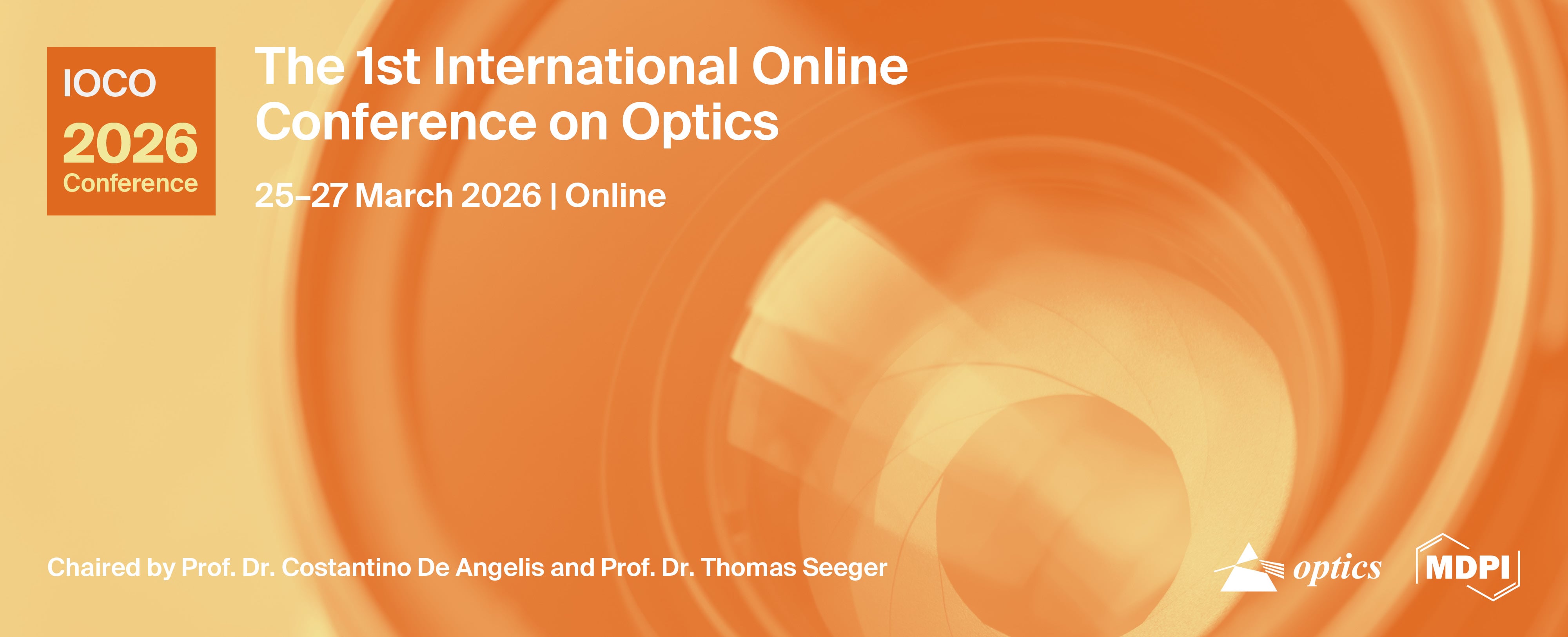
The conference is organized by the MDPI journal Optics (ISSN: 2673-3269, Impact Factor: 1.6) and chaired by Prof. Dr. Costantino De Angelis from the Department of Information Engineering, University of Brescia, Italy and Prof. Dr. Thomas Seeger from the Institut Fluid - und Thermodynamik, Lehrstuhl für Technische Thermodynamik, Universität Siegen, Germany. It will take place virtually from 25 to 27 March 2026, Central European Time.
Latest schedule:
New abstract submission deadline: 16 January 2026;
New abstract acceptance notification date: 10 February 2026;
Registration deadline: 23 March 2026;
Conference date: 25–27 March 2026.
To register for the event, please click on the following link: https://sciforum.net/event/IOCO2026?section=#registration.
Topics of interest:
S1. Biomedical Optics
Session Chairs:
- Dr. Giuseppe Trusso Sfrazzetto, Department of Chemical Science, University of Catania, Italy;
- Dr. Francesco Chiavaioli, National Research Council of Italy (CNR-IFAC), Sesto Fiorentino, Italy.
S2. Optoelectronics and Optical Engineering
Session Chair:
- Prof. Dr. Yuriy Garbovskiy, Department of Physics and Engineering Physics, Central Connecticut State University, New Britain, USA.
S3. Geometrical Optics
Session Chair:
- Dr. Davide Rocco, Department of Information Engineering, University of Brescia, Italy.
S4. Photonics and Optical Communications
Session Chair:
- Dr. Jiahao Huo, School of Computer and Communication Engineering, University of Science and Technology Beijing, China.
S5. Laser Sciences and Technology
Session Chair:
- Dr. Guido Toci, National Institute of Optics, National Research Council of Italy, Italy.
S6. Quantum Optics
Session Chair: Dr. Andrea Salamon, Istituto Nazionale di Fisica Nucleare, Sezione di Roma Tor Vergata, 00133 Rome, Italy.
We look forward to welcoming you to this no-fee conference.
If you have already registered, we thank you.
Prof. Dr. Costantino De Angelis, Department of Information Engineering, University of Brescia, Italy;
Prof. Dr. Thomas Seeger, Institut Fluid - und Thermodynamik, Lehrstuhl für Technische Thermodynamik, Universität Siegen, Germany
Conference Secretariat
ioco2026@mdpi.com
9 October 2025
Meet Us at the 3rd International Conference on AI Sensors and Transducers, 2–7 August 2026, Jeju, South Korea
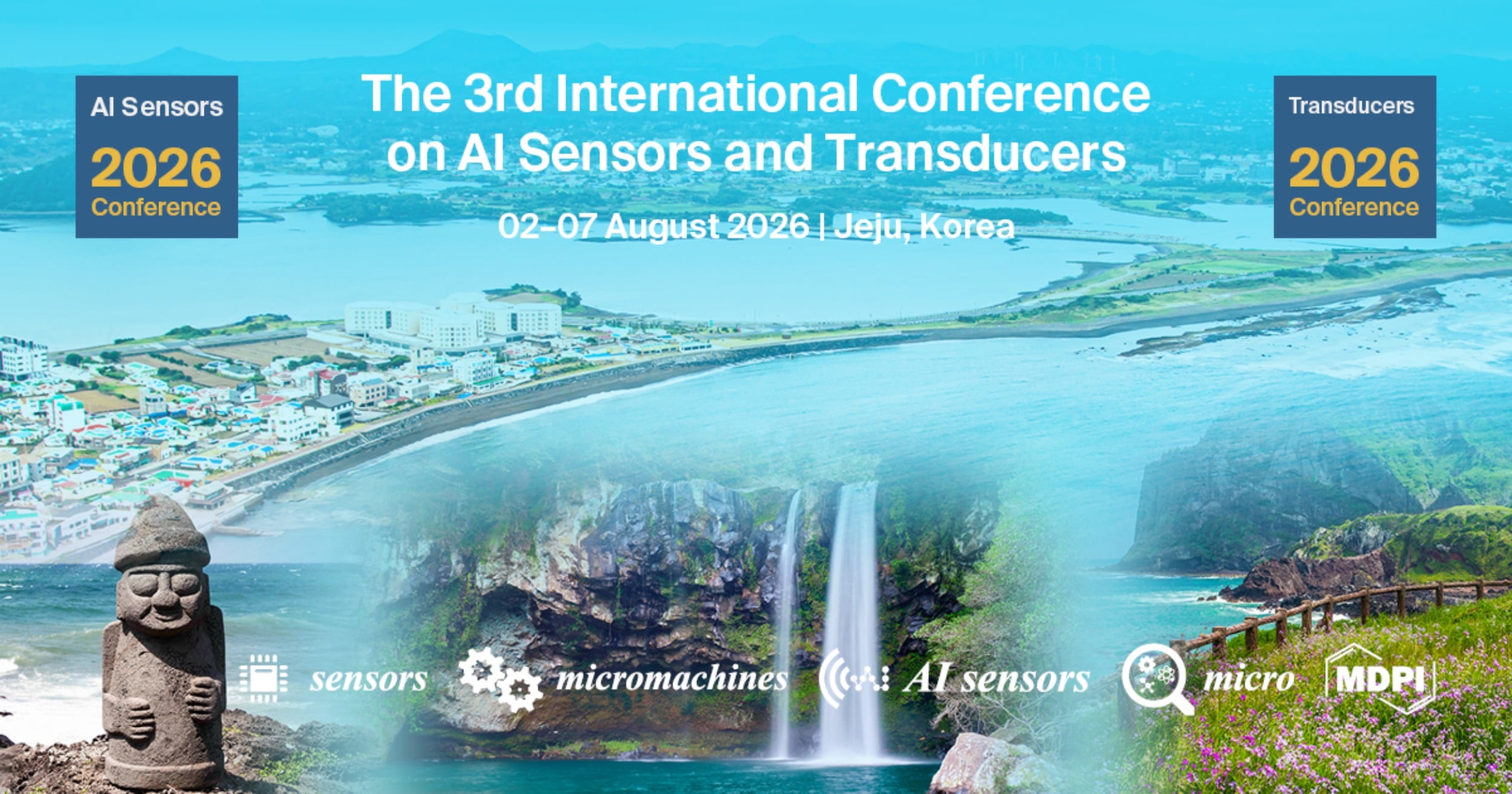
Following from our two previous successful editions, we invite you to submit your abstracts and participate in the 3rd International Conference on AI Sensors and Transducers, taking place from 2 to 7 August 2026 in Jeju, South Korea.
Organized by MDPI and the open access journals Sensors, Micromachines, AI Sensors, Micro and Remote Sensing, this in-person conference will once again bring together experts and participating researchers who will share insights and innovations in sensors, sensing technology, transducers and artificial intelligence.
Start preparing your abstracts:
Don’t miss this opportunity to showcase your work to peers and leading experts in AI-enhanced sensing systems and transducers. We will be announcing the session topics at AIS 2026 soon.
Find out more about the instructions for authors: https://sciforum.net/event/AIS2026?section=#instructions.
Find out more about the publication opportunities available for authors: https://sciforum.net/event/AIS2026?section=#Publicationopportunities.
Please feel free to share the information about this conference to your colleagues and students.
We look forward to welcoming you in Jeju!
The organizing committee of the 3rd International Conference on AI Sensors and Transducers (AIS 2026).
3 June 2026
Meet Us at the 43rd International Symposium on Automation and Robotics in Construction (ISARC 2026), 22–26 June 2026, Singapore

Conference: 43rd International Symposium on Automation and Robotics in Construction (ISARC 2026)
Date: 22–26 June 2026
Location: Singapore
The 43rd International Symposium on Automation and Robotics in Construction (ISARC 2026) will be held from 22 to 26 June 2026, at the National University of Singapore (NUS). As the flagship annual event of the International Association for Automation and Robotics in Construction (IAARC), ISARC serves as a premier global platform for researchers, academics, and industry professionals from the architecture, engineering, construction, and facility management sectors.
In 2026, ISARC will be held jointly with the 34th Annual Conference on Lean Construction (IGLC34) under the central theme “Constructing the Future: Sustainable, Smart, and Lean”. This joint conference aims to address global challenges by integrating lean principles with cutting-edge automation, robotics, and smart technologies, paving the way for a more sustainable and efficient construction industry.
The following open access journals will be represented:
- Buildings;
- Intelligent Infrastructure and Construction;
- Applied Sciences;
- Drones;
- Automation;
- CivilEng;
- Architecture;
- Sensors;
- Infrastructures;
- Robotics.
If you plan on attending this conference, please feel free to stop by our booth. Our delegates look forward to meeting you in person.
For more information about the conference, please visit the following link: https://www.iaarc.org/isarc-2026.
1 June 2026
MDPI INSIGHTS: The CEO’s Letter #35 – 30 Years of Open Science, Open Access Policies, Spain Summit, MMCS 2026 & Antibiotics 2026

Welcome to the MDPI Insights: The CEO's Letter.
In these monthly letters, I will showcase two key aspects of our work at MDPI: our commitment to empowering researchers and our determination to facilitating open scientific exchange.
Opening Thoughts

30 Years of Open Science, Built Together
This month, we officially launched MDPI’s 30th Anniversary campaign and dedicated anniversary website, marking an important milestone in our journey as an open access publisher. What began in 1996 with a single journal and the simple belief that scientific knowledge should be shared openly and freely has grown into a global publishing organization supporting more than 500 journals, 68,000 Editorial Board Members, and millions of researchers worldwide.
The anniversary page, entitled 30 Years of Open Science, Built Together, reflects on the people, milestones, and partnerships that have shaped MDPI over the past three decades. It includes a retrospective of our development, key moments in the evolution of open access, landmark research articles, journal anniversaries, an interview with the CEO, and perspectives from colleagues and partners who have contributed to our success.

Looking back, one of the most striking aspects of our journey is not simply our growth, but the broader transformation of scholarly publishing itself.
Open access has moved from a niche concept to a widely adopted publishing model, helping make research more accessible, discoverable, and impactful for researchers, institutions, policymakers, and society.
MDPI has been part of this transition and continues to invest in the people, technology, partnerships, and research integrity infrastructure needed to support high-quality open science at scale.
While anniversaries naturally encourage reflection, they are also an opportunity to look ahead. The challenges facing scholarly publishing today, including research integrity, artificial intelligence, accessibility, and global participation in science, will require continued collaboration across the research ecosystem. As we celebrate 30 years of publishing, our focus remains on supporting researchers, strengthening trust in open science, and helping shape the future of scholarly communication together.
I encourage you to visit the anniversary page, explore the milestones, and take a moment to reflect on the role each of us has played in contributing to MDPI’s story.
Thank you for being part of this journey.
Impactful Research

Highlights from MMCS 2026 in Beijing (14-17 May)
From 14–17 May, MDPI hosted The 5th Molecules Medicinal Chemistry Symposium (MMCS 2026) in Beijing, China, bringing together academia and industry to explore advances in chemical biology, medicinal chemistry, and drug discovery.
The conference hosted more than 230 attendees from 37 countries and regions, alongside 257 submissions and 145 accepted abstracts. With a significant increase in attendance – up by 100 participants compared with the previous edition – the popularity of MMCS continues to grow in terms of its international profile and scientific relevance within this rapidly evolving field.

The scientific program covered seven themes:
- Chemical Biology for Drug Discovery
- Medicinal Chemistry Research Progress
- Natural Products in Drug Discovery
- AI-enabled Drug Discovery
- GPCR & Ion Channel Targeted Drug Development
- Innovative Proximity-Based Drug Modalities
- Biocatalysis for Natural Product & Drug Synthesis
The event featured three plenary speakers, 14 keynote speakers, 35 selected oral presentations, and 98 poster presentations, creating opportunities for open scientific exchange and collaboration. Conference Chair Prof. Dr. Diego Muñoz-Torrero described this edition as one of the most successful MMCS events to date.
|
|
|


Thanks to our Sponsors
MMCS 2026 secured sponsorship support from 12 industrial partners, 11 of which set up on-site exhibition booths. Covering biopharmaceutical R&D, life science supplies, pharmaceutical experimental instruments, and industrial service sectors, exhibitors were able to connect their businesses directly with attendees and make connections at the conference.

30th Anniversary Celebration of Molecules
During the conference, we also celebrated the 30th anniversary of Molecules, one of MDPI’s flagship journals. The celebration brought together Section Editors-in-Chief, Editorial Board Members, MDPI leadership, and editorial colleagues to reflect on the journal’s development, achievements, and continued future growth.

Events such as MMCS 2026 highlight the important role conferences play in creating scientific exchange and collaboration, and in connecting our research communities in person.
They also reflect the continued development of MDPI’s conference portfolio and our commitment to supporting academic engagement beyond publishing alone. Thanks to everyone involved in organizing and contributing to the success of this event.
Inside MDPI

Open Access Policies Continue to Accelerate Globally
One of the clearest indicators of the continued momentum behind open access is the growing number of national and institutional policies supporting, and increasingly requiring, open dissemination of research.
Around the world, governments, funding agencies, and universities are building their open access mandates, with increasing focus on transparency, rights retention, and public accessibility of publicly funded research. While these policies vary across regions, the broader direction is clear: expectations around openness and compliance continue to accelerate.
For researchers, navigating these evolving requirements can be complex and time-consuming. Supporting the research community therefore means not only publishing high-quality open access content but also helping stakeholders better understand changing requirements and emerging opportunities. At MDPI, we see this as an important part of our role within scholarly communication.
“Expectations around openness and compliance continue to accelerate”
Through the MDPI Blog, our Content team continues to publish monthly articles overviewing different countries’ relationships with open access, exploring their histories, policies, opportunities, and statistics. All this information is centralized into an article which contains brief summaries of each country, with links to all the full articles, and is updated monthly.
Recent Policy Developments
South Africa
In 2026, South Africa’s Department of Science and Innovation introduced the South African Open Science Policy. The policy states that: “Open access shall be required for publications arising from publicly funded research, and desirable for research from all sources of funding.”
The policy envisions a coordinated and broad approach to open science that will sustainably and ethically drive socio-economic development by increasing the practice of open science through policy, training, incentivization, and infrastructure.
Canada
In Canada, the Tri-Agency OA Policy on Publications was revised, removing the 12-month embargo for research that must be deposited in a repository with an open license and with author rights retained.
The Agencies argue that “societal advancement is made possible through widespread and barrier-free access to cutting-edge research and knowledge.”
Chile
Chile is a collaborative and engaged member of the global open access movement.
The National Research and Development Agency (Agencia Nacional de Investigación y Desarrollo, or ANID) is Chile’s main funding agency for R&D. It mandates that all beneficiaries must deposit the final version of their published scientific output, with an embargo period of up to 12 months, into a repository.
ANID also supports the InES Open Science funding program, which allows universities to request funding for capacity and infrastructure building. Further, Chile is an active participant in various international initiatives, such as Redalyc, SciELO, and Red de Repositorios Latinoamericanos.
Openness Beyond Research
At MDPI, openness remains one of our core values, ensuring that research outputs are freely accessible to anyone. This commitment also extends to sharing knowledge about the scholarly publishing landscape itself, which we practice on the MDPI Blog through various topics, including open access, recent advances in science, and opportunities for researchers.
As the open access landscape continues to evolve, helping researchers, institutions, editors, and partners navigate these changes will remain an important priority for us.

Thank You
I would like to thank Jack McKenna (Senior Content Specialist, MDPI) from our Content team for his ongoing work on the MDPI Blog series covering global open access policy developments. Initiatives such as this help make complex policy discussions more accessible and useful to the wider research community.
Coming Together for Science

Reflections from the MDPI Spain Summit 2026 in Valencia (21 May)

On 21 May, we hosted the MDPI Spain Summit 2026 in Valencia.
The Summit brought together 30 Editorial Board Members and MDPI colleagues for a discussions on the future of publishing, research integrity, peer review, artificial intelligence, and the evolving research landscape in Spain.
We hosted participants from leading Spanish institutions and spoke on the importance of Spain as a major contributor to global open access (OA) research. In 2025 alone, Spain ranked among the leading countries worldwide for OA publishing, with more than 85% of publications made openly accessible. MDPI also continues to play a significant role within the Spanish research ecosystem.
MDPI in Spain
Spain remains one of MDPI's most important academic markets and a leading contributor to OA research globally. Ever since our Barcelona office opened in 2016 (Happy 10th Anniversary!), MDPI Spain has been actively supporting researchers, institutions, societies, and academic partners across the country. Today, the office plays an important role in creating engagement with the Spanish scholarly community through editorial support, partnerships, conferences, training initiatives, and outreach activities.
A cluster of high-level indicators highlight both the strength of the local research ecosystem and MDPI’s role within it:
- 43,218 total publications in Spain in 2025, of which 35,728 (83%) were open access (49% Gold OA).
- 211,200+ total publications (2021–2025), with 84% published open access.
- 13,444 MDPI publications from Spanish institutions in 2025, representing 14% of all open access publications in Spain.
- More than115,100 MDPI publications from Spanish institutions since 1996.
- More than 4,500 Editorial Board Members from Spain, including more than 150 Chief Editors and 57 Associate Editors.
- 42 institutional partners participating in MDPI’s Institutional Open Access Program (IOAP).
- Spain ranks second globally for MDPI society affiliations, with 26 affiliated society agreements currently in place.
Program Overview
What made this summit special was the openness of the discussions around the research landscape in Spain and the role MDPI plays within the market. General topics of the presentations included:
- MDPI Introduction – Stefan Tochev (CEO).
- Engagement with the Academic Community – Dr. Marta Colomer (External Affairs Lead).
- Latest Developments in the Editorial Process – Dr. Jordi Martinez (Deputy Managing Editor).
- Research integrity and Publication Ethics – Slavomir Nikodijevic (Research Integrity Specialist).
- A 360 View of Academic Publishing – Prof. Dr. Luis Angel Ruiz Fernandez (EBM of Remote Sensing).
|
|
|
|
|
|
|
|


Panel Discussion
We also hosted a panel discussion moderated by Marta, entitled “The Future of Academic Publishing” with Prof. Luis Ruiz, Prof. Marta Feliz (EBM of the journal Catalysts), Dr. Enric Sayas (Product Owner, AI & Technology Innovation), and myself. The discussion looked at the evolving role of editors, the future of peer review, and the growing importance of maintaining trust, ethics, and research integrity in an era increasingly influenced by artificial intelligence.
|
|
|
|


Themes from the Summit
Several themes emerged throughout the discussions, reflecting broader conversations taking place across publishing:
- The academic community values efficient publishing workflows, but expectations around scientific quality and editorial rigor continue to rise.
- Reviewer fatigue and long-term sustainability of peer review remain major challenges across the industry.
- AI is rapidly changing scholarly communication and requires transparent and responsible governance.
- Reputation and trust continue to depend on long-term engagement, transparency, and quality-focused decision-making.
“Maintaining an open dialogue with researchers, editors, reviewers, and institutions remains a priority for MDPI”
It was constructive to see the willingness of participants to engage directly and candidly with us. These conversations provide insights that help inform how we continue to develop our editorial processes, engagement activities, and support for the research community. While certain discussions included concerns, there was also recognition that open dialogue between publishers and the research community is essential if we want to improve scholarly communication together.
|
|
|
|


Events such as this are increasingly important for MDPI. They allow us to present our perspective, to listen to the experiences, expectations, and concerns of editors, reviewers, and researchers, and to address these accordingly.
Thank You
Thank you to our Barcelona Office and all colleagues involved in organizing the summit, as well as all participants for contributing to these thoughtful and constructive discussions.
|
|
|
|
|
|
|
|


As publishing continues to evolve, maintaining an open dialogue with researchers, editors, reviewers, and institutions remains an important priority for MDPI. Events such as the Spain Summit play an important role in helping us to build relationships, foster trust, and better understand the needs of our community.
Closing Thoughts

Highlights from Antibiotics 2026 in Barcelona (11–14 May)
This week, MDPI hosted the Antibiotics 2026 — Advances in Antimicrobial Action and Resistance conference in Barcelona, bringing together academics and industry experts to discuss one of the most important scientific and public health challenges of our time: antimicrobial resistance.
The conference welcomed 145 attendees from 42 different countries and territories, alongside 265 submissions and 127 accepted abstracts, showing the international reach of the event and the strong scientific interest in this rapidly evolving field.

Scientific Exchange on a Global Challenge
Antimicrobial resistance continues to be a global concern, creating collaboration across disciplines, institutions, and regions. The conference program focused on a range of topics including:
- Antimicrobial resistance mechanisms
- One Health approaches to antimicrobial stewardship
- Discovery of novel antimicrobial agents
- Innovation in clinical strategies and treatment approaches
- Ethnopharmacology and emerging therapies
Through keynote plenaries, invited lectures, oral presentations, and poster sessions, the conference created a platform for dialogue and scientific exchange.
|
|
|


International Participation and Collaboration
One of the highlights of the event was the diversity of participation across both geography and expertise. Researchers and speakers from Europe, North America, Asia, Africa, Australia, and Latin America took part in discussions throughout the conference, highlighting the global nature of both the challenge and the scientific response.
The scientific program included:
- 2 keynote speakers
- 10 invited speakers
- 36 selected talks
- 78 posters
The conference brought together perspectives from academia, healthcare, and industry, helping facilitate interdisciplinary collaboration around future approaches to antimicrobial research and resistance management.
|
|
|
|


The Role of Conferences in Scholarly Communication
Conferences are an important platform for collaboration, scientific exchange, and community-building. Events such as Antibiotics 2026 show the value of bringing researchers together in person to discuss emerging challenges, share new findings, and strengthen international networks across disciplines and regions.

Thank You
I would like to thank the conference chairs, speakers, participants, sponsors, and the entire MDPI conference team for their work in making this event a success. The engagement and positive feedback from attendees highlight the importance of our events in addressing some of the most pressing scientific challenges facing society today.

Chief Executive Officer
MDPI AG
27 May 2026
Meet Us at the 2026 KoSFoST International Symposium and Annual Meeting, 1–3 July 2026, Daejeon, Republic of Korea
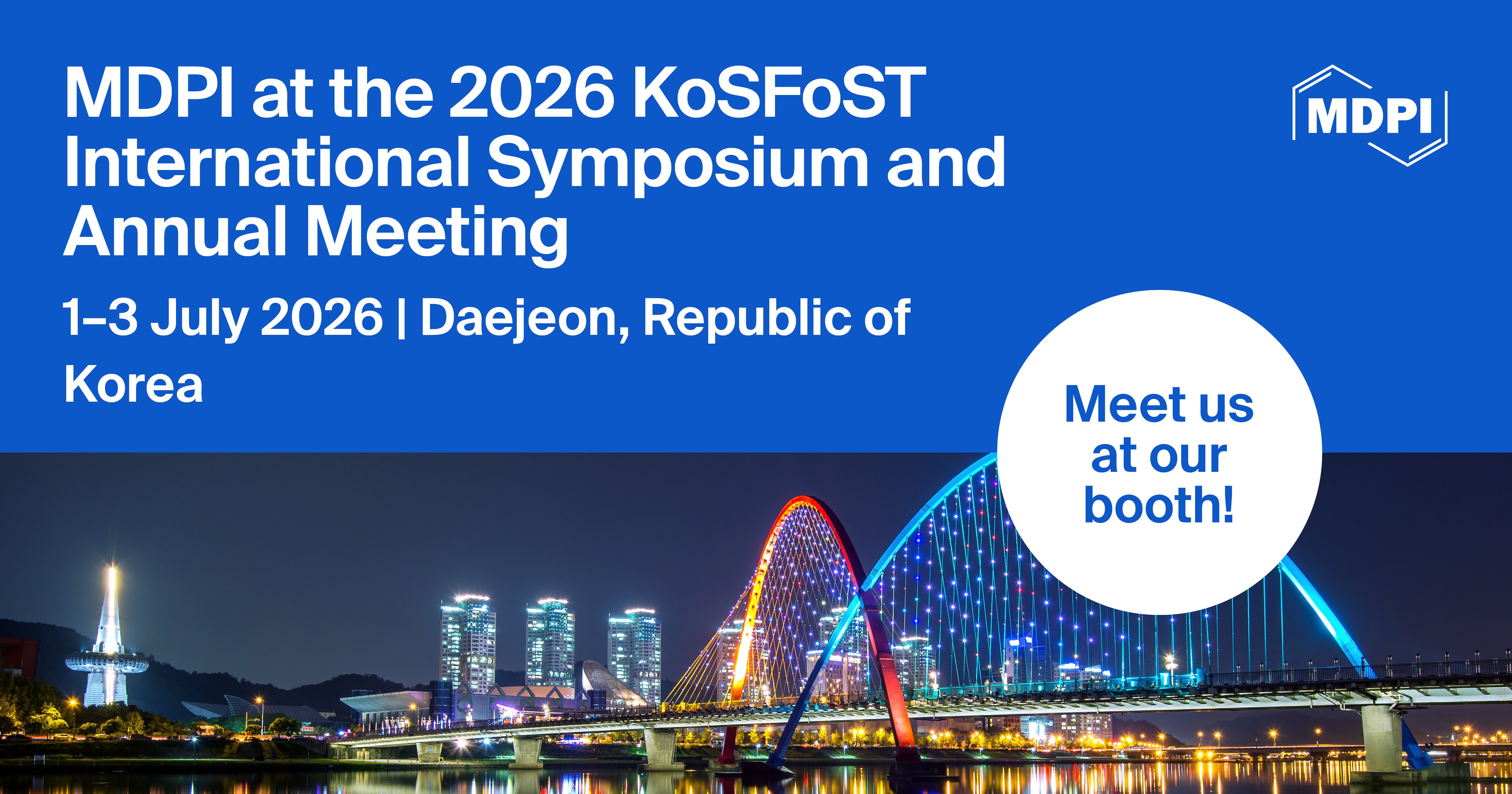
Conference: 2026 KoSFoST International Symposium and Annual Meeting
Date: 1–3 July 2026
Location: Daejeon, Republic of Korea
The Korean Society of Food Science and Technology (KoSFoST), founded in 1968, is one of the leading academic societies in Korea dedicated to advancing food science and technology through research, academic exchange, and industry collaboration.
KoSFoST will hold its International Conference and Annual General Meeting from 1 to 3 July 2026 at the Daejeon Convention Center under the theme “Food Science as a Translational Hub: Bridging Bioresources, Biotechnology, and Human Health”.
MDPI will be attending the conference as an exhibitor and warmly invites researchers to visit our booth to discuss their latest research and publishing opportunities with us.
The following open access journals will be represented at the conference:
- Fermentation;
- Foods;
- Microorganisms;
- Applied Sciences;
- Beverages;
- Molecules;
- Nutraceuticals;
- Processes.
We look forward to welcoming participants to the MDPI booth and discussing the latest research and publishing opportunities together. For more information about the conference, please visit the official website below: 2026 International Symposium and Annual Meeting.
26 May 2026
Applied Sciences Exceptional Reviewers List 2026

We are thrilled to share the updated Exceptional Reviewers List 2026. This program was established to recognize and honor scholars who have consistently delivered exceptional review reports to our journal. Committed to fostering rigorous research and promoting knowledge exchange, Applied Sciences (ISSN: 2076-3417) acknowledges the vital role our reviewers play in maintaining the quality and integrity of the articles we publish. According to surveys conducted in 2025, 93% of our authors rated the peer review process as good or excellent, reflecting the strength and effectiveness of our reviewer community.
We would like to express our sincere appreciation to all the reviewers who have generously volunteered their time and expertise to assist in Applied Sciences’ peer-review process. Their dedication and attention to detail in evaluating manuscripts, offering valuable feedback, and contributing to academic rigor are truly commendable.
The Exceptional Reviewers List was introduced in May 2026. Each quarter, we will be selecting a group of outstanding reviewers and introduce them here.
Q1
|
Name: Dr. Daniele Fattorini |
Name: Dr. Alejandro Arbelaez |
|
Name: Dr. Wenbo Zhu |
Name: Dr. Zheming Liu |
|
Name: Dr. Luca Dimauro |
Name: Dr. Esvan Perez-Perez |
|
Name: Dr. Paweł Rudnicki-Velasquez |
Name: Dr. Matteo Bodini |
|
Name: Dr. William Huxter |
Name: Dr. Giuseppe Ciaburro |
|
Name: Dr. Maciej Kalinowski |
Name: Dr. Juan Calderon |
|
Name: Prof. Dr. Riccardo Liberotti |
Name: Dr. Juan Calderon |
|
Name: Prof. Dr. Helena M. Ramos |
Name: Dr. Lorenzo Albanese |
|
Name: Dr. Edgars Bernans |
Name: Dr. Domenico De Carlo |
|
Name: Dr. Fabrice Brunel |
Name: Dr. Krzysztof Domino |
|
Name: Dr. Valeri Petrov Gochev |
Name: Dr. Chad Schou |
|
Name: Dr. Mironela Pirnau |
Name: Prof. Dr. Zhiguo Qu |
|
Name: Dr. Zlatko Brisevac |
Name: Dr. Carlos D. Gómez-Carmona |
|
Name: Dr. Pawel Kazibudzki |
Name: Dr. Silvie Bernatová |
See what our reviewers have to say about Applied Sciences’ review process:
|
“I am thrilled to serve as a reviewer for Applied Sciences, having consistently positive experiences with multidisciplinary manuscripts and appreciating the clarity and courtesy of communications that result from excellent editorial work.”—Dr. Daniele Fattorini |
|
“I see peer review as a collaborative process. My goal is always to provide detailed, constructive suggestions that can strengthen the manuscript. Being a reviewer allows me to serve the scholarly community, and I hope to make the publication process both rigorous and author-friendly. Reviewing helps me stay current with cutting-edge research and sharpens my own critical thinking. I believe a good review respects the author’s effort while clearly pointing out weaknesses and offering solutions. It’s a responsibility I take seriously.”—Dr. Wenbo Zhu |
|
“Reviewing is an opportunity to contribute to the quality, rigor, and advancement of research through constructive and timely feedback.”—Dr. Esvan Perez-Perez |
|
“Peer review plays a crucial role in maintaining scientific quality and integrity, especially in interdisciplinary research.”—Dr. Paweł Rudnicki-Velasquez |
|
“Peer review is the backbone of quality science. Contributing to Applied Sciences as a reviewer is a privilege that helps ensure rigorous and impactful research reaches the community.”—Dr. Matteo Bodini |
|
“I was pleased to serve as a reviewer for Applied Sciences. This experience allowed me to engage with diverse, high-quality research and contribute to improving the clarity, rigor, and impact of the authors’ work.”—Dr Giuseppe Ciaburro |
|
“Peer-review activity represents, foremost, an important opportunity for intellectual and scientific growth. It allows scholars to engage with researchers from different countries and disciplinary traditions, often addressing topics closely related to, intersecting with, or expanding one’s own field of expertise. |
|
“Through peer review, I contribute to research quality and fairness while gaining early insight into new work and continuously improving my own scientific writing and methodology.”—Dr. Edgars Bernans |
|
“Reviewing interdisciplinary research, including optimization methods and machine learning approaches for resilient railway systems, is a rewarding way to support impactful, high-quality science.”—Dr. Krzysztof Domino |
|
“The activity of a reviewer requires attention, discernment, and responsibility, contributing to strengthening the quality of research and scientific papers. Whenever time allows, I remain seriously involved in this activity.”—Dr. Mironela Pirnau |
|
“I approach peer review with rigor, clarity, and responsibility, aiming to ensure methodological soundness, logical consistency, and a meaningful contribution to scientific knowledge.”—Dr. Pawel Kazibudzki |
You can read more testimonials at the following link:
https://www.mdpi.com/testimonials?type=all&journal_id=90&page_count=50.
22 May 2026
Meet Us at the 2026 International Congress on Membranes and Membrane Processes (ICOM 2026), 18–25 July 2026, San Antonio, Texas, USA
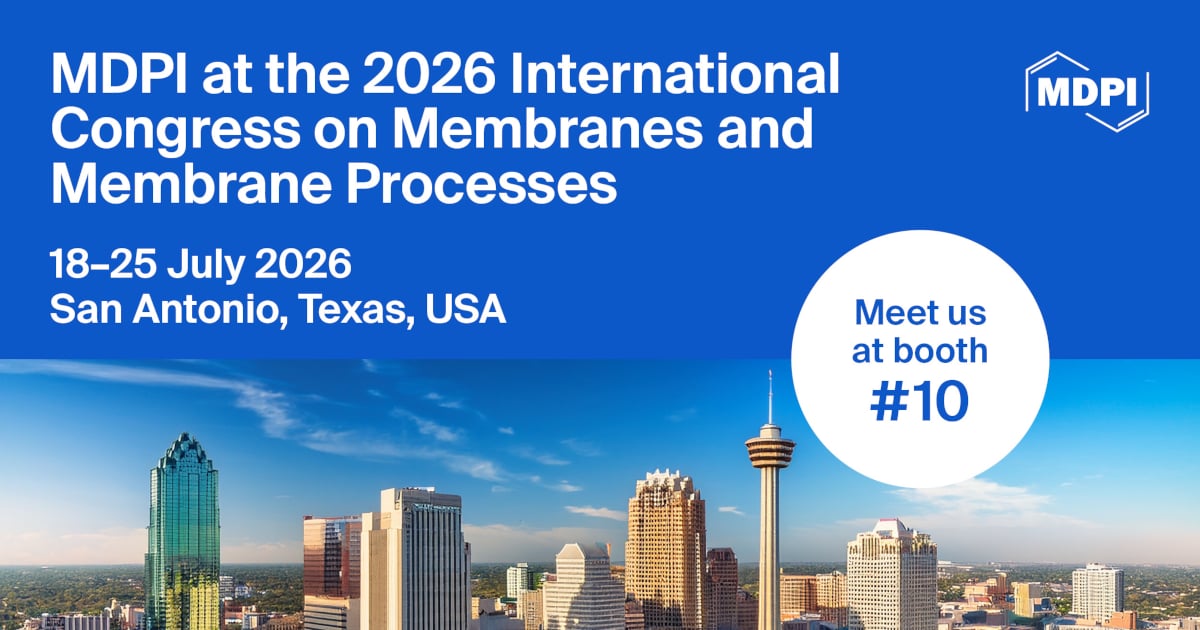
We are pleased to announce that MDPI will be participating in the 2026 International Congress on Membranes and Membrane Processes (ICOM 2026), organized by the North American Membrane Society, taking place from 18 to 25 July 2026 in San Antonio, Texas, USA.
The ICOM 2026 presents a unique opportunity for international and regional communities to collaborate together toward the aim of advancing scalable membrane engineering. Visit our booth to discover MDPI’s latest publications, Special Issues, and open access initiatives in hydrogen technologies and related fields. Our Editors will be on hand to discuss your research and answer any questions about publishing with MDPI.
The following MDPI journals will be represented at this conference:
- Membranes;
- ChemEngineering;
- Purification;
- Materials;
- Applied Sciences;
- Separations;
- Processes;
- Water;
- Clean Technologies.
If you are planning to attend this conference, please feel free to reach out online and start a conversation with us. Our delegates look forward to meeting you in person at our booth and answering any questions you may have. For more information about this event, please click the following link: https://www.membranes.org/icom2026.
21 May 2026
Meet Us at the AIM2026 IEEE/ASME International Conference on Advanced Intelligent Mechatronics (AIM2026), 7–10 July 2026, Genova, Italy

MDPI will be attending the AIM2026 IEEE/ASME International Conference on Advanced Intelligent Mechatronics (AIM2026), which will be held from 7 to 10 July 2026, in Genova, Italy.
The AIM2026 International Conference aims to provide an international and global forum for presenting and discussing the latest advances in Advanced Intelligent Mechatronics.
As the flagship conference focusing on mechatronics and intelligent systems, the IEEE/ASME International Conference on Advanced Intelligent Mechatronics (AIM) brings together an international community of experts to discuss the state of the art, new research results, perspectives of future developments, and innovative applications relevant to mechatronics, robotics, automation, industrial electronics, and related areas.
The following open access journals will be represented:
If you plan to attend this conference, please feel free to stop by our booth and have a conversation with us. Our delegates look forward to meeting you in person and answering any questions that you may have. For more information about the conference, please visit https://aim2026.com/.
14 May 2026
Meet Us at the 35th International Conference on Adaptive Structures and Technologies (ICAST 2026), 1–3 June 2026, Hongkong, China

MDPI will attend the ICAST 2026, which will take place in Hongkong, from 1 to 3 June 2026.
Smart and adaptive structures have attracted growing attention from both academia and industry due to their transformative potential across engineering, materials science, and intelligent systems. As a long-standing and internationally recognized conference series, ICAST continues to bring together researchers, engineers, and innovators advancing the frontiers of adaptive structures, smart materials, vibration control, energy harvesting, and related technologies. Building on over three decades of successful conferences held across North America, Asia, and Europe, the 35th International Conference on Adaptive Structures and Technologies (ICAST 2026), hosted by The Hong Kong University of Science and Technology, offers a valuable platform for interdisciplinary exchange and collaboration. Held in the dynamic and innovation-driven city of Hong Kong, the conference provides participants with the opportunity to engage with leading experts and explore the latest developments shaping the future of smart and sustainable technologies.
The following MDPI journals will be represented at the conference:
- Applied Sciences;
- Micromachines;
- Journal of Experimental and Theoretical Analyses (JETA);
- Aerospace;
- Wind;
- Acoustics;
- Journal of Low Power Electronics and Applications (JLPEA).
If you are planning on attending this conference, please do not hesitate to stop by our booth and start a conversation with us. Our delegates look forward to meeting you in person and answering any questions that you may have. For more information about the conference, please visit the following website: https://icast2026.hkust.edu.hk/.
14 May 2026
Applied Sciences Webinar | Tunneling and Underground Engineering: Recent Advances and Challenges, 18 May 2026

Message from the webinar Chair:
We warmly welcome you to this webinar entitled “Tunneling and Underground Engineering: Recent Advances and Challenges”. As urban spaces become increasingly congested, the development and utilization of underground space have gained paramount importance. This webinar therefore brings together leading experts to share cutting-edge research and practical innovations in tunnel construction, trenchless technologies, and geotechnical engineering.
Our distinguished speakers will present on topics including TBM performance prediction, rock mass characterization, and the latest advances in long‑distance rectangular pipe jacking technology. Through these presentations and discussions, you will gain valuable insights into the current trends, challenges, and future directions of underground engineering. We hope this event fosters inspiring exchanges and collaborations among professionals and researchers in the field.
Thank you for joining us, and we wish you a fruitful webinar.
Date: 18 May at 9:00 a.m. CEST | 3:00 p.m. CST (Asia)
Webinar ID: 898 4658 5889
Webinar webpage: https://sciforum.net/event/ApplSci-27
Register now for free!

Program:
|
Speaker |
Presentation Title |
Time in CEST |
Time in CST (Asia) |
|
Prof. Dr. Zhanping Song (Chair) |
Chair Introduction |
9:00–9:10 a.m. |
3:00–3:10 p.m. |
|
Prof. Dr. Saffet Yagiz |
Improving the Calibration of Terrestrial Laser Scanners (TLSs) |
9:10–9:30 a.m. |
3:10–3:30 p.m. |
|
Dr. Peng Ma |
The Relms vs. Splats Wars in Generalized Scene Reconstruction (GSR) |
9:30–9:50 a.m. |
3:30–3:50 p.m. |
|
|
Q&A Session |
9:50–10:05 a.m. |
3:50–4:05 p.m. |
|
Prof. Dr. Zhanping Song |
Closing of Webinar |
10:05–10:10 a.m. |
4:05–4:10 p.m. |
Once you register, you will receive a confirmation email containing information on how to join the webinar. Registrations with academic and institutional email addresses will be prioritized.
Unable to attend? Register anyway, and we will let you know when the recording becomes available.
Webinar Chair and Keynote Speakers:
- Prof. Dr. Zhanping Song, Department of Geotechnical and Underground Engineering, School of Civil Engineering, Xi'an University of Architecture and Technology, China;
- Prof. Dr. Saffet Yagiz, Department of Mining Engineering, School of Mining and Geosciences, Nazarbayev University, Kazakhstan;
- Dr. Peng Ma, Department of Geotechnical and Underground Engineering, School of Civil Engineering, Xi'an University of Architecture and Technology, China.
