




Next Issue
Volume 14, March
Previous Issue
Volume 14, January


Toxics, Volume 14, Issue 2 (February 2026) – 79 articles
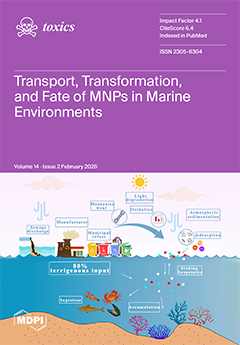
Cover Story (view full-size image): Micro- and nanoplastics (MNPs) pervade marine environments, yet their ecological impacts remain unclear. This review examines how MNPs transport, transform, and affect ocean ecosystems. MNPs travel long distances while fragmenting, accumulating from surface waters to deep sediments. They threaten critical habitats like seagrass beds and coral reefs. Marine organisms ingest these particles, leading to oxidative stress, metabolic disruption, and immune impairment. The “Plastisphere” may also facilitate pathogen spread. Beyond direct effects, MNP pollution may disrupt carbon sequestration and food web stability. The authors outline research priorities: improved detection, long-term ecosystem studies, and understanding interactions with other pollutants—essential steps for addressing this growing marine threat. View this paper
  • Issues are regarded as officially published after their release is announced to the table of contents alert mailing list.
  • You may sign up for e-mail alerts to receive table of contents of newly released issues.
  • PDF is the official format for papers published in both, html and pdf forms. To view the papers in pdf format, click on the "PDF Full-text" link, and use the free Adobe Reader to open them.
Order results
Result details
Section
Select all
Export citation of selected articles as:
22 pages, 2618 KB  
Article
Effects of Salinization, Oil Contamination, and Heavy Metals on Soil Biological Activity and Phytoremediants
by Gulnas Rafikova, Svetlana Mukhamatdyarova, Elena Kuzina, Liliya Kulbaeva, Milyausha Iskuzhina and Tatyana Korshunova
Toxics 2026, 14(2), 186; https://doi.org/10.3390/toxics14020186 - 23 Feb 2026
Viewed by 1323
Abstract
Using plants to restore soils subjected to salinization and polychemic pollution can be an effective way to return agricultural land to circulation and obtain safe products. In this study, experiments were conducted with oats and lupine to evaluate their ability to purify soils [...] Read more.
Using plants to restore soils subjected to salinization and polychemic pollution can be an effective way to return agricultural land to circulation and obtain safe products. In this study, experiments were conducted with oats and lupine to evaluate their ability to purify soils contaminated with copper (II) and nickel (II) ions, carbonate and sulfate anions and oil and their combinations. The biological activity of the soil, phytotoxicity, and hydrocarbon content, as well as plant growth and biochemical parameters in polluted soil, were studied. The enzymes most sensitive to soil contamination were catalase, urease, and phosphatase. Copper ions inhibited oat root growth by 45.7% and lupine by 46.6%. Oil and its mixtures with other pollutants inhibited shoot growth by up to 50.3% in oats and up to 28.6% in lupine. The content of malonic dialdehyde increased in oats when exposed to copper, while in lupines, it increased 2.9-fold when exposed to oil. Flavonoids in oats increased with metal contamination (by 9–16.7%), while in lupines with oil (by 8.6%). Chlorophyll fluctuations were less pronounced in oats than in lupine. Despite the stress experienced by plants due to soil pollution, the degradation rate of petroleum hydrocarbons under oat and lupine crops was 33–46%. In general, oats and lupine are promising for the phytoremediation of complexly polluted and saline soils. Full article
Show Figures

Graphical abstract

30 pages, 2502 KB  
Review
Phthalate Esters in Aquatic Ecosystems: A Multiscale Threat from Molecular Disruption to Ecological Risks
by Zhicheng Sun, Marriya Sultan, Jian Han, Chunsheng Liu and Yanbo Ma
Toxics 2026, 14(2), 185; https://doi.org/10.3390/toxics14020185 - 23 Feb 2026
Cited by 3 | Viewed by 1936
Abstract
Phthalate esters (PAEs), ubiquitous plastic additives, have emerged as persistent contaminants in aquatic ecosystems, yet their propagation from molecular initiating events to ecosystem-level collapse remains poorly integrated. This review synthesizes current knowledge on the source-to-sink dynamics of PAEs, revealing a critical paradox in [...] Read more.
Phthalate esters (PAEs), ubiquitous plastic additives, have emerged as persistent contaminants in aquatic ecosystems, yet their propagation from molecular initiating events to ecosystem-level collapse remains poorly integrated. This review synthesizes current knowledge on the source-to-sink dynamics of PAEs, revealing a critical paradox in their bioaccumulation patterns: unlike classical persistent organic pollutants, high molecular weight PAEs exhibit distinct trophic dilution rather than biomagnification along food webs, driven by metabolic biotransformation in higher trophic organisms. Despite this dilution, PAEs trigger a bottom-up toxicity cascade. Driven by molecular initiating events, PAEs induce a range of adverse effects at the individual level, including immunotoxicity, neurotoxicity, endocrine disruption, metabolic dysfunction, and trans-trophic oxidative stress. Crucially, prolonged exposure drives epigenetic reprogramming, which reduces reproductive output, thereby threatening long-term population recruitment. These individual and population deficits could escalate into higher ecological consequences, specifically by diminishing benthic biological control over phytoplankton, dampening energy transfer efficiency, and simplifying community structure, thereby posing a potential threat to primary productivity and aquatic ecosystem sustainability. Despite recent advances, critical knowledge gaps remain, particularly regarding their cascading impacts on ecosystem services, as well as synergistic interactions between PAEs and other contaminants. In order to validate laboratory results with actual ecological risk assessments, future research should incorporate multi-scale models and quantitative adverse outcome Pathways as well as their synergistic interactions between PAEs and other contaminants, and advanced in vitro systems such as organoids. Resolving these issues is essential to reducing the risks that PAEs pose to aquatic environments. Full article
(This article belongs to the Special Issue Aquatic Toxicity of Emerging Contaminants)
Show Figures

Graphical abstract

11 pages, 1440 KB  
Article
Removal of Tetracycline via Ultraviolet-Activated Peroxyacetic Acid: Performance and Mechanism
by Yiting Luo and Rongkui Su
Toxics 2026, 14(2), 184; https://doi.org/10.3390/toxics14020184 - 20 Feb 2026
Cited by 1 | Viewed by 876
Abstract
To address the worsening environmental pollution caused by the large-scale release of tetracycline (TC) into the environment, this study developed an advanced oxidation system utilizing ultraviolet (UV)-activated peroxyacetic acid (PAA) for the removal of TC. The results showed that the UV/PAA system exhibited [...] Read more.
To address the worsening environmental pollution caused by the large-scale release of tetracycline (TC) into the environment, this study developed an advanced oxidation system utilizing ultraviolet (UV)-activated peroxyacetic acid (PAA) for the removal of TC. The results showed that the UV/PAA system exhibited markedly enhanced performance compared to individual treatments. Under identical conditions (1.0 mM PAA, 400 W UV irradiation), the TC removal rates by PAA alone and UV irradiation alone were 25.80% and 55.05%, respectively. In contrast, the combined UV/PAA system achieved a significantly higher degradation efficiency of 79.77%, which was 3.09 times and 1.45 times higher than that of PAA and UV processes alone. This superior performance is attributed to the generation of highly reactive species within the system. The degradation process followed pseudo-first-order kinetics. An increase in TC concentration led to a decrease in degradation efficiency, whereas elevating the PAA dosage or light intensity increased the concentration of radicals in the system, thereby enhancing removal performance. Overall degradation efficiency was slightly higher under alkaline conditions compared to acidic conditions, while neutral conditions resulted in slower degradation rates. Among coexisting anions, HCO3 and H2PO4 inhibited TC degradation, SO42− and Cl exhibited negligible effects, and NO3 promoted the degradation of TC. Radical quenching experiments confirmed that hydroxyl radicals (·OH) were the dominant reactive species, working together with superoxide anion radicals (O2·) and singlet oxygen (1O2) to drive TC degradation in the UV-activated PAA system. Experiments conducted in real water matrices demonstrated that the system could effectively degrade TC in ultrapure water, tap water, and campus lake water, highlighting its strong environmental adaptability. These findings provide both technical support and a theoretical foundation for the treatment of antibiotic pollutants. Full article
(This article belongs to the Section Emerging Contaminants)
Show Figures

Figure 1

15 pages, 915 KB  
Article
Pollution Characteristics and Risk Assessment of Chlorinated Paraffins in Seawater and Kelp from Kelp Mariculture Areas of the Shandong Peninsula
by Long Xiao, Jingjing Luo, Jinzhao Hou, Qingkui Cui, Yuzhu Ding, Yuhui Tang, Jia Liu, Yanqing Sun, Jing Wang, Dianfeng Han and Yingjiang Xu
Toxics 2026, 14(2), 183; https://doi.org/10.3390/toxics14020183 - 18 Feb 2026
Viewed by 883
Abstract
Chlorinated paraffins (CPs) are persistent, bioaccumulative, and toxic. In marine environments, most studies have focused on short-chain CPs (SCCPs) in animals, while medium-and long-chain CPs (MCCPs and LCCPs) in plants have been neglected. In this study, samples collected from kelp mariculture zones in [...] Read more.
Chlorinated paraffins (CPs) are persistent, bioaccumulative, and toxic. In marine environments, most studies have focused on short-chain CPs (SCCPs) in animals, while medium-and long-chain CPs (MCCPs and LCCPs) in plants have been neglected. In this study, samples collected from kelp mariculture zones in different seasons were analyzed for the CPs’ contamination characteristics and spatiotemporal distributions in seawater and contamination profiles, bioaccumulation behavior, and dietary exposure risks in kelp. In seawater, the total concentration ranges of SCCPs, MCCPs, and LCCPs were 25.44–245.75, 8.24–27.19, and not detected at 3.26 ng/L, respectively. Spatially, the CP concentrations were influenced by industrial discharge, riverine inputs, and dilution effects, and were significantly higher in nearshore water than in offshore areas (p < 0.05). The concentrations were significantly higher in February than in May, which was attributed to emissions from winter heating and reduced vessel activity during a fishing moratorium. In kelp, the total concentration ranges of SCCPs, MCCPs, and LCCPs were 5.4–210.9, 0.007–0.87, and 0.0–4.45 ng/g wet weight, respectively. Kelp exhibited significant growth-stage-dependent bioaccumulation of CPs, with higher CP concentrations and bioaccumulation factors in its tender stage (February) than during its mature stage (May). Congener analysis revealed similar composition patterns between seawater and kelp. According to a dietary risk assessment (hazard quotient < 0.01), the potential health risks associated with kelp consumption are low. Full article
Show Figures

Graphical abstract

17 pages, 7887 KB  
Article
Cigarette Smoke Extract Combined with LPS Upregulates PITPβ Expression in Chronic Pulmonary Inflammation and May Be Related to the EGFR/ERK Signaling Pathway
by Yan Sun, Haojie Li, Xueqing Zhu and Jue Song
Toxics 2026, 14(2), 182; https://doi.org/10.3390/toxics14020182 - 18 Feb 2026
Viewed by 965
Abstract
Dysregulated lipid metabolism is increasingly implicated in the pathogenesis of chronic obstructive pulmonary disease (COPD), yet the role of lipid transporters in cigarette smoke (CS)-induced chronic pulmonary inflammation remains unclear. Phosphatidylinositol transfer protein β (PITPβ) is a key regulator of phospholipid transport and [...] Read more.
Dysregulated lipid metabolism is increasingly implicated in the pathogenesis of chronic obstructive pulmonary disease (COPD), yet the role of lipid transporters in cigarette smoke (CS)-induced chronic pulmonary inflammation remains unclear. Phosphatidylinositol transfer protein β (PITPβ) is a key regulator of phospholipid transport and phosphatidylinositol (PI) homeostasis. This study aims to investigate the expression of PITPβ in a COPD model induced by cigarette smoke extract (CSE) and lipopolysaccharide (LPS) and to elucidate whether its upregulation is regulated by the epidermal growth factor receptor/extracellular signal-regulated kinase (EGFR/ERK) signaling pathway. This study established an in vivo model through combined CS and LPS exposure and an in vitro model through combined CSE and LPS treatment. In the rat model, significant pathological changes characteristic of COPD were observed, accompanied by marked upregulation of PITPβ, tumor necrosis factor-α (TNF-α), and interleukin-6 (IL-6) expression. In human alveolar epithelial A549 cells, combined CSE and LPS treatment not only upregulated PITPβ, TNF-α, and IL-6 expression but also enhanced the phosphorylation levels of EGFR and ERK. Inhibition or silencing of ERK reduces PITPβ expression and downregulates TNF-α and IL-6 levels, whereas overexpression of ERK produces the opposite effect. Silencing EGFR reduces ERK phosphorylation while simultaneously inhibiting PITPβ, TNF-α, and IL-6 expression. Furthermore, combining EGFR silencing with ERK inhibition further decreases PITPβ expression. These findings indicate that CSE combined with LPS induces PITPβ upregulation in chronic pulmonary inflammation, with the EGFR/ERK signaling pathway at least partially mediating this process. This suggests that PITPβ may serve as a potential therapeutic target for COPD. Full article
Show Figures

Graphical abstract

18 pages, 502 KB  
Article
Uncovering Benzene Pollution Patterns Using an Interpretable, Setting-Aware Artificial Intelligence Approach
by Ivan Bešlić, Timea Bezdan, Gordana Jovanović, Silvije Davila, Gordana Pehnec, Snježana Herceg Romanić, Andreja Stojić and Mirjana Perišić
Toxics 2026, 14(2), 181; https://doi.org/10.3390/toxics14020181 - 18 Feb 2026
Cited by 2 | Viewed by 945
Abstract
We investigated benzene variability in an urban environment using an interpretable, setting-based artificial intelligence framework. A seven-year dataset (2017–2023) of hourly pollutant concentrations (benzene, NO2, SO2, CO, O3) measured in Zagreb (Croatia) was analyzed, as were meteorological [...] Read more.
We investigated benzene variability in an urban environment using an interpretable, setting-based artificial intelligence framework. A seven-year dataset (2017–2023) of hourly pollutant concentrations (benzene, NO2, SO2, CO, O3) measured in Zagreb (Croatia) was analyzed, as were meteorological variables. Multiple-ensemble decision tree models were developed, with hyperparameters optimized using metaheuristic algorithms. The best-performing model, Extra Trees optimized by the Sine Cosine Algorithm, achieved an R2 of 0.87. Model interpretation employed Shapley additive explanations (SHAP), followed by PaCMAP embedding and HDBSCAN clustering to identify coherent environmental settings. Seven settings (C0–C6) and one residual group were identified, representing pollution-enhancing, suppressing, and transitional regimes. Two settings dominated benzene extremes. C6 reflected winter stagnation, characterized by strong combustion influence (CO contribution of 11.9%), shallow boundary layers (~290 m), weak winds, and high humidity. C4 represented a synoptic stability regime with enhanced heat fluxes and diminished after the COVID-19 period, consistent with altered anthropogenic activity. Low-benzene settings (C0, C1, C3) were associated with stronger mixing and higher oxidizing capacity, while transitional settings (C2, C5) reflected moderate conditions. Overall, the results show that a small number of environmental settings governed the benzene extremes, providing a transferable and interpretable framework for air quality assessment and policy support. Full article
Show Figures

Graphical abstract

25 pages, 946 KB  
Review
Exploring Sulpiride as an Alternative to Testosterone Propionate for Inducing Benign Prostatic Hyperplasia in Rodent Models
by Solomon Owumi, Esther M. Pius, Hikmah A. Abdulganiyu, Ifeoluwa O. Alabi, Victor O. Eso, Abdullah A. Sanusi, Oluwaseun M. Owolabi, Uche O. Arunsi, Jesutosin O. Babalola, Moses T. Otunla, Ayomide P. Akomolafe, Emiola O. Olapade-Olaopa, Adegboyega K. Oyelere, Olorunseun O. Ogunwobi and Chima M. Amadi
Toxics 2026, 14(2), 180; https://doi.org/10.3390/toxics14020180 - 18 Feb 2026
Cited by 1 | Viewed by 2690
Abstract
Benign prostatic hyperplasia (BPH) is a significant health issue among ageing men, with ongoing research focused on elucidating its underlying mechanisms and improving experimental models. Testosterone Propionate (TP) is the first line of choice for the induction of BPH in experimental rodent models. [...] Read more.
Benign prostatic hyperplasia (BPH) is a significant health issue among ageing men, with ongoing research focused on elucidating its underlying mechanisms and improving experimental models. Testosterone Propionate (TP) is the first line of choice for the induction of BPH in experimental rodent models. However, TP’s controlled status as a Schedule III drug in the United States and a Class C drug in the UK presents challenges in obtaining TP for experimental use, giving preference to the sulpiride model since it is easily obtained as an alternative for the induction and study of BPH. A comprehensive literature search was conducted across multiple electronic databases, including PubMed/MEDLINE, Embase, and Web of Science. The primary PubMed search strategy included combinations of Medical Subject Headings (MeSH) and free-text terms: (“Benign prostatic hyperplasia induction” OR “and rodent models’’) AND (“Testosterone Propionate model”) AND (“sulpiride model”). Studies were included if they induced BPH (using testosterone or sulpiride models). Titles and abstracts were screened for relevance; eligible articles underwent full-text review, with data extracted thematically. No formal risk-of-bias scoring was used due to the narrative approach; instead, studies were appraised by design, rigor, plausibility, and evidence. This study reviewed published and publicly available data, so no ethical approval was required. Although both TP and sulpiride induce BPH via various mechanisms, this review provides a comparative analysis of these two commonly utilised models for studying BPH. In the TP approach, castrated rodents receive daily subcutaneous injections for 4 weeks, resulting in dihydrotestosterone (DHT)-mediated epithelial hyperplasia predominantly affecting the ventral prostate lobes. Conversely, the sulpiride model is non-invasive, employs intact animals treated with sulpiride, and induces hyperprolactinemia-mediated BPH via interactions with androgen and oestrogen receptor pathways that stimulate prostatic stromal and epithelial proliferation, particularly in the lateral and dorsal lobes, representing an alternative method. We also highlight the strengths and limitations of TP and sulpiride in replicating clinical symptoms and examine the toxicological effects of sulpiride on the kidney, testis, liver, and brain. We recommend the sulpiride model for the induction and studying of BPH, as it is readily accessible and closely mimics the pathogenesis of BPH in humans, unlike the TP model, which requires castration. Full article
Show Figures

Graphical abstract

18 pages, 3476 KB  
Article
A Critical Comparison of Exposure Estimators for Airborne Particulate Matter in Urban Cyclists
by Elie Al Marj, Ilann Mahou, Roy M. Harrison, Francis D. Pope, Alexandra Fort and Aurelie Charron
Toxics 2026, 14(2), 179; https://doi.org/10.3390/toxics14020179 - 17 Feb 2026
Viewed by 1342
Abstract
Urban cyclists experience elevated traffic-related air pollutant (TRAP) exposures due to proximity to emissions and increased breathing rates during exercise. Conventional assessments rely on concentration summaries, which may misrepresent actual inhaled doses and misclassify individuals in health studies. Street-level concentrations exhibit high temporal [...] Read more.
Urban cyclists experience elevated traffic-related air pollutant (TRAP) exposures due to proximity to emissions and increased breathing rates during exercise. Conventional assessments rely on concentration summaries, which may misrepresent actual inhaled doses and misclassify individuals in health studies. Street-level concentrations exhibit high temporal variability, producing non-normal distributions that challenge conventional averaging approaches. This study compares concentration- and dose-based methods to characterize cyclist exposure during urban commuting. Fifty-seven healthy adults completed cycling trips on two 9-km routes (high- and low-traffic) using conventional or electrically assisted bicycles. Real-time monitoring measured black carbon, ultrafine particles, PM2.5, and PM10. Heart rate-derived breathing rates enabled individualized inhaled dose calculations using three temporal integration methods. Mean concentrations correlated strongly with time-integrated concentrations (r = 0.988–0.998). Simplified dose calculations closely approximated full temporal integration (r > 0.999), with median dose ratios of 0.99–1.01. However, correlations between mean concentrations and inhaled doses were weaker (r = 0.72–0.78). Between 29% and 50% of participants changed exposure quartiles when comparing concentration- and dose-based classifications, with the highest reclassification for ultrafine particles (46–50%). These findings demonstrate that physiological variability substantially influences exposure classification during active commuting, supporting the integration of inhaled dose metrics in cyclist exposure assessment and epidemiological studies. Full article
(This article belongs to the Special Issue Effects of Air Pollutants on Cardiorespiratory Health)
Show Figures

Graphical abstract

13 pages, 1142 KB  
Article
Effects of Short-Term Exposure to Polystyrene Nanoplastics on the Nervous System: Calcium Homeostasis, BDNF and Synaptic Plasticity
by Yiming Zhao, Licheng Yan, Yizhe Wei, Jianping Ma, Jiang Chen, Xuan Liu, Yanan Mi, Bingyan Wang, Leili Zhang, Lei Tian and Bencheng Lin
Toxics 2026, 14(2), 178; https://doi.org/10.3390/toxics14020178 - 17 Feb 2026
Cited by 1 | Viewed by 1369
Abstract
(1) Background: The increasing environmental concentration of polystyrene nanoplastics (PS-NPs) may pose a risk of human exposure and health threats. Previous studies have demonstrated that exposure to PS-NPs poses a threat to neural synaptic plasticity, yet the underlying mechanisms remain unclear. (2) Methods: [...] Read more.
(1) Background: The increasing environmental concentration of polystyrene nanoplastics (PS-NPs) may pose a risk of human exposure and health threats. Previous studies have demonstrated that exposure to PS-NPs poses a threat to neural synaptic plasticity, yet the underlying mechanisms remain unclear. (2) Methods: Hippocampal astrocytes and neurons were co-cultured, exposed to PS-NPs at concentrations of 10, 50, and 100 μg/mL, and cytotoxicity was assessed. We investigated PS-NP-induced impairment of synaptic plasticity by regulating the brain-derived neurotrophic factor (BDNF). (3) Results: Calmodulin-dependent protein kinase II (CaMKII) is a central molecular organizer of synaptic plasticity, learning, and memory, and its activity is intrinsically linked to intracellular calcium ion concentration. Our research indicates that PS-NPs may interfere with calcium ion signaling and CaMKIIα activity, thereby reducing CaMKIIα activity. This subsequently downregulates the expression of cAMP response element-binding protein (CREB), modulates BDNF expression, and impacts synaptic plasticity. (4) Conclusions: In summary, this study primarily focused on the effects of PS-NPs exposure on hippocampal synaptic plasticity. Full article
Show Figures

Graphical abstract

27 pages, 8601 KB  
Article
Occurrence and Characterization of Acrylate-Based Self-Polishing Copolymer Anti-Fouling Paint Particles (SPC-APPs) in the Sediments of the Yangtze River Estuary
by Can Zhang, Jianhua Zhou and Deli Wu
Toxics 2026, 14(2), 177; https://doi.org/10.3390/toxics14020177 - 17 Feb 2026
Viewed by 1446
Abstract
Acrylate-based self-polishing copolymer antifouling paint particles (SPC-APPs) are persistent micropollutants that act as carriers for biocidal heavy metals, posing significant ecological hazards to aquatic ecosystems. Despite their toxicity, the occurrence, characterization, and metal-leaching risks of SPC-APPs in estuarine environments remain largely understudied. This [...] Read more.
Acrylate-based self-polishing copolymer antifouling paint particles (SPC-APPs) are persistent micropollutants that act as carriers for biocidal heavy metals, posing significant ecological hazards to aquatic ecosystems. Despite their toxicity, the occurrence, characterization, and metal-leaching risks of SPC-APPs in estuarine environments remain largely understudied. This study investigated the contamination characteristics of SPC-APPs in surface sediments from the Yangtze River Estuary, a hotspot of shipping activity. A multi-technique analytical protocol was employed, combining density separation with scanning electron microscopy–energy-dispersive spectroscopy (SEM-EDS), inductively coupled plasma mass spectrometry (ICP-MS), and pyrolysis–gas chromatography/mass spectrometry (Py-GC/MS) to characterize the morphology, quantify particle abundance, and assess the correlation between SPC-APPs and sedimentary heavy metals. SPC-APPs were ubiquitously detected across all sampling sites, with abundances ranging from (0.82 ± 0.15) × 103 to (3.65 ± 0.42) × 103 particles g−1 dry sediment. A distinct distribution property (South Branch > North Branch > offshore shoal) was identified, primarily driven by shipping density and hydrodynamic sorting. Morphologically, particles exhibited irregular, abraded surfaces, with EDS confirming Cu (1.76~5.63 wt%) and Zn (0.27~3.65 wt%) as major metallic components. Py-GC/MS analysis identified specific mass fragments (m/z 41, 69, 87) as diagnostic markers. Strong positive correlations were observed between SPC-APP abundance and sediment Cu (r = 0.82, p < 0.01) and Zn (r = 0.76, p < 0.01) concentrations, indicating that these particles are a primary source of metal contamination. Ecological risk assessment based on sediment quality benchmarks showed that Cu in the South Branch reached 82~91% of the probable effect concentration (PEC), highlighting potential risks to benthic organisms. This study provides critical baseline data on the distribution and speciation of SPC-APPs, underscoring their role as vectors for toxic metals and the need for targeted pollution control in high-shipping-intensity estuarine regions. Full article
(This article belongs to the Section Emerging Contaminants)
Show Figures

Figure 1

17 pages, 1216 KB  
Article
Evaluation of the Health Status of Apis mellifera in Relation to the Use of Plant Protection Products in Viticulture Through a Multi-Biomarker Approach
by Tommaso Campani, Agata Di Noi, Ginevra Manieri, Ilaria Caliani and Silvia Casini
Toxics 2026, 14(2), 176; https://doi.org/10.3390/toxics14020176 - 17 Feb 2026
Cited by 1 | Viewed by 1181
Abstract
The global pollinator decline is linked to intensive farming and the high use of plant protection products (PPPs), necessitating risk assessment and mitigation. This study investigates the potential negative impacts of agricultural practices on pollinator health, specifically focusing on the effects of PPPs [...] Read more.
The global pollinator decline is linked to intensive farming and the high use of plant protection products (PPPs), necessitating risk assessment and mitigation. This study investigates the potential negative impacts of agricultural practices on pollinator health, specifically focusing on the effects of PPPs used in viticulture on the honey bee, Apis mellifera, despite grapevines’ lack of reliance on bee pollination. The beehives sampled were from two farms with vineyards under different management regimes: one transitioning from conventional to organic practices and an organic–biodynamic site with pollinator mitigation measures. Sampling was conducted during three phases, pre-, during, and post-PPP application, to evaluate biomarkers of neurotoxicity (AChE), detoxification enzymes (CaE, GST), metabolic stress (ALP), and immune markers (Lys, PO, proPO). Comparison between the organic–biodynamic farm and the transitioning one revealed a pattern suggesting significant neurotoxic effects in the transitioning farm characterised by a trend of decreased AChE activity during treatments and the subsequent induction of GST post exposure. Crucially, both PO and proPO were induced post treatment, but with a lower PO/proPO ratio compared to previous seasons, suggesting inefficient proPO activation and potentially weakened immune competence that could favour pathogen proliferation. Bee health appeared to deteriorate most at the transitioning farm post treatment, while the biodynamic site remained relatively stable; these differences are likely associated with legacy residues and drift, exacerbated by overwintering stress and summer heat. Given the specific environmental and management characteristics of these two farms, the results provide an indicative comparison of how different agronomic approaches may influence bee health. Moreover, these results support the multi-biomarker approach for detecting potential PPP impacts, suggesting that organic transitions and mitigation strategies could play a role in pollinator conservation. Full article
Show Figures

Graphical abstract

20 pages, 982 KB  
Article
Dynamics of Endocrine Disruptor Exposure in Early Life: A Mother–Infant Hair Biomonitoring Study
by Aikaterini Kalligiannaki, Stella Baliou, Elena Vakonaki, Eleftherios Panteris, Eleftheria Hatzidaki and Manolis N. Tzatzarakis
Toxics 2026, 14(2), 175; https://doi.org/10.3390/toxics14020175 - 16 Feb 2026
Cited by 1 | Viewed by 1128
Abstract
Background: Fetal and postnatal development appears to be influenced in multiple ways by exposure to endocrine-disrupting chemicals (EDCs). We used hair biomonitoring to assess the burden of selected EDCs—bisphenol S (BPS), parabens (PBs), triclosan (TCS), and organochlorine pollutants—in pregnant women and their children [...] Read more.
Background: Fetal and postnatal development appears to be influenced in multiple ways by exposure to endocrine-disrupting chemicals (EDCs). We used hair biomonitoring to assess the burden of selected EDCs—bisphenol S (BPS), parabens (PBs), triclosan (TCS), and organochlorine pollutants—in pregnant women and their children at birth and at ten months of follow-up. Methods: Hair samples were collected from pregnant women in Crete at delivery and from their infants shortly after birth and during follow-up. The assessment of EDCs’ burden was performed using liquid and gas chromatography–mass spectrometry (LC-MS, GC-MS). Results: Pregnant mothers had higher BPS levels than their infants at birth, whereas at 10 months’ follow-up, infants exhibited markedly higher BPS concentrations than both their birth levels and the maternal levels, indicating increasing postnatal exposure. Infants at birth had higher TCS levels than their mothers; these levels then declined at follow-up. In contrast, mothers contained higher levels of MeP, EthP, BenP, and ButP levels than those of infants, either at birth or at ten months’ follow-up. Organochlorine compounds were present at low but measurable levels. Significant pairwise comparisons were observed for some of the EDC analytes, mostly between mothers and their infants and between mothers and infants at follow-up. Conclusions: These findings demonstrate constant, compound-specific, and time-dependent EDC burdens, highlighting the importance of prenatal EDC exposure in infants at birth and at ten months’ follow-up compared to that of mothers. Full article
Show Figures

Graphical abstract

17 pages, 12144 KB  
Article
Dose-Dependent Hepatotoxicity of Diethyl Phthalate in Female Wistar Rats
by Mehmet Cihan Yavaş, Gül Şahika Gökdemir, Kübra Tuğçe Kalkan, Salih Varol and Fazile Cantürk Tan
Toxics 2026, 14(2), 174; https://doi.org/10.3390/toxics14020174 - 16 Feb 2026
Cited by 1 | Viewed by 1343
Abstract
Phthalates are a class of compounds commonly used as plasticizers in various industrial and consumer products. In line with the increasing environmental and biological exposure concerns regarding these compounds, this study investigated the dose-dependent effects of diethyl phthalate (DEP) on the liver in [...] Read more.
Phthalates are a class of compounds commonly used as plasticizers in various industrial and consumer products. In line with the increasing environmental and biological exposure concerns regarding these compounds, this study investigated the dose-dependent effects of diethyl phthalate (DEP) on the liver in a subacute rat model. Diethyl phthalate (DEP) was given orally by gavage to female Wistar albino rats at doses of 100, 300, and 600 mg/kg body weight per day for 21 days in order to assess liver tissue and associated function test levels. Liver function was evaluated by analyzing serum biochemical data. Liver tissues were evaluated using histopathological staining (H&E and Masson’s trichrome staining), immunohistochemical analysis of IL-1β and TGF-β, tissue ELISA for IL-6 and TNF-α, and comet assay to determine DNA damage. DEP exposure was found to cause significant, dose-dependent histopathological changes in liver tissue, including hepatocyte necrosis, cytoplasmic vacuolization, sinusoidal dilation, and vascular congestion. AST levels were significantly increased compared to the control group, while no significant changes were observed in other serum biochemical parameters. Compared to the control group, the expression of pro-inflammatory cytokines (IL-6 and TNF-α), IL-1β, and TGF-β was found to be elevated in the DEP-treated groups, and their levels increased with increasing exposure dose. DEP exposure also caused significant DNA damage in liver tissue. These findings indicate that despite an increase in AST levels observed in subacute DEP exposure, there were limited changes in serum biochemical parameters; serum liver enzymes alone may not fully reflect the extent of hepatic damage, and DEP can cause significant inflammatory, histopathological, and genotoxic effects in liver tissue. Full article
(This article belongs to the Special Issue Toxicity of Phthalate Esters (PAEs))
Show Figures

Graphical abstract

17 pages, 7469 KB  
Article
Integrated Analysis of Transcriptome and sRNA Sequencing Reveals Mmu-miR-503-5p Regulates the Aluminum Chloride Stress Response of GC-1spg Cells by Targeting Islr
by Juan Huang, Zhiqiong Wei, Yueyue Guo, Delong Xie, Jizhe Zhou, Sangui Yi and Zongling Liu
Toxics 2026, 14(2), 173; https://doi.org/10.3390/toxics14020173 - 15 Feb 2026
Viewed by 1013
Abstract
Aluminum chloride (AlCl3), a widely used inorganic polymeric coagulant in everyday products and industrial materials, has been associated with male reproductive toxicity, though its molecular mechanisms remain poorly understood. To investigate the complex molecular mechanisms underlying GC-1spg cells’ responses to AlCl [...] Read more.
Aluminum chloride (AlCl3), a widely used inorganic polymeric coagulant in everyday products and industrial materials, has been associated with male reproductive toxicity, though its molecular mechanisms remain poorly understood. To investigate the complex molecular mechanisms underlying GC-1spg cells’ responses to AlCl3 exposure, transcriptome and small RNA (sRNA) sequencing analyses were performed. Transcriptome sequencing identified 1168 differentially expressed genes (DEGs), while sRNA sequencing detected 65 differentially expressed microRNAs (DEMs). An mRNA–miRNA regulatory network was established, and functional enrichment analysis showed that its target genes were significantly associated with multiple signaling pathways, particularly the p53 pathway. Further validation via Western blot and Hoechst 33342 staining assays confirmed that GC-1spg cells underwent apoptosis upon AlCl3 exposure via the p53 signaling pathway. Among the identified DEMs, mmu-miR-503-5p was found to enhance GC-1spg cells’ tolerance to AlCl3-induced stress. Moreover, dual-luciferase reporter assays and RT-qPCR confirmed that mmu-miR-503-5p directly binds to the Islr gene, which plays a role in modulating GC-1spg cell tolerance to AlCl3-induced stress. These findings provide critical insights into the molecular mechanisms governing GC-1spg cells’ responses to AlCl3 exposure. Full article
Show Figures

Graphical abstract

17 pages, 1952 KB  
Article
Integrated Composition–Toxicity Assessment Reveals Seasonal Drivers of PM2.5 Health Risks in Hefei, China
by Zhaoyin Ding, Lei Cheng and Tong Wang
Toxics 2026, 14(2), 172; https://doi.org/10.3390/toxics14020172 - 15 Feb 2026
Cited by 1 | Viewed by 1355
Abstract
Amidst rapid urbanization, fine particulate matter (PM2.5) has emerged as a critical environmental challenge in China, posing substantial health risks due to its complex composition and diverse sources. This study provides a seasonally resolved analysis of PM2.5 composition and multi-faceted [...] Read more.
Amidst rapid urbanization, fine particulate matter (PM2.5) has emerged as a critical environmental challenge in China, posing substantial health risks due to its complex composition and diverse sources. This study provides a seasonally resolved analysis of PM2.5 composition and multi-faceted toxicity in Hefei, a major Chinese manufacturing center. PM2.5 samples collected across four seasons were chemically characterized for water-soluble ions, carbonaceous components, metals, and polycyclic aromatic hydrocarbons (PAHs) and derivatives. Their toxicological effects were evaluated through oxidative potential (OP), cytotoxicity, and reactive oxygen species (ROS) generation in the human bronchial epithelial cell line BEAS-2B. The results reveal significant seasonal variations in PM2.5 concentration and composition. Winter exhibited the highest PM2.5 levels (68.31 ± 17.12 μg/m3), with enrichment of secondary inorganic aerosols (SIAs), toxic metals (Pb, Cd, As), and high-molecular-weight PAHs. Spring showed elevated crustal elements (Al, Fe, Mn), while summer had the lowest pollutant concentrations. Toxicity assays reflected the following patterns: winter PM2.5 demonstrated the highest OP (0.1423 ± 0.0368 nmol DTT/min/μg), strongest cytotoxicity (51.85% cell viability), and greatest ROS induction (2.28-fold increase). Statistical analyses identified distinct toxicity drivers: OP was associated with SIA (NO3, NH4+) and redox-active metals (Cu, Zn); cytotoxicity correlated with toxic metals and PAHs; whereas ROS showed weaker compositional correlations. This integrated “composition–toxicity” assessment reveals that the elevated health risk in winter stems from a synergistic mix of secondary aerosols and combustion-derived toxicants, urging a shift toward component-specific, risk-based air quality management strategies. Full article
Show Figures

Graphical abstract

27 pages, 2086 KB  
Review
Common Environmental Hazards and Male Infertility: Effects on Epididymal Immune Microenvironment
by Xin-Run Wang, Hao Li, Yi-Fan Hu, Ye-Xin Luo, Cheng-Fang Sun, Xin-Xin Zhang, Xin-Yi Cheng, Hua-Long Zhu, Yong-Wei Xiong and Hua Wang
Toxics 2026, 14(2), 171; https://doi.org/10.3390/toxics14020171 - 14 Feb 2026
Cited by 1 | Viewed by 1308
Abstract
Environmental hazard-induced male infertility has become a major public health issue. The concealment and accumulation of environmental hazards, and their interactions with the endogenous immune network, have long been underappreciated. As the central organ for sperm maturation and motility acquisition, the epididymis plays [...] Read more.
Environmental hazard-induced male infertility has become a major public health issue. The concealment and accumulation of environmental hazards, and their interactions with the endogenous immune network, have long been underappreciated. As the central organ for sperm maturation and motility acquisition, the epididymis plays a vital role in male fertility, and the homeostasis of the epididymal immune microenvironment (EIM) is essential. Nevertheless, a systematic synthesis of common environmental hazards and their impact on EIM, which can lead to male infertility, remains lacking. This review comprehensively summarizes the composition, functionality, and key characteristics of the EIM and underscores its critical role in preserving male reproductive health. We further evaluate and delineate the disruption of EIM homeostasis resulting from major categories of environmental exposures—including chemical, physical, biological, and behavioral hazards—and discuss their shared pathophysiological mechanisms. By integrating evidence linking environmental insults, EIM dysregulation, and male infertility, this work aims to identify pivotal molecular mechanisms from an immunological perspective. The findings provide a mechanistic foundation for the development of targeted interventions and preventive strategies against environmental hazard-induced male infertility. Full article
(This article belongs to the Special Issue Reproductive and Developmental Toxicity of Environmental Factors)
Show Figures

Graphical abstract

20 pages, 8329 KB  
Article
Size-Dependent Disruption of Lipid Metabolism by Polystyrene Micro- and Nanoplastics in Caenorhabditis elegans Revealed Through Multi-Omics and Functional Genetic Validation
by Zhi Qu, Xihua Feng, Yalu Wang, Rui Wang and Nan Liu
Toxics 2026, 14(2), 170; https://doi.org/10.3390/toxics14020170 - 13 Feb 2026
Viewed by 1984
Abstract
Microplastics (MPs) are pervasive contaminants that enter the food chain and cause health issues. However, the size-dependent effects of MPs on lipid metabolism remain inadequately characterized. Using Caenorhabditis elegans (C. elegans), we investigated the size-dependent toxicity of polystyrene (PS)-MPs as model [...] Read more.
Microplastics (MPs) are pervasive contaminants that enter the food chain and cause health issues. However, the size-dependent effects of MPs on lipid metabolism remain inadequately characterized. Using Caenorhabditis elegans (C. elegans), we investigated the size-dependent toxicity of polystyrene (PS)-MPs as model contaminants with sizes of 100 nm and 1 μm, respectively. We evaluated multiple phenotypic endpoints, including lifespan, growth (body length and width), locomotion (head thrashes and body bends), reproduction, and intestinal lipofuscin. The expression of representative lipid metabolism-related transcripts was validated by quantitative PCR. Untargeted metabolomics profiling detected 831 differential metabolites (451down-regulated and 380 up-regulated) across both PS particle exposure groups, with over-representation of lipid metabolic pathways. Integration of multi-omics (transcriptomics and metabolomics) highlighted acdh-1, ech-6, hach-1, and sur-5 as core lipid-metabolism genes; RNA interference confirmed that knockdown of these target genes abolished the size-dependent differences in fat accumulation induced by MPs. Notably, it revealed elevated linoleic acid and taurocholic acid, signature metabolites indicative of disrupted lipid turnover by our metabolomic profiling. Collectively, our findings demonstrate that exposure to PS-MPs disrupts lipid homeostasis in C. elegans by perturbing mitochondrial function and key metabolic pathways, which in turn impairs growth, development, feeding, and reproductive capacity. Critically, these disruptive effects exhibit a strong size dependency, with 100 nm PS particles inducing more severe perturbations than the 1 μm particles, and provide novel mechanistic insight into MP-induced metabolic abnormalities, underscoring the importance of considering particle size in assessing the environmental and health risks of MP contamination. Full article
Show Figures

Graphical abstract

19 pages, 3676 KB  
Article
Degradation Dynamics and Pathways of Unsymmetrical Dimethylhydrazine (UDMH) Across Contrasting Soil Matrices: Insights from Controlled Incubation Experiments
by Juan Du, Xianghong Ren, Yizhi Zeng, Yuan Liu, Jing Dong, Shuai Yang, Jinfeng Shi, Biaobing Liu and Youbao Chen
Toxics 2026, 14(2), 169; https://doi.org/10.3390/toxics14020169 - 12 Feb 2026
Viewed by 1161
Abstract
Unsymmetrical dimethylhydrazine (UDMH) serves as a high-performance liquid rocket propellant extensively utilized in the global aerospace industry, and its environmental release and leakage (particularly into soil systems) pose severe risks to ecological integrity and human health. As one of the few studies to [...] Read more.
Unsymmetrical dimethylhydrazine (UDMH) serves as a high-performance liquid rocket propellant extensively utilized in the global aerospace industry, and its environmental release and leakage (particularly into soil systems) pose severe risks to ecological integrity and human health. As one of the few studies to quantitatively correlate soil physicochemical properties with UDMH degradation kinetics and pathway partitioning using controlled incubation experiments, this work aims to reveal the environmental hazards of UDMH in soil and provide a theoretical basis for subsequent remediation. The temporal degradation dynamics of UDMH in three comparative soil matrices (yellow-brown soil, red soil and black soil) were explored, correlations between soil physicochemical characteristics and UDMH degradation behavior were clarified, and UDMH degradation pathways were quantified. Headspace solid–phase microextraction (HS–SPME) was adopted as the pretreatment method, and gas chromatography–mass spectrometry (GC–MS) was used to identify UDMH and its transformation products (TPs) in soil incubation. From the GC–MS chromatogram, UDMH and its TPs—formaldehyde dimethylhydrazone (FDMH), acetaldehyde dimethylhydrazone (ADMH) and 1,1,4,4-tetramethyltetrazene (TMT)—were identified in the three soil matrices. UDMH underwent rapid degradation within the first 7 days of incubation, with degradation rates reaching 66.03%, 67.51% and 73.13% in yellow-brown soil (YS), red soil (RS) and black soil (BS), respectively. Degradation was most rapid in BS, followed by YS and RS. UDMH degraded completely and was undetectable within 30 days of soil incubation in the present study. Correlation analysis of soil physicochemical properties and UDMH degradation behavior revealed a significant influence of these edaphic properties on UDMH degradation dynamics across the tested soil matrices. The analysis of UDMH degradation pathways, including volatilization, photodegradation, microbiological degradation, and others (oxidation and self-degradation, etc.) demonstrated that other pathways (including catalytic transformation, induced transformation or unidentified biotic–abiotic coupled processes) acted as the dominant pathway governing its degradation (accounting for 68.75%). This study provides important insights and theoretical basis for unraveling the environmental fate of UDMH and remediating UDMH-contaminated soils. Full article
(This article belongs to the Section Toxicity Reduction and Environmental Remediation)
Show Figures

Graphical abstract

15 pages, 2161 KB  
Article
Changes in Metal Solubility in PM2.5 in Xi’an City Under Clean Heating Policies: Effects of Emission Source and Aerosol Acidity
by Hongyu Yan, Pingping Liu, Yuhao Dong, Chuchen Li, Zhiwei Xue, Jing Xue, Jian Sun and Hongmei Xu
Toxics 2026, 14(2), 168; https://doi.org/10.3390/toxics14020168 - 12 Feb 2026
Cited by 3 | Viewed by 1393
Abstract
Clean heating policies were implemented in rural areas of Shaanxi Province in 2017 to alleviate severe air pollution. To evaluate their impacts on bioavailability of PM2.5-bound metals, the influence of emission sources and aerosol acidity on PM2.5-bound metal solubility [...] Read more.
Clean heating policies were implemented in rural areas of Shaanxi Province in 2017 to alleviate severe air pollution. To evaluate their impacts on bioavailability of PM2.5-bound metals, the influence of emission sources and aerosol acidity on PM2.5-bound metal solubility was explored in Xi’an over three policy-defined periods between 2016 and 2021. Results showed that aerosol pH increased progressively from 4.81 ± 1.82 to 5.29 ± 1.79 following policy implementation, closely associated with reductions in SO2 and NO2 concentrations due to emission controls. Metal concentrations decreased significantly over the study period. In contrast, metal solubility exhibited clear source-dependent variations. Solubilities of metals associated with coal combustion, biomass burning, and industrial activities (As, Cd, Pb, K and Zn) decreased by 16.6–50.5% with weakening aerosol acidity. In contrast, solubilities of metals related to vehicle exhaust, oil fuel combustion and dust (Cu, V, Ni, Ti and Fe) increased by 38.3–56.8%, indicating enhanced influence of emission processes. Source apportionment demonstrated that mixed contributions of coal combustion, biomass burning and industrial activities to total and water-soluble metals decreased by 12% and 11.2%, respectively, while contribution from secondary atmospheric processes increased by 4% and 3.8%. These findings highlight that clean heating policies reshape both metal sources and atmospheric chemical environments, thereby altering metal dissolution characteristics and bioavailability. Full article
(This article belongs to the Section Air Pollution and Health)
Show Figures

Graphical abstract

20 pages, 1819 KB  
Article
Concentrations and Probabilistic Health Risks of Seven Metals in Face and Eye Cosmetics Across Seven Asian Countries
by Sohyeon Choi, Jae-Hyun Kim, Aram Lee, Yong-Jun Jeon, Won Kim, Inja Choi and Jeongim Park
Toxics 2026, 14(2), 167; https://doi.org/10.3390/toxics14020167 - 11 Feb 2026
Cited by 3 | Viewed by 1655
Abstract
Despite global restrictions like the Minamata Convention, heavy metal contamination in cosmetics remains a critical public health concern, with limited cross-country comparative data on heavy metal concentrations in cosmetics across Asian markets. We measured Hg, Pb, As, Cd, Sb, Cr, and Ni contents [...] Read more.
Despite global restrictions like the Minamata Convention, heavy metal contamination in cosmetics remains a critical public health concern, with limited cross-country comparative data on heavy metal concentrations in cosmetics across Asian markets. We measured Hg, Pb, As, Cd, Sb, Cr, and Ni contents in 189 cosmetic products purchased in 2022 in Bangladesh, India, Indonesia, Korea, Malaysia, the Philippines, and Vietnam. Samples were screened by handheld X-ray fluorescence; Hg was quantified by a direct mercury analyzer and As, Cd, Cr, Ni, Pb, and Sb were quantified by ICP-OES. Principal component analysis (PCA) was used to characterize metal co-occurrence patterns, and Monte Carlo simulation was applied to estimate dermal systemic exposure dose, hazard quotients (HQ), and lifetime cancer risk (LCR). Mercury in face creams exhibited extreme heterogeneity (range: ND-67,000 mg/kg), while eye cosmetics contained elevated Arsenic levels (median 4.13 mg/kg). PCA distinctively separated Hg (PC2) from geogenic metals (As/Cr/Ni on PC1), suggesting intentional adulteration. Probabilistic risk estimates indicated upper-tail non-cancer risk for Hg in facial creams (95th percentile HQ 6.32; P[HQ>1] = 24.4%). As produced the highest LCR estimates (facial cream 95th percentile 2.60 × 10⁻⁴). These findings indicate product-type-specific metal patterns and highlight a subset of facial products with extreme Hg levels that can drive substantial upper-percentile risk, supporting the need for targeted market surveillance and enforcement. Full article
(This article belongs to the Section Metals and Radioactive Substances)
Show Figures

Figure 1

19 pages, 2757 KB  
Article
ARIMA-Based Prediction of Heavy Metal Health Risks in Drinking Water Sources of Southwest Guizhou, China
by Haihe Wang, Lin Zhong, Yuanyuan Sun and Qiuhua Li
Toxics 2026, 14(2), 166; https://doi.org/10.3390/toxics14020166 - 11 Feb 2026
Viewed by 710
Abstract
Drinking water represents a major pathway for human exposure to heavy metals, which are associated with long-term and cumulative health risks. This study investigated eight heavy metals (Ba, V, Cr(VI), Mn, Mo, Ni, Cu, Fe) in three centralized drinking water sources in southwest [...] Read more.
Drinking water represents a major pathway for human exposure to heavy metals, which are associated with long-term and cumulative health risks. This study investigated eight heavy metals (Ba, V, Cr(VI), Mn, Mo, Ni, Cu, Fe) in three centralized drinking water sources in southwest Guizhou from January 2021 to December 2023. Overall, the measured heavy metal concentrations complied with relevant national standards; however, transient exceedances of the Class I surface water standard were observed for Cu and Cr(VI) in certain months, with the most pronounced deviations occurring in 2022. Significant temporal variations were observed for Mn, Ni, Cu, and Fe, likely influenced by anthropogenic activities such as sewage discharge and agriculture, while Cr(VI), Mo, Ba, and V showed notable spatial differences linked to the region’s geological features. Health risk assessments showed that the non-carcinogenic risks for both adults and children remained below the maximum acceptable level of 5.0 × 10⁻⁵ a−1, with Cu, Mo, Ba, and V contributing most to the risks. In contrast, the carcinogenic risk associated with Cr(VI) exceeded the ICRP-recommended benchmark of 1.0 × 10⁻⁶ a−1, with estimated risks for children approximately 1.6 times higher than those for adults. In 2022, the carcinogenic risk was highest across all sources. Autoregressive integrated moving average (ARIMA) based forecasts suggest that Cr(VI)-related carcinogenic risk is likely to remain above acceptable levels in the near future, with an increasing trend projected for Mulanghe Reservoir, a declining trend for Xingxihu Reservoir, and relatively stable conditions for Weishanhu Reservoir. These findings underscore the need for targeted interventions, particularly in controlling Cr(VI) concentrations and protecting vulnerable populations. Full article
(This article belongs to the Special Issue Health Risk Assessment of Exposure to Emerging Contaminants)
Show Figures

Graphical abstract

27 pages, 506 KB  
Article
Aggregate Consumer Exposure and Risk Assessment in the EU—A Case Study
by Jan Oltmanns, Christoph Scheibelein and Fabian A. Grimm
Toxics 2026, 14(2), 165; https://doi.org/10.3390/toxics14020165 - 11 Feb 2026
Viewed by 1762
Abstract
Consumer exposure to chemicals in the EU is currently assessed separately for different products without aggregating exposure from different sources. A more integrated ap proach represents a promising opportunity to improve comprehensive risk evaluation and transparency across the value chain. This study develops [...] Read more.
Consumer exposure to chemicals in the EU is currently assessed separately for different products without aggregating exposure from different sources. A more integrated ap proach represents a promising opportunity to improve comprehensive risk evaluation and transparency across the value chain. This study develops aggregate consumer expo sure and risk assessment methods that involve calculation of exposure and risk for each pathway using the risk characterization ratio (RCR) as a uniform risk metric. Aggregate risk is obtained by adding up pathway-specific RCRs. The developed methodology re presents a new approach by evaluating exposure of seven population groups via all path ways and by using key input values normalized to body weight to reflect population-specific differences. The study demonstrates the practical applicability of the methodol o gy by assessing consumer exposure to the antioxidant ethylene bis[3,3-bis(3-tert-butyl-4-hydroxyphenyl)butyrate] (Hostanox® O 3), resulting from its use in food and drinking water contact materials, textiles and sealants. This case study demonstrates aggregate RCRs well below one for all groups. The highest aggregate RCRs are found for infants and toddlers, reflecting their proportionally higher food consumption and skin surface area. The methodology is transparent and can easily be applied to other substances, e.g., by industry stakeholders and authorities, if the substance concentration in products can be established. This study may inform further development of aggregate exposure and risk methods in EU regulatory frameworks. Full article
Show Figures

Graphical abstract

11 pages, 477 KB  
Article
Preliminary Tests on the Effects of Atrazine Exposure on the Food-Seeking Behaviors and Locomotion of Juvenile Virile Crayfish (Faxonius virilis)
by Neal D. Mundahl and Darcy E. M. Keyport
Toxics 2026, 14(2), 164; https://doi.org/10.3390/toxics14020164 - 11 Feb 2026
Viewed by 714
Abstract
The objective of this study was to conduct preliminary tests to determine if differing concentrations of atrazine affected locomotion and/or food-seeking behaviors of juvenile (second and third instar) virile crayfish after a 4-day (96 h) exposure period. After exposing crayfish to 0, 5, [...] Read more.
The objective of this study was to conduct preliminary tests to determine if differing concentrations of atrazine affected locomotion and/or food-seeking behaviors of juvenile (second and third instar) virile crayfish after a 4-day (96 h) exposure period. After exposing crayfish to 0, 5, 10, 20, and 100 parts per billion (ppb) atrazine treatments, crayfish were tested and video-taped individually in a flow-through test arena before and during introduction of a food odor. Walking speeds (pre-odor, post-odor, and pre- to post-ratios), time to locate the food-odor source, and success rates in finding the food odor were compared among atrazine treatments. Pre-odor walking speeds, time to locate the food-odor source, and post-odor walking speeds did not differ among the control and treatment crayfish. Crayfish success rates in locating the food-odor source also did not differ among treatments and controls. Crayfish in controls and all atrazine treatments walked slightly, but not significantly, faster after a food odor was presented than before. Virile crayfish food-seeking behavior and locomotion were not affected after exposures up to 100 ppb atrazine, so these behaviors likely are not useful indicators of crayfish exposure to environmentally relevant (5 ppb or less) atrazine levels like those measured periodically in regional streams. Expanded replication and testing may be helpful in assessing the effects of atrazine (especially concentrations at or above 100 ppb) on the food-seeking behaviors of this species, although simple behavioral studies of crayfish may not be sensitive enough to assess the true effects of atrazine on aquatic organisms and communities. Full article
Show Figures

Graphical abstract

14 pages, 546 KB  
Article
Maternal and Newborn Factors Associated with Meconium Metal Concentrations: A Cross-Sectional Study
by Bianka Mimica, Ajka Pribisalic, Zlatka Knezovic, Nina Knezovic and Davorka Sutlovic
Toxics 2026, 14(2), 163; https://doi.org/10.3390/toxics14020163 - 10 Feb 2026
Viewed by 977
Abstract
Prenatal exposure to essential and toxic metals may influence fetal development and birth outcomes. Meconium represents a valuable biomarker of cumulative intrauterine exposure; however, data linking maternal lifestyle and diet to meconium metal concentrations remain limited. This study included 152 mother–newborn pairs at [...] Read more.
Prenatal exposure to essential and toxic metals may influence fetal development and birth outcomes. Meconium represents a valuable biomarker of cumulative intrauterine exposure; however, data linking maternal lifestyle and diet to meconium metal concentrations remain limited. This study included 152 mother–newborn pairs at the University Hospital Center Split. Meconium samples were analyzed for essential metals (Mn, Zn, Fe, Cu) and toxic metals (Hg, Pb, Cd, Ni, Cr) using atomic absorption spectrometry. Maternal and newborn characteristics were collected via questionnaires and medical records. Associations between maternal factors and metal concentrations were assessed using multivariable regression, and inter-metal correlations were evaluated with Spearman’s rank correlation. The correlation matrix indicates positive correlations among essential metals, particularly between Fe and Cu (rs = 0.523), whereas toxic metals show mixed correlation patterns. Maternal factors were associated with several metal concentrations: zinc was positively associated with the newborn ponderal index; greater gestational weight gain and longer gestation were associated with lower iron concentrations; frequent fruit or grain consumption was associated with lower copper concentrations; frequent milk/dairy intake was associated with lower mercury; and fish consumption was associated with higher mercury and manganese. Rural residence and lower smoking intensity were associated with lower lead concentrations, while higher pre-pregnancy body mass index and frequent maternal smoking were associated with increased cadmium. No significant associations were observed for nickel or chromium. These findings highlight the influence of maternal diet, lifestyle, and environmental factors on fetal metal exposure, underscoring the need for monitoring, food safety control, and targeted education during pregnancy. Full article
(This article belongs to the Special Issue Toxicity and Safety Assessment of Exposure to Heavy Metals)
Show Figures

Figure 1

20 pages, 2085 KB  
Article
Synergistic Cellular Toxicity from Inhibition of Poly(ADP-ribose) Glycohydrolase (PARG) and Ubiquitin-Specific Protease 1 (USP1)
by Stefan M. Leonard, Charlotte R. Pearson, Wynand P. Roos and Robert W. Sobol
Toxics 2026, 14(2), 162; https://doi.org/10.3390/toxics14020162 - 10 Feb 2026
Viewed by 1697
Abstract
Ubiquitin-specific protease 1 (USP1) is an emerging target for poly(ADP-ribose) polymerase 1 (PARP1) inhibitor-resistant and BRCA1/BRCA2 mutant tumors. USP1 is a deubiquitylating enzyme responsible for the removal of the mono-ubiquitin mark on FANCD2, PARP1, and the replication factor proliferating cell nuclear antigen (PCNA), [...] Read more.
Ubiquitin-specific protease 1 (USP1) is an emerging target for poly(ADP-ribose) polymerase 1 (PARP1) inhibitor-resistant and BRCA1/BRCA2 mutant tumors. USP1 is a deubiquitylating enzyme responsible for the removal of the mono-ubiquitin mark on FANCD2, PARP1, and the replication factor proliferating cell nuclear antigen (PCNA), among other proteins. USP1 facilitates proper PCNA-mediated polymerase switching from error-prone trans-lesion synthesis DNA polymerases to replicative DNA polymerases. Due to the critical role of USP1 in DNA synthesis and DNA repair, and the discovery that USP1 deubiquitylates PARP1, USP1 inhibitors (USP1i) were found to have a synthetic lethal relationship with PARP1 inhibitors (PARPi), suggesting a mechanistic link between poly(ADP-ribose) (PAR) dynamics and USP1-mediated ubiquitin hydrolysis. However, the relationship between USP1 inhibition and inhibitors of poly(ADP-ribose) glycohydrolase (PARGi), the primary enzyme responsible for PAR hydrolysis, has not been resolved. Using cell cytotoxicity, synergy, PCNA-ubiquitin, and PAR analyses, it is demonstrated herein that PARG inhibition, combined with USP1 inhibition, leads to increased levels of mono-ubiquitinated PCNA, decreased PAR accumulation, and synergistic cytotoxicity between ML323, a potent USP1i, and PDD00017273, a model PARGi. Future studies will focus on the mechanism that contributes to USP1/PARG synthetic lethality, the mechanism of cell death, and the impact of USP1 on PAR/ubiquitin dynamics and replication stress signaling. Full article
(This article belongs to the Special Issue Evaluating DNA Damage and Toxicological Effects)
Show Figures

Graphical abstract

14 pages, 1106 KB  
Article
Caffeine Exposure Modulates Trophoblast Differentiation and Estradiol Synthesis
by Jihyun Keum, Jeonghyeon Lee, Ki-Young Ryu and Jaesook Roh
Toxics 2026, 14(2), 161; https://doi.org/10.3390/toxics14020161 - 8 Feb 2026
Viewed by 950
Abstract
Differentiation of villous cytotrophoblasts into syncytiotrophoblasts is essential for placental endocrine function and estradiol production. Caffeine consumption has been linked to altered estradiol levels, but its effects on human trophoblast differentiation remain incompletely understood. This study investigated the effects of caffeine on biochemical [...] Read more.
Differentiation of villous cytotrophoblasts into syncytiotrophoblasts is essential for placental endocrine function and estradiol production. Caffeine consumption has been linked to altered estradiol levels, but its effects on human trophoblast differentiation remain incompletely understood. This study investigated the effects of caffeine on biochemical differentiation of human trophoblasts using BeWo cells and human placental explants. Cell viability and apoptosis were assessed using CCK-8 and in situ TUNEL assays. Differentiation-associated changes were evaluated by measuring CYP19A1 and its placenta-specific promoter transcript CYP19 I.1, at the mRNA level, while aromatase protein expression and estradiol production were assessed by Western blotting and ELISA, respectively. Exposure to 2 mM caffeine reduced BeWo cell viability, whereas 1 mM caffeine had no detectable effects on cell viability or apoptosis. At non-cytotoxic concentrations, caffeine significantly increased CYP19A1 mRNA expression under both basal and forskolin-stimulated conditions and elevated estradiol production. Similar transcriptional and endocrine responses were observed in human placental explants. Pharmacological inhibition demonstrated that caffeine-induced CYP19A1 transcriptional upregulation was dependent on PKA signaling, but not on PKC or MAPK pathways. These results indicate that caffeine can modulate trophoblast biochemical differentiation via PKA-dependent regulation of placental aromatase expression and estradiol synthesis. While these findings provide mechanistic insight into caffeine-mediated effects on trophoblast endocrine function, their relevance to physiological exposure levels and in vivo placental development warrants cautious interpretation. Full article
(This article belongs to the Section Reproductive and Developmental Toxicity)
Show Figures

Graphical abstract

13 pages, 10215 KB  
Article
Chromium(VI) Modulates Macrophage Polarization and Metabolic Reprogramming to Impair Immune Function
by Cheng Li, Ruihang Zhang, Yuhan Zhang, Hongxi Yu, Yu Zheng, Yifei Du, Shiyi Hong, Lihua Hu, Chaoyang Wang, Guang Jia and Guiping Hu
Toxics 2026, 14(2), 160; https://doi.org/10.3390/toxics14020160 - 8 Feb 2026
Viewed by 872
Abstract
Hexavalent chromium (Cr(VI)) is a recognized environmental and occupational hazard with significant implications for immune function. However, the cell-intrinsic mechanisms by which Cr(VI) coordinately reshapes macrophage polarization together with immunometabolic and mitochondrial alterations remain incompletely characterized. This study investigated how Cr(VI) exposure influences [...] Read more.
Hexavalent chromium (Cr(VI)) is a recognized environmental and occupational hazard with significant implications for immune function. However, the cell-intrinsic mechanisms by which Cr(VI) coordinately reshapes macrophage polarization together with immunometabolic and mitochondrial alterations remain incompletely characterized. This study investigated how Cr(VI) exposure influences macrophage morphology, polarization, energy metabolism, and mitochondrial integrity using an in vitro model. Macrophages exposed to Cr(VI) exhibited morphological changes, including pseudopod growth and fusiform shapes, alongside a shift toward M1-type polarization. Key M1 associated biomarkers, including TNF-α, CD36, and CD80, increased 24 h after Cr(VI) exposure, whereas the M2 associated VEGFb decreased. Cr(VI) exposure also impaired energy metabolism, reducing ATP production and shifting metabolism towards glycolysis, despite increased glucose uptake. Mitochondrial damage, membrane potential collapse, and elevated oxidative stress further highlighted the immunotoxic effects of Cr(VI). Cr(VI) exposure may drive a metabolic shift in macrophages toward less efficient energy production pathways, such as glycolysis. These findings provide critical insights into Cr(VI)-induced macrophage dysfunction and emphasize the environmental risks associated with Cr(VI) pollution, underscoring the need for further mechanistic research and mitigation strategies to safeguard public health. Full article
(This article belongs to the Special Issue Health Effects of Exposure to Environmental Pollutants—2nd Edition)
Show Figures

Graphical abstract

25 pages, 1115 KB  
Review
Advances and Challenges in Understanding Atmospheric Oxidizing Capacity in China: Insights from Chemical Mechanisms and Model Applications
by Peixuan Li, Yanqin Ren, Fang Bi, Fangyun Long, Junling Li, Haijie Zhang, Zhenhai Wu and Hong Li
Toxics 2026, 14(2), 159; https://doi.org/10.3390/toxics14020159 - 8 Feb 2026
Viewed by 1212
Abstract
The ability of the atmosphere to convert primary pollutants into secondary pollutants through atmospheric oxidants is referred to as the atmospheric oxidizing capacity (AOC). This study systematically reviews the generation mechanisms, influencing factors, and quantitative characterization methods of major oxidants, along with advances [...] Read more.
The ability of the atmosphere to convert primary pollutants into secondary pollutants through atmospheric oxidants is referred to as the atmospheric oxidizing capacity (AOC). This study systematically reviews the generation mechanisms, influencing factors, and quantitative characterization methods of major oxidants, along with advances in chemical mechanisms and modeling. We provide a comparative analysis of AOCs across diverse environments, including urban, suburban, and rural regions, highlighting the distinct impacts of anthropogenic and biogenic emissions on oxidation regimes. Despite advancements in chemical transport models and machine learning, limitations such as sparse observations, imperfect parameterizations, and unresolved chemical mechanisms lead to significant underestimations of the AOC. Future research must prioritize multi-scale observational networks and the elucidation of key chemical processes to refine model accuracy and improve the effectiveness of pollution control strategies. Full article
Show Figures

Graphical abstract

16 pages, 6058 KB  
Article
Polystyrene Nanoparticles Disrupt Oxidative Phosphorylation and Impair Placental Development in Mice
by Bingyi Wang, Xinyi Xie, Nairui Fan, Qiqi Deng, Nannan Shi, Denglu Long, Weipeng Huang, Siqi Zhu, Zhi Chen, Xin Cheng, Xuesong Yang, Guang Wang and Qihao Zhang
Toxics 2026, 14(2), 158; https://doi.org/10.3390/toxics14020158 - 8 Feb 2026
Cited by 1 | Viewed by 1727
Abstract
Background: Microplastics and nanoplastics, as pervasive and persistent environmental pollutants, are raising growing concerns regarding their potential risks to reproductive health, particularly pregnancy outcomes. Although the reproductive toxicity of polystyrene nanoplastics (PS-NPs) has been reported, the specific mechanisms underlying their effects on placental [...] Read more.
Background: Microplastics and nanoplastics, as pervasive and persistent environmental pollutants, are raising growing concerns regarding their potential risks to reproductive health, particularly pregnancy outcomes. Although the reproductive toxicity of polystyrene nanoplastics (PS-NPs) has been reported, the specific mechanisms underlying their effects on placental development and offspring health following gestational exposure remain unclear. Method: This study aimed to investigate the effects of gestational exposure to PS-NPs of different sizes (50 and 200 nm) and concentrations (1, 3, and 10 mg/mL) on placental function and embryonic development in ICR mice. An exposure model was established via tail vein injection, and samples were collected on embryonic Day 14.5 (E14.5). Results: the exposed groups tended towards increased embryo weight, embryo length, and embryo head circumference. Transcriptomic analysis revealed that PS-NP exposure significantly downregulated the expression of Ndufa5 (a subunit of mitochondrial respiratory chain complex I) and mt-CO1 (a core subunit of complex IV), but upregulated the expression of the genes Cldn1 (tight junction protein) and Erbb3 (receptor tyrosine kinase) in the placenta. Differentially expressed genes were enriched primarily in pathways related to oxidative phosphorylation, the tricarboxylic acid (TCA) cycle, and ErbB signalling. Conclusions: These changes collectively led to decreased mitochondrial ATP production, increased oxidative stress in the placenta, and potentially altered placental barrier function and trophoblast cell proliferation signalling. This study reveals a novel mechanism by which PS-NPs disrupt placental development and embryonic growth through impairment of placental energy metabolic homeostasis and key signalling pathways, thus providing crucial experimental evidence for assessing the reproductive and developmental toxicity of nanoplastics. Full article
(This article belongs to the Section Reproductive and Developmental Toxicity)
Show Figures

Graphical abstract

16 pages, 9692 KB  
Article
Stabilizing Active Aluminum (Al3+) in Acidic Soils via Biochar-Induced Microbial Niches: Focusing on Denitrifier-Mediated Mechanisms, Efficiency, and Environmental Outcomes
by Chao He, Tuo Zhang, Shiming Su, Yang Zhang, Xibai Zeng, Yao Qiu, Yaxiong Wen and Shiyong Tan
Toxics 2026, 14(2), 157; https://doi.org/10.3390/toxics14020157 - 6 Feb 2026
Cited by 1 | Viewed by 1558
Abstract
The pervasive toxicity of active aluminum (Al3+) in acidic red soils threatens agroecosystem sustainability, with conventional chemical stabilizers facing cost and secondary pollution constraints. This study evaluated rice husk/sawdust and their pyrolysis-derived biochar as stabilizers, focusing on microbial synergy. Results showed [...] Read more.
The pervasive toxicity of active aluminum (Al3+) in acidic red soils threatens agroecosystem sustainability, with conventional chemical stabilizers facing cost and secondary pollution constraints. This study evaluated rice husk/sawdust and their pyrolysis-derived biochar as stabilizers, focusing on microbial synergy. Results showed 3% rice husk biochar (RB) achieved 22.1 ± 1.1% stabilization efficiency within 180 days, outperforming sawdust biochar (12.1 ± 0.8%) and raw biomass. Biochar’s alkalinity and porosity created neutral niches, enriching denitrifiers (Thiobacillus, Arthrobacter, Thermomonas) that elevated pH, promoted Al(OH)3 precipitation, and enhanced oxygen-containing functional groups. This work valorizes agricultural waste for long-term Al3+ toxicity mitigation. Full article
(This article belongs to the Special Issue Fate and Transport of Heavy Metals in Polluted Soils)
Show Figures

Figure 1

Previous Issue
Next Issue
Back to TopTop
