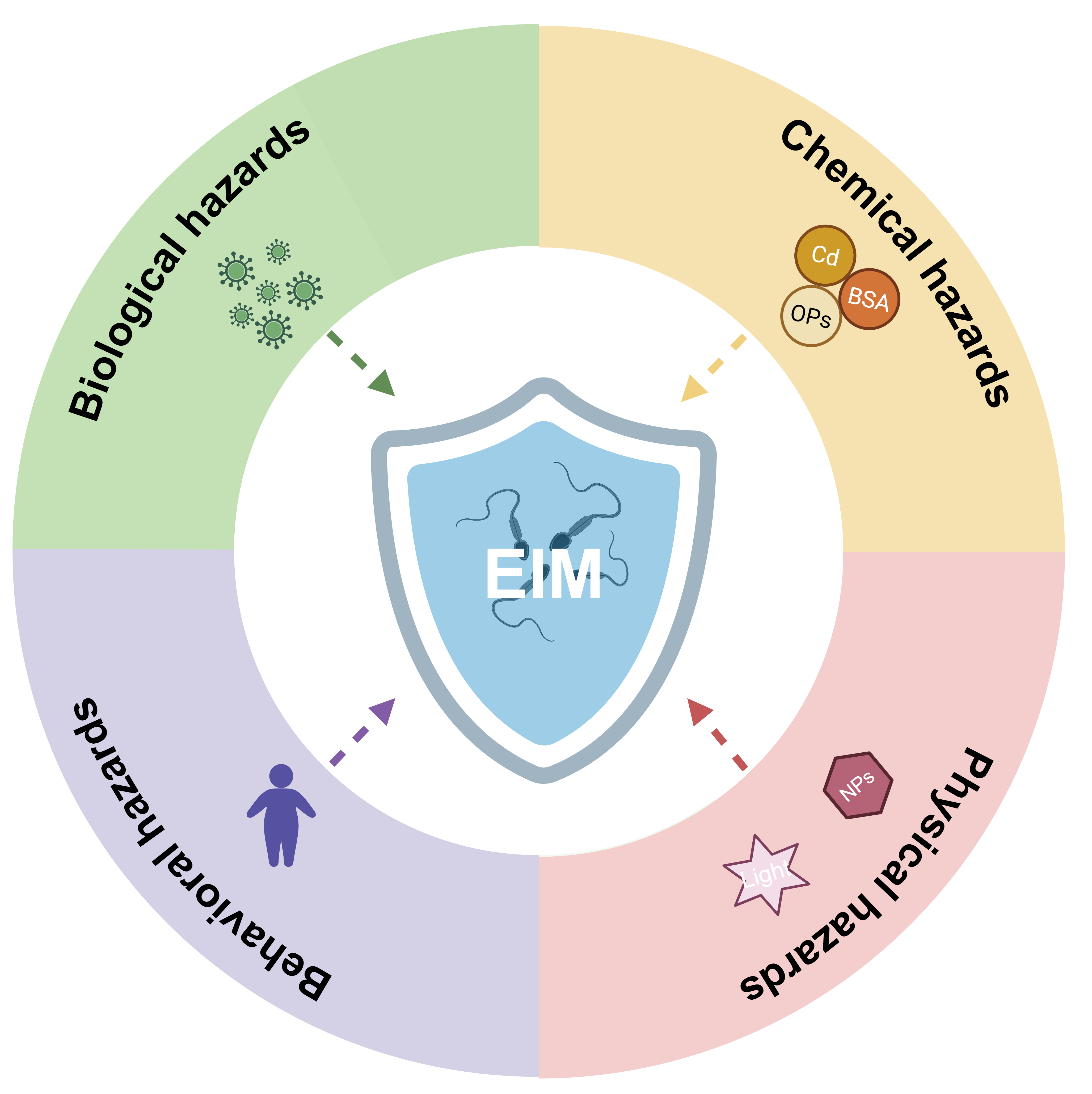
Common Environmental Hazards and Male Infertility: Effects on Epididymal Immune Microenvironment
Abstract
1. Introduction
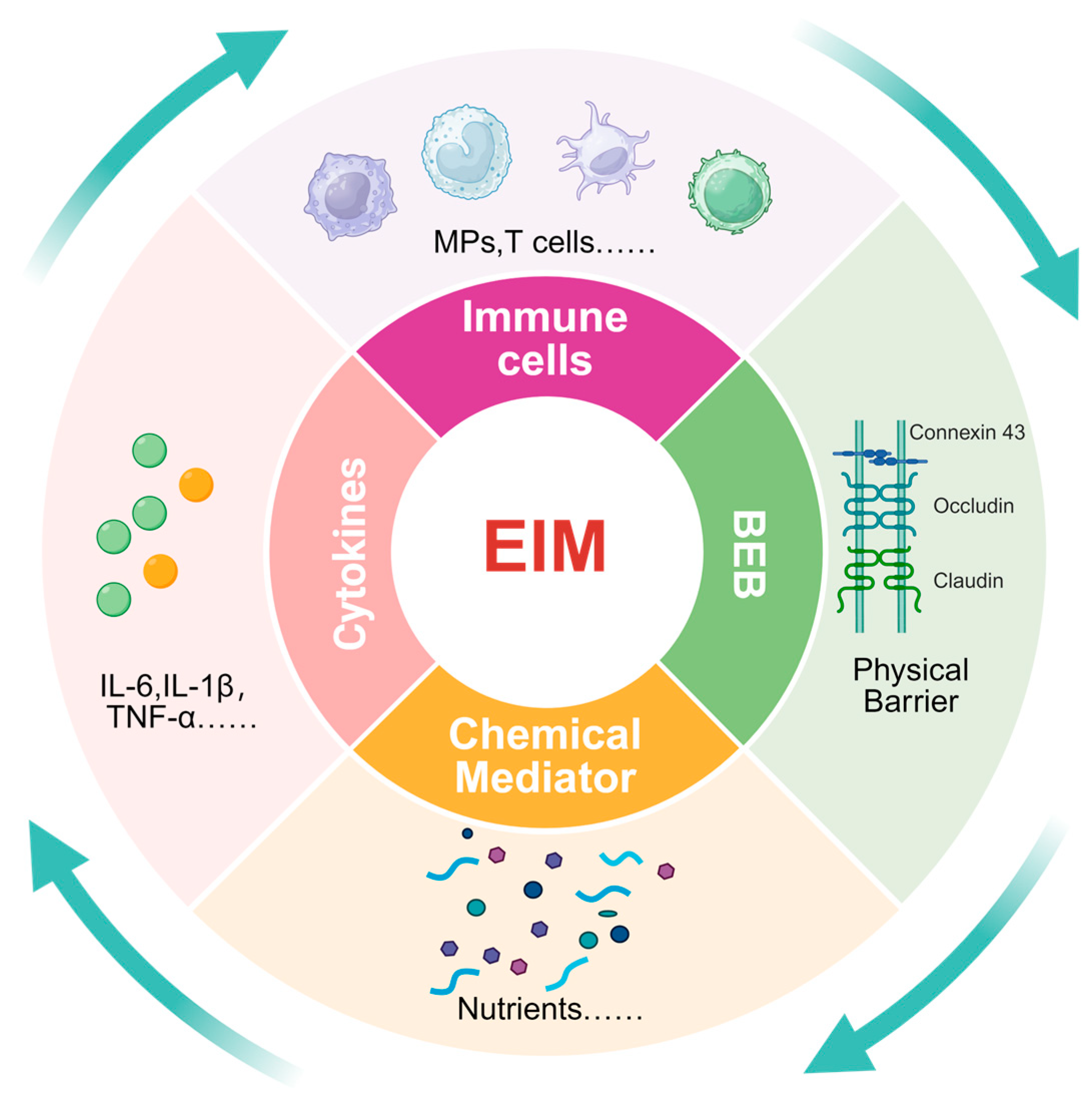
2. Epididymal Immune Microenvironment
2.1. Immune Cells
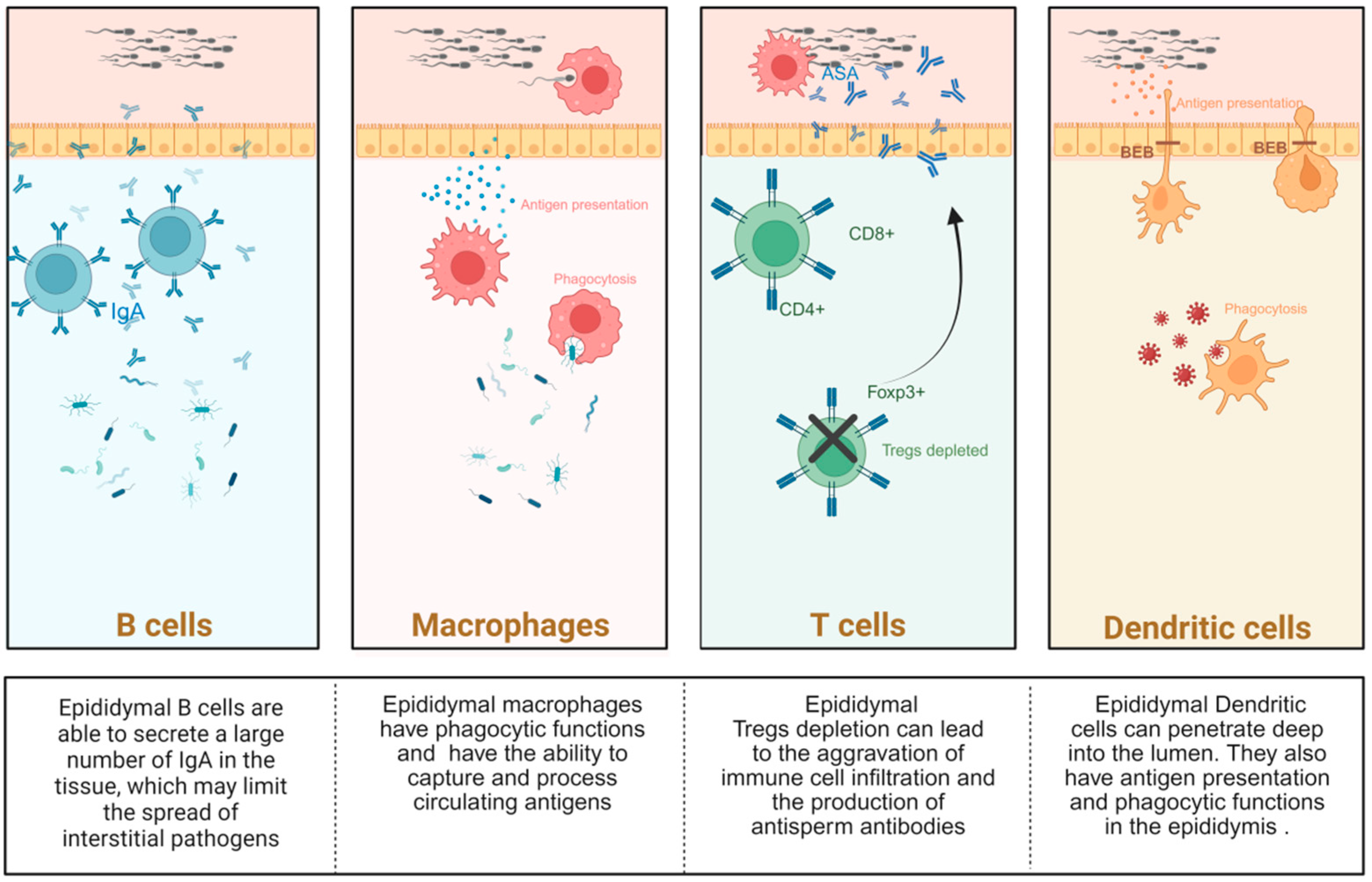
2.1.1. T Cells and B Cells
2.1.2. Mononuclear Phagocytes (MPs)
2.2. Non-Immune Cells
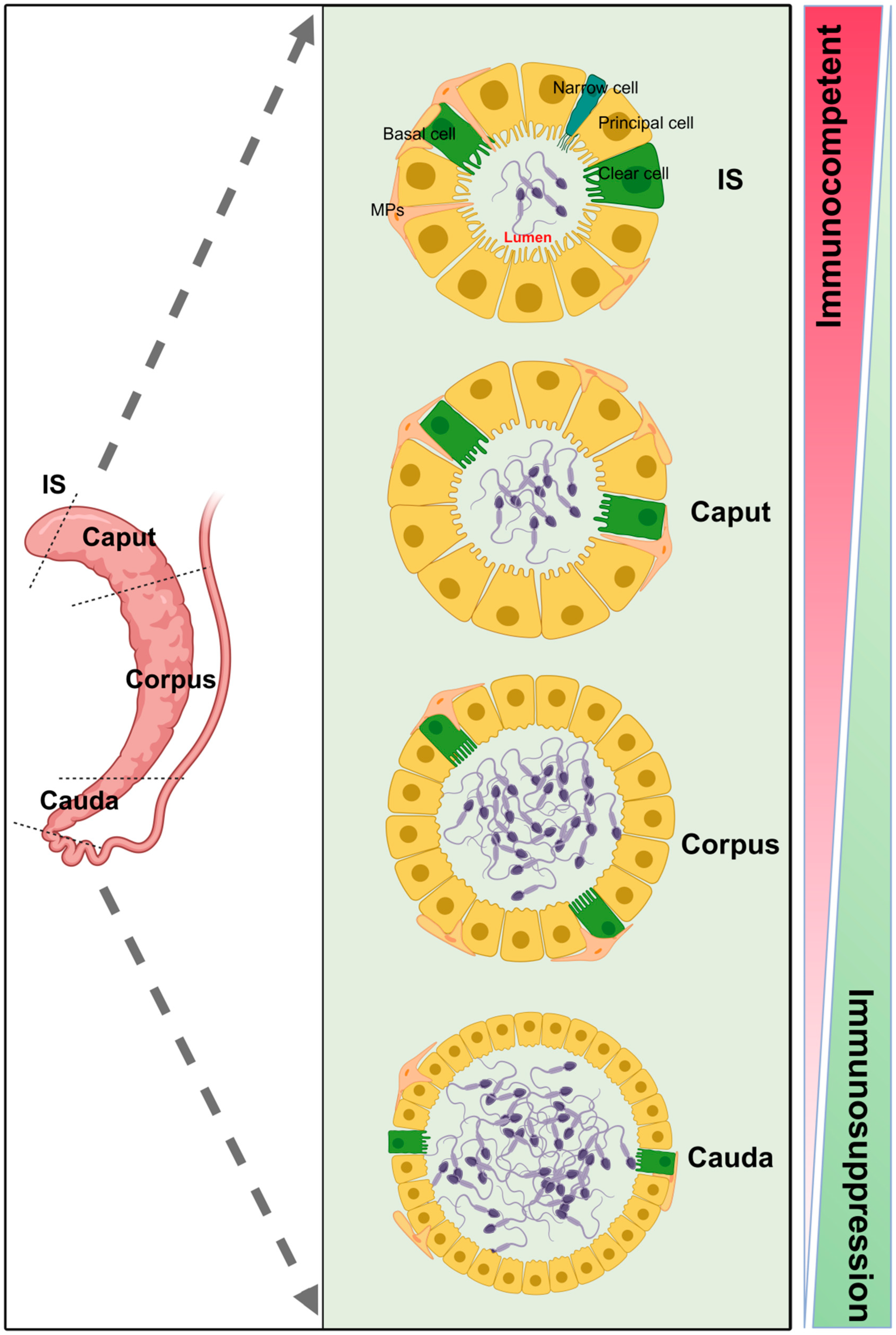
2.2.1. Principal Cells
2.2.2. Basal Cells
2.2.3. Clear Cells
2.2.4. Narrow Cells
2.3. Blood–Epididymal Barrier
2.4. The Uniqueness of the Epididymal Immune Microenvironment
2.4.1. Regional Heterogeneity
2.4.2. Dynamic Equilibrium
3. Disorders of the Epididymal Immune Microenvironment Induced by Common Environmental Hazards
3.1. Chemical Hazards
3.1.1. Heavy Metals
3.1.2. Bisphenol A (BPA)
3.1.3. Polychlorinated Biphenyls (PCBs) and Dioxins
3.1.4. Pesticides
3.1.5. Others
3.2. Physical Hazards
3.2.1. Radiation
3.2.2. High Temperature/Light Pollution
3.2.3. Nanoparticles (NPs)
3.3. Biological Hazards
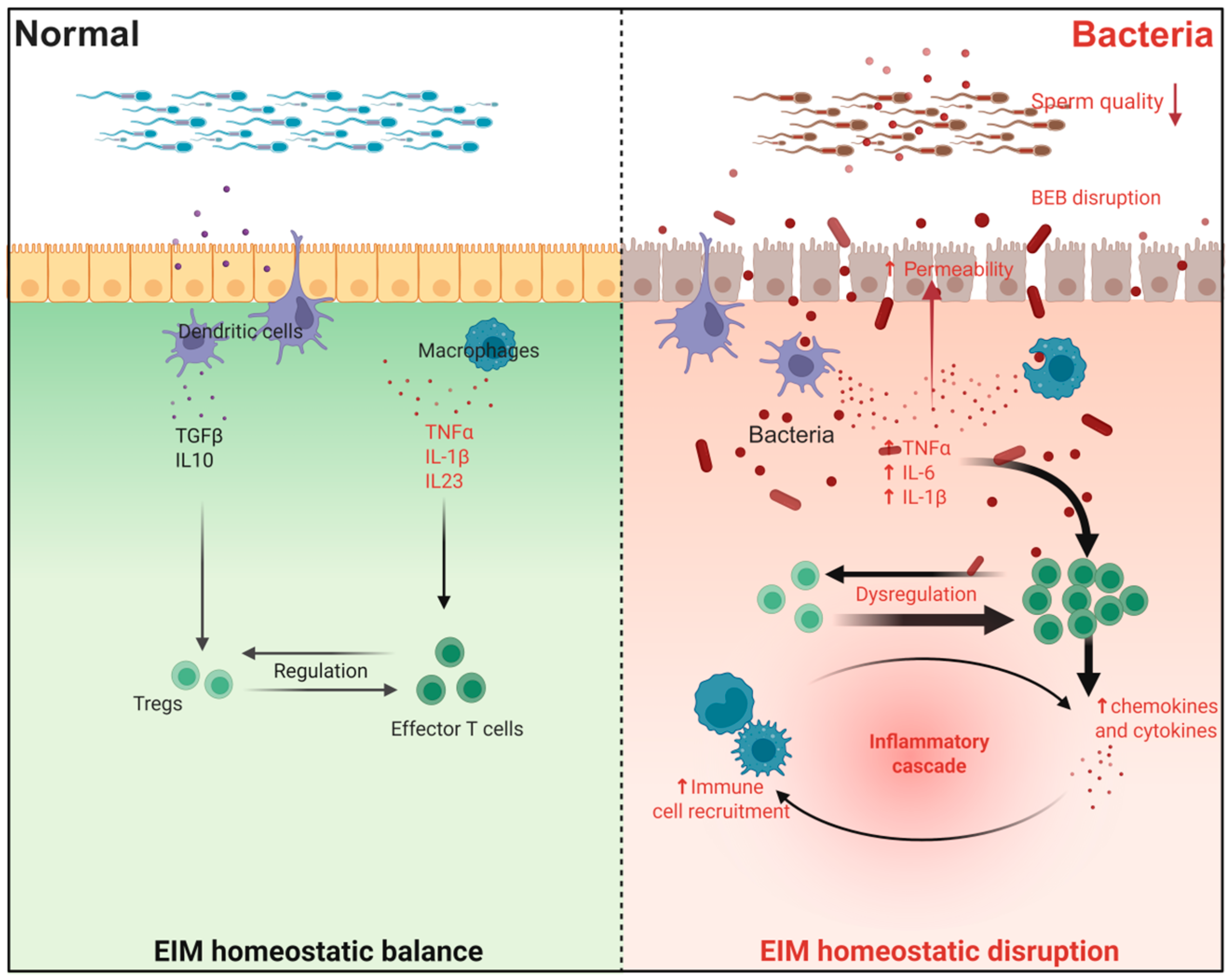
3.3.1. Bacteria
3.3.2. Viruses
3.4. Behavioral Hazards
4. Common Mechanisms of Environmental Hazards Disorder the Epididymal Immune Microenvironment
4.1. Oxidative Stress
4.2. Inflammatory Cascade
4.3. Disruption of the Blood–Epididymal Barrier
5. Conclusions and Perspectives
Author Contributions
Funding
Institutional Review Board Statement
Informed Consent Statement
Data Availability Statement
Conflicts of Interest
References
- Li, Y.; Bi, Y.; Mi, W.; Xie, S.; Ji, L. Land-use change caused by anthropogenic activities increase fluoride and arsenic pollution in groundwater and human health risk. J. Hazard. Mater. 2021, 406, 124337. [Google Scholar] [CrossRef] [Scilit]
- Schlatter, C. Environmental pollution and human health. Sci. Total Environ. 1994, 143, 93–101. [Google Scholar] [CrossRef] [Scilit]
- World Health Organization. Infertility Prevalence Estimates, 1990–2021; World Health Organization: Geneva, Switzerland, 2023. [Google Scholar]
- Kobori, Y. Home testing for male factor infertility: A review of current options. Fertil. Steril. 2019, 111, 864–870. [Google Scholar] [CrossRef] [Scilit] [PubMed]
- Santoro, N.; Polotsky, A.J. Infertility Evaluation and Treatment. N. Engl. J. Med. 2025, 392, 1111–1119. [Google Scholar] [CrossRef] [Scilit]
- Nriagu, J. Sixty years since the report of global lead pollution. Nature 2023, 619, 704–706. [Google Scholar] [CrossRef] [Scilit]
- Mohammadzadeh, M.; Khoshakhlagh, A.H.; Calderon-Garciduenas, L.; Cardona Maya, W.D.; Cai, T. Inhaled toxins: A threat to male reproductive health. Ecotox. Environ. Safe 2024, 286, 117178. [Google Scholar] [CrossRef] [Scilit]
- Benoff, S.; Auborn, K.; Marmar, J.L.; Hurley, I.R. Link between low-dose environmentally relevant cadmium exposures and asthenozoospermia in a rat model. Fertil. Steril. 2008, 89, e73–e79. [Google Scholar] [CrossRef] [Scilit] [PubMed]
- Breton, S.; Nair, A.V.; Battistone, M.A. Epithelial dynamics in the epididymis: Role in the maturation, protection, and storage of spermatozoa. Andrology 2019, 7, 631–643. [Google Scholar] [CrossRef] [Scilit]
- Belleannee, C.; Thimon, V.; Sullivan, R. Region-specific gene expression in the epididymis. Cell Tissue Res. 2012, 349, 717–731. [Google Scholar] [CrossRef] [Scilit]
- Cornwall, G.A. New insights into epididymal biology and function. Hum. Reprod. Update 2009, 15, 213–227. [Google Scholar] [CrossRef] [Scilit] [PubMed]
- Fijak, M.; Pilatz, A.; Hedger, M.P.; Nicolas, N.; Bhushan, S.; Michel, V.; Tung, K.; Schuppe, H.C.; Meinhardt, A. Infectious, inflammatory and ‘autoimmune’ male factor infertility: How do rodent models inform clinical practice? Hum. Reprod. Update 2018, 24, 416–441. [Google Scholar] [CrossRef] [Scilit] [PubMed]
- McLachlan, R.I. Basis, diagnosis and treatment of immunological infertility in men. J. Reprod. Immunol. 2002, 57, 35–45. [Google Scholar] [CrossRef] [Scilit]
- Voisin, A.; Whitfield, M.; Damon-Soubeyrand, C.; Goubely, C.; Henry-Berger, J.; Saez, F.; Kocer, A.; Drevet, J.R.; Guiton, R. Comprehensive overview of murine epididymal mononuclear phagocytes and lymphocytes: Unexpected populations arise. J. Reprod. Immunol. 2018, 126, 11–17. [Google Scholar] [CrossRef] [Scilit]
- Battistone, M.A.; Mendelsohn, A.C.; Spallanzani, R.G.; Brown, D.; Nair, A.V.; Breton, S. Region-specific transcriptomic and functional signatures of mononuclear phagocytes in the epididymis. Mol. Hum. Reprod. 2020, 26, 14–29. [Google Scholar] [CrossRef] [Scilit]
- Yakirevich, E.; Yanai, O.; Sova, Y.; Sabo, E.; Stein, A.; Hiss, J.; Resnick, M.B. Cytotoxic phenotype of intra-epithelial lymphocytes in normal and cryptorchid human testicular excurrent ducts. Hum. Reprod. 2002, 17, 275–283. [Google Scholar] [CrossRef] [Scilit]
- Barrachina, F.; Ottino, K.; Elizagaray, M.L.; Gervasi, M.G.; Tu, L.J.; Markoulaki, S.; Spallanzani, R.G.; Capen, D.; Brown, D.; Battistone, M.A. Regulatory T cells play a crucial role in maintaining sperm tolerance and male fertility. Proc. Natl. Acad. Sci. USA 2023, 120, e1988170176. [Google Scholar] [CrossRef] [Scilit]
- Jacobo, P.; Guazzone, V.A.; Perez, C.V.; Lustig, L. CD4+ Foxp3+ regulatory T cells in autoimmune orchitis: Phenotypic and functional characterization. Am. J. Reprod. Immunol. 2015, 73, 109–125. [Google Scholar] [CrossRef] [Scilit] [PubMed]
- Tung, K.S.; Harakal, J.; Qiao, H.; Rival, C.; Li, J.C.; Paul, A.G.; Wheeler, K.; Pramoonjago, P.; Grafer, C.M.; Sun, W.; et al. Egress of sperm autoantigen from seminiferous tubules maintains systemic tolerance. J. Clin. Investig. 2017, 127, 1046–1060. [Google Scholar] [CrossRef] [Scilit]
- Nicolas, N.; Michel, V.; Bhushan, S.; Wahle, E.; Hayward, S.; Ludlow, H.; de Kretser, D.M.; Loveland, K.L.; Schuppe, H.C.; Meinhardt, A.; et al. Testicular activin and follistatin levels are elevated during the course of experimental autoimmune epididymo-orchitis in mice. Sci. Rep. 2017, 7, 42391. [Google Scholar] [CrossRef] [Scilit] [PubMed]
- van Furth, R.; Cohn, Z.A.; Hirsch, J.G.; Humphrey, J.H.; Spector, W.G.; Langevoort, H.L. The mononuclear phagocyte system: A new classification of macrophages, monocytes, and their precursor cells. Bull. World Health Organ. 1972, 46, 845–852. [Google Scholar]
- Da, S.N.; Smith, T.B. Exploring the role of mononuclear phagocytes in the epididymis. Asian J. Androl. 2015, 17, 591–596. [Google Scholar] [CrossRef] [Scilit]
- Barrachina, F.; Ottino, K.; Tu, L.J.; Soberman, R.J.; Brown, D.; Breton, S.; Battistone, M.A. CX3CR1 deficiency leads to impairment of immune surveillance in the epididymis. Cell Mol. Life Sci. 2022, 80, 15. [Google Scholar] [CrossRef] [Scilit]
- Mendelsohn, A.C.; Sanmarco, L.M.; Spallanzani, R.G.; Brown, D.; Quintana, F.J.; Breton, S.; Battistone, M.A. From initial segment to cauda: A regional characterization of mouse epididymal CD11c(+) mononuclear phagocytes based on immune phenotype and function. Am. J. Physiol. Cell Physiol. 2020, 319, C997–C1010. [Google Scholar] [CrossRef] [Scilit]
- Gordon, S.; Pluddemann, A. The Mononuclear Phagocytic System. Generation of Diversity. Front. Immunol. 2019, 10, 1893. [Google Scholar] [CrossRef] [Scilit] [PubMed]
- Jakubzick, C.V.; Randolph, G.J.; Henson, P.M. Monocyte differentiation and antigen-presenting functions. Nat. Rev. Immunol. 2017, 17, 349–362. [Google Scholar] [CrossRef] [Scilit]
- Allam, J.P.; Duan, Y.; Heinemann, F.; Winter, J.; Gotz, W.; Deschner, J.; Wenghoefer, M.; Bieber, T.; Jepsen, S.; Novak, N. IL-23-producing CD68(+) macrophage-like cells predominate within an IL-17-polarized infiltrate in chronic periodontitis lesions. J. Clin. Periodontol. 2011, 38, 879–886. [Google Scholar] [CrossRef] [Scilit]
- McGovern, N.; Schlitzer, A.; Janela, B.; Ginhoux, F. Protocols for the Identification and Isolation of Antigen-Presenting Cells in Human and Mouse Tissues. Methods Mol. Biol. 2016, 1423, 169–180. [Google Scholar] [PubMed]
- Shi, X.; Zhao, H.; Kang, Y.; Dong, X.; Yu, C.; Xie, Q.; Duan, Y.; Liao, A.; Huang, D. The Role of Mononuclear Phagocytes in the Testes and Epididymis. Int. J. Mol. Sci. 2022, 24, 53. [Google Scholar] [CrossRef] [Scilit]
- Ramos-Ibeas, P.; Pericuesta, E.; Fernandez-Gonzalez, R.; Ramirez, M.A.; Gutierrez-Adan, A. Most regions of mouse epididymis are able to phagocytose immature germ cells. Reproduction 2013, 146, 481–489. [Google Scholar] [CrossRef] [Scilit] [PubMed]
- Cerovic, V.; Bain, C.C.; Mowat, A.M.; Milling, S.W. Intestinal macrophages and dendritic cells: What’s the difference? Trends Immunol. 2014, 35, 270–277. [Google Scholar] [CrossRef] [Scilit]
- Mullen, T.J.; Kiessling, R.L.; Kiessling, A.A. Tissue-specific populations of leukocytes in semen-producing organs of the normal, hemicastrated, and vasectomized mouse. Aids Res. Hum. Retrov. 2003, 19, 235–243. [Google Scholar] [CrossRef] [Scilit] [PubMed]
- Roulet, V.; Satie, A.P.; Ruffault, A.; Le Tortorec, A.; Denis, H.; Guist’Hau, O.; Patard, J.J.; Rioux-Leclerq, N.; Gicquel, J.; Jegou, B.; et al. Susceptibility of human testis to human immunodeficiency virus-1 infection in situ and in vitro. Am. J. Pathol. 2006, 169, 2094–2103. [Google Scholar] [CrossRef] [Scilit] [PubMed]
- Zhao, H.; Yu, C.; He, C.; Mei, C.; Liao, A.; Huang, D. The Immune Characteristics of the Epididymis and the Immune Pathway of the Epididymitis Caused by Different Pathogens. Front. Immunol. 2020, 11, 2115. [Google Scholar] [CrossRef] [Scilit]
- Pierucci-Alves, F.; Midura-Kiela, M.T.; Fleming, S.D.; Schultz, B.D.; Kiela, P.R. Transforming Growth Factor Beta Signaling in Dendritic Cells Is Required for Immunotolerance to Sperm in the Epididymis. Front. Immunol. 2018, 9, 1882. [Google Scholar] [CrossRef] [Scilit]
- Sullivan, R.; Mieusset, R. The human epididymis: Its function in sperm maturation. Hum. Reprod. Update 2016, 22, 574–587. [Google Scholar] [CrossRef] [Scilit]
- Duan, Y.G.; Zhang, Q.; Liu, Y.; Mou, L.; Li, G.; Gui, Y.; Cai, Z. Dendritic cells in semen of infertile men: Association with sperm quality and inflammatory status of the epididymis. Fertil. Steril. 2014, 101, 70–77. [Google Scholar] [CrossRef] [Scilit] [PubMed]
- Wang, P.; Duan, Y.G. The role of dendritic cells in male reproductive tract. Am. J. Reprod. Immunol. 2016, 76, 186–192. [Google Scholar] [CrossRef] [Scilit]
- Smith, T.B.; Cortez-Retamozo, V.; Grigoryeva, L.S.; Hill, E.; Pittet, M.J.; Da, S.N. Mononuclear phagocytes rapidly clear apoptotic epithelial cells in the proximal epididymis. Andrology 2014, 2, 755–762. [Google Scholar] [CrossRef] [Scilit]
- Duan, Y.G.; Wang, P.; Zheng, W.; Zhang, Q.; Huang, W.; Jin, F.; Cai, Z. Characterisation of dendritic cell subsets in chronically inflamed human epididymis. Andrologia 2016, 48, 431–440. [Google Scholar] [CrossRef] [Scilit]
- Yeung, C.H.; Breton, S.; Setiawan, I.; Xu, Y.; Lang, F.; Cooper, T.G. Increased luminal pH in the epididymis of infertile c-ros knockout mice and the expression of sodium-hydrogen exchangers and vacuolar proton pump H+-ATPase. Mol. Reprod. Dev. 2004, 68, 159–168. [Google Scholar] [CrossRef] [Scilit]
- Pastor-Soler, N.; Pietrement, C.; Breton, S. Role of acid/base transporters in the male reproductive tract and potential consequences of their malfunction. Physiology 2005, 20, 417–428. [Google Scholar] [CrossRef] [Scilit]
- Koch, S.; Acebron, S.P.; Herbst, J.; Hatiboglu, G.; Niehrs, C. Post-transcriptional Wnt Signaling Governs Epididymal Sperm Maturation. Cell 2015, 163, 1225–1236. [Google Scholar] [CrossRef] [Scilit]
- Arya, S.B.; Collie, S.P.; Parent, C.A. The ins-and-outs of exosome biogenesis, secretion, and internalization. Trends Cell Biol. 2024, 34, 90–108. [Google Scholar] [CrossRef] [Scilit]
- Girouard, J.; Frenette, G.; Sullivan, R. Comparative proteome and lipid profiles of bovine epididymosomes collected in the intraluminal compartment of the caput and cauda epididymidis. Int. J. Androl. 2011, 34, e475–e486. [Google Scholar] [CrossRef] [Scilit] [PubMed]
- Belleannee, C.; Calvo, E.; Caballero, J.; Sullivan, R. Epididymosomes convey different repertoires of microRNAs throughout the bovine epididymis. Biol. Reprod. 2013, 89, 30. [Google Scholar] [CrossRef] [Scilit]
- Zhou, W.; Stanger, S.J.; Anderson, A.L.; Bernstein, I.R.; De Iuliis, G.N.; McCluskey, A.; McLaughlin, E.A.; Dun, M.D.; Nixon, B. Mechanisms of tethering and cargo transfer during epididymosome-sperm interactions. BMC Biol. 2019, 17, 35. [Google Scholar] [CrossRef] [Scilit] [PubMed]
- Barrachina, F.; Battistone, M.A.; Castillo, J.; Mallofre, C.; Jodar, M.; Breton, S.; Oliva, R. Sperm acquire epididymis-derived proteins through epididymosomes. Hum. Reprod. 2022, 37, 651–668. [Google Scholar] [CrossRef] [Scilit]
- James, E.R.; Carrell, D.T.; Aston, K.I.; Jenkins, T.G.; Yeste, M.; Salas-Huetos, A. The Role of the Epididymis and the Contribution of Epididymosomes to Mammalian Reproduction. Int. J. Mol. Sci. 2020, 21, 5377. [Google Scholar] [CrossRef] [Scilit]
- Shum, W.W.; Da, S.N.; McKee, M.; Smith, P.J.; Brown, D.; Breton, S. Transepithelial projections from basal cells are luminal sensors in pseudostratified epithelia. Cell 2008, 135, 1108–1117. [Google Scholar] [CrossRef] [Scilit] [PubMed]
- Mandon, M.; Hermo, L.; Cyr, D.G. Isolated Rat Epididymal Basal Cells Share Common Properties with Adult Stem Cells. Biol. Reprod. 2015, 93, 115. [Google Scholar] [CrossRef] [Scilit]
- Rinaldi, V.D.; Donnard, E.; Gellatly, K.; Rasmussen, M.; Kucukural, A.; Yukselen, O.; Garber, M.; Sharma, U.; Rando, O.J. An atlas of cell types in the mouse epididymis and vas deferens. eLife 2020, 9, e55474. [Google Scholar] [CrossRef] [Scilit]
- Breton, S.; Brown, D. Regulation of luminal acidification by the V-ATPase. Physiology 2013, 28, 318–329. [Google Scholar] [CrossRef] [Scilit]
- Visconti, P.E.; Krapf, D.; de la Vega-Beltran, J.L.; Acevedo, J.J.; Darszon, A. Ion channels, phosphorylation and mammalian sperm capacitation. Asian J. Androl. 2011, 13, 395–405. [Google Scholar] [CrossRef] [Scilit]
- Carlin, R.W.; Lee, J.H.; Marcus, D.C.; Schultz, B.D. Adenosine stimulates anion secretion across cultured and native adult human vas deferens epithelia. Biol. Reprod. 2003, 68, 1027–1034. [Google Scholar] [CrossRef] [Scilit] [PubMed]
- Park, Y.J.; Battistone, M.A.; Kim, B.; Breton, S. Relative contribution of clear cells and principal cells to luminal pH in the mouse epididymis. Biol. Reprod. 2017, 96, 366–375. [Google Scholar] [CrossRef] [Scilit] [PubMed]
- Mital, P.; Hinton, B.T.; Dufour, J.M. The blood-testis and blood-epididymis barriers are more than just their tight junctions. Biol. Reprod. 2011, 84, 851–858. [Google Scholar] [CrossRef] [Scilit]
- Kim, B.; Breton, S. The MAPK/ERK-Signaling Pathway Regulates the Expression and Distribution of Tight Junction Proteins in the Mouse Proximal Epididymis. Biol. Reprod. 2016, 94, 22. [Google Scholar] [CrossRef] [Scilit] [PubMed]
- Suzuki, F.; Nagano, T. Development of tight junctions in the caput epididymal epithelium of the mouse. Dev. Biol. 1978, 63, 321–334. [Google Scholar] [CrossRef] [Scilit]
- Nagano, T.; Suzuki, F. Cell junctions in the seminiferous tubule and the excurrent duct of the testis: Freeze-fracture studies. Int. Rev. Cytol. 1983, 81, 163–190. [Google Scholar] [CrossRef] [Scilit]
- Cyr, D.G.; Robaire, B.; Hermo, L. Structure and turnover of junctional complexes between principal cells of the rat epididymis. Microsc. Res. Tech. 1995, 30, 54–66. [Google Scholar] [CrossRef] [Scilit]
- Levy, S.; Serre, V.; Hermo, L.; Robaire, B. The effects of aging on the seminiferous epithelium and the blood-testis barrier of the Brown Norway rat. J. Androl. 1999, 20, 356–365. [Google Scholar] [CrossRef] [Scilit]
- Yeung, C.H.; Bergmann, M.; Cooper, T.G. Non-specific uptake of IgG by rat epididymal tubules in vitro. Int. J. Androl. 1991, 14, 364–373. [Google Scholar] [CrossRef] [Scilit]
- Wong, P.Y.; Tsang, A.Y.; Fu, W.O.; Lau, H.K. Restricted entry of an anti-rat epididymal protein IgG into the rat epididymis. Int. J. Androl. 1983, 6, 275–282. [Google Scholar] [CrossRef] [Scilit] [PubMed]
- Dym, M.; Romrell, L.J. Intraepithelial lymphocytes in the male reproductive tract of rats and rhesus monkeys. J. Reprod. Fertil. 1975, 42, 1–7. [Google Scholar] [CrossRef] [Scilit]
- Meng, F.; Hao, H.; Guo, Z.; Liu, W.; Zhang, S.; Tang, W.; Ma, W.; Shang, X. Silica nanoparticles induces sperm granuloma formation and blood-epididymal barrier disruption via the p38 MAPK pathway in mice. Food Chem. Toxicol. 2023, 182, 114113. [Google Scholar] [CrossRef] [Scilit] [PubMed]
- Stammler, A.; Muller, D.; Tabuchi, Y.; Konrad, L.; Middendorff, R. TGFbetas modulate permeability of the blood-epididymis barrier in an in vitro model. PLoS ONE 2013, 8, e80611. [Google Scholar] [CrossRef] [Scilit]
- Dube, E.; Hermo, L.; Chan, P.T.; Cyr, D.G. Alterations in gene expression in the caput epididymides of nonobstructive azoospermic men. Biol. Reprod. 2008, 78, 342–351. [Google Scholar] [CrossRef] [Scilit] [PubMed]
- Dube, E.; Hermo, L.; Chan, P.T.; Cyr, D.G. Alterations in the human blood-epididymis barrier in obstructive azoospermia and the development of novel epididymal cell lines from infertile men. Biol. Reprod. 2010, 83, 584–596. [Google Scholar] [CrossRef] [Scilit]
- Li, H.; Wang, X.R.; Hu, Y.F.; Xiong, Y.W.; Zhu, H.L.; Huang, Y.C.; Wang, H. Advances in immunology of male reproductive toxicity induced by common environmental pollutants. Environ. Int. 2024, 190, 108898. [Google Scholar] [CrossRef] [Scilit]
- Pleuger, C.; Ai, D.; Hoppe, M.L.; Winter, L.T.; Bohnert, D.; Karl, D.; Guenther, S.; Epelman, S.; Kantores, C.; Fijak, M.; et al. The regional distribution of resident immune cells shapes distinct immunological environments along the murine epididymis. eLife 2022, 11, e82193. [Google Scholar] [CrossRef] [Scilit]
- Voisin, A.; Saez, F.; Drevet, J.R.; Guiton, R. The epididymal immune balance: A key to preserving male fertility. Asian J. Androl. 2019, 21, 531–539. [Google Scholar] [CrossRef] [Scilit] [PubMed]
- Cyr, D.G.; Dufresne, J.; Gregory, M. Cellular junctions in the epididymis, a critical parameter for understanding male reproductive toxicology. Reprod. Toxicol. 2018, 81, 207–219. [Google Scholar] [CrossRef] [Scilit]
- Zenzes, M.T. Smoking and reproduction: Gene damage to human gametes and embryos. Hum. Reprod. Update 2000, 6, 122–131. [Google Scholar] [CrossRef] [Scilit]
- Li, C.J.; Yeh, C.Y.; Chen, R.Y.; Tzeng, C.R.; Han, B.C.; Chien, L.C. Biomonitoring of blood heavy metals and reproductive hormone level related to low semen quality. J. Hazard. Mater. 2015, 300, 815–822. [Google Scholar] [CrossRef] [Scilit]
- Parvez, S.M.; Jahan, F.; Brune, M.N.; Gorman, J.F.; Rahman, M.J.; Carpenter, D.; Islam, Z.; Rahman, M.; Aich, N.; Knibbs, L.D.; et al. Health consequences of exposure to e-waste: An updated systematic review. Lancet Planet Health 2021, 5, e905–e920. [Google Scholar] [CrossRef] [Scilit]
- Ali, F.; Kazi, T.G.; Afridi, H.I.; Baig, J.A. Exposure of cadmium via smoking and drinking water on zinc levels of biological samples of malnutrition pregnant women: A prospective cohort study. Environ. Toxicol. Phar. 2018, 63, 48–54. [Google Scholar] [CrossRef] [Scilit] [PubMed]
- Marques, C.R.; Wibowo, D.; Rubio-Reyes, P.; Serafim, L.S.; Soares, A.; Rehm, B. Bacterially assembled biopolyester nanobeads for removing cadmium from water. Water Res. 2020, 186, 116357. [Google Scholar] [CrossRef] [Scilit]
- He, Y.; Zou, L.; Luo, W.; Yi, Z.; Yang, P.; Yu, S.; Liu, N.; Ji, J.; Guo, Y.; Liu, P.; et al. Heavy metal exposure, oxidative stress and semen quality: Exploring associations and mediation effects in reproductive-aged men. Chemosphere 2020, 244, 125498. [Google Scholar] [CrossRef] [Scilit]
- Zhang, Y.; Li, Y.; Zhang, J.; Qi, X.; Cui, Y.; Yin, K.; Lin, H. Cadmium-induced inflammation and apoptosis of porcine epididymis via activating RAF1/MEK/ERK and NF-kappaB pathways. Toxicol. Appl. Pharm. 2021, 415, 115449. [Google Scholar] [CrossRef] [Scilit]
- Adamkovicova, M.; Toman, R.; Cabaj, M.; Massanyi, P.; Martiniakova, M.; Omelka, R.; Krajcovicova, V.; Duranova, H. Effects of subchronic exposure to cadmium and diazinon on testis and epididymis in rats. Sci. World J. 2014, 2014, 632581. [Google Scholar] [CrossRef] [Scilit] [PubMed]
- Abarikwu, S.O.; Oruitemeka, S.; Uwadileke, I.A.; Omeodu, S.I.; Okoye, N.F.; Mgbudom-Okah, C.J.; Ohanador, R. Oral administration of cadmium depletes intratesticular and epididymal iron levels and inhibits lipid peroxidation in the testis and epididymis of adult rats. J. Trace Elem. Med. Biol. 2018, 48, 213–223. [Google Scholar] [CrossRef] [Scilit]
- Lacorte, L.M.; Seiva, F.R.; Rinaldi, J.C.; Delella, F.K.; Moroz, A.; Sarobo, C.; Godinho, A.F.; Favaro, W.J.; Fernandes, A.A.; Felisbino, S.L. Caffeine reduces cadmium accumulation in the organism and enhances the levels of antioxidant protein expression in the epididymis. Reprod. Toxicol. 2013, 35, 137–143. [Google Scholar] [CrossRef] [Scilit]
- Chen, H.; Zhang, H.; Wang, X.; Wu, Y.; Zhang, Y.; Chen, S.; Zhang, W.; Sun, X.; Zheng, T.; Xia, W.; et al. Prenatal arsenic exposure, arsenic metabolism and neurocognitive development of 2-year-old children in low-arsenic areas. Environ. Int. 2023, 174, 107918. [Google Scholar] [CrossRef] [Scilit] [PubMed]
- Adedara, I.A.; Adebowale, A.A.; Atanda, O.E.; Fabunmi, A.T.; Ayenitaju, A.C.; Rocha, J.; Farombi, E.O. Selenium abates reproductive dysfunction via attenuation of biometal accumulation, oxido-inflammatory stress and caspase-3 activation in male rats exposed to arsenic. Environ. Pollut. 2019, 254, 113079. [Google Scholar] [CrossRef] [Scilit] [PubMed]
- Adedara, I.A.; Subair, T.I.; Ego, V.C.; Oyediran, O.; Farombi, E.O. Chemoprotective role of quercetin in manganese-induced toxicity along the brain-pituitary-testicular axis in rats. Chem. Biol. Interact. 2017, 263, 88–98. [Google Scholar] [CrossRef] [Scilit] [PubMed]
- Yang, Y.; Zuo, Z.; Yang, Z.; Yin, H.; Wei, L.; Fang, J.; Guo, H.; Cui, H.; Ouyang, P.; Chen, X.; et al. Nickel chloride induces spermatogenesis disorder by testicular damage and hypothalamic-pituitary-testis axis disruption in mice. Ecotox. Environ. Safe 2021, 225, 112718. [Google Scholar] [CrossRef] [Scilit]
- Aruldhas, M.M.; Subramanian, S.; Sekhar, P.; Vengatesh, G.; Govindarajulu, P.; Akbarsha, M.A. In Vivo spermatotoxic effect of chromium as reflected in the epididymal epithelial principal cells, basal cells, and intraepithelial macrophages of a nonhuman primate (Macaca radiata Geoffroy). Fertil. Steril. 2006, 86, 1097–1105. [Google Scholar] [CrossRef] [Scilit]
- Sahu, C.; Dwivedi, D.K.; Jena, G.B. Zinc and selenium combination treatment protected diabetes-induced testicular and epididymal damage in rat. Hum. Exp. Toxicol. 2020, 39, 1235–1256. [Google Scholar] [CrossRef] [Scilit]
- Marin, D.J.S.; Vigueras-Villasenor, R.M.; Cortes-Barberena, E.; Hernandez-Rodriguez, J.; Montes, S.; Arrieta-Cruz, I.; Perez-Aguirre, S.G.; Bonilla-Jaime, H.; Limon-Morales, O.; Arteaga-Silva, M. Zinc and Its Impact on the Function of the Testicle and Epididymis. Int. J. Mol. Sci. 2024, 25, 8991. [Google Scholar] [CrossRef] [Scilit]
- Adedara, I.A.; Abiola, M.A.; Adegbosin, A.N.; Odunewu, A.A.; Farombi, E.O. Impact of binary waterborne mixtures of nickel and zinc on hypothalamic-pituitary-testicular axis in rats. Chemosphere 2019, 237, 124501. [Google Scholar] [CrossRef] [Scilit]
- Eladak, S.; Grisin, T.; Moison, D.; Guerquin, M.J.; N’Tumba-Byn, T.; Pozzi-Gaudin, S.; Benachi, A.; Livera, G.; Rouiller-Fabre, V.; Habert, R. A new chapter in the bisphenol A story: Bisphenol S and bisphenol F are not safe alternatives to this compound. Fertil. Steril. 2015, 103, 11–21. [Google Scholar] [CrossRef] [Scilit]
- Hauser, R.; Skakkebaek, N.E.; Hass, U.; Toppari, J.; Juul, A.; Andersson, A.M.; Kortenkamp, A.; Heindel, J.J.; Trasande, L. Male reproductive disorders, diseases, and costs of exposure to endocrine-disrupting chemicals in the European Union. J. Clin. Endocr. Metab. 2015, 100, 1267–1277. [Google Scholar] [CrossRef] [Scilit]
- Park, Y.J.; Pang, W.K.; Ryu, D.Y.; Adegoke, E.O.; Rahman, M.S.; Pang, M.G. Bisphenol A exposure increases epididymal susceptibility to infection in mice. Ecotox. Environ. Safe 2021, 208, 111476. [Google Scholar] [CrossRef] [Scilit] [PubMed]
- Akarca-Dizakar, S.O.; Erdogan, D.; Peker, T.; Coskun Akcay, N.; Turkoglu, I.; Esmekaya, M.A.; Omeroglu, S. Effects of co-administered melatonin, fructose and bisphenol A (BPA) on rat epididymis and sperm characteristics. Biotech. Histochem. 2020, 95, 18–26. [Google Scholar] [CrossRef] [Scilit] [PubMed]
- Wang, M.; Chen, S.; Huang, K.; Lai, Y.; Chang-Chien, G.; Tsai, J.; Lin, W.; Chang, K.; Lee, J. Determination of levels of persistent organic pollutants (PCDD/Fs, PBDD/Fs, PBDEs, PCBs, and PBBs) in atmosphere near a municipal solid waste incinerator. Chemosphere 2010, 80, 1220–1226. [Google Scholar] [CrossRef] [Scilit]
- Cai, J.; Wang, C.; Huang, L.; Chen, M.; Zuo, Z. A novel effect of polychlorinated biphenyls: Impairment of the tight junctions in the mouse epididymis. Toxicol. Sci. 2013, 134, 382–390. [Google Scholar] [CrossRef] [Scilit] [PubMed]
- Krishnamoorthy, G.; Venkataraman, P.; Arunkumar, A.; Vignesh, R.C.; Aruldhas, M.M.; Arunakaran, J. Ameliorative effect of vitamins (alpha-tocopherol and ascorbic acid) on PCB (Aroclor 1254) induced oxidative stress in rat epididymal sperm. Reprod. Toxicol. 2007, 23, 239–245. [Google Scholar] [CrossRef] [Scilit]
- Raj, M.V.; Selvakumar, K.; Krishnamoorthy, G.; Revathy, S.; Elumalai, P.; Arunakaran, J. Impact of lycopene on epididymal androgen and estrogen receptors’ expression in polychlorinated biphenyls-exposed rat. Reprod. Sci. 2014, 21, 89–101. [Google Scholar] [CrossRef] [Scilit]
- Foster, W.G.; Maharaj-Briceno, S.; Cyr, D.G. Dioxin-induced changes in epididymal sperm count and spermatogenesis. Environ. Health Perspect 2010, 118, 458–464. [Google Scholar] [CrossRef] [Scilit]
- Latchoumycandane, C.; Chitra, K.C.; Mathur, P.P. 2,3,7,8-tetrachlorodibenzo-p-dioxin (TCDD) induces oxidative stress in the epididymis and epididymal sperm of adult rats. Arch. Toxicol. 2003, 77, 280–284. [Google Scholar] [CrossRef] [Scilit]
- Peng, L.; Liu, J.; Song, E.; Song, Y. Polychlorinated biphenyl quinone induces immunotoxicity via lymphocytes apoptosis and Th1-Th2 cell imbalance in C57BL/6 mice. Sci. Total Environ. 2022, 824, 153870. [Google Scholar] [CrossRef] [Scilit] [PubMed]
- Liu, J.; Yang, B.; Wang, Y.; Wu, Y.; Fan, B.; Zhu, S.; Song, E.; Song, Y. Polychlorinated biphenyl quinone promotes macrophage polarization to CD163(+) cells through Nrf2 signaling pathway. Environ. Pollut. 2020, 257, 113587. [Google Scholar] [CrossRef] [Scilit]
- Al-Ghezi, Z.Z.; Singh, N.; Mehrpouya-Bahrami, P.; Busbee, P.B.; Nagarkatti, M.; Nagarkatti, P.S. AhR Activation by TCDD (2,3,7,8-Tetrachlorodibenzo-p-dioxin) Attenuates Pertussis Toxin-Induced Inflammatory Responses by Differential Regulation of Tregs and Th17 Cells Through Specific Targeting by microRNA. Front. Microbiol. 2019, 10, 2349. [Google Scholar] [CrossRef] [Scilit]
- Kaur, R.; Choudhary, D.; Bali, S.; Bandral, S.S.; Singh, V.; Ahmad, M.A.; Rani, N.; Singh, T.G.; Chandrasekaran, B. Pesticides: An alarming detrimental to health and environment. Sci. Total. Environ. 2024, 915, 170113. [Google Scholar] [CrossRef] [Scilit]
- Okamura, A.; Kamijima, M.; Ohtani, K.; Yamanoshita, O.; Nakamura, D.; Ito, Y.; Miyata, M.; Ueyama, J.; Suzuki, T.; Imai, R.; et al. Broken sperm, cytoplasmic droplets and reduced sperm motility are principal markers of decreased sperm quality due to organophosphorus pesticides in rats. J. Occup. Health 2009, 51, 478–487. [Google Scholar] [CrossRef] [Scilit]
- Miyake, M.; Ito, Y.; Suzuki, H.; Tomizawa, M.; Sato, H.; Liu, M.; Okamura, A.; Nakajima, T.; Ohtani, K.; Takino, H.; et al. Epididymal phospholipidosis is a possible mechanism for spermatotoxicity induced by the organophosphorus insecticide fenitrothion in rats. Toxicol. Lett. 2018, 285, 27–33. [Google Scholar] [CrossRef] [Scilit]
- Chitra, K.C.; Sujatha, R.; Latchoumycandane, C.; Mathur, P.P. Effect of lindane on antioxidant enzymes in epididymis and epididymal sperm of adult rats. Asian J. Androl. 2001, 3, 205–208. [Google Scholar] [PubMed]
- Saradha, B.; Mathur, P.P. Induction of oxidative stress by lindane in epididymis of adult male rats. Environ. Toxicol. Phar. 2006, 22, 90–96. [Google Scholar] [CrossRef] [Scilit] [PubMed]
- Sharma, P.; Singh, R. Protective role of curcumin on lindane induced reproductive toxicity in male Wistar rats. Bull. Environ. Contam. Toxicol. 2010, 84, 378–384. [Google Scholar] [CrossRef] [Scilit] [PubMed]
- Pius, J.; Shivanandappa, T.; Krishnakumari, M.K. Protective role of vitamin A in the male reproductive toxicity of hexachlorocyclohexane (HCH) in the rat. Reprod. Toxicol. 1990, 4, 325–330. [Google Scholar] [CrossRef] [Scilit]
- Latchoumycandane, C.; Chitra, K.C.; Mathur, P.P. The effect of methoxychlor on the epididymal antioxidant system of adult rats. Reprod. Toxicol. 2002, 16, 161–172. [Google Scholar] [CrossRef] [Scilit]
- Wang, X.; Liu, S.; Sun, Y.; Wu, J.; Zhou, Y.; Zhang, J. Beta-cypermethrin impairs reproductive function in male mice by inducing oxidative stress. Theriogenology 2009, 72, 599–611. [Google Scholar] [CrossRef] [Scilit]
- Abarikwu, S.O.; Duru, Q.C.; Chinonso, O.V.; Njoku, R. Antioxidant enzymes activity, lipid peroxidation, oxidative damage in the testis and epididymis, and steroidogenesis in rats after co-exposure to atrazine and ethanol. Andrologia 2016, 48, 548–557. [Google Scholar] [CrossRef] [Scilit] [PubMed]
- Abarikwu, S.O.; Coimbra, J.L.P.; Campolina-Silva, G.; Rocha, S.T.; Costa, V.V.; Lacerda, S.M.S.N.; Costa, G.M.J. Acute effects of atrazine on the immunoexpressions of sertoli and germ cells molecular markers, cytokines, chemokines, and sex hormones levels in mice testes and epididymides. Chemosphere 2024, 363, 142852. [Google Scholar] [CrossRef] [Scilit]
- Sanmarco, L.M.; Chao, C.; Wang, Y.; Kenison, J.E.; Li, Z.; Rone, J.M.; Rejano-Gordillo, C.M.; Polonio, C.M.; Gutierrez-Vazquez, C.; Piester, G.; et al. Identification of environmental factors that promote intestinal inflammation. Nature 2022, 611, 801–809. [Google Scholar] [CrossRef] [Scilit]
- Lu, Y.; Pan, Y.; Sheng, N.; Zhao, A.Z.; Dai, J. Perfluorooctanoic acid exposure alters polyunsaturated fatty acid composition, induces oxidative stress and activates the AKT/AMPK pathway in mouse epididymis. Chemosphere 2016, 158, 143–153. [Google Scholar] [CrossRef] [Scilit] [PubMed]
- Liu, Y.; Liang, C.; Gao, Y.; Jiang, S.; He, Y.; Han, Y.; Olfati, A.; Manthari, R.K.; Wang, J.; Zhang, J. Fluoride Interferes with the Sperm Fertilizing Ability via Downregulated SPAM1, ACR, and PRSS21 Expression in Rat Epididymis. J. Agric. Food Chem. 2019, 67, 5240–5249. [Google Scholar] [CrossRef] [Scilit]
- Reddy, K.P.; Reddy, P.S. Testicular and epididymal toxicity induced by benzo(a)pyrene, alcohol, and their combination in Wistar rats. Toxicol. Res. 2016, 5, 420–433. [Google Scholar] [CrossRef] [Scilit] [PubMed]
- Andrade, A.J.; Grande, S.W.; Talsness, C.E.; Gericke, C.; Grote, K.; Golombiewski, A.; Sterner-Kock, A.; Chahoud, I. A dose response study following in utero and lactational exposure to di-(2-ethylhexyl) phthalate (DEHP): Reproductive effects on adult male offspring rats. Toxicology 2006, 228, 85–97. [Google Scholar] [CrossRef] [Scilit]
- Kucukbagriacik, Y.; Dastouri, M.; Ozgur-Buyukatalay, E.; Akarca Dizakar, O.; Yegin, K. Investigation of oxidative damage, antioxidant balance, DNA repair genes, and apoptosis due to radiofrequency-induced adaptive response in mice. Electromagn. Biol. Med. 2022, 41, 389–401. [Google Scholar] [CrossRef] [Scilit]
- Yildirim, M.E.; Kaynar, M.; Badem, H.; Cavis, M.; Karatas, O.F.; Cimentepe, E. What is harmful for male fertility: Cell phone or the wireless Internet? Kaohsiung J. Med. Sci. 2015, 31, 480–484. [Google Scholar] [CrossRef] [Scilit]
- Qin, F.; Zhang, J.; Cao, H.; Yi, C.; Li, J.X.; Nie, J.; Chen, L.L.; Wang, J.; Tong, J. Effects of 1800-MHz radiofrequency fields on circadian rhythm of plasma melatonin and testosterone in male rats. J. Toxicol. Environ. Health A 2012, 75, 1120–1128. [Google Scholar] [CrossRef] [Scilit]
- Wang, M.; Yang, Y.; Cansever, D.; Wang, Y.; Kantores, C.; Messiaen, S.; Moison, D.; Livera, G.; Chakarov, S.; Weinberger, T.; et al. Two populations of self-maintaining monocyte-independent macrophages exist in adult epididymis and testis. Proc. Natl. Acad. Sci. USA 2021, 118, e2013686117. [Google Scholar] [CrossRef] [Scilit]
- Azadi Oskouyi, E.; Rajaei, F.; Safari Variani, A.; Sarokhani, M.R.; Javadi, A. Effects of microwaves (950 MHZ mobile phone) on morphometric and apoptotic changes of rabbit epididymis. Andrologia 2015, 47, 700–705. [Google Scholar] [CrossRef] [Scilit]
- Frey, B.; Ruckert, M.; Deloch, L.; Ruhle, P.F.; Derer, A.; Fietkau, R.; Gaipl, U.S. Immunomodulation by ionizing radiation-impact for design of radio-immunotherapies and for treatment of inflammatory diseases. Immunol. Rev. 2017, 280, 231–248. [Google Scholar] [CrossRef] [Scilit]
- Wojda, I. Temperature stress and insect immunity. J. Therm. Biol. 2017, 68, 96–103. [Google Scholar] [CrossRef] [Scilit]
- Ngoula, F.; Lontio, F.A.; Tchoffo, H.; Manfo Tsague, F.P.; Djeunang, R.; Vemo, B.N.; Moffo, F.; Djuissi Motchewo, N. Heat Induces Oxidative Stress: Reproductive Organ Weights and Serum Metabolite Profile, Testes Structure, and Function Impairment in Male Cavy (Cavia porcellus). Front. Vet. Sci. 2020, 7, 37. [Google Scholar] [CrossRef] [Scilit]
- Rao, M.; Zhao, X.; Yang, J.; Hu, S.; Lei, H.; Xia, W.; Zhu, C. Effect of transient scrotal hyperthermia on sperm parameters, seminal plasma biochemical markers, and oxidative stress in men. Asian J. Androl. 2015, 17, 668–675. [Google Scholar] [CrossRef] [Scilit] [PubMed]
- Falchi, F.; Cinzano, P.; Duriscoe, D.; Kyba, C.C.M.; Elvidge, C.D.; Baugh, K.; Portnov, B.A.; Rybnikova, N.A.; Furgoni, R. The new world atlas of artificial night sky brightness. Sci. Adv. 2016, 2, e1600377. [Google Scholar] [CrossRef] [Scilit] [PubMed]
- Tian, R.; Yang, T.; Xiao, C.; Li, F.; Fu, L.; Zhang, L.; Cai, J.; Zeng, S.; Liao, J.; Song, G.; et al. Outdoor artificial light at night and male sperm quality: A retrospective cohort study in China. Environ. Pollut. 2024, 341, 122927. [Google Scholar] [CrossRef] [Scilit] [PubMed]
- Ponc, R.H.; Carriazo, C.S.; Vermouth, N.T. Lactate dehydrogenase activity of rat epididymis and spermatozoa: Effect of constant light. Eur. J. Histochem. 2001, 45, 141–150. [Google Scholar] [CrossRef] [Scilit]
- Ogo, F.M.; Siervo, G.E.M.L.; de Moraes, A.M.P.; Machado, K.G.D.B.; Scarton, S.R.D.S.; Guimaraes, A.T.B.; Cecchini, A.L.; Simao, A.N.C.; Mathias, P.C.D.F.; Fernandes, G.S.A. Extended light period in the maternal circadian cycle impairs the reproductive system of the rat male offspring. J. Dev. Orig. Health Dis. 2021, 12, 595–602. [Google Scholar] [CrossRef] [Scilit] [PubMed]
- Park, H.; Li, Z.; Yang, X.O.; Chang, S.H.; Nurieva, R.; Wang, Y.; Wang, Y.; Hood, L.; Zhu, Z.; Tian, Q.; et al. A distinct lineage of CD4 T cells regulates tissue inflammation by producing interleukin 17. Nat. Immunol. 2005, 6, 1133–1141. [Google Scholar] [CrossRef] [Scilit]
- Circu, M.L.; Aw, T.Y. Reactive oxygen species, cellular redox systems, and apoptosis. Free Radical. Bio. Med. 2010, 48, 749–762. [Google Scholar] [CrossRef] [Scilit]
- Harrington, L.E.; Hatton, R.D.; Mangan, P.R.; Turner, H.; Murphy, T.L.; Murphy, K.M.; Weaver, C.T. Interleukin 17–producing CD4+ effector T cells develop via a lineage distinct from the T helper type 1 and 2 lineages. Nat. Immunol. 2005, 6, 1123–1132. [Google Scholar] [CrossRef] [Scilit]
- Lei, T.; Hua, H.; Du, H.; Xia, J.; Xu, D.; Liu, W.; Wang, Y.; Yang, T. Molecular mechanisms of artificial light at night affecting circadian rhythm disturbance. Arch. Toxicol. 2024, 98, 395–408. [Google Scholar] [CrossRef] [Scilit]
- Schug, T.T.; Nadadur, S.S.; Johnson, A.F. Nano GO Consortium—A team science approach to assess engineered nanomaterials: Reliable assays and methods. Environ. Health Perspect. 2013, 121, A176–A177. [Google Scholar] [CrossRef] [Scilit]
- Wang, R.; Song, B.; Wu, J.; Zhang, Y.; Chen, A.; Shao, L. Potential adverse effects of nanoparticles on the reproductive system. Int. J. Nanomed. 2018, 13, 8487–8506. [Google Scholar] [CrossRef] [Scilit] [PubMed]
- Zhao, H.; Gu, W.; Ye, L.; Yang, H. Biodistribution of PAMAM dendrimer conjugated magnetic nanoparticles in mice. J. Mater. Sci. Mater. Med. 2014, 25, 769–776. [Google Scholar] [CrossRef] [Scilit] [PubMed]
- Murugadoss, S.; Lison, D.; Godderis, L.; Van Den Brule, S.; Mast, J.; Brassinne, F.; Sebaihi, N.; Hoet, P.H. Toxicology of silica nanoparticles: An update. Arch. Toxicol. 2017, 91, 2967–3010. [Google Scholar] [CrossRef] [Scilit]
- Boccuni, F.; Ferrante, R.; Tombolini, F.; Natale, C.; Gordiani, A.; Sabella, S.; Iavicoli, S. Occupational exposure to graphene and silica nanoparticles. Part I: Workplace measurements and samplings. Nanotoxicology 2020, 14, 1280–1300. [Google Scholar] [CrossRef] [Scilit]
- Huang, Y.; Li, P.; Zhao, R.; Zhao, L.; Liu, J.; Peng, S.; Fu, X.; Wang, X.; Luo, R.; Wang, R.; et al. Silica nanoparticles: Biomedical applications and toxicity. Biomed. Pharmacother. 2022, 151, 113053. [Google Scholar] [CrossRef] [Scilit]
- Zhang, L.; Wei, J.; Duan, J.; Guo, C.; Zhang, J.; Ren, L.; Liu, J.; Li, Y.; Sun, Z.; Zhou, X. Silica nanoparticles exacerbates reproductive toxicity development in high-fat diet-treated Wistar rats. J. Hazard. Mater. 2020, 384, 121361. [Google Scholar] [CrossRef] [Scilit]
- Xu, Y.; Wang, N.; Yu, Y.; Li, Y.; Li, Y.; Yu, Y.; Zhou, X.; Sun, Z. Exposure to silica nanoparticles causes reversible damage of the spermatogenic process in mice. PLoS ONE 2014, 9, e101572. [Google Scholar] [CrossRef] [Scilit] [PubMed]
- Duan, Y.; Liu, J.; Ma, L.; Li, N.; Liu, H.; Wang, J.; Zheng, L.; Liu, C.; Wang, X.; Zhao, X.; et al. Toxicological characteristics of nanoparticulate anatase titanium dioxide in mice. Biomaterials 2010, 31, 894–899. [Google Scholar] [CrossRef] [Scilit]
- Cui, Y.; Liu, H.; Zhou, M.; Duan, Y.; Li, N.; Gong, X.; Hu, R.; Hong, M.; Hong, F. Signaling pathway of inflammatory responses in the mouse liver caused by TiO2 nanoparticles. J. Biomed. Mater. Res. A 2011, 96, 221–229. [Google Scholar] [CrossRef] [Scilit] [PubMed]
- Sun, Q.; Tan, D.; Ze, Y.; Sang, X.; Liu, X.; Gui, S.; Cheng, Z.; Cheng, J.; Hu, R.; Gao, G.; et al. Pulmotoxicological effects caused by long-term titanium dioxide nanoparticles exposure in mice. J. Hazard. Mater. 2012, 47–53, 235–236. [Google Scholar] [CrossRef] [Scilit]
- Gui, S.; Zhang, Z.; Zheng, L.; Cui, Y.; Liu, X.; Li, N.; Sang, X.; Sun, Q.; Gao, G.; Cheng, Z.; et al. Molecular mechanism of kidney injury of mice caused by exposure to titanium dioxide nanoparticles. J. Hazard. Mater. 2011, 195, 365–370. [Google Scholar] [CrossRef] [Scilit]
- Cui, Y.; Gong, X.; Duan, Y.; Li, N.; Hu, R.; Liu, H.; Hong, M.; Zhou, M.; Wang, L.; Wang, H.; et al. Hepatocyte apoptosis and its molecular mechanisms in mice caused by titanium dioxide nanoparticles. J. Hazard. Mater. 2010, 183, 874–880. [Google Scholar] [CrossRef] [Scilit] [PubMed]
- Hong, F.; Zhao, X.; Si, W.; Ze, Y.; Wang, L.; Zhou, Y.; Hong, J.; Yu, X.; Sheng, L.; Liu, D.; et al. Decreased spermatogenesis led to alterations of testis-specific gene expression in male mice following nano-TiO2 exposure. J. Hazard. Mater. 2015, 300, 718–728. [Google Scholar] [CrossRef] [Scilit]
- Vassal, M.; Rebelo, S.; Pereira, M.D.L. Metal Oxide Nanoparticles: Evidence of Adverse Effects on the Male Reproductive System. Int. J. Mol. Sci. 2021, 22, 8061. [Google Scholar] [CrossRef] [Scilit] [PubMed]
- Santonastaso, M.; Mottola, F.; Colacurci, N.; Iovine, C.; Pacifico, S.; Cammarota, M.; Cesaroni, F.; Rocco, L. In Vitro genotoxic effects of titanium dioxide nanoparticles (n-TiO2) in human sperm cells. Mol. Reprod. Dev. 2019, 86, 1369–1377. [Google Scholar] [CrossRef] [Scilit]
- Sharma, A.; Gilbert, J.A. Microbial exposure and human health. Curr. Opin. Microbiol. 2018, 44, 79–87. [Google Scholar] [CrossRef] [Scilit]
- Pilatz, A.; Hossain, H.; Kaiser, R.; Mankertz, A.; Schuttler, C.G.; Domann, E.; Schuppe, H.C.; Chakraborty, T.; Weidner, W.; Wagenlehner, F. Acute epididymitis revisited: Impact of molecular diagnostics on etiology and contemporary guideline recommendations. Eur. Urol. 2015, 68, 428–435. [Google Scholar] [CrossRef] [Scilit] [PubMed]
- Lang, T.; Dechant, M.; Sanchez, V.; Wistuba, J.; Boiani, M.; Pilatz, A.; Stammler, A.; Middendorff, R.; Schuler, G.; Bhushan, S.; et al. Structural and functional integrity of spermatozoa is compromised as a consequence of acute uropathogenic E. coli-associated epididymitis. Biol. Reprod. 2013, 89, 59. [Google Scholar] [CrossRef] [Scilit]
- Stammler, A.; Hau, T.; Bhushan, S.; Meinhardt, A.; Jonigk, D.; Lippmann, T.; Pilatz, A.; Schneider-Huther, I.; Middendorff, R. Epididymitis: Ascending infection restricted by segmental boundaries. Hum. Reprod. 2015, 30, 1557–1565. [Google Scholar] [CrossRef] [Scilit]
- Tanaka, K.; Fujisawa, M.; Arakawa, S.; Kamidono, S. Local expression of cytokine messenger RNA in rat model of Escherichia coli epididymitis. J. Urol. 1995, 154, 2179–2184. [Google Scholar] [CrossRef] [Scilit] [PubMed]
- Lang, T.; Hudemann, C.; Tchatalbachev, S.; Stammler, A.; Michel, V.; Aslani, F.; Bhushan, S.; Chakraborty, T.; Renz, H.; Meinhardt, A. Uropathogenic Escherichia coli modulates innate immunity to suppress Th1-mediated inflammatory responses during infectious epididymitis. Infect. Immun. 2014, 82, 1104–1111. [Google Scholar] [CrossRef] [Scilit]
- Silva, E.; Ribeiro, C.M.; Mirim, A.; Silva, A.; Romano, R.M.; Hallak, J.; Avellar, M. Lipopolysaccharide and lipotheicoic acid differentially modulate epididymal cytokine and chemokine profiles and sperm parameters in experimental acute epididymitis. Sci. Rep. 2018, 8, 103. [Google Scholar] [CrossRef] [Scilit]
- Wink, D.A.; Hines, H.B.; Cheng, R.Y.; Switzer, C.H.; Flores-Santana, W.; Vitek, M.P.; Ridnour, L.A.; Colton, C.A. Nitric oxide and redox mechanisms in the immune response. J. Leukoc. Biol. 2011, 89, 873–891. [Google Scholar] [CrossRef] [Scilit]
- Klein, B.; Pant, S.; Bhushan, S.; Kautz, J.; Rudat, C.; Kispert, A.; Pilatz, A.; Wijayarathna, R.; Middendorff, R.; Loveland, K.L.; et al. Dexamethasone improves therapeutic outcomes in a preclinical bacterial epididymitis mouse model. Hum. Reprod. 2019, 34, 1195–1205. [Google Scholar] [CrossRef] [Scilit]
- Wang, M.W.; Yang, Z.; Chen, X.; Zhou, S.H.; Huang, G.L.; Sun, J.N.; Jiang, H.; Xu, W.M.; Lin, H.C.; Yu, X.; et al. Activation of PTH1R alleviates epididymitis and orchitis through Gq and beta-arrestin-1 pathways. Proc. Natl. Acad. Sci. USA 2021, 118, e2107363118. [Google Scholar] [CrossRef] [Scilit]
- Liu, J.C.; Wang, P.; Zeng, Q.X.; Yang, C.; Lyu, M.; Li, Y.; Yeung, W.S.; Chiu, P.C.; Haidl, G.; Allam, J.P.; et al. Myd88 Signaling Is Involved in the Inflammatory Response in LPS-Induced Mouse Epididymitis and Bone-Marrow-Derived Dendritic Cells. Int. J. Mol. Sci. 2023, 24, 7838. [Google Scholar] [CrossRef] [Scilit]
- Lin, N.; Song, X.; Chen, B.; Ye, H.; Wang, Y.; Cheng, X.; Wang, H. Leptin is upregulated in epididymitis and promotes apoptosis and IL-1beta production in epididymal epithelial cells by activating the NLRP3 inflammasome. Int. Immunopharmacol. 2020, 88, 106901. [Google Scholar] [CrossRef] [Scilit]
- Itarte, M.; Fores, E.; Martinez-Puchol, S.; Scheiber, L.; Vazquez-Sune, E.; Bofill-Mas, S.; Rusinol, M. Exploring viral contamination in urban groundwater and runoff. Sci. Total. Environ. 2024, 946, 174238. [Google Scholar] [CrossRef] [Scilit]
- Gholipour, S.; Ghalhari, M.R.; Nikaeen, M.; Rabbani, D.; Pakzad, P.; Miranzadeh, M.B. Occurrence of viruses in sewage sludge: A systematic review. Sci. Total. Environ. 2022, 824, 153886. [Google Scholar] [CrossRef] [Scilit] [PubMed]
- Bagasra, O.; Farzadegan, H.; Seshamma, T.; Oakes, J.W.; Saah, A.; Pomerantz, R.J. Detection of HIV-1 proviral DNA in sperm from HIV-1-infected men. Aids 1994, 8, 1669–1674. [Google Scholar] [CrossRef] [Scilit] [PubMed]
- Ma, W.; Li, S.; Ma, S.; Jia, L.; Zhang, F.; Zhang, Y.; Zhang, J.; Wong, G.; Zhang, S.; Lu, X.; et al. Zika Virus Causes Testis Damage and Leads to Male Infertility in Mice. Cell 2017, 168, 542. [Google Scholar] [CrossRef] [Scilit] [PubMed]
- Winnall, W.R.; Lloyd, S.B.; De Rose, R.; Alcantara, S.; Amarasena, T.H.; Hedger, M.P.; Girling, J.E.; Kent, S.J. Simian immunodeficiency virus infection and immune responses in the pig-tailed macaque testis. J. Leukoc. Biol. 2015, 97, 599–609. [Google Scholar] [CrossRef] [Scilit]
- Zeng, X.; Blancett, C.D.; Koistinen, K.A.; Schellhase, C.W.; Bearss, J.J.; Radoshitzky, S.R.; Honnold, S.P.; Chance, T.B.; Warren, T.K.; Froude, J.W.; et al. Identification and pathological characterization of persistent asymptomatic Ebola virus infection in rhesus monkeys. Nat. Microbiol. 2017, 2, 17113. [Google Scholar] [CrossRef] [Scilit]
- Sheng, Z.; Gao, N.; Fan, D.; Wu, N.; Zhang, Y.; Han, D.; Zhang, Y.; Tan, W.; Wang, P.; An, J. Zika virus disrupts the barrier structure and Absorption/Secretion functions of the epididymis in mice. PLoS Neglected Trop. Dis. 2021, 15, e9211. [Google Scholar] [CrossRef] [Scilit]
- Musso, D.; Roche, C.; Robin, E.; Nhan, T.; Teissier, A.; Cao-Lormeau, V.M. Potential sexual transmission of Zika virus. Emerg. Infect. Dis. 2015, 21, 359–361. [Google Scholar] [CrossRef] [Scilit]
- Turmel, J.M.; Abgueguen, P.; Hubert, B.; Vandamme, Y.M.; Maquart, M.; Le Guillou-Guillemette, H.; Leparc-Goffart, I. Late sexual transmission of Zika virus related to persistence in the semen. Lancet 2016, 387, 2501. [Google Scholar] [CrossRef] [Scilit] [PubMed]
- Arsuaga, M.; Bujalance, S.G.; Diaz-Menendez, M.; Vazquez, A.; Arribas, J.R. Probable sexual transmission of Zika virus from a vasectomised man. Lancet Infect. Dis. 2016, 16, 1107. [Google Scholar] [CrossRef] [Scilit]
- D’Ortenzio, E.; Matheron, S.; Yazdanpanah, Y.; de Lamballerie, X.; Hubert, B.; Piorkowski, G.; Maquart, M.; Descamps, D.; Damond, F.; Leparc-Goffart, I. Evidence of Sexual Transmission of Zika Virus. N. Engl. J. Med. 2016, 374, 2195–2198. [Google Scholar] [CrossRef] [Scilit]
- Kurscheidt, F.A.; Mesquita, C.; Damke, G.; Damke, E.; Carvalho, A.; Suehiro, T.T.; Teixeira, J.; Da, S.V.; Souza, R.P.; Consolaro, M. Persistence and clinical relevance of Zika virus in the male genital tract. Nat. Rev. Urol. 2019, 16, 211–230. [Google Scholar] [CrossRef] [Scilit]
- Dominguez-Salazar, E.; Hurtado-Alvarado, G.; Medina-Flores, F.; Dorantes, J.; Gonzalez-Flores, O.; Contis-Montes, D.O.A.; Velazquez-Moctezuma, J.; Gomez-Gonzalez, B. Chronic sleep loss disrupts blood-testis and blood-epididymis barriers, and reduces male fertility. J. Sleep Res. 2020, 29, e12907. [Google Scholar] [CrossRef] [Scilit] [PubMed]
- Chavarro, J.E.; Toth, T.L.; Wright, D.L.; Meeker, J.D.; Hauser, R. Body mass index in relation to semen quality, sperm DNA integrity, and serum reproductive hormone levels among men attending an infertility clinic. Fertil. Steril. 2010, 93, 2222–2231. [Google Scholar] [CrossRef] [Scilit] [PubMed]
- Ding, N.; Zhang, X.; Zhang, X.D.; Jing, J.; Liu, S.S.; Mu, Y.P.; Peng, L.L.; Yan, Y.J.; Xiao, G.M.; Bi, X.Y.; et al. Impairment of spermatogenesis and sperm motility by the high-fat diet-induced dysbiosis of gut microbes. Gut 2020, 69, 1608–1619. [Google Scholar] [CrossRef] [Scilit]
- Falvo, S.; Latino, D.; Santillo, A.; Chieffi, B.G.; Senese, R.; Nuzzolillo, F.; Di Fiore, M.M. Effects of a high-fat diet on rat epididymis. J. Exp. Zool. Part A 2023, 339, 535–544. [Google Scholar] [CrossRef] [Scilit]
- Preston, J.M.; Iversen, J.; Hufnagel, A.; Hjort, L.; Taylor, J.; Sanchez, C.; George, V.; Hansen, A.N.; Ängquist, L.; Hermann, S.; et al. Effect of ultra-processed food consumption on male reproductive and metabolic health. Cell Metab. 2025, 37, 1950–1960. [Google Scholar] [CrossRef] [Scilit] [PubMed]
- Sies, H.; Jones, D.P. Reactive oxygen species (ROS) as pleiotropic physiological signalling agents. Nat. Rev. Mol. Cell Biol. 2020, 21, 363–383. [Google Scholar] [CrossRef] [Scilit]
- Henkel, R.R. Leukocytes and oxidative stress: Dilemma for sperm function and male fertility. Asian J. Androl. 2011, 13, 43–52. [Google Scholar] [CrossRef] [Scilit]
- Trussell, J.C. Optimal diagnosis and medical treatment of male infertility. Semin. Reprod. Med. 2013, 31, 235–236. [Google Scholar] [CrossRef] [Scilit] [PubMed]
- Shin, I.; Lim, J.; Kim, S.; Kim, K.; Park, N.; Bae, C.; Kang, S.; Moon, C.; Kim, S.; Jun, W.; et al. Induction of oxidative stress in the epididymis of rats after subchronic exposure to epichlorohydrin. Bull. Environ. Contam. Toxicol. 2010, 84, 667–671. [Google Scholar] [CrossRef] [Scilit]
- Marchlewicz, M.; Michalska, T.; Wiszniewska, B. Detection of lead-induced oxidative stress in the rat epididymis by chemiluminescence. Chemosphere 2004, 57, 1553–1562. [Google Scholar] [CrossRef] [Scilit] [PubMed]
- Li, Y.; Wang, S.; Wang, Y. Cadmium exposure induces oxidative stress-mediated necroptosis via TLR4/NF-kappaB signaling pathway in pig epididymis. Environ. Pollut. 2025, 366, 125514. [Google Scholar] [CrossRef] [Scilit]
- Tiwari, D.; Vanage, G. Bisphenol A Induces Oxidative Stress in Bone Marrow Cells, Lymphocytes, and Reproductive Organs of Holtzman Rats. Int. J. Toxicol. 2017, 36, 142–152. [Google Scholar] [CrossRef] [Scilit]
- Owumi, S.E.; Irozuru, C.E.; Arunsi, U.O.; Faleke, H.O.; Oyelere, A.K. Caffeic acid mitigates aflatoxinB1-mediated toxicity in the male rat reproductive system by modulating inflammatory and apoptotic responses, testicular function, and the redox-regulatory systems. J. Food Biochem. 2022, 46, e14090. [Google Scholar] [CrossRef] [Scilit]
- Sano, M.; Komiyama, H.; Shinoda, R.; Ozawa, R.; Watanabe, H.; Karasawa, T.; Takahashi, M.; Torii, Y.; Iwata, H.; Kuwayama, T.; et al. NLRP3 inflammasome is involved in testicular inflammation induced by lipopolysaccharide in mice. Am. J. Reprod. Immunol. 2022, 87, e13527. [Google Scholar] [CrossRef] [Scilit]
- Peters, A.; Nawrot, T.S.; Baccarelli, A.A. Hallmarks of environmental insults. Cell 2021, 184, 1455–1468. [Google Scholar] [CrossRef] [Scilit]
- Zhao, Y.; Wu, J.; Liu, X.; Chen, X.; Wang, J. Decoding nature: Multi-target anti-inflammatory mechanisms of natural products in the TLR4/NF-kappaB pathway. Front. Pharmacol. 2024, 15, 1467193. [Google Scholar] [CrossRef] [Scilit]
- Cai, C.; Tang, Y.; Zhai, J.; Zheng, C. The RING finger protein family in health and disease. Signal Transduct. Tar. 2022, 7, 300. [Google Scholar] [CrossRef] [Scilit]
- Rodrigues, A.; Queiroz, D.B.C.; Honda, L.; Silva, E.J.R.; Hall, S.H.; Avellar, M.C.W. Activation of toll-like receptor 4 (TLR4) by in vivo and in vitro exposure of rat epididymis to lipopolysaccharide from Escherichia coli. Biol. Reprod. 2008, 79, 1135–1147. [Google Scholar] [CrossRef] [Scilit]
- Cheng, L.; Chen, Q.; Zhu, W.; Wu, H.; Wang, Q.; Shi, L.; Zhao, X.; Han, D. Toll-like Receptors 4 and 5 Cooperatively Initiate the Innate Immune Responses to Uropathogenic Escherichia coli Infection in Mouse Epididymal Epithelial Cells. Biol. Reprod. 2016, 94, 58. [Google Scholar] [CrossRef] [Scilit]
- Ge, W.; Xiao, L.; Duan, H.; Li, Z.; Jiang, Y.; Yang, S.; Hu, J.; Zhang, Y.; Zhao, X. Melatonin protects against lipopolysaccharide-induced epididymitis in sheep epididymal epithelial cells in vitro. Immunol. Lett. 2019, 214, 45–51. [Google Scholar] [CrossRef] [Scilit] [PubMed]
- Zhao, Y.; Guo, J.; Wu, Z.; Xiong, Y.; Zhou, W. Innate immune responses of epididymal epithelial cells to Staphylococcus aureus infection. Immunol. Lett. 2008, 119, 84–90. [Google Scholar] [CrossRef] [Scilit] [PubMed]
- Mangan, M.S.J.; Olhava, E.J.; Roush, W.R.; Seidel, H.M.; Glick, G.D.; Latz, E. Targeting the NLRP3 inflammasome in inflammatory diseases. Nat. Rev. Drug Discov. 2018, 17, 588–606. [Google Scholar] [CrossRef] [Scilit]
- Fan, W.; Xu, Y.; Liu, Y.; Zhang, Z.; Lu, L.; Ding, Z. Obesity or Overweight, a Chronic Inflammatory Status in Male Reproductive System, Leads to Mice and Human Subfertility. Front. Physiol. 2017, 8, 1117. [Google Scholar] [CrossRef] [Scilit] [PubMed]



| Common Environmental Hazards | Animal Strain | Sample Size | Exposure Concentrations | Time and Method of Administration | Mechanisms | Male Reproductive Toxicity | Therapies |
|---|---|---|---|---|---|---|---|
| Cd [80] | Piglets | 5/group | 20 mg/kg | 40 days: Diet | NF-κB; Inflammatory cytokines | Epididymitis; apoptosis | |
| As [85] | Wistar rats | 10/group | 60 µg AsO2Na L−1 | 45 days: Drinking | Inflammatory cytokines | Declined semen quality; Epididymitis | Selenium or DPDS |
| BPA [94] | CD-1 male mice | 30/group | 50 mg BPA/kg/day | 6 weeks: Gavage | Macrophages dysfunction; Chemokines; Inflammatory cytokines | BEB disruption; Epididymitis; apoptosis | |
| PCBs [97] | Male C57 mice | 5 or 500 µg/kg | 50 days: Gavage | GTP | BEB disruption; Declined semen quality | ||
| Dioxin [101] | Male Wistar rats | 0.1, 1.0, or 10 µg/kg | 4 days: Administered orally | Oxidative stress | Declined semen quality | ||
| Pesticides [109] | Male Wistar rats | 4/group | 1, 5, and 50 mg/kg per day | 45 days: Administered orally | Oxidative stress | Declined semen quality | |
| Perfluorooctanoic acid (PFOA) [117] | BABL/c male mice | 1.25, 5, or 20 mg/kg/day | 28 days: Gavage | Oxidative stress AKT/AMPK pathway | epididymis weight loss; TG, CHO, and FFA content decrease | ||
| Radiation [124,125] | C57BL/6J | a single dose of 8.5-Gy γ-irradiation | Irradiate | Macrophages dysfunction; | Epididymitis | ||
| New Zealand white male rabbits | 6/group | 950 MHz and the output power of 3 and 6 watts | 2 weeks: Irradiate | Apoptosis | Declined semen quality; BEB disruption | ||
| High temperature [129] | Male, 22–45 years old | 10/group | Testicular warming at 43 °C in a water bath, 10 times, for 30 min each time. | 10 times, for 30 min each time: a water bath | Oxidative stress | Declined semen quality | |
| Light pollution [132] | Male Wistar rats | 5/group | Constant light (L:L) for 50 days | 50 days: Irradiate | sperm lactate dehydrogenase | Declined semen quality | |
| Silica nanoparticles [66] | C57BL/6J | 15/group | 0.0, 2.5, 10.0, and 20.0 mg/kg | 7 days: i.p. | p38 MAPK; Inflammatory cytokines | BEB disruption; Declined semen quality | |
| Escherichia coli [156,159,165] | C57BL/6N | 8000 bacteria/μL | 3 days: i.p. | Th1; Inflammatory cytokines | Epididymitis | ||
| C57BL/6J | 3 mg/kg LPS | 1, 7 days: i.p. | TNF-α; Inflammatory cytokines | Epididymitis | |||
| Male Sprague-Dawley rats | 18, 20/group | 200 μg LPS | 6, 12 h or 1, 2, and 3 days: i.p. | NLRP3 inflammasome; Inflammatory cytokines | Epididymitis; Declined semen quality | NLRP3 inhibitor MCC950 | |
| Viruses [170,172] | C57BL/6 | 4/group | 103 pfu ZIKV; 4 × 10² pfu ZIKV | 10–11 weeks, 24–30 weeks: i.p.; i.t. | Inflammatory cytokines | Epididymitis | |
| AG6 mice | 8/group | 105 pfu ZIKV | 2, 5, 8 days: SC | Inflammatory cytokines | BEB disruption; Epididymitis; Declined semen quality | ||
| High-fat diet [180] | C57BL/6 | 6/group | 45% fat | 4 weeks: Diet | Inflammatory cytokines | Epididymitis; Declined semen quality | |
| Ultra-processed diet [182] | Male participants | 43/two group | 3 weeks of an ultra-processed diet | 3 weeks: Diet | Declined semen quality | Shift in dietary patterns |
Disclaimer/Publisher’s Note: The statements, opinions and data contained in all publications are solely those of the individual author(s) and contributor(s) and not of MDPI and/or the editor(s). MDPI and/or the editor(s) disclaim responsibility for any injury to people or property resulting from any ideas, methods, instructions or products referred to in the content. |
© 2026 by the authors. Licensee MDPI, Basel, Switzerland. This article is an open access article distributed under the terms and conditions of the Creative Commons Attribution (CC BY) license.
Share and Cite
Wang, X.-R.; Li, H.; Hu, Y.-F.; Luo, Y.-X.; Sun, C.-F.; Zhang, X.-X.; Cheng, X.-Y.; Zhu, H.-L.; Xiong, Y.-W.; Wang, H. Common Environmental Hazards and Male Infertility: Effects on Epididymal Immune Microenvironment. Toxics 2026, 14, 171. https://doi.org/10.3390/toxics14020171
Wang X-R, Li H, Hu Y-F, Luo Y-X, Sun C-F, Zhang X-X, Cheng X-Y, Zhu H-L, Xiong Y-W, Wang H. Common Environmental Hazards and Male Infertility: Effects on Epididymal Immune Microenvironment. Toxics. 2026; 14(2):171. https://doi.org/10.3390/toxics14020171
Chicago/Turabian StyleWang, Xin-Run, Hao Li, Yi-Fan Hu, Ye-Xin Luo, Cheng-Fang Sun, Xin-Xin Zhang, Xin-Yi Cheng, Hua-Long Zhu, Yong-Wei Xiong, and Hua Wang. 2026. "Common Environmental Hazards and Male Infertility: Effects on Epididymal Immune Microenvironment" Toxics 14, no. 2: 171. https://doi.org/10.3390/toxics14020171
APA StyleWang, X.-R., Li, H., Hu, Y.-F., Luo, Y.-X., Sun, C.-F., Zhang, X.-X., Cheng, X.-Y., Zhu, H.-L., Xiong, Y.-W., & Wang, H. (2026). Common Environmental Hazards and Male Infertility: Effects on Epididymal Immune Microenvironment. Toxics, 14(2), 171. https://doi.org/10.3390/toxics14020171