




Foods, Volume 14, Issue 22 (November-2 2025) – 176 articles
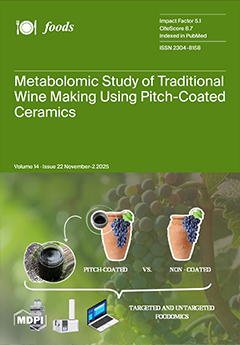
Cover Story (view full-size image):
Traditional winemaking techniques, such as fermenting in ceramic vessels or pitch-coated amphorae, have recently regained attention among producers. However, their chemical impact on wine remains poorly understood. This study characterizes pine pitch, historically used as a coating, and examines how pitched pottery influences vinification and wine composition through a foodomics approach. Using UPLC-MS/MS, we compared wines from pitched and unpitched clay containers, revealing significant differences in polyphenol profiles. These findings highlight the role of the fermentation environment in shaping metabolites and offer new insights for both heritage and modern oenology. View this paper
- Issues are regarded as officially published after their release is announced to the table of contents alert mailing list.
- You may sign up for e-mail alerts to receive table of contents of newly released issues.
- PDF is the official format for papers published in both, html and pdf forms. To view the papers in pdf format, click on the "PDF Full-text" link, and use the free Adobe Reader to open them.
Previous Issue
Next Issue
