




Next Issue
Volume 15, December-2
Previous Issue
Volume 15, November-2
 
 
nanomaterials-logo

Journal Browser

Journal Browser

Nanomaterials, Volume 15, Issue 23 (December-1 2025) – 88 articles
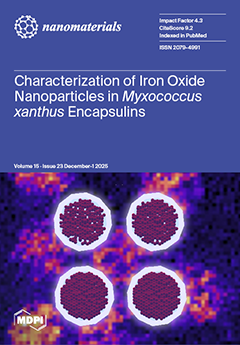
Cover Story (view full-size image): This study presents the first detailed characterization of the inorganic material stored within the Myxococcus xanthus encapsulin system by combining scanning transmission electron microscopy and electron energy loss spectroscopy to elucidate its structural and compositional properties and thereby provide key insights into the functional role of encapsulin in iron storage. View this paper
  • Issues are regarded as officially published after their release is announced to the table of contents alert mailing list.
  • You may sign up for e-mail alerts to receive table of contents of newly released issues.
  • PDF is the official format for papers published in both, html and pdf forms. To view the papers in pdf format, click on the "PDF Full-text" link, and use the free Adobe Reader to open them.
Order results
Result details
Section
Select all
Export citation of selected articles as:
21 pages, 10025 KB  
Article
Al-5Cu-0.3Sc-B4C Nanocomposites: Microstructural Refinement, Strengthening Mechanisms, and Corrosion Behavior
by Seyit Çağlar and Cengiz Temiz
Nanomaterials 2025, 15(23), 1836; https://doi.org/10.3390/nano15231836 - 4 Dec 2025
Viewed by 517
Abstract
In this study, Al-5Cu-0.3Sc nanocomposites reinforced with 0–20 wt.% B4C were successfully fabricated using a combined melt-spinning, mechanical alloying, and sintering route. The rapid solidification achieved during melt spinning suppressed elemental segregation and refined the microstructure, producing a nanocrystalline Al-Cu-Sc matrix [...] Read more.
In this study, Al-5Cu-0.3Sc nanocomposites reinforced with 0–20 wt.% B4C were successfully fabricated using a combined melt-spinning, mechanical alloying, and sintering route. The rapid solidification achieved during melt spinning suppressed elemental segregation and refined the microstructure, producing a nanocrystalline Al-Cu-Sc matrix that served as a uniform host for B4C particles. X-ray diffraction confirmed the coexistence of Al, Al2Cu, Al3Sc, and B4C phases, indicating a dual-strengthening mechanism consisting of precipitation strengthening from Al2Cu/Al3Sc and particle strengthening from B4C. Increasing B4C content increased hardness from 44.9 HV to 188.2 HV (≈319%) via effective load transfer, interfacial dislocation accumulation, and particle–matrix interlocking. The wear rate decreased from 3.81 × 10⁻³ mm3/m to 6.29 × 10⁻³ mm3/m (≈98.35%), corresponding to a nearly 60-fold increase in wear resistance due to the formation of a stable ceramic tribofilm and the protective effect of embedded B4C particles. Conversely, the corrosion rate increased from 0.117 mm/year to 6.136 mm/year (≈52-fold) due to intensified microgalvanic interactions among B4C, Al2Cu, and the Al matrix. Generally, the incorporation of B4C reinforcement provides a great improvement in mechanical and tribological properties at the expense of corrosion resistance, highlighting a performance trade-off relevant for lightweight structural and surface critical applications. Full article
(This article belongs to the Special Issue Nanomaterials for Chemical Engineering (3rd Edition))
Show Figures

Figure 1

12 pages, 3482 KB  
Article
Unveiling Boundary-Localized Interfacial Interactions in Temperature-Controlled Au-Assisted Exfoliation of MoS2 Monolayers
by Chaoqi Dai, Sikai Chen, Boyuan Wen, Bingrui Li, Lei Shao, Fangfei Ming and Shaozhi Deng
Nanomaterials 2025, 15(23), 1835; https://doi.org/10.3390/nano15231835 - 4 Dec 2025
Cited by 1 | Viewed by 611
Abstract
Gold-assisted exfoliation is an effective approach to obtain clean and large-area monolayers of transition metal dichalcogenides, yet the microscopic evolution of interfacial adhesion remains poorly understood. Here, we investigate temperature-controlled exfoliation of MoS2 between 30 and 170 °C. Based on optical microscopy [...] Read more.
Gold-assisted exfoliation is an effective approach to obtain clean and large-area monolayers of transition metal dichalcogenides, yet the microscopic evolution of interfacial adhesion remains poorly understood. Here, we investigate temperature-controlled exfoliation of MoS2 between 30 and 170 °C. Based on optical microscopy image analysis, mild heating slightly improves the exfoliation yield, which is associated with the release of interfacial contaminants and trapped gases—these substances enhance the adhesion between gold and molybdenum disulfide (Au-MoS2). Unexpectedly, as revealed by AFM, SEM-EDS, and Raman analyses, parts of the Au film start to peel off from the underlying Ti adhesion layer at approximately 100 °C. This Au film detachment, resulting from the surprisingly weak Au-Ti adhesion, serves as a unique probe for interfacial strength: it preferentially occurs at the boundaries of MoS2 flakes, indicating that the reinforcement of the Au-MoS2 interaction originates at the edges rather than being uniformly distributed. At higher temperatures (>130 °C), Au detachment expands to larger areas, indicating that boundary-localized adhesion progressively extends across the entire interface. Additional STM/STS measurements further confirm that thermal annealing improves local Au-MoS2 contact by removing interfacial species and enabling surface reconstruction. These findings establish a microscopic picture of temperature-assisted exfoliation, highlighting the dual roles of interfacial contaminant release and boundary effects, and offering guidance for more reproducible fabrication of high-quality 2D monolayers. Full article
(This article belongs to the Special Issue 2D Materials Nanofabrication)
Show Figures

Figure 1

45 pages, 8810 KB  
Review
CVD-Engineered Nano Carbon Architectures: Mechanisms, Challenges, and Outlook
by Maria Hasan, Szymon Abrahamczyk, Muhammad Aashir Awan, Ondřej Sakreida, Alicja Bachmatiuk, Grazyna Simha Martynková, Karla Čech Barabaszová and Mark Hermann Rümmeli
Nanomaterials 2025, 15(23), 1834; https://doi.org/10.3390/nano15231834 - 4 Dec 2025
Cited by 1 | Viewed by 1145
Abstract
Graphitic nanomaterials have emerged as foundational components in nanoscience owing to their exceptional electrical, mechanical, and chemical properties, which can be tuned by controlling dimensionality and structural order. From zero-dimensional (0D) quantum dots, carbon nano-onions, and nanodiamonds to one-dimensional (1D) nanoribbons, two-dimensional (2D) [...] Read more.
Graphitic nanomaterials have emerged as foundational components in nanoscience owing to their exceptional electrical, mechanical, and chemical properties, which can be tuned by controlling dimensionality and structural order. From zero-dimensional (0D) quantum dots, carbon nano-onions, and nanodiamonds to one-dimensional (1D) nanoribbons, two-dimensional (2D) nanowalls, and three-dimensional (3D) graphene foams, these architectures underpin advancements in catalysis, energy storage, sensing, and electronic technologies. Among various synthesis routes, chemical vapor deposition (CVD) provides unmatched versatility, enabling atomic-level control over carbon supply, substrate interactions, and plasma activation to produce well defined graphitic structures directly on functional supports. This review presents a comprehensive, dimension-resolved overview of CVD-derived graphitic nanomaterials, examining how process parameters such as precursor chemistry, temperature, hydrogen etching, and template design govern nucleation, crystallinity, and morphological evolution across 0D to 3D hierarchies. Comparative analyses of Raman, XPS, and XRD data are integrated to relate structural features with growth mechanisms and functional performance. By connecting mechanistic principles across dimensional scales, this review establishes a unified framework for understanding and optimizing CVD synthesis of graphitic nanostructures. It concludes by outlining a path forward for improving how CVD-grown carbon nanomaterials are made, monitored, and integrated into real devices so these can move from lab-scale experiments to practical, scalable technologies. Full article
(This article belongs to the Section 2D and Carbon Nanomaterials)
Show Figures

Figure 1

18 pages, 4721 KB  
Article
Tetrametallic Au@Ag-Pd-Pt Nanozyme with Surface-Exposed Active Sites for Enhanced Catalytic Activity
by Vasily G. Panferov, Nadezhda A. Byzova, Konstantin B. Shumaev, Anatoly V. Zherdev and Boris B. Dzantiev
Nanomaterials 2025, 15(23), 1833; https://doi.org/10.3390/nano15231833 - 4 Dec 2025
Viewed by 797
Abstract
Metal nanoparticles (NPs) with enzyme-mimicking activities, known as nanozymes, are being actively explored for biomedical and analytical applications. Enhancing their catalytic activity and metal utilization efficiency is crucial for advancing these technologies. Here, we report an aqueous-phase, room-temperature synthesis of tetra-metallic Au@Ag-Pd-Pt NPs [...] Read more.
Metal nanoparticles (NPs) with enzyme-mimicking activities, known as nanozymes, are being actively explored for biomedical and analytical applications. Enhancing their catalytic activity and metal utilization efficiency is crucial for advancing these technologies. Here, we report an aqueous-phase, room-temperature synthesis of tetra-metallic Au@Ag-Pd-Pt NPs that exhibit superior peroxidase-like activity compared to their mono-, bi-, and trimetallic counterparts. The synthesis involves a sequential, seed-mediated approach comprising the formation of Au NP seeds, the overgrowth of a Ag shell, and the galvanic replacement of Ag with Pd and Pt ions. We systematically investigated the effects of the Au core diameter (15, 40, 55 nm), Ag precursor concentration (50–400 µM), and the Pd-to-Pt ratio on the optical and catalytic properties. By changing the particle composition, we were able to tune the absorbance maximum from 520 nm to 650 nm while maintaining high extinction coefficients (109–1010 M−1cm−1) comparable to that of the initial Au nanoparticles. Mapping of chemical element distributions in the nanoscale range confirmed a core–shell–shell architecture with surface-enriched Pd and Pt. This structure ensures the surface-exposed localization of catalytically active atoms, yielding a more than 10-fold improvement in specific peroxidase-like activity while utilizing up to two orders of magnitude less Pt and Pd than bimetallic particles. The synthesized NPs thus combine high catalytic activity with tunable optical properties, making them promising multifunctional labels for biosensing. Full article
(This article belongs to the Special Issue Noble Metal Nanomaterials: Controllable Preparation and Properties)
Show Figures

Graphical abstract

18 pages, 3612 KB  
Article
Thermal Management of SSAW Acoustofluidic Devices: Experimental and Numerical Analysis
by Andrei Megalinskii, Natasha S. Barteneva and Alexander Tikhonov
Nanomaterials 2025, 15(23), 1832; https://doi.org/10.3390/nano15231832 - 4 Dec 2025
Viewed by 607
Abstract
Acoustofluidic devices use Surface Acoustic Waves (SAWs) to handle small fluid volumes and manipulate nanoparticles and biological cells with high precision. However, SAWs can cause significant heat generation and temperature rises in acoustofluidic systems, posing a critical challenge for biological and other applications. [...] Read more.
Acoustofluidic devices use Surface Acoustic Waves (SAWs) to handle small fluid volumes and manipulate nanoparticles and biological cells with high precision. However, SAWs can cause significant heat generation and temperature rises in acoustofluidic systems, posing a critical challenge for biological and other applications. In this work, we studied temperature distribution in a Standing Surface Acoustic Wave (SSAW)-based PDMS microfluidic device both experimentally and numerically. We investigated the relative contribution of Joule and acoustic dissipation heat sources. We investigated the acoustofluidic device in two heat dissipation configurations—with and without the heat sink—and demonstrated that, without the heat sink the temperatures inside the microchannel increased by 43 °C at 15 V. Adding the metallic heat sink significantly reduced the temperature rise to only 3 °C or less at lower voltages. This approach enabled the effective manipulation and alignment of nanoparticles at applied voltages up to 15 V while maintaining low temperatures, which is crucial for temperature-sensitive biological applications. Our findings provide new insights for understanding the heat generation mechanisms and temperature distribution in acoustofluidic devices and offer a straightforward strategy for the thermal management of devices. Full article
(This article belongs to the Section Theory and Simulation of Nanostructures)
Show Figures

Graphical abstract

26 pages, 4595 KB  
Article
Non-Thermal Plasma-Driven Degradation of Organic Dyes Using CeO2 Prepared by Supercritical Antisolvent Precipitation
by Qayam Ud Din, Maria Chiara Iannaco, Iolanda De Marco, Vincenzo Vaiano and Giuseppina Iervolino
Nanomaterials 2025, 15(23), 1831; https://doi.org/10.3390/nano15231831 - 4 Dec 2025
Viewed by 646
Abstract
Non-thermal plasma (NTP) is a fast, reagent-free technology for dye removal, yet its performance is highly dependent on the operating conditions and on plasma–catalyst interactions. In this work, a coaxial falling-film dielectric barrier discharge (DBD) reactor was optimized for the degradation and decolorization [...] Read more.
Non-thermal plasma (NTP) is a fast, reagent-free technology for dye removal, yet its performance is highly dependent on the operating conditions and on plasma–catalyst interactions. In this work, a coaxial falling-film dielectric barrier discharge (DBD) reactor was optimized for the degradation and decolorization of organic dyes, with ceria (CeO2) employed as a catalyst. For the first time, CeO2 prepared via a supercritical antisolvent (SAS) micronization route was tested in plasma-assisted dye decolorization and directly compared with its non-micronized counterpart. Optimization of plasma parameters revealed that oxygen feeding, an input voltage of 12 kV, a gas flow of 0.2 NL·min−1, and an initial dye concentration of 20 mg·L−1 resulted in the fastest decolorization kinetics. While the anionic dye Acid Yellow 36 exhibited electrostatic repulsion and negligible plasma–ceria synergy, the cationic dyes Crystal Violet and Methylene Blue showed strong adsorption on the negatively charged CeO2 surface and pronounced plasma–catalyst synergy, with SAS-derived CeO2 consistently outperforming the non-micronized powder. The SAS catalyst, characterized by a narrow particle size distribution (DLS) and spherical morphology (SEM), ensured improved dispersion and interaction with plasma-generated species, leading to significantly shorter decolorization radiation times compared to the literature benchmarks. Importantly, this enhancement translated into higher energy efficiency, with complete dye removal achieved at a lower specific energy input than both plasma-only operation and non-micronized CeO2. Scavenger tests confirmed •OH radicals as the dominant oxidants, while O3, O2, and ea played secondary roles. Tests on binary dye mixtures (CV + MB) revealed synergistic decolorization under plasma-only conditions, and the CeO2-SAS catalyst maintained high overall efficiency despite competitive adsorption effects. These findings demonstrate that SAS micronization of CeO2 is an effective material-engineering strategy to unlock plasma–catalyst synergy and achieve rapid, energy-efficient dye abatement for practical wastewater treatment. Full article
(This article belongs to the Special Issue Semiconductor-Based Nanomaterials for Catalytic Applications)
Show Figures

Graphical abstract

11 pages, 1986 KB  
Article
Laser-Induced Reconfiguration of Magnetic Domain Structure in Iron Garnet Films with Strong In-Plane Anisotropy
by Mikhail A. Stepanov, Nikolai V. Mitetelo, Andrey A. Guskov, Alexey S. Kaminskiy and Alexander P. Pyatakov
Nanomaterials 2025, 15(23), 1830; https://doi.org/10.3390/nano15231830 - 4 Dec 2025
Viewed by 589
Abstract
In this work we demonstrate the laser-driven reconfiguration of stripe domains in a thick bismuth-substituted iron garnet film with the (210) crystallographic orientation exhibiting strong in-plane anisotropy. Under a weak in-plane external magnetic field (H), laser irradiation leads to local “twisting” [...] Read more.
In this work we demonstrate the laser-driven reconfiguration of stripe domains in a thick bismuth-substituted iron garnet film with the (210) crystallographic orientation exhibiting strong in-plane anisotropy. Under a weak in-plane external magnetic field (H), laser irradiation leads to local “twisting” of the magnetic domains; domains with opposite magnetization rotate in different directions. The twisting angle increases linearly with the in-plane magnetic field (H) (above a threshold of approximately 6 Oe) and also changes linearly with the average laser intensity, being fully reversible after the irradiation process. The magnitude of the domain rotation effect does not depend on the light polarization state or its orientation. After optical irradiation, the magnetization distribution in the sample returns to its initial state. It is also observed that moving the focused beam spot along the surface can lead to irreversible modifications in the domain topology in several ways: there is a shift in the dislocations in stripe domain structure (domain “heads”) across the beam transfer direction, expanding the area with a specific magnetization vector orientation, and the stabilization of domain wall positions by their pinning on crystallographic defects. The proposed analytical model based on a local reducing of the effective anisotropy fully describes the rotation type and angle of domains and domain walls, defining their possible trajectories and certain values of the area heating or local anisotropy modulation and the rotation angles. The experimental results and the theoretical model demonstrate a thermal origin of the laser-induced effect in this type of magnetic domain structure. Full article
Show Figures

Figure 1

19 pages, 3824 KB  
Article
The Reconstruction of Sesame Protein-Derived Amyloid Fibrils Alleviates the Gastric Digestion Instability of β-Carotene Nanoparticles
by Liang Zhang, Puxuan Zhang, Haocheng Tong, Yue Zhao, Tengfei Yu, Guanchen Liu and Donghong Liu
Nanomaterials 2025, 15(23), 1829; https://doi.org/10.3390/nano15231829 - 3 Dec 2025
Cited by 1 | Viewed by 652
Abstract
In this study, the structural changes and reconstruction mechanism of sesame protein-derived amyloid fibrils under varied digestive parameters (pepsin concentration, digestive pH and ionic strength) during gastric digestion were investigated, and the effect of fibril reconstruction on the gastric digestion stability of β-carotene [...] Read more.
In this study, the structural changes and reconstruction mechanism of sesame protein-derived amyloid fibrils under varied digestive parameters (pepsin concentration, digestive pH and ionic strength) during gastric digestion were investigated, and the effect of fibril reconstruction on the gastric digestion stability of β-carotene nanoparticles was also explored. The results demonstrated that amyloid fibrils underwent a three-stage dynamic process of enzymatic hydrolysis, regeneration and degradation during gastric digestion. The pepsin concentration of 2 mg/mL was found to promote the balance between fibril hydrolysis and regeneration. The fibrils displayed a pronounced regenerative capacity at pH values of 1.5 and 2.5, whereas at pH 3.5, which was proximal to the isoelectric point of protein, aggregation and precipitation were observed. Furthermore, it was found that 10 mM NaCl exerted minimal influence on fibril stability, whereas the higher concentrations of salt ions were shown to obstruct regeneration and promote aggregation. Analyses through SDS-PAGE, GPC, and MALDI-TOF-MS revealed a gradual reduction in the molecular weight of the fibrils during gastric digestion, with certain fragments reaggregating to form new fibril structures. The fibril-based delivery system formed a stable protective structure for β-carotene nanoparticles, which not only prevented their aggregation but also facilitated their release in the small intestine. Full article
(This article belongs to the Section Biology and Medicines)
Show Figures

Graphical abstract

27 pages, 8012 KB  
Review
Gas-Mediated Dynamic Structure Evolution of Bimetallic Alloy Catalysts
by Yafeng Zhang, Pengfei Du and Bing Yang
Nanomaterials 2025, 15(23), 1828; https://doi.org/10.3390/nano15231828 - 3 Dec 2025
Viewed by 814
Abstract
Bimetallic alloys are widely used as heterogeneous catalysts due to their unique physico-chemical properties for improving catalytic reactions. Typically, the structures of alloy catalysts are inherently dynamic under gas environments, which plays a crucial role in their catalytic activity, stability and selectivity. One [...] Read more.
Bimetallic alloys are widely used as heterogeneous catalysts due to their unique physico-chemical properties for improving catalytic reactions. Typically, the structures of alloy catalysts are inherently dynamic under gas environments, which plays a crucial role in their catalytic activity, stability and selectivity. One method of enhancing the catalytic performance of bimetallic nanomaterials is, therefore, to tune or control the surface structure of the nanomaterials, and tremendous progress has been made in this area in the past decade. In this review, we primarily focus on the dynamic structure evolution of binary noble metal alloy catalysts influencing their catalytic performance during the thermal catalytic reaction. First, we summarize the advantage of binary noble metal alloy catalysts and their structure correlation with catalysis. Then, we examine how the structure of precious-metal-based alloy catalysts evolves in response to varying gas environments and the resulting structures impacts on heterogeneous catalytic activity. Further, the advanced characterizing techniques, i.e., in situ scanning/transmission electron microscopy (in situ S/TEM) and near-ambient pressure scanning tunneling microscopy (NAP-STM) are outlined for visualizing these structural evolutions. Finally, we summarize the remaining challenges and outlooks for the future in this research field and offer the potential direction of rational design catalysts with high energy-efficient and sustainable catalytic processes. Full article
(This article belongs to the Special Issue Pioneering Nanomaterials: Revolutionizing Energy and Catalysis)
Show Figures

Figure 1

17 pages, 6237 KB  
Article
Sensitive Detection of Paraquat in Water Using Triangular Silver Nanoplates as SERS Substrates for Sustainable Agriculture and Water Resource Management
by Apinya Ketkong, Thana Sutthibutpong, Noppadon Nuntawong, Fueangfakan Chutrakulwong and Kheamrutai Thamaphat
Nanomaterials 2025, 15(23), 1827; https://doi.org/10.3390/nano15231827 - 3 Dec 2025
Viewed by 491
Abstract
This research focused on the synthesis of triangular silver nanoplates (TSNPs) with sharp corners using a photomediated seed growth method. The TSNPs produced had an average edge length of 27.2 ± 9.2 nm and a (110) crystalline plane structure. In terms of optical [...] Read more.
This research focused on the synthesis of triangular silver nanoplates (TSNPs) with sharp corners using a photomediated seed growth method. The TSNPs produced had an average edge length of 27.2 ± 9.2 nm and a (110) crystalline plane structure. In terms of optical properties, the TSNPs displayed three key absorbance peaks at approximately 400 nm, 500 nm, and 660 nm, which correspond to out-of-plane dipolar resonance, in-plane quadrupolar resonance, and in-plane dipolar resonance, respectively. The prepared TSNP colloidal solutions served as surface-enhanced Raman spectroscopy (SERS)-active materials for detecting paraquat residue in aqueous samples. We optimized the mixing time of the liquid SERS with the sample, maintaining a 1:1 volume ratio. The findings showed a remarkable enhancement of the Raman signal with 10 min mixing time using laser excitation at a wavelength of 785 nm. This study achieved the development of novel SERS-active substrates capable of detecting pesticides with excellent accuracy, sensitivity, and reproducibility for both qualitative and quantitative analysis in tap water, river water, drinking water, and cannabis water. Additionally, it paved the way for using the SERS technique as a promising approach in the areas of food safety and environmental monitoring, especially in the organic farming field. Full article
Show Figures

Figure 1

34 pages, 4097 KB  
Review
Porous Silicon and Silicon Nanowires for On-Chip Supercapacitor Electrodes: A Review
by Daria M. Sedlovets
Nanomaterials 2025, 15(23), 1826; https://doi.org/10.3390/nano15231826 - 2 Dec 2025
Cited by 1 | Viewed by 838
Abstract
Finding efficient ways to store energy is a current topic both at the macro level and at the microscale. As silicon plates are the main platform for the integration of microelectronic devices, it is reasonable to use the silicon structures as the active [...] Read more.
Finding efficient ways to store energy is a current topic both at the macro level and at the microscale. As silicon plates are the main platform for the integration of microelectronic devices, it is reasonable to use the silicon structures as the active materials for on-chip microcapacitors. Porous silicon (pSi) and silicon nanowires (SiNWs) are ideal candidates for planar electrodes because these layers are directly embedded into the silicon wafer. The review contains a brief summary of the formation features of pSi/SiNW and their electrochemical performance. The structural characteristics of the silicon matrix (depth and morphology) that influence capacitive electrode properties are examined comprehensively for the first time. Particular attention is given to additional coatings on the pore/wire surface. Various ways of depositing metal, carbon, and polymer layers are considered in detail. Different approaches to filling the silicon matrix are explored. Focusing on pSi/SiNWs coatings allows us to identify the effect of the structure, crystallinity, and methods of additional layer deposition on capacitance, cycling stability, and charge transport of modified electrodes. Although fabrication processes for planar microcapacitors based on pSi/SiNWs are currently underdeveloped, the specific requirements and possible challenges of on-chip integration are discussed and proposed. Full article
(This article belongs to the Section Nanocomposite Materials)
Show Figures

Figure 1

1 pages, 438 KB  
Correction
Correction: Huang et al. Electrosprayed Ultra-Thin Coating of Ethyl Cellulose on Drug Nanoparticles for Improved Sustained Release. Nanomaterials 2020, 10, 1758
by Wei-Dong Huang, Xizi Xu, Han-Lin Wang, Jie-Xun Huang, Xiao-Hua Zuo, Xiao-Ju Lu, Xian-Li Liu and Deng-Guang Yu
Nanomaterials 2025, 15(23), 1825; https://doi.org/10.3390/nano15231825 - 2 Dec 2025
Viewed by 392
Abstract
In the original publication [...] Full article
Show Figures

Figure 6

42 pages, 1598 KB  
Review
Nanoscale Characterization of Nanomaterial-Based Systems: Mechanisms, Experimental Methods, and Challenges in Probing Corrosion, Mechanical, and Tribological Properties
by Md Ashraful Hoque and Chun-Wei Yao
Nanomaterials 2025, 15(23), 1824; https://doi.org/10.3390/nano15231824 - 2 Dec 2025
Cited by 2 | Viewed by 1518
Abstract
Nanomaterial-based systems (NBS) have emerged as transformative elements in advanced surface engineering, offering superior corrosion resistance, mechanical strength, and tribological resilience governed by unique phenomena inherent to the nanoscale. However, bridging the knowledge gap between these enhanced physicochemical properties and the metrological tools [...] Read more.
Nanomaterial-based systems (NBS) have emerged as transformative elements in advanced surface engineering, offering superior corrosion resistance, mechanical strength, and tribological resilience governed by unique phenomena inherent to the nanoscale. However, bridging the knowledge gap between these enhanced physicochemical properties and the metrological tools required to quantify them remains a critical challenge. This review provides a comprehensive examination of the fundamental mechanisms, state-of-the-art experimental techniques, and computational strategies employed to probe NBS behavior. The article first elucidates the core mechanisms driving performance, including passive barrier formation, stimuli-responsive active corrosion inhibition, grain boundary strengthening, and the formation of protective tribo-films by 2D nanomaterial-based systems. Subsequently, the article evaluates the transition from conventional macroscopic testing to high-resolution in situ characterization, highlighting the capabilities of High-Speed Atomic Force Microscopy (HS-AFM), Liquid Cell Transmission Electron Microscopy (LC-TEM), and nanoindentation in visualizing dynamic defect evolution and measuring localized mechanical responses. Furthermore, the indispensable role of computational materials science—specifically Molecular Dynamics (MD) and Machine Learning (ML)—in predictive modeling and elucidating atomic-scale interactions is discussed. Finally, persistent challenges regarding substrate interference, sample heterogeneity, and instrumentation limits are addressed, concluding with a perspective on future research directions focused on standardization, operando testing, and the development of AI-driven “Digital Twins” for accelerated testing and material optimization. Full article
(This article belongs to the Section Nanocomposite Materials)
Show Figures

Figure 1

3 pages, 148 KB  
Editorial
Advanced 2D Materials for Emerging Applications
by Maiyong Zhu
Nanomaterials 2025, 15(23), 1823; https://doi.org/10.3390/nano15231823 - 2 Dec 2025
Viewed by 750
Abstract
Since the discovery of graphene in 2004, two-dimensional (2D) materials have received increasing attention owing to their unique electronic, optical, mechanical, and chemical properties [...] Full article
(This article belongs to the Special Issue Advanced 2D Materials for Emerging Applications)
17 pages, 4844 KB  
Article
Coal Gasification Slag-Derived Ceramsite for High-Efficiency Phosphorus Removal from Wastewater
by Yu Li, Ruifeng Wang, Kexuan Shen, Yi Ye, Hui Liu, Zhanfeng Yang and Shengli An
Nanomaterials 2025, 15(23), 1822; https://doi.org/10.3390/nano15231822 - 1 Dec 2025
Cited by 1 | Viewed by 474
Abstract
Coal gasification slag (CGS), an industrial solid waste produced during high-temperature (1200–1600 °C) coal gasification, was utilized as the primary raw material, combined with minor additions of coal gangue and calcium oxide, to synthesize ceramsite filter via high-temperature sintering (900–1160 °C) for phosphorus-containing [...] Read more.
Coal gasification slag (CGS), an industrial solid waste produced during high-temperature (1200–1600 °C) coal gasification, was utilized as the primary raw material, combined with minor additions of coal gangue and calcium oxide, to synthesize ceramsite filter via high-temperature sintering (900–1160 °C) for phosphorus-containing wastewater treatment. The resulting ceramsite was evaluated for compressive strength, apparent porosity, water absorption, mineral phase composition, hydrolysis properties, and phosphorus removal performance. Experimental results revealed that increasing sintering temperature and calcium oxide content shifted the dominant crystalline phases from anorthite and hematite to gehlenite, anorthite, wollastonite, and esseneite, promoting the formation of porous structures. This transition increased apparent porosity while reducing compressive strength. Under optimal conditions (1130 °C, 20 wt.% CaO, 1 h sintering), the ceramsite (CM-20-1130) exhibited an apparent porosity of 43.12%, compressive strength of 3.88 MPa, apparent density of 1.084 g/cm3, and water absorption of 33.20%. The high porosity and abundant gehlenite and wollastonite phases endowed CM-20-1130 with enhanced hydrolysis capacity. Static phosphorus removal experiments demonstrated a maximum phosphorus removal capacity of 2.77 mg/g, driven by the release of calcium and hydroxide ions from gehlenite and wollastonite, which form calcium-phosphate precipitates on the ceramsite surface, enabling efficient phosphorus removal from simulated wastewater. Full article
Show Figures

Figure 1

27 pages, 19129 KB  
Article
Green Synthesis of AgNPs from Celtis africana: Biological and Catalytic Insights
by Amna N. Khan
Nanomaterials 2025, 15(23), 1821; https://doi.org/10.3390/nano15231821 - 1 Dec 2025
Viewed by 621
Abstract
Celtis africana, a rare plant native to southwestern Saudi Arabia, was explored for the first time as a source for the green synthesis of silver nanoparticles (AgNPs). Catechol-bearing phenolic amides in the aqueous leaf extract acted as both reducing and capping agents, enabling [...] Read more.
Celtis africana, a rare plant native to southwestern Saudi Arabia, was explored for the first time as a source for the green synthesis of silver nanoparticles (AgNPs). Catechol-bearing phenolic amides in the aqueous leaf extract acted as both reducing and capping agents, enabling eco-friendly AgNP fabrication. The synthesized AgNPs were characterized using SEM, TEM, XRD, UV-Vis, and FTIR, revealing predominantly spherical nanoparticles with an average size of 9.28 ± 0.11 nm, a face-centered cubic crystalline structure, and a pronounced surface plasmon resonance at 424 nm. HPLC analysis confirmed the presence of caffeoyltryamine in the extract, while UV-Vis and FTIR indicated its attachment to the AgNP surface. The AgNPs exhibited broad-spectrum antimicrobial activity against Gram-positive bacteria (S. aureus, MRSA and E. faecalis) and Gram-negative bacteria (E. coli, K. pneumoniae, S. typhimurium, and P. aeruginosa), as well as pathogenic fungi such as C. albicans, C. glabrata, C. parapsilosis, and C. krusei with performance comparable to or exceeding that of AgNPs from Artemisia vulgaris, Moringa oleifera, and Nigella sativa. The MIC and MBC values for S. aureus, MRSA, E. coli, and S. typhimurium were consistently 6.25 µg/mL and 25 µg/mL, respectively, reflecting strong inhibitory and bactericidal effects at low concentrations. MTT assays demonstrated selective cytotoxicity, showing higher viability in normal human skin fibroblasts (HSF) than in MCF-7 breast cancer cells. The AgNPs also displayed strong antioxidant activity (IC50 = 5.41 µg/mL, DPPH assay) and efficient catalytic reduction of 4-nitrophenol (4-NP) and methylene blue (MB), with rate constants of 0.0165 s−1 and 0.0047 s−1, respectively, exceeding most reported values. These findings identify Celtis africana as a promising source for eco-friendly AgNPs with strong antimicrobial, antioxidant, and catalytic properties for broad biological and environmental applications. Full article
(This article belongs to the Section Energy and Catalysis)
Show Figures

Graphical abstract

11 pages, 2941 KB  
Article
The Molecular Sieving of Propylene and Propane on SAPO-35 Molecular Sieve
by Yansi Tong, Kadi Hu, Qihao Yang, Hao Liu, Danhua Yuan, Jungang Wang, Mengting Lv, Hailong Wang, Ziqi Tian, Yunpeng Xu and Liang Chen
Nanomaterials 2025, 15(23), 1820; https://doi.org/10.3390/nano15231820 - 1 Dec 2025
Viewed by 578
Abstract
Selective adsorption is regarded as a promising alternative for propylene/propane separation. However, the similar physicochemical properties of these two components pose a challenge in developing adsorbents that simultaneously exhibit high selectivity and substantial adsorption capacity. This study aims to achieve molecular sieving of [...] Read more.
Selective adsorption is regarded as a promising alternative for propylene/propane separation. However, the similar physicochemical properties of these two components pose a challenge in developing adsorbents that simultaneously exhibit high selectivity and substantial adsorption capacity. This study aims to achieve molecular sieving of propylene and propane by precisely controlling the pore size of silicoaluminophosphate (SAPO) molecular sieve. The pore size of the eight-membered-ring SAPO-35 molecular sieve is tuned via ion exchange to fall between the kinetic diameters of propylene and propane, enabling selective adsorption of propylene while excluding propane molecules. Ion exchange treatment increased the equilibrium adsorption selectivity of the SAPO-35 from 2.2 to 11.4, placing it among the highest-performing molecular sieve-based adsorbents. This modification also substantially improved the material’s regeneration capability at ambient temperature. Theoretical calculations reveal that steric hindrance effects, arising when gas molecules diffuse through the eight-membered-ring channels, contribute significantly to the high adsorption selectivity. Breakthrough experiments demonstrated that Na-SAPO-35 achieves a dynamic selectivity of 15.9 for propylene/propane separation. The development of Na-SAPO-35 adsorbents with high selectivity, substantial adsorption capacity, and robust durability is critical for advancing the industrial implementation of adsorption-based separation technologies. Full article
(This article belongs to the Special Issue Sustainable CO2 Capture and Catalytic Conversion)
Show Figures

Graphical abstract

24 pages, 4149 KB  
Review
Research Progress of Passively Mode-Locked Fiber Lasers Based on Saturable Absorbers
by Jiayi Xie, Tengfei Liu, Xilong Liu, Fang Wang and Weiwei Liu
Nanomaterials 2025, 15(23), 1819; https://doi.org/10.3390/nano15231819 - 1 Dec 2025
Cited by 1 | Viewed by 1169
Abstract
Ultrashort fiber lasers are one of the current research hotspots in the field of lasers. They have the advantages of compact structure and high beam quality. Passively mode-locking using saturable absorbers (SAs) is an important scheme for generating picosecond and femtosecond pulses. A [...] Read more.
Ultrashort fiber lasers are one of the current research hotspots in the field of lasers. They have the advantages of compact structure and high beam quality. Passively mode-locking using saturable absorbers (SAs) is an important scheme for generating picosecond and femtosecond pulses. A deep understanding of the passive mode-locking mechanism is key to maturing ultrafast laser technology. In recent years, the passively mode-locking technology of SAs has been improved in material systems, device preparation, and cavity structures. SAs are primarily divided into artificial SAs and real SAs. Real SAs primarily include semiconductor saturable absorption mirrors (SEASAMs) and nanomaterials. Artificial SAs primarily include nonlinear optical loop mirrors (NOLMs), nonlinear multimode interference (NLMMI), nonlinear polarization rotation (NPR), and the Mamyshev oscillator. Herein, we mainly review passively mode-locked fiber lasers employing various SAs, as well as their working principles and technical characteristics. By focusing on the representative achievements, the developmental achievements of ultrafast lasers based on SAs are demonstrated. Finally, the prevailing challenges and promising future research directions in SA’s mode-locking technology are discussed. Full article
Show Figures

Figure 1

10 pages, 2360 KB  
Article
Glass-Based 4-in-1 High-Voltage Micro-LED Package for High-Brightness Mini-LED Backlight Applications
by Chien-Chi Huang, Tzu-Yi Lee, Chia-Hung Tsai, Fang-Chung Chen, Li-Yin Chen and Hao-Chung Kuo
Nanomaterials 2025, 15(23), 1818; https://doi.org/10.3390/nano15231818 - 1 Dec 2025
Viewed by 668
Abstract
A novel four-in-one (4-in-series) MicroLED-in-Package (MiP4) architecture is demonstrated for the first time, integrating four sub-85 µm blue micro-LED (µ-LED) dies on a transparent glass substrate through a redistribution-layer (RDL) interconnection process. The MiP4 device operates natively at 16 V, eliminating the need [...] Read more.
A novel four-in-one (4-in-series) MicroLED-in-Package (MiP4) architecture is demonstrated for the first time, integrating four sub-85 µm blue micro-LED (µ-LED) dies on a transparent glass substrate through a redistribution-layer (RDL) interconnection process. The MiP4 device operates natively at 16 V, eliminating the need for step-down converters and simplifying high-voltage backlight driving circuits. The transparent glass carrier enables efficient light extraction, excellent thermal dissipation, and uniform emission. Electrical and optical characterization of dual- (B2), triple- (B3), and quad-chip (B4) devices shows ideal voltage scalability (8 V, 12 V, 16 V) and stable emission at 450 ± 2 nm with minimal FWHM broadening (22–29 nm). Compared with a commercial LED, the MiP4 delivers 1.8× higher optical power (~41.8 mW) despite its active area being only ~1/70 that of the reference device (20,000 µm2 vs. 1,350,000 µm2), yielding a dramatically enhanced luminous flux density of 64 lm/mm2 at 50 mA. Furthermore, pulse-driven measurements under 2%, 5%, and 10% duty cycles verify excellent thermal stability and minimal spectral shift (<1 nm), confirming the device’s robustness and energy efficiency. This first-of-its-kind 4-in-1 high-voltage glass-based µ-LED package provides a scalable and manufacturable route toward next-generation ultra-thin, high-brightness Mini-LED backlight and optical communication systems. Full article
(This article belongs to the Section Nanoelectronics, Nanosensors and Devices)
Show Figures

Figure 1

13 pages, 2299 KB  
Article
SWCNT-Based Composite Films with High Mechanical Strength and Stretchability by Combining Inorganic-Blended Acrylic Emulsion for Various Thermoelectric Generators
by Yuto Nakazawa, Yoshiyuki Shinozaki, Hiroto Nakayama, Shuya Ochiai, Shugo Miyake and Masayuki Takashiri
Nanomaterials 2025, 15(23), 1817; https://doi.org/10.3390/nano15231817 - 1 Dec 2025
Cited by 1 | Viewed by 570
Abstract
Single-walled carbon nanotube (SWCNT) films are potential materials for thermoelectric generators (TEGs) owing to their flexibility and high thermoelectric performance near 300 K. However, they inherently exhibit low mechanical strength and high thermal conductivity. To address these limitations, SWCNT-based composite films were fabricated [...] Read more.
Single-walled carbon nanotube (SWCNT) films are potential materials for thermoelectric generators (TEGs) owing to their flexibility and high thermoelectric performance near 300 K. However, they inherently exhibit low mechanical strength and high thermal conductivity. To address these limitations, SWCNT-based composite films were fabricated by combining SWCNTs with varying amounts of an inorganic-blended acrylic emulsion additive. The resulting SWCNT-based composite films exhibited significantly improved mechanical properties, with breaking strain and tensile strength values approximately thirty and two times higher, respectively, than those of the additive-free SWCNT film. Thermal conductivity decreased from 7.3 W/(m·K) for the additive-free SWCNT film to 2.1 W/(m·K) for the SWCNT-based composite films. Two types of TEGs were fabricated using the composite films: (1) the water-floating TEG, which generated a temperature difference through evaporative cooling; and (2) the standard TEG, which generated a temperature difference when vertically mounted on a heater. The output voltage of the first type of TEGs decreased as the additive amount increased, owing to reduced evaporative cooling. However, the second type of TEGs increased the output voltage by adding the appropriate amount of additive owing to the film’s low thermal conductivity. These findings are significantly helpful in using TEGs with appropriate designs and placements. Full article
(This article belongs to the Special Issue Nanomaterials for Stretchable and Wearable Devices)
Show Figures

Graphical abstract

10 pages, 1717 KB  
Article
First-Principles Study of Biaxial Strain Effects on Schottky Barrier Modulation in Graphene/ZnSe Heterostructures
by Guowang Pang, Xue Wen, Lili Zhang and Yineng Huang
Nanomaterials 2025, 15(23), 1816; https://doi.org/10.3390/nano15231816 - 1 Dec 2025
Cited by 1 | Viewed by 432
Abstract
Reducing the Schottky barrier at the metal–semiconductor interface and achieving Ohmic contact is crucial for the development of high-performance Schottky field-effect transistors. This paper investigates the stability, interface interactions, interlayer charge transfer, and types of Schottky contacts in the graphene/ZnSe heterostructure structure using [...] Read more.
Reducing the Schottky barrier at the metal–semiconductor interface and achieving Ohmic contact is crucial for the development of high-performance Schottky field-effect transistors. This paper investigates the stability, interface interactions, interlayer charge transfer, and types of Schottky contacts in the graphene/ZnSe heterostructure structure using first-principles methods. It employs biaxial strain as a control mechanism. The results indicate that applying compressive strain increases the barrier and band gap while maintaining n-type contact; whereas tensile strain reduces the n-type barrier to negative values, inducing Ohmic contact and decreasing the band gap. The findings of this study will provide theoretical references for the design and fabrication of field-effect transistors, photodetectors, and other optoelectronic devices. Full article
(This article belongs to the Special Issue Graphene and 2D Material-Based Photodetectors)
Show Figures

Figure 1

15 pages, 1600 KB  
Article
Design of Porous Aromatic Frameworks for Adsorptive Desulfurization: Synergistic Modulation via π-π Interactions and Mesopores
by Tiantian Li, Xiaowen Li, Hao Wu, Guangxia Shi, Yizhi Zeng, Dong Xu and Dingming Xue
Nanomaterials 2025, 15(23), 1815; https://doi.org/10.3390/nano15231815 - 30 Nov 2025
Viewed by 444
Abstract
The elimination of thiophenic sulfides from fuel oils is essential for both environmental protection and industrial catalysis. However, conventional hydrodesulfurization encounters difficulties due to severe operating conditions and limited efficacy against aromatic heterocyclic sulfur compounds. Adsorptive desulfurization offers notable advantages under milder conditions. [...] Read more.
The elimination of thiophenic sulfides from fuel oils is essential for both environmental protection and industrial catalysis. However, conventional hydrodesulfurization encounters difficulties due to severe operating conditions and limited efficacy against aromatic heterocyclic sulfur compounds. Adsorptive desulfurization offers notable advantages under milder conditions. In this investigation, topology-guided pore engineering was utilized to fabricate porous aromatic frameworks (PAFs) with distinct pore structures through Suzuki–Miyaura cross-coupling. Notably, PBPAF-2, despite its lower specific surface, demonstrates significantly improved mass transfer kinetics attributed to its unique mesoporous channel (2.13 nm), resulting in notably prolonged dynamic breakthrough retention times compared to other materials in the series. Analysis using synchrotron-assisted FT-IR spectroscopy reveals a blue-shift in benzene ring characteristic peaks following adsorption of dibenzothiophene and benzothiophene, indicating that π-π interactions between electron-rich aromatic rings in PAFs and thiophenic rings are the primary driving force for adsorption. This work proposes a dual-factor synergistic design strategy of “mass transfer optimization–electron cloud matching”, offering a new strategy for the development of highly efficient adsorbents. Full article
(This article belongs to the Special Issue New Trends in Porous Nanomaterials and Green Environment Applications)
Show Figures

Graphical abstract

15 pages, 2807 KB  
Article
Syngas Production over Nanosized Multicomponent Co-Fe-Containing Catalysts
by Kuralay T. Tilegen, Sholpan S. Itkulova, Makpal A. Zhumash, Yerzhan A. Boleubayev and Arlan Z. Abilmagzhanov
Nanomaterials 2025, 15(23), 1814; https://doi.org/10.3390/nano15231814 - 30 Nov 2025
Viewed by 474
Abstract
Carbon dioxide reforming of methane is a promising technology to recycle and reduce greenhouse gases (CH4, CO2) into valuable chemicals and fuels. The Co-Fe catalysts modified with a small amount of Pt and supported on alumina were designed to [...] Read more.
Carbon dioxide reforming of methane is a promising technology to recycle and reduce greenhouse gases (CH4, CO2) into valuable chemicals and fuels. The Co-Fe catalysts modified with a small amount of Pt and supported on alumina were designed to be explored in dry reforming (DRM) and combined CO2-steam reforming (bireforming, BRM) of methane to produce syngas. The catalysts were characterized by physico-chemical methods (i.e., BET, XRD, TEM, SEM, and TPR-H2). The synthesized catalysts are the X-ray amorphous nanosized materials with particle sizes of less than 30 nm. The processes were carried out using a feed of CH4/CO2/H2O = 1/1/0–0.5 at varying temperature (400–800 °C) at atmospheric pressure and GHSV = 1000 h−1. The combination of Co and Fe in varying ratios with Pt allowed for high activity and selectivity to be maintained. Extents of methane and CO2 conversion are varied within a range of 79.5–97.5 and 64.2–85.2%, respectively, at 700–800 °C, while the H2/CO ratio in the resulting syngas ranged from 0.98 to 1.30, depending on the catalyst and feed composition. Stability tests conducted for up to 80 h on stream showed no loss of activity of the 10%Co-Fe-Pt/Al2O3 catalysts in BRM. We believe that high activity of the synthesized catalysts occurs due to synergy in the Co-Fe-Pt system. Full article
Show Figures

Figure 1

23 pages, 4807 KB  
Article
Reactive Magnetron-Sputtered Tantalum–Copper Nitride Coatings: Structure, Electrical Anisotropy, and Antibacterial Behavior
by Paweł Żukowski, Vitalii Bondariev, Anatoliy I. Kupchishin, Marat N. Niyazov, Kairat B. Tlebaev, Yaroslav Bobitski, Joanna Kisała, Joanna Wojtas, Anna Żaczek, Štefan Hardoň and Alexander D. Pogrebnjak
Nanomaterials 2025, 15(23), 1813; https://doi.org/10.3390/nano15231813 - 30 Nov 2025
Viewed by 674
Abstract
Tantalum nitride (TaN) coatings are valued for their hardness, chemical inertness, and biocompatibility; however, they lack intrinsic antibacterial properties, which limits their application in biomedical environments. Introducing copper (Cu) into the TaN matrix offers a potential solution by combining TaN’s mechanical and chemical [...] Read more.
Tantalum nitride (TaN) coatings are valued for their hardness, chemical inertness, and biocompatibility; however, they lack intrinsic antibacterial properties, which limits their application in biomedical environments. Introducing copper (Cu) into the TaN matrix offers a potential solution by combining TaN’s mechanical and chemical durability with Cu’s well-documented antimicrobial action. This study explores how varying copper incorporation affects the structural, electrical, photocatalytic, and antibacterial characteristics of TaCuN multilayer films synthesized via reactive magnetron sputtering. Three thin TaCuN films were fabricated using a high-power reactive magnetron co-sputtering system, varying the Cu target power to control the composition. Structural and morphological analysis was performed using X-ray diffraction (XRD), scanning/transmission electron microscopy (STEM/TEM), and energy-dispersive X-ray spectroscopy (EDS). Electrical conductivity was studied along and across the film surfaces at temperatures ranging from 20 to 375 K using AC impedance spectroscopy. Optical and photocatalytic properties were assessed using UV–Vis spectroscopy and methylene blue degradation tests. Antibacterial activity against Staphylococcus aureus was analyzed under visible light using CFU reduction tests. XRD and TEM analyses revealed a multilayered four-zone architecture with alternating Ta-, Cu-, and N-rich phases and a dominant cubic δ-TaN pattern. The layers exhibited pronounced conductivity anisotropy, with in-plane conductivity (~103 Ω−1 cm−1) exceeding cross-plane conductivity by ~107 times, attributed to the formation of a metallic conduction channel in the mid-layer. Optical spectra indicated limited light absorption above 300 nm and negligible photocatalytic activity. Increasing the Cu content substantially enhanced antibacterial efficiency, with the highest-Cu sample achieving 95.6 % bacterial growth reduction. Morphological evaluation indicated that smooth film surfaces (Ra < 0.2 μm) effectively minimized bacterial adhesion. Reactive magnetron sputtering enables the precise engineering of TaCuN multilayers, combining high electrical anisotropy with robust antibacterial functionality. The optimized TaCuN coating offers promising potential in biomedical and protective applications where both conductivity and microbial resistance are required. Full article
(This article belongs to the Special Issue Synthesis of Functional Nanoparticles for Biomedical Applications)
Show Figures

Graphical abstract

3 pages, 149 KB  
Editorial
Quantum Dot Materials and Optoelectronic Devices
by Yaohong Zhang and Guohua Wu
Nanomaterials 2025, 15(23), 1812; https://doi.org/10.3390/nano15231812 - 29 Nov 2025
Viewed by 652
Abstract
Quantum dots (QDs), representing a paradigmatic class of nanomaterials, have garnered substantial interest in both academic circles and industrial sectors over recent decades [...] Full article
(This article belongs to the Special Issue Quantum Dot Materials and Optoelectronic Devices)
32 pages, 5186 KB  
Article
Independent Channel Method for Lattice Thermal Conductance in Corrugated Graphene Ribbons
by Oliver I. Barreto and Chumin Wang
Nanomaterials 2025, 15(23), 1811; https://doi.org/10.3390/nano15231811 - 29 Nov 2025
Viewed by 491
Abstract
Graphene’s extraordinary thermal conductivity makes it a compelling material for heat management in microelectronic circuits, lithium-ion batteries, and thermoelectric devices. In this article, we investigate its vibrational modes using a Born–von Karman model that includes first- and second-nearest-neighbor interactions. The resulting phonon dispersion [...] Read more.
Graphene’s extraordinary thermal conductivity makes it a compelling material for heat management in microelectronic circuits, lithium-ion batteries, and thermoelectric devices. In this article, we investigate its vibrational modes using a Born–von Karman model that includes first- and second-nearest-neighbor interactions. The resulting phonon dispersion relations agree well with experimental data, including acoustic flexural modes. To analyze phonon transport in mesoscopic graphene ribbons, we use both the Kubo–Greenwood and Landauer formalisms, as well as an independent channel method, which analytically maps zigzag-edged hexagonal ribbons into a set of single and dual chains via a unitary transformation. The resulting lattice thermal conductance spectra exhibit quantized steps that are smoothed in the presence of corrugations. We further explore the effects of temperature-induced rippling and buckling disorders on the phonon transport in graphene ribbons suspended over trenches. The predicted thermal conductance as a function of length and temperature closely matches experimental measurements, demonstrating the effectiveness of the independent channel method for the fully real-space modeling of corrugated graphene ribbons. Full article
Show Figures

Graphical abstract

18 pages, 3827 KB  
Article
Development and Performance Analysis of High-K Spacer-Induced Strained Si/SiGe Channel-Based Gate All Around FET for Thermal Effects
by Potaraju Yugender, Sneha Singh, Kuleen Kumar, Rudra Sankar Dhar, Alexey Y. Seteikin, Amit Banerjee and Ilia G. Samusev
Nanomaterials 2025, 15(23), 1810; https://doi.org/10.3390/nano15231810 - 29 Nov 2025
Viewed by 2339
Abstract
A Gate Stack GAA FET using SiGe with a 2 nm gate underlap encapsulating a high-k spacer has been created, explored, and evaluated for improved performance in radio frequency applications. The chip shows significant improvements in electrical and radio frequency analog performance because [...] Read more.
A Gate Stack GAA FET using SiGe with a 2 nm gate underlap encapsulating a high-k spacer has been created, explored, and evaluated for improved performance in radio frequency applications. The chip shows significant improvements in electrical and radio frequency analog performance because of the use of wrapped underlaps of high-k, which suppress parasitic capacitance and fringing field effects, to achieve a 192.52% boost in drain current and 98% reduction in IOFF current, translating into better performance. This new device, as proposed, has demonstrated improved switching behavior with the ability to reduce subthreshold swing by about 11.24% and results in a better Ion/Ioff ratio over existing devices, while also maintaining efficient control over other SCEs, with it being well-suited for the implementation of high-performance and low-power CMOS circuits. In addition, linearity parameters like VIP2, VIP3, and IIP3 reflect improvements, with the device having lesser harmonic distortions (IMD3 and THD), therefore making it more appropriate for RF and analog circuit uses. These results point to the prospect of SiGe-based Gate Stack GAA FETs with a 2 nm gate underlap encircling a high-k spacer for low-power, high-speed applications in IoT and 5G/6G technologies toward building environmentally friendly and sustainable electronic solutions. Full article
(This article belongs to the Section Nanophotonics Materials and Devices)
Show Figures

Figure 1

14 pages, 6774 KB  
Article
Fabrication and Electrical Characterization of MgZnO/ZTO Thin-Film Transistors
by Yunpeng Hao, Chao Wang, Liang Guo, Yu Sun, Meihua Jin, Linbo Xu, Ying Huang, Yi Zong, Xiwen Xu and Jingxuan Zeng
Nanomaterials 2025, 15(23), 1809; https://doi.org/10.3390/nano15231809 - 29 Nov 2025
Viewed by 494
Abstract
To enhance the electrical performance of MgZnO-TFTs, this study employed radio-frequency (RF) magnetron sputtering to fabricate MgZnO/ZTO thin films. Using these films as the channel layer, bottom-gate top-contact MgZnO/ZTO-TFT devices were constructed. The thin films were characterized using atomic force microscopy (AFM) and [...] Read more.
To enhance the electrical performance of MgZnO-TFTs, this study employed radio-frequency (RF) magnetron sputtering to fabricate MgZnO/ZTO thin films. Using these films as the channel layer, bottom-gate top-contact MgZnO/ZTO-TFT devices were constructed. The thin films were characterized using atomic force microscopy (AFM) and X-ray photoelectron spectroscopy (XPS). After optimization, the MgZnO/ZTO-TFT exhibited a high field-effect mobility of 16.80 cm2·V−1·s−1, high Ion/off of 7.63 × 10⁸, threshold voltage of −1.60 V, and subthreshold swing as low as 0.74 V·dec−1. Bias stress stability tests were conducted under positive bias stress (PBS) and negative bias stress (NBS) conditions with a source-drain voltage of 20 V and gate bias stresses (VGS) of +10 V and −10 V, respectively, for a duration of 1000 s. The resulting threshold voltage shifts were only +0.58 V and −0.15 V, respectively, indicating excellent bias stability. These results suggest that the ZTO film, serving as the lower channel layer, effectively enhances carrier transport at the MgZnO/ZTO interface, thereby improving the field-effect mobility and on/off current ratio. Meanwhile, the MgZnO film as the upper channel layer adjusts the device’s threshold voltage and enhances its bias stability. Full article
(This article belongs to the Section Nanoelectronics, Nanosensors and Devices)
Show Figures

Figure 1

23 pages, 2542 KB  
Article
Enhanced Light–Matter Interaction in Porous Silicon Microcavities Structurally Optimized Using Theoretical Simulation and Experimental Validation
by Evelyn Granizo, Irina S. Kriukova, Aleksandr A. Knysh, Pavel M. Sokolov, Pavel S. Samokhvalov and Igor R. Nabiev
Nanomaterials 2025, 15(23), 1808; https://doi.org/10.3390/nano15231808 - 29 Nov 2025
Viewed by 1002
Abstract
Light–matter interactions in optical microcavities attract much attention due to their potential for controlling properties of materials. Among the various types of optical microcavities, porous silicon microcavities (pSiMCs) are of special interest because of their relatively simple fabrication procedure, tunable porosity, and large [...] Read more.
Light–matter interactions in optical microcavities attract much attention due to their potential for controlling properties of materials. Among the various types of optical microcavities, porous silicon microcavities (pSiMCs) are of special interest because of their relatively simple fabrication procedure, tunable porosity, and large specific surface area, which make them highly suitable for a wide range of optoelectronic and sensing applications. However, the fabrication of pSiMCs with precisely controlled parameters, which is crucial for effective light–matter coupling, remains challenging due to the multiple variables involved in the process. In addition, the parameter characterizing the capacity of pSiMCs for confining light inside the cavity (the quality factor, QF) rarely exceeds 100. Here, we present advanced methods and protocols for controlled fabrication of pSiMCs at room temperature, combining theoretical and numerical simulations and experimental validation of microcavity structural parameters for enhancing light–matter interactions. This systemic approach has been used to design and fabricate pSiMCs with an about twofold increased QF and correspondingly improved optical performance; the theoretical modeling shows that its further development is expected to increase the QF even more. In addition, we fabricated hybrid fluorescencent structures with the R6G dye embedded into the optimized pSiMCs. This provided a 5.8-fold narrowing of the R6G fluorescence spectrum caused by light–matter coupling, which indicated enhancement of the fluorescence signal at the eigenmode wavelength due to an increased rate of spontaneous emission in the cavity. The proposed methodology offers precise theoretical simulation of microcavities with the parameters required for specific practical applications, which facilitates optimization of microcavity design. The controllable optical properties of pSiMCs make them promising candidates for a wide range of applications where improved spectral resolution, and increased luminescence efficiency are required. This paves the way for further innovations in photonic systems and optoelectronic devices. Full article
Show Figures

Graphical abstract

16 pages, 13644 KB  
Article
Numerical Simulation and Experimental Study of Deposition Behavior for Cold-Sprayed Nano-Structured HA/70wt.%Ti Composite Coating
by Xiao Chen, Chengdi Li, Shuangxia Zhu, Peiyun Ao and Yao Hu
Nanomaterials 2025, 15(23), 1807; https://doi.org/10.3390/nano15231807 - 29 Nov 2025
Viewed by 382
Abstract
This study employs numerical simulations and experiments to examine the cold spray deposition of nanostructured hydroxyapatite (Ca10(PO4)6(OH)2, HA)/70wt.%Ti composite particles under different processing conditions, based on the features of nanocomposites that strengthen interfacial adhesion and improve coating [...] Read more.
This study employs numerical simulations and experiments to examine the cold spray deposition of nanostructured hydroxyapatite (Ca10(PO4)6(OH)2, HA)/70wt.%Ti composite particles under different processing conditions, based on the features of nanocomposites that strengthen interfacial adhesion and improve coating interfacial strength. Using ABAQUS/CAE combined with LS-PrePost 4.9-x64 software, the deposition behavior of the composite particles during deposition under various impact velocities was analyzed, along with the stress of the HA and Ti particles within the composite particle. The deposition behavior of both single and multiple composite particles under different gas temperatures was studied through cold spray experiments, and composite coatings were fabricated. The microstructure and phase composition were analyzed using scanning electron microscopy (SEM) and X-ray diffraction (XRD). The results showed that the numerical simulations were consistent with the experimental analyses. As the particle velocity or gas temperature increased, the degree of particle deformation upon deposition became more pronounced, accompanied by phenomena such as cracking or fragmentation and splashing rebound. At a gas temperature of 700 °C, both the bonding density of individual particles and the bonding effectiveness of multi-particle deposits were lower than those achieved at 500 °C. The coating prepared at a gas temperature of 500 °C exhibited a flatter surface, better overall bonding with the Ti interlayer, and higher internal density. Full article
Show Figures

Figure 1

Previous Issue
Back to TopTop
