


Journal Menu
► ▼ Journal Menu-
- Insects Home
- Aims & Scope
- Editorial Board
- Reviewer Board
- Topical Advisory Panel
- Instructions for Authors
- Special Issues
- Topics
- Sections & Collections
- Article Processing Charge
- Indexing & Archiving
- Editor’s Choice Articles
- Most Cited & Viewed
- Journal Statistics
- Journal History
- Journal Awards
- Conferences
- Editorial Office
Journal Browser
► ▼ Journal BrowserNeed Help?
Announcements
5 June 2026
MDPI Canada | Summary of the MDPI Subject Workshop—Crossing Boundaries: Transdisciplinarity in the Humanities
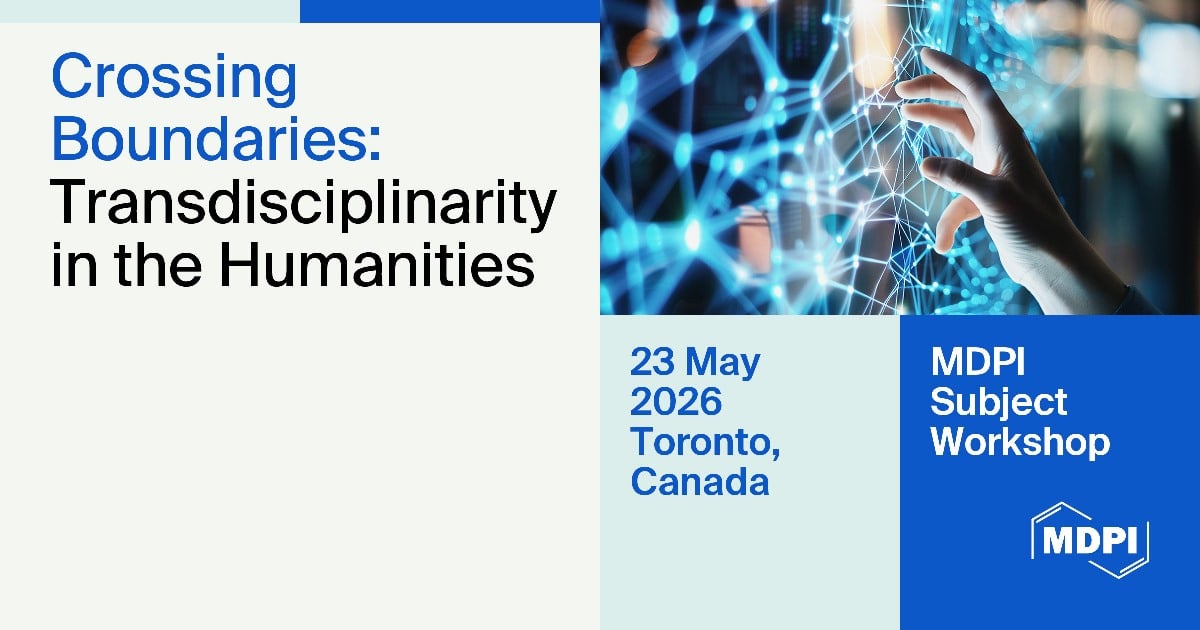
On 23 May 2026, MDPI Canada hosted their third North American subject workshop entitled “Crossing Boundaries: Transdisciplinarity in the Humanities”. This event brought together nearly 30 students and experts in the field of humanities to explore innovative, cross-disciplinary research shaping the future of the field. This meeting, held at the Sheraton Centre Toronto Hotel, located in downtown Toronto, provided a platform for in-depth scientific exchange.
Our workshop host, Summer Huggard, Operations Manager of MDPI Canada, opened the event with an introduction to our conference chair, Prof. Dr. Albrecht Classen of the University of Arizona. Prof. Dr. Classen welcomed our attendees to the event, outlining three subtopics of the workshop: AI and data in the humanities; environmental humanities; and humanities, literature, and identity. These topics emphasize the importance of interdisciplinary collaboration in addressing the direction of the humanities in our rapidly changing world. MDPI Canada’s Operating Director, Elvis Wang, then thanked all contributors and spoke about MDPI’s core principles of transparency, trusted service, integrity, and role in promoting excellence and advancing open science.
 |
 |
 |
The day’s presentations were full of exciting discussion as eleven speakers spoke about their research findings. These eleven presenters included Dr. Michael Bryson, Prof. Dr. Ahmed Elgammal, Prof. Dr. Avi Friedman, Prof. Dr. Nancy S. Steinhardt, Prof. Dr. Tom Roeper, Prof. Dr. Salikoko S. Mufwene, Dr. Lindsay Stern, Prof. Dr. Jeffrey R. Di Leo, Prof. Dr. Albrecht Classen, Dr. Ronald B. Brown, and Dr. Robert Brazeau.
The reports given covered many interesting topics, including the following: AI and data in the humanities; environmental humanities; and humanities, literature, and identity. The talks covered hot topics such as the state of the humanities with the growing prevalence of AI, architecture and urban planning as a tool to understand globalization and exercise habits, the critical role of literature studies in language development, and environmental and health studies.
 |
 |
 |
 |
 |
 |
 |
 |
 |
 |
 |
 |
 |
The second half of the day began with presentations covering the value of the humanities from a philosophical lens, literature and health study to analyze environmental protection, and concluded with an in-depth analysis of the new interconnected approach to human health studies post-pandemic.Dr. Barnaby Crook, Regional Engagement Editor at MDPI, introduced MDPI, market dynamics, and discussed relevant publishing trends in the humanities field. His presentation allowed audience members to gain greater insight into how MDPI’s journals can support researchers whose work falls within this subject and provided transparency regarding MDPI’s practices.
 |
 |
During the day’s proceedings, multiple Q&A sessions were held, allowing valuable engagement between speakers and attendees to occur. During these discussions, attendees could further develop conversations around addressing the influence of culture on human health, the effect of politics on environmental care, the benefits of open access publishing, and more. These sessions were a highlight of the event and helped build a platform for meaningful scientific exchange.
 |
 |
 |
 |
Looking Ahead
The MDPI 2026 Toronto Subject Workshop Crossing Boundaries: Transdisciplinarity in the Humanities was a successful collaboration between MDPI and local academics. We are thankful to all attendees for their part in making this event possible and for contributing to its success.
 |
 |
We have received positive feedback regarding this event and look forward to continuing to host these subject workshops, with the next being the Montreal Subject Workshop “Microelectronics, Microsystems, Sensors, and Their Applications” in September. For more updates regarding this event and other upcoming workshops, follow MDPI Canada on LinkedIn and Facebook.
4 June 2026
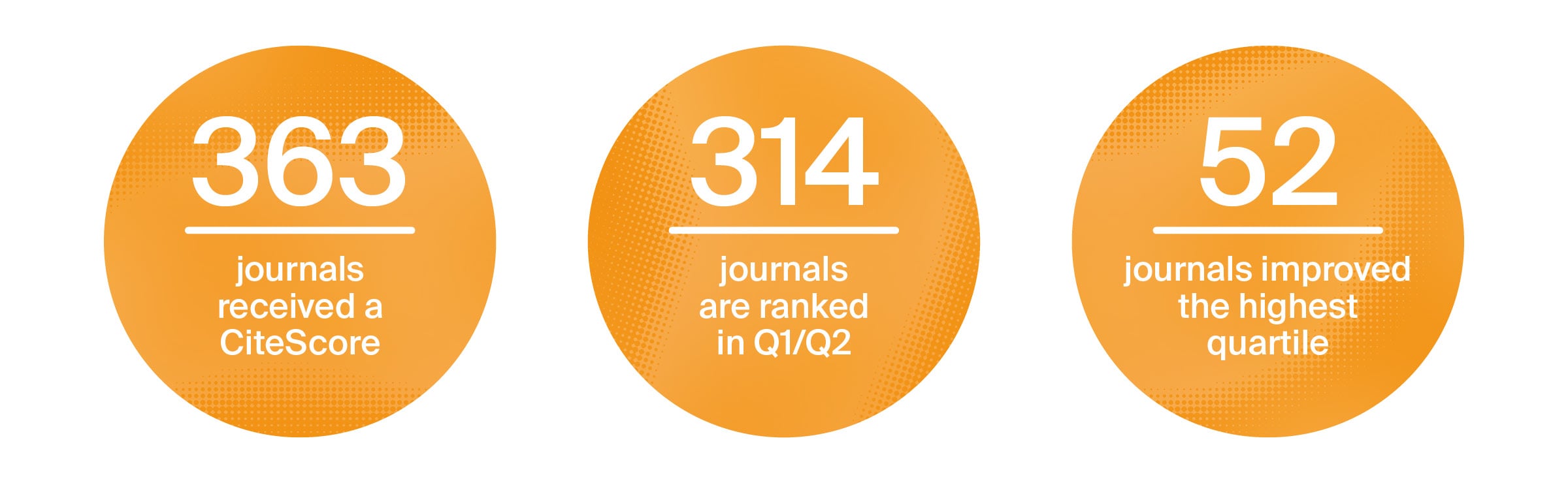
Open Access, Broadly Recognized: 363 MDPI Journals Receive CiteScores for 2025
The 2025 CiteScore metrics have been officially released by Scopus, and the results confirm what has become a consistent pattern for MDPI's journal portfolio: broad recognition across disciplines, steady improvement across the majority of ranked titles, and a growing presence at the top of subject category rankings.
CiteScore, published annually by Elsevier's Scopus database, measures the average citations received by articles published in a journal over a four-year window. As a complement to the Journal Impact Factor, which uses a two-year window based on the Web of Science database, CiteScore provides an alternative, long-term perspective on citation performance.
The 365 MDPI journals in Scopus (as of May 2026) are indexed across a wide range of subject categories, ensuring that open access research remains highly discoverable to a global readership through one of the most widely used platforms in academic publishing.
Data Summary (2025 CiteScores)
- New Additions: 41 MDPI journals received a CiteScore for the first time.
- Trending Upward: 234 of 322 previously ranked journals (73%) saw an increase in their CiteScore compared to last year.
- High Visibility: 314 journals (86%) rank in Q1 or Q2 in at least one subject category.
- Elite Performance: 42 journals rank in the top 10% of their subject categories.
Portfolio Performance
Among the 322 journals that held a CiteScore in 2024, 234 saw an increase this year. Quartile improvements outnumbered declines across the portfolio, with 52 journals moving to a higher quartile and only 20 seeing a decline. Furthermore, no previously ranked journals were removed. The 42 journals now ranked in the top 10% of their subject categories are drawn from a strong foundation of 178 journals holding a Q1 position.
With the large majority of our indexed portfolio ranked in the top half of research fields, researchers can confidently choose MDPI to meet funder mandates for high-quality, fully compliant Open Access publishing.
Exceptional Achievements for Foods and Life
Notably, both Foods and Life achieved a 99th percentile ranking in their respective subject categories for the 2025 CiteScores. This outstanding placement positions them as leading journals in their fields and highlights the high visibility and global impact of the open access research they publish.
Journal Metrics and Beyond
Journal-level metrics describe outlets, not individual articles. An increasing number of funders and institutions—including signatories of DORA and the Coalition for Advancing Research Assessment—now explicitly encourage evaluation at the article level rather than by the journal in which research appears. MDPI supports this direction: we report CiteScore alongside the Journal Impact Factor, Journal Citation Indicator, and article-level usage data because no single number captures the full reach and contribution of published research.
Thank You
These results reflect the sustained effort of thousands of editors-in-chief, editorial board members, reviewers, and authors across every field MDPI serves. The metrics are the outcome; the work is yours.
2 June 2026
Insects | Notable Papers from the “Insect Physiology, Reproduction and Development” Section
1. “Comparative Analysis of the Gut Bacterial Community in Laboratory-Reared and Seasonally Field-Released Larvae of the Antheraea pernyi”
by Peng Hou, Li Liu, Ding Yang, Chuntian Zhang and Jianfeng Wang
Insects 2026, 17(1), 79; https://doi.org/10.3390/insects17010079
Full text available online: https://www.mdpi.com/2075-4450/17/1/79
2. “Multi-Condition Cultivation Reveals the Host Plant-Dependent Gut Bacteria Diversity in Tomato Leafminer (Tuta absoluta) Larvae”
by Xiaoyu Fang, Ruoyi Wen, Liyan Yang, Jianyang Guo, Wenjun Shen, Nianwan Yang, Fanghao Wan, Zhichuang Lü and Wanxue Liu
Insects 2026, 17(1), 81; https://doi.org/10.3390/insects17010081
Full text available online: https://www.mdpi.com/2075-4450/17/1/81
3. “Morphological Description and Physiological Changes in the Hindgut of Female Asiophrida xanthospilota (Chrysomelidae, Coleoptera) Across Reproductive Stages”
by Jacob M. Muinde, Ze-Qun Dong, Caren A. Ochieng, Wei Wang, Esther N. Kioko, Le Zong, Wen-Jie Li, Cong-Qiao Li, Si-Pei Liu, Zheng-Zhong Huang et al.
Insects 2026, 17(1), 97; https://doi.org/10.3390/insects17010097
Full text available online: https://www.mdpi.com/2075-4450/17/1/97
4. “Different Senses for Different Roles: Sexual Dimorphism in the Sensory System of a Scoliid Wasp”
by Andrea Ferrari and Carlo Polidori
Insects 2026, 17(2), 160; https://doi.org/10.3390/insects17020160
Full text available online: https://www.mdpi.com/2075-4450/17/2/160
5. “Cold Storage Extends Larval Release Windows of Archanara neurica and Lenisa geminipuncta (Noctuidae), Biological Control Agents for Phragmites australis australis”
by Michael J. McTavish, Ian M. Jones, Carla Timm, Sandy M. Smith and Robert S. Bourchier
Insects 2026, 17(2), 194; https://doi.org/10.3390/insects17020194
Full text available online: https://www.mdpi.com/2075-4450/17/2/194
6. “Morphological and Ultrastructural Characterization of the Venom Apparatus of the Predatory Stink Bug, Arma custos”
by Yuqin Wang, Ping Gao, Chaoyan Wu, Wenxiu Wang and Jiaying Zhu
Insects 2026, 17(3), 340; https://doi.org/10.3390/insects17030340
Full text available online: https://www.mdpi.com/2075-4450/17/3/340
7. “Dopamine Enhances Healthspan and Locomotor Performance via Antioxidant Defense in Silkworms, Bombyx mori”
by Songzhen He, Wenhao Yang, Hai Hu, Fangyin Dai and Xiaoling Tong
Insects 2026, 17(2), 205; https://doi.org/10.3390/insects17020205
Full text available online: https://www.mdpi.com/2075-4450/17/2/205
8. “The Impact of Energy and Protein Levels on Yellow Mealworm Growth and Chemical Composition”
by Marko Vukadinović, Mirko Ivković, Dejan Beuković, Miloš Petrović, Miroslava Polovinski Horvatović, Nikola Laćarac, Saša Krstović and Igor Jajić
Insects 2026, 17(2), 221; https://doi.org/10.3390/insects17020221
Full text available online: https://www.mdpi.com/2075-4450/17/2/221
9. “Binding Mechanism of PsauPBP3 to Sex Pheromones in Peridroma saucia: Insights from Computational and Experimental Approaches”
by Xiaoqian Yao, Shuai Chang, Mingshan Wang, Junfeng Dong, Shaoli Wang and Yalan Sun
Insects 2026, 17(2), 228; https://doi.org/10.3390/insects17020228
Full text available online: https://www.mdpi.com/2075-4450/17/2/228
10. “Development of the Citrus Longhorned Beetle Anoplophora chinensis (Cerambycidae: Coleoptera) on Artificial Diet and Chilling Effect on Their Life Cycle Completion”
by Hai Nam Nguyen and Ki-Jeong Hong
Insects 2026, 17(3), 285; https://doi.org/10.3390/insects17030285
Full text available online: https://www.mdpi.com/2075-4450/17/3/285
1 June 2026
MDPI INSIGHTS: The CEO’s Letter #35 – 30 Years of Open Science, Open Access Policies, Spain Summit, MMCS 2026 & Antibiotics 2026

Welcome to the MDPI Insights: The CEO's Letter.
In these monthly letters, I will showcase two key aspects of our work at MDPI: our commitment to empowering researchers and our determination to facilitating open scientific exchange.
Opening Thoughts

30 Years of Open Science, Built Together
This month, we officially launched MDPI’s 30th Anniversary campaign and dedicated anniversary website, marking an important milestone in our journey as an open access publisher. What began in 1996 with a single journal and the simple belief that scientific knowledge should be shared openly and freely has grown into a global publishing organization supporting more than 500 journals, 68,000 Editorial Board Members, and millions of researchers worldwide.
The anniversary page, entitled 30 Years of Open Science, Built Together, reflects on the people, milestones, and partnerships that have shaped MDPI over the past three decades. It includes a retrospective of our development, key moments in the evolution of open access, landmark research articles, journal anniversaries, an interview with the CEO, and perspectives from colleagues and partners who have contributed to our success.

Looking back, one of the most striking aspects of our journey is not simply our growth, but the broader transformation of scholarly publishing itself.
Open access has moved from a niche concept to a widely adopted publishing model, helping make research more accessible, discoverable, and impactful for researchers, institutions, policymakers, and society.
MDPI has been part of this transition and continues to invest in the people, technology, partnerships, and research integrity infrastructure needed to support high-quality open science at scale.
While anniversaries naturally encourage reflection, they are also an opportunity to look ahead. The challenges facing scholarly publishing today, including research integrity, artificial intelligence, accessibility, and global participation in science, will require continued collaboration across the research ecosystem. As we celebrate 30 years of publishing, our focus remains on supporting researchers, strengthening trust in open science, and helping shape the future of scholarly communication together.
I encourage you to visit the anniversary page, explore the milestones, and take a moment to reflect on the role each of us has played in contributing to MDPI’s story.
Thank you for being part of this journey.
Impactful Research

Highlights from MMCS 2026 in Beijing (14-17 May)
From 14–17 May, MDPI hosted The 5th Molecules Medicinal Chemistry Symposium (MMCS 2026) in Beijing, China, bringing together academia and industry to explore advances in chemical biology, medicinal chemistry, and drug discovery.
The conference hosted more than 230 attendees from 37 countries and regions, alongside 257 submissions and 145 accepted abstracts. With a significant increase in attendance – up by 100 participants compared with the previous edition – the popularity of MMCS continues to grow in terms of its international profile and scientific relevance within this rapidly evolving field.

The scientific program covered seven themes:
- Chemical Biology for Drug Discovery
- Medicinal Chemistry Research Progress
- Natural Products in Drug Discovery
- AI-enabled Drug Discovery
- GPCR & Ion Channel Targeted Drug Development
- Innovative Proximity-Based Drug Modalities
- Biocatalysis for Natural Product & Drug Synthesis
The event featured three plenary speakers, 14 keynote speakers, 35 selected oral presentations, and 98 poster presentations, creating opportunities for open scientific exchange and collaboration. Conference Chair Prof. Dr. Diego Muñoz-Torrero described this edition as one of the most successful MMCS events to date.
|
|
|


Thanks to our Sponsors
MMCS 2026 secured sponsorship support from 12 industrial partners, 11 of which set up on-site exhibition booths. Covering biopharmaceutical R&D, life science supplies, pharmaceutical experimental instruments, and industrial service sectors, exhibitors were able to connect their businesses directly with attendees and make connections at the conference.

30th Anniversary Celebration of Molecules
During the conference, we also celebrated the 30th anniversary of Molecules, one of MDPI’s flagship journals. The celebration brought together Section Editors-in-Chief, Editorial Board Members, MDPI leadership, and editorial colleagues to reflect on the journal’s development, achievements, and continued future growth.

Events such as MMCS 2026 highlight the important role conferences play in creating scientific exchange and collaboration, and in connecting our research communities in person.
They also reflect the continued development of MDPI’s conference portfolio and our commitment to supporting academic engagement beyond publishing alone. Thanks to everyone involved in organizing and contributing to the success of this event.
Inside MDPI

Open Access Policies Continue to Accelerate Globally
One of the clearest indicators of the continued momentum behind open access is the growing number of national and institutional policies supporting, and increasingly requiring, open dissemination of research.
Around the world, governments, funding agencies, and universities are building their open access mandates, with increasing focus on transparency, rights retention, and public accessibility of publicly funded research. While these policies vary across regions, the broader direction is clear: expectations around openness and compliance continue to accelerate.
For researchers, navigating these evolving requirements can be complex and time-consuming. Supporting the research community therefore means not only publishing high-quality open access content but also helping stakeholders better understand changing requirements and emerging opportunities. At MDPI, we see this as an important part of our role within scholarly communication.
“Expectations around openness and compliance continue to accelerate”
Through the MDPI Blog, our Content team continues to publish monthly articles overviewing different countries’ relationships with open access, exploring their histories, policies, opportunities, and statistics. All this information is centralized into an article which contains brief summaries of each country, with links to all the full articles, and is updated monthly.
Recent Policy Developments
South Africa
In 2026, South Africa’s Department of Science and Innovation introduced the South African Open Science Policy. The policy states that: “Open access shall be required for publications arising from publicly funded research, and desirable for research from all sources of funding.”
The policy envisions a coordinated and broad approach to open science that will sustainably and ethically drive socio-economic development by increasing the practice of open science through policy, training, incentivization, and infrastructure.
Canada
In Canada, the Tri-Agency OA Policy on Publications was revised, removing the 12-month embargo for research that must be deposited in a repository with an open license and with author rights retained.
The Agencies argue that “societal advancement is made possible through widespread and barrier-free access to cutting-edge research and knowledge.”
Chile
Chile is a collaborative and engaged member of the global open access movement.
The National Research and Development Agency (Agencia Nacional de Investigación y Desarrollo, or ANID) is Chile’s main funding agency for R&D. It mandates that all beneficiaries must deposit the final version of their published scientific output, with an embargo period of up to 12 months, into a repository.
ANID also supports the InES Open Science funding program, which allows universities to request funding for capacity and infrastructure building. Further, Chile is an active participant in various international initiatives, such as Redalyc, SciELO, and Red de Repositorios Latinoamericanos.
Openness Beyond Research
At MDPI, openness remains one of our core values, ensuring that research outputs are freely accessible to anyone. This commitment also extends to sharing knowledge about the scholarly publishing landscape itself, which we practice on the MDPI Blog through various topics, including open access, recent advances in science, and opportunities for researchers.
As the open access landscape continues to evolve, helping researchers, institutions, editors, and partners navigate these changes will remain an important priority for us.

Thank You
I would like to thank Jack McKenna (Senior Content Specialist, MDPI) from our Content team for his ongoing work on the MDPI Blog series covering global open access policy developments. Initiatives such as this help make complex policy discussions more accessible and useful to the wider research community.
Coming Together for Science

Reflections from the MDPI Spain Summit 2026 in Valencia (21 May)

On 21 May, we hosted the MDPI Spain Summit 2026 in Valencia.
The Summit brought together 30 Editorial Board Members and MDPI colleagues for a discussions on the future of publishing, research integrity, peer review, artificial intelligence, and the evolving research landscape in Spain.
We hosted participants from leading Spanish institutions and spoke on the importance of Spain as a major contributor to global open access (OA) research. In 2025 alone, Spain ranked among the leading countries worldwide for OA publishing, with more than 85% of publications made openly accessible. MDPI also continues to play a significant role within the Spanish research ecosystem.
MDPI in Spain
Spain remains one of MDPI's most important academic markets and a leading contributor to OA research globally. Ever since our Barcelona office opened in 2016 (Happy 10th Anniversary!), MDPI Spain has been actively supporting researchers, institutions, societies, and academic partners across the country. Today, the office plays an important role in creating engagement with the Spanish scholarly community through editorial support, partnerships, conferences, training initiatives, and outreach activities.
A cluster of high-level indicators highlight both the strength of the local research ecosystem and MDPI’s role within it:
- 43,218 total publications in Spain in 2025, of which 35,728 (83%) were open access (49% Gold OA).
- 211,200+ total publications (2021–2025), with 84% published open access.
- 13,444 MDPI publications from Spanish institutions in 2025, representing 14% of all open access publications in Spain.
- More than115,100 MDPI publications from Spanish institutions since 1996.
- More than 4,500 Editorial Board Members from Spain, including more than 150 Chief Editors and 57 Associate Editors.
- 42 institutional partners participating in MDPI’s Institutional Open Access Program (IOAP).
- Spain ranks second globally for MDPI society affiliations, with 26 affiliated society agreements currently in place.
Program Overview
What made this summit special was the openness of the discussions around the research landscape in Spain and the role MDPI plays within the market. General topics of the presentations included:
- MDPI Introduction – Stefan Tochev (CEO).
- Engagement with the Academic Community – Dr. Marta Colomer (External Affairs Lead).
- Latest Developments in the Editorial Process – Dr. Jordi Martinez (Deputy Managing Editor).
- Research integrity and Publication Ethics – Slavomir Nikodijevic (Research Integrity Specialist).
- A 360 View of Academic Publishing – Prof. Dr. Luis Angel Ruiz Fernandez (EBM of Remote Sensing).
|
|
|
|
|
|
|
|


Panel Discussion
We also hosted a panel discussion moderated by Marta, entitled “The Future of Academic Publishing” with Prof. Luis Ruiz, Prof. Marta Feliz (EBM of the journal Catalysts), Dr. Enric Sayas (Product Owner, AI & Technology Innovation), and myself. The discussion looked at the evolving role of editors, the future of peer review, and the growing importance of maintaining trust, ethics, and research integrity in an era increasingly influenced by artificial intelligence.
|
|
|
|


Themes from the Summit
Several themes emerged throughout the discussions, reflecting broader conversations taking place across publishing:
- The academic community values efficient publishing workflows, but expectations around scientific quality and editorial rigor continue to rise.
- Reviewer fatigue and long-term sustainability of peer review remain major challenges across the industry.
- AI is rapidly changing scholarly communication and requires transparent and responsible governance.
- Reputation and trust continue to depend on long-term engagement, transparency, and quality-focused decision-making.
“Maintaining an open dialogue with researchers, editors, reviewers, and institutions remains a priority for MDPI”
It was constructive to see the willingness of participants to engage directly and candidly with us. These conversations provide insights that help inform how we continue to develop our editorial processes, engagement activities, and support for the research community. While certain discussions included concerns, there was also recognition that open dialogue between publishers and the research community is essential if we want to improve scholarly communication together.
|
|
|
|


Events such as this are increasingly important for MDPI. They allow us to present our perspective, to listen to the experiences, expectations, and concerns of editors, reviewers, and researchers, and to address these accordingly.
Thank You
Thank you to our Barcelona Office and all colleagues involved in organizing the summit, as well as all participants for contributing to these thoughtful and constructive discussions.
|
|
|
|
|
|
|
|


As publishing continues to evolve, maintaining an open dialogue with researchers, editors, reviewers, and institutions remains an important priority for MDPI. Events such as the Spain Summit play an important role in helping us to build relationships, foster trust, and better understand the needs of our community.
Closing Thoughts

Highlights from Antibiotics 2026 in Barcelona (11–14 May)
This week, MDPI hosted the Antibiotics 2026 — Advances in Antimicrobial Action and Resistance conference in Barcelona, bringing together academics and industry experts to discuss one of the most important scientific and public health challenges of our time: antimicrobial resistance.
The conference welcomed 145 attendees from 42 different countries and territories, alongside 265 submissions and 127 accepted abstracts, showing the international reach of the event and the strong scientific interest in this rapidly evolving field.

Scientific Exchange on a Global Challenge
Antimicrobial resistance continues to be a global concern, creating collaboration across disciplines, institutions, and regions. The conference program focused on a range of topics including:
- Antimicrobial resistance mechanisms
- One Health approaches to antimicrobial stewardship
- Discovery of novel antimicrobial agents
- Innovation in clinical strategies and treatment approaches
- Ethnopharmacology and emerging therapies
Through keynote plenaries, invited lectures, oral presentations, and poster sessions, the conference created a platform for dialogue and scientific exchange.
|
|
|


International Participation and Collaboration
One of the highlights of the event was the diversity of participation across both geography and expertise. Researchers and speakers from Europe, North America, Asia, Africa, Australia, and Latin America took part in discussions throughout the conference, highlighting the global nature of both the challenge and the scientific response.
The scientific program included:
- 2 keynote speakers
- 10 invited speakers
- 36 selected talks
- 78 posters
The conference brought together perspectives from academia, healthcare, and industry, helping facilitate interdisciplinary collaboration around future approaches to antimicrobial research and resistance management.
|
|
|
|


The Role of Conferences in Scholarly Communication
Conferences are an important platform for collaboration, scientific exchange, and community-building. Events such as Antibiotics 2026 show the value of bringing researchers together in person to discuss emerging challenges, share new findings, and strengthen international networks across disciplines and regions.

Thank You
I would like to thank the conference chairs, speakers, participants, sponsors, and the entire MDPI conference team for their work in making this event a success. The engagement and positive feedback from attendees highlight the importance of our events in addressing some of the most pressing scientific challenges facing society today.

Chief Executive Officer
MDPI AG
21 May 2026
International Day for Biological Diversity —“Acting Locally for Global Impact”, 22 May 2026

The International Day for Biological Diversity, a global observance dedicated to raising awareness about the importance of biodiversity, is celebrated on 22 May. The theme of the 2026 International Day for Biological Diversity is “Acting Locally for Global Impact”. Biodiversity is critical to life—healthy ecosystems provide food, clean water, climate regulation, and disease control, supporting all forms of existence on Earth. Local actions such as restoring habitats, protecting endangered species, and promoting sustainable agriculture collectively generate global benefits for nature and people. However, rapid biodiversity loss continues to undermine these vital contributions, with profound impacts on human well-being and planetary stability. Echoing the mission of protecting biodiversity for a resilient future, established MDPI journals in the Biology&Life Sciences subject serve as platforms for scientific communication, fostering collaboration and innovation in biodiversity conservation to tackle the global nature crisis.

|
|
|
|
|
|
|
|
|
|
|
|
|
|
|
|
|
|
|

















Invited speakers:
|
|
|
|
|
Prof. Dr. Edward L. Braun, Department of Biology, University of Florida, USA |
Dr. Isabel L. Maurício, Global Health and Tropical Medicine, Universidade NOVA de Lisboa, Portugal |
Dr. Vittorio Capozzi, Institute of Sciences of Food Production, Italian National Research Council, Italy |


Register for this webinar for free here!

“Distribution Patterns and Habitat Preferences of Five Globally Threatened and Endemic Montane Orthoptera (Parnassiana and Oropodisma)”
by Apostolis Stefanidis, Konstantinos Kougioumoutzis, Konstantina Zografou, Georgios Fotiadis, Luc Willemse, Olga Tzortzakaki and Vassiliki Kati
Ecologies 2025, 6(1), 5; https://doi.org/10.3390/ecologies6010005
“Spatial Cumulative Assessment of Impact Risk-Implementing Ecosystem-Based Management for Enhanced Sustainability and Biodiversity in the Black Sea”
by Elena Bisinicu, Valeria Abaza, Laura Boicenco, Filimon Adrian, George-Emanuel Harcota, Oana Marin, Andra Oros, Elena Pantea, Alina Spinu, Florin Timofte et al.
Sustainability 2024, 16(11), 4449; https://doi.org/10.3390/su16114449
“Using Citizen Science to Document Biodiversity on a University Campus: A Year-Long Case Study”
by Peter M. Baker, Brendon Samuels and Timothy J. A. Hain
Conservation 2024, 4(3), 533-546; https://doi.org/10.3390/conservation4030032
“Illegal Activities for Survival: Understanding the Influence of Household Livelihood Security on Biodiversity Conservation in Tanzania”
by Gasto Jerome Lyakurwa, Edwin Sabuhoro and Mercy Chepkemoi Chepkwony
Conservation 2024, 4(3), 339-356; https://doi.org/10.3390/conservation4030022
“Algal Biodiversity of Nine Megaliths in South-East Bulgaria”
by Maya Stoyneva-Gärtner, Miroslav Androv, Blagoy Uzunov, Kristian Ivanov and Georg Gärtner
Life 2024, 14(8), 948; https://doi.org/10.3390/life14080948
“Shifts in Microbial Community Structure and Co-occurrence Network along a Wide Soil Salinity Gradient”
by Yan Li, Juan Wang, Eryang Li, Xiaodong Yang and Jianjun Yang
Microorganisms 2024, 12(7), 1268; https://doi.org/10.3390/microorganisms12071268
“Exploring mtDNA Databases to Evaluate the Population Structure and Genetic Diversity of Tursiops truncatus in the Atlantic Ocean: Implications for the Conservation of a Small, Offshore Populatio”
by Gasto Jerome Lyakurwa, Edwin Sabuhoro and Mercy Chepkemoi Chepkwony
Ecologies 2024, 5(2), 170-187; https://doi.org/10.3390/ecologies5020011
“Arbuscular Mycorrhizal Fungi and Rhizobium Improve Nutrient Uptake and Microbial Diversity Relative to Dryland Site-Specific Soil Conditions”
by Rosalie B. Calderon and Sadikshya R. Dangi
Microorganisms 2024, 12(4), 667; https://doi.org/10.3390/microorganisms12040667
“Diversity of Parasitoid Wasps and Comparison of Sampling Strategies in Rice Fields Using Metabarcoding”
by Liyang Wang, Hongxuan Wu, Wei He, Guihong Lai, Junxi Li, Siling Liu and Qiang Zhou
Insects 2024, 15(4), 228; https://doi.org/10.3390/insects15040228
“Weed Species’ Diversity and Composition as Shaped by the Interaction of Management, Site, and Soil Variables in Olive Groves of Southern Greece”
by Petros Vahamidis, Demosthenis Chachalis, Antigoni Akrivou, Evangelos Karanasios, Maria Ganopoulou, Apostolia Argiri, Athanasia Mandoulaki, Evangelos Hatzigiannakis, Georgios Arampatzis, Andreas Panagopoulos et al.
Agronomy 2024, 14(3), 640; https://doi.org/10.3390/agronomy14030640
“Opportunities for Biodiversity Conservation via Urban Ecosystem Regeneration”
by Gad Perry and Robert D. Cox
Diversity 2024, 16(3), 131; https://doi.org/10.3390/d16030131
“Global Subterranean Biodiversity: A Unique Pattern”
by Louis Deharveng, Anne Bedos, Tanja Pipan and David C. Culver
Diversity 2024, 16(3), 157; https://doi.org/10.3390/d16030157
“Odonata Assemblages in Urban Semi-Natural Wetlands”
by Marina Vilenica, Andreja Brigić, Ana Štih Koren, Toni Koren, Mirela Sertić Perić, Bruno Schmidt, Tomislava Bužan and Sanja Gottstein
Insects 2024, 15(3), 207; https://doi.org/10.3390/insects15030207
“The Influence of Sugar Beet Cultivation Technologies on the Intensity and Species Biodiversity of Weeds”
by Barbora Kotlánová, Pavel Hledík, Stanislav Hudec, Petra Martínez Barroso, Magdalena Daria Vaverková, Martin Jiroušek and Jan Winkler
Agronomy 2024, 14(2), 390; https://doi.org/10.3390/agronomy14020390

|
“Diversity and Phylogeny of Fungi” |
“Effect of Biological Invasion on Aquatic Ecosystem” |
|
|
|
|
“Microbial Diversity in Different Environments” |
“Diversity, Adaptation, and Biogeography of Gastropods” |
|
|
|
|
“Island Ecosystems as Natural Laboratories: Biodiversity, Threats, and Conservation Opportunities” |
“Changing Coral Reef Biodiversity and Function in the Anthropocene” |
|
|
|


 |
 |
 |
 |

15 May 2026
Insects | Discover Our Featured Research on Pollinators

1. “Global Trends in Climate Suitability of Bees: Ups and Downs in a Warming World”
by Ehsan Rahimi and Chuleui Jung
Insects 2024, 15(2), 127; https://doi.org/10.3390/insects15020127
Full text: https://www.mdpi.com/2075-4450/15/2/127
2. “Spatial and Temporal Variations in Richness, Diversity and Abundance of Floral Visitors of Curry Plants (Bergera koenigii L.): Insights on Plant-Pollinator Interactions”
by Ujjwal Layek, Anirban Deep Das, Uday Das and Prakash Karmakar
Insects 2024, 15(2), 83; https://doi.org/10.3390/insects15020083
Full text: https://www.mdpi.com/2075-4450/15/2/83
3. “Acetamiprid Exposure Disrupts Gut Microbiota in Adult and Larval Worker Honeybees (Apis mellifera L.)”
by Yuchen Su, Jingliang Shi, Yueyang Hu, Jianhui Liu and Xiaobo Wu
Insects 2024, 15(12), 927; https://doi.org/10.3390/insects15120927
Full text: https://www.mdpi.com/2075-4450/15/12/927
4. “Different Sensitivity of Flower-Visiting Diptera to a Neonicotinoid Insecticide: Expanding the Base for a Multiple-Species Risk Assessment Approach”
by Cátia Ariana Henriques Martins, Celeste Azpiazu, Jordi Bosch, Giovanni Burgio, Maria Luisa Dindo, Santolo Francati, Daniele Sommaggio and Fabio Sgolastra
Insects 2024, 15(5), 317; https://doi.org/10.3390/insects15050317
Full text: https://www.mdpi.com/2075-4450/15/5/317
5. “Tracking Existing Factors Directly Affecting the Reproduction of Bumblebees: Current Knowledge”
by Xiaomeng Zhao, Jingxin Jiang, Zilin Pang, Weihua Ma, Yusuo Jiang, Yanfang Fu and Yanjie Liu
Insects 2024, 15(9), 654; https://doi.org/10.3390/insects15090654
Full text: https://www.mdpi.com/2075-4450/15/9/654
6. “Bee Hotels as a Tool for Post-Fire Recovery of Cavity-Nesting Native Bees”
by Kit Stasia Prendergast and Rachele S. Wilson
Insects 2025, 16(7), 659; https://doi.org/10.3390/insects16070659
Full text: https://www.mdpi.com/2075-4450/16/7/659
7. “An AI-Based Digital Scanner for Varroa destructor Detection in Beekeeping”
by Daniela Scutaru, Simone Bergonzoli, Corrado Costa, Simona Violino, Cecilia Costa, Sergio Albertazzi, Vittorio Capano, Marko M. Kostić and Antonio Scarfone
Insects 2025, 16(1), 75; https://doi.org/10.3390/insects16010075
Full text: https://www.mdpi.com/2075-4450/16/1/75
8. “Diverse Sublethal Effects of a Common Fungicide Impact the Behavior and Physiology of Honey Bees”
by Xufeng Zhang, Qian Cao, Feng Wang, Yinyin Du, Wen Zhao, Yuan Guo and Olav Rueppell
Insects 2025, 16(6), 603; https://doi.org/10.3390/insects16060603
Full text: https://www.mdpi.com/2075-4450/16/6/603
9. “A Field Trial to Demonstrate the Potential of a Vitamin B Diet Supplement in Reducing Oxidative Stress and Improving Hygienic and Grooming Behaviors in Honey Bees”
by Nemanja M. Jovanovic, Uros Glavinic, Jevrosima Stevanovic, Marko Ristanic, Branislav Vejnovic, Slobodan Dolasevic and Zoran Stanimirovic
Insects 2025, 16(1), 36; https://doi.org/10.3390/insects16010036
Full text: https://www.mdpi.com/2075-4450/16/1/36
10. “Adapting Overwintering Honey Bee (Apis mellifera L.) Colony Management in Response to Warmer Fall Temperatures Associated with Climate Change”
by Gloria DeGrandi-Hoffman, Henry Graham, Vanessa Corby-Harris, Mona Chambers, Emily Watkins-deJong, Kate Ihle and Lanie Bilodeau
Insects 2025, 16(3), 266; https://doi.org/10.3390/insects16030266
Full text: https://www.mdpi.com/2075-4450/16/3/266
11. “Chronic Exposure to Field-Level Thiamethoxam Impairs Gut Tissue and Reduces Honeybee (Apis cerana) Survival”
by Yulong Guo, Changsheng Ma, Wenzheng Zhao, Haiou Kuang, Yakai Tian, Haoyuan Zhang, Yunfei Xue, Hongmei Li-Byarlay, Kun Dong and Xueyang Gong
Insects 2025, 16(4), 372; https://doi.org/10.3390/insects16040372
Full text: https://www.mdpi.com/2075-4450/16/4/372
12. “Cadmium Contaminants in Pollen and Nectar Are Variably Linked to the Growth and Foraging Behaviors of Honey Bees”
by Dawei Li, Jia Liu, Yibin Yuan, Juanli Chen and Junpeng Mu
Insects 2025, 16(3), 306; https://doi.org/10.3390/insects16030306
Full text: https://www.mdpi.com/2075-4450/16/3/306
13. “Pollination of Enclosed Avocado Trees by Blow Flies (Diptera: Calliphoridae) and a Hover Fly (Diptera: Syrphidae)”
by David F. Cook, Muhammad S. Tufail, Elliot T. Howse, Sasha C. Voss, Jacinta Foley, Ben Norrish and Neil Delroy
Insects 2025, 16(9), 899; https://doi.org/10.3390/insects16090899
Full text: https://www.mdpi.com/2075-4450/16/9/899
14. “Evolution of Insect Pollination Before Angiosperms and Lessons for Modern Ecosystems”
by Ilaria Negri and Mario E. Toledo
Insects 2026, 17(1), 103; https://doi.org/10.3390/insects17010103
Full text: https://www.mdpi.com/2075-4450/17/1/103
15. “Effect of Honey Bee Colony Strength on Foraging Productivity and Its Application to Precision Pollination”
by Sandra Kordić Evans, George Clouston, Yuval Regev, Elizabeth M. Walsh, Kate Ihle, Frank Rinkevich, Michael Simone-Finstrom and Huw Evans
Insects 2026, 17(2), 163; https://doi.org/10.3390/insects17020163
Full text: https://www.mdpi.com/2075-4450/17/2/163
9 May 2026
Insects | Explore a Curated Selection of Honey Bee Research

1. “Assessment of Lambda-Cyhalothrin and Spinetoram Toxicity and Their Effects on the Activities of Antioxidant Enzymes and Acetylcholinesterase in Honey Bee (Apis mellifera) Larvae”
by Ji-Yeong Choi, Kyongmi Chon, Juyeong Kim, Bala Murali Krishna Vasamsetti, Bo-Seon Kim, Chang-Young Yoon, Sojeong Hwang, Kyeong-Hun Park and Ji-Hoon Lee
Insects 2024, 15(8), 587; https://doi.org/10.3390/insects15080587
Full text available online: https://www.mdpi.com/2075-4450/15/8/587
2. “Buzzing with Intelligence: Current Issues in Apiculture and the Role of Artificial Intelligence (AI) to Tackle It”
by Putri Kusuma Astuti, Bettina Hegedűs, Andrzej Oleksa, Zoltán Bagi and Szilvia Kusza
Insects 2024, 15(6), 418; https://doi.org/10.3390/insects15060418
Full text available online: https://www.mdpi.com/2075-4450/15/6/418
3. “The Genus Apis in a Changing World: Distribution, Conservation, Climate, and Anthropogenic Stressors”
by Erica Holzer, Serena Malabusini, Sara Savoldelli and Daniela Lupi
Insects 2026, 17(2), 185; https://doi.org/10.3390/insects17020185
Full text available online: https://www.mdpi.com/2075-4450/17/2/185
4. “A Systematic Review of Fumagillin Field Trials for the Treatment of Nosema Disease in Honeybee Colonies”
by Michael Peirson and Stephen F. Pernal
Insects 2024, 15(1), 29; https://doi.org/10.3390/insects15010029
Full text available online: https://www.mdpi.com/2075-4450/15/1/29
5. “Comparative Study of the Effect of Pollen Substitute Diets on Honey Bees during Early Spring”
by Hyunjee Kim, Olga Frunze, Abdulkadir Yusif Maigoro, Myeong-Lyeol Lee, Jeong-Hyeon Lee and Hyung-Wook Kwon
Insects 2024, 15(2), 101; https://doi.org/10.3390/insects15020101
Full text available online: https://www.mdpi.com/2075-4450/15/2/101
6. “Integrated Pest Management Strategies to Control Varroa Mites and Their Effect on Viral Loads in Honey Bee Colonies”
by Jernej Bubnič, Janez Prešern, Marco Pietropaoli, Antonella Cersini, Ajda Moškrič, Giovanni Formato, Veronica Manara and Maja Ivana Smodiš Škerl
Insects 2024, 15(2), 115; https://doi.org/10.3390/insects15020115
Full text available online: https://www.mdpi.com/2075-4450/15/2/115
7. “An Overview of the Nutritional Requirements of Honey Bees (Apis mellifera Linnaeus, 1758)”
by Leticia S. Ansaloni, Janja Kristl, Caio E. C. Domingues and Aleš Gregorc
Insects 2025, 16(1), 97; https://doi.org/10.3390/insects16010097
Full text available online: https://www.mdpi.com/2075-4450/16/1/97
8. “Enhancing Honey Bee Health: Evaluating Pollen Substitute Diets in Field and Cage Experiments”
by Hyunjee Kim, Olga Frunze, Jeong-Hyeon Lee and Hyung-Wook Kwon
Insects 2024, 15(5), 361; https://doi.org/10.3390/insects15050361
Full text available online: https://www.mdpi.com/2075-4450/15/5/361
9. “Effect of Spinetoram Stress on Midgut Detoxification Enzyme and Gene Expression of Apis cerana cerana Fabricius”
by Lin Chen, Tianjun He, Linglong Ding, Xinyan Lan, Jiahao Sun, Xiaoheng Xu, Huafen Wu, Dayun Zhou, Zhichu Huang, Tianxing Zhou et al.
Insects 2025, 16(5), 492; https://doi.org/10.3390/insects16050492
Full text available online: https://www.mdpi.com/2075-4450/16/5/492
10. “Risk Assessment of Effects of Essential Oils on Honey Bees (Apis mellifera L.)”
by Joel Caren, Yu-Cheng Zhu, Quentin D. Read and Yuzhe Du
Insects 2025, 16(3), 303; https://doi.org/10.3390/insects16030303
Full text available online: https://www.mdpi.com/2075-4450/16/3/303
11. “Bacillus subtilis Contributes to Amylase Production in the Honey Sac of Apis mellifera”
by Miao Wang, Wenzheng Zhao, Danyin Zhou and Jian Huang
Insects 2025, 16(2), 221; https://doi.org/10.3390/insects16020221
Full text available online: https://www.mdpi.com/2075-4450/16/2/221
12. “Chronic Larval Exposure to Lambda-Cyhalothrin Alters Gene Expression in Both Larval and Adult Honey Bees (Apis mellifera)”
by Bala Murali Krishna Vasamsetti, Kyongmi Chon, Juyeong Kim, Minju Choi, Bo-Seon Kim, Chang-Young Yoon, Sojeong Hwang and Kyeong-Hun Park
Insects 2025, 16(8), 833; https://doi.org/10.3390/insects16080833
Full text available online: https://www.mdpi.com/2075-4450/16/8/833
13. “Influence of Hyperthermia Treatment on Varroa Infestation, Viral Infections, and Honey Bee Health in Beehives”
by Xinjian Xu, Shujing Zhou, Jinrong Huang, Fa Geng, Xiangjie Zhu and Hossam F. Abou-Shaara
Insects 2025, 16(2), 168; https://doi.org/10.3390/insects16020168
Full text available online: https://www.mdpi.com/2075-4450/16/2/168
14. “Enhanced Honey Bee Colony Strength and Economic Returns from Fall and Winter Feeding with a Complete Pollen-Replacing Feed”
by Kelly Kulhanek, Jan Bogaert, Anne Marie Fauvel, Brandon Hopkins and Thierry Bogaert
Insects 2026, 17(3), 243; https://doi.org/10.3390/insects17030243
Full text available online: https://www.mdpi.com/2075-4450/17/3/243
15. “Evaluation of 10-Year Selection for Virus Resistance in a Mass Breeding Program”
by Emma Bossuyt, Marleen Brunain, Lina De Smet, Ellen Danneels and Dirk C. de Graaf
Insects 2026, 17(2), 137; https://doi.org/10.3390/insects17020137
Full text available online: https://www.mdpi.com/2075-4450/17/2/137
9 May 2026
Meet Us at the Insects to Feed the World (IFW 2026), 9–12 June 2026, Torino, Italy

Conference: Insects to Feed the World
Date: 9–12 June 2026
Location: Torino, Italy
Booth: #8
IFW is the premier academic and industry conference of the insect farming industry for both insect as food and insect as feed.
The first “Insects to Feed the World” (IFW) conference took place in 2014 in the Netherlands and was hosted by Wageningen University & Research (WUR) and The Food and Agriculture Organization (FAO) of the United Nations. Ten years after the first successful edition, IFW has become a leading global event in the insect farming sector, bringing together academics and industry professionals from around the world—a perfect combination to foster a culture of continuous development in this growing field and to enhance knowledge sharing in a stimulating scientific environment.
Topics:
- Insect genetics, physiology, and health and welfare;
- Insect production, engineering, and processing;
- Insects in waste management and sustainability;
- Insects in food/feed systems and nutrition;
- Society, perception, and cultural dimensions;
- Global perspectives and applications;
- Impact and applications of insect-derived products.
The following MDPI journals will be represented at the conference:
If you are planning to attend the above conference, please feel free to stop by our booth. Our delegates look forward to meeting you in person to answer any questions that you may have.
For more information about the conference, please visit the following website: https://www.ifw2026.org/.

6 May 2026
MDPI INSIGHTS: The CEO's Letter #34 - MDPI US Office, Coatings 2026, Media and Partnerships, Recapping Poland Summit & Serbia Salon
Welcome to the MDPI Insights: The CEO's Letter.
In these monthly letters, I will showcase two key aspects of our work at MDPI: our commitment to empowering researchers and our determination to facilitating open scientific exchange.
Opening Thoughts

MDPI Opens First US Office in Philadelphia
I am delighted to highlight an important milestone in MDPI’s continued global development: the recent opening of our first office in the United States, located in Philadelphia.
This marks a significant step in building our engagement with one of the world’s most important research communities. The new office will serve as a hub for supporting scholars across the US, creating closer connections and more localized support.
As highlighted in recent coverage by our press release in InPublishing, this expansion reflects MDPI’s broader commitment to growing our international presence while remaining focused on the needs of the research community.
A Key Market for Research and Collaboration
The United States continues to play a central role in global research. To date, MDPI has published more than 237,000 articles affiliated with US institutions, and we collaborate with nearly 12,000 Editorial Board Members across the country. These relationships are fundamental to our mission of supporting Open Access and advancing scientific communication.
The opening of this office is not just about geography; it is about proximity to the communities we serve. It allows us to better understand the evolving needs of researchers while continuing to build collaboration and trust within the academic ecosystem.
The Team Behind this Milestone

This milestone reflects the efforts of teams across MDPI. I extend a special thank-you to Bob Vrooman (Head of Business Development, MDPI), who is leading this expansion, as well as to our colleagues in Toronto and across our North American teams for their continued support.
Bob shared: “MDPI is already a trusted partner of the North American research community, due in no small part to our dedicated team in Canada. Launching our first US office in Philadelphia is a great first step towards expanding MDPI’s market share and recognition in the US. I’m thrilled to be a part of this new phase in MDPI’s journey.”
As we continue to grow, our focus remains on supporting researchers globally and advancing Open Access with integrity.
Impactful Research

Coatings 2026: Highlights from Our Latest MDPI Conference (20-22 April)
I am pleased to share the successful completion of MDPI conference Coatings 2026, which took place last week in Athens from 20 to 22 April 2026. This conference brought together a diverse international community of researchers, industry experts, and partners, highlighting MDPI’s role not only as a publisher but also as a platform for scientific exchange and collaboration.
Conference Highlights
Coatings 2026 in numbers:
- The event attracted approximately 140 participants from 25 countries
- 143 submissions and a strong scientific program of talks and posters
- 2 keynote speakers and a wide range of invited contributions
- 7 sponsors and 11 media partners supporting the event
|
|
|
|
|
|


Scientific Programme
The program centered on “Safe and Sustainable by Design,” reflecting the growing importance of sustainability, regulatory frameworks, and technological innovation in materials science. Topics ranged from advanced coating technologies and additive manufacturing to AI-driven simulations and strategies to phase out potentially harmful substances in industrial processes.
Importantly, the conference brought together both academic and industrial perspectives, creating a space for dialogue on how research can translate into real-world impact. This is important as industries navigate environmental challenges, evolving regulations, and the need for more sustainable and circular approaches to production.
Thank You!
I would like to thank the entire conference team for their work in organizing this successful event. As we continue to grow, conferences like this play an important role in building our connection with global research communities, supporting interdisciplinary collaboration, and positioning MDPI at the intersection of science, technology, and societal impact.
 Members from Exelisis and MDPI EU Conference & Social Media team at the Coatings 2026 Conference in Athens, Greece.
Inside MDPI

Recent Media Coverage and Partnerships
Over the past two months, news from MDPI has enjoyed strong visibility across international publishing and academic media, reflecting our continued expansion and the increasing relevance of our work within the research community.
Below are some highlights covering partnerships, institutional agreements, and milestones that continue to shape our position in publishing – some of which are featured in leading industry platforms such as InPublishing, which is highly selective and reflects the growing recognition of MDPI’s growth within the publishing ecosystem.
Key Press Releases & Coverage (March–April 2026)
-
MDPI × Sikt (Norway): Partnership Renewal
We renewed our national Open Access agreement with Sikt, a key consortium partnership, continuing to support researchers across Norway through this partnership. The renewal was covered by several international publishing trade outlets.
Covered by: Research Information, STM Publishing News, ALPSP, Europe Says
-
MDPI × Jisc (UK): New Two-Year Open Access Agreement
A new two-year agreement with Jisc significantly expands MDPI’s footprint across UK academic institutions. Coverage appeared across major publishing industry titles in the UK and internationally.
Covered by: InPublishing, Research Information, STM Publishing News, ALPSP
-
MDPI Opens First US Office
The opening of our first US office marks an important milestone in our North American expansion to build engagement with one of the world’s leading research communities.
Coverage by: EurekAlert!, InPublishing, EdTech Innovation Hub, STM Publishing News, ALPSP
-
MDPI × SIGG: Italian Society of Gerontology and Geriatrics
We established a new partnership with the Italian Society of Gerontology and Geriatrics (SIGG), adding to our growing portfolio of society collaborations.
Coverage by: EurekAlert!, STM Publishing News, ALPSP
-
MDPI × Fast Track Health: New Journal Launch
The launch of a new journal in partnership with Fast Track Health reflects our continued expansion into emerging areas of health innovation.
Coverage by: EurekAlert!, Scienmag, STM Publishing News, ALPSP
-
MDPI 2025 Annual Report
Our 2025 Annual Report was also widely covered across international media, highlighting a 12% increase in submissions and continued investment in research integrity, infrastructure, and partnerships.
Coverage by: EurekAlert!, Research Information, STM Publishing News, ALPSP, Choice 360
Coverage also spanned multiple regions including Poland, Romania and South Korea, reflecting our ongoing efforts to communicate more effectively with regional research communities.
Looking Ahead
This coverage shows that MDPI is growing and building on its position through partnerships, visibility, and engagement across regions. As we continue to expand, our focus remains on supporting researchers globally, building on our institutional collaborations, and advancing Open Access with integrity.
Thank you to all teams involved in delivering these initiatives, and to our External Affairs team for ensuring our work is effectively communicated across the global publishing landscape!
Coming Together for Science

Recapping MDPI Poland Summit 2026 in Krakow (23 April)
On 23 April 2206, we hosted the first MDPI Poland Summit 2026 in Kraków, bringing together an engaged group of editors, researchers, and academic leaders from the country.
The Poland Summit welcomed some 45 participants, including Editors-in-Chief, Associate Editors, and Editorial Board Members, many with strong academic track records and international recognition.
Our engagements were open and constructive, focusing on MDPI’s positioning and reputation in Poland, alongside community interest in supporting our development, with active participation across our sessions, including Q&A and panel discussions.
|
|
|
|


MDPI Poland Summit Programme
From research integrity and peer review quality to AI in publishing and the future of academic communication, the agenda featured important topics currently shaping our industry.
During the day, MDPI colleagues shared a series of presentations covering:
- MDPI’s performance, growth, and impact in Poland: Stefan Tochev (CEO)
- Engagement with Academic Community: Dr. Marta Colomer (Public Affairs Lead)
- Research Integrity and Publication Ethics: Anna Pena (Research Integrity Manager)
- MDPI Editorial Process and Peer-Review Quality Metrics: Dr. Liliane Auwerter (Conference Organizer)
- AI in the Publishing Industry – Challenges, Innovation and MDPI’s vision: Dr. Enric Sayas (AI Product Owner)
- Panel Session: The Future of Academic Publishing, moderated by Dr. Marta Colomer
|
|
|
|
|
|
|
|


Poland as a Key Market for Open Access
The summit also highlighted the importance of Poland within the global research landscape.
In 2025:
- 75% of publications in Poland were made in Open Access
- 71% of those in Gold Open Access
- and over 344,000 publications produced in the last five years
MDPI plays a significant role in the Polish publishing ecosystem:
- #1 Open Access publisher in Poland
- 17% share of Open Access publications in 2025
- More than 12,500 publications from Polish institutions in 2025
- More than 91,000 publications overall since 1996
Looking Ahead
Events like the Poland Summit are an important part of how we evolve as an organization. They allow us to share the latest developments of MDPI and listen directly to our researchers and editors to better understand the market and align our development with the needs of the local community.
As MDPI continues to grow, this type of engagement will remain essential in ensuring that we are not only scaling globally, but doing so in a way that is aligned, trusted, and collaborative.

With Igor Matic (Office Manager, Krakow, Poland, MDPI) at the MDPI Poland Summit in Krakow.
Closing Thoughts

Recapping MDPI Serbia Salon 2026 in Belgrade (22 April)
On 22 April 2026, we hosted the MDPI Serbia Salon 2026 in Belgrade. The Salon welcomed over 50 participants, including more than 40 invited scholars from leading Serbian institutions, alongside colleagues from MDPI. The event also marked two important milestones: 30 years of MDPI and 10 years of our presence in Serbia, making it a celebration and an opportunity for reflection.

A Platform for Exchange
The Salon was designed not just as a series of presentations, but as a place for dialogue. Throughout the day, discussions focused on important topics around publishing today: research integrity and editorial standards, journal indexing and visibility, the evolving role of artificial intelligence, and funding and support for Open Access publishing.
|
|
|
|
|
|
|
|


Program Overview
- Opening the Salon MDPI Serbia 2026 – Serbia results and direction: Emir Ramadani (Operations Manager)
- Update on MDPI’s performance and growth: Stefan Tochev (CEO)
- Collaboration with MDPI – A personal perspective: Prof. Dr Srećko Stopić (Editorial Board Member)
- Linking Scientific Quality and Visibility: The role of indexing in publishing
- Research integrity and editorial ethics: Ana Stanković (Research Integrity Specialist)
- Artificial Intelligence in Scientific Publishing – Challenges, innovations and vision of MDPI: Dr Miloš Čučulović (Head of Technology Innovation)
It was encouraging to see the high level of engagement and discussion with the local academic community.
|
|
|
|
|
|
|
|


Publishing in Serbia
With 10 years of MDPI in Serbia (since 2016) and over 620 colleagues across 10 departments spread across offices in Belgrade and Novi Sad, MDPI continues to invest in the long-term development of the research community in Serbia and beyond.
Some high-level indicators illustrate both the strength of the local research ecosystem and MDPI’s role within it:
- 12,910 total publications in Serbia in 2025, of which 8,708 (67%) were Open Access (of which, in turn, 75% were Gold OA)
- A total of more than 55,000 publications (2021–2025), with 68% published Open Access
- 2,122 MDPI publications from Serbian institutions in 2025
- 25% of all Open Access publications in Serbia are published with MDPI
- More than 11,000 MDPI publications from Serbian institutions since 1996
- More than 75 Editorial Board Members from Serbia, including Editors-in-Chief and Associate Editors.
These figures reflect the growth of OA publishing in Serbia and the strong collaboration between MDPI and Serbia's research community.
Top 5 Publishers in Serbia (MDPI #1 with steady growth)

Looking Ahead
Research integrity and artificial intelligence will remain central topics for the industry. At the same time, clear communication of editorial processes will be essential in building trust and transparency.
Workshops and direct engagement remain among the most effective ways to strengthen these connections. As Open Access funding models continue to evolve, new opportunities for collaboration are emerging across institutions, publishers, and the broader research community.
Thank You!
The excellent feedback from participants shows the value of creating spaces where ideas can be exchanged openly and constructively. Sincere thanks to everyone who contributed to the success of this event: our speakers, participants, and especially the MDPI Serbia team for their great organization and support.

Chief Executive Officer
MDPI AG
29 April 2026
Interview with Dr. Maria de Lourdes Ramirez Ahuja—Winner of the Insects Young Investigator Award
|
|
Name: Dr. Maria de Lourdes Ramirez Ahuja |

1. Could you briefly introduce yourself and your research background?
My name is María de Lourdes Ramírez Ahuja, and I am a Mexican researcher working in entomology. My research background is mainly in insect taxonomy, with a special focus on Hymenoptera. Over the years, I have worked on the study, identification, and classification of insect groups, as well as their diversity and biological relevance. I am very interested in understanding insect biodiversity and contributing to the knowledge of these important organisms.
2. What motivated you to pursue research in your current field?
This interest began in my childhood, with fireflies. My family used to live in an area of Oaxaca, Mexico, where there was no electricity, so at night it was a spectacle to see thousands of fireflies. Later I became interested in butterflies, and later still in parasitoid wasps when I discovered their role as natural enemies of other insects, specifically some pests. I have always been fascinated by the diversity of insects and by how much there is still to discover about them. Taxonomy is essential because it helps us understand biodiversity, ecological interactions, and species of economic or environmental importance. What motivated me most was the opportunity to contribute knowledge about insect groups that are still understudied and to support a better understanding of their role in nature.
3. Could you describe the main focus of your recent work?
My recent work has focused on insect taxonomy, particularly on Hymenoptera, including the study of species diversity, identification, and classification. My work contributes to identifying natural enemies of various pest species of agricultural, forestry and medical importance so that these species can be used in biological control programs in the future.
Another line of research is linked to the native bees of Mexico, since these species are at risk of extinction due to various factors. We want to get to know them better in order to propose conservation strategies and help these important pollinators.
4. What do you consider your most significant research achievement so far?
One of my most meaningful achievements has been contributing to the study and recognition of insect diversity through taxonomic (morphological and molecular) research. For me, this is especially important because taxonomy provides the basis for many other scientific questions in ecology, evolution, and applied entomology. I also consider it very meaningful to have built a research path that contributes to science in Mexico and to the international entomological community.
5. What challenges have you encountered in your research, and how did you address them?
One important challenge in taxonomy is that it requires a great deal of detailed observation, careful comparison, and strong knowledge of the literature. In some cases, access to specimens, reference material, or specialized resources can also be limited. I have addressed these challenges through careful work, continuous learning, collaboration with colleagues, and a strong commitment to scientific rigor. I believe patience and consistency are especially important in this field.
6. What are your current or upcoming research projects?
At present, I continue working on research related to insect taxonomy and biodiversity, particularly in Hymenoptera. My upcoming projects are aimed at deepening our knowledge of species diversity and improving the taxonomic information available for these groups.
In the future, I would like to see more biological pest control programs implemented in my country, using parasitoid wasps, as this would reduce the indiscriminate use of insecticides. With our research on native bees, I want our working group to be among the first to propose conservation strategies and safeguard these vital species.
7. How do you feel about receiving this award?
I feel very honored. I honestly didn’t expect it. I thank the entire Insects team and all the evaluators for this award. I believe an award of this magnitude means you’re on the right track and inspires you to keep working.
Receiving this award is especially important to me as a Mexican researcher, and I hope it can also inspire other scientists, especially young researchers, to continue pursuing their goals with dedication and passion.
8. Do you have any advice for early career researchers?
I would tell them that they must remain curious, consistent, and disciplined. Of course, there will always be difficulties, as in everything, but if they have a clear vision of what they want, nothing can stop them from achieving it. Research takes time, and progress is often built step by step. I would also encourage early career researchers to ask questions, seek good mentors, collaborate with others, and trust the value of their work. Persistence is very important, especially during difficult moments.
