Special Issue "Economic and Social Consequences of the COVID-19 Pandemic"

A special issue of Sustainability (ISSN 2071-1050).

Deadline for manuscript submissions: 30 November 2021.

Special Issue Editors

Dr. Tomasz Rokicki
E-Mail Website
Guest Editor
Institute of Economics and Finance, Warsaw University of Life Sciences, Nowoursynowska St. 166, 02-787 Warsaw, Poland
Interests: energy economy; (micro and macro economy); economic geography; logistics (above all transport problems); management of information
Special Issues and Collections in MDPI journals
Dr. Sebastian Saniuk
E-Mail Website
Guest Editor
Department of Engineering Management and Logistic Systems, Faculty of Economics and Management, University of Zielona Góra, 65-417 Zielona Góra, Poland
Interests: management science, production engineering, logistics, production management
Special Issues and Collections in MDPI journals
Dr. Dariusz Milewski
E-Mail Website
Guest Editor
Department of Organization and Management, University of Szczecin, Szczecin, Poland
Interests: process management; economical efficiency; lean management; productivity; logistics; manufactirung; service management

Special Issue Information

Dear Colleagues,

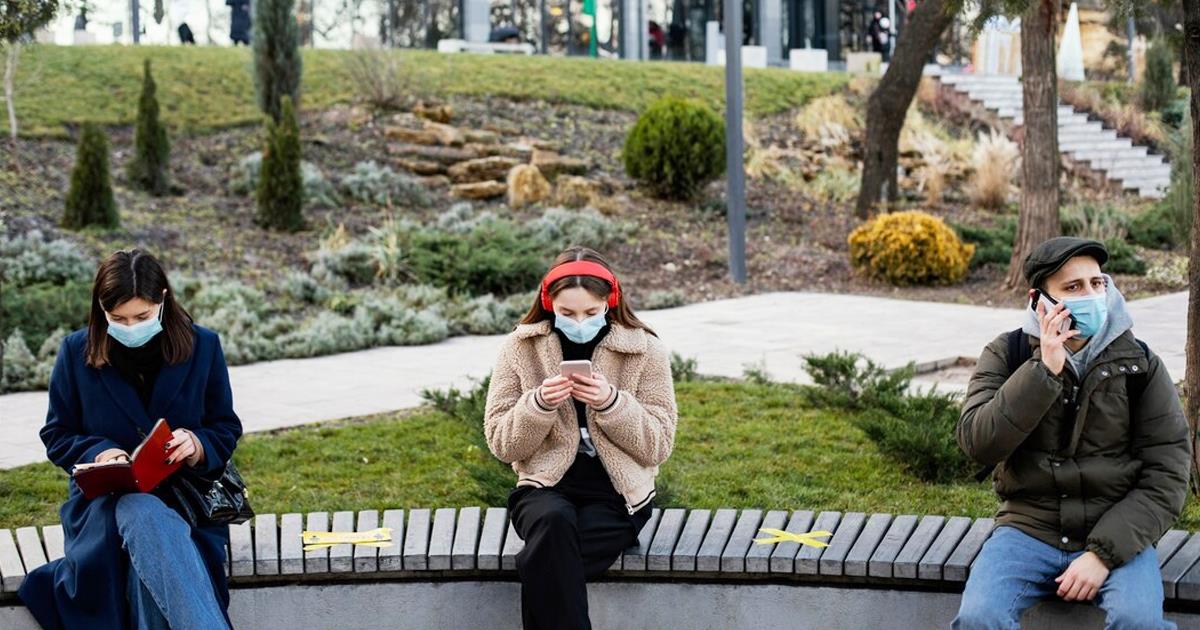
The COVID-19 pandemic has caused numerous changes in everyone's daily life. Its impact is global, as it does not focus only on a given area nor apply to individual spheres. The effects of the COVID-19 pandemic are undoubtedly unheard of for people today. This difficult period has brought about many changes—some of them were introduced temporarily only during the pandemic and some of them will be permanent. It is impossible to cover all aspects and effects of the COVID-19 pandemic. From the point of view of states and citizens, the most visible are economic and social effects. Many industries, sectors, and areas have been affected by economic problems. Some of them have had to change their strategy and tactics. Adaptation processes followed and innovations were introduced, which were accelerated precisely as a result of the pandemic. Aside from the economic effects, the social effects are also very important—people’s social lives have been drastically reduced. In addition, very often economic and social aspects were deeply interconnected.

There is a need to collect and systematize knowledge about the economic and social consequences of the COVID-19 pandemic. The main purpose of this Special Issue is to present the effects of a pandemic and how to deal with them, and to identify what changes have occurred—how problems were dealt with and whether the idea of sustainable development was respected. Was it at all possible in such a difficult time to maintain the principles of sustainable development?

Dr. Tomasz Rokicki
Assoc. Prof. Dr. Sebastian Saniuk
Dr. Dariusz Milewski
Guest Editors

Manuscript Submission Information

Manuscripts should be submitted online at www.mdpi.com by registering and logging in to this website. Once you are registered, click here to go to the submission form. Manuscripts can be submitted until the deadline. All papers will be peer-reviewed. Accepted papers will be published continuously in the journal (as soon as accepted) and will be listed together on the special issue website. Research articles, review articles as well as short communications are invited. For planned papers, a title and short abstract (about 100 words) can be sent to the Editorial Office for announcement on this website.

Submitted manuscripts should not have been published previously, nor be under consideration for publication elsewhere (except conference proceedings papers). All manuscripts are thoroughly refereed through a single-blind peer-review process. A guide for authors and other relevant information for submission of manuscripts is available on the Instructions for Authors page. Sustainability is an international peer-reviewed open access semimonthly journal published by MDPI.

Please visit the Instructions for Authors page before submitting a manuscript. The Article Processing Charge (APC) for publication in this open access journal is 1900 CHF (Swiss Francs). Submitted papers should be well formatted and use good English. Authors may use MDPI's English editing service prior to publication or during author revisions.

Keywords

  • functioning of states
  • activities of state groupings
  • functioning of public and private enterprises
  • e-commerce markets
  • courier services markets
  • operation of retail enterprises
  • logistics, including storage and transport of goods
  • supply chains
  • trade and services
  • construction sector
  • functioning of passenger transport, including urban transport
  • the energy sector in a pandemic
  • functioning of the tourism and catering industry
  • banking sector
  • sustainability of farms
  • functioning of the labor market, including remote work
  • public finance sector
  • the functioning of society in the COVID-19 pandemic
  • functioning of social groups
  • sustainability of professional groups
  • functioning of education and remote education
  • sustainability in the activities of universities
  • differences in the lives of urban and rural residents

Published Papers (3 papers)

Order results
Result details
Select all
Export citation of selected articles as:

Research

Article
Sustainable Loyalty of Employees in Poland as a Result of the COVID-19 Pandemic
Sustainability 2021, 13(16), 9411; https://doi.org/10.3390/su13169411 - 22 Aug 2021
Viewed by 338
Abstract
The pandemic has triggered, on one hand, a wave of employee disloyalty in the form of quitting from non-functioning companies and choosing those seeking employees, and on the other hand, reinforcing their relationships with those companies that made a lot of effort to [...] Read more.
The pandemic has triggered, on one hand, a wave of employee disloyalty in the form of quitting from non-functioning companies and choosing those seeking employees, and on the other hand, reinforcing their relationships with those companies that made a lot of effort to prevent quitting or letting employees go. The cognitive aim of this article is to answer the question of whether this transition is intended to be temporary or permanent—an issue which has not been recognized in the literature on the subject so far. The planned cognitive contribution is the verification of the hypothesis pertaining to the uneven occurrence of individual types of loyalty. The study was conducted on a nationwide, representative sample (n = 1000) with the use of the CAWI questionnaire. Research has confirmed that sustainable loyalty occurs more often than other types of loyalty. This is a balanced type of loyalty in which the commitment of the employer and the employee is equal, and the employee is attached to the organization and puts their trust in it. The obtained results were interpreted in the context of the influence of the pandemic. Full article
(This article belongs to the Special Issue Economic and Social Consequences of the COVID-19 Pandemic)
Article
Social and Psychological Consequences of COVID-19 Online Content at a Lockdown Phase—Europe and Asia Comparison
Sustainability 2021, 13(16), 9198; https://doi.org/10.3390/su13169198 - 16 Aug 2021
Viewed by 298
Abstract
After more than a year in a pandemic world, more than 171 million people worldwide have been infected and over 3.5 million have died. The number of those who have suffered mentally due to the pandemic is well above this number. The virus, [...] Read more.
After more than a year in a pandemic world, more than 171 million people worldwide have been infected and over 3.5 million have died. The number of those who have suffered mentally due to the pandemic is well above this number. The virus, lockdowns, forced quarantines, and problems related to jobs and everyday functioning have left their mark on mental health. Additionally, the massive spread of COVID-19 content of varying quality in social media is exacerbating this impact. On the other hand, in times of social distancing, these media are an important link with other people and a source of social support. The impact of the COVID-19 content in social media still requires further exploring. This influence on mental health may also vary geographically. There are more and more reports of discrimination against Asians due to COVID-19. We conducted a survey during lockdown in which 1664 respondents took part. After analyzing the impact of COVID-19 content in social media on the level of life satisfaction, anxiety, and depression, we compared this impact between European and Asian respondents. The results showed that dealing with these contents affects the level of anxiety, depression, and life satisfaction. Although most often these relations turned out to be negative, we have also identified those indicating a positive impact. This was particularly noticeable among Asian respondents, who additionally showed a lower relationship between reading COVID-19 content and their mental well-being than European respondents. Full article
(This article belongs to the Special Issue Economic and Social Consequences of the COVID-19 Pandemic)
Article
Activities of Food Retail Companies in Poland during the COVID-19 Pandemic in the Context of Food Security
Sustainability 2021, 13(13), 7323; https://doi.org/10.3390/su13137323 - 30 Jun 2021
Viewed by 359
Abstract
This paper deals with a very important topic concerning the adaptive actions of food retail entities, operating in a network model, during threats caused by a pandemic. The aim of the study was to identify and characterize the actions taken by food retail [...] Read more.
This paper deals with a very important topic concerning the adaptive actions of food retail entities, operating in a network model, during threats caused by a pandemic. The aim of the study was to identify and characterize the actions taken by food retail chain entities during the COVID-19 pandemic, in the context of the food security of consumers in Poland (using the example of Wielkopolska). A basic research hypothesis (H0) was generated, stating that the adaptation activities of food retail chain actors varied during the COVID-19 pandemic in Poland with regard to ensuring consumer food security. It was detailed in five sub-hypotheses. In their verification and in the realization of the aim of the study, the methods of literature study and other secondary sources, and induction, survey, comparative, visualization, modeling and descriptive statistics, were used. The research results include (a) the authors’ diagnosis of threats to the food security of companies in the food system resulting from the COVID-19 pandemic, and applied ways of adaptation to the new requirements of the environment, based on secondary sources; (b) analysis of data from the empirical survey conducted by the authors in November 2020 on the adaptive actions of companies, among managers/owners of food retail stores of a selected network of a particular franchise type in Greater Poland; (c) the construction of an empirical model of the typical behaviors of food retail units in the chain under study, distinguishing three of their types in the model; and (d) suggestions concerning the directions of future scientific research areas. The article was prepared following the stream of sustainable development theory. Full article
(This article belongs to the Special Issue Economic and Social Consequences of the COVID-19 Pandemic)
Show Figures

Figure 1

Back to TopTop