


Skip to Content

Land

Land is an international, cross-disciplinary, peer-reviewed, open access journal on land system science, landscape, soil and water, urban study, land–climate interactions, water–energy–land–food (WELF) nexus, biodiversity research and health nexus, land modelling and data processing, ecosystem services, multifunctionality and sustainability, and is published monthly online by MDPI.
Quartile Ranking JCR - Q2 (Environmental Studies)

Get Alerted

Add your email address to receive forthcoming issues of this journal.

All Articles (12,468)

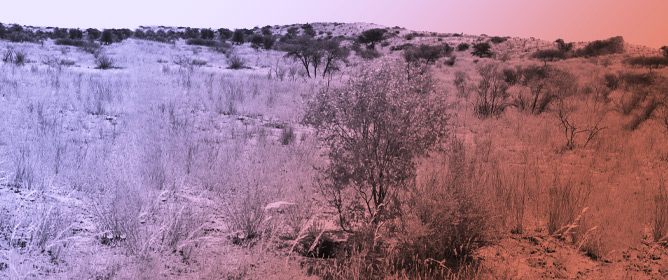
Net primary productivity (NPP) and its response to global climate change are one of the hot topics in global change research. Based on Net primary productivity remote sensing data and meteorological data, this study analyzed the spatiotemporal variation in vegetation NPP in Maowusu sandy land by using Sen trend analysis, Mann–Kendall significance test, coefficient of variation stability analysis, partial correlation and complex correlation analysis, and quantitatively analyzed the response of vegetation NPP to climate factors. The results showed that from 2001 to 2023, the overall vegetation NPP showed a significant upward trend, and the annual average increased from 124.28 g·(m−2·a)−1 to 221.41 g·(m−2·a)−1. The Theil–Sen median slope of NPP was +3.87 g·(m−2·a)−1 with a coefficient of variation (CV) of 0.19, suggesting a robust but spatially variable greening trend. In total, 98.53% of the area showed an upward trend, with a very significant and significant increase area. The overall stability of vegetation NPP was strong, with an average coefficient of variation (CV) of 0.19 and a CV< of 0.30 in 97.96% of the regions, but the local area from southwest to east was highly volatile and there was a risk of secondary desertification. The influence of climate factors on vegetation NPP had significant spatial heterogeneity: precipitation was the key driving factor, and most areas were positively correlated. Potential evapotranspiration was positively correlated in the central and northern regions, and negatively correlated in some southern areas. The overall temperature has a negative effect, and only the local area has a weak promoting effect. Multi-correlation analysis shows that vegetation NPP is the result of the synergy of multiple climatic factors, and the hydrothermal coupling mechanism plays a decisive role in its spatial pattern. This study can provide a scientific basis for the restoration of vegetation ecosystems, environmental protection policy formulation, ecological protection and high-quality development of the Yellow River Basin in Maowusu Sandy Land.
15 April 2026

Geographical schematic diagram of Mu Us Sandy Land area.

Rising greenhouse gas concentrations have exacerbated global warming, elevating the importance of land use and land cover (LULC) changes in achieving carbon neutrality. This is especially true in coastal areas, which face dual pressures from rapid urbanization and the need to protect carbon sinks. This study developed an SD-MCCA coupling framework to predict the dynamic changes in LULC in four SSP scenarios (SSP126, SSP245, SSP370, SSP585) in the coastal zone of Zhejiang Province from 2020 to 2100. Among them, the carbon storage was estimated by the InVEST model, and the dual-target optimization was carried out using the NSGA-II algorithm. Results indicated that construction land expanded significantly across all scenarios (50.3–110.2%), leading to a decline in carbon storage. However, outcomes were highly scenario-dependent; by 2100, carbon storage under the SSP126 pathway (1032.94 Mt) was notably higher than under the SSP585 pathway (1012.90 Mt). Coastal wetlands and forests emerged as major contributors to carbon storage, exhibiting high positive contribution scores, while construction land sites show significant negative correlations. Dual-target optimization achieved collaborative improvement: the optimized SSP126 scenario increased carbon storage by 1.16%, while economic benefits increased by 9.05%. The policy proposal emphasizes the priority of the SSP126 scenario, restricts the expansion of construction land, and enforces the ecological red line of wetlands and forests, guided by the phased Pareto optimal strategy.

15 April 2026

Study Area Location Map.

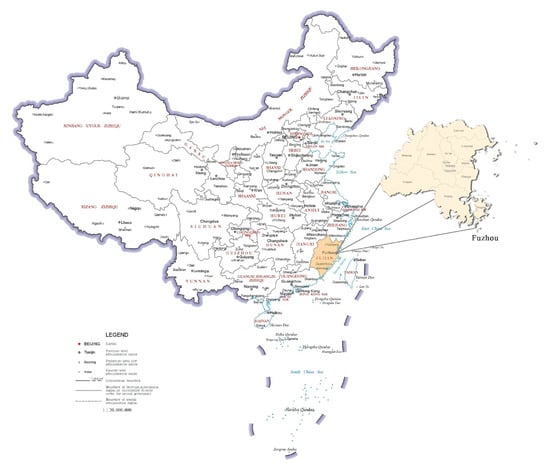
Informal settlements are home to more than one billion people worldwide, with forecasts suggesting this number may increase to nearly three billion by 2050. Although informal settlements constitute a significant component of urbanization in the Global South, they are unsafe and unhealthy places to live, as residents are exposed to various environmental challenges, including increasing temperatures. However, relative to other climate-related hazards, heat stress in informal settlements is under-researched. This paper, therefore, aims to analyze land surface temperatures (LSTs) in informal settlements relative to those in surrounding areas. Focusing on the study areas of Masiphumelele and Dunoon in Cape Town, South Africa, the study utilized downscaled 10 m resolution satellite imagery from 2020 to 2025. The LST was derived from Landsat 8 Collection 2 Level 2 Surface Reflectance and Surface Temperature products. Four indices were also generated to further analyze the spatial distribution of LSTs: the normalized difference vegetation index, the normalized difference built-up index, the bare soil index, and the normalized difference water index. Showing that heat intensity in informal settlements is a relative phenomenon influenced by many factors, Dunoon had a lower mean LST than the surroundings, while Masiphumelele demonstrated elevated mean LST relative to the surroundings. The study provides empirical evidence of heat-related patterns to inform planning and climate adaptation strategies in informal settlements, including the equitable provision of green and blue infrastructure.

15 April 2026

Location of the study areas.

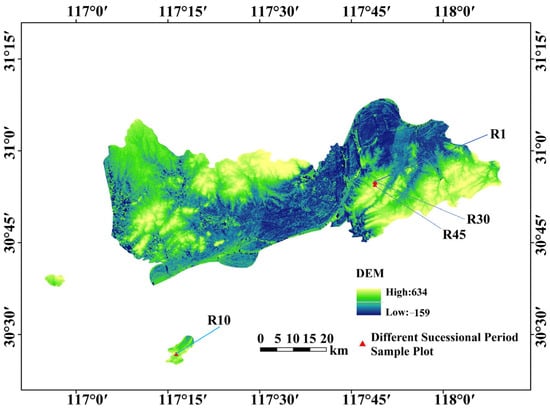
The Rimac River Basin supplies drinking water to more than ten million people in Lima, Peru, yet its hydrological regulation capacity is increasingly constrained by land degradation, with over 35% of the basin lacking vegetation cover. Nature-based solutions implemented through conservation and restoration of natural ecosystem offer a potential complement to grey infrastructure, although their basin-scale hydrological benefits remain scantily quantified. This study proposes an inverse assessment framework that uses future degraded states as hydrological benchmarks to quantify redistributed water as a proxy for the volumetric benefits that conservation or restoration could potentially provide. Degraded Andean shrubland and grasslands were identified and prioritized using the RIOS investment assessment tool, resulting in three degradation portfolios (2826; 6566; and 10,720 ha) for the 2011–2016 period. Their hydrological responses were then simulated using the SWAT model, with a focus on dry-season dynamics. The model achieved a Kling Gupta Efficiency of 46.9% and a seasonally targeted Nash–Sutcliffe efficiency of 70% during the dry season, ensuring that despite the basin anthropization, the low flow dynamics key for water security are reliably represented. Water availability indicators and flow-duration curve metrics were applied to evaluate changes in hydrological regulation. Results show that all portfolios increased dry-season streamflow relative to baseline conditions, with the largest portfolio producing a 2.39% increase, equivalent to approximately 4 hm3 during the critical June–August period. These findings indicate that degradation alters flow redistribution within the basin water cycle and suggest that conservation or restoration may reverse these effects. The intermediate and large portfolios provided the most informative benchmarks, supporting spatially explicit decision making for basin-scale water regulation.

15 April 2026

Future degraded states as hydrological benchmarks of the modeled area of the RRB.

News & Conferences

Volumes

Latest Issues

Open for Submission

Editor's Choice

Reprints of Collections

Innovative Research Approaches &amp; Practices Towards Sustainable Land Management, Preservation &amp; Restoration (Second Edition)
Reprint

Innovative Research Approaches & Practices Towards Sustainable Land Management, Preservation & Restoration (Second Edition)

Editors: Kleomenis Kalogeropoulos, Andreas Tsatsaris, Nikolaos Stathopoulos, Demetrios E. Tsesmelis, Nilanchal Patel, Xiao Huang
Archaeological Landscape and Settlement II
Reprint

Archaeological Landscape and Settlement II

Editors: Paolo Biagi, Elisabetta Starnini
XFacebookLinkedIn
Land - ISSN 2073-445X