Article

Research on the Mechanisms and Models of Comprehensive Land Consolidation Coordinated with New Energy Industry Development in Ecologically Fragile Areas

1
Research Center of Information Technology, Beijing Academy of Agriculture and Forestry Sciences, Beijing 100097, China
2
Key Laboratory of Quantitative Remote Sensing in Agriculture, Ministry of Agriculture and Rural Affairs of the People’s Republic of China, Beijing 100097, China
3
College of Resources, Environment and Tourism, Capital Normal University, Beijing 100048, China
4
School of Land Science and Technology, China University of Geosciences (Beijing), Beijing 100083, China
*
Authors to whom correspondence should be addressed.
Land 2026, 15(5), 713; https://doi.org/10.3390/land15050713
Submission received: 3 March 2026 / Revised: 10 April 2026 / Accepted: 14 April 2026 / Published: 23 April 2026

Abstract

The synergistic and mutually reinforcing relationship between the development of the new energy industry and comprehensive land consolidation is crucial for integrating ecologically fragile areas into the national “dual carbon” goals and supporting regional high-quality development. Based on a systematic literature review, field investigations in typical regions, and multi-case comparative analysis, this paper analyzes the challenges and opportunities for the new energy industry in ecologically fragile areas as well as the mutually reinforcing mechanisms between new energy industry development and land consolidation. On this basis, it explores pathways for comprehensive land consolidation in coordination with new energy development. Building on local practices, it further identifies five typical models. The results show the following: (1) The development of the new energy industry in ecologically fragile areas faces multiple challenges, including a fragile ecological environment, inadequate infrastructure, a mismatch between resource supply and demand, and land use conflicts. Against the backdrop of the energy transition, breakthroughs in key technologies, and the guidance of territorial spatial planning, the value of wind and solar resources in these areas are becoming increasingly prominent, offering broad prospects for the new energy industry. (2) The development of the new energy industry and comprehensive land consolidation in ecologically fragile areas are mutually reinforcing. Factors such as resource endowment, ecological constraints, new quality productive forces, and investment and financing mechanisms interact and integrate with each other, resulting in diversified synergistic pathways. (3) Based on the priorities of new energy industry development and the primary objectives of consolidation, five models are identified: Ecological Restoration-led Model, Resource Development-led Model, Industrial Collaboration-led Model, Technological Innovation-led Model and Integrated Development Model. Each model has distinct priorities and applicable scenarios. This study will provide a reference for new energy development and sustainable development in ecologically fragile areas, including desertified and Gobi desert areas, coal mining subsidence areas, and areas rich in wind, solar, and hydropower resources.

1. Introduction

The development of the new energy industry has become a key strategic decision for the global energy transition and in efforts to address climate change [1,2], representing a tangible measure to ensure national energy security and contribute to the goals of peaking carbon emissions and achieving carbon neutrality [3,4]. According to the Action Plan for Peaking Carbon Emissions Before 2030 (Guo Fa [2021] No. 23), the share of non-fossil energy in China’s primary energy consumption will reach around 25% by 2030. Furthermore, the Implementation Plan for Promoting the High-Quality Development of the New Energy Industry in the New Era, issued by the National Development and Reform Commission (NDRC) and the National Energy Administration (NEA) and endorsed by the General Office of the State Council (Guo Ban Han [2022] No. 39), explicitly calls for innovating models for new energy development and utilization, securing the necessary spatial requirements for new energy expansion, and fully leveraging the ecological and environmental benefits of new energy. More recently, the Guiding Opinions on Vigorously Implementing Renewable Energy Substitution Actions (NDRC Energy [2024] No. 1537), issued by the NDRC and other departments, proposes promoting cross-sectoral integration between renewable energy and industries such as manufacturing, transportation, construction, agriculture, and forestry. It also encourages deep, multi-dimensional development models such as photovoltaic (PV) installations for desert control, PV corridors, and marine ranching. Ecologically fragile areas in China are predominantly located in the western region. They are characterized by a wide distribution, complex terrain, diverse types of fragile ecosystems, and abundant wind and solar resources. However, these areas are also marked by arid climatic conditions, severe water shortages, frequent natural hazards, and persistent ecosystem degradation. Owing to these characteristics, a strategically important position is occupied by these areas in relation to both national ecological security and national energy security [5,6]. Against the background of concurrent ecological civilization advancement and energy transition, the increasing value of wind and solar resources can provide new momentum for comprehensive land consolidation in these ecologically fragile regions. Therefore, examining the interaction pathways and coupling logic between the new energy industry and comprehensive land consolidation from the perspective of key elements, and synthesizing these into a typologically significant classification of consolidation models to refine the mechanisms and models of comprehensive land consolidation coordinated with new energy industry development, is of great significance for promoting the high-quality development of the new energy industry in ecologically fragile areas and optimizing the pattern of territorial space development and protection.
Amidst China’s high-quality, leapfrog development of the new energy sector, large-scale development, integration, and long-distance transmission of new energy have emerged as pivotal pathways for new energy construction [7]. Alongside the rapid expansion of the new energy industry, and considering the resource endowments, ecological characteristics, and unique industrial conditions of ecologically fragile areas, scholars are actively exploring comprehensive land consolidation models that deliver integrated benefits. For instance, Sturchio M.A. et al. [8] found that microclimate improvement beneath photovoltaic panels in semi-arid grasslands could enhance plant growth during drought years. Grodsky S.M. et al. [9] systematically assessed the impacts of solar energy development on darkling beetles in the Mojave Desert, revealing that moderate-intensity disturbance could effectively mitigate negative ecological effects. Cole S.G. [10] constructed a quantitative framework for environmental compensation in wind power development based on equivalence analysis. Pickering, J. et al. [11] examined the policy coordination mechanisms between energy development, regional equity, and community participation through the “Renewable Energy Zone” planning practice in New South Wales. Wang Y. et al. [12] evaluated the encroachment risks of wind and photovoltaic projects on biodiversity and Indigenous lands at the global scale. Guo C. et al. [13] systematically reviewed models implemented in the Kubuqi Desert, including combined vegetation-engineering sand control, integrated shelterbelt forest protection, and the photovoltaic (PV) industry. Sui X. et al. [14] developed an “ecological PV” model tailored for vulnerable regions under the “dual carbon” goals by integrating an ecosystem process model with the InVEST benefit accounting model. Furthermore, the “PV + mine ecological restoration” model for energy-led mine site consolidation helps alleviate land use constraints for PV development, restores abandoned mine lands, and achieves the dual benefits of carbon reduction and increased carbon sinks [15]. Synergistic models, such as the “PV + ecology + grass-animal husbandry” symbiosis and the “enterprise + ecology + energy storage/energy-consuming industries” coordinated development model [16], provide robust support for enhancing grassland ecological functions and promoting efficient PV operations in the “Three-North” project area (a major shelterbelt forest program covering northern, northwest, and northeast of China). As the annual share of intermittent new energy in the installed power capacity continues to increase, establishing distributed multi-energy complementary systems within large power grids, developing new energy storage solutions and advancing optimal control technologies for multi-power-source complementarity to facilitate new energy integration have become research hotspots [17]. Xiao J. et al. [18] constructed an ecosphere structural model incorporating elements such as desert control, ecological restoration, rural revitalization, energy construction, and economic development, proposing a new model for the coordinated development of energy, economy, and environment in desert areas. Overall, domestic and international scholars have conducted research on the pathways and models for new energy development and comprehensive land consolidation, yielding a set of exemplary case studies that offer valuable references for the synergistic development of new energy industries and land consolidation in ecologically fragile areas. However, certain gaps remain: (1) Provinces and autonomous regions such as Qinghai and Inner Mongolia have carried out fruitful practices in new energy development and territorial consolidation; however, these efforts have exclusively focused on unidirectional impact assessments of new energy development on ecological environments (e.g., the shading effects of photovoltaic panels on vegetation growth), or the supporting role of land consolidation in resource exploitation, with scarce systematic analysis of the bidirectional feedback mechanisms between the two within a unified framework. Existing models have primarily relied on simple superposition of new energy with singular consolidation demands, leaving considerable room for enrichment and expansion. (2) Existing models predominantly derive from empirical generalizations of single-case studies (e.g., the Kubuqi Desert photovoltaic sand control model), often failing to adequately account for regional disparities in resource endowment, ecological baseline conditions, industrial foundation, and technological capacity, limiting their transferability and broad application. Therefore, in light of the new opportunities and demands for comprehensive land consolidation in ecologically fragile areas, it is imperative to incorporate new perspectives on resources, industries, and spatial planning. Deepening the application of the “lucid waters and lush mountains are invaluable assets” philosophy is crucial for constructing mechanisms and models for comprehensive land consolidation that are coordinated with new energy industry development, thereby promoting the synergistic advancement of both in these ecologically vulnerable regions.
This study followed the selection criteria of being located in ecologically fragile areas—including desertified regions, Gobi deserts, coal mining subsidence zones, and areas rich in wind, solar, and hydropower resources—where new energy development projects have been implemented or are underway, comprehensive land consolidation has been carried out simultaneously or sequentially, and data availability is relatively high. Adopting a methodological approach of “literature review + typical case investigation → comparative case analysis → induction and refinement of consolidation models,” the study selected multiple typical cases from provinces such as Inner Mongolia, Gansu, Ningxia, Shanxi, and Yunnan for comparative analysis. Through inductive summarization, five differentiated comprehensive land consolidation models were derived, providing a reference for the formulation of new energy development and sustainable development strategies.

2. Mechanisms for Mutual Promotion Between New Energy Industry Development and Comprehensive Land Consolidation in Ecologically Fragile Areas

2.1. Challenges and Opportunities for New Energy Industry Development in Ecologically Fragile Areas

Most areas within China’s ecologically fragile regions feature flat terrain and abundant wind and solar resources, rendering them suitable for large-scale development of wind power, photovoltaics, and other new energy sources. These regions thus constitute critical zones for both the new energy industry and ecological restoration [19]. Despite the promising prospects, practical implementation continues to encounter numerous challenges and constraints. From the perspective of inherent constraints, most new energy sources exhibit low energy density, extensive land occupation, and dispersed spatial distribution [20]; compounded by the poor stability of ecosystems in ecologically fragile areas, the construction of new energy bases readily induces land degradation and biodiversity loss [21,22], imposing ecological thresholds on regional development. From the perspective of systemic bottlenecks, these regions are characterized by complex natural conditions, relatively weak industrial foundations, and limited local energy consumption capacity. Furthermore, the absence of specialized spatial planning for new energy deployment, coupled with inadequate supporting infrastructure such as power grids and energy storage systems [23], has resulted in grid infrastructure lagging behind the growth rate of installed capacity. This spatial supply–demand mismatch of new energy has generated a certain degree of resource underutilization, exemplified by wind and solar curtailment, thereby constraining the conversion efficiency of resource development. From the perspective of spatial conflicts, new energy industry layout has predominantly proceeded from an energy utilization standpoint without adequate integration with energy-intensive industries, agriculture, or forestry, thus failing to translate new energy resource advantages into industrial strengths. The distribution of new energy resources in China substantially overlaps with ecological spaces, and conflicts between new energy base construction and farmland protection as well as ecological red line control have become increasingly pronounced. Consequently, new energy development confronts multiple dilemmas encompassing territorial space constraints, ecological environment limitations, and land use conflicts [23]. Challenges also demonstrate significant heterogeneity across different types of ecologically fragile areas: arid and semi-arid regions primarily face ecological constraints such as wind erosion, desertification, and water resource scarcity, alongside infrastructure bottlenecks including insufficient power grid transmission capacity; Mining-induced ecologically fragile areas mainly confront ecological degradation issues such as land subsidence and soil erosion, as well as land use conflicts including prominent mining-land contradictions and insufficient consolidation funding; high-altitude ecologically fragile areas primarily encounter ecological constraints such as high ecosystem sensitivity and protracted recovery cycles, together with development challenges including harsh construction conditions and poor technological adaptability. Overall, the construction of large-scale new energy bases faces considerable challenges in achieving coordination between new energy industry development and ecological environmental protection, urgently necessitating synergistic deployment of new energy projects and ecosystem restoration engineering.
Currently, the advent of a green, low-carbon era centered on new energy offers broad prospects for industry development. As highlighted in the white paper China’s Energy Transition, China has established a relatively complete industrial and supply chain for new energy sources like wind and PV power. Breakthroughs in key technologies, including smart grids and new distribution technologies, efficient and safe energy storage systems, ultra-high voltage (UHV) transmission, and carbon capture, utilization, and storage (CCUS) [24,25], have significantly enhanced the stability, resilience, and resource efficiency of new energy supply, while substantially reducing costs. Concurrently, advancements in planning concepts, such as territorial space use regulation and the intensive and efficient utilization of land resources, coupled with technological progress, are fostering the integration of new energy resource development with energy-intensive industries, agriculture, forestry, and animal husbandry. This facilitates the full utilization of spatial resources and enables multi-dimensional development.

2.2. Interaction Mechanisms Between New Energy Industry Development and Comprehensive Land Consolidation

Compared with traditional fossil energy sources, the resource elements of new energy sources such as wind and solar power, along with their development environments, exhibit significant spatiotemporal heterogeneity under the influence of factors including atmospheric circulation, solar radiation, and underlying surface conditions [22]. Therefore, based on regional territorial characteristics, resource endowments, and development realities, it is of considerable theoretical value and practical significance to balance the construction of new energy bases against ecological environment protection and restoration in ecologically fragile areas. This involves exploring comprehensive land consolidation models that are adapted to regional conditions and coordinated with new energy industry development, so that the scale and quality of resource and product supply can be improved [6]. The development of the new energy industry and comprehensive land consolidation in ecologically fragile areas are interdependent and mutually reinforcing. On one hand, ecologically fragile areas are not only important regions for new energy development but also key areas for land consolidation and ecological governance. A sound ecological environment serves as the foundation for the efficient and sustainable operation of new energy bases. Consequently, when siting and planning new energy bases, full consideration must be given to the current state of regional ecosystems, with efforts to avoid ecologically sensitive areas wherever possible to minimize disturbance and impact on the ecological environment. During the construction and operational phases of new energy bases, systematic and holistic approaches to protection and restoration should be adopted. This involves deploying various consolidation technologies in coordination to restore the ecological environment, optimize vegetation types and structure, and enhance ecosystem functions and stability. For instance, the Gonghe Photovoltaic Base in Qinghai has achieved spatial synergy between new energy infrastructure and ecological restoration engineering through the spatial overlapping of photovoltaic array zones and grassland restoration areas, resulting in significantly enhanced vegetation coverage beneath the panels. On the other hand, promoting the integrated development of the new energy industry with other sectors can, while fostering competitive industrial clusters and facilitating industrial transformation and upgrading, also provide financial support for regional comprehensive land consolidation and ensure the sustained and stable operation of ecological restoration projects. This helps address challenges such as excessive reliance on state financial investment and the limited comprehensive benefits often associated with land consolidation efforts [26], thereby achieving a virtuous interaction between the new energy industry and comprehensive land consolidation. For example, the photovoltaic project in the Datong coal mining subsidence area of Shanxi has allocated a portion of power generation revenues specifically for land consolidation and ecological restoration, establishing a virtuous cycle of “energy development feeding back into ecological governance”; meanwhile, the Ningdong “green electricity plus green hydrogen” project in Ningxia has effectively improved new energy consumption capacity and land composite utilization efficiency through multi-energy complementarity and energy storage technologies.

2.3. Coordinated Pathways for New Energy Industry Development and Comprehensive Land Consolidation

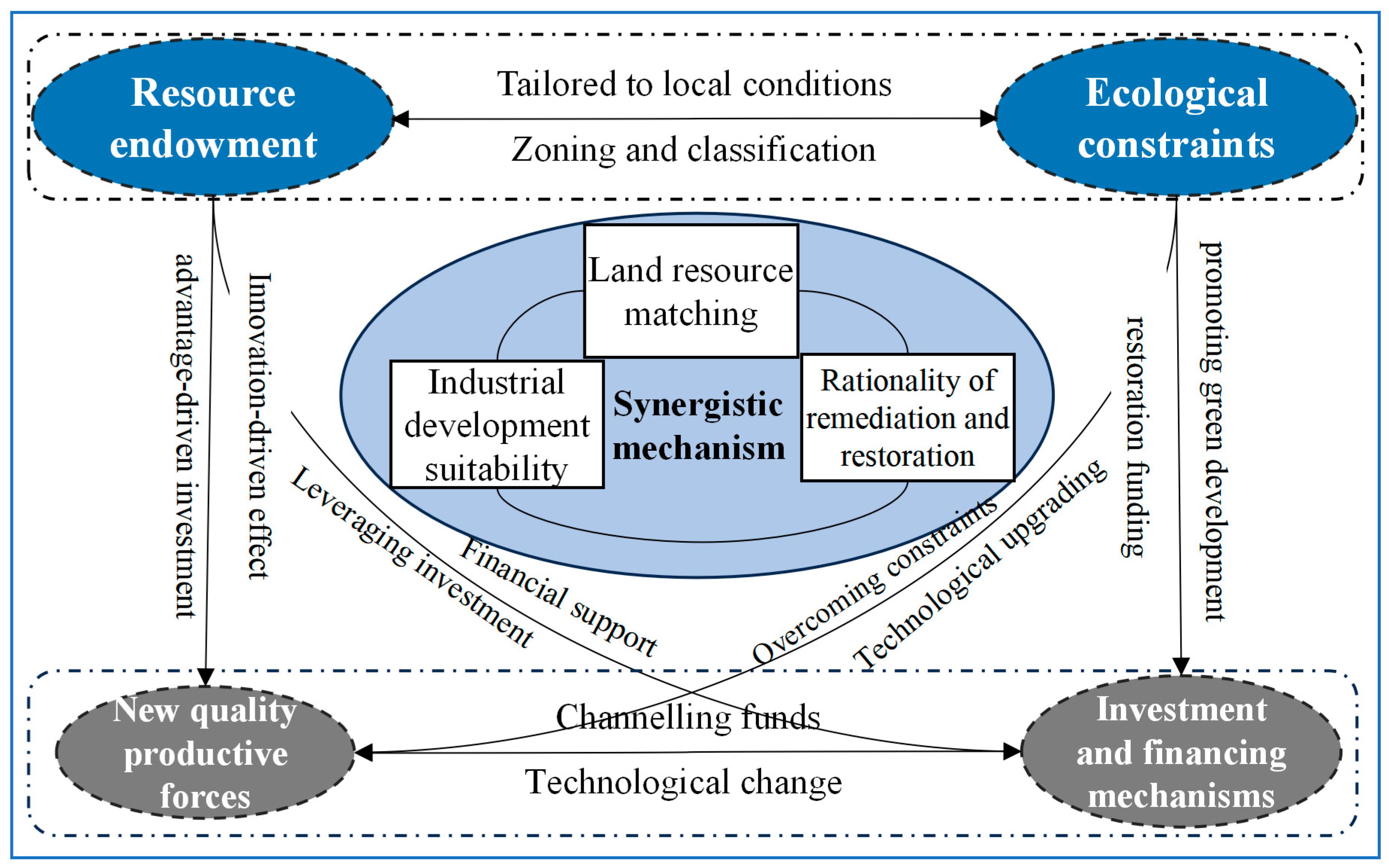
The core logic the coordinated pathways for new energy industry development and comprehensive land consolidation treats resource endowment and ecological constraints as the endogenous foundation, and new quality productive forces and investment and financing mechanisms as exogenous drivers. Through the systematic integration, these four categories of elements, a sustainable paradigm can be established for ecologically fragile areas, one that “uses energy development to finance ecological restoration while enabling land consolidation to support industrial implementation” (Figure 1). Specifically, resource endowment determines the development potential and industrial scale of new energy in a given region; The abundance and spatial distribution of resources such as wind and solar directly determine the siting and sequencing of base construction, enabling land consolidation to allocate land elements precisely around energy corridors. Ecological constraints, meanwhile, delineate development boundaries and consolidation pathways. As a result, the siting of new energy projects must be closely integrated with ecological carrying capacity assessment and environmental access control. This has promoted the adoption of spatially integrated consolidation models such as “photovoltaics + desert control” and “wind power + soil improvement” as mainstream approaches [27]. New quality productive forces achieve breakthroughs in consolidation efficacy through technological advancement, transforming new energy facilities from “environmental disturbance sources” into “ecological restoration carriers.” Green finance instruments, through financial innovation, market mechanisms, and policy incentives, create pathways for value conversion. This enables ecologically fragile areas to reduce their dependence on fiscal transfers. An endogenous cycle of “consolidation investment, energy output, asset appreciation, and reinvestment” is thereby formed. Under conditions of adequate policy support, technological suitability, and effective operation of revenue feedback mechanisms, this cycle can lead to a mutually beneficial outcome for ecological protection and energy development [28].

3. Typical Models of Comprehensive Land Consolidation Coordinated with New Energy Industry Development

Through the analysis of the interaction mechanisms and practical experiences of new energy industry development and land consolidation in ecologically fragile areas, this study identifies five typical consolidation models. These are classified according to the primary objectives of new energy development and the dominant consolidation goals: Ecological Restoration-led Model, Resource Development-led Model, Industrial Collaboration-led Model, Technological Innovation-led Model, and Integrated Development Model (Table 1).

3.1. Ecological Restoration-Led Land Consolidation Model

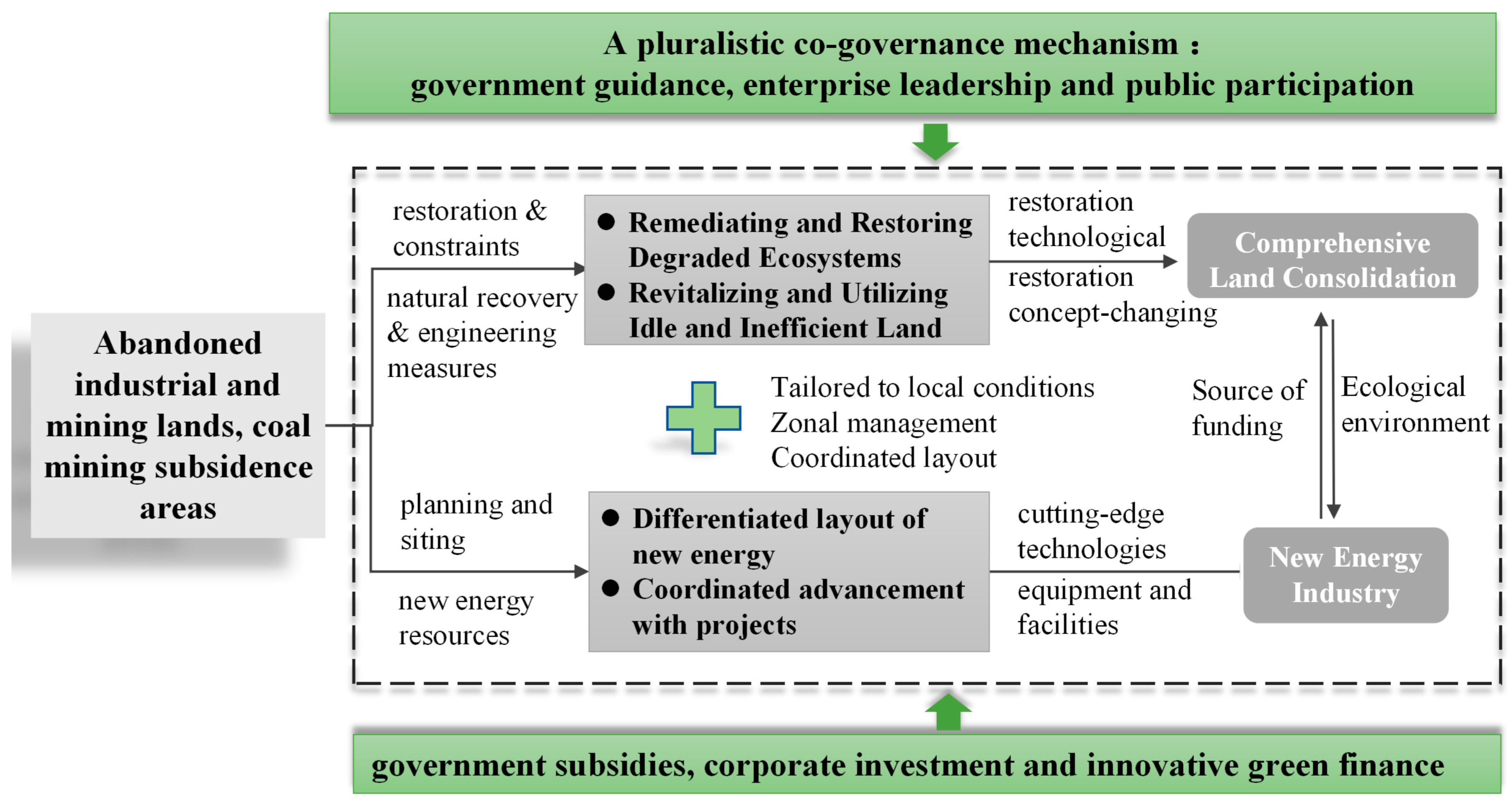
The ecological restoration-led model is mainly applicable to areas with severely degraded ecosystems but relatively favorable new energy resource endowment, such as abandoned industrial and mining lands and coal mining subsidence areas. Its core objective is to restore regional ecological functions, utilizing new energy development as both a primary consolidation strategy and a funding source. By integrating natural recovery and engineering interventions, this model aims to remediate fragile ecosystems while revitalizing underutilized land. Grounded in resource endowment and underpinned by innovative investment and financing mechanisms, it channels a portion of the economic returns from new energy development into supplementary funding for comprehensive land consolidation. Spatially, based on the principle of “measures tailored to local conditions and zoning consolidation,” wind power and photovoltaic facilities are strategically sited in coordination with vegetation restoration, soil and water conservation measures to achieve the goals of restoring degraded ecosystems and improving habitat quality. Furthermore, a multi-stakeholder governance mechanism characterized by “government guidance, enterprise leadership, and public participation” is refined, with funding channels expanded through reinvestment of ecological asset returns (Figure 2). For instance, in coal mining subsidence areas such as Datong in Shanxi Province and Wuhai in Inner Mongolia, comprehensive land consolidation has been systematically implemented to address land collapse and fragmentation, weak soil and water conservation capacity, and ecological degradation, thereby restoring fragile ecosystems. Concurrently, based on resource endowment, new energy bases are sited in geologically stable areas rich in new energy resources. A portion of the revenues generated from new energy is then continuously reinvested to advance comprehensive land consolidation, achieving synergistic gains for both ecology and the economy [29,30]. For instance, in the Datong coal mining subsidence area of Shanxi Province, the overlapping area between the photovoltaic array zone and the land consolidation zone extends to dozens of square kilometers, achieving synergistic advancement between new energy infrastructure construction and mining area land consolidation. A portion of the project’s power generation revenue is specifically allocated to land consolidation and ecological restoration, with the reinvestment ratio exceeding 10%. Following years of ecological and environmental governance, the land consolidation rate in the project area has reached over 90%, and vegetation coverage has increased from less than 20% prior to consolidation to over 50%. Soil erosion has been effectively controlled, with the soil erosion modulus decreasing significantly.

3.2. Resource Development-Led Land Consolidation Model

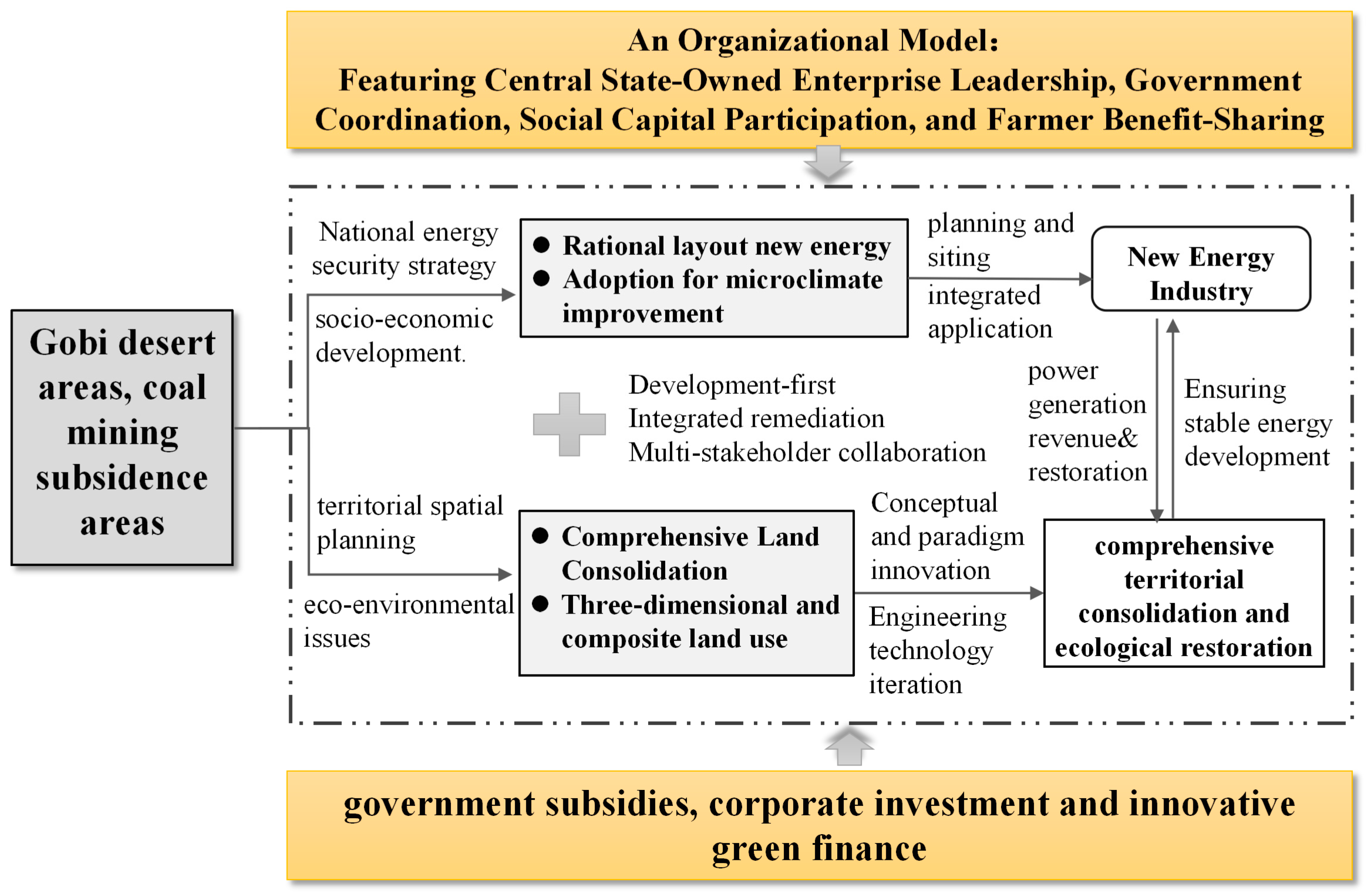
The resource development-led model primarily targets areas with abundant new energy resources, vast land reserves, and relatively strong ecological environment carrying capacity, such as “desertified, Gobi, and barren land” bases and saline–alkali tidal flats. Centered on serving the national energy security strategy, this model focuses on the efficient utilization of new energy resources and land assets. Through the large-scale and centralized development of wind and solar power, conditions are created for regional land consolidation and ecological restoration, establishing a consolidation framework characterized by “development prioritization, consolidation integration, and multi-stakeholder collaboration.” In terms of spatial governance, the construction of new energy facilities is integrated with regional ecological management projects (Figure 3). Technological innovations and process improvements are leveraged to optimize microclimatic conditions, curb land degradation, and enhance land use efficiency through multi-functional utilization [31]. For instance, the model substantially supplements annual power generation capacity, while vegetation coverage beneath solar panels has increased from less than 20% before consolidation to over 50%. Regarding institutional design, mechanisms such as ecological compensation and benefit-sharing are established to foster multi-stakeholder collaboration involving central enterprises, local governments, social capital, and rural communities. Relying on national energy projects or policy support for desertified, Gobi, and barren land consolidation, institutional innovations drive a transition from resource endowment-driven approaches. In terms of funding sources, stable electricity revenues from new energy projects provide long-term financial support for ecological governance and public service improvements. For example, Qinghai Province has taken advantage of the national strategy for the construction of large-scale new energy bases in desertified land, Gobi areas, and barren land. Centralized photovoltaic bases have been vigorously developed to build clean energy hubs [32]. It has explored three-dimensional land utilization models such as “power generation on panels, grass planting beneath panels, and grazing among grass,” effectively mitigating wind erosion while enhancing grassland productivity. Revenues from photovoltaic power are reinvested in grassland restoration and infrastructure development, giving rise to a consolidation organization mechanism characterized by “enterprise investment, local government coordination, and public participation.” Furthermore, in areas abundant in both fossil fuels and new energy resources, new models for coordinated development are being explored through integrated multi-energy complementarity combining mining, wind/solar power, thermal power, and energy storage.

3.3. Industrial Collaboration-Led Land Consolidation Model

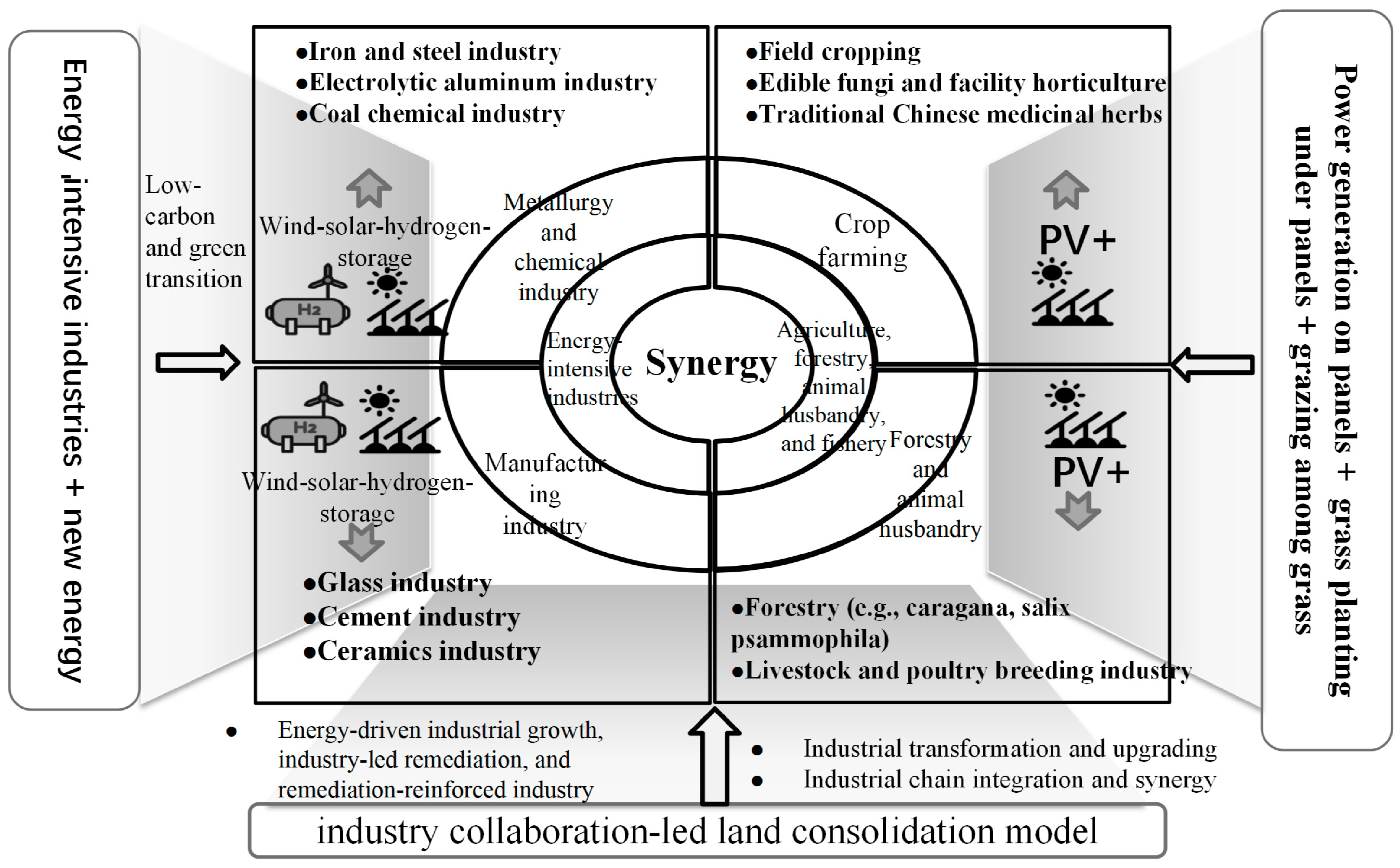
The industrial collaboration-led model targets regions with strong industrial foundations, urgent transition needs, and abundant new energy resources. It integrates new energy development with energy-intensive industries, agriculture, and animal husbandry to promote industrial chain extension, value chain upgrading, and spatial restructuring. Using new energy as a driver and industrial transformation as the core objective, this approach achieves both economic and ecological benefits through local government-led industrial planning and full-chain restructuring. The model emphasizes precise industrial chain construction and scientific spatial layout, guided by resource endowment and ecological carrying capacity, ensuring that new energy and traditional industries are coordinated without breaching ecological red lines. Supported by new quality productive forces and investment mechanisms, it introduces low-carbon technologies and green finance to establish a coordinated industry–energy–land paradigm (Figure 4). For example, in Inner Mongolia and Qinghai, regions with abundant mineral resources, mature infrastructure, concentrated industries, and rich renewable energy resources, dedicated green power networks have been developed to meet the electricity needs of energy-intensive sectors such as steel and electrolytic aluminum [33], promoting the coordinated development of “new energy + energy-intensive industries.” In locations like Ningdong, Ningxia, green hydrogen production projects utilizing wind and solar power have been implemented to integrate renewable hydrogen into synthetic ammonia production lines within the modern coal chemical industry, achieving green substitution of chemical feedstocks [34] and enabling large-scale application of new energy in local energy-intensive industries. Furthermore, various regions are actively exploring the integration of new energy with agriculture, forestry, animal husbandry, and fisheries, forming distinctive models such as “agrivoltaics” and “pastoral photovoltaics.” These approaches transform the singular new energy sector into a composite industrial ecosystem that integrates agriculture, forestry, animal husbandry, and solar power generation.

3.4. Technological Innovation-Led Land Consolidation Model

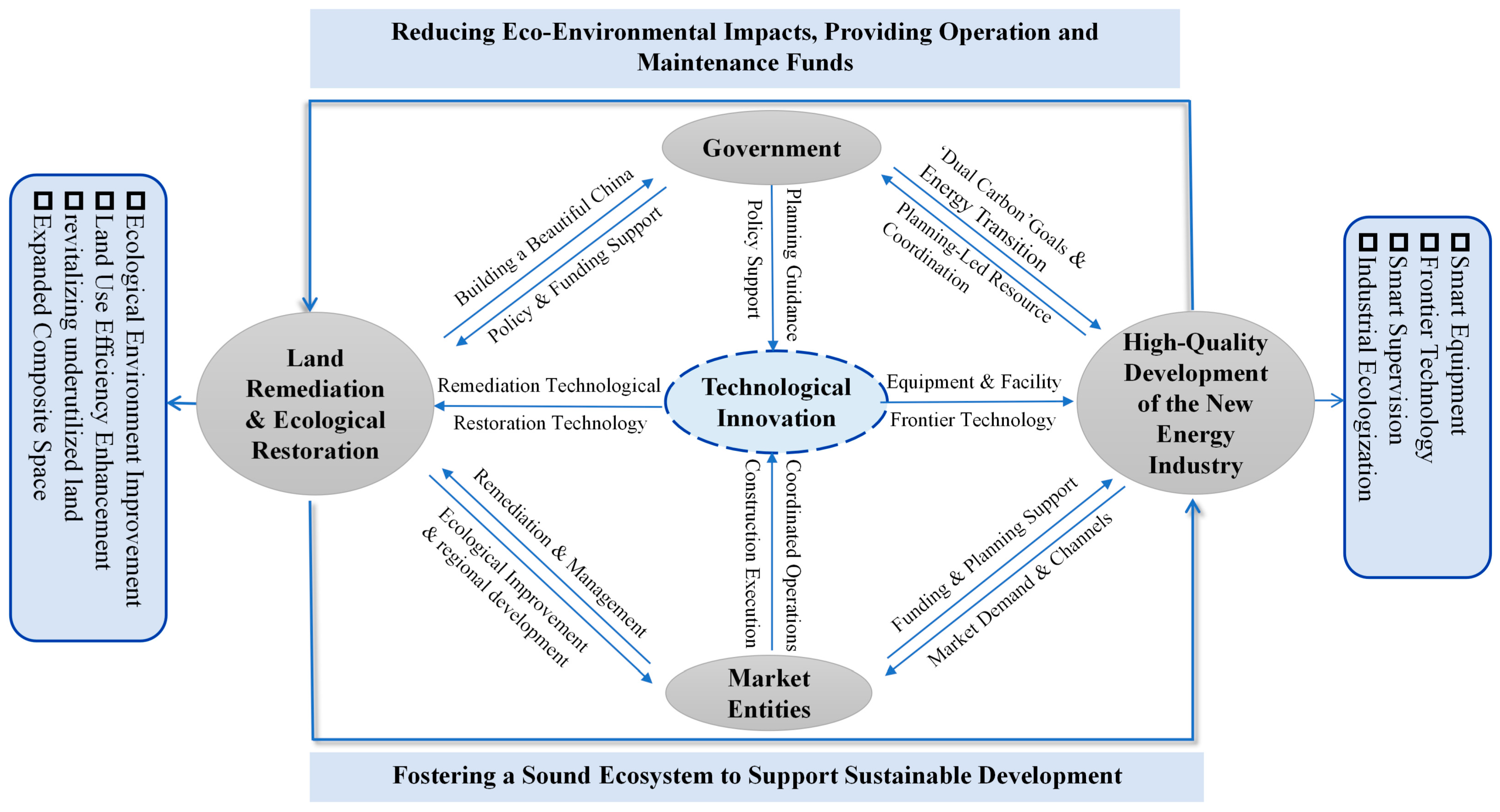
The technological innovation-led model primarily targets two categories of regions. The first comprises areas with complex terrain and geomorphology, highly variable climate conditions, and frequent geological hazards, where breakthroughs in high-altitude photovoltaic technology are required to overcome natural environmental constraints, such as southwestern Sichuan and southeastern Tibet (Figure 5). In these regions, technological innovation emphasizes high-altitude adaptive technologies, low-disturbance construction techniques, and distributed microgrid systems, with the adaptation system stressing a “small-scale and refined” distributed layout. The second category encompasses regions with abundant energy resources yet limited consumption capacity, such as the “desert-Gobi-wasteland” areas in northwestern China or regions with high new energy installation rates. In these regions, technological innovation emphasizes ultra-high voltage transmission, large-scale energy storage and multi-energy complementary systems, and electrolytic water hydrogen production coupled with green hydrogen chemical technologies, with the adaptation system stressing a centralized development model of “large-scale bases plus transmission corridors.” Guided by breakthroughs in new energy technologies, this model focuses on equipment intelligence, technological sophistication, smart supervision, and industrial ecologization, systematically addressing challenges in energy development, cross-regional transmission, and consumption. Its core characteristic is the “reconfiguration of multiple elements centered on technology.” Equipment upgrades such as larger and lighter wind turbines and high-efficiency photovoltaic modules reduce land occupation, while derivative models like “photovoltaic/wind power/hydrogen + energy storage” [35] and “photovoltaic + microgrid” [36] may transform energy development activities into processes of land value recreation. Accordingly, consolidation shifts from traditional land leveling toward the reshaping of territorial spatial functions through technological mediation [37]. In terms of spatial layout, low-disturbance technologies, including screw pile foundations and slope-adaptive siting, are emphasized to achieve intensive, efficient, and three-dimensional land use. Promoting self-consistent energy systems and value chain extension is a key priority in energy system construction. From the perspective of ecological assets, full life-cycle environmental management is implemented, with development contributing to ecological restoration. On marginal lands such as deserts, Gobi, and mining subsidence areas, new energy bases characterized by high efficiency, high added value, and low environmental impact are constructed. Within this model, new quality productive forces and investment mechanisms serve as important supporting factors for land consolidation [38]. For instance, drawing on cases such as the “hydro–wind–solar–storage” multi-energy complementary integration in Hainan Prefecture, Qinghai, and the “green power + green hydrogen” coupling project at the Ningdong Energy and Chemical Industry Base in Ningxia [34], technologies including ultra-high voltage transmission, large-scale energy storage, and hydrogen production through curtailed wind and solar power [39,40] have effectively addressed bottlenecks in local conversion, efficient storage, and long-distance transmission of new energy.

3.5. Integrated Development Model

The integrated development model primarily targets regions where ecological restoration and new energy development are equally imperative, such as the soil erosion areas in the upper and middle reaches of the Yellow River, the ecological barrier zones along rivers in southwestern China, and the upper reaches of the Yangtze River. These areas are characterized by moderate new energy resource endowments, relatively high ecological sensitivity, and diverse industry types. This model can be understood as an integrated form of the four preceding models. By coordinating regional resource endowments, ecological constraints, and industrial foundations, and supported by new technologies, it synergistically advances energy development, land consolidation, ecological protection, and industrial development. This integrated approach facilitates the coupling and utilization of multi-functional spaces, multi-stakeholder collaborative governance in consolidation, and the multi-dimensional extension and transformation of comprehensive benefits [41,42]. Taking the soil erosion area in the upper and middle reaches of the Yellow River as an example, a composite model of “photovoltaics plus ecology plus industry” has been established through implementing terrace transformation and vegetation restoration in soil erosion zones, deploying photovoltaic arrays in relatively flat areas, and developing forage-based animal husbandry beneath the panels. This approach has significantly enhanced soil erosion control effectiveness and vegetation coverage, continuously expanded new energy installed capacity, and effectively increased the income of local farmers and herdsmen. The consolidation focus lies in coordinating the implementation of new energy base construction with agricultural space integration, ecological restoration, and functional enhancement through the aligned deployment of rural revitalization, regional development planning, and new energy projects, thereby potentially enhancing the systemic benefits of land consolidation. In terms of organizational models, an enterprise-led approach under government guidance, combined with market-oriented operations and broad social capital participation, establishes a multi-stakeholder collaborative framework for investment, financing, and project operation. Resource endowment and ecological constraints serve as preconditions ensuring spatial coordination and functional alignment, while new quality productive forces and investment and financing mechanisms provide the necessary impetus.

4. Conclusions and Discussion

In the process of developing new energy industries in China’s ecologically fragile areas, multiple challenges have emerged, including a fragile ecological environment, inadequate infrastructure, a mismatch between resource supply and demand, and land use conflicts. However, with the advancement of the “dual carbon” goals and continuous breakthroughs in key technologies, these ecologically fragile areas may be well-positioned to capitalize on emerging development opportunities, with the value of new energy resources such as wind and solar becoming increasingly prominent. It was shown that new energy development and comprehensive land consolidation are mutually reinforcing, with factors such as resource endowment, ecological (environmental) constraints, new quality productive forces, and investment and financing mechanisms interacting and integrating to form diversified synergistic pathways. To mitigate potential risks in goal coordination, funding integration, technology adaptation, and multi-stakeholder collaboration, approaches such as establishing phased implementation timelines, improving the mechanism for capital feedback, strengthening pre-evaluation of technology integration, and constructing a multi-stakeholder collaborative governance framework can be adopted. These provide local governments with ideas for risk identification and response when tailoring and combining consolidation models to local conditions.
Based on an analysis of concrete practices and classified according to the primary objectives of new energy development and the dominant consolidation goals, five consolidation models have been identified. Among these, the ecological restoration-led model centers on ecological restoration, pursues moderate new energy development while enhancing ecosystem quality and stability. The resource development-led model aims to maximize the comprehensive benefits of regional resources such as wind, solar, and land. By regulating new energy enterprise access and land use standards, it achieves efficient development of new energy resources while essentially avoiding damage to—or even improving—the ecological environment. The industrial collaboration-led model is driven by existing or planned regional industrial chain demands, utilizing new energy development as a lever to undertake and extend industrial chains, thereby facilitating regional industrial transformation and upgrading. The technological innovation-led model takes new quality productive forces as its core, leveraging land consolidation to elevate the “development ceiling” of regional resources and the environment. The integrated development model, through the coordinated organization of factors including resource endowment, ecological (environmental) constraints, new quality productive forces, and investment and financing mechanisms, synergistically advances energy development, land consolidation, and industrial development. In practice, local governments, tailor their approaches based on resource endowments, ecological baselines, and development stages, often apply a “packaged” combination of multiple models, forming a policy toolkit that balances the multi-dimensional objectives of energy development, ecological protection, and industrial advancement.
Different models exhibit distinct advantages and disadvantages. The ecological restoration-led model tends to generate substantial positive ecological externalities, yet it is characterized by the longest payback period and a high reliance on policy subsidies. The resource development-led model generates the fastest economic returns, but it poses risks of secondary ecological degradation and hidden water resource depletion. The industrial collaboration-led model achieves economic multiplier effects through industrial chain extension, yet it encounters challenges such as high industrial matching thresholds and complex benefit distribution. The technological innovation-led model overcomes constraints from complex terrain and consumption bottlenecks, but it is constrained by insufficient technological maturity and high initial investment. The integrated development model facilitates synergy among multiple objectives, yet it involves the highest implementation complexity and potential risks of goal conflicts. Therefore, the selection of an appropriate model should fully consider regional resource endowments and development goals, seeking a suitable balance between ecological conservation and economic development priorities.
This study enhances the understanding of the synergistic mechanisms between the new energy industry and comprehensive land consolidation. Based on an in-depth analysis of coordinated pathways involving resource endowment, ecological constraints, and investment and financing mechanisms, it proposes five differentiated land consolidation models. These provide valuable references for large-scale new energy development in ecologically fragile areas, including desertified, Gobi, and barren lands; coal mining subsidence areas; and regions rich in wind, solar, and hydropower resources. In addition, this study examined the unidirectional impacts of new energy development on the ecological environment (e.g., the shading effects of photovoltaic panels) and four major categories of secondary ecological issues, proposing corresponding mitigation measures for each type of problem, such as optimizing photovoltaic array spacing, establishing ecological isolation belts, setting up ecological buffer zones, and adopting waterless cleaning technologies.
However, certain limitations remain. While the synergistic development pathways encompass core elements such as resource endowment, ecological baselines, technology, and investment and financing, quantitative assessments concerning the specification of different model pathways, the improvement of supporting policy systems, and social acceptance remain insufficient. Additionally, this study is positioned as a systematic analysis of synergistic mechanisms and distillation of typical models, with the comprehensive construction of a benefit assessment system not yet serving as the central content. To address this limitation, future research should consider three dimensions—energy benefits, ecological benefits, and economic benefits—to construct an “integrated benefit assessment system,” thereby providing methodological guidance and application references for subsequent in-depth research and quantitative evaluation. Beyond the points discussed above, this study is primarily based on theoretical analysis and typical case studies, lacking long-term monitoring of model implementation effects and feedback mechanisms. Future research could be strengthened in areas such as the optimization of synergistic pathways and models, comprehensive monitoring and effect evaluation of typical models, and multi-stakeholder coordination mechanisms. This would support the coordinated advancement of new energy development and comprehensive land consolidation in ecologically fragile areas.
The five land consolidation models proposed in this study require effective integration with the current territorial spatial planning system. First, regarding spatial layout, the siting of new energy bases should prioritize avoiding ecological protection red lines and permanent basic farmland; where occupation is unavoidable, strict implementation of “occupation-compensation balance” and “ecological compensation” requirements is mandatory. Within urban development boundaries, priority should be accorded to distributed photovoltaics and building-integrated photovoltaic models, while agricultural spaces should encourage compound utilization patterns such as agrivoltaics and photovoltaic grazing. Second, for ecologically sensitive areas, a three-tier control mechanism of “avoidance-mitigation-compensation” should be established: priority should be given to avoiding sensitive areas such as core zones of nature reserves; where avoidance is infeasible, technical optimization should be employed to reduce the disturbance area; and unavoidable ecological impacts should be addressed through off-site compensation or ecological restoration. Finally, it is recommended to overlay the suitability assessment for new energy development, the potential assessment for comprehensive land consolidation, and the results of the “dual evaluation” to formulate a “new energy plus land consolidation” synergistic zoning scheme, which can be incorporated into the “One Map” implementation and supervision system of territorial spatial planning, thereby achieving closed-loop management throughout the entire process from planning formulation to project implementation.

Author Contributions

Conceptualization, Y.R. and Y.L.; methodology, Y.R., L.T. and Y.L.; data curation, L.T., Z.W. and L.Y.; writing—original draft, Y.R. and Z.W.; writing—review and editing, L.T. and Y.L.; investigation, Y.R., L.Y. and Z.W.; funding acquisition, Y.L. All authors have read and agreed to the published version of the manuscript.

Funding

This research was funded by the National Key Research and Development Program of China (grant number: 2022YFC3802805).

Data Availability Statement

All data and materials are available upon request.

Acknowledgments

We would like to thank the reviewers for their thoughtful comments that helped improve the quality of this work.

Conflicts of Interest

The authors declare no conflicts of interest.

References

  1. Guo, J.; Fast, V.; Teri, P.; Calvert, K. Integrating land-use and renewable energy planning decisions: A technical mapping guide for local government. ISPRS Int. J. Geo-Inf. 2020, 9, 324. [Google Scholar] [CrossRef]
  2. Ahmad, M.; Zeeshan, M.; Khan, J.A. Life cycle multi-objective (geospatial, techno-economic, and environmental) feasibility and potential assessment of utility scale photovoltaic power plants. Energy Convers. Manag. 2023, 291, 117260. [Google Scholar] [CrossRef]
  3. Chen, Q.; Chi, H.M.; Ding, W.; Yang, H.; Wu, J.; Yang, Y.; Wu, X.; Zhang, Y.; Ji, B.; Li, Y. Theory and strategies for vegetation conservation and ecological restoration in a large-scale photovoltaic power station in the southern Tengger Desert. J. Desert Res. 2024, 44, 123–132. (In Chinese) [Google Scholar]
  4. Zou, C.; Chen, Y.; Xiong, B.; Liu, H. Mission of new energy under carbon neutrality goal in China. Bull. Chin. Acad. Sci. 2023, 38, 48–58. (In Chinese) [Google Scholar]
  5. Yan, J.; Zhao, Y. Research hotspot and prospect of ecologically vulnerable area in China in the past three decades. J. Nanjing Norm. Univ. (Nat. Sci. Ed.) 2020, 43, 74–85. (In Chinese) [Google Scholar]
  6. Wang, C.; Wu, X.; Fu, B.; Han, X.; Chen, Y.N.; Wang, K.L.; Zhou, H.K.; Feng, X.M.; Li, Z.S. Ecological restoration in the key ecologically vulnerable regions: Current situation and development direction. Acta Ecol. Sin. 2019, 39, 7333–7343. (In Chinese) [Google Scholar] [CrossRef]
  7. Zhang, W.; Bai, K.; Lu, Z.; Li, H. Analysis of the challenges and future morphological evolution of super large-scale renewable energy base. J. Glob. Energy Interconnect. 2023, 6, 10–25. (In Chinese) [Google Scholar]
  8. Sturchio, M.A.; Knapp, A.K. New Research Shows How Solar Arrays Can Aid Grasslands during Drought. Environ. Res. Lett. 2025, 20, 064047. [Google Scholar] [CrossRef]
  9. Grodsky, S.M.; Campbell, J.W.; Roeder, K.A.; Waite, E.S.; Wright, E.R.; Johnston, M.A. Mixed Responses of Tenebrionid Beetles to Solar Energy Development in the Mojave Desert. J. Arid Environ. 2024, 225, 105243. [Google Scholar] [CrossRef]
  10. Cole, S.G. Wind Power Compensation Is Not for the Birds: An Opinion from an Environmental Economist. Restor. Ecol. 2011, 19, 147–153. [Google Scholar] [CrossRef]
  11. Pickering, J.; Chalaye, P. Can Renewable Energy Zones Become Regional Equity Zones? Policy Coherence and Social Equity in the Electricity Infrastructure Roadmap in New South Wales, Australia. Energy Res. Soc. Sci. 2025, 130, 104415. [Google Scholar] [CrossRef]
  12. Wang, Y.; Ding, Q.; Hao, X.; Yang, H.; Qu, Z. A Global Assessment of the Risks to Biodiversity and Indigenous People’s Lands from Solar and Wind Farms. Geogr. Sustain. 2025, 6, 100371. [Google Scholar] [CrossRef]
  13. Guo, C.; Han, Z.; Li, A.; Zhong, S. The typical models of ecological management and development and utilization in the Hobq Desert. J. Northwest Norm. Univ. (Nat. Sci.) 2017, 53, 112–118. (In Chinese) [Google Scholar]
  14. Sui, X.; Wei, Y.; Luo, X.; Wu, S. Emergence of a new pattern of ecological solar photovoltaics (Eco-PV) in ecologically fragile areas driven by carbon peak and neutrality targets in China. Acta Energiae Solaris Sin. 2022, 43, 56–63. (In Chinese) [Google Scholar]
  15. Zhong, R.; Wang, J.; Xu, T.; Xi, F.; Han, M.; Hu, Q.; Bing, L.; Yin, Y. Assessment of carbon reduction and sink enhancement potential of photovoltaic + mining ecological restoration model. Chin. J. Appl. Ecol. 2024, 35, 1379–1387. (In Chinese) [Google Scholar]
  16. Liu, Y.; Yang, Q.; Su, J.; Zhou, F. Analysis of coordinated development of photovoltaic power generation and “Three-North” project construction. Chin. J. Grassl. 2024, 46, 122–129. (In Chinese) [Google Scholar]
  17. Jin, Y.; Ma, J.; Zhu, S.; Li, N. Renewable energy development and multi-energy complementation, taking Qinghai as an example. J. Tsinghua Univ. (Sci. Technol.) 2022, 62, 1357–1365. (In Chinese) [Google Scholar]
  18. Xiao, J.; Si, J.; Liu, C.; Li, X.; Xi, H.; Yu, T.; Zhang, C.; Zhao, C.; Zhu, M.; Jia, B. Concept, connotation and development model of desert energy ecosphere. J. Desert Res. 2021, 41, 11–20. (In Chinese) [Google Scholar]
  19. Li, Y.; Kong, L. Developing solar and wind power generation technology to accelerate China’s energy transformation. Bull. Chin. Acad. Sci. 2019, 34, 426–433. (In Chinese) [Google Scholar]
  20. Yan, Q.; Chen, Y.; Wang, A.; Wang, G.S.; Yu, W.J.; Chen, Q.S. Development obstacles of new energies in China and countermeasures: A review on global current situation. Acta Geosci. Sin. 2010, 31, 759–767. (In Chinese) [Google Scholar]
  21. Chen, Y.; Li, Y.; Wang, X.; Yao, C.; Niu, Y. Risk and countermeasures of global change in ecologically vulnerable regions of China. J. Desert Res. 2022, 42, 148–158. (In Chinese) [Google Scholar]
  22. Li, S.; Zhang, Y.; Wang, Z.; Liu, L.; Li, D.; Li, Y.; Wang, Y. Some ideas on the development of new energy geography. Acta Sci. Nat. Univ. Pekin. 2025, 1–19. (In Chinese) [Google Scholar]
  23. Liu, M. Land use dilemmas of implementing renewable energy development plans under the ‘dual carbon’ goals and their countermeasures. China Popul. Resour. Environ. 2022, 32, 21–30. (In Chinese) [Google Scholar]
  24. Chen, H.; Li, H.; Xu, Y.; Xu, D.; Wang, L.; Zhou, X.; Chen, M.; Hu, D.; Lin, H.; Li, X. Research progress on energy storage technology in 2024. Energy Storage Sci. Technol. 2025, 14, 2149–2192. (In Chinese) [Google Scholar]
  25. Zhao, T.; Liu, Q.; Chen, Y.; Wang, Y.; Wu, X.; Kang, L. Development trend and prospect of green hydrogen production from renewable energy power generation. Acta Energiae Solaris Sin. 2025, 46, 39–48. (In Chinese) [Google Scholar]
  26. Xu, C.; Liu, W.; Song, W.; Li, H. Thoughts on differentially carrying out land ecological restoration. J. Nat. Resour. 2021, 36, 384–394. (In Chinese) [Google Scholar] [CrossRef]
  27. Wang, Y.; Wang, X.; Zhu, Z. Reflections on the evolutionary direction of new-quality productive forces, renewable energy, and national spatial planning: A discussion focused on wind and solar energy. Urban Plan. Forum 2025, 3, 43–51. (In Chinese) [Google Scholar]
  28. Yu, J.; Liu, S.; Shi, X.; Qi, Y. The theoretical logic, business model and experience enlightenment of enterprise participation in desertification control under the multi-governance model. J. Desert Res. 2024, 44, 244–252. (In Chinese) [Google Scholar]
  29. Huang, P.; Yang, H.; Zhang, K.; Yuan, C.; Xie, S. Research on development of “PV + coal mining subsidence area” mode in China. Sol. Energy 2024, 9, 7–14. (In Chinese) [Google Scholar]
  30. Hu, Z.; Zhao, Y. Principle and technology of coordinated control of eco-environment of mining areas and river sediments in Yellow River watershed. J. China Coal Soc. 2022, 47, 438–448. (In Chinese) [Google Scholar]
  31. Li, S.; Zhao, J.; Li, Z.; Zhang, F.; Bai, J.; Yang, X. Research progress on ecological impacts of photovoltaic systems in deserts, Gobi and desertification lands. J. Environ. Eng. Technol. 2025, 15, 709–716. (In Chinese) [Google Scholar]
  32. Han, J. Unused land development expands new space for new energy industry: Taking Ningxia, Qinghai and Shaanxi as examples. China Land. 2016, 5, 44–45. (In Chinese) [Google Scholar]
  33. Zhang, L.; Liu, Q.; Zhao, X.; Gao, Y. Research on renewable energy penetration in wind and solar resource-intensive areas from the perspective of power demand growth and load flexibility enhancement. Glob. Energy Interconnect. 2024, 7, 454–462. (In Chinese) [Google Scholar]
  34. National Energy Administration. China Hydrogen Industry Development Report; National Energy Administration: Beijing, China, 2025. (In Chinese) [Google Scholar]
  35. Zhang, C.; Hu, P.; Yin, G.; Yan, W.; Xu, S.; Cao, R.; Feng, Y.; Zhao, M.; Yang, L.; Jin, Z. Comprehensive review and future trend outlook on energy utilization technologies in low-carbon energy systems. Strateg. Study CAE 2024, 26, 164–175. (In Chinese) [Google Scholar]
  36. Liu, C.; Zhuo, J.; Zhao, D.; Li, S.; Chen, J.; Wang, J.; Yao, Q. A review on the utilization of energy storage system for the flexible and safe operation of renewable energy microgrids. Proc. CSEE 2020, 40, 1–18. (In Chinese) [Google Scholar]
  37. Institute for Carbon Neutrality, Tsinghua University. Technology Outlook on Wind and Solar Power Toward China’s Carbon Neutrality Goal; Institute for Carbon Neutrality, Tsinghua University: Beijing, China, 2024. (In Chinese) [Google Scholar]
  38. Shi, D.; Shi, K. The role of new energy in developing new quality productivity. China Energy 2024, 46, 5–12. (In Chinese) [Google Scholar]
  39. Ren, S.; Bao, R.; Gao, Z. Arrival of distant power: The impact of ultra-high voltage transmission projects on energy structure in China. Energy 2025, 316, 134527. [Google Scholar] [CrossRef]
  40. Li, J.; Wei, Y.; Liu, L. Hydrogen production potential from wind power in China by 2060. Resour. Conserv. Recycl. 2025, 222, 108492. [Google Scholar] [CrossRef]
  41. Song, C.; Guo, Z.; Liu, Z.; Zhang, H.; Liu, R.; Zhang, H. Application of photovoltaics on different types of land in China: Opportunities, status and challenges. Renew. Sustain. Energy Rev. 2024, 191, 114146. [Google Scholar] [CrossRef]
  42. Lyv, F.; Wu, J.; Yu, Z.; Gong, C.; Di, H.J.; Pan, Y. Quantifying the potential triple benefits of photovoltaic energy development in reducing emissions, restoring ecological resource, and alleviating poverty in China. Resour. Conserv. Recycl. 2025, 215, 108110. [Google Scholar]
Figure 1. Coordinated pathways for new energy development and comprehensive land consolidation. The framework centers on the interaction mechanism of land resource matching, industrial development suitability, and consolidation rationality. It consists of four layers: resource endowment (foundation), ecological constraints (boundary), new quality productive forces (driver), and investment/financing mechanisms (guarantee). Arrows denote direct or indirect feedback pathways.
Land 15 00713 g001
Figure 2. Ecological restoration-led land consolidation model.
Land 15 00713 g002
Figure 3. Resource development-led land consolidation model.
Land 15 00713 g003
Figure 4. Industrial collaboration-led land consolidation model.
Land 15 00713 g004
Figure 5. Technological innovation-led land consolidation model.
Land 15 00713 g005
Table 1. Classification of comprehensive land consolidation models synergizing new energy industry development.
ModelPositioningConcept and PracticesAdvantages and Disadvantages
Ecological Restoration-led ModelSeverely degraded ecosystems (mining subsidence, industrial wasteland) with abundant new energy resource.“Self-sustaining” governance with revenue feedback to ecology.
Practices: (1) multi-stakeholder governance with green finance innovation; (2) Micro-consolidation and optimized PV design for windbreak/sand fixation.
Advantages: significant ecological benefits, revenue feedback to restoration;
Disadvantages: long payback period, limited governance scale, high coordination costs.
Resource Development-led ModelLarge-scale developable regions (“desert-Gobi-wasteland,” saline–alkali flats) serving national energy security strategy.Development-first with embedded consolidation for parallel economic and ecological gains.
Practices: (1) central state-owned enterprise (SOE)-led organization with benefit-sharing mechanisms; (2) revenue feedback to restoration and infrastructure.
Advantages: high development efficiency, rapid economic returns, serves national energy strategy;
Disadvantages: risk of secondary ecological degradation, hidden water consumption, low social participation.
Industrial Collaboration-led ModelRegions with sound industrial foundations and urgent transformation needs.Industrial chain extension achieving “energy-promoting-industry, industry-driving-consolidation.”
Practices: (1) government-led planning with new quality productive forces support; (2) innovative models such as “agrivoltaics” and “photovoltaic grazing.”
Advantages: industrial chain extension, economic multiplier effects;
Disadvantages: high industrial matching thresholds, risk of efficiency loss in agrivoltaics, high cross-sector costs.
Technological Innovation-led ModelComplex terrain/climate regions or energy-rich but consumption-constrained areas.Technological breakthroughs overcoming natural constraints with low environmental impact.
Practices: (1) integrated energy hubs and “green electricity plus” chains; (2) low-disturbance technologies (screw piles, slope-adaptive construction).
Advantages: overcomes natural constraints, low environmental disturbance, enables complex terrain development;
Disadvantages: insufficient technological maturity, high initial investment, limited technology spillover.
Integrated Development ModelRegions with equally important ecological and energy demands (soil erosion areas, ecological barriers).Coordinated advancement of energy, consolidation, ecology and industry with multi-functional spatial coupling.
Practices: (1) multi-stakeholder collaborative frameworks;
(2) synchronized implementation of new energy bases with agricultural integration and ecological restoration.
Advantages: multi-objective synergy, highest spatial coupling;
Disadvantages: highest implementation complexity, difficult performance evaluation, limited applicability.
Disclaimer/Publisher’s Note: The statements, opinions and data contained in all publications are solely those of the individual author(s) and contributor(s) and not of MDPI and/or the editor(s). MDPI and/or the editor(s) disclaim responsibility for any injury to people or property resulting from any ideas, methods, instructions or products referred to in the content.