


Abstract
Climate change and population growth are intensifying water scarcity in arid regions, yet previous analyses focusing on a single driver may not fully capture the compounded effects of climatic and anthropogenic factors. This study integrates water-balance analysis, trend analysis, and correlation-based statistical analysis to examine the combined effects of hydroclimatic anomalies and socioeconomic activities on water resource dynamics in ecologically vulnerable Northwest China. Our results show that despite increasing precipitation, warming-associated increases in evapotranspiration, together with irrigation-based water use accounting for 89.8% of total consumption, have offset the potential runoff gains, suggesting that agricultural water use is a major anthropogenic contributor to regional water stress. Based on these findings and a comparative review of representative arid-region practices in Israel, Australia, and Saudi Arabia, we propose a technology-market-institution tripartite governance framework for Northwest China. This framework is intended to support more proactive adaptation in regional water management and to provide a context-specific reference for advancing SDG 6 and SDG 13 in dryland regions.
1. Introduction
Drylands possess the world’s largest complex of desert, grassland, shrubland, and savanna biomes, covering approximately 41% of the Earth’s land surface and supporting over 38% of the global population (>2 × 10⁹ people), with about 90% residing in low- and middle-income countries [1,2]. These areas provide essential ecosystem services, such as water and food supply, soil nutrient maintenance, and biodiversity conservation [3]. Climate change is altering ecological processes and socioeconomic systems in drylands, thereby intensifying the pressure on water availability and adaptation capacity. By 2050, global demand for water resources will continue to increase by more than 40%, with conditions being more severe in arid regions [4]. Therefore, quantifying water resources in a changing environment is crucial for guiding adaptation strategies aimed at achieving sustainable and efficient water use.
As environmentally sensitive and economically fragile regions, drylands are highly vulnerable to desertification induced by climate change and human activities, facing challenges to sustainable development [5,6,7]. Particularly under global warming, meteorological factors such as temperature, precipitation, and evapotranspiration are undergoing significant transformations. These changes directly impact regional evapotranspiration and runoff processes, thereby affecting the hydrological cycle [8,9]. Concurrently, the influence of human activities on the hydrological cycle in catchment areas is becoming increasingly pronounced [10]. The development of human society relies on the large-scale consumption of natural resources and rapid transformation of materials, with water resource consumption being particularly evident. Over the past 50 years, water consumption for agriculture and industry has doubled and increased sevenfold, respectively [11,12]. Consequently, changes in global water resources are expected to exacerbate conflicts related to water allocation and productivity, particularly in water-dependent drylands [13,14,15].
Drylands are regions with a dryness index below 0.65 [16]. By this definition, China possesses one of the world’s largest dryland areas, which is primarily located in the inland basins of the Northwest. IPCC assessments indicate that global warming increases the risk of hydrometeorological extremes, including droughts and heavy precipitation events, thereby amplifying water-management challenges in vulnerable dryland regions [17]. In arid regions such as the Northwest, limited precipitation events have led to water resource shortages, decreased productivity, and land degradation, making them some of the areas that are most severely affected by global warming and drought events [18]. Therefore, it is crucial to deeply understand the dynamics of water resources in the Northwest region. Previous research has predominantly examined meteorological elements in the Northwest, such as precipitation [19,20] and temperature [21,22], or the impact of human activities [23,24], etc. While previous studies have provided important insights into individual climatic or anthropogenic factors, a more integrated analysis is still needed to clarify how hydroclimatic variability and human water use jointly shape water resource changes in arid Northwest China.
This study aims to identify the main hydroclimatic and socioeconomic factors associated with water resource changes in Northwest China and to provide evidence-based support for regional water management under climate warming and intensified human water use. This study examines key hydroclimatic variables, including precipitation, temperature, evapotranspiration, and runoff, together with major patterns of human water use, to explore their associations with regional water resource change. By combining water-balance interpretation, trend analysis, and correlation-based analysis, the long-term dynamics of key variables are examined. In addition, the study draws on international cases from representative arid regions to discuss context-specific adaptation pathways for Northwest China. It offers scientific references for water resource management and development in the Northwest Arid Region of China.
2. Study Area and Methods
2.1. Study Area
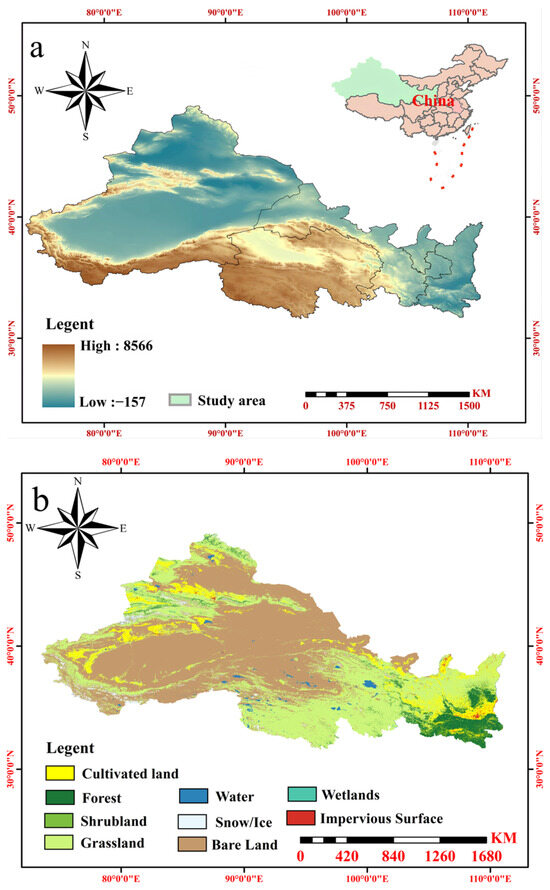
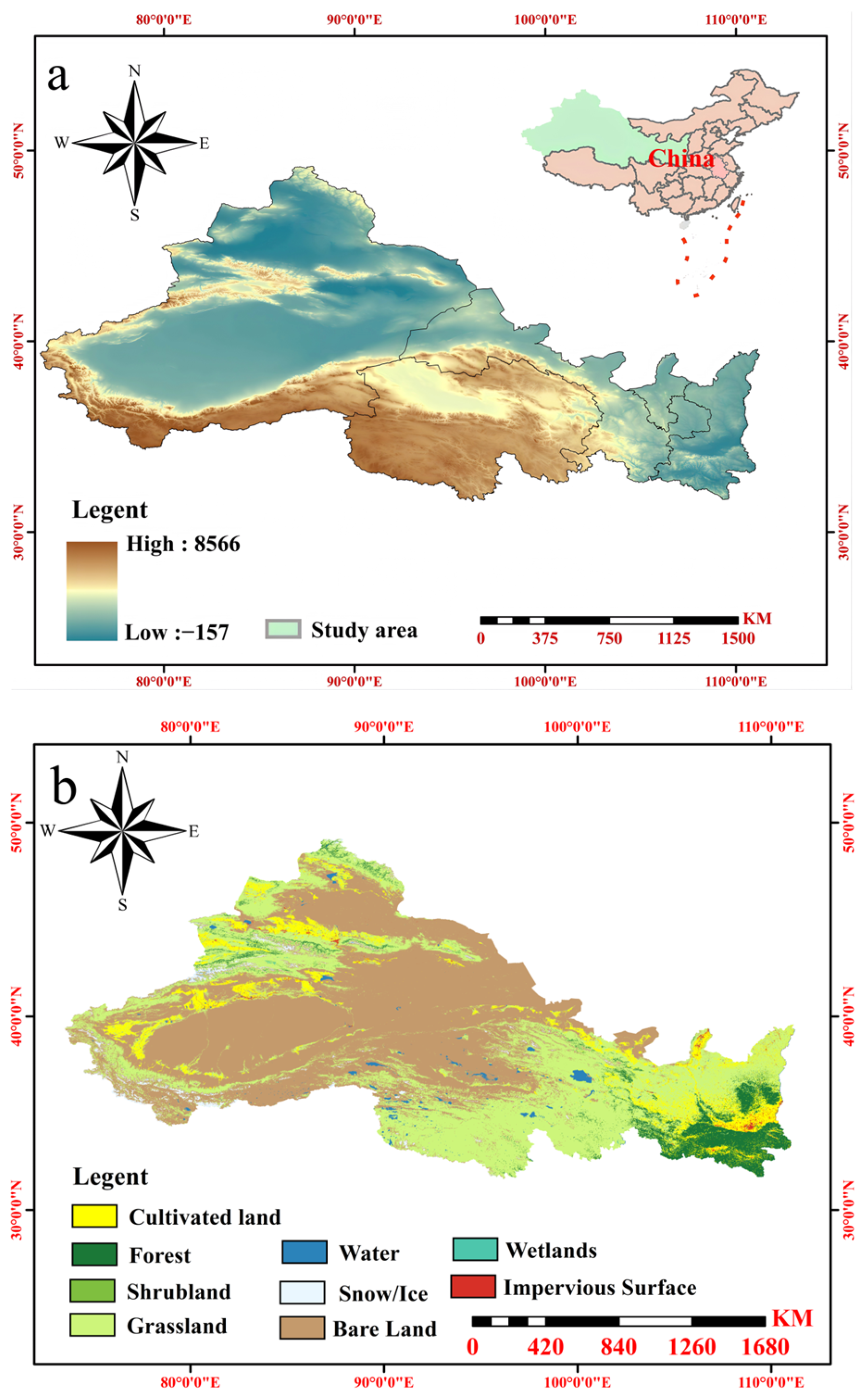
The geographical location of the Northwest Arid Region is between 73.41° and 120° E, 32.65–49.16° N, with an elevation range from −188 m to 8562 m (Figure 1). This area spans multiple provinces, including Shaanxi, Gansu, Ningxia, Qinghai, and Xinjiang, with an approximate total area of 3.08 million km2. This region constitutes the eastern extension of the Eurasian mid-latitude drylands, the world’s largest contiguous arid zone, stretching from North Africa to Central Asia [25]. Characterized by hyper-aridity (mean annual precipitation <200 mm vs. potential evapotranspiration >2000 mm), these areas exhibit extreme ecological vulnerability, with vegetation coverage below 15% in desert margins and soil erosion rates exceeding 5000 t/km2/yr in loess plateaus [25]. This area is one of the most sensitive regions to global changes [26]. Consequently, vast deserts and Gobi dune landscapes have formed in this region, with the primary land use types being desert, grassland, and cultivated land (Figure 1b). The Northwest Arid Region is primarily characterized by inland rivers, with major water sources including glacier meltwater from mountainous areas, rainfall from forested regions in mid-mountain areas, and water from rock fractures in lower mountainous areas [27]. Most rivers originate in mountainous headwater areas, and their flows are progressively redistributed and attenuated across downstream plains, oasis systems, and desert environments. In agricultural areas, irrigation water is mainly supplied by surface-water diversion from mountain-fed inland rivers and reservoirs, supplemented by groundwater abstraction and, locally, small-scale rainwater-harvesting practices. Water is crucial for connecting the mountain–oasis–desert ecosystems of the Northwest Arid Region.
Figure 1.
Study area in Northwest China: (a) elevation and spatial extent of the study region and (b) land-use distribution of the study region.
2.2. Data Source
The elevation data used in this study were derived from the GDEMV3 30 m digital elevation model provided by the Geospatial Data Cloud platform. Hydroclimatic datasets were obtained from the National Tibetan Plateau Scientific Data Center platform. Specifically, evapotranspiration and runoff were analyzed for 1985–2014, precipitation was analyzed for 2000–2022, and temperature was analyzed for 1983–2022, according to the full available period of each dataset used in this study. The official statistical data on the total water resources and water consumption in Northwest China were obtained from the official websites of the Shaanxi Provincial Water Resources Department, Gansu Provincial Water Resources Department, Qinghai Provincial Water Resources Information Official Website, Ningxia Hui Autonomous Region Water Resources Department, Xinjiang Uygur Autonomous Region Water Resources Department, and the Ministry of Water Resources of the People’s Republic of China Water Resources Bulletin. Specifically, the total water resources were analyzed for the period covered by the official statistical bulletins used in this study, whereas sectoral water-use statistics were analyzed for the period for which comparable sectoral records were available.
All datasets underwent necessary preprocessing to ensure compatibility and accuracy for analysis. The digital elevation model (DEM) was processed in ArcGIS 10.8 for projection unification, correction of anomalous values, and spatial resampling to a consistent grid resolution. Raster datasets (evapotranspiration, runoff, precipitation, and temperature) were processed using ArcGIS and scripting tools, including spatial alignment, masking to the study-region boundary, temporal aggregation to annual values, and quality control. Because the datasets used in this study were obtained from multiple sources with different update cycles and reporting systems, each variable was analyzed over its full available period, rather than being forcibly truncated to a single uniform time span. Therefore, the analyses in this study are complementary rather than fully time-aligned, and the results should be interpreted as evidence from a multi-source, multi-period analytical framework, rather than from a single time-aligned regression panel.
2.3. Research Framework
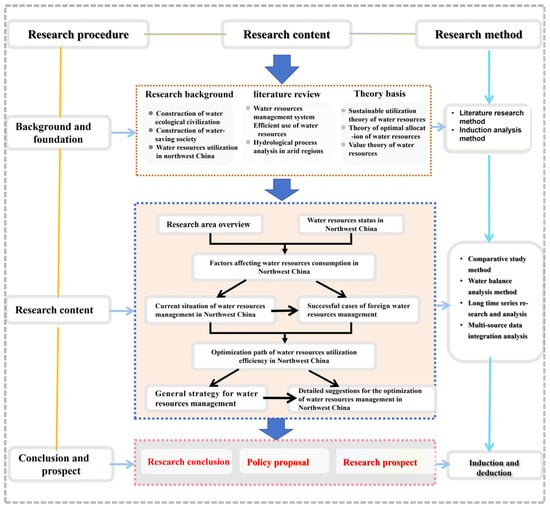
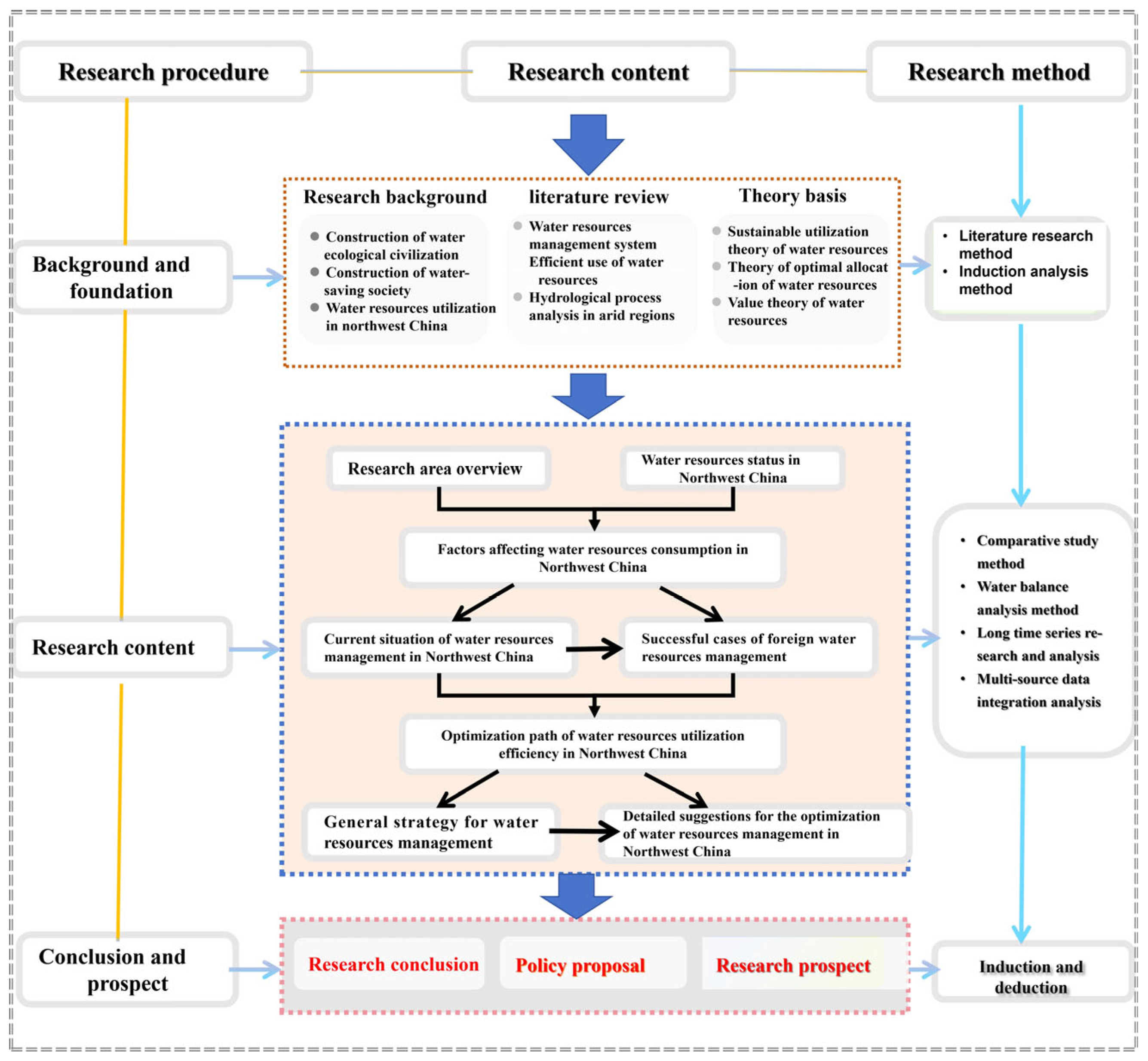
This study employs an integrated analytical approach to systematically investigate water resource dynamics in Northwest China’s arid regions, as outlined in Figure 2. The spatiotemporal characteristics of key hydroclimatic variables were analyzed using raster-based spatial statistics in ArcGIS over the full available period of each dataset, including the calculation of long-term means and spatial anomaly patterns. Specifically, evapotranspiration and runoff were examined for 1985–2014, precipitation for 2000–2022, and temperature for 1983–2022. Temporal trends were evaluated using the Mann–Kendall test within the available time window of each variable, with statistical significance assessed at p < 0.05. To explore the relative roles of potential drivers, the study combined the water-balance interpretation with correlation-based comparative analysis of hydroclimatic factors (e.g., precipitation and temperature) and socioeconomic indicators (e.g., agricultural water use), while acknowledging that these variables were not available over a fully aligned common time span. This integrated analysis was used to identify the plausible joint influences of hydroclimatic and socioeconomic variables on recent water resource changes through cross-dataset interpretation, rather than strict time-aligned attribution. Finally, building on these analytical findings, the study conducted a structured comparative analysis of water management paradigms in three benchmark arid regions: Israel (technological innovation), Australia (market mechanisms), and Saudi Arabia (unconventional water development). This comparison was used to discuss the potential applicability and limitations of selected interventions in light of Northwest China’s socioeconomic, institutional, and ecological conditions. Accordingly, each variable was analyzed over its full available period, and differences in the time range among the figures reflect the data availability and source characteristics, rather than direct one-to-one temporal comparison across all variables.
Figure 2.
Research framework.
3. Water Resource Dynamics in Northwest China’s Arid Region
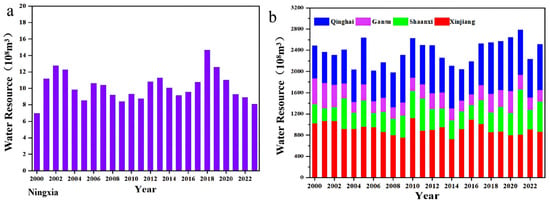
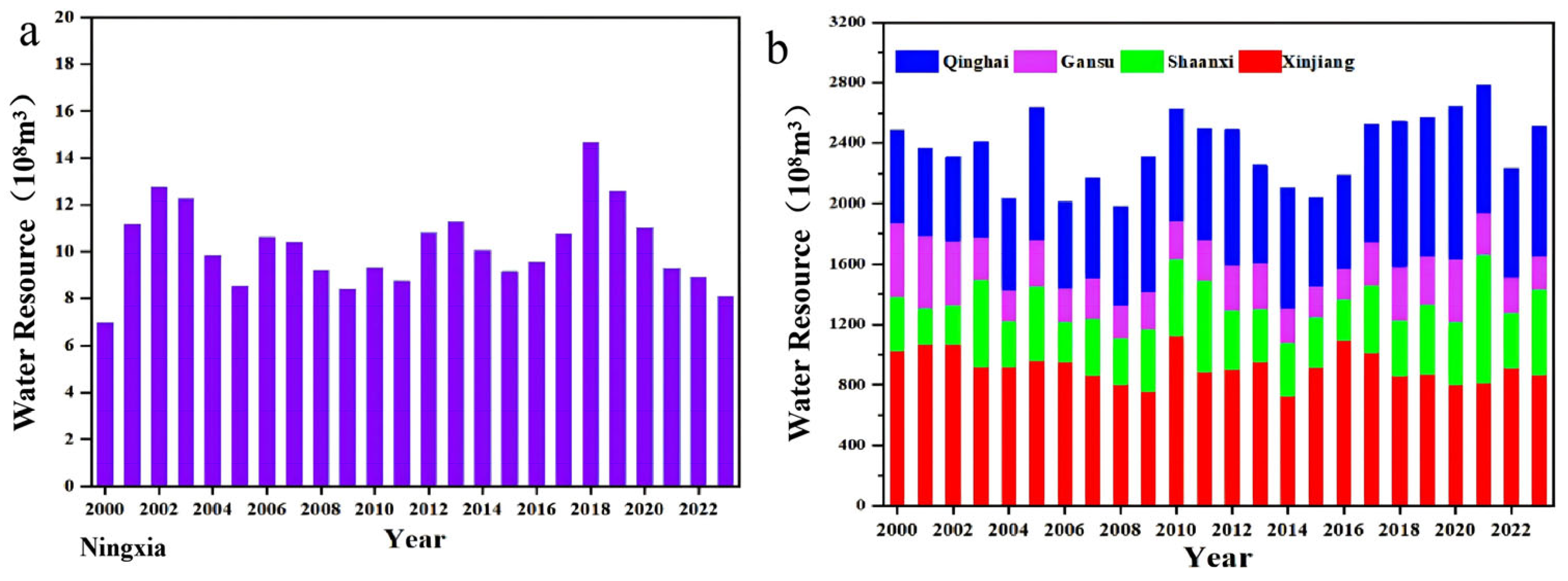
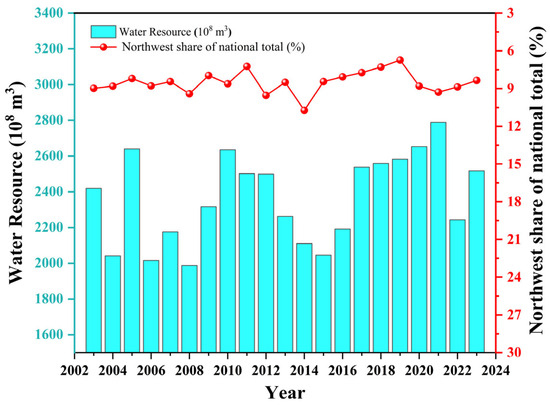
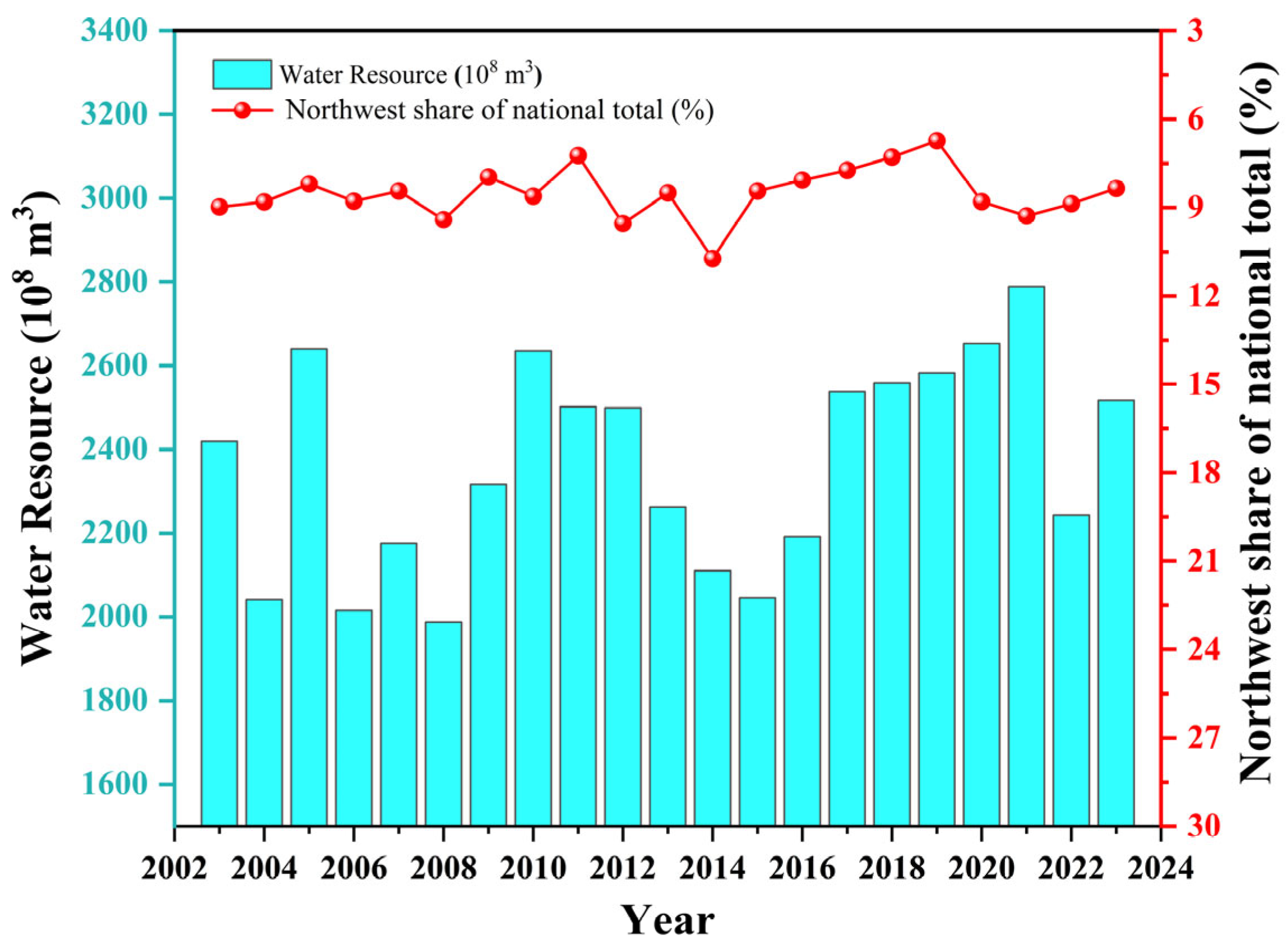
Figure 3 presents the interannual changes in water resources across the five northwestern provinces during the study period covered by the statistical bulletins. It can be seen from the figures that there are significant regional differences in water resource distribution across regions. Additionally, the total water resources in the Northwest Arid Region fluctuate substantially, with an average annual amount of 237.4 × 10¹¹ m3, accounting for less than 10% of the national total (Figure 4), although the region covers approximately one-third of the country’s land area. Therefore, this section examines how hydroclimatic variables (precipitation, evapotranspiration, and runoff), together with key socioeconomic factors, are associated with water resource patterns in Northwest China, mainly through water-balance interpretation and comparative statistical analysis [28,29]. Because the hydroclimatic and statistical datasets were available for different periods, the following subsections interpret each variable within its own observation window and then synthesize the patterns across datasets.
Figure 3.
Change in total water resources in northwestern provinces from 2003 to 2023 (108 m3): (a) total water resources in Ningxia; (b) total water resources in Qinghai, Gansu, Shaanxi, and Xinjiang.
Figure 4.
Changes in total water resources in Northwest China and its share in the national total from 2003 to 2023 (108 m3).
3.1. Hydrological–Climatic Dynamics in Arid Northwest China
The spatiotemporal heterogeneity of the climate system primarily modulates water resource variations in Northwest China’s arid regions. As a predominantly inland arid region composed of endorheic basins and catchments, its hydrological processes are characterized by limited precipitation inputs, high potential evapotranspiration, and strong dependence on cryospheric meltwater contributions. Using the available hydroclimatic datasets, this section examines the long-term characteristics of precipitation, evapotranspiration, and runoff dynamics in the study region.
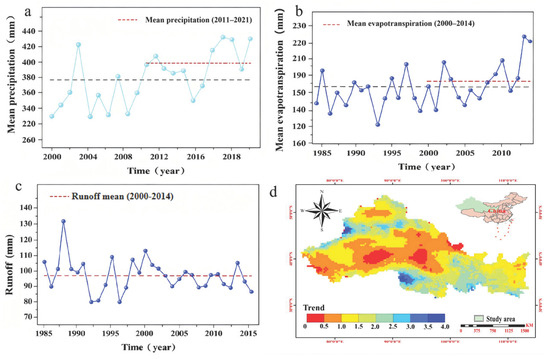
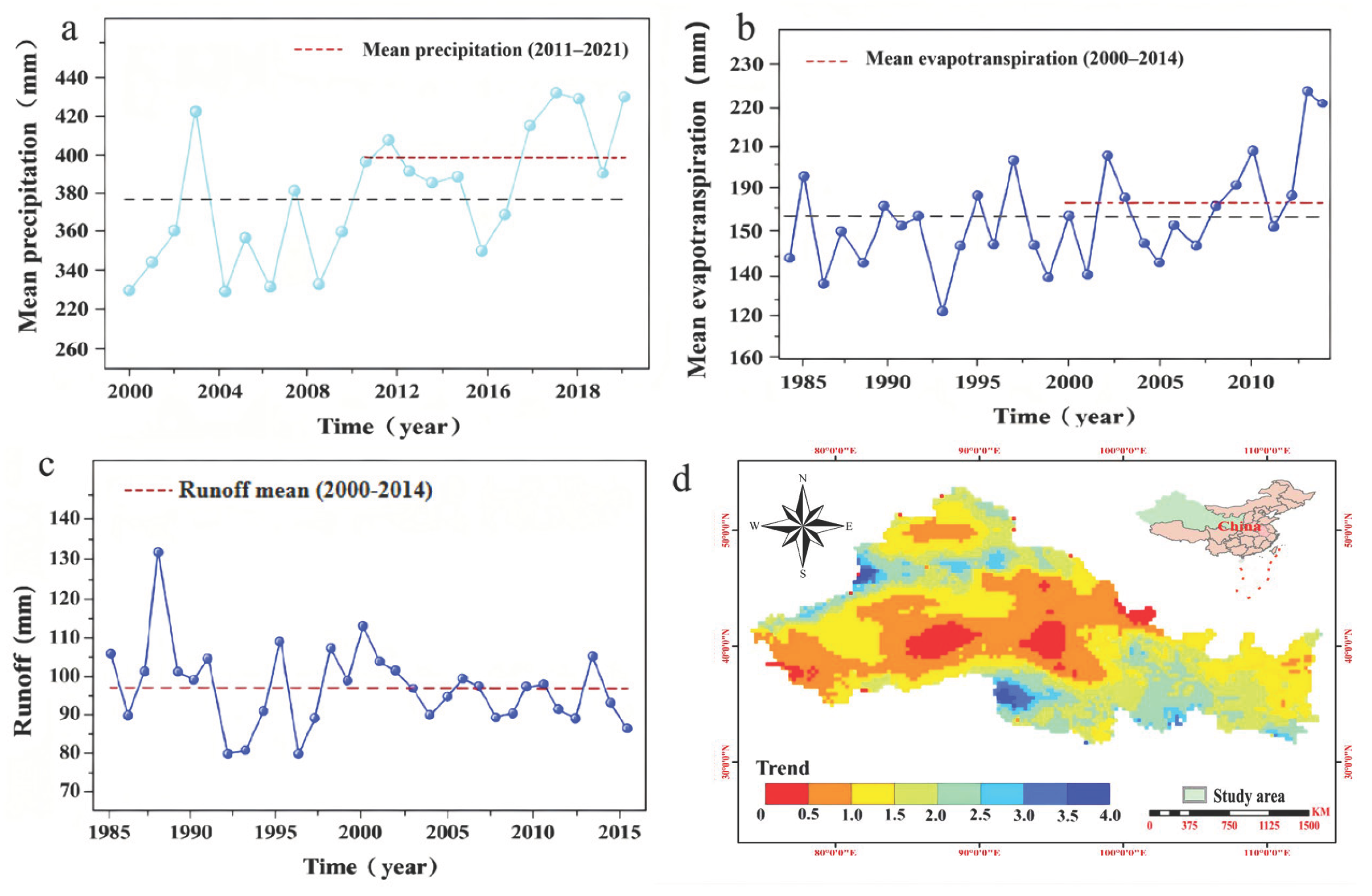
Precipitation can directly impact the accumulation of regional water resources [30,31]. Figure 5a shows the annual precipitation series for 2000–2022. The results indicate that during the study period, precipitation in the arid regions of Northwest China showed an increasing trend, with this trend becoming more pronounced starting from 2010. The increasing precipitation trend likely contributed positively to the regional water availability during the same period. This is generally consistent with recent findings on the warming and humidification trend in Northwest China [32]. However, the precipitation record used here is relatively short for dryland climate assessment, given the strong interannual and interdecadal variability of rainfall in arid regions. Therefore, the observed increase should be interpreted with caution, and as evidence from the available study period rather than as definitive proof of a long-term monotonic increase, because part of the signal may reflect natural alternation between relatively dry and relatively wet phases.
Figure 5.
(a) Annual precipitation series for 2000–2022; (b) annual evapotranspiration series for 1985–2014; (c) annual runoff series for 1985–2014; and (d) spatial anomaly pattern of evapotranspiration (mm).
Evapotranspiration (ET) is a major water-loss term in the regional water-balance framework. Previous studies have reported increasing evapotranspiration in many regions under climate warming and intensified human water use; however, the magnitude and mechanisms vary across datasets and study areas. Since 1985, the amount of evapotranspiration in the arid region of Northwest China has been continuously increasing (Figure 5b). The mean evapotranspiration during 2000–2014 (167.08 mm/yr) is higher than the long-term mean for 1985–2014. This suggests that increasing evapotranspiration has likely intensified the pressure on regional water availability in recent years. In terms of spatial distribution (Figure 5d), due to the response to changes in precipitation, evapotranspiration in the Northwest Arid Region of China has also shown a general positive anomaly (i.e., the mean evapotranspiration from 2000 to 2014 generally exceeds the mean evapotranspiration from 1985 to 2014).
Runoff, another important hydrological output, is one of the most direct and significant water sources for human use [33]. Previous studies have found that from 1965 to 2018, the annual runoff variation in the Northwest Basin was mainly dominated by precipitation, exhibiting a positive trend [34]. To explore the overall contribution of runoff to the changes in water resources in the arid regions of Northwest China, the annual average runoff series for the period between 1985 and 2014 is presented (Figure 5c). The results show that the annual average runoff fluctuated between 70 mm and 100 mm, with no obvious trend. The difference between the average runoff from 2000 to 2014 and the long-term average runoff from 1985 to 2014 is very small. Therefore, runoff appears to have played a relatively limited role in the recent variation in total water resources in the arid regions of Northwest China, based on the available dataset. In a state of balance, changes in precipitation will lead to corresponding changes in runoff and evapotranspiration. However, despite increased precipitation, the runoff did not show a corresponding increase in the arid region of Northwest China. This suggests that other factors altered the partitioning of the available water between runoff and evapotranspiration, resulting in a greater proportion of incoming water being lost through evapotranspiration, rather than contributing to runoff.
Based on the above results and the water-balance interpretation, the combination of increasing evapotranspiration, a relatively limited runoff response, and rising precipitation suggests that ET is an important factor associated with recent water resource pressure in arid Northwest China.
3.2. Socioeconomic Drivers of Water Scarcity
Beyond natural hydroclimatic variability, human activities have profoundly reshaped the supply–demand patterns in Northwest China’s arid regions through water redistribution and alterations in consumption modes. The above findings indicate that evapotranspiration is a major component of water resource dynamics in Northwest China, and that its variation is influenced by multiple factors, including temperature and human activities. Therefore, this section focuses on the impacts of temperature and human water use on hydrological changes in the arid Northwest.
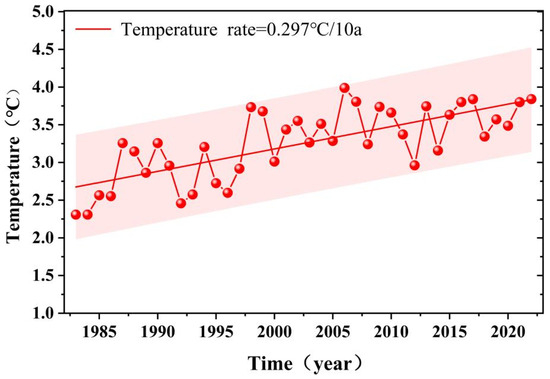
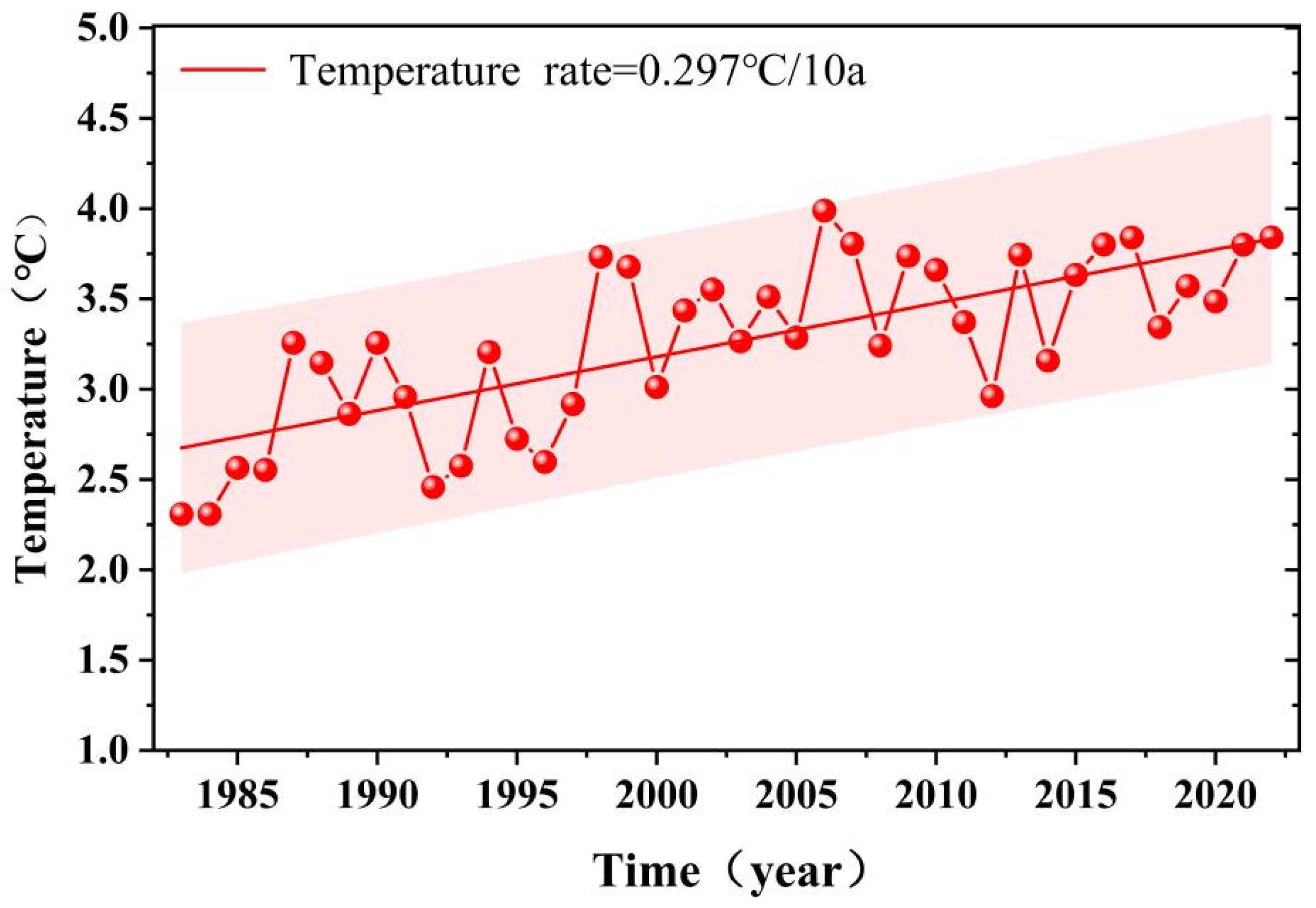
Figure 6 shows the annual average temperature change sequence in the arid region of Northwest China from 1983 to 2022. The results indicate that the recent temperature growth rate in the study area is 0.0297 °C/a. The warming trend has led to an increasing demand for evapotranspiration in the Northwest Arid Region of China. Meanwhile, the impact of human water usage cannot be overlooked. Human water consumption affects the overall evapotranspiration levels and elevates the risk of exceeding the balance threshold. In recent years, total human water use in the arid region of Northwest China has continued to increase in response to growing agricultural, industrial, domestic, and livestock-related demand, thereby intensifying pressure on the regional water balance.
Figure 6.
Annual average temperature change series in the Arid Region of Northwest China from 1983 to 2022.
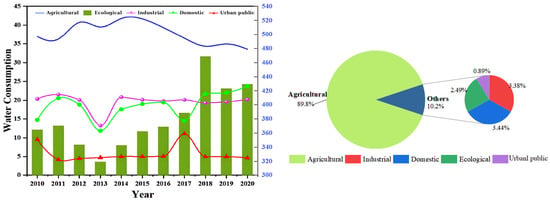
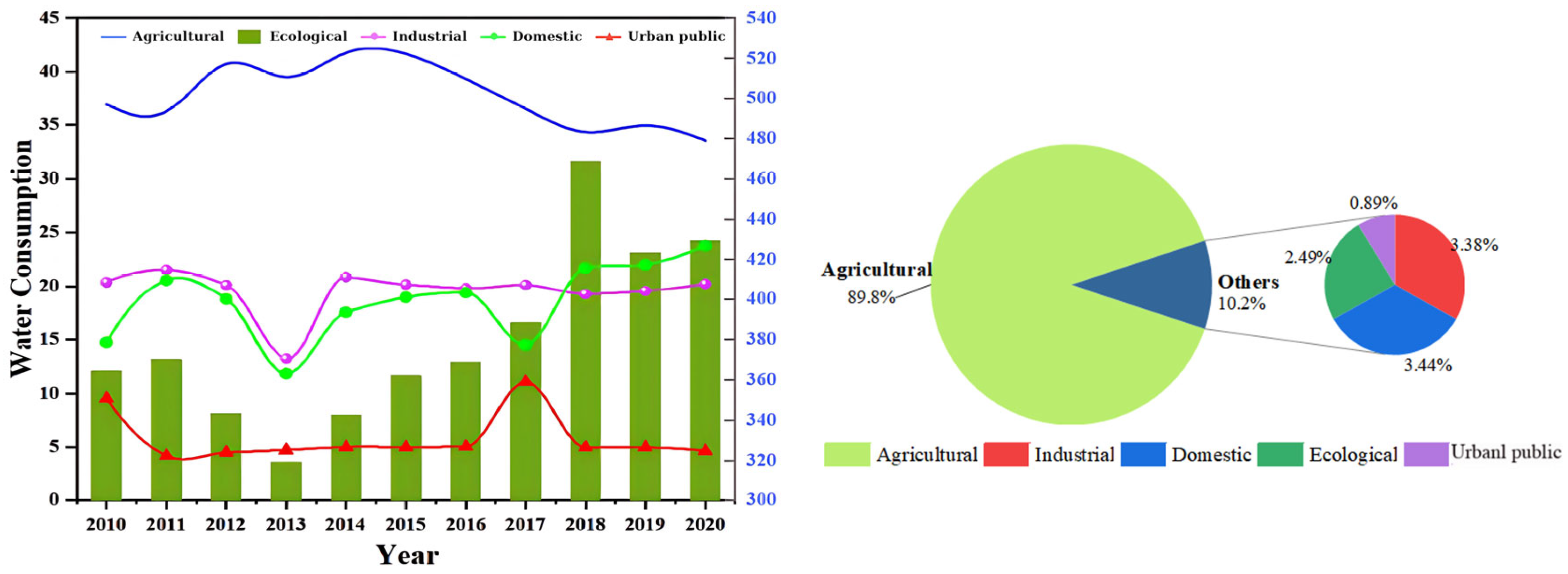
According to the China Water Resources Bulletin, water use is classified into agricultural, industrial, domestic, urban public, and ecological sectors. In this statistical context, the ecological sector generally refers to water allocated for environmental and ecosystem purposes, such as river and wetland ecological replenishment, lake restoration, urban greening, and related environmental water uses, although the exact composition may vary slightly among provincial bulletins. Figure 7 presents the annual average sectoral water consumption in the arid region of Northwest China during 2010–2020. Agricultural water use remains the dominant sector, accounting for 89.78% of total water consumption. Among the other water sectors, industrial and domestic water consumption are the highest, accounting for 3.38% and 3.44% of the annual average total water consumption, respectively. In agricultural water use, irrigation is the major component, and irrigation water is mainly supplied by surface-water diversion from inland rivers and reservoirs, supplemented by groundwater abstraction in some areas. Overall, the observed patterns suggest that climate warming and irrigation-dominated agricultural water use are important factors associated with the recent increase in evapotranspiration in arid Northwest China.
Figure 7.
Annual average water consumption by sector and average proportion in China’s Northwest Arid Region from 2010 to 2020 (108 m3).
From a land-management perspective, the dominance of irrigated agriculture in regional water use indicates that land-use patterns, especially oasis-based cultivation, cropping structure, and the spatial concentration of water-intensive agriculture, are closely linked to evapotranspiration losses and water resource stress. In particular, the expansion or persistence of high-water-demand cropping systems in oasis landscapes may intensify the pressure on regional water allocation and ecological stability. Therefore, improving water management in Northwest China requires not only water-saving governance, but also land-use optimization, crop-layout adjustment, and better coordination between agricultural spatial development and regional water resource constraints in arid landscapes.
3.3. Synergistic Analysis of Hydroclimatic and Socioeconomic Drivers
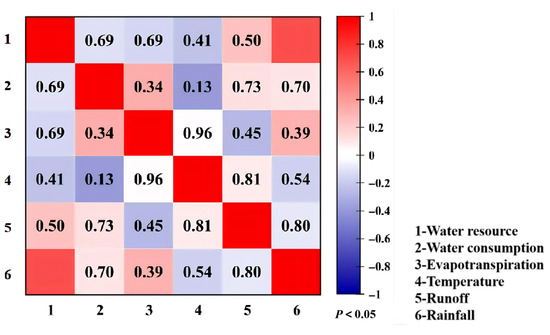
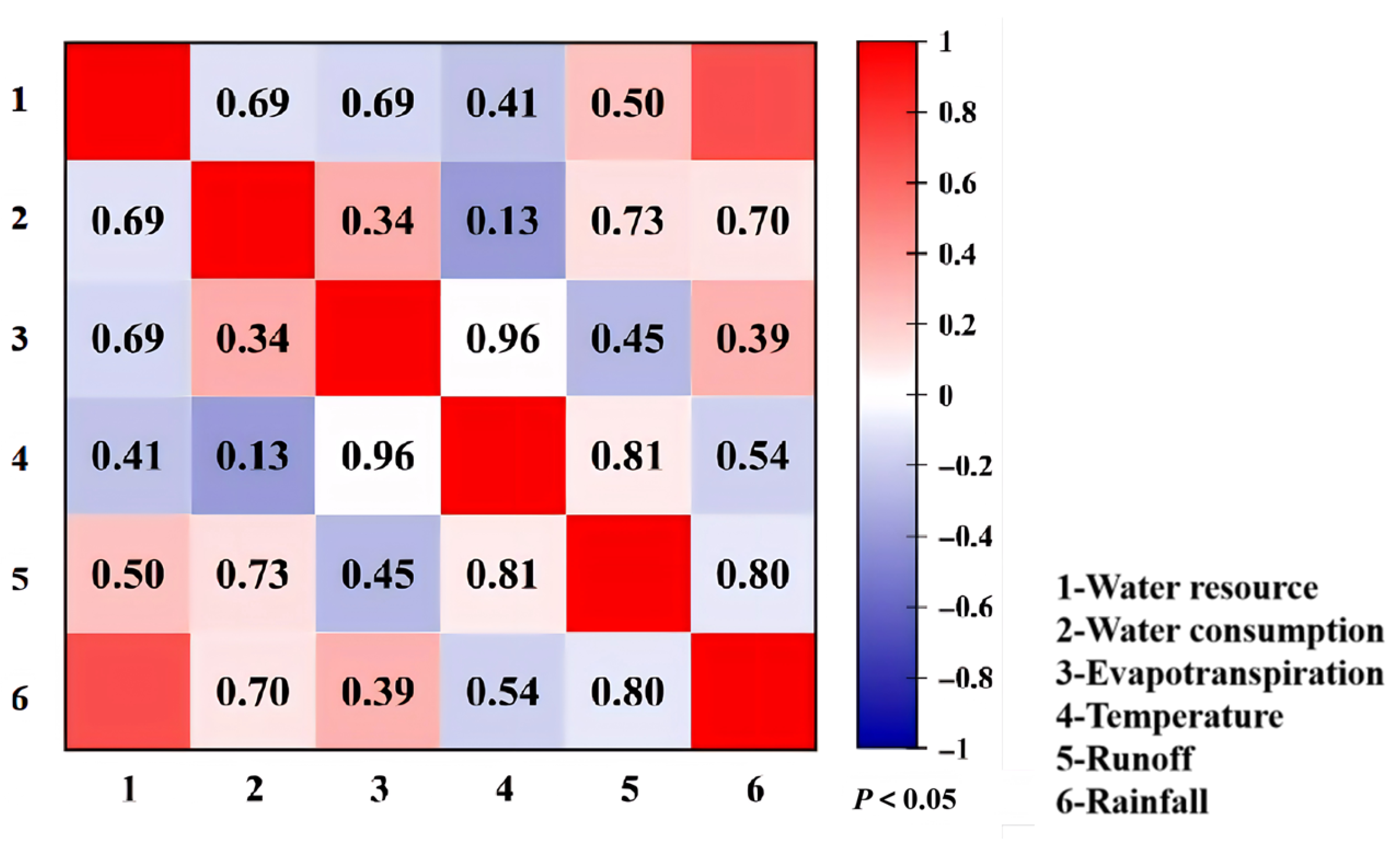
The water resource pressure in the Northwest Arid Region appears to arise from the combined influences of hydroclimatic processes and human socioeconomic activities. To examine the joint roles of multiple potential drivers, this study combined water-balance interpretation with correlation analysis (Figure 8). Hydrological process monitoring indicates (Figure 5) that precipitation increased during the available observation period, and evapotranspiration (ET) increased significantly, whereas runoff showed no obvious change. According to the water-balance interpretation used in this study, the observed increase in ET appears to be an important water-loss component associated with recent water resource pressure. At the same time, a distinctive regional feature is the strong intervention of human activities. Figure 8 shows that agricultural water use is strongly positively correlated with ET (r = 0.73). Given the strong human intervention in the region, this pattern suggests that irrigation-related water use is an important factor associated with increasing ET. The positive correlation between temperature and ET (r = 0.54) suggests that climate warming may intensify water loss by enhancing the potential evapotranspiration capacity. The moderate correlation between precipitation and runoff (r = 0.50) indicates only a limited statistical association in the available dataset. In dryland hydrological systems, runoff responses to precipitation are often influenced by the antecedent soil moisture, snow and glacier melt contributions, infiltration conditions, storage effects, and delayed catchment responses. Therefore, the observed precipitation increase cannot be expected to translate directly or proportionally into runoff increase. Against this background, the combination of the rising temperature and irrigation-dominated agricultural water use may have increased the evapotranspiration demand and altered water partitioning, thereby limiting the extent to which additional precipitation was converted into usable runoff. These findings suggest that climate warming and intensive irrigation water use may have jointly influenced regional water-allocation pathways. In the context of increased precipitation, part of the runoff increase that might otherwise have occurred may have been offset by both “natural evapotranspiration driven by rising temperatures” and “artificial evapotranspiration induced by irrigation activities,” leading to a shift in water flux from liquid runoff to gaseous evapotranspiration. This interpretation helps to explain why water resource pressure can persist under a regional “warming and humidification” background: part of the increase in precipitation may be offset by the rising evapotranspiration associated with climate warming and irrigation-dominated water use, thereby limiting the gain in usable water resources.
Figure 8.
Correlation analysis of the factors affecting water resources.
It should be noted that the present water-balance interpretation does not explicitly resolve storage change, groundwater exchange, glacier and snowmelt contributions, reservoir regulation, inter-basin water transfer, or irrigation return flow. Therefore, the conclusions of this section should be interpreted as pattern-based evidence, rather than a full process-resolved attribution.
4. Water Resource Management Case Studies
4.1. Water Resource Management in Northwest China
China’s water resource management in the Northwest region demonstrates a dual effort in policy and technology, yet faces complex challenges. Since implementing the “Three Red Lines” management policy (focusing on total use control, efficiency improvement, and pollution restriction) in 2012, the region’s total water consumption decreased from 955.9 billion cubic meters in 2016 to 932.4 billion cubic meters in 2023, which was primarily attributed to agricultural water pricing reforms and irrigation efficiency improvements. For instance, local practices in Ningxia suggest that tiered water-pricing reform may help to improve agricultural water-use efficiency, although the magnitude of this effect may vary across implementation settings. The existing collaborative water-management practices, including those involving the Xinjiang Production and Construction Corps and local communities, provide a preliminary foundation for integrating modern governance instruments with locally grounded practices.
However, substantial regional disparities remain in irrigation modernization and sectoral water-use structure across the northwestern provinces. In addition, cross-provincial coordination in water allocation remains insufficient, which increases the risk of conflict in basin-level water management. Moreover, addressing the imbalance in water allocation and efficiency between urban and rural areas remains a critical challenge. At the same time, although several water-use indicators in Northwest China have improved, they still remain below the national average (Table 1), underscoring the need to further optimize regional water resource management.
Table 1.
Water use index for the northwest region from 2019 to 2022.
4.2. Successful Cases of Water Resource Management in Arid Regions
4.2.1. Israel: Technology Innovation-Driven
Israel is a dry and water-scarce country, with an average annual rainfall of only 262 mm, and the distribution of rainfall over time and space is extremely uneven.
Israel has achieved high-efficiency water utilization through legislation and technological innovation. The 1959 Water Law established state ownership of water resources, with a dedicated “Water Police” enforcement unit imposing penalties of up to 3 years of imprisonment for illegal extraction [35,36]. Technologically, Netafim’s drip irrigation systems have been shown to substantially improve crop water productivity compared to traditional flood irrigation methods [37,38]. Israel treats and reuses about 90% of its municipal wastewater, more than 80% of which is used for agricultural irrigation, and had seawater desalination capacity of about 600 million m3/year.
For Northwest China, this entails promoting, through supportive legislation and incentives where appropriate, the upgrading of outdated irrigation systems and the up-scaling of PV-powered drip irrigation systems. Future efforts could explore the feasibility of establishing a Northwest water-saving technology R&D center, drawing inspiration from Israel’s national water technology incubator model, to prioritize breakthroughs in areas like brackish water treatment and agricultural utilization.
4.2.2. Australia: Market Mechanism-Dominated
Controlled by the subtropical high-pressure belt, Australia, as the world’s second driest continent (average annual precipitation <500 mm), has developed a globally leading dryland governance paradigm through three decades of water management reform. Since the 1990s COAG (Council of Australian Governments) reform, the nation established a policy-technology-market triple-helix collaboration mechanism to achieve transformation from traditional supply management to sustainable development models [39,40]. In addition to protecting their existing water resources, Australia has also sourced recycled water through methods such as wastewater treatment to relieve pressure on water resource usage [41,42]. This government-led infrastructure investment complements market mechanisms, as exemplified by the Western Corridor Recycled Water Project completed in Queensland in 2012 [43], which is the largest of its kind in Australia and the third-largest recycled water project globally to date. As of 2023, Australia has constructed 419 recycled water plants, achieving 75% urban wastewater reuse [42]. However, climate change-driven conflicts over water rights allocation (e.g., the 2020 Murray-Darling Basin interstate dispute) expose shortcomings in institutional resilience [42].
For Northwest China, Australia’s experience highlights two adaptable priorities. First, interprovincial water-rights trading mechanisms could be improved through more transparent digital information platforms and clearer transaction rules, building on existing basin-level pilot practices where appropriate. Second, market-based allocation should be complemented by public investment in recycled-water use, drought-resilient infrastructure, and basin-scale planning so that efficiency gains do not come at the expense of ecological stability.
4.2.3. Saudi Arabia: Unconventional Water Sources Are Development-Oriented
The Kingdom of Saudi Arabia (referred to as Saudi) is a desert country [44,45]. Riyadh, the capital of Saudi Arabia, has a typical tropical desert climate characterized by extremely hot and dry conditions, with an average annual rainfall of less than 100 mm, facing severe water scarcity issues [46].
In response to the acute shortage of water resources, the Riyadh government strictly manages groundwater resources [46]. Saudi Arabia has alleviated its water resource crisis through large-scale seawater desalination and groundwater replenishment projects [47,48]. Currently, Saudi Arabia has become one of the most advanced countries in the world in seawater desalination [49,50]. The country has developed significant desalination and groundwater replenishment programs to address its water scarcity issues [51]. These include large-scale seawater desalination projects and groundwater recharge initiatives using underground dams, although these methods come with high energy consumption and infrastructure challenges. These approaches provide important insights into the potential for unconventional water sources to complement traditional supply methods in water-scarce regions like Northwest China.
For the Northwest China region, relevant strategies could include enhancing initiatives for distributed photovoltaic-powered desalination/brackish water treatment stations suitable for decentralized rural water supply and revitalizing the traditional Karez well systems through community-participatory groundwater management models.
4.3. Enlightenment of Successful Water Resource Management Cases
International experience demonstrates that effective water management in arid regions requires multidimensional adaptation (Table 2). Technologically, Israel provides useful lessons for irrigation-system upgrading and water-saving innovation. Institutionally, Australia offers important experience in water-rights reform and adaptive allocation. In terms of unconventional water resource development, Saudi Arabia provides a reference for selected interventions under severe water scarcity. However, these international cases should not be regarded as being directly replicable models for Northwest China, because their applicability is conditioned by differences in governance systems, fiscal capacity, energy structure, water-rights institutions, and the physical sources of water supply. More specifically, Israel’s experience is the most relevant to irrigation technology upgrading and strong regulatory coordination, but its highly centralized governance structure is difficult to replicate directly. Australia offers useful lessons for water-rights reform and adaptive allocation, although such practices rely on mature legal, monitoring, and market institutions. By contrast, Saudi Arabia’s experience is more relevant to the selective development of unconventional water resources, while its large-scale desalination pathway is constrained by a high energy demand and capital intensity.
Table 2.
Comparative analysis of international arid zone management practices and adaptation pathways for Northwest China.
Future strategies should therefore establish a collaborative governance framework that integrates modern institutions with locally grounded practices to support the sustainable management of water resources in Northwest China’s arid region.
5. Water Resource Management Recommendations
Based on the above trend analysis, water-balance interpretation, and correlation evidence, this study suggests that climate warming and irrigation-dominated agricultural water use are key factors associated with water resource pressure in the arid region of Northwest China. At the same time, the continuous growth of the population has directly led to an increase in water demand, and the expanding demand for agricultural water has become a crucial factor exacerbating the pressure of water shortage, resulting in increasingly prominent supply–demand contradictions in the region.
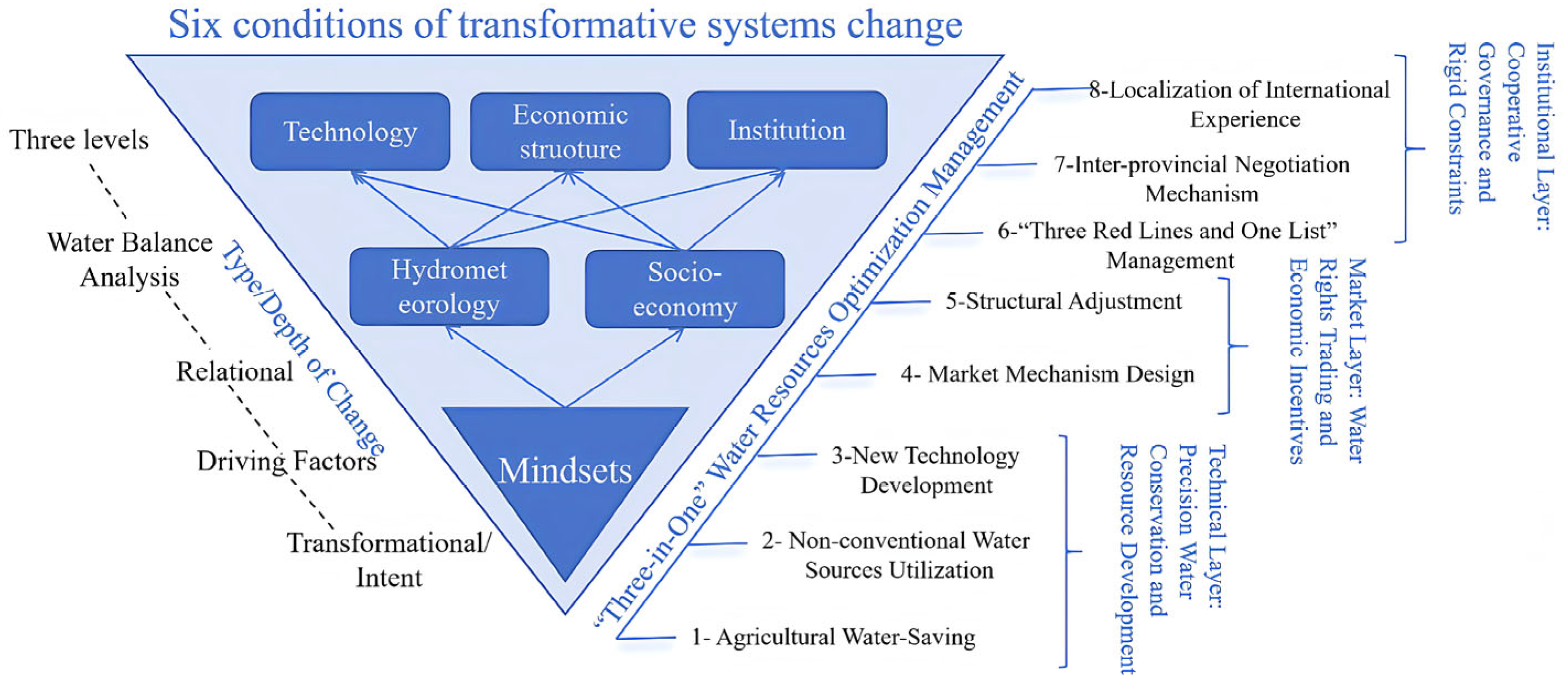
To effectively address these challenges and achieve the sustainable utilization of water resources in the Northwest Arid Region, it is urgent for us to formulate scientific and reasonable management strategies from multiple dimensions such as institutional mechanisms, economic structures, and technological innovation, thereby realizing the sustainable development of water resources. Therefore, based on the previous research in this paper, in the face of the influencing factors and management status of water resources in the Northwest region, combined with the classic cases of water resource management abroad, this paper aims to explore and construct a “trinity” approach to optimize the utilization efficiency of water resources in the Northwest region, focusing on three levels: macro level (optimization of institutional mechanisms), meso level (optimization of structural adjustment), and micro level (innovation of water-saving technologies), as shown in Figure 9.
Figure 9.
Optimization path of water resource utilization efficiency in the Northwest Arid Region.
This framework illustrates how transformative water governance in Northwest China aligns with systemic change theory. Surface-level interventions are driven by relational negotiations and ultimately require shifts in stakeholders’ mind sets.
5.1. Optimization of Institutional Mechanisms to Enhance Water Resource Utilization Efficiency
Given that agricultural water use dominates the total consumption and that irrigation-related water use is positively associated with ET, institutional reforms should first focus on allocation efficiency, intersectoral coordination, and cross-regional governance.
5.1.1. Urban–Rural Water Synergy: Bidirectional Feedback Mechanisms in Northwest China’s Arid Zones
The rational allocation of water resources between urban and rural areas is an important factor affecting the sustainable and efficient use of water resources. The urban–rural integration model aims to place cities and rural areas within a unified framework based on mutual benefit in water resource supply management, thereby promoting a more balanced allocation of water resources in Northwest China.
The advancement of integrated urban–rural water management reform should center on the city-to-countryside feedback mechanism, utilizing economic leverage to achieve water resource redistribution. Taking Xinjiang’s Manas County as an example, a special fund is extracted from urban residential water fees to subsidize drip irrigation upgrades in rural areas. Meanwhile, in Linze County, Gansu Province, a water rights certificate system has been implemented, where water tickets are issued based on water usage quotas. Excess water use beyond quotas incurs tiered surcharges, while unused tickets can be redeemed for agricultural supplies. Moving forward, it is essential to integrate river-basin agreements, digital tools, and ecological compensation mechanisms so that a two-way cycle can be established in which urban water-conservation revenues support rural ecosystems and rural water savings support urban development.
5.1.2. Establish a Unified Cross-Provincial Coordination Mechanism for Water Governance
Collaborative governance has become an important trend in modern socioeconomic governance and serves as a critical pathway toward governance modernization. International experiences in river basin and regional water resource management, such as the establishment of the International Commission for the Protection of the Rhine in the Rhine River Basin [52] and the U.S. Environmental Protection Agency’s Framework for Watershed Protection [53,54,55] (which created a federal-interstate governance and funding mechanism for the Mississippi River Basin)—offer valuable references for establishing a cross-regional collaborative water management framework in Northwest China.
The effectiveness of cross-provincial coordination depends on a governance structure with clearly defined mandates, responsibilities, data-sharing arrangements, and enforcement boundaries, relative to the existing river-basin authorities. The initial allocation rules could be designed by considering the population, economic demand, and ecological sensitivity in a transparent and adjustable manner, in coordination with the existing basin authorities and monitoring systems. To strengthen enforcement, inspiration can be drawn from the U.S. Colorado River Commission model by strengthening the coordination and implementation capacity of basin management agencies within the existing legal and administrative frameworks, enabling water-use reductions in over-exploited areas.
5.2. Economic and Structural Adjustments to Improve Water Resource Efficiency
Because the major pressure identified in this study is concentrated in irrigation-intensive agricultural production, rather than in industrial or domestic sectors, structural adjustment should prioritize cropping patterns and water-use incentives in agriculture.
5.2.1. Build an Economic Structure System That Is Compatible with the Efficient Use of Water Resources
Funding remains a central obstacle to effective water management, and an irrational economic structure can lead to an inefficient water-use structure [56,57]. To address this bottleneck, it is necessary to build a dual-driven economic framework integrating market mechanisms with institutional arrangements. Public–Private Partnership (PPP-type) financing mechanisms may provide one possible pathway for selected water-infrastructure projects. Through innovations in Public–Private Partnership (PPP) models, localized risk-sharing mechanisms can be established by drawing on the experience of Australia’s Perth Desalination Plant DBO (Design–Build–Operate) model [42]. This approach combines availability payments and water-saving incentives to engage private capital in the full-cycle operation of water infrastructure, while allowing excess returns through water rights trading markets and water-saving technology transfers. Concurrently, institutional innovations in basin-level water rights should advance, including the establishment of a basin-level water quota reserve system and agricultural water rights savings accounts to enable cross-seasonal water allocation. New South Wales demonstrated in 2023 that such mechanisms can improve agricultural water-use efficiency [42]. Institutionally, it is critical to clarify the legal status of water rights collateralization and trading, coupled with market-oriented terminal water pricing reforms, ultimately forming a tripartite regulatory framework integrating price leverage adjustment, institutional rigid constraints, and technological flexible support.
5.2.2. Adjust the Agricultural Planting Structure to Reduce the Scale of High Water-Consuming Crops
From a land-management perspective, adjusting cropping structure is also a form of land-use optimization under regional water constraints. In the Baiyin City in Gansu Province, farmers have gradually reduced water-intensive crops like corn and shifted to drought-tolerant quinoa cultivation in recent years. By adopting technologies such as sub-mulch drip irrigation, actual water consumption has significantly decreased compared to traditional methods, while stable market prices ensure income. In Shaanxi’s Yangling Demonstration Zone, local cooperatives guide farmers to grow water-saving tomato varieties. The introduced varieties not only adapt to integrated water and fertilizer integration but also yield higher returns compared to traditional planting models. These regional practices demonstrate that integrating low-water-consumption plants with facility and agricultural upgrades not only conserves water resources but also generates higher economic returns compared to conventional planting models. Consequently, Northwest China could formulate a negative list for crop cultivation in arid zones, drawing on the dynamic adjustment experiences of Baiyin and Yangling to gradually phase out crops exceeding annual water-consumption thresholds in core production areas. At the same time, field-based screening and extension of drought-tolerant crop varieties should be strengthened so that water-saving transitions can be supported by locally verified agronomic evidence.
5.3. Technological Innovations for Water Conservation and Resource Efficiency
In the process of formulation and implementation of a macro water resource management framework, individual behavior and social cognition also play a role that cannot be ignored. Water saving is an important part of improving the utilization of water resources. Because agricultural irrigation is the largest water-use sector in the region, technological intervention should prioritize on-farm water saving, conveyance efficiency, and irrigation scheduling.
5.3.1. Advancing Water-Saving Technologies in Agriculture and Industry for Efficient Resource Management
In the Northwest region, irrigation accounts for a significant portion of agricultural water use. However, the low efficiency of irrigation systems leads to considerable under-utilization of water resources. To address this problem, region-specific irrigation technologies should be developed and promoted to improve water-use efficiency in both agricultural and ecological contexts.
The implementation of the upgrade path for irrigation technology focuses on phased goals and the collaboration of multiple stakeholders. With the support of financial subsidies, canal seepage prevention projects are carried out to transform earthen canals, thereby reducing the water loss rate during transmission. Intelligent drip irrigation systems are established, and digital agricultural platforms are introduced for precise control to achieve intelligent drip irrigation. Water and fertilizer integration is vigorously promoted, and intelligent fertilization systems are popularized. Future research and development should focus on photovoltaic direct-drive drip irrigation, root-zone sensing irrigation, and other precision irrigation technologies so as to reduce agricultural water consumption.
5.3.2. Construction of Water-Saving Infrastructure
To improve overall efficiency, the adoption of water-saving devices in households and industry can be promoted as a complementary measure. This can include replacing outdated water-consuming appliances with water-efficient models and incorporating water-conservation indicators into existing community evaluation systems. For example, pilot programs may incorporate simple household water-conservation indicators into existing community evaluation systems in selected counties of Xinjiang; however, the institutional origin, implementation criteria, and regional applicability of such pilots should be clearly specified before broader promotion.
6. Conclusions
This study provides an integrated assessment of recent water resource dynamics and management challenges in the arid region of Northwest China, highlighting the combined influences of climate warming and human water use. The results suggest that, despite increasing precipitation, rising evapotranspiration and persistent pressure from intensive water use have limited improvements in regional water availability. The analysis emphasizes the importance of precipitation, evapotranspiration, and runoff in understanding regional water resource dynamics. Particularly in terms of agricultural water use, the cultivation of high-water-consuming crops and outdated irrigation technologies pose significant challenges.
Moreover, this study draws on management experiences from representative arid regions worldwide. Drawing on these cases, this study proposes multi-level recommendations for water resource management in the arid region of Northwest China. First, the development of unconventional water resources, especially wastewater treatment and recycled-water use, should be considered where technical feasibility, cost, and regional suitability permit. Second, advanced water-saving technologies should be promoted, agricultural water use structures optimized, and the application of efficient irrigation techniques encouraged. This also implies the need to optimize land-use patterns and cropping structures in oasis agricultural systems so that agricultural spatial development is better aligned with regional water resource constraints. Lastly, a collaborative water resource management mechanism across regions should be established to achieve efficient and rational allocation of water resources and alleviate regional water-use imbalances. Future research should further explore the long-term impacts of global warming on water resources in arid regions, based on the integration of the latest climate models and hydrological simulations, providing more precise decision-making support for policymakers to ensure the sustainable management of water resources.
Author Contributions
Conceptualization, P.L., J.C. and W.M.; methodology, P.L., W.Y. and M.R.; formal analysis, P.L. and W.Y.; investigation, P.L. and W.Y.; data curation, P.L. and W.Y.; writing—original draft preparation, P.L.; writing—review and editing, J.C., W.M., M.R., Z.Y., C.L., A.E. and C.X.; supervision, J.C., W.M. and C.X. All authors have read and agreed to the published version of the manuscript.
Funding
This research received no external funding.
Data Availability Statement
The data used in this study are available from publicly accessible sources. The elevation data were obtained from the Geospatial Data Cloud platform, hydroclimatic datasets were obtained from the National Tibetan Plateau Scientific Data Center, and official statistical data were obtained from the websites of the relevant provincial water resource departments and the Ministry of Water Resources of the People’s Republic of China. Further details are available from the corresponding author upon reasonable request.
Acknowledgments
The authors would like to thank the anonymous reviewers for their valuable comments and suggestions.
Conflicts of Interest
The authors declare no conflicts of interest.
References
- Berdugo, M.; Kéfi, S.; Soliveres, S.; Maestre, F.T. Author Correction: Plant spatial patterns identify alternative ecosystem multifunctionality states in global drylands. Nat. Ecol. Evol. 2018, 2, 574–576. [Google Scholar] [CrossRef] [Scilit]
- Feldman, A.F.; Reed, S.; Amaral, C.; Babst-Kostecka, A.; Babst, F.; Biederman, J.; Zhang, W. Adaptation and Response in Drylands (ARID): Community Insights for Scoping a NASA Terrestrial Ecology Field Campaign in Drylands. Earth’s Future 2024, 12, e2024EF004811. [Google Scholar]
- Huang, K.; Xia, J.; Wang, Y.; Ahlström, A.; Chen, J.; Cook, R.B.; Luo, Y. Enhanced peak growth of global vegetation and its key mechanisms. Nat. Ecol. Evol. 2018, 2, 1897–1905. [Google Scholar] [CrossRef] [Scilit]
- Shen, Q.; Niu, J.; Liu, Q.; Liao, D.; Du, T. A resilience-based approach for water resources management over a typical agricultural region in Northwest China under water-energy-food nexus. Ecol. Indic. 2022, 144, 109562. [Google Scholar]
- D’Odorico, P.; Bhattachan, A.; Davis, K.F.; Ravi, S.; Runyan, C.W. Global desertification: Drivers and feedbacks. Adv. Water Resour. 2013, 51, 326–344. [Google Scholar] [CrossRef] [Scilit]
- Huang, J.; Li, Y.; Fu, C.; Chen, F.; Fu, Q.; Dai, A.; Wang, G. Dryland climate change: Recent progress and challenges. Rev. Geophys. 2017, 55, 719–778. [Google Scholar] [CrossRef] [Scilit]
- Li, C.; Fu, B.; Wang, S.; Stringer, L.C.; Zhou, W.; Ren, Z.; Maestre, F.T. Climate-driven ecological thresholds in China’s drylands modulated by grazing. Nat. Sustain. 2023, 6, 1363–1372. [Google Scholar]
- Aygün, O.; Kinnard, C.; Campeau, S.; Pomeroy, J.W. Landscape and climate conditions influence the hydrological sensitivity to climate change in eastern Canada. J. Hydrol. 2022, 615, 128595. [Google Scholar] [CrossRef] [Scilit]
- Hou, X.; Zhang, S.; Ruan, Q.; Tang, C. Synergetic impact of climate and vegetation cover on runoff, sediment, and nitrogen and phosphorus losses in the Jialing River Basin, China. J. Clean. Prod. 2022, 361, 132141. [Google Scholar] [CrossRef] [Scilit]
- Jiao, Y.; Liu, J.; Li, C.; Wang, W.; Yu, F.; Wang, Y. Quantitative attribution of runoff attenuation to climate change and human activity in typical mountainous areas: An enlightenment to water resource sustainable utilization and management in North China. Sustainability 2020, 12, 10395. [Google Scholar] [CrossRef] [Scilit]
- Mekonnen, M.M.; Hoekstra, A.Y. Four billion people facing severe water scarcity. Sci. Adv. 2016, 2, e1500323. [Google Scholar] [CrossRef] [Scilit]
- Lu, H.; Tian, P.; He, L. Evaluating the global potential of aquifer thermal energy storage and determining the potential worldwide hotspots driven by socio-economic, geo-hydrologic and climatic conditions. Renew. Sustain. Energy Rev. 2019, 112, 788–796. [Google Scholar]
- Liu, D.; Liu, C.; Fu, Q.; Li, M.; Faiz, M.A.; Khan, M.I.; Cui, S. Construction and application of a refined index for measuring the regional matching characteristics between water and land resources. Ecol. Indic. 2018, 91, 203–211. [Google Scholar] [CrossRef] [Scilit]
- Wang, J.; Qin, T.; Lv, X.; Ni, Y.; Zhang, Q.; Ma, L. Study of optimal and joint allocations of water and land resources for multiple objectives. Water Resour. Manag. 2023, 37, 1241–1256. [Google Scholar] [CrossRef] [Scilit]
- Yin, R.; Wang, Z.; Xu, F. Multi-scenario simulation of China’s dynamic relationship between water–land resources allocation and cultivated land use based on shared socioeconomic pathways. J. Environ. Manag. 2023, 341, 118062. [Google Scholar] [CrossRef] [Scilit]
- Li, C.; Fu, B.; Wang, S.; Stringer, L.C.; Wang, Y.; Li, Z.; Zhou, W. Drivers and impacts of changes in China’s drylands. Nat. Rev. Earth Environ. 2021, 2, 858–873. [Google Scholar] [CrossRef] [Scilit]
- IPCC. Global Warming of 1.5 °C: An IPCC Special Report; IPCC: Geneva, Switzerland, 2018. [Google Scholar]
- Sternberg, T. Moderating climate hazard risk through cooperation in Asian drylands. Land 2018, 7, 22. [Google Scholar] [CrossRef] [Scilit]
- Song, X.; Xu, M.; Kang, S.; Wang, R.; Wu, H. Evaluation and projection of changes in temperature and precipitation over Northwest China based on CMIP6 models. SSRN 2024, 44, 4460460. [Google Scholar]
- Xu, M.; Hou, Z.; Kang, S.; Wu, X.; Han, H.; Wang, P. Projection of snowfall and precipitation phase changes over the Northwest China based on CMIP6 multimodels. J. Hydrol. 2024, 641, 131743. [Google Scholar] [CrossRef] [Scilit]
- Li, Y.; Wang, C.; Yang, L.; Sun, Y.; Wang, X.; Li, M. Effects of natural and social factors on the surface temperature of warm and cold seasons in typical city of northwest China. Int. J. Environ. Sci. Technol. 2025, 22, 11413–11426. [Google Scholar] [CrossRef] [Scilit]
- Ogunrinde, A.T.; Xian, X.; Adigun, P.; Adawa, I.S.; Zhao, D.; Xing, Z.; Temitope, I.J. Assessing teleconnection influences on the spatial and temporal patterns of meteorological drought in Northwest China. Big Earth Data 2024, 8, 703–731. [Google Scholar] [CrossRef] [Scilit]
- Xing, J.; Wang, L.; Zhao, J.; Zhai, T. Hydrochemical variation characteristics and driving factors of surface water in arid areas—A case study of Beichuan River in Northwest China. Front. Environ. Sci. 2024, 12, 1493390. [Google Scholar] [CrossRef] [Scilit]
- Yu, Y.; Yu, R.; Chen, X.; Yu, G.; Gan, M.; Disse, M. Agricultural water allocation strategies along the oasis of Tarim River in Northwest China. Agric. Water Manag. 2017, 187, 24–36. [Google Scholar] [CrossRef] [Scilit]
- Moreno-Jiménez, E.; Plaza, C.; Saiz, H.; Manzano, R.; Flagmeier, M.; Maestre, F.T. Aridity and reduced soil micronutrient availability in global drylands. Nat. Sustain. 2019, 2, 371–377. [Google Scholar] [CrossRef] [Scilit]
- Reynolds, J.F.; Smith, D.M.S.; Lambin, E.F.; Turner, B.L.; Mortimore, M.; Batterbury, S.P.; Walker, B. Global desertification: Building a science for dryland development. Science 2007, 316, 847–851. [Google Scholar] [CrossRef] [Scilit]
- Chen, Y.; Li, Z.; Fan, Y.; Wang, H.; Deng, H. Progress and prospects of climate change impacts on hydrology in the arid region of northwest China. Environ. Res. 2015, 139, 11–19. [Google Scholar] [CrossRef] [Scilit]
- Rodell, M.; Famiglietti, J.S.; Wiese, D.N.; Reager, J.T.; Beaudoing, H.K.; Landerer, F.W.; Lo, M.H. Emerging trends in global freshwater availability. Nature 2018, 557, 651–659. [Google Scholar] [CrossRef] [Scilit]
- Xu, L.; Chen, N.; Zhang, X.; Chen, Z. Spatiotemporal changes in China’s terrestrial water storage from GRACE satellites and its possible drivers. J. Geophys. Res. Atmos. 2019, 124, 11976–11993. [Google Scholar]
- Huang, Q.; Zhang, Q.; Xu, C.Y.; Li, Q.; Sun, P. Terrestrial water storage in China: Spatiotemporal pattern and driving factors. Sustainability 2019, 11, 6646. [Google Scholar] [CrossRef] [Scilit]
- Hamududu, B.H.; Ngoma, H. Impacts of climate change on water resources availability in Zambia: Implications for irrigation development. Environ. Dev. Sustain. 2020, 22, 2817–2838. [Google Scholar] [CrossRef] [Scilit]
- Zhang, Q.; Yang, J.; Wang, W.; Ma, P.; Lu, G.; Liu, X.; Fang, F. Climatic warming and humidification in the arid region of Northwest China: Multi-scale characteristics and impacts on ecological vegetation. J. Meteorol. Res. 2021, 35, 113–127. [Google Scholar] [CrossRef] [Scilit]
- Gou, J.; Miao, C.; Samaniego, L.; Xiao, M.; Wu, J.; Guo, X. CNRD v1.0: A high-quality natural runoff dataset for hydrological and climate studies in China. Bull. Am. Meteorol. Soc. 2021, 102, E929–E947. [Google Scholar] [CrossRef] [Scilit]
- Yang, L.; Zhao, G.; Tian, P.; Mu, X.; Tian, X.; Feng, J.; Bai, Y. Runoff changes in the major river basins of China and their responses to potential driving forces. J. Hydrol. 2022, 607, 127536. [Google Scholar] [CrossRef] [Scilit]
- Braverman, I. Silent springs: The nature of water and Israel’s military occupation. Environ. Plan. E Nat. Space 2020, 3, 527–551. [Google Scholar]
- Blus-Kadosh, I.; Rogel, A.; Blatt, R.; Hartal, G. Progress and Challenges of the LGBT+ Community in Israel. In The Palgrave International Handbook of Israel; Kumaraswamy, P.R., Ed.; Palgrave Macmillan: Singapore, 2023. [Google Scholar]
- Fan, J.; Lu, X.; Gu, S.; Guo, X. Improving nutrient and water use efficiencies using water-drip irrigation and fertilization technology in Northeast China. Agric. Water Manag. 2020, 241, 106352. [Google Scholar] [CrossRef] [Scilit]
- Megersa, G.; Abdulahi, J. Irrigation system in Israel: A review. Int. J. Water Resour. Environ. Eng. 2015, 7, 29–37. [Google Scholar] [CrossRef] [Scilit]
- Schulte, S.; Davis, G.; Brown, J. Water Security: Challenges to the Irrigation Water-Energy Nexus in Australia. In Sustaining Our Environment for Better Future: Challenges and Opportunities; Omran, A., Schwarz-Herion, O., Eds.; Springer: Singapore, 2020; pp. 85–116. [Google Scholar]
- Tortajada, C.; Radcliffe, J.C. Potable Water Reuse in Australia: Legal and Regulatory Frameworks, Communication Strategies, and Experiences. In The Palgrave Handbook of Climate Resilient Societies; Brears, R.C., Ed.; Palgrave Macmillan: Cham, Switzerland, 2021; pp. 347–396. [Google Scholar]
- Radcliffe, J.C. Current status of recycled water for agricultural irrigation in Australia, potential opportunities and areas of emerging concern. Sci. Total Environ. 2022, 807, 151676. [Google Scholar]
- Radcliffe, J.C.; Page, D. Water reuse and recycling in Australia—History, current situation and future perspectives. Water Cycle 2020, 1, 19–40. [Google Scholar]
- James, C.A.; Kavanagh, M.; Manton, C.; Soar, J. Revisiting recycled water for the next drought; a case study of South East Queensland, Australia. Util. Policy 2023, 84, 101626. [Google Scholar] [CrossRef] [Scilit]
- Mani, Z.A.; Goniewicz, K. Adapting disaster preparedness strategies to changing climate patterns in Saudi Arabia: A rapid review. Sustainability 2023, 15, 14279. [Google Scholar] [CrossRef] [Scilit]
- Alrawaf, T.I.; Abubakar, I.R.; Alshabibi, N.M.; Al-Matar, K.M.; Dano, U.L.; Elhadi, E.M.A.; Al-Odah, M.A. The distribution of ecotourism activities and potential consequences for the Saudi desert ecosystem. J. Arid Environ. 2023, 213, 104950. [Google Scholar] [CrossRef] [Scilit]
- Alotaibi, B.A.; Baig, M.B.; Najim, M.M.; Shah, A.A.; Alamri, Y.A. Water scarcity management to ensure food scarcity through sustainable water resources management in Saudi Arabia. Sustainability 2023, 15, 10648. [Google Scholar] [CrossRef] [Scilit]
- Benali, L. Evaluation Step 3: Attractiveness and Feasibility. In Electricity-Sector Reforms in the MENA Region: Evaluation and Prospects; Springer International Publishing: Cham, Switzerland, 2018; pp. 97–110. [Google Scholar]
- Alibrahim, B.; Uygar, E. Modelling of soil-water characteristic curve for diverse soils using soil suction parameters. Acta Geotech. 2023, 18, 4233–4244. [Google Scholar] [CrossRef] [Scilit]
- Alnajdi, O.; Wu, Y.; Kaiser Calautit, J. Toward a sustainable decentralized water supply: Review of adsorption desorption desalination (ADD) and current technologies: Saudi Arabia (SA) as a case study. Water 2020, 12, 1111. [Google Scholar] [CrossRef] [Scilit]
- Moossa, B.; Trivedi, P.; Saleem, H.; Zaidi, S.J. Desalination in the GCC countries-a review. J. Clean. Prod. 2022, 357, 131717. [Google Scholar] [CrossRef] [Scilit]
- Abubakar, I.R.; Dano, U.L. Sustainable urban planning strategies for mitigating climate change in Saudi Arabia. Environ. Dev. Sustain. 2020, 22, 5129–5152. [Google Scholar] [CrossRef] [Scilit]
- Wilk, B.; Hegger, D.L.; Dieperink, C.; Kim, R.E.; Driessen, P.P. The potential limitations on its basin decision-making processes of granting self-defence rights to Father Rhine. Water Int. 2019, 44, 684–700. [Google Scholar] [CrossRef] [Scilit]
- Sparks, R.E. Forty years of science and management on the Upper Mississippi River: An analysis of the past and a view of the future. Hydrobiologia 2010, 640, 3–15. [Google Scholar] [CrossRef] [Scilit]
- Secchi, S.; Mcdonald, M. The state of water quality strategies in the Mississippi River Basin: Is cooperative federalism working? Sci. Total Environ. 2019, 677, 241–249. [Google Scholar] [CrossRef] [Scilit]
- Lewis, J.A.; Ernstson, H. Contesting the coast: Ecosystems as infrastructure in the Mississippi River Delta. Prog. Plan. 2019, 129, 1–30. [Google Scholar] [CrossRef] [Scilit]
- Wang, Q.; Jiang, R.; Li, R. Decoupling analysis of economic growth from water use in City: A case study of Beijing, Shanghai, and Guangzhou of China. Sustain. Cities Soc. 2018, 41, 86–94. [Google Scholar] [CrossRef] [Scilit]
- Zhang, Y.; Sun, M.; Yang, R.; Li, X.; Zhang, L.; Li, M. Decoupling water environment pressures from economic growth in the Yangtze River Economic Belt, China. Ecol. Indic. 2021, 122, 107314. [Google Scholar] [CrossRef] [Scilit]

Disclaimer/Publisher’s Note: The statements, opinions and data contained in all publications are solely those of the individual author(s) and contributor(s) and not of MDPI and/or the editor(s). MDPI and/or the editor(s) disclaim responsibility for any injury to people or property resulting from any ideas, methods, instructions or products referred to in the content. |
© 2026 by the authors. Licensee MDPI, Basel, Switzerland. This article is an open access article distributed under the terms and conditions of the Creative Commons Attribution (CC BY) license.