Review

Constructing a Health-Supportive Environment for the Elderly: A Review of Multidimensional Intervention Mechanisms of the Built Environment Based on Bibliometric Analysis


1
Library, Sichuan Normal University, Chengdu 610066, China
2
Department of Urban and Rural Planning, School of Architecture, Southwest Jiaotong University, Chengdu 611756, China
3
School of Architecture and Planning, Fujian University of Technology, Fuzhou 350118, China
*
Authors to whom correspondence should be addressed.
Land 2026, 15(5), 702; https://doi.org/10.3390/land15050702
Submission received: 4 March 2026 / Revised: 10 April 2026 / Accepted: 14 April 2026 / Published: 22 April 2026

Abstract

The built environment constitutes a significant factor influencing the physical and mental health of the elderly and has garnered sustained interdisciplinary attention in recent years. Based on 425 publications from the Web of Science database spanning 2001 to 2025, this study employed Citespace to conduct a quantitative analysis and synthesis of the relevant literature, aiming to explore the evolutionary trends, hotspot distributions, and pathways of influence regarding the impact of the built environment on elderly health. The results indicate a close positive correlation between the population ageing trend and annual publication growth. The total publication volume exhibited a shift from gradual to rapid growth, demonstrating a distinct phased evolutionary pattern. The research hotspots displayed a gradient structure of descending research intensity: “physical activity—quality of life—mental health.” The impact of the built environment (e.g., green space, street quality) on elderly health can be primarily categorised into three pathways: direct effects, physical activity, and mental health. Macro-level allocation of elderly care facilities and micro-level construction of age-friendly living circles represent the principal optimisation strategies currently employed to address elderly health needs. Finally, potential future research directions are discussed, encompassing aspects such as spatial scales, health representations, and mechanism expansion, with the aim of providing reference and insights for advancing the initiative of “healthy ageing.”

1. Introduction

Population ageing is no longer a localised or future concern; it has evolved into a definitive structural transformation sweeping the globe, with profound implications and progressing at an unanticipated pace [1,2,3]. The proportion of the global population aged 65 and over is projected to reach 10.60% in 2026, and this figure is expected to continue its upward trajectory. According to United Nations criteria, by 2023, over 60 countries worldwide had entered a deeply ageing society, with more than twenty nations, including Japan, Italy, and Germany, having transitioned into a super-aged stage. This global “demographic transition” constitutes a fundamental “slow-variable shock” to economic growth, fiscal sustainability, and social security systems [4,5,6]. Consequently, the quality of life and physical and mental health of the elderly are attracting increasing attention from both governments and academia, with related research continually expanding [7,8,9]. The World Health Organisation (WHO) has explicitly proposed action measures to promote healthy ageing and has emphasised the improvement of elderly health status through environmental control [10]. However, issues such as insufficient community activity spaces, a lack of age-friendly facilities, and poor spatial accessibility can exert certain negative impacts on the health of the elderly. Therefore, determining how to proactively intervene through the built environment (BE) to construct safe, convenient, and comfortable age-friendly community settings is of significant importance for achieving healthy ageing [11,12,13].
Research on the relationship between the BE and elderly health has become increasingly extensive in recent years, yielding substantial findings. However, some studies remain limited by a narrow scope and insufficient typological diversity with respect to both “built environment elements” and “elderly health dimensions.” For instance, with respect to the dimension of BE elements, relevant research has largely focused on two-dimensional planar perspectives such as land-use mix, street network density, and density of recreational facilities [14,15,16], while overlooking three-dimensional spatial subjective and objective perception indicators at the street level, including the vegetation visibility index, and comfort. Furthermore, the mechanisms through which the BE influences elderly health are complex. Current research lacks a systematic synthesis and induction of these mechanisms from the perspectives of bibliometrics and pathways of influence. To address this gap, this study employed Citespace software to analyse publications related to the BE and elderly health spanning the period 2001 to 2025, thereby contributing to the ongoing discourse. The remainder of this paper is structured as follows. Section 2 outlines the methodological approach of this study. Section 3 examines the overall evolutionary trends, co-citation analysis, and research hotspots within the relevant literature. Section 4 synthesises, based on literature cluster analysis, the multidimensional pathways through which the BE influences elderly health, categorised into three aspects: direct effects, physical activity (PA), and mental health (MH). Section 5 summarises the principal findings and discusses prospective research directions.

2. Materials and Methods

2.1. Data Collection

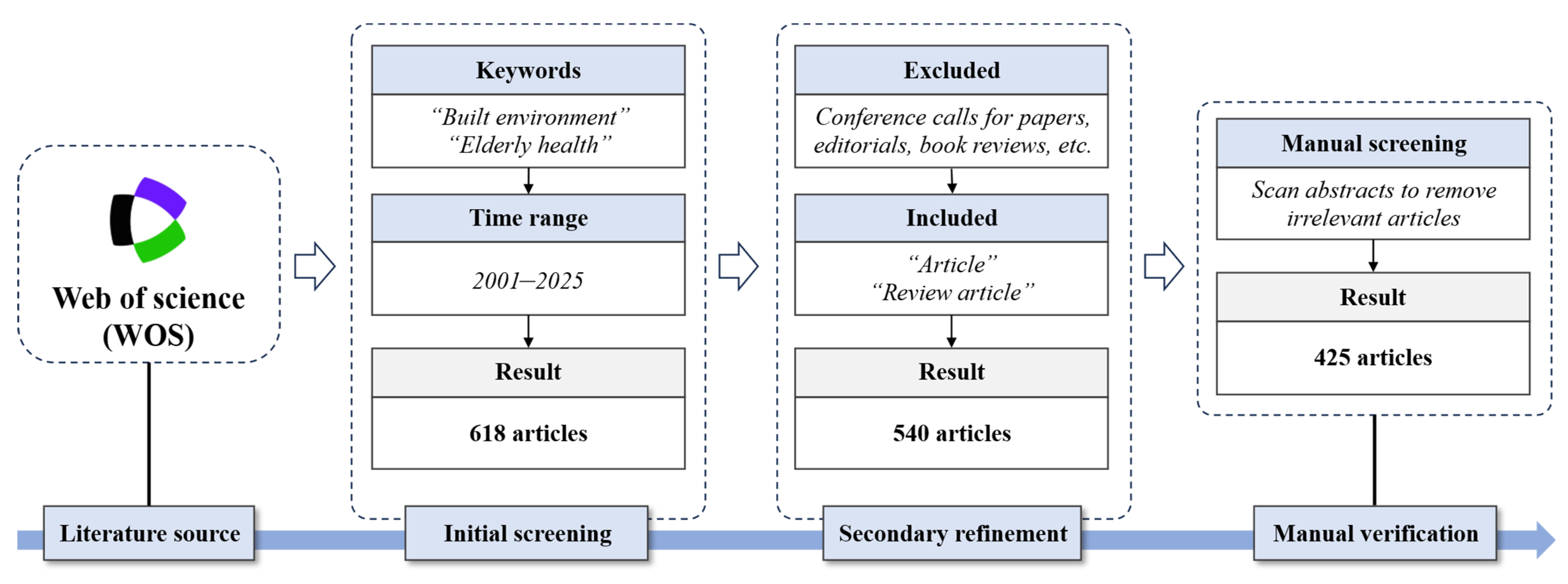
This study employed Citespace, a bibliometric analysis method. The data were sourced from the Web of Science (WOS) Core Collection database, including its sub-databases: the Science Citation Index Expanded (SCI-E) and the Social Sciences Citation Index (SSCI). The search query was as follows: TS = (“Built environment” AND “Elderly health”). The time span was set from January 2001 to December 2025, with the language restricted to English. The search was conducted on 20 January 2026, yielding an initial set of 618 publications. To ensure objectivity and accuracy, the screening process was conducted in three stages. First, the document type was limited to articles and review articles, excluding document types with lower relevance such as conference papers, editorials, and book reviews. Second, duplicate publications were removed. Finally, through manual screening of titles, abstracts, and keywords, articles not focusing on the BE and elderly health were excluded. Following the above screening process, a final corpus of 425 publications was obtained as the dataset for this study (Figure 1).

2.2. Methods

In this study, we employed Citespace version 6.4.1 as the primary bibliometric analysis tool. Citespace is a citation visualisation software developed within the context of scientometric analysis and data visualisation. Its core advantages include: (1) unique time-slicing algorithms and burst detection functionality, which effectively track the dynamic evolutionary paths of research frontiers and the developmental patterns of knowledge bases [17]; (2) the identification of critical turning-point nodes through betweenness centrality, where nodes with a centrality value greater than 0.1 typically represent key hubs connecting different research clusters [18]; and (3) the provision of modularity (Q-value) and mean silhouette (S-value) as quantitative criteria for assessing the robustness of clustering. Furthermore, Citespace has been widely adopted in bibliometric studies across interdisciplinary fields such as the BE, public health, and educational technology, demonstrating strong methodological comparability. In this study, the 425 publications retrieved from WOS were imported into Citespace. The node type was set to “keyword,” with a time slice of one year. By adjusting parameters, systematic analyses were conducted across several dimensions: research trend evolution, keyword co-occurrence networks, and keyword clustering.

3. Results

3.1. Evolution of Research Trends

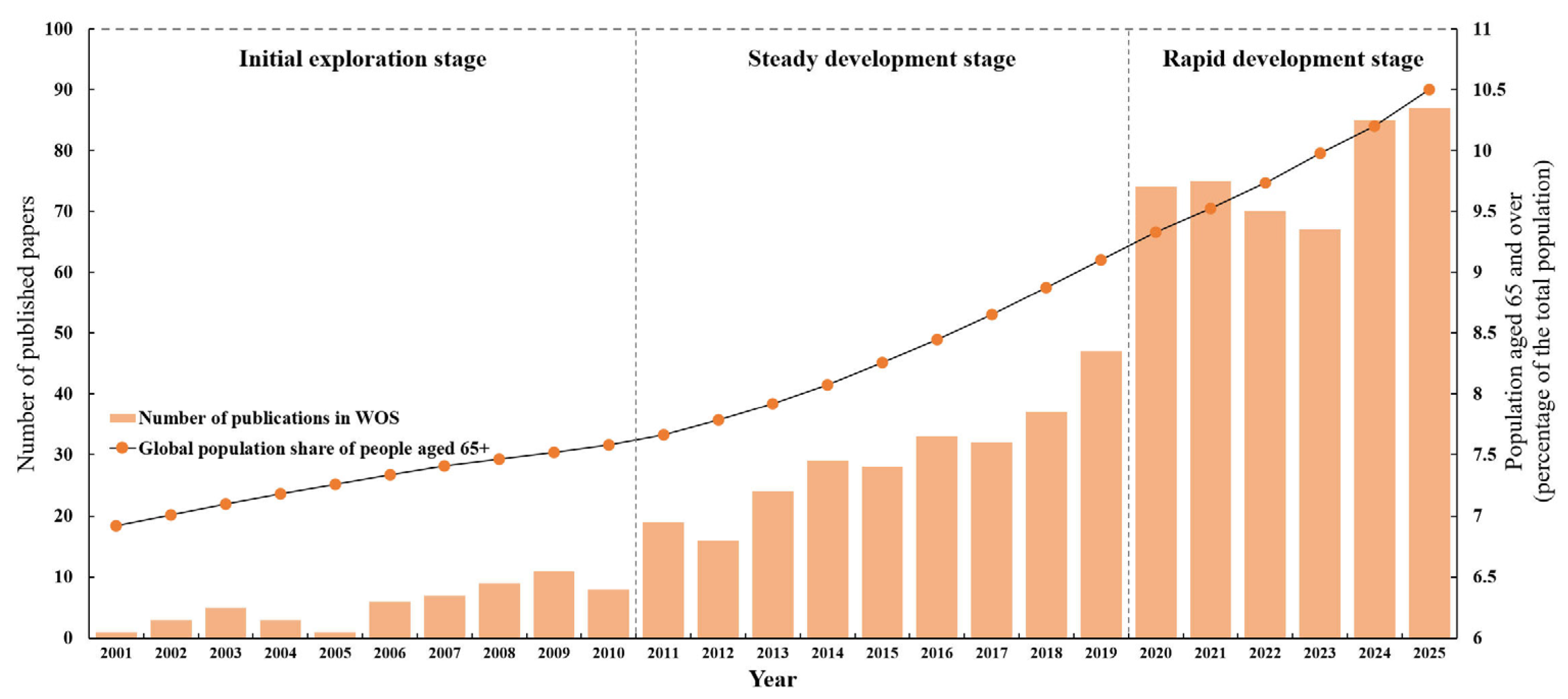
Figure 2 demonstrates a rapid increase in research related to the BE and older adults’ health, which is closely linked to the accelerated trend of population ageing worldwide. Based on the annual growth in the number of publications, shifts in research themes, and the evolving patterns of population ageing, the developmental trajectory is delineated into three distinct stages (Figure 2): the initial exploration stage, the steady development stage, and the rapid development stage.
Initial exploration stage (2001–2010): Around the year 2000, the global ageing coefficient stood at 6.9%, rising to 7.64% by 2010, marking the world’s entry into the phase of mild ageing (>7%). During this stage, research in the field of the BE and older adults’ health was in its nascent phase. Scholarly attention was primarily focused on aspects such as older adults’ travel modes and daily activities. Countries such as Japan and those in Europe entered an ageing society relatively early [19]. The WHO formally launched the “Global Age-friendly Cities” project in 2006 and issued its first guidelines in 2007, signifying the commencement of systematic international attention to ageing issues from an urban planning perspective. Despite the relatively early commencement of scholarly inquiry in this area, the overall volume of literature remained low, attributable to the still modest level of the global ageing coefficient at that time.
Steady development stage (2010–2019): Following 2010, the global ageing trend progressed at an average annual rate of 0.15%, reaching an ageing rate of 9.11% by 2019. During this period, the issue of population ageing began to attract global attention. In this stage, the volume of publications indexed in WOS began to accelerate, peaking in 2019. Scholars within the field conducted a substantial body of research during this period, with the primary research focus shifting towards older adults’ PA, walkability, and age-friendly environmental design. This trend was inextricably linked to the worldwide promotion and implementation of the WHO’s age-friendly cities framework. An increasing number of cities incorporated “age-friendly” principles into their development strategies. Consequently, relevant guidelines and assessment tools emerged continuously, providing rich policy support and practical case studies for academic research.
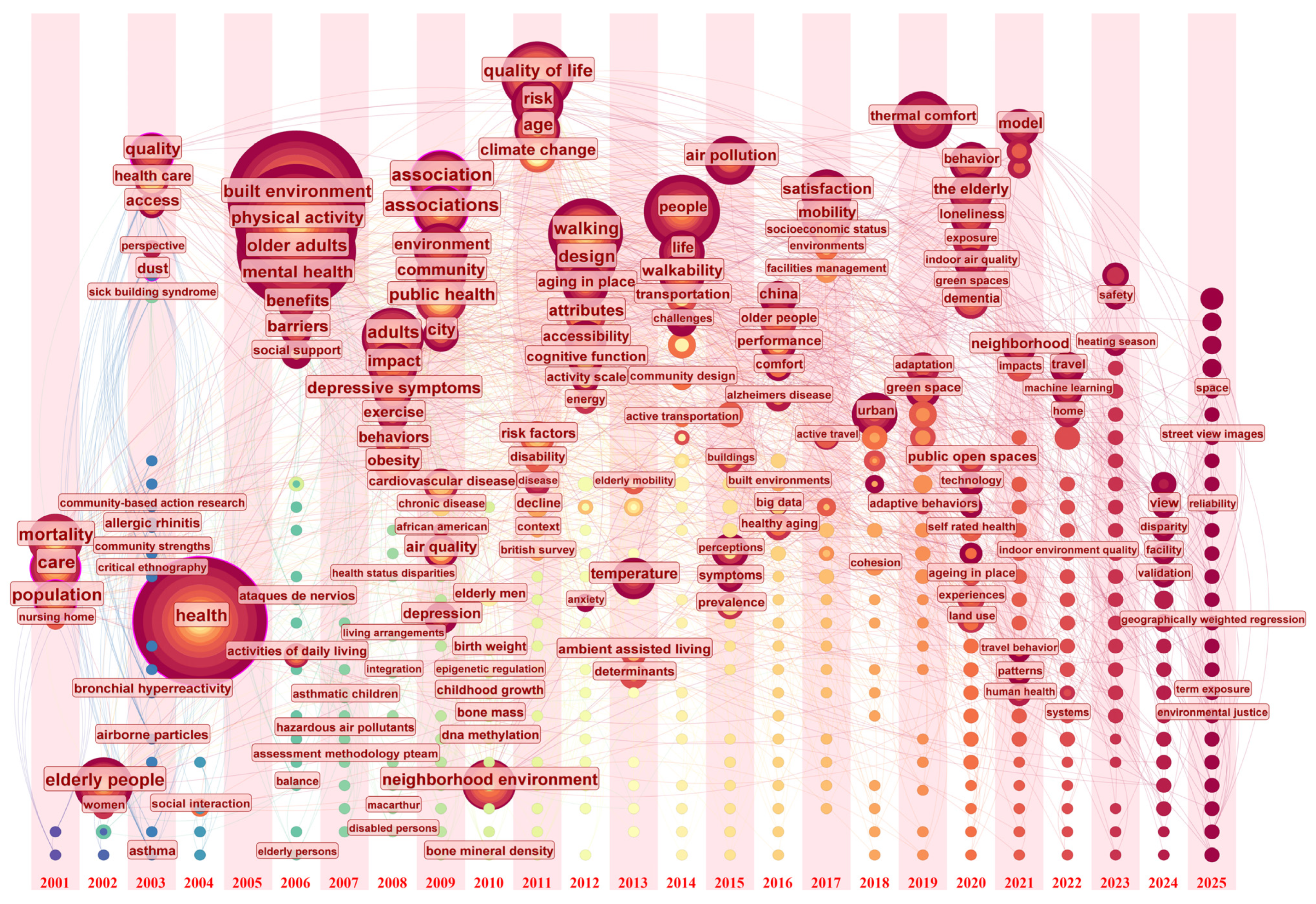
Rapid development stage (2019–2025): In recent years, the trend of global demographic transition has intensified. According to projections by institutions such as the International Institute for Applied Systems Analysis (IIASA), ageing has become a long-term and unequivocal trend. The advocacy within the United Nations Sustainable Development Goals (SDGs) concerning “Sustainable Cities and Communities” and “Good Health and Well-being” has elevated concepts such as “age-friendly” and “healthy ageing” to core concerns of urban planners [20]. The active response of the academic community to these agendas has propelled research on the BE and elderly health into a period of rapid development characterised by theoretical deepening and interdisciplinary integration. During this stage, publication output by researchers in this field began to surge. The research dimensions pursued by scholars became increasingly diversified, encompassing multiple aspects such as older adults’ mental activity, PA, spatial perception, the application of digital technologies, and elderly care policies [21,22] (Figure 3).

3.2. Research Hotspot Distribution

The keyword co-occurrence within the literature association network reflects the research hotspots in the field of BE and elderly health, encompassing network topology metrics such as co-occurrence frequency and betweenness centrality (Table 1).
Regarding keyword co-occurrence frequency, “built environment” (177 occurrences), “physical activity” (136 occurrences), “older adults” (133 occurrences), and “health” (159 occurrences) emerged as the most central keywords. Keywords such as “walking” (51 occurrences), “quality of life” (49 occurrences), “mental health” (40 occurrences), and “design” (38 occurrences) also received considerable attention. Furthermore, keywords including “neighbourhood environment”, “thermal comfort”, and “mortality” also exhibited a relatively high level of research interest. In summary, the ranking based on co-occurrence frequency in this study demonstrates a high degree of consistency, revealing a gradient structure of descending research interest: “physical activity—quality of life—mental health”.
With respect to keyword betweenness centrality, three keywords—“associations”, “built environment”, and “health”—are identified as core nodes, with centrality values of 0.15, 0.12, and 0.11, respectively. This indicates that these keywords constitute the core topics within the research network and serve as pivotal nodes from which research extends, diverges, and evolves.
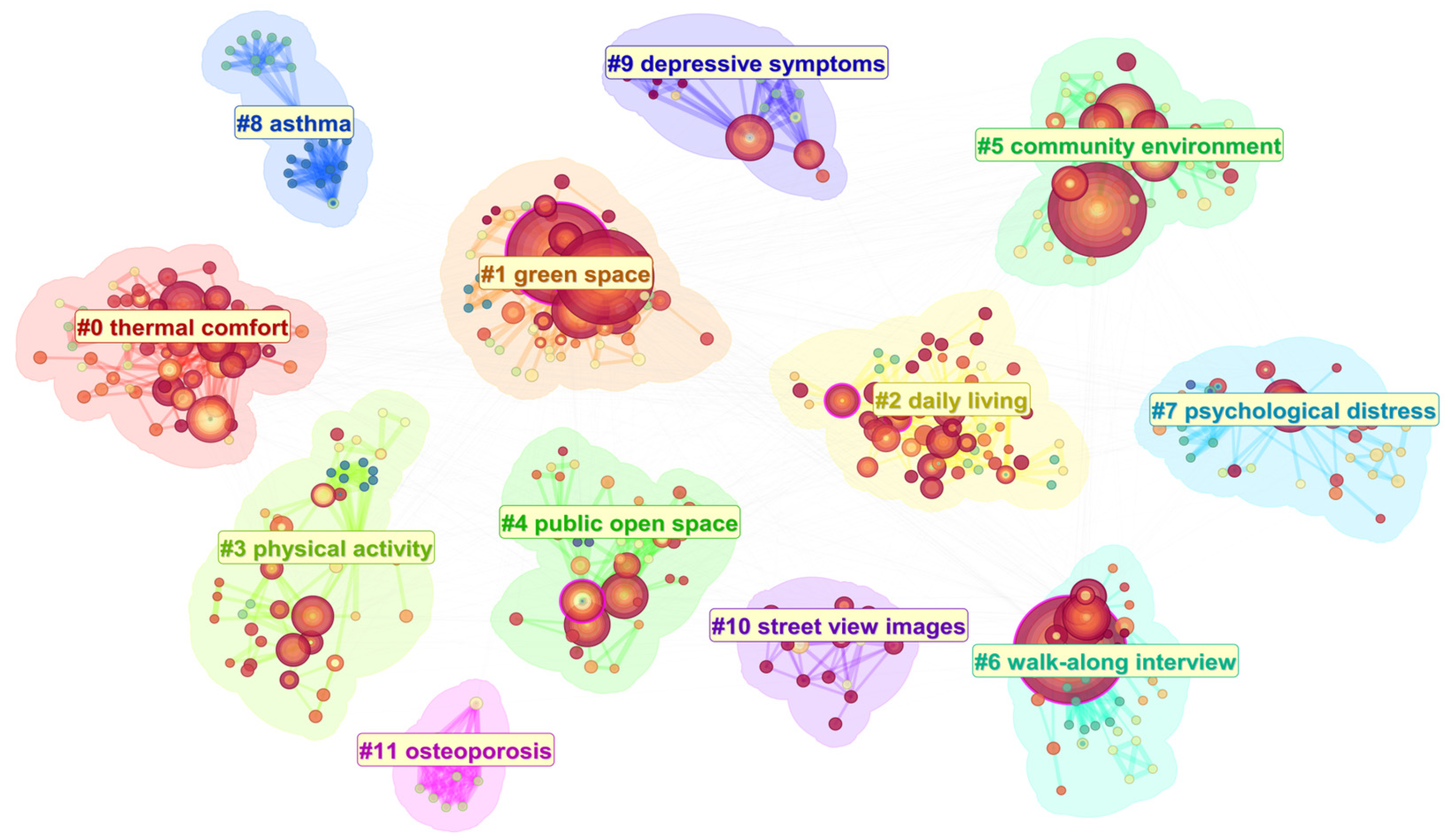
To further identify research hotspot directions, we extracted 12 clusters using the clustering algorithm. These clusters were labelled using terms generated by the LLR (log-likelihood ratio, p-level) algorithm and were numbered from #0 to #11. Based on the network structure and cluster clarity in Citespace, the modularity value (Q) and the mean silhouette (S) are provided as metrics to assess the quality of the mapping. A Q-value greater than 0.3 and an S-value greater than 0.7 are conventionally considered indicative of robust clustering results. The Q and S values for the cluster analysis of the dataset in this study were 0.5477 and 0.7838, respectively, demonstrating that the keyword clustering results were highly efficient and accurate (Figure 4).

4. Discussion: The Effects of the Built Environment on Elderly Health Through Multidimensional Pathways

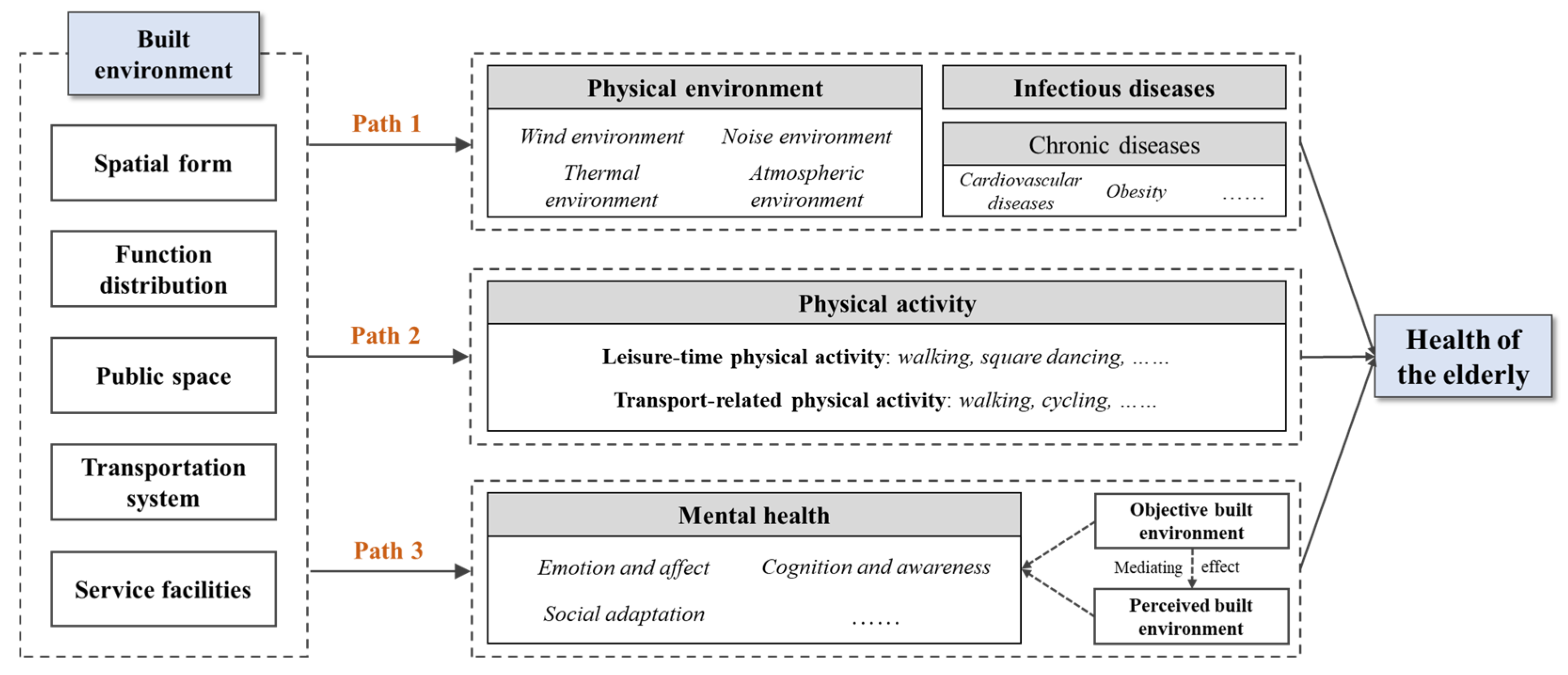
Existing research has extensively corroborated the association between the BE and elderly health. Synthesising the clustered keywords, the influence of the BE on elderly health can be categorised into three pathways: direct effects (physical environment, chronic diseases), PA, and MH (Figure 5).
(1)
Based on keywords from the cluster analysis, including #0 thermal comfort, #1 green space, #5 community environment, #8 asthma, #10 street view images, and #11 osteoporosis, these clusters collectively point to a core proposition: a direct exposure–health association exists between the physical attributes of the BE (e.g., thermal environment, air quality, greening level) and chronic diseases among the elderly (e.g., asthma). For instance, surface temperature in a community is linked to the prevention of heat-related illnesses in the elderly. Consequently, this pathway is defined as “direct effects,” emphasising the direct influence of physical environmental elements on the well-being of older adults, without the necessity of behavioural or psychological mediation.
(2)
Keywords from the cluster analysis, such as #2 daily living, #3 physical activity, and #4 public open space, focus on the daily behavioural patterns of the elderly. These clusters reveal how the BE—by providing walkable streets, accessible parks, and open spaces—can either facilitate or inhibit PA among the elderly. This pathway emphasises that the BE influences the cardiorespiratory function and metabolic health of the elderly by regulating PA behaviour.
(3)
Based on keywords including #7 psychological distress and #9 depressive symptoms, these clusters focus on the psychological well-being of the elderly. They reveal how the BE influences the MH status of the elderly by alleviating stress, promoting social interaction, and providing restorative environments. This pathway emphasises the comprehensive impact of the BE on the emotional, cognitive, and psychological resilience of the elderly (Figure 4 and Figure 5).
Figure 5. Pathways of influence: BE and older adults’ health.
Land 15 00702 g005
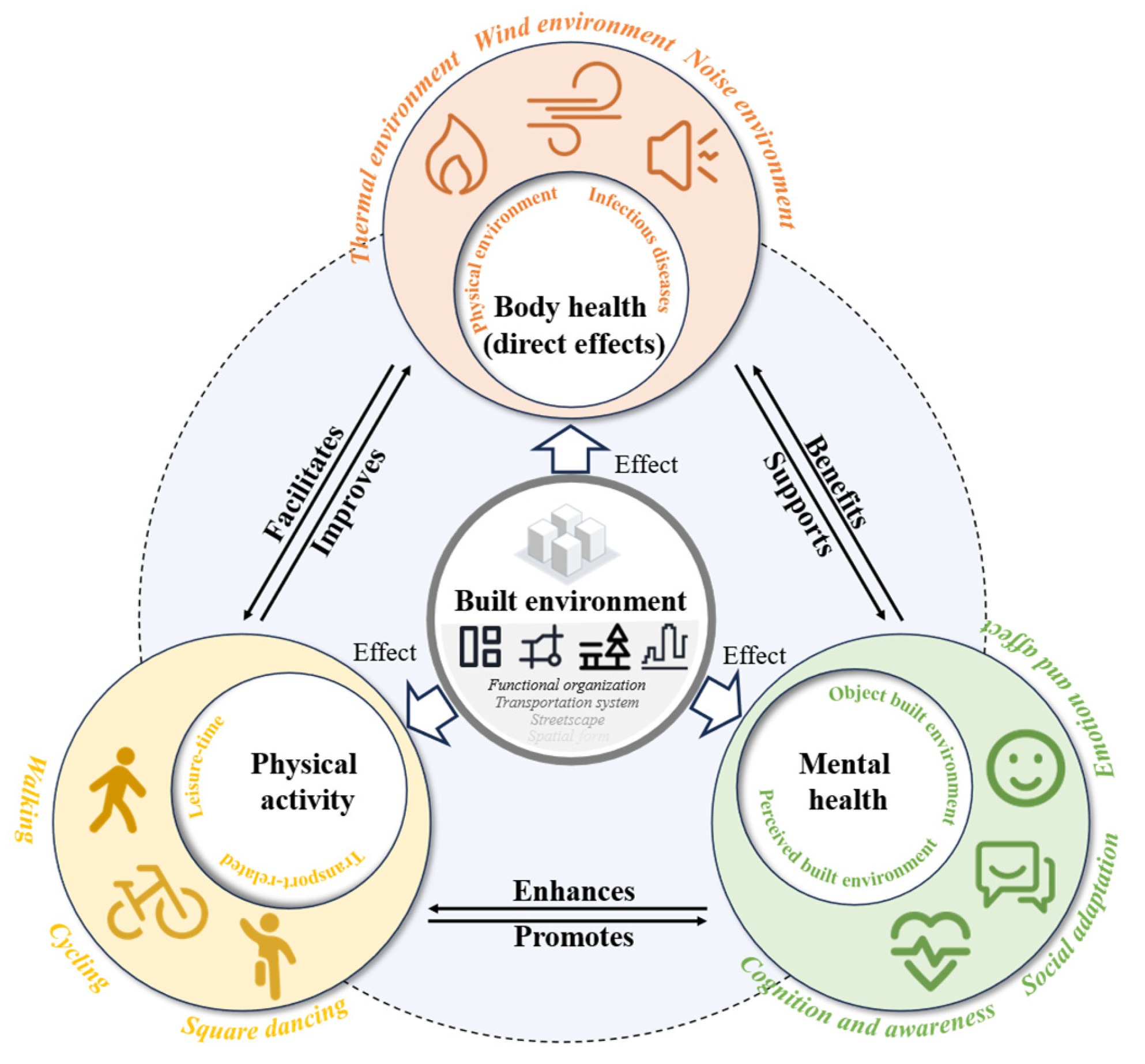
In summary, focusing on the BE as the defined element, this paper synthesises the potential mechanisms through which BE factors influence elderly health from two perspectives: direct and indirect effects. These are summarised as follows: direct effects (physical environment, chronic diseases), PA, and MH (Figure 5). Here, direct effects primarily refer to the physical BE (thermal, wind, acoustic, atmospheric, and luminous environments) and chronic diseases (e.g., obesity, cardiovascular and cerebrovascular diseases). PA mainly encompasses daily activities of a recreational or transport-related nature. MH includes components such as well-being, depression, stress, and resilience. Furthermore, these three pathways are not mutually exclusive but are interrelated. For instance, green space may directly influence the respiratory health of the elderly by improving air quality, also enhance walking willingness through providing walking spaces, and may also generate psychological restorative effects through landscape aesthetics. Figure 6 illustrates the interactive relationships among these three pathways.

4.1. Direct Effects of the Built Environment on the Health of Older Adults

4.1.1. Physical Environment

Thermal environment: Rapid urbanisation has driven alterations in the urban BE. Issues such as population concentration, industrial agglomeration, and traffic congestion have become prominent. An increasing number of cities are experiencing significant urban heat island effects. Under the combined influence of global climate warming and extreme heat events, the urban thermal environment continuously threatens public health. Compared to the general population, the elderly have higher comfort requirements and lower thermal tolerance in relation to the thermal environment [23]. Some scholars have investigated thermal comfort among the elderly in different regions. Their findings indicate that increased building height creates more shaded areas, resulting in reduced air temperature and solar radiation [24]. Furthermore, an elevated green view index leads to a decrease in urban surface temperature, thereby providing a cooler living environment for the elderly [25,26]. Additionally, other researchers have proposed that the elderly exhibit a distinct threshold effect regarding thermal comfort, which offers valuable insights for the age-friendly adaptation of the BE [27].
Wind environment: In high-density urban construction, environments with prolonged poor ventilation can lead to issues such as air pollution and pathogen proliferation, thereby posing a threat to the health of the elderly. Effective natural ventilation plays a crucial role in both enhancing the living environment and regulating the physical and mental well-being of the elderly. Research related to the wind environment and elderly health primarily focuses on two scales: the neighbourhood scale and the building scale. At the neighbourhood scale, strategies such as constructing ventilation corridors and creating micro-topography are employed to improve street-level ventilation [28,29]. At the building scale, ventilation is promoted through the rational configuration of building plan forms, orientation, and other factors [30]. For instance, Jiao et al. [31] identified satisfaction with the wind environment as a key factor significantly influencing the thermal comfort of the elderly in both winter and summer. They proposed that building interior design could be leveraged to increase air velocity in summer to improve sleep and thermal comfort, while in winter, windbreak facilities could be installed to balance “ventilation” and “thermal insulation,” thereby enhancing the thermal comfort perception of the elderly.
Acoustic environment: Noise is a prevalent environmental exposure that can substantially impact human health. This is particularly true for the elderly, who may be in a sub-health state. Physiologically, long-term exposure to noisy environments may adversely affect the auditory, nervous, and cardiovascular systems of the elderly. Psychologically, noise is more likely to induce feelings of anxiety and irritability in this population. Relevant studies indicate that building noise and traffic noise have a more pronounced impact on the health of the elderly [32]. They propose measures such as developing extensive green spaces, rationally planning road networks, and optimising land-use functional layouts. These interventions are suggested to be beneficial for improving urban acoustic environmental quality and facilitating the recovery of physiological health among the elderly [33,34].
Atmospheric environment: Prolonged residence in an environment with air pollution increases the risk of disease. If the elderly reside long-term in older communities characterised by severe air pollution and a poor urban environment, a series of adverse effects on their physical and mental health can ensue. Adopting a macro-level perspective, Silva et al. [35] investigated the impact of the atmospheric environment on the physical health of the elderly under varying socio-environmental conditions. Their results revealed a strong correlation between air quality and hospitalisation risk. Utilising city-level air pollution data, Chen et al. [36] concluded that air pollution undermines the MH of older adults through elevating both the frequency and severity of diseases. Furthermore, some scholars posit that atmospheric pollutants such as PM2.5, PM10, and O3 interact with other factors including heatwaves, poor ventilation, and noise exposure, collectively influencing the physical and mental health of the elderly [37,38,39,40].
Luminous environment: Research on the luminous environment and elderly health has primarily focused on two settings: indoor and outdoor. In indoor settings, scholars have largely focused on the relationship between the luminous environment and the MH of the elderly [41,42]. In outdoor settings, research has concentrated on investigating the impact of the luminous environment on outdoor PA and social interaction among the elderly [43]. Research by Bonaccorsi et al. [44] has demonstrated that street lighting is a positive BE element facilitating outdoor PA among the elderly, while insufficient lighting can inhibit walking in this population. Leung et al. [45] established a structural model linking elderly behaviour and the luminous environment, confirming that lighting can directly influence behaviours such as emotional state and sleep disturbances in the elderly. Furthermore, some scholars have proposed the concept of therapeutic lighting, providing theoretical support for the role of the luminous environment in promoting physical and mental recovery among the elderly [46].

4.1.2. Chronic Diseases

Chronic non-communicable diseases have superseded infectious diseases as the leading cause of threats to human health [47]. A body of research suggests that the urban BE exhibits certain mechanistic links to chronic diseases among the elderly, such as cardiovascular disease, hypertension, and obesity. Focusing specifically on the impact of the BE on chronic diseases, Li et al. [48] proposed that the BE indirectly influences the health of the elderly through PA and social interaction, with significant heterogeneity observed across age and gender in this process. Qin et al. [49] investigated the impact of elderly care facilities, medical and health facilities, and cultural and educational facilities on cardiovascular diseases in the elderly, concluding that age-supportive infrastructure constitutes an important influencing factor in the prevention of cardiovascular diseases. Similarly, research by other scholars has also demonstrated that BE factors, including green space area, street connectivity, and facility accessibility, can significantly reduce the incidence of coronary heart disease and stroke and extend the lifespan of older adults [50,51].

4.2. Impact of the Built Environment on Physical Activity Among Older Adults

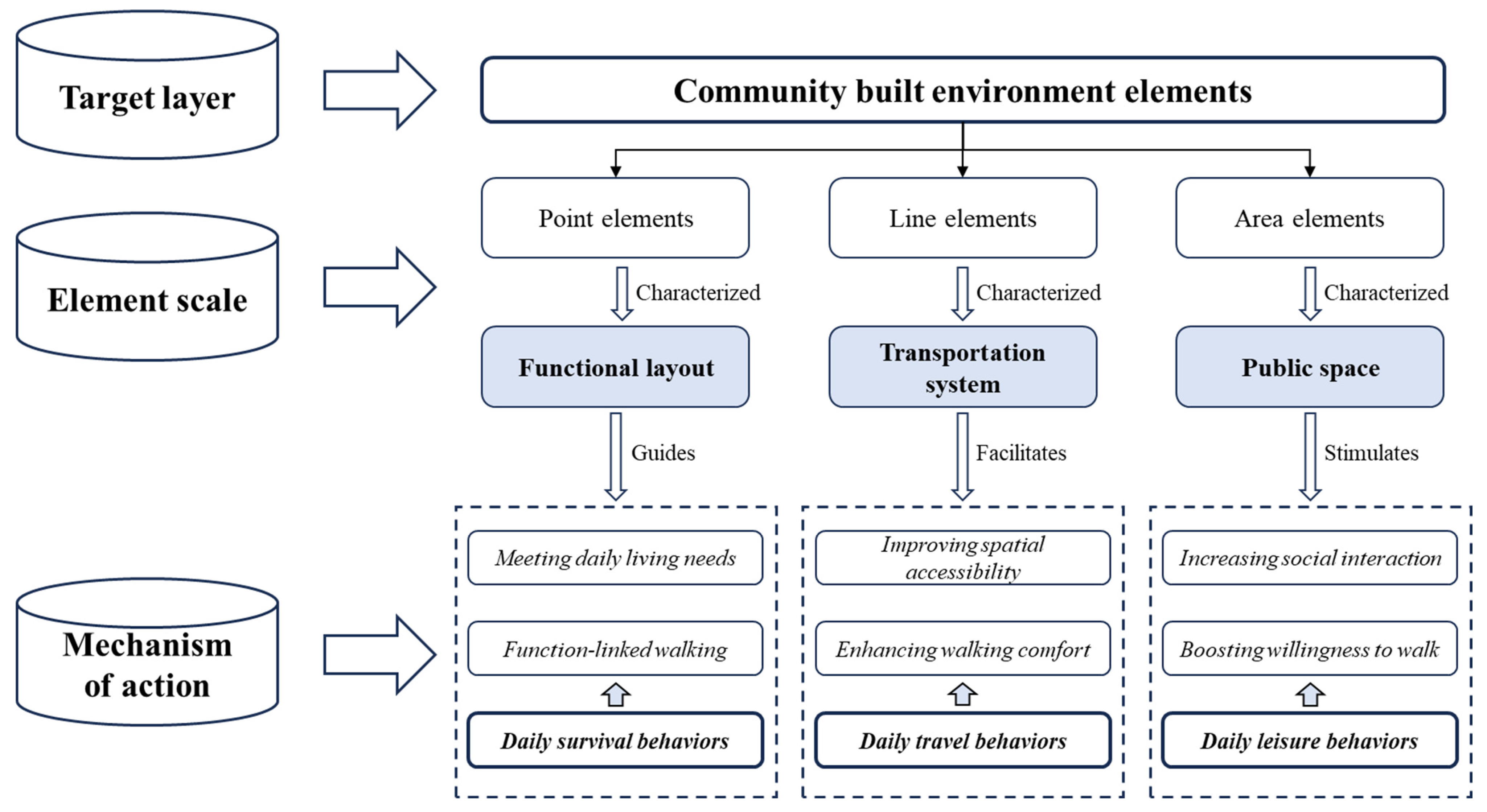
PA promotes both physical and mental well-being in humans. It can help prevent and manage chronic diseases and enhance overall health. Relevant research indicates that physical inactivity has emerged as a major factor threatening the health of the elderly. Consequently, promoting PA has become a key focus within elderly health discourse. PA related to the BE primarily encompasses recreational PA and transport-related PA [48,52,53,54,55]. Based on the spatial scale of their constituent elements, scholars have predominantly explored the BE factors influencing PA among the elderly from three perspectives: point elements–functional layout, line elements–transportation systems, and area elements–public space (Figure 7).

4.2.1. Point Elements–Functional Layout

The elderly typically have a limited daily activity radius and exhibit a high degree of reliance on the land-use and the layout of functional facilities within their immediate community surroundings. Within this context, the accessibility of functional spaces determines the ease with which the elderly can access daily essential services, while land-use diversity characterises the completeness and richness of the service provisions. Both factors exert a significant influence on the engagement of the elderly in PA. In terms of functional accessibility, the density of public service facilities commonly used by the elderly—such as commercial, medical, sports, park, and daily life services—has been shown to significantly promote their PA [56]. Cao et al. [57] investigated the impact of the BE across different neighbourhoods on the walking activity of the elderly. Their research showed that the density of public green areas and public service facilities is a key factor in influencing recreational walking among the elderly. Taking age-friendly communities in Singapore as a case study, Tao et al. [58] explored the key infrastructure influencing PA among the elderly. Their research found that facilities such as transport stops and shelters encourage outdoor activity by enhancing the safety and comfort of walking, thereby contributing to increased PA. Conversely, an excessively high density of daily facilities like supermarkets and community gardens may reduce the willingness of the elderly to undertake longer-distance trips, consequently inhibiting their outdoor PA. Based on longitudinal elderly health survey data from Huainan City, Zhou et al. [59] concluded that improving the accessibility of various functional facilities (e.g., supermarkets, hospitals, farmers’ markets) helps to attract sedentary elderly individuals to engage in PA. Furthermore, numerous studies have demonstrated that a higher degree of land-use mix is associated with greater promotion of PA among the elderly [60,61,62,63]. Communities characterised by compact land-use and mixed functions are typically accompanied by more diverse service facilities and a richer array of activity options. This allows older adults to engage in daily activities such as shopping, leisure, and socialising within the community through walking, thereby enhancing both their inclination towards and the frequency of PA.

4.2.2. Line Elements–Transportation Systems

The planning of transportation systems, encompassing community road network design and public transit layout, determines the spatial accessibility and walkability of a neighbourhood. BE indicators such as street network density, road connectivity, number of public transport stops, and the quality of pedestrian facilities consequently affect the PA levels among older adults. The impact of street network density on the PA levels of older adults presents two divergent perspectives. One body of research posits that neighbourhoods with higher street network density and greater connectivity feature shorter distances between origins and destinations. This often results in a more enriched experience for slow-mode travel, which more readily stimulates walking demand among the elderly and consequently increases their walking frequency [64]. On the other hand, some scholars argue that, given the relatively limited activity range of the elderly, a higher density of streets and intersections does not necessarily cater to diverse travel needs. It may instead interrupt the continuity of outdoor activities and increase safety risks as well as psychological burdens [65]. Secondly, the coordinated design of public transport stop placement and the street network facilitates the formation of a “walking + public transport” interchange system, which makes a significant positive contribution to the PA of the elderly [66,67]. Finally, due to the decline in mobility, the elderly generally prefer to engage in activities on surfaces that are level and have minimal gradients. Measures such as improving crossing facilities, enhancing pedestrian pathway shading [68], and adding dedicated slow-mode travel lanes [69] have all been shown to promote PA among the elderly.

4.2.3. Area Elements–Public Space

Public space serves as a vital venue for hosting the PA and social interaction of the elderly. Among these, green space, street space, and plaza space constitute the primary foci in existing research, with relevant indicators encompassing distribution density and spatial quality. At the level of green space, the proportion of green space and the distribution density of parks are positive factors influencing the PA of the elderly. Zang et al. [64] found a positive correlation between recreational walking and the vegetation coverage index. Furthermore, the green view index is also a significant indicator affecting the propensity, frequency, and duration of walking among the elderly. Research by Yang et al. [55] in Hong Kong demonstrated that the green view index exerts a non-linear influence on elderly walking, with the most pronounced promotive effect observed within the range of 0 to 0.24. At the level of street space, enhancing street permeability and openness, reducing the proportion of enclosed interfaces on both sides of the street, and providing resting and lingering spaces for the elderly can promote behaviours such as viewing scenery, socialising, and exercising during walking [58,64]. Additionally, the width and continuity of streets should be designed with an accessible system tailored to the walking needs of the elderly (e.g., for walkers, wheelchairs) to enhance the convenience of their travel [58,70]. At the level of plaza space, Stride et al. surveyed older adults’ use of outdoor fitness facilities in public park spaces, identifying that accessible equipment layout, adequate shading, and proximity to seating areas are key enablers for the elderly to engage in PA and social interaction within plaza environments [68].

4.3. Influence of the Built Environment on the Mental Health of the Elderly

MH encompasses aspects such as emotional state, cognitive awareness, and social adaptation, constituting a crucial dimension of human health. In terms of MH, owing to physiological decline and altered psychological needs, the elderly are more susceptible than other age groups to issues such as loneliness, depression, and anxiety, exhibiting what can be termed emotional “vulnerability.” Research suggests that the BE may influence the MH of the elderly indirectly, by affecting their lifestyles, social interactions, and other factors. Investigations into the influence of the BE on the MH of the elderly primarily focus on two aspects: first, the objective dimension of the material spatial environment in which the elderly reside and live; and second, the subjective dimension of the elderly’s perception of the urban environment and social health elements.

4.3.1. Objective Built Environment

The 5Ds framework was proposed by Ewing and Cervero, which was extended from the 3Ds framework developed by Cervero and Kockelman [71,72]. The 5Ds of the BE influence the convenience of and reliance on space use among the elderly, thereby exerting an indirect effect on their MH status, encompassing aspects such as feelings of loneliness, security, and well-being. The research by Lee et al. [73] confirmed a positive correlation between the proportion of urban green space and reduced levels of stress and depression among the elderly, demonstrating a significant promotive effect on their MH. Additionally, a study by Green et al. [74] based in London indicated that a convenient and safe public transport system enhances the accessibility of daily travel for the elderly, fosters their degree of social participation, and indirectly augments their sense of life satisfaction.

4.3.2. Perceived Built Environment

In comparison to the objective BE, the perceived BE also exerts a certain influence on the MH of the elderly. Firstly, residential happiness and satisfaction are important perceived factors affecting the MH of the elderly. Pleasant scenery and a comfortable climatic environment within the residential area can promote their MH [61,75]. Conversely, crowded living conditions may lead to psychological issues among the elderly due to excessive social interaction and a lack of privacy [76]. Furthermore, a substantial body of research confirms that the objective and perceived BE are also linked through mediating factors. This mediating effect of perception allows for a clearer demonstration of both the positive and negative impacts of the BE on the MH of the elderly. Such an understanding is instrumental in constructing age-friendly urban environments at the perceptual level [77,78].

4.4. Optimisation of the Built Environment in Response to Elderly Health Needs

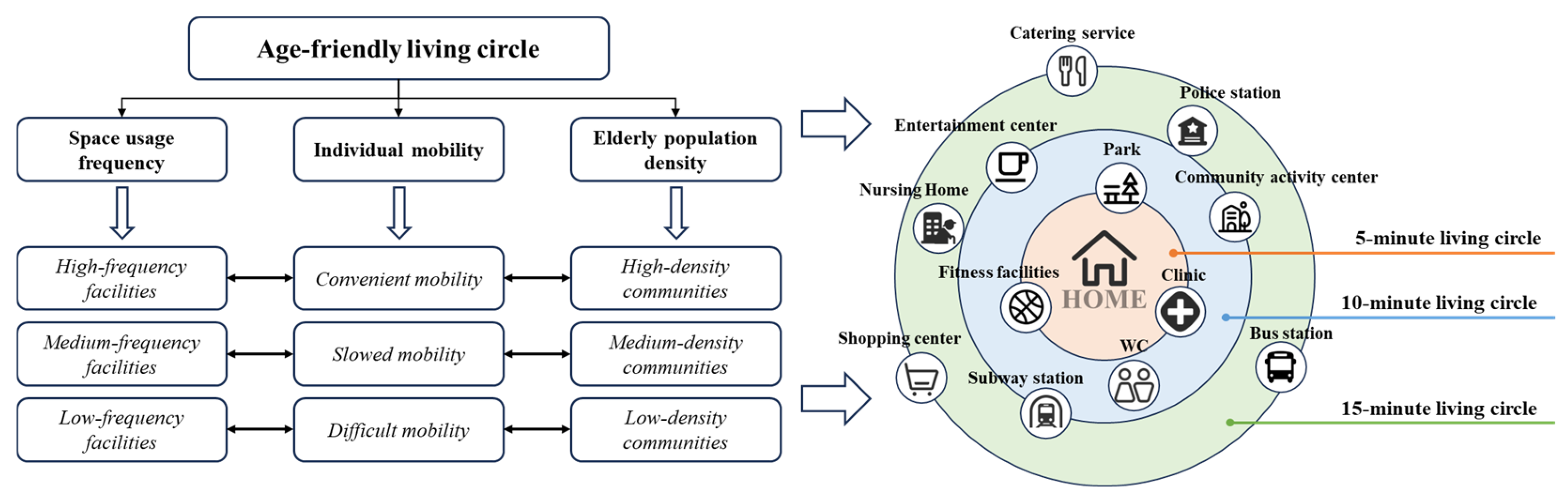
Optimisation of the BE in response to elderly health needs primarily comprises two levels: the macro-level spatial allocation of elderly care facilities and the construction of age-friendly living circles. On the one hand, from a supply–demand matching perspective, relevant research analyses the degree of coupling between elderly care facilities of varying scales and hierarchies and the health needs of the elderly, based on indicators such as the density and proportion of the elderly population at the street or community unit level. This analysis serves to identify spatial units in urgent need of optimisation. On the other hand, from a perspective focusing on the mechanisms of element influence, relevant research proposes specific optimisation measures for age-friendly living circle construction and micro-level elements. These proposals are guided by the mechanisms through which BE factors influence the physical and mental health of the elderly, with the aim of enhancing aspects such as life convenience and willingness to engage in PA (Figure 8).

4.4.1. Macro-Level: Spatial Allocation of Elderly Care Facilities

The macro-level perspective primarily addresses the spatio-temporal distribution patterns and needs of the elderly through two aspects: the spatial allocation of elderly care facilities and the elderly care policy system. For example, Li et al. [70] found that factors such as street network morphology and land-use patterns significantly influence the frequency of utilisation of elderly care facilities. They proposed that such facilities should be preferentially sited along major urban thoroughfares and within commercial intensive zones. In suburban areas, it was suggested that service types should be diversified and site capacity expanded to meet the concentrated demands of the elderly. Through an analysis of policy documents from the Australian federal government and the South Australian state government, Oster et al. [79] explored the governance logic concerning elderly MH within the policy discourse framework. They argued that the elderly population should be accorded greater attention within the policy system and be governed as active citizens possessing a sense of responsibility, with the aim of enhancing the overall MH of this group.

4.4.2. Micro-Level: Construction of Age-Friendly Living Circles

At the micro-level, the optimisation of the BE is primarily proposed through the construction of age-friendly living circles, based on characteristics such as the daily activity patterns and ageing degree of the community-dwelling elderly. For instance, Jiang et al. [80], focusing on the living circles of the elderly in Suzhou, China, constructed a three-tiered hierarchy of age-friendly living circles (5, 10, and 15 min) based on a walkability accessibility evaluation system. Building upon this, Logan et al. [81] introduced accessibility criteria to dynamically delineate the service catchment areas for different types of infrastructure. Other scholars have extracted the core factors influencing the physical and mental health of the elderly based on spatial association models of the “built environment–elderly health” relationship, and have subsequently proposed optimisation pathways targeting these key BE factors. For example, taking Xiamen City as a case study, Su et al. [82] employed explainable machine learning and multi-scale spatial analysis. Their study identified key positive influencing factors, including spatial vitality, street enclosure, safety perception, and traffic flow. Based on these findings, they put forward targeted suggestions for the construction of living circles at different scales.

5. Conclusions

Deep ageing has become the overarching trend in global demographic evolution. The issue of healthy ageing will undoubtedly remain a key focus for future scholarly attention and research. Drawing upon the relevant literature from the WOS Core Collection spanning 2001 to 2025, this study employed the bibliometric analysis software Citespace to investigate research progress on the relationship between the BE and older adults’ health.
The principal findings are as follows: Firstly, a close positive correlation exists between the trend of population ageing and the annual growth in publication numbers. The total volume of publications exhibited a transition from gradual to rapid growth, delineating three gradient developmental stages: the initial exploration stage (2001–2010), the steady development stage (2010–2019), and the rapid development stage (2019–2025). Secondly, the research hotspots displayed a gradient structure of descending intensity: “physical activity—quality of life—mental health.” Thirdly, based on literature cluster analysis, multidimensional pathways through which the BE influences elderly health were identified. These three pathways are: direct effects (physical environment, chronic diseases), PA, and MH. Finally, macro-level allocation of elderly care facilities and micro-level construction of age-friendly living circles constitute the core optimisation strategies currently employed to address elderly health needs.
In summary, the three-pathway theoretical framework of “direct effects—physical activity—mental health” proposed in this study transcends the conventional keyword clustering labels found in traditional bibliometrics. It clearly defines the nature of the effects (direct/indirect) and the types of mediation (behavioural mediation/psychological mediation) for each of the three pathways, thereby establishing a complete logical chain from mechanistic analysis to planning responses.
Summarising the existing research, the following challenges and opportunities persist: Firstly, BE spatial elements are characterised by rich dimensionality and varying scales. While current studies predominantly investigate the impact mechanisms of the BE on elderly health at the meso-level community scale, research at the macro urban scale, micro street scale, and building scale (e.g., commercial spaces, metro stations, underground spaces) remains relatively scarce. Secondly, questionnaire surveys remain the primary data collection method in elderly health research. With advances in AI and intelligent sensing technologies, data sources such as GPS trajectories, human–computer interaction sensing, and mobile phone signalling data offer potential for both refined and generalised analyses [83,84]. Future research should enhance the application of “embodied” sensing technologies and “large-scale” massive datasets within the field of elderly health, enabling a multi-level quantitative delineation of the BE’s impact on the elderly. In conclusion, against the backdrop of continuously accelerating global ageing and the imperative for urban spatial quality enhancement, research on the relationship between multidimensional urban environments and the health of older adults will remain an important agenda for future studies.
Several limitations should be acknowledged in this study. Firstly, the literature search was conducted exclusively within the Web of Science Core Collection and included only English-language articles. This introduces database coverage bias and an English-language publication preference, potentially overlooking significant research findings from other databases such as Scopus and PubMed, as well as from non-English speaking regions including China and Japan. Secondly, this study relied solely on Citespace for analysis. A single tool is constrained by the characteristics of its underlying algorithms and may introduce tool-specific bias in the presentation of network morphology. Future research could combine Citespace with other tools such as VOSviewer (v1.6.20) for cross-validation, and introduce qualitative methods to conduct mixed-methods research. Finally, due to space constraints, in-depth analysis of some literature clusters and nodes could not be fully developed.

Author Contributions

Y.W. was responsible for the bibliometric data analysis and wrote the first draft. B.Y. conceived and designed the study, conducted the systematic review and wrote the manuscript. L.H. contributed significantly to analysis and manuscript preparation. Y.P. visualised the data and made the tables. Q.Z. and H.F. reviewed and refined the paper. All authors have read and agreed to the published version of the manuscript.

Funding

This study was supported by the Youth Project of Humanities and Social Sciences Foundation of the Ministry of Education of China (Grant No. 25YJCZH348), the Fundamental Research Funds for the Central Universities (Grant No. 2682026CX099), and the Tongji University Cyrus Tang Foundation Joint Research Platform for Inclusive Urban Planning and Construction (Grant No. TJTZY202502).

Data Availability Statement

The original contributions presented in the study are included in the article; further inquiries can be directed to the corresponding authors.

Acknowledgments

The authors sincerely thank all reviewers and editors for their comments and help.

Conflicts of Interest

The authors declare that the research was conducted in the absence of any commercial or financial relationships that could be construed as a potential conflict of interest.

References

  1. Nykiforuk, C.I.; Rawson, D.; Mcgetrick, J.A.; Belon, A.P. Canadian policy perspectives on promoting physical activity across age-friendly communities: Lessons for advocacy and action. Ageing Soc. 2019, 39, 307–339. [Google Scholar] [CrossRef]
  2. Li, C.; Zhou, Y. Residential environment and depressive symptoms among Chinese middle-and old-aged adults: A longitudinal population-based study. Health Place 2020, 66, 102463. [Google Scholar] [CrossRef]
  3. Zheng, Z.; Chen, H.; Yang, L. Transfer of promotion effects on elderly health with age: From physical environment to interpersonal environment and social participation. Int. J. Environ. Res. Public Health 2019, 16, 2794. [Google Scholar] [CrossRef] [PubMed]
  4. Antunes, M.C.; Zardeto, H.N.; Pscheidt, S.L.; Custódio, G.; Mello, D.N.d.; Giehl, M.W.C. Built environment and its association with self-rated health in Brazilian elderly: National Health Survey 2013. Ciênc. Saúde Coletiva 2023, 28, 3137–3148. [Google Scholar] [CrossRef] [PubMed]
  5. Lu, J.; Dai, M.; Li, F.; Qin, L.; Cheng, B.; Li, Z.; Yao, Z.; Wu, R. The impact of urban built environments on elderly People’s sense of safety and adaptation to aging: A case study of three major urban agglomerations in China. Land 2023, 12, 1486. [Google Scholar] [CrossRef]
  6. Yu, J.; Yang, C.; Zhang, S.; Zhai, D.; Li, J. Comparison study of perceived neighborhood-built environment and elderly leisure-time physical activity between Hangzhou and Wenzhou, China. Int. J. Environ. Res. Public Health 2020, 17, 9284. [Google Scholar] [CrossRef]
  7. Qiu, N.; Xing, Z.; Han, X.; Du, M. Chrono-urbanism in action: Collaborative governance for heritage preservation and livability in Beijing’s Hutongs. Cities 2025, 160, 105841. [Google Scholar] [CrossRef]
  8. Burton, E. Streets ahead? The role of the built environment in healthy ageing. Perspect. Public Health 2012, 132, 161. [Google Scholar]
  9. Lang, I.A.; Llewellyn, D.J.; Langa, K.M.; Wallace, R.B.; Melzer, D. Neighbourhood deprivation and incident mobility disability in older adults. Age Ageing 2008, 37, 403–410. [Google Scholar] [CrossRef]
  10. World Health Organization. World Report on Ageing and Health; World Health Organization: Geneva, Switzerland, 2015. [Google Scholar]
  11. Pan, H.; Liu, Y.; Chen, Y. The health effect of perceived built environment on depression of elderly people in rural China: Moderation by income. Health Soc. Care Community 2021, 29, 185–193. [Google Scholar] [CrossRef]
  12. Xiong, R.; Zhao, H.; Huang, Y. Spatial heterogeneity in the effects of built environments on walking distance for the elderly living in a mountainous city. Travel Behav. Soc. 2024, 34, 100693. [Google Scholar] [CrossRef]
  13. Zhang, Y.; Yang, X.; Li, Y.; Liu, Q.; Li, C. Household, personal and environmental correlates of rural elderly’s cycling activity: Evidence from Zhongshan metropolitan area, China. Sustainability 2014, 6, 3599–3614. [Google Scholar] [CrossRef]
  14. He, H.; Li, T.; Yu, Y.; Lin, X. Associations between built environment characteristics and walking in older adults in a high-density city: A study from a Chinese megacity. Front. Public Health 2020, 8, 577140. [Google Scholar] [CrossRef] [PubMed]
  15. Nyunt, M.S.Z.; Shuvo, F.K.; Eng, J.Y.; Yap, K.B.; Scherer, S.; Hee, L.M.; Chan, S.P.; Ng, T.P. Objective and subjective measures of neighborhood environment (NE): Relationships with transportation physical activity among older persons. Int. J. Behav. Nutr. Phys. Act. 2015, 12, 108. [Google Scholar] [CrossRef]
  16. Giehl, M.W.C.; Hallal, P.C.; Corseuil, C.W.; Schneider, I.J.C.; d’Orsi, E. Built environment and walking behavior among Brazilian older adults: A population-based study. J. Phys. Act. Health 2016, 13, 617–624. [Google Scholar] [CrossRef]
  17. Chen, C. CiteSpace II: Detecting and visualizing emerging trends and transient patterns in scientific literature. J. Am. Soc. Inf. Sci. Technol. 2006, 57, 359–377. [Google Scholar] [CrossRef]
  18. Zhang, S.; Li, X.; Chen, Z.; Ouyang, Y. A bibliometric analysis of the study of urban green spaces and health behaviors. Front. Public Health 2022, 10, 1005647. [Google Scholar] [CrossRef]
  19. Nakatani, H. Aging and shrinking population: The looming demographic challenges of super-aged and super-low fertility society starting from Asia. Glob. Health Med. 2023, 5, 257–263. [Google Scholar] [CrossRef]
  20. Lee, B.X.; Kjaerulf, F.; Turner, S.; Cohen, L.; Donnelly, P.D.; Muggah, R.; Davis, R.; Realini, A.; Kieselbach, B.; MacGregor, L.S. Transforming our world: Implementing the 2030 agenda through sustainable development goal indicators. J. Public Health Policy 2016, 37, 13–31. [Google Scholar] [CrossRef]
  21. Fang, Z.; Jin, C.; Liu, C. The Impact of Built Environment in Shanghai Neighborhoods on the Physical and Mental Health of Elderly Residents: Validation of a Chain Mediation Model Using Deep Learning and Big Data Methods. Buildings 2024, 14, 3575. [Google Scholar] [CrossRef]
  22. Dujardin, C.; Lorant, V.; Thomas, I. Self-assessed health of elderly people in Brussels: Does the built environment matter? Health Place 2014, 27, 59–67. [Google Scholar] [CrossRef]
  23. Ahrentzen, S.; Erickson, J.; Fonseca, E. Thermal and health outcomes of energy efficiency retrofits of homes of older adults. Indoor Air 2016, 26, 582–593. [Google Scholar] [CrossRef]
  24. Wang, W.; Li, Y.; Li, L.; Wang, R.; Wang, Y. Study on thermal comfort of elderly in community parks: An exploration from the perspectives of different activities and ages. Build. Environ. 2023, 246, 111001. [Google Scholar] [CrossRef]
  25. Ma, X.; Tian, Y.; Du, M.; Hong, B.; Lin, B. How to design comfortable open spaces for the elderly? Implications of their thermal perceptions in an urban park. Sci. Total Environ. 2021, 768, 144985. [Google Scholar] [CrossRef] [PubMed]
  26. Zhang, S.; Li, X.; Yang, M.; Song, H. Older adults’ heterogeneous preferences for climate-proof urban blue-green spaces: A case of Chengdu, China. Urban For. Urban Green. 2023, 90, 128139. [Google Scholar] [CrossRef]
  27. Hughes, C.; Natarajan, S.; Liu, C.; Chung, W.J.; Herrera, M. Winter thermal comfort and health in the elderly. Energy Policy 2019, 134, 110954. [Google Scholar] [CrossRef]
  28. Stewart, I.D.; Oke, T.R. Local climate zones for urban temperature studies. Bull. Am. Meteorol. Soc. 2012, 93, 1879–1900. [Google Scholar] [CrossRef]
  29. Wen, R.; Yan, Y.; Wu, H.; Ji, T.; Yang, K. Microclimatic Risk Assessment for Elderly Health in High-Density Winter City Community Streets: A Case Study of the Heat Retention Effect. Sustainability 2026, 18, 2347. [Google Scholar] [CrossRef]
  30. Wang, J.; Ni, M.; Chen, J. Renovation of old communities for public health and resilient environment based on greenery optimization and wind deflectors. Indoor Built Environ. 2023, 32, 1683–1706. [Google Scholar] [CrossRef]
  31. Jiao, Y.; Yu, H.; Wang, Z.; Wei, Q.; Yu, Y. Influence of individual factors on thermal satisfaction of the elderly in free running environments. Build. Environ. 2017, 116, 218–227. [Google Scholar] [CrossRef]
  32. Azuma, K.; Uchiyama, I. Association between environmental noise and subjective symptoms related to cardiovascular diseases among elderly individuals in Japan. PLoS ONE 2017, 12, e0188236. [Google Scholar] [CrossRef] [PubMed]
  33. Gidlöf-Gunnarsson, A.; Öhrström, E. Noise and well-being in urban residential environments: The potential role of perceived availability to nearby green areas. Landsc. Urban Plan. 2007, 83, 115–126. [Google Scholar] [CrossRef]
  34. Shu, S.; Meng, L.; Piao, X.; Geng, X.; Tang, J. Effects of audio–visual interaction on physio-psychological recovery of older adults in residential public space. Forests 2024, 15, 266. [Google Scholar] [CrossRef]
  35. Silva, E.N.d.; Ribeiro, H. Impact of urban atmospheric environment on hospital admissions in the elderly. Rev. De Saúde Pública 2012, 46, 694–701. [Google Scholar] [CrossRef][Green Version]
  36. Chen, F.; Zhang, X.; Chen, Z. Air pollution and mental health: Evidence from China Health and Nutrition Survey. J. Asian Econ. 2023, 86, 101611. [Google Scholar] [CrossRef]
  37. Zhou, W.; Wang, Q.; Li, R.; Zhang, Z.; Wang, W.; Zhou, F.; Ling, L. The effects of heatwave on cognitive impairment among older adults: Exploring the combined effects of air pollution and green space. Sci. Total Environ. 2023, 904, 166534. [Google Scholar] [CrossRef]
  38. Yang, J.; Shi, B.; Shi, Y.; Marvin, S.; Zheng, Y.; Xia, G. Air pollution dispersal in high density urban areas: Research on the triadic relation of wind, air pollution, and urban form. Sustain. Cities Soc. 2020, 54, 101941. [Google Scholar] [CrossRef]
  39. Nußbaum, R.; Lucht, S.; Jockwitz, C.; Moebus, S.; Engel, M.; Jöckel, K.-H.; Caspers, S.; Hoffmann, B. Associations of air pollution and noise with local brain structure in a cohort of older adults. Environ. Health Perspect. 2020, 128, 67012. [Google Scholar] [CrossRef]
  40. Foglia, C.; Parisi, M.L.; Pontarollo, N. Building (back) better cities for aged people in Europe. Cities 2023, 141, 104479. [Google Scholar] [CrossRef]
  41. Leung, M.-y.; Famakin, I.; Kwok, T. Relationships between indoor facilities management components and elderly people’s quality of life: A study of private domestic buildings. Habitat Int. 2017, 66, 13–23. [Google Scholar] [CrossRef]
  42. Leung, M.-y.; Wang, C.; Chan, I.Y. A qualitative and quantitative investigation of effects of indoor built environment for people with dementia in care and attention homes. Build. Environ. 2019, 157, 89–100. [Google Scholar] [CrossRef]
  43. Wen, F.; Peng, L.; Zhang, B.; Zhang, Y.; Zhang, Y. Satisfaction with Nighttime Outdoor Activity Environment Among Elderly Residents in Old Gated Communities. Buildings 2025, 15, 277. [Google Scholar] [CrossRef]
  44. Bonaccorsi, G.; Manzi, F.; Del Riccio, M.; Setola, N.; Naldi, E.; Milani, C.; Giorgetti, D.; Dellisanti, C.; Lorini, C. Impact of the built environment and the neighborhood in promoting the physical activity and the healthy aging in older people: An umbrella review. Int. J. Environ. Res. Public Health 2020, 17, 6127. [Google Scholar] [CrossRef] [PubMed]
  45. Leung, M.-y.; Wang, C.; Wei, X. Structural model for the relationships between indoor built environment and behaviors of residents with dementia in care and attention homes. Build. Environ. 2020, 169, 106532. [Google Scholar] [CrossRef]
  46. Elsayed, N.; Rakha, T. A framework to simulate the non-visual effects of daylight on the cognitive health of mild cognitive impairment (mci) people. In Proceedings of the ASHRAE Topical Conference Proceedings, Virtual, 29 September–1 October 2020; American Society of Heating, Refrigeration and Air Conditioning Engineers, Inc.: Peachtree Corners, GA, USA, 2020; pp. 119–129. [Google Scholar]
  47. World Health Organization. Global Health Risks: Mortality and Burden of Disease Attributable to Selected Major Risks; World Health Organization: Geneva, Switzerland, 2009. [Google Scholar]
  48. Li, J.; Tian, L.; Ouyang, W. Exploring the relationship between neighborhood-built environment and elderly health: A research based on heterogeneity of age and gender groups in Beijing. Front. Public Health 2022, 10, 882361. [Google Scholar] [CrossRef]
  49. Qin, M.; Liu, X.; Wang, L.; Huang, T.; Zuo, X.; Zou, Y. Level of elderly-supportive infrastructure, fine particulate matter and cardiovascular disease hospitalisations: A time-stratified case-crossover study in Wuhan. Glob. Health Action 2024, 17, 2447651. [Google Scholar] [CrossRef]
  50. Takano, T.; Nakamura, K.; Watanabe, M. Urban residential environments and senior citizens’ longevity in megacity areas: The importance of walkable green spaces. J. Epidemiol. Community Health 2002, 56, 913–918. [Google Scholar] [CrossRef]
  51. Jia, X.; Yu, Y.; Xia, W.; Masri, S.; Sami, M.; Hu, Z.; Yu, Z.; Wu, J. Cardiovascular diseases in middle aged and older adults in China: The joint effects and mediation of different types of physical exercise and neighborhood greenness and walkability. Environ. Res. 2018, 167, 175–183. [Google Scholar] [CrossRef]
  52. Zhang, R.; Liu, S.; Li, M.; He, X.; Zhou, C. The effect of high-density built environments on elderly individuals’ physical health: A cross-sectional study in Guangzhou, China. Int. J. Environ. Res. Public Health 2021, 18, 10250. [Google Scholar] [CrossRef]
  53. Xiao, Y.; Chen, S.; Miao, S.; Yu, Y. Exploring the mediating effect of physical activities on built environment and obesity for elderly people: Evidence from Shanghai, China. Front. Public Health 2022, 10, 853292. [Google Scholar] [CrossRef]
  54. Zhang, Y.; Li, Y.; Liu, Q.; Li, C. The built environment and walking activity of the elderly: An empirical analysis in the Zhongshan metropolitan area, China. Sustainability 2014, 6, 1076–1092. [Google Scholar] [CrossRef]
  55. Yang, L.; Ao, Y.; Ke, J.; Lu, Y.; Liang, Y. To walk or not to walk? Examining non-linear effects of streetscape greenery on walking propensity of older adults. J. Transp. Geogr. 2021, 94, 103099. [Google Scholar] [CrossRef]
  56. Chen, Y.; Zhang, J. A study on the influence of an outdoor built environment on the activity behavior of the elderly in small cities in cold regions—A case study of Bei’an City. Sustainability 2025, 17, 2260. [Google Scholar] [CrossRef]
  57. Cao, Y.; Wu, H.; Wang, H.; Qu, Y.; Zeng, Y.; Mu, X. How do block built environments affect daily leisure walking among the elderly? A empirical study of Gaoyou, China. Sustainability 2022, 15, 257. [Google Scholar] [CrossRef]
  58. Tao, Y.; Zhang, W.; Gou, Z.; Jiang, B.; Qi, Y. Planning walkable neighborhoods for “aging in place”: Lessons from five aging-friendly districts in Singapore. Sustainability 2021, 13, 1742. [Google Scholar] [CrossRef]
  59. Zhou, P.; Grady, S.C.; Chen, G. How the built environment affects change in older people’s physical activity: A mixed-methods approach using longitudinal health survey data in urban China. Soc. Sci. Med. 2017, 192, 74–84. [Google Scholar] [CrossRef]
  60. Yang, L.; Tang, X.; Yang, H.; Meng, F.; Liu, J. Using a system of equations to assess the determinants of the walking behavior of older adults. Trans. GIS 2022, 26, 1339–1354. [Google Scholar] [CrossRef]
  61. Wang, C.; Chen, F.; Lin, Y.; Qiang, S.; Sun, J. Development of a Built Environment–Self-Efficacy–Activity Engagement–Self-Rated Health Model for Older Adults in Urban Residential Areas. Buildings 2025, 15, 1660. [Google Scholar] [CrossRef]
  62. Han, H.; Yang, K.; Yang, C.; Yang, G.; Xu, L. Influence and mechanism of a multi-scale built environment on the leisure activities of the elderly: Evidence from Hefei City in China. Int. J. Environ. Res. Public Health 2022, 19, 9237. [Google Scholar] [CrossRef]
  63. Chen, B.-I.; Hsueh, M.-C.; Rutherford, R.; Park, J.-H.; Liao, Y. The associations between neighborhood walkability attributes and objectively measured physical activity in older adults. PLoS ONE 2019, 14, e0222268. [Google Scholar] [CrossRef]
  64. Zang, P.; Qiu, H.; Xian, F.; Zhou, X.; Ma, S.; Zhao, Y. Research on the difference between recreational walking and transport walking among the elderly in mega cities with different density zones: The case of Guangzhou City. Front. Public Health 2021, 9, 775103. [Google Scholar] [CrossRef]
  65. Shen, J.; Fan, J.; Wu, S.; Xu, X.; Fei, Y.; Liu, Z.; Xiong, S. A Study on the Impact of a Community Green Space Built Environment on Physical Activity in Older People from a Health Perspective: A Case Study of Qingshan District, Wuhan. Sustainability 2025, 17, 263. [Google Scholar] [CrossRef]
  66. Musselwhite, C.; Holland, C.; Walker, I. The role of transport and mobility in the health of older people. J. Transp. Health 2015, 2, 1–4. [Google Scholar] [CrossRef]
  67. Borst, H.C.; Miedema, H.M.; de Vries, S.I.; Graham, J.M.; van Dongen, J.E. Relationships between street characteristics and perceived attractiveness for walking reported by elderly people. J. Environ. Psychol. 2008, 28, 353–361. [Google Scholar] [CrossRef]
  68. Stride, V.; Cranney, L.; Scott, A.; Hua, M. Outdoor gyms and older adults–acceptability, enablers and barriers: A survey of park users. Health Promot. J. Aust. 2017, 28, 243–246. [Google Scholar] [CrossRef] [PubMed]
  69. Močnik, Š; Moogoor, A.; Yuen, B. Exploring facilitators and barriers of older adults’ outdoor mobility: A walk-along study in Singapore. J. Transp. Health 2022, 26, 101386. [Google Scholar] [CrossRef]
  70. Li, X.; Li, X. Investigating the impacts of urban built environments on users of multiple services in elderly care facilities. Front. Archit. Res. 2023, 12, 999–1010. [Google Scholar] [CrossRef]
  71. Cervero, R.; Kockelman, K. Travel demand and the 3Ds: Density, diversity, and design. Transp. Res. Part D Transp. Environ. 1997, 2, 199–219. [Google Scholar] [CrossRef]
  72. Ewing, R.; Cervero, R. Travel and the built environment: A meta-analysis. Journal of the American planning association 2010, 76, 265–294. [Google Scholar] [CrossRef]
  73. Lee, H.J.; Lee, D.K. Do sociodemographic factors and urban green space affect mental health outcomes among the urban elderly population? Int. J. Environ. Res. Public Health 2019, 16, 789. [Google Scholar] [CrossRef]
  74. Green, J.; Jones, A.; Roberts, H. More than A to B: The role of free bus travel for the mobility and wellbeing of older citizens in London. Ageing Soc. 2014, 34, 472–494. [Google Scholar] [CrossRef]
  75. Zhang, L.; Shao, K.; Tang, W.; Lau, S.S.Y.; Lai, H.; Tao, Y. Outdoor space elements in urban residential areas in Shenzhen, China: Optimization based on health-promoting behaviours of older people. Land 2023, 12, 1138. [Google Scholar] [CrossRef]
  76. Kearns, A.; Whitley, E.; Mason, P.; Bond, L. ‘Living the high life’? Residential, social and psychosocial outcomes for high-rise occupants in a deprived context. Hous. Stud. 2012, 27, 97–126. [Google Scholar] [CrossRef]
  77. Gleeson, H.; Hafford-Letchfield, T.; Quaife, M.; Collins, D.A.; Flynn, A. Preventing and responding to depression, self-harm, and suicide in older people living in long term care settings: A systematic review. Aging Ment. Health 2019, 23, 1467–1477. [Google Scholar] [CrossRef] [PubMed]
  78. Xia, B.; Chen, Q.; Buys, L.; Susilawati, C.; Drogemuller, R. Impact of the built environment on ageing in place: A systematic overview of reviews. Buildings 2024, 14, 2355. [Google Scholar] [CrossRef]
  79. Oster, C.; Henderson, J.; Lawn, S.; Reed, R.; Dawson, S.; Muir-Cochrane, E.; Fuller, J. Fragmentation in Australian Commonwealth and South Australian State policy on mental health and older people: A governmentality analysis. Health 2016, 20, 541–558. [Google Scholar] [CrossRef] [PubMed]
  80. Jiang, Z.; Wu, C.; Chung, H. The 15-minute community life circle for older people: Walkability measurement based on service accessibility and street-level built environment–A case study of Suzhou, China. Cities 2025, 157, 105587. [Google Scholar] [CrossRef]
  81. Logan, T.; Hobbs, M.; Conrow, L.; Reid, N.; Young, R.; Anderson, M. The x-minute city: Measuring the 10, 15, 20-minute city and an evaluation of its use for sustainable urban design. Cities 2022, 131, 103924. [Google Scholar] [CrossRef]
  82. Su, C.; Chen, Z.; Cheng, Y.; Chen, S.; Li, W.; Ding, Z. Decoding Multi-Scale Environmental Configurations for Older Adults’ Walkability with Explainable Machine Learning. Sustainability 2025, 17, 8499. [Google Scholar] [CrossRef]
  83. Dantas, C.; Van Staalduinen, W.; Jegundo, A.; Ganzarain, J.; Van der Mark, M.; Rodrigues, F.; Illario, M.; De Luca, V. Smart healthy age-friendly environments–policy recommendations of the thematic network SHAFE. Transl. Med. UniSa 2019, 19, 103–108. [Google Scholar]
  84. Chen, L.; Marji, N.; Isik, G.E.; Kumar, A.R.; Kočí, V.; Tichý, D. Sustainable transitions in age-friendly communities in Europe: A participatory approach. Acta Polytech. CTU Proc. 2024, 46, 1–8. [Google Scholar] [CrossRef]
Figure 1. Literature sources and processing flow.
Land 15 00702 g001
Figure 2. Research trends on the BE and elderly health.
Land 15 00702 g002
Figure 3. Research evolution trends of related topics.
Land 15 00702 g003
Figure 4. Cluster diagram of the association between the BE and the health of older adults.
Land 15 00702 g004
Figure 6. Relationship between the BE and the three pathways.
Land 15 00702 g006
Figure 7. Influence mechanisms of community BE elements on PA in the elderly.
Land 15 00702 g007
Figure 8. Planning scheme for age-friendly living circles.
Land 15 00702 g008
Table 1. Centrality and co-occurrence frequency of hot keywords related to the BE and elderly health.
Sequence
Number
Co-Occurrence
Frequency
CentralityKeyword
11770.12built environment
21590.11health
31360.05physical activity
41330.05older adults
5530.03people
6510.06walking
7490.06quality of life
8400.04mental health
9380.09design
10370.07elderly people
11350.07adults
12340.14association
13310.01thermal comfort
14290.15associations
15280.04environment
16270.09mortality
17270.04neighbourhood environment
18260.11care
19250.05community
20250.1impact
Disclaimer/Publisher’s Note: The statements, opinions and data contained in all publications are solely those of the individual author(s) and contributor(s) and not of MDPI and/or the editor(s). MDPI and/or the editor(s) disclaim responsibility for any injury to people or property resulting from any ideas, methods, instructions or products referred to in the content.