Article

Spatial Heterogeneity and Multiscale Effects of the Built Environment on Commuting Distance: MGWR Evidence from Residential and Employment Perspectives in Shanghai

1
Department of Transportation Engineering, University of Shanghai for Science and Technology, Shanghai 200093, China
2
Shanghai Urban-Rural Construction and Transportation Development Research Institute, Shanghai 200093, China
*
Author to whom correspondence should be addressed.
Land 2026, 15(5), 705; https://doi.org/10.3390/land15050705
Submission received: 26 March 2026 / Revised: 16 April 2026 / Accepted: 17 April 2026 / Published: 23 April 2026

Abstract

Rapid urbanization has intensified jobs–housing separation and increased commuting distances in megacities, posing challenges for sustainable urban development. Existing studies often examine commuting behavior at a single spatial scale or focus on either residential or employment locations. Using mobile phone signaling data, this study derives network-based commuting distances within the suburban ring of Shanghai and integrates multiple built environment indicators. A multiscale framework is developed using six spatial units, ranging from 2 to 4 km grids to street-level zones, to assess spatial scale effects and support the selection of an appropriate analytical unit. The 3.5 km grid was selected for subsequent analysis as a balance between spatial detail and statistical stability. Within this framework, Multiscale Geographically Weighted Regression (MGWR) examines the spatial heterogeneity and scale effects of built environment factors from both residential and employment perspectives. The results show: (1) The choice of spatial unit significantly affects model performance, with the 3.5 km grid providing a suitable balance between spatial detail and statistical stability. (2) Built environment indicators exhibit clear multiscale effects, with different variables operating at global and local spatial scales. (3) Residential and employment locations show significant asymmetric effects, as enterprise density is associated with shorter commuting distances at residential locations but longer distances at employment centers. These findings indicate the joint role of multiscale spatial structure and dual-end built environments, supporting spatially differentiated planning and transport policies.

1. Introduction

Against the background of rapid urbanization, urban spatial structures have been continuously reshaped, and the spatial separation between residential and employment areas has become a common phenomenon in large cities [1]. Urban expansion, land-use specialization, and industrial restructuring have further intensified the mismatch between housing and jobs [2,3]. This process has led to longer commuting distances, increased traffic congestion, higher energy consumption, and environmental pollution, posing serious challenges to sustainable urban development [4]. Commuting distance links urban spatial structure with travel behavior [5,6]. It is an important indicator of jobs–housing separation and directly affects travel burden, quality of life, and the efficiency of urban transport systems. Understanding the factors that shape commuting distance is therefore essential for improving urban mobility and promoting balanced spatial development.
This issue is particularly evident in megacities in China. According to the 2025 China Urban Commuting Monitoring Report, more than 14 million residents nationwide experience extreme commuting with one-way travel times exceeding 60 min. In cities such as Shanghai, the average commuting distance has exceeded 9.5 km and continues to increase. This trend has become an important constraint on urban livability and high-quality development. In response, cities including Beijing and Shanghai have introduced policies aimed at shortening commuting time and distance [7]. These policies focus on optimizing spatial structure and improving coordination between rail transit and conventional public transport systems. Under the current development stage, which emphasizes both urban expansion and urban renewal, it has become increasingly important to reduce jobs–housing separation through more refined spatial planning and resource allocation.
Existing studies widely acknowledge the significant effects of the built environment on jobs–housing balance and commuting distance. Many studies adopt the “5D” framework [8], which includes density, diversity, public transport accessibility, destination accessibility, and urban design, to examine the relationship between urban form and commuting patterns. Empirical findings show that higher population density, enterprise density, and land-use mix are often associated with shorter commuting distances [9,10]. Transport accessibility and road network characteristics also influence commuting efficiency and travel range [11,12]. In addition to the built environment, socioeconomic characteristics are important determinants of commuting behavior. Previous studies have examined factors such as education level, housing conditions, income, and occupation. For example, Shen found that low-income and low-skilled workers in developed countries often experience longer commuting distances [13]. Using data from Shenzhen, Zhou et al. showed that manufacturing workers are more likely to work close to their residences than office or service-sector employees, resulting in shorter commuting distances [14].
Although existing studies provide valuable insights, several limitations remain. First, recent research suggests that the influence of the built environment on commuting behavior is spatially heterogeneous. Urban areas differ in development level, functional structure, and infrastructure provision. These differences lead to spatial variation in the effects of built environment factors [15]. For example, Li et al. applied the geographically weighted regression (GWR) model to examine rail transit ridership and found that the impacts of commercial facilities, enterprise density, and public services vary across space [16]. Tong et al. combined machine learning methods with GWR and reported spatially non-stationary effects of public transport supply and employment concentration on commuting time [11]. However, the traditional GWR model assumes that all explanatory variables operate at the same spatial scale. This assumption limits its ability to capture the multiscale effects of different built environment factors. The Multiscale Geographically Weighted Regression (MGWR) model relaxes this assumption by allowing each variable to have its own bandwidth. This model provides a more flexible approach for identifying multiscale spatial relationships [17].
Second, many studies examine the relationship between the built environment and commuting behavior under a single predefined spatial unit. This approach may overlook the modifiable areal unit problem (MAUP). Previous research shows that changes in spatial unit size or boundary can alter statistical relationships between variables. For example, Liu et al. discussed the influence of zoning effects on measures of jobs–housing balance [18]. Qi et al. examined land use evolution at different grid scales and found that the results vary with spatial unit size [19]. Despite these findings, systematic comparisons of spatial regression results under different spatial units remain limited in commuting studies. This issue becomes particularly important when applying MGWR models, because MAUP may influence the interpretation of multiscale effects [20,21,22].
Furthermore, most previous studies analyze commuting distance from either the residential perspective or the employment perspective [23,24,25]. Only a limited number of studies consider the built environment conditions at both ends of commuting trips simultaneously [26]. In large metropolitan areas, residential and employment locations often differ substantially in functional structure and built environment characteristics. As a result, the same built environment factor may produce different effects depending on whether it is located near residences or near employment centers [27]. Focusing on only one side of the commuting relationship may therefore provide an incomplete understanding of the mechanisms shaping commuting distance. A dual-end analytical perspective is necessary to capture these asymmetric spatial effects.
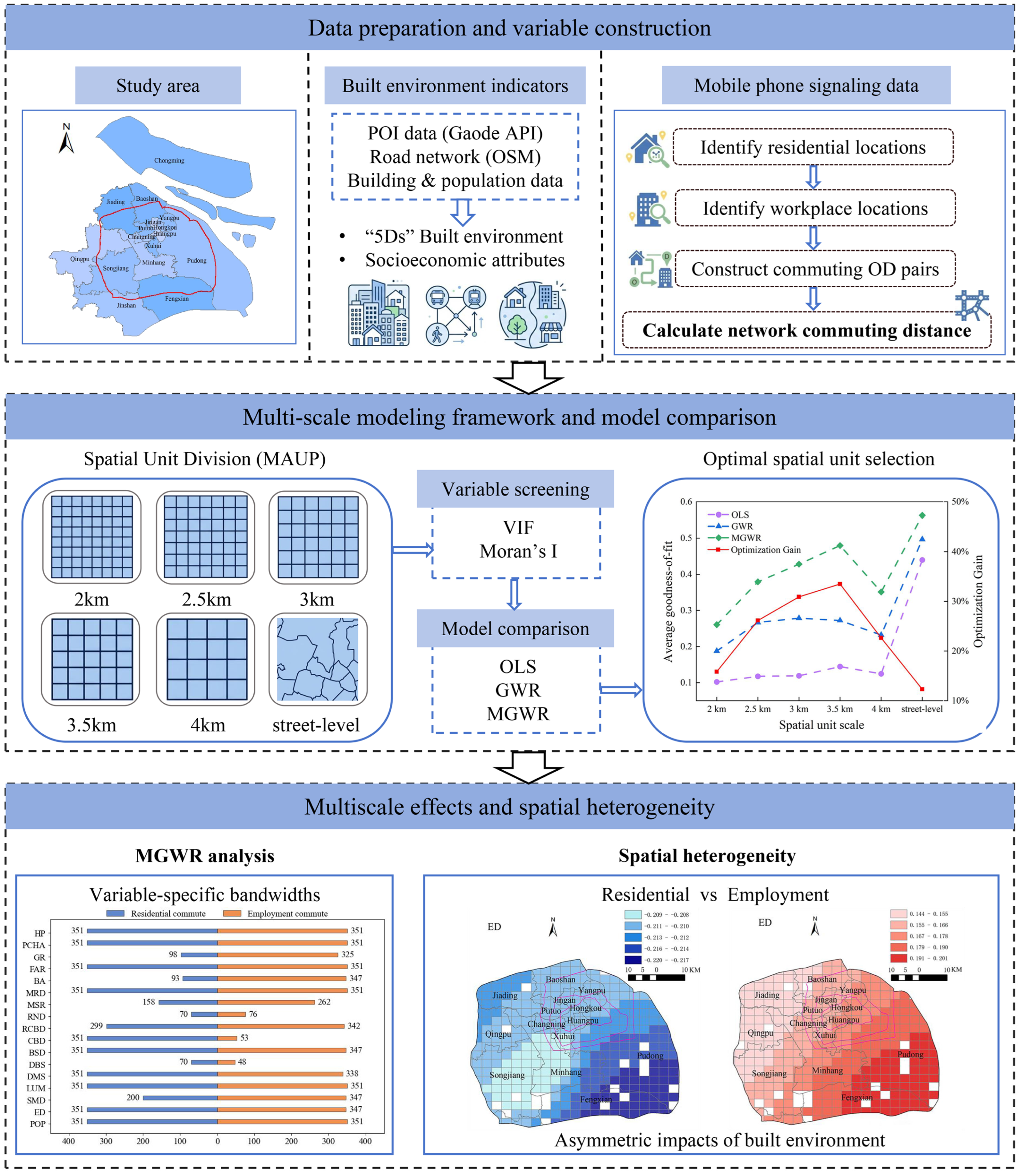
To address these gaps, this study focuses on the area within the suburban ring road of Shanghai and uses network-based commuting distances derived from mobile phone signaling data in 2021. The study aims to examine the multiscale spatial heterogeneity of built environment effects on commuting distance. First, the performance of OLS, GWR, and MGWR models is compared across different spatial units, including grids ranging from 2 km to 4 km and street-level units. This comparison is used to examine scale effects in model estimation and to identify an appropriate spatial unit for subsequent analysis. Second, the MGWR model is applied to analyze commuting distances from both residential and employment perspectives. This approach reveals the multiscale and spatially heterogeneous effects of built environment factors during peak periods (see Figure 1).
This study contributes to the literature in two ways. First, by integrating spatial unit comparison with MGWR modeling, it proposes a multiscale analytical framework for examining the spatial effects of the built environment on jobs–housing separation. Second, by simultaneously considering residential and employment locations, the study reveals how built environment factors shape commuting distance at different spatial scales. These findings provide new empirical evidence for understanding commuting patterns in megacities and offer useful insights for spatially targeted urban planning and transport policies.

2. Materials and Methods

2.1. Study Area

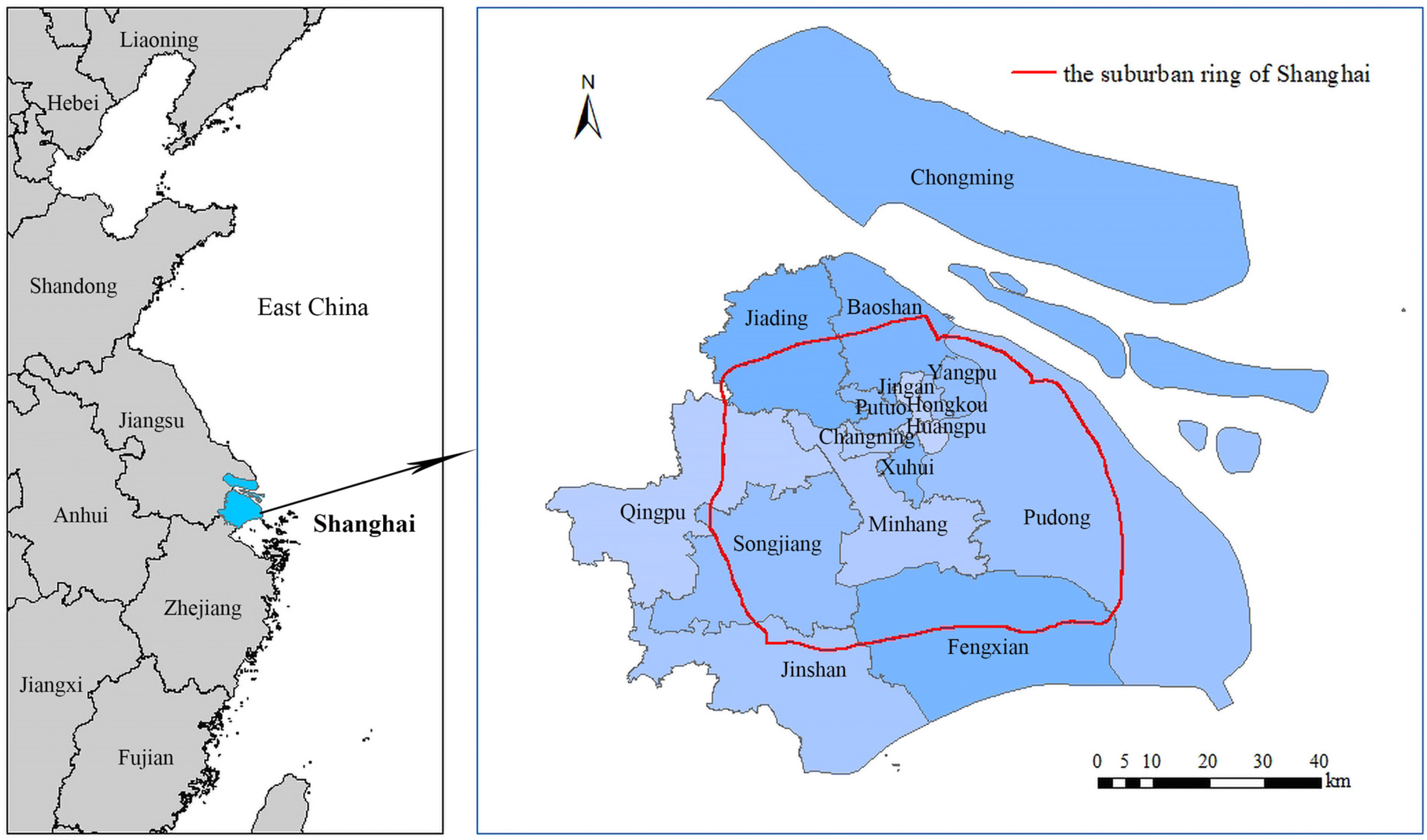
The study area is located within the suburban ring of Shanghai in eastern China, the largest metropolitan area in the country. The boundary of the study area is defined by the Jiaqing–Songjin Line, the Nanfen Line, the Shanghai–Suzhou–Nantong Railway, and the Baojia Line (Figure 2). The total area is approximately 2960 km2, accounting for 46.6% of Shanghai’s total land area. This region represents the primary concentration of both residential and employment locations for Shanghai’s commuting population. According to the Shanghai Master Plan (2017–2035), the city aims to develop a spatial structure characterized by a networked, multi-center, and cluster-based pattern. The plan also emphasizes the development of five new towns. Under this strategy, suburban employment is expected to grow and play an increasingly important role in the metropolitan spatial structure. Shanghai has experienced rapid urban growth over the past two decades. Between 2000 and 2021, the total population increased from 16.09 million to 24.89 million, representing a growth of 54.7%. During the same period, transport infrastructure expanded significantly. The total length of the road network increased from 5970 km to 13,083 km, representing a growth of nearly 119%. The length of expressways increased from 98 km to 851 km, which is about 7.7 times the level in 2000.
Despite these improvements in infrastructure, commuting pressure has continued to increase. According to the 2025 Annual Urban Commuting Monitoring Report by the China Academy of Urban Planning & Design (CAUPD), the degree of job–housing separation in Shanghai increased steadily between 2020 and 2024. The average commuting distance rose from 8.9 km to 9.8 km, and the average one-way commuting time has reached 39 min. These trends highlight the growing mismatch between residential and employment locations. Optimizing the spatial distribution of housing and jobs has therefore become an important issue for reducing congestion and promoting sustainable urban development.

2.2. Data and Variables

2.2.1. Data Sources

This study examines the relationship between commuting behavior and the built environment in Shanghai using two types of datasets: resident commuting data and built environment-related data. The commuting dataset was derived from mobile phone signaling records provided by a telecommunications operator, covering the period from 17 May to 23 May 2021. It includes spatial grid IDs, travel dates, time periods, origin and destination coordinates (longitude and latitude), travel purposes, and the number of travelers.
Built environment-related data were collected in 2021 for Shanghai, including socioeconomic-related data, point-of-interest (POI) data, road network information, and building-related data. These datasets were obtained from official or publicly available sources, with detailed descriptions provided in Table 1.

2.2.2. Data Preprocessing

The mobile phone signaling data were processed to identify commuting patterns in several steps. First, residential and employment locations were identified for each user using the full-week observation data from 17 May to 23 May 2021. Residential locations were defined as the locations with the longest cumulative stay duration during the nighttime period from 21:00 to 08:00 over the observation week, and such stays were required to occur on more than five days. Employment locations were defined as the locations with the longest cumulative stay duration during weekday daytime hours from 09:00 to 17:00. The user also had to stay there for at least 3 h per day, and the location had to appear on at least three consecutive weekdays. During this process of identification, records with obvious abnormalities, such as invalid coordinates or apparent positioning errors, were removed. Locations that did not meet the criteria for stable home or work anchors were retained in the dataset for subsequent trip-purpose classification. Owing to confidentiality restrictions and data-processing limits imposed by the telecom provider, more detailed algorithmic settings and screening rules cannot be further disclosed.
Based on the identified residential and employment locations, trips were then classified into four types: home–work, work–home, home–other, and other–other. In this study, only home–work trips were retained for analysis. As the dataset records travel time in 30 min intervals and commuting patterns in Shanghai are relatively staggered, the period from 6:00 to 10:00 was defined as the morning peak period. Only trips within this time window were retained. Then, to ensure data quality, several filtering procedures were applied. Records with missing or invalid coordinates were removed, and trips with identical origin and destination locations were excluded. Extremely long commuting distances were also filtered out to reduce potential positioning errors. Although residential and employment locations were identified using the full-week data, only trips observed on 18–20 May 2021 (Tuesday to Thursday) were retained for the final regression analysis to reduce the influence of non-routine travel patterns.
Note that the original coordinates provided in the Amap (Gaode) system were converted to WGS 1984 to ensure consistency in spatial analysis. After preprocessing, a total of 778,360 valid commuting records were obtained. The large sample size and wide spatial coverage ensure that the dataset provides a reliable and representative basis for subsequent analysis. The processed commuting records are summarized in Table 2.

2.2.3. Variable Construction

The dependent variable is commuting distance, which is calculated based on the actual road network using the Gaode Map API (https://lbs.amap.com/api/webservice/guide/api/direction, accessed on 20 December 2021). This approach reflects realistic travel paths rather than straight-line distances. For regression analysis, commuting trips were assigned to spatial units according to their origin or destination locations. For the residential-based analysis, commuting distance is measured based on trip origin locations to represent the commuting distance of residents within each spatial unit. For the employment-based analysis, trips were grouped by their destination locations to represent the commuting distance of workers traveling to each spatial unit.
The independent variables were constructed from built environment-related data in six dimensions, which are density, diversity, transport accessibility, destination accessibility, design, and socioeconomic attributes. Diversity is captured through land-use mix based on POI data. To capture actual travel accessibility to the CBD, on-road distances to the CBD and regional CBD were measured using the Amap (Gaode) API. In contrast, proximity to public transport facilities, such as distances to metro stations and bus stops—where the difference between network distance and Euclidean distance is minimal—was calculated using Euclidean distance. The detailed variable descriptions are provided in Table 3.

2.3. Spatial Unit Division

The modifiable areal unit problem (MAUP) is a key issue in spatial analyses of human activities and the built environment. Because commuting behavior and urban form are spatially heterogeneous and irregular [28,29], model results may vary under different spatial unit definitions [30]. To examine such scale sensitivity, this study adopts a multiscale spatial unit design [31]. The study area was divided into six spatial units: regular grids with side lengths of 2 km, 2.5 km, 3 km, 3.5 km, and 4 km, and street-level traffic analysis zones based on administrative boundaries. Spatial units located in farmland, water bodies, or other areas without commuting records were removed before model estimation. Because the commuting indicators were aggregated based on either residential origins or employment destinations, the number of spatial units differs slightly between the two analytical perspectives. For the residential-based analysis, the numbers of spatial units at the six scales are 789, 565, 436, 353, 282, and 174, respectively. For the employment-based analysis, the corresponding numbers are 825, 585, 447, 353, 285, and 174.
For each spatial unit, both network-based commuting distances and built environment indicators are aggregated to the unit level, ensuring consistency between dependent and explanatory variables. The commuting distance of each spatial unit was calculated as the average network-based commuting distance weighted by the number of trips associated with that unit. This multi-scale framework enables a systematic comparison of model performance across different spatial units. It also helps identify a spatial unit that provides a reasonable balance between spatial detail, statistical stability, and cross-perspective comparability [32].

2.4. Multicollinearity and Spatial Autocorrelation Analysis

Built environment factors may be highly correlated with each other [33]. Strong correlations can distort regression coefficients and reduce the reliability of model estimates [34]. To address this issue, this study used the Variance Inflation Factor (VIF) to test multicollinearity among the initial explanatory variables. The calculation formula is as follows:
V I F = 1 1 R 2
where R 2 represents the coefficient of determination of the regression model. A VIF value greater than 10 indicates severe multicollinearity. Variables exceeding this threshold were removed from the model to maintain the independence of explanatory variables and improve the robustness of the regression results.
In addition, spatial regression models require that the dependent variable exhibit spatial dependence rather than a purely random distribution [35]. Therefore, this study applied Global Moran’s I to test the spatial autocorrelation of commuting distances across the study area [36,37]. The formula is expressed as follows:
I = n i = 1 n j = 1 n W i j X i X ¯ X j X ¯ i = 1 n j = 1 n W i j M i = 1 n ( X i X ¯ ) 2
where n represents the number of spatial units; X i and X j denote the values of the variable in spatial units i and j ; X ¯ = 1 n i = 1 n X i is the mean of the variable, and W i j M is the spatial weight matrix element in Moran’s I, constructed using an inverse distance function based on centroid distances.
The value of Moran’s I ranges from −1 to 1. A positive value indicates positive spatial autocorrelation, meaning that areas with similar values tend to cluster [31]. A negative value indicates spatial dispersion, while values close to zero suggest a random spatial pattern. A Z-score is used to test the statistical significance of Moran’s I. Spatial clustering is considered significant when the p-value is less than 0.05.

2.5. Multiscale Geographically Weighted Regression (MGWR)

To capture the spatial heterogeneity of built environment effects on commuting distance, this study employed the Multiscale Geographically Weighted Regression (MGWR) model. Traditional global regression models, such as Ordinary Least Squares (OLS), assume that relationships between variables are spatially constant [38,39,40]. However, this assumption often does not hold in urban studies. Compared with the traditional Geographically Weighted Regression (GWR) model, MGWR provides greater flexibility. GWR assumes that all explanatory variables operate at the same spatial scale [41,42]. In contrast, MGWR allows each variable to have its own optimal bandwidth [43,44]. This feature enables the model to identify the spatial scale at which each built environment factor influences commuting distance. The model structure is expressed as follows:
V i = β 0 ( μ i , ν i ) + k = 1 m β b w k ( μ i , ν i ) X k i + ε i
where y i represents the commuting distance for the spatial unit i ; ( μ i , ν i ) denotes the geographic coordinates of the unit centroid; β 0 ( μ i , ν i ) is the local intercept; X k i represents the k-th built environment explanatory variable; β b w k ( μ i , ν i ) is the location-specific regression coefficient estimated with an optimal bandwidth b w k ; and ε i is the random error term.
The model is implemented using the MGWR 2.2 GUI software. An adaptive bi-square kernel is used to construct spatial weights. This kernel assigns higher weights to nearby observations and reduces the influence of more distant ones, making it suitable for capturing localized associations between the built environment and commuting distance. The adaptive specification provides greater flexibility for local estimation [45], while the bi-square kernel helps emphasize the role of proximate observations and constrain the effect of distant ones. Moreover, in the MGWR framework, the adaptive bandwidth allows each explanatory variable to be estimated at its own optimal spatial scale, which facilitates the identification of multiscale effects.
The form of the bi-square kernel function is as follows:
W i j K = 1 d i j 2 / b 2 2 , d i j b 0 , d i j > b , j = 1 , 2 , , n
where W i j K is the kernel-based spatial weight between observation i and neighboring observation j , d i j represents the distance between them, and b denotes the bandwidth.
Bandwidths are selected using the golden section search method, and the optimal values are determined by minimizing the corrected Akaike Information Criterion (AICc), which balances model fit and complexity. Parameter estimation is conducted using the built-in iterative back-fitting procedure in MGWR 2.2 until model convergence is achieved [46,47]. Local statistical inference is based on the corrected inference framework implemented in MGWR 2.2, following Yu et al. [48]. The model is estimated under a Gaussian model type, which is appropriate for a continuous dependent variable such as commuting distance. With these settings, the MGWR model is used to examine spatial heterogeneity and scale differences in the relationship between the built environment and commuting distance from both residential and employment perspectives.

3. Results

3.1. Model Assessment Performance Across Spatial Scales

3.1.1. Results of Multicollinearity and Spatial Autocorrelation

To examine potential scale effects, this study conducted multicollinearity and spatial autocorrelation tests for built environment factors under different spatial unit definitions. The results indicate that the degree of multicollinearity varies with different spatial scales. Specifically, at the 2 km, 2.5 km, and 3 km grid levels as well as at the street scale, parking lot density, gender, and education level show relatively strong multicollinearity. When the spatial scale increases to the 3.5 km and 4 km grid, multicollinearity becomes more evident for residential density, hospital density, and school density. Variables with Variance Inflation Factor (VIF) values greater than 10 were therefore removed to maintain stable parameter estimation.
The spatial autocorrelation test further indicates that most built environment factors have positive Global Moran’s I values across different spatial units. These values are statistically significant at the 5% level for both residential and employment locations, indicating clear spatial clustering. The only exception is the distance to the nearest bus stop, which is not significant under the 4 km grid. The overall results are highly consistent between the residential-based and employment-based datasets. Therefore, the same set of built environment factors is used in subsequent models to ensure comparability and robustness.

3.1.2. Comparison of OLS, GWR, and MGWR Models

Table 4 presents the full comparison results of OLS, GWR, and MGWR across different spatial units from both residential and employment perspectives. Across all spatial units, both GWR and MGWR outperform OLS, indicating that accounting for spatial non-stationarity improves the explanatory power of commuting distance models. In most cases, MGWR further improves model performance relative to GWR, suggesting that allowing variables to operate at distinct bandwidths better captures the multiscale nature of built environment effects.
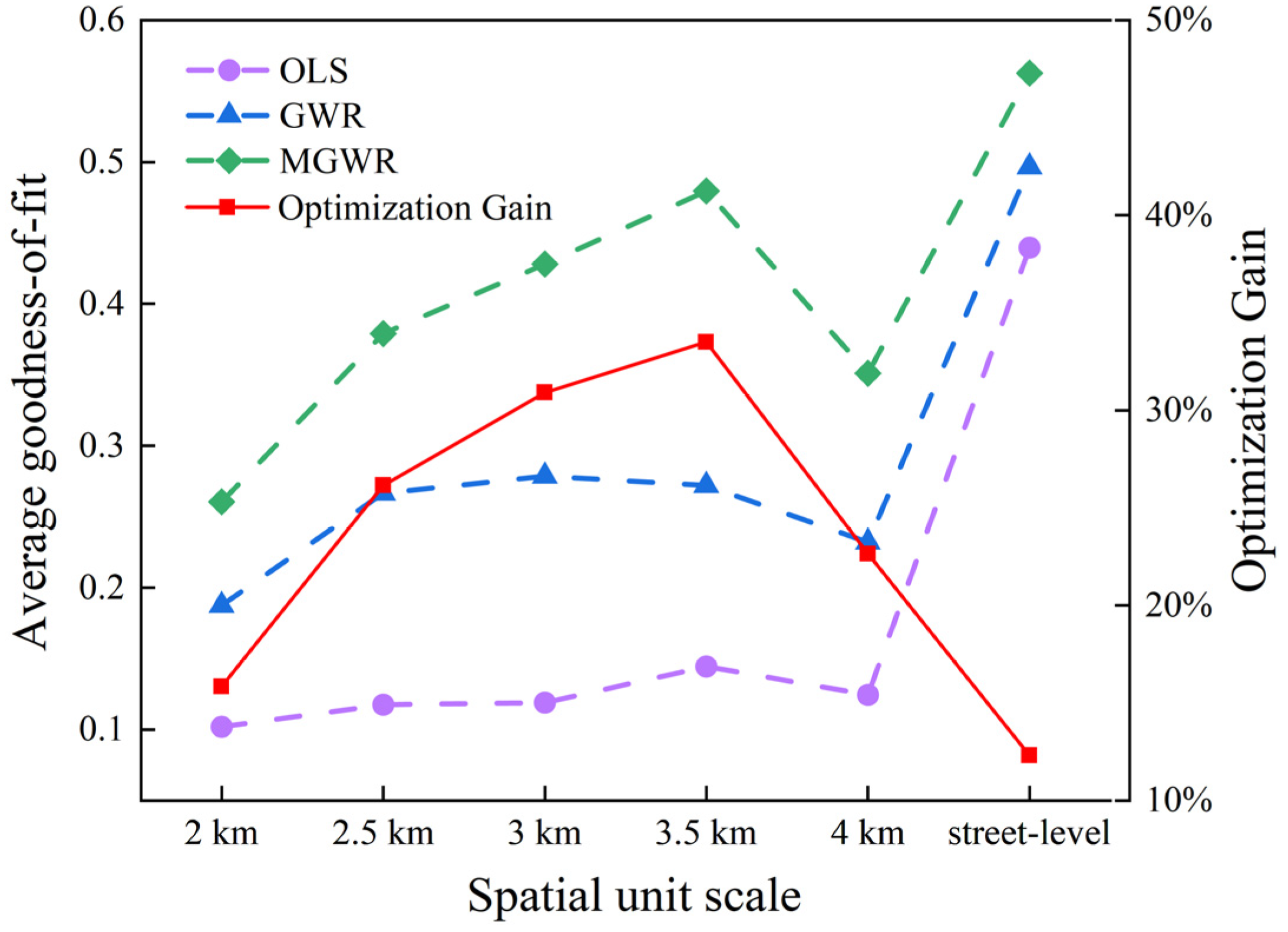
The street-level units show relatively high R2 values, especially for the residential perspective. However, these units are based on irregular administrative boundaries and contain substantially fewer spatial units than the regular grid systems. This reduces comparability across scales and may introduce additional aggregation effects. Among the regular grid systems, model performance generally improved from 2 km to 3.5 km grids before declining at the 4 km scale.

3.1.3. Selection of Spatial Unit and Residual Analysis

Figure 3 summarizes the average goodness of fit of the three models across the residential- and employment-based analyses. Under MGWR, the 3.5 km grid maintains high explanatory power for both perspectives, while avoiding the noticeable decline in fit observed at the 4 km scale. Considering model performance, cross-perspective balance, and the spatial consistency of regular grid units, the 3.5 km grid was selected as the spatial unit for subsequent analyses. The MGWR model is then used as the main analytical framework to examine spatial heterogeneity in built environment effects.
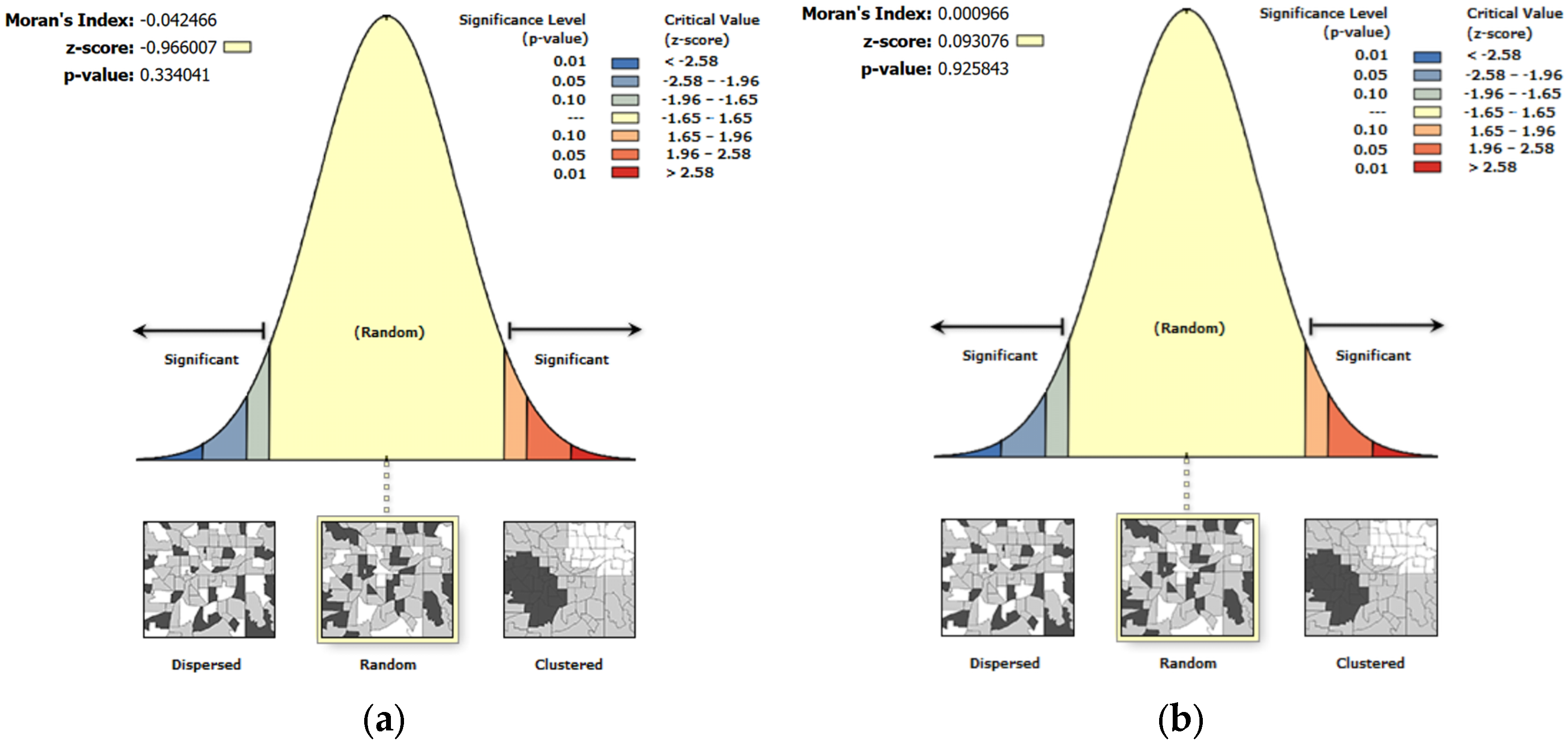
To verify the suitability of this choice, residual spatial autocorrelation was examined for the MGWR models at the 3.5 km grid. As shown in Figure 4, the residual Moran’s I values are close to zero for both residential- and employment-based models, with z-scores near the center of the expected random distribution and p-values well above the 0.05 significance threshold. These diagnostics confirm that the MGWR model effectively accounted for spatial dependence, supporting the use of the 3.5 km grid for examining multiscale and spatially heterogeneous effects in the following sections.

3.2. Descriptive Statistics of Variables

Using the 3.5 km grid selected for subsequent analysis, Table 5 reports the descriptive statistics of the built environment and socioeconomic variables. These variables capture key spatial characteristics within the suburban ring of Shanghai.
The descriptive results reveal clear spatial variation across most built environment indicators. Population density has a relatively high mean value and a large standard deviation, which indicates an uneven distribution of residents. Similar patterns appear in enterprise density, shopping mall density, and road network density. These indicators reflect strong spatial differences in employment concentration, commercial activity, and transportation infrastructure. Variables related to land-use structure and accessibility also show substantial dispersion. This pattern suggests large differences in functional land use and unequal access to urban centers and public transport across the study area.
The strong variability observed in many built environment indicators indicates clear spatial heterogeneity. These characteristics support the use of spatially explicit models. They also provide an empirical basis for applying the MGWR framework to explore the multiscale and spatially heterogeneous effects of the built environment on commuting distance.

3.3. Multiscale Effects of Built Environment Factors

3.3.1. Scale Effects of Built Environment Variables

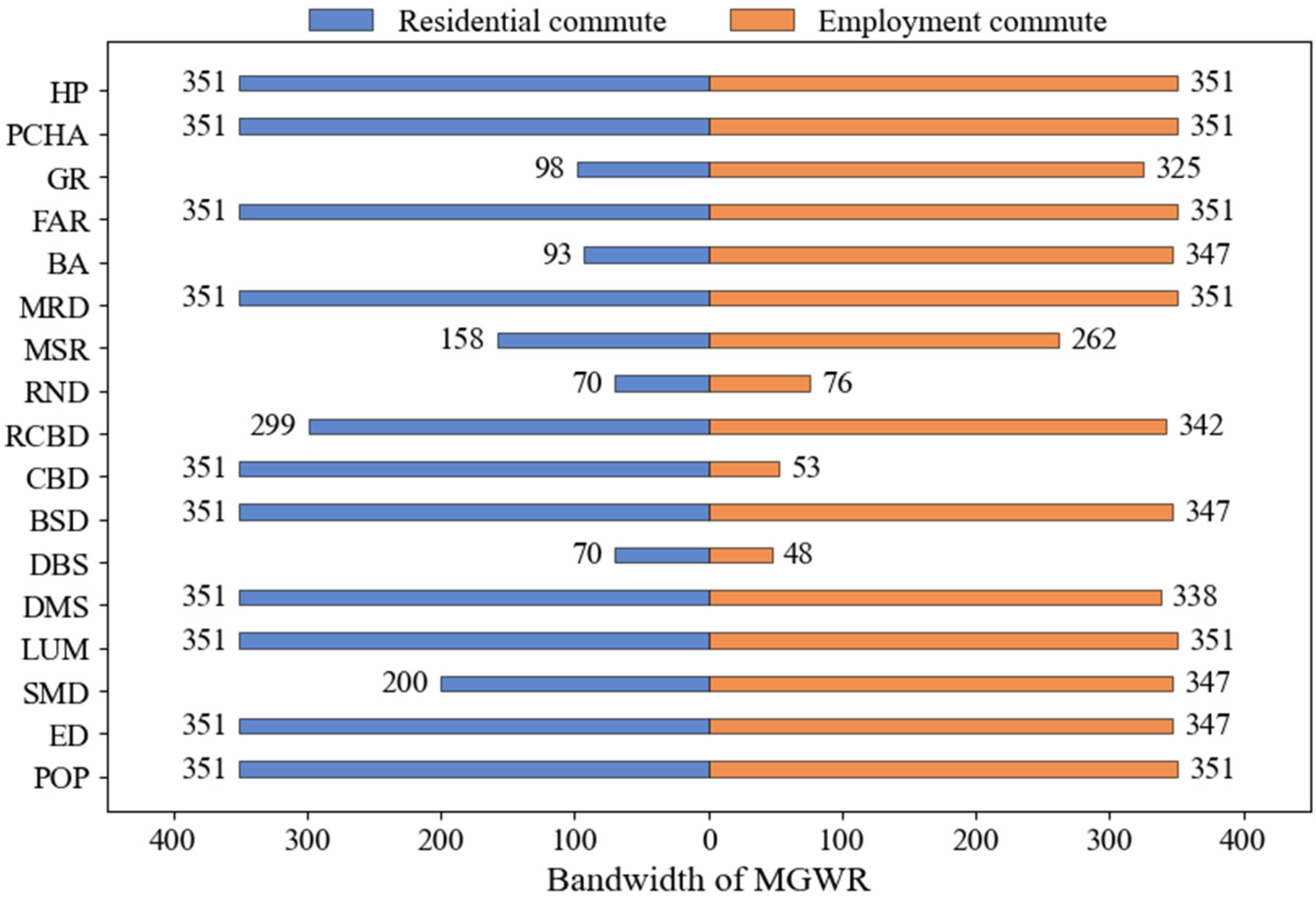
Using the 3.5 km × 3.5 km grid as the spatial unit for subsequent analysis, 353 observations are obtained for both residential and employment locations. Under the MGWR framework, Figure 5 reports the bandwidths of the built environment factors for residential-based and employment-based commuting distances.
For residential-based commuting distance, several built environment factors operate at relatively small spatial scales. Distance to the bus stop, road network density, building area, and greening ratio show small bandwidths, which indicates that their effects vary across local spatial contexts. In contrast, population density, enterprise density, and land-use mix display bandwidths close to the global sample size. These variables therefore show relatively stable spatial effects across the study area. For employment-based commuting distance, fewer variables show localized spatial scales. Distance to the bus stop, CBD accessibility, and road network density have relatively small bandwidths, while most other built environment factors operate at near-global scales.
Overall, the spatial scales of the built environment effects differ between residential-based and employment-based commuting distances. The results reveal clear scale variation among explanatory variables and support the use of a multiscale modeling framework.

3.3.2. Spatial Heterogeneity of Built Environment Effects

To further examine spatial differences in commuting distance during peak periods, this study visualizes the local regression coefficients of statistically significant built environment factors from the MGWR model. This approach helps identify key factors associated with commuting distance and reveals their spatial heterogeneity.
Table 6 and Table 7 report the statistical results for residential and employment locations during peak periods. The significance proportion represents the share of grid cells where the coefficient is statistically significant relative to the total number of grids. Population density, floor area ratio, per capita housing area, and housing price show zero significance at both residential and employment locations. These variables are therefore excluded from further spatial interpretation.
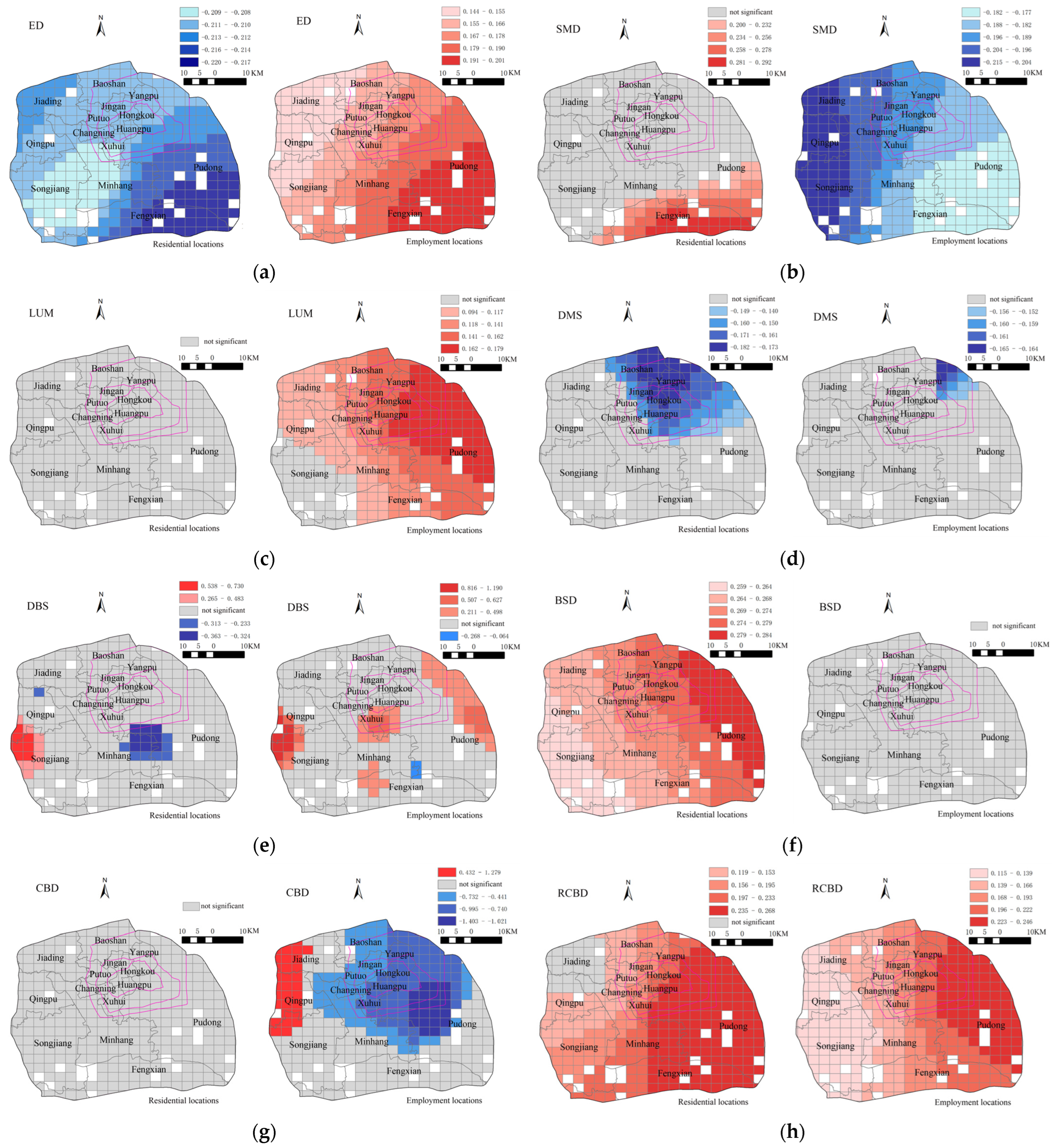
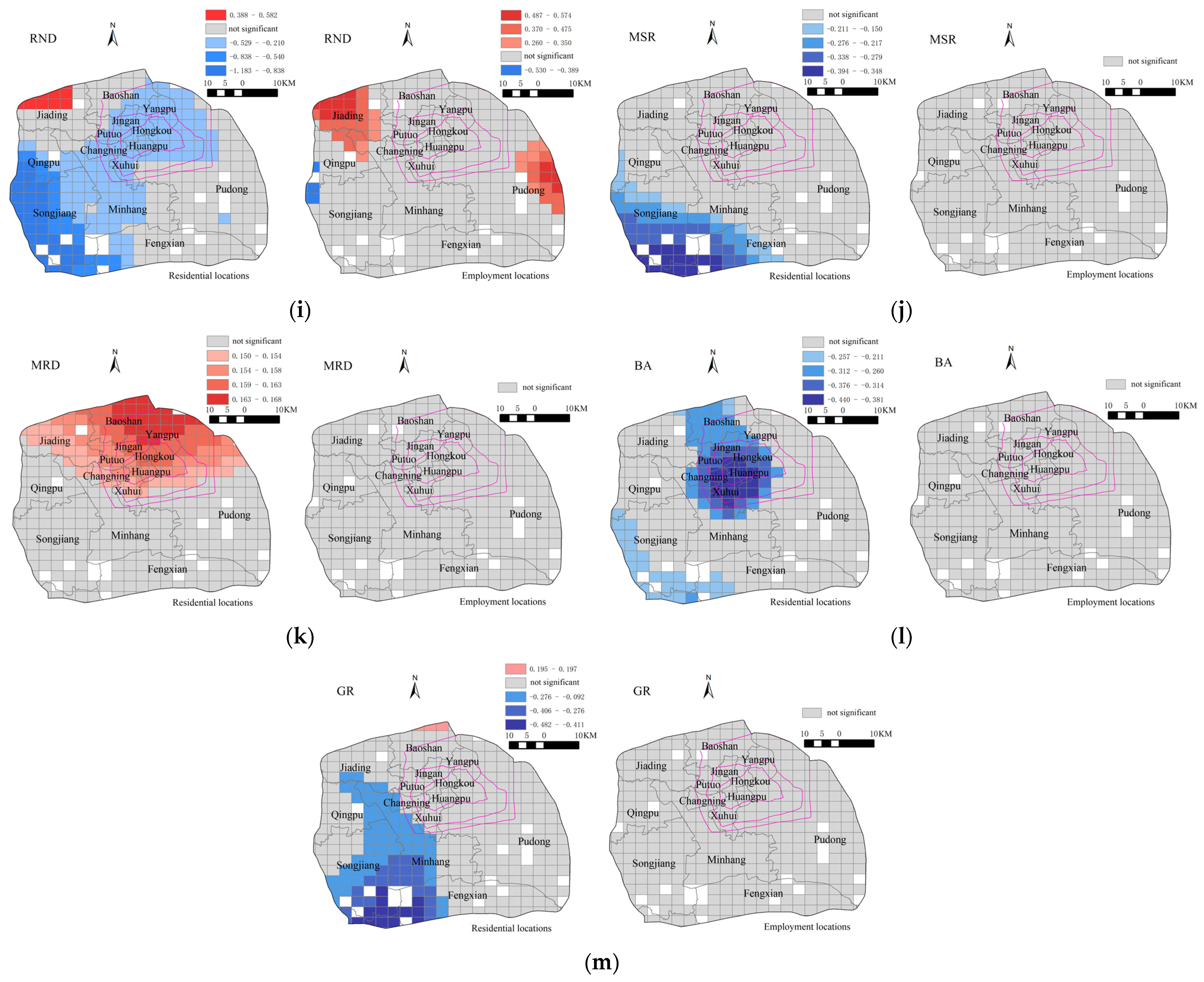
Figure 6 presents the spatial distribution of local regression coefficients for the remaining significant variables. The sign of each coefficient indicates the direction of the relationship with commuting distance, while the magnitude reflects the strength of the association. White areas represent spatial units excluded from the analysis due to the absence of commuting records, while gray areas indicate non-significant results.
(1)
Density
Enterprise density and shopping mall density show stable associations with commuting distance during peak periods, but their effects differ between residential and employment locations. At residential locations, enterprise density is significant across nearly all areas. The coefficients range from −0.220 to −0.208, indicating a negative association with commuting distance. The spatial distribution of coefficients is relatively uniform, suggesting weak spatial heterogeneity. At employment locations, enterprise density shows a significant positive association with commuting distance. The coefficients range from 0.144 to 0.201, and the spatial pattern remains consistent across the study area (Figure 6a).
Shopping mall density exhibits localized significance at residential locations. Significant positive coefficients appear mainly in the southeastern part of the study area. In contrast, at employment locations, shopping mall density shows a significant negative association in most areas. The coefficient distribution is relatively smooth, indicating a stable spatial pattern (Figure 6b).
(2)
Diversity
Land use mix mainly affects commuting distance to employment locations. In most areas of the study region, except Songjiang District, the coefficients are positive. The values range from 0.094 to 0.179, indicating moderate spatial heterogeneity. By contrast, land use mix does not show significant effects at the residential level (Figure 6c).
(3)
Transport Accessibility
Transport accessibility variables show clear spatial heterogeneity. At residential locations, distance to the metro station is significant only in the northeastern part of the study area. The coefficients range from −0.182 to −0.140, indicating a limited spatial influence. At employment locations, distance to the metro station is not significant in most areas (Figure 6d).
Distance to bus stops shows strong spatial heterogeneity at both residential and employment locations. The coefficients display both positive and negative values across different areas (Figure 6e). In contrast, bus stop density is significant in nearly all residential areas and shows an overall positive association with commuting distance. The spatial distribution of coefficients is relatively stable (Figure 6f).
(4)
Destination Accessibility
CBD accessibility does not show significant effects at residential locations. However, at employment locations, the coefficients display clear spatial heterogeneity. Negative coefficients appear in the urban core, while positive coefficients dominate in peripheral areas. This indicates that the direction of influence varies across different spatial locations (Figure 6g).
Regional CBD accessibility shows a high proportion of significant areas at both residential and employment locations. The coefficients are generally positive and show relatively stable spatial patterns across the study area (Figure 6h).
(5)
Design
Road network density shows a negative association with commuting distance at residential locations. The coefficients gradually increase from the urban center toward peripheral areas, forming a clear spatial gradient. At employment locations, the direction of the association varies across space, indicating strong spatial heterogeneity (Figure 6i).
The major–secondary road ratio shows a locally significant negative association with commuting distance at residential locations (Figure 6j). Major road density shows positive coefficients in the urban center and northeastern areas. The significant areas are spatially concentrated (Figure 6k).
Building area mainly shows a negative association with commuting distance at residential locations, and the significant areas form relatively continuous spatial clusters (Figure 6l). The significance of the greening ratio is mainly observed in the peripheral areas of the study region. The coefficients vary considerably across space, indicating strong spatial instability (Figure 6m).

4. Discussion

4.1. Mechanisms of Multiscale Built Environment Impacts

This study examines how built environment factors influence commuting distance within Shanghai’s suburban ring using a Multiscale Geographically Weighted Regression (MGWR) model. By integrating MAUP assessment, multiscale modeling, and a dual-end analytical perspective, the analysis reveals several important spatial mechanisms underlying jobs–housing separation.
The results highlight the importance of spatial unit selection in empirical analyses of commuting behavior. Model performance varies considerably across spatial units, ranging from 2 km grids to street-level zones. Among the tested units, the 3.5 km grid provides comparatively balanced performance in terms of model fit, cross-perspective consistency, and spatial comparability. This pattern indicates that the estimated relationships between the built environment and commuting distance are sensitive to spatial aggregation. While the multiscale comparison does not eliminate the MAUP, it helps make the scale dependence of the results more transparent and supports the selection of an appropriate unit for subsequent analysis [49,50,51]. While many previous studies rely on a single spatial scale when examining jobs–housing relationships [14], the findings here suggest that explicitly evaluating spatial units can improve the robustness of empirical results.
Evidence from the MGWR model further indicates that built environment factors operate at distinct spatial scales. Some variables, such as enterprise density and land use mix, display bandwidths close to the global scale, suggesting relatively stable effects across the metropolitan region. These variables reflect structural characteristics of the urban spatial system and therefore shape commuting patterns at broader spatial levels. By contrast, variables including distance to the bus stop, road network density, and green ratio exhibit much smaller bandwidths. Their effects vary substantially across space, implying that neighborhood-level accessibility and infrastructure conditions influence commuting behavior at more localized scales. This finding is consistent with theoretical expectations in the literature regarding the multi-scale effects of the built environment [45,52]. Compared with the traditional GWR model, which assumes a single bandwidth for all variables [43,45], MGWR provides greater flexibility in capturing these scale differences [53,54]. This approach helps deepen the understanding of how urban form influences commuting distance.
The analysis also reveals systematic differences between residential and employment environments. Built environment conditions may influence commuting behavior in different ways depending on the spatial endpoint of travel [26]. For instance, enterprise density is associated with shorter commuting distances around residential locations but shows the opposite relationship near employment centers. This pattern suggests that employment opportunities located close to residential areas can reduce commuting needs, whereas strong employment concentration may attract workers from a wider region and increase commuting distances [10,55]. Similar differences appear for commercial facilities and transport accessibility indicators.
These patterns reflect a broader spatial asymmetry between residential and employment environments in shaping commuting behavior. Residential locations primarily determine the starting point of daily travel and are closely linked to local accessibility conditions, while employment centers function as regional attractors within the metropolitan structure [56]. Consequently, built environment factors at the residential end tend to operate through localized accessibility mechanisms, whereas those at the employment end are more closely linked to regional spatial structure and agglomeration processes. This finding extends previous studies that mainly focus on a single spatial end [57], or distinguish the two ends without systematically comparing differences in scale and direction [58].
Finally, substantial spatial heterogeneity is observed in the effects of several built environment factors. Transport accessibility and road network density display clear spatial gradients across the study area, suggesting that their influence on commuting distance depends strongly on local urban structure and development intensity. This finding is consistent with Tong et al., who highlight the spatially nonlinear effects of public transport on commuting outcomes [11]. It indicates that improvements in public transport do not uniformly reduce commuting distance across all areas, but rather depend on local urban contexts. In contrast, regional CBD accessibility shows relatively stable effects across space, highlighting the role of polycentric urban structures in shaping commuting patterns in large metropolitan regions [59,60]. These results suggest that planning interventions should be spatially differentiated and aligned with local functional characteristics.

4.2. Planning Implications

The findings of this study provide several implications for urban planning and transport policy. The asymmetric effects identified between residential and employment environments indicate that planning strategies should consider both ends of the commuting system. Approaches focusing exclusively on residential areas or employment centers may overlook the interactions that shape commuting patterns. At the residential end, increasing local employment opportunities and improving neighborhood accessibility can help reduce commuting distance. Strategies such as supporting small-scale employment clusters, expanding commercial services, and improving local transport connectivity may strengthen the availability of nearby jobs. In contrast, strong employment concentration at the workplace end may enlarge the commuting catchment area [61,62]. In major employment centers, planning efforts should therefore emphasize a better spatial balance between housing and jobs. Increasing residential supply near employment centers and encouraging mixed land use development can help reduce excessive commuting flows.
The spatial gradients identified in the analysis also indicate that planning responses should account for local spatial conditions. The effects of transport accessibility and road network density vary across different parts of the city. Infrastructure improvements may therefore produce different outcomes depending on local spatial conditions [63]. In rapidly developing suburban areas, strengthening road network connectivity and local transport access may directly shorten commuting distances. In contrast, central urban areas may require stronger coordination between land use functions and adjustments in the spatial organization of urban activities.
The relatively stable influence of regional CBD accessibility highlights the continued importance of polycentric urban development. Strengthening secondary centers and new towns can help redistribute employment opportunities across the metropolitan region. Such strategies can reduce the pressure on the central city and create a more balanced spatial structure of jobs and housing. Coordinating transport investments with the development of secondary centers may further improve commuting efficiency and promote a more sustainable urban mobility system.

4.3. Limitations and Directions for Future Research

Despite the methodological and empirical contributions of this study, several limitations should be considered. This study uses road-network commuting distance as the primary indicator of jobs–housing separation. Although this measure captures the spatial relationship between residential and employment locations, it does not fully represent other dimensions of commuting burden, such as travel time, congestion conditions, or travel mode choice. Future research could incorporate multiple indicators to provide a more comprehensive understanding of commuting patterns.
Another limitation relates to the modeling framework. While the MGWR model captures spatial heterogeneity in the relationships between the built environment and commuting distance, it assumes linear relationships between variables. In practice, the influence of the built environment may involve nonlinear or threshold effects. Future studies could therefore explore nonlinear spatial models or hybrid modeling approaches to better represent these complex relationships.
Finally, the empirical analysis focuses on Shanghai, and the results may reflect the specific spatial structure and development context of this megacity. In addition, several socioeconomic variables do not show significant effects in the current analysis, which may partly result from the aggregated nature of the available data. Area-level indicators may not fully capture differences in individual socioeconomic conditions. Future research using higher-resolution socioeconomic data and comparative analyses across different cities would help further examine the generalizability of the findings.

5. Conclusions

This study investigates how built environment factors influence commuting distance within the suburban ring of Shanghai. By integrating a multiscale geographically weighted regression model with an assessment of spatial unit effects, the analysis examines both the spatial scale and spatial heterogeneity of built environment influences from the perspectives of residential and employment locations. The main findings are summarized as follows:
(1) The choice of spatial unit has a clear influence on the estimation of relationships between the built environment and commuting distance. Model performance varies across different grid scales and administrative units, and the 3.5 km grid provides comparatively balanced results among the tested regular grid systems. This finding indicates that the estimated spatial relationships are sensitive to spatial aggregation and suggests that comparing alternative spatial units before model interpretation can improve analytical robustness.
(2) The analysis also reveals clear multiscale characteristics in the effects of built environment factors. Some variables, such as enterprise density and land use mix, operate at broader spatial ranges and reflect structural characteristics of the metropolitan spatial system. Other variables, including bus stop accessibility, road network density, and greening ratio, show more localized influence patterns. These results indicate that commuting distance is shaped jointly by metropolitan-level spatial structure and neighborhood-level accessibility conditions.
(3) Differences between residential and employment environments further contribute to the spatial complexity of commuting patterns. Enterprise density near residential areas tends to shorten commuting distance by improving local job accessibility, whereas strong employment concentration around workplaces may increase commuting distance by attracting workers from a wider region. Similar contrasts appear in the effects of commercial facilities and transport accessibility. Overall, commuting distance reflects the interaction between residential accessibility and regional employment concentration, highlighting the importance of considering both ends of the commuting system when examining jobs–housing relationships.

Author Contributions

Conceptualization, J.W., X.L. and H.D.; methodology, J.W. and X.L.; software, J.W., X.L. and H.D.; validation, J.W. and H.D.; formal analysis, H.D.; investigation, J.W. and X.L.; resources, J.W. and X.L.; data curation, H.D.; writing—original draft preparation, J.W. and X.L.; writing—review and editing, J.W., J.Z. and Y.Z.; visualization, X.L.; supervision, J.Z. and Y.Z.; project administration, J.Z.; funding acquisition, J.Z. All authors have read and agreed to the published version of the manuscript.

Funding

This research was supported by National Natural Science Foundation of China, grant number Nos. 52502393, 52372304, and 52411540030, and Shanghai Office of Philosophy and Social Science, grant number No. 2022ZGL008.

Data Availability Statement

The data presented in this study are available on request from the corresponding author. The data are not publicly available due to privacy.

Conflicts of Interest

Author Yi Zhang was employed by the company Shanghai Urban-Rural Construction and Transportation Development Research Institute. The remaining authors declare that the research was conducted in the absence of any commercial or financial relationships that could be construed as a potential conflict of interest.

References

  1. Wu, W.; Wang, G. Shifting residential and employment geography: Shanghai’s bifurcated trajectory of spatial restructuring. Cities 2021, 113, 103142. [Google Scholar] [CrossRef]
  2. Blumenberg, E.; Siddiq, F. Commute distance and jobs-housing fit. Transportation 2023, 50, 869–891. [Google Scholar] [CrossRef] [PubMed]
  3. Wang, Y.; Li, Y. Revisiting jobs-housing balance: Unveiling the impact of housing subsidy policy on residential locations across different income groups. Humanit. Soc. Sci. Commun. 2024, 11, 1586. [Google Scholar] [CrossRef]
  4. Kyriakopoulou, E.; Picard, P.M. On the design of sustainable cities: Local traffic pollution and urban structure. J. Environ. Econ. Manag. 2021, 107, 102443. [Google Scholar] [CrossRef]
  5. Azad Gholami, A.; Thorsen, I.; Ubøe, J. An agent-based approach to study spatial structure effects on estimated distance deterrence in commuting. Netw. Spat. Econ. 2024, 24, 621–653. [Google Scholar] [CrossRef]
  6. Tong, D.; Dai, Y.; Shen, Y. Commuting behaviors response to living and working built environment: Dissecting interaction effects from varied supply and demand masses. Appl. Geogr. 2024, 172, 103430. [Google Scholar] [CrossRef]
  7. Li, K.; Yue, L.; Geng, H.; Li, K. Spatial variations of commuting behavior and their impact factors in Shanghai Metropolitan Area. Front. Built Environ. 2022, 8, 789024. [Google Scholar] [CrossRef]
  8. Ewing, R.; Greenwald, M.; Zhang, M.; Walters, J.; Feldman, M.; Cervero, R.; Thomas, J. Measuring the Impact of Urban Form and Transit Access on Mixed Use Site Trip Generation Rates—Portland Pilot Study; U.S. Environmental Protection Agency: Washington, DC, USA, 2009.
  9. Geyer, H.S.; Molayi, R.S.A. Job-employed resident imbalance and travel time in Gauteng: Exploring the determinants of longer travel time. Urban Forum 2018, 29, 33–50. [Google Scholar] [CrossRef]
  10. Zheng, Z.; Zhou, S.; Deng, X. Exploring both home-based and work-based jobs-housing balance by distance decay effect. J. Transp. Geogr. 2021, 93, 103043. [Google Scholar] [CrossRef]
  11. Tong, Z.; An, R.; Zhang, Z.; Liu, Y.; Luo, M. Exploring non-linear and spatially non-stationary relationships between commuting burden and built environment correlates. J. Transp. Geogr. 2022, 104, 103413. [Google Scholar] [CrossRef]
  12. Xu, C.; Li, H.; Zhao, J.; Chen, J.; Wang, W. Investigating the relationship between jobs-housing balance and traffic safety. Accid. Anal. Prev. 2017, 107, 126–136. [Google Scholar] [CrossRef] [PubMed]
  13. Shen, Q. Spatial and social dimensions of commuting. J. Am. Plan. Assoc. 2000, 66, 68–82. [Google Scholar] [CrossRef]
  14. Zhou, X.; Yeh, A.G.; Li, W.; Yue, Y. A commuting spectrum analysis of the jobs–housing balance and self-containment of employment with mobile phone location big data. Environ. Plan. B Urban Anal. City Sci. 2018, 45, 434–451. [Google Scholar] [CrossRef]
  15. Martin, A.; Goryakin, Y.; Suhrcke, M. Does active commuting improve psychological wellbeing? Longitudinal evidence from eighteen waves of the British Household Panel Survey. Prev. Med. 2014, 69, 296–303. [Google Scholar] [CrossRef]
  16. Li, X.Y.; Sinniah, G.K.; Li, R. Identify impacting factor for urban rail ridership from built environment spatial heterogeneity. Case Stud. Transp. Policy 2022, 10, 1159–1171. [Google Scholar] [CrossRef]
  17. Ma, R.; Huang, A.; Cui, H.; Yu, R.; Peng, X. Spatial heterogeneity analysis on distribution of intra-city public electric vehicle charging points based on multi-scale geographically weighted regression. Travel Behav. Soc. 2024, 35, 100725. [Google Scholar] [CrossRef]
  18. Liu, H.; Kwan, M.-P.; Hu, M.; Wang, H.; Zheng, J. Application of the local colocation quotient method in jobs-housing balance measurement based on mobile phone data: A case study of Nanjing City. Comput. Environ. Urban Syst. 2024, 109, 102079. [Google Scholar] [CrossRef]
  19. Qi, J.; Liu, H.; Liu, X.; Zhang, Y. Spatiotemporal evolution analysis of time-series land use change using self-organizing map to examine the zoning and scale effects. Comput. Environ. Urban Syst. 2019, 76, 11–23. [Google Scholar] [CrossRef]
  20. Oshan, T.M.; Wolf, L.J.; Sachdeva, M.; Bardin, S.; Fotheringham, A.S. A scoping review on the multiplicity of scale in spatial analysis. J. Geogr. Syst. 2022, 24, 293–324. [Google Scholar] [CrossRef]
  21. Wang, Z.; Gong, X.; Zhang, Y.; Liu, S.; Chen, N. Multi-scale geographically weighted elasticity regression model to explore the elastic effects of the built environment on ride-hailing ridership. Sustainability 2023, 15, 4966. [Google Scholar] [CrossRef]
  22. Zhao, F.; Ma, J.; Yin, C.; Tang, W.; Wang, X.; Yin, J. Spatiotemporal heterogeneous effects of built environment and taxi demand on ride-hailing ridership. Appl. Sci. 2023, 14, 142. [Google Scholar] [CrossRef]
  23. Chen, Y.; Aghaabbasi, M.; Ali, M.; Anciferov, S.; Sabitov, L.; Chebotarev, S.; Nabiullina, K.; Sychev, E.; Fediuk, R.; Zainol, R. Hybrid Bayesian network models to investigate the impact of built environment experience before adulthood on students’ tolerable travel time to campus: Towards sustainable commute behavior. Sustainability 2021, 14, 325. [Google Scholar] [CrossRef]
  24. Gutiérrez-i-Puigarnau, E.; Mulalic, I.; Van Ommeren, J.N. Do rich households live farther away from their workplaces? J. Econ. Geogr. 2016, 16, 177–201. [Google Scholar] [CrossRef]
  25. Lee, S.; Cho, K.; Jeon, Y. Travel efficiency in urban space: The role of built environment in shaping excess travel distance across transport modes. Sci. Rep. 2025, 15, 33372. [Google Scholar] [CrossRef] [PubMed]
  26. Zheng, Z.; Zhou, S.; Deng, X. The spatially heterogeneous and double-edged effect of the built environment on commuting distance: Home-based and work-based perspectives. PLoS ONE 2022, 17, e0262727. [Google Scholar] [CrossRef]
  27. Yan, X.; Zhou, J.; Sheng, F.; Niu, Q. Influences of built environment at residential and work locations on commuting distance: Evidence from Wuhan, China. ISPRS Int. J. Geo-Inf. 2022, 11, 124. [Google Scholar] [CrossRef]
  28. Song, Y.; Shao, G.; Song, X.; Liu, Y.; Pan, L.; Ye, H. The relationships between urban form and urban commuting: An empirical study in China. Sustainability 2017, 9, 1150. [Google Scholar] [CrossRef]
  29. Wu, W.; Hong, J. Does public transit improvement affect commuting behavior in Beijing, China? A spatial multilevel approach. Transp. Res. Part D Transp. Environ. 2017, 52, 471–479. [Google Scholar] [CrossRef]
  30. Klapka, P.; Halás, M.; Netrdová, P.; Nosek, V. The efficiency of areal units in spatial analysis: Assessing the performance of functional and administrative regions. Morav. Geogr. Rep. 2016, 24, 47–59. [Google Scholar] [CrossRef]
  31. Qiu, W.; Jia, D.; Guo, R.; Zhang, L.; Wang, Z.; Hu, X. Unequal impact of road expansion on regional ecological quality. Land 2025, 14, 523. [Google Scholar] [CrossRef]
  32. Luo, C.; Hu, Y.; Wang, F. A big data approach to mitigating the MAUP in measuring excess commuting. Comput. Urban Sci. 2025, 5, 14. [Google Scholar] [CrossRef]
  33. Wu, J.; Zhao, C.; Li, C.; Wang, T.; Wang, L.; Zhang, Y. Non-linear relationships between the built environment and walking frequency among older adults in Zhongshan, China. Front. Public Health 2021, 9, 686144. [Google Scholar] [CrossRef] [PubMed]
  34. Rezaeian, B.; Rahnama, M.R.; Javan, J.; Kharazmi, O.A. The Impact of Built Environment Characteristics on Energy Consumption Using Geographically Weighted Regression in Mashhad, Iran. J. Sustain. Dev. 2017, 10. [Google Scholar] [CrossRef][Green Version]
  35. Liu, W.; Xue, Y.; Shang, C. Spatial distribution analysis and driving factors of traditional villages in Henan province: A comprehensive approach via geospatial techniques and statistical models. Herit. Sci. 2023, 11, 1–21. [Google Scholar] [CrossRef]
  36. Kou, Z. Research on the spatial agglomeration characteristics and influencing factors of express delivery station based on DNN. Comput. Intell. Neurosci. 2022, 2022, 3817066. [Google Scholar] [CrossRef]
  37. Rotejanaprasert, C.; Thanutchapat, P.; Phoncharoenwirot, C.; Mekchaiporn, O.; Chienwichai, P.; Maude, R.J. Investigating the spatiotemporal patterns and clustering of attendances for mental health services to inform policy and resource allocation in Thailand. Int. J. Ment. Health Syst. 2024, 18, 19. [Google Scholar] [CrossRef]
  38. Chen, S.; Gou, Z. Spatiotemporal distribution of green-certified buildings and the influencing factors: A study of US. Heliyon 2023, 9, e21868. [Google Scholar] [CrossRef]
  39. Chen, Y.; Wang, L.; Yu, P.; Nie, N.; Yang, X.; Chen, Y. Spatiotemporal linkages between administrative division adjustment and urban form: Political drivers of the urban polycentric structure. Land 2023, 12, 1674. [Google Scholar] [CrossRef]
  40. Murad, A.; Faruque, F.; Naji, A.; Tiwari, A.; Helmi, M.; Dahlan, A. Modelling geographical heterogeneity of diabetes prevalence and socio-economic and built environment determinants in Saudi City-Jeddah. Geospat. Health 2022, 17. [Google Scholar] [CrossRef]
  41. Duan, J.; Zhao, Z.; Xu, Y.; You, X.; Yang, F.; Chen, G. Spatial distribution characteristics and driving factors of little giant enterprises in China’s megacity clusters based on random forest and MGWR. Land 2024, 13, 1105. [Google Scholar] [CrossRef]
  42. Zhang, L.; Cheng, J.; Jin, C.; Zhou, H. A multiscale flow-focused geographically weighted regression modelling approach and its application for transport flows on expressways. Appl. Sci. 2019, 9, 4673. [Google Scholar] [CrossRef]
  43. Li, X.; Yan, Q.; Ma, Y.; Luo, C. Spatially varying impacts of built environment on transfer ridership of metro and bus systems. Sustainability 2023, 15, 7891. [Google Scholar] [CrossRef]
  44. Wang, Q.; Feng, H.X.; Ning, E.W.; Chai, Y.K.; Jia, S.D. Agglomerate Fog Early Warning Method based on GWR Model. 2021. Available online: https://www.researchsquare.com/article/rs-970320/v1 (accessed on 20 May 2022).
  45. Fotheringham, A.S.; Yang, W.; Kang, W. Multiscale geographically weighted regression (MGWR). Ann. Am. Assoc. Geogr. 2017, 107, 1247–1265. [Google Scholar] [CrossRef]
  46. Cao, Y.; Tian, Y.; Tian, J.; Liu, K.; Wang, Y. Impact of built environment on residential online car-hailing trips: Based on MGWR model. PLoS ONE 2022, 17, e0277776. [Google Scholar] [CrossRef]
  47. Wu, W.; Liu, X.; Zhou, Y.; Zhao, K. Spatial heterogeneity of built environment’s impact on urban vitality using multi-source big data and MGWR. Sci. Rep. 2025, 15, 23459. [Google Scholar] [CrossRef]
  48. Yu, H.; Fotheringham, A.S.; Li, Z.; Oshan, T.; Wolf, L.J. Inference in Multiscale Geographically Weighted Regression. Geogr. Anal. 2020, 52, 87–106. [Google Scholar] [CrossRef]
  49. Gao, F.; Tang, J.; Li, Z. Effects of spatial units and travel modes on urban commuting demand modeling. Transportation 2022, 49, 1549–1575. [Google Scholar] [CrossRef]
  50. Hatami, F.; Thill, J.-C. Spatiotemporal evaluation of the built Environment’s impact on commuting duration. Sustainability 2022, 14, 7179. [Google Scholar] [CrossRef]
  51. Raux, C.; Lamatkhanova, A.; Grassot, L. Does the built environment shape commuting? The case of Lyon (France). Cybergeo Eur. J. Geogr 2021. [Google Scholar] [CrossRef]
  52. Oshan, T.M.; Li, Z.; Kang, W.; Wolf, L.J.; Fotheringham, A.S. mgwr: A Python implementation of multiscale geographically weighted regression for investigating process spatial heterogeneity and scale. ISPRS Int. J. Geo-Inf. 2019, 8, 269. [Google Scholar] [CrossRef]
  53. Jia, Q.; Zhang, T.; Cheng, L.; Cheng, G.; Jin, M. The impact of the Neighborhood built Environment on the walking activity of older adults: A multi-scale spatial heterogeneity analysis. Sustainability 2022, 14, 13927. [Google Scholar] [CrossRef]
  54. Li, Z.; Shang, Y.; Zhao, G.; Yang, M. Exploring the multiscale relationship between the built environment and the metro-oriented dockless bike-sharing usage. Int. J. Environ. Res. Public Health 2022, 19, 2323. [Google Scholar] [CrossRef] [PubMed]
  55. Surprenant-Legault, J.; Patterson, Z.; El-Geneidy, A.M. Commuting trade-offs and distance reduction in two-worker households. Transp. Res. Part A: Policy Pract. 2013, 51, 12–28. [Google Scholar] [CrossRef]
  56. Næss, P. Residential location, travel, and energy use in the Hangzhou metropolitan area. J. Transp. Land Use 2010, 3, 27–59. [Google Scholar] [CrossRef]
  57. Sun, B.; Ermagun, A.; Dan, B. Built environmental impacts on commuting mode choice and distance: Evidence from Shanghai. Transp. Res. Part D Transp. Environ. 2017, 52, 441–453. [Google Scholar] [CrossRef]
  58. Zhou, X.; Yeh, A.G.; Yue, Y. Spatial variation of self-containment and jobs-housing balance in Shenzhen using cellphone big data. J. Transp. Geogr. 2018, 68, 102–108. [Google Scholar] [CrossRef]
  59. Abouelhamd, I. The relationship between urban spatial structure & commuting patterns: Literature review. JES. J. Eng. Sci. 2021, 49, 662–678. [Google Scholar] [CrossRef]
  60. Giuliano, G.; Hou, Y.; Kang, S.; Shin, E.J. Polycentricity and the evolution of metropolitan spatial structure. Growth Change 2022, 53, 593–627. [Google Scholar] [CrossRef]
  61. Asikhia, M.; Nkeki, N.F. Polycentric employment growth and the commuting behaviour in Benin Metropolitan Region, Nigeria. J. Geogr. Geol. 2013, 5. [Google Scholar] [CrossRef]
  62. Hipp, J.R.; Lee, S.; Kim, J.H.; Forthun, B. Employment deconcentration and spatial dispersion in metropolitan areas: Consequences for commuting patterns. Cities 2022, 131, 103947. [Google Scholar] [CrossRef]
  63. Lee, J.; Arts, J.; Vanclay, F.; Ward, J. Examining the social outcomes from urban transport infrastructure: Long-term consequences of spatial changes and varied interests at multiple levels. Sustainability 2020, 12, 5907. [Google Scholar] [CrossRef]
Figure 1. Research workflow.
Land 15 00705 g001
Figure 2. Study area.
Land 15 00705 g002
Figure 3. Relative goodness-of-fit improvement of OLS, GWR, and MGWR across spatial units.
Land 15 00705 g003
Figure 4. Residual Moran’s I diagnostics for the MGWR models at the selected 3.5 km grid. (a) Residential-based MGWR residuals; (b) Employment-based MGWR residuals.
Land 15 00705 g004
Figure 5. Variable-specific bandwidths for residential and employment locations.
Land 15 00705 g005
Figure 6. Spatial distribution of MGWR coefficients for significant variables. (a) Enterprise Density; (b) Shopping Mall Density; (c) Land Use Mix; (d) Distance to the Metro Station; (e) Distance to the Bus Stop; (f) Bus Stop Density; (g) CBD Accessibilityy; (h) Regional CBD Accessibility; (i) Road Network Density; (j) Major-Secondary Road Ratio; (k) Major Road Density; (l) Building Area; (m) Greening Ratio. Pink lines denote the major ring roads in Shanghai.
Land 15 00705 g006aLand 15 00705 g006b
Table 1. Data sources and details.
DataData SourcesData AttributesFormat
Resident commuting dataMobile phone signaling dataGrid ID; origin and destination coordinates (longitude and latitude); travel purpose; number of tripsTable
Facility POI dataGaode Map API interface (https://lbs.amap.com/api/webservice, accessed on 20 December 2021)POI ID; name; category; coordinatesTable
Road network dataOpen Street Map
(https://download.geofabrik.de/asia/china/shanghai.html, accessed on 20 December 2021)
Road name; road typeVector
Building footprint dataOpen Street Map
(https://download.geofabrik.de/asia/china/shanghai.html, accessed on 20 December 2021)
Building ID; building name; building attributes, etc.Vector
Population dataWorldPop dataset
(https://hub.worldpop.org/, accessed on 20 December 2021)
Population density raster at 100 m resolutionRaster
Housing price dataAnjuke website
(https://www.anjuke.com/, accessed on 20 December 2021)
Residential community name; longitude and latitude; average housing price; green ratio; floor area ratio, etc.Table
Table 2. Resident Commuting Data during the Peak Period.
DateTime PeriodOrigin
(Lon, Lat)
Destination (Lon, Lat)Trip PurposeCountCommuting Distance (m)
17 May 20216:30–7:00121.362877,
31.309332
121.387845, 31.319302Home-Work54098
17 May 20216:00–6:30121.258093, 30.969663121.268090, 30.929682Home-Work18948
21 May 20216:00–6:30121.40281, 31.639240121.342882, 31.709308Home-Work111,154
Table 3. Built environment variable definitions.
DimensionVariableDefinitionAbbreviation
DensityPopulation DensityResidential population per km2 (thousand persons/km2)POP
Enterprise DensityNumber of enterprises per km2ED
Residential DensityNumber of residential facilities per km2RD
Hospital DensityNumber of hospitals per km2HD
Shopping Mall DensityNumber of shopping malls per km2SMD
School DensityNumber of schools per km2SD
Parking Lot DensityNumber of parking lots per km2PLD
DiversityLand Use MixEntropy index of land-use compositionLUM
Transport AccessibilityDistance to the Metro StationEuclidean distance to the nearest metro station (km)DMS
Distance to the Bus StopEuclidean distance to the nearest bus stop (km)DBS
Bus Stop DensityNumber of bus stops per km2BSD
Destination AccessibilityCBD AccessibilityOn-road distance to the city CBD (km)CBD
Regional CBD AccessibilityOn-road distance to the nearest regional CBD (km)RCBD
DesignRoad Network DensityRoad network length per km2 (km/km2)RND
Major-Secondary Road RatioProportion of major and secondary road length in the total networkMSR
Major Road DensityLength of major roads per km2 (km/km2)MRD
Building AreaRatio of building footprint area to total land areaBA
Floor Area RatioRatio of residential floor area to land areaFAR
Greening RatioProportion of green space within residential areasGR
Socioeconomic AttributesGenderRatio of male to female population/
Education LevelProportion of population with high school education or aboveEL
Per Capita Housing AreaAverage residential floor area per resident (m2)PCHA
Housing PriceAverage housing price (104 yuan/m2)HP
Note: All variables are calculated at the spatial unit level.
Table 4. Full model performance statistics for OLS, GWR, and MGWR across spatial units.
Spatial Unit ScaleParameterOLSGWRMGWR
ResEmpResEmpResEmp
2 kmAICc2201.0192295.8402185.1922268.9782159.8112212.287
R20.1000.1040.1530.2220.2240.297
Adjusted R20.0770.0820.1130.1590.1660.229
RSS709.868739.135668.167642.206611.906580.315
2.5 kmAICc1584.7601626.3681549.8341606.4141512.7781536.553
R20.1080.1270.2970.2360.3460.412
Adjusted R20.0750.0960.2080.1700.2610.319
RSS504.039510.586397.323446.905369.434344.126
3 kmAICc1223.3861262.0691200.1941244.7991134.8711200.363
R20.1290.1120.2770.2510.4740.379
Adjusted R20.0870.0700.1930.1650.3680.281
RSS379.615397.156315.101334.794229.439277.446
3.5 kmAICc992.595981.279971.882960.997935.652899.390
R20.1310.1580.2590.2880.4530.506
Adjusted R20.0870.1150.1820.2110.3420.406
RSS306.851297.170261.483251.199193.022174.245
4 kmAICc794.438805.854795.758801.074779.731767.412
R20.1460.1360.2260.2380.2990.403
Adjusted R20.0940.0840.1370.1480.2030.295
RSS240.881246.369218.152217.251197.654170.182
Street-levelAICc413.206469.719417.200475.975417.864461.634
R20.5300.3490.5860.4070.6110.514
Adjusted R20.4680.2640.4980.2870.5150.388
RSS81.821113.21972.068103.25467.74384.575
Table 5. Descriptive statistics of the selected variables.
DimensionVariableMeanStdMinMax
DensityPOP6253838029347,224
ED21.1721.240152.98
SMD1.581.94012.38
DiversityLUM0.560.160.0020.92
Transport AccessibilityDMS3.343.030.1316.77
DBS0.40.250.023.18
BSD2.611.79010.78
Destination AccessibilityCBD24.2110.321.6945.61
RCBD4.242.260.5310.96
DesignRND4441279627317,637
MSR0.560.1801
MRD125387505814
BA0.120.050.010.26
FAR1.540.260.952.86
GR0.340.030.270.42
socioeconomic AttributesPCHA32.553.227.7844.31
HP5.221.872.111.95
Table 6. Statistical summary of MGWR coefficients for residential locations.
VariableMeanMinMedianMaxProportion of Significance (%)
Intercept0.0290.0100.0260.0540
POP0.0920.0770.0920.1060
ED−0.213−0.220−0.212−0.208100
SMD0.1130.0160.0700.29223
LUM0.0540.0250.0600.0760
DMS−0.121−0.182−0.116−0.07426
DBS−0.046−0.363−0.0730.73011
BSD0.2710.2590.2710.284100
CBD−0.104−0.125−0.108−0.0770
RCBD0.2010.1020.2160.26890
RND−0.347−1.183−0.3090.58252
MSR−0.047−0.394−0.0150.19922
MRD0.1460.1300.1440.16834
BA−0.088−0.440−0.1010.23129
FAR−0.071−0.103−0.069−0.0460
GR−0.063−0.482−0.0570.19727
PCHA−0.016−0.040−0.0130.0050
HP0.0610.0460.0620.0720
Note: The data with dark shading indicates that the variable’s significant proportion for this element is 0 in both the place of residence and the place of employment. The intercept term is included in the table along with the explanatory variables of substantive interest.
Table 7. Statistical summary of MGWR coefficients for employment locations.
VariableMeanMinMedianMaxProportion of Significance (%)
Intercept−0.416−0.433−0.419−0.391100
POP−0.062−0.075−0.061−0.0520
ED0.1720.1440.1710.201100
SMD−0.192−0.215−0.180−0.177100
LUM0.1320.0800.1330.17984
DMS−0.098−0.165−0.092−0.0535
DBS0.131−0.2700.0691.19022
BSD0.007−0.0340.0120.0300
CBD−0.282−1.403−0.2331.27953
RCBD0.1780.1150.1780.246100
RND0.097−0.5300.1040.57416
MSR0.024−0.1020.0250.1550
MRD−0.059−0.087−0.058−0.0340
BA−0.037−0.082−0.032−0.0090
FAR−0.051−0.066−0.054−0.0260
GR−0.039−0.080−0.0410.0060
PCHA0.0600.0420.0590.0890
HP0.0600.0310.0630.0760
Note: The data with dark shading indicates that the variable’s significant proportion for this element is 0 in both the place of residence and the place of employment. The intercept term is included in the table along with the explanatory variables of substantive interest.
Disclaimer/Publisher’s Note: The statements, opinions and data contained in all publications are solely those of the individual author(s) and contributor(s) and not of MDPI and/or the editor(s). MDPI and/or the editor(s) disclaim responsibility for any injury to people or property resulting from any ideas, methods, instructions or products referred to in the content.