1. Introduction
It is now well established that extreme meteorological events associated with climate change, such as rising average temperature, heat waves, storms, floods, and drought, can decrease agricultural yields [
1,
2] by affecting crop physiological processes, enhancing pests and diseases, or other processes [
3,
4,
5]. It is expected that under severe climate change scenarios and without adaptation measures, crop yield losses could range from 7% to 23%; however, effects vary regionally, depending on latitude, altitude, access to irrigation, crop management practices, and other factors [
6,
7,
8]. Given predicted climate change impacts on agricultural performance, many scientists are calling for the urgent need to design adapted agroecosystems to ensure future food sovereignty [
9,
10].
A growing body of evidence suggests that farming systems based on agroecological principles featuring practices such as crop diversification in the form of intercropping, agroforestry, and rotations, complemented with organic soil management and water conservation strategies, enhance climate change adaptation [
11,
12]. Numerous investigations carried out in Latin America have shown that increasing agricultural diversification at field and landscape levels increases the resilience of farmers against extreme weather events [
13]. Agroecology is increasingly identified as a viable adaptation strategy among small farmers in developing countries, allowing them to maintain acceptable yields while conserving agrobiodiversity and improving dietary and nutritional diversity [
14,
15].
Most literature on the subject suggests that enhancing agroecosystem diversity buffers against shifting rainfall and temperature fluctuations as crop species and varietal diversity provide various routes for plants to respond to such variations [
16,
17]. Moreover, agroecologically managed farming systems possess various socio-ecological attributes that can serve as indicators of resilience if they are identified, quantified, and monitored. Farms lacking adaptive features tend to be less resilient and therefore more vulnerable [
18].
Resilience is usually defined as the capacity of farming systems to maintain crop yields in the midst of climatic variability, although the concept has been more broadly defined to include social organization, knowledge systems, etc. Therefore, assessing resilience implies understanding the socio-ecological complexities of farm management, which are location-specific, conditioned by climatic and biotic stressors, and the responses of crop species to climatic variability [
19]. The systemic nature of agroecosystems and the dynamic interactions between their components complicates the choice of indicators, reinforcing the need to develop robust assessment methodologies adapted to different agricultural contexts [
20,
21,
22].
Numerous measurement frameworks have emerged, but there is still no consensus on which is the best method to assess resilience facing multiple challenges for their field applicability [
23,
24,
25]. Despite the myriad of theoretical papers and methodologies available, a major challenge for researchers in Latin America is to develop resilience assessment tools that are simple and operational, while addressing the complexity of the rural communities being evaluated. Herein, we provide examples of methodologies tested in various rural communities in Latin America featuring simple farmer-friendly indicators that can be applied at the farm level. The main purpose is to provide tools that may help farmers implement practical recommendations leading to farm redesigns that improve their resilience in anticipation of hurricanes, droughts, etc. This review aims to synthesize and advance theoretical and methodological contributions to the assessment of socioecological resilience in agroecosystems by examining four empirically grounded case studies that applied the Holistic Risk Index (HRI) in contrasting land-use and climatic contexts. By comparing these experiences, the review highlights the value of a shared resilience assessment framework that integrates indicators of climatic threats, structural vulnerability, and adaptive response capacity, while remaining flexible enough to be adapted to locally specific productive, social, and ecological conditions. In addition, the review discusses the complementary role of participatory tools—such as the traffic light and happy/sad faces methodologies—in enhancing the interpretability and practical relevance of resilience assessments at both farm and landscape scales. Collectively, these approaches illustrate how retrospective evaluations of climate resilience can inform system redesign, support anticipatory adaptation, and contribute to a more integrated agroecological understanding of resilience that goes beyond isolated biophysical variables to include organizational, social, and knowledge-based dimensions of farming systems.
2. Framing the Risk Assessment Methodology
A “resilient” agroecosystem should be capable of maintaining a certain level of food production when challenged by the risk imposed by a severe drought or by excess rainfall. On the contrary, a vulnerable agroecosystem is unable to cope with the adverse effects of climate variability, risking yield losses [
26]. In the context of climate change, the level of risk faced by a farm emerges from the interplay between the severity of the climatic hazard, the vulnerability of the system, and the capacity of farmers to respond. The Holistic Risk Index (HRI) was originally proposed by Barrera et al. [
27] to evaluate the risk imposed by insect pests on Mexican coffee systems.
To calculate the HRI, the following formula is utilized (1):
where
Threat, since research teams had no access to weather monitoring systems to collect meteorological data at each farm, the intensity, frequency, and duration of a climatic episode were assumed to be similar to all farms in a region, thus threat was given a value of 1. Consequently, the HRI formula gives explanatory power to farm attributes.
Vulnerability represents the potential loss of agroecosystem function and productivity when affected by a climatic event.
Response capacity refers to the features of farms that ameliorate the impact of climatic variability through farmers’ management strategies.
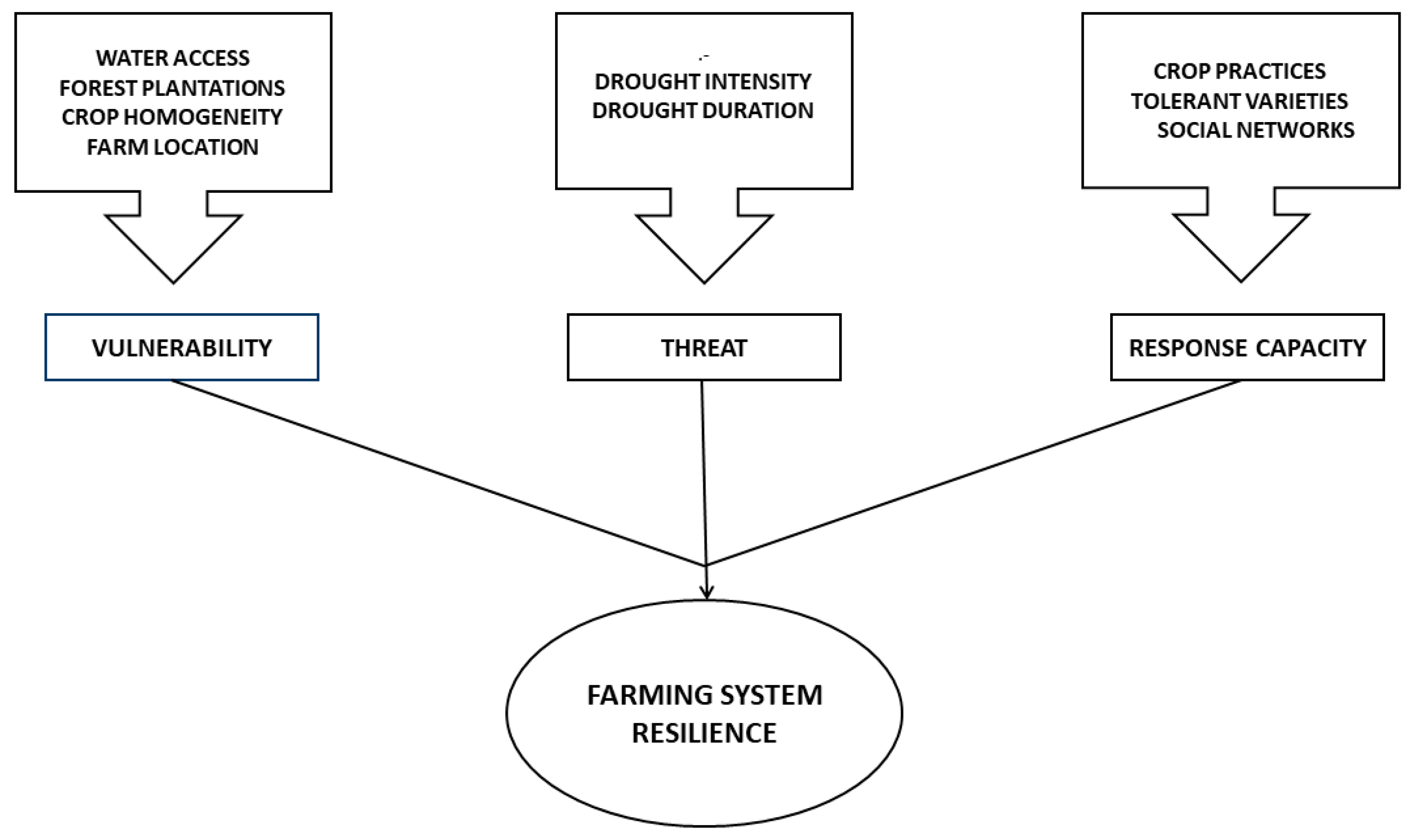
A farm’s vulnerability to a climatic hazard is shaped by agroecological characteristics, including landscape, crop, and genetic diversity, soil quality, and ground cover—along with the farmer’s response capacity, which in turn is influenced by factors such as the degree of family and community organization, networking ability, level of food self-sufficiency, and overall farm management skills. Farmers’ adaptive capacity is greater among farmers who still preserve traditional knowledge, management skills, and belong to social organizations that act as safety networks. Farms with high crop diversity and soil quality usually exhibit greater response capacity. The relationships between threat, vulnerability, and response capacity are depicted in
Figure 1 in reference to a case study conducted in Chile and described in
Section 3.2 below.
A community exhibits high vulnerability when landscape and farm diversity are low, and the community’s social organization is weak. Vulnerability can be reduced by the capacity of the community to make necessary adjustments to reduce risks. Communities with high levels of response capacity usually exhibit strong cohesive social networks and collective action skills enabling them to deploy diversified designs that enhance the overall resilience of farms [
28]. Overall, farmers’ ability to reduce risk and strengthen resilience is shaped by the biophysical and sociocultural context, influencing their capacity to respond to and adapt to change. Participation in community organizations can further enhance this adaptive capacity, as these organizations can collectively drive the transformation of farm systems facing critical environmental conditions [
29].
This methodology allows participating farmers to evaluate their vulnerability by examining the characteristics of the surrounding landscape, such as slope, exposure, the presence of windbreaks, and proximity to protective forests. They can also evaluate on-farm attributes, including crop species and genetic diversity, soil cover, structure, and organic matter content. Each observed characteristic acts as an indicator of a particular condition or change within the landscape or farm system. These indicators are scored on a varying scale (e.g., 1–4, 1–5, or 1–10), where lower values represent high vulnerability and limited response capacity, while higher values indicate stronger response capacity and reduced vulnerability.
Once the assessment is complete, farmers can consider various agroecological interventions and select the ones that are most feasible and appropriate for strengthening the resilience of their farm in light of their specific circumstances. Many of the needed innovations can be derived locally, as many small farmers have developed adaptive farming strategies through the years. This usually implies reviving traditional management practices, which represent strategies to prepare for climate change, and on other occasions, scientific knowledge must complement local knowledge by providing methodological and technical contributions [
30].
3. Assessing the Holistic Risk Index (HRI) in Latin American Farms
3.1. Coffee Systems in Colombia
Machado-Vargas et al. [
31] utilized the HRI to assess the socio-ecological resilience of nine small coffee farms undergoing different stages of agroecological transition. The study was conducted in the Porce River basin located in the northeast of the department of Antioquia (Colombia), a typical coffee-growing region located between 1000 and 1800 masl. The HRI was based on an assessment of water availability, one of the main threats affecting farmers, but it was also important to consider coffee and fertilizer prizes which also affected farmers’ livelihoods. In this assessment, the authors accounted for the weight or relevance given to each indicator, as the impact of an indicator on a process or phenomenon varies. Although coffee farmers were concerned about water deficits, fluctuations in domestic producer prices were given twice the weight, since variability in coffee prices directly impacts growers’ income, causing uncertainty.
The main vulnerability indicators chosen were coffee productivity, food self-sufficiency, and the level of internal inputs used, and the response capacity of farms was estimated based on indicators such as the percentage of shade trees, the diversity of coffee systems, the dependence on external inputs, farmers’ autonomy from markets, and farmers’ organization.
The scale implemented to measure each vulnerability and response capacity indicator ranged from 1 to 4, with 4 being the highest value = high vulnerability/high response capacity, and 1 = low vulnerability and low response capacity. The results of the HRI evaluation of the nine coffee-growing families studied are shown in
Table 1, depicting their respective threat, vulnerability, and response capacity indices. The HRI was standardized as a base of 1, where values > 1 denote more vulnerable systems exhibiting higher risk; therefore, lower socio-ecological resilience and values close to zero denote systems with less risk, exhibiting higher levels of socio-ecological resilience. In general, the higher the risk level, the lower the socioecological resilience value. The HRI values and the socioecological resilience levels corresponding to each coffee-growing family indicate that two (A3 and A7) of the nine coffee growers exhibited high risk and low resilience level, two farmers (A1 and A4) exhibited a medium resilience level, four farmers (A2, A5, A6, and A9) presented high resilience levels and only one coffee grower (A8) reached a very high resilience status. Results suggest that higher resilience to climate variability was associated with those farms undergoing a more advanced stage of agroecological transitioning.
3.2. Assessing HRI in Small Farms in South Chile
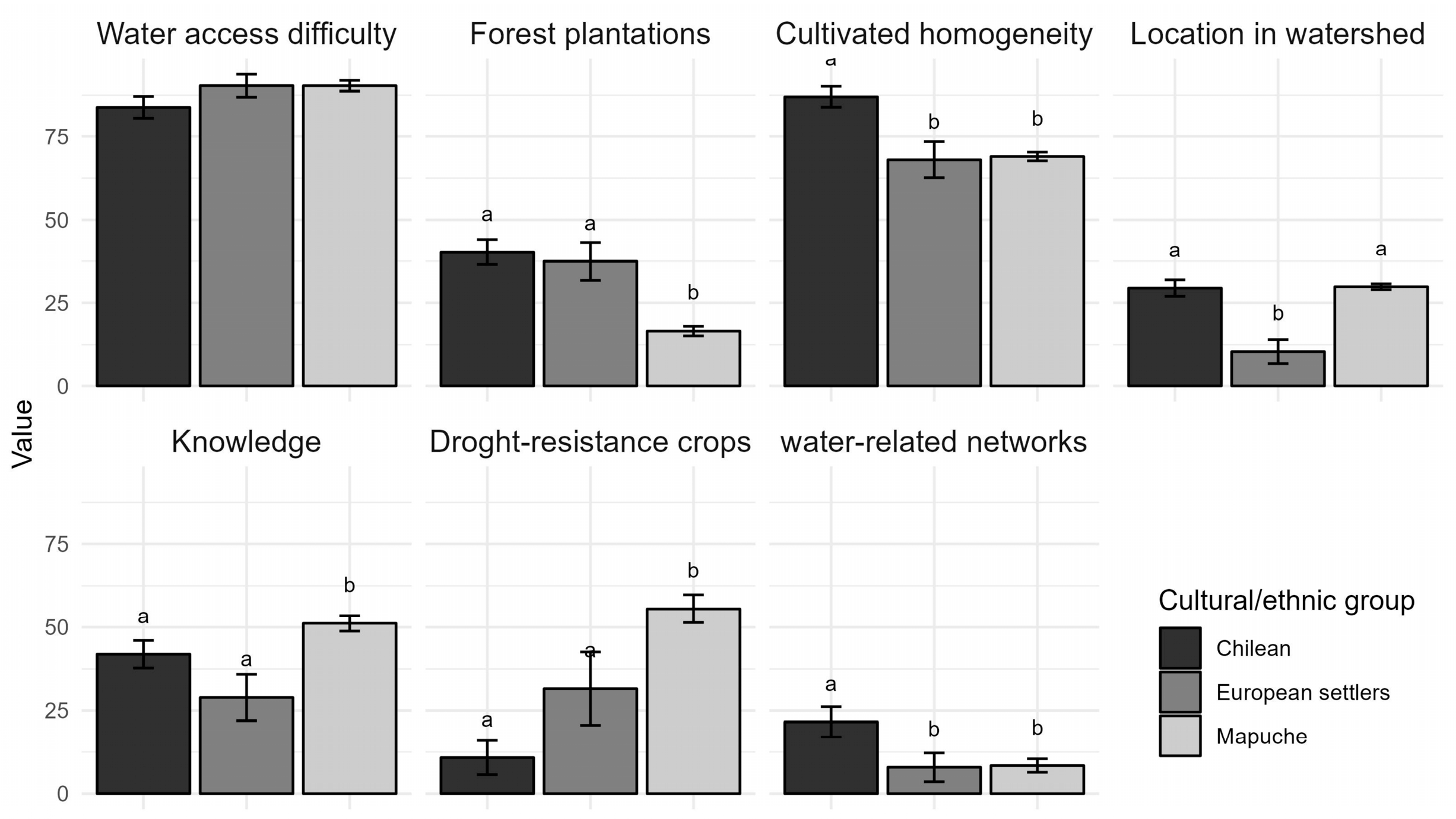
In participatory workshops with farmers’ organizations representing Mapuche (indigenous), Chilean (criollo), and European-descendant farmers from areas near Temuco, South Chile, drought was identified as the main threat. The group selected the indicators to assess key aspects of farm vulnerability and adaptive responses. Vulnerability indicators included (a) difficulty in accessing irrigation water, (b) proximity to surrounding forest plantations, (c) crop homogeneity, and (d) location of the farm along the watershed. Indicators to assess response capacity to drought included (e) farmers’ knowledge about drought coping practices, (f) maintenance of resistant crop varieties, and (g) participation in water-related social networks.
Field measurements suggest that Mapuche farmers showed lower levels of vulnerability, largely due to crop diversity levels and reduced proximity to pine plantations, which are known to reduce water reserves in micro-watersheds. European-descendant farmers exhibited greater crop diversity than criollo farmers. Mapuche farms scored high values of response capacity linked to their strong knowledge of adaptive practices and the conservation of crop species and varieties resistant to drought. However, Chilean farmers demonstrated greater involvement in social networks that control access to irrigation water (
Figure 2). Estimated resilience levels were highest among Mapuche farms, with a mean value of 0.88, compared with 0.55 for European-descendant farms and 0.52 for criollo farms.
These results indicate that Mapuche smallholder systems possess greater resilience to drought, possibly associated with agroecological diversity and the maintenance of traditional knowledge and practices, such as seed conservation and exchange. The results emphasize the important role played by agricultural biodiversity and culturally rooted practices in strengthening resilience to climate change.
3.3. Assessing HRI in Uruguayan Livestock Farms
The study reports results from 25 surveyed livestock ranchers who use the grazing lands available in the Farrapos Estuaries, which are part of Uruguay’s National System of Protected Areas. Unfortunately, in this region, agricultural intensification via expansion of soybean monocultures is shrinking grazing lands and contributes to worsening the effects of increasingly common flooding, challenging the viability of cattle ranching [
33]. Vulnerability, adaptive capacity, and perceived threat were assessed through semi-structured interviews with 25 farmers. Each farmer evaluated the relevance of 135 questions by assigning a score from one to five, with five indicating the highest importance to ranchers. Based on these responses, three data matrices comprising 60 indicators related to vulnerability, 60 related to responsiveness, and 15 related to threat were developed. Factorial analyses were performed using the FACTOR procedure in SAS version 9.4 (SAS Institute Inc., Cary, NC, USA) for threat, vulnerability, and responsiveness, facilitating the selection of the most relevant questions and the construction of indicators [
34].
Table 2 presents the scale used to evaluate the relationships between system risk levels and resilience. The resulting holistic risk-index values enabled the identification of ranchers with lower overall risk, highlighting the specific components of their buffering capacity that enhanced their ability to confront threats by minimizing risk and improving resilience.
Results indicate that four livestock ranchers exhibited low risk due to their use of traditional herd management practices, knowledge of the area, control of animal stock, and social organization, which enhanced their responsiveness. Eighteen producers were shown to have medium risk, exhibiting average vulnerability and increasing responsiveness capacity. Three producers were shown to have a high risk due to high vulnerability and lower responsiveness capacity, determined by the low availability of forage, difficulty in flood management, ranchers acting individually, etc. Ranchers exhibiting high responsiveness were characterized by having detailed knowledge of the estuary, making intensive use of local resources, and utilizing diversified management strategies, as well as high levels of collaboration with other producers in the search for more resilient adaptive management strategies. Overall, organizational capacity for managing the estuary was found to be the main factor influencing vulnerability and response capacity across all risk groups, along with the ability of farmers, during flood events, to engage in economic alternatives in areas beyond the estuary.
3.4. Estimating HRI in the Colombian Andes
This study reports the results of the resiliency assessment of seven farms (three conventional monocultures and four diversified farms managed with agroecological practices) located in the central Andes of Antioquia [
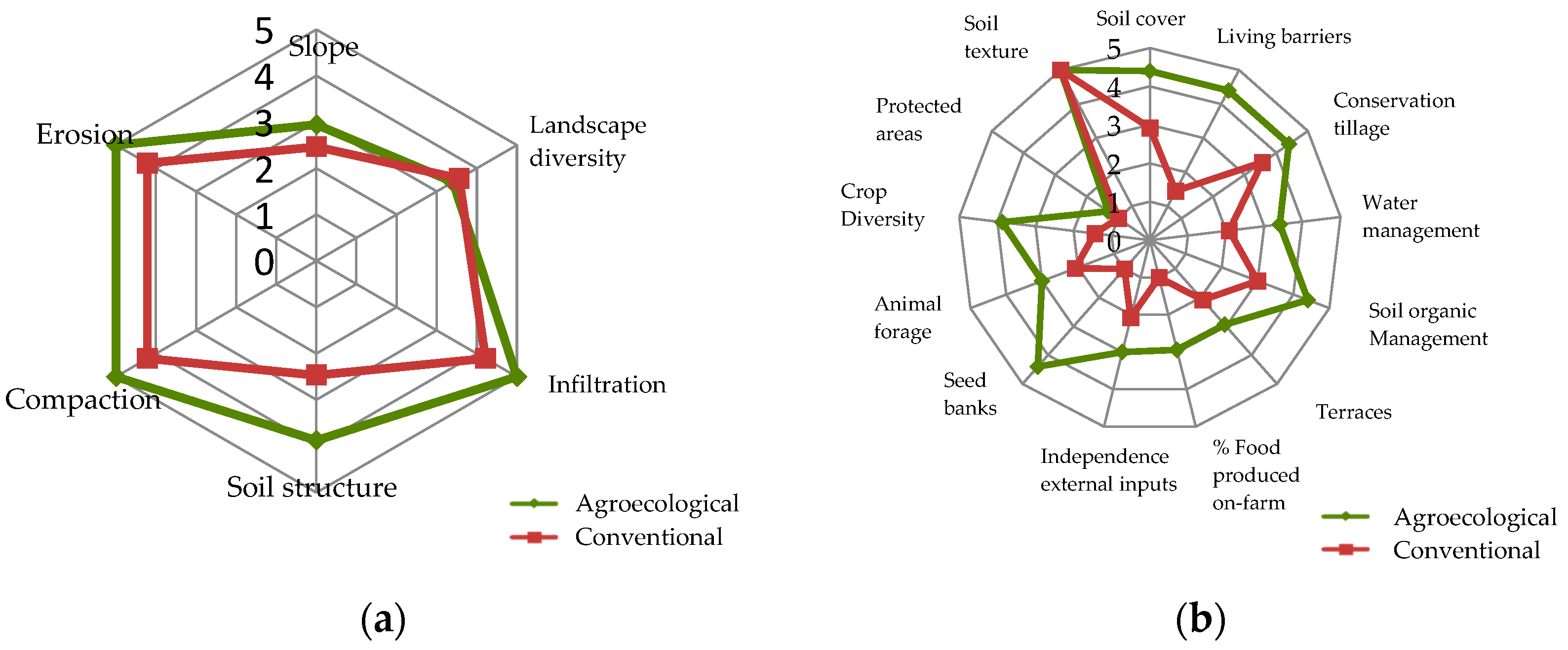
35]. Six indicators were chosen to evaluate vulnerability, such as slope, landscape diversity, and soil erosion susceptibility, while thirteen indicators were used to assess response capacity, including crop diversity, soil conservation, levels of food self-sufficiency, and others. The indicators were scored on a scale from one to five; values of one or two indicated high vulnerability, while values of four or five reflected a strong response capacity. This scoring system allowed to determine the vulnerability and response capacity of each farm, as well as comparing their performance with one another. According to the values given to the indicators, the agroecological farms (green) exhibited, on average, low vulnerability and high response capacity in relation to the conventional farms, which expressed high vulnerability and low response capacity (red) (
Figure 3a,b).
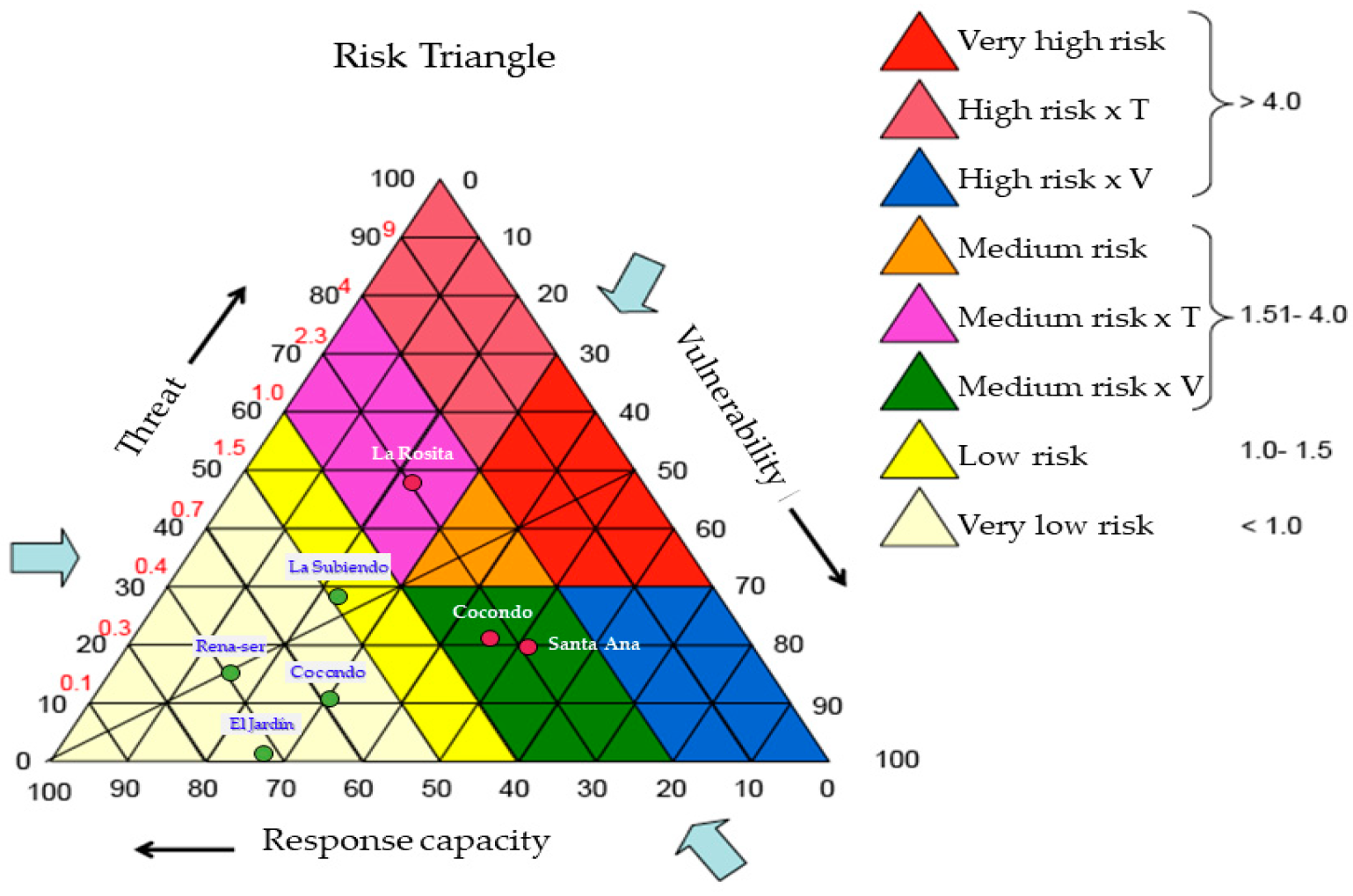
As shown in
Figure 4, placing the risk values in a triangle facilitates locating farms where they fit within a range of vulnerability and response capacity scores; thus, depending on their location within the gradient, it is possible to identify in a particular community which farms are at high or low risk. Farms presenting high response capacity and low vulnerability can then serve as demonstration farms showcasing successful adaptive strategies.
4. Other Complementary Methodologies
4.1. The Semaforo (Traffic Light) Method
The “semaforo” (traffic lights) method was applied to evaluate the preparedness to hurricanes by farmers tending cacao agroforests in Talamanaca, Costa Rica. The method allowed farmers to select 15 indicators and rank each indicator using colors: red = high risk (scores 1–2 in a scale of 1–5), yellow = medium risk (3–4), and green = little or no risk (score of 5). Each indicator listed in
Table 3 was assigned an X under the corresponding color, based on farmers’ perception regarding the condition of each indicator to enhance or reduce vulnerability of their farms to potential hurricanes. A farm scoring more than eight Xs marked green was considered to be transitioning toward resilience.
The color coding prompted farmers to consider the implications of having indicators rated red or yellow, and the potential consequences if these conditions persisted. This process allowed them to consider agroecological actions that could make their systems more resilient, taking actions to shift them from red to yellow or yellow to green.
For example, a farm in an area with little natural vegetation was given a red rating for the landscape diversity indicator, whereas a farm surrounded by forests received a green rating for the same indicator. Similarly, depending on their vegetative structure, windbreaks were classified as green if they effectively intercepted dominant winds and provided meaningful protection to the farm.
Farms with low plant diversity and limited structural complexity (e.g., reduced vertical stratification) received red or yellow ratings. In contrast, agroforestry systems containing a diverse assemblage of deep-rooted tree species received a green rating, as these trees stabilize the soil and are less susceptible to being uprooted by wind. Green ratings were also applied to farms where farmers covered the soil with a thick litter layer or ground cover, which effectively reduces erosion. Farmers who accumulated more than eight red or yellow scores were advised to increase shade-tree diversity and implement practices that cover and protect the soil to mitigate erosion caused by runoff.
4.2. The Happy/Sad Faces Method
This study, conducted in the Mixteca region, describes the strategies small farmers of three communities (Zaragoza, Coxcaltepec, and El Rosario) were implementing to adapt to changes in temperature, rainfall onset, and intensity [
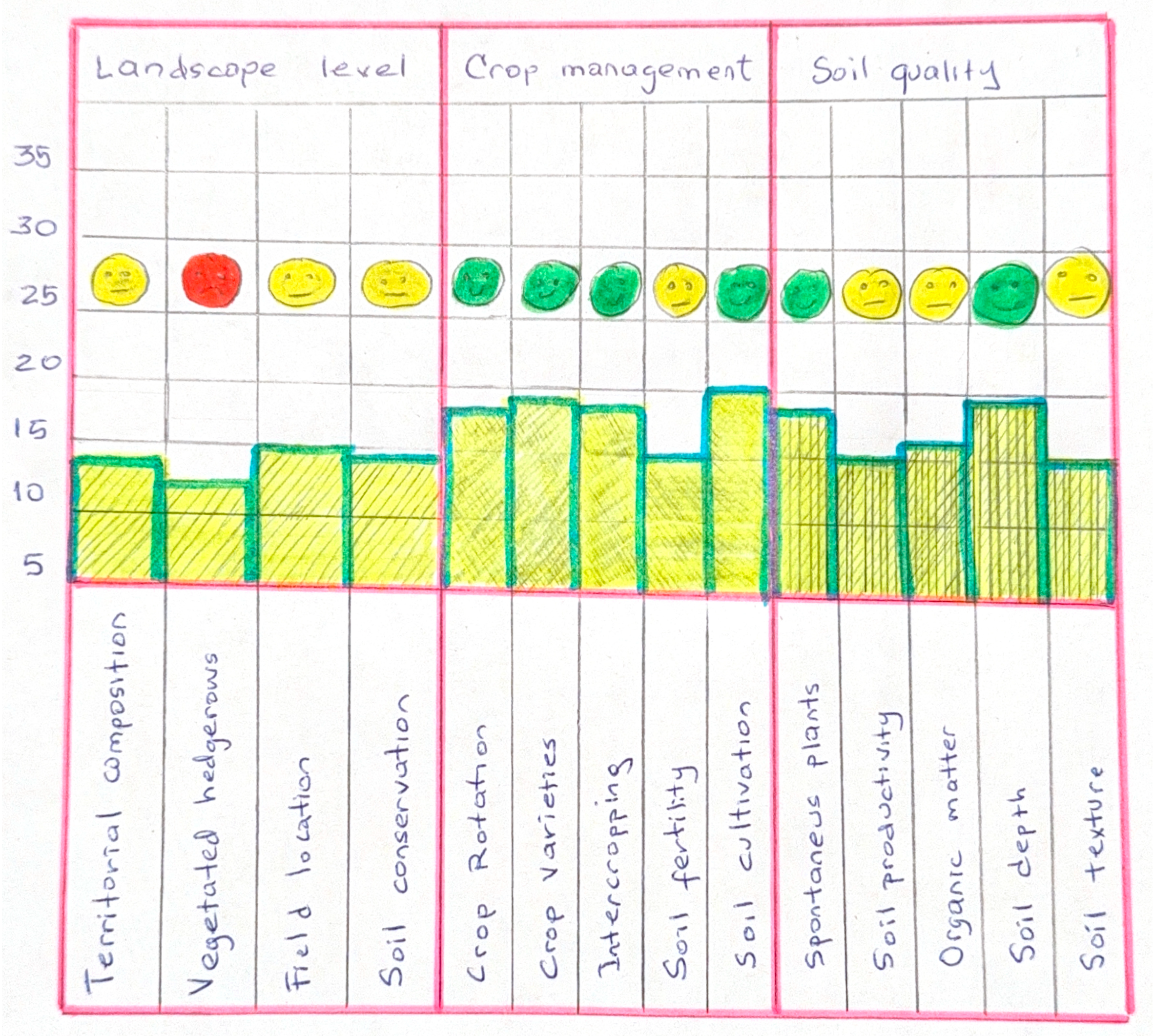
36]. A total of 14 indicators were identified by farmers to assess the adaptive capacity of farms. These included four landscape-level indicators—territorial composition, the presence of windbreaks, field location, and soil conservation practices—as well as several management-related indicators, such as crop genetic diversity, use of crop rotations, polycultures, and soil practices. The six soil quality indicators included the presence of spontaneous non-crop vegetation, soil organic matter content, as well as soil texture and depth. Farmers evaluated each indicator using a visual scale of happy (score 5), neutral (scores 3–4), and sad (scores 1–2) faces to denote optimal, acceptable, and marginal conditions, respectively.
As shown in
Figure 5, farmers from the three communities evaluated landscape indicators with one sad face and three neutral faces. Despite the marginal values assigned, farmers recognized that fields with vegetated borders and perennial vegetation protected fields from climatic variability, possibly due to the accumulation of soil organic matter and groundwater retention along tree lines. Four of the five field-level management indicators received positive (‘happy face’) evaluations, highlighting the importance of crop species and genetic diversity in stabilizing yields. Soil quality indicators received three neutral and two positive ratings. Farmers across the three communities linked soil moisture retention to texture and depth, noting that in wet and dry years, deeper soils tend to be more productive.
In participatory workshops, farmer groups were prompted to analyze the results of their evaluations by answering two questions:
What is needed to upgrade indicators given sad and neutral faces to happy faces (i.e., the optimal condition) in the categories of landscape, farmer management, and soil quality?
How can selected indicators ranked with happy faces (i.e., optimal condition) be maintained through time?
In order to strengthen preparedness for climatic variability, farmers identified a range of strategies to enhance landscape-level indicators, shifting evaluations from sad or neutral to happy scores. These strategies included planting perennial vegetation or establishing stone borders in field contours and other additional soil conservation measures to reduce soil instability while providing food for people and livestock.
4.3. Assessing Drought Resilience in Cuban Farms
This study reports the results of an assessment of the resilience to drought of three farms (La Victoria, Media Luna, and La China) located in suburban areas of the province of Havana [
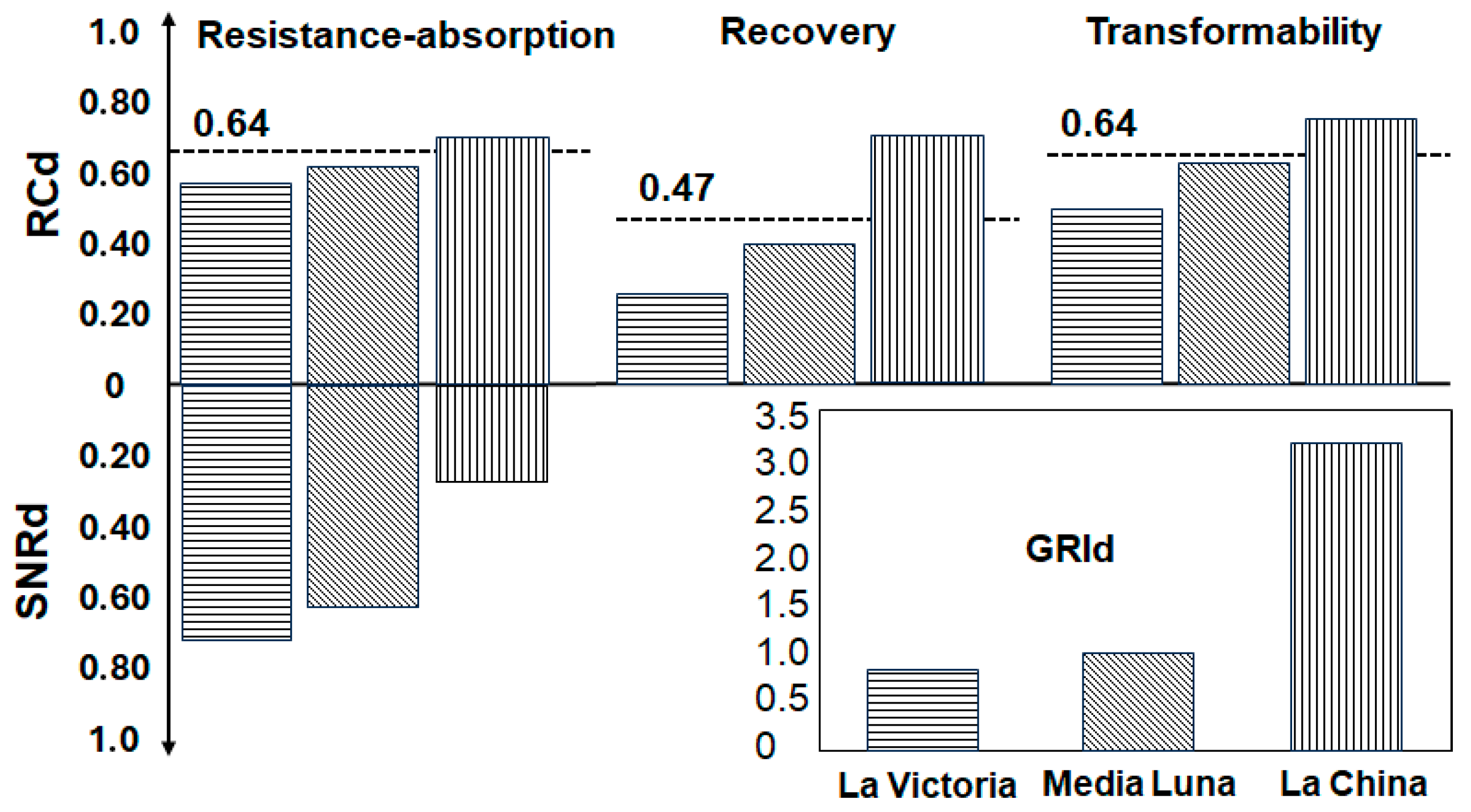
37]. To determine the resilience capacity (RCd) of these farms going through a process of agroecological conversion, the following indicators were utilized:
Resistance–absorption: The ability of a farm to either resist or absorb the effects of drought.
Recovery: The ability of a farm to return to the productive state prior to the incidence of the drought.
Transformability Capacity: The ability of a farm to become resilient, depending on the adaptive management skills of farmers and the existence of supportive policies.
Farming systems that are beginning to develop drought-resilience traits exhibit RCd values > 0.50. Values near 1.0 indicate progress towards resilience, while values exceeding 1.5 reflect a high level of resilience.
The sensitivity of natural resources (SNRd) was determined considering the sensitivity of crops, animals, and the availability of soil and water supply when exposed to droughts of varying frequency and duration. Farms scoring values that exceeded 0.8 were considered to have very high SNRd; high SNRd for values between 0.6 and 0.8; moderate for values ranging from 0.4 to 0.59; low for values between 0.2 and 0.39; and very low when values fell within the 0.1–0.2 range.
Resistance–absorption values of the three farms ranged from 0.59 to 0.72, primarily due to the weak structural configuration of the production system and the suboptimal spatial and temporal organization of crop and livestock components. Two farms, “La Victoria” and “Media Luna”, had low recovery scores of 0.27 and 0.42, respectively, mainly due to limited access to production resources, inadequate infrastructure, and insufficient food self-sufficiency for people and livestock. “La China” demonstrated higher recovery levels (0.72), which can be attributed to its superior infrastructure, greater access to resources, and increased food self-sufficiency. Transformation ability was greater for the “La China” farm (0.79), followed by “Media Luna” (0.61) and “La Victoria” (0.51). The variables that most limited transformability were a lack of self-organization and financial management, low productive stability, and poor access to extension services.
The General Resilience Index to Drought (GRId) was calculated using the formula GRId = RCd/SNRd. Of the farms evaluated, La Victoria demonstrated the lowest capacity for drought resilience (GRId = 0.66). Media Luna presented a moderate level of resilience (GRId = 0.93), whereas La China reached a high GRId value (3.21), indicating strong resilience capabilities. The fact that three farms surpassed the drought resilience threshold (GRId > 0.5) indicates that the process of agroecological transition builds farm resilience over time. Across the three farms, drought resilience capacity (RCd) was inversely related to the sensitivity of key productive natural resources, including crops, livestock, soil, and water availability. The findings indicate that resource sensitivity decreases as resilience capacity increases (
Figure 6).
5. Conclusions
The various methodologies presented herein have been tested in the field under various socio-ecological settings and they comprise useful tools for assessing the vulnerability of farming systems as well as the adaptive capacity of resource-poor farmers to respond to climatic events. The goal of the review was not to critically compare these methodologies, assess cross-case interpretability, or explore trade-offs between them. Rather, the objective was to synthesize field-tested assessment methodologies that provide a broad approximation to socioecological resilience in the context of resource-poor farmers in various Latin American countries. These farmers mostly neglected by extension services, urgently need tools to evaluate the preparedness of their farms to unpredictable climatic shocks.
In addition, the methodologies provide hints about principles and mechanisms that may explain why some farming systems resist and/or recover from droughts, hurricanes, or other events. Such analysis offers opportunities for farmers to explore alternative farm management strategies that enhance buffering capabilities in the short-term and long-term adaptation if practices are well implemented and work. The capability of farms to buffer against climatic episodes is linked to the ability of farmers to mobilize resources and implement practices able to maintain farms through disruption. Such a capability of resisting small disturbances can comprise the initial phase of a broader strategy to cope with larger climatic shocks [
38]. Agroecological strategies such as crop diversification, genetic diversity, animal integration, soil organic management (mulch, cover, organic matter addition, etc.), water conservation and harvesting undoubtedly reduce vulnerability and enhance adaptive capacity of farming systems [
39], but these practices by themselves are not sufficient to achieve resiliency [
40]; therefore, factors underlying social resilience must complement ecological resiliency [
41]. This is why the methodologies include indicators that assess the level of social organization, consolidation of networks, farming knowledge skills, etc., all key components of resiliency. The Holistic Risk Index shows that the vulnerability of farming communities is closely tied to the strength of their natural and social capital. Such capital, when strengthened, can then be mobilized at the community level in the form of agroecological interventions implemented through collective action.
The challenge is how to quickly disseminate the practices that have allowed certain farming systems to cope with climatic shocks, so that they can be widely applied to the restoration of agrolandscapes prone to the impacts of droughts and/or hurricanes and to prepare those rural areas predicted to be affected by climate change [
42]. Activities that emphasize horizontal transfer and extension of knowledge and innovations, such as farmer-to-farmer exchanges through field days, cross-visits, on-farm demonstrations, short seminars, or courses, are crucial for the quick dissemination of agroecologically based adaptation interventions [
43]. These pedagogical activities are designed to strengthen farmers’ ability to apply the aforementioned methodologies to evaluate the resilience of their farms. Training farmers to implement agroecological interventions that enhance their farms’ resistance to drought and severe storms is a key empowering strategy [
44]. The experience gained from the practical application of the above methodologies underscores the need for resilience assessments that move beyond isolated ecological indicators and adopt integrative, indicator-based frameworks capable of linking contextual sources of risk—such as climatic stressors, market volatility, and resource constraints—with structural dimensions of vulnerability, including input dependency, food security, and productive configurations. Methodologically, this requires the use of flexible but comparable assessment frameworks, such as the Holistic Risk Index, which uses various indicators (ranked with different scales 1–4, 1–5, etc.) adapted to locally specific social, productive, and climatic contexts while maintaining a coherent analytical structure [
45]. The intention was not to conduct a comparative analysis between the various case studies, which were conducted at different times and each representing particular biophysical and socio-economic realities in different countries, but rather to illustrate the flexibility of the HRI methodology in its application under various scenarios. The semaforo and happy/sad faces methodology requires farmers’ participation in the selection of indicators and the scoring process. In order to minimize subjective bias during the assessment, training workshops need to be conducted so farmers are guided to select indicators, understand how to conduct the evaluations, but more importantly, to unify and calibrate farmers’ perceptions and criteria when scoring indicators.
Although there is substantial evidence demonstrating the capacity of agroecology to protect farmers against climatic extremes, it is important to recognize that resilience has inherent limits and that agroecosystems have adaptive capacities that operate within certain thresholds. Once these thresholds are exceeded, the impact of events such as crop losses due to intense winds or prolonged drought, landslides, or severe erosion can exceed farmers’ ability to respond. Even farms that appear to be resilient after an assessment does not mean they will be able to withstand extended droughts or extreme storms that cause irreversible damage [
46]. In those situations, resource-poor farmers may need additional assistance, such as technical support and crop insurance [
47,
48], and in most cases, financial incentives for adopting agroecological practices (soil and water conservation, crop diversification, etc.) and for implementing landscape restoration programs [
49].





 ,
,