1. Introduction
River corridors are among the most complex and consequential socio-ecological systems on Earth, functioning simultaneously as hydrological infrastructures, ecological habitats, productive landscapes, cultural–symbolic spaces, and geopolitical frontiers [
1]. Their articulation as sites of ecological function, human meaning, and political contestation reflects broad social transformations wrought by colonial expansion, modern engineering, and capitalist development [
2]. In the 20th and 21st centuries, large-scale hydraulic engineering, territorial consolidation, and extractive water management have reshaped river basins globally, generating widespread ecological degradation and social reconfiguration [
3]. Historical precedents illustrate that waterscape engineering has long been intertwined with societal development. In ancient China, sophisticated water management systems, including canals, irrigation networks, and flood-control infrastructures, played a fundamental role in urban development and agricultural productivity across diverse climatic regions [
4]. At the settlement scale, traditional villages also developed integrated rainwater collection and drainage systems that linked architecture, topography, and community water use, demonstrating long-standing cultural adaptation to local hydrological conditions [
5]. These transformations have not only altered biophysical processes but have also disrupted long-standing cultural practices, cosmologies, and social relations anchored in riverine landscapes [
6]. In the Lower Jordan River Basin, large-scale diversion and infrastructure development have reduced natural discharge by more than 90%, illustrating the scale at which ecological degradation and social reconfiguration can converge in transboundary river systems. Within contemporary sustainability discourse, river conservation has emerged as a central strategy to reconcile ecological recovery with human well-being, community resilience, and socio-cultural revitalization [
7,
8,
9].
The ecosystem services framework, which links ecological functions to human benefits, has been foundational to this policy shift, creating an instrumental vocabulary for articulating the value of nature to society [
10]. Among the canonical categories of services, cultural ecosystem services (CES), defined as the non-material benefits derived from ecosystems, including recreation, aesthetic appreciation, spiritual meaning, heritage, identity, and sense of place, have gained increasing prominence in both research and practice [
11]. CESs are especially salient in river corridors, which often carry deep historical, religious, and symbolic significance alongside ecological function [
11].
However, CESs occupy a distinctive ontological and epistemological position within ecosystem service theory. Unlike provisioning or regulating services, which can be traced to material flows and functional processes, CESs are inherently relational and emergent: they arise through embodied experience, social interaction, communal narratives, and cultural interpretation [
12]. This relational ontology situates CESs at the intersection of ecological conditions and socio-cultural meaning-making, complicating both measurement and valuation to quantify as they are co-produced by human interactions with ecosystems, reflecting subjective, context-specific values rather than tangible, directly measurable inputs. While economic and biophysical modeling have achieved substantial sophistication for provisioning and regulating services [
13]. CESs resist reduction to singular metrics or universal scales because they are co-produced through context-dependent, historically situated, and socially differentiated processes [
13,
14]. Scholars have described this challenge as a persistent “measurement gap” within the ecosystem services paradigm: CESs are normatively central to sustainability, yet analytically resistant to standardization, aggregation, and commodification [
15]. Relational values scholarship further emphasizes that human-nature relations are not merely utilitarian or preference-based but deeply embedded in worldviews, cultural identities, and social infrastructures that conventional valuation tools cannot readily capture [
16].
In politically contested river basins, this relational understanding of CESs requires a political ecology lens, because the ability to experience, access, and value cultural ecosystem services is itself shaped by power asymmetries, governance structures, and territorial control.
To address these complexities, research on cultural ecosystem services (CESs) has increasingly drawn on concepts from place attachment theory and environmental psychology, which emphasize the role of emotional bonds, sense of belonging, and identity formation in shaping how individuals value and interact with places. Studies on people-place relationships highlight that constructs such as sense of place (SOP) and place attachment (PA) are central to understanding how geographical and cultural contexts influence human perceptions, behaviors, and well-being [
17]. Empirical research further demonstrates significant relationships between perceived environmental quality and key dimensions of place attachment, including place identity, place dependence, stewardship attitudes, and psychological well-being [
18]. Studies of urban green spaces show that the presence of greenery and natural elements significantly enhances visitors’ sense of place attachment, happiness, and perceived health benefits, underscoring the importance of cultural–geographical context and environmental quality in shaping human-environment interactions [
19].
Place-based meanings and identities evolve through interactions between communities and their environments. Collective narratives and cultural practices become embedded in landscapes, shaping local identity and sense of place, but can weaken under demographic change or spatial transformation. Studies of suburban development in Middlesex County, New Jersey, show how urban expansion and land-use planning reshaped culturally significant places, contributing to the fading of the once-strong Hungarian community identity in New Brunswick. This underscores that place attachment and cultural meaning are historically contingent and socially mediated, supporting the view that CES values emerge through evolving socio-spatial relationships rather than fixed ecological attributes [
20].
Restoration interventions that visibly improve ecological conditions often correlate with strengthened place attachment and positive valuation, leading planners to adopt implicit hypotheses: if conservation interventions are perceived as effective, then cultural ecosystem service values, attachment, and pro-environmental behavior will increase accordingly [
21,
22]. This expectation is supported in contexts characterized by stable institutional environments, relatively unrestricted mobility, and consensus about landscape meanings. However, its validity becomes theoretically unstable in transboundary and politically contested river basins, where environmental governance is deeply structured by power asymmetries, institutional design, and territorial control [
23,
24].
Political ecology and hydro-politics scholarship demonstrate that transboundary water systems are arenas in which dominant actors shape resource allocation, institutional norms, and discursive framing to maintain material and political advantage [
25]. The hydro-hegemony framework conceptualizes upstream and state actors as asymmetrical power brokers whose control over infrastructure, legal regimes, and narrative authority often marginalizes weaker riparian communities [
26].
In these contexts, environmental benefits, including CESs, are mediated not solely by ecological conditions but by mobility regimes, administrative boundaries, security infrastructures, and differentiated statuses of citizenship, residency, or legal recognition [
27]. Under conditions of securitization, access to rehabilitated river spaces may be unevenly distributed, producing structurally differentiated opportunities for encounters, experience, and cultural valuation. Environmental justice research underscores that exposure to environmental goods and harms is socially patterned along lines of power, recognition, and institutional inclusion, leading to systematic inequities in who can access, enjoy, and ascribe meaning to natural environments [
28,
29]. CES assessment methodologies, however, often remain politically neutral or technocratic in design, relying on aggregate perception metrics that do not systematically incorporate these structural determinants of access and experience [
30,
31].
A growing body of research suggests that perceptions of conservation outcomes play a central role in shaping cultural ecosystem service valuation and place attachment [
32,
33]. When ecological restoration or conservation interventions are perceived as successful, communities often report stronger cultural appreciation, attachment, and pro-environmental attitudes toward the landscape [
22,
34]. However, in politically fragmented or securitized river basins, perceptions of conservation effectiveness may themselves be shaped by uneven access to restored spaces, differential exposure to environmental improvements, and the broader institutional contexts that govern mobility and resource use [
35]. Under such conditions, perceived conservation outcomes may reflect structurally mediated experiences of the landscape rather than purely ecological change. In this article, perceived conservation effectiveness is therefore treated as a social-evaluative indicator rather than as a direct proxy for independently measured ecological condition.
This methodological omission creates a risk of inferential distortion in contested landscapes: associations between perceived conservation effectiveness and cultural valuation may reflect differential exposure, mobility privileges, or territorial benefits, rather than independent ecological influence [
36].
Despite growing theoretical convergence between CES scholarship, political ecology, hydro-politics, and relational values research, empirical integration remains limited. Few studies explicitly test whether perceived conservation effectiveness predicts cultural ecosystem service value independently of structurally mediated access conditions in securitized transboundary contexts. Most CES research to date is conducted in relatively stable governance environments [
37,
38], while hydro-political analysis rarely operationalizes cultural valuation metrics [
39]. This disciplinary disjunction constrains the ability of ecosystem service science to inform equitable and just river restoration practice across politically heterogeneous landscapes.
The Lower Jordan River Basin (LJRB) constitutes a paradigmatic setting for examining these dynamics. Shared among multiple political entities with asymmetrical control over land and water resources, the basin exemplifies the entanglement of ecological degradation, territorial fragmentation, and restoration aspiration [
40]. Large-scale diversion, infrastructure development, and water negotiation regimes have reduced natural discharge by over 90%, dramatically transforming hydrological and ecological processes. At the same time, the basin is characterized by checkpoints, permit systems, security zones, and fragmented administrative authorities that produce uneven encounter opportunities with river landscapes, constraint patterns of access, and shape socially differentiated experiences of place [
41,
42]. In such a securitized environment, cultural ecosystem service values are likely shaped as much by politically mediated access as by ecological change.
Importantly, these dynamics suggest that cultural ecosystem service values in the LJRB cannot be fully understood without accounting for the interplay between ecological conditions and socio-political structures. Variations in access, mobility, and institutional inclusion may systematically shape who can experience, use, and attribute meaning to riverine landscapes, producing differentiated valuations that reflect power relations as much as environmental quality. Conventional CES assessment methods, which often assume uniform exposure or stable governance, risk misrepresenting the distribution and determinants of cultural values in politically contested basins.
Addressing this gap requires integrating relational, place-based perspectives with politically attentive frameworks that capture the structural, historical, and territorial contingencies influencing cultural ecosystem service outcomes. This study addresses the following overarching question: Does perceived conservation effectiveness independently predict cultural ecosystem service value in a securitized transboundary river basin?
Using survey data from 445 respondents across seven community groups in the LJRB, perceived CES valuation is assessed through a global five-point Cultural Significance rating, while conservation effectiveness is measured through perceived impact and self-reported conservation involvement. A staged inference design that combines group comparisons and multivariable regression modeling is employed to test the robustness of observed relationships.
By integrating CES theory with hydro-hegemony, political ecology, environmental justice, and relational values perspectives, this study advances a politically attentive framework for evaluating cultural ecosystem services in contested river corridors. Methodologically, it contributes to CES research by incorporating structural controls into valuation analysis. Conceptually, it demonstrates how power asymmetries and territorial governance structures shape cultural valuation, refining ecosystem service assessment for transboundary environmental governance and equitable restoration planning.
2. Materials and Methods
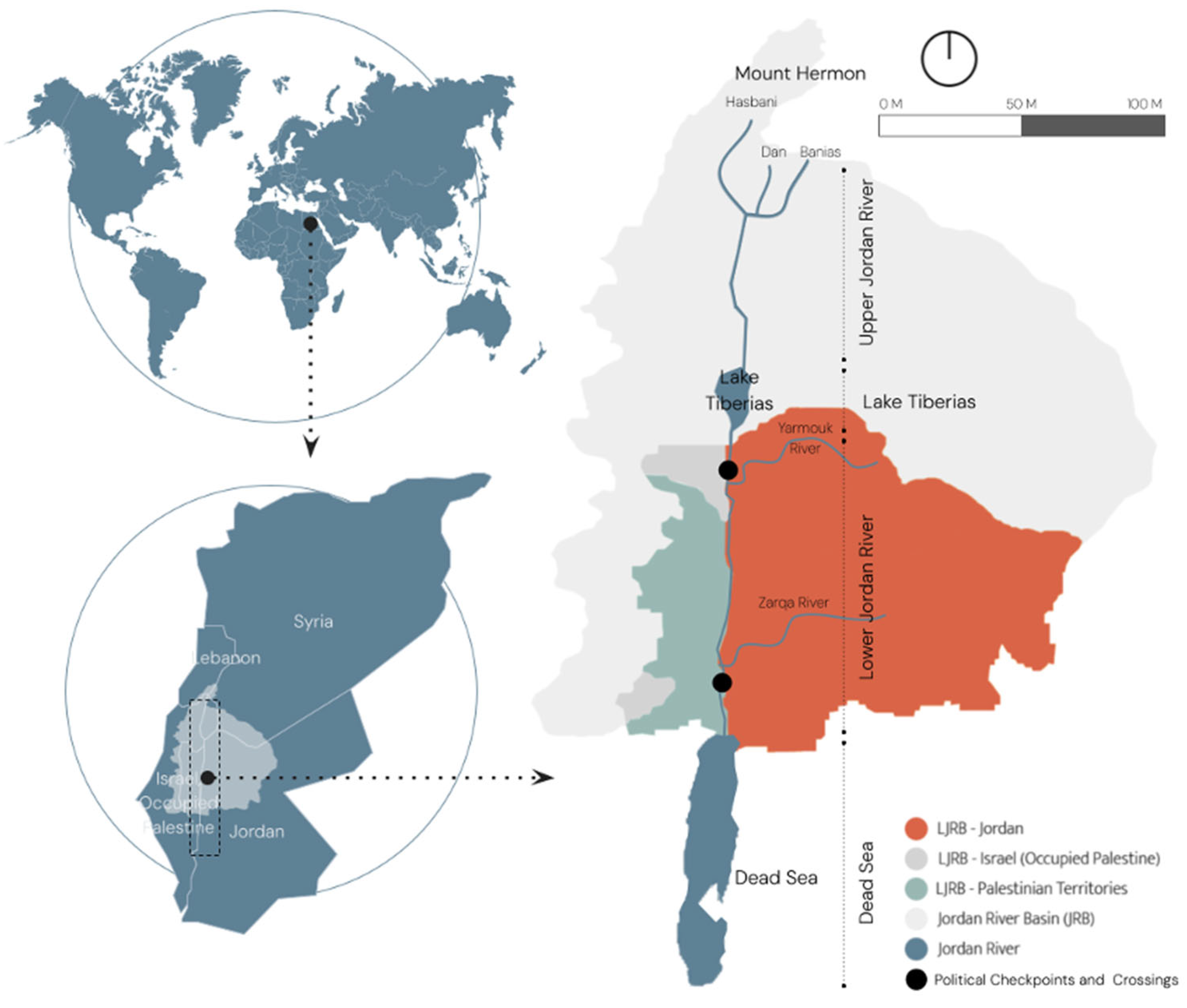
The research was conducted in the Lower Jordan River Basin (LJRB), spanning the downstream reach from the outlet of Lake Tiberias (Sea of Galilee) to the Dead Sea, intersecting Jordan, Occupied Palestine (Israel), and the Palestinian territories. The LJRB is a highly modified transboundary river system where hydrology, ecology, culture, and politics converge under asymmetrical governance. Precipitation and hydrological regimes exhibit a pronounced north–south gradient, declining from humid northern headwaters to arid southern lowlands, shaping both riparian habitats and settlement patterns [
43].
The Jordan River originates from three primary headwaters: Banias, Hasbani, and Dan. These converge in the Hula Valley before entering Lake Tiberias, after which flows continue southward to the Dead Sea. Extensive abstraction, diversions, and effluent inputs have reduced natural discharge by over 90%, producing narrow, incised channels dominated by wastewater and saline return flows. The LJRB simultaneously functions as a geopolitical boundary containing agricultural schemes, urban and rural settlements, pilgrimage sites, refugee camps, and security infrastructure [
44].
Access to the river is politically and socially mediated, constrained by checkpoints, fences, and limited official crossings, so proximity does not guarantee direct river contact. Despite these constraints, the corridor retains strong cultural, religious, and symbolic significance, forming a landscape of memory, identity, and heritage, where pilgrimage, tourism, and everyday life intersect with monitored riverbanks and border security practices [
45] (
Figure 1).
This study is based on cross-sectional survey data collected from residents of communities located within or adjacent to the Lower Jordan River Basin. The survey aimed to examine how different populations living in the basin perceive the cultural significance of the river landscape and the outcomes of conservation and rehabilitation initiatives.
Data were collected using a structured questionnaire distributed through a combination of online dissemination and community-based outreach. Respondents were recruited through convenience sampling, targeting populations living in proximity to the river corridor and individuals familiar with the cultural and environmental context of the basin. No formal stratification or quota-based balancing procedure was applied; instead, the sampling strategy aimed to reach socially diverse respondents across the seven community groups within the practical constraints of a politically fragmented field setting. While convenience sampling limits statistical representativeness, the approach allowed access to socially diverse populations across politically fragmented areas of the basin.
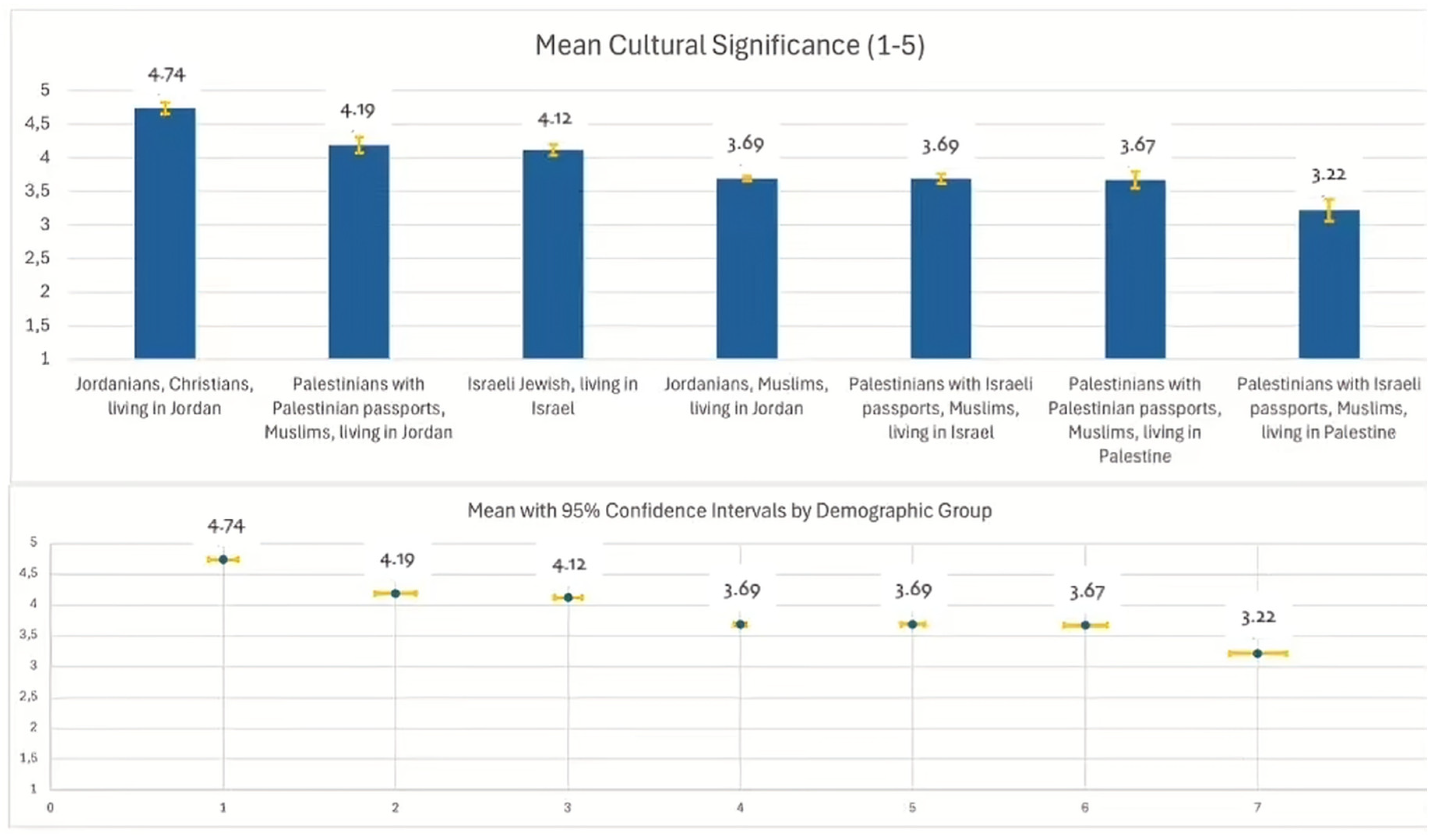
A total of 445 respondents completed the survey. The individual respondent constitutes the unit of analysis throughout the study. To reflect the socio-political diversity of the basin, respondents were categorized into seven community groups representing distinct citizenship, residency, and religious contexts:
Jordanians (Muslims) living in Jordan
Jordanians (Christians) living in Jordan
Palestinians with Palestinian passports (Muslims) living in Jordan
Palestinians with Palestinian passports (Muslims) living in Palestine
Palestinians with Israeli citizenship (Muslims) living in Israel
Palestinians with Israeli citizenship (Muslims) living in Palestine
Israeli Jewish respondents living in Israel
These categories capture important structural differences in mobility, governance context, and potential access to the river corridor, which may influence both conservation exposure and cultural valuation. Because the research design is observational and cross-sectional, the statistical analysis focuses on identifying associations rather than causal relationships between perceived conservation outcomes and cultural ecosystem service valuation. Because the community groups are markedly unequal in size, group-based inferences should be interpreted with appropriate caution regarding the precision of smaller-group contrasts.
The survey instrument was developed in Arabic, Hebrew, and English and administered across seven socio-political community groups. In the broader context of this study, Cultural Significance was conceptually grounded in multiple domains, but the present article focuses on the global Cultural Significance rating as the primary outcome to isolate its relationship with perceived conservation effectiveness and contextual group structure. The survey items used in the present article are reproduced in
Table A2; selected items from the broader study instrument are provided in
Table A3 for contextual reference.
In the broader framework of the study, Cultural Significance was theorized through four related domains: cultural meaning, cultural awareness, conservation, and national access. For the purposes of this article, however, the analyzed dependent variable is the respondent’s global five-point Cultural Significance rating, ranging from 1 (very low cultural importance) to 5 (very high cultural importance). This article therefore treats Cultural Significance as a parsimonious empirical indicator of perceived CES valuation, while conservation involvement, perceived conservation impact, cultural awareness, and community-group structure are examined as related explanatory or contextual variables rather than as components of a statistically computed composite score.
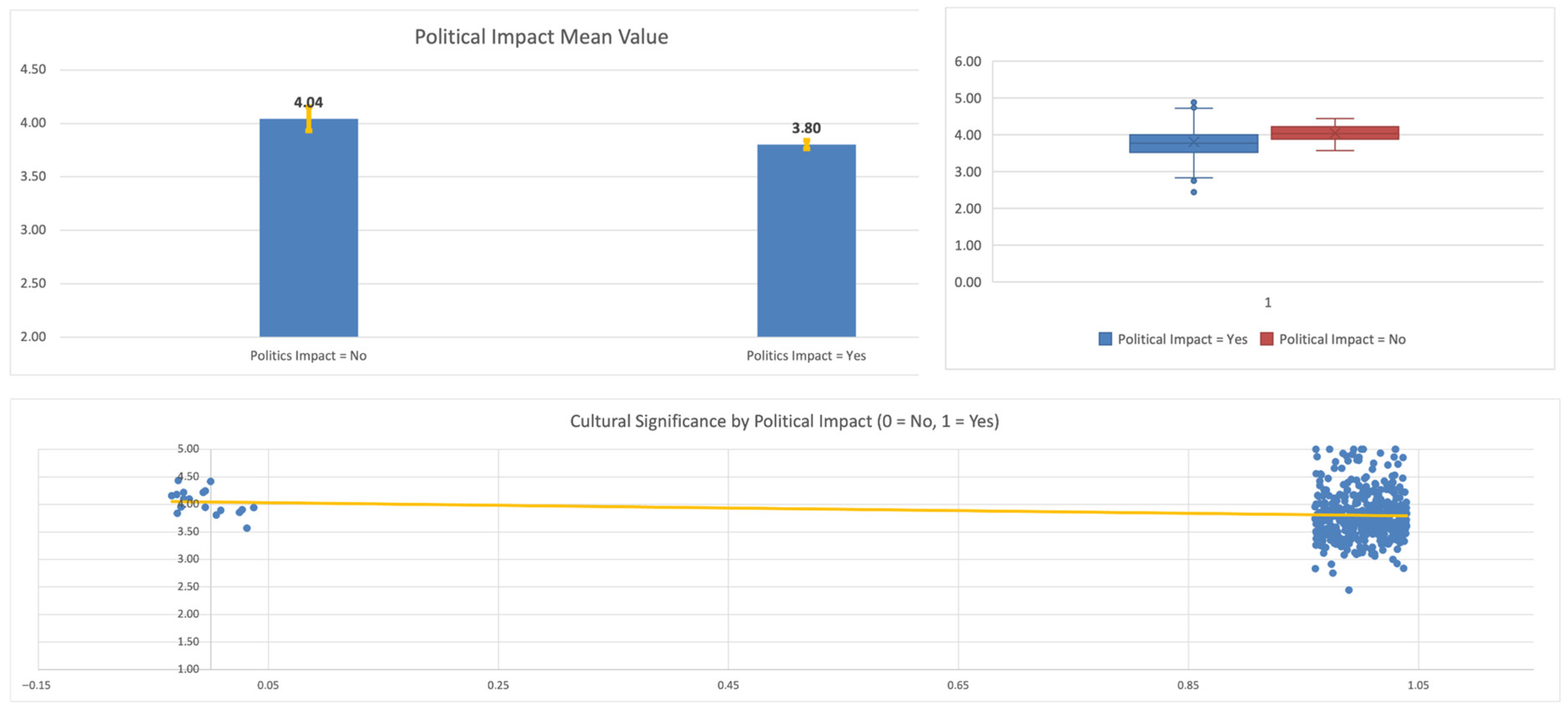
The analysis included two conservation-related explanatory variables. Perceived Impact of Conservation captures respondents’ assessment of the extent to which conservation or rehabilitation activities have produced meaningful improvements in the river corridor and was measured on a five-point ordinal scale, with higher scores indicating stronger perceived outcomes. This variable captures respondents’ evaluations of conservation outcomes rather than independently measured ecological effectiveness; no direct ecological indicators such as water-quality measures, flow restoration metrics, or habitat-condition variables are modeled in this article. Conservation Involvement is a binary variable indicating whether respondents personally participated in conservation-related activities associated with the river (1 = yes, 0 = no). In the broader framework of this study, conservation formed one of the domains linked to Cultural Significance; in this article, however, these measures are treated as explanatory variables used to examine whether perceived or experienced conservation is associated with the respondent’s global Cultural Significance rating.
In addition, two contextual variables were incorporated in adjusted regression models. Cultural Awareness is a binary measure reflecting whether respondents reported knowledge of the river corridor’s cultural and historical significance, while Community Group represents the seven socio-political categories described above, capturing structural differences in governance context, citizenship, and potential access to the river. In statistical analyses, community group was represented using indicator (dummy) variables, with one category designated as the reference group. Consistent with the broader framework, these variables are interpreted as contextual conditions shaping reported Cultural Significance rather than as components of a statistically computed composite outcome.
Consistent with the broader study design, the perceived-impact analysis combined correlation-based association measures with parsimonious and adjusted OLS models to distinguish pooled overlap from relationships that persist after accounting for group structure and survey controls.
The statistical analysis followed a staged inferential strategy designed to distinguish simple pooled associations from relationships that persist after accounting for the structured socio-political context of the basin. All analyses were conducted at the individual respondent level.
Prior to omnibus group comparison, assumption checks supported the use of classical ANOVA: Levene’s test indicated homogeneity of variances (p = 0.497), and Shapiro–Wilk testing of model residuals indicated acceptable normality (W = 0.994, p = 0.088). Accordingly, group differences in Cultural Significance were evaluated using one-way ANOVA with Type-II sums of squares, followed by Tukey’s HSD for multiplicity-controlled pairwise comparisons.
Group Differences in Cultural Significance: Initial analyses examined variation in Cultural Significance across the seven community groups. Differences between group means were evaluated using one-way analysis of variance (ANOVA). To quantify the magnitude of group effects, the omega-squared (ω
2) statistic was calculated as an unbiased estimate of the proportion of variance in Cultural Significance attributable to community-group membership:
SSbetween represents the between-group sum of squares
MSwithin represents the within-group mean square
k denotes the number of groups.
Omega-squared provides an effect size measure indicating the proportion of population variance explained by group membership.
Cultural Significance and Conservation Involvement: To evaluate whether Cultural Significance differs between respondents who report conservation involvement and those who do not, mean differences were estimated using Welch’s unequal-variance t-test. The magnitude of the difference was summarized using Hedges’ g, a standardized mean difference that corrects for small-sample bias.
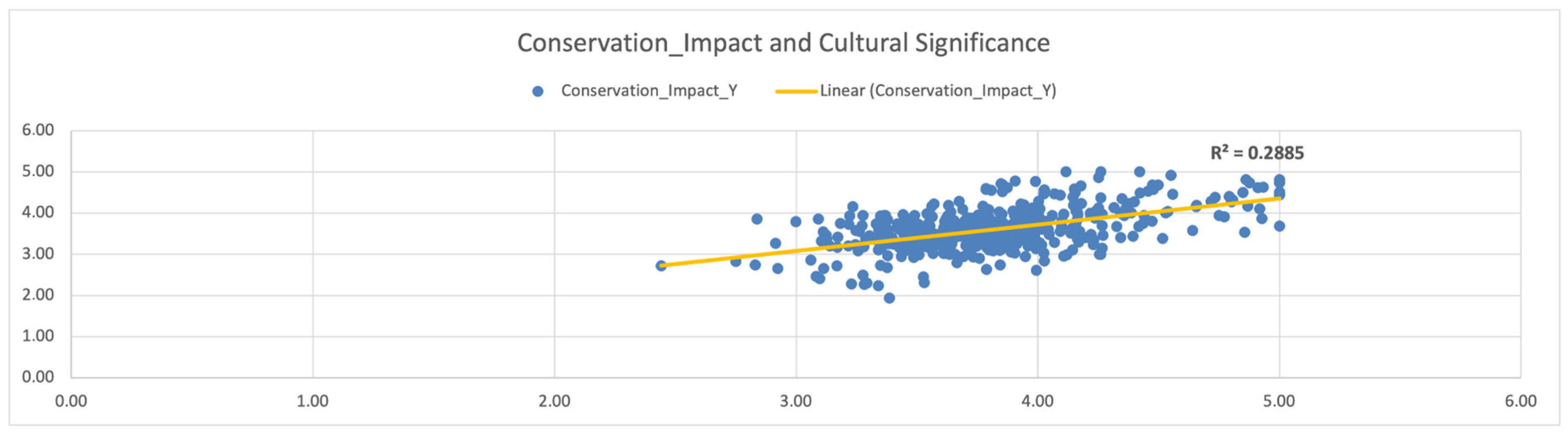
Perceived Conservation Impact and Cultural Significance: The staged analytical strategy followed the broader design. For the perceived-impact analysis, the association between perceived conservation impact and Cultural Significance was examined using Pearson’s product-moment correlation (r) and Spearman’s rank correlation (ρ). Pearson’s r was used to assess the linear association, while Spearman’s ρ served as a monotonicity check that does not depend on strict linearity.
To quantify the expected change in Cultural Significance associated with perceived conservation impact, a univariate ordinary least squares (OLS) regression model was estimated as follows:
where
denotes the Cultural Significance score for respondent
i,
represents the perceived conservation impact rating,
estimates the expected change in Cultural Significance associated with a one-unit increase in perceived conservation impact, and
represents the error term.
To evaluate whether the association between perceived conservation impact and Cultural Significance persists after accounting for the structured demographic context of the basin, an adjusted OLS regression model was estimated:
where
represents conservation participation,
represents cultural awareness, and
denotes indicator variables representing the seven community groups.
Consistent with the broader framework, coefficient inference in regression models was based on HC3 heteroskedasticity-consistent standard errors, which are appropriate for heterogeneous survey data and unbalanced designs. As well as it is more conservative than HC0/HC1 under heteroskedasticity and is commonly preferred in small-to-moderate samples and unbalanced designs, where leverage and variance inequality may affect conventional standard errors. Given the cross-sectional and observational design, these models are interpreted conservatively as estimates of association rather than causation. All statistical tests were evaluated using two-tailed significance tests with a conventional threshold of .
This study involves human participants and was conducted in accordance with established ethical standards for social science research. Participation was voluntary, and all respondents were informed about the purpose of the study before completing the survey. No personally identifying information was collected, and all responses were anonymized prior to analysis. Generative artificial intelligence tools were not used in the design of the study, data collection, statistical analysis, or interpretation of the results. Limited language editing assistance was used during manuscript preparation. The survey used in this study was exempt from formal ethics committee review as it was conducted anonymously and did not involve the collection of sensitive personal data.
4. Discussion
The results provide new empirical insight into how cultural ecosystem service (CESs) values emerge in politically contested river systems. While pooled analyses initially suggested a strong positive association between perceived conservation impact and Cultural Significance, this relationship disappears once community-group structure is introduced into the model. Instead, socio-political group membership explains a substantial proportion of the variance in CES valuation (ω2 = 0.55). These findings indicate that cultural valuation of the Lower Jordan River is shaped less by perceived ecological improvement alone than by structurally differentiated opportunities for access, experience, and meaning making across the basin’s politically fragmented communities.
The strong group structuring observed in Cultural Significance supports the relational understanding of cultural ecosystem services articulated in ecosystem service scholarship. CESs are not generated solely by ecological conditions but emerge through social interaction and historically situated relationships between people and landscapes [
10,
11,
12]. Because these relationships are embedded in cultural narratives, identity formation, and social institutions, CES values tend to vary across communities with different historical, cultural, and political positions relative to a landscape.
The present findings provide empirical support for this theoretical position by demonstrating that CES valuation in the Lower Jordan River Basin differs systematically across socio-political groups. Such differentiation reflects the broader argument that cultural ecosystem services cannot be reduced to universal metrics because they are co-produced through context-dependent social processes and relational values linking communities to ecosystems [
13,
14,
15,
16]. In this sense, the high explanatory power of community-group membership suggests that cultural valuation of the river is fundamentally embedded in social identity, collective memory, and culturally mediated perceptions of place rather than in ecological conditions alone.
The results also refine insights from environmental psychology and place attachment research. Previous studies demonstrate that perceived environmental quality and restoration outcomes often strengthen place attachment, stewardship attitudes, and emotional bonds with landscapes [
17,
18,
32]. Restoration initiatives therefore frequently operate under the implicit assumption that visible ecological improvement will translate into stronger cultural valuation and attachment.
The pooled correlations observed in this study initially appear consistent with this expectation. Respondents who perceive greater conservation impact also report higher Cultural Significance scores. However, once community-group context is introduced, the relationship effectively disappears. This pattern indicates that the apparent association between perceived conservation effectiveness and CES valuation is largely driven by between-group differences rather than by within-group psychological responses to ecological improvement.
An important interpretive caution concerns temporal direction. Because the data are cross-sectional, the positive pooled association between perceived conservation impact and Cultural Significance cannot be read as evidence that conservation perceptions independently produce higher CES valuation. The reverse interpretation is also plausible: respondents who already attach stronger cultural importance to the river may be more likely to perceive conservation outcomes positively. The disappearance of the perceived-impact coefficient in the adjusted model reinforces the need for caution and suggests that the pooled association is better understood as context-dependent and group-structured rather than as a direct causal effect.
This finding suggests that place-based meanings in politically fragmented landscapes are shaped not only by environmental perception but also by the socio-spatial conditions through which communities encounter landscapes. Studies of people-place relationships emphasize that place identity and attachment evolve through historically contingent interactions between communities and their environments [
17,
18,
20]. Where those interactions are unevenly structured by governance regimes, mobility constraints, or institutional barriers, cultural meanings may diverge across groups even within the same ecological landscape.
The observed pattern aligns closely with insights from political ecology and hydro-politics research. Transboundary river systems are widely understood as arenas in which power asymmetries, institutional arrangements, and territorial governance structures shape both resource distribution and environmental experience [
23,
24,
25,
26]. In such contexts, environmental benefits are rarely evenly accessible; instead, they are mediated through legal regimes, administrative boundaries, and security infrastructures that structure who can interact with river landscapes and under what conditions.
The Lower Jordan River Basin exemplifies these dynamics. Access to the river corridor is mediated through checkpoints, border controls, permit systems, and fragmented administrative authorities that shape everyday mobility and exposure to the river environment [
40,
41,
42]. As a result, communities located within the same ecological basin may experience profoundly different opportunities to encounter the river as a lived landscape.
The strong community-group structuring of Cultural Significance observed in this study reflects this politically mediated geography of access. In a transboundary region such as the LJRB, perceptions of conservation may also be filtered through political sensitivities, identity positioning, differential trust in institutions, and uneven exposure to restored sites, meaning that reported evaluations may reflect social and political experience as much as ecological observation. Cultural valuation of the river appears closely linked to the institutional and territorial conditions that enable or constrain meaningful engagement with the river corridor. This interpretation resonates with environmental justice scholarship demonstrating that exposure to environmental goods and harms is socially patterned according to power relations, institutional recognition, and governance structures [
28,
29]. From this perspective, the disappearance of the perceived-impact effect in adjusted models suggests that what appears to be a direct conservation effect may instead function as a proxy for structurally differentiated exposure to rehabilitated landscapes. Communities with greater mobility, institutional inclusion, or proximity to accessible sites may simultaneously perceive stronger conservation outcomes and attribute greater cultural significance to the river.
These findings carry important methodological implications for the assessment of cultural ecosystem services. CES valuation studies frequently rely on aggregate perception metrics that implicitly assume relatively uniform exposure to environmental conditions [
30,
31]. In this respect, the study advances CES research beyond traditional perception-based approaches by showing that valuation responses in contested landscapes must be interpreted in relation to structured inequalities of access, mobility, and governance rather than as stand-alone attitudinal measures.
In politically contested landscapes, however, such assumptions may lead to misleading interpretations of the relationship between ecological interventions and cultural outcomes. The staged inferential design used in this study demonstrates how pooled associations between perceived conservation outcomes and CES values may reflect underlying social structure rather than independent ecological influence. By explicitly modeling community-group context, the analysis reveals that the perceived conservation signal observed in simple correlations largely reflects differences between groups rather than causal relationships within them. This approach highlights the importance of integrating structural social variables into ecosystem service valuation frameworks, particularly in transboundary or politically fragmented environments where access to ecosystems is unevenly distributed.
The findings also have implications for river restoration practice. Contemporary restoration initiatives increasingly aim to deliver coupled ecological and social benefits by improving both ecosystem function and human well-being [
7,
8,
9]. Cultural ecosystem services are frequently invoked as key pathways through which restoration contributes to quality of life, community identity, and place attachment. These perception-based findings should also be interpreted against the broader ecological condition of the Lower Jordan River Basin, where large-scale flow reduction, wastewater inputs, and hydrological modification have profoundly altered the corridor. In that sense, the study does not evaluate ecological recovery itself; rather, it examines how communities interpret conservation under conditions of severe and unevenly experienced degradation.
The present results suggest that these outcomes cannot be assumed to emerge automatically from ecological rehabilitation. In the Lower Jordan River Basin, CES values appear strongly mediated by socio-political structures governing access and mobility within the river corridor. As a result, restoration interventions may produce uneven cultural benefits if underlying governance conditions remain unchanged.
Addressing these disparities may therefore require restoration strategies that engage explicitly with the social geography of the basin. Policies aimed at improving equitable access to rehabilitated river spaces, strengthening cross-community engagement, and recognizing diverse cultural connections to the river may be necessary for restoration initiatives to generate broadly shared cultural benefits.
In practical terms, such strategies could include the creation of more accessible public river-entry points, multilingual interpretation and heritage-signage systems, cross-border or cross-community stewardship initiatives where politically feasible, and coordinated management forums that bring together conservation actors, local communities, and site authorities. In fragmented governance settings such as the Lower Jordan River Basin, restoration planning may need to combine ecological rehabilitation with measures that reduce practical and institutional barriers to encounter, especially where mobility restrictions shape who can benefit from restored landscapes.
Several limitations should be considered when interpreting the results. First, the study is based on cross-sectional survey data and therefore cannot establish causal relationships between conservation perceptions and CES valuation. Second, the convenience sampling strategy, while enabling access to diverse communities across a politically fragmented landscape, limits statistical representativeness. Third, Cultural Significance was measured using a single Likert-scale indicator, which may not fully capture the multidimensional nature of cultural ecosystem services. Since the study does not incorporate direct ecological indicators, it cannot determine whether perceived conservation effectiveness aligns with actual environmental condition or restoration performance in the corridor. Key survey items are reproduced in the
Appendix A to clarify the relationship between the broader study instrument and the variables analyzed in this article. Because the survey was administered across multiple languages and socio-political groups, and no formal measurement-invariance testing was conducted in this article, group differences should be interpreted as observed differences in reported valuation rather than as fully equivalent latent-score comparisons. In addition, the principal variables were measured on five-point ordinal scales; accordingly, the OLS estimates reported here should be interpreted as approximations of association within the study’s analytic framework rather than as definitive interval-scale models. Finally, because the observational design relies on socially and politically structured self-reports, the findings may also be influenced by subjective interpretation, recall bias, cultural framing, and overlap among socio-political predictors, which may limit the unique contribution identifiable for any single variable in the adjusted model.
Future research could build on these findings by exploring the specific mechanisms through which socio-political context shapes CES valuation in transboundary river basins. Qualitative approaches, including interviews and ethnographic observation, may provide deeper insight into how communities construct cultural meanings around river landscapes under conditions of restricted access or political fragmentation. Longitudinal studies examining how CES perceptions evolve as restoration initiatives progress would also help clarify the temporal dynamics linking ecological change, governance structures, and cultural valuation. Comparative research across other transboundary basins could further test whether the patterns observed in the Lower Jordan River Basin represent a broader characteristic of politically contested river systems.
Future work could also evaluate hierarchical or multilevel modeling approaches to better distinguish individual-level perception from group-level socio-political structure in settings where community membership is itself a central explanatory context.