



Next Issue
Volume 18, January-2
Previous Issue
Volume 17, December-2
 
 
nutrients-logo

Journal Browser

Journal Browser

Nutrients, Volume 18, Issue 1 (January-1 2026) – 179 articles
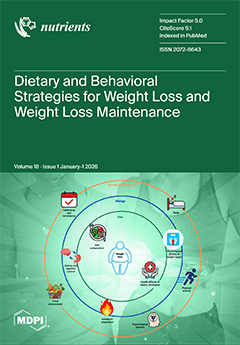
Cover Story (view full-size image): Obesity is a chronic, relapsing disease and a major public health challenge worldwide. Effective weight loss requires a sustained negative energy balance, but its achievement is influenced by multiple interacting factors. This narrative review synthesizes evidence on nutritional interventions in obesity, mechanisms and modifiable factors influencing weight loss, and characteristics of individuals who successfully maintain long-term weight loss outcomes. The review discusses dietary approaches, psychological and physiological barriers, physical activity, and sleep as factors shaping both weight loss and its maintenance. Together, these findings aim to support practical, individualized, and evidence-based strategies for clinicians working with people living with obesity as well as for individuals themselves. View this paper
  • Issues are regarded as officially published after their release is announced to the table of contents alert mailing list.
  • You may sign up for e-mail alerts to receive table of contents of newly released issues.
  • PDF is the official format for papers published in both, html and pdf forms. To view the papers in pdf format, click on the "PDF Full-text" link, and use the free Adobe Reader to open them.
Order results
Result details
Section
Select all
Export citation of selected articles as:
15 pages, 1070 KB  
Article
Physical Activity Determinants Under the Double Burden of Malnutrition: Contrasting Pathways for Underweight and Overweight Chinese Adolescents
by Liying Yao, Shuaishuai Jia, Xiaochang Lv, Yongguan Dai, Yee Cheng Kueh, Jinfu Xu, Jianqiu Cong and Garry Kuan
Nutrients 2026, 18(1), 179; https://doi.org/10.3390/nu18010179 - 5 Jan 2026
Viewed by 422
Abstract
Background: Chinese adolescents face a dual burden of malnutrition, yet the weight-status-specific mechanisms underlying physical activity (PA) participation remain underexplored. Methods: We conducted a cross-sectional study among 1573 adolescents (aged 9–15 years) in Shangrao City, China. Validated scales measured social-ecological factors (family/peer support, [...] Read more.
Background: Chinese adolescents face a dual burden of malnutrition, yet the weight-status-specific mechanisms underlying physical activity (PA) participation remain underexplored. Methods: We conducted a cross-sectional study among 1573 adolescents (aged 9–15 years) in Shangrao City, China. Validated scales measured social-ecological factors (family/peer support, physical environment), psychological factors (stage of change, self-efficacy, decisional balance), and PA participation. Data preprocessing utilized full information maximum likelihood to handle missing values. Confirmatory factor analysis was performed to validate the measurement model, followed by multi-group structural equation modeling to analyze pathway configurations across underweight (n = 187), normal-weight (n = 1070), and overweight/obese (n = 316) groups. Mediation effects were tested using bootstrapping with 5000 resamples. Results: Clear weight-specific patterns emerged. Normal-weight adolescents presented a fully functional comprehensive model where PA was predicted by the stage of change (β = 0.211, p < 0.001), friend support (β = 0.120, p < 0.001), self-efficacy (β = 0.092, p < 0.05), and perceived benefits (β = 0.095, p < 0.01). Underweight adolescents primarily relied on internal readiness driven by stage of change (β = 0.270, p < 0.001) and self-efficacy (β = 0.164, p < 0.05), with family support only indirectly influencing participation via psychological mediators. In contrast, overweight/obese adolescents showed a “socially dependent” pattern: friend support directly predicted PA levels (β = 0.136, p < 0.05), significantly enhanced self-efficacy (β = 0.370, p < 0.01), and effectively lowered perceived barriers (β = −0.165, p < 0.05). Additionally, the physical environment strongly impacted perceived benefits (β = 0.471, p < 0.01) but did not translate into action. Conclusions: These findings underscore the significant differences in PA determinants across the spectrum of malnutrition, necessitating targeted public health interventions to support the Healthy China 2030 initiative. Full article
(This article belongs to the Section Nutrition and Public Health)
Show Figures

Figure 1

16 pages, 622 KB  
Article
Low-Carbohydrate Diet and Metabolic Syndrome Risk in Korean Adults: A Korea National Health and Nutrition Examination Survey Study
by Vasuki Rajaguru, Jeoungmi Kim, Durga Datta Chapagain, Tae Hyun Kim, Sang Gyu Lee and Whiejong M. Han
Nutrients 2026, 18(1), 178; https://doi.org/10.3390/nu18010178 - 5 Jan 2026
Viewed by 627
Abstract
Aims: Low-carbohydrate diets (LCDs) are associated with metabolic benefits, but their long-term effects remain uncertain, particularly in Asian populations with traditionally high carbohydrate intake. This study examined LCD patterns and their association with metabolic syndrome (MetS) in Korean adults using nationally representative data [...] Read more.
Aims: Low-carbohydrate diets (LCDs) are associated with metabolic benefits, but their long-term effects remain uncertain, particularly in Asian populations with traditionally high carbohydrate intake. This study examined LCD patterns and their association with metabolic syndrome (MetS) in Korean adults using nationally representative data from the 2022–2023 Korea National Health and Nutrition Examination Survey (KNHANES). Methods: Among 9617 adults aged ≥20 years with complete dietary and health data, LCD score was calculated from the percentage of energy derived from carbohydrates (reverse-scored), fats, and proteins, and participants were categorized into high-carbohydrate, moderate-carbohydrate, and low-carbohydrate groups. MetS was defined using an Adult Treatment Panel III and Korean criteria. Survey-weighted logistic regression was applied to assess associations between LCD score and MetS across sequentially adjusted models. Results: MetS prevalence differed significantly across LCD decile groups (LCD1: 9.6%, LCD2: 5.8%, LCD3: 9.7%; p < 0.001). In a minimally adjusted model, LCD decile 3 was associated with higher odds of MetS (OR, 1.14; 95% CI: 1.02–1.27). However, this association was attenuated and became non-significant after further adjustment for key metabolic risk factors. Obesity, blood pressure, fasting glucose, triglycerides, and high-density lipoprotein cholesterol were all strongly associated with MetS (all p < 0.001), and income-related disparities were evident, with lower-income groups showing higher carbohydrate and lower fat and protein intakes. Conclusions: These findings suggest that LCD patterns are not independently associated with MetS once underlying metabolic factors are considered. Public health strategies in Korea would be emphasized by improving nutrient quality, promoting balanced macronutrient intake, and reducing socioeconomic inequalities in diet to mitigate metabolic risk among adults. Full article
(This article belongs to the Section Clinical Nutrition)
Show Figures

Graphical abstract

20 pages, 776 KB  
Article
Taste of Things to Come: Craving Responses to Ingestion of and Mouth Rinse with a Sugary Drink in Connection with Food Cues and Associations with Continuous Interstitial Glucose Measurement in a Healthy Population
by Abdelbare Al Gamode, Rohi Brigid Malik, Joe Butler and Hans-Peter Kubis
Nutrients 2026, 18(1), 177; https://doi.org/10.3390/nu18010177 - 5 Jan 2026
Viewed by 581
Abstract
Background/Objectives: Food cravings are common with high-palatability foods that are high in sugar and/or fat. Food cues can strongly induce food craving, and heightened food cue reactivity is associated with eating disorders and obesity. Sweet taste signalling is suggested to be an important [...] Read more.
Background/Objectives: Food cravings are common with high-palatability foods that are high in sugar and/or fat. Food cues can strongly induce food craving, and heightened food cue reactivity is associated with eating disorders and obesity. Sweet taste signalling is suggested to be an important regulator of appetite and food intake, with sensory-metabolic mismatch potentially relevant for the food craving experience. This study investigated the interaction between taste and food cues and food craving in healthy people with and without ingestion of a sugary drink. Methods: This study had a randomised crossover design with 47 healthy individuals who participated in two experimental trials. Fasted individuals were exposed to food cues, and food craving pre- and post-exposure was measured via a newly validated method using handgrip force as a response modality. This was followed either by ingestion (ingestion trial) or mouth rinse (mouth rinse trial) of a sugary drink and reassessment of food cue craving responses. Continuous interstitial glucose monitoring was performed using a glucose sensor inserted into the upper arm, and a blood sample for leptin levels was taken. Results: A strong food craving response to food cues was bound to the fasted state, while ingestion of a sugary drink blunted food cue reactivity and reduced craving levels. Mouth rinse induced a stable increase in food craving, which reached a maximum after food cues. Interstitial glucose levels over the after-trial periods (incremental area under the curve, iAUC) were significantly higher for the rinse trial day than for the ingestion trial day, which may suggest higher carbohydrate/sugar intake after the rinse trial, while craving levels were associated with iAUC in the rinse trial. Conclusions: Outcomes indicate that taste/flavour in connection with food cues may generate an error signal experienced as food craving, whereas receipt of sugars, with concomitant physiological responses, reduces the signal and diminishes food craving. These results highlight the importance of sensory-metabolic mismatch in the food craving experience. Full article
(This article belongs to the Section Nutrition and Neuro Sciences)
Show Figures

Figure 1

20 pages, 4641 KB  
Article
Salmon Nasal Cartilage Proteoglycan Ameliorate Joint Pain and Cartilage Degradation by Regulating Catabolic and Anabolic Homeostasis in MIA-Induced Osteoarthritis
by Min Yu, So Eun Jo, Young Bae Son, Ye Jin Kim, Youngsik Seo, Sang Bae Han, Hyun Jin Kim, Seon Gil Do, Hanjoong Jo and Dong Ju Son
Nutrients 2026, 18(1), 176; https://doi.org/10.3390/nu18010176 - 5 Jan 2026
Viewed by 619
Abstract
Background/Objectives: Osteoarthritis (OA) is a pervasive chronic joint disease characterized by the triad of persistent articular cartilage degeneration, debilitating synovial inflammation, and sustained chronic pain. Although salmon nasal cartilage proteoglycan (SPG) is recognized for supporting joint health, the precise molecular mechanism underlying its [...] Read more.
Background/Objectives: Osteoarthritis (OA) is a pervasive chronic joint disease characterized by the triad of persistent articular cartilage degeneration, debilitating synovial inflammation, and sustained chronic pain. Although salmon nasal cartilage proteoglycan (SPG) is recognized for supporting joint health, the precise molecular mechanism underlying its effects during OA progression remains to be fully elucidated. This study evaluated the therapeutic efficacy of SPG using a monosodium iodoacetate (MIA)-induced mouse model. Methods: A total of 180 male C57BL/6J mice (six-week-old) were utilized, organized into three independent cohorts to analyze distinct analytical endpoints: (1) pain assessment, histology, and immunohistochemistry; (2) mRNA expression analysis for early-stage OA (Day 3); and (3) mRNA expression analysis for the late-stage OA (Day 28). All subjects received daily oral treatment via gavage, commencing 5 days prior to OA induction and continuing until the designated experimental termination points (either Day 3 or Day 28). Each cohort comprised five experimental groups (n = 10–12 per group): a saline-injected Sham group, an MIA-induced Control group, a positive comparator receiving celecoxib (CLX, 20 mg/kg/day), and two groups administered SPG at a dose of 50 or 100 mg/kg/day. Results: Our findings demonstrated that SPG, particularly at the 100 mg/kg dose, significantly mitigated joint pain symptoms, performing comparably to CLX. Histopathological assessments confirmed that SPG effectively preserved the structural integrity of the cartilage matrix and substantially reduced pathological damage, as evidenced by lower Mankin scores. Mechanistically, SPG treatment led to a marked downregulation of degradative enzymes, including matrix metalloproteinase-3 (MMP-3) and a disintegrin and metalloproteinase with thrombospondin motifs 4 (ADAMTS-4), while concurrently normalizing the levels of tissue inhibitors of metalloproteinases (TIMPs). Furthermore, SPG prevented the aberrant, over-compensatory expression of anabolic markers such as SRY-box transcription factor 9 (SOX-9), type II collagen alpha 1 chain (COL2A1), and aggrecan (ACAN) typically observed in the disease’s later stages. While SPG demonstrated a limited impact on broadly pro-inflammatory cytokine profiles, it specifically and significantly reduced interleukin-6 (IL-6) gene expression during the chronic phase. Conclusions: These results suggest that SPG serves as a promising natural agent that maintains articular homeostasis by balancing matrix metabolic pathways, positioning it as a scientifically validated functional food candidate for the management of joint health. Full article
Show Figures

Figure 1

13 pages, 414 KB  
Article
Effects of High-Dose Vitamin D Supplementation and Physical Exercise on Vitamin D Metabolites in Professional Football Players: A Pilot Study
by Anna Książek, Aleksandra Zagrodna and Konrad Kowalski
Nutrients 2026, 18(1), 175; https://doi.org/10.3390/nu18010175 - 5 Jan 2026
Viewed by 848
Abstract
Background/Objectives: Vitamin D plays an important role in muscle metabolism and recovery, yet its kinetics during and after football-specific physical activity remain poorly understood. Therefore, this study aimed to determine whether physical effort during a football match influences the concentration of vitamin [...] Read more.
Background/Objectives: Vitamin D plays an important role in muscle metabolism and recovery, yet its kinetics during and after football-specific physical activity remain poorly understood. Therefore, this study aimed to determine whether physical effort during a football match influences the concentration of vitamin D metabolites and to explore the effect of a single high-dose cholecalciferol supplementation combined with physical exercise on the levels of vitamin D metabolites in professional football players. Methods: Twenty professional football players participated in a three-phase, randomized placebo-controlled pilot study. Baseline fitness and blood samples were collected, followed by pre- and post-match measurements during two games. In the final phase, half of the players received a single 500,000 IU dose of vitamin D3 before a simulated match. Blood samples were collected before and after each session to analyze vitamin D metabolites using the isotope-dilution liquid chromatography–tandem mass spectrometry (ID-LC-MS/MS) method. Results: Physical exercise during the football match significantly increased serum concentrations of 25-(OH)D3, 24,25-(OH)2D3, and 3-epi-25-(OH)D3 (by up to 25%, p < 0.001). Following supplementation, these effects were further amplified, with 25-(OH)D3 rising by 98% and 3-epi-25-(OH)D3 by 424% (p < 0.001). Significant alterations in vitamin D metabolite ratios after exercise and supplementation suggest enhanced metabolic turnover and dynamic regulation of vitamin D pathways in response to physical effort. Conclusions: Football-specific physical activity appears to stimulate the release of vitamin D metabolites. High-dose cholecalciferol supplementation was well tolerated and may rapidly increase vitamin D status in professional athletes. These findings may have implications for optimizing recovery and performance, though larger trials are needed. Full article
(This article belongs to the Section Sports Nutrition)
Show Figures

Figure 1

26 pages, 10086 KB  
Article
Multi-Strain Probiotic Improves Tryptophan Metabolism and Symptoms in Chronic Fatigue Syndrome Patients with Co-Occurring Irritable Bowel Syndrome: An Open-Label Pilot Study
by Cezary Chojnacki, Marta Mędrek-Socha, Jan Chojnacki, Anita Gąsiorowska, Ewa Walecka-Kapica, Michal Bijak, Karolina Przybylowska-Sygut and Tomasz Poplawski
Nutrients 2026, 18(1), 174; https://doi.org/10.3390/nu18010174 - 5 Jan 2026
Viewed by 948
Abstract
Background/Objectives: Gut dysbiosis in Chronic Fatigue Syndrome (CFS) drives low-grade inflammation and shifts tryptophan metabolism toward neurotoxic pathways. The causal link between bacterial translocation, kynurenine pathway dysregulation, and symptom severity remains under-defined. We evaluated the impact of a high-concentration multi-strain probiotic on [...] Read more.
Background/Objectives: Gut dysbiosis in Chronic Fatigue Syndrome (CFS) drives low-grade inflammation and shifts tryptophan metabolism toward neurotoxic pathways. The causal link between bacterial translocation, kynurenine pathway dysregulation, and symptom severity remains under-defined. We evaluated the impact of a high-concentration multi-strain probiotic on the “gut-kynurenine axis” and clinical status in CFS patients with co-morbid IBS-U and confirmed dysbiosis. Methods: Forty female patients with confirmed dysbiosis (GA-map™ Dysbiosis Index > 2) received the CDS22 formula (450 billion CFU/day) for 12 weeks. We compared urinary tryptophan metabolite profiles (LC-MS/MS), gut dysbiosis markers (3-indoxyl sulfate), and fatigue severity (FSS) against 40 age-matched healthy controls. Results: Baseline analysis revealed profound metabolic perturbations: elevated bacterial proteolytic markers (3-IS), substrate depletion (low tryptophan), and a neurotoxic signature (high quinolinic acid [QA], low kynurenic acid [KYNA]). Following the intervention, fatigue scores declined by 40.3%, with 97.5% of patients reaching the remission threshold (FSS < 36). Biochemically, 3-IS levels decreased to the range observed in healthy controls and attenuated xanthurenic acid levels. Although absolute QA concentrations remained elevated compared to controls, the neuroprotective KYNA/QA ratio increased significantly (+45%). Increased systemic tryptophan availability correlated directly with clinical symptom reduction (Spearman’s rho = −0.36, p = 0.024). Conclusions: The CDS22 formulation was associated with a restoration of intestinal eubiosis and functional tryptophan partitioning. Clinical remission coincides with a metabolic shift favoring neuroprotection (increased KYNA/QA ratio), validating the gut–kynurenine axis as a modifiable therapeutic target. Peripheral metabolic improvement relative to the healthy baseline appeared sufficient for symptom relief in this specific phenotype, despite incomplete clearance of neurotoxic metabolites. Full article
(This article belongs to the Section Prebiotics, Probiotics and Postbiotics)
Show Figures

Figure 1

30 pages, 6969 KB  
Systematic Review
The Role of Omega-3 Polyunsaturated Fatty Acid Supplementation in Postoperative Recovery of Colorectal Cancer: Systematic Review and Meta-Analysis
by Huzhong Li, Zhenze Xu, Yamin Chen, Jianming Guo, Qihe Wang, Dong Liang, Pengfeng Qu, Taotao Deng, Yuan Yuan, Jiao Xu, Haiqin Fang and Ziyuan Wang
Nutrients 2026, 18(1), 173; https://doi.org/10.3390/nu18010173 - 5 Jan 2026
Viewed by 824
Abstract
Background: China is currently developing standards for Food for Special Medical Purposes (FSMP) targeting for oncology patients. However, substantial challenges remain in defining optimal fortification levels of omega-3 polyunsaturated fatty acids (ω-3 PUFAs). Accumulating evidence suggests that ω-3 PUFA intake improves postoperative prognosis [...] Read more.
Background: China is currently developing standards for Food for Special Medical Purposes (FSMP) targeting for oncology patients. However, substantial challenges remain in defining optimal fortification levels of omega-3 polyunsaturated fatty acids (ω-3 PUFAs). Accumulating evidence suggests that ω-3 PUFA intake improves postoperative prognosis by modulating oncological parameters in colorectal cancer (CRC) patients. This meta-analysis aimed to evaluate the therapeutic efficacy of ω-3 PUFA supplementation in enhancing postoperative safety and recovery stability following CRC surgery, to address critical gaps in nutritional interventions for optimizing clinical outcomes. These findings are expected to FSMP standard development, clinical nutrition protocols and product innovation. Methods: A systematic literature search was conducted, in accordance with PRISMA guidelines, across major databases until June 16, 2025. Data were analyzed using RevMan v5.4 (Cochrane Collaboration). Results: Thirty-four randomized controlled trials (RCTs) (n = 2889) were included. Compared to controls, the ω-3 PUFAs group showed significantly increased levels of nutritional markers: total protein (p < 0.00001), albumin (p = 0.001); immunological parameters: CD3+/CD4+/CD8+ T-cells, CD4+/CD8+ ratio (all p < 0.0001); Karnofsky Performance Status (KPS) scores (p = 0.04); and serum ω-3 PUFA concentrations (p = 0.0004). Significant reductions were observed in inflammatory markers, such as procalcitonin, C-reactive protein (CRP), interleukin-6 (IL-6), tumor necrosis factor-α (TNF-α) (p = 0.004 to < 0.00001); and clinical outcomes, such as hospitalization duration (p < 0.00001), infectious complications (p < 0.00001), anastomotic leakage (p = 0.0005), surgical site infections (p = 0.03). No significant intergroup differences were detected for white blood cells, transcription factor activity, mortality, or crypt cell proliferation indices (p = 0.06–0.55). Conclusions: Overall, ω-3 PUFA supplementation significantly attenuates postoperative inflammation, enhances immune function, shortens hospitalization, and improves the quality of life in CRC patients, though without mortality benefit. Notably, post hoc dose–response analysis identified a supplementation range of 0.16–0.30 g/kg/day as a potentially optimal supplementation range for Chinese CRC populations, providing foundational evidence for clinical practice and FSMP standardization. Full article
(This article belongs to the Section Clinical Nutrition)
Show Figures

Figure 1

23 pages, 8885 KB  
Article
An Acebuche Oil-Enriched Diet Prevents Early-Stage Cerebrovascular Alterations in the 5xFAD Mouse Model of Alzheimer’s Disease
by Lorenzo Guidotti, Dominga Lapi, Martina Lucchesi, Silvia Valori, Francesca Corsi, Lucia Giambastiani, Andrea Vornoli, Claudia Gargini, Maurizio Cammalleri and Massimo Dal Monte
Nutrients 2026, 18(1), 172; https://doi.org/10.3390/nu18010172 - 5 Jan 2026
Viewed by 573
Abstract
Background/Objectives: Alzheimer’s disease (AD) is a neurodegenerative disorder in which altered microvascular circulation participates in the pathogenesis. The lack of therapeutic treatments for AD makes the development of strategies aimed at preventing or delaying the disease onset urgent. In recent years, several [...] Read more.
Background/Objectives: Alzheimer’s disease (AD) is a neurodegenerative disorder in which altered microvascular circulation participates in the pathogenesis. The lack of therapeutic treatments for AD makes the development of strategies aimed at preventing or delaying the disease onset urgent. In recent years, several studies have highlighted that a diet rich in antioxidants and anti-inflammatory compounds may positively impact AD development. In this study, we assessed the impact of a diet enriched with Acebuche (ACE) oil, an extra-virgin olive oil particularly rich in antioxidants and anti-inflammatory compounds, on AD progression in the 5xFAD mouse model. Methods: After weaning, wild-type (WT) and 5xFAD mice received the standard or the ACE oil-enriched diet. At 2, 4 and 6 months, the effects of the diet were evaluated on AD-related microvascular aberrancies, beta-amyloid (Aβ) formation, hypoxic state, blood–brain barrier (BBB) alterations, neuroinflammation and cognitive impairment. Metabolic parameters were also evaluated. Results: In 5xFAD mice, the ACE oil-enriched diet prevented alterations in cerebral microcirculation. Moreover, Aβ accumulation, downregulation of Aβ-degrading enzymes, hypoxia, BBB breakdown, neuroinflammation, and cognitive deficits were delayed by the ACE oil-enriched diet. However, some of these effects were reduced at 6 months, in concomitance with systemic metabolic changes, such as hepatic steatosis, evidenced in both WT and 5xFAD mice receiving the ACE oil-enriched diet. Conclusions: Overall, the present results represent proof of concept for the validity of early dietary interventions in AD prevention. Full article
Show Figures

Figure 1

2 pages, 348 KB  
Reply
Reply to Spitz et al. Conclusions Are Not Supported by the Published Statistical Analysis. Comment on “López-Toledo et al. Flaxseed Improves Glucose and Lipid Metabolism in Mexican Subjects with Type 2 Diabetes: A Parallel Randomized Clinical Trial. Nutrients 2025, 17, 709”
by Sabina López-Toledo
Nutrients 2026, 18(1), 171; https://doi.org/10.3390/nu18010171 - 5 Jan 2026
Viewed by 364
Abstract
We sincerely thank the Editor and the commenting authors for their careful review and constructive observations regarding our article [...] Full article
Show Figures

Figure 3

2 pages, 148 KB  
Comment
Conclusions Are Not Supported by the Published Statistical Analysis. Comment on López-Toledo et al. Flaxseed Improves Glucose and Lipid Metabolism in Mexican Subjects with Type 2 Diabetes: A Parallel Randomized Clinical Trial. Nutrients 2025, 17, 709
by Robert W. Spitz, Deependra K. Thapa, Thirupathi Reddy Mokalla, Wasiuddin Najam, Andrew W. Brown and David B. Allison
Nutrients 2026, 18(1), 170; https://doi.org/10.3390/nu18010170 - 5 Jan 2026
Cited by 1 | Viewed by 528
Abstract
López-Toledo et al [...] Full article
21 pages, 1104 KB  
Systematic Review
Nutritional Status, Body Composition and Growth in Paediatric-Onset Ulcerative Colitis: A Systematic Review
by Chen Sarbagili-Shabat, Floor Timmer, Konstantina Morogianni, Ralph de Vries, Tim de Meij, Nikki van der Kruk, Lana Verstoep, Nicolette Wierdsma and Johan Van Limbergen
Nutrients 2026, 18(1), 169; https://doi.org/10.3390/nu18010169 - 5 Jan 2026
Viewed by 519
Abstract
Background: Growth impairment and poor nutritional status are recognized complications of pediatric inflammatory bowel disease (IBD), yet data specific to ulcerative colitis (UC) are limited. This systematic review aims to provide an overview of current knowledge on growth, nutritional status, and body composition [...] Read more.
Background: Growth impairment and poor nutritional status are recognized complications of pediatric inflammatory bowel disease (IBD), yet data specific to ulcerative colitis (UC) are limited. This systematic review aims to provide an overview of current knowledge on growth, nutritional status, and body composition in children and adolescents with UC. Methods: A systematic literature search was performed up to August 2025. Studies including patients aged 5–22 years with confirmed UC were reviewed. Results related to growth, nutritional status, and body composition were narratively synthesized to summarize findings. Results: Fifteen studies with 1575 patients with UC met inclusion criteria, comprising 5 prospective, 5 cross-sectional, and 5 retrospective designs. Although the included studies were conducted in broader IBD cohorts, only UC-specific outcomes were reported. The data were limited by sample size, heterogeneity in patient characteristics, outcome definitions, and assessment methods. The majority of patients had prolonged disease with remission or mild activity. Growth failure prevalence ranged from 7% to 36%, with weight deficits being more common than height deficits. Undernutrition affected up to 25% of patients, with variability across studies. Overweight and obesity were also observed, though most studies showed no significant differences between UC patients and controls. Only five very small studies assessed body composition, reporting inconsistent findings regarding reductions in lean body mass. Conclusions: Growth impairment and poor nutritional status can occur in children and adolescents with UC. Larger, standardized, high-quality studies focused specifically on UC are needed to better characterize its impact on growth and nutritional status, including the essential integration of body composition assessment. Full article
(This article belongs to the Special Issue The Role of Nutrition in Pediatric Gastrointestinal Diseases)
Show Figures

Figure 1

20 pages, 1377 KB  
Review
From Diet to Oral and Periodontal Health: Exploring the Crucial Role of Nutrition—A Narrative Review
by Florin Razvan Curca, Ionut Luchian, Florinel Cosmin Bida, Dragos Ioan Virvescu, Gabriel Rotundu, Oana Maria Butnaru, Gheorghe Balan, Zinovia Surlari, Andrei Georgescu, Liliana Pasarin and Dana Gabriela Budala
Nutrients 2026, 18(1), 168; https://doi.org/10.3390/nu18010168 - 5 Jan 2026
Viewed by 731
Abstract
Background: The growing body of evidence linking dietary factors to oral and periodontal health is characterized by substantial heterogeneity in study design, dietary assessment methods, and reported outcomes, warranting a comprehensive narrative synthesis. Diet is a key determinant of oral and periodontal health, [...] Read more.
Background: The growing body of evidence linking dietary factors to oral and periodontal health is characterized by substantial heterogeneity in study design, dietary assessment methods, and reported outcomes, warranting a comprehensive narrative synthesis. Diet is a key determinant of oral and periodontal health, influencing inflammation, oxidative stress, salivary composition, and the oral microbiome. Objectives: This narrative review aims to synthesize current clinical, epidemiological, and mechanistic evidence on how dietary patterns and specific nutrients affect oral and periodontal health, focusing on inflammatory pathways, microbiome modulation, nutrient-dependent tissue mechanisms, and clinical outcomes. Methods: A structured narrative search was conducted in PubMed, Scopus, Web of Science, and Google Scholar (2000–2025). Studies examining diet, nutrients, the oral microbiome, caries, gingival inflammation, or periodontal disease were screened through a multistep process, resulting in 98 included articles. Results: High-sugar and ultra-processed diets trigger inflammation and oral dysbiosis, increasing caries and periodontal susceptibility. In contrast, nutrient-rich and anti-inflammatory diets improve immune regulation, support microbial balance, and are associated with better periodontal parameters. Conclusions: Dietary habits significantly shape oral and periodontal outcomes through interconnected metabolic, microbial, and immunological pathways. Integrating targeted nutritional counseling into dental care may strengthen prevention strategies and improve long-term oral health. Full article
(This article belongs to the Special Issue Diet Effects on Oral Cavity and Systemic Health)
Show Figures

Figure 1

13 pages, 254 KB  
Article
Intestinal Permeability Biomarkers for Predicting Cardiometabolic Risk in Type 2 Diabetes Mellitus
by Nursel Dal, Saniye Bilici, Sirin Akin and Perim Fatma Turker
Nutrients 2026, 18(1), 167; https://doi.org/10.3390/nu18010167 - 4 Jan 2026
Viewed by 512
Abstract
Background: Diabetes can increase cardiovascular risk (CVR) through hyperglycemia and intestinal damage. The purpose of this study is to evaluate several intestinal permeability biomarkers in predicting CVR in patients with type 2 diabetes mellitus (T2DM). Methods: This study was conducted in 2024 with [...] Read more.
Background: Diabetes can increase cardiovascular risk (CVR) through hyperglycemia and intestinal damage. The purpose of this study is to evaluate several intestinal permeability biomarkers in predicting CVR in patients with type 2 diabetes mellitus (T2DM). Methods: This study was conducted in 2024 with a total of 70 patients with T2DM, aged 19–64 years (32.9% men, 67.1% women). Socio-demographic data and health status were collected; Framingham Risk Score (FRS), anthropometric measures, and serum parameters (glucose, HbA1c, lipids, CRP, TNF-α, IL-6, trimetilamine-N-oxide (TMAO), zonulin, intestinal fatty acid binding protein (I-FABP)) were evaluated, and visceral adiposity index (VAI) and plasma atherogenic index (PAI) were calculated. Results: The mean age of patients (n = 70) was 55.0 ± 7.55 years. According to FRS, 18.5% of individuals were determined to be at medium–high CVR; a positive correlation was found between BMI, waist–height ratio, body fat ratio, VAI value, and FRS total score (p < 0.05). Serum TMAO, zonulin, and I-FABP levels did not differ between low-risk and medium–high-risk patients (p > 0.05). Serum TMAO, zonulin, and I-FABP levels were positively correlated with TNF-α and IL-6 levels, and serum TMAO and I-FABP levels were positively correlated with triglyceride levels (p < 0.05). Moreover, serum zonulin and I-FABP levels were positively correlated with PAI (p < 0.05). Conclusions: Abdominal obesity and intestinal permeability may affect inflammatory processes and blood lipids in patients with T2DM. Further studies with large samples are needed to examine dietary factors related to the relationship between intestinal permeability and cardiometabolic risk. Full article
(This article belongs to the Special Issue Diet, Gut Health, and Clinical Nutrition)
25 pages, 650 KB  
Systematic Review
The Relationship Between Children’s Diet and Risk Factors for Cardiovascular Disease
by Claire Butorac, Vadin Bruot, Zane Johnson and Sibylle Kranz
Nutrients 2026, 18(1), 166; https://doi.org/10.3390/nu18010166 - 4 Jan 2026
Viewed by 819
Abstract
Background/Objectives The number of children with cardiovascular disease (CVD) risk factors is increasing in the United States. This review summarizes the current knowledge on the relationship between children’s diets and CVD risk factors in children aged 2–18 years. Methods: A systematic literature [...] Read more.
Background/Objectives The number of children with cardiovascular disease (CVD) risk factors is increasing in the United States. This review summarizes the current knowledge on the relationship between children’s diets and CVD risk factors in children aged 2–18 years. Methods: A systematic literature review was conducted using Covidence (PROSPERO registration CRD42024604406) in the three databases PubMed Central, Web of Science, and Embase to include publications published in English between January 2014 and December 2024 that contained the outcome measures total cholesterol, LDL, HDL, triglycerides, and blood pressure. Two independent researchers conducted title, abstract, and full-text screenings; a tiebreaker was used to resolve any conflicts. Risk of bias was assessed using the quality assessment forms included in the Covidence software. Results: Eighty-five studies met the inclusion criteria, and the results were stratified by age group to organize results in a logical manner and increase transparency. Many studies have reported significant relationships, particularly with blood pressure and HDL, but others have found no statistically significant relationships. Conclusions: While a plethora of studies investigating the relationship between diet and CVD risk factors in children are available, the large heterogeneity between the diet factors, diet assessment, outcome measurement methodology, and outcome variable selection varied greatly, affecting the ability to arrive at conclusive results and recommendations. It would be beneficial to develop universally accepted research standards that can be applied to future studies to reduce ambiguity in the understanding of the effect of diet on CVD risk. Full article
(This article belongs to the Special Issue Innovations in Neonatal and Early Childhood Nutrition)
Show Figures

Graphical abstract

22 pages, 611 KB  
Article
AUT-MENU Project: A Bicentric Intervention Study to Improve the Meal Acceptance of Subjects with Autism Spectrum Disorder
by Maria Vittoria Conti, Chiara Breda, Ilaria Zambon, Sara Basilico, Stefania Ruggeri, Maria Luisa Scalvedi, Francesca Antonazzi and Hellas Cena
Nutrients 2026, 18(1), 165; https://doi.org/10.3390/nu18010165 - 4 Jan 2026
Viewed by 435
Abstract
Background/Objectives: Individuals with Autism Spectrum Disorder (ASD) often exhibit low dietary diversity due to Food Selectivity (FS), leading to various forms of malnutrition, such as obesity and/or micronutrient deficiencies. The main objective of the AUT-MENU project is to improve meal acceptance among [...] Read more.
Background/Objectives: Individuals with Autism Spectrum Disorder (ASD) often exhibit low dietary diversity due to Food Selectivity (FS), leading to various forms of malnutrition, such as obesity and/or micronutrient deficiencies. The main objective of the AUT-MENU project is to improve meal acceptance among individuals with ASD. A secondary goal is to evaluate the effectiveness of a nutrition education course for parents of enrolled participants to reduce FS. Methods: The study is a bicentric intervention conducted in three care centers (Northern area, Pavia and Milan) and one secondary school (Southern area, Rome), involving individuals with ASD aged 3 to 35 years. The study consists of an observational phase (T0) and an intervention phase (T1). At T0, biographical data, clinical characteristics, and dietary patterns of participants are collected. Based on T0 findings and existing nutritional recommendations for ASD individuals, targeted menus are developed and tested. At T1, the same assessment tools used at T0 will be applied to evaluate intervention effects. Additionally, a nutrition education course for caregivers will be implemented between T0 and T1, with a pre- and post-course knowledge questionnaire to assess its effectiveness. Results: This paper reports the results from the care centers in the Northern Area. Conclusions: Menu adaptations, developed according to individual preferences and nutritional guidelines, did not significantly modify food consumption but were well tolerated, allowing for an improvement in the nutritional profile of meals without reducing acceptability. These findings support the feasibility of implementing tailored menu strategies in collective catering for individuals with ASD. Full article
Show Figures

Figure 1

17 pages, 3786 KB  
Article
Effects of Blue Light Exposure on Hepatic Inflammation and Gut Microbiota in Mice Consuming a High-Fat, High-Fructose Diet
by Wen-Chih Huang, Pei-Ni Lee, Wan-Ju Yeh, Wen-Chi Wu, Hsin-Yu Shih, Yi-Jen Chen and Hsin-Yi Yang
Nutrients 2026, 18(1), 164; https://doi.org/10.3390/nu18010164 - 4 Jan 2026
Viewed by 534
Abstract
Background: High-fat or high-fructose consumption may cause abnormal lipid accumulation in the liver, resulting in fatty liver disease, and the intervention of other stress factors may accelerate the progression of this condition. Many studies have demonstrated that long-term exposure to blue light may [...] Read more.
Background: High-fat or high-fructose consumption may cause abnormal lipid accumulation in the liver, resulting in fatty liver disease, and the intervention of other stress factors may accelerate the progression of this condition. Many studies have demonstrated that long-term exposure to blue light may not only injure the eyes but also cause an increase in oxidative stress, which has been related to metabolic and gut microbiota disorders. However, current research on whether blue light exposure exacerbates fatty liver disease still remains limited. Objective: Therefore, the aim of this study is to investigate the effect of a high-fat, high-fructose diet combined with blue light exposure on fatty liver disease progression. Method: In the first part of the study, we observed that 16 weeks of blue light exposure alone did not achieve significant effects in the liver of male, female, or OVX mice. Therefore, in the second part, we fed ICR mice a high-fat, high-fructose (HFHF) diet to investigate the effect of simultaneous 16-week exposure to blue light. The mice were assigned to three groups, control group (C), HFHF diet group (H), and HFHF diet plus blue light exposure group (HB), to investigate the intervention of unhealthy diet composition and blue light exposure on hepatic oxidative and inflammatory makers and gut microbiota composition. Results: The results showed that exposure to blue light exacerbates oxidative stress (hepatic MDA, p < 0.009), and inflammatory damage (lobular inflammation score, p < 0.0001; hepatic TNF-α, p = 0.0074) caused by an HFHF diet, but this mechanism is not mediated by the TLR4 signaling pathway. Furthermore, exposure to blue light may also partially affect the composition of the gut microbiota. Conclusions: The results of the study suggested that under unhealthy dietary conditions, long-term blue light exposure may be one of the risk factors accelerating the progression of fatty liver disease. Full article
Show Figures

Graphical abstract

17 pages, 1058 KB  
Article
Dietary Patterns Are Associated with Blood Cell Profiles and the Molecular Composition of Platelet-Rich Plasma
by Hadrian Platzer, Alena Bork, Simone Gantz, Baraa Khamees, Maciej J. K. Simon, Sébastien Hagmann, Yannic Bangert and Babak Moradi
Nutrients 2026, 18(1), 163; https://doi.org/10.3390/nu18010163 - 3 Jan 2026
Viewed by 570
Abstract
Background/Objectives: Platelet-rich plasma (PRP) is increasingly used in musculoskeletal medicine. Variability in PRP composition, driven by preparation- and donor-related factors, is considered a major contributor to inconsistent clinical outcomes. This study investigated whether habitual dietary patterns are associated with the cellular and molecular [...] Read more.
Background/Objectives: Platelet-rich plasma (PRP) is increasingly used in musculoskeletal medicine. Variability in PRP composition, driven by preparation- and donor-related factors, is considered a major contributor to inconsistent clinical outcomes. This study investigated whether habitual dietary patterns are associated with the cellular and molecular composition of leukocyte-poor PRP (LP-PRP). Methods: In this cross-sectional study, 75 healthy adults (25 vegans, 25 vegetarians, and 25 omnivores) who adhered to their dietary patterns for ≥6 months were enrolled. LP-PRP was prepared by a standardized protocol. Cell profiles were quantified in whole blood and LP-PRP; LP-PRP proteins (IL-6, IGF-1, HGF, and PDGF-BB) were measured by ELISA. Group differences, correlations, and multivariable regressions were performed. Results: Whole blood differed by diet with respect to total leukocytes, lymphocytes, and basophils, while platelet and erythrocyte counts did not. In LP-PRP, platelet enrichment ratios and leukocyte counts were comparable across diets. IL-6 in LP-PRP was lower in vegans vs. omnivores (p = 0.017); the Animal-Based Diet Score correlated positively with LP-PRP IL-6 and remained independently associated in regression (β = 0.35, p = 0.004). While IGF-1, HGF, and PDGF-BB did not differ between dietary groups, intake-based analyses revealed associations between specific dietary components and LP-PRP proteins; notably, the fruit and vegetable intake correlated inversely with PDGF-BB, and platelet–growth factor coupling was most pronounced among omnivores. Conclusions: Dietary patterns were associated with selected molecular components of LP-PRP—most consistently IL-6—while cell counts remain largely unchanged. However, interventional studies are needed to establish causality and determine whether dietary modification can influence clinical outcomes. Full article
Show Figures

Figure 1

15 pages, 651 KB  
Article
Cultural Adaptation and Reliability Testing of the Coeliac Disease Food Attitudes and Behaviours Scale in Brazil
by Camila dos Santos Ribeiro, Eduardo Yoshio Nakano and Renata Puppin Zandonadi
Nutrients 2026, 18(1), 162; https://doi.org/10.3390/nu18010162 - 3 Jan 2026
Viewed by 373
Abstract
Background: Coeliac disease (CD) is an autoimmune chronic condition that requires a strict diet without gluten as a single effective treatment. However, adherence to a life-long gluten-free diet (GFD) may promote psychological suffering and disordered eating. The Coeliac Disease Food Attitudes and [...] Read more.
Background: Coeliac disease (CD) is an autoimmune chronic condition that requires a strict diet without gluten as a single effective treatment. However, adherence to a life-long gluten-free diet (GFD) may promote psychological suffering and disordered eating. The Coeliac Disease Food Attitudes and Behaviours Scale (CD-FAB) is the only instrument specifically designed to evaluate these aspects in individuals with CD. Objective: This study aimed to translate the CD-FAB and test its reliability in the Brazilian population. Methods: The research was conducted in three stages: (i) translation and cultural adaptation of CD-FAB into Brazilian Portuguese; (ii) pretesting with Brazilian individuals diagnosed with CD to assess item understanding; and (iii) psychometric evaluation through reproducibility (test–retest reliability) via intraclass correlation coefficient (ICC) and internal consistency via Cronbach’s alpha. Results: The CD-FAB was successfully adapted to the Brazilian CD population (Child CD-FAB-BR) and demonstrated strong internal consistency (α = 0.807) and an intraclass correlation coefficient (ICC = 0.928). Conclusions: The Brazilian version of CD-FAB proved to be reliable for assessing food attitudes and behaviours in people with CD, potentially allowing for the identification of factors to guide research and clinical practice by driving behaviour-based strategies to improve nutritional education and strategic policies for coeliac patients. Studies with larger and more diverse samples are recommended to provide external validation of the instrument. Full article
Show Figures

Figure 1

15 pages, 853 KB  
Article
Eating Disorder Symptoms in the Context of Perfectionism and Sociocultural Internalization: A Profile Analysis and Mediation Approach
by Karolina Szymajda, Magdalena Chęć and Sylwia Michałowska
Nutrients 2026, 18(1), 161; https://doi.org/10.3390/nu18010161 - 3 Jan 2026
Viewed by 747
Abstract
Background: This study examined the interplay between sociocultural internalization, perfectionism, and eating disorder (ED) symptoms. We pursued two complementary aims: (1) to identify latent profiles of women based on adaptive/maladaptive perfectionism and sociocultural internalization, and (2) to test perfectionism as a mediator [...] Read more.
Background: This study examined the interplay between sociocultural internalization, perfectionism, and eating disorder (ED) symptoms. We pursued two complementary aims: (1) to identify latent profiles of women based on adaptive/maladaptive perfectionism and sociocultural internalization, and (2) to test perfectionism as a mediator between sociocultural internalization and ED symptoms. Methods: Participants comprised 203 Polish women aged 18–35 years (M = 25.1, SD = 3.5). Measures included the Eating Attitudes Test-26 (EAT-26), the Polish Adaptive and Maladaptive Perfectionism Questionnaire (KPAD), and the Sociocultural Attitudes Towards Appearance Questionnaire-3 (SATAQ-3). Latent profile analysis (LPA) was used to identify subgroups, followed by Kruskal–Wallis tests for between-profile comparisons. Mediation models were tested using the PROCESS macro (Model 4). Results: A three-profile solution provided the best fit (Entropy = 0.94). Profile 3 (high internalization and both perfectionism types; n = 58) reported the highest ED severity (EAT-26 total: M = 25.6, SD = 7.4), particularly in Dieting and Bulimia subscales. Profile 1 (low internalization, low maladaptive perfectionism; n = 64) showed the lowest scores (M = 12.3, SD = 5.2). No significant differences were found for the Oral Control subscale (H(2) = 2.53, p = 0.283). Mediation analyses indicated that maladaptive perfectionism significantly mediated associations between sociocultural internalization and ED symptoms (indirect effects b = 0.13–0.32, 95% CI excluding zero). Adaptive perfectionism was not a significant mediator. Conclusions: Results underscore maladaptive perfectionism as a key mechanism through which sociocultural pressures contribute to eating pathology. Implications include targeting internalization and perfectionistic concerns in prevention and treatment. Full article
(This article belongs to the Section Nutrition and Public Health)
Show Figures

Figure 1

15 pages, 317 KB  
Article
Potato Protein-Based Vegan Burgers: Discovering the Health-Promoting Benefits and Impact on the Intestinal Microbiome
by Przemysław Łukasz Kowalczewski, Małgorzata Gumienna, Paweł Jeżowski, Michał Świątek, Barbara Górna-Szweda, Iga Rybicka, Millena Ruszkowska, Maciej Ireneusz Kluz and Matteo Bordiga
Nutrients 2026, 18(1), 160; https://doi.org/10.3390/nu18010160 - 3 Jan 2026
Viewed by 663
Abstract
Introduction: The increasing global interest in plant-based diets has led to the development of innovative meat analogs that not only mimic the sensory properties of traditional products but may also offer potential health benefits. In this study, we investigated the nutritional characteristics and [...] Read more.
Introduction: The increasing global interest in plant-based diets has led to the development of innovative meat analogs that not only mimic the sensory properties of traditional products but may also offer potential health benefits. In this study, we investigated the nutritional characteristics and biological activity of potato protein-based vegan burgers (PBBs) enriched with plant-derived iron and fiber sources. Methods: The burgers were subjected to in vitro gastrointestinal digestion, followed by evaluation of their cytotoxic potential against human intestinal cancer cell lines (Caco-2 and HT-29) and normal colon epithelial cells (CCD 841 CoN). Additionally, their influence on the intestinal microbiota composition and enzymatic activity of β-glucosidase and β-glucuronidase was assessed. Results: PBBs demonstrated favorable nutritional profiles, high protein and fiber contents, and a balanced fatty acid ratio (n-6/n-3). After digestion, bioaccessible fractions showed selective cytotoxicity toward cancer cells, while maintaining safety for normal intestinal cells. Furthermore, PBBs modulated the gut microbiota by promoting the growth of beneficial genera (Lactobacillus, Bifidobacterium) and reducing potentially harmful Enterobacteriaceae, accompanied by decreased β-glucuronidase activity. Conclusions: These findings suggest that potato protein-based burgers could represent a functional plant-based alternative to conventional meat products, contributing to intestinal health and potentially reducing colorectal cancer risk. Full article
(This article belongs to the Special Issue Plant-Based Diets Regulate Antioxidant-Inflammatory Balance)
14 pages, 258 KB  
Article
Dietary Patterns and Depressive Symptom Severity in the Hungarian Adult Population: Evidence from a Nationally Representative Survey
by Battamir Ulambayar and Attila Csaba Nagy
Nutrients 2026, 18(1), 159; https://doi.org/10.3390/nu18010159 - 3 Jan 2026
Viewed by 329
Abstract
Background: Depression represents a major public health burden in Hungary, where prevalence remains higher than the global average. Although diet is an increasingly studied factor associated with mental health, evidence from Central and Eastern Europe is scarce. Methods: This cross-sectional study analyzed data [...] Read more.
Background: Depression represents a major public health burden in Hungary, where prevalence remains higher than the global average. Although diet is an increasingly studied factor associated with mental health, evidence from Central and Eastern Europe is scarce. Methods: This cross-sectional study analyzed data from the Hungarian wave of the European Health Interview Survey (EHIS) 2019, a nationally representative sample of 5603 adults aged ≥15 years. Depressive symptom severity was assessed using the Patient Health Questionnaire-8 (PHQ-8) and categorized as none (0–4), mild (5–9), and moderate-to-severe (≥10). Self-reported frequency of consumption of fruits, vegetables, fruit juice, dairy products, fish, processed meat, sweetened beverages, coffee, and sweeteners was examined. Multivariable ordinal logistic regression models, adjusted for gender, age, education, income, physical activity, smoking, and alcohol consumption, were used to estimate associations with depressive symptom severity. Results: Overall, 77.9% of participants had no depression, 17.0% mild, and 5.1% moderate-to-severe symptoms. After full adjustment, lower consumption of fruits and vegetables, less frequent fruit juice intake, and lower processed meat consumption were associated with higher odds of more severe depressive symptoms. Moderate coffee intake (1–2 cups/day) was associated with lower odds than heavier consumption. Conclusions: In the Hungarian adult population, poorer dietary patterns, particularly low intake of fruits, vegetables, and paradoxically lower processed meat consumption, are significantly associated with greater depressive symptom severity, independent of major sociodemographic and lifestyle factors. These findings underscore the potential role of diet quality in mental health and support public health efforts to promote nutrient-rich dietary patterns in Hungary. Full article
(This article belongs to the Special Issue Lifestyle, Dietary Surveys, Nutrition Policy and Human Health)
12 pages, 956 KB  
Article
Appetite Regulation and Allostatic Load Across Prediabetes Phenotypes
by Steven K. Malin and Emily M. Heiston
Nutrients 2026, 18(1), 158; https://doi.org/10.3390/nu18010158 - 3 Jan 2026
Viewed by 452
Abstract
Allostatic load is a physiological measure of chronic stress, and stress is implicated in disrupting appetite regulation. Individuals with obesity and type 2 diabetes have higher allostatic load compared to lean counterparts. However, whether allostatic load differs across prediabetes phenotypes and relates to [...] Read more.
Allostatic load is a physiological measure of chronic stress, and stress is implicated in disrupting appetite regulation. Individuals with obesity and type 2 diabetes have higher allostatic load compared to lean counterparts. However, whether allostatic load differs across prediabetes phenotypes and relates to appetite is unknown. Purpose: Test whether prediabetes phenotypes differ in allostatic load in relation to altered appetite regulation. Methods: Individuals with obesity were recruited, and prediabetes was determined using American Diabetes Association (ADA) criteria (75 g OGTT) for this cross-sectional study. After an overnight fast, appetite hormones (ghrelin and PYY), insulin, and glucose were measured every 30 min up to 120 min of the OGTT. Perception of hunger and fullness as well as desire for sweet and fatty foods were assessed using a visual analog scale. Allostatic load was calculated from physiologic markers. Aerobic fitness (VO2max), body composition (DXA), clinical labs, and quality-of-life questionnaires were also collected. Results: Participants with impaired fasting glucose (IFG) + impaired glucose tolerance (IGT) had a higher allostatic load, obesity, and insulin resistance compared with IFG or IGT (all p < 0.05), independent of fitness. IFG + IGT also had lower fasting ghrelin (p < 0.05) and no difference in fasting PYY. Hunger, fullness, and sweet ratings were comparable across groups, but fatty food ratings tended to be higher in IFG + IGT than NGT. Conclusions: Allostatic load was associated with altered fasting ghrelin levels in individuals with IFG + IGT, along with elevated body weight and insulin resistance. These findings suggest stress is a potential mechanism underlying appetite dysregulation in different forms of prediabetes. Full article
Show Figures

Figure 1

13 pages, 2331 KB  
Article
Association of Obesity and Malnutrition with In-Hospital Mortality and Clinical Outcomes in Patients Receiving Maintenance Dialysis: A National Database Study
by Wannasit Wathanavasin, Wisit Kaewput, Charat Thongprayoon, Supawit Tangpanithandee, Supawadee Suppadungsuk and Wisit Cheungpasitporn
Nutrients 2026, 18(1), 157; https://doi.org/10.3390/nu18010157 - 2 Jan 2026
Viewed by 632
Abstract
Background/Objectives: The study aimed to investigate whether malnutrition influences the obesity paradox and to explore the relationship between obesity with/without malnutrition and in-hospital outcomes among hospitalized ESKD patients. Methods: The study used the National Inpatient Sample database from 2016 to 2021. [...] Read more.
Background/Objectives: The study aimed to investigate whether malnutrition influences the obesity paradox and to explore the relationship between obesity with/without malnutrition and in-hospital outcomes among hospitalized ESKD patients. Methods: The study used the National Inpatient Sample database from 2016 to 2021. Hospitalized ESKD patients were included and categorized into three groups: non-obese, obese without malnutrition, and obese with malnutrition. The association between obesity with/without malnutrition and in-hospital outcomes, compared to non-obese patients, were analyzed. Results: Of 674,367 hospitalized ESKD patients included, 125,978 (18.7%) had obesity. Obese ESKD patients without malnutrition were associated with a decreased risk of mortality (odd ratio [OR] 0.87, 95% CI 0.84–0.91), whereas obese patients with malnutrition were associated with an increased risk of mortality (OR 2.08, 95% CI 1.90–2.27), compared to non-obese patients. Furthermore, obesity, with or without malnutrition, was linked to higher infection-related complications and resource utilization, especially when malnutrition was present. Conclusions: Our findings show that obesity is significantly associated with lower in-hospital mortality among ESKD patients without malnutrition. However, when malnutrition coexists, this survival advantage is reversed, underscoring the importance of detecting malnutrition in obese ESKD patients. Full article
(This article belongs to the Section Clinical Nutrition)
Show Figures

Graphical abstract

19 pages, 1318 KB  
Review
Ubiquinol in Fertility and Reproduction: A Conditionally Essential Nutrient for Critical Early-Life Stages
by Emma J. Derbyshire, Sergej M. Ostojic and Ahmed T. Alahmar
Nutrients 2026, 18(1), 156; https://doi.org/10.3390/nu18010156 - 2 Jan 2026
Viewed by 1250
Abstract
Background/Objectives: Infertility is a multifactorial condition with an etiopathology that remains largely unclear. Although substantial evidence implicates oxidative stress (OS) as a key contributor to both male and female infertility, targeted strategies for OS-mediated reproductive dysfunction are still not well defined and [...] Read more.
Background/Objectives: Infertility is a multifactorial condition with an etiopathology that remains largely unclear. Although substantial evidence implicates oxidative stress (OS) as a key contributor to both male and female infertility, targeted strategies for OS-mediated reproductive dysfunction are still not well defined and require further investigation. Ubiquinol is the reduced form of Coenzyme Q10 involved in mitochondrial bioenergetics. It can be synthesized by humans endogenously or provided by dietary sources—typically egg yolks, oily fish, organ meats, and in smaller amounts in nuts and seeds and leafy green vegetables. The present article reviews possible mechanisms through which Ubiquinol plays a role in the regulation of fertility and reproduction, discussing why it could be positioned as a conditionally essential nutrient. Several questions and areas for further inquiry are also proposed. Methods: The present position paper narratively summarizes evidence related to Ubiquinol fertility and reproduction, focusing on the literature from PubMed, Science Direct, and Semantic Scholar. Results: Research advancements suggest that when physiological demands rise during certain life stages, e.g., the reproductive years, the amount of Ubiquinol produced internally may not be enough to meet heightened needs, particularly with advanced maternal/paternal age. This places a heavier reliance on obtaining Ubiquinol from the diet, thus presenting itself as a conditionally essential nutrient during certain life stages. Conclusions: Overall, Ubiquinol appears to enhance mitochondrial energy production and antioxidant defense in gametes, a process that appears to aid sperm function, oocyte quality, and early embryo development. Collectively, these data indicate a key physiological role for Ubiquinol in male and female fertility, especially given its age-related decline. Full article
(This article belongs to the Special Issue Nutrition in Fertility, Pregnancy and Offspring Health)
Show Figures

Figure 1

17 pages, 1054 KB  
Article
Food Intake and Physical Activity Patterns Among University Undergraduate Students at Risk of Eating Disorders
by Maria Antònia Amengual-Llofriu, Antoni Aguiló and Pedro Tauler
Nutrients 2026, 18(1), 155; https://doi.org/10.3390/nu18010155 - 2 Jan 2026
Viewed by 388
Abstract
Background/Objectives: University students are particularly vulnerable to unhealthy eating patterns and body image dissatisfaction. The association between lifestyle factors and eating disorders (EDs) can be ambiguous as healthier lifestyle choices may paradoxically be related to ED risk. In this study, we aimed [...] Read more.
Background/Objectives: University students are particularly vulnerable to unhealthy eating patterns and body image dissatisfaction. The association between lifestyle factors and eating disorders (EDs) can be ambiguous as healthier lifestyle choices may paradoxically be related to ED risk. In this study, we aimed to analyze physical activity (PA) and dietary patterns—specifically food type and diet quality—as lifestyle indicators in university students with and without ED risk. Motivations for engaging in PA and the association between PA levels and diet quality were also examined. Methods: A descriptive cross-sectional study was conducted on a convenience sample of 1982 undergraduate students aged 18–30 years from the University of the Balearic Islands. Dietary intake, diet quality, PA levels, and motivations were self-reported using a questionnaire. Results: Students at risk of EDs reported higher diet quality, including greater adherence to the Mediterranean diet (p < 0.001) and more adequate consumption of fruits (p < 0.001), vegetables (p < 0.001), and red and processed meat (p < 0.001). Regarding PA, participants with ED risk engaged in more weekly PA sessions (p < 0.001) and accumulated a longer total weekly duration (p = 0.019), with physical appearance being the main motivation. In participants without ED risk, PA levels were positively associated with adherence to the Mediterranean diet (p < 0.001); however, no such association was observed in participants with ED risk (p = 0.538). Conclusions: Students at risk for EDs exhibited comparatively healthier diet and PA patterns, seemingly driven by concerns related to body image and an aversion to energy-dense foods. Therefore, apparent health behaviors should not be used to rule out ED risk. Full article
(This article belongs to the Section Nutrition and Public Health)
Show Figures

Figure 1

15 pages, 953 KB  
Article
Nutrient Intake, Dairy Consumption, Past Fractures, and Lifestyle Correlates of Forearm Bone Mineral Density in Adolescent Boys with Myelomeningocele
by Joanna Cieplińska and Anna Kopiczko
Nutrients 2026, 18(1), 154; https://doi.org/10.3390/nu18010154 - 2 Jan 2026
Viewed by 589
Abstract
Background/Objectives: This cross-sectional study aimed to evaluate the relationship between nutritional intake (energy, protein, calcium, number of meals, number of dairy products) and other factors (physical activity, past fractures, body composition) with forearm bone parameters in adolescent boys with myelomeningocele (MMC). Methods [...] Read more.
Background/Objectives: This cross-sectional study aimed to evaluate the relationship between nutritional intake (energy, protein, calcium, number of meals, number of dairy products) and other factors (physical activity, past fractures, body composition) with forearm bone parameters in adolescent boys with myelomeningocele (MMC). Methods: This study included 63 boys with MMC aged 11.9 ± 1.8 years, 30 active boys with MMC and 33 inactive boys with MMC. Bone mineral density (BMD) and bone mineral content (BMC) in the distal (dis) and proximal (prox) parts of the forearm were measured by densitometry. Diet was assessed using an FFQ and 24 h dietary recalls. Energy, protein, and calcium intake were calculated using the Diet 6.0 software. Data were collected on past fractures and physical activity (PA min/day). Results: The active MMC group, compared to the inactive group, had significantly higher BMD dis and prox, BMC dis, and Z-scores (Hedges’ g: medium effect). Significant relationships between BMD dis were demonstrated with the number of dairy products (n/day) (F = 6.66; η2 = 0.116) and protein intake (g/day) (F = 15.27; η2 = 0.230). BMC dis was affected only by PA (min/day) (F = 9.80; η2 = 0.161). The parameters affecting BMD prox were the number of dairy products (n/day) (F = 9.95; η2 = 0.163) and protein (g/day) (F = 12.95; η2 = 0.202). BMC prox was affected only by PA (min/day) (F = 4.39; η2 = 0.079). Conclusions: Overall, bone health in boys with MMC appears to be primarily influenced by nutritional factors—particularly dairy intake and protein—as well as by physical activity. These results underscore the need for early nutritional screening and further research on additional bone-related dietary components to optimize nutritional recommendations for this population. Full article
(This article belongs to the Section Nutrition and Metabolism)
Show Figures

Figure 1

17 pages, 3249 KB  
Article
Synergistic Role of Aerobic Exercise and Vitamin C in Reducing Hypertension and Restoring Redox–Inflammatory Balance
by Sheraz Ahmad, Khalid Abdul Majeed, Saima Masood, Muhammad Shahbaz Yousaf, Muhammad Bilal Akram, Abdullah Arif Saeed and Habib Rehman
Nutrients 2026, 18(1), 153; https://doi.org/10.3390/nu18010153 - 2 Jan 2026
Viewed by 713
Abstract
Background/Objectives: Hypertension (HTN) remains a major global concern despite the availability of many antihypertensive medications, each with its own side effects. Lifestyle interventions, such as aerobic exercise and antioxidant-rich foods, represent promising non-pharmacological strategies for hypertension management. This study investigated the combined [...] Read more.
Background/Objectives: Hypertension (HTN) remains a major global concern despite the availability of many antihypertensive medications, each with its own side effects. Lifestyle interventions, such as aerobic exercise and antioxidant-rich foods, represent promising non-pharmacological strategies for hypertension management. This study investigated the combined effects of exercise and vitamin C on anthropometric parameters, blood pressure, gut histology, biochemical markers, hematological profile, inflammatory gene expression, redox status, and stress hormones in L-nitroarginine methyl ester (L-NAME)-induced hypertensive rats. Methods: Male Wistar rats (n = 30) were randomly divided into five groups (n = 6/group): control, hypertensive (HTN), hypertensive + exercise (HTN + EX), hypertensive + vitamin C (HTN + VC), and hypertensive + exercise + vitamin C (HTN + EX + VC). Exercise consisted of treadmill training at a low intensity (50 ft/min) for 60 min daily, while vitamin C was administered orally (200 mg/kg/day) for four weeks. Blood pressure, anthropometric parameters, gut histology, inflammatory gene expression, hematological indices, serum biochemistry, oxidative stress markers, and hormonal assays were measured. Results: Both exercise and vitamin C individually reduced blood pressure (p < 0.05) and increased villi length (p < 0.05), upregulated anti-inflammatory cytokine expression in the gut, lowered oxidative stress (assessed through CRP, MDA, and catalase), and reduced stress hormones (cortisol and norepinephrine). The combined intervention (HTN + EX + VC) showed the most pronounced effects, resulting in a greater reduction in blood pressure and reversal of the changes induced by hypertension when compared to the HTN group. Conclusions: Exercise and vitamin C were beneficial in lowering blood pressure and improving the adverse changes associated with hypertension. Full article
(This article belongs to the Special Issue Nutrition, Exercise and Body Composition)
Show Figures

Figure 1

20 pages, 1545 KB  
Article
Hops (Humulus lupulus) Extract Enhances Redox Resilience and Attenuates Quinolinic Acid-Induced Excitotoxic Damage in the Brain
by Daniela Ramírez Ortega, Erick R. Hernández Pérez, Montserrat Gutiérrez Magdaleno, Karla F. Meza-Sosa, Lucia Pineda Calderas, María José Álvarez Silva, Gustavo I. Vázquez Cervantes, Dinora F. González Esquivel, Wendy Leslie González Alfonso, Javier Angel Navarro Cossio, Paulina Ovalle Rodríguez, Itamar Flores, Alelí Salazar, Saul Gómez-Manzo, Benjamín Pineda and Verónica Pérez de la Cruz
Nutrients 2026, 18(1), 152; https://doi.org/10.3390/nu18010152 - 2 Jan 2026
Viewed by 577
Abstract
Background: Humulus lupulus (Hops) possesses a diverse array of bioactive compounds with reported antioxidant, anti-inflammatory, antibacterial, and neuroprotective properties. However, most studies have focused on isolated components, whose purification is costly and yields limited quantities. Objective: In this study, we aimed to evaluate [...] Read more.
Background: Humulus lupulus (Hops) possesses a diverse array of bioactive compounds with reported antioxidant, anti-inflammatory, antibacterial, and neuroprotective properties. However, most studies have focused on isolated components, whose purification is costly and yields limited quantities. Objective: In this study, we aimed to evaluate whether a complete Hops extract could exert antioxidant and neuroprotective effects. Methods: First, the ability of Hops extract’s free radical scavenging capacity against superoxide, hydroxyl radical, and peroxynitrite was discovered using combinatorial chemical assays. Moreover, the used Hops extract prevented both DNA and protein degradation induced by hydroxyl radicals. Next, rats were orally administered with three different doses of Hops extract (10, 15, and 20 mg/kg/day) for 7 consecutive days. Results: Ex vivo analyses of brain tissues revealed that Hops pre-treatment attenuated FeSO4-induced lipid peroxidation, increased the GSH/GSSG ratio and downregulated both glutathione peroxidase and reductase activities. Additionally, the expression of the nuclear factor erythroid 2-related factor (Nrf2) gene was significantly elevated in the striatum of Hops-treated animals. To further explore neuroprotection, we evaluated the effect of Hops (15 mg/kg/day) in an in vivo model of excitotoxicity induced by quinolinic acid (QUIN). Pre-treatment with the Hops extract reduced QUIN-induced circling behavior, increased the translocation of NRF2 to the nucleus and decreased apoptosis in the striatum. Conclusion: These findings suggest that the whole Hops extract enhances redox resilience in the brain and confers protection against oxidative and excitotoxic insults. Full article
(This article belongs to the Section Nutrition and Metabolism)
Show Figures

Figure 1

55 pages, 3040 KB  
Review
Beetroot Juice and Exercise for Clinical Health and Athletic Performance: A Narrative Review
by Eunjoo Lee, Hun-Young Park, Yerin Sun, Jae-Ho Choi, Seungyeon Woo, Sohyang Cho, Suyoung Kim, Yuanning Zheng, Sung-Woo Kim and Kiwon Lim
Nutrients 2026, 18(1), 151; https://doi.org/10.3390/nu18010151 - 1 Jan 2026
Cited by 1 | Viewed by 1488
Abstract
Beetroot juice (BRJ), a concentrated dietary source of nitrate alongside betalains and polyphenols, influences physiology through enhanced nitrate–nitrite–NO bioavailability, antioxidant activity, and interactions with oral and gut nitrate-reducing microbiota. The efficiency of these mechanisms depends on dose, timing, and preservation of oral bacteria, [...] Read more.
Beetroot juice (BRJ), a concentrated dietary source of nitrate alongside betalains and polyphenols, influences physiology through enhanced nitrate–nitrite–NO bioavailability, antioxidant activity, and interactions with oral and gut nitrate-reducing microbiota. The efficiency of these mechanisms depends on dose, timing, and preservation of oral bacteria, with antibacterial mouthwash or thiocyanate-rich foods potentially blunting NO2 generation. Acute BRJ ingestion consistently elevates circulating nitrate and nitrite, yet its impact on glucose, insulin, and lipid regulation is modest; chronic intake may reinforce nitrate-reduction capacity, improve redox balance, and shift microbial composition, though long-term metabolic outcomes remain variable. Cardiovascular adaptations appear more coherent, with acute reductions in systolic blood pressure and improved endothelial function complemented in some cases by microvascular enhancements during multi-week supplementation. Neuromuscular and cognitive effects are less uniform; BRJ does not reliably increase maximal strength or global cognition but may support electrophysiological recovery after muscle-damaging exercise and improve executive performance under fatigue. In exercise settings, dose and timing are critical, as BRJ most consistently benefits endurance performance by reducing oxygen cost, improving exercise economy, and enhancing time-trial or time-to-exhaustion outcomes, whereas effects on sprint, power, and team-sport tasks are more sensitive to contraction duration, recovery intervals, and athlete training status. Overall, available evidence supports a role for NO-mediated vascular and metabolic pathways in the physiological effects of BRJ, although marked inter-individual variability highlights the need for responder-focused dosing strategies and further mechanistic investigation integrating metabolic, microbial, and performance-related outcomes. Full article
(This article belongs to the Special Issue Linking Fruit and Vegetable Bioactives to Human Health and Wellness)
Show Figures

Figure 1

29 pages, 2010 KB  
Article
Parallel Improvement of Both Mental and Cardiometabolic Health in Children and Adolescents with Overweight and Obesity, Following the Implementation of a Multidisciplinary Lifestyle Intervention Program
by Aikaterini Vourdoumpa, George Paltoglou, Maria Manou, Diamanto Koutaki, Penio Kassari, Marina Papadopoulou, Gerasimos Kolaitis and Evangelia Charmandari
Nutrients 2026, 18(1), 150; https://doi.org/10.3390/nu18010150 - 1 Jan 2026
Viewed by 652
Abstract
Background: Overweight and obesity in childhood and adolescence represent one of the most significant public health challenges of our century. Affected children and adolescents often face psychosocial maladaptation, including low self-esteem, depressive and anxiety symptoms, and behavioral problems, many of which may [...] Read more.
Background: Overweight and obesity in childhood and adolescence represent one of the most significant public health challenges of our century. Affected children and adolescents often face psychosocial maladaptation, including low self-esteem, depressive and anxiety symptoms, and behavioral problems, many of which may persist till later in life. The aim of our study was to evaluate the impact of a multidisciplinary, personalized lifestyle intervention program on psychosocial and behavioral symptoms, assessed through standardized psychometric questionnaires, and to investigate their relation with cardiometabolic parameters in children and adolescents with overweight and obesity. Methods: In this prospective cohort study, 537 children and adolescents (6–18 years; females: 52.9%; pubertal: 43.6%) with obesity (n = 44.3%), overweight (n = 33.7%), or normal BMI (n = 22%) participated in a personalized lifestyle intervention program for one year. Clinical and laboratory evaluations, including anthropometric, cardiometabolic, and endocrinologic parameters, as well as psychosocial functioning assessed by the Child Behavior Checklist (CBCL) and Youth Self-Report (YSR), were performed at the beginning and the end of the study. Linear regression analyses identified predictors of psychometric change. Results: At initial evaluation, children and adolescents with obesity displayed a less favorable cardiometabolic profile and greater emotional/conduct difficulties compared to their overweight and normal-BMI counterparts. Following the intervention, significant improvements were observed in BMI, anthropometric and cardiometabolic parameters, as well as reductions in internalizing, externalizing, and total problem scores across multiple CBCL and YSR domains (p < 0.05). The improvements in psychosocial functioning were partly independent of BMI reduction. Linear regression analyses identified cardiometabolic and endocrine markers as significant predictors of psychometric change (p < 0.05), highlighting interactions between metabolic recovery, pubertal hormones, and stress physiology. Conclusions: A personalized, multidisciplinary lifestyle intervention program implemented for 1 year led to parallel improvements in psychosocial and cardiometabolic health in children and adolescents with overweight and obesity. Identification of specific metabolic and endocrine predictors provides novel insights into potential biological mechanisms associated with adiposity, emotional well-being, and neurodevelopment. Full article
(This article belongs to the Section Pediatric Nutrition)
Show Figures

Figure 1

Previous Issue
Back to TopTop
