
The Role of Omega-3 Polyunsaturated Fatty Acid Supplementation in Postoperative Recovery of Colorectal Cancer: Systematic Review and Meta-Analysis

 ,
,
Abstract
1. Introduction
2. Materials and Methods
2.1. Study Population and Inclusion Criteria
- Experimental group: Received ω-3 PUFA supplementation in combination with an isocaloric diet identical to that of the control group;
- Control group: Received standard dietary intake without any additional nutritional supplementation.
2.2. Exclusion Criteria
- Non-English or non-Chinese publications;
- Non-original research, including reviews, conference abstracts, expert consensus statements, and animal studies;
- Duplicate publications or non-randomized studies;
- Studies with unavailable or unreliable data.
2.3. Outcome Measures
2.4. Literature Search Strategy
2.5. Quality Assessment of Included Studies
2.6. Statistical Method
2.7. Ethics Review
2.8. Exploration of the Optimal Dose
3. Results
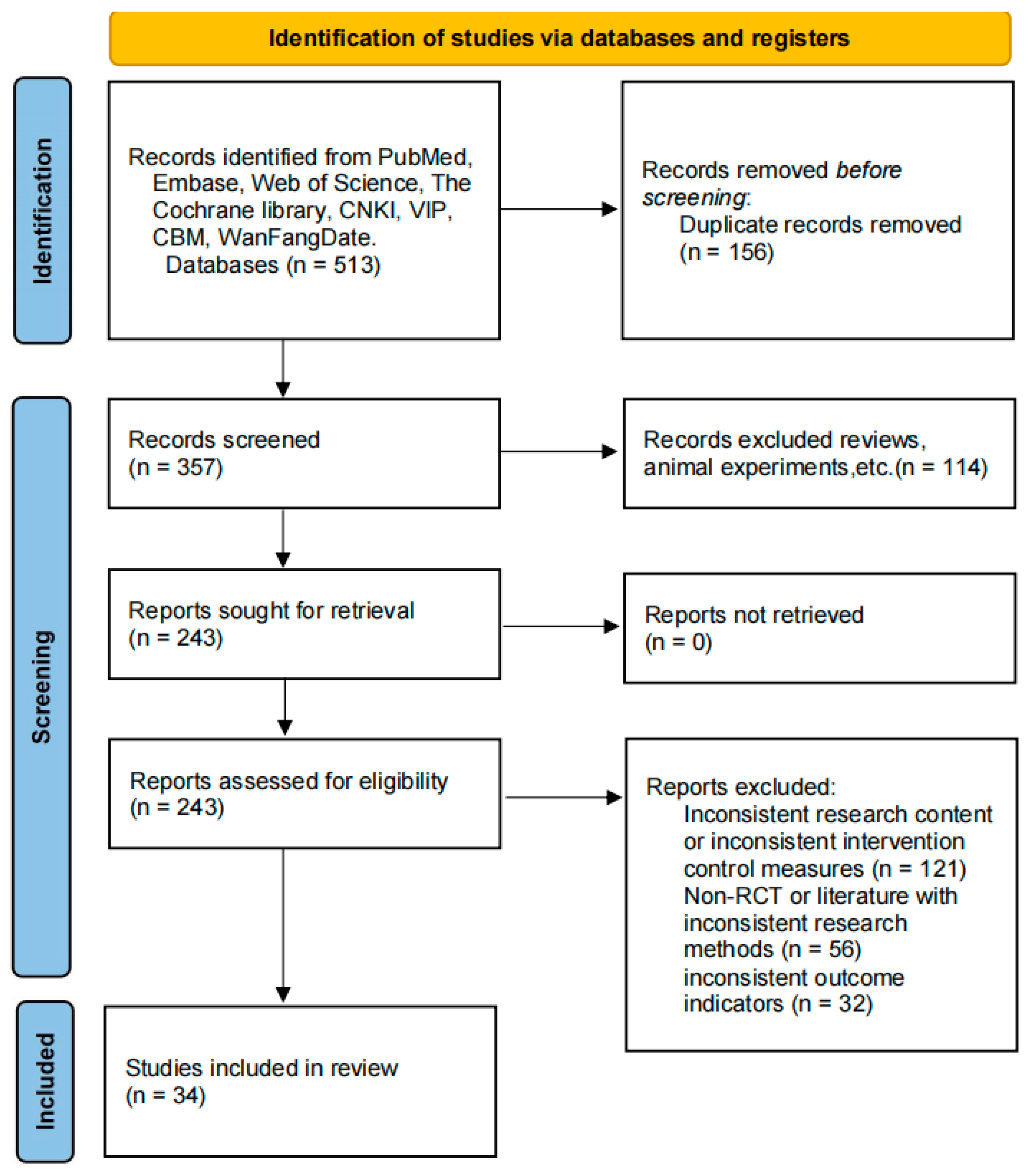
3.1. Literature Screening Process and Results
3.2. Basic Characteristics of Included Studies
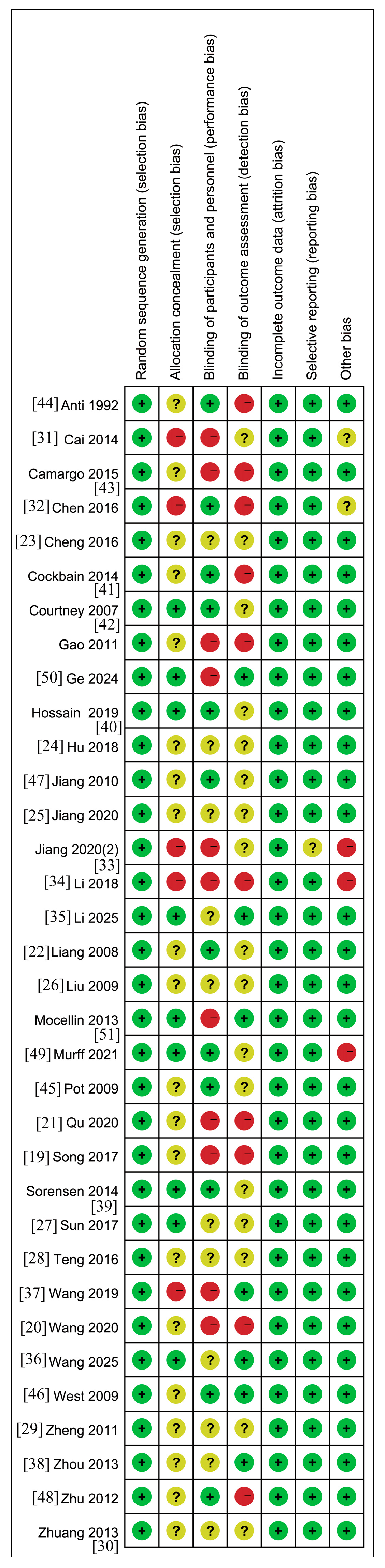
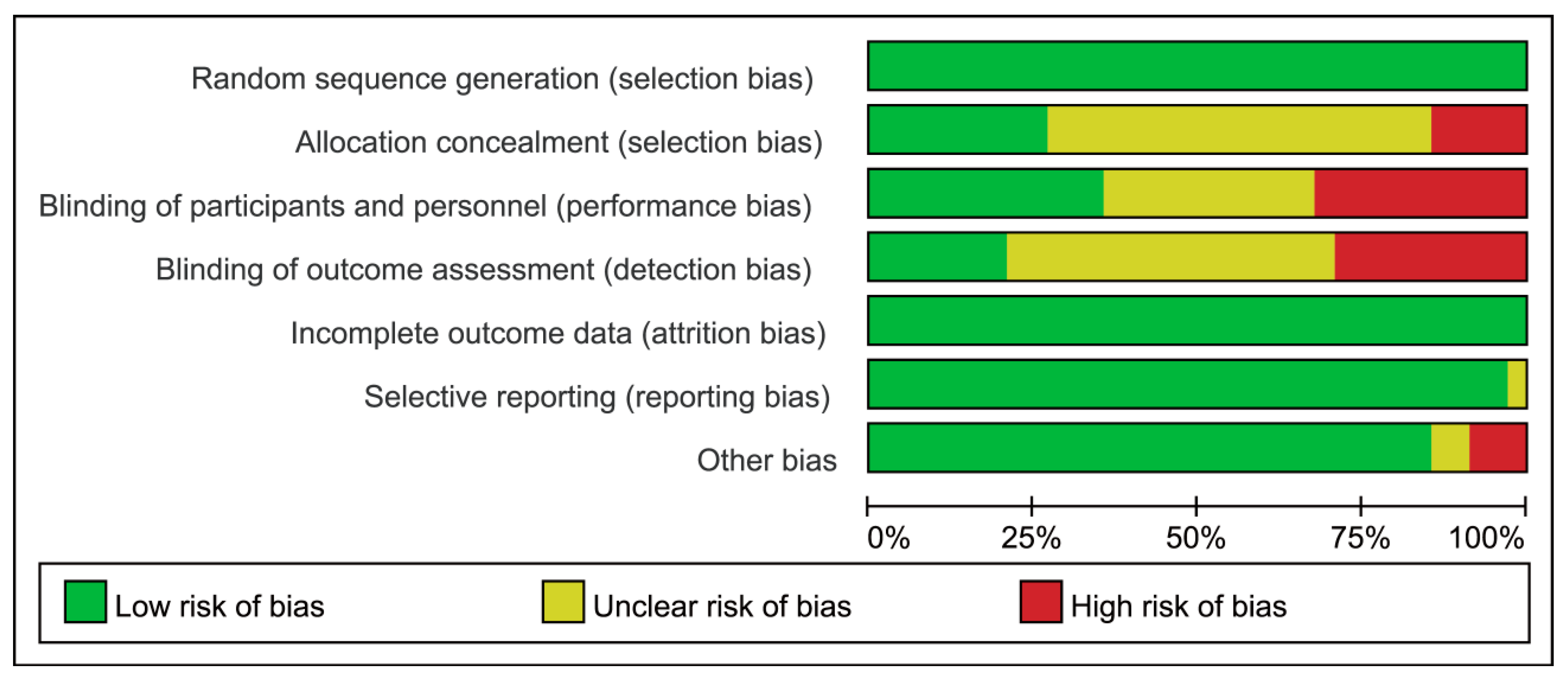
3.3. Results of Bias Risk
3.4. Meta-Analysis Results
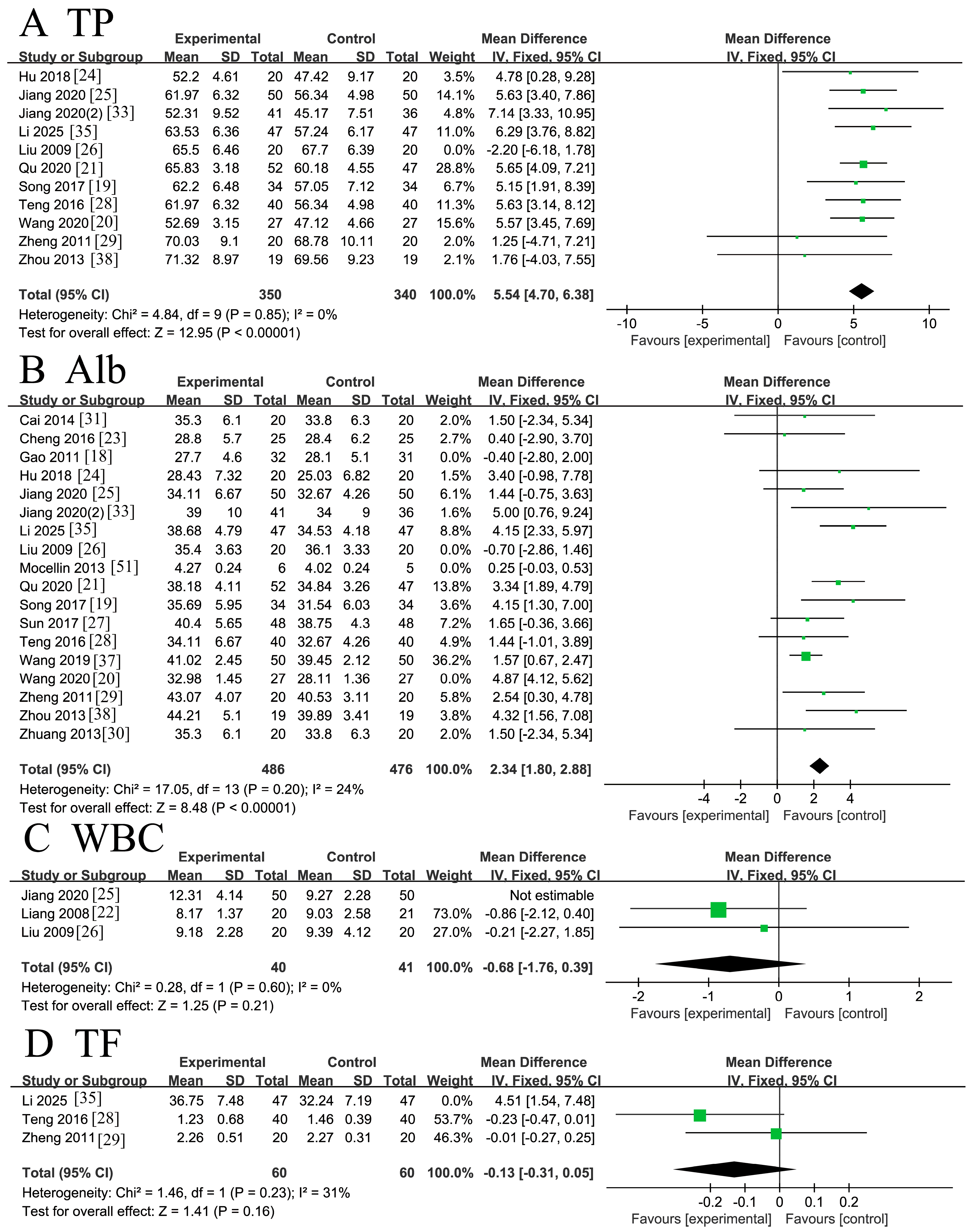
3.4.1. Blood Indicators
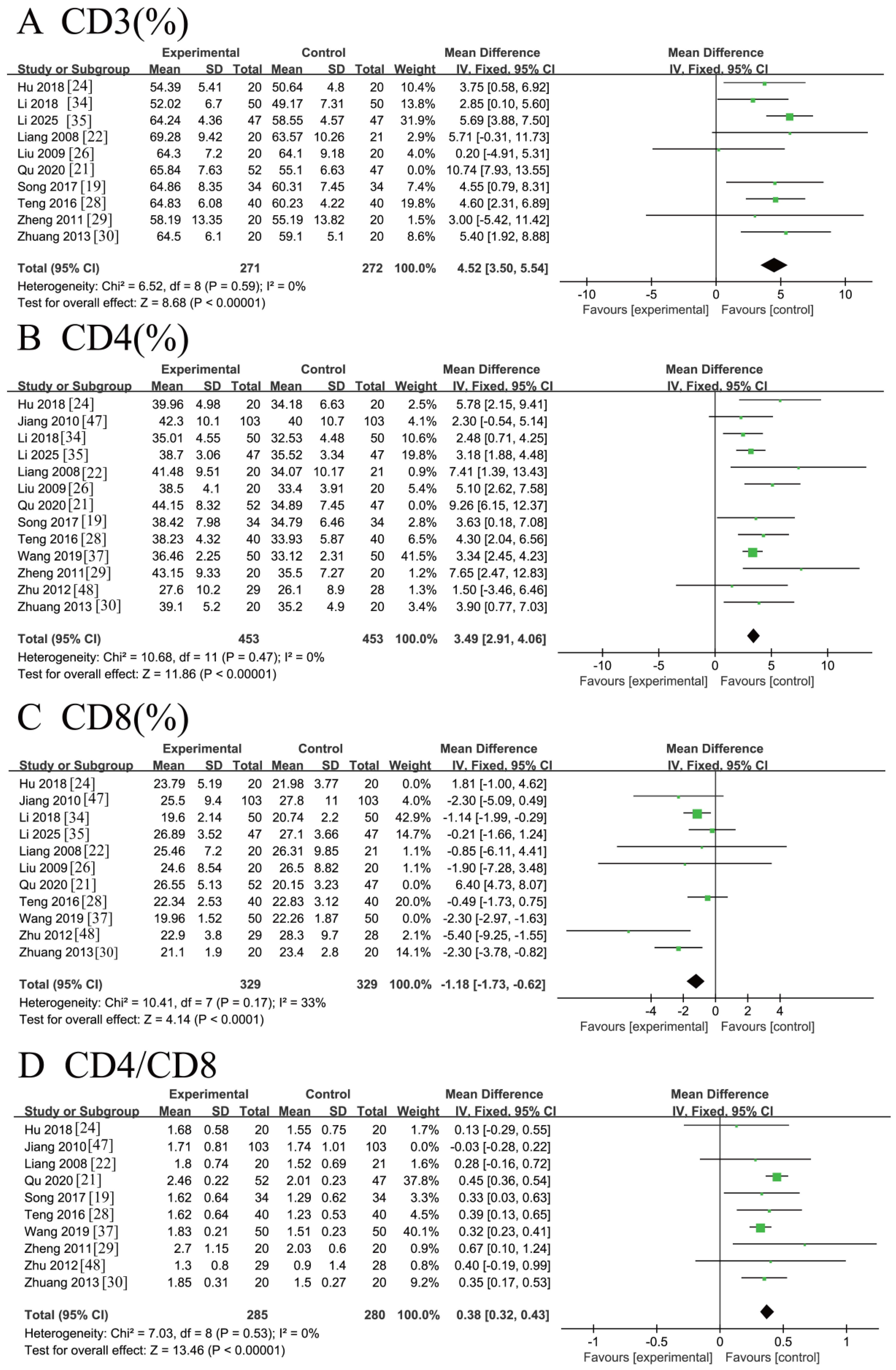
3.4.2. Blood Lymphocyte Indicators
- CD3+ T cell levels were significantly higher in patients receiving ω-3 PUFA supplementation compared with controls;
- A greater postoperative increase in CD3+ T cell levels was observed in the ω-3 PUFAs group relative to the placebo group.
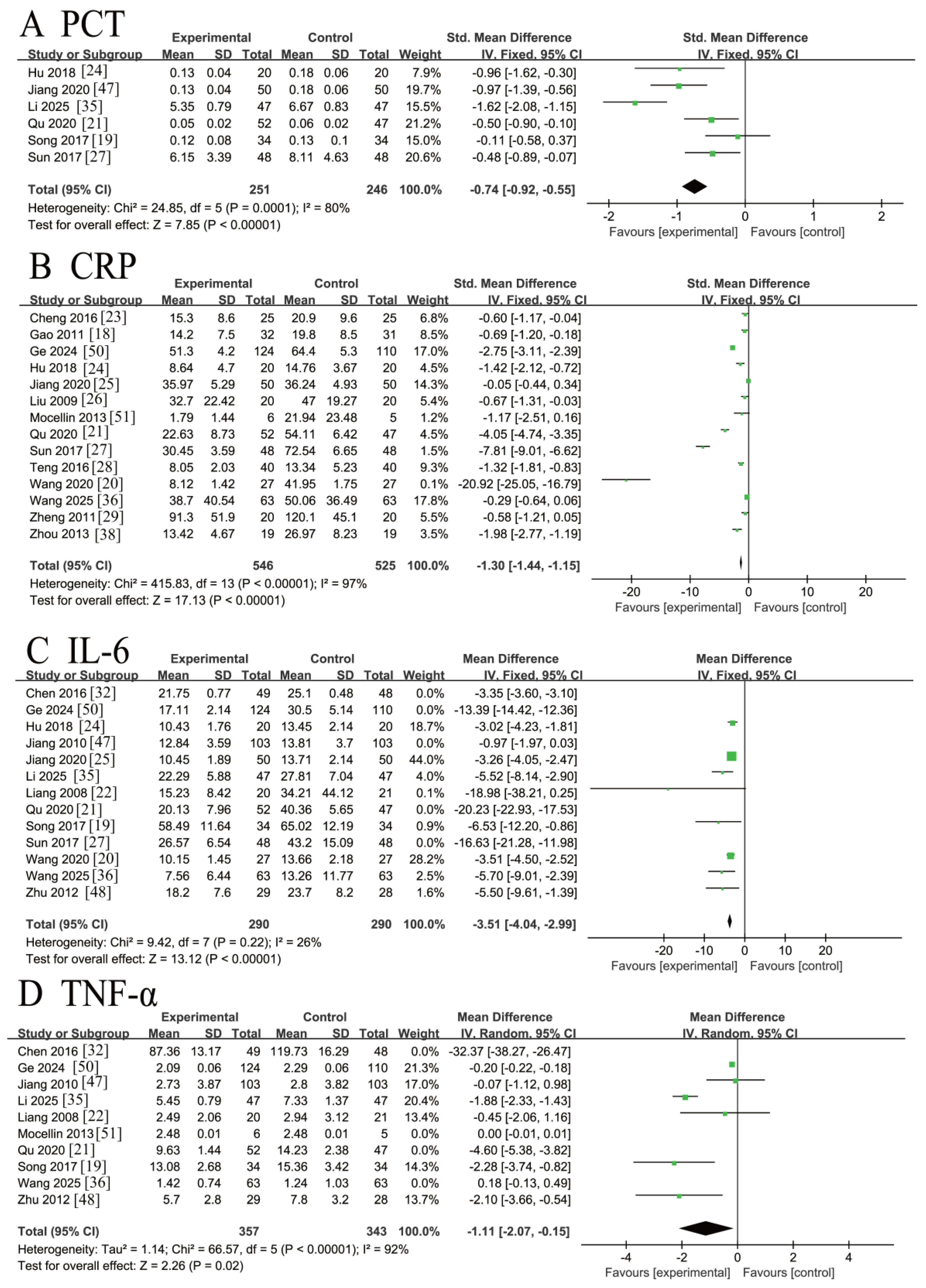
3.4.3. Inflammatory Indicators
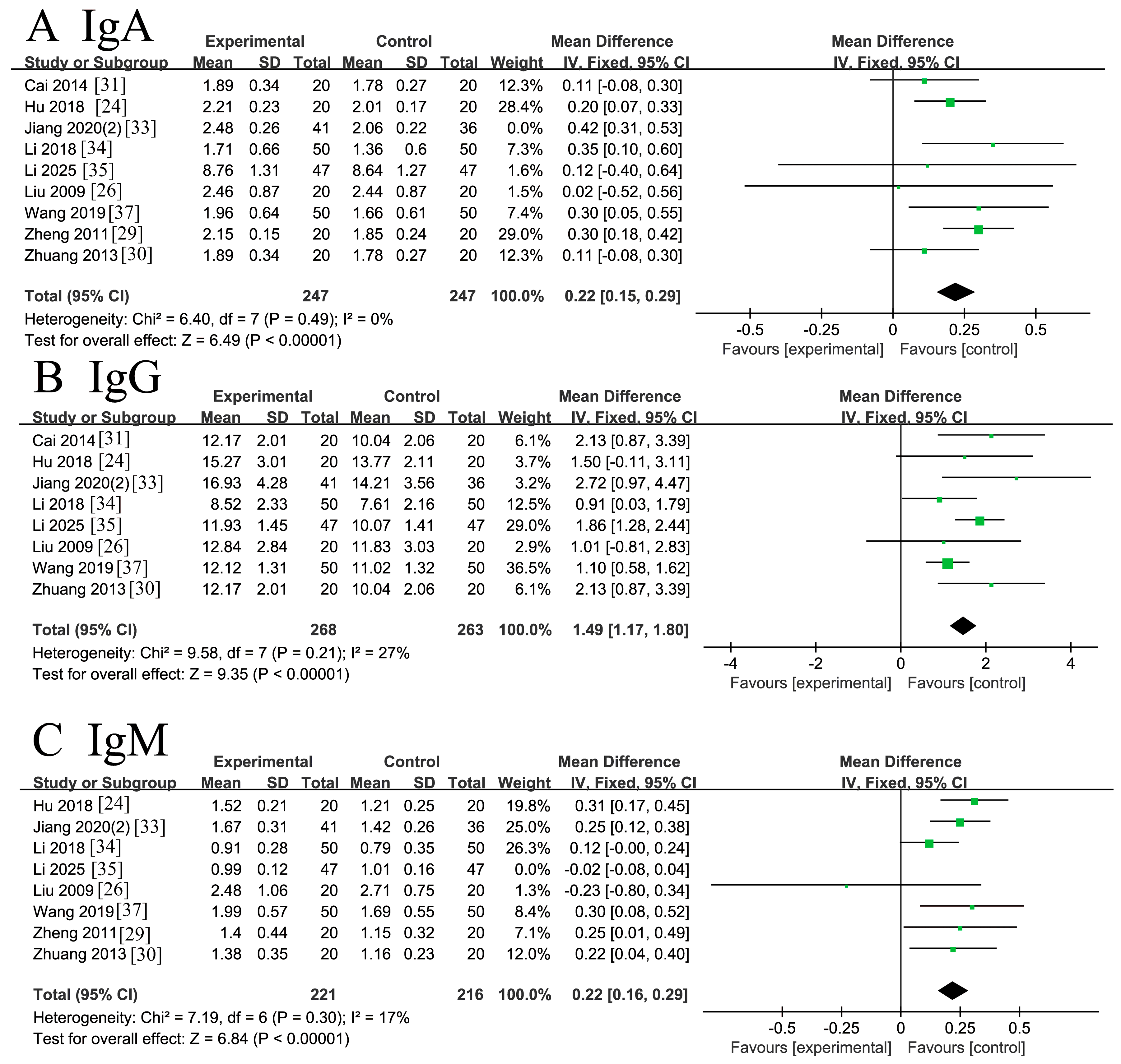
3.4.4. Immune Indicators
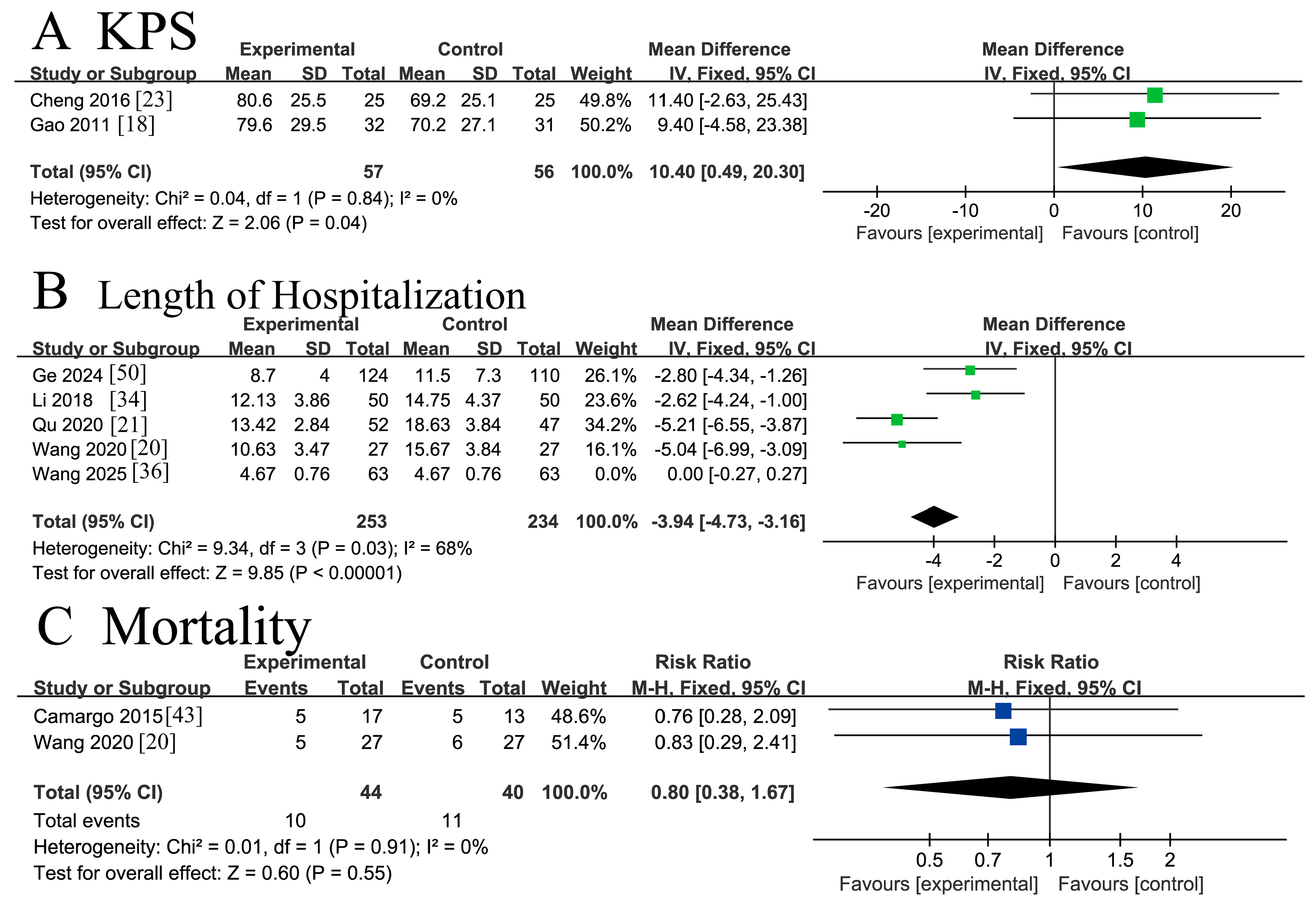
3.4.5. Quality-of-Life Indicators
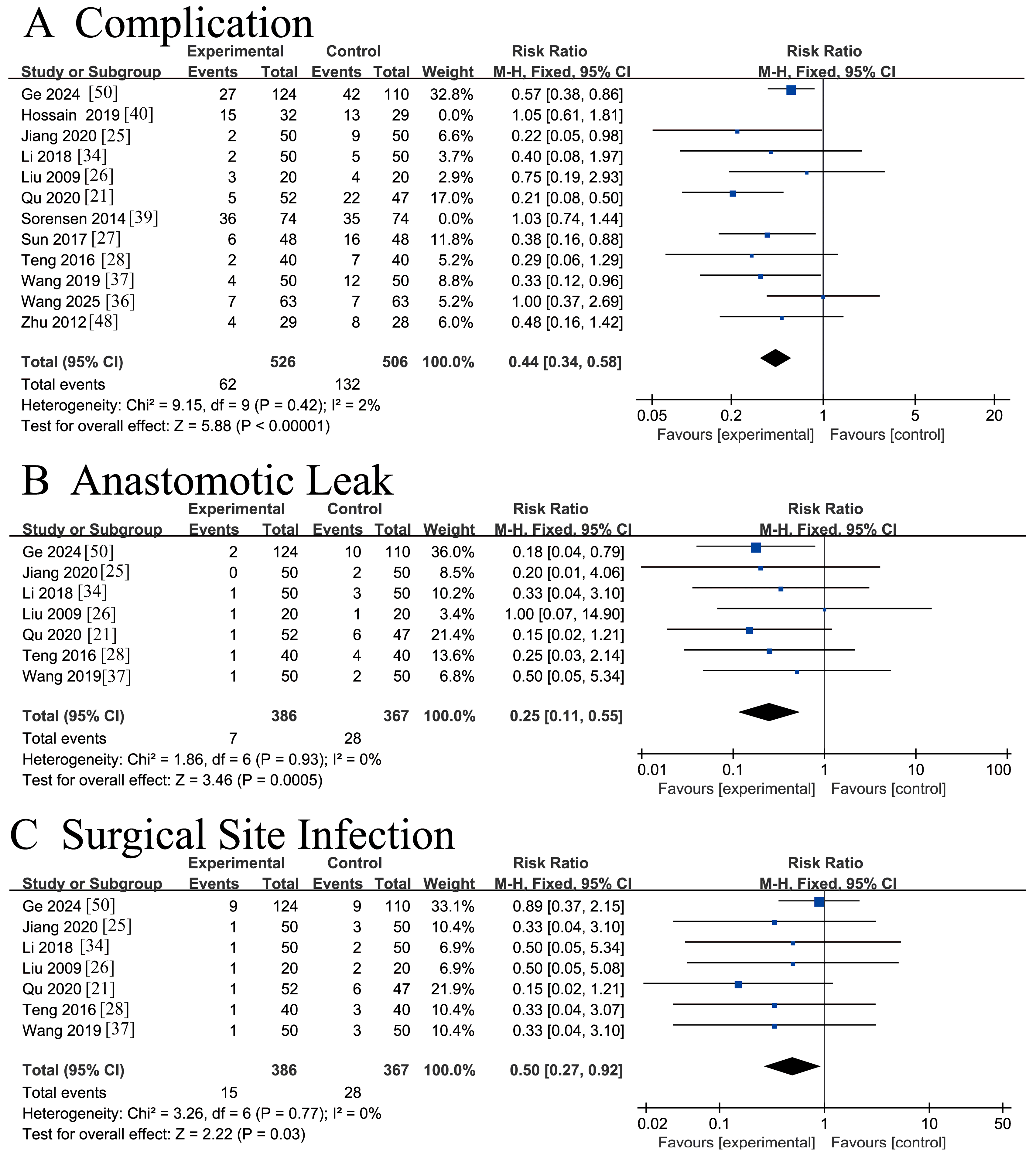
3.4.6. Complications Comparison Results
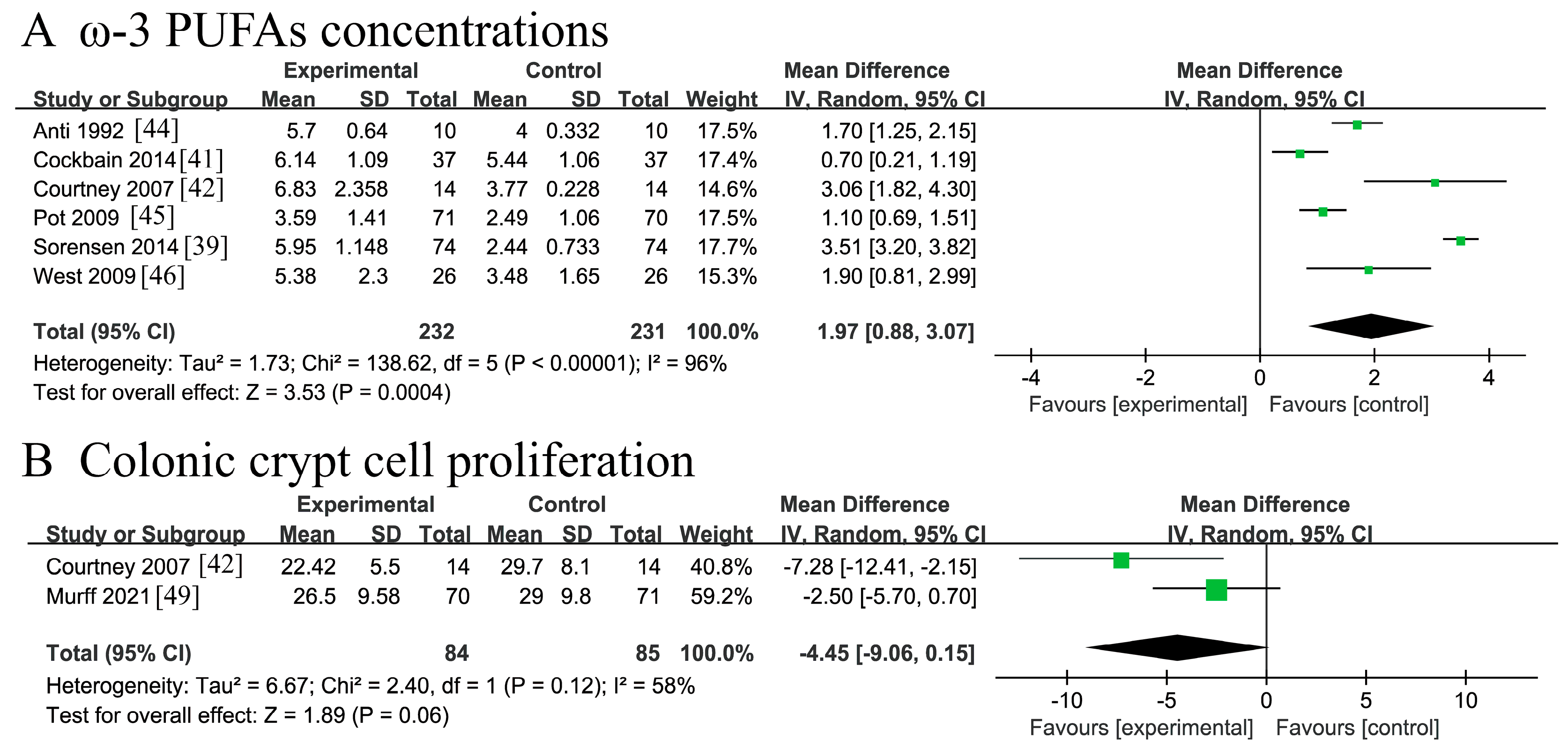
3.4.7. Other Indicators
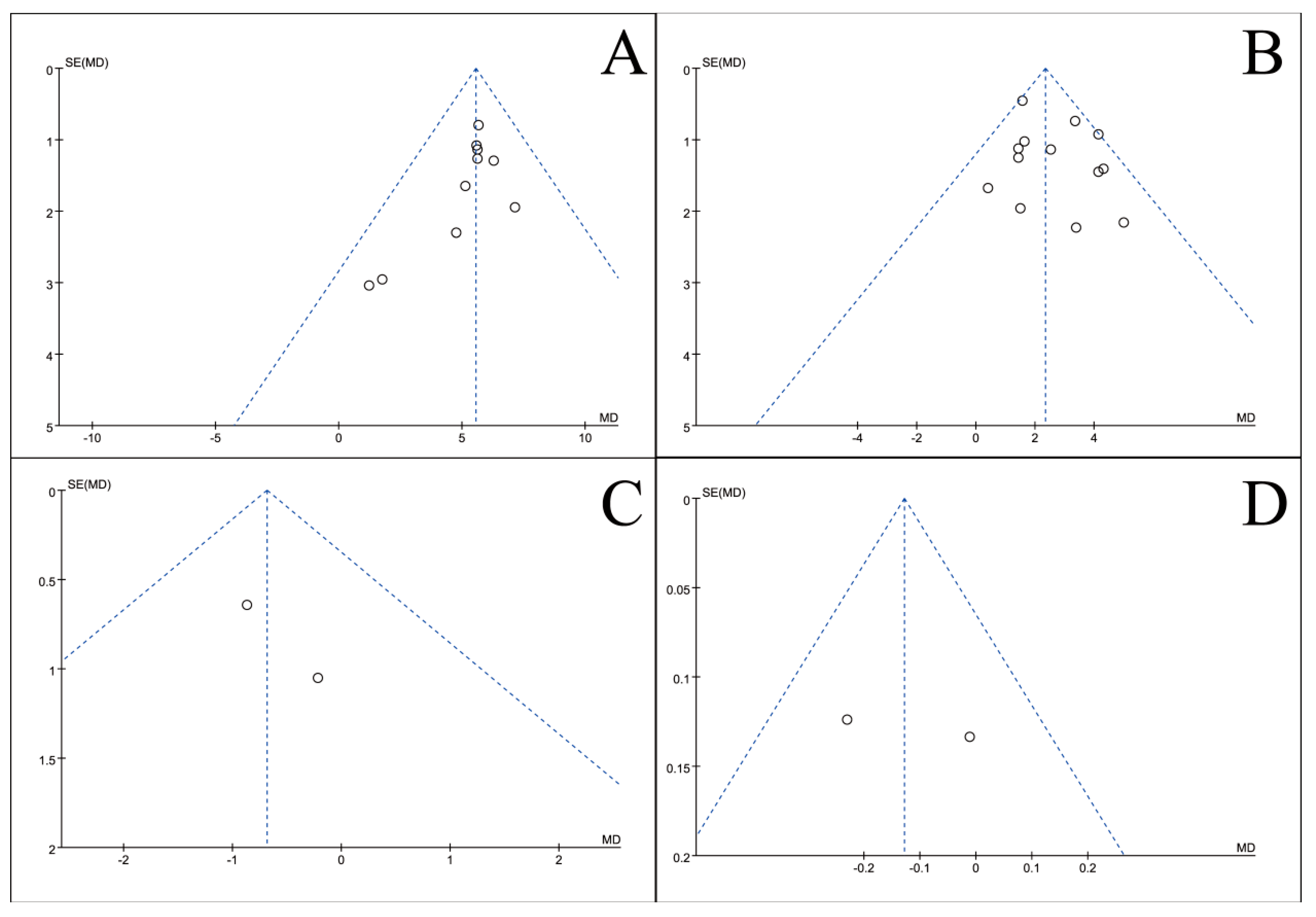
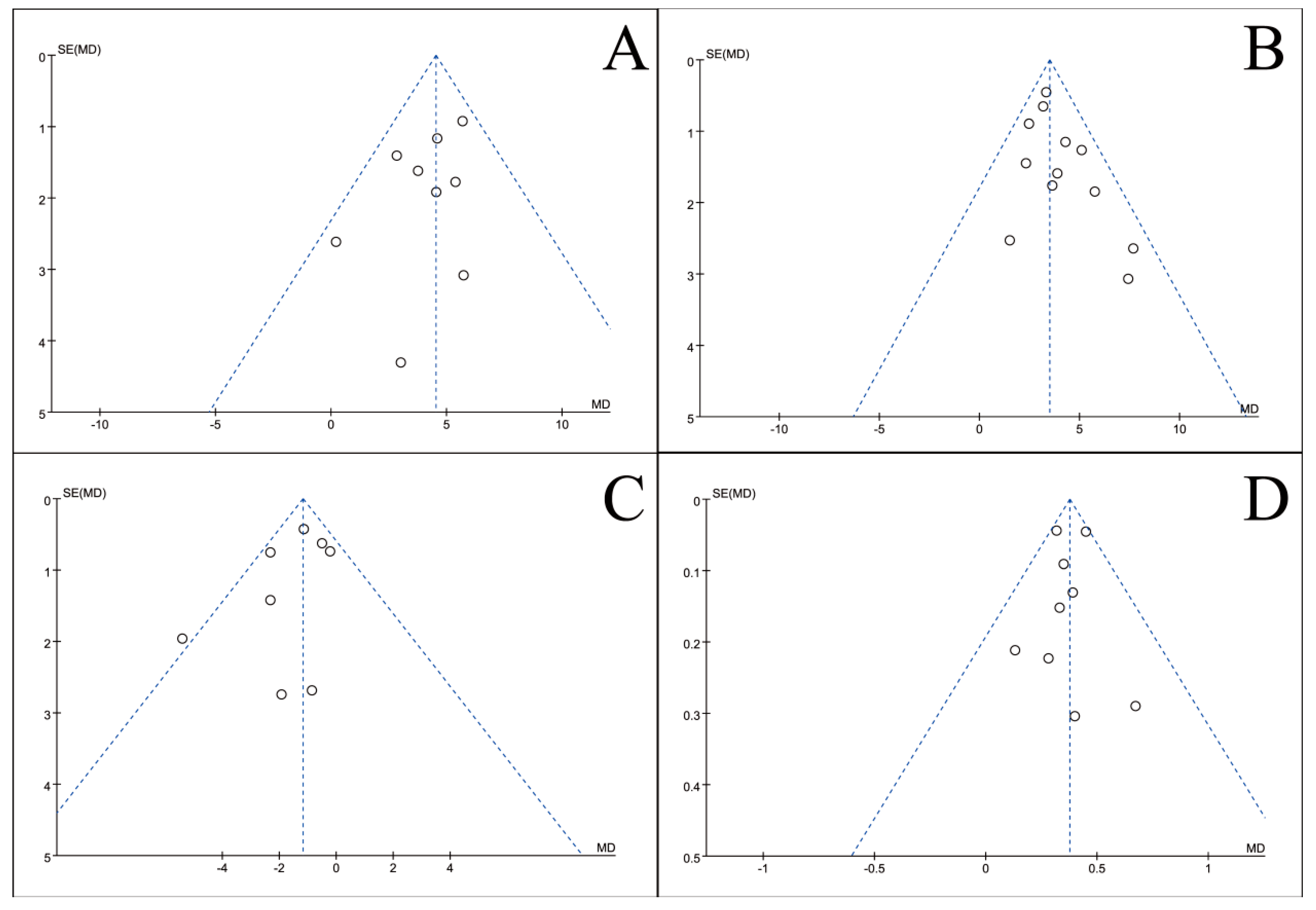
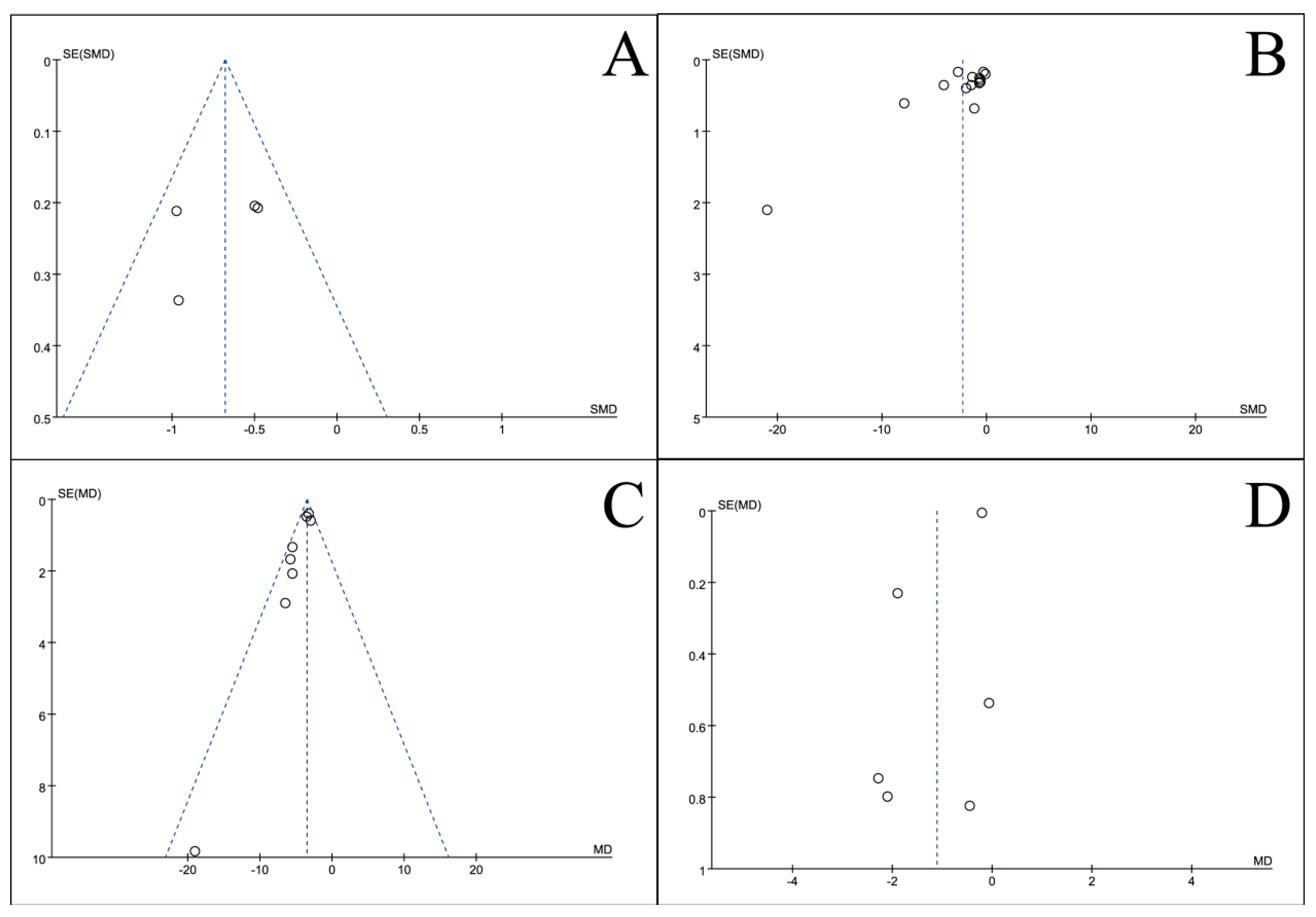
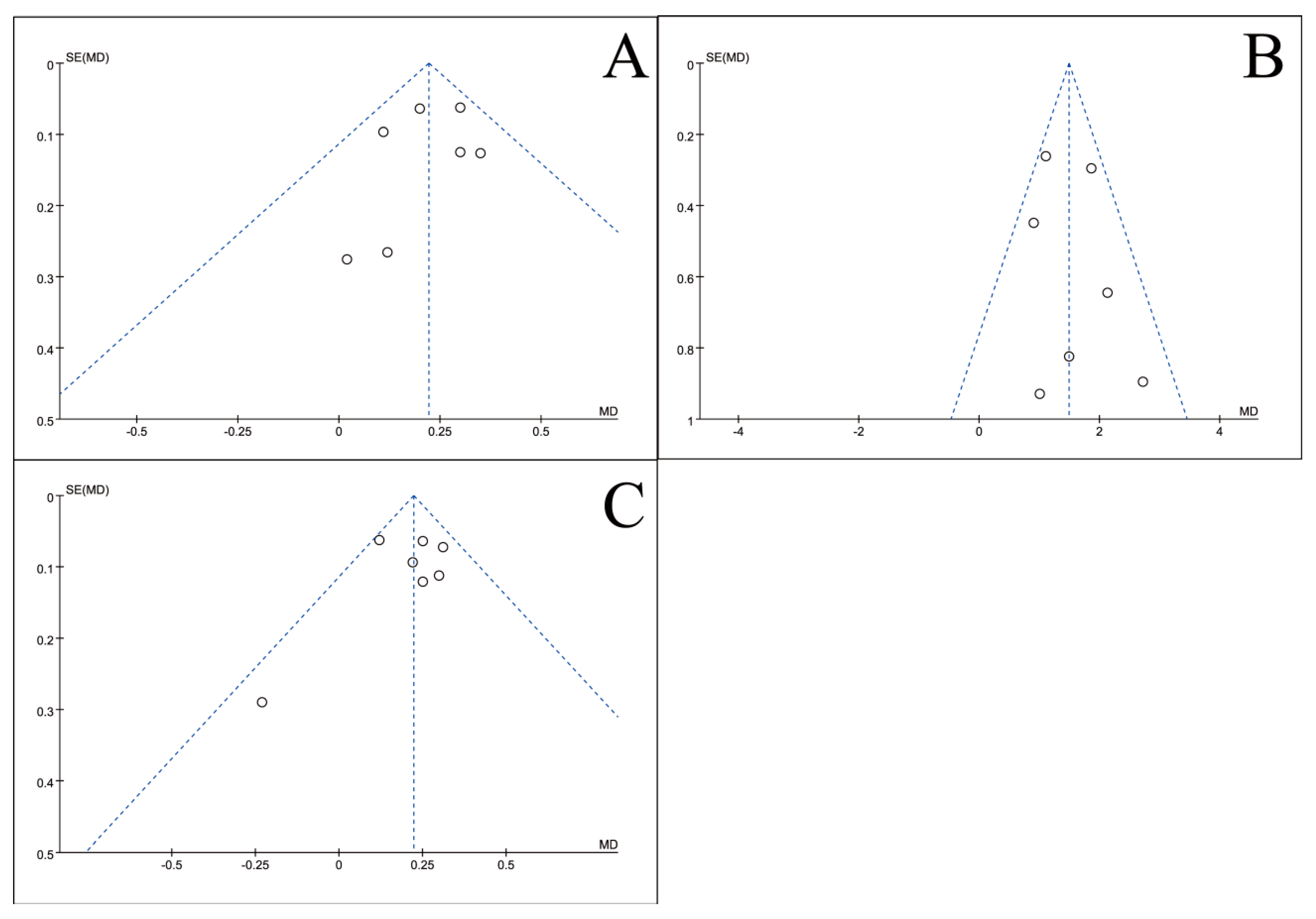
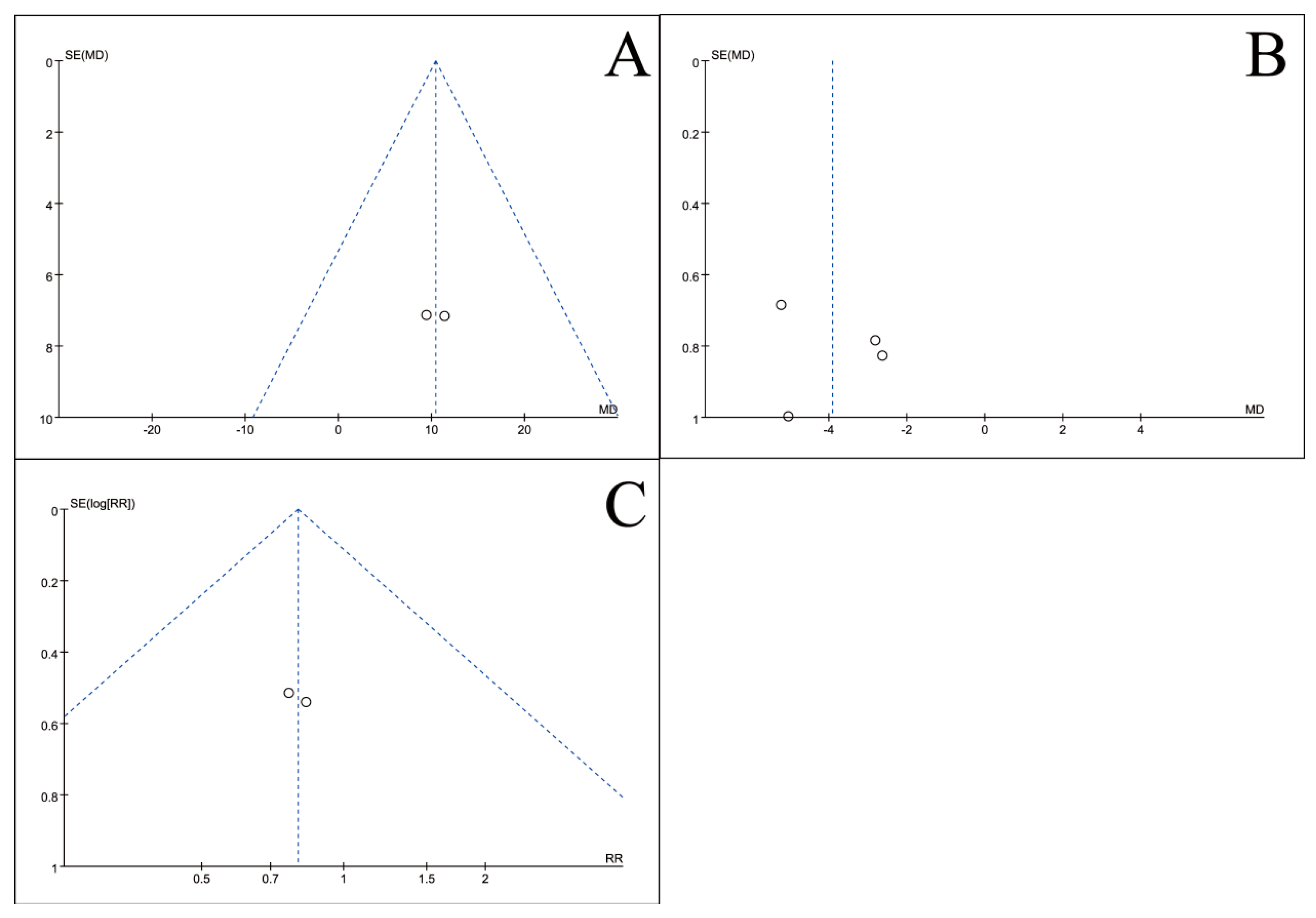
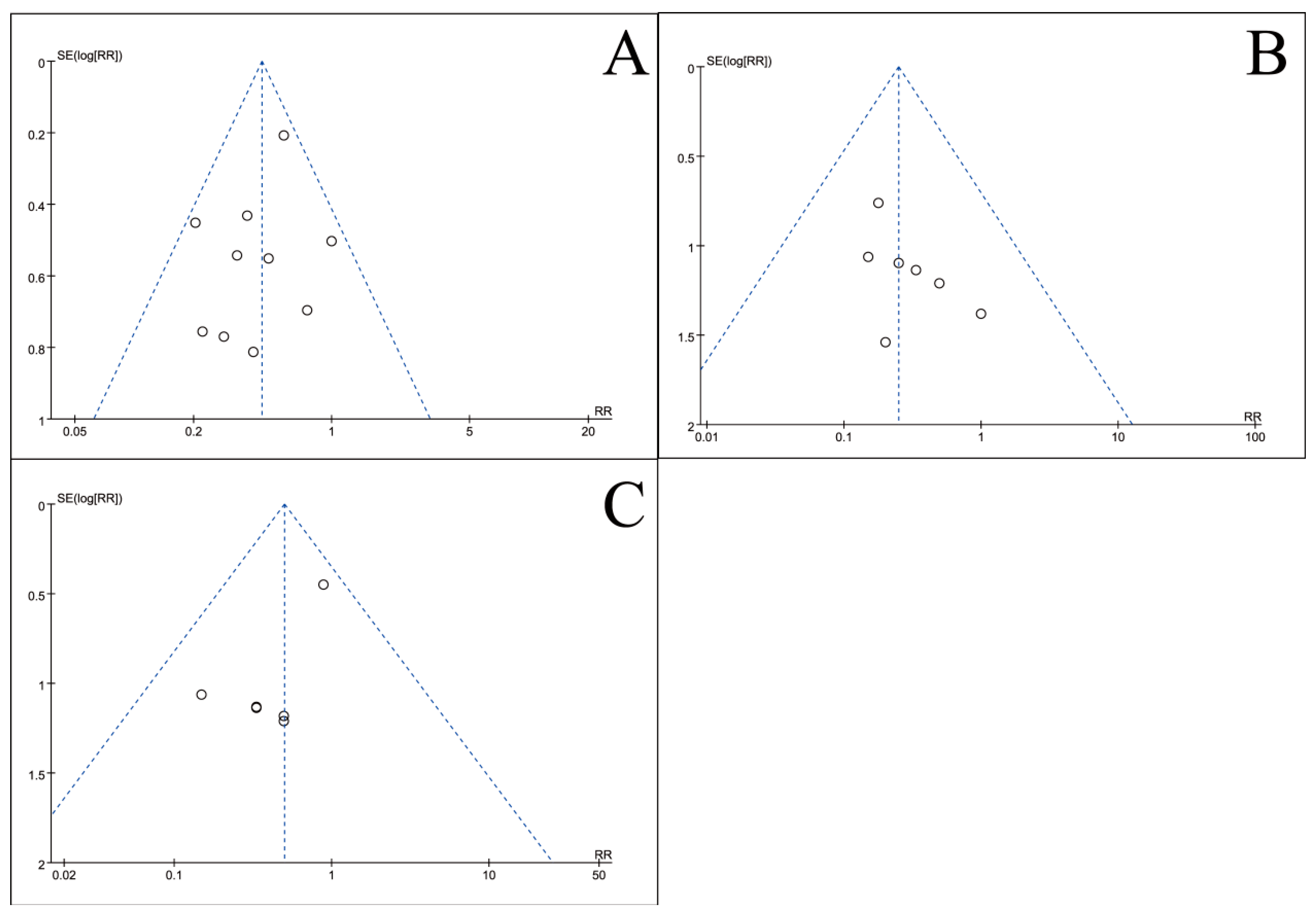
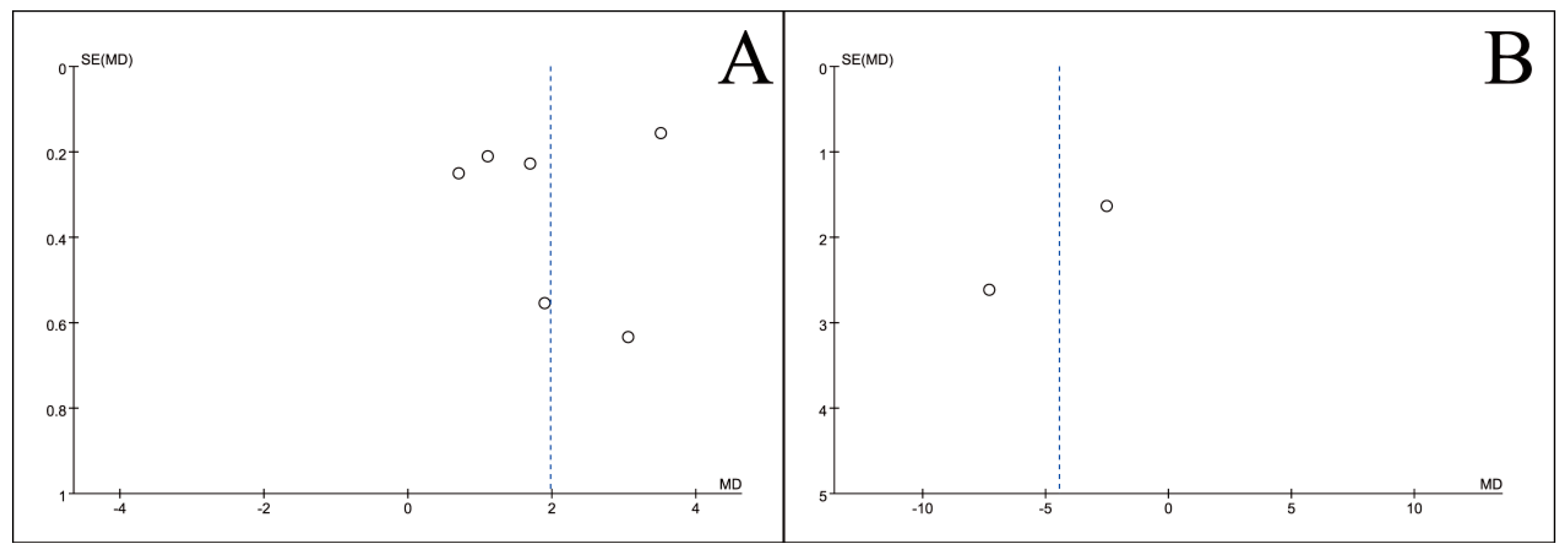
3.5. Publication Bias Test
3.6. Results of the Optimal Intake Dose Study
4. Discussion
5. Conclusions
Supplementary Materials
Author Contributions
Funding
Institutional Review Board Statement
Informed Consent Statement
Data Availability Statement
Conflicts of Interest
References
- Sung, H.; Ferlay, J.; Siegel, R.L.; Laversanne, M.; Soerjomataram, I.; Jemal, A.; Bray, F. Global cancer statistics 2020: GLOBOCAN estimates of incidence and mortality worldwide for 36 cancers in 185 countries. CA Cancer J. Clin. 2021, 71, 209–249. [Google Scholar] [CrossRef]
- Jemal, A.; Bray, F.; Center, M.M.; Ferlay, J.; Ward, E.; Forman, D. Global cancer statistics. CA Cancer J. Clin. 2011, 61, 69–90. [Google Scholar] [CrossRef]
- Zeng, H.; Zhong, X.; Liu, W.; Liang, B.; Xue, X.; Yu, N.; Xu, D.; Wang, X.; Lin, S. Predicting treatment failure in stage III colon cancer patients after radical surgery. Front. Oncol. 2024, 14, 1397468. [Google Scholar] [CrossRef]
- Shahidi, F.; Ambigaipalan, P. Omega-3 polyunsaturated fatty acids and their health benefits. Annu. Rev. Food Sci. Technol. 2018, 9, 345–381. [Google Scholar] [CrossRef] [PubMed]
- Simopoulos, A.P. Omega-3 fatty acids in inflammation and autoimmune diseases. J. Am. Coll. Nutr. 2002, 21, 495–505. [Google Scholar] [CrossRef]
- Saini, R.K.; Prasad, P.; Sreedhar, R.V.; Naidu, K.A.; Shang, X.; Keum, Y.-S. Omega-3 Polyunsaturated Fatty Acids (PUFAs): Emerging Plant and Microbial Sources, Oxidative Stability, Bioavailability, and Health Benefits—A Review. Antioxidants 2021, 10, 1627. [Google Scholar] [CrossRef]
- Metherel, A.H.; Bazinet, R.P. Updates to the n-3 polyunsaturated fatty acid biosynthesis pathway: DHA synthesis rates, tetracosahexaenoic acid and (minimal) retroconversion. Prog. Lipid Res. 2019, 76, 101008. [Google Scholar] [CrossRef]
- Cannataro, R.; Abrego-Guandique, D.M.; Straface, N.; Cione, E. Omega-3 and Sports: Focus on Inflammation. Life 2024, 14, 1315. [Google Scholar] [CrossRef] [PubMed]
- Huang, Z.; Liu, C.A.; Cai, P.Z.; Xu, F.P.; Jiang, H.P. Omega-3 PUFA attenuates MNU-induced colorectal cancer in rats by blocking PI3K/AKT/Bcl-2 signaling. Onco Targets Ther. 2020, 13, 1953–1965. [Google Scholar] [CrossRef] [PubMed]
- Jamali, M.; Zarezadeh, M.; Jamilian, P.; Ghoreishi, Z. The effect of n-3 polyunsaturated fatty acids on inflammation status in cancer patients: Updated systematic review and dose- and time-response meta-analysis. Pharmanutrition 2024, 27, 100372. [Google Scholar] [CrossRef]
- Chen, L.; Tan, T.; Wu, Q.; Cui, F.; Chen, Y.; Chen, H.; Zhao, Y.; Xiang, X.; Shan, Z.; Tang, Y.; et al. Dietary polyunsaturated fatty acid and risk of gout: A cohort study integrating genetic predisposition and metabolomics. Eur. J. Epidemiol. 2025, 40, 427–439. [Google Scholar] [CrossRef] [PubMed]
- Wu, D.; Jia, Y.; Liu, Y.; Shang, M. Dose-response relationship of dietary Omega-3 fatty acids on slowing phenotypic age acceleration: A cross-sectional study. Front. Nutr. 2024, 11, 1424156. [Google Scholar] [CrossRef]
- Jia, H.-J.; Zhang, P.-J.; Liu, Y.-L.; Li, S.-T.; Wang, L.-J.; Liu, L.-T.; Wang, Y.-Q. Relationship of serum polyunsaturated fatty acids with cytokines in colorectal cancer. World J. Gastroenterol. 2016, 22, 2524–2535. [Google Scholar] [CrossRef] [PubMed]
- D’Angelo, S.; Motti, M.L.; Meccariello, R. ω-3 and ω-6 polyunsaturated fatty acids, obesity and cancer. Nutrients 2020, 12, 2751. [Google Scholar] [CrossRef]
- Yang, J.S.; Wang, H.Y.; Zhang, X.T.; Li, W.; Zhang, Y. Supplemental n-3 polyunsaturated fatty acids: Clinical implications and best practices for adult patients with cancer. J. Nutr. Oncol. 2025, 10, 1–7. [Google Scholar] [CrossRef]
- World Health Organization. Saturated Fatty Acid and Trans-Fatty Acid Intake for Adults and Children: WHO Guideline; World Health Organization: Geneva, Switzerland, 2023.
- EFSA Panel on Dietetic Products; Nutrition and Allergies. Scientific opinion on the tolerable upper intake level of EPA, DHA and DPA. EFSA J. 2012, 10, 2815.
- Gao, W.; Yang, J.W.; Chen, F.; Chen, Y.G. Effect of ω-3 polyunsaturated fatty acids on nutritional therapy in patients with colorectal cancer. Guangdong Med. J. 2011, 32, 2097–2098. (In Chinese) [Google Scholar] [CrossRef]
- Song, W.W.; Li, W.; Chen, Z.H.; Chen, H.S. Effect of omega-3 polyunsaturated fatty acids on immune response and postoperative inflammatory response during the perioperative period of radical resection of colon cancer. China Med. Pharm. 2018, 8, 19–22. (In Chinese) [Google Scholar] [CrossRef]
- Wang, W.H.; Li, Y.N. Parenteral nutrition support efficacy of ω-3 polyunsaturated fatty acids in colorectal cancer patients with postoperative septic shock. Chin. J. Coloproctol. 2020, 40, 17–19. (In Chinese) [Google Scholar] [CrossRef]
- Qu, Z.N.; Shi, W.F.; Chen, H.B.; Chen, D.Q.; Li, M.B.; Song, J.H.; Zeng, X.X.; Zhang, W.H. Application effect of perioperative parenteral nutrition with omega-3 polyunsaturated fatty acids in elderly patients with colon cancer undergoing radical resection. Guangxi Med. J. 2021, 43, 1954–1971. (In Chinese) [Google Scholar]
- Liang, B.; Wang, S.; Ye, Y.J.; Yang, X.D.; Wang, Y.L.; Qu, J.; Xie, Q.W.; Yin, M.J. Impact of postoperative omega-3 fatty acid-supplemented parenteral nutrition on clinical outcomes and immunomodulations in colorectal cancer patients. World J. Gastroenterol. 2008, 14, 2434–2439. [Google Scholar] [CrossRef] [PubMed]
- Cheng, Y.H.; Liu, L.L.; Zhu, G.D.; Zhu, Z.G.; Cao, X.F. The effect of omega-3 polyunsaturated fatty acid on gastrointestinal toxicity and systemic inflammatory response induced by chemotherapy for patients with gastric or colorectal cancer. Guangzhou Med. J. 2016, 47, 66–69. (In Chinese) [Google Scholar] [CrossRef]
- Hu, J.C.; Yao, Z.W.; Jiang, L.X.; Zhang, Y.F.; Zhao, D.W.; Zhang, Z.B.; Zhang, M.L. Effects of ω-3 polyunsaturated fatty acids on perioperative nutritional and immune function in laparoscopic colorectal cancer patients with incomplete obstruction. J. Laparosc. Surg. 2018, 23, 54–57. (In Chinese) [Google Scholar] [CrossRef]
- Jiang, L.X.; Yu, X.W.; Song, P.P.; Lin, S.B.; Ye, F.F.; Zhou, S.K. Effects of ω-3 polyunsaturated fatty acids on the antitumor effect of colorectal cancer patients undergoing radical operation. China Mod. Dr. 2020, 58, 56–59+63. (In Chinese) [Google Scholar]
- Liu, L.; Zhuang, W.; Chen, Z. Effect of ω-3 polyunsaturated fatty acid on promoting the postoperative rehabilitation of patients with gastrointestinal malignancies. Chin. J. Bases Clin. Gen. Surg. 2009, 16, 895–899. (In Chinese) [Google Scholar]
- Sun, G.; Xu, C.; Xie, Q.; Peng, B. Effect of omega-3 polyunsaturated fatty acids on inflammatory reaction after laparoscopic surgery for colorectal cancer. China J. Mod. Med. 2017, 27, 116–120. (In Chinese) [Google Scholar] [CrossRef]
- Teng, X.L.; Guo, J.Q.; Zou, W.J. Study on influencing mechanism of ω-3 polyunsaturated fatty acids on inflammation, nutrition, immune function and prognosis in colorectal cancer patients undergoing radical operation. China Mod. Dr. 2016, 54, 13–16. (In Chinese) [Google Scholar]
- Zheng, W.; Wang, Y. Effect of ω-3 fish oil fat emulsion on postoperative parenteral nutrition in patients with colorectal cancer. Parenter. Enteral Nutr. 2011, 18, 129–131+135. (In Chinese) [Google Scholar] [CrossRef]
- Zhuang, S.T.; Li, Q.Z.; Cai, Y.J.; Wu, S.H.; Chen, B.; Zheng, K.; Xu, M. Effect of early enteral nutrition with ω-3 polyunsaturated fatty acid on nutritional status and body immunity of postoperative patients with colorectal cancer. Chin. J. Postgrad. Med. 2013, 36, 27–30. (In Chinese) [Google Scholar] [CrossRef]
- Cai, Y.J.; Zhuang, S.T.; Li, Q.Z.; Chen, H.L.; Wang, L. Clinical observation and nursing care of colorectal cancer patients receiving early enteral nutrition immunization after surgery. J. Nurs. Stud. 2014, 28, 2876–2877. (In Chinese) [Google Scholar]
- Chen, X.C.; Ma, J.C.; Su, H.; Li, Y.; Cai, H.; Guo, Q.J.; Zhao, X.D.; Qi, J.B. Efficacy of perioperative application of ω-3 polyunsaturated fatty acids in radical resection of colon cancer. China J. Gen. Surg. 2016, 25, 1785–1791. (In Chinese) [Google Scholar]
- Jiang, C.L.; Xie, D. Effect of ω-3 polyunsaturated fatty acids on serum interleukin-8, superoxide dismutase and malondialdehyde levels in patients after laparoscopic colorectal cancer resection. Chin. J. Med. 2020, 55, 1031–1033. (In Chinese) [Google Scholar]
- Li, T.L.; Li, S.H.; Leng, W.; Deng, C.; Ma, Y. Clinical study of ω-3 fish oil fat emulsion combined with total parenteral nutrition for postoperative patients with laparoscopic colorectal cancer. J. Mod. Med. Health 2018, 34, 41–43+55. (In Chinese) [Google Scholar]
- Li, J.J.; Li, X.C.; Zhang, X.W. Effect of ω-3 PUFA on serum IL-6, PCT and TNF-α levels and immune function in patients with TEM rectal cancer after operation. J. Aerosp. Med. 2025, 36, 397–400. (In Chinese) [Google Scholar]
- Wang, G.; Xu, P.Y.; Zhao, X.A.; Wang, H.F.; Ge, M.M.; Pan, H.F.; Jiang, Z.W. Effect of ω-3 polyunsaturated fatty acids on the recovery of vagus nerve and intestinal function after laparoscopic colorectal cancer surgery. J. Shandong Univ. (Health Sci.) 2025, 63, 36–42. (In Chinese) [Google Scholar]
- Wang, K.; Zhang, H.H.; Shi, F.Y.; Guo, L.L. Effect of parenteral nutrition containing fish oil fat emulsion on nutritional status and immune function in patients with rectal cancer after operation. Mod. Digest. Interv. 2019, 24, 885–888. (In Chinese) [Google Scholar]
- Zhou, X.Y.; Tang, H.; Zhang, L.P.; Zheng, Y.Y. The effect of ω-3 fish oil fat emulsion on the rehabilitation of patients with colorectal cancer after radical resection. Health World 2013, 17, 37–38. (In Chinese) [Google Scholar]
- Sorensen, L.S.; Thorlacius-Ussing, O.; Schmidt, E.B.; Rasmussen, H.H.; Lundbye-Christensen, S.; Calder, P.C.; Lindorff-Larsen, K. Randomized clinical trial of perioperative omega-3 fatty acid supplements in elective colorectal cancer surgery. Br. J. Surg. 2014, 101, 33–42. [Google Scholar] [CrossRef]
- Hossain, T.; Phillips, B.E.; Doleman, B.; Gray, L.J.; Lund, J.N.; Williams, J.P. A double-blind randomized controlled trial of the effects of eicosapentaenoic acid supplementation on muscle inflammation and physical function in patients undergoing colorectal cancer resection. Clin. Nutr. 2020, 39, 2055–2061. [Google Scholar] [CrossRef]
- Cockbain, A.J.; Volpato, M.; Race, A.D.; Munarini, A.; Fazio, C.; Belluzzi, A.; Loadman, P.M.; Toogood, G.J.; Hull, M.A. Anticolorectal cancer activity of the omega-3 polyunsaturated fatty acid eicosapentaenoic acid. Gut 2014, 63, 1760–1768. [Google Scholar] [CrossRef]
- Courtney, E.D.; Matthews, S.; Finlayson, C.; Di Pierro, D.; Belluzzi, A.; Roda, E.; Kang, J.Y.; Leicester, R.J. Eicosapentaenoic acid (EPA) reduces crypt cell proliferation and increases apoptosis in normal colonic mucosa in subjects with a history of colorectal adenomas. Int. J. Colorectal Dis. 2007, 22, 765–776. [Google Scholar] [CrossRef]
- Camargo, C.Q.; Mocellin, M.C.; Pastore Silva, J.A.; Fabre, M.E.; Nunes, E.A.; Trindade, E.B. Fish oil supplementation during chemotherapy increases posterior time to tumor progression in colorectal cancer. Nutr. Cancer 2016, 68, 70–76. [Google Scholar] [CrossRef]
- Anti, M.; Marra, G.; Armelao, F.; Bartoli, G.M.; Ficarelli, R.; Percesepe, A.; De Vitis, I.; Maria, G.; Sofo, L.; Rapaccini, G.L.; et al. Effect of omega-3 fatty acids on rectal mucosal cell proliferation in subjects at risk for colon cancer. Gastroenterology 1992, 103, 883–891. [Google Scholar] [CrossRef]
- Pot, G.K.; Majsak-Newman, G.; Geelen, A.; Harvey, L.; Nagengast, F.M.; Witteman, B.J.M.; van de Meeberg, P.C.; Timmer, R.; Tan, A.; Wahab, P.J.; et al. Fish consumption and markers of colorectal cancer risk: A multicenter randomized controlled trial. Am. J. Clin. Nutr. 2009, 90, 354–361. [Google Scholar] [CrossRef]
- West, N.J.; Clark, S.K.; Phillips, R.K.; Hutchinson, J.M.; Leicester, R.J.; Belluzzi, A.; Buttriss, C.; Gardiner, P.; Hampson, J.; Hyde, C.; et al. Eicosapentaenoic acid reduces rectal polyp number and size in familial adenomatous polyposis. Gut 2010, 59, 918–925. [Google Scholar] [CrossRef]
- Ma, Z.J.; Wang, D.W.; Wang, X.R.; Li, Y.; Liu, J.; Wang, G. Randomized clinical trial of intravenous soybean oil alone versus soybean oil plus fish oil emulsion after gastrointestinal cancer surgery. Br. J. Surg. 2010, 97, 804–809. [Google Scholar] [CrossRef]
- Zhu, M.W.; Tang, D.N.; Hou, J.; Wei, J.M.; Cui, H.Y. Impact of fish oil enriched total parenteral nutrition on elderly patients after colorectal cancer surgery. Chin. Med. J. 2012, 125, 178–181. [Google Scholar] [PubMed]
- Murff, H.J.; Shrubsole, M.J.; Cai, Q.; Su, T.; Dooley, J.H.; Cai, S.S.; Zheng, W.; Dai, Q. Dietary omega-3 fatty acids and fish intake and risk of colorectal cancer. Nutr. Cancer 2022, 74, 1388–1398. [Google Scholar] [CrossRef] [PubMed]
- Ge, X.L.; Liu, H.Y.; Wu, Y.; Liu, W.; Qi, W.L.; Ye, L.N.; Cao, Q.; Lian, H.F.; Bai, R.P.; Zhou, W. Parenteral n-3 polyunsaturated fatty acids supplementation improves postoperative recovery for patients with Crohn’s disease after bowel resection: A randomized, unblinded controlled clinical trial. Am. J. Clin. Nutr. 2024, 119, 1027–1035. [Google Scholar] [CrossRef]
- Mocellin, M.C.; Pastore e Silva, J.A.; Camargo, C.Q.; Fabre, M.E.; Nunes, E.A.; Trindade, E.B. Fish oil decreases C-reactive protein/albumin ratio improving nutritional prognosis and plasma fatty acid profile in colorectal cancer patients. Lipids 2013, 48, 879–888. [Google Scholar] [CrossRef] [PubMed]
- Chinese Society of Nutritional Oncology; Chinese Society for Parenteral and Enteral Nutrition. Expert consensus on nutritional treatment for patients with colorectal cancer. Electron. J. Metab. Nutr. Cancer 2022, 9, 735–740. (In Chinese) [Google Scholar] [CrossRef]
- Zhong, X.; He, X.; Wang, Y.; Hu, Z.; Huang, H.; Zhao, S.; Wei, P.; Li, D. Warburg effect in colorectal cancer: The emerging roles in tumor microenvironment and therapeutic implications. J. Hematol. Oncol. 2022, 15, 160. [Google Scholar] [CrossRef]
- Berkovich, L.; Ghinea, R.; Greemland, I.; Majdop, S.; Shpitz, B.; Mishaeli, M.; Avital, S. Inhibition of TNFα in peritoneal fluids of patients following colorectal resection attenuates the postoperative stress-related increase in colon cancer cell migration: A prospective, in vitro study. Surg. Oncol. 2018, 27, 479–484. [Google Scholar] [CrossRef] [PubMed]
- Kaphle, M.; Bajracharya, D.; Regmi, N.; Aryal, D.; Karki, R. Depression and anxiety among cancer patients visiting a tertiary care cancer hospital. World J. Psychiatry 2024, 14, 287–295. [Google Scholar] [CrossRef]
- Asma, A.; Tuncer, Ö. Risks of undernutrition and depression in hospitalized patients: A cross-sectional study. Medicine 2023, 102, e35133. [Google Scholar] [CrossRef]
- Liu, X.; Mao, W.; Zhao, G.; Li, Q.; Liao, J.; He, G. Benefits of alanyl-glutamine and omega-3 PUFAs in postoperative gastroduodenal perforation patients: A single-center retrospective study. Medicine 2025, 104, e42186. [Google Scholar] [CrossRef] [PubMed]
- Yamamoto, T.; Kawada, K.; Obama, K. Inflammation-related biomarkers for the prediction of prognosis in colorectal cancer patients. Int. J. Mol. Sci. 2021, 22, 8002. [Google Scholar] [CrossRef]
- Sun, J.; Chen, Y.; Xu, Z.; Wang, W.; Li, P. Notch signaling in the tumor immune microenvironment of colorectal cancer: Mechanisms and therapeutic opportunities. J. Transl. Med. 2025, 23, 315. [Google Scholar] [CrossRef]
- Sun, X.; Liu, S.; Wang, D.; Zhang, Y.; Li, W.; Guo, Y.; Zhang, H.; Suo, J. Colorectal cancer cells suppress CD4+ T cells immunity through canonical Wnt signaling. Oncotarget 2017, 8, 15168–15179. [Google Scholar] [CrossRef]
- He, T.; Hu, C.; Li, S.; Fan, Y.; Xie, F.; Sun, X.; Jiang, Q.; Chen, W.; Jia, Y.; Li, W. The role of CD8+ T-cells in colorectal cancer immunotherapy. Heliyon 2024, 10, e36789. [Google Scholar] [CrossRef] [PubMed]
- Lukman, K.; Septianto, R.; Rudiman, R.; Ruchimat, T.; Sribudiani, Y.; Nugraha, P.; Primastari, E.; Budiman, D. The impact of nutritional status and tumor-infiltrating lymphocytes (CD4+ and CD8+) on chemotherapy response in colorectal cancer patients. Cancer Manag. Res. 2025, 17, 197–209. [Google Scholar] [CrossRef]
- Zhang, F.; Qiao, S. Research progress on the relationship between inflammation and colorectal cancer. Ann. Gastroenterol. Surg. 2022, 6, 204–211. [Google Scholar] [CrossRef]
- Rauduvytė, K.; Kazlauskaitė, P.; Kryžauskas, M.; Ignatavičius, P.; Poškus, T.; Sabaliauskaitė, R.; Mlynska, A.; Šeštokaitė, A.; Lukšta, M.; Baušys, R. Preoperative TNF-α predicts uneventful postoperative outcomes in patients undergoing colorectal cancer surgery. Sci. Rep. 2025, 15, 21878. [Google Scholar] [CrossRef] [PubMed]
- De Simone, V.; Franzè, E.; Ronchetti, G.; Colantoni, A.; Fantini, M.C.; Di Fusco, D.; Sica, G.S.; Sileri, P.; MacDonald, T.T.; Pallone, F.; et al. Th17-type cytokines, IL-6 and TNF-α synergistically activate STAT3 and NF-κB to promote colorectal cancer cell growth. Oncogene 2015, 34, 3493–3503. [Google Scholar] [CrossRef]
- Bodur, M.; Yilmaz, B.; Ağagündüz, D.; Şen, A.; Capanoglu, E.; Capasso, R. Immunomodulatory effects of omega-3 fatty acids: Mechanistic insights and health implications. Mol. Nutr. Food Res. 2025, 69, e2400752. [Google Scholar] [CrossRef] [PubMed]
- Li, Y.; Jin, L.; Chen, T. The effects of secretory IgA in the mucosal immune system. Biomed. Res. Int. 2020, 2020, 2032057. [Google Scholar] [CrossRef]
- Gudelj, I.; Lauc, G.; Pezer, M. Immunoglobulin G glycosylation in aging and diseases. Cell. Immunol. 2018, 333, 65–79. [Google Scholar] [CrossRef] [PubMed]
- Zhang, F.; Di, T.L.; Han, K.S. The effect of immunoglobulin level on postoperative recurrence of colorectal cancer and its predictive value analysis. Anhui Med. Pharm. J. 2021, 25, 726–729. (In Chinese) [Google Scholar]
- Cruciani, R.A.; Dvorkin, E.; Homel, P.; Culliney, B.; Cruciani-Esteban, N.V. L-carnitine supplementation in cancer patients with fatigue and carnitine deficiency. J. Clin. Oncol. 2004, 22, 8025. [Google Scholar] [CrossRef]
- Ju, J.W.; Lee, H.J.; Kim, M.J.; Ryoo, S.B.; Kim, W.H.; Jeong, S.Y.; Park, K.J.; Park, J.W. Postoperative NSAIDs use and the risk of anastomotic leakage after restorative resection for colorectal cancer. Asian J. Surg. 2023, 46, 4749–4754. [Google Scholar] [CrossRef]
- Knight, S.R.; Shaw, C.A.; Pius, R.; Srinivas, A. Global variation in postoperative mortality and complications after cancer surgery: A multicentre, prospective cohort study in 82 countries. Lancet 2021, 397, 387–397. [Google Scholar] [CrossRef] [PubMed]



| First Author, Year | Research Method | Num | Age/years | Treatments | Dosages | Administration | Targets | Reference |
|---|---|---|---|---|---|---|---|---|
| Gao, 2011 | RCT | 63 | E 61.5 ± 18.1 C 60.4 ± 19.5 | 1 W | 0.1 g/(kg·d) | Venoclysis (PN) | ②③⑫ | [18] |
| Song, 2017 | RCT | 68 | E 47–68 C 49–69 | Pre 1 W | 100 mL ω-3 PUFAs | venoclysis (PN) | ①③④⑤⑦⑧⑨⑩ | [19] |
| Wang, 2020 | RCT | 54 | 58–82 | 1 W | 0.2 g/(kg·d) | venoclysis (PN) | ①②③⑨⑮⑳ | [20] |
| Qu, 2020 | RCT | 99 | E 76.54 ± 4.36 C 75.82 ± 3.81 | Pre 1 W Post 1 W | 20 mL/d | PN | ①②③④⑤⑥⑦⑧⑨⑩⑭⑮⑯⑰ | [21] |
| Liang, 2008 | Double-blind, RCT | 41 | E Avg 55.80 C Avg 59.16 | Post 7 d | 0.2 g/(kg·d) | fish oil | ④⑤⑥⑦⑧⑨⑪ | [22] |
| Cheng, 2016 | RCT | 50 | 46–75 | Post 1 W | 200 mL/d | venoclysis (PN) | ②③⑫ | [23] |
| Hu, 2018 | RCT | 40 | E Avg 62.16 C Avg 59.13 | Pre 5 d Post 1 W | 10% fish oil 100 mL/d | PN | ①②③④⑤⑥⑦⑨⑩㉑㉒㉓ | [24] |
| Jiang, 2020 | RCT | 100 | E Avg 61.83 C Avg 62.79 | Pre 1 W Post 1 W | 2 mL/(kg·d) fish oil | venoclysis (PN) | ①②③⑨⑩⑪⑭⑯⑰ | [25] |
| Liu, 2009 | RCT | 40 | E Avg 54 C Avg 57 | Post 1 W | 10 g/d | PN | ①②③④⑤⑥⑪⑭⑯⑰㉑㉒㉓ | [26] |
| Sun, 2017 | RCT | 96 | E Avg 60.1 C Avg 60.7 | Post 1 W | 2 mL/(kg·d) fish oil | PN | ②③⑨⑩⑭ | [27] |
| Teng, 2016 | RCT | 80 | 42–80 | Post 1 W | 10% fish oil 100 mL/d | PN | ①②③④⑤⑥⑦⑬⑭⑯⑰ | [28] |
| Zheng, 2011 | RCT | 40 | E Avg 54.63 C Avg 56.19 | Pre 1 W Post 1 W | 10% fish oil 100 mL/d | PN | ①②③④⑤⑦⑬㉑㉓ | [29] |
| Zhuang, 2013 | RCT | 40 | Avg 56.2 | Post 1 W | Hourly Intervention EN | EN | ③④⑤⑥⑦㉑㉒㉓ | [30] |
| Cai, 2014 | RCT | 40 | Avg 56.2 | Post 1 W | Hourly Intervention EN | EN | ③㉑㉒ | [31] |
| Chen, 2016 | RCT | 97 | 18–70 | Pre 1 W | 2 mL/kg·d | PN | ⑧⑨ | [32] |
| Jiang, 2020(2) | RCT | 77 | E 62.81 ± 5.39 C 63.05 ± 5.27 | Pre 5 d Post 1 W | 10% fish oil 100 mL/d | PN | ①③㉑㉒㉓ | [33] |
| Li, 2018 | RCT | 150 | E 58.91 ± 9.28 C 59.86 ± 9.12 | Post 5 d | 1–2 mL/kg·d ω-3 fish oil | PN | ④⑤⑥⑭⑮⑯⑰㉑㉒㉓ | [34] |
| Li, 2025 | RCT | 94 | E 55.41 ± 6.82 C 55.63 ± 6.71 | Post 24 W | 10 mL/d ω-3 PUFA | PN | ①③④⑤⑥⑧⑨⑩⑬㉑㉒㉓ | [35] |
| Wang, 2025 | RCT | 126 | E 63.00 ± 10.32 C 65.43 ± 10.50 | Post 3 d | Enteral Nutritional Emulsion | EN | ②⑧⑨⑭⑮ | [36] |
| Wang, 2019 | RCT | 100 | E 60.12 ± 10.14 C 60.24 ± 10.09 | Post 5 d | fish oil | PN | ③⑤⑥⑦⑭⑯⑰㉑㉒㉓ | [37] |
| Zhou, 2013 | RCT | 38 | E 54.2 ± 10.86 C 53.8 ± 11.25 | Post 5 d | 0.2 g/kg fish oil | PN | ①②③ | [38] |
| Sorensen, 2014 | Double-blind, RCT | 148 | 41–89 | Pre 1 W Post 1 W | 2.0 g/d EPA 1.0 g/d DHA | oral | ⑭⑱ | [39] |
| Hossain, 2019 | Double-blind, RCT | 56 | 61–80 | Pre 5 d Post 3 W | 3.0 g/d EPA | oral capsules | ⑭ | [40] |
| Cockbain, 2014 | Double-blind, RCT | 88 | ≥18 | 6 M | 2.0 g/d EPA | oral | ⑱ | [41] |
| Courtney, 2007 | Double-blind, RCT | 30 | E 53.1 ± 14.1 C 55.4 ± 11.5 | 3 M | 2.0 g/d EPA | enteric-coated oral administration | ⑱⑲ | [42] |
| Camargo, 2015 | Double-blind, RCT | 30 | E 52.1 ± 7.6 C 53.1 ± 10.2 | 9 W | 0.36 g/d EPA 0.24 g/d DHA | fish oil | ⑳ | [43] |
| Anti, 1992 | Double-blind, RCT | 24 | E 42–67 C 44–68 | 12 W | 4.1 g/d EPA 3.6 g/d DHA | oral fish oil capsules | ⑱ | [44] |
| Pot, 2009 | RCT | 242 | E1 55.1 E2 57.4 C 55.3 | 6 M | T1: 1.4 g/d ω-3 PUFAs T2: 0.09 g/d ω-3 PUFAs | increased fish intake | ⑱ | [45] |
| West, 2009 | Double-blind, RCT | 55 | E Avg 39.5 C Avg 42.5 | 6 M | 2 g/d EPA-FFA | oral capsules | ⑱ | [46] |
| Jiang, 2010 | Double-blind, RCT | 206 | E Avg 56.3 C Avg 58.2 | Post 7 d | 0.2 g/kg·d fish oil | fish oil | ⑤⑥⑦⑧⑨ | [47] |
| Zhu, 2012 | Double-blind, RCT | 57 | E 69.8 ± 10.5 C 70.8 ± 6.4 | Post 8 d | 0.2 g/kg·d fish oil | fish oil | ⑤⑥⑦⑧⑨⑭ | [48] |
| Murff, 2021 | Double-blind, RCT | 141 | 40–80 | 6 M | 2.5 g/d ω-3 LCPUFAs | oral capsules | ⑲ | [49] |
| Ge, 2024 | RCT | 268 | E Avg 36.8 C Avg 38.7 | Post 1 d | 10% n-3 PUFAs | PN | ②⑧⑨⑭⑮⑯⑰ | [50] |
| Mocellin, 2013 | RCT | 11 | E Avg 55.2 C Avg 53.6 | Post 9 W | 2 g/d fish oil | oral capsules | ②③⑧ | [51] |
| Intervention Measures | Outcome Indicators (Change Rate) | |||||||||||||||
|---|---|---|---|---|---|---|---|---|---|---|---|---|---|---|---|---|
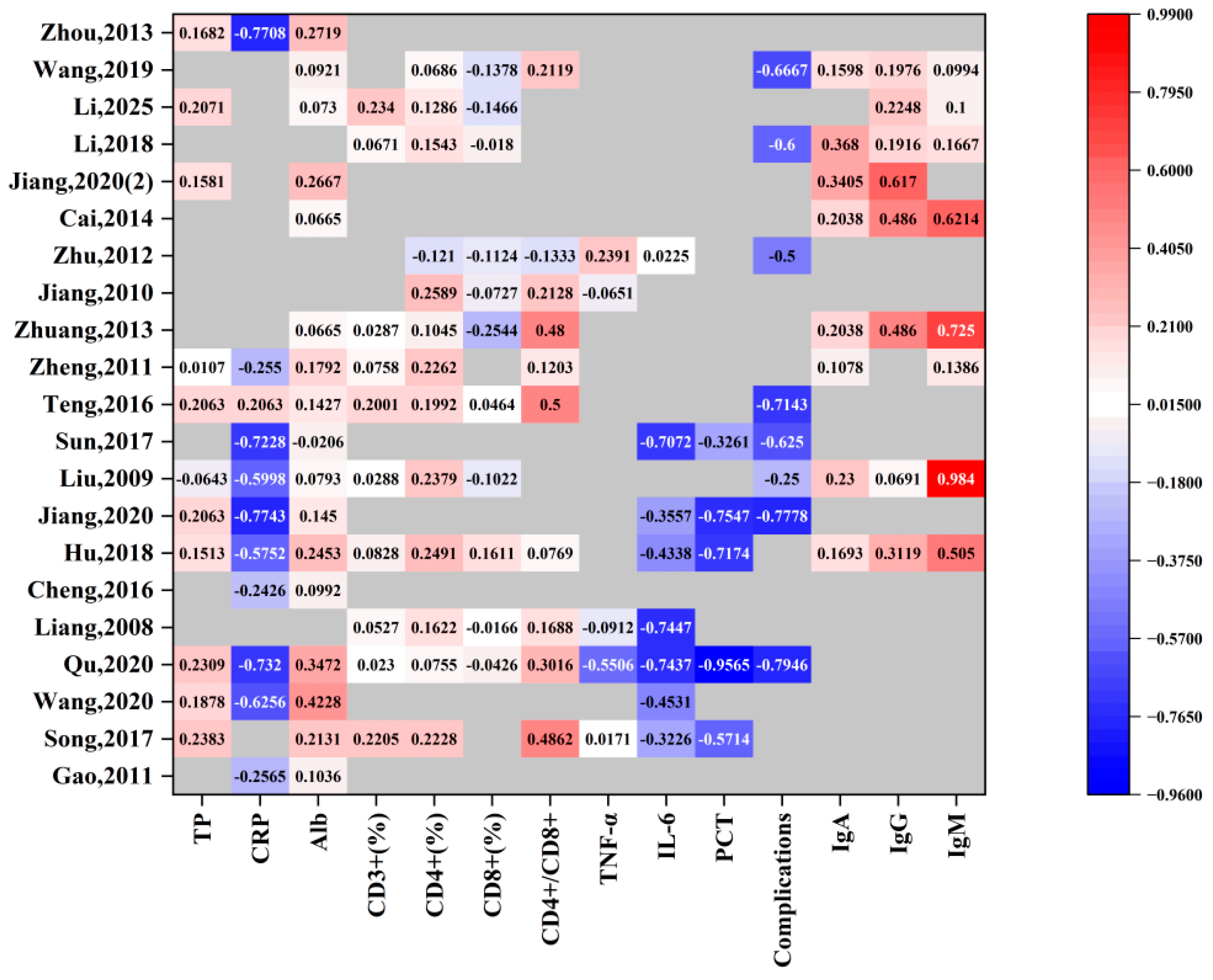
| First Author, Year | Treatments | Dosages (g/kg·d) | TP | CRP | Alb | CD3+ (%) | CD4+ (%) | CD8+ (%) | CD4+/CD8+ | TNF-α | IL-6 | PCT | Complications | IgA | IgG | IgM |
| Gao, 2011 | 1 W | 0.1 | - | −25.65% | 10.36% | - | - | - | - | - | - | - | - | - | - | - |
| Song, 2017 | Pre 1 W | 0.16 | 23.83% | - | 21.31% | 22.05% | 22.28% | - | 48.62% | 1.71% | −32.26% | −57.14% | - | - | - | - |
| Wang, 2020 | 1 W | 0.2 | 18.78% | −62.56% | 42.28% | - | - | - | - | - | −45.31% | - | - | - | - | - |
| Qu, 2020 | Pre 1 W Post 1 W | 0.31 | 23.09% | −73.20% | 34.72% | 2.30% | 7.55% | −4.26% | 30.16% | −55.06% | −74.37% | −95.65% | −79.46% | - | - | - |
| Liang, 2008 | Post 7 d | 0.2 | - | - | - | 5.27% | 16.22% | −1.66% | 16.88% | −9.12% | −74.47% | - | - | - | - | - |
| Cheng, 2016 | Post 1 W | 0.06 | - | −24.26% | 9.92% | - | - | - | - | - | - | - | - | - | - | - |
| Hu, 2018 | Pre 5 d Post 1 W | 0.16 | 15.13% | −57.52% | 24.53% | 8.28% | 24.91% | 16.11% | 7.69% | - | −43.38% | −71.74% | - | 16.93% | 31.19% | 50.50% |
| Jiang, 2020 | Pre 1 W Post 1 W | 0.2 | 20.63% | −77.43% | 14.50% | - | - | - | - | - | −35.57% | −75.47% | −77.78% | - | - | - |
| Liu, 2009 | Post 1 W | 0.16 | −6.43% | −59.98% | 7.93% | 2.88% | 23.79% | −10.22% | - | - | - | - | −25.00% | 23.00% | 6.91% | 98.40% |
| Sun, 2017 | Post 1 W | 0.2 | - | −72.28% | −2.06% | - | - | - | - | - | −70.72% | −32.61% | −62.50% | - | - | - |
| Teng, 2016 | Post 1 W | 0.16 | 20.63% | 20.63% | 14.27% | 20.01% | 19.92% | 4.64% | 50.00% | - | - | - | −71.43% | - | - | - |
| Zheng, 2011 | Pre 1 W Post 1 W | 0.16 | 1.07% | −25.50% | 17.92% | 7.58% | 22.62% | - | 12.03% | - | - | - | - | 10.78% | - | 13.86% |
| Zhuang, 2013 | Post 1 W | 0.06 | - | - | 6.65% | 2.87% | 10.45% | −25.44% | 48.00% | - | - | - | - | 20.38% | 48.60% | 72.50% |
| Jiang, 2010 | Post 7 d | 0.2 | - | - | - | - | 25.89% | −7.27% | 21.28% | −6.51% | - | - | - | - | - | - |
| Zhu, 2012 | Post 8 d | 0.2 | - | - | - | - | −12.10% | −11.24% | −13.33% | 23.91% | 2.25% | - | −50.00% | - | - | - |
| Cai, 2014 | Post 1 W | 0.2 | - | - | 6.65% | - | - | - | - | - | - | - | - | 20.38% | 48.60% | 62.14% |
| Jiang, 2020(2) | Pre 5 d Post 1 W | 0.1 | 15.81% | - | 26.67% | - | - | - | - | - | - | - | - | 34.05% | 61.70% | - |
| Li, 2018 | Post 5 d | 0.04 | - | - | - | 6.71% | 15.43% | −1.80% | - | - | - | - | −60.00% | 36.80% | 19.16% | 16.67% |
| Li, 2025 | Post 24 W | 0.2 | 20.71% | - | 7.30% | 23.40% | 12.86% | −14.66% | - | - | - | - | - | - | 22.48% | 10.00% |
| Wang, 2019 | Post 5 d | 0.62 | - | - | 9.21% | - | 6.86% | −13.78% | 21.19% | - | - | - | −66.67% | 15.98% | 19.76% | 9.94% |
| Zhou, 2013 | Post 5 d | 0.2 | 16.82% | −77.08% | 27.19% | - | - | - | - | - | - | - | - | - | - | - |
Disclaimer/Publisher’s Note: The statements, opinions and data contained in all publications are solely those of the individual author(s) and contributor(s) and not of MDPI and/or the editor(s). MDPI and/or the editor(s) disclaim responsibility for any injury to people or property resulting from any ideas, methods, instructions or products referred to in the content. |
© 2026 by the authors. Licensee MDPI, Basel, Switzerland. This article is an open access article distributed under the terms and conditions of the Creative Commons Attribution (CC BY) license.
Share and Cite
Li, H.; Xu, Z.; Chen, Y.; Guo, J.; Wang, Q.; Liang, D.; Qu, P.; Deng, T.; Yuan, Y.; Xu, J.; et al. The Role of Omega-3 Polyunsaturated Fatty Acid Supplementation in Postoperative Recovery of Colorectal Cancer: Systematic Review and Meta-Analysis. Nutrients 2026, 18, 173. https://doi.org/10.3390/nu18010173
Li H, Xu Z, Chen Y, Guo J, Wang Q, Liang D, Qu P, Deng T, Yuan Y, Xu J, et al. The Role of Omega-3 Polyunsaturated Fatty Acid Supplementation in Postoperative Recovery of Colorectal Cancer: Systematic Review and Meta-Analysis. Nutrients. 2026; 18(1):173. https://doi.org/10.3390/nu18010173
Chicago/Turabian StyleLi, Huzhong, Zhenze Xu, Yamin Chen, Jianming Guo, Qihe Wang, Dong Liang, Pengfeng Qu, Taotao Deng, Yuan Yuan, Jiao Xu, and et al. 2026. "The Role of Omega-3 Polyunsaturated Fatty Acid Supplementation in Postoperative Recovery of Colorectal Cancer: Systematic Review and Meta-Analysis" Nutrients 18, no. 1: 173. https://doi.org/10.3390/nu18010173
APA StyleLi, H., Xu, Z., Chen, Y., Guo, J., Wang, Q., Liang, D., Qu, P., Deng, T., Yuan, Y., Xu, J., Fang, H., & Wang, Z. (2026). The Role of Omega-3 Polyunsaturated Fatty Acid Supplementation in Postoperative Recovery of Colorectal Cancer: Systematic Review and Meta-Analysis. Nutrients, 18(1), 173. https://doi.org/10.3390/nu18010173