1. Introduction
Osteoarthritis (OA) is a highly prevalent and debilitating chronic disorder of the joints, primarily characterized by the irreversible deterioration of articular cartilage [
1,
2,
3]. Beyond cartilage loss, the pathology encompasses subchondral bone changes, synovial inflammation, and persistent pain, leading to functional impairment. This condition severely impairs the quality of life; knee OA, in particular, is debilitating due to pain and mobility issues exacerbated by weight-bearing, which can even precipitate depression [
4,
5]. The core pathology of OA involves persistent joint inflammation and the irreversible deterioration of articular cartilage [
6,
7,
8], with this cartilage loss representing the cardinal feature of the condition [
9,
10,
11]. This degradation is primarily driven by the dysfunction of chondrocytes [
12,
13,
14], the cells responsible for maintaining cartilage homeostasis [
12,
15].
Articular cartilage is primarily reliant on its extracellular matrix (ECM) for essential elasticity and resistance against mechanical loading, which fundamentally consists of type II collagen and the dominant proteoglycan, aggrecan [
16]. The integrity of this vital ECM relies on a delicate equilibrium between anabolic (synthesis) and catabolic (degradation) activities [
17]. Nevertheless, pro-inflammatory factors originating from the inflamed synovium stimulate chondrocytes, resulting in the excessive breakdown of the ECM and, ultimately, irreversible cartilage loss [
18]. Therefore, a paramount therapeutic objective in OA management is to mitigate cartilage breakdown and actively preserve its structure [
19,
20].
Currently, clinical management largely relies on symptomatic relief (e.g., NSAIDs) and, ultimately, surgical joint replacement, as they fail to target the core mechanism of the disease [
21]. Despite offering symptomatic relief, non-steroidal anti-inflammatory drugs (NSAIDs) pose significant restrictions on long-term, high-dose use due to their documented adverse events to the renal, cardiovascular, and gastrointestinal tracts [
22,
23]. The continued reliance on NSAIDs stems from a profound lack of comparably effective and safe agents [
21]. Consequently, this unmet clinical need is driving the exploration of natural products as viable therapeutic avenues for OA [
24]. Numerous functional ingredients with joint-health-promoting and cartilage-protective properties are gaining traction [
24]. These include compounds such as glucosamine,
Boswellia serrata, turmeric, olive leaf, and
Boletus edulis extracts, representing promising avenues in the search for safer and more sustainable OA therapies [
25,
26,
27].
The chum salmon (
Oncorhynchus keta) is widely recognized as a premium source of diverse bioactive and nutritional substances. Beyond providing high biological value proteins, essential minerals, and vitamins, it is particularly rich in omega-3 polyunsaturated fatty acids (PUFAs), which are known for their cardioprotective and anti-inflammatory properties [
28,
29,
30]. Furthermore, specific tissues yield specialized functional materials, such as polydeoxyribonucleotide (PDRN) from their milt [
31]. Among these valuable components, salmon nasal cartilage proteoglycan (SPG) has emerged as a unique non-denatured proteoglycan isolated specifically from the nasal cartilage of this species. Its extraction via acetic acid offers distinct advantages, primarily the preservation of its critical biomolecular components and a simplified, cost-efficient, and scalable process [
32]. Aggrecan is a cornerstone of articular cartilage’s ECM, and notably, SPG predominantly comprises this same pivotal proteoglycan [
33]. This molecule is vital for cartilage function due to its capacity to bind with hyaluronic acid (HA), forming large aggregates that efficiently entrap water molecules [
34]. These aggregates confer significant resistance to compressive forces from weight-bearing, providing a crucial “cushion-like” effect [
35]. Beyond aggrecan, SPG’s intricate composition further includes other key glycosaminoglycans (GAGs) such as chondroitin sulfate, alongside essential non-collagenous proteins like chondronectin and link protein [
32]. These components are instrumental in maintaining the structural integrity and stabilization of the cartilage ECM [
36].
Recent scientific endeavors have extensively explored the diverse therapeutic efficacy of SPG, including its anti-inflammatory properties, wound healing capabilities, maintenance of skin condition, enhancement of cell growth, and regulation of metabolism, among others [
37,
38,
39,
40,
41,
42,
43]. Of particular clinical relevance are its anti-arthritic effects [
44,
45].
Previous clinical trials have yielded encouraging findings; specifically, a daily oral dosage of 10 mg/kg of SPG, administered over 16 weeks, demonstrated a chondroprotective effect in subjects suffering from knee pain [
44]. Furthermore, another investigation reported that a 12-week regimen of 10 mg/day oral SPG conferred pain relief and improved joint health in individuals with mild knee pain (predominantly Kellgren-Lawrence grade 0-II) [
45].
While previous studies have highlighted the benefits of SPG in promoting overall joint health and alleviating OA symptoms, its precise molecular mechanisms remain to be fully elucidated. To address this gap, the present study investigated the therapeutic efficacy of SPG in a monosodium iodoacetate (MIA)-induced OA mouse model. Specifically, we focused on its capacity to mitigate joint pain and modulate OA progression by evaluating the regulatory balance between anabolic and catabolic pathways, as well as the associated inflammatory processes.
2. Materials and Methods
2.1. Salmon Nasal Cartilage Proteoglycan (SPG) Source
The SPG used throughout this study, derived from salmon nasal cartilage, was obtained as a spray-dried powder extract (Lot 232540) from Ichimaru Pharcos, Co., Ltd. (Gifu, Japan). Comprehensive details regarding the preparation and characteristics of this specific extract have been previously documented [
43].
2.2. Animal Care and Ethics Approval
Six-week-old male C57BL/6J mice, initially weighing between 21 and 23 g, were purchased from Daehan Bio Link Co., Ltd. (Eumseong, Chungbuk, Republic of Korea). All animals were housed within the dedicated animal facility located at the College of Pharmacy, Chungbuk National University (Cheongju, Chungbuk, Republic of Korea). Prior to experimentation, the animals underwent a seven-day adaptation period in a standard environment maintained at 23 ± 2 °C, under a controlled 12-h light/dark cycle. Throughout the study, the mice were given unrestricted access to filtered tap water and a standard rodent chow diet (Rodfeed®, Daehan Bio Link). Every animal protocol strictly conformed to the Korean National Animal Welfare Guide and the corresponding National Animal Welfare Legislation. The entire set of experimental procedures was formally reviewed and approved by the Institutional Animal Care and Use Committee (IACUC) at Chungbuk National University (Approval Number CBNUA-2271-24-01, 29 March 2024).
2.3. Experimental Design and Administration
A total of 180 mice were incorporated into this research endeavor. The requisite sample size (
n = 10–12 per group) was determined by adhering to established methodological standards for the assessment of pain and cartilage integrity within the monosodium iodoacetate (MIA)-induced OA model [
46]. This size was strategically selected to guarantee sufficient power for detecting biologically meaningful differences and maintaining consistency with previous findings, while simultaneously respecting ethical directives for animal use and minimizing the number of animals required. To mitigate selection bias and ensure group comparability, subjects were assigned using stratified randomization based on their initial body weight, thereby achieving equivalent mean body weight across the experimental groups at baseline. The randomization sequence itself was generated via a computer-based pseudo-random sequence generator.
The experimental subjects were subsequently divided into three independent cohorts corresponding to distinct analytical endpoints: (1) functional assessment (pain), histology, and immunohistochemistry; (2) mRNA expression analysis for early-stage OA (Day 3); and (3) mRNA expression analysis for the late-stage OA (Day 28). Each of these cohorts was structured into five distinct experimental groups (
n = 10–12 per group): a normal control group that received an intra-articular injection of normal saline (Sham), a disease model control group induced by MIA injection (Control), a positive comparator receiving celecoxib (CLX, 20 mg/kg/day), and two separate groups received escalating doses of SPG. The applied SPG dosages for mice (50 or 100 mg/kg/day) were precisely derived from the human equivalent daily dosages of 250 and 500 mg, respectively, by implementing established interspecies dose conversion guidelines [
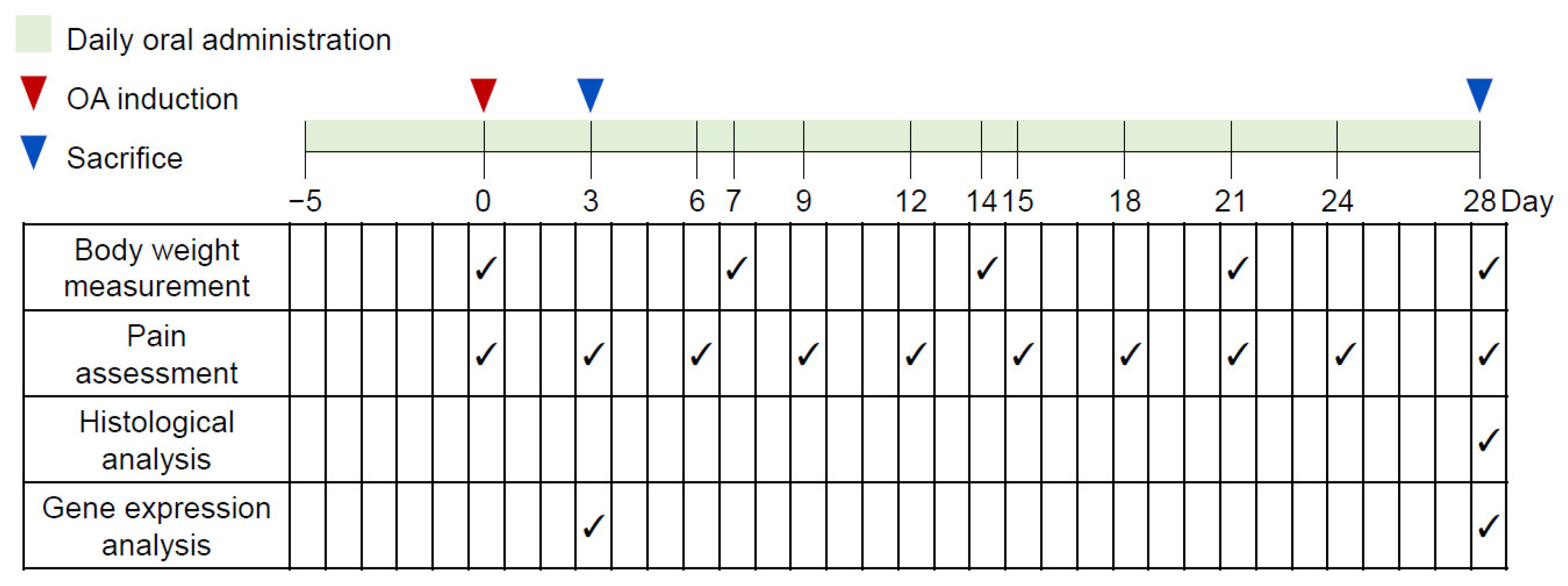
47]. All animals received daily oral treatment via gavage. Treatment commenced 5 days prior to OA induction and continued post-induction until the designated experimental termination time point (either 3 or 28 days). A corresponding volume of vehicle (normal saline) was administered to both the Sham and Control groups. The comprehensive details regarding the group composition and overall experimental timeline are presented in
Table 1 and
Figure 1.
Animal welfare and general health status were closely monitored for throughout the experiment. At the conclusion of each designed experimental time point, subjects were euthanized using CO2 inhalation for the subsequent harvest of tissues or blood samples.
2.4. Induction of Osteoarthritis Using Monosodium Iodoacetate (MIA)
OA was established in the animals following a previously validated protocol [
46]. Initially, the subjects underwent inhalation anesthesia using 2.0–3.5% isoflurane (Piramal Critical Care, Bethlehem, PA, USA). The OA condition was subsequently induced by an intra-articular injection of MIA solution (Cat No. 57858-5G-F, Sigma-Aldrich, St. Louis, MI, USA) at a dosage of 1 mg/10 μL into the left hind limb knee joint, positioning the injection site inferior to the patella. Conversely, animals in the Sham and Control groups were injected with an equivalent volume of normal saline. Post-injection, the mice were closely observed until their complete recovery from the anesthetic effects before being returned to their designated cages. Criteria for exclusion included failure to recover from the OA induction procedure or the presence of significant general health issues. They were maintained on their established daily oral treatment (SPG, CLX, or vehicle) until the predefined time point for experimental termination.
2.5. Body Weight Measurement
For general health monitoring throughout the experimental duration, animal body weights were precisely recorded at 7-day intervals using a weighing scale (SPX2202KR, OHAUS Corporation, Parsippany, NJ, USA).
2.6. Pain Assessment (Nociception Measurement)
Articular pain severity was quantitatively determined by measuring the differential weight distribution across the ipsilateral (OA-affected) and contralateral (unaffected) posterior limbs. This assessment utilized an incapacitance meter (Model 600MR, IITC Life Science, Inc., Woodland Hills, CA, USA), following methodologies established in prior reports [
46,
48]. For each testing session, the animals were cautiously positioned within a specialized, angled acrylic container. The sensors located centrally beneath the animals were used to record the force exerted by the ipsilateral (left) and the contralateral (right) hind paws separately. Each individual measurement was registered over a period of 5 s. The analytical value was subsequently computed as the mean of three consecutive readings. These raw force measurements were then converted to a percentage indicating the weight distribution, calculated as the ipsilateral weight divided by the sum of the weights recorded by both hind limbs, as shown in the equation below.
2.7. Histopathological Evaluation
Twenty-eight days following OA induction, the left hind limbs were harvested and prepared for subsequent histological examination. The specimens were initially fixed for 24 h at 4 °C in 4% paraformaldehyde solution. Decalcification then proceeded for two weeks, utilizing 5% formic acid. Following this step, the tissues underwent a sequential dehydration process using an ascending ethanol series before being embedded in paraffin blocks. Sectioning was performed on the resulting blocks using a microtome (Model CM 1850, Leica Microsystems, Wetzlar, Germany) to yield 5 μm thick sagittal slices.
To evaluate the structural integrity of the cartilage, the prepared sections were stained with hematoxylin and eosin (H&E) solution (Leica Microsystems) and the Safranin-O/Fast Green Staining kit (IHC World, Wookstock, MD, USA). After mounting the slides with Permount mounting medium (Fisher Scientific International, Inc., Pittsburgh, PA, USA), images were digitally captured using a light microscope (Model DM2500 LED, Leica Microsystems) at both 5× and 20× magnifications.
All stained slides were subjected to a double-blind, independent evaluation [
49,
50,
51]. Cartilage damage was quantified using the established Mankin scoring system (ranging from 0 to 13), and the extent of synovitis was assessed using Krenn’s synovitis scoring system (ranging from 0 to 6).
2.8. Immunohistochemistry
To determine the protein expression patterns of essential cartilage matrix components within the joint tissue, an immunohistochemistry protocol was executed on the paraffin-embedded sections. Initially, the sections were processed for deparaffinization and subsequent rehydration. Antigen retrieval was achieved by incubating the sections overnight in a 10 mM sodium citrate buffer (pH 6.0) at 60 °C. Following rinses with phosphate-buffered saline (PBS), non-specific binding was blocked by incubation with 5% normal goat serum in PBS. The immunostaining sequence continued with an overnight incubation 4 °C utilizing the following primary antibodies: anti-collagen type II alpha 1 (COL2A1, SantaCruz Biotechnology, Dallas, TX, USA; Cat No. sc-52658, 1:50); and anti-cartilage oligomeric protein (COMP, Abcam, Waltham, MA, USA; Cat No. ab231977, 1:100). After thorough washing to remove unbound primary antibody, the sections were incubated with the biotinylated secondary antibodies for 2 h at ambient temperature. Visualization of the Immunocomplexes was performed using the 3,3’-diaminobenzideine (DAB) detection kit (Vector Laboratory, Newark, CA, USA), strictly following the manufacturer’s instructions. The finalized, stained slides were imaged under a light microscope (Model DM2500 LED, Leica Microsystems) at a magnification of 5× and 20×.
2.9. Molecular Quantification via Real-Time PCR
The determination of gene expression profiles commenced with the isolation of total RNA from the mouse articular cartilage tissues harvested at either Day 3 or Day 28 post-OA induction. This extraction procedure utilized the Total RNA isolation kit (Hybrid—R
TM, GeneAll Biotechnology, Seoul, Republic of Korea), with strict adherence to the manufacturer’s instructions. The resulting purified RNA was subsequently reverse-transcribed into complementary DNA (cDNA) using the High-Capacity cDNA Reverse Transcription Kit (Applied Biosystems, Foster City, CA, USA). Following cDNA synthesis, quantitative real-time PCR (RT-qPCR) assays were executed using a qPCR master mix (THUNDERBIRDTM SYBR
®, Toyobo, Osaka, Japan) and pre-designed, custom oligonucleotide primers. β-actin served as the internal reference control for normalization. All RT-qPCR reactions were performed using as Real-Time PCR system (QuantStudio 3, Thermo Fisher Scientific, Wal tham, MA, USA). The specific nucleotide sequences employed for the primers are fully detailed in
Table 2. Relative quantification of gene expression was determined through the application of the 2
−ΔΔCT method.
2.10. Statistical Analysis
All numerical data collected are uniformly expressed as the mean ± standard error of the mean (SEM). The sample size, denoted by ‘n’ (number of animals or replicates), is precisely noted for each dataset. Statistical significance testing was executed using different methods, conditional on the nature of the comparison. Statistical significance was evaluated using one-way analysis of variance (ANOVA), followed by Dunnett’s post-hoc test to determine differences between the Control group and the other experimental groups (Sham, CLX 20 mg/kg, SPG 50 mg/kg, and SPG 100 mg/kg). For data involving multiple time points, repeated-measure (RM) two-way ANOVA was performed, followed by Dunnett’s post hoc test for multiple comparisons. All computations were performed using GraphPad Prism software (Version 8.4.2, GraphPad Software, Boston, MA, USA). A probability (p) value set below 0.05 (p < 0.05) was deemed statistically significant.
3. Results
3.1. SPG Does Not Alter Body Weight in MIA-Induced OA Mice
We initially assessed animal body weight changes to verify any potential systemic effect of MIA or the test substance treatment. As shown in
Supplementary Figures S1 and S2, all MIA-treated groups, with the exception of the SPG 100 mg/kg group, experienced a transient body weight reduction compared to the Sham group on Day 7 post-OA induction. Although the CLX (Days 21 and 28) and Control (Day 21) groups showed temporary weight differences relative to the Sham group later in the experiment, all MIA-treated groups consistently recovered their body weight after Day 14. This consistent recovery trend indicates that the overall health status of the animals remained stable throughout the experimental period, indicating that SPG administration did not induce significant systemic health complications.
3.2. SPG Exhibits Significant Alleviation of Joint Pain in MIA-Induced OA Mice
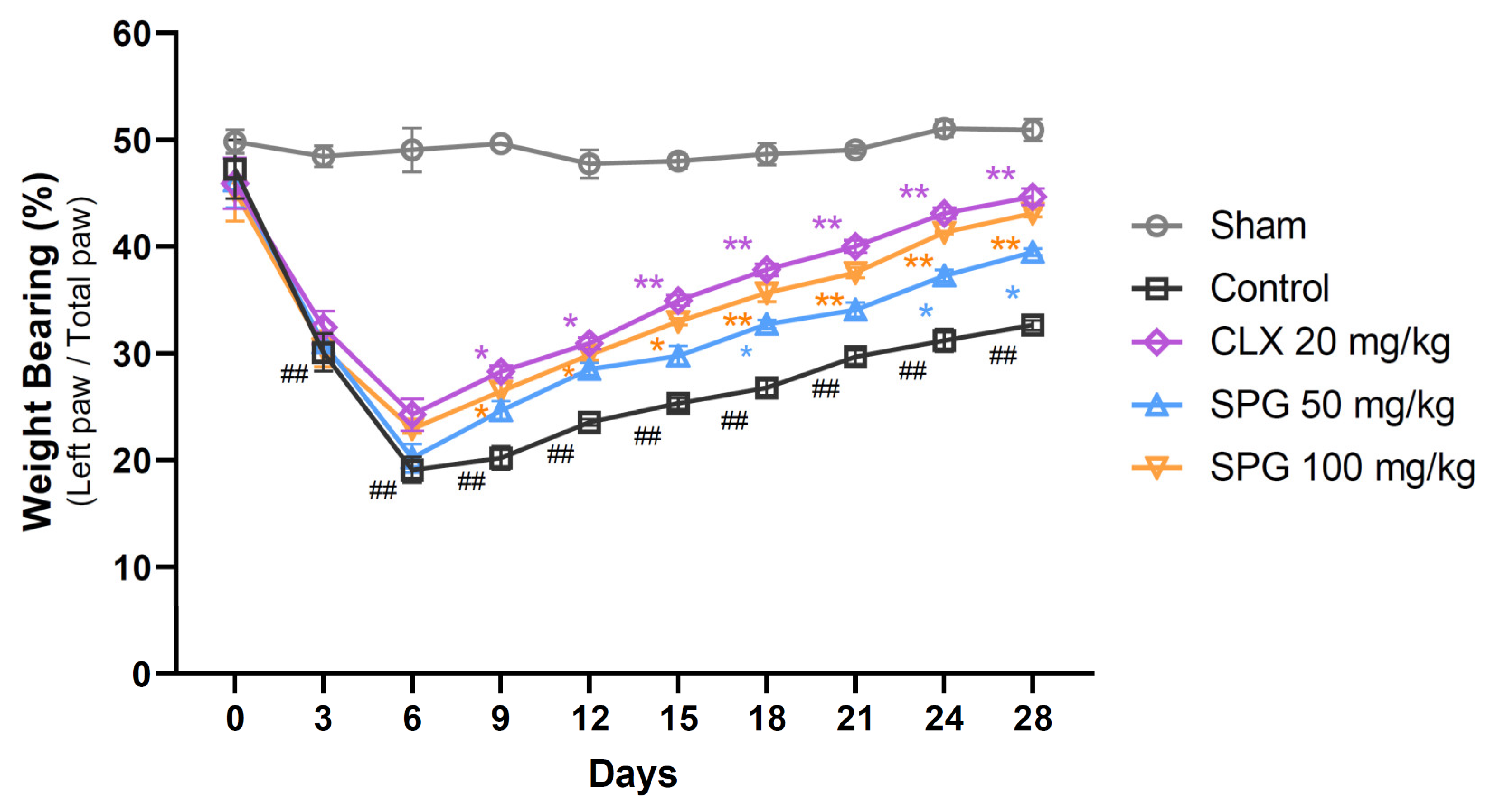
The analgesic activity of orally delivered SPG was assessed in the MIA-induced OA model by measuring the differential weight distribution of the posterior limbs (
Figure 2). Quantification of nociception confirmed that the Sham group maintained an equitable load distribution throughout the observation period. In sharp contrast, the Control group exhibited a marked, persistent reduction in the weight supported by the ipsilateral (OA-affected) hind limb compared to the Sham animals over the entire study duration. Significantly, all active treatment groups (CLX 20 mg/kg, SPG 50 mg/kg, and SPG 100 mg/kg) displayed enhanced weight-bearing capability when compared to the Control group. Specifically, the high-dose SPG group (100 mg/kg) demonstrated significant recovery from Day 9 post-OA induction, reaching an efficacy level comparable to that of the positive comparator, CLX. These findings strongly indicate that the oral administration of SPG is effective in reducing joint pain in mice challenged with MIA-induced OA.
3.3. SPG Attenuates Cartilage Degeneration in MIA-Induced OA
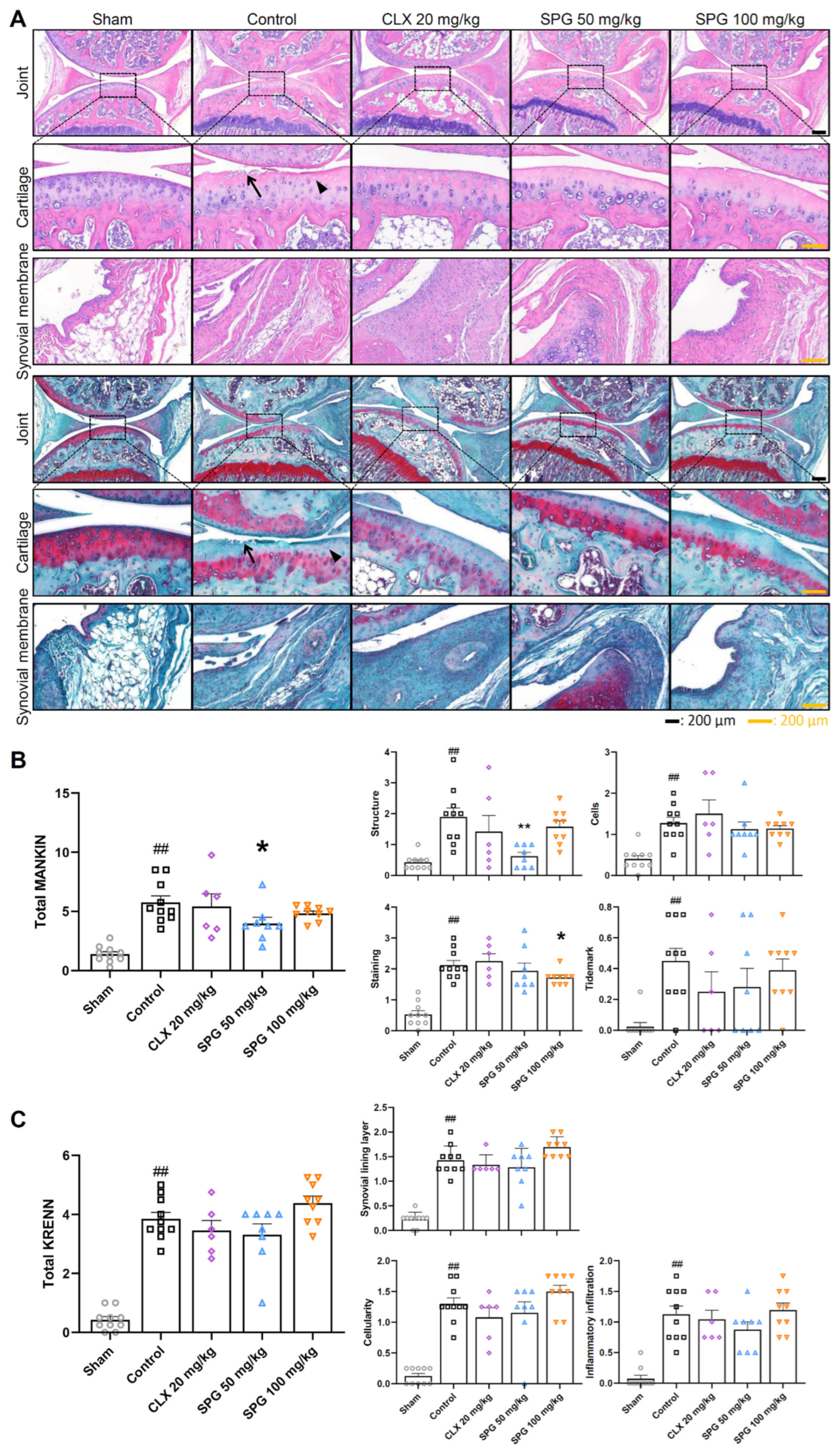
To evaluate the protective effects of oral SPG administration on cartilage degeneration, we performed histological assessments of joint articular cartilage and synovium using H&E staining (for overall morphology) and Safranin-O/Fast Green (to assess proteoglycan content), as illustrated in
Figure 3A. These findings were quantified using the Mankin score (for cartilage damage) and Krenn’s synovitis score (for synovitis and synovial fibrosis).
The Sham group displayed normal cartilage characteristics, including a smooth articular surface and orderly chondrocyte arrangement, alongside typical synovial morphology. In stark contrast, the Control group exhibited severe OA pathology, characterized by marked cartilage surface irregularities, substantial structural destruction in the superficial and middle zones, pronounced chondrocyte loss, and notable synovial hypertrophy. These findings were strongly corroborated by significantly elevated scores in both the Mankin score and Krenn’s synovitis score in the Control group compared to the Sham group.
Both CLX and SPG administration resulted in a substantial amelioration of cartilage destruction in the H&E sections (
Figure 3A, upper panels). Furthermore, Safranin-O/Fast Green staining demonstrated a dose-dependent enhancement of Safranin-O intensity in the SPG-treated groups, particularly SPG 100 mg/kg, compared to the Control group, signifying improved proteoglycan preservation (
Figure 3A, lower panels). Quantitatively, the Mankin scoring system (
Figure 3B) confirmed a reduction in the total score for both the SPG 50 mg/kg and SPG 100 mg/kg groups compared to the Control group. Notably, the SPG 50 mg/kg group showed a statistically significant improvement, specifically in the Structure category. However, no significant statistical difference was detected between the SPG-treated groups and the Control group concerning synovial appearance or Krenn’s synovitis scoring system scores (
Figure 3C). Overall, these results confirm that oral SPG administration effectively inhibits cartilage degeneration and preserves proteoglycan content in MIA-induced OA mice.
3.4. SPG Selectively Modulates Pro-Inflammatory Cytokine Gene Expression by Reducing IL-6 at the Late Stage of MIA-Induced OA
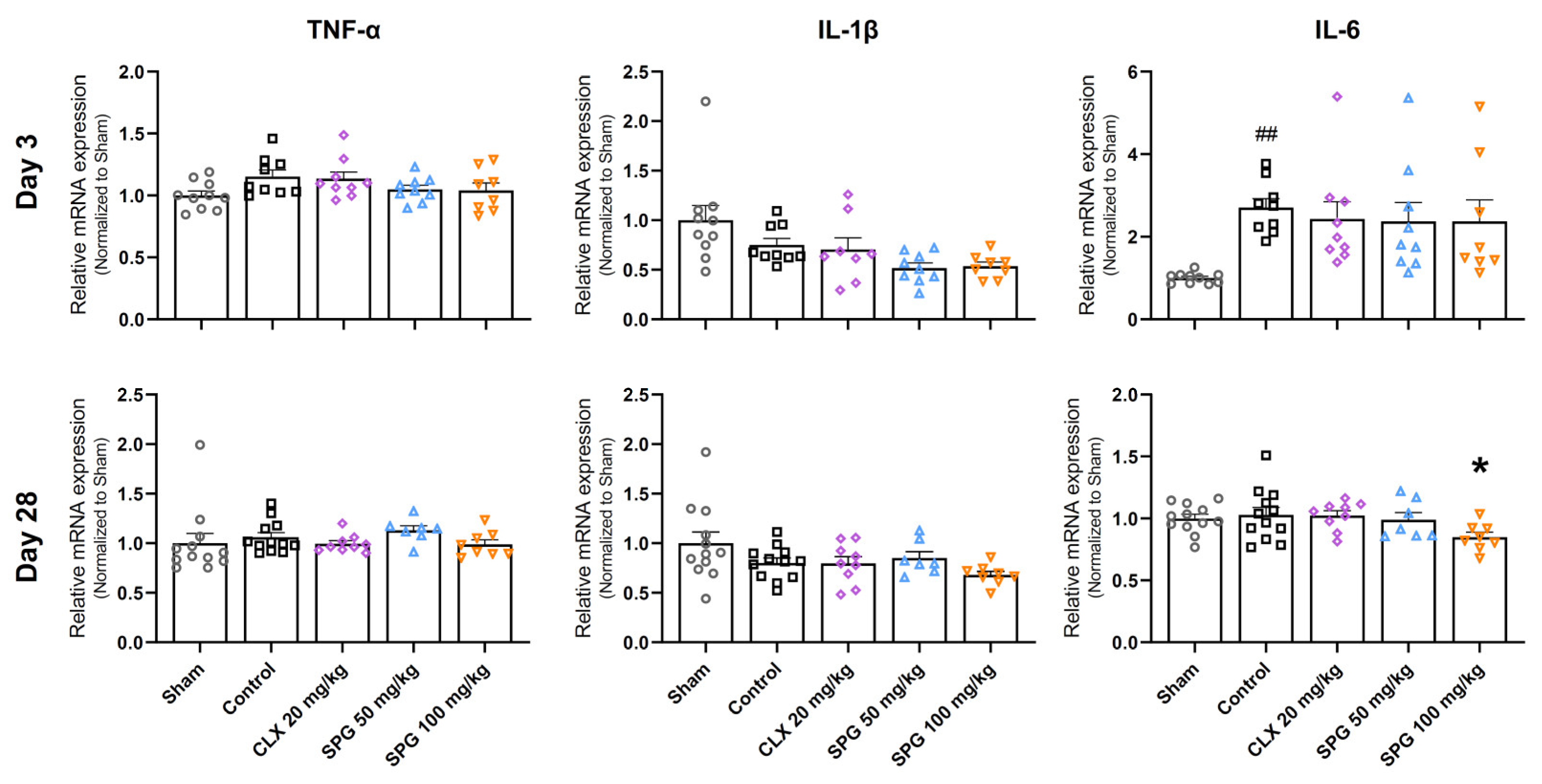
To clarify the molecular mechanism behind the chondroprotective effects observed from oral SPG administration, we employed RT-qPCR to measure the expression of major pro-inflammatory cytokines, specifically TNF-α, IL-1β, and IL-6, within the articular cartilage (
Figure 4). The inflammatory status was relatively quiescent at Day 3 post-OA induction, which marks the early phase of the disease. During this early phase, only IL-6 mRNA expression was found to be significantly elevated in the Control group compared to the Sham group. Furthermore, no significant alterations were detected in the transcription levels of TNF-α or IL-1β at this specific time point. Although a numerical trend showing reduced IL-6 expression was observed across all three active treatment arms (CLX 20 mg/kg, SPG 50 mg/kg, SPG 100 mg/kg), these differences did not achieve statistical significance relative to the Control group. By Day 28, representing the advanced OA stage, the overall inflammatory profile appeared to subside across all groups, with no significant differences identifiable for most markers examined. Notwithstanding this general subsidence, the high-dose SPG group (SPG 100 mg/kg) specifically exhibited a statistically significant attenuation of IL-6 mRNA expression when contrasted with the Control group. In summation, these outcomes suggest that the ability of oral SPG administration to broadly suppress the expression of pro-inflammatory cytokines within the cartilage is limited. The singular, notable exception was the specific and significant IL-6 gene reduction documented at the high-dose of SPG during the late stage of OA progression.
3.5. SPG Sustains Cartilage Matrix Integrity and Attenuates Homeostatic Anabolic Upregulation at the Late Stage of MIA-Induced OA
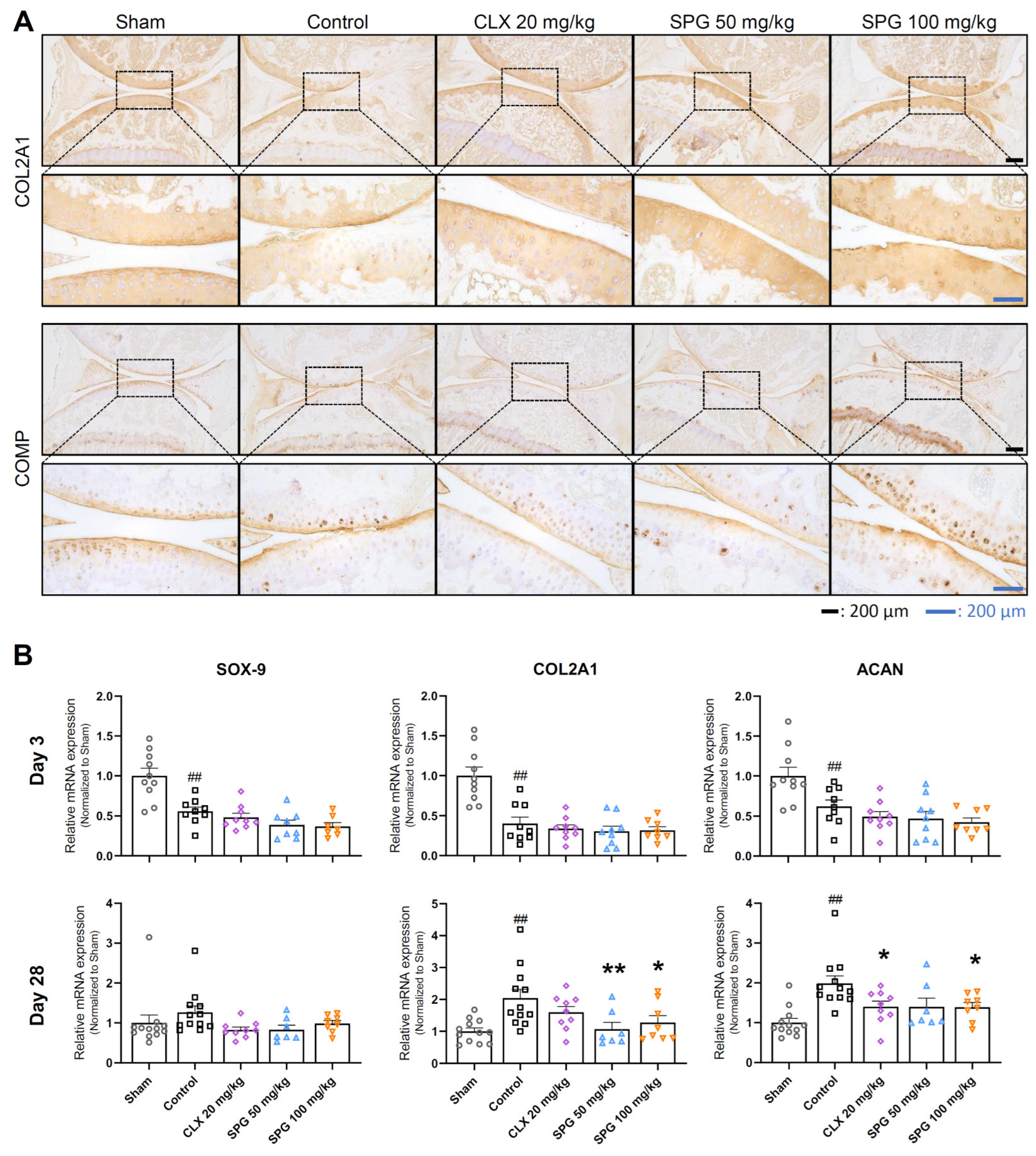
To determine the extent of long-term cartilage component preservation by oral SPG administration, we utilized both immunohistochemistry (IHC) and RT-qPCR. IHC was performed at the Day 28 endpoint to assess the protein content of the major cartilage matrix elements: COL2A1, a primary constituent of type II collagen, and COMP, vital for stabilizing the collagen networks, as visualized in
Figure 5A. Concurrently, we quantified the mRNA expression of the master anabolic transcription factor SOX-9, along with the matrix components COL2A1 and aggrecan (ACAN), at both the early (Day 3) and late (Day 28) time points (
Figure 5B).
Analysis of protein expression at Day 28 revealed a stark contrast between the healthy and pathological states. While the COL2A1 protein was ubiquitously present across all cartilage zones in the Sham group, it was severely diminished or absent in the compromised superficial and middle layers of the Control group. Favorably, treatment with both CLX and SPG doses resulted in well-maintained COL2A1 expression throughout the entire cartilage depth (
Figure 5A, upper panels). Regarding the COMP protein, the Control group demonstrated enhanced expression in the middle and deep zones, potentially signifying a vigorous compensatory repair mechanism. The SPG-treated animals showed a similar, or in some cases more pronounced, COMP expression profile than the Control group, pointing toward the high protective action of SPG (
Figure 5A, lower panels).
At the Day 3 early stage, the transcriptional activity of all three anabolic markers, SOX-9, COL2A1, and ACAN, was markedly suppressed in the Control group compared to the Sham group, indicating initial chondrocyte dysfunction (
Figure 5B, upper panels). By Day 28, this expression pattern was dramatically reversed. At this late stage, the Control group showed significantly elevated mRNA expression levels of SOX-9, COL2A1, and ACAN compared to the Sham group. This increase likely reflects a robust, albeit ultimately inadequate, compensatory anabolic response to severe matrix loss. In striking contrast, the CLX- and SPG-treated groups showed an attenuated need for such homeostatic upregulation, maintaining markedly lower mRNA levels of these markers than the Control group. Specifically, COL2A1 transcription was significantly lower in both the SPG 50 and 100 mg/kg groups. Additionally, ACAN expression was significantly suppressed in the CLX 20 mg/kg and SPG 100 mg/kg groups compared to the Control group (
Figure 5B, lower panels).
Collectively, the integration of protein and gene expression data strongly suggests that oral SPG administration preserves the structural integrity of key cartilage components. By preventing extensive matrix degradation, SPG effectively attenuates the chronic activation of compensatory anabolic pathways typically observed during the late stages of MIA-induced OA.
3.6. SPG Mitigates Cartilage-Degrading Enzyme Expression and Modifies Their Endogenous Inhibitors in MIA-Induced OA
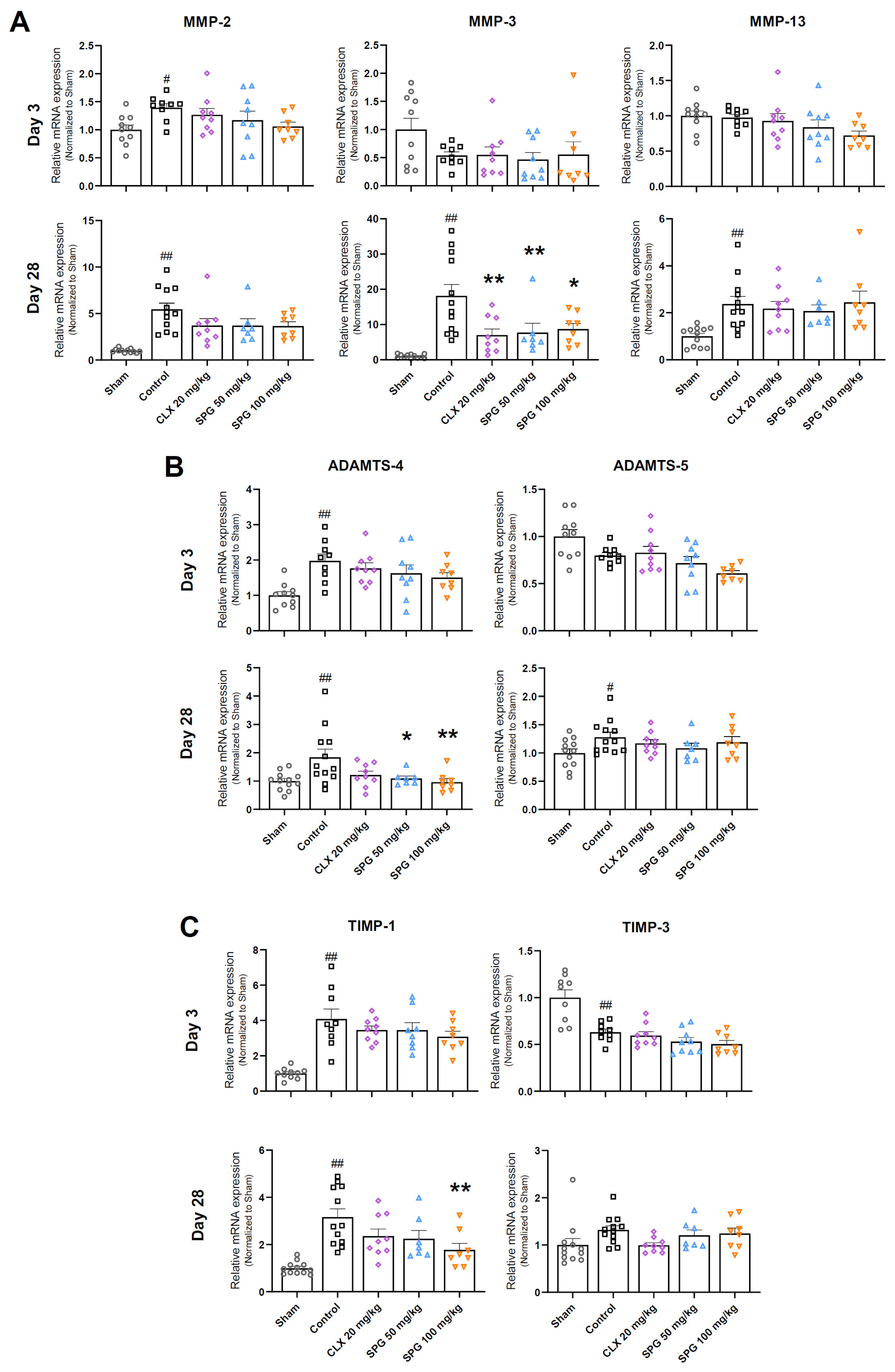
We investigated the influence of oral SPG treatment on the gene expression of matrix-degrading enzymes, specifically matrix metalloproteinases (MMPs) and a disintegrin and metalloproteinase with thrombospondin motif (ADAMTS) family members, recognized as central mediators of cartilage destruction, at both Day 3 (the early phase) and Day 28 (the late phase). Concurrently, the expression of tissue inhibitors of metalloproteinases (TIMPs), the natural endogenous inhibitors of these enzymes, was also assessed.
At day 3 post-OA induction, only MMP-2 levels were significantly elevated in the Control group compared to the Sham group. Although the SPG-treated groups exhibited a downward trend in MMP-2 expression, the difference did not reach statistical significance (
Figure 6A, left upper panel). Conversely, MMP-3 gene expression was lower in the Control, CLX, and SPG-treated groups relative to the Sham group, though these changes were not statistically significant (
Figure 6A, middle upper panel). Regarding MMP-13, a slight attenuation was observed in the SPG 100 mg/kg group compared to the Control group, but this remained non-significant (
Figure 6A, right upper panel). ADAMTS-4 expression increased markedly in the Control group relative to the Sham group; however, the reducing tendencies in the CLX- and SPG-treated groups did not achieve statistical significance (
Figure 6B, left upper panel). Finally, ADAMTS-5 gene expression was diminished across all experimental groups compared to the Sham group (
Figure 6B, right upper panel). By day 28 post-OA induction, the changes in enzyme expression became more pronounced. The transcription of MMP-2, MMP-3, MMP-13, ADAMTS-4, and ADAMTS-5 was significantly upregulated in the Control group relative to the Sham group. Notably, treatment with CLX and both doses of SPG (50 and 100 mg/kg) reduced the mRNA levels of MMP-2, MMP-3, and ADAMTS-4 compared to the Control group. Specifically, MMP-3 expression was significantly downregulated across all treatment groups. Furthermore, both the SPG 50 and 100 mg/kg groups showed a significant decrease in ADAMTS-4 levels relative to the Control group. In contrast, no statistically significant differences were observed in MMP-13 and ADAMTS-5 expression between the Control group and the treated groups at this stage (
Figure 6).
Regarding the endogenous inhibitors, early-stage (Day 3) TIMP-1 expression was significantly elevated in the Control group compared to the Sham group, whereas the CLX and SPG groups showed a non-significant downward trend (
Figure 6C, left upper panel). At the same time point, TIMP-3 transcription was lower across the Control, CLX, and SPG groups relative to the Sham group, although these differences did not reach statistical significance (
Figure 6C, right upper panel). By the late stage (Day 28), TIMP-1 expression remained significantly higher in the Control group than in the Sham group. However, CLX and SPG treatments attenuated this increase, with the SPG 100 mg/kg group exhibiting a statistically significant reduction compared to the Control group (
Figure 6C, left lower panel). Conversely, TIMP-3 expression in the Control group showed a non-significant upward trend compared to the Sham group, a pattern that was not observed in the CLX- or SPG-treated groups (
Figure 6C, right lower panel).
Viewed collectively, these results suggest that oral SPG administration effectively curtails matrix breakdown by attenuating the expression of cartilage-degrading enzymes and modulating the transcription of their endogenous inhibitors. These effects are most prominent during the chronic phase of OA, suggesting that SPG preserves cartilage integrity by rebalancing articular homeostasis.
4. Discussion
OA is a highly pervasive and debilitating joint disorder characterized by a triad of pathologies: chronic pain, persistent low-grade inflammation, and the gradual degradation of the articular cartilage [
52]. In this study, we utilized the MIA-induced OA mouse model, which faithfully recapitulates the structural, biochemical, and functional characteristics of human OA, to evaluate the therapeutic potential of oral SPG administration. Our findings demonstrate that SPG provides a dual benefit of functional pain mitigation (analgesic effects) and structural chondroprotection by restoring the delicate metabolic balance within the joint environment.
Articular pain represents the dominant clinical symptom of OA, typically exacerbated by mechanical loading and bearing of weight, thereby resulting in substantial impairment [
53]. The MIA challenge specifically induces nociception through initial chemical irritation followed by secondary tissue destruction, leading to both peripheral and central sensitization. Our results established that oral SPG administration significantly improved weight-bearing distribution, a key indicator of pain relief, with efficacy comparable to the positive control (
Figure 2). This analgesic outcome suggests that SPG, or its bioactive components, can modulate nociceptive signaling. More importantly, the prolonged pain relief observed in the late stage indicates that SPG may alleviate pain indirectly by attenuating the underlying joint damage that acts as a mechanical trigger for joint discomfort.
The inflammatory process is recognized as an essential contributor to OA pathogenesis, characterized by the local release of pro-inflammatory signaling molecules such as TNF-α, IL-1β, and IL-6 originating from the synovial tissue and activated chondrocytes [
54,
55]. These mediators subsequently establish a catabolic milieu, which ultimately jeopardizes the structural integrity of the cartilage matrix [
56,
57]. Although some marine proteoglycans are known for broad-spectrum anti-inflammatory activity [
58], SPG appears to function as a more targeted modulator. Our findings indicated that SPG significantly and specifically downregulated IL-6 expression during the chronic phase (Day 28), particularly at the high dose of 100 mg/kg, whereas it showed limited impact on the broader suppression of TNF-α and IL-1β. This selective action is particularly important, as IL-6 is a key mediator linking mechanical stress, inflammation, and catabolism, often driving the chronic phase of OA. This suggests that SPG may not function as a broad-spectrum anti-inflammatory agent, but rather as a selective modulator, targeting the chronic, late-stage signaling pathway involving IL-6 at sufficient concentrations.
The chondroprotective efficacy of SPG was further validated by the maintenance of cartilage matrix structure and lower Mankin scores (
Figure 3). The loss of articular tissue is primarily driven by an increase in matrix-degrading enzymes like MMPs and ADAMTS, which target type II collagen and aggrecan. Our findings show that SPG counters this process by downregulating MMP-3 and ADAMTS-4 while simultaneously stabilizing their natural inhibitors: TIMP-1 and TIMP-3 (
Figure 6). This observation is consistent with prior research documenting the anti-catabolic function of SPG against MMP-3 and MMP-13 in various OA models [
58]. By shifting the proteolytic balance toward inhibition, SPG effectively safeguards the extracellular matrix from irreversible destruction. This mechanism, based on regulating the enzyme-to-inhibitor ratio, represents a classical and highly efficacious strategy for joint preservation.
Perhaps the most significant finding is SPG’s role in regulating the abnormal anabolic response. During advanced OA, chondrocytes often increase matrix synthesis as a desperate compensatory measure for rapid degradation [
17,
59]. This drive was clearly evidenced in the Control group at Day 28, which showed an elevation in COMP protein expression and a significant increase in the gene expression of SOX-9, COL2A1, and ACAN (
Figure 5). This robust, yet ultimately failing, attempt represents a chronic compensatory anabolic signaling burden. Crucially, the SPG administration groups, despite exhibiting high protective activity, preserved COL2A1 and increased COMP integrity (
Figure 5A), showed significantly reduced gene expression of these anabolic markers compared to the Control group at Day 28. This implies that by effectively mitigating initial catabolic damage, SPG treatment reduced the necessity for the chronic and energetically demanding compensatory response. This rebalancing of the ECM homeostasis, rather than merely stimulating synthesis, represents a sophisticated chondroprotective mechanism.
The findings of this study have significant clinical and nutritional implications. From a clinical perspective, SPG demonstrates potential as a complementary therapeutic agent for managing OA by effectively mitigating joint pain and preserving cartilage integrity through the regulation of catabolic pathways. Its ability to restore the metabolic balance in joint tissues suggests it could reduce reliance on conventional NSAIDs, which often carry gastrointestinal side effects. From a nutritional standpoint, as a naturally derived compound from salmon, SPG offers a safe and sustainable functional food ingredient. Incorporating SPG into dietary strategies may provide a preventive approach for aging populations or individuals at high risk of joint degeneration, supporting overall mobility and quality of life.
Despite these significant findings, several limitations of this study warrant consideration. First, while we established the regulatory effect of SPG on matrix metabolism, the precise upstream signaling pathways and molecular targets remain to be fully characterized. Second, this study utilized only male mice to ensure group homogeneity; consequently, potential sex-dependent differences in SPG efficacy should be investigated in future research. Finally, although the MIA-induced OA model effectively reflects OA pathology, it cannot fully replicate the complex, chronic progression of age-related OA in humans. Therefore, subsequent long-term clinical investigations are imperative to verify whether the chondroprotective and analgesic effects observed in this animal model translate effectively to human subjects in terms of safety and efficacy.




 ,
,