



Next Issue
Volume 18, January-1
Previous Issue
Volume 17, December-1
 
 
nutrients-logo

Journal Browser

Journal Browser

Nutrients, Volume 17, Issue 24 (December-2 2025) – 158 articles
  • Issues are regarded as officially published after their release is announced to the table of contents alert mailing list.
  • You may sign up for e-mail alerts to receive table of contents of newly released issues.
  • PDF is the official format for papers published in both, html and pdf forms. To view the papers in pdf format, click on the "PDF Full-text" link, and use the free Adobe Reader to open them.
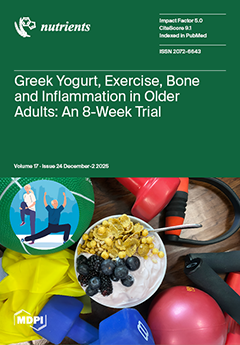
Cover Story (view full-size image):
Order results
Result details
Section
Select all
Export citation of selected articles as:
17 pages, 801 KB  
Review
Long-Term Effects of Multiple-Micronutrient Supplementation During Pregnancy, Lactation, and Early Childhood on the Cognitive Development of Children Aged 4–14 Years: A Systematic Review of Randomized Controlled Trials
by Arnold William, Carl Lachat, Dimitrios Petalios, Alice Deshons, Kokeb Tesfamariam Hadush, Mélanie Broin and Souheila Abbeddou
Nutrients 2025, 17(24), 3966; https://doi.org/10.3390/nu17243966 - 18 Dec 2025
Viewed by 769
Abstract
Background: Inadequate nutrition, poor health care, and limited stimulation constrain early childhood development and cognitive potential. Micronutrient deficiencies during pregnancy and early life are prevalent in low- and middle-income countries (LMICs) and may impair cognitive outcomes. Maternal multiple-micronutrient (MMN) and point-of-use micronutrient powder [...] Read more.
Background: Inadequate nutrition, poor health care, and limited stimulation constrain early childhood development and cognitive potential. Micronutrient deficiencies during pregnancy and early life are prevalent in low- and middle-income countries (LMICs) and may impair cognitive outcomes. Maternal multiple-micronutrient (MMN) and point-of-use micronutrient powder (MNP) supplements improve birth outcomes and iron status, but their long-term cognitive impact remains unclear. This systematic review assessed the long-term impact of maternal MMN and early-childhood MNP supplementation on cognitive development among children aged 4–14 years in LMICs. Method: Following PRISMA guidelines (PROSPERO CRD42023459846), (cluster) randomized controlled trials were identified from six databases and gray literature (October 2023; updated July 2025). Records were managed in EndNote and screened in Covidence, and data were synthesized using Review Manager. Eligible studies examined MMN or MNP interventions during pregnancy, lactation, or early childhood, reporting cognitive, motor, or socio-emotional outcomes in children aged 4–14. Results: Ten studies met the inclusion criteria: six on maternal supplementation, three on early childhood interventions, and one combining both. Most were conducted in Asia, with one in Tanzania and one in Peru. Although most findings were not statistically significant, two large UNIMMAP-based trials indicated modest long-term improvements in procedural memory and intelligence, while one early childhood point-of-use MNP trial suggested enhanced pre-academic skills. Conclusions: Maternal MMN supplementation may modestly enhance specific domains of cognitive development, whereas evidence on the long-term effects of MMN and point-of-use MNPs on cognitive development remain limited, highlighting the necessity for further research. Full article
Show Figures

Figure 1

21 pages, 974 KB  
Systematic Review
Fish Consumption and the Risk of Depression: A Systematic Review and Meta-Analysis of Observational Studies
by Eunje Kim and Youjin Je
Nutrients 2025, 17(24), 3965; https://doi.org/10.3390/nu17243965 - 18 Dec 2025
Viewed by 650
Abstract
Background/Objectives: This systematic review and meta-analysis of observational studies aimed to assess the association between fish consumption and the risk of general and pregnancy-related depression, with implications for public health promotion. Methods: We retrieved 5074 articles from PubMed and Embase through [...] Read more.
Background/Objectives: This systematic review and meta-analysis of observational studies aimed to assess the association between fish consumption and the risk of general and pregnancy-related depression, with implications for public health promotion. Methods: We retrieved 5074 articles from PubMed and Embase through November 2023 and included 35 observational studies in the analysis. We synthesized effect estimates as relative risks (RRs) with corresponding 95% confidence intervals (CIs) using a random-effects model. Additional dose–response analyses and stratified subgroup analyses were performed. Results: A significant inverse association was found between fish consumption and depression risk (RR = 0.79, 95% CI: 0.73 to 0.86). A similar association was observed for pregnancy-related depression (RR = 0.78, 95% CI: 0.69–0.89). Stratified analyses showed that only studies with fish intake ≥ 68.4 g/day demonstrated a statistically significant reduction in depression risk (RR = 0.75, 95% CI: 0.67–0.84), whereas studies with lower intake (<68.4 g/day) showed no significant association (RR = 0.83, 95% CI: 0.69–1.01), suggesting a potential threshold effect. Dose–response analysis further supported a 6% reduction in depression risk per 15 g/day increase in fish intake. Conclusions: This meta-analysis supports fish consumption as a modifiable factor for depression prevention, with ≥68.4 g/day as a possible threshold, potentially informing dietary guidelines and public health strategies. Full article
(This article belongs to the Section Nutritional Epidemiology)
Show Figures

Figure 1

17 pages, 272 KB  
Article
Rapid Weight Reduction in Judo: Dietary Practices and Short-Term Health Effects
by Wiktoria Staśkiewicz-Bartecka, Paulina Ziomek, Daria Dobkowska-Szefer, Ewa Malchrowicz-Mośko and Paweł Tomaszewski
Nutrients 2025, 17(24), 3964; https://doi.org/10.3390/nu17243964 - 18 Dec 2025
Viewed by 658
Abstract
Background: Rapid weight loss (RWL) is a widespread practice among judo athletes seeking to compete in lower weight categories. Restrictive nutritional and behavioral strategies used to achieve short-term reductions in body mass may impair physiological and psychological functioning. This study aimed to assess [...] Read more.
Background: Rapid weight loss (RWL) is a widespread practice among judo athletes seeking to compete in lower weight categories. Restrictive nutritional and behavioral strategies used to achieve short-term reductions in body mass may impair physiological and psychological functioning. This study aimed to assess dietary behaviors, weight-cutting methods, and short-term physical and psychological effects of RWL among competitive judo athletes. Methods: A cross-sectional study was conducted between August and December 2024 among 70 judo athletes (17 women, 53 men) competing at national and international levels. Data were collected using an author-designed questionnaire addressing anthropometric variables, training history, RWL strategies, dietary restrictions, hydration manipulation, and post-weigh-in eating behaviors. Physical and psychological symptoms were assessed using frequency-based self-report measures. Results: Most athletes (95.7%) reported engaging in RWL, typically beginning between ages 13 and 16 years (65.7%). Athletes reduced an average of 3.64 ± 1.74 kg (2–5% of body mass). Common strategies included decreasing meal frequency (74.29%), increasing training load (72.86%), restricting fluids (68.57%), and using saunas (62.86%). Reported physical symptoms included weakness (71.43%), headaches (51.43%), and dizziness (45.71%), while psychological symptoms included irritability (57.14%), reduced motivation (40%), and tension (38.57%). Post-weigh-in binge eating occurred in 65.71% of athletes and was significantly associated with higher RWL magnitude (p < 0.05). Discomfort during competition related to overeating (55.71%) or insufficient intake (41.43%) was also frequent. Conclusions: RWL is highly prevalent among judo athletes and often begins early in training history. The strategies used are associated with adverse physical and psychological symptoms and maladaptive compensatory behaviors. These findings highlight the need for evidence-based nutritional education and individualized weight-management approaches to support athlete health and performance. Full article
18 pages, 295 KB  
Article
Use of Weight Loss Supplements According to the Purported Mechanisms of Action Among Polish Adults Living in an Obesogenic Environment: The Role of Sociodemographic and Health-Related Factors
by Paulina M. Nowaczyk, Krzysztof Durkalec-Michalski, Adrian Lubowiecki-Vikuk and Adam Kantanista
Nutrients 2025, 17(24), 3963; https://doi.org/10.3390/nu17243963 - 18 Dec 2025
Viewed by 1112
Abstract
Background/Objectives: Weight loss supplements (WLS) are popular dietary agents; however, their effectiveness is rarely supported by scientific-based evidence. This cross-sectional study aimed to identify the types of WLS used among adult Poles in relation to sociodemographic factors, anthropometric indices, and physical activity [...] Read more.
Background/Objectives: Weight loss supplements (WLS) are popular dietary agents; however, their effectiveness is rarely supported by scientific-based evidence. This cross-sectional study aimed to identify the types of WLS used among adult Poles in relation to sociodemographic factors, anthropometric indices, and physical activity (PA). Methods: The study was conducted among 1071 adults aged 19–80 years in Świętochłowice, a region in Poland with a high rate of overweightness and obesity. Body mass index (BMI), waist-to-hips ratio, and weight-to-height ratio were calculated. Fat mass percentage was assessed. Data on PA level and the use of WLS were collected via a face-to-face questionnaire. Results: Nearly 70% respondents declared consumption of WLS, including 486 females and 259 males. Among WLS consumers, 43.4% had normal BMI, and 6.3% were underweight. The most popular WLS were supplements aiming at enhancing thermogenesis (38.0% of WLS consumers), followed by WLS decreasing appetite (15.0%) and blocking dietary fat absorption (13.0%). Sociodemographic factors (sex, age, marital status, education and financial status) were strong determinants of using particular types of WLS. Mean values of anthropometric indices and PA level were different among consumers of various WLS. Conclusions: WLS use was common, including among individuals without overweightness/obesity, or cardiometabolic risk. Extensive educational programs and legislation are essential to promote justified, rational, effective, and safe methods for reducing excessive body mass. Full article
Show Figures

Graphical abstract

16 pages, 1552 KB  
Review
S-Equol as a Gut-Derived Phytoestrogen Targeting Estrogen Receptor β: A Promising Bioactive Nutrient for Bone Health in Aging Women and Men: A Narrative Review
by Akira Sekikawa, Ashley Weaver, Kelly Mroz, Nina Z. Heilmann, Diana A. Madrid Fuentes, Kristen J. Koltun, Lauren J. Carlson, Kristin L. Cattell, Mengyi Li, Jiatong Li, Timothy M. Hughes, Elsa Strotmeyer, Bradley Nindl and Jane A. Cauley
Nutrients 2025, 17(24), 3962; https://doi.org/10.3390/nu17243962 - 18 Dec 2025
Viewed by 609
Abstract
Background/Objectives: Osteoporosis is highly prevalent and contributes substantially to morbidity and mortality, yet long-term concerns about pharmacologic therapies leave a major treatment gap. Soy isoflavones have been investigated as safer alternatives, but results across trials are inconsistent. A key unresolved issue is [...] Read more.
Background/Objectives: Osteoporosis is highly prevalent and contributes substantially to morbidity and mortality, yet long-term concerns about pharmacologic therapies leave a major treatment gap. Soy isoflavones have been investigated as safer alternatives, but results across trials are inconsistent. A key unresolved issue is the equol-producer phenotype, the gut microbial ability to convert daidzein to S-equol, the most bioactive isoflavone metabolite, which may explain much of this variability. This narrative review synthesizes mechanistic, translational, and clinical evidence to clarify the potential skeletal relevance of S-equol. Methods: Literature was identified through PubMed and Scopus searches (January 2000–October 2025) for experimental, mechanistic, and clinical studies examining S-equol, estrogen receptor β (ERβ), and bone metabolism, with emphasis on equol-producing status, bone strength and bone microarchitecture. Results: S-equol acts as a high-affinity ERβ agonist with antioxidant and anti-inflammatory properties but lacks the carcinogenic or thrombotic risks linked to ERα activation. In estrogen-deficient rodent models, S-equol improves trabecular bone volume by 10–20%, increases trabecular number, and enhances biomechanical strength. These findings align with preclinical evidence demonstrating that S-equol preserves trabecular microarchitecture, enhances bone strength, and reduces bone turnover. A limited number of human trials show reductions in bone resorption by 20% at a daily dose of 10 mg S-equol. In contrast, trials of soy isoflavones in humans have produced inconsistent findings, partly because of substantial variability in equol-producer phenotype among participants and the reliance on dual-energy X-ray absorptiometry, which cannot distinguish trabecular from cortical compartments. Advanced bone imaging and microbiome-informed approaches enable the precise evaluation of S-equol’s skeletal effects on trabecular bone and cortical bone, separately. Conclusions: S-equol represents a promising model for “precision nutrition,” where microbiome, hormonal, and host factors converge with potential to prevent age-related bone fragility. Rigorous trials that integrate microbiome phenotyping and advanced imaging are needed to validate this approach, translate mechanistic promise into clinical benefit, and better define safety. Full article
(This article belongs to the Special Issue Bone-Health-Promoting Bioactive Nutrition)
Show Figures

Figure 1

26 pages, 920 KB  
Review
Pioneering Insights into the Complexities of Salt-Sensitive Hypertension: Central Nervous System Mechanisms and Dietary Bioactive Compound Interventions
by Renjun Wang, Bo Xu, Xiping Liu, Qi Guo, Gregory Miodonski, Zhiying Shan, Dongshu Du and Qing-Hui Chen
Nutrients 2025, 17(24), 3961; https://doi.org/10.3390/nu17243961 - 18 Dec 2025
Viewed by 525
Abstract
Salt-sensitive hypertension (SSH) is an important and common subtype of hypertension, whose pathogenesis involves multi-level regulation, including the central nervous system (CNS), metabolic stress, and epigenetics. Dietary bioactive compounds have emerged as a research hotspot for SSH intervention due to their safety and [...] Read more.
Salt-sensitive hypertension (SSH) is an important and common subtype of hypertension, whose pathogenesis involves multi-level regulation, including the central nervous system (CNS), metabolic stress, and epigenetics. Dietary bioactive compounds have emerged as a research hotspot for SSH intervention due to their safety and multi-target effects. Although existing studies have focused on the CNS regulation of SSH or the role of individual dietary components, there is a lack of comprehensive analysis integrating multiple mechanisms, systematically summarizing multiple compounds, and incorporating a clinical translation perspective. This review first outlines the mechanisms of CNS pathways, endoplasmic reticulum (ER) stress, mitochondrial dysfunction, and epigenetic modifications in SSH. Then, it systematically reviews the mechanisms of action and preclinical and clinical research progress of bioactive compounds, including capsaicin, taurine, gamma-aminobutyric acid, tea, and anthocyanins in SSH. In summary, this review systematically clarifies the complex regulatory network of SSH and the intervention potential of dietary bioactive compounds from an integrated perspective, innovatively proposes a precise dietary intervention framework, and fills the research gaps in the integration of multiple mechanisms and systematic evaluation of compounds in existing studies. This framework not only provides a new integrated perspective for the basic research of SSH but also offers key references for clinical dietary guidance, functional food development, and the formulation of targeted intervention strategies. Full article
Show Figures

Figure 1

25 pages, 633 KB  
Review
Beyond Calories: Addressing Micronutrient Deficiencies in the World’s Most Vulnerable Communities—A Review
by James Ayokunle Elegbeleye, Olanrewaju E. Fayemi, Wisdom Selorm Kofi Agbemavor, Srinivasan Krishnamoorthy, Olalekan J. Adebowale, Adeyemi Ayotunde Adeyanju, Busisiwe Mkhabela and Oluwaseun Peter Bamidele
Nutrients 2025, 17(24), 3960; https://doi.org/10.3390/nu17243960 - 18 Dec 2025
Viewed by 904
Abstract
Micronutrient deficiencies, also known as “hidden hunger,” remain a pervasive public health issue in low- and middle-income countries, particularly among vulnerable populations within these countries. The main drivers of these deficiencies are poverty, limited dietary diversity, weak nutritional strategies, poor health service delivery [...] Read more.
Micronutrient deficiencies, also known as “hidden hunger,” remain a pervasive public health issue in low- and middle-income countries, particularly among vulnerable populations within these countries. The main drivers of these deficiencies are poverty, limited dietary diversity, weak nutritional strategies, poor health service delivery and general health access barriers. This review assesses the prevalence, drivers, and consequences of selected micronutrient deficiencies: iron, iodine, zinc, vitamin A and vitamin D, within the scope of undernutrition, food insecurity, and socioeconomic inequity. The consequences associated with these deficiencies include stunted growth, increased susceptibility to illness, poor cognitive and social functioning, and deepened poverty. The primary strategies to address these deficiencies include dietary diversification, supplement provision, biofortification, and the production of fortified foods. Barriers to progress include the high cost of food, weak healthcare infrastructure, low educational levels, and ineffective policy implementation. Integrated food systems, personalised nutrition, and innovative food technologies have the potential to address both nutritional and health inequities. Addressing barriers to safe and nutritious food and healthcare systems in order to address health inequities requires integrated, multisectoral planning and contextual policy. Improving individual health outcomes is crucial, but addressing micronutrient deficiencies has a ripple effect throughout society, enabling economic development through poverty reduction and increased productivity. Full article
(This article belongs to the Section Micronutrients and Human Health)
Show Figures

Figure 1

17 pages, 1211 KB  
Article
Effects of Coenzyme Q10 Supplementation on Physical Function Adaptations to High-Intensity Interval Training in Older Adults
by Navid Bagheri, Mehdi Kargarfard, Reza Bagheri and Frédéric Dutheil
Nutrients 2025, 17(24), 3959; https://doi.org/10.3390/nu17243959 - 18 Dec 2025
Viewed by 1418
Abstract
Objectives: This study investigated whether CoQ10 supplementation enhances physical adaptations to high-intensity interval training (HIIT) in muscular strength, power, and physical function in older adults. Method: In a double-blind, randomized controlled trial, 38 adults aged 65–75 were assigned to either a CoQ10 (Females: [...] Read more.
Objectives: This study investigated whether CoQ10 supplementation enhances physical adaptations to high-intensity interval training (HIIT) in muscular strength, power, and physical function in older adults. Method: In a double-blind, randomized controlled trial, 38 adults aged 65–75 were assigned to either a CoQ10 (Females: 8; Males: 11) or placebo (Females: 8; Males: 11) group and completed an 8-week supervised HIIT program. Lower- and upper-body strength (30s 5-repetition chair stand [5XSST], chair standing [30CST], handgrip strength [HGR/L]), balance (single-leg stand [SLS], timed up and go [TUG]), mobility (25-foot walk [25FW]), and aerobic endurance (6-minute walk [6MWT]) were assessed pre- and post-intervention. Results: The CoQ10 group demonstrated significantly greater improvements in 5XSST and 30CST compared to the placebo group (p < 0.05). Both groups showed significant within-group improvements in right and left handgrip strength, SLS, 6MWT, and TUG (all p < 0.001), with no significant between-group differences observed for these outcomes (p > 0.05). No adverse events were reported. Conclusion: While CoQ10 supplementation enhanced improvements in lower-body strength and power, as indicated by the greater gains in 5XSST and 30CST performance compared to the placebo, no between-group differences were observed in TUG, grip strength, or other functional outcomes. This suggests that the performance-related effects of CoQ10 may be more specific to muscular power output and fatigue resistance, rather than general mobility or balance-related tasks. These findings highlight the potential of CoQ10 as a targeted adjunct in exercise for supporting lower-body function and physical performance in older adults. Full article
Show Figures

Figure 1

29 pages, 43421 KB  
Article
From Microbiota to Metabolomics: How Corylus heterophylla Fisch. Male Flower Extract Shields Mice from Cognitive Decline
by Wei Lu, Yujie Li, Xinyuan Liao, Han Hu, Bolin Zhang, Lisong Liang and Haina Gao
Nutrients 2025, 17(24), 3958; https://doi.org/10.3390/nu17243958 - 18 Dec 2025
Cited by 1 | Viewed by 381
Abstract
Background/Objectives: Emerging evidence suggests that hippocampal neuroinflammation (HNF) drives cognitive decline via dysregulation of the microbiota-gut-brain axis. Corylus heterophylla Fisch. male flower extract (CFE), a flavonoid-rich by-product of hazelnut processing, presents a promising yet unexplored neuroprotective candidate. This study investigated the preventive effects [...] Read more.
Background/Objectives: Emerging evidence suggests that hippocampal neuroinflammation (HNF) drives cognitive decline via dysregulation of the microbiota-gut-brain axis. Corylus heterophylla Fisch. male flower extract (CFE), a flavonoid-rich by-product of hazelnut processing, presents a promising yet unexplored neuroprotective candidate. This study investigated the preventive effects and mechanisms of CFE against HNF-induced cognitive decline. Methods: In the present study, mice were pretreated with CFE (200 mg/kg) before the Lipopolysaccharide (LPS) administration. Cognitive function, inflammation, core pathology, neuroplasticity, gut microbiota and serum metabolites were assessed. The chemical composition of CFE was analyzed by UHPLC-MS and its direct immunomodulatory effects were investigated in BV2 cells. Results: Behavioral assessments demonstrated significant therapeutic efficacy. This was evidenced by the recovery from hippocampal damage, accompanied by reduced levels of core pathological markers (Aβ1–42, Tau, p-Tau (Ser404), GSK-3β), decreased expression of pro-inflammatory mediators including IL-33, elevated levels of neurotrophic factors (BDNF and MAP2), and attenuated abnormal activation of astrocytes and microglia. The 16S rRNA analysis confirmed that CFE ameliorated gut microbial dysbiosis. Notably, CFE significantly increased the relative abundance of Muribaculaceae and Lachnospiraceae, while significantly decreased Staphylococcus and Helicobacter. Metabolomics revealed enhanced levels of α-linolenic acid (ALA), serotonin (5-HT) and acetic acid, which correlated positively with Muribaculaceae and Lachnospiraceae. Phytochemical analysis identified luteolin and kaempferol as the predominant flavonoids in CFE. In BV2 cells, CFE, luteolin and kaempferol shifted microglial polarization from the M1 phenotype toward the M2 phenotype. Conclusions: CFE alleviated HNF-induced cognitive decline by regulating microbiota-gut-brain axis and microglial M1/M2 polarization. Full article
(This article belongs to the Special Issue Effects of Plant Extracts on Human Health—2nd Edition)
Show Figures

Figure 1

18 pages, 1483 KB  
Article
Guideline Compliance of Artificial Intelligence–Generated Diet Plans After Bariatric Surgery: A Cross-Sectional Simulation Comparing ChatGPT-4o, DeepSeek and Grok-3
by Aylin Bolat Yilmaz, Emre Batuhan Kenger, Tugce Ozlu Karahan, Duygu Saglam and Murat Bas
Nutrients 2025, 17(24), 3957; https://doi.org/10.3390/nu17243957 - 18 Dec 2025
Viewed by 616
Abstract
Background/Objectives: Artificial intelligence (AI)-based tools are increasingly being used in tailored nutrition management, and evaluating their compliance with guidelines is significant in clinically sensitive areas, including bariatric surgery. This study aimed to investigate the extent to which diet plans recommended by AI [...] Read more.
Background/Objectives: Artificial intelligence (AI)-based tools are increasingly being used in tailored nutrition management, and evaluating their compliance with guidelines is significant in clinically sensitive areas, including bariatric surgery. This study aimed to investigate the extent to which diet plans recommended by AI models in the early period following sleeve gastrectomy (SG) align with current clinical nutrition guidelines (ASMBS, AACE/TOS). Methods: A total of 360 menu plans were generated using three AI platforms—ChatGPT-4o, DeepSeek V3, and Grok-3—for 40 simulated patients (20 females, 20 males; BMI 32–45 kg/m2) across three postoperative stages: liquid (day 5), puree (day 16), and solid (day 35). The energy and nutrient contents of the menus were analyzed using BeBiS 8.1; an experienced dietitian assessed compliance with the guidelines using a structured checklist. Nutrient intakes and guideline compliance scores were examined using within-patient Friedman tests followed by Bonferroni-adjusted pairwise comparisons. Results: ChatGPT-4o demonstrated the highest overall compliance scores, particularly in the liquid and puréed phases, while DeepSeek produced higher values for several micronutrients. All models showed substantial gaps in essential postoperative recommendations, most notably thiamine and multivitamin supplementation. Conclusions: Although LLMs can generate partially guideline-concordant postoperative diet plans, they consistently omit several critical elements of bariatric nutrition care. These findings indicate that LLM-generated menus may serve as supportive educational tools, and diet planning must be performed under the guidance of a specialist dietitian. This simulation does not assess clinical safety, efficacy, or patient outcomes and should not be used as a substitute for dietitian-led postoperative nutrition care. Full article
Show Figures

Figure 1

15 pages, 598 KB  
Article
Hair Silicon as a Long-Term Mineral Exposure Marker in Coronary Artery Disease: A Pilot Study
by Ewelina A. Dziedzic, Łukasz Dudek, Andrzej Osiecki, Jakub S. Gąsior and Wacław Kochman
Nutrients 2025, 17(24), 3956; https://doi.org/10.3390/nu17243956 - 18 Dec 2025
Viewed by 490
Abstract
Background: Coronary artery disease (CAD) is a multifactorial atherosclerotic disorder. Silicon (Si) is a trace mineral with potential antioxidant, anti-inflammatory, and lipid-modulating effects, but its clinical relevance in cardiovascular disease remains unclear. This study evaluated whether hair Si concentration—reflecting long-term exposure—is associated [...] Read more.
Background: Coronary artery disease (CAD) is a multifactorial atherosclerotic disorder. Silicon (Si) is a trace mineral with potential antioxidant, anti-inflammatory, and lipid-modulating effects, but its clinical relevance in cardiovascular disease remains unclear. This study evaluated whether hair Si concentration—reflecting long-term exposure—is associated with CAD severity, clinical phenotype, risk factors, and systemic inflammation. Methods: A total of 130 patients with angiographically confirmed CAD (N = 36, 28% women) who met the inclusion criteria were enrolled. Disease severity was quantified using the Coronary Artery Surgery Study Score (CASSS) and SYNTAX score. Hair Si concentration was determined by inductively coupled plasma optical emission spectrometry (ICP-OES). Associations with demographic, clinical, biochemical, and inflammatory parameters were analyzed using non-parametric tests and multivariable ordinal logistic regression. Results: Median hair Si concentration was 21.3 ppm (range: 0.7–211.0). Hair Si levels showed no significant differences across CAD severity assessed by CASSS (H = 2.51; p = 0.47) or SYNTAX score (r = 0.079; p = 0.37). Similarly, no differences were observed between patients with stable angina and those presenting with acute coronary syndrome (p = 0.57) or between individuals with and without prior myocardial infarction. Hair Si concentration was unrelated to age, BMI, cardiovascular risk factors, lipid profile, or systemic inflammatory indices (all p > 0.2). Conclusions: Hair silicon concentration was not associated with CAD severity, phenotype, or systemic inflammation, suggesting that long-term Si exposure is metabolically neutral in advanced atherosclerosis. Unlike other minerals, silicon appears unlikely to serve as a diagnostic or prognostic biomarker in CAD, although its relevance may be confined to early vascular remodeling and primary prevention. Full article
(This article belongs to the Special Issue Vitamins, Minerals, and Cardiometabolic Health)
Show Figures

Figure 1

4 pages, 173 KB  
Editorial
Cardiovascular Nutrition Beyond BMI: Integrating Malnutrition Assessment with Inflammation
by Joanna Popiolek-Kalisz and Grzegorz Kalisz
Nutrients 2025, 17(24), 3955; https://doi.org/10.3390/nu17243955 - 18 Dec 2025
Viewed by 349
Abstract
The constant advances being made in cardiovascular (CVD) medicine highlight its holistic nature, drifting away from strict traditional approaches [...] Full article
(This article belongs to the Special Issue Nutritional Aspects of Cardiovascular Disease Risk Factors)
52 pages, 1072 KB  
Systematic Review
Beetroot Juice Supplementation as a Healthy Aging Strategy Through Improving Physical Performance and Cognitive Functions: A Systematic Review
by Anna Nowak, Angelika Szymańska, Magdalena Kwaśniewska, Ewa Kochan and Anna Lipert
Nutrients 2025, 17(24), 3954; https://doi.org/10.3390/nu17243954 - 17 Dec 2025
Viewed by 2136
Abstract
Background: Findings show that beetroot-derived nitrates can improve endurance, oxygen efficiency, muscular power, recovery and cardiovascular function, particularly in recreationally active or moderately trained individuals. However, results are mixed in elite athletes, likely due to their already optimized nitric oxide utilization. Cognitive function [...] Read more.
Background: Findings show that beetroot-derived nitrates can improve endurance, oxygen efficiency, muscular power, recovery and cardiovascular function, particularly in recreationally active or moderately trained individuals. However, results are mixed in elite athletes, likely due to their already optimized nitric oxide utilization. Cognitive function is a crucial aspect of athletic performance enabling athletes to adapt to dynamic environments and execute skills effectively, but evidence for cognitive benefits of nitrate-rich beetroot supplementation is limited and inconsistent. The combination of improved physical activity and cognitive functions contribute to overall healthy aging and extending life expectancy. This highlights the synergistic role of nutrition, exercise and mental agility in promoting long-term well-being. Methods: The literature review was conducted to summarize and systematize existing evidence on beetroot juice supplementation on physical performance and cognitive function in both, healthy adult population and athletes. Results: Overall, beetroot supplementation demonstrates strong potential as a natural ergogenic aid for enhancing physical performance, but current evidence on cognitive improvement remains inconclusive. Conclusions: Further research, particularly involving female or elite athletes, is needed to establish clear recommendations of beetroot juice supplementation as a supportive element of exercise capacity and cognitive abilities contributing to maintaining health and thus healthy aging. Full article
(This article belongs to the Special Issue The Role of Healthy Eating and Physical Activity in Longevity)
Show Figures

Figure 1

19 pages, 1003 KB  
Article
Carbohydrate Reduction and a Holistic Model of Care in Diabetes Management: Insights from a Retrospective Multi-Year Audit in New Zealand
by Caryn Zinn, Jessica L. Campbell, Lily Fraser, Glen Davies, Marcus Hawkins, Olivia Currie, Jared Cannons, David Unwin, Catherine Crofts, Tom Stewart and Grant Schofield
Nutrients 2025, 17(24), 3953; https://doi.org/10.3390/nu17243953 - 17 Dec 2025
Viewed by 2356
Abstract
Background/Objectives: The global epidemic of type 2 diabetes (T2D) is a critical public health issue, particularly in New Zealand, where prevalence rates are high, especially among Māori and Pacific people. Recent research indicates that dietary interventions, particularly carbohydrate reduction, can lead to the [...] Read more.
Background/Objectives: The global epidemic of type 2 diabetes (T2D) is a critical public health issue, particularly in New Zealand, where prevalence rates are high, especially among Māori and Pacific people. Recent research indicates that dietary interventions, particularly carbohydrate reduction, can lead to the remission or reversal of T2D. However, little is known about how such approaches perform when implemented in routine New Zealand primary care, particularly within high-risk and underserved populations. This study aimed to evaluate changes in HbA1c, diabetes status, and cardiometabolic outcomes among adults with prediabetes and T2D engaged in such a model of care. Methods: This study reports findings from a retrospective, observational, real-world, multi-site clinical audit (service evaluation) of a holistic model of care implemented in three primary care practices in New Zealand. The model of care is characterised by a three-pronged approach: whole food, carbohydrate reduction; a health-coach, behaviour-change-based delivery approach; and community- or peer-based initiatives. Audit data from 106 patients with prediabetes (PD) and T2D were analysed (median follow-up 19 months; IQR 6–32) to assess changes in glycosylated haemoglobin (HbA1c) levels, diabetes status, and cardiometabolic outcomes. Results: We observed an overall reduction in HbA1c (median change −3 mmol/mol (IQR: −7 to 3), p = 0.004), with 32% of patients with T2D at baseline achieving reversal and 44% of those with PD attaining normoglycaemia at final follow-up. Weight loss was associated with greater HbA1c reduction (0.56 mmol/mol decrease per kg lost) and additional improvements seen in lowered alanine aminotransferase (ALT). HDL cholesterol showed a small decline (r = 0.31), and triglycerides and blood pressure showed no significant change, indicating that these measures remained broadly stable over the evaluation period. Conclusions: Given the retrospective and uncontrolled audit design, findings should be interpreted with appropriate caution. However, the consistent improvements observed across multiple practices suggest that carbohydrate-reduction strategies within holistic models of care can meaningfully improve diabetes outcomes in real-world primary care settings. Future research should evaluate longer-term sustainability, implementation fidelity, and the applicability of this model at scale, particularly for Māori and Pacific communities. Full article
(This article belongs to the Section Clinical Nutrition)
Show Figures

Figure 1

30 pages, 4821 KB  
Systematic Review
Dietary Supplement Interventions and Sleep Quality Improvement: A Systematic Review and Meta-Analysis
by Meijuan Mei, Qiya Zhou, Wenting Gu, Feifei Li, Ruili Yang, Hongtao Lei and Chunhong Liu
Nutrients 2025, 17(24), 3952; https://doi.org/10.3390/nu17243952 - 17 Dec 2025
Viewed by 2023
Abstract
Background/Objectives: Sleep health impacts numerous domains of human health, and sleep deprivation has emerged as a significant public health concern. Multiple types of dietary nutrient supplementation, dietary intake, and the use of nutritional supplements to enhance sleep quality are recognized as effective methods [...] Read more.
Background/Objectives: Sleep health impacts numerous domains of human health, and sleep deprivation has emerged as a significant public health concern. Multiple types of dietary nutrient supplementation, dietary intake, and the use of nutritional supplements to enhance sleep quality are recognized as effective methods to improve sleep quality. Methods: We aim to systematically evaluate the efficacy of dietary supplement interventions in sleep quality improvement across populations with sleep disorders and healthy individuals. We conducted a comprehensive literature search across PubMed, Web of Science, CNKI, ScienceDirect, Wiley, and CVIP databases. Sleep evaluation metrics included the Pittsburgh Sleep Quality Index (PSQI), sleep efficiency (SE), sleep latency (SL), total sleep time (TST), wake after sleep onset (WASO), and number of awake after sleep onset (NASO). Meta-analysis procedures were executed in Review Manager 5.3 and Stata 17.0, with heterogeneity quantified via I2 statistics. Results: This study, in total, included 28 randomized controlled trials. This meta-analysis’s results suggest dietary interventions significantly improved sleep outcomes: reduced PSQI (MD: −0.70, 95% CI: −1.37 to −0.03, p < 0.05), increased SE (+2.58 min, 95% CI: 2.01–3.16, p < 0.00001), prolonged TST (SMD: +0.23, 95% CI: 0.04–0.43, p < 0.05), and shortened SL (SMD: −0.24, 95% CI: −0.37 to −0.10) and WASO (SMD: −0.30, 95% CI: −0.48 to −0.12) (both p < 0.001). NASO showed a marginal reduction (MD: −1.57, 95% CI: −3.16 to 0.02, p = 0.05). Conclusions: These findings suggest that tryptophan, vitamin D, omega-3, zinc, and antioxidants may enhance sleep quality by decreasing SL, and WASO increases SE and extends TST, respectively. Full article
(This article belongs to the Section Nutrition and Public Health)
Show Figures

Figure 1

11 pages, 236 KB  
Article
Assessment of Functional Status in Patients with Multiple Sclerosis Based on the Inflammatory Potential of Their Diet
by Sofía Fernández-Godino, Irene Cabrera-Martos, Alejandro Heredia-Ciuró, Araceli Ortiz-Rubio, María Granados-Santiago and Marie Carmen Valenza
Nutrients 2025, 17(24), 3951; https://doi.org/10.3390/nu17243951 - 17 Dec 2025
Viewed by 260
Abstract
Background: Multiple sclerosis (MS) is a chronic, inflammatory, and demyelinating disease of the central nervous system that predominantly affects young adults, particularly women, and is associated with progressive disability and a wide range of symptoms that impair functionality and quality of life. Recent [...] Read more.
Background: Multiple sclerosis (MS) is a chronic, inflammatory, and demyelinating disease of the central nervous system that predominantly affects young adults, particularly women, and is associated with progressive disability and a wide range of symptoms that impair functionality and quality of life. Recent research suggests that diet, especially its inflammatory potential, may influence the clinical course of the disease. We hypothesize that patients following a proinflammatory dietary pattern will exhibit poorer functional outcomes than those following an anti-inflammatory diet. Methods: An observational preliminary study was conducted, including 19 patients. Dietary inflammatory potential was assessed using the Dietary Inflammatory Index (DII), while functional status was measured with the Functional Assessment of MS (FAMS) scale. Results: Participants were divided into two groups according to their DII score: a group following a more pro-inflammatory diet (n = 10; 80% female; mean age 49.60 ± 10.63 years) and a group following a more anti-inflammatory diet (n = 9; 44.4% female; mean age 49.00 ± 10.79 years). The results show that patients with a proinflammatory dietary profile reported a higher symptom burden (FAMS symptoms score 20.70 ± 5.48 vs. 14.44 ± 7.05, p = 0.044), including greater fatigue as well as musculoskeletal and gastrointestinal complaints. In contrast, patients with an anti-inflammatory dietary profile reported fewer symptoms, greater energy and vitality, and higher intake of anti-inflammatory nutrients such as fiber, magnesium, and vitamin B6. No other significant between-group differences were observed. Conclusions: These findings suggest that dietary interventions aimed at reducing inflammation may improve functionality and quality of life in persons with MS. However, given the limited sample size, larger multicenter longitudinal studies are required to confirm these results. The findings of this study may provide preliminary evidence to inform future research. Full article
(This article belongs to the Special Issue Diet, Inflammation and Metabolic Complications)
16 pages, 819 KB  
Article
Associations Between the Food Environment and Food Insecurity on Fruit, Vegetable, and Nutrient Intake, and Body Mass Index, Among Urban-Dwelling Latina Breast Cancer Survivors Participating in the ¡Mi Vida Saludable! Trial
by Zachary O. Kadro, Eileen Rillamas-Sun, Blake O. Langley, Allison Meisner, Isobel Contento, Pamela A. Koch, Ann Ogden Gaffney, Dawn L. Hershman and Heather Greenlee
Nutrients 2025, 17(24), 3950; https://doi.org/10.3390/nu17243950 - 17 Dec 2025
Viewed by 305
Abstract
Background: Socioeconomic disparities may drive cancer inequities in Hispanic/Latino populations. We examined associations of perceived access to healthy foods (AHF) and food insecurity (FI) with diet and body mass index (BMI) changes in Latina breast cancer (BC) survivors. Methods: Latina BC [...] Read more.
Background: Socioeconomic disparities may drive cancer inequities in Hispanic/Latino populations. We examined associations of perceived access to healthy foods (AHF) and food insecurity (FI) with diet and body mass index (BMI) changes in Latina breast cancer (BC) survivors. Methods: Latina BC survivors in a 12-month intervention trial aiming to increase fruit/vegetable intake and physical activity were analyzed. AHF was from a modified, validated neighborhood environment scale and dichotomized (low–medium vs. high). FI was defined as eating less and/or going hungry due to a lack of money. AHF and FI surveys were self-reported. Outcomes included dietary intake, diet quality, and BMI. Fruit/vegetable intake was log-transformed. Relationships between AHF and FI and changes in diet and BMI were evaluated using generalized estimating equations. Results: Of women with AHF data (n = 86), 58% reported low–medium access and 42% reported high access. Fruit/vegetable (FV) intake declined overall from baseline to 12 months, with greater reductions among low–medium AHF women (−32%, 95% CI: −51%, −7%) compared with high AHF women (−17%, 95% CI: −40%, +13%). Statistically significant 12-month decreases in total calories, carbohydrates, sugars, and fat occurred in low–medium AHF women but not high AHF women, and changes in total energy density, carbohydrates, sugars, and BMI at 12 months were statistically significantly different between women with low–medium AHF and women with high AHF, p ≤ 0.05. Among 157 women, 23% reported FI. Reductions in fruit/vegetable intake were larger in women with FI (−39%, 95% CI: −57%, −14%) than in women without FI (−10% reductions, 95% CI: −25%, +8%) and between-group differences were significant at both 6 and 12 months, p ≤ 0.05. Most diet measures decreased for both FI and non-FI women, with greater decreases among those with FI. Conclusions: Latina BC survivors with FI or perceived limited AHF experienced greater declines in indicators of healthy diets including FV intake. Future interventions should integrate strategies to measure AHF and FI to address disparate access to healthy food options. Full article
(This article belongs to the Special Issue Food Security, Food Insecurity, and Nutritional Health)
Show Figures

Figure 1

25 pages, 1573 KB  
Review
Endocrine Adaptations to Prolonged Fasting: From Physiology, Clinical Uncertainties, Translational Challenges to Healthspan Implications
by Rok Herman, Jure Trsan, Luka Lipar, Mojca Jensterle and Andrej Janez
Nutrients 2025, 17(24), 3949; https://doi.org/10.3390/nu17243949 - 17 Dec 2025
Viewed by 1452
Abstract
Objectives: Intermittent fasting regimens that include periods of prolonged fasting may mimic certain well-documented benefits of calorie restriction. In this narrative review, we synthesize preclinical and human data on endocrine adaptations during prolonged fasting protocols. Methods: We conducted a structured search of relevant [...] Read more.
Objectives: Intermittent fasting regimens that include periods of prolonged fasting may mimic certain well-documented benefits of calorie restriction. In this narrative review, we synthesize preclinical and human data on endocrine adaptations during prolonged fasting protocols. Methods: We conducted a structured search of relevant databases, followed by data extraction and synthesis, with a focus on endocrine adaptations during prolonged fasting and their potential implications for healthspan. Results: Across various endocrine axes, prolonged fasting appears to induce a reproducible pattern marked by diminished anabolic signaling and transient activation of potential stress resilience pathways. However, the evidence is limited by small sample sizes, short follow-up durations, methodological heterogeneity, and dependence on surrogate endpoints. Endocrine outcomes are frequently secondary and reported inconsistently. Potential risks include transient hypogonadism, relative hypothyroidism, hypercortisolemia, orthostatic intolerance, electrolyte imbalances, catabolic loss of lean mass, and refeeding challenges. Conclusions: Overall, prolonged fasting activates conserved endocrine mechanisms that may confer plausible cardiometabolic benefits; however, their translation to clinical practice remains speculative. We highlight key knowledge gaps and propose directions for future research in this emerging field. Full article
(This article belongs to the Special Issue The Interplay Between Nutrition, Fasting, and Metabolic Health)
Show Figures

Figure 1

14 pages, 835 KB  
Article
Effects of Iodine Status and Vitamin A Level on Blood Pressure, Blood Glucose, and Blood Lipid Levels in Chinese Adults: A Cross-Sectional Study
by Jingtao Zhao, Manman Chen, Yang Peng, Keyu Han, Qu Lu and Bin Dong
Nutrients 2025, 17(24), 3948; https://doi.org/10.3390/nu17243948 - 17 Dec 2025
Viewed by 504
Abstract
Background: Iodine deficiency remains a significant public health concern worldwide and may contribute to metabolic disorders beyond thyroid dysfunction. Emerging evidence suggests that nutritional factors, such as vitamin A, may influence the health effects of iodine deficiency, yet population-based evidence remains limited. This [...] Read more.
Background: Iodine deficiency remains a significant public health concern worldwide and may contribute to metabolic disorders beyond thyroid dysfunction. Emerging evidence suggests that nutritional factors, such as vitamin A, may influence the health effects of iodine deficiency, yet population-based evidence remains limited. This study aimed to investigate the associations between iodine deficiency and cardiometabolic risk factors (blood pressure, glucose, and lipids) and to explore whether these associations are different between adults with different vitamin A levels. Methods: A total of 4723 adults (1895 males and 2828 females) were included in this cross-sectional study. Participants were categorized based on iodine status and serum vitamin A levels. Demographic, anthropometric, and biochemical indicators were assessed through standardized examinations. Multivariable linear and logistic regression models were used to evaluate the associations between iodine deficiency and continuous (systolic blood pressure [SBP], diastolic blood pressure [DBP], fasting blood glucose [FBG], total cholesterol [TC], high-density lipoprotein cholesterol [HDL-C], low-density lipoprotein cholesterol [LDL-C], triglycerides [TGs]) and binary outcomes (hypertension, hyperglycemia, and dyslipidemia), with stratified analyses by gender, age, and vitamin A status. Results: Iodine deficiency was significantly associated with higher SBP (β = 2.89, 95% confidence interval [CI]: 2.00–3.77), DBP (β = 1.08, 0.55–1.60), FBG (β = 0.06, 0.01–0.12) and TC (β = 0.05, 0.00–0.10). The odds of hypertension (odds ratio [OR] = 1.41, 1.23–1.63) and hyperglycemia (OR = 1.39, 1.17–1.65) were also increased. Stratified analyses indicated that these associations were more pronounced among participants with vitamin A deficiency than those with sufficient vitamin A. In this subgroup, iodine deficiency was positively associated with FBG (β = 0.14, 0.03–0.25), TC (β = 0.08, 0.00–0.15), and hyperglycemia (OR = 1.35, 1.04–1.76). Conclusions: The findings suggest that the association of iodine deficiency with adverse cardiometabolic risk factors may be stronger in individuals with concurrent vitamin A deficiency. This highlights the potential value of integrated nutritional assessments and supports the need for longitudinal studies to confirm these interactions and assess the effects of combined micronutrient supplementation. Full article
(This article belongs to the Section Micronutrients and Human Health)
Show Figures

Figure 1

19 pages, 5111 KB  
Article
The Olive Phenolic S–(–)–Oleocanthal as a Novel Intervention for Neuroendocrine Prostate Cancers: Therapeutic and Molecular Insights
by Md Towhidul Islam Tarun, Hassan Y. Ebrahim, Dalal Dawud, Zakaria Y. Abd Elmageed, Eva Corey and Khalid A. El Sayed
Nutrients 2025, 17(24), 3947; https://doi.org/10.3390/nu17243947 - 17 Dec 2025
Viewed by 496
Abstract
Background/Objectives. Prostate cancer (PCa) is among the leading causes of death from cancer in men. Frequent use of androgen receptor inhibitors induces PCa transdifferentiation, leading to poorly differentiated neuroendocrine PCa (NEPC). ROR2 is critical for NEPC pathogenesis by activating ASCL1, promoting lineage [...] Read more.
Background/Objectives. Prostate cancer (PCa) is among the leading causes of death from cancer in men. Frequent use of androgen receptor inhibitors induces PCa transdifferentiation, leading to poorly differentiated neuroendocrine PCa (NEPC). ROR2 is critical for NEPC pathogenesis by activating ASCL1, promoting lineage plasticity. Protein lysine methylation mediated by N-lysine methyltransferases SMYD2 and its downstream effector EZH2 upregulates the NEPC marker ASCL1 and enhances c-MET signaling, promoting PCa aggression. Epidemiological studies suggest a lower incidence of certain malignancies in Mediterranean populations due to their intake of an olive-phenolics-rich diet. Methods. Cell viability, gene knockdown, and immunoblotting were used for in vitro analyses. A nude mouse NEPC xenograft model evaluated the anti-tumor efficacy of purified and crude oleocanthal. Xenograft tumors were subjected to RNA-seq, qPCR, and Western blot analyses, with clinical validation performed using tissue microarrays. Results. A tissue microarray analysis showed that SMYD2 expression was significantly elevated in PCa tissues with higher IHS versus normal prostate tissue cores. The olive phenolic S–(–)–oleocanthal (OC) suppressed the de novo NEPC NCI-H660 cells proliferation. Male athymic nude mice xenografted with the NCI-H660-Luc cells were used to assess OC effects on de novo NEPC progression and recurrence. Male NSG mice transplanted with LuCaP 93 PDX tumor tissues generated a heterogeneous in vivo model used to assess OC effects against t-NEPC progression. Daily oral 10 mg/kg OC administration significantly suppressed the NCI-H660-Luc tumor progression and locoregional recurrence after primary tumor surgical excision. OC treatments effectively suppressed the progression of LuCaP 93 PDX tumors. OC-treated tumors revealed downregulation of ROR2, ASCL1, SMYD2, and EZH2, as well as activated c-MET levels versus the placebo control. RNA sequencing of the collected treated NEPC tumors showed that OC disrupted NEPC splicing, translation, growth factor signaling, and neuronal differentiation. Conclusions. This study’s findings validate OC as a novel lead entity for NEPC management by targeting the ROR2-ASCL1-SMYD2-EZH2-c-MET axis. Full article
(This article belongs to the Special Issue Clinical Nutrition and Oncologic Outcomes)
Show Figures

Graphical abstract

21 pages, 5629 KB  
Article
Ophiopogon japonicus Root Extract Attenuates Obesity-Induced Muscle Atrophy Through Regulation of the PI3K-AKT-mTOR/FoxO3a Signaling Pathway and Lipid Metabolism in Mice and C2C12 Myotubes
by Yang Wang, Haifeng Shao, Chenzi Lyu, Kyung Hee Park, Tran Khoa Nguyen, In Jun Yang, Hyo Won Jung and Yong-Ki Park
Nutrients 2025, 17(24), 3946; https://doi.org/10.3390/nu17243946 - 17 Dec 2025
Viewed by 565
Abstract
Background: Obesity-associated skeletal muscle atrophy is characterized by reduced muscle mass with excessive adipose accumulation, and there is no approved pharmacological therapy targeting both muscle anabolism and lipid metabolism. The root part of Ophiopogon japonicus (OJ), an edible traditional medicine (Liriopis seu Ophiopogonis [...] Read more.
Background: Obesity-associated skeletal muscle atrophy is characterized by reduced muscle mass with excessive adipose accumulation, and there is no approved pharmacological therapy targeting both muscle anabolism and lipid metabolism. The root part of Ophiopogon japonicus (OJ), an edible traditional medicine (Liriopis seu Ophiopogonis Tuber), exhibits anti-diabetic, anti-inflammatory, and cardioprotective properties, yet its impact on obesity-associated muscle atrophy remains unknown. Methods: This study investigated the therapeutic potential and mechanisms of OJ extract against muscle atrophy in high-fat diet (HFD)-induced obesity mice and palmitate (PA)-stimulated C2C12 myotubes. Results: In obese mice, the administration of OJ extract inhibited muscle loss, improved muscle strength, and attenuated hepatic steatosis and dyslipidemia. Furthermore, OJ treatment restored myotube diameter, increased the expression of MyHC and Myogenin, and suppressed the expression of Atrogin-1 and MuRF1 in C2C12 myotubes. At the molecular level, OJ extract activated the PI3K-AKT-mTOR/FoxO3a signaling pathway and reprogrammed lipid metabolism in gastrocnemius tissues and myotubes. Conclusions: OJ extract alleviates obesity-induced muscle atrophy through regulation of the PI3K-AKT-mTOR/FoxO3a signaling pathway and lipid metabolism in muscle, indicating its potential as a natural therapeutic agent for obesity-associated muscle atrophy. Full article
(This article belongs to the Special Issue Natural Products and Muscle Health)
Show Figures

Figure 1

28 pages, 602 KB  
Review
Nutrient-Induced Remodeling of the Adipose-Cardiac Axis: Metabolic Flexibility, Adipokine Signaling, and Therapeutic Implications for Cardiometabolic Disease
by Nikola Pavlović, Petar Todorović, Mirko Maglica, Marko Kumrić and Joško Božić
Nutrients 2025, 17(24), 3945; https://doi.org/10.3390/nu17243945 - 17 Dec 2025
Viewed by 462
Abstract
Insulin resistance, dyslipidemia, hypertension, and visceral adiposity are the leading causes of the growing worldwide health burden associated with metabolic syndrome, obesity, and cardiovascular diseases (CVDs). Despite the “obesity paradox,” which emphasizes the varied cardiovascular outcomes among obese people, obesity is now acknowledged [...] Read more.
Insulin resistance, dyslipidemia, hypertension, and visceral adiposity are the leading causes of the growing worldwide health burden associated with metabolic syndrome, obesity, and cardiovascular diseases (CVDs). Despite the “obesity paradox,” which emphasizes the varied cardiovascular outcomes among obese people, obesity is now acknowledged as an active contributor to cardiometabolic dysfunction through endocrine, inflammatory, and metabolic pathways. Growing evidence indicates that nutrition is a key determinant of cardiometabolic risk, highlighting the need to understand diet-mediated mechanisms linking adipose tissue to cardiac function. Adipokines, including adiponectin, leptin, TNF-α, and resistin, which regulate systemic inflammation, metabolic homeostasis, and myocardial physiology, are secreted by adipose tissue, which is no longer thought of as passive energy storage. Its heterogeneous phenotypes, white, brown, and beige adipose tissue, exhibit distinct metabolic profiles that influence cardiac energetics and inflammatory status. Nutrient-driven transitions between these phenotypes further underscore the intricate interplay between diet, adipose biology, and cardiac metabolism. Central nutrient-sensing pathways, including mTOR, AMPK, SIRT1, PPAR-γ, and LKB1, integrate macronutrient and micronutrient signals to regulate adipose tissue remodeling and systemic metabolic flexibility. These pathways interact with hormonal mediators such as insulin, leptin, and adiponectin, forming a complex regulatory network that shapes the adipose-cardiac axis. This review synthesises current knowledge on how nutrient inputs modulate adipose tissue phenotypes and signaling pathways to influence cardiac function. By elucidating these mechanisms, we highlight emerging opportunities for precision nutrition and targeted therapeutics to restore metabolic balance, strengthen cardiac resilience, and reduce the burden of cardiometabolic disease. Full article
(This article belongs to the Special Issue Nutrition, Adipose Tissue, and Human Health)
Show Figures

Figure 1

23 pages, 289 KB  
Article
Association Between Healthy Lifestyle and Cardiometabolic Risk in Higher Education Students in a Region of Peru: A Cross-Sectional Survey
by Saulo A. Salinas Arias, Wildoro Ramírez Ramírez, Eliseo Alava Peña, Ledmy Vásquez Ruiz, Norma L. Alejandría Lozano, Jhoel A. Llique Tanta, Jania E. Jaimes Soncco, Jessica Pérez Rivera, Jacksaint Saintila and Wilter C. Morales-García
Nutrients 2025, 17(24), 3944; https://doi.org/10.3390/nu17243944 - 17 Dec 2025
Viewed by 510
Abstract
Background: Cardiometabolic diseases are among the leading causes of mortality worldwide and are strongly influenced by lifestyle factors. Objective: The aim of this study was to determine the association between a healthy lifestyle and cardiometabolic risk in higher education students in the San [...] Read more.
Background: Cardiometabolic diseases are among the leading causes of mortality worldwide and are strongly influenced by lifestyle factors. Objective: The aim of this study was to determine the association between a healthy lifestyle and cardiometabolic risk in higher education students in the San Martín region, Peru. Methods: A cross-sectional study with non-probabilistic convenience sampling was conducted among 1054 students from higher education institutions in the San Martín region, Peru. The Healthy Diet and Lifestyle Scale (DEVS) was applied, and anthropometric indicators (BMI and waist circumference) were assessed by trained nutritionists. Descriptive statistics, association tests (chi-square and Wilcoxon), and Poisson regression models with robust variance were used. Results: Obesity was significantly associated with higher vitamin B12 intake (PR = 2.39; 95% CI: 1.16–4.91) and with higher water consumption (>8 glasses/day) (PR = 2.61; 95% CI: 1.20–5.66), although these findings may reflect reverse causality given the cross-sectional nature of the data. Greater whole grain consumption was associated with a lower risk of elevated waist circumference (PR = 0.60; 95% CI: 0.40–0.91). Similarly, engaging in ≥30 min of daily physical activity was significantly associated with reduced central adiposity (PR = 0.69; 95% CI: 0.56–0.86). Conclusions: The findings suggest that whole grain consumption and regular physical activity act as protective factors, whereas certain dietary patterns—despite being considered healthy—may be associated with higher cardiometabolic risk depending on the dietary context. Full article
(This article belongs to the Section Nutritional Epidemiology)
31 pages, 886 KB  
Review
Plant Oils in Sport Nutrition: A Narrative Literature Review
by Kinga Kostrakiewicz-Gierałt
Nutrients 2025, 17(24), 3943; https://doi.org/10.3390/nu17243943 - 17 Dec 2025
Viewed by 590
Abstract
Background/Objectives. Edible oils derived from herbaceous and woody plants are an important nutritional resource, assuring the health and performance of sportspeople. The aim of this study was to review the inventions and experimental articles referring to the application of vegetable oils in food [...] Read more.
Background/Objectives. Edible oils derived from herbaceous and woody plants are an important nutritional resource, assuring the health and performance of sportspeople. The aim of this study was to review the inventions and experimental articles referring to the application of vegetable oils in food products for sportspeople and published in the period of 2015–2024. Methods. The literature search was conducted across Google Scholar, Scopus, and ISI Web of Science databases, as well as by using Google Patents and Espacenet Patent search engines. Results. Altogether, 58 patents and 35 original articles were found. In total, the use of 39 plant taxa belonging to 27 botanical families was documented. The majority of disclosures refer to sports nutrition, post-exercise recovery support, and/or sport performance improvement and may be provided in the form of powders, tablets, beverages, and/or capsules. According to the reviewed studies, the consumption of olive, walnut, and perilla oils beneficially affects the morphological, physiological, and biochemical indicators of sportspeople. The substantial intake of olive oil reported by sportspeople from southern Europe is linked to the recommendations of the Mediterranean diet, while lower consumption of other vegetable oils might be connected to focusing on intake of carbohydrates and/or proteins and/or consumption of other fat sources such as seeds or nuts. Conclusions. Considering the great potential of useful plant species, it might be concluded that future investigations should focus on both (i) further investigations of the effects of well-known vegetable oils on the health and performance of sportspeople, and (ii) searching for novel plant oil sources, suitable for the preparation of food products dedicated to amateur and professional sportspeople. Full article
(This article belongs to the Section Sports Nutrition)
Show Figures

Figure 1

26 pages, 634 KB  
Article
Exploring Sustainable Diet Drivers: An Extended TPB Approach to Alternative Protein Acceptance in Southern Italy
by Gennaro Civero, Gennaro Punzo and Debora Scarpato
Nutrients 2025, 17(24), 3942; https://doi.org/10.3390/nu17243942 - 17 Dec 2025
Viewed by 289
Abstract
Background/Objectives: This study investigates how consumers decide to adopt alternative proteins—specifically insect-based, cultured meat, and plant-based options—as part of a transition towards environmentally sustainable diets. Building on an extended Theory of Planned Behaviour (TPB), the analysis adds personal moral norms and environmental [...] Read more.
Background/Objectives: This study investigates how consumers decide to adopt alternative proteins—specifically insect-based, cultured meat, and plant-based options—as part of a transition towards environmentally sustainable diets. Building on an extended Theory of Planned Behaviour (TPB), the analysis adds personal moral norms and environmental concerns to better capture the ethical and normative drivers of food choice. Methods: Survey data from 948 residents of the Campania region (southern Italy) were analysed using partial least squares structural equation modelling (PLS-SEM) to assess the relationship among classical TPB constructs, personal moral norms, environmental concerns, and behavioural intention towards alternative protein consumption. Results: Personal moral norms emerge as the strongest predictor of behavioural intention, directly and indirectly influencing attitudes and environmental concerns. Subjective norms also affect intention, primarily by reinforcing moral norms and perceived behavioural control, although their direct impact is not significant. Classical TPB constructs show limited direct effects. Conclusions: The findings suggest that consumers’ sustainable food intentions are more strongly shaped by moral identity and the surrounding social context than by attitudes alone. The evidence supports the development of culturally sensitive strategies designed to strengthen moral and normative motivations and foster the adoption of alternative proteins. Full article
Show Figures

Figure 1

15 pages, 244 KB  
Article
Learning from Peers: A Qualitative Study to Inform the Development of a Community Tailored Peer Support Intervention to Support Healthy Infant Growth
by Colin J. Orr, Alexander Acosta, Luis Acosta, Aunchalee E. L. Palmquist, Carrigan Price, Jennifer Guterriez-Wu, Adriana R. Gaona and Edwin B. Fisher
Nutrients 2025, 17(24), 3941; https://doi.org/10.3390/nu17243941 - 17 Dec 2025
Viewed by 315
Abstract
Background: Obesity is a chronic disease that has negative health consequences for children. Peer support models have been used to manage chronic diseases like diabetes; however, little is known about how a peer support intervention might promote healthy infant growth to prevent pediatric [...] Read more.
Background: Obesity is a chronic disease that has negative health consequences for children. Peer support models have been used to manage chronic diseases like diabetes; however, little is known about how a peer support intervention might promote healthy infant growth to prevent pediatric obesity. The aim of this project was to explore parental perspectives on how a peer support intervention might be developed to support healthy infant weight gain and nutrition. Methods: Data were collected from November 2022 to October 2023 at a single pediatric primary care clinic. Semi-structured interviews explored parents’ perspectives of how a peer parent coach could promote healthy infant nutrition and growth. Interviews focused on (1) common infant feeding and nutrition questions, (2) the role and importance of peer support during the newborn period, and (3) strategies for addressing and facilitating connections to food-related resources and addressing food insecurity. Results: A total of 18 interviews were conducted. Average parental age was 32.1 years (range 20–46 years). Thirty-three percent of the participants identified as Black, 28% identified as White, 11% identified as Asian, and the remaining identified as Other or preferred not to report. Half of the sample reported a household income of <$20,000, 67% reported having public insurance, and 11% reported household food insecurity. Themes that emerged included: peer parent coaches can (1) provide emotional support to families with young infants, (2) education focused on infant nutrition, and (3) facilitate connections with nutrition resources. Participants also noted the importance of understanding a family’s unique culture when counseling on infant growth and nutrition. Conclusions: Multiple themes were identified about how a peer support intervention could support healthy infant nutrition and growth. Future work should test the feasibility and acceptability of a peer support intervention to promote healthy infant weight gain. Full article
(This article belongs to the Section Pediatric Nutrition)
15 pages, 340 KB  
Article
Refining MASLD Phenotypes: Clinical, Metabolic, and Elastographic Differences Between Adipose Tissue Dysfunction and Obesity-Driven Disease
by Tudor Cosma, Lucretia Avram, Valer Donca, Alin Grosu, Laurentiu Stoicescu, Elena Buzdugan, Andrada Nemes, Andrei-Mihai Balan and Dana Crisan
Nutrients 2025, 17(24), 3940; https://doi.org/10.3390/nu17243940 - 17 Dec 2025
Viewed by 335
Abstract
Background/Objectives: Metabolic dysfunction-associated steatotic liver disease (MASLD) is a heterogeneous condition shaped by metabolic dysfunction, adipose tissue distribution, inflammatory activation, and body composition. Understanding how these factors interact across distinct clinical phenotypes is essential for improving diagnostic accuracy and risk stratification. This study [...] Read more.
Background/Objectives: Metabolic dysfunction-associated steatotic liver disease (MASLD) is a heterogeneous condition shaped by metabolic dysfunction, adipose tissue distribution, inflammatory activation, and body composition. Understanding how these factors interact across distinct clinical phenotypes is essential for improving diagnostic accuracy and risk stratification. This study aimed to compare metabolic, inflammatory, and elastographic profiles between MASLD subgroups defined by adipose tissue dysfunction (ATD) and obesity, and to identify pathways linking metabolic dysregulation to hepatic fibrosis. Methods: We conducted a cross-sectional observational study including 178 adult participants evaluated clinically, biochemically, and by bioimpedance and shear wave elastography. Participants ranged in age from 19 to 82 years. Patients were stratified into a non-MASLD control group and two MASLD subgroups: MASLD with ATD (G1) and MASLD with obesity (G2). Anthropometric data, lipid profile, glycemic markers, cytokines (IL-6, IL-10, TNF-α), liver stiffness, and non-invasive fibrosis indices were compared across groups using standard statistical testing. Results: Patients with MASLD showed higher liver stiffness, triglycerides, and IL-6/IL-10 levels than controls. Between MASLD phenotypes, the ATD group (G1) exhibited a more inflammatory and dysmetabolic profile, with significantly higher triglycerides, IL-6 levels, neutrophil counts, and creatinine, alongside trends suggesting early sarcopenic changes. In contrast, the obese phenotype (G2) demonstrated greater hepatic structural involvement, including higher liver stiffness and BMI, AST/ALT ratio and Diabetes (BARD) scores, despite more favorable inflammatory parameters. Several associations between liver stiffness, IL-6, and glycemic control approached but did not reach statistical significance. Conclusions: MASLD progression appears to follow two complementary but distinct mechanisms: an inflammatory, adipose dysfunction pathway dominated by IL-6 activation and early anabolic decline, and a metabolic-overload pathway driven by obesity. Phenotype-specific evaluation integrating inflammatory markers, metabolic indices, and elastographic parameters may improve risk stratification and inform personalized therapeutic strategies. Full article
(This article belongs to the Section Nutrition and Metabolism)
Show Figures

Figure 1

14 pages, 15546 KB  
Article
Hyodeoxycholic Acid Suppresses High-Fat-Diet–Promoted MC38-Syngeneic Colorectal Tumor Growth via Bile Acid Remodeling and Microbiota Modulation
by Jialing He, Meng Duan, Yuwen Shi, Simayi Halizere, Ningxin Chen, Yating Yang, Congcong Wang, Jinhua Lin, Wei He, Shankuan Zhu and Fei Yang
Nutrients 2025, 17(24), 3939; https://doi.org/10.3390/nu17243939 - 17 Dec 2025
Viewed by 506
Abstract
Background: Studies have shown that obesity contributes to colorectal tumors (CRC). Hyodeoxycholic acid (HDCA) has been found to have a therapeutic effect on obesity-related diseases such as nonalcoholic fatty liver (NAFLD). However, there are still no studies revealing whether HDCA has effects on [...] Read more.
Background: Studies have shown that obesity contributes to colorectal tumors (CRC). Hyodeoxycholic acid (HDCA) has been found to have a therapeutic effect on obesity-related diseases such as nonalcoholic fatty liver (NAFLD). However, there are still no studies revealing whether HDCA has effects on CRC, which may suggest new uses for HDCA. Methods: C57BL/6 mice fed with high-fat diet supplemented with 0.5% HDCA were injected with MC38 cells subcutaneously to construct the subcutaneous metastasis model of CRC. The trend of body weight and tumor volume were evaluated, and blood metabolites and gut microbiota sequencing were analyzed. Results: Compared with HFD-fed mice, HDCA-treated mice had higher fecal and serum HDCA levels. After tumor inoculation, the HDCA mice had smaller subcutaneous tumor volumes, as well as higher HDCA and THDCA levels in feces and blood. Blood metabolomics revealed significant enrichment in pathways of bile secretion, arachidonic acid metabolism, primary bile acid metabolism, and taurine and hypotaurine metabolism. Analysis of gut microbiota at the completion of obesity modeling revealed the Chao1 index of the feces being lower in the HDCA mice. The relative abundance of a total of nine genera were significantly higher and eighteen genera were lower. The KEGG results indicated significant upregulation of nine metabolic pathways and downregulation of sixteen metabolic pathways. Conclusions: HDCA intake ameliorates HFD-induced obesity phenotype, inhibiting colorectal tumor growth in mice, and decreases the abundance of gut microbiota. Gut microbiota affected by HDCA may participate in metabolism-related effects through circulation, which might be one way that HDCA affects colorectal tumors. Full article
(This article belongs to the Section Nutrigenetics and Nutrigenomics)
Show Figures

Figure 1

21 pages, 1878 KB  
Article
Casein Supplementation Timing and Exercise Performance in Soccer Players: Pre-Sleep vs. Post-Exercise Intake—A Randomized Controlled Trial
by Serdar Bayrakdaroğlu, Zeynep Hazal Ateş, Halil İbrahim Ceylan, Murat Kul, Raul Ioan Muntean and Wissem Dhahbi
Nutrients 2025, 17(24), 3938; https://doi.org/10.3390/nu17243938 - 17 Dec 2025
Viewed by 1584
Abstract
Background: Nutrient timing strategies may influence recovery and performance in athletes; however, the effects of ingesting casein protein before sleep versus immediately after exercise remain unclear. This study compared the acute effects of pre-sleep and post-exercise ingestion of casein on high-intensity anaerobic performance [...] Read more.
Background: Nutrient timing strategies may influence recovery and performance in athletes; however, the effects of ingesting casein protein before sleep versus immediately after exercise remain unclear. This study compared the acute effects of pre-sleep and post-exercise ingestion of casein on high-intensity anaerobic performance in highly trained soccer players. Methods: Twenty-four highly trained male soccer players (mean age: 20.6 ± 1.8 years) were randomly assigned to three groups: post-exercise casein ingestion group (PECIG; n = 8), pre-sleep casein ingestion group (PSCIG; n = 8), and control group (CG; n = 8). Following a standardized high-intensity resistance training protocol, participants consumed 30 g of micellar casein dissolved in 300 mL of water either immediately after exercise or 30–60 min before bedtime. Performance was assessed using the Countermovement Jump (CMJ), the Illinois Agility Test (IAT), and the Running-based Anaerobic Sprint Test (RAST), which were conducted both before and 24 h after the training session. Results: Repeated-measures ANOVA revealed significant group-by-time effects for CMJ (F = 8.21, p = 0.002, η2p = 0.36) and RAST performance variables, including peak power (F = 6.94, p = 0.003, η2p = 0.32), mean power (F = 7.42, p = 0.002, η2p = 0.34), and fatigue index (F = 5.87, p = 0.008, η2p = 0.28). Post hoc analyses showed that PSCIG significantly improved CMJ (Δ = +1.45 cm; p < 0.001, d = 2.04) and RAST mean power (Δ = +125.14 W; p = 0.002, d = 1.55) compared with the control condition. PECIG significantly enhanced RAST peak power (Δ = +205.79 W; p = 0.001, d = 1.64), mean power (Δ = +128.43 W; p = 0.013, d = 1.24), and fatigue index (Δ = +4.12 W/s; p = 0.010, d = 1.29) relative to CG. No performance differences were observed between PSCIG and PECIG timing conditions (all p > 0.05). Conclusions: Both pre-sleep and post-exercise casein ingestion enhanced anaerobic performance in highly trained soccer players, with each timing method favoring different performance outcomes. However, neither strategy demonstrated superiority over the other, suggesting that casein timing may be flexibly applied according to athletes’ preferences and training contexts. Full article
(This article belongs to the Section Sports Nutrition)
Show Figures

Figure 1

16 pages, 1587 KB  
Article
Bioconversion-Based Postbiotics Enhance Muscle Strength and Modulate Gut Microbiota in Healthy Individuals: A Randomized, Double-Blind, Placebo-Controlled Trial
by Seung Hyeon Jung, Subin Hwang, Kun-Ho Seo, Yongsoon Park, Mi Jung Kim and Hyunsook Kim
Nutrients 2025, 17(24), 3937; https://doi.org/10.3390/nu17243937 - 17 Dec 2025
Viewed by 547
Abstract
Background: Postbiotics produced by kefir lactic acid bacteria through bioconversion of polyphenol-rich extract and whey protein are emerging as promising modulators of gut microbiota and muscle health. This study investigated whether Lentilactobacillus kefiri DH5-derived postbiotics, prepared with Cucumis melo L. and whey protein [...] Read more.
Background: Postbiotics produced by kefir lactic acid bacteria through bioconversion of polyphenol-rich extract and whey protein are emerging as promising modulators of gut microbiota and muscle health. This study investigated whether Lentilactobacillus kefiri DH5-derived postbiotics, prepared with Cucumis melo L. and whey protein (KP, Kefir lactic acid bacteria-derived postbiotics), improve muscle strength and gut microbiota composition in healthy adults. Methods: In this 12-week, randomized, double-blind, placebo-controlled trial, participants consumed either KP (6 g/day) or placebo. Handgrip strength, circulating biomarkers, and fecal microbiota profiling (using 16S rRNA sequencing) were analyzed. Correlations between microbial taxa and muscle-related biomarkers were assessed. Results: KP supplementation significantly increased dominant-hand grip strength and plasma irisin and reduced IL-1β concentrations after 12 weeks, whereas IGF-1, lean mass, and non-dominant grip strength showed no significant changes. Gut microbiota profiling revealed enrichment of Bifidobacterium adolescentis, Latilactobacillus sakei, Lentihominibacter hominis, Mediterraneibacter gnavus, Streptococcus anginosus and Phocaeicola plebeius, with concomitant reductions in Lachnospira eligens, Roseburia inulinivorans, Ruthenibacterium lactatiformans and Vescimonas fastidiosa. Notably, relative abundance of Faecalibacterium prausnitzii was positively correlated with plasma irisin concentration. Conclusions: KP supplementation produced a modest within-group improvement in grip strength, potentially through gut–muscle axis modulation involving irisin and anti-inflammation pathways. These preliminary findings suggest that kefir-derived postbiotics may have potential relevance for muscle health. Full article
Show Figures

Graphical abstract

Previous Issue
Back to TopTop
