



Next Issue
Volume 31, January-2
Previous Issue
Volume 30, December-2
 
 
molecules-logo

Journal Browser

Journal Browser

Molecules, Volume 31, Issue 1 (January-1 2026) – 199 articles
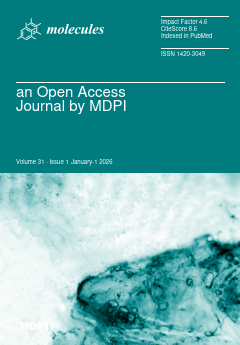
Cover Story (view full-size image): This study tackles the challenge of polyphenolic antioxidants being inactivated by metal ion chelation in Alzheimer's treatment. We designed a sequential release system, DD@MOF, based on the NH2-MIL-101(Fe) metal–organic framework. The system first releases D-Penicillamine to chelate excess copper ions in the plaque and then releases Dihydroquercetin for antioxidant and anti-Aβ aggregation effects. In 5×FAD transgenic mouse models, DD@MOF significantly improved learning and memory and reduced Aβ deposition and neuroinflammation, offering a new strategy for combined Alzheimer's therapy. View this paper
  • Issues are regarded as officially published after their release is announced to the table of contents alert mailing list.
  • You may sign up for e-mail alerts to receive table of contents of newly released issues.
  • PDF is the official format for papers published in both, html and pdf forms. To view the papers in pdf format, click on the "PDF Full-text" link, and use the free Adobe Reader to open them.
Order results
Result details
Section
Select all
Export citation of selected articles as:
16 pages, 1205 KB  
Article
Chemoselectively Functionalized Ketoesters by Halogenative C–C Bond Cleavage of Cyclic Diketones
by Hideyasu China, Nami Kageyama, Hodaka Yatabe, Mihoyo Fujitake, Yusei Matsumoto, Zhihan Jing and Toshifumi Dohi
Molecules 2026, 31(1), 199; https://doi.org/10.3390/molecules31010199 - 5 Jan 2026
Viewed by 433
Abstract
Haloketoesters are synthetic intermediates in various cyclization reactions that facilitate the production of biologically active compounds. Nonetheless, the selective synthesis of dihaloketoesters and trihaloketoesters, which are expected to be highly versatile, presents significant challenges. In this study, we designed a new synthetic approach [...] Read more.
Haloketoesters are synthetic intermediates in various cyclization reactions that facilitate the production of biologically active compounds. Nonetheless, the selective synthesis of dihaloketoesters and trihaloketoesters, which are expected to be highly versatile, presents significant challenges. In this study, we designed a new synthetic approach that selectively and efficiently produces haloketoesters through the halogenative C–C bond cleavage and ring-opening reactions of cyclic 1,3-diketones. This convenient method enables the direct synthesis of di- and trichloro-functionalized ketoesters from 1,3-cyclohexadiones under mild conditions. Na2HPO4, employed as a buffer salt, proved to be effective in facilitating the alcoholytic ring-opening reaction of 2,2-dichloro-1,3-cyclohexadiones, which were generated as synthetic intermediates. Full article
(This article belongs to the Special Issue Feature Papers in Organic Chemistry—Third Edition)
Show Figures

Figure 1

13 pages, 575 KB  
Article
A Star-PEGylation Strategy to Improve Testosterone Pharmacokinetics
by Chae Bin Lee, Lukáš Tenora, Ruoning Zhang, Arina Ranjit, Mark C. Markowski, Barbara S. Slusher and Rana Rais
Molecules 2026, 31(1), 198; https://doi.org/10.3390/molecules31010198 - 5 Jan 2026
Viewed by 395
Abstract
Testosterone, an androgenic steroid hormone, regulates primary sexual characteristics and influences mood, cognition, social behavior, and sexual function. Deficiency, caused by factors such as aging and genetics, is linked to multiple disease conditions. However, current testosterone therapies are limited by extensive metabolism, poor [...] Read more.
Testosterone, an androgenic steroid hormone, regulates primary sexual characteristics and influences mood, cognition, social behavior, and sexual function. Deficiency, caused by factors such as aging and genetics, is linked to multiple disease conditions. However, current testosterone therapies are limited by extensive metabolism, poor solubility, and undesirable side effects. To address these limitations, we synthesized a four-armed star PEG-OH-linked testosterone (PEG-T). The in vitro release of testosterone from PEG-T was evaluated in buffer (pH 7.4) and mouse plasma. PEG-T was stable in the buffer, but released testosterone in plasma via esterase-mediated hydrolysis. Pharmacokinetics of testosterone and PEG-T were compared following intraperitoneal (IP) and subcutaneous (SC) administration. Following IP dosing, PEG-T exhibited a ~6-fold improvement in half-life compared to testosterone (1.18 h vs. 0.21 h), and a 54-fold increase in exposure (AUC0-t = 36.0 μM·h vs. 0.67 μM·h) at equimolar doses; furthermore, following SC dosing, PEG-T showed a 4-fold improvement in both half-life (3.57 h vs. 0.91 h) and plasma exposure (11.5 μM·h vs. 3.1 μM·h). Additionally, PEG-T showed lower liver and kidney to plasma ratios, which could potentially result in reduced hepatotoxicity and nephrotoxicity. Overall, PEG-T provides sustained release pharmacokinetics, representing a promising candidate for safer testosterone replacement therapy. Full article
(This article belongs to the Section Medicinal Chemistry)
Show Figures

Graphical abstract

22 pages, 363 KB  
Article
Bioactive Phytocompound Profiling and the Evaluation of Antioxidant, Antihyperglycemic, and Antimicrobial Activities of Medicinal Plants from Serbian Traditional Medicine
by Milica Aćimović, Anja Vučetić, Jelena Vulić, Aleksandra Ranitović, Teodora Marić, Vanja Travičić and Olja Šovljanski
Molecules 2026, 31(1), 197; https://doi.org/10.3390/molecules31010197 - 5 Jan 2026
Viewed by 344
Abstract
Medicinal plants represent an important source of bioactive compounds whose composition and biological activity are strongly influenced by geographical origin and extraction conditions. In this study, six medicinal plants traditionally used in south-eastern Serbia (Galium verum, Filipendula vulgaris, Lythrum salicaria [...] Read more.
Medicinal plants represent an important source of bioactive compounds whose composition and biological activity are strongly influenced by geographical origin and extraction conditions. In this study, six medicinal plants traditionally used in south-eastern Serbia (Galium verum, Filipendula vulgaris, Lythrum salicaria, Sideritis montana, Teucrium chamaedrys, and Teucrium montanum) were investigated for their phytochemical composition and antioxidant, antihyperglycemic, and antimicrobial activities. Aqueous and 40% ethanol extracts were prepared and analyzed for total phenolic content (TPC) and total flavonoid content (TFC), followed by HPLC-DAD profiling of individual polyphenolic compounds. Antioxidant activity was assessed using DPPH, ABTS, and reducing power assays, antihyperglycemic activity by α-glucosidase inhibition, and antimicrobial activity by the microdilution method against selected bacterial and fungal strains. L. salicaria exhibited the highest TPC (113.56–119.09 mg GAE/g DW), while F. vulgaris showed the highest TFC (65.74–66.31 mg RE/g DW). HPLC analysis revealed notable levels of ferulic acid in L. salicaria ethanol extract (39.12 mg/g DW), as well as rutin, luteolin, and myricetin in several species. Ethanol extracts generally demonstrated stronger antioxidant activity, with L. salicaria showing the highest DPPH (378.60 µM TE/g) and reducing power (684.06 µM TE/g), while its aqueous extract exhibited the highest ABTS activity (3621.93 µM TE/g). Strong antihyperglycemic activity was observed for F. vulgaris extracts (100% α-glucosidase inhibition). Antimicrobial assays revealed higher sensitivity of Gram-positive bacteria, particularly Listeria monocytogenes and Staphylococcus aureus, with F. vulgaris and L. salicaria extracts showing the strongest effects. These findings highlight the significant influence of plant species and extraction solvent on bioactivity and support the potential of selected Serbian medicinal plants as sources of multifunctional natural bioactive compounds. Full article
Show Figures

Graphical abstract

19 pages, 6411 KB  
Article
Viniferin-Rich Phytocomplex from Vitis vinifera L. Plant Cell Culture Mitigates Neuroinflammation in BV2 Microglia Cells
by Giacomina Videtta, Chiara Sasia, Sofia Quadrino, Oriana Bertaiola, Chiara Guarnerio, Elisa Bianchi, Giacomo Biagiotti, Barbara Richichi, Stefano Cicchi, Giovanna Pressi and Nicoletta Galeotti
Molecules 2026, 31(1), 196; https://doi.org/10.3390/molecules31010196 - 5 Jan 2026
Viewed by 416
Abstract
Activation of microglia and resulting neuroinflammation are central processes that significantly contribute to neurodegenerative disease progression. Treatments capable of attenuating neuroinflammation are therefore an urgent medical need. Vitis vinifera L., cultivated since ancient times for its fruits, is known for its antioxidant and [...] Read more.
Activation of microglia and resulting neuroinflammation are central processes that significantly contribute to neurodegenerative disease progression. Treatments capable of attenuating neuroinflammation are therefore an urgent medical need. Vitis vinifera L., cultivated since ancient times for its fruits, is known for its antioxidant and anti-inflammatory activities. However, polyphenols, the main bioactive molecules in V. vinifera extracts, exhibit considerable variability due to numerous hard-to-control factors, which complicates the production of standardized extracts with consistent biological activity. To address this issue, plant cell culture biotechnology was used to produce a highly standardized V. vinifera phytocomplex (VP), and its anti-neuroinflammatory profile was investigated in LPS-stimulated microglial cells, an in vitro model of neuroinflammation. VP reduced the LPS-induced pro-inflammatory phenotype, improved cell viability and cell number, attenuated NF-κB activation and ERK1/2 phosphorylation, and increased SIRT1 levels. To overcome VP’s poor water solubility, water-soluble cellulose nanocrystal (CNC)-based formulations were developed and tested. VP-CNC formulations markedly reduced the BV2 pro-inflammatory phenotype and increased cell viability under both basal and LPS-stimulated conditions. The nanoformulations also decreased pERK1/2 levels and increased SIRT1 expression, exhibiting biological activities comparable to VP alone. V. vinifera phytocomplex derived from plant cell cultures represents an innovative and standardized product with promising anti-neuroinflammatory properties. Full article
Show Figures

Graphical abstract

19 pages, 6312 KB  
Article
Antioxidant, Anti-Inflammatory, and Chemical Composition Analysis of In Vitro Huperzia serrata Thallus and Wild Huperzia serrata
by Yongchun Huang, Xinyuan Li, Liangfang Dai, Malong Cheng, Linlin Zhao, Yu Shen, Jiankun Xie and Xiangdong Luo
Molecules 2026, 31(1), 195; https://doi.org/10.3390/molecules31010195 - 5 Jan 2026
Viewed by 432
Abstract
Huperzine A is a preferred treatment option for Alzheimer’s disease. Huperzia serrata (Thunb. ex Murray) Trev. (H. serrata) has garnered significant attention for its ability to produce Huperzine A (HupA). However, natural populations of wild H. serrata (WH) are rapidly declining. [...] Read more.
Huperzine A is a preferred treatment option for Alzheimer’s disease. Huperzia serrata (Thunb. ex Murray) Trev. (H. serrata) has garnered significant attention for its ability to produce Huperzine A (HupA). However, natural populations of wild H. serrata (WH) are rapidly declining. Fortunately, our group obtained two types of H. serrata thalli (OT and ST) capable of stably producing Huperzine A, which have the potential to serve as an alternative resource to WH. To evaluate the feasibility of this strategy, we conducted a comprehensive assessment of both WH and H. serrata thallus. The results indicated that compared to WH, ST and OT exhibited stronger anti-inflammatory and antioxidant activities, with lower cytotoxicity. Notably, ST demonstrated a strong radical scavenging activity, reaching 93.23% (DPPH at 0.2 μg/mL) and 99.87% (ABTS at 4 μg/mL), and reduced nitrite production from 10.29 μM to 6.51 μM at 50 µg/mL. GC-MS and widely targeted metabolomics analyses revealed that the higher antioxidant and anti-inflammatory activities for ST and OT were due to higher concentrations of phenolic acids and flavonoids compared to WH. In addition, the HupA content in ST reached 36.56% of that found in WH. KEGG enrichment analysis revealed that the flavonoid, phenylalanine, and phenylpropanoid biosynthesis pathways may be involved in regulating the antioxidant activity. P-coumaroyl quinic acid and caffeoyl quinic acid are the crucial metabolites for antioxidant activity. These findings suggested that the H. serrata thallus could serve as a sustainable alternative to WH. Full article
Show Figures

Figure 1

16 pages, 5534 KB  
Article
Natural Polyphenol Corilagin Enhances Osteogenesis and Chondrogenesis Differentiation of Mesenchymal Stem Cells: Implications for Bone and Cartilage Regeneration
by Thitianan Kulsirirat, Sittisak Honsawek, Mariko Takeda-Morishita and Korbtham Sathirakul
Molecules 2026, 31(1), 194; https://doi.org/10.3390/molecules31010194 - 5 Jan 2026
Cited by 1 | Viewed by 470 | Correction
Abstract
Corilagin is a hydrolyzable ellagitannin and naturally occurring polyphenolic compound widely distributed in medicinal plants. It is also present in longan (Dimocarpus longan), known as lumyai in Thailand, a subtropical fruit extensively cultivated across China and Southeast Asia. Corilagin has been [...] Read more.
Corilagin is a hydrolyzable ellagitannin and naturally occurring polyphenolic compound widely distributed in medicinal plants. It is also present in longan (Dimocarpus longan), known as lumyai in Thailand, a subtropical fruit extensively cultivated across China and Southeast Asia. Corilagin has been reported to exhibit strong antioxidant, anti-inflammatory, hepatoprotective, and anticancer activities through modulation of multiple cellular signaling pathways. However, despite these well-established pharmacological properties, its potential role in regulating bone marrow mesenchymal stem cell (BM-MSC) differentiation has not been fully explored in biomedical applications. In this study, we investigated the effects of corilagin on BM-MSC viability, protein-binding interactions, and lineage-specific differentiation toward osteogenic and chondrogenic pathways. Cytotoxicity assessment using human synovial SW-982 cells demonstrated that corilagin maintained cell viability at concentrations ranging from 1.56 to 50 µg/mL within 48 h, whereas prolonged exposure resulted in a time-dependent reduction in viability. In BM-MSCs, corilagin significantly enhanced osteogenic and chondrogenic differentiation in a dose-dependent manner, as evidenced by increased mineral deposition and cartilage matrix formation, as revealed by Alizarin Red S, Toluidine Blue, and Alcian Blue staining. Quantitative analyses further showed the upregulation of key lineage-specific genes, including Runx2 and osteopontin (OPN) for osteogenesis and Sox9 and aggrecan for chondrogenesis. Protein-binding assays confirmed the molecular interaction capacity of corilagin, supporting its biological activity. Overall, these findings demonstrate that corilagin promotes MSC-mediated osteogenic and chondrogenic differentiation while maintaining acceptable cytocompatibility, highlighting its potential as a natural small-molecule candidate for bone and cartilage tissue engineering and other biomedical fields with regenerative medicine applications. Full article
Show Figures

Graphical abstract

16 pages, 2897 KB  
Article
Diphosphine-Substituted Rhodium Carbonyl Clusters: Synthesis and Structural and Spectroscopic Characterization of the Heteroleptic Rh4(CO)8+2n(L)2−n (n = 0, 1) and {Rh4(CO)10L}2 Monomeric and Dimeric Species
by Giorgia Scorzoni, Guido Bussoli, Cristiana Cesari, Maria Carmela Iapalucci, Stefano Zacchini and Cristina Femoni
Molecules 2026, 31(1), 193; https://doi.org/10.3390/molecules31010193 - 5 Jan 2026
Viewed by 327
Abstract
Tetranuclear rhodium carbonyl clusters are vital catalytic precursors; yet derivatives featuring bidentate phosphines are less common, due to the propensity for cluster fragmentation during synthesis. This study reports the successful isolation of five new heteroleptic species by reacting Rh4(CO)12 with [...] Read more.
Tetranuclear rhodium carbonyl clusters are vital catalytic precursors; yet derivatives featuring bidentate phosphines are less common, due to the propensity for cluster fragmentation during synthesis. This study reports the successful isolation of five new heteroleptic species by reacting Rh4(CO)12 with various bidentate diphosphines under homogeneous conditions and at room temperature, namely the mono-substituted Rh4(CO)10(dppe) (1) and Rh4(CO)10(dppb) (3), the rare bis-substituted derivative Rh4(CO)8(dppe)2 (2), and the two unique dimeric assemblies {Rh4(CO)10(dpp-hexane)}2 (4) and {Rh4(CO)10(trans-dppe)}2 (5). The tetrahedral Rh4 core of the cluster precursor was preserved in all cases. The new compounds were characterized via infrared (IR) spectroscopy and single-crystal X-ray diffraction (SC-XRD). Furthermore, variable-temperature (VT) 31P{1H} NMR spectroscopy elucidated the dynamic behavior of the phosphorus atoms. This work reports a robust methodology for accessing stable, low-nuclearity rhodium phosphine clusters with tunable properties. Full article
(This article belongs to the Section Inorganic Chemistry)
Show Figures

Figure 1

24 pages, 666 KB  
Review
Green Extraction at Scale: Hydrodynamic Cavitation for Bioactive Recovery and Protein Functionalization—A Narrative Review
by Francesco Meneguzzo, Federica Zabini and Lorenzo Albanese
Molecules 2026, 31(1), 192; https://doi.org/10.3390/molecules31010192 - 5 Jan 2026
Viewed by 543
Abstract
Hydrodynamic cavitation (HC) is a green and readily scalable platform for the recovery and upgrading of bioactives from agri-food and forestry byproducts. This expert-led narrative review examines HC processing of citrus and pomegranate peels, softwoods, and plant protein systems, emphasizing process performance, ingredient [...] Read more.
Hydrodynamic cavitation (HC) is a green and readily scalable platform for the recovery and upgrading of bioactives from agri-food and forestry byproducts. This expert-led narrative review examines HC processing of citrus and pomegranate peels, softwoods, and plant protein systems, emphasizing process performance, ingredient functionality, and realistic routes to market, and contrasts HC with other green extraction technologies. Pilot-scale evidence repeatedly supports water-only operation with high solids and short residence times; in most practical deployments, energy demand is dominated by downstream water removal rather than the extraction step itself, which favors low water-to-biomass ratios. A distinctive outcome of HC is the spontaneous formation of stable pectin–flavonoid–terpene phytocomplexes with improved apparent solubility and bioaccessibility, and early studies indicate that HC may also facilitate protein–polyphenol complexation while lowering anti-nutritional factors. Two translational pathways appear near term: (i) blending HC-derived dry extracts with commercial dry protein isolates to deliver measurable functional benefits at low inclusion levels and (ii) HC-based extraction of plant proteins to obtain digestion-friendly isolates and conjugate-ready ingredients. Priority gaps include harmonized reporting of specific energy consumption and operating metrics, explicit solvent/byproduct mass balances, matched-scale benchmarking against subcritical water extraction and pulsed electric field, and evidence from continuous multi-ton operation. Overall, HC is a strong candidate unit operation for circular biorefineries, provided that energy accounting, quality retention, and regulatory documentation are handled rigorously. Full article
(This article belongs to the Special Issue Bioproducts for Health, 4th Edition)
Show Figures

Graphical abstract

14 pages, 4531 KB  
Review
Quantitative Surface-Enhanced Raman Spectroscopy: Challenges, Strategies, and Prospects
by Zhixuan Lu, Jun Wang and Sen Yan
Molecules 2026, 31(1), 191; https://doi.org/10.3390/molecules31010191 - 5 Jan 2026
Viewed by 565
Abstract
Surface-Enhanced Raman Spectroscopy (SERS) is highly attractive as an analytical technique owing to its high sensitivity, distinctive molecular specificity, and speed of analysis. It offers the potential to match the sensitivity and molecular specificity of established techniques like Gas Chromatography–Mass Spectrometry in a [...] Read more.
Surface-Enhanced Raman Spectroscopy (SERS) is highly attractive as an analytical technique owing to its high sensitivity, distinctive molecular specificity, and speed of analysis. It offers the potential to match the sensitivity and molecular specificity of established techniques like Gas Chromatography–Mass Spectrometry in a more affordable, faster, and portable format, providing unique solutions for challenging analytical problems such as bedside diagnostics and in-field forensic analysis. Despite these benefits, SERS currently remains a specialized technique and has not yet successfully entered the mainstream of analytical chemistry. This transition is hindered primarily by challenges in achieving robust, reliable, and especially quantitative measurements in real-world applications. Achieving quantitative SERS requires addressing core issues arising from the heterogeneous nature of enhancing substrates and the complexity of real-life samples. This perspective summarizes the fundamental challenges associated with signal variability and matrix interference. It then details modern strategies focused on standardizing performance metrics, with particular emphasis on the newly proposed SERS Performance Factor for substrate evaluation, alongside the development of advanced quantification methods (e.g., internal standardization and digital SERS) and rapid sample pretreatment protocols. Finally, emerging prospects, including the deployment of Artificial Intelligence for enhanced analysis and advancements in deep-tissue SERS sensing, are explored as critical drivers for integrating SERS into routine analytical practice. Full article
(This article belongs to the Section Analytical Chemistry)
Show Figures

Figure 1

15 pages, 3557 KB  
Article
Obtaining and Studying the Properties of Composite Materials from ortho-, meta-, para-Carboxyphenylmaleimide and ABS
by Eldar Garaev, Shahana Guliyeva, Aygun Alikhanova, Konul Huseynguliyeva and Bakhtiyar Mammadov
Molecules 2026, 31(1), 190; https://doi.org/10.3390/molecules31010190 - 5 Jan 2026
Viewed by 417
Abstract
This work presents the results of the synthesis and investigation of new antibacterial composite materials based on acrylonitrile–butadiene–styrene (ABS) copolymer and o-, m-, p-carboxyphenylmaleimides (CPhMI). The composites were obtained by thermal mixing with varying contents of different CPhMI isomers in [...] Read more.
This work presents the results of the synthesis and investigation of new antibacterial composite materials based on acrylonitrile–butadiene–styrene (ABS) copolymer and o-, m-, p-carboxyphenylmaleimides (CPhMI). The composites were obtained by thermal mixing with varying contents of different CPhMI isomers in the polymer matrix. The structural and thermal characteristics of the synthesized materials were investigated using IR and UV spectroscopy, as well as thermogravimetric (TGA) and differential thermal analysis (DTA). The results indicate that the o-isomer imparts the highest thermal stability, while the p-isomer shows slightly lower stability. In terms of processability, the m-isomer exhibits the highest melt flow, the p-isomer an intermediate level, and the o-isomer the lowest. The antibacterial activity of the composites was evaluated by the agar diffusion method against Gram-positive (Staphylococcus aureus) and Gram-negative (Escherichia coli) microorganisms. All synthesized samples exhibited strong antibacterial activity against S. aureus and E. coli at a concentration of 0.5 wt%, confirming their potential for application in medical devices, as well as in sanitary polymer coatings and packaging. Full article
(This article belongs to the Section Macromolecular Chemistry)
Show Figures

Figure 1

17 pages, 854 KB  
Article
Influence of Coexisting Copper and Zinc on the Adsorption and Migration of Sulfadiazine in Soda Saline–Alkali Wetland Soils: A Simulation Approach
by Wencong Yang, Xia Wu, Wenyue Shao, Nana Luo and Jia Zhou
Molecules 2026, 31(1), 189; https://doi.org/10.3390/molecules31010189 - 5 Jan 2026
Viewed by 325
Abstract
This study investigates the adsorption and migration of sulfadiazine (SDZ) in soda saline–alkali soils under Cu/Zn co-pollution using equilibrium adsorption and soil column experiments. Freundlich and Langmuir isothermal models, combined with Hydrus-1D two-site modeling, revealed concentration-dependent interactions. Low Cu (10–100 mg kg−1 [...] Read more.
This study investigates the adsorption and migration of sulfadiazine (SDZ) in soda saline–alkali soils under Cu/Zn co-pollution using equilibrium adsorption and soil column experiments. Freundlich and Langmuir isothermal models, combined with Hydrus-1D two-site modeling, revealed concentration-dependent interactions. Low Cu (10–100 mg kg−1) and Zn (10–100 mg kg−1) enhanced SDZ adsorption via charge regulation and complexation, while high concentrations (300 mg kg−1) suppressed adsorption through competitive adsorption and hydroxide precipitation. Synergistic Cu-Zn coexistence further reduced adsorption to 3.035 mg kg−1. Freundlich modeling (R2 = 0.922–0.995) outperformed Langmuir, confirming adsorption site heterogeneity. Column experiments showed Cu (300 mg kg−1) and Zn (300 mg kg−1) accelerated SDZ migration (peaks 0.93–0.94), delaying breakthrough versus Br. Hydrus-1D simulations (R2 ≥ 0.915, RMSE < 0.1) effectively quantified nonlinear dynamics between instantaneous adsorption sites (f = 0.101–0.554) and metal concentrations. Results demonstrate heavy metals critically regulate antibiotic fate via concentration-dependent mechanisms in saline–alkali ecosystems. Full article
Show Figures

Graphical abstract

19 pages, 2663 KB  
Article
Enhancing Antioxidant and Flavor of Xuanwei Ham Bone Hydrolysates via Ultrasound and Microwave Pretreatment: A Backpropagation Artificial Neural Network Model Prediction
by Xin Chen, Xianchao Feng, Xingwei Wang, Nianwen Zhang, Yuxia Jin, Jianxin Cao, Xuejiao Wang and Chaofan Guo
Molecules 2026, 31(1), 188; https://doi.org/10.3390/molecules31010188 - 4 Jan 2026
Viewed by 362
Abstract
This study aimed to produce the hydrolysates of Xuanwei ham bone using enzymatic hydrolysis assisted by microwave and ultrasound pretreatment. A back propagation artificial neural network (BP-ANN) model was utilized to predict the optimal conditions, which involved 15 W/g bone for 15 min [...] Read more.
This study aimed to produce the hydrolysates of Xuanwei ham bone using enzymatic hydrolysis assisted by microwave and ultrasound pretreatment. A back propagation artificial neural network (BP-ANN) model was utilized to predict the optimal conditions, which involved 15 W/g bone for 15 min of ultrasound pretreatment and 5 W/g bone for 30 min of microwave pretreatment, achieving the highest degree of hydrolysis (DH). The model predicted a DH of 27.69, closely aligning with the experimentally measured actual DH of 28.33. DPPH radical scavenging and TBARS demonstrated that hydrolysates prepared by ultrasound combined microwave pretreatment (UMH) exhibited the highest antioxidant activity and significantly inhibited lipid oxidation. GC-MS analysis revealed that the UMH showed removal of bitter volatile flavor compounds, such as o-Cresol and m-Cresol, the retention of aromatic volatile compounds, such as 2-pentylfuran, formation of new aromatic volatile compounds such as 3-methylbutanal, and the reduction in certain aldehyde and ketone compounds. Pearson correlation analysis elucidated that the reduction in aldehyde and ketone compounds was positively linked to the enhanced antioxidant capacity of UMH. The results obtained hold substantial significance for enhancing the added value of Xuanwei ham within the food industry. Full article
Show Figures

Graphical abstract

26 pages, 4087 KB  
Review
Oxime Esters as Efficient Initiators in Photopolymerization Processes
by Monika Dzwonkowska-Zarzycka, Alicja Balcerak-Woźniak and Janina Kabatc-Borcz
Molecules 2026, 31(1), 187; https://doi.org/10.3390/molecules31010187 - 4 Jan 2026
Viewed by 545
Abstract
The development of new photoinitiators for photocurable systems has gained increasing interest in response to regulatory and environmental requirements, including efficient absorption in the UV/Vis range and reduced toxicity. Among emerging light-sensitive compounds, oxime esters have attracted growing attention as efficient radical photoinitiators. [...] Read more.
The development of new photoinitiators for photocurable systems has gained increasing interest in response to regulatory and environmental requirements, including efficient absorption in the UV/Vis range and reduced toxicity. Among emerging light-sensitive compounds, oxime esters have attracted growing attention as efficient radical photoinitiators. In this paper, five series of oxime esters based on carbazole, coumarin, carbazole–coumarin, phenothiazine, and triphenylamine scaffolds were described. Their high performance in photopolymerization processes was presented, demonstrating their ability to act as both type I and type II photoinitiators, as confirmed by high monomer conversion degrees. These data highlight oxime esters as versatile photoinitiating systems and provide a basis for further structural optimization aimed at improving water solubility and enabling comprehensive cytotoxicity assessment. Full article
Show Figures

Figure 1

22 pages, 4820 KB  
Article
Evaluation of Pyrrole Heterocyclic Derivatives as Selective MAO-B Inhibitors and Neuroprotectors
by Maya Georgieva, Martin Sharkov, Emilio Mateev, Alexandrina Mateeva and Magdalena Kondeva-Burdina
Molecules 2026, 31(1), 186; https://doi.org/10.3390/molecules31010186 - 4 Jan 2026
Viewed by 385
Abstract
Novel pyrrole-based derivatives were synthesized in high purity and yields (52–89%), with 17i and 17j displaying selective MAO-B inhibition (50–60%), comparable to Selegiline, and negligible MAO-A activity. In rat brain subcellular fractions, both compounds showed low intrinsic neurotoxicity at 100 μM while exerting [...] Read more.
Novel pyrrole-based derivatives were synthesized in high purity and yields (52–89%), with 17i and 17j displaying selective MAO-B inhibition (50–60%), comparable to Selegiline, and negligible MAO-A activity. In rat brain subcellular fractions, both compounds showed low intrinsic neurotoxicity at 100 μM while exerting significant neuroprotective and antioxidant effects under 6-OHDA, t-BuOOH, and Fe2+/ascorbate-induced stress. Mechanistic studies indicate dual protection via reactive oxygen species scavenging and preservation of reduced glutathione, with mitochondria and microsomes being the most responsive compartments. The performed in silico analysis revealed no general toxicity alerts, though hydrazine groups classify the compounds as contact allergens, and the furan ring in 17i poses hepatotoxic and carcinogenic risks. Metabolic predictions suggest ester hydrolysis at the pyrrole ring as the main biotransformation pathway. Overall, 17i and 17j are promising lead compounds for developing therapeutics targeting oxidative stress-related neurodegenerative diseases, such as Parkinson’s and Alzheimer’s, supporting further in vivo studies. Full article
Show Figures

Graphical abstract

14 pages, 1046 KB  
Article
Enantioselective Total Synthesis of Daedaleanol B from (+)-Sclareolide
by Irene Moreno-Gutiérrez, Sonia Berenguel-Gómez, María José Cánovas-Aragón, José Luis Guil-Guerrero, Tarik Chileh-Chelh, Manuel Muñoz-Dorado, Miriam Álvarez-Corral and Ignacio Rodríguez-García
Molecules 2026, 31(1), 185; https://doi.org/10.3390/molecules31010185 - 4 Jan 2026
Viewed by 403
Abstract
Daedaleanol B is a drimane-derived merosesquiterpenoid isolated from the brown-rot fungus Daedalea incana. Herein, we report its first enantioselective total synthesis from commercially available (+)-sclareolide. A one-pot transformation afforded 11-acetoxy drimane-8α-ol, which was saponificated and selectively esterified with enantiopure L-pyroglutamic acid to [...] Read more.
Daedaleanol B is a drimane-derived merosesquiterpenoid isolated from the brown-rot fungus Daedalea incana. Herein, we report its first enantioselective total synthesis from commercially available (+)-sclareolide. A one-pot transformation afforded 11-acetoxy drimane-8α-ol, which was saponificated and selectively esterified with enantiopure L-pyroglutamic acid to give crystalline hydroxy-daedaleanol. Single-crystal X-ray diffraction of this intermediate, together with the known configuration of the chiral starting materials, enabled assignment of the absolute configuration of the daedaleanol B framework. Final elimination provided daedaleanol B, whose NMR data matched those reported for the natural product. Both hydroxy-daedaleanol and daedaleanol B exhibited time- and concentration-dependent antiproliferative effects in HT-29 colorectal cancer cells, with higher activity observed for daedaleanol B. Full article
(This article belongs to the Section Natural Products Chemistry)
Show Figures

Graphical abstract

25 pages, 2002 KB  
Article
Potential Nutraceutical Properties of Vicia faba L: LC-ESI-HR-MS/MS-Based Profiling of Ancient Faba Bean Varieties and Their Biological Activity
by Francesca Fantasma, Gilda D’Urso, Alessandra Capuano, Ester Colarusso, Michela Aliberti, Francesca Grassi, Maria Chiara Brunese, Gabriella Saviano, Vincenzo De Felice, Gianluigi Lauro, Alfonso Reginelli, Maria Giovanna Chini, Agostino Casapullo, Giuseppe Bifulco and Maria Iorizzi
Molecules 2026, 31(1), 184; https://doi.org/10.3390/molecules31010184 - 4 Jan 2026
Viewed by 412
Abstract
Vicia faba L. is a widely cultivated legume known to contain numerous specialised metabolites. In this study, the seed coats and cotyledons of two ancient V. faba L. varieties, historically consumed in southern Italy and distinguished by black and purple seed coats, were [...] Read more.
Vicia faba L. is a widely cultivated legume known to contain numerous specialised metabolites. In this study, the seed coats and cotyledons of two ancient V. faba L. varieties, historically consumed in southern Italy and distinguished by black and purple seed coats, were extracted using 80% methanol and 80% ethanol. Extracts were analysed for total polyphenol, flavonoid and proanthocyanidin contents, and antioxidant activity using DPPH, ABTS, and FRAP assays. The purple seed coats exhibited the highest levels of phenolics and antioxidant capacity, exceeding those of black seed coats. Next, liquid chromatography coupled with high-resolution mass spectrometry (LC-ESI-HR-MS) was used to characterise the bioactive metabolites in both seed coats and cotyledons. The purple variety showed a higher phytochemical content, with a greater level of flavonoids and proanthocyanidins in methanolic extract. Furthermore, the purple seed coat exhibited in vitro anti-inflammatory activity by inhibiting soluble epoxide hydrolase (sEH), a key enzyme in the arachidonic acid cascade, with an IC50 of 31.51 ± 1.16 µg/µL. Elemental analysis was performed for both varieties to assess their nutritional value. Specifically, the purple seed coats were found to represent a valuable source of bioactive compounds and micronutrients, highlighting their potential applications in nutraceutical, cosmetic, and food supplement sectors. Full article
(This article belongs to the Special Issue Bioactive Food Compounds and Their Health Benefits)
Show Figures

Graphical abstract

16 pages, 4277 KB  
Article
Reactivity of Antibodies Immobilized on Gold Nanoparticles: Fluorescence Quenching Study
by Dmitriy V. Sotnikov, Andrey S. Agapov, Anatoly V. Zherdev and Boris B. Dzantiev
Molecules 2026, 31(1), 183; https://doi.org/10.3390/molecules31010183 - 4 Jan 2026
Viewed by 366
Abstract
Antibodies labeled with gold nanoparticles are widely used in analytical systems. Consequently, the choice of methods for producing such conjugates requires a precise determination of the retained reactivity of the antibodies. Existing methods give highly variable results, necessitating new, simple, and accurate approaches. [...] Read more.
Antibodies labeled with gold nanoparticles are widely used in analytical systems. Consequently, the choice of methods for producing such conjugates requires a precise determination of the retained reactivity of the antibodies. Existing methods give highly variable results, necessitating new, simple, and accurate approaches. This study demonstrates how a fluorescein (FL) and anti-FL antibody pair can be used to comparatively evaluate conjugation conditions. The method is based on the quenching of fluorescein emission after binding to antibodies, enabling real-time monitoring of interactions in the reaction medium. Using this approach, we compared a series of conjugates of gold nanoparticles (average diameter 24 nm) and anti-FL antibodies that were obtained with antibody concentrations of 5, 10, and 20 μg/mL during the conjugation. The proportion of antibodies that retained their reactivity varied from 11% to 58%. We also estimated the blocking of the conjugates’ surfaces by two widely used reagents, bovine serum albumin and mercapto polyethylene glycol. It was found that the former provides better retention of antigen-binding activity of immobilized antibodies. The difference between these two kinds of preparations is most pronounced—reaching up to a twofold change—at lower antibody densities. Full article
(This article belongs to the Special Issue Nano-Functional Materials for Sensor Applications—2nd Edition)
Show Figures

Figure 1

16 pages, 4481 KB  
Article
Synthesis of Cobalt Hydroxychloride and Its Application as a Catalyst in the Condensation of Perimidines
by Cássio Siqueira, Gabriela R. Borges, Fernanda S. Portela, Maria E. Miks, Felipe F. Marques, Gleison A. Casagrande, Sumbal Saba, Rafael Marangoni, Jamal Rafique and Giancarlo V. Botteselle
Molecules 2026, 31(1), 182; https://doi.org/10.3390/molecules31010182 - 4 Jan 2026
Viewed by 545
Abstract
Herein, we report the synthesis, characterization, and catalytic evaluation of cobalt hydroxide chloride [Co2(OH)3Cl] in the solvent-free synthesis of 2-substituted 2,3-dihydroperimidines. The presented method aligns with several green chemistry principles, offering operational simplicity, purification by recrystallization, no by-product formation, [...] Read more.
Herein, we report the synthesis, characterization, and catalytic evaluation of cobalt hydroxide chloride [Co2(OH)3Cl] in the solvent-free synthesis of 2-substituted 2,3-dihydroperimidines. The presented method aligns with several green chemistry principles, offering operational simplicity, purification by recrystallization, no by-product formation, high yields (64–99%), and short reaction times. A total of 16 dihydroperimidines were synthesized to demonstrate substrate scope versatility. Additionally, the catalyst was successfully recycled and reused in multiple cycles without significant loss. Its robustness was further confirmed by gram-scale synthesis, achieving an 89% yield. Full article
(This article belongs to the Special Issue Heterogeneous Catalysis for Sustainability and Carbon-Neutrality)
Show Figures

Graphical abstract

22 pages, 4932 KB  
Article
Poly(levodopa)-Modified β-(1 → 3)-D-Glucan Hydrogel Enriched with Triangle-Shaped Nanoparticles as a Biosafe Matrix with Enhanced Antibacterial Potential
by Anna Michalicha, Vladyslav Vivcharenko, Anna Tomaszewska, Magdalena Kulpa-Greszta, Barbara Budzyńska, Dominika Fila, Judit Buxadera-Palomero, Agnieszka Krawczyńska, Cristina Canal, Dorota Kołodyńska, Anna Belcarz-Romaniuk and Robert Pązik
Molecules 2026, 31(1), 181; https://doi.org/10.3390/molecules31010181 - 3 Jan 2026
Viewed by 525
Abstract
Biomaterials derived from natural-origin polymers often lack the desired functionality and additional features, such as antibacterial properties, which could be beneficial in the design of modern wound dressings. Our research aimed to fabricate biosafe antibacterial dressings through the modification of curdlan-based hydrogels with [...] Read more.
Biomaterials derived from natural-origin polymers often lack the desired functionality and additional features, such as antibacterial properties, which could be beneficial in the design of modern wound dressings. Our research aimed to fabricate biosafe antibacterial dressings through the modification of curdlan-based hydrogels with triangle-shaped silver nanoparticles (AgTNPs) and poly(L-DOPA) (PL). The prepared hydrogels, including physicochemical, structural, biological, and antibacterial assessments, were thoroughly characterized. All formulations were confirmed to be non-toxic toward eukaryotic cells. The presence of PL in the hydrogels significantly reduced mortality in the zebrafish larvae model, highlighting the improved biocompatibility of the hydrogels. The three-component hydrogel (CUR-PL-AgT) demonstrated a high antibacterial effectiveness against Staphylococcus aureus and Pseudomonas aeruginosa. Additionally, the same three-component material outperformed a hydrogel containing only AgTNPs in promoting blood clot formation. Furthermore, PL enhanced the heat generating capability of hydrogels, showing their potential in medical applications where the temperature effects can stimulate biological processes of different natures. Full article
(This article belongs to the Special Issue Biopolymers for Drug Delivery Systems)
Show Figures

Graphical abstract

35 pages, 10452 KB  
Review
Recent Advances of g-C3N4/LDHs Composite Photocatalysts in Water Pollution Treatment
by Jing Li, Yaping Guo and Jie Bai
Molecules 2026, 31(1), 180; https://doi.org/10.3390/molecules31010180 - 3 Jan 2026
Viewed by 481
Abstract
Water pollution poses a pressing global environmental threat, driving an urgent need for efficient, stable, and eco-friendly water treatment techniques. Semiconductor photocatalysis has emerged as a highly promising solution, utilizing solar energy to thoroughly degrade pollutants under mild conditions without secondary pollution. Among [...] Read more.
Water pollution poses a pressing global environmental threat, driving an urgent need for efficient, stable, and eco-friendly water treatment techniques. Semiconductor photocatalysis has emerged as a highly promising solution, utilizing solar energy to thoroughly degrade pollutants under mild conditions without secondary pollution. Among numerous photocatalysts, the graphitic carbon nitride (g-C3N4)/layered double hydroxides (LDHs) heterostructures represent a kind of high-performance photocatalysts that combine the integrated advantages of both components. These composites exhibit enhanced visible-light absorption, a highly efficient charge separation and transfer, and a significantly increased specific surface area that promotes the enrichment and degradation of pollutants. The synergistic interaction between g-C3N4 and LDHs not only mitigates their individual limitations but also creates a superior photocatalytic system with improved adsorption capacity and reaction kinetics. This review systematically summarizes recent advances in g-C3N4/LDHs composite photocatalysts for aquatic pollutant removal. It elaborates on the structural synergies, synthesis routes, and optimization strategies, with a particular focus on applications and mechanistic insights into the degradation of various pollutants-including organic dyes, drugs, and phenolics. Finally, the review outlines current challenges and future research directions, such as deepening mechanistic understanding, designing multifunctional systems, and advancing toward scalable implementation, providing a valuable reference for developing next-generation photocatalytic water treatment technologies. Full article
(This article belongs to the Section Photochemistry)
Show Figures

Figure 1

33 pages, 3469 KB  
Article
Optimizing Wine Production from Hybrid Cultivars: Impact of Grape Maceration Time on the Content of Bioactive Compounds
by Anna Kostecka-Gugała, Jacek Stanula, Jerzy Żuchowski and Paweł Kaszycki
Molecules 2026, 31(1), 179; https://doi.org/10.3390/molecules31010179 - 3 Jan 2026
Viewed by 487
Abstract
Wine is a rich source of biologically active compounds, particularly polyphenols, which exhibit antioxidant and antiradical properties. The objective of this study was to optimize the vinification procedures of Polish wines from the hybrid white grape cv. ‘Johanniter’ and red grape cv. ‘Regent’, [...] Read more.
Wine is a rich source of biologically active compounds, particularly polyphenols, which exhibit antioxidant and antiradical properties. The objective of this study was to optimize the vinification procedures of Polish wines from the hybrid white grape cv. ‘Johanniter’ and red grape cv. ‘Regent’, grown in the temperate climate of central Europe, by applying different skin maceration times: 4, 8, 12, 16, and 20 days. The wines were compared for their basic oenological characteristics and polyphenolic (UHPLC–MS) content as well as their antioxidant (FRAP test) and antiradical (DPPH test, ORAC-fl and EPR spectroscopy) capacities. Both wines demonstrated a substantial increase in their total phenolic content and antioxidant and antiradical capacities after a 4-day maceration; further treatment did not lead to considerable enrichment in bioactive compounds. Scavenging activities against nitroxyl radicals and DPPH were divergent for the tested wines and depended on the analytical method applied, which indicated distinct molecular mechanisms. In turn, the activity of peroxyl radical scavengers, antioxidant capacity, and the total content of phenolics were higher in all the red wine samples. The antioxidant and antiradical properties of the examined wines were comparable or even exceeded those determined for most wines produced in regions with a rich winemaking tradition. Full article
(This article belongs to the Special Issue Current Research in Wine Chemistry and Analysis)
Show Figures

Graphical abstract

19 pages, 6840 KB  
Article
Magnetically Recoverable ICT-Functionalized Fe3O4 Nanoparticles for Efficient Horseradish Peroxidase Immobilization
by Katarina Isaković, Marko Jonović, Dušan Sredojević, Marko Bošković, Jovana Periša, Zorica Knežević-Jugović and Vesna Lazić
Molecules 2026, 31(1), 178; https://doi.org/10.3390/molecules31010178 - 2 Jan 2026
Viewed by 528
Abstract
The formation of interfacial charge transfer (ICT) complexes between phenolic ligands and metal oxide surfaces enables surface functionalization strategies with potential applications in catalysis and bioconjugation. In this study, magnetite (Fe3O4) nanoparticles were modified with two phenolic ligands, 5-aminosalicylic [...] Read more.
The formation of interfacial charge transfer (ICT) complexes between phenolic ligands and metal oxide surfaces enables surface functionalization strategies with potential applications in catalysis and bioconjugation. In this study, magnetite (Fe3O4) nanoparticles were modified with two phenolic ligands, 5-aminosalicylic acid (5ASA) and caffeic acid (CA), to generate ICT complexes capable of covalent or non-covalent enzyme immobilization, respectively. The modified nanomaterials were structurally characterized using X-ray diffraction (XRD), transmission electron microscopy (TEM), and Fourier-transform infrared spectroscopy (FTIR). Horseradish peroxidase (HRP) was immobilized on these functionalized supports using varying nanoparticle amounts (10–30 mg) and initial enzyme concentrations (25–250 µg mL−1). Catalytic activity was evaluated using pyrogallol oxidation assays. The Fe3O4/5ASA–HRP system exhibited a maximum activity of 2.5 U per 20 mg of support (approximately 125 U g−1), whereas Fe3O4/CA showed minimal activity under the same conditions. Enzyme loading studies confirmed that 5ASA-enabled covalent attachment resulted in significantly higher immobilization efficiency (up to 1068 mg g−1) compared to the CA system. Reusability tests demonstrated that the Fe3O4/5ASA system retained high absolute catalytic activity during the initial reaction cycles and consistently outperformed the non-covalently immobilized Fe3O4/CA system upon repeated reuse. The magnetic properties of Fe3O4 allowed rapid recovery of the biocatalysts using an external magnetic field. These results highlight the effectiveness of ICT-based functionalization for enzyme immobilization, positioning Fe3O4/5ASA as a promising platform for robust and reusable biocatalysts in environmental and industrial applications. Full article
Show Figures

Graphical abstract

20 pages, 8258 KB  
Article
Biomedical Applications of Chitosan-Coated Gallium Iron Oxide Nanoparticles GaxFe(3−x)O4 with 0 ≤ x ≤ 1 for Magnetic Hyperthermia
by Marta Orzechowska, Urszula Klekotka, Magdalena Czerniecka, Adam Tylicki, Dmytro Soloviov, Arkadiusz Miaskowski and Katarzyna Rećko
Molecules 2026, 31(1), 177; https://doi.org/10.3390/molecules31010177 - 2 Jan 2026
Viewed by 504
Abstract
Nanoparticles based on gallium ferrite are explored as potential agents for magnetic fluid hyperthermia due to their magnetic performance and biocompatibility. In this study, GaxFe3−xO4 systems (0 ≤ x ≤ 1) were synthesized by co-precipitation of iron chlorides, [...] Read more.
Nanoparticles based on gallium ferrite are explored as potential agents for magnetic fluid hyperthermia due to their magnetic performance and biocompatibility. In this study, GaxFe3−xO4 systems (0 ≤ x ≤ 1) were synthesized by co-precipitation of iron chlorides, with part of the series modified by a chitosan shell. Structural analysis confirmed single-phase formation across the studied range, while microscopy revealed irregular morphology, broad size distribution, and aggregation into mass-fractal-like assemblies. Chitosan was observed to coat groups of particles rather than single crystallites. Under an alternating magnetic field, all samples exhibited efficient heating, with specific absorption rate values generally increasing with gallium content. The composition Ga0.73Fe2.27O4 showed the highest SAR—83.4 ± 2.2 W/g at 2.8 mg/mL, 532 kHz, 15.3 kA/m, and SAR values rose with decreasing concentration. Cytotoxicity assays without magnetic activation indicated no harmful effect, while chitosan-coated nanoparticles enhanced fibroblast viability and lowered metabolic activity of HeLa cells. Higher Ga content (x = 0.66) combined with chitosan modification was identified as optimal for hyperthermia. The results demonstrate the biomedical potential of these nanoparticles, while emphasizing the need to reduce shape heterogeneity, aggregation, and sedimentation for improved performance. Full article
Show Figures

Figure 1

36 pages, 3149 KB  
Review
Advances in Dysprosium Recovery from Secondary Sources: A Review of Hydrometallurgical, Biohydrometallurgical and Solvometallurgical Approaches
by Ewa Rudnik
Molecules 2026, 31(1), 176; https://doi.org/10.3390/molecules31010176 - 2 Jan 2026
Viewed by 454
Abstract
Dysprosium is one of the most critical elements for global economies due to its essential role in the green energy transition. Although it is added in small quantities as an alloying element, dysprosium plays a crucial role in NdFeB magnets used in wind [...] Read more.
Dysprosium is one of the most critical elements for global economies due to its essential role in the green energy transition. Although it is added in small quantities as an alloying element, dysprosium plays a crucial role in NdFeB magnets used in wind turbines and industrial motors. On the other hand, the limited resources and production capacity of dysprosium contribute to supply shortages and raise concerns about its long-term availability. Therefore, there is a need for efficient techniques that will enable the recovery of dysprosium from secondary materials to bridge the gap between supply and demand while addressing the risks associated with securing a stable supply. This review focuses on (bio)hydrometallurgical and solvometallurgical methods for recovering dysprosium from key secondary sources such as spent NdFeB magnets, phosphogypsum, and coal ash. Although these wastes do not always contain high concentrations of dysprosium, they can have a simpler elemental composition compared to primary sources (a few tens or hundreds of ppm Dy) and are more readily available. Spent NdFeB magnets, with a few percent Dy, show the most promise for recycling. In contrast, coal fly ashes (with several ppm Dy), although widely available, bind dysprosium in an inert phase, requiring substantial pretreatment to enhance the release of the desired element. Phosphogypsum, while not yet a significant source of dysprosium (several ppm Dy), is increasingly recognized as a potential source for other rare earth elements. Although conventional hydrometallurgical methods are commonly used, these are typically unselective for dysprosium recovery, whereas unconventional solvometallurgical approaches show preferential extraction of dysprosium over base metals. Full article
Show Figures

Graphical abstract

29 pages, 1989 KB  
Review
Marine Macroalgal Polysaccharides in Nanomedicine: Blue Biotechnology Contributions in Advanced Therapeutics
by Renu Geetha Bai, Surya Sudheer, Amal D. Premarathna and Rando Tuvikene
Molecules 2026, 31(1), 175; https://doi.org/10.3390/molecules31010175 - 2 Jan 2026
Viewed by 701
Abstract
Marine macroalgae represent a versatile and sustainable platform within blue biotechnology, offering structurally diverse polysaccharides that are making significant contributions to next-generation therapeutical applications. Algae are rich sources of high-value biomolecules, including polysaccharides, vitamins, minerals, proteins, antioxidants, pigments and fibers. Algal biomolecules are [...] Read more.
Marine macroalgae represent a versatile and sustainable platform within blue biotechnology, offering structurally diverse polysaccharides that are making significant contributions to next-generation therapeutical applications. Algae are rich sources of high-value biomolecules, including polysaccharides, vitamins, minerals, proteins, antioxidants, pigments and fibers. Algal biomolecules are widely explored in modern pharmaceuticals due to their range of physiochemical and biological properties. Recently, algal polysaccharides have gained increasing attention in nanomedicine due to their biocompatibility, biodegradability and tunable bioactivity. The nanomedical applications of algal polysaccharides pertain to their anti-coagulant, antiviral, anti-inflammatory, antimicrobial and anti-cancer properties. In this review, we discuss some major macroalgal polysaccharides, such as agar, agarose, funoran, porphyran, carrageenan, alginate and fucoidan, as well as their structure, uses, and applications in nanomedical systems. Both sulfated and non-sulfated polysaccharides demonstrate significant therapeutic properties when engineered into their nanotherapeutic forms. Previous studies show antimicrobial potential of 80–90% antiviral activity > 70%, significant anticoagulant activity, and excellent anticancer responses (up to 80% reductions in cancer cell viability have been reported in nanoformulated versions of polysaccharides). This review discusses structure–function relationships, bioactivities, nanomaterial synthesis and nanomedical applications (e.g., drug delivery, tissue engineering, biosensing, bioimaging, and nanotheranostics). Overall, this review reflects the potential of algal polysaccharides as building blocks in sustainable biomedical engineering in the future healthcare industry. Full article
Show Figures

Graphical abstract

13 pages, 1272 KB  
Article
Organ-Specific Diversity of Secoiridoids in Ligustrum japonicum Thunb.
by Sang Won Yeon, Qing Liu, Hak Hyun Lee, Se Jeong Kim, Su Hyeon Lee, Mun-Ock Kim, Bang Yeon Hwang and Mi Kyeong Lee
Molecules 2026, 31(1), 174; https://doi.org/10.3390/molecules31010174 - 2 Jan 2026
Viewed by 464
Abstract
Ligustrum japonicum Thunb. (Oleaceae) has long been valued for the medicinal properties. Its fruits are traditionally utilized, while the leaves and branches are generally discarded after fruit harvest. These aerial parts therefore represent underutilized by-products whose phytochemical profiles remain insufficiently characterized. To elucidate [...] Read more.
Ligustrum japonicum Thunb. (Oleaceae) has long been valued for the medicinal properties. Its fruits are traditionally utilized, while the leaves and branches are generally discarded after fruit harvest. These aerial parts therefore represent underutilized by-products whose phytochemical profiles remain insufficiently characterized. To elucidate the organ-specific chemical diversity and assess the potential value of these underutilized parts, a comparative analysis of the fruits, leaves, and branches was performed using HPLC–MS/MS combined with GNPS-based molecular networking, with a particular focus on secoiridoids, the characteristic metabolites of the Oleaceae family. This approach revealed substantial overlap as well as distinct variations in secoiridoid profiles among the three plant organs. Chromatographic separation yielded 14 secoiridoid derivatives shared across all organs. In addition, four previously undescribed secoiridoids were isolated and identified through spectroscopic analyses: secoligunosides A (1) and B (2) from the leaves and secoligunosides C (3) and D (4) from the branches. Among the major identified secoiridoids, oleuropein (10), 8Z-nüezhenide (17), and GL-3 (18) exhibited weak proliferative activity, showing an approximately 10–20% increase compared to control, on human dermal papilla cells. Collectively, these findings demonstrate that the leaves and branches not only contain key secoiridoids found in the fruits but also harbor unique metabolites, highlighting their value as alternative or complementary medicinal resources. The underutilized parts of L. japonicum therefore represent promising sources of natural products and warrant further investigation for future therapeutic applications. Full article
Show Figures

Graphical abstract

24 pages, 8627 KB  
Article
{ZnII2} and {ZnIIAuI} Metal Complexes with Schiff Base Ligands as Potential Antitumor Agents Against Human Glioblastoma Multiforme Cells
by Lora Dyakova, Tanya Zhivkova, Abedulkadir Abudalleh, Daniela C. Culita, Teodora Mocanu, Augustin M. Madalan, Anamaria Hanganu, Gabriela Marinescu, Emanuil Naydenov and Radostina Alexandrova
Molecules 2026, 31(1), 173; https://doi.org/10.3390/molecules31010173 - 1 Jan 2026
Viewed by 582
Abstract
The challenges of glioblastoma multiforme treatment are related to limitations in tumor removal surgery, its high heterogeneity and aggressiveness, development of resistance to standard therapy, the blood–brain barrier, and the side and toxic effects of the conventional antitumor agents used in clinical practice. [...] Read more.
The challenges of glioblastoma multiforme treatment are related to limitations in tumor removal surgery, its high heterogeneity and aggressiveness, development of resistance to standard therapy, the blood–brain barrier, and the side and toxic effects of the conventional antitumor agents used in clinical practice. Although new treatment strategies continue to emerge, progress remains slow and has not resulted in substantial improvements in patient survival. The main goal of research in recent years has been aimed at developing ways to deal with all these challenges. One of the ways to improve the control of glioblastomas is the introduction of effective new antitumor agents. Metal complexes represent a particularly promising class of compounds in this context. This is why the aim of this study was to assess the effects of six homo- and heterometallic coordination compounds bearing Schiff base ligands—[Zn2(Ampy)(µ-OH)(H2O)2](ClO4)2 (ZnAmpy), [Zn2(Dmen)(µ-OH)(H2O)2](ClO4)2 (ZnDmen), 1[{Zn2(Ampy)(μ3-OH)}2(H2O){μ-[Au(CN)2]}](ClO4)3·THF·H2O (ZnAmpyAu), [{Zn2(Dmen)(μ-OH)}2{μ-[Au(CN)2]}{[Au(CN)2]2}](ClO4)·H2O (ZnDmenAu), 1[Zn(Salampy){μ-Au(CN)2}] (ZnSalampyAu), and 1[Zn(Saldmen)(μ-Au(CN)2}] (ZnSaldmenAu)—on the viability and proliferation of 8MGBA and U251MG human glioblastoma multiforme cells (HDmen and HAmpy are bicompartmental Schiff base ligands resulting from the condensation of 2,6-diformyl-p-cresol with N,N-dimethylethylenediamine and 2-(aminomethyl)pyridine, respectively, while HSaldmen and HSalampy are tridentate Schiff base ligands obtained via condensation of salicylaldehyde with N,N-dimethylethylenediamine and 2-(aminomethyl)pyridine, respectively). Among these compounds, ZnSaldmenAu is a new compound and is reported here for the first time. Cytotoxicity of the compounds was evaluated through analysis of cell viability, 2D/3D growth, cytopathological alterations, and induction of cell death. The results obtained by methods with different targets in cells and the associated mechanisms of action revealed that the compounds investigated show promising cytotoxic/potential antitumor activity in treated cells. Full article
(This article belongs to the Special Issue Exploring Schiff Base Ligands and Their Metal Complexes)
Show Figures

Figure 1

20 pages, 984 KB  
Article
Unlocking the Functional Value of European-Originated Chrysanthemum Hybrids: Phytochemical and Bioactivity Assessment
by Natalia Miler, Maciej Balcerek, Jakub Gębalski, Anita Woźny, Magdalena Wójciak, Ireneusz Sowa and Daniel Załuski
Molecules 2026, 31(1), 172; https://doi.org/10.3390/molecules31010172 - 1 Jan 2026
Viewed by 620
Abstract
Chrysanthemums are appreciated not only for their ornamental and medicinal attributes but also as edible plants long incorporated into teas, infusions, and culinary traditions. Yet, hybrid cultivars specifically adapted to European growing conditions remain poorly characterized with respect to their medicinal potential. In [...] Read more.
Chrysanthemums are appreciated not only for their ornamental and medicinal attributes but also as edible plants long incorporated into teas, infusions, and culinary traditions. Yet, hybrid cultivars specifically adapted to European growing conditions remain poorly characterized with respect to their medicinal potential. In this study, we investigated the phytochemical composition, antioxidant properties, and enzyme-inhibitory activities of inflorescences of four field-grown Chrysanthemum × morifolium ‘Donna’ × C. rubellum ‘Clara Curtis’ hybrids of European origin (CD 7, DC 19, DC 26, CD 46). Their profiles were compared with those of a Chinese tea cultivar (C. morifolium CHR18) and a commercial herbal product (CH B). Chemical constituents were analyzed using GC–MS and LC–MS, while antioxidant activity was evaluated by FRAP, CUPRAC, DPPH, ABTS, and iron-chelating assays; hyaluronidase (HYAL) and butyrylcholinesterase (BChE) inhibition were also assessed. A total of 61 volatile compounds were identified, with several terpenoids—such as chrysanthenone and verbenone—occurring exclusively in the European hybrids. CHR 18 possessed the highest flavonoid and phenolic acid levels, whereas hybrid CD 46 exhibited the most pronounced overall antioxidant performance. Hyaluronidase inhibition was strongest in DC 26 and CD 46 (60–62%), surpassing both reference samples, while BChE inhibition remained generally low. Overall, the results highlight that C. morifolium × C. rubellum hybrids developed for cultivation in the temperate European climate offer a unique combination of phytochemical richness, robust antioxidant activity, and noteworthy enzyme inhibition. These traits underscore their promise as emerging functional chrysanthemum resources and support future applications in European herbal products, nutraceutical development, and region-specific functional food innovation. Full article
Show Figures

Graphical abstract

16 pages, 1767 KB  
Article
Unveiling Fermentation Effects on the Functional Composition of Taiwanese Native Teas
by Wei-Ting Hung, Chih-Chun Kuo, Jheng-Jhe Lu, Fu-Sheng Yang, Yu-Ling Cheng, Yi-Jen Sung, Chiao-Sung Chiou, Hsuan-Han Huang, Tsung-Chen Su, Hsien-Tsung Tsai and Kuan-Chen Cheng
Molecules 2026, 31(1), 171; https://doi.org/10.3390/molecules31010171 - 1 Jan 2026
Viewed by 485
Abstract
Tea’s chemical composition is influenced by cultivar, harvest maturity, and growing environment; however, processing remains the dominant factor shaping final quality. Despite the diversity of Taiwanese native teas, systematic comparisons of functional components across multiple manufacturing stages remain limited. In this study, nine [...] Read more.
Tea’s chemical composition is influenced by cultivar, harvest maturity, and growing environment; however, processing remains the dominant factor shaping final quality. Despite the diversity of Taiwanese native teas, systematic comparisons of functional components across multiple manufacturing stages remain limited. In this study, nine representative Taiwanese teas were evaluated at four key processing stages—green tea (G), enzymatic fermentation (oxidative fermentation, F), semi-finished tea prior to roasting (S), and completed tea (C)—to clarify how enzymatic oxidation, rolling, and roasting alter major bioactive constituents. Green-tea-stage samples exhibited clear cultivar-dependent profiles: large-leaf cultivars contained higher catechins and gallic acid, whereas bud-rich small-leaf teas showed elevated caffeine and amino acids, with amino acids further enhanced at higher elevations. Fermentation intensity governed the major chemical transitions, including catechin depletion, gallic acid formation, accumulation of early stage catechin-derived paired oxidative polymerization compounds (POPCs), and pronounced increases in theasinensins in heavily fermented teas. L-theanine decreased most markedly in teas subjected to prolonged withering. Roasting further reduced amino acids but had minimal influence on caffeine, while rolling effects varied by tea type. Overall, this study provides the first stage-resolved chemical map of Taiwanese native teas, offering practical insights for optimizing processing strategies to enhance functional phytochemical profiles. Full article
(This article belongs to the Special Issue 30th Anniversary of Molecules—Recent Advances in Food Chemistry)
Show Figures

Graphical abstract

23 pages, 1747 KB  
Article
The Use of Benzoin as a Privileged Structure: Synthesis, Characterization, Crystalline Form and an In Vitro Biological Evaluation of 1,2-Diphenyl-2-[1,2,3]triazol-1-yl-ethanol Derivatives
by Noé Martínez-Romero, Mario Valle-Sánchez, Marco A. García-Eleno, Carlos A. González-González, David Corona-Becerril, Lizbeth Triana-Cruz, Diego Martínez-Otero, María Teresa Ramírez-Apan, David Morales-Morales, Jorge Andrés Ornelas-Guillén and Erick Cuevas-Yañez
Molecules 2026, 31(1), 170; https://doi.org/10.3390/molecules31010170 - 1 Jan 2026
Viewed by 535
Abstract
A collection of 40 derivatives of 1,2-diphenyl-2-[1,2,3]triazol-1-yl-ethanol was obtained through a sequence of reactions, starting with benzoin as the initial raw material and using the CuAAC reaction as the key step in this process. The structure of a pair of these compounds was [...] Read more.
A collection of 40 derivatives of 1,2-diphenyl-2-[1,2,3]triazol-1-yl-ethanol was obtained through a sequence of reactions, starting with benzoin as the initial raw material and using the CuAAC reaction as the key step in this process. The structure of a pair of these compounds was ultimately corroborated by single-crystal X-ray diffraction studies, which also reveals important O-H···N interactions. The antimicrobial activity of synthesized 1,2,3-triazoles was assessed against strains that include Candida albicans and Staphylococcus aureus. The antiproliferative properties of some of these novel compounds were also tested using a variety of tumor cell lines, including U251 (human glioblastoma), PC-3 (human prostate cancer cell line), K562 (human leukemia), HCT-15 (human colorectal adenocarcinoma), MCF-7 (human breast adenocarcinoma), and SKLU (human lung adenocarcinoma). Full article
Show Figures

Figure 1

Previous Issue
Back to TopTop
