

Need Help?
Announcements
10 June 2026
Meet Us at the 20th WASA International Conference (WASA 2026), 26–29 June 2026, Xi’an, China

MDPI is pleased to announce its official participation as an exhibitor at the 20th International Conference on Wireless Artificial Intelligent Computing Systems and Applications (WASA 2026), which will be hosted in Xi’an, China, from 26 to 29 June 2026. Our representative team will be stationed at the exhibition area throughout the conference.
Marking the conference’s 20th anniversary milestone, WASA 2026 makes a meaningful homecoming to Xi’an—the birthplace of the very first WASA conference two decades ago. As a leading premier international interdisciplinary forum bridging wireless communication technology and artificial intelligence, WASA gathers global university scholars, R&D specialists and industrial practitioners to exchange cutting-edge findings on edge/cloud AI computing, intelligent wireless networking systems and emerging smart connected applications, facilitating cross-field academic dialogue and innovative industrial transformation across wireless–AI integration domains.
A selection of authoritative open access journals focused on artificial intelligence, computing and electronic engineering will be on-site for consultation at our booth, including:
- Future Internet;
- Electronics;
- AI;
- BDCC;
- IoT;
- Informatics;
- Network;
- Algorithms;
- Computers;
- MTI;
- MAKE;
- Digital;
- JCP;
- Information.
If you plan to attend WASA 2026 in Xi’an, feel free to schedule an online pre-conference chat with our team ahead of the event or drop by our booth during the conference to address your publishing and research collaboration inquiries.
For detailed conference agendas, registration information, and the latest updates of WASA 2026, please refer to the official conference website: http://wasa-conference.org/WASA2026/index.html.
4 June 2026
Open Access, Broadly Recognized: 363 MDPI Journals Receive CiteScores for 2025
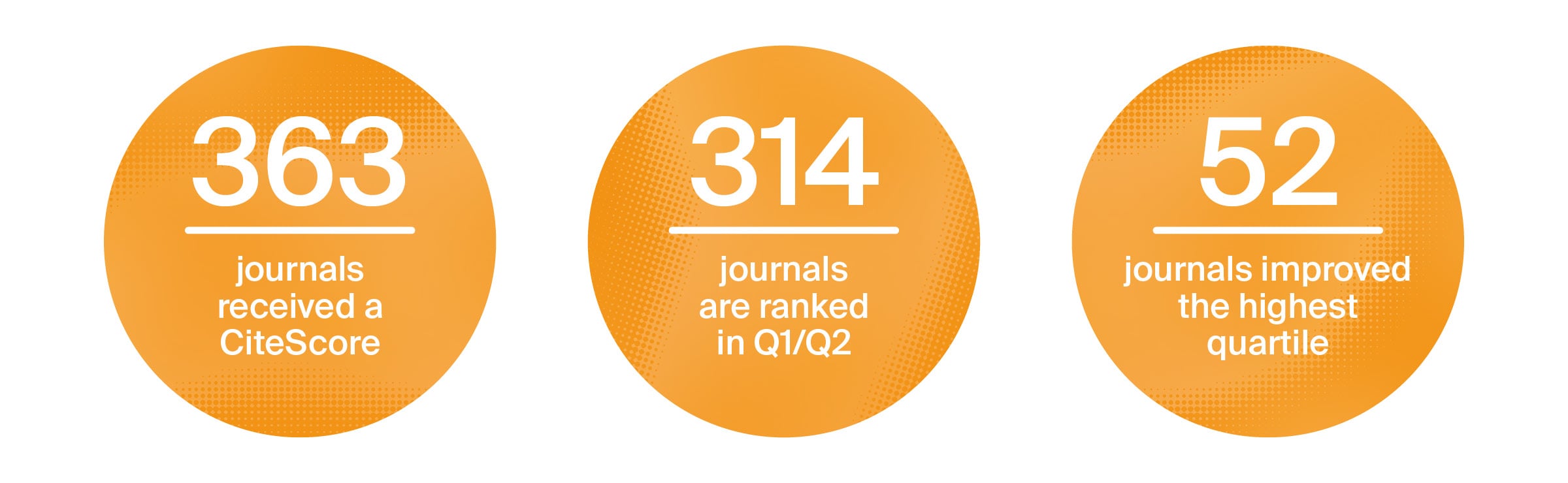
The 2025 CiteScore metrics have been officially released by Scopus, and the results confirm what has become a consistent pattern for MDPI's journal portfolio: broad recognition across disciplines, steady improvement across the majority of ranked titles, and a growing presence at the top of subject category rankings.
CiteScore, published annually by Elsevier's Scopus database, measures the average citations received by articles published in a journal over a four-year window. As a complement to the Journal Impact Factor, which uses a two-year window based on the Web of Science database, CiteScore provides an alternative, long-term perspective on citation performance.
The 365 MDPI journals in Scopus (as of May 2026) are indexed across a wide range of subject categories, ensuring that open access research remains highly discoverable to a global readership through one of the most widely used platforms in academic publishing.
Data Summary (2025 CiteScores)
- New Additions: 41 MDPI journals received a CiteScore for the first time.
- Trending Upward: 234 of 322 previously ranked journals (73%) saw an increase in their CiteScore compared to last year.
- High Visibility: 314 journals (86%) rank in Q1 or Q2 in at least one subject category.
- Elite Performance: 42 journals rank in the top 10% of their subject categories.
Portfolio Performance
Among the 322 journals that held a CiteScore in 2024, 234 saw an increase this year. Quartile improvements outnumbered declines across the portfolio, with 52 journals moving to a higher quartile and only 20 seeing a decline. Furthermore, no previously ranked journals were removed. The 42 journals now ranked in the top 10% of their subject categories are drawn from a strong foundation of 178 journals holding a Q1 position.
With the large majority of our indexed portfolio ranked in the top half of research fields, researchers can confidently choose MDPI to meet funder mandates for high-quality, fully compliant Open Access publishing.
Exceptional Achievements for Foods and Life
Notably, both Foods and Life achieved a 99th percentile ranking in their respective subject categories for the 2025 CiteScores. This outstanding placement positions them as leading journals in their fields and highlights the high visibility and global impact of the open access research they publish.
Journal Metrics and Beyond
Journal-level metrics describe outlets, not individual articles. An increasing number of funders and institutions—including signatories of DORA and the Coalition for Advancing Research Assessment—now explicitly encourage evaluation at the article level rather than by the journal in which research appears. MDPI supports this direction: we report CiteScore alongside the Journal Impact Factor, Journal Citation Indicator, and article-level usage data because no single number captures the full reach and contribution of published research.
Thank You
These results reflect the sustained effort of thousands of editors-in-chief, editorial board members, reviewers, and authors across every field MDPI serves. The metrics are the outcome; the work is yours.
1 June 2026
MDPI INSIGHTS: The CEO’s Letter #35 – 30 Years of Open Science, Open Access Policies, Spain Summit, MMCS 2026 & Antibiotics 2026

Welcome to the MDPI Insights: The CEO's Letter.
In these monthly letters, I will showcase two key aspects of our work at MDPI: our commitment to empowering researchers and our determination to facilitating open scientific exchange.
Opening Thoughts

30 Years of Open Science, Built Together
This month, we officially launched MDPI’s 30th Anniversary campaign and dedicated anniversary website, marking an important milestone in our journey as an open access publisher. What began in 1996 with a single journal and the simple belief that scientific knowledge should be shared openly and freely has grown into a global publishing organization supporting more than 500 journals, 68,000 Editorial Board Members, and millions of researchers worldwide.
The anniversary page, entitled 30 Years of Open Science, Built Together, reflects on the people, milestones, and partnerships that have shaped MDPI over the past three decades. It includes a retrospective of our development, key moments in the evolution of open access, landmark research articles, journal anniversaries, an interview with the CEO, and perspectives from colleagues and partners who have contributed to our success.

Looking back, one of the most striking aspects of our journey is not simply our growth, but the broader transformation of scholarly publishing itself.
Open access has moved from a niche concept to a widely adopted publishing model, helping make research more accessible, discoverable, and impactful for researchers, institutions, policymakers, and society.
MDPI has been part of this transition and continues to invest in the people, technology, partnerships, and research integrity infrastructure needed to support high-quality open science at scale.
While anniversaries naturally encourage reflection, they are also an opportunity to look ahead. The challenges facing scholarly publishing today, including research integrity, artificial intelligence, accessibility, and global participation in science, will require continued collaboration across the research ecosystem. As we celebrate 30 years of publishing, our focus remains on supporting researchers, strengthening trust in open science, and helping shape the future of scholarly communication together.
I encourage you to visit the anniversary page, explore the milestones, and take a moment to reflect on the role each of us has played in contributing to MDPI’s story.
Thank you for being part of this journey.
Impactful Research

Highlights from MMCS 2026 in Beijing (14-17 May)
From 14–17 May, MDPI hosted The 5th Molecules Medicinal Chemistry Symposium (MMCS 2026) in Beijing, China, bringing together academia and industry to explore advances in chemical biology, medicinal chemistry, and drug discovery.
The conference hosted more than 230 attendees from 37 countries and regions, alongside 257 submissions and 145 accepted abstracts. With a significant increase in attendance – up by 100 participants compared with the previous edition – the popularity of MMCS continues to grow in terms of its international profile and scientific relevance within this rapidly evolving field.

The scientific program covered seven themes:
- Chemical Biology for Drug Discovery
- Medicinal Chemistry Research Progress
- Natural Products in Drug Discovery
- AI-enabled Drug Discovery
- GPCR & Ion Channel Targeted Drug Development
- Innovative Proximity-Based Drug Modalities
- Biocatalysis for Natural Product & Drug Synthesis
The event featured three plenary speakers, 14 keynote speakers, 35 selected oral presentations, and 98 poster presentations, creating opportunities for open scientific exchange and collaboration. Conference Chair Prof. Dr. Diego Muñoz-Torrero described this edition as one of the most successful MMCS events to date.
|
|
|


Thanks to our Sponsors
MMCS 2026 secured sponsorship support from 12 industrial partners, 11 of which set up on-site exhibition booths. Covering biopharmaceutical R&D, life science supplies, pharmaceutical experimental instruments, and industrial service sectors, exhibitors were able to connect their businesses directly with attendees and make connections at the conference.

30th Anniversary Celebration of Molecules
During the conference, we also celebrated the 30th anniversary of Molecules, one of MDPI’s flagship journals. The celebration brought together Section Editors-in-Chief, Editorial Board Members, MDPI leadership, and editorial colleagues to reflect on the journal’s development, achievements, and continued future growth.

Events such as MMCS 2026 highlight the important role conferences play in creating scientific exchange and collaboration, and in connecting our research communities in person.
They also reflect the continued development of MDPI’s conference portfolio and our commitment to supporting academic engagement beyond publishing alone. Thanks to everyone involved in organizing and contributing to the success of this event.
Inside MDPI

Open Access Policies Continue to Accelerate Globally
One of the clearest indicators of the continued momentum behind open access is the growing number of national and institutional policies supporting, and increasingly requiring, open dissemination of research.
Around the world, governments, funding agencies, and universities are building their open access mandates, with increasing focus on transparency, rights retention, and public accessibility of publicly funded research. While these policies vary across regions, the broader direction is clear: expectations around openness and compliance continue to accelerate.
For researchers, navigating these evolving requirements can be complex and time-consuming. Supporting the research community therefore means not only publishing high-quality open access content but also helping stakeholders better understand changing requirements and emerging opportunities. At MDPI, we see this as an important part of our role within scholarly communication.
“Expectations around openness and compliance continue to accelerate”
Through the MDPI Blog, our Content team continues to publish monthly articles overviewing different countries’ relationships with open access, exploring their histories, policies, opportunities, and statistics. All this information is centralized into an article which contains brief summaries of each country, with links to all the full articles, and is updated monthly.
Recent Policy Developments
South Africa
In 2026, South Africa’s Department of Science and Innovation introduced the South African Open Science Policy. The policy states that: “Open access shall be required for publications arising from publicly funded research, and desirable for research from all sources of funding.”
The policy envisions a coordinated and broad approach to open science that will sustainably and ethically drive socio-economic development by increasing the practice of open science through policy, training, incentivization, and infrastructure.
Canada
In Canada, the Tri-Agency OA Policy on Publications was revised, removing the 12-month embargo for research that must be deposited in a repository with an open license and with author rights retained.
The Agencies argue that “societal advancement is made possible through widespread and barrier-free access to cutting-edge research and knowledge.”
Chile
Chile is a collaborative and engaged member of the global open access movement.
The National Research and Development Agency (Agencia Nacional de Investigación y Desarrollo, or ANID) is Chile’s main funding agency for R&D. It mandates that all beneficiaries must deposit the final version of their published scientific output, with an embargo period of up to 12 months, into a repository.
ANID also supports the InES Open Science funding program, which allows universities to request funding for capacity and infrastructure building. Further, Chile is an active participant in various international initiatives, such as Redalyc, SciELO, and Red de Repositorios Latinoamericanos.
Openness Beyond Research
At MDPI, openness remains one of our core values, ensuring that research outputs are freely accessible to anyone. This commitment also extends to sharing knowledge about the scholarly publishing landscape itself, which we practice on the MDPI Blog through various topics, including open access, recent advances in science, and opportunities for researchers.
As the open access landscape continues to evolve, helping researchers, institutions, editors, and partners navigate these changes will remain an important priority for us.

Thank You
I would like to thank Jack McKenna (Senior Content Specialist, MDPI) from our Content team for his ongoing work on the MDPI Blog series covering global open access policy developments. Initiatives such as this help make complex policy discussions more accessible and useful to the wider research community.
Coming Together for Science

Reflections from the MDPI Spain Summit 2026 in Valencia (21 May)

On 21 May, we hosted the MDPI Spain Summit 2026 in Valencia.
The Summit brought together 30 Editorial Board Members and MDPI colleagues for a discussions on the future of publishing, research integrity, peer review, artificial intelligence, and the evolving research landscape in Spain.
We hosted participants from leading Spanish institutions and spoke on the importance of Spain as a major contributor to global open access (OA) research. In 2025 alone, Spain ranked among the leading countries worldwide for OA publishing, with more than 85% of publications made openly accessible. MDPI also continues to play a significant role within the Spanish research ecosystem.
MDPI in Spain
Spain remains one of MDPI's most important academic markets and a leading contributor to OA research globally. Ever since our Barcelona office opened in 2016 (Happy 10th Anniversary!), MDPI Spain has been actively supporting researchers, institutions, societies, and academic partners across the country. Today, the office plays an important role in creating engagement with the Spanish scholarly community through editorial support, partnerships, conferences, training initiatives, and outreach activities.
A cluster of high-level indicators highlight both the strength of the local research ecosystem and MDPI’s role within it:
- 43,218 total publications in Spain in 2025, of which 35,728 (83%) were open access (49% Gold OA).
- 211,200+ total publications (2021–2025), with 84% published open access.
- 13,444 MDPI publications from Spanish institutions in 2025, representing 14% of all open access publications in Spain.
- More than115,100 MDPI publications from Spanish institutions since 1996.
- More than 4,500 Editorial Board Members from Spain, including more than 150 Chief Editors and 57 Associate Editors.
- 42 institutional partners participating in MDPI’s Institutional Open Access Program (IOAP).
- Spain ranks second globally for MDPI society affiliations, with 26 affiliated society agreements currently in place.
Program Overview
What made this summit special was the openness of the discussions around the research landscape in Spain and the role MDPI plays within the market. General topics of the presentations included:
- MDPI Introduction – Stefan Tochev (CEO).
- Engagement with the Academic Community – Dr. Marta Colomer (External Affairs Lead).
- Latest Developments in the Editorial Process – Dr. Jordi Martinez (Deputy Managing Editor).
- Research integrity and Publication Ethics – Slavomir Nikodijevic (Research Integrity Specialist).
- A 360 View of Academic Publishing – Prof. Dr. Luis Angel Ruiz Fernandez (EBM of Remote Sensing).
|
|
|
|
|
|
|
|


Panel Discussion
We also hosted a panel discussion moderated by Marta, entitled “The Future of Academic Publishing” with Prof. Luis Ruiz, Prof. Marta Feliz (EBM of the journal Catalysts), Dr. Enric Sayas (Product Owner, AI & Technology Innovation), and myself. The discussion looked at the evolving role of editors, the future of peer review, and the growing importance of maintaining trust, ethics, and research integrity in an era increasingly influenced by artificial intelligence.
|
|
|
|


Themes from the Summit
Several themes emerged throughout the discussions, reflecting broader conversations taking place across publishing:
- The academic community values efficient publishing workflows, but expectations around scientific quality and editorial rigor continue to rise.
- Reviewer fatigue and long-term sustainability of peer review remain major challenges across the industry.
- AI is rapidly changing scholarly communication and requires transparent and responsible governance.
- Reputation and trust continue to depend on long-term engagement, transparency, and quality-focused decision-making.
“Maintaining an open dialogue with researchers, editors, reviewers, and institutions remains a priority for MDPI”
It was constructive to see the willingness of participants to engage directly and candidly with us. These conversations provide insights that help inform how we continue to develop our editorial processes, engagement activities, and support for the research community. While certain discussions included concerns, there was also recognition that open dialogue between publishers and the research community is essential if we want to improve scholarly communication together.
|
|
|
|


Events such as this are increasingly important for MDPI. They allow us to present our perspective, to listen to the experiences, expectations, and concerns of editors, reviewers, and researchers, and to address these accordingly.
Thank You
Thank you to our Barcelona Office and all colleagues involved in organizing the summit, as well as all participants for contributing to these thoughtful and constructive discussions.
|
|
|
|
|
|
|
|


As publishing continues to evolve, maintaining an open dialogue with researchers, editors, reviewers, and institutions remains an important priority for MDPI. Events such as the Spain Summit play an important role in helping us to build relationships, foster trust, and better understand the needs of our community.
Closing Thoughts

Highlights from Antibiotics 2026 in Barcelona (11–14 May)
This week, MDPI hosted the Antibiotics 2026 — Advances in Antimicrobial Action and Resistance conference in Barcelona, bringing together academics and industry experts to discuss one of the most important scientific and public health challenges of our time: antimicrobial resistance.
The conference welcomed 145 attendees from 42 different countries and territories, alongside 265 submissions and 127 accepted abstracts, showing the international reach of the event and the strong scientific interest in this rapidly evolving field.

Scientific Exchange on a Global Challenge
Antimicrobial resistance continues to be a global concern, creating collaboration across disciplines, institutions, and regions. The conference program focused on a range of topics including:
- Antimicrobial resistance mechanisms
- One Health approaches to antimicrobial stewardship
- Discovery of novel antimicrobial agents
- Innovation in clinical strategies and treatment approaches
- Ethnopharmacology and emerging therapies
Through keynote plenaries, invited lectures, oral presentations, and poster sessions, the conference created a platform for dialogue and scientific exchange.
|
|
|


International Participation and Collaboration
One of the highlights of the event was the diversity of participation across both geography and expertise. Researchers and speakers from Europe, North America, Asia, Africa, Australia, and Latin America took part in discussions throughout the conference, highlighting the global nature of both the challenge and the scientific response.
The scientific program included:
- 2 keynote speakers
- 10 invited speakers
- 36 selected talks
- 78 posters
The conference brought together perspectives from academia, healthcare, and industry, helping facilitate interdisciplinary collaboration around future approaches to antimicrobial research and resistance management.
|
|
|
|


The Role of Conferences in Scholarly Communication
Conferences are an important platform for collaboration, scientific exchange, and community-building. Events such as Antibiotics 2026 show the value of bringing researchers together in person to discuss emerging challenges, share new findings, and strengthen international networks across disciplines and regions.

Thank You
I would like to thank the conference chairs, speakers, participants, sponsors, and the entire MDPI conference team for their work in making this event a success. The engagement and positive feedback from attendees highlight the importance of our events in addressing some of the most pressing scientific challenges facing society today.

Chief Executive Officer
MDPI AG
22 May 2026
Machine Learning and Knowledge Extraction | Hot Papers on Explainable Artificial Intelligence
To showcase recent progress in explainable artificial intelligence (XAI), Machine Learning and Knowledge Extraction (MAKE, ISSN: 2504-4990) is pleased to present a curated list of thirteen highlight papers published in 2024.
These works cover key areas such as Shapley additive explanations (SHAP), Grad-CAM, LIME, and cognitive load theory. The methods have been applied across rolling bearing fault diagnosis, medical imaging, cybersecurity, and educational AI, advancing the field toward more transparent, reliable, and responsible intelligent systems.
We hope this selection offers a clear snapshot of current research trends and provides inspiration for further exploration in explainable artificial intelligence.
1. “Cross-Validation Visualized: A Narrative Guide to Advanced Methods”
by Johannes Allgaier and Rüdiger Pryss
Mach. Learn. Knowl. Extr. 2024, 6(2), 1378-1388; https://doi.org/10.3390/make6020065
Available online: https://www.mdpi.com/2504-4990/6/2/65
2. “SHapley Additive exPlanations (SHAP) for Efficient Feature Selection in Rolling Bearing Fault Diagnosis”
by Mailson Ribeiro Santos, Affonso Guedes and Ignacio Sanchez-Gendriz
Mach. Learn. Knowl. Extr. 2024, 6(1), 316-341; https://doi.org/10.3390/make6010016
Available online: https://www.mdpi.com/2504-4990/6/1/16
3. “Empowering Brain Tumor Diagnosis through Explainable Deep Learning”
by Zhengkun Li and Omar Dib
Mach. Learn. Knowl. Extr. 2024, 6(4), 2248-2281; https://doi.org/10.3390/make6040111
Available online: https://www.mdpi.com/2504-4990/6/4/111
4. “A Cognitive Load Theory (CLT) Analysis of Machine Learning Explainability, Transparency, Interpretability, and Shared Interpretability”
by Stephen Fox and Vitor Fortes Rey
Mach. Learn. Knowl. Extr. 2024, 6(3), 1494-1509; https://doi.org/10.3390/make6030071
Available online: https://www.mdpi.com/2504-4990/6/3/71
5. “Uncertainty in XAI: Human Perception and Modeling Approaches”
by Teodor Chiaburu, Frank Haußer and Felix Bießmann
Mach. Learn. Knowl. Extr. 2024, 6(2), 1170-1192; https://doi.org/10.3390/make6020055
Available online: https://www.mdpi.com/2504-4990/6/2/55
6. “Climate Change and Soil Health: Explainable Artificial Intelligence Reveals Microbiome Response to Warming”
by Pierfrancesco Novielli, Michele Magarelli, Donato Romano, Lorenzo de Trizio, Pierpaolo Di Bitonto, Alfonso Monaco, Nicola Amoroso, Anna Maria Stellacci, Claudia Zoani, Roberto Bellotti et al.
Mach. Learn. Knowl. Extr. 2024, 6(3), 1564-1578; https://doi.org/10.3390/make6030075
Available online: https://www.mdpi.com/2504-4990/6/3/75
7. “Analyzing the Impact of Data Augmentation on the Explainability of Deep Learning-Based Medical Image Classification”
by Xinyu (Freddie) Liu, Gizem Karagoz and Nirvana Meratnia
Mach. Learn. Knowl. Extr. 2025, 7(1), 1; https://doi.org/10.3390/make7010001
Available online: https://www.mdpi.com/2504-4990/7/1/1
8. “Tertiary Review on Explainable Artificial Intelligence: Where Do We Stand?”
by Frank van Mourik, Annemarie Jutte, Stijn E. Berendse, Faiza A. Bukhsh and Faizan Ahmed
Mach. Learn. Knowl. Extr. 2024, 6(3), 1997-2017; https://doi.org/10.3390/make6030098
Available online: https://www.mdpi.com/2504-4990/6/3/98
9. “Assessment of Software Vulnerability Contributing Factors by Model-Agnostic Explainable AI”
by Ding Li, Yan Liu and Jun Huang
Mach. Learn. Knowl. Extr. 2024, 6(2), 1087-1113; https://doi.org/10.3390/make6020050
Available online: https://www.mdpi.com/2504-4990/6/2/50
10. “Reliable and Faithful Generative Explainers for Graph Neural Networks”
by Yiqiao Li, Jianlong Zhou, Boyuan Zheng, Niusha Shafiabady and Fang Chen
Mach. Learn. Knowl. Extr. 2024, 6(4), 2913-2929; https://doi.org/10.3390/make6040139
Available online: https://www.mdpi.com/2504-4990/6/4/139
11. “A Novel Integration of Data-Driven Rule Generation and Computational Argumentation for Enhanced Explainable AI”
by Lucas Rizzo, Damiano Verda, Serena Berretta and Luca Longo
Mach. Learn. Knowl. Extr. 2024, 6(3), 2049-2073; https://doi.org/10.3390/make6030101
Available online: https://www.mdpi.com/2504-4990/6/3/101
12. “Why Do Tree Ensemble Approximators Not Outperform the Recursive-Rule eXtraction Algorithm?”
by Soma Onishi, Masahiro Nishimura, Ryota Fujimura and Yoichi Hayashi
Mach. Learn. Knowl. Extr. 2024, 6(1), 658-678; https://doi.org/10.3390/make6010031
Available online: https://www.mdpi.com/2504-4990/6/1/31
by Dominik Vranay, Maroš Hliboký, László Kovács and Peter Sinčák
Mach. Learn. Knowl. Extr. 2024, 6(3), 1439-1465; https://doi.org/10.3390/make6030068
Available online: https://www.mdpi.com/2504-4990/6/3/68
22 May 2026
Machine Learning and Knowledge Extraction | Hot Papers on Large Language Models
To capture the rapid advances in large language models (LLMs), Machine Learning and Knowledge Extraction (MAKE, ISSN: 2504-4990) is pleased to present a curated list of nine hot papers published in 2024.
This collection covers fine‑tuning, prompt engineering, retrieval‑augmented generation (RAG), and multi‑agent approaches, with real‑world applications in fintech, medical diagnosis, and legal text analysis. We hope this selection inspires further development and innovation in intelligent systems.
We hope this selection offers a clear snapshot of current research trends and provides inspiration for further exploration in large language models.
1. “Prompt Engineering or Fine-Tuning? A Case Study on Phishing Detection with Large Language Models”
by Fouad Trad and Ali Chehab
Mach. Learn. Knowl. Extr. 2024, 6(1), 367-384; https://doi.org/10.3390/make6010018
Available online: https://www.mdpi.com/2504-4990/6/1/18
2. “Systematic Analysis of Retrieval-Augmented Generation-Based LLMs for Medical Chatbot Applications”
by Arunabh Bora and Heriberto Cuayáhuitl
Mach. Learn. Knowl. Extr. 2024, 6(4), 2355-2374; https://doi.org/10.3390/make6040116
Available online: https://www.mdpi.com/2504-4990/6/4/116
3. “Visual Reasoning and Multi-Agent Approach in Multimodal Large Language Models (MLLMs): Solving TSP and mTSP Combinatorial Challenges”
by Mohammed Elhenawy, Ahmad Abutahoun, Taqwa I. Alhadidi, Ahmed Jaber, Huthaifa I. Ashqar, Shadi Jaradat, Ahmed Abdelhay, Sebastien Glaser and Andry Rakotonirainy
Mach. Learn. Knowl. Extr. 2024, 6(3), 1894-1920; https://doi.org/10.3390/make6030093
Available online: https://www.mdpi.com/2504-4990/6/3/93
4. “A Text-Based Predictive Maintenance Approach for Facility Management Requests Utilizing Association Rule Mining and Large Language Models”
by Maximilian Lowin
Mach. Learn. Knowl. Extr. 2024, 6(1), 233-258; https://doi.org/10.3390/make6010013
Available online: https://www.mdpi.com/2504-4990/6/1/13
5. “A Study on Text Classification in the Age of Large Language Models”
by Paul Trust and Rosane Minghim
Mach. Learn. Knowl. Extr. 2024, 6(4), 2688-2721; https://doi.org/10.3390/make6040129
Available online: https://www.mdpi.com/2504-4990/6/4/129
6. “Advancing Life Cycle Assessment of Sustainable Green Hydrogen Production Using Domain-Specific Fine-Tuning by Large Language Models Augmentation”
by Yajing Chen, Urs Liebau, Shreyas Mysore Guruprasad, Iaroslav Trofimenko and Christine Minke
Mach. Learn. Knowl. Extr. 2024, 6(4), 2494-2514; https://doi.org/10.3390/make6040122
Available online: https://www.mdpi.com/2504-4990/6/4/122
7. “Optimizing Ingredient Substitution Using Large Language Models to Enhance Phytochemical Content in Recipes”
by Luís Rita, Joshua Southern, Ivan Laponogov, Kyle Higgins and Kirill Veselkov
Mach. Learn. Knowl. Extr. 2024, 6(4), 2738-2752; https://doi.org/10.3390/make6040131
Available online: https://www.mdpi.com/2504-4990/6/4/131
8. “What ChatGPT Has to Say About Its Topological Structure: The Anyon Hypothesis”
by Michel Planat and Marcelo Amaral
Mach. Learn. Knowl. Extr. 2024, 6(4), 2876-2891; https://doi.org/10.3390/make6040137
Available online: https://www.mdpi.com/2504-4990/6/4/137
by Mei Si, Omar Cobas and Michael Fababeir
Mach. Learn. Knowl. Extr. 2024, 6(4), 2435-2446; https://doi.org/10.3390/make6040120
Available online: https://www.mdpi.com/2504-4990/6/4/120
22 May 2026
Machine Learning and Knowledge Extraction | Hot Papers on AI in Healthcare
To highlight the transformative potential of AI in healthcare, Machine Learning and Knowledge Extraction (MAKE, ISSN: 2504-4990) is pleased to present a curated list of twelve hot papers published in 2024.
These works focus on deep learning, Bayesian networks, and optimization algorithms for critical tasks such as medical imaging analysis, cardiovascular disease prediction, and clinical diagnostics. This interdisciplinary collection aims to provide cutting-edge insights into precision medicine and intelligent health monitoring.
We hope this selection offers a clear snapshot of current research trends and provides inspiration for further exploration in medical imaging and disease diagnosis.
1. “Alzheimer’s Disease Detection Using Deep Learning on Neuroimaging: A Systematic Review”
by Mohammed G. Alsubaie, Suhuai Luo and Kamran Shaukat
Mach. Learn. Knowl. Extr. 2024, 6(1), 464-505; https://doi.org/10.3390/make6010024
Available online: https://www.mdpi.com/2504-4990/6/1/24
2. “Medical Image Classifications Using Convolutional Neural Networks: A Survey of Current Methods and Statistical Modeling of the Literature”
by Foziya Ahmed Mohammed, Kula Kekeba Tune, Beakal Gizachew Assefa, Marti Jett and Seid Muhie
Mach. Learn. Knowl. Extr. 2024, 6(1), 699-735; https://doi.org/10.3390/make6010033
Available online: https://www.mdpi.com/2504-4990/6/1/33
3. “Systematic Analysis of Retrieval-Augmented Generation-Based LLMs for Medical Chatbot Applications”
by Arunabh Bora and Heriberto Cuayáhuitl
Mach. Learn. Knowl. Extr. 2024, 6(1), 699-735; https://doi.org/10.3390/make6010033
Available online: https://www.mdpi.com/2504-4990/6/4/116
4. “Multilayer Perceptron Neural Network with Arithmetic Optimization Algorithm-Based Feature Selection for Cardiovascular Disease Prediction”
by Fahad A. Alghamdi, Haitham Almanaseer, Ghaith Jaradat, Ashraf Jaradat, Mutasem K. Alsmadi, Sana Jawarneh, Abdullah S. Almurayh, Jehad Alqurni and Hayat Alfagham
Mach. Learn. Knowl. Extr. 2024, 6(2), 987-1008; https://doi.org/10.3390/make6020046
Available online: https://www.mdpi.com/2504-4990/6/2/46
5. “Bayesian Networks for the Diagnosis and Prognosis of Diseases: A Scoping Review”
by Kristina Polotskaya, Carlos S. Muñoz-Valencia, Alejandro Rabasa, Jose A. Quesada-Rico, Domingo Orozco-Beltrán and Xavier Barber
Mach. Learn. Knowl. Extr. 2024, 6(2), 1243-1262; https://doi.org/10.3390/make6020058
Available online: https://www.mdpi.com/2504-4990/6/2/58
6. “Impact of Nature of Medical Data on Machine and Deep Learning for Imbalanced Datasets: Clinical Validity of SMOTE Is Questionable”
by Seifollah Gholampour
Mach. Learn. Knowl. Extr. 2024, 6(2), 827-841; https://doi.org/10.3390/make6020039
Available online: https://www.mdpi.com/2504-4990/6/2/39
7. “Application of Bayesian Neural Networks in Healthcare: Three Case Studies”
by Lebede Ngartera, Mahamat Ali Issaka and Saralees Nadarajah
Mach. Learn. Knowl. Extr. 2024, 6(4), 2639-2658; https://doi.org/10.3390/make6040127
Available online: https://www.mdpi.com/2504-4990/6/4/127
8. “Evaluation of AI ChatBots for the Creation of Patient-Informed Consent Sheets”
by Florian Jürgen Raimann, Vanessa Neef, Marie Charlotte Hennighausen, Kai Zacharowski and Armin Niklas Flinspach
Mach. Learn. Knowl. Extr. 2024, 6(2), 1145-1153; https://doi.org/10.3390/make6020053
Available online: https://www.mdpi.com/2504-4990/6/2/53
9. “Explicit Physics-Informed Deep Learning for Computer-Aided Diagnostic Tasks in Medical Imaging”
by Shira Nemirovsky-Rotman and Eyal Bercovich
Mach. Learn. Knowl. Extr. 2024, 6(1), 385-401; https://doi.org/10.3390/make6010019
Available online: https://www.mdpi.com/2504-4990/6/1/19
10. “Overcoming Therapeutic Inertia in Type 2 Diabetes: Exploring Machine Learning-Based Scenario Simulation for Improving Short-Term Glycemic Control”
by Musacchio Nicoletta, Rita Zilich, Davide Masi, Fabio Baccetti, Besmir Nreu, Carlo Bruno Giorda, Giacomo Guaita, Lelio Morviducci, Marco Muselli, Alessandro Ozzello et al.
Mach. Learn. Knowl. Extr. 2024, 6(1), 420-434; https://doi.org/10.3390/make6010021
Available online: https://www.mdpi.com/2504-4990/6/1/21
11. “Insights from Augmented Data Integration and Strong Regularization in Drug Synergy Prediction with SynerGNet”
by Mengmeng Liu, Gopal Srivastava, J. Ramanujam and Michal Brylinski
Mach. Learn. Knowl. Extr. 2024, 6(3), 1782-1797; https://doi.org/10.3390/make6030087
Available online: https://www.mdpi.com/2504-4990/6/3/87
12. “Classifying Breast Tumors in Digital Tomosynthesis by Combining Image Quality-Aware Features and Tumor Texture Descriptors”
by Loay Hassan, Mohamed Abdel-Nasser, Adel Saleh and Domenec Puig
Mach. Learn. Knowl. Extr. 2024, 6(1), 619-641; https://doi.org/10.3390/make6010029
Available online: https://www.mdpi.com/2504-4990/6/1/29
6 May 2026
Meet Us at the 16th Global TechMining Conference, 20–22 May 2026, Wuhan, China

The 16th Global TechMining Conference (GTM) will be held in Wuhan, China, from 20 to 22 May 2026. Search Technology via the VP Institute is pleased to co-host the 16th Global TechMining Conference (GTM 2026) in collaboration with the School of Information Management (SIM), Wuhan University, China.
Key areas of interest for GTM 2026 include data-driven methodologies and innovative applications in tech mining. The conference will explore advanced approaches in text mining, artificial intelligence, and machine learning for analyzing scientific and technological information. It will also highlight the role of tech mining in supporting technology forecasting, strategic decision-making, and R&D management, alongside its applications in emerging fields such as artificial intelligence, biomedicine, and quantum technologies.
The following MDPI journals will be represented:
If you are attending this conference, please feel free to start an online conversation with us. Our delegates look forward to meeting you in person at our booth and answering any questions that you may have. For more information about the conference, please visit the following link: https://www.gtmconference.org/.
6 May 2026
MDPI INSIGHTS: The CEO's Letter #34 - MDPI US Office, Coatings 2026, Media and Partnerships, Recapping Poland Summit & Serbia Salon
Welcome to the MDPI Insights: The CEO's Letter.
In these monthly letters, I will showcase two key aspects of our work at MDPI: our commitment to empowering researchers and our determination to facilitating open scientific exchange.
Opening Thoughts

MDPI Opens First US Office in Philadelphia
I am delighted to highlight an important milestone in MDPI’s continued global development: the recent opening of our first office in the United States, located in Philadelphia.
This marks a significant step in building our engagement with one of the world’s most important research communities. The new office will serve as a hub for supporting scholars across the US, creating closer connections and more localized support.
As highlighted in recent coverage by our press release in InPublishing, this expansion reflects MDPI’s broader commitment to growing our international presence while remaining focused on the needs of the research community.
A Key Market for Research and Collaboration
The United States continues to play a central role in global research. To date, MDPI has published more than 237,000 articles affiliated with US institutions, and we collaborate with nearly 12,000 Editorial Board Members across the country. These relationships are fundamental to our mission of supporting Open Access and advancing scientific communication.
The opening of this office is not just about geography; it is about proximity to the communities we serve. It allows us to better understand the evolving needs of researchers while continuing to build collaboration and trust within the academic ecosystem.
The Team Behind this Milestone

This milestone reflects the efforts of teams across MDPI. I extend a special thank-you to Bob Vrooman (Head of Business Development, MDPI), who is leading this expansion, as well as to our colleagues in Toronto and across our North American teams for their continued support.
Bob shared: “MDPI is already a trusted partner of the North American research community, due in no small part to our dedicated team in Canada. Launching our first US office in Philadelphia is a great first step towards expanding MDPI’s market share and recognition in the US. I’m thrilled to be a part of this new phase in MDPI’s journey.”
As we continue to grow, our focus remains on supporting researchers globally and advancing Open Access with integrity.
Impactful Research

Coatings 2026: Highlights from Our Latest MDPI Conference (20-22 April)
I am pleased to share the successful completion of MDPI conference Coatings 2026, which took place last week in Athens from 20 to 22 April 2026. This conference brought together a diverse international community of researchers, industry experts, and partners, highlighting MDPI’s role not only as a publisher but also as a platform for scientific exchange and collaboration.
Conference Highlights
Coatings 2026 in numbers:
- The event attracted approximately 140 participants from 25 countries
- 143 submissions and a strong scientific program of talks and posters
- 2 keynote speakers and a wide range of invited contributions
- 7 sponsors and 11 media partners supporting the event
|
|
|
|
|
|


Scientific Programme
The program centered on “Safe and Sustainable by Design,” reflecting the growing importance of sustainability, regulatory frameworks, and technological innovation in materials science. Topics ranged from advanced coating technologies and additive manufacturing to AI-driven simulations and strategies to phase out potentially harmful substances in industrial processes.
Importantly, the conference brought together both academic and industrial perspectives, creating a space for dialogue on how research can translate into real-world impact. This is important as industries navigate environmental challenges, evolving regulations, and the need for more sustainable and circular approaches to production.
Thank You!
I would like to thank the entire conference team for their work in organizing this successful event. As we continue to grow, conferences like this play an important role in building our connection with global research communities, supporting interdisciplinary collaboration, and positioning MDPI at the intersection of science, technology, and societal impact.
 Members from Exelisis and MDPI EU Conference & Social Media team at the Coatings 2026 Conference in Athens, Greece.
Inside MDPI

Recent Media Coverage and Partnerships
Over the past two months, news from MDPI has enjoyed strong visibility across international publishing and academic media, reflecting our continued expansion and the increasing relevance of our work within the research community.
Below are some highlights covering partnerships, institutional agreements, and milestones that continue to shape our position in publishing – some of which are featured in leading industry platforms such as InPublishing, which is highly selective and reflects the growing recognition of MDPI’s growth within the publishing ecosystem.
Key Press Releases & Coverage (March–April 2026)
-
MDPI × Sikt (Norway): Partnership Renewal
We renewed our national Open Access agreement with Sikt, a key consortium partnership, continuing to support researchers across Norway through this partnership. The renewal was covered by several international publishing trade outlets.
Covered by: Research Information, STM Publishing News, ALPSP, Europe Says
-
MDPI × Jisc (UK): New Two-Year Open Access Agreement
A new two-year agreement with Jisc significantly expands MDPI’s footprint across UK academic institutions. Coverage appeared across major publishing industry titles in the UK and internationally.
Covered by: InPublishing, Research Information, STM Publishing News, ALPSP
-
MDPI Opens First US Office
The opening of our first US office marks an important milestone in our North American expansion to build engagement with one of the world’s leading research communities.
Coverage by: EurekAlert!, InPublishing, EdTech Innovation Hub, STM Publishing News, ALPSP
-
MDPI × SIGG: Italian Society of Gerontology and Geriatrics
We established a new partnership with the Italian Society of Gerontology and Geriatrics (SIGG), adding to our growing portfolio of society collaborations.
Coverage by: EurekAlert!, STM Publishing News, ALPSP
-
MDPI × Fast Track Health: New Journal Launch
The launch of a new journal in partnership with Fast Track Health reflects our continued expansion into emerging areas of health innovation.
Coverage by: EurekAlert!, Scienmag, STM Publishing News, ALPSP
-
MDPI 2025 Annual Report
Our 2025 Annual Report was also widely covered across international media, highlighting a 12% increase in submissions and continued investment in research integrity, infrastructure, and partnerships.
Coverage by: EurekAlert!, Research Information, STM Publishing News, ALPSP, Choice 360
Coverage also spanned multiple regions including Poland, Romania and South Korea, reflecting our ongoing efforts to communicate more effectively with regional research communities.
Looking Ahead
This coverage shows that MDPI is growing and building on its position through partnerships, visibility, and engagement across regions. As we continue to expand, our focus remains on supporting researchers globally, building on our institutional collaborations, and advancing Open Access with integrity.
Thank you to all teams involved in delivering these initiatives, and to our External Affairs team for ensuring our work is effectively communicated across the global publishing landscape!
Coming Together for Science

Recapping MDPI Poland Summit 2026 in Krakow (23 April)
On 23 April 2206, we hosted the first MDPI Poland Summit 2026 in Kraków, bringing together an engaged group of editors, researchers, and academic leaders from the country.
The Poland Summit welcomed some 45 participants, including Editors-in-Chief, Associate Editors, and Editorial Board Members, many with strong academic track records and international recognition.
Our engagements were open and constructive, focusing on MDPI’s positioning and reputation in Poland, alongside community interest in supporting our development, with active participation across our sessions, including Q&A and panel discussions.
|
|
|
|


MDPI Poland Summit Programme
From research integrity and peer review quality to AI in publishing and the future of academic communication, the agenda featured important topics currently shaping our industry.
During the day, MDPI colleagues shared a series of presentations covering:
- MDPI’s performance, growth, and impact in Poland: Stefan Tochev (CEO)
- Engagement with Academic Community: Dr. Marta Colomer (Public Affairs Lead)
- Research Integrity and Publication Ethics: Anna Pena (Research Integrity Manager)
- MDPI Editorial Process and Peer-Review Quality Metrics: Dr. Liliane Auwerter (Conference Organizer)
- AI in the Publishing Industry – Challenges, Innovation and MDPI’s vision: Dr. Enric Sayas (AI Product Owner)
- Panel Session: The Future of Academic Publishing, moderated by Dr. Marta Colomer
|
|
|
|
|
|
|
|


Poland as a Key Market for Open Access
The summit also highlighted the importance of Poland within the global research landscape.
In 2025:
- 75% of publications in Poland were made in Open Access
- 71% of those in Gold Open Access
- and over 344,000 publications produced in the last five years
MDPI plays a significant role in the Polish publishing ecosystem:
- #1 Open Access publisher in Poland
- 17% share of Open Access publications in 2025
- More than 12,500 publications from Polish institutions in 2025
- More than 91,000 publications overall since 1996
Looking Ahead
Events like the Poland Summit are an important part of how we evolve as an organization. They allow us to share the latest developments of MDPI and listen directly to our researchers and editors to better understand the market and align our development with the needs of the local community.
As MDPI continues to grow, this type of engagement will remain essential in ensuring that we are not only scaling globally, but doing so in a way that is aligned, trusted, and collaborative.

With Igor Matic (Office Manager, Krakow, Poland, MDPI) at the MDPI Poland Summit in Krakow.
Closing Thoughts

Recapping MDPI Serbia Salon 2026 in Belgrade (22 April)
On 22 April 2026, we hosted the MDPI Serbia Salon 2026 in Belgrade. The Salon welcomed over 50 participants, including more than 40 invited scholars from leading Serbian institutions, alongside colleagues from MDPI. The event also marked two important milestones: 30 years of MDPI and 10 years of our presence in Serbia, making it a celebration and an opportunity for reflection.

A Platform for Exchange
The Salon was designed not just as a series of presentations, but as a place for dialogue. Throughout the day, discussions focused on important topics around publishing today: research integrity and editorial standards, journal indexing and visibility, the evolving role of artificial intelligence, and funding and support for Open Access publishing.
|
|
|
|
|
|
|
|


Program Overview
- Opening the Salon MDPI Serbia 2026 – Serbia results and direction: Emir Ramadani (Operations Manager)
- Update on MDPI’s performance and growth: Stefan Tochev (CEO)
- Collaboration with MDPI – A personal perspective: Prof. Dr Srećko Stopić (Editorial Board Member)
- Linking Scientific Quality and Visibility: The role of indexing in publishing
- Research integrity and editorial ethics: Ana Stanković (Research Integrity Specialist)
- Artificial Intelligence in Scientific Publishing – Challenges, innovations and vision of MDPI: Dr Miloš Čučulović (Head of Technology Innovation)
It was encouraging to see the high level of engagement and discussion with the local academic community.
|
|
|
|
|
|
|
|


Publishing in Serbia
With 10 years of MDPI in Serbia (since 2016) and over 620 colleagues across 10 departments spread across offices in Belgrade and Novi Sad, MDPI continues to invest in the long-term development of the research community in Serbia and beyond.
Some high-level indicators illustrate both the strength of the local research ecosystem and MDPI’s role within it:
- 12,910 total publications in Serbia in 2025, of which 8,708 (67%) were Open Access (of which, in turn, 75% were Gold OA)
- A total of more than 55,000 publications (2021–2025), with 68% published Open Access
- 2,122 MDPI publications from Serbian institutions in 2025
- 25% of all Open Access publications in Serbia are published with MDPI
- More than 11,000 MDPI publications from Serbian institutions since 1996
- More than 75 Editorial Board Members from Serbia, including Editors-in-Chief and Associate Editors.
These figures reflect the growth of OA publishing in Serbia and the strong collaboration between MDPI and Serbia's research community.
Top 5 Publishers in Serbia (MDPI #1 with steady growth)

Looking Ahead
Research integrity and artificial intelligence will remain central topics for the industry. At the same time, clear communication of editorial processes will be essential in building trust and transparency.
Workshops and direct engagement remain among the most effective ways to strengthen these connections. As Open Access funding models continue to evolve, new opportunities for collaboration are emerging across institutions, publishers, and the broader research community.
Thank You!
The excellent feedback from participants shows the value of creating spaces where ideas can be exchanged openly and constructively. Sincere thanks to everyone who contributed to the success of this event: our speakers, participants, and especially the MDPI Serbia team for their great organization and support.

Chief Executive Officer
MDPI AG
27 April 2026
Meet Us at the 31st Australasian Conference on Information Security and Privacy (ACISP 2026), 6–9 July 2026, Perth, Australia

MDPI will attend the 31st Australasian Conference on Information Security and Privacy as an exhibitor. This meeting will be held in Perth, Australia, from 6 to 9 July 2026.
ACISP 2026 will take place in the beautiful and historic city of Perth, and will offer a unique opportunity to connect, learn, and shape the future of our field. It will be organized by the University of Western Australia (UWA) and Edith Cowan University (ECU). The conference’s topics of interest include, but are not limited to, the following:
- Information;
- Blockchains;
- Future Internet;
- Algorithms;
- Computers;
- Cryptography;
- Entropy;
- JCP;
- MAKE;
- Network;
- Software.
If you are attending this conference, please feel free to start an online conversation with us. Our delegates look forward to meeting you in person at our booth and answering any questions you may have. For more information about the conference, please visit the following website: https://acisp.org/.
24 April 2026
Prof. Dr. William Gerwick Appointed Chair of the 2026 Tu Youyou Award Committee
We are honored to announce that Prof. Dr. William Gerwick will serve as the Chair of the 2026 Tu Youyou Award Committee.
A world-renowned authority in marine natural products chemistry and pharmacology, Professor Gerwick is a Distinguished Professor at both the Scripps Institution of Oceanography and the Skaggs School of Pharmacy and Pharmaceutical Sciences at the University of California San Diego (UCSD). His pioneering work at the intersection of ocean sciences and drug discovery makes him a fitting leader for an award centered on transformative medicinal breakthroughs.
Under Professor Gerwick’s stewardship, the 2026 Tu Youyou Award Committee will focus on recognizing innovative and impactful research in natural products chemistry and medicinal chemistry, particularly work with the potential to drive meaningful advances in both scientific understanding and human health.
To provide further insight into his perspectives, we include below an interview with Professor Gerwick, in which he reflects on his scientific journey, his views on the field, and his vision for the Tu Youyou Award.
A Conversation with the Chair

1. Could you please introduce yourself and your research journey?
My research focuses on the natural products of marine algae and cyanobacteria, their application in medicine, their biosynthesis using genomic approaches, and innovative methods in the structure elucidation of natural products.
I received my BS degree from the University of California at Davis, my PhD from the University of California at San Diego, and conducted postdoctoral work at the University of Connecticut. After a couple of years in a junior faculty position at the Department of Chemistry at the University of Puerto Rico, I spent 21 years as Professor of Pharmacy at Oregon State University. In 2005, I returned to my PhD institution at the Scripps Institution of Oceanography and the Skaggs School of Pharmacy and Pharmaceutical Sciences at UC San Diego, where I am currently a Distinguished Professor of Oceanography and Pharmaceutical Sciences.
Throughout my career, I have been dedicated to advancing the field through both leadership and mentorship. I have served as president of the American Society of Pharmacognosy, chaired and co-chaired several major research conferences, and served as an associate editor for the Journal of Natural Products. I am a Fellow of the American Association for the Advancement of Science (AAAS) and of the American Society of Pharmacognosy. I have trained over 100 doctoral and postdoctoral students, and my research group has published nearly 500 papers and more than 25 patents on topics in the natural product sciences and medicinal chemistry.
2. What motivated you to accept the role of Chair of the 2026 Tu Youyou Award Committee?
Of course, I am a huge supporter of all awards that are given in recognition of excellent scientific research, and especially so in the natural products sciences and medicinal chemistry. However, this award is truly special in that it recognizes scientific excellence as well as impact, and is given in the name of an individual, Tu Youyou, who clearly had many challenges along the path to reach the pinnacle of her success. Not only was she the first Chinese person to win a Nobel prize in this area, but she was also the first Chinese woman to receive a Nobel prize, and this was achieved without graduate education in China or elsewhere. It’s a true testament to what can be achieved by hard work, determination, and vision. To read the history of her extraordinary approach to discovering novel antimalarial compounds from Traditional Chinese Medicine is truly inspirational. It is, therefore, the inspiration provided by the extraordinary life and career of Tu Youyou that motivated me to accept the Chair of the Award Committee for 2026.
3. How do you view the role of natural products chemistry and medicinal chemistry in today’s scientific landscape, and what major advances over the past decade have shaped this field?
A quite remarkable integration of fields is currently transforming natural products science and medicinal chemistry. In natural products, we are seeing integration of different omics methods, from metabolites to proteins to nucleic acids. Sophisticated biological and pharmacological approaches are driving the discovery of exquisitely potent and selective natural products. Advances are being made to integrate molecular-level recognition of natural products with chemical ecological studies, and sophisticated methods of structure determination using Artificial Intelligence or pioneering new tools such as microED are being applied with increasing frequency. High-level synthetic methodologies, such as protecting group-free synthetic routes, are enhancing medicinal chemistry, accelerating the identification of lead molecules with attractive pharmaceutical properties at an increasing pace.
4. How do you consider the balance between fundamental discovery (e.g., new molecules or mechanisms) and practical impact (e.g., therapeutic applications)?
Many individuals are excellent scientists and mentors, and have essential roles in developing our culture that values science and the scientific method. It should also be pointed out that not all scientific discoveries are going to have a broad societal impact, but they are nevertheless critical to the overall body and structure of science. But it is a truly remarkable individual who makes a key scientific discovery, recognizes its potential value to society in general, and then has the skills and determination to bring it forward as a useful product. That was the type of person the Tu Youyou is, and that is the type of person who is honored by the prize in her name.
5. What do you see as the key challenges or opportunities currently facing the field?
We are on the crux of an amazing revolution in many of the sciences, including natural products and medicinal chemistry; the purposeful application of Artificial Intelligence to solving many of the difficulties involved in the search for new pharmaceuticals from Nature. AI is transforming how we select organisms for study, what pharmaceutical targets to go after, rapidly resolving the chemical structures of new compounds, identifying efficient routes to their chemical synthesis, understanding their molecular mechanisms of action, and finally, designing their clinical application. The role of people in these pursuits is changing. Increasingly, the human role will be providing overall vision: what can we do? What should we do? And it is important to remember that AI is providing hypotheses, not truth. Scientists with expert domain knowledge will be critical for discerning the correctness of hypotheses put forth by AI. Altogether, advances in technology, expanding knowledge, and the appropriate use of AI methods are preparing society to be able to address emerging diseases, such as pandemics, as well as conditions that are not effectively treated by currently existing therapeutics.
6. How do you expect the Tu Youyou Award to contribute to the advancement of natural product chemistry, medicinal chemistry, and human health over the coming years?
The Tu Youyou Award is potentially transformative for the broad fields of natural products science and medicinal chemistry as it brings a significantly increased level of visibility to these topics and their contributions to human health. It will be crucial to have excellent communication to news agencies, social media and other communication outlets so that the general public is informed and educated on the high impact of these natural product/medicinal chemistry contributions. This will bring increased funding, attract promising students, and generally enrich the interface of these fields with the health sector.
7. What message would you like to convey to the research community and the public during this open nomination phase?
This prize gives broad societal visibility to the role that natural products have had in shaping a majority of our current medicines, as well as understanding the life forms with whom we share the planet. Further, it recognizes a woman scientist working under sub-optimal conditions who could persevere and make discoveries of global impact. The prize and what it represents, therefore, inspires current and future generations to engage in the study of Nature and its relationship to Human Health, to overcome adversity, and to aspire to making one’s life impactful.
About the Tu Youyou Award
Established in 2016, the Tu Youyou Award seeks to honor those who excel in the fields of natural products chemistry and medicinal chemistry. This award offers a total prize of CHF 100,000, which will be equally divided among the winners if there is more than one, with each recipient receiving an award medal and a certificate.
The 2026 Tu Youyou Award is open for nominations until 31 October 2026. We encourage all eligible candidates to participate in this prestigious recognition, as this award not only honors individual achievement but also encourages further scientific exchange, exploration and discovery in critical areas of medicine.
If you are interested in participating, please visit the Tu Youyou Award website for more information on the nomination requirements.
