


Journal Menu
► ▼ Journal Menu-
- Healthcare Home
- Aims & Scope
- Editorial Board
- Reviewer Board
- Topical Advisory Panel
- Early Career Editorial Board
- Instructions for Authors
- Special Issues
- Topics
- Sections & Collections
- Article Processing Charge
- Indexing & Archiving
- Editor’s Choice Articles
- Most Cited & Viewed
- Journal Statistics
- Journal History
- Journal Awards
- Society Collaborations
- Conferences
- Editorial Office
Journal Browser
► ▼ Journal BrowserNeed Help?
Announcements
22 January 2026
Recruiting Editorial Board Members for Healthcare

The journal Healthcare (ISSN: 2227-9032) is looking for new Editorial Board Members to help further our mission of open science and scientific exchange.
All manuscripts published by MDPI are made immediately available worldwide under a Creative Commons Attribution License (CC BY 4.0) (https://creativecommons.org/licenses/by/4.0/), which means that every paper is free to access and receives maximum exposure.
This journal encompasses all topics relating to the various aspects of medicine and healthcare research, with fields of interest including, but are not limited to, the following:
- Nursing and clinical care;
- Preventive healthcare;
- Quality of care;
- Healthcare technology;
- Healthcare system, management, and policy.
More details can be found at the following link: https://www.mdpi.com/journal/healthcare/about.
Editorial Board Members are responsible for upholding the academic and scientific quality of MDPI publications. The initial term lasts for 2 years.
The main responsibilities of Editorial Board Members are as follows:
- Pre-screening and making decisions on new submissions related to your research interests;
- Running at least one Special Issue during your term on a topic related to your research interests (or supervising Special Issues related to your research field);
- Helping to attract suitable expert authors and inviting young scholars to join the Early Career Editorial Board;
- Providing input or feedback regarding journal policies;
- Helping to promote the journal among your peers or at conferences;
- Attending Board meetings to suggest journal development strategies;
- Reviewing manuscripts.
The benefits of Editorial Board Members are as follows:
- Contributing to open science and exchange;
- Increasing knowledge of your research field through exposure to new research and that of your peers;
- Expanding your research network by collaborating with other Editorial Board Members of the journal;
- Advancing your career by being active in your research field through your contributions to the journal;
- Receiving a full waiver on one publication per year once it has been accepted by the journal.
If you are interested in joining us, please provide your academic CV or your official website and a list of keywords related to your research interests to the Editorial Office (healthcare@mdpi.com).
Healthcare Editorial Office
1 September 2026
Meet Us at the 2026 Annual Congress of Chinese Thoracic Society, 16–20 September 2026, Guangzhou, China

MDPI will be attending the 2026 Annual Congress of Chinese Thoracic Society in Guangzhou, China, which will take place from 16 to 20 September 2026. This conference, hosted by the Chinese Medical Association and its Respiratory Diseases Branch, will focus on advancements in the prevention, pathogenesis, diagnosis, treatment, epidemiology, and basic research of respiratory diseases. It will facilitate extensive and in-depth exchanges on the latest developments in clinical and basic medicine across various fields, including respiratory failure and critical care, respiratory infections, chronic obstructive pulmonary disease (COPD), bronchial asthma, bronchiectasis, pulmonary embolism and pulmonary vascular disease, interstitial lung disease, lung cancer, pleural and mediastinal diseases, sleep-disordered breathing, respiratory genetics and rare diseases, tobacco medicine, respiratory health and comorbidities, interventional pulmonology, pulmonary function and respiratory physiology, respiratory therapy, respiratory rehabilitation, respiratory nursing, pediatric respiratory medicine, primary care respiratory medicine, and medical humanities and social sciences. If you are attending the conference, please visit our booth (# B14); our delegates look forward to meeting you in person and answering any questions you may have.
The following open access journals will be represented at the conference:
- Advances in Respiratory Medicine (ARM, leading);
- Healthcare (leading);
- Journal of Clinical Medicine (JCM, leading);
- Diagnostics.
1 September 2026
MDPI INSIGHTS: The CEO’s Letter #38 – 2 Million Published Articles, Outstanding Reviewers, Michele Parrinello Award, AIS 2026 & WSF-12

Welcome to the MDPI Insights: The CEO's Letter.
In these monthly letters, I will showcase two key aspects of our work at MDPI: our commitment to empowering researchers and our determination to facilitating open scientific exchange.
Opening Thoughts

MDPI Reaches 2 million Published Articles
This month, MDPI reached an important milestone: the publication of our two-millionth article.
It is a number that would have been difficult to imagine in 1996, when MDPI’s first journal, Molecules, published its first volume of 74 papers. It took 25 years to reach our first million published articles in December 2022, and less than four years to reach the second million in August 2026.
From 74 Papers to Two Million Articles
The milestone also comes during our 30th anniversary year, providing another opportunity to reflect on how both MDPI and Open Access publishing have developed over the past three decades. Today, more than half of the world’s published research is Open Access, while MDPI has grown into a portfolio of journals supported by more than 70,000 Editorial Board Members. In 2025 alone, articles published in MDPI journals received 1.9 billion views and downloads.
While two million is an impressive number, what matters most is what sits behind it. Every article represents research conducted and shared by authors, editorial decisions made by academic editors, expertise contributed by reviewers, and the work of colleagues across MDPI supporting the publication and dissemination of research.
Many of the stories in this month’s CEO Letter reflect these communities. We recognize the contributions of the more than 209,000 reviewers who supported MDPI journals in 2025, celebrate scientific excellence through the inaugural Michele Parrinello Award, and look at how communities continue to develop through AIS 2026 and the 12th World Sustainability Forum.
“In 2025 alone, articles published in MDPI journals received 1.9 billion views and downloads”
Publishing at Scale, with Purpose
Reaching two million articles is an important milestone in MDPI’s history, but it is also a reminder of the responsibility that comes with publishing at this scale. As we look ahead, our focus remains on quality, research integrity, strong editorial standards, and providing researchers with reliable and efficient ways to share their work openly with the world.
Thank you to our authors, editors, reviewers, institutional partners, and colleagues around the world who have contributed to this journey.
Impactful Research

Recognizing Scientific Excellence: The Michele Parrinello Award
Supporting researchers means more than publishing and disseminating scientific work. It also means recognizing the researchers, editors, reviewers, and scholars whose contributions advance their fields.
I’m pleased to highlight the inaugural Michele Parrinello Award, which has been awarded to Prof. Ursula Röthlisberger of the École Polytechnique Fédérale de Lausanne (EPFL), Switzerland. Prof. Röthlisberger was recognized for her contributions to computational chemistry and molecular simulation, particularly her pioneering work in ab initio molecular dynamics and quantum mechanical/molecular mechanical (QM/MM) multiscale simulation methods.
Prof. Röthlisberger leads the Laboratory of Computational Chemistry and Biochemistry at EPFL, developing computational approaches to understand complex chemical, biological, and materials systems at the atomic level. Her work also extends to next-generation photovoltaic materials, demonstrating the interdisciplinary reach of computational science.
The Michele Parrinello Award was established in 2025 to honor Prof. Michele Parrinello's pioneering contributions to atomistic simulation and computational science. Presented biennially, it recognizes senior researchers who have made significant contributions across physics, chemistry, and materials science. The recipient receives a EUR 50,000 prize, commemorative medal, and certificate.
Awarding Scientific Excellence
The selection was overseen by an international Award Committee, chaired by Prof. Dr. Xin-Gao Gong of Fudan University and a group of researchers from institutions in China, Italy, the UK, and the USA. Nominations were evaluated based on rigor, integrity, and academic excellence. In announcing the winner, Prof. Gong highlighted the impact of Prof. Röthlisberger’s research across multiple scientific disciplines, alongside her contributions to education and leadership within the international research community.
Recognizing Contributions Across the Research Community
The Michele Parrinello Award is part of MDPI’s broader commitment to recognizing excellence across different disciplines, contributions, and career stages.
Our journal awards include:
- Best Paper Awards – recognizing outstanding published research
- Young Investigator Awards – supporting exceptional early-career researchers
- Best PhD Thesis Awards – recognizing promising emerging scholars
- Outstanding Reviewer Awards – acknowledging the essential contribution of peer reviewers
- Travel Awards – helping early-career researchers participate in international conferences
- Editor of Distinction Awards – recognizing exceptional contributions from Editorial Board Members.
Alongside these journal awards, MDPI supports flagship initiatives including the Tu Youyou Award, the World Sustainability Award, the Emerging Sustainability Leader Award, and now the Michele Parrinello Award.
Learn More:
Inside MDPI

Recognizing the People Behind Peer Review: MDPI’s 2025 Outstanding Reviewer Awards
Behind every published article is a network of people contributing their expertise to the scholarly record. Among them, reviewers play an essential role, providing independent assessment, feedback, and subject expertise that help editors make informed decisions and authors build on their research.
In 2025, more than 209,000 individuals contributed their expertise as reviewers for MDPI journals. This represents an enormous contribution of time and knowledge from researchers around the world, occurring often alongside their own research, teaching, and professional responsibilities.
I’m pleased to share the recipients of MDPI’s 2025 Outstanding Reviewer Awards, recognizing reviewers who have shown great dedication, expertise, and responsiveness throughout the peer-review process.
Outstanding Reviewers
As at July 2026, 181 MDPI journals have presented Outstanding Reviewer Awards to 412 recipients, highlighting their work across disciplines ranging from biology, chemistry, engineering, and medicine to environmental sciences, public health, and the social sciences. To learn more about the list of outstanding reviewers, please visit the following pages:
- Biology and Life Sciences;
- Business and Economics;
- Chemistry and Materials Science;
- Computer Science and Mathematics;
- Engineering;
- Environmental and Earth Sciences;
- Medicine and Pharmacology;
- Physical Sciences;
- Public Health and Healthcare;
- Social Sciences, Arts and Humanities.
While these awards highlight a select group of outstanding contributors, they also create an opportunity to acknowledge our entire reviewer community. Peer review depends on researchers sharing their knowledge and experience with others. Their feedback can improve manuscripts, support editors in making informed decisions, and contribute to maintaining the quality and integrity of the scientific record.
“Reviewers play an essential role, providing independent assessment, feedback, and subject expertise”
Supporting the Academic Community
The Outstanding Reviewer Awards are part of MDPI’s awards program, through which our journals recognize contributions across the academic community, including those from researchers, early-career scholars, reviewers, and Editorial Board Members.
Bringing these contributions to the forefront is important because much of the work that supports scholarly publishing happens behind the scenes. The time, expertise, and critical feedback provided by reviewers are essential to a rigorous and constructive peer-review process.
As MDPI celebrates its 30th anniversary, I would like to thank the more than 209,000 reviewers who contributed to our journals in 2025 and to congratulate the 412 Outstanding Reviewer Award recipients recognized for going above and beyond in supporting their respective research communities.
Coming Together for Science

AIS 2026: Growing a Community Around AI and Sensor Research
One of the most rewarding aspects of our conference program is seeing scientific communities develop over time. A conference may begin by bringing together researchers around an emerging field, but with each edition it can create new relationships, collaborations, and opportunities for researchers to reconnect and exchange ideas.
The 3rd International Conference on AI Sensors and Transducers (AIS 2026) is a good example of this growth.

“What stands out is the community developing around AIS”
This year’s conference took place from 2 to 7 August in Jeju, South Korea, welcoming over 560 participants – an increase of 225 attendees compared with 2025 and 160 compared with the inaugural conference of 2024. Across the program, participants contributed 373 presentations and 109 poster displays, including four plenary presentations, 52 keynote speeches, 192 invited talks, and 125 oral presentations.
Building an International Research Community
Beyond the numbers, what stands out is the community developing around AIS. Many researchers have now participated in all three editions of the conference, with delegates already expressing their intention to return for AIS 2027. The program also brought together established researchers from across the field for discussions on AI sensors and emerging sensing technologies.
 |
 |
Building Engagement in South Korea
This year’s conference reflects our continued engagement with the research community in South Korea. AIS 2026 welcomed 150 participants from the Korean academic community and strengthened our cooperation with the Korean Sensors Society.

This is an important part of what our conferences can achieve. By bringing researchers together in person, we create opportunities to present the latest research and build relationships between scholars, institutions, societies, and at MDPI that can continue after an event concludes.
Looking Ahead
With this momentum, AIS 2027 is planned for 29 July to 3 August 2027 in Kunming, Yunnan, China, with the participation of an international group of Conference Chairs already confirmed from institutions in Europe, North America, and Asia-Pacific.
Three editions into AIS, the continued growth of this conference shows what is possible when we invest consistently in scientific communities. The objective is not simply to organize larger conferences each year but to create spaces where researchers return, new collaborations develop, and scientific communities become stronger.
Many thanks to the Conference Chairs, speakers, sponsors, supporting organizations, participants, and all MDPI colleagues who contributed to AIS 2026. Growing an international event takes years of relationship-building and considerable work behind the scenes, and this year’s conference reflects that collective effort.

Closing Thoughts

World Sustainability Forum 12: Coming Together for a More Sustainable Future
Sustainability challenges rarely sit within a single discipline, institution, or country. Addressing them requires researchers, policymakers, industry, and communities to exchange ideas and work across traditional boundaries.
This is one of the ideas behind the World Sustainability Forum (WSF), which has now reached its 12th edition.
 |
 |
From 21 to 24 August, the 12th World Sustainability Forum (WSF-12) took place in Hong Kong, bringing together more than 300 experts, scholars, policymakers, and industry representatives from over 100 universities and research institutions across 53 countries and regions. The Forum received 543 abstract submissions, showcasing international interest in sustainability research.
Connecting Research, Policy, and Industry
Across four days, the scientific program featured 230 onsite presentations, including plenary, keynote, invited and oral presentations, together with 53 poster presentations. The program also included a plenary panel discussion, Connecting Sustainability Solutions Across Sectors, presenting perspectives from academia, government, and industry.
 |
 |
This interdisciplinary exchange is particularly important in sustainability research. Challenges relating to our cities, environment, energy systems, economies, and societies are increasingly interconnected, and progress depends on creating opportunities for different disciplines and sectors to learn from one another.
WSF-12 also generated opportunities for industry participation. As a Strategic Partner, the China National Petroleum Corporation (CNPC) E-Light International Communication Brand contributed to industry engagement throughout the Forum.

MDPI Sustainability Foundation Awards
Another highlight of WSF-12 was the presentation of three MDPI Sustainability Foundation Awards, celebrating the 2025 and 2026 winners of the World Sustainability Award and the 2026 winner of the Emerging Sustainability Leader Award.
 |
 |
 |
Recognizing researchers and emerging leaders in their fields is an important part of supporting scientific communities. These awards are an opportunity to celebrate individual achievements and highlight research that contributes to a more sustainable future.
Looking Ahead to WSF-13
After twelve editions, WSF is a great example of how a scientific community can develop over time. This is also what we hope to achieve through MDPI’s broader conference program. Scientific meetings should be more than individual events: by investing consistently in research communities, we can create spaces where people return, new relationships develop, different perspectives meet, and collaboration continues beyond the conference itself.

The next chapter is already taking shape. The 13th World Sustainability Forum(WSF-13) will take place from 8 to 11 June 2027 in Nice, France. Chaired by Prof. Dr. Adel Ben Youssef and organized by MDPI and the journal Sustainability in collaboration with Université Côte d’Azur, WSF-13 will continue the Forum’s interdisciplinary approach across the natural sciences, engineering, and social sciences.
Thank You
Many thanks to the Conference Chairs, speakers, strategic partners, sponsors, supporting organizations, participants, and all MDPI colleagues who contributed to WSF-12. Events of this scale require considerable coordination and collaboration behind the scenes, and the continued growth of WSF reflects the collective efforts of the MDPI Conference Department and a global community committed to sustainability research, innovation, and collaboration.

Chief Executive Officer
MDPI AG
19 August 2026
Meet Us Virtually at the 1st International Online Conference on Healthy Ageing (IOCHA 2027), 14–15 June 2027

We are delighted to announce the 1st International Online Conference on Healthy Ageing (IOCHA 2027), chaired by Prof. Dr. Lydia Gimenez Llort, which will take place from 14 to 15 June 2027.
IOCHA 2027 warmly invites researchers and scholars to present their latest research, participate in interactive discussions, and join live Q&A sessions that will further advance research and innovation in the field of Healthy Ageing.
We welcome contributions that align with the following thematic areas:
1. Biological foundations of healthy ageing;
2. Brain, cognition, and mental health in ageing;
3. Nutrition, lifestyle, and disease prevention in ageing;
4. Technology, healthcare systems, and age-friendly societies.
Important deadlines:
Deadline for abstract submission: 15 February 2027;
Notification of acceptance: 15 March 2027;
Deadline for free registration: 8 June 2027.
Guide for Authors:
To submit your abstract, please click on the following link: https://sciforum.net/submissions/IOCHA2027/1.
To register for the event for free, please click on the following link: https://sciforum.net/registration/IOCHA2027/tickets.
For more information, you may refer to: https://sciforum.net/event/IOCHA2027.
For any enquiries regarding the event, please contact us at iocha@mdpi.com.
We look forward to seeing you at the 1st International Online Conference on Healthy Ageing.
11 August 2026
Healthcare | “Palliative Care” Section Scope Update
To further enhance the quality of the "Palliative Care" Section in Healthcare (ISSN 2227-9032) and the papers published in it, under the guidance of our Editor-in-Chief, Prof. Dr. Lorraine S. Evangelista, the Section Editor-in-Chief has updated and revised its scope. The original scope and the updated version are listed below:
|
New version |
Old version |
|
The "Palliative Care" Section welcomes high-quality manuscripts that advance knowledge, clinical practice, healthcare delivery, education, and policy with regard to the care of people living with serious, chronic, progressive, or life-limiting illnesses, together with their families and caregivers. Palliative care is not limited to the final days of a patient’s life; it is a person-centered approach that should be integrated early and appropriately throughout the disease trajectory, alongside disease-modifying treatments when indicated. Its goals are to improve quality of life, relieve physical, psychological, social, and spiritual suffering, support decision-making, and preserve dignity. Families and caregivers are essential partners in palliative care, contributing to communication, care planning, symptom management, and continuity across care settings. However, caregiving may also result in substantial emotional, physical, social, and financial burdens. Therefore, this Section also welcomes submissions that address caregiver involvement, education, support, health, and bereavement needs. The global need for palliative care is increasing due to factors such as population aging, multimorbidity, cancer, organ failure, neurodegenerative diseases, frailty, and serious health-related suffering. Nevertheless, access remains uneven across countries, healthcare systems, clinical settings, and population groups. Particular emphasis is placed on health equity and on reducing the disparities affecting underserved populations, including people living in rural or resource-limited areas, socioeconomically disadvantaged communities, migrants, minority cultural or linguistic groups, and people with disabilities. We are seeking submissions on early integration of palliative care in oncological and non-oncological diseases; advance care planning; serious illness communication; shared decision-making; pain and symptom management; psychosocial, spiritual, ethical, and cultural aspects of care; caregiver support; bereavement; and palliative care in hospitals, hospices, nursing homes, community services, home care, emergency departments, and intensive care units. Pediatric, geriatric, and dementia palliative care are also within the Section’s scope. Emerging areas of interest include telepalliative care, digital health, artificial intelligence, real-world data, integrated care pathways, scalable models of care, quality indicators, and patient- and caregiver-reported outcomes. Implementation science, dissemination research, and knowledge translation are key priorities, particularly when they examine how evidence-based interventions can be adapted, adopted, sustained, and incorporated into routine practice. The Section welcomes original research, including clinical and translational research, reviews, educational and clinical practice-oriented papers, multicenter studies, methodological papers, implementation and quality-improvement studies, brief reports, consensus documents, and well-designed surveys. Manuscripts addressing policy, financing, workforce development, professional education, and healthcare system redesign are also encouraged. The Section aims to serve as an international forum for clinicians, researchers, educators, policymakers, patients, caregivers, and healthcare professionals committed to strengthening palliative care as an essential component of equitable, evidence-based, and sustainable healthcare. |
The Palliative Care section aims to improve the quality of life of not only individuals with serious illnesses, but also their families and caregivers. Topics within this section cover advance care planning, symptom management, and emotional and psychosocial support across formal and informal care settings. The main focus areas include but are not limited to the following:
|
For more detailed information, please visit the following link: https://www.mdpi.com/journal/healthcare/sections/palliative_care.
Healthcare Editorial Office
6 August 2026
Meet Us at the 22nd EuGMS Congress, 16–18 September 2026, Lille, France

Conference: 22nd EuGMS Congress
Date: 16–18 September 2026
Location: Lille Grand Palais, Lille, France
MDPI will be attending the 22nd EuGMS Congress, which will be held from 16 to 18 September 2026 in Lille, France.
After the resounding success of the 2025 congress in Reykjavik, which brought together over 2,000 participants, the 2026 congress will continue to advance the field of geriatric medicine, deepen collaborations, and celebrate the shared commitment to improving the care of older adults.
The theme for the 2026 congress, “Optimizing Function: a Key to Healthy Ageing”, underscores the vital role of functional capacity in ensuring quality of life and independence as we age. In a rapidly evolving healthcare landscape, this focus is more important than ever.
The following open access journals will be represented at the conference:
- Nutrients;
- Journal of Ageing and Longevity (JAL);
- Healthcare;
- Obesities;
- Geriatrics;
- Journal of Clinical Medicine (JCM);
- International Journal of Environmental Research and Public Health (IJERPH);
- Diabetology;
- Diseases;
- European Journal of Investigation in Health, Psychology and Education (EJIHPE);
- Nursing Reports;
- Pharmacy;
- Clinics and Practice.
If you are planning to attend the above conference, please do not hesitate to visit our booth. Our delegates look forward to meeting you in person and answering any questions that you may have.
For more information about the conference, please visit the following website:
https://eugms2026.com/.
Of the participating journals, Geriatrics is celebrating its 10th anniversary:

2026 marks the 10th anniversary of Geriatrics (ISSN 2308-3417), a peer-reviewed open access journal on geriatric medicine published by MDPI. With an Impact Factor of 2.4 and a CiteScore of 3.4, the journal is covered in Scopus, ESCI (Web of Science), PubMed, PMC, and other databases. The journal has published more than 1000 papers by more than 4000 authors. More than 2000 reviewers have reviewed submissions to the journal at least once. We equally value the contributions made by our editors, authors, and reviewers.
Geriatrics invites you to celebrate this milestone and explore the 10th anniversary website: https://www.mdpi.com/journal/geriatrics/anniversary.
5 August 2026
MDPI INSIGHTS: The CEO’s Letter #37 – Canada Summit, Sciforum Relaunch, 30 Years of Impactful Research & ISPRS 2026
Welcome to the MDPI Insights: The CEO's Letter.
In these monthly letters, I will showcase two key aspects of our work at MDPI: our commitment to empowering researchers and our determination to facilitating open scientific exchange.
Opening Thoughts

Reflections from the MDPI Canada Summit 2026 in Toronto (9–10 July)
As part of this year’s MDPI Summit events, we were delighted to host Editors-in-Chief (EiCs) and Editorial Board Members (EBMs) in Toronto for the MDPI Canada Summit 2026 this July.
Across the two days, we presented on topics including research integrity, editorial leadership, artificial intelligence, peer review, and the evolving role of the EiC. More importantly, the Summit created space for feedback and conversations with the academic community: these engagements continue play and important role in shaping how MDPI develops its journals and services.
Why Canada?
Canada has become one of the world’s leading Open Access (OA) nations. In 2025, 68% of Canadian research publications were published OA, with more than 73,000 OA articles produced during the year. Over the past five years alone, Canadian researchers have published more than 526,000 scholarly articles, showing both the scale and quality of Canadian research.
MDPI Toronto Office

“Canada has become one of the world’s leading Open Access nations”
Since opening in 2019, our Toronto office has grown to more than 85 colleagues supporting editorial operations, research integrity, marketing, societies, conferences, indexing, author services, and many other functions across North America. It was great to spend time with the team, see first-hand the energy and enthusiasm they bring to their work, and recognize the significant role they play in building relationships with the Canadian research community and delivering events such as this Summit.
MDPI and Canada
Today, Canada is an important part of the MDPI community:
- More than 53,800 articles from Canadian institutions published with MDPI since 1996
- More than 5,800 MDPI publications from Canadian researchers in 2025
- Nearly 1,900 Canadian Editorial Board Members, including 24 Editors-in-Chief; 49 Section Editors-in-Chief
- More than 30 Institutional Open Access Partnerships (IOAP) with universities across Canada

“The academic community is at the center of everything we do”
These numbers reflect the long-term partnerships with researchers, reviewers, editors, and institutions who continue to place their trust in MDPI.
Summit Program
Throughout the Summit, we presented and discussed topics against the following agenda:
- MDPI at 30: Introduction, Reflections and the Road Ahead – Stefan Tochev (CEO)
- Engagement with Academic Community and Society Partnerships – Karen Irwin (Associate Editorial Engagement Manager) and Carla Aloè (Head of Societies and Acquisition)
- Latest Developments in the Editorial Process – Summer Huggard (Operations Manager)
- Research Integrity and Publication Ethics – Renato Merki (Research Integrity Specialist)
- AI and Technology in Publishing – Dr. Barnaby Crook (Regional Engagement Editor)
- Panel Discussion – Bob Vrooman (Head of Business Development / Operations Manager, USA), Summer Huggard, Renato Merki, and myself

These presentations reinforce something we often say at MDPI: The academic community is at the center of everything we do. Each session concluded with a Q&A, allowing for discussions throughout the Summit to engage directly with our EiCs and EBMs.
Further Reading
I also had the opportunity to be interviewed by University Affairs about the evolving landscape of scholarly publishing, Open Access, and the importance of engaging with the research community. If you’re interested, you can read the interview in:
- English: University Affairs – MDPI Toronto Summit 2026: Bringing Together Leaders to Shape the Future of Scholarly Publishing
- Français: Affaires universitaires – Sommet MDPI de Toronto 2026
Thank You
As OA continues to grow around the world, events such as the MDPI Canada Summit remind us of the importance of meeting with our academic community in person. Listening to feedback, exchanging ideas, and building relationships are essential to ensuring that MDPI continues to evolve alongside the researchers, editors, reviewers, and institutions we serve.

Impactful Research

Five Journals, Five Different Stories of Success
Each year, the release of the Journal Citation Reports (JCR) provides an opportunity to look at the progress of our journal portfolio and, more importantly, the achievements of the research communities behind it.
A recent MDPI Blog article from Tommy Lax (Content Specialist, MDPI) highlights five journals whose 2025 Journal Impact Factor results show that success can take many forms – from achieving a first Impact Factor, to steady long-term growth, to leadership within highly competitive disciplines.
The featured journals include:
- Machine Learning & Knowledge Extraction (MAKE) – Among the 330 MDPI journals which received an Impact Factor in 2025, MAKE (ISSN 2504-4990) holds the accolade of having the highest rating of 8.4. The journal, which provides an advanced forum for the study of machine learning and its applications, is placed in Q1 for three subject categories: Computer science, artificial intelligence; Computer science, interdisciplinary applications; and Engineering, electrical & electronic.
- Antioxidants – Continuing its strong position across multiple scientific disciplines, Antioxidants (ISSN 2076-3921) was awarded an exceptional Impact Factor of 8.2. In addition, the journal was placed in Q1 in three subject categories: Biochemistry & molecular biology; Chemistry, medicinal; and Food science & technology.
- Biomass – This year, Biomass (ISSN 2673-8783) was recognized in the JCR for the first time, with a strong debut Impact Factor of 6.7. What makes this achievement even more impressive is the journal’s placement in Q1 of the category Engineering, chemical.
- Analytica – Remaining with the theme of growth, Analytica (ISSN 2673-4532), which provides an advanced forum for all aspects of fundamental and applied analytical chemistry, recorded one of the largest year-on-year increases in Journal Impact Factor, with a 7.4 – an astounding 3.8-point increase from its 2024 rating of 3.6.
- Batteries – Indexed in SCIE, Batteries (ISSN 2313-0105) received an updated Impact Factor of 6.3 this year, representing an increase of 1.5 versus last year, demonstrating consistent growth and increasing visibility over several years.
While citation metrics provide one perspective on journal performance, they tell only part of the story. Every milestone reflects the dedication of Editors-in-Chief, Editorial Board Members, reviewers, authors, and colleagues across MDPI who work together to uphold rigorous editorial standards and support high-quality research.
As a signatory of the Declaration on Research Assessment (DORA), MDPI supports a balanced approach to research evaluation. Journal-level metrics should be viewed alongside article-level indicators and the broader scientific and societal impact of published research.
Thank you to everyone whose commitment continues to strengthen our journals and advance Open Access across the global research community.
Inside MDPI

Building Better Tools for the Research Community: The Relaunch of Sciforum
Innovation at MDPI extends beyond journals. Over the past decade, we have continued to invest in products that support researchers, conference organizers, editors, reviewers, and institutions throughout the research lifecycle. As part of this ongoing investment, our Product and Engineering teams have been modernizing several of MDPI’s digital platforms. One important milestone in that journey is the relaunch of Sciforum, our conference management platform.
Read More: Sciforum Relaunch: Empowering Science through Seamless Event Management
Rather than simply updating an existing system, our product and engineering teams have rebuilt Sciforum, using a modern architecture designed to improve the user experience, support future growth, and continue to strengthen our position in the conference management market.
“Scalable technology is essential to delivering a high-quality experience”
Why We Rebuilt Sciforum
Technology must continue evolving alongside the needs of our users. The previous platform had served MDPI well for many years but had become difficult to extend and maintain. The new platform introduces a modular architecture that enables faster development, more flexibility, and a scalable foundation for future work.
Major improvements include:
- Simplified submission workflows
- Role-based dashboards
- A modern website builder
- Flexible pricing options
- Permanent data hosting
- A scalable architecture for future development

Supporting Our Conference Community
Sciforum is more than a software platform: it supports researchers, conference organizers, reviewers, speakers, and attendees by helping them organize, participate in, and share scientific meetings more efficiently. As MDPI continues to expand its conference activities worldwide, investing in modern, scalable technology is essential to delivering a high-quality experience for both our external partners and our internal teams.
Looking Ahead
The relaunch represents the beginning Sciforum’s next chapter. Planned improvements include: the Program Builder, Communication Hub, expanded payment options, Zoom integration, and a mobile application. These will continue to enhance the platform over the coming months.
Coming Together for Science

Highlights from ISPRS Congress 2026 – Toronto, Canada
In early July, I had the pleasure of attending the XXV ISPRS Congress in Toronto, one of the world’s leading gatherings for the geospatial and remote sensing research community. It was a great opportunity to meet researchers, editors, society leaders, and collaborators, while gaining insights into some of the latest developments in geospatial science and technology.
Over several days, I had the privilege of presenting the Jack Dangermond Award; speaking about MDPI’s approach to AI in publishing and our 30-year journey in Open Access publishing; participating in Editorial Board meetings; and engaging with members of the ISPRS community.
Below is a summary of these activities:
Celebrating excellence in research
One of the highlights of the week was presenting the Jack Dangermond Award for the best paper published in the ISPRS International Journal of Geo-Information (IJGI). Sponsored by MDPI and ESRI, the award recognizes an outstanding paper published over a four-year period and includes an ISPRS certificate together with a USD 10,000 prize.

Awards such as these remind us that journals are much more than publication platforms: they celebrate research that advances knowledge, inspires future work, and delivers meaningful impact for both science and society.
Presentations at ISPRS
I also had the pleasure to give two presentations during the congress:

1. The AI Revolution in Publishing: Challenges, Innovations, and MDPI’s Vision
The development of AI continues to transform scholarly publishing. During this session, I shared how MDPI is integrating AI responsibly, not to replace editorial judgement or peer review, but to support our staff by improving efficiency while maintaining scientific quality and research integrity.
2. MDPI: 30 Years of Open Access Publishing
I also had the opportunity to share MDP’s 30-year journey from a small publishing initiative to becoming a global Open Access publisher serving millions of researchers worldwide. As part of this session, my colleague Carla Aloè (Head of Societies and Acquisitions) introduced the ISPRS International Journal of Geo-Information (IJGI), sharing its development and contribution to the geospatial research community.

Meeting with Our Editorial Boards
Another rewarding aspect of the congress was meeting with the Editorial Boards of two of our journals:
- Remote Sensing
- ISPRS International Journal of Geo-Information
These discussions went beyond journal metrics. We heard ideas about editorial quality and emerging research areas, and we discussed reviewer engagement, diversity within editorial boards, and how journals can continue serving their communities for the future. These conversations are a great way to connect directly to the scientists who help shape our journals.


“One of our core missions has always been to make high-quality research openly accessible”
Partnerships matter
Scientific publishing is built on collaboration. Throughout the congress, our team welcomed researchers to the MDPI booth, met with authors and editors, and discussed opportunities for collaboration across our journals and society partnerships.
Special thanks to our MDPI colleagues who were present throughout the ISPRS congress supporting our Editorial Board meetings and the MDPI booth: Andy Tran, Carla Aloè, Carlo Cunanan, Diana Ribeiro Tosato, and Elena Duan.

Thank you to ISPRS for organizing this congress, to the researchers who shared their work, to our Editorial Board members, and to MDPI colleagues whose dedication continues to shape the journals and communities we support.
Closing Thoughts

Insights Into 30 Years of Impactful MDPI Research
As we celebrate 30 years of MDPI, it’s worth reflecting on the impact that the research we publish has on society. One of our core missions has always been to make high-quality research openly accessible so that it can inform new discoveries, public policy, education and innovation around the world.
A recent article on the MDPI Blog highlights several examples of MDPI publications that have gone beyond academic citations to help inform governments, international organizations and public policy discussions.
Research Creating Real-World Impact
The MDPI blog article features research that has contributed to topics including:
- protecting the Amazon rainforest through satellite mapping
- understanding climate change and urban heat inequality
- encouraging more young women to pursue STEM careers
- tackling obesity through healthier food environments
- shaping sustainable urban planning through the “15-minute city” concept
These examples remind us that publishing research is not only about producing articles: it is about helping knowledge reach the people who can use it to improve lives and address global challenges.
Thirty Years of Open Access
MDPI’s 30th Anniversary is also an opportunity to recognize the collective contribution of everyone across MDPI. Every manuscript processed, every review coordinated, every system developed, every conference organized, every partnership established and every article published contributes to a much larger purpose: helping scientific knowledge move further and faster.
You can explore the full article here: 30 Years of Impactful MDPI Research
You can also visit our 30th Anniversary page to learn more about MDPI’s journey over the past three decades.
Chief Executive Officer
MDPI AG
29 July 2026
Healthcare | Highly Cited Review Papers in 2025

Published online semimonthly by MDPI, Healthcare (ISSN 2227-9032) is an international, scientific, peer-reviewed, open access journal on healthcare systems, industry, technology, policy, and regulation.
All the articles published in our journal are in an open access format, granting our readers free and unlimited access to the full text. You are invited to read the highly cited papers published in 2025 and listed below.
- “Emerging Evidence on Balneotherapy and Thermal Interventions in Post-COVID-19 Syndrome: A Systematic Review”
by Elisabetta Ferrara, Manela Scaramuzzino, Giovanna Murmura, Gianmaria D’Addazio and Bruna Sinjari
Healthcare 2025, 13(2), 96; https://doi.org/10.3390/healthcare13020096
Available online: https://www.mdpi.com/2227-9032/13/2/96 - “The Associated Factors of Work Engagement, Work Overload, Work Satisfaction, and Emotional Exhaustion and Their Effect on Healthcare Workers: A Cross-Sectional Study”
by Marina Moreno-Martínez and Iván Sánchez-Martínez
Healthcare 2025, 13(2), 162; https://doi.org/10.3390/healthcare13020162
Available online: https://www.mdpi.com/2227-9032/13/2/162 - “Identifying Access Barriers to PrEP Among Cisgender Black/African American Women in the United States: A Systematic Review of the Literature”
by JoAnna Boudreaux, Cristobal Mario Valdebenito and Latrice C. Pichon
Healthcare 2025, 13(1), 86; https://doi.org/10.3390/healthcare13010086
Available online: https://www.mdpi.com/2227-9032/13/1/86 - “Assessing the Relationships of Expenditure and Health Outcomes in Healthcare Systems: A System Design Approach”
by Anca Antoaneta Vărzaru
Healthcare 2025, 13(4), 352; https://doi.org/10.3390/healthcare13040352
Available online: https://www.mdpi.com/2227-9032/13/4/352 - “Effects of Motor Skills and Physical Activity Interventions on Motor Development in Children with Autism Spectrum Disorder: A Systematic Review”
by Yu Xing and Xueping Wu
Healthcare 2025, 13(5), 489; https://doi.org/10.3390/healthcare13050489
Available online: https://www.mdpi.com/2227-9032/13/5/489 - “Moral Distress and Emotional Exhaustion in Healthcare Professionals: A Systematic Review and Meta-Analysis”
by Alejandro Orgambídez, Yolanda Borrego, F. Javier Alcalde and Auxiliadora Durán
Healthcare 2025, 13(4), 393; https://doi.org/10.3390/healthcare13040393
Available online: https://www.mdpi.com/2227-9032/13/4/393 - “AI Applications to Reduce Loneliness Among Older Adults: A Systematic Review of Effectiveness and Technologies”
by Yuyi Yang, Chenyu Wang, Xiaoling Xiang and Ruopeng An
Healthcare 2025, 13(5), 446; https://doi.org/10.3390/healthcare13050446
Available online: https://www.mdpi.com/2227-9032/13/5/446 - “The Effects of Concurrent Training Versus Aerobic or Resistance Training Alone on Body Composition in Middle-Aged and Older Adults: A Systematic Review and Meta-Analysis”
by Mousa Khalafi, Shokoufeh Kheradmand, Aref Habibi Maleki, Michael E. Symonds, Sara K. Rosenkranz and Alexios Batrakoulis
Healthcare 2025, 13(7), 776; https://doi.org/10.3390/healthcare13070776
Available online: https://www.mdpi.com/2227-9032/13/7/776 - “Effects of Physical Exercise on Symptoms and Quality of Life in Women in Climacteric: A Systematic Review and Meta-Analysis”
by Providencia Juana Trujillo-Muñoz, María Angustias Sánchez-Ojeda, Eva Carolina Rodríguez-Huamán, Karima Mezyani-Haddu, Irene Hoyo-Guillot and Silvia Navarro-Prado
Healthcare 2025, 13(6), 644; https://doi.org/10.3390/healthcare13060644
Available online: https://www.mdpi.com/2227-9032/13/6/644 - “Investigation into Application of AI and Telemedicine in Rural Communities: A Systematic Literature Review”
by Kinalyne Perez, Daniela Wisniewski, Arzu Ari, Kim Lee, Cristian Lieneck and Zo Ramamonjiarivelo
Healthcare 2025, 13(3), 324; https://doi.org/10.3390/healthcare13030324
Available online: https://www.mdpi.com/2227-9032/13/3/324 - “A Review of Large Language Models in Medical Education, Clinical Decision Support, and Healthcare Administration”
by Josip Vrdoljak, Zvonimir Boban, Marino Vilović, Marko Kumrić and Joško Božić
Healthcare 2025, 13(6), 603; https://doi.org/10.3390/healthcare13060603
Available online: https://www.mdpi.com/2227-9032/13/6/603 - “A Systematic Literature Review for Blockchain-Based Healthcare Implementations”
by Mutiullah Shaikh, Shafique Ahmed Memon, Ali Ebrahimi and Uffe Kock Wiil
Healthcare 2025, 13(9), 1087; https://doi.org/10.3390/healthcare13091087
Available online: https://www.mdpi.com/2227-9032/13/9/1087 - “Ranking Nursing Diagnoses by Predictive Relevance for Intensive Care Unit Transfer Risk in Adult and Pediatric Patients: A Machine Learning Approach with Random Forest”
by Manuele Cesare, Mario Cesare Nurchis, Nursing and Public Health Group, Gianfranco Damiani and Antonello Cocchieri
Healthcare 2025, 13(11), 1339; https://doi.org/10.3390/healthcare13111339
Available online: https://www.mdpi.com/2227-9032/13/11/1339 - “Bridging the Gap: From AI Success in Clinical Trials to Real-World Healthcare Implementation—A Narrative Review”
by Rabie Adel El Arab, Mohammad S. Abu-Mahfouz, Fuad H. Abuadas, Husam Alzghoul, Mohammed Almari, Ahmad Ghannam and Mohamed Mahmoud Seweid
Healthcare 2025, 13(7), 701; https://doi.org/10.3390/healthcare13070701
Available online: https://www.mdpi.com/2227-9032/13/7/701 - “Technology Readiness Drives Digital Adoption in Dentistry: Insights from a Cross-Sectional Study”
by Christian Schnitzler and Sabine Bohnet-Joschko
Healthcare 2025, 13(10), 1155; https://doi.org/10.3390/healthcare13101155
Available online: https://www.mdpi.com/2227-9032/13/10/1155 - “Integrating Digital Health Innovations to Achieve Universal Health Coverage: Promoting Health Outcomes and Quality Through Global Public Health Equity”
by Mohamed Mustaf Ahmed, Olalekan John Okesanya, Noah Olabode Olaleke, Olaniyi Abideen Adigun, Uthman Okikiola Adebayo, Tolutope Adebimpe Oso, Gilbert Eshun and Don Eliseo Lucero-Prisno III
Healthcare 2025, 13(9), 1060; https://doi.org/10.3390/healthcare13091060
Available online: https://www.mdpi.com/2227-9032/13/9/1060 - “The Impact of AI Scribes on Streamlining Clinical Documentation: A Systematic Review”
by Maxime Sasseville, Farzaneh Yousefi, Steven Ouellet, Florian Naye, Théo Stefan, Valérie Carnovale, Frédéric Bergeron, Linda Ling, Bobby Gheorghiu, Simon Hagens et al.
Healthcare 2025, 13(12), 1447; https://doi.org/10.3390/healthcare13121447
Available online: https://www.mdpi.com/2227-9032/13/12/1447 - “Endocrine and Metabolic Mechanisms Linking Obesity to Type 2 Diabetes: Implications for Targeted Therapy”
by Salvatore Allocca, Antonietta Monda, Antonietta Messina, Maria Casillo, Walter Sapuppo, Vincenzo Monda, Rita Polito, Girolamo Di Maio, Marcellino Monda and Marco La Marra
Healthcare 2025, 13(12), 1437; https://doi.org/10.3390/healthcare13121437
Available online: https://www.mdpi.com/2227-9032/13/12/1437 - “Leveraging AI-Driven Neuroimaging Biomarkers for Early Detection and Social Function Prediction in Autism Spectrum Disorders: A Systematic Review”
by Evgenia Gkintoni, Maria Panagioti, Stephanos P. Vassilopoulos, Georgios Nikolaou, Basilis Boutsinas and Apostolos Vantarakis
Healthcare 2025, 13(15), 1776; https://doi.org/10.3390/healthcare13151776
Available online: https://www.mdpi.com/2227-9032/13/15/1776 - “Stress, Anxiety, and Depression as Psychological Distress Among College and Undergraduate Students: A Scoping Review of Reviews Guided by the Socio-Ecological Model”
by Sharmistha Roy, Ashis Kumar Biswas and Manoj Sharma
Healthcare 2025, 13(16), 1948; https://doi.org/10.3390/healthcare13161948
Available online: https://www.mdpi.com/2227-9032/13/16/1948
You can browse more high-impact research by visiting our Most Cited & Viewed section, where all full-text articles are freely accessible: https://www.mdpi.com/journal/healthcare/most_cited.
We invite you to read these papers and consider Healthcare for your next manuscript submission. To learn more about our journal and submit your research, please visit the following link: https://www.mdpi.com/journal/healthcare.
Healthcare Editorial Office
10 July 2026
Interview with Dr. Giota Tragantzopoulou—Winner of the Healthcare Outstanding Reviewer Award

We are pleased to share a recent interview conducted with Dr. Giota Tragantzopoulou, the winner of the Healthcare 2025 Outstanding Reviewer Award.
1. What motivated you to become a reviewer for our journal, and what keeps you engaged in this role?
My motivation to become a reviewer initially came from, I would say, a sense of academic responsibility and the opportunity to contribute to maintaining scientific quality in a journal that is reputable and also to maintaining scientific quality within my field. You know, as a researcher in psychology, I see peer review as a way to support more ethical and methodologically sound research. And what keeps me engaged, I think, is the continuous learning process, because reviewing allows me to stay updated with emerging findings within my field, but also with emerging methodologies. And this kind of helps me to strengthen my own work.
2. What does the peer review process mean to you as a researcher and as a reviewer?
Peer review is not only a quality control mechanism, but also a collaborative scholarly dialogue. And what I mean by that is that, as a researcher, I see it as an essential step that improves clarity, rigor, and impact. And as a reviewer, I view my role as constructive rather than evaluative in a punitive sense, because my aim is to help authors refine their work while ensuring methodological and conceptual soundness.
3. Based on your reviewing experience, what emerging research topics or trends have you observed in our field?
One of the most prominent trends I observe is the rapid growth of digital mental health, and particularly the use of advanced technologies such as artificial intelligence and kind of real-time behavioural tracking. There is increasing interest in how AI can support early detection of psychological symptoms, how to personalize interventions with AI, and how we can improve accessibility to care through tools such as digital therapeutics or mobile- based monitoring. I feel that, at the same time, there is like a parallel focus on understanding the psychological impact of these digital environments themselves, including artificial intelligence, social media exposure, attention fragmentation, and generally their effects on mood and cognition. And on top of that, I think ethical considerations are becoming increasingly important as well, especially around privacy, data security, and algorithmic bias.
4. What advice would you give to authors who are preparing to submit their work to our journal?
It is important to clearly distinguish between association and causation, especially in cross-sectional studies. And finally, framing findings within a broader theoretical and clinical context is essential, because this helps to increase the relevance and impact of the work.
5. How has serving as a reviewer for our journal benefited your own research or career development?
I would say that reviewing has significantly improved my critical appraisal skills and has strengthened my understanding of study design and common methodological challenges. By reviewing, I am able to stay current with the emerging literature before publication, which also informs my own research directions, and it has improved my ability to write and structure manuscripts more effectively by seeing common strengths and weaknesses across submissions. So, I'm more able to identify within my own manuscripts how I need to structure them so they can move more smoothly through the peer review process.
6. How do you balance your reviewing responsibilities with your research, teaching, and other academic duties?
I balance reviewing by kind of treating it as an integral part of my academic workflow rather than as an additional task. I tend to allocate specific time blocks for reviews and prioritize them based on the deadlines that I receive. And I also try to kind of be a little selective in accepting reviews that align more closely with my expertise, because this helps with both quality and efficiency, rather than overloading my schedule with manuscripts that are not within my expertise.
8 July 2026
MDPI’s Newly Launched Journals in June 2026
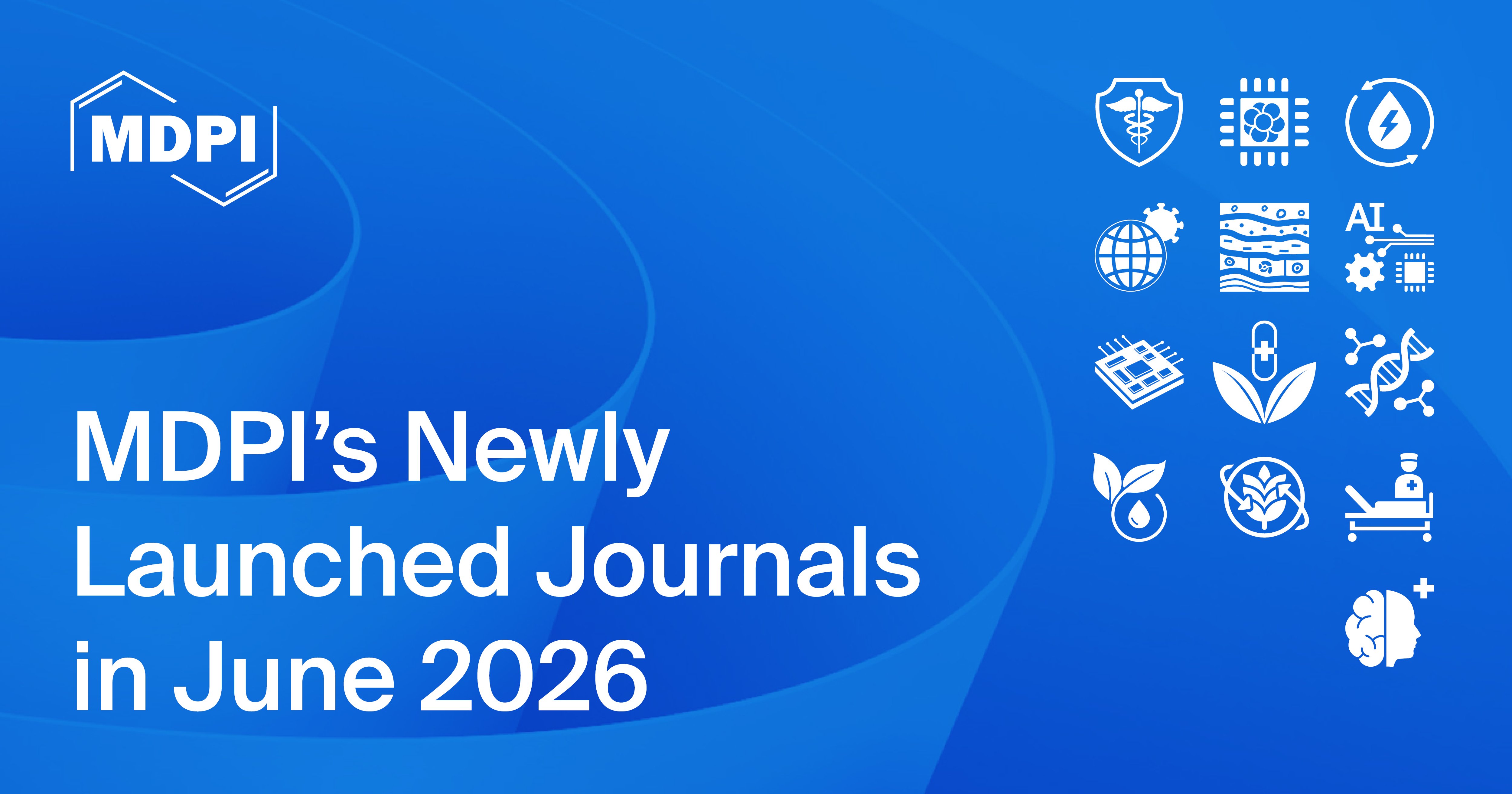
Our portfolio of journals available for publishing up-to-date research in immediate open access format has been further expanded. In June 2026, eleven new journals released their inaugural issues and two transferred journals released their first issue as part of MDPI, covering the subjects of environmental & earth sciences, chemistry & materials science, public health & healthcare, engineering, medicine & pharmacology, and biology & life sciences.
We extend our gratitude to the Editors-in-Chief, Associate Editors, and Editorial Board Members who will shape the future course of these new journals. Each journal is dedicated to upholding strong editorial standards through a thorough peer review process, enabling impactful open access scholarship.
Please feel free to browse and discover more about the new journals below.
|
New Journals |
Founding Editor(s)-in-Chief |
Journal Topics (Selected) |
|
|
Prof. Dr. Xiaochuan Pan, Peking University, China |
public health research, practice, policy, and education; eco-health equity | |
|
|
Prof. Dr. Xin-Gao Gong Fudan University, China; Prof. Dr. Zhimei Sun Beihang University, China |
AI-enhanced theory & simulation; generative design & discovery; autonomous experimentation; AI for characterization; large language models and agents | |
|
|
Prof. Dr. Yong Liu, Wuhan University, China |
hydropower technology; renewable energy; water resources; optimization; rock and soil mechanics; power system stability | |
|
|
Prof. Dr. Giovanni Rezza, University Vita-Salute San Raffaele, Italy |
pandemic preparedness; public health; global outbreak dynamics and epidemiology; outbreak prediction and risk forecasting; one health approach; zoonotic and pre-pandemic vaccines | |
|
|
Prof. Dr. Brian Horton, University of Texas at Austin, USA |
stratigraphy; sedimentology; earth surface processes; basin evolution and tectonics; climate and paleoclimate | |
|
|
Prof. Dr. Yike Guo, Hong Kong University of Science and Technology, China |
artificial intelligence (AI); application of AI to engineering; Explainable AI (XAI); AI-driven design and optimization; AI for manufacturing and automation | view journal scope | submit an article |
|
|
Prof. Dr. Hei Wong, City University of Hong Kong, China |
novel semiconductor materials; advanced heterogeneous integration technologies; advanced characterization and testing techniques; heterogeneously integrated systems and applications; modeling and design automation| |
|
|
Prof. Dr. Michail Panagiotidis, Mississippi State University, USA |
plant-based medicines; natural products-based drug discovery; plant-based bioactive compounds; pharmacognosy; phytochemicals; pharmacokinetics | |
|
|
Prof. Dr. Khalid Meksem, Southern Illinois University, USA |
genome biotechnology; applied genomics; genetic engineering; agricultural biotechnology; medical biotechnology; data science and AI| |
|
|
Dr. Chenxi Wu, Chinese Academy of Sciences, China |
environmental cleanup; ecological restoration; environmental management and governance; environmental modeling and monitoring | |
|
|
Prof. Dr. Janusz Kozinski, Lakehead University, Canada |
renewable energy; sustainable agriculture; green innovation; climate change; artificial intelligence and environmental sustainability | |


|
Transferred Journals |
Editor(s)-in-Chief |
Journal Topics (Selected) |
|
|
Prof. Dr. Thomas Frese, Martin-Universität Halle-Wittenberg, Germany |
health services in primary care; integrated care models; quality and safety of care; coordination across primary and secondary care services; patient management; primary care clinical practice and interventions; clinical interventions delivered in primary care settings; |
|
|
Prof. Dr. Paul Gerson Unschuld, Geneva University Hospitals (HUG), Switzerland |
neurology, psychiatry, psychotherapy, and the neurosciences | |


We would like to thank everyone who has supported the development of open access publishing. If you would like to create a new journal, you are welcome to send an application here or contact the New Journal Committee (newjournal-committee@mdpi.com).
