



Journal Menu
► ▼ Journal Menu-
- Technologies Home
- Aims & Scope
- Editorial Board
- Reviewer Board
- Topical Advisory Panel
- Instructions for Authors
- Special Issues
- Topics
- Sections & Collections
- Article Processing Charge
- Indexing & Archiving
- Editor’s Choice Articles
- Most Cited & Viewed
- Journal Statistics
- Journal History
- Journal Awards
- Conferences
- Editorial Office
Journal Browser
► ▼ Journal BrowserNeed Help?
Announcements
9 October 2025
Meet Us at the 3rd International Conference on AI Sensors and Transducers, 2–7 August 2026, Jeju, South Korea
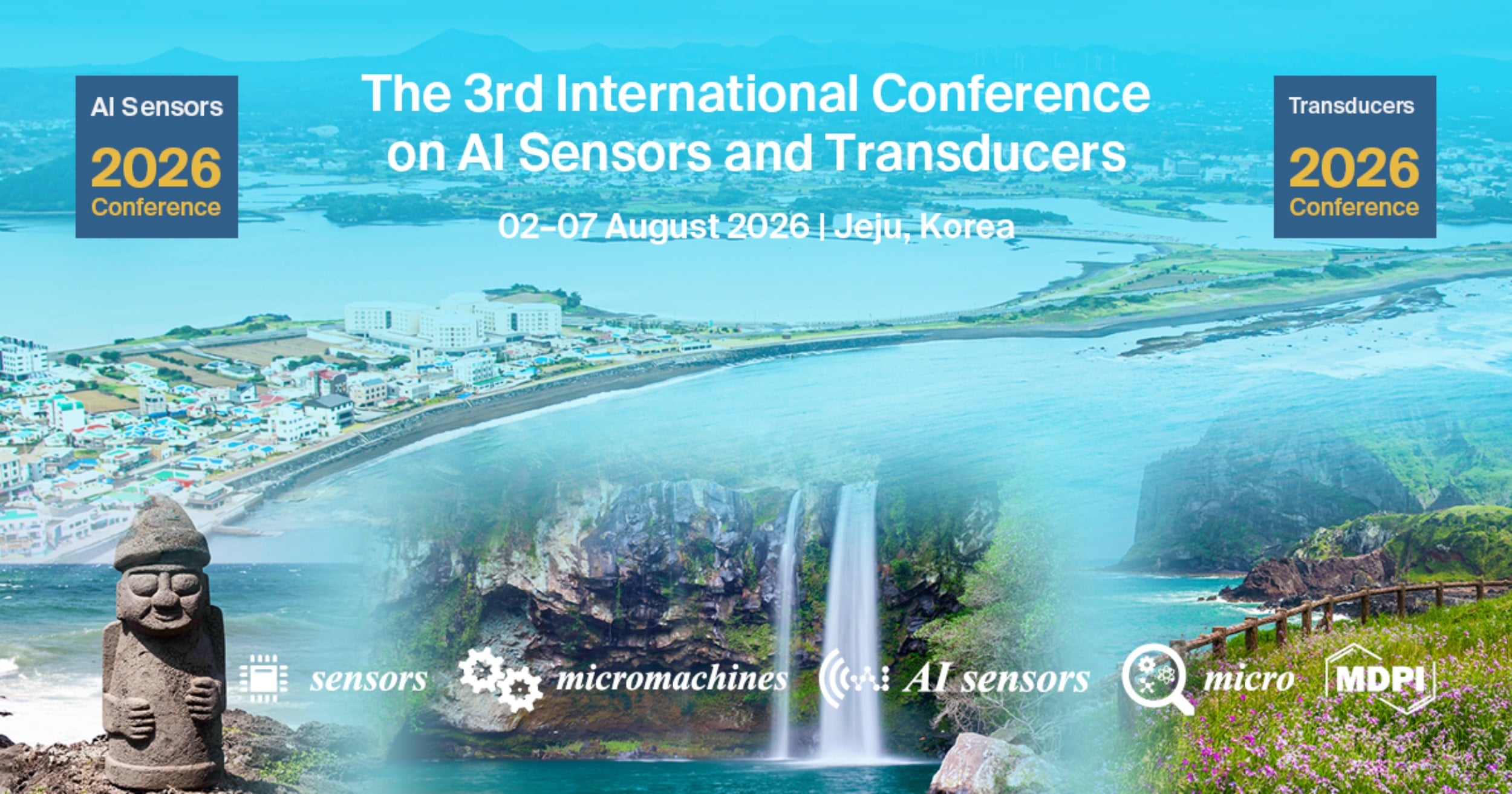
Following from our two previous successful editions, we invite you to submit your abstracts and participate in the 3rd International Conference on AI Sensors and Transducers, taking place from 2 to 7 August 2026 in Jeju, South Korea.
Organized by MDPI and the open access journals Sensors, Micromachines, AI Sensors, Micro and Remote Sensing, this in-person conference will once again bring together experts and participating researchers who will share insights and innovations in sensors, sensing technology, transducers and artificial intelligence.
Start preparing your abstracts:
Don’t miss this opportunity to showcase your work to peers and leading experts in AI-enhanced sensing systems and transducers. We will be announcing the session topics at AIS 2026 soon.
Find out more about the instructions for authors: https://sciforum.net/event/AIS2026?section=#instructions.
Find out more about the publication opportunities available for authors: https://sciforum.net/event/AIS2026?section=#Publicationopportunities.
Please feel free to share the information about this conference to your colleagues and students.
We look forward to welcoming you in Jeju!
The organizing committee of the 3rd International Conference on AI Sensors and Transducers (AIS 2026).
19 May 2026
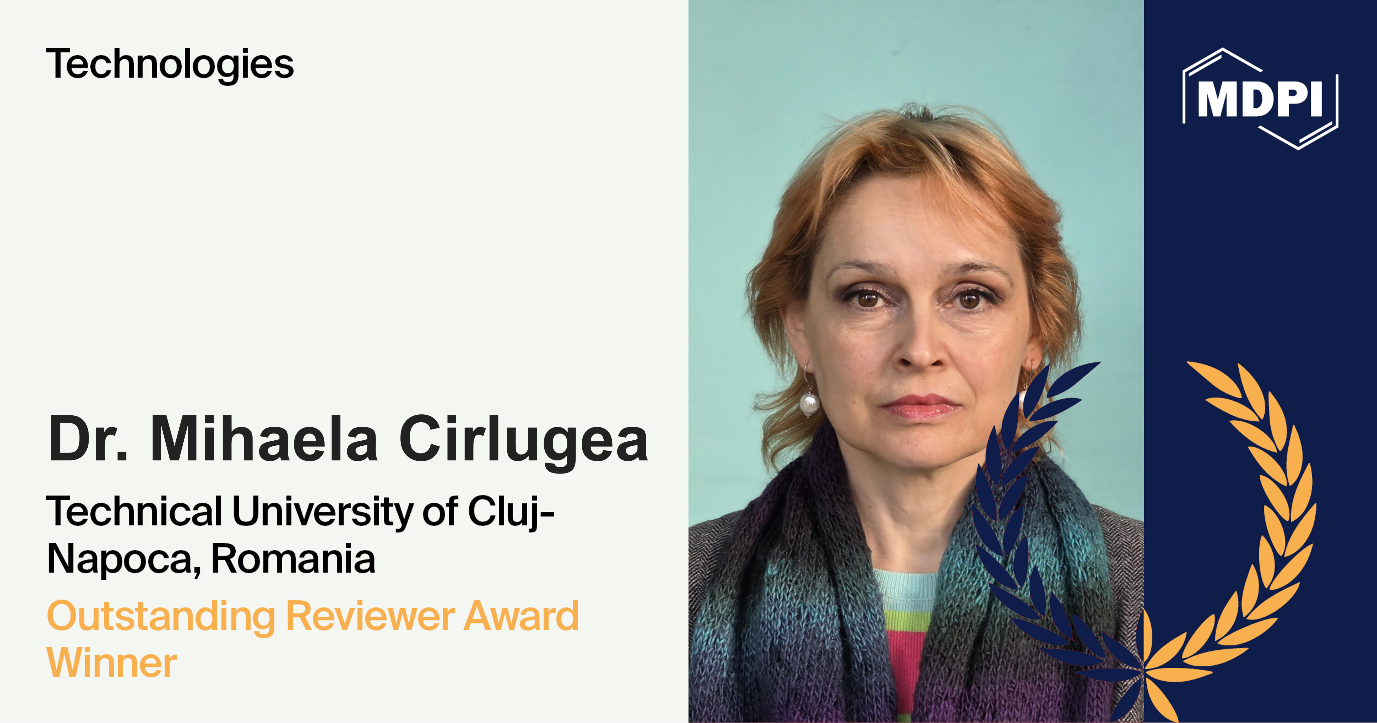
Interview with Dr. Mihaela Cirlugea—Winner of the Technologies Outstanding Reviewer Award
1. Could you briefly introduce your current role and research interests?
I am an Associate Professor at the Technical University in Cluj-Napoca, Romania. In the last 30 years, because of my curiosity and our socio-political context, I have been involved in different studies and activities, so nowadays I prefer cross-disciplinary research. The most important part of my job is to be an educator, so the main research thematic is directed into those activities that help and support students in learning and developing, not only technically and scientifically, but as a whole person. Also, an important part of our activities represents the technological developments in the field of electronics, the programming that in cloud computing became huge and, of course, understanding and responsibly integrating AI, when useful, in the process.
2. What motivates you to accept peer review invitations, and how do you manage the time commitment?
In accepting the peer reviews there are two main factors that motivate me, on one hand the curiosity, because nowadays there are so many interesting and intriguing research directions available and me, as a person, and as a research team member, could not be able to do the research in all of them, and on the other hand, I am always willing to help people to develop, to research, to publish, so that others may benefit of their discoveries. Regarding time management, it is always a task of being organized and to correctly plan the activities. If they are more, the planning functions better, because I cannot delay or procrastinate. And then, when the work is finished, there is such a rewarding feeling of accomplishment!
3. What are the most common issues you encounter in manuscripts in your area?
The most common issue nowadays is the excessive use of AI, in text writing it is not that bad, but sometimes the whole article structure and development is left the way the AI proposes it. And, as noticed, this has a tendency of starting ideas and not finishing them, or creating a chaotic structure where the introduction has nothing to do with the body and conclusions. Another more important issue is to observe the results. In a research paper, the result is crucial, the essence of the work. Therefore, it should be the best explained, detailed and “praised” because this is why you worked, actually! And it can happen that these are not actual results but also AI suggested. Fortunately, in my case, I didn’t encounter many works with counterfeit results. Other common issues are that engineers love to experiment and do coding or algorithms, but don’t like to explain and therefore they should take more time for describing their work and experiments.
4. What advice would you give to early career researchers who are starting to review or submit papers?
My advice for them is, first of all, to read as much as they can, not to watch videos, but to read, to get accustomed to articles’ structures, findings, ideas, ways of presenting someone’s work. To be curious, to see the paper or the review as a discovery and to imagine the best way to highlight it! And to be patient, to use their logic, knowledge and common sense and not immediately ask AI what it would do.
5. Do you have any suggestions for improving peer review or reviewer recognition?
I think this work is well done, the reviewer instructions are very detailed, clear and structured on your page. Regarding the recognition, I am grateful for this, and I receive it as a gift, and each of you, each MDPI Section and collective, do the best they can and they intend!
6. What makes a review especially useful for authors and editors in your view?
Reviewing is useful if people can not only improve their submission and better explain research results, but if, at the same time, they learn something valuable that they may use in the future for a better highlight of their work and their presentations. And generally, this may happen if you explain not only what the author should do, but also WHY they should do it. That is valuable and this is the same in education, not to give orders, but to explain the why of the actions and their consequences and thus comes the learning. And probably for editors, the most important is the way they manage to collaborate and cooperate with others from different fields, to reach a, let’s say, common denominator and a successful result.
Probably everything regarding technology and AI is important, robots, cloud computing. But I deeply hope that at the same time we won’t forget more tangible subjects like education, empathy for other human beings, wellbeing, mental health, agriculture, art or soft skills in any domain. I mean “tangible” as remaining here on Earth, among our peers, caring for them and helping each other, and not migrating for good to a virtual reality.
15 May 2026
Technologies | Selected Papers Published in 2025–2026 on Autonomous Technologies
1. “TOXOS: Spinning Up Nonlinearity in On-Vehicle Inference with a RISC-V CORDIC Coprocessor”
by Luigi Giuffrida, Guido Masera and Maurizio Martina
Technologies 2025, 13(10), 479; https://doi.org/10.3390/technologies13100479
Available online: https://www.mdpi.com/2227-7080/13/10/479
2. “Pix2Next: Leveraging Vision Foundation Models for RGB to NIR Image Translation”
by Youngwan Jin, Incheol Park, Hanbin Song, Hyeongjin Ju, Yagiz Nalcakan and Shiho Kim
Technologies 2025, 13(4), 154; https://doi.org/10.3390/technologies13040154
Available online: https://www.mdpi.com/2227-7080/13/4/154
3. “Does the Choice of Topic Modeling Technique Impact the Interpretation of Aviation Incident Reports? A Methodological Assessment”
by Aziida Nanyonga, Keith Joiner, Ugur Turhan and Graham Wild
Technologies 2025, 13(5), 209; https://doi.org/10.3390/technologies13050209
Available online: https://www.mdpi.com/2227-7080/13/5/209
4. “Research on the Implementation of New Communication Technologies to Improve Quality and Stability in Motion Control of Autonomous Mobile Robots”
by Nino Natmeladze, Ján Piteľ, Kamil Židek and Vitalii Romaniuk
Technologies 2025, 13(12), 556; https://doi.org/10.3390/technologies13120556
Available online: https://www.mdpi.com/2227-7080/13/12/556
5. “Robotic Systems for Hand Rehabilitation—Past, Present and Future”
by Bogdan Gherman, Ionut Zima, Calin Vaida, Paul Tucan, Adrian Pisla, Iosif Birlescu, Jose Machado and Doina Pisla
Technologies 2025, 13(1), 37; https://doi.org/10.3390/technologies13010037
Available online: https://www.mdpi.com/2227-7080/13/1/37
6. “Artificial Vision System for Autonomous Mobile Platform Used in Intelligent and Flexible Indoor Environment Inspection”
by Marius Cristian Luculescu, Luciana Cristea and Attila Laszlo Boer
Technologies 2025, 13(4), 161; https://doi.org/10.3390/technologies13040161
Available online: https://www.mdpi.com/2227-7080/13/4/161
7. “Hierarchical Autonomous Navigation for Differential-Drive Mobile Robots Using Deep Learning, Reinforcement Learning, and Lyapunov-Based Trajectory Control”
by Ramón Jaramillo-Martínez, Ernesto Chavero-Navarrete and Teodoro Ibarra-Pérez
Technologies 2026, 14(2), 125; https://doi.org/10.3390/technologies14020125
Available online: https://www.mdpi.com/2227-7080/14/2/125
8. “Advanced Autonomous System for Monitoring Soil Parameters”
by Băjenaru Valentina-Daniela, Istrițeanu Simona-Elena and Paul-Nicolae Ancuța
Technologies 2025, 13(1), 38; https://doi.org/10.3390/technologies13010038
Available online: https://www.mdpi.com/2227-7080/13/1/38
9. “Advancing Smart City Sustainability Through Artificial Intelligence, Digital Twin and Blockchain Solutions”
by Ivica Lukić, Mirko Köhler, Zdravko Krpić and Miljenko Švarcmajer
Technologies 2025, 13(7), 300; https://doi.org/10.3390/technologies13070300
Available online: https://www.mdpi.com/2227-7080/13/7/300
10. “Anomaly Detection Using Machine Learning for Robotics Environments on 5G Networks”
by Mikel Dean Oses, Aitor Domec Paz, Santiago Figueroa-Lorenzo, Saioa Arrizabalaga and Ricardo Rodriguez-Jorge
Technologies 2026, 14(2), 108; https://doi.org/10.3390/technologies14020108
Available online: https://www.mdpi.com/2227-7080/14/2/108
13 May 2026
Technologies | Highly Cited and Viewed Papers in 2025
1. “Comprehensive Analysis of Random Forest and XGBoost Performance with SMOTE, ADASYN, and GNUS Under Varying Imbalance Levels”
by Mehdi Imani, Ali Beikmohammadi and Hamid Reza Arabnia
Technologies 2025, 13(3), 88; https://doi.org/10.3390/technologies13030088
Available online: https://www.mdpi.com/2227-7080/13/3/88
2. “A Survey of Efficient Lightweight Cryptography for Power-Constrained Microcontrollers”
by Jesús Soto-Cruz, Erica Ruiz-Ibarra, Javier Vázquez-Castillo, Adolfo Espinoza-Ruiz, Alejandro Castillo-Atoche and Joaquin Mass-Sanchez
Technologies 2025, 13(1), 3; https://doi.org/10.3390/technologies13010003
Available online: https://www.mdpi.com/2227-7080/13/1/3
3. “Using Serious Games and Digital Games to Improve Students’ Computational Thinking and Programming Skills in K-12 Education: A Systematic Literature Review”
by Sindre Wennevold Gundersen and Georgios Lampropoulos
Technologies 2025, 13(3), 113; https://doi.org/10.3390/technologies13030113
Available online: https://www.mdpi.com/2227-7080/13/3/113
4. “Design of Multi-Sourced MIMO Multiband Hybrid Wireless RF-Perovskite Photovoltaic Energy Harvesting Subsystems for IoTs Applications in Smart Cities”
by Fanuel Elias, Sunday Ekpo, Stephen Alabi, Mfonobong Uko, Sunday Enahoro, Muhammad Ijaz, Helen Ji, Rahul Unnikrishnan and Nurudeen Olasunkanmi
Technologies 2025, 13(3), 92; https://doi.org/10.3390/technologies13030092
Available online: https://www.mdpi.com/2227-7080/13/3/92
5. “Real-Time Deployment of Ultrasound Image Interpretation AI Models for Emergency Medicine Triage Using a Swine Model”
by Sofia I. Hernandez Torres, Lawrence Holland, Theodore Winter, Ryan Ortiz, Krysta-Lynn Amezcua, Austin Ruiz, Catherine R. Thorpe and Eric J. Snider
Technologies 2025, 13(1), 29; https://doi.org/10.3390/technologies13010029
Available online: https://www.mdpi.com/2227-7080/13/1/29
6. “Advancements in Semantic Segmentation of 3D Point Clouds for Scene Understanding Using Deep Learning”
by Hafsa Benallal, Nadine Abdallah Saab, Hamid Tairi, Ayman Alfalou and Jamal Riffi
Technologies 2025, 13(8), 322; https://doi.org/10.3390/technologies13080322
Available online: https://www.mdpi.com/2227-7080/13/8/322
7. “Recent Development of Corrosion Inhibitors: Types, Mechanisms, Electrochemical Behavior, Efficiency, and Environmental Impact”
by Denisa-Ioana (Gheorghe) Răuță, Ecaterina Matei and Sorin-Marius Avramescu
Technologies 2025, 13(3), 103; https://doi.org/10.3390/technologies13030103
Available online: https://www.mdpi.com/2227-7080/13/3/103
8. “ZnO Nanoparticles by Hydrothermal Method: Synthesis and Characterization”
by Juan Carlos Anaya-Zavaleta, Antonio Serguei Ledezma-Pérez, Carlos Gallardo-Vega, Joelis Rodríguez-Hernández, Carmen Natividad Alvarado-Canché, Perla Elvia García-Casillas, Arxel de León and Agustín Leobardo Herrera-May
Technologies 2025, 13(1), 18; https://doi.org/10.3390/technologies13010018
Available online: https://www.mdpi.com/2227-7080/13/1/18
9. “A Systematic Review of Locomotion Assistance Exoskeletons: Prototype Development and Technical Challenges”
by Weiqi Lin, Hui Dong, Yongzhuo Gao, Wenda Wang, Yi Long, Long He, Xiwang Mao, Dongmei Wu and Wei Dong
Technologies 2025, 13(2), 69; https://doi.org/10.3390/technologies13020069
Available online: https://www.mdpi.com/2227-7080/13/2/69
10. “Robotic Systems for Hand Rehabilitation—Past, Present and Future”
by Bogdan Gherman, Ionut Zima, Calin Vaida, Paul Tucan, Adrian Pisla, Iosif Birlescu, Jose Machado and Doina Pisla
Technologies 2025, 13(1), 37; https://doi.org/10.3390/technologies13010037
Available online: https://www.mdpi.com/2227-7080/13/1/37
12 May 2026
MDPI’s Journal Cluster of Mechanical Manufacturing and Automation Control Webinar | Robotics Innovation: Precision & Wearable Technology, 19 May 2026
A message from the webinar Chair:
Robotics innovation is rapidly transforming modern manufacturing and human–machine interaction, driven by advances in precision engineering, automation, and intelligent control systems. From prosthetics and wearable robotic devices that enhance human capability to highly accurate industrial robots optimized through advanced measurement technologies, these developments are redefining efficiency, adaptability, and performance. As part of the broader shift toward smart manufacturing and Industry 4.0, such innovations highlight the growing integration of mechanical design, sensing, and control in next-generation robotic systems. These advances are shaping a more responsive, precise, and human-centered technological future.
Date: Tuesday, 19 May 2026
Time: 9:00 to 10:35 PDT | 17:00 to 18:35 BST
Webinar ID: 856 8247 3197
Webinar Secretariat: journal.webinar@mdpi.com
Webinar announcement: https://sciforum.net/event/Cluster-11?subscribe
Register now for free!

|
Speaker/Presentation |
Time in PDT |
Time in BST |
|
Prof. Dr. Peter L. Bishay (Chair) |
9:00–9:10 |
17:00–17:10 |
|
Prof. Dr. Peter L. Bishay |
9:10–9:30 |
17:10–17:30 |
|
Q&A Session |
9:30–9:35 |
17:30–17:35 |
|
Dr. Mojtaba Ahmadieh Khanesar |
9:35–9:55 |
17:35–17:55 |
|
Q&A Session |
9:55–10:00 |
17:55–18:00 |
|
Dr. Lavinia Buta |
10:00–10:20 |
18:00–18:20 |
|
Q&A Session |
10:20–10:25 |
18:20–18:25 |
|
Prof. Dr. Peter L. Bishay |
10:25–10:35 |
18:25–18:35 |
After registering, you will receive a confirmation email with information on how to join the webinar. Registrations with academic or institutional email addresses will be prioritized.
Unable to attend? Feel free to register anyway, and we will inform you when the recording is available.
Webinar Chair and Keynote Speakers:
- Prof. Dr. Peter L. Bishay, Director of Design SMART Lab (Design of Smart Mechanical and Reconfigurable Technologies); Andrew J. Anagnost College of Engineering and Computer Science (ACECS); California State University, Northridge (CSUN), USA;
- Dr. Mojtaba Ahmadieh Khanesar, The Department of Mechanical, Materials, and Manufacturing Engineering at the University of Nottingham, UK;
- Dr. Lavinia Buta, MDPI Romania.
7 May 2026
Meet Us at the 2026 International Conference on Unmanned Aircraft Systems (ICUAS 2026), 15–18 June 2026, Corfu, Greece

MDPI will be attending the 2026 International Conference on Unmanned Aircraft Systems, ICUAS 2026, from 15 to 18 June 2026 in Corfu, Greece. We welcome researchers from diverse backgrounds to visit our booth and share their latest ideas with us.
Organized by the ICUAS Association, Inc., ICUAS 2026 will offer unique opportunities to meet, interact, and shape the future of unmanned aviation worldwide, bringing together technical, regulatory, and legal communities.
ICUAS 2026 centers around a wide spectrum of topics, with emphasis given to:
- Soft aerial robots;
- Cooperative aerial manipulation;
- Bio-inspired aerial robots;
- Aerial robot aerodynamics;
- Multi-mode unmanned platforms;
- Reconfigurable UAVs;
- Multi-mode unmanned platforms;
- Learning-based perception;
- Navigation and control;
- Online autonomy;
- Real-time applications;
- Human factors and ethical AI for aerial robots;
- Regulations, policies, and safety.
In addition to the technical sessions, a twofold objective is:
- Industry and company participation for attendees to find out about the current state of technology and of commercially available products for civil and public domain applications;
- Understanding technical requirements and standards that are prerequisites to UAS full utilization and integration into the national airspace.
The following MDPI journals will be represented:
- Drones;
- Aerospace;
- Standards;
- Telecom;
- Robotics;
- Safety;
- Electronics;
- Biomimetics;
- Applied Mechanics;
- Journal of Imaging;
- Actuators;
- Signals;
- Sensors;
- Inventions;
- Automation;
- Journal of Sensor and Actuator Networks;
- Technologies;
- IoT.
We welcome you to visit the MDPI booth in Corfu at the Divani Corfu Palace. Our representatives are excited to meet you in person and will address any questions you may have. For further details about the conference, please visit the following website: https://uasconferences.com/2026_icuas/.
6 May 2026
MDPI INSIGHTS: The CEO's Letter #34 - MDPI US Office, Coatings 2026, Media and Partnerships, Recapping Poland Summit & Serbia Salon

Welcome to the MDPI Insights: The CEO's Letter.
In these monthly letters, I will showcase two key aspects of our work at MDPI: our commitment to empowering researchers and our determination to facilitating open scientific exchange.
Opening Thoughts

MDPI Opens First US Office in Philadelphia
I am delighted to highlight an important milestone in MDPI’s continued global development: the recent opening of our first office in the United States, located in Philadelphia.
This marks a significant step in building our engagement with one of the world’s most important research communities. The new office will serve as a hub for supporting scholars across the US, creating closer connections and more localized support.
As highlighted in recent coverage by our press release in InPublishing, this expansion reflects MDPI’s broader commitment to growing our international presence while remaining focused on the needs of the research community.
A Key Market for Research and Collaboration
The United States continues to play a central role in global research. To date, MDPI has published more than 237,000 articles affiliated with US institutions, and we collaborate with nearly 12,000 Editorial Board Members across the country. These relationships are fundamental to our mission of supporting Open Access and advancing scientific communication.
The opening of this office is not just about geography; it is about proximity to the communities we serve. It allows us to better understand the evolving needs of researchers while continuing to build collaboration and trust within the academic ecosystem.
The Team Behind this Milestone

This milestone reflects the efforts of teams across MDPI. I extend a special thank-you to Bob Vrooman (Head of Business Development, MDPI), who is leading this expansion, as well as to our colleagues in Toronto and across our North American teams for their continued support.
Bob shared: “MDPI is already a trusted partner of the North American research community, due in no small part to our dedicated team in Canada. Launching our first US office in Philadelphia is a great first step towards expanding MDPI’s market share and recognition in the US. I’m thrilled to be a part of this new phase in MDPI’s journey.”
As we continue to grow, our focus remains on supporting researchers globally and advancing Open Access with integrity.
Impactful Research

Coatings 2026: Highlights from Our Latest MDPI Conference (20-22 April)
I am pleased to share the successful completion of MDPI conference Coatings 2026, which took place last week in Athens from 20 to 22 April 2026. This conference brought together a diverse international community of researchers, industry experts, and partners, highlighting MDPI’s role not only as a publisher but also as a platform for scientific exchange and collaboration.
Conference Highlights
Coatings 2026 in numbers:
- The event attracted approximately 140 participants from 25 countries
- 143 submissions and a strong scientific program of talks and posters
- 2 keynote speakers and a wide range of invited contributions
- 7 sponsors and 11 media partners supporting the event
|
|
|
|
|
|


Scientific Programme
The program centered on “Safe and Sustainable by Design,” reflecting the growing importance of sustainability, regulatory frameworks, and technological innovation in materials science. Topics ranged from advanced coating technologies and additive manufacturing to AI-driven simulations and strategies to phase out potentially harmful substances in industrial processes.
Importantly, the conference brought together both academic and industrial perspectives, creating a space for dialogue on how research can translate into real-world impact. This is important as industries navigate environmental challenges, evolving regulations, and the need for more sustainable and circular approaches to production.
Thank You!
I would like to thank the entire conference team for their work in organizing this successful event. As we continue to grow, conferences like this play an important role in building our connection with global research communities, supporting interdisciplinary collaboration, and positioning MDPI at the intersection of science, technology, and societal impact.
 Members from Exelisis and MDPI EU Conference & Social Media team at the Coatings 2026 Conference in Athens, Greece.
Inside MDPI

Recent Media Coverage and Partnerships
Over the past two months, news from MDPI has enjoyed strong visibility across international publishing and academic media, reflecting our continued expansion and the increasing relevance of our work within the research community.
Below are some highlights covering partnerships, institutional agreements, and milestones that continue to shape our position in publishing – some of which are featured in leading industry platforms such as InPublishing, which is highly selective and reflects the growing recognition of MDPI’s growth within the publishing ecosystem.
Key Press Releases & Coverage (March–April 2026)
-
MDPI × Sikt (Norway): Partnership Renewal
We renewed our national Open Access agreement with Sikt, a key consortium partnership, continuing to support researchers across Norway through this partnership. The renewal was covered by several international publishing trade outlets.
Covered by: Research Information, STM Publishing News, ALPSP, Europe Says
-
MDPI × Jisc (UK): New Two-Year Open Access Agreement
A new two-year agreement with Jisc significantly expands MDPI’s footprint across UK academic institutions. Coverage appeared across major publishing industry titles in the UK and internationally.
Covered by: InPublishing, Research Information, STM Publishing News, ALPSP
-
MDPI Opens First US Office
The opening of our first US office marks an important milestone in our North American expansion to build engagement with one of the world’s leading research communities.
Coverage by: EurekAlert!, InPublishing, EdTech Innovation Hub, STM Publishing News, ALPSP
-
MDPI × SIGG: Italian Society of Gerontology and Geriatrics
We established a new partnership with the Italian Society of Gerontology and Geriatrics (SIGG), adding to our growing portfolio of society collaborations.
Coverage by: EurekAlert!, STM Publishing News, ALPSP
-
MDPI × Fast Track Health: New Journal Launch
The launch of a new journal in partnership with Fast Track Health reflects our continued expansion into emerging areas of health innovation.
Coverage by: EurekAlert!, Scienmag, STM Publishing News, ALPSP
-
MDPI 2025 Annual Report
Our 2025 Annual Report was also widely covered across international media, highlighting a 12% increase in submissions and continued investment in research integrity, infrastructure, and partnerships.
Coverage by: EurekAlert!, Research Information, STM Publishing News, ALPSP, Choice 360
Coverage also spanned multiple regions including Poland, Romania and South Korea, reflecting our ongoing efforts to communicate more effectively with regional research communities.
Looking Ahead
This coverage shows that MDPI is growing and building on its position through partnerships, visibility, and engagement across regions. As we continue to expand, our focus remains on supporting researchers globally, building on our institutional collaborations, and advancing Open Access with integrity.
Thank you to all teams involved in delivering these initiatives, and to our External Affairs team for ensuring our work is effectively communicated across the global publishing landscape!
Coming Together for Science

Recapping MDPI Poland Summit 2026 in Krakow (23 April)
On 23 April 2206, we hosted the first MDPI Poland Summit 2026 in Kraków, bringing together an engaged group of editors, researchers, and academic leaders from the country.
The Poland Summit welcomed some 45 participants, including Editors-in-Chief, Associate Editors, and Editorial Board Members, many with strong academic track records and international recognition.
Our engagements were open and constructive, focusing on MDPI’s positioning and reputation in Poland, alongside community interest in supporting our development, with active participation across our sessions, including Q&A and panel discussions.
|
|
|
|


MDPI Poland Summit Programme
From research integrity and peer review quality to AI in publishing and the future of academic communication, the agenda featured important topics currently shaping our industry.
During the day, MDPI colleagues shared a series of presentations covering:
- MDPI’s performance, growth, and impact in Poland: Stefan Tochev (CEO)
- Engagement with Academic Community: Dr. Marta Colomer (Public Affairs Lead)
- Research Integrity and Publication Ethics: Anna Pena (Research Integrity Manager)
- MDPI Editorial Process and Peer-Review Quality Metrics: Dr. Liliane Auwerter (Conference Organizer)
- AI in the Publishing Industry – Challenges, Innovation and MDPI’s vision: Dr. Enric Sayas (AI Product Owner)
- Panel Session: The Future of Academic Publishing, moderated by Dr. Marta Colomer
|
|
|
|
|
|
|
|


Poland as a Key Market for Open Access
The summit also highlighted the importance of Poland within the global research landscape.
In 2025:
- 75% of publications in Poland were made in Open Access
- 71% of those in Gold Open Access
- and over 344,000 publications produced in the last five years
MDPI plays a significant role in the Polish publishing ecosystem:
- #1 Open Access publisher in Poland
- 17% share of Open Access publications in 2025
- More than 12,500 publications from Polish institutions in 2025
- More than 91,000 publications overall since 1996
Looking Ahead
Events like the Poland Summit are an important part of how we evolve as an organization. They allow us to share the latest developments of MDPI and listen directly to our researchers and editors to better understand the market and align our development with the needs of the local community.
As MDPI continues to grow, this type of engagement will remain essential in ensuring that we are not only scaling globally, but doing so in a way that is aligned, trusted, and collaborative.

With Igor Matic (Office Manager, Krakow, Poland, MDPI) at the MDPI Poland Summit in Krakow.
Closing Thoughts

Recapping MDPI Serbia Salon 2026 in Belgrade (22 April)
On 22 April 2026, we hosted the MDPI Serbia Salon 2026 in Belgrade. The Salon welcomed over 50 participants, including more than 40 invited scholars from leading Serbian institutions, alongside colleagues from MDPI. The event also marked two important milestones: 30 years of MDPI and 10 years of our presence in Serbia, making it a celebration and an opportunity for reflection.

A Platform for Exchange
The Salon was designed not just as a series of presentations, but as a place for dialogue. Throughout the day, discussions focused on important topics around publishing today: research integrity and editorial standards, journal indexing and visibility, the evolving role of artificial intelligence, and funding and support for Open Access publishing.
|
|
|
|
|
|
|
|


Program Overview
- Opening the Salon MDPI Serbia 2026 – Serbia results and direction: Emir Ramadani (Operations Manager)
- Update on MDPI’s performance and growth: Stefan Tochev (CEO)
- Collaboration with MDPI – A personal perspective: Prof. Dr Srećko Stopić (Editorial Board Member)
- Linking Scientific Quality and Visibility: The role of indexing in publishing
- Research integrity and editorial ethics: Ana Stanković (Research Integrity Specialist)
- Artificial Intelligence in Scientific Publishing – Challenges, innovations and vision of MDPI: Dr Miloš Čučulović (Head of Technology Innovation)
It was encouraging to see the high level of engagement and discussion with the local academic community.
|
|
|
|
|
|
|
|


Publishing in Serbia
With 10 years of MDPI in Serbia (since 2016) and over 620 colleagues across 10 departments spread across offices in Belgrade and Novi Sad, MDPI continues to invest in the long-term development of the research community in Serbia and beyond.
Some high-level indicators illustrate both the strength of the local research ecosystem and MDPI’s role within it:
- 12,910 total publications in Serbia in 2025, of which 8,708 (67%) were Open Access (of which, in turn, 75% were Gold OA)
- A total of more than 55,000 publications (2021–2025), with 68% published Open Access
- 2,122 MDPI publications from Serbian institutions in 2025
- 25% of all Open Access publications in Serbia are published with MDPI
- More than 11,000 MDPI publications from Serbian institutions since 1996
- More than 75 Editorial Board Members from Serbia, including Editors-in-Chief and Associate Editors.
These figures reflect the growth of OA publishing in Serbia and the strong collaboration between MDPI and Serbia's research community.
Top 5 Publishers in Serbia (MDPI #1 with steady growth)

Looking Ahead
Research integrity and artificial intelligence will remain central topics for the industry. At the same time, clear communication of editorial processes will be essential in building trust and transparency.
Workshops and direct engagement remain among the most effective ways to strengthen these connections. As Open Access funding models continue to evolve, new opportunities for collaboration are emerging across institutions, publishers, and the broader research community.
Thank You!
The excellent feedback from participants shows the value of creating spaces where ideas can be exchanged openly and constructively. Sincere thanks to everyone who contributed to the success of this event: our speakers, participants, and especially the MDPI Serbia team for their great organization and support.

Chief Executive Officer
MDPI AG
24 April 2026
Prof. Dr. William Gerwick Appointed Chair of the 2026 Tu Youyou Award Committee
We are honored to announce that Prof. Dr. William Gerwick will serve as the Chair of the 2026 Tu Youyou Award Committee.
A world-renowned authority in marine natural products chemistry and pharmacology, Professor Gerwick is a Distinguished Professor at both the Scripps Institution of Oceanography and the Skaggs School of Pharmacy and Pharmaceutical Sciences at the University of California San Diego (UCSD). His pioneering work at the intersection of ocean sciences and drug discovery makes him a fitting leader for an award centered on transformative medicinal breakthroughs.
Under Professor Gerwick’s stewardship, the 2026 Tu Youyou Award Committee will focus on recognizing innovative and impactful research in natural products chemistry and medicinal chemistry, particularly work with the potential to drive meaningful advances in both scientific understanding and human health.
To provide further insight into his perspectives, we include below an interview with Professor Gerwick, in which he reflects on his scientific journey, his views on the field, and his vision for the Tu Youyou Award.
A Conversation with the Chair

1. Could you please introduce yourself and your research journey?
My research focuses on the natural products of marine algae and cyanobacteria, their application in medicine, their biosynthesis using genomic approaches, and innovative methods in the structure elucidation of natural products.
I received my BS degree from the University of California at Davis, my PhD from the University of California at San Diego, and conducted postdoctoral work at the University of Connecticut. After a couple of years in a junior faculty position at the Department of Chemistry at the University of Puerto Rico, I spent 21 years as Professor of Pharmacy at Oregon State University. In 2005, I returned to my PhD institution at the Scripps Institution of Oceanography and the Skaggs School of Pharmacy and Pharmaceutical Sciences at UC San Diego, where I am currently a Distinguished Professor of Oceanography and Pharmaceutical Sciences.
Throughout my career, I have been dedicated to advancing the field through both leadership and mentorship. I have served as president of the American Society of Pharmacognosy, chaired and co-chaired several major research conferences, and served as an associate editor for the Journal of Natural Products. I am a Fellow of the American Association for the Advancement of Science (AAAS) and of the American Society of Pharmacognosy. I have trained over 100 doctoral and postdoctoral students, and my research group has published nearly 500 papers and more than 25 patents on topics in the natural product sciences and medicinal chemistry.
2. What motivated you to accept the role of Chair of the 2026 Tu Youyou Award Committee?
Of course, I am a huge supporter of all awards that are given in recognition of excellent scientific research, and especially so in the natural products sciences and medicinal chemistry. However, this award is truly special in that it recognizes scientific excellence as well as impact, and is given in the name of an individual, Tu Youyou, who clearly had many challenges along the path to reach the pinnacle of her success. Not only was she the first Chinese person to win a Nobel prize in this area, but she was also the first Chinese woman to receive a Nobel prize, and this was achieved without graduate education in China or elsewhere. It’s a true testament to what can be achieved by hard work, determination, and vision. To read the history of her extraordinary approach to discovering novel antimalarial compounds from Traditional Chinese Medicine is truly inspirational. It is, therefore, the inspiration provided by the extraordinary life and career of Tu Youyou that motivated me to accept the Chair of the Award Committee for 2026.
3. How do you view the role of natural products chemistry and medicinal chemistry in today’s scientific landscape, and what major advances over the past decade have shaped this field?
A quite remarkable integration of fields is currently transforming natural products science and medicinal chemistry. In natural products, we are seeing integration of different omics methods, from metabolites to proteins to nucleic acids. Sophisticated biological and pharmacological approaches are driving the discovery of exquisitely potent and selective natural products. Advances are being made to integrate molecular-level recognition of natural products with chemical ecological studies, and sophisticated methods of structure determination using Artificial Intelligence or pioneering new tools such as microED are being applied with increasing frequency. High-level synthetic methodologies, such as protecting group-free synthetic routes, are enhancing medicinal chemistry, accelerating the identification of lead molecules with attractive pharmaceutical properties at an increasing pace.
4. How do you consider the balance between fundamental discovery (e.g., new molecules or mechanisms) and practical impact (e.g., therapeutic applications)?
Many individuals are excellent scientists and mentors, and have essential roles in developing our culture that values science and the scientific method. It should also be pointed out that not all scientific discoveries are going to have a broad societal impact, but they are nevertheless critical to the overall body and structure of science. But it is a truly remarkable individual who makes a key scientific discovery, recognizes its potential value to society in general, and then has the skills and determination to bring it forward as a useful product. That was the type of person the Tu Youyou is, and that is the type of person who is honored by the prize in her name.
5. What do you see as the key challenges or opportunities currently facing the field?
We are on the crux of an amazing revolution in many of the sciences, including natural products and medicinal chemistry; the purposeful application of Artificial Intelligence to solving many of the difficulties involved in the search for new pharmaceuticals from Nature. AI is transforming how we select organisms for study, what pharmaceutical targets to go after, rapidly resolving the chemical structures of new compounds, identifying efficient routes to their chemical synthesis, understanding their molecular mechanisms of action, and finally, designing their clinical application. The role of people in these pursuits is changing. Increasingly, the human role will be providing overall vision: what can we do? What should we do? And it is important to remember that AI is providing hypotheses, not truth. Scientists with expert domain knowledge will be critical for discerning the correctness of hypotheses put forth by AI. Altogether, advances in technology, expanding knowledge, and the appropriate use of AI methods are preparing society to be able to address emerging diseases, such as pandemics, as well as conditions that are not effectively treated by currently existing therapeutics.
6. How do you expect the Tu Youyou Award to contribute to the advancement of natural product chemistry, medicinal chemistry, and human health over the coming years?
The Tu Youyou Award is potentially transformative for the broad fields of natural products science and medicinal chemistry as it brings a significantly increased level of visibility to these topics and their contributions to human health. It will be crucial to have excellent communication to news agencies, social media and other communication outlets so that the general public is informed and educated on the high impact of these natural product/medicinal chemistry contributions. This will bring increased funding, attract promising students, and generally enrich the interface of these fields with the health sector.
7. What message would you like to convey to the research community and the public during this open nomination phase?
This prize gives broad societal visibility to the role that natural products have had in shaping a majority of our current medicines, as well as understanding the life forms with whom we share the planet. Further, it recognizes a woman scientist working under sub-optimal conditions who could persevere and make discoveries of global impact. The prize and what it represents, therefore, inspires current and future generations to engage in the study of Nature and its relationship to Human Health, to overcome adversity, and to aspire to making one’s life impactful.
About the Tu Youyou Award
Established in 2016, the Tu Youyou Award seeks to honor those who excel in the fields of natural products chemistry and medicinal chemistry. This award offers a total prize of CHF 100,000, which will be equally divided among the winners if there is more than one, with each recipient receiving an award medal and a certificate.
The 2026 Tu Youyou Award is open for nominations until 31 October 2026. We encourage all eligible candidates to participate in this prestigious recognition, as this award not only honors individual achievement but also encourages further scientific exchange, exploration and discovery in critical areas of medicine.
If you are interested in participating, please visit the Tu Youyou Award website for more information on the nomination requirements.
23 April 2026
Meet Us at the World Congress on Condition Monitoring (WCCM 2026), 25–27 August 2026, Milan, Italy

MDPI is pleased to announce our participation in the World Congress on Condition Monitoring (WCCM 2026), held from 25 to 27 August in Milan, Italy.
WCCM 2026 stands as a premier worldwide platform for scientists and professionals from both academia and industry to share knowledge and insights in the field of condition monitoring. The congress is dedicated to facilitating the global exchange of research and applications, with a strong emphasis on international cooperation and technological advancements.
The conference covers a wide spectrum of key areas, including condition monitoring technologies, sensors and data acquisition, signal processing and machine learning, fault diagnosis and prognostics, and maintenance and reliability. Attendees will also have the opportunity to explore industrial applications, standards, and transformative case studies that are shaping the future of asset management.
The following open access journals will be represented:
- Sensors;
- Machines;
- NDT;
- ASI;
- Applied Mechanics;
- Vibration;
- JETA;
- Lubricants;
- Technologies;
- Standards;
- Logistics.
20 April 2026
Meet Us at the 9th International Conference on Electronics Technology (ICET 2026), 29–31 May 2026, Chengdu, China

MDPI will be attending the 9th International Conference on Electronics Technology (ICET 2026), which will be held in Chengdu, China, from 29 to 31 May 2026.
ICET 2026 is co-sponsored by the IEEE Chengdu Section and the Sichuan Institute of Electronics, and is hosted by the Youth Talent Work Committee of Sichuan Institute of Electronics, with the support of the University of Electronic Science and Technology of China, Sichuan University, Southwest Jiaotong University, Xi’an University of Technology, Singapore Institute of Electronics, Chengdu University of Technology, Chengdu University of Information Technology, etc.
ICET conference's core objective is to establish an academic forum for scientists worldwide, both senior and emerging, to share research insights, knowledge, and advancements in electronics, micro/nanoelectronics, and electronic packaging. The conference also connects university academics, industry professionals, and the technical community, fostering collaboration and knowledge exchange on the latest technological advancements.
The following open access journals will be represented at the conference:
- Technologies;
- Electronics;
- Information;
- IoT;
- JLPEA;
- Microwave;
- Telecom;
- Electricity;
- Hardware;
- JETA;
- JSAN;
- Chips;
- WEVJ.
If you are planning to attend the above conference, please feel free to stop by our booth. Our delegates look forward to meeting you in person and answering any questions that you may have.
For more information about this conference, please visit the following website: https://icet.net/index.html.
