



Journal Menu
► ▼ Journal Menu-
- Mathematics Home
- Aims & Scope
- Editorial Board
- Reviewer Board
- Topical Advisory Panel
- Instructions for Authors
- Special Issues
- Topics
- Sections & Collections
- Article Processing Charge
- Indexing & Archiving
- Editor’s Choice Articles
- Most Cited & Viewed
- Journal Statistics
- Journal History
- Journal Awards
- Society Collaborations
- Conferences
- Editorial Office
Journal Browser
► ▼ Journal BrowserNeed Help?
Announcements
4 March 2026
MDPI’s 2025 Best Paper Awards—Award-Winning Papers Announced
MDPI is honored to announce the recipients of the 2025 Best Paper Awards, celebrating exceptional research for its scientific merit and broad impact. After a rigorous evaluation process conducted by Academic Editors, this year’s awards showcase papers that stand out for their innovation, relevance, and high-quality presentation.
Out of a highly competitive pool, 396 winning papers have been recognized for their exceptional contributions. We congratulate these authors for pushing the boundaries of their respective disciplines.
At MDPI, we are dedicated to broadening the reach of innovative science. To learn more about the award-winning papers and explore research projects in your field of study, please visit the following links:
- Biology and Life Sciences;
- Business and Economics;
- Chemistry and Materials Sciences;
- Computer Sciences and Mathematics;
- Engineering;
- Environmental and Earth Sciences;
- Medicine and Pharmacology;
- Social Sciences, Arts and Humanities;
- Physical Sciences;
- Public Health and Healthcare.
About MDPI Awards:
To reward the global research community and enhance academic dialogue, MDPI journals regularly host award programs across diverse scientific disciplines. These awards, serving as a source of inspiration and recognition, help raise the influence of talented individuals who have been credited with outstanding achievements and whose work drives the advancement of their fields.
Explore the Best Paper Awards open for participation, please click here.
22 January 2026
“Do Not Be Afraid of New Things”: Prof. Michele Parrinello on Scientific Curiosity and the Importance of Fundamental Research

In atomic and molecular simulation, researchers have long-needed efficient ways to predict material properties in order to focus on the most promising real laboratory tests instead of redundant work. Addressing this challenge, Prof. Michele Parrinello introduced two transformative methods that have redefined the field: the Car–Parrinello method, which serves as a “virtual lab” for studying reactions and electronic properties, and the Parrinello–Rahman method, a cornerstone for crystal phase transition studies. His work has reshaped the way that we study atomic systems, earning him the status of one of the most cited scholars in his field.
To honor his enduring legacy and continued impact, MDPI has established the Michele Parrinello Award. This award celebrates innovation and recognizes senior scientists who have made outstanding contributions to computational physical sciences, spanning the fields of physics, chemistry, and materials science.
We had the great honor of speaking with Prof. Parrinello in an exclusive interview, where he shared his perspectives on his current research focus, personal scientific experiences, support for basic research, and his advice for global researchers.
Access the full interview to hear his insights in this conversation.
28 April 2026
Meet Us at the 2026 Academic Conference of the Graph Theory, Combinatorics and Applications, 15–17 May 2026, Shijiazhuang, China
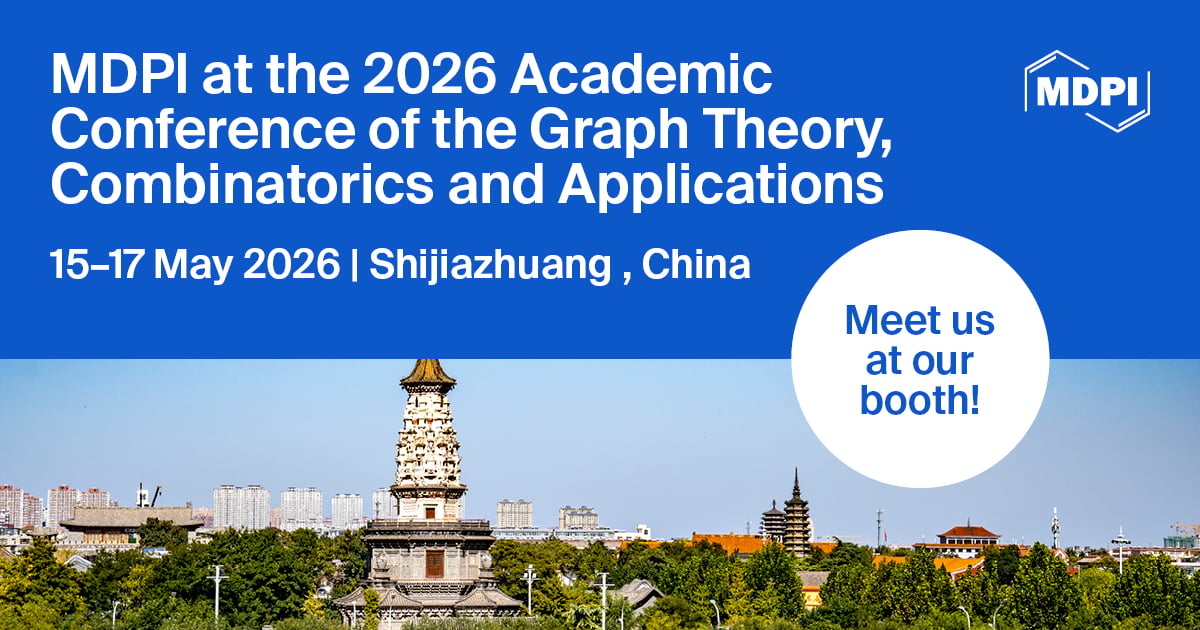
MDPI will be participating in the upcoming 2026 Academic Conference on Graph Theory, Combinatorics and Applications.
This conference is jointly organized by the China Society for Industrial and Applied Mathematics (CSIAM) and Hebei Normal University. It aims to provide a high-level academic exchange platform for researchers and industry experts in the fields of graph theory, combinatorics and their applications. The event will showcase the latest theoretical advances and practical achievements in these areas, while promoting interdisciplinary collaboration and shared development. The program will include plenary lectures, thematic workshops, forums and contributed presentations.
The following MDPI journals will be represented at the conference:
- Axioms;
- Mathematics;
- Applied Math;
- Fractal and Fractional;
- Geometry;
- International Journal of Topology;
- Symmetry.
If you plan to attend the conference, we warmly invite you to visit our booth and meet our representatives. We look forward to seeing you in person and assisting you with any questions you may have.
For more details about the conference, please visit the official website:
https://csiam-gtca2026.casconf.cn/page/2015076221179793408.
28 April 2026
Interview with Dr. Lu Lu—Winner of the Mathematics Young Investigator Award

Name: Dr. Lu Lu
Affiliation: Department of Statistics and Data Science, Yale University, New Haven, CT 06511, USA
Research Interests: scientific machine learning; AI for science; multiscale modeling; high-performance computing
The journal Mathematics (ISSN: 2227-7390) is proud to present the winner of the Mathematics 2025 Young Investigator Award, Dr. Lu Lu of the Department of Statistics and Data Science at Yale University, USA!
The following is a short interview with Dr. Lu:
- Congratulations on winning the Mathematics Young Investigator Award. Could you share what this award means for your current research career?
As a junior faculty member, it is very important to receive recognition and recommendation from the community. An award like this is an important signal. It means the community gives high recognition and evaluation to my work, which is very useful at this stage of my career. - We note that you earned your PhD in 2020, served as an Instructor at MIT from 2020 to 2021, and joined the University of Pennsylvania as an Assistant Professor just one year later. How did you manage such a rapid transition from being a doctoral student to an independent researcher and then a PI (Principal Investigator) in the early stages of your career?
My PhD advisor had a hands-off mentoring style, so in many cases I had to think independently about my research. Hence, I developed independence during my PhD, especially in the last couple of years. Because of this training, the transition from a student to an independent PI was rather smooth for me. - Could you briefly introduce your research topics and core research directions? What do you consider to be your most representative research achievement over the past few years?
My research area is scientific machine learning, more specifically physics-informed machine learning. We use machine learning not for standard images or language tasks, but for scientific and engineering applications. One important application is solving partial differential equations (PDEs) using machine learning instead of traditional methods like finite element or finite difference methods.
A major achievement is the development of operator learning. In this framework, we use deep neural networks to learn mappings between function spaces, from infinite-dimensional input to infinite-dimensional output. This allows us to learn solution operators for PDEs and address forward and inverse problems. This concept has developed into a sub-area of scientific machine learning and can be applied beyond PDEs, including in other fields such as social sciences.
Recently, I have expanded into new directions. For example, we applied diffusion models to generate functions in infinite-dimensional spaces. We are also exploring quantum computing to accelerate scientific machine learning methods. Another recent work combines traditional numerical methods, such as finite element methods, with operator learning to achieve both rigorous mathematical guarantees and computational speedup. - How do you view the opportunities and challenges facing “young researchers” in today’s scientific community? What advice would you give to young scholars in the early stages of their careers?
From my experience, working in interdisciplinary areas creates both opportunities and challenges. My work spans machine learning, applied mathematics, and applications in biology, physics, geoscience, astrophysics, and materials science. This requires collaboration across many fields.
One challenge is communication and dissemination. Instead of focusing on a single community, I need to attend different conferences, communicate with researchers from different areas, and explain the value of my work across disciplines. Another challenge is that awards and funding are often tied to specific communities, so interdisciplinary researchers may face uncertainty about where they fit.
For young scholars, especially those on the tenure track, it is important to demonstrate independence and the ability to make significant contributions. From my experience, it is valuable to explore new areas and show that you can establish your own research directions, rather than only continuing past work. Trying new topics can be motivating and helps build an independent research profile. - Thank you for your support of this journal. Do you have any suggestions for its future development?
One strong aspect of the journal is the use of Special Issues. In mathematics, especially in emerging areas like scientific machine learning, it has historically been difficult to publish in traditional journals because new topics were not always recognized. Special Issues provide opportunities for researchers working in new areas to publish their work.
Continuing to support emerging topics through Special Issues and openness to new research directions is very useful, especially for researchers trying to establish work in developing fields.
24 April 2026
Meet Us at the 3rd International Conference Mathematical Analysis and Applications in Science and Engineering (ICMASC’26), 21–23 June 2026, Porto, Portugal

Conference: The 3rd International Conference Mathematical Analysis and Applications in Science and Engineering (ICMASC’26)
Date: 21–23 June 2026
Location: Porto, Portugal
MDPI will be attending the 3rd International Conference Mathematical Analysis and Applications in Science and Engineering as an exhibitor. The conference will be held from 21 to 23 June 2026. We welcome researchers from different backgrounds to visit and share their latest ideas with us.
ICMASC’26 invites original research contributions in all areas of mathematical analysis and applications. We welcome theoretical developments, computational methods, and practical applications that advance scientific knowledge and engineering practice.
Topics include, but are not limited to, the following:
- Partial and ordinary differential equations;
- Fractional calculus and applications;
- Numerical analysis and scientific computing;
- Optimization and control theory;
- Linear algebra and matrix analysis;
- Operations research;
- Discrete mathematics;
- Probability and statistics;
- Computational mathematics;
- Mathematical modeling in engineering;
- Applications in biological systems;
- Finance and economics applications;
- Image processing and computer vision;
- Robotics and automatic control;
- Mechanics and viscoelasticity;
- Thermal engineering applications.
The following MDPI journals will be represented:
If you are planning to attend this conference, please do not hesitate to start an online conversation with us. Our delegates look forward to meeting you in person and answering any questions that you may have. For more information about the conference, please visit the following website: https://icmasc2026.app.earendelplatform.com.
24 April 2026
Prof. Dr. William Gerwick Appointed Chair of the 2026 Tu Youyou Award Committee
We are honored to announce that Prof. Dr. William Gerwick will serve as the Chair of the 2026 Tu Youyou Award Committee.
A world-renowned authority in marine natural products chemistry and pharmacology, Professor Gerwick is a Distinguished Professor at both the Scripps Institution of Oceanography and the Skaggs School of Pharmacy and Pharmaceutical Sciences at the University of California San Diego (UCSD). His pioneering work at the intersection of ocean sciences and drug discovery makes him a fitting leader for an award centered on transformative medicinal breakthroughs.
Under Professor Gerwick’s stewardship, the 2026 Tu Youyou Award Committee will focus on recognizing innovative and impactful research in natural products chemistry and medicinal chemistry, particularly work with the potential to drive meaningful advances in both scientific understanding and human health.
To provide further insight into his perspectives, we include below an interview with Professor Gerwick, in which he reflects on his scientific journey, his views on the field, and his vision for the Tu Youyou Award.
A Conversation with the Chair

1. Could you please introduce yourself and your research journey?
My research focuses on the natural products of marine algae and cyanobacteria, their application in medicine, their biosynthesis using genomic approaches, and innovative methods in the structure elucidation of natural products.
I received my BS degree from the University of California at Davis, my PhD from the University of California at San Diego, and conducted postdoctoral work at the University of Connecticut. After a couple of years in a junior faculty position at the Department of Chemistry at the University of Puerto Rico, I spent 21 years as Professor of Pharmacy at Oregon State University. In 2005, I returned to my PhD institution at the Scripps Institution of Oceanography and the Skaggs School of Pharmacy and Pharmaceutical Sciences at UC San Diego, where I am currently a Distinguished Professor of Oceanography and Pharmaceutical Sciences.
Throughout my career, I have been dedicated to advancing the field through both leadership and mentorship. I have served as president of the American Society of Pharmacognosy, chaired and co-chaired several major research conferences, and served as an associate editor for the Journal of Natural Products. I am a Fellow of the American Association for the Advancement of Science (AAAS) and of the American Society of Pharmacognosy. I have trained over 100 doctoral and postdoctoral students, and my research group has published nearly 500 papers and more than 25 patents on topics in the natural product sciences and medicinal chemistry.
2. What motivated you to accept the role of Chair of the 2026 Tu Youyou Award Committee?
Of course, I am a huge supporter of all awards that are given in recognition of excellent scientific research, and especially so in the natural products sciences and medicinal chemistry. However, this award is truly special in that it recognizes scientific excellence as well as impact, and is given in the name of an individual, Tu Youyou, who clearly had many challenges along the path to reach the pinnacle of her success. Not only was she the first Chinese person to win a Nobel prize in this area, but she was also the first Chinese woman to receive a Nobel prize, and this was achieved without graduate education in China or elsewhere. It’s a true testament to what can be achieved by hard work, determination, and vision. To read the history of her extraordinary approach to discovering novel antimalarial compounds from Traditional Chinese Medicine is truly inspirational. It is, therefore, the inspiration provided by the extraordinary life and career of Tu Youyou that motivated me to accept the Chair of the Award Committee for 2026.
3. How do you view the role of natural products chemistry and medicinal chemistry in today’s scientific landscape, and what major advances over the past decade have shaped this field?
A quite remarkable integration of fields is currently transforming natural products science and medicinal chemistry. In natural products, we are seeing integration of different omics methods, from metabolites to proteins to nucleic acids. Sophisticated biological and pharmacological approaches are driving the discovery of exquisitely potent and selective natural products. Advances are being made to integrate molecular-level recognition of natural products with chemical ecological studies, and sophisticated methods of structure determination using Artificial Intelligence or pioneering new tools such as microED are being applied with increasing frequency. High-level synthetic methodologies, such as protecting group-free synthetic routes, are enhancing medicinal chemistry, accelerating the identification of lead molecules with attractive pharmaceutical properties at an increasing pace.
4. How do you consider the balance between fundamental discovery (e.g., new molecules or mechanisms) and practical impact (e.g., therapeutic applications)?
Many individuals are excellent scientists and mentors, and have essential roles in developing our culture that values science and the scientific method. It should also be pointed out that not all scientific discoveries are going to have a broad societal impact, but they are nevertheless critical to the overall body and structure of science. But it is a truly remarkable individual who makes a key scientific discovery, recognizes its potential value to society in general, and then has the skills and determination to bring it forward as a useful product. That was the type of person the Tu Youyou is, and that is the type of person who is honored by the prize in her name.
5. What do you see as the key challenges or opportunities currently facing the field?
We are on the crux of an amazing revolution in many of the sciences, including natural products and medicinal chemistry; the purposeful application of Artificial Intelligence to solving many of the difficulties involved in the search for new pharmaceuticals from Nature. AI is transforming how we select organisms for study, what pharmaceutical targets to go after, rapidly resolving the chemical structures of new compounds, identifying efficient routes to their chemical synthesis, understanding their molecular mechanisms of action, and finally, designing their clinical application. The role of people in these pursuits is changing. Increasingly, the human role will be providing overall vision: what can we do? What should we do? And it is important to remember that AI is providing hypotheses, not truth. Scientists with expert domain knowledge will be critical for discerning the correctness of hypotheses put forth by AI. Altogether, advances in technology, expanding knowledge, and the appropriate use of AI methods are preparing society to be able to address emerging diseases, such as pandemics, as well as conditions that are not effectively treated by currently existing therapeutics.
6. How do you expect the Tu Youyou Award to contribute to the advancement of natural product chemistry, medicinal chemistry, and human health over the coming years?
The Tu Youyou Award is potentially transformative for the broad fields of natural products science and medicinal chemistry as it brings a significantly increased level of visibility to these topics and their contributions to human health. It will be crucial to have excellent communication to news agencies, social media and other communication outlets so that the general public is informed and educated on the high impact of these natural product/medicinal chemistry contributions. This will bring increased funding, attract promising students, and generally enrich the interface of these fields with the health sector.
7. What message would you like to convey to the research community and the public during this open nomination phase?
This prize gives broad societal visibility to the role that natural products have had in shaping a majority of our current medicines, as well as understanding the life forms with whom we share the planet. Further, it recognizes a woman scientist working under sub-optimal conditions who could persevere and make discoveries of global impact. The prize and what it represents, therefore, inspires current and future generations to engage in the study of Nature and its relationship to Human Health, to overcome adversity, and to aspire to making one’s life impactful.
About the Tu Youyou Award
Established in 2016, the Tu Youyou Award seeks to honor those who excel in the fields of natural products chemistry and medicinal chemistry. This award offers a total prize of CHF 100,000, which will be equally divided among the winners if there is more than one, with each recipient receiving an award medal and a certificate.
The 2026 Tu Youyou Award is open for nominations until 31 October 2026. We encourage all eligible candidates to participate in this prestigious recognition, as this award not only honors individual achievement but also encourages further scientific exchange, exploration and discovery in critical areas of medicine.
If you are interested in participating, please visit the Tu Youyou Award website for more information on the nomination requirements.
16 April 2026
MDPI’s Newly Launched Journals in the First Quarter of 2026
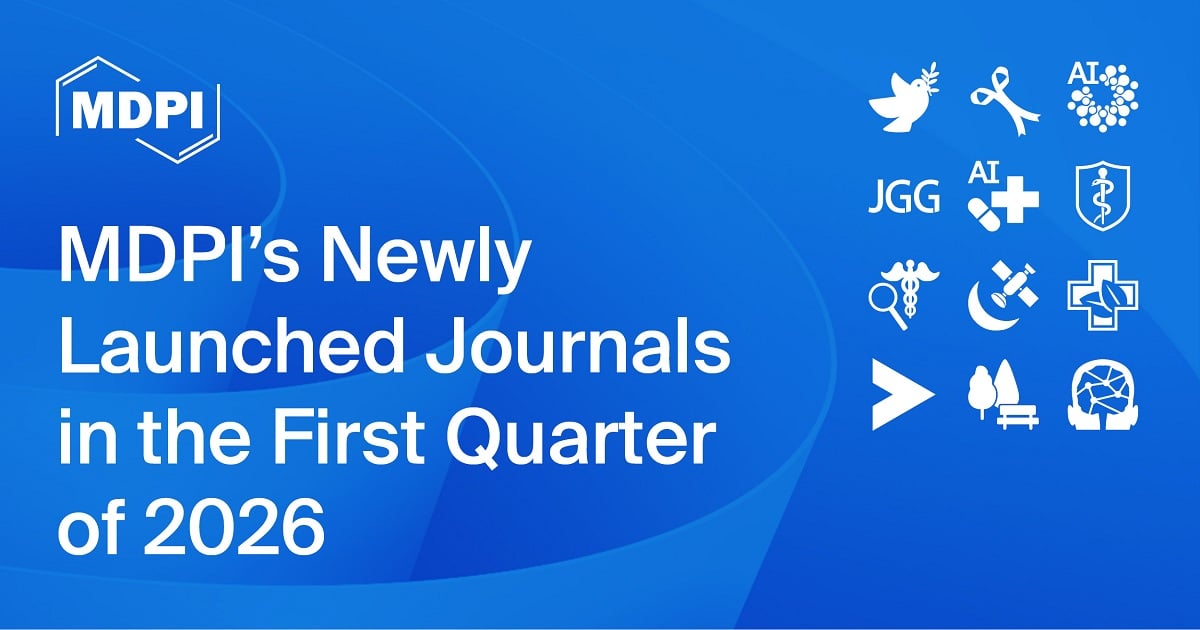
Our portfolio of journals available for publishing up-to-date research in immediate open access format has been further expanded. In the first quarter of 2026, nine new journals released their inaugural issues and three transferred journals released their first issue as part of MDPI, covering the subjects of clinical medicine, chemistry, computer science & mathematics, engineering, environment & ecology, and social sciences & psychology.
We extend our gratitude to the Editors-in-Chief, Associate Editors, and Editorial Board Members who will shape the future course of these brand-new journals. Each journal is dedicated to upholding strong editorial standards through a thorough peer review process, ensuring impactful open access scholarship.
Please feel free to browse and discover more about the new journals below.
|
New Journals |
Founding Editor(s)-in-Chief |
Journal Topics (Selected) |
|
|
Prof. Dr. Matt Oehlschlaeger, |
AI-based chemical data analysis, prediction, and discovery; AI-enabled chemical reaction prediction, synthesis planning, and retrosynthesis; AI in bioorganic chemistry and chemical biology; digital twins and simulation of chemical processes; AI-powered chemical education and pedagogy | |
|
|
Prof. Dr. Guang Jia, |
occupational hazards and exposure science; occupational health effects and susceptibility; occupational risk assessment and management; occupational health intervention, promotion, and policy | |
|
|
Prof. Dr. Alessandro Miani, |
environmental exposures and health; the built environment and public health; One Health approach; environmental justice and health equity; environmental policies and interventions | |
|
|
Prof. Dr. Miriam H. A. Bopp, |
neuroimaging technology and tool; multimodal neuroimaging integration and analysis; |
|
|
Prof. Dr. Raul A. Urrutia, |
personalized translational and clinical oncology research that contribute to a deeper understanding of cancer diagnoses, prognoses, prevention, and treatment specifically for individual patients | |
|
|
Prof. Dr. Pierre Boulanger, |
AI in disease detection, diagnosis, prediction, and treatment; medical informatics; AI in genomics and precision medicine; AI in drug discovery and development; |
|
|
Prof. Dr. Zhaokui Wang, |
astrodynamics; spacecraft technology; satellite technology; space transportation; space vehicle design, propulsion, and avionics; space energy, power and propulsion | |
|
|
Prof. Dr. Richard J Hauer, |
park design, planning, and evaluation; park and art; park, industrialization, urbanization, and civilization; park and education; park and smart society; park role in SDGs; park services for humans | |
|
|
Prof. Dr. Stacey L. Connaughton, |
conflict resolution; peacebuilding; peacemaking; mediation, reconciliation, and transitional justice; sustaining peace | |


|
Transferred Journals |
Editor(s)-in-Chief |
Journal Topics (Selected) |
|
|
Prof. Dr. Gianluigi Vendemiale, |
physiology and pathology of aging; biogerontology; epidemiology; clinical geriatrics; pharmacology; geriatric nursing | |
|
|
Prof. Dr. Michele Maffia, |
cellular and developmental biology; physiology, pathophysiology and endocrinology; diagnostic tools, therapies and public health | |
|
|
Dr. Warren S. Joseph, |
foot and ankle medicine; podiatric medicine | |


We would like to thank everyone who has supported the development of open access publishing. If you would like to create a new journal, you are welcome to send an application here or contact the New Journal Committee (newjournal-committee@mdpi.com).
16 April 2026
Meet Us at the 2026 China Automation Society Youth Academic Annual Conference, 8–10 May 2026, Changsha, China

MDPI will be participating in the upcoming 2026 China Automation Society Youth Academic Annual Conference.
China Automation Society Youth Academic Annual Conference is a national annual academic conference organized by the China Automation Society and convened by the Youth Committee of the China Automation Society. It has now been successfully held for 40 consecutive years. The 41st Annual Conference will be hosted by Hunan University and is scheduled to take place in Changsha, Hunan, from 8 to 10 May 2026.
It aims to provide a platform for academic exchange among domestic and international scholars and technical professionals in the field of automation, showcasing the latest theoretical and technological achievements. The conference will feature plenary lectures, thematic workshops, parallel sessions and poster presentations as formats for academic exchange.
The following MDPI journals will be represented at the conference:
If you plan to attend the conference, we warmly invite you to visit our booth and speak with our representatives. We look forward to meeting you in person and assisting with any questions or queries that you may have. For more details about the conference, please visit the official website:
https://www.caayac.org.cn/yac2026/.
16 April 2026
Mathematics Webinar | Stochastics: Analysis and Statistics, 17 April 2026

Welcome message from the webinar Chair:
It is my great pleasure and privilege to welcome you to the webinar “Stochastics: Analysis and Statistics”. I am honored to serve as the chair of this session and to facilitate the presentations and exchange of ideas on the current state of the art in this field and its related topics.
In recent times, with the help of AI, researchers can easily find the information they need for their research exploration. However, interpersonal communication is still an indispensable way for humanity to expand our knowledge boundaries. The webinar is one of the most effective and economic ways for this interpersonal interaction. This webinar features three key talks presented by rising star experts. The topics covered include the Bayesian nonparametrics, learning of single-layer attention-style models and further analysis of stochastic partial differential equations, including Dirichlet processes, stochastic differential equations, stochastic partial differential equations, Attention-Style Models, Feynman–Kac formula, Bernstein–von Mises theorem, Berry–Esseen bounds, statistical learning, minimax rate.
Audience are encouraged to raise questions and express opinions or any comments during and after each lecture.
Date: 17 April 2026
Time: 2:00 p.m. CEST | 8:00 a.m. EDT
Register now for free:

Program:
| Speaker/Presentation | Time in CEST | Time in EDT |
| MDPI Host Mathematics and Webinar Introduction | 14:00-14:05 | 8:00-8:05 |
| Prof. Dr. Yaozhong Hu Chair Introduction | 14:05-14:10 | 8:05-8:10 |
| Dr. Junxi Zhang A Bernstein-von Mises Theorem for the Generalized Dirichlet Processes | 14:10-15:00 | 8:10-9:00 |
| Dr. Xiong Wang Minimax Rates for Learning Pairwise Interactions in Attention-Style Models | 15:00-15:50 | 9:00-9:50 |
| Dr. Wangjun Yuan Stochastic Partial Differential Equations Associated with Feller Processes | 15:50-16:40 | 9:50-10:40 |
| Q&A Session | 16:40-16:55 | 10:40-10:55 |
| Prof. Dr Yaozhong Hu Closing of Webinar | 16:55-17:00 | 10:55-11:00 |
After registering you will receive a confirmation email with information on how to join the webinar. Registrations with academic institutional email addresses will be prioritized.
Unable to attend? Feel free to register anyway; the session will be recorded, and we will let you know when the recording is available for viewing.
Webinar Chair and Speakers:
- Prof. Dr. Yaozhong Hu, University of Alberta, Canada;
- Dr. Junxi Zhang, Concordia University, Montreal, Canada;
- Dr. Xiong Wang, Sun Yat-sen University, China;
- Dr. Wangjun Yuan, Southern University of Science and Technology, China.
Call for papers:
“Research Progress of Probability Statistics”
Guest Editor: Prof. Dr. Wanyang Dai
Deadline for manuscript submissions: 30 April 2026
For more information about this webinar, please visit the following website: https://sciforum.net/event/Mathematics-23?subscribe.
If you have any questions about this event, please contact mathematics@mdpi.com.
Mathematics Webinar Secretariat
15 April 2026
Meet Us at the Chinese Annual Conference on Mathematical Logic 2026 (CACML 2026), 5–7 June 2026, Beijing, China

Conference: Chinese Annual Conference on Mathematical Logic 2026
Date: 5–7 June 2026
Location: Beijing, China
MDPI will be attending the Chinese Annual Conference on Mathematical Logic 2026, which will be held from 5 to 7 June 2026, as an exhibitor. We welcome researchers from various backgrounds to visit our booth and share their latest ideas with us.
Organized by the Mathematical Logic Professional Committee of the Chinese Mathematical Society and jointly hosted by the Joint Research Center for Logic of Tsinghua University and the University of Amsterdam, the Philosophy Department of Tsinghua University, and the Qizhen College of Tsinghua University, the Chinese Annual Conference on Mathematical Logic 2026 (CACML 2026) will be held in Beijing, China.
The conference provides a professional academic platform for scholars engaged in mathematical logic research, aiming to promote academic exchanges and disciplinary development in the field of mathematical logic. It brings together experts and scholars from home and abroad to conduct in-depth discussions on cutting-edge issues and research progress in set theory, model theory, recursion theory, philosophical logic and other directions, so as to boost the innovation and development of mathematical logic research.
The Chinese Annual Conference on Mathematical Logic 2026 will be held from 05 June to 07 June 2026, at Tsinghua University. We warmly welcome you to join us in Beijing, China, as we work together to promote the collective advancement of domestic research levels in the field of mathematical logic.
The following MDPI journals will be represented at the conference:
If you are planning to attend this conference, please do not hesitate to start an online conversation with us. Our delegates look forward to meeting you in person at the booth and answering any questions that you may have. For more information, please visit https://tsinghualogic.net/JRC/cacml2026/.
