You are currently viewing a new version of our website. To view the old version click .

Proceedings, Volume 91, Issue 1

FENS 2023 2023 - 439 articles

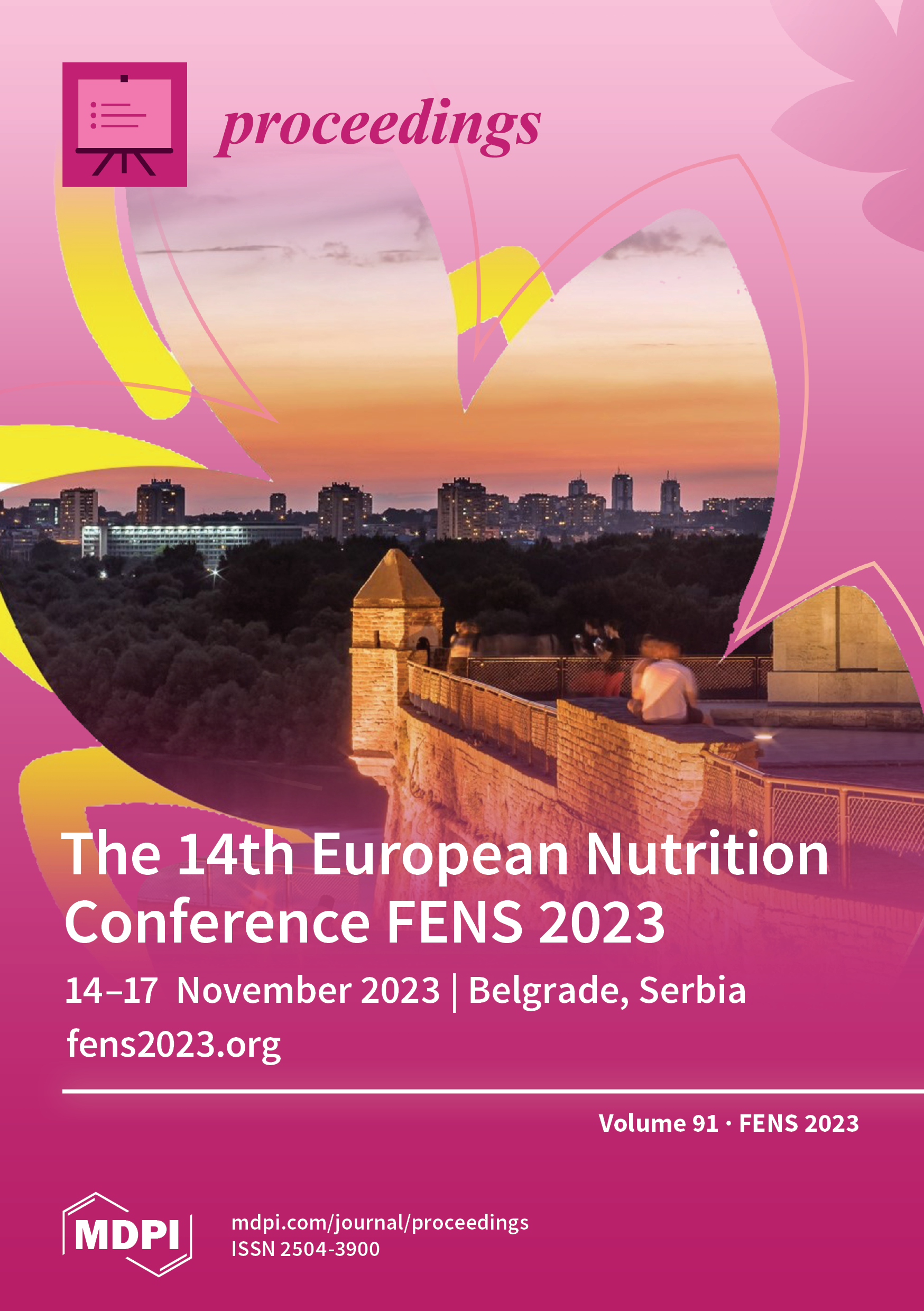
The 14th European Nutrition Conference FENS 2023

Belgrade, Serbia | 14–17 November 2023

Volume Editors:
Sladjana Sobajic, University of Belgrade, Serbia
Philip C. Calder, 1. University of Southampton, UK
2. NIHR Southampton Biomedical Research Centre, UK

Cover Story: The theme of the 14th European Nutrition Conference is “Food, Nutrition and Health: Translating science into practice”. Around this theme, the conference will deliver a high-quality programme, featuring international speakers across plenary sessions and scientific symposia. Other features of the programme will be workshops, training sessions, industry symposia, and oral and poster sessions oriented towards early career researchers. This conference will provide opportunities to hear experts and to catch up on the latest science, as well as to become better informed about areas of controversy. The topics of the planned conference symposia are broad and multi-disciplinary and will appeal to all those interested in experimental, clinical, and public health nutrition.
  • Issues are regarded as officially published after their release is announced to the table of contents alert mailing list .
  • You may sign up for email alerts to receive table of contents of newly released issues.
  • PDF is the official format for papers published in both, html and pdf forms. To view the papers in pdf format, click on the "PDF Full-text" link, and use the free Adobe Reader to open them.

Articles (439)

  • Abstract
  • Open Access
1,567 Views
2 Pages

Nutrient Intake from Fortified Foods and Supplements in Vegan, Vegetarian, and Omnivorous Participants Aged 6 to 18 Years in Germany: Results from the VeChi Youth Study

  • Joelina Dietrich,
  • Vanessa Keller,
  • Morwenna Fischer,
  • Stine Weder,
  • Ute Alexy,
  • Andreas Michalsen,
  • Alfred Längler,
  • Andreas Sputtek and
  • Markus Keller

Introduction: The German market for dietary supplements and fortified foods is of considerable size, and many target-group-specific products, e.g., for vegans and vegetarians, are available. Growing sales volumes in recent years reflect the large dem...

  • Abstract
  • Open Access
1,313 Views
2 Pages

The Future Burden of Type 2 Diabetes in Belgium: A Microsimulation Model

  • José L. Peñalvo,
  • Junior Ocira,
  • Diana Sagastume,
  • Maria Salve Vasquez,
  • Stefanie Vandevijvere and
  • Elly Mertens

Background: Over 60 million people in Europe live with type 2 diabetes (T2D). This high burden is influenced by factors like population aging and increasingly prevalent risk factors such as excess weight, physical inactivity, unhealthy diets, and smo...

  • Abstract
  • Open Access
1,522 Views
2 Pages

Background and aims: As part of a project to consolidate reporting guidance for randomised controlled trials (RCTs), protocols of RCTs, and systematic reviews of nutritional interventions, it was important to understand the nutritional interventions...

  • Abstract
  • Open Access
1,382 Views
2 Pages

Analysis of Innovative Processes within an Organic Apple Production System (CO-FRESH)

  • Ewa Rembiałkowska,
  • Renata Kazimierczak,
  • Hubert Dobrowolski and
  • Justyna Obidzińska

For the CO-FRESH (CO-creating sustainable and competitive FRuits and vEgetableS’ value cHains in Europe) project, implemented under Horizon 2020, the main objective is to design and pilot innovative system approaches to agri-food value chains i...

  • Abstract
  • Open Access
1,243 Views
2 Pages

Effectiveness of Dietary Guidelines for Reducing Free Sugar Intakes: A Randomised Controlled Trial

  • Lucy Boxall,
  • Katherine M. Appleton,
  • Emily Arden-Close and
  • Janet James

National dietary guidelines aim to educate and assist the public by enhancing overall diet health and decreasing health risk. Despite the widespread use of food-based dietary guidelines, assessments into their effectiveness are lacking. Methods: Usin...

  • Abstract
  • Open Access
1,693 Views
2 Pages

The Impact of the Universal Infant Free School Meals Policy on the Ultra-Processed Food Content of Children’s Lunchtime Intake in England and Scotland

  • Jennie C. Parnham,
  • Kiara Chang,
  • Fernanda Rauber,
  • Renata B. Levy,
  • Anthony A. Laverty,
  • Jonathan Pearson-Stuttard,
  • Martin White,
  • Stephanie von Hinke,
  • Christopher Millett and
  • Eszter P. Vamos

Background: A universal infant free school meals (UIFSM) policy was introduced in 2014/15 in England and Scotland for schoolchildren aged 4–7 years; as a result, school meal uptake rose sharply. School food in the UK is known overall to be heal...

  • Abstract
  • Open Access
2,578 Views
2 Pages

Background: Oat-based Milk Alternatives (OMAs) provide multiple health benefits arising from oat’s unique compounds: avenanthramides, avenacosides, and dietary fibre β-glucan. Avenanthramides–polyphenols, unique to oats, provide anti...

  • Abstract
  • Open Access
1 Citations
1,386 Views
1 Page

Post Hoc Subgroup Analysis and Identification—Learning More from Existing Data

  • Elizabeth Mannion,
  • Paola G. Ferrario and
  • Christian Ritz

Personalized nutrition aims to exploit heterogeneity. One reason for heterogeneity may be the presence of one or more subgroups that respond better to a dietary intervention than the observed average in the entire population considered. However, desi...

  • Abstract
  • Open Access
1,254 Views
2 Pages

Development of a Method to Measure a Biomarker Panel Reflecting Dietary Exposure

  • Stefania Noerman,
  • Marina Armeni,
  • Giuseppe Di Pede,
  • Raul Gonzalez-Domínguez,
  • Otto Savolainen and
  • Rikard Landberg

Assessment of dietary intake remains a large challenge in nutrition studies. The application of food intake biomarkers is a promising approach to complement widely used self-reported intake assessments and to improve accuracy. The development of meta...

  • Abstract
  • Open Access
1,446 Views
2 Pages

Local Food Systems under a Global Influence: How Should We Holistically Assess Evolving Food Systems?

  • Michael Rapinski,
  • Richard Raymond,
  • Damien Davy,
  • Jean-Philippe Bedell,
  • Thora Herrmann and
  • Priscilla Duboz

In order to comprehend the impact of globalization on local food systems, it is crucial to consider sociohistorical, socioeconomic, and sociocultural trajectories, accompanied by long-term and cross-sectional monitoring. To achieve this objective, it...

of 44

Get Alerted

Add your email address to receive forthcoming issues of this journal.

XFacebookLinkedIn
Proceedings - ISSN 2504-3900