



Universe 2025, 11(12), 417; https://doi.org/10.3390/universe11120417 - 17 Dec 2025
Viewed by 170
Abstract
►
Show Figures
We review some aspects of accretion disks physics, spacetime photon shell and photon orbits, related to retrograde (counter-rotating) motion in Kerr black hole (BH) spacetimes. In this brief review, we examine the counter-rotating components of the Kerr BH shadow boundary, under
[...] Read more.
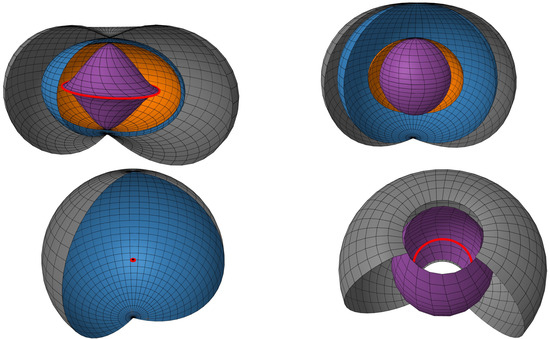
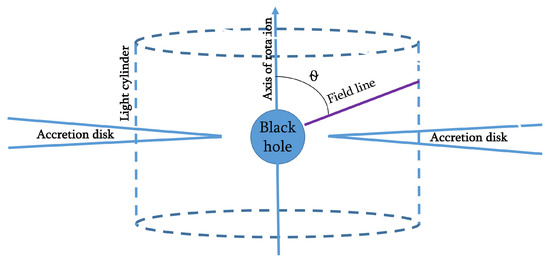
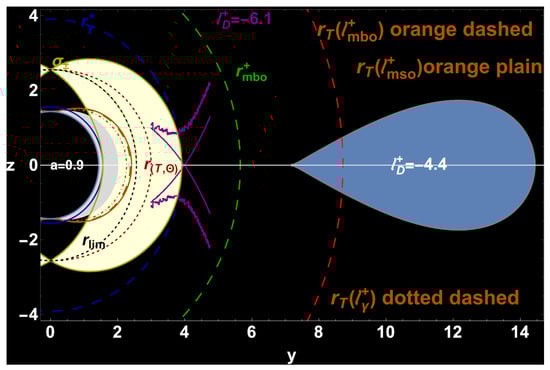
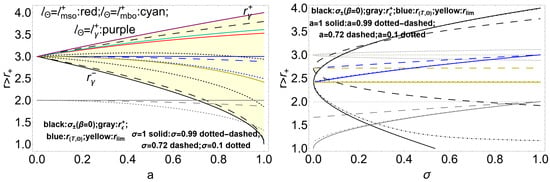
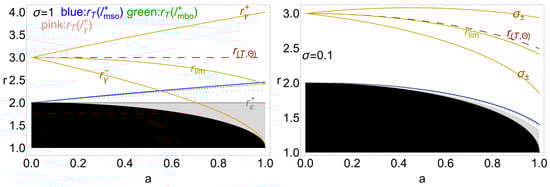
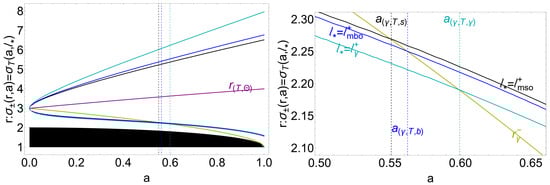
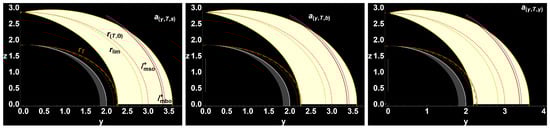
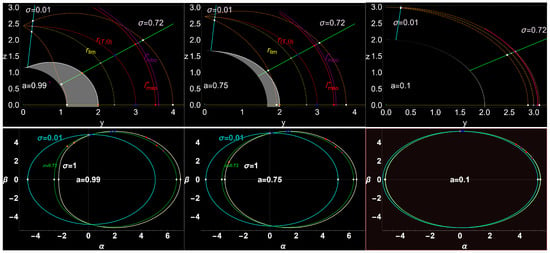
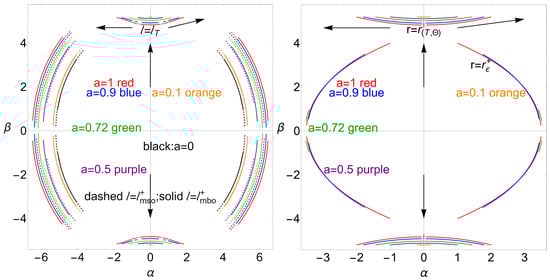
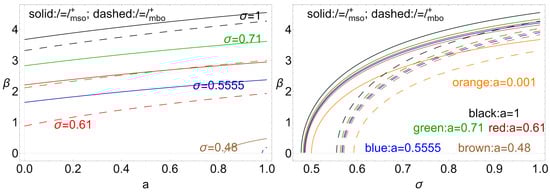
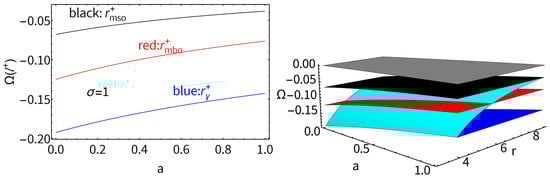
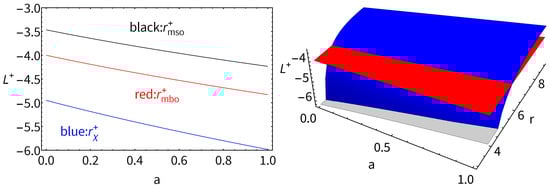
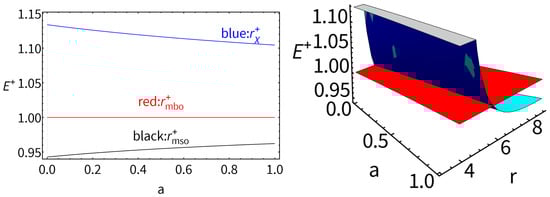
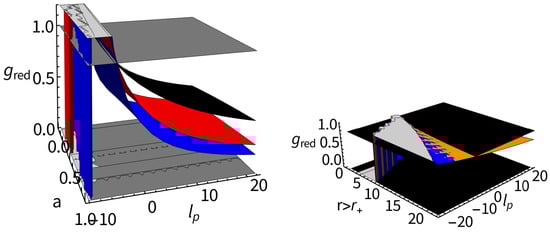
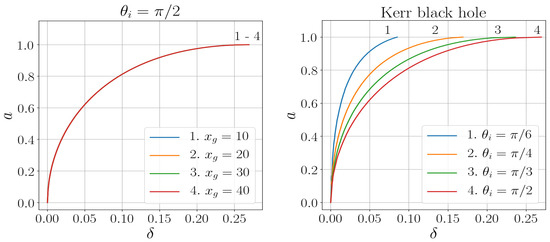
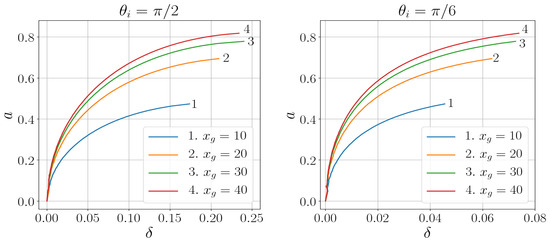
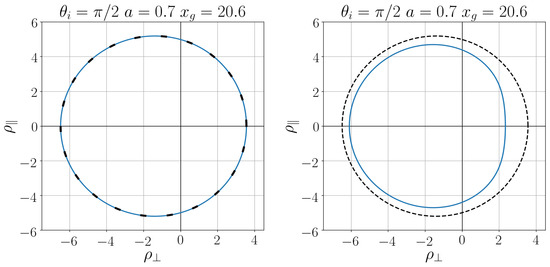
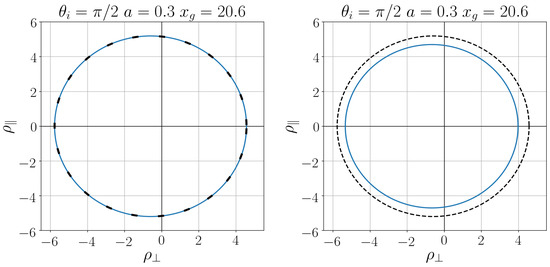
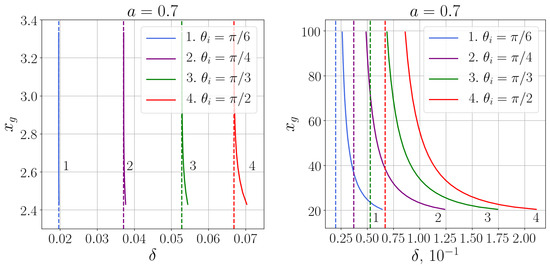
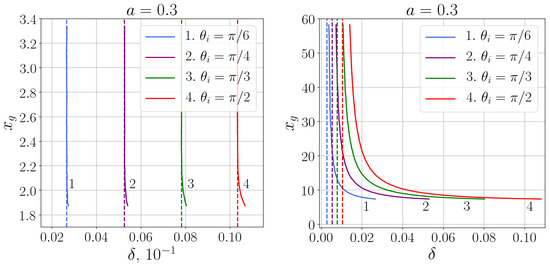
We review some aspects of accretion disks physics, spacetime photon shell and photon orbits, related to retrograde (counter-rotating) motion in Kerr black hole (BH) spacetimes. In this brief review, we examine the counter-rotating components of the Kerr BH shadow boundary, under the influence of counter-rotating accretion tori, accreting flows and proto-jets (open critical funnels of matter, associated with the tori) orbiting around the central BH. We also analyze the redshifted emission arising from counter-rotating structures. Regions of the shadows and photon shell are constrained in their dependence of the BH spin and observational angle. The effects of the counter-rotating structures on these are proven to be typical of the fast-spinning BHs, and accordingly can be observed only in the restricted classes of the Kerr BH spacetimes. This review is intended as a concise guide to the main properties of counter-rotating fluxes and counter-rotating disks in relation to the photon shell and the BH shadow boundary. Our findings may serve as the basis for different theoretical frameworks describing counter-rotating accretion flows with observable imprints manifesting at the BH shadow boundary. The results can eventually enable the distinction of counter-rotating fluxes through their observable imprints, contributing to constraints on both the BH spin and the structure of counter-rotating accretion disks. In particular, photon trajectories and their impact parameters can manifest in the morphology of the BH shadow. Such features, when accessible through high-resolution imaging and spectral or polarization measurements, could provide a direct avenue for testing different theoretical models on accretion disk dynamics and their BH attractors.
Full article
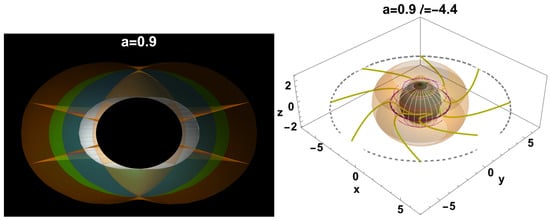
Figure 1