


Abstract
Surfactants are widely used chemicals whose continuous release into aquatic environments may pose environmental risks. Adsorption represents a promising approach for their removal owing to its operational simplicity, process flexibility, and the possibility of using a wide range of conventional and low-cost adsorbents. This review summarises and critically evaluates current knowledge on the adsorption of anionic, cationic, and non-ionic surfactants from aqueous solutions, with particular emphasis on the adsorbent materials employed, factors affecting the adsorption process, and adsorption mechanisms. Conventional carbon-based and mineral adsorbents, biopolymers, biochars, natural and waste-derived materials, as well as advanced and surface-modified adsorbents, are discussed. Analysis of the published literature indicates that adsorption performance is governed by the interplay between the molecular structure and ionic character of the surfactant, the surface properties and porous structure of the adsorbent, and experimental conditions, particularly pH, initial surfactant concentration, contact time and adsorbent dose. Surfactant adsorption generally involves a combination of electrostatic, hydrophobic, and dispersion interactions, hydrogen bonding, ion exchange, and interactions between adsorbed molecules, with the relative contribution of individual mechanisms varying with surfactant concentration and surface coverage. A major challenge remains the limited comparability of published data due to differences in experimental conditions and the metrics used to evaluate adsorption performance. Future research should therefore focus on more standardised evaluation of adsorption systems, adsorbent regeneration and reuse, and, particularly, validation under practically relevant conditions using complex real wastewater matrices.
1. Introduction
Surfactants are amphiphilic organic compounds capable of reducing surface or interfacial tension between two phases. Their molecules consist of a hydrophilic and a hydrophobic moiety, which enables them to interact with both polar and non-polar components of the environment [1,2]. Based on the charge of the hydrophilic group, surfactants are commonly classified as anionic, cationic, non-ionic, and zwitterionic [3]. Owing to their physicochemical properties, surfactants are widely used in detergents and cosmetics [4,5,6,7,8], pharmaceutical formulations [9,10,11], agriculture, and a wide range of industrial applications [12,13,14].
The widespread use of surfactants results in their continuous release into the environment, where they may occur in aquatic ecosystems, sediments, and soils [15,16]. Although many commercially used surfactants are biodegradable, continuous inputs may result in locally elevated concentrations and potential ecological risks. Their toxicity depends on their chemical structure and concentration, as well as on the exposed organism and environmental conditions [17,18]. Adverse effects have been reported in aquatic organisms and microbial communities, with potential consequences for ecological processes. Surfactants may disrupt cell membranes, affect cellular metabolism, and alter the composition of microbial communities [19]. In addition to their direct effects, surfactants may influence the environmental mobility and distribution of other organic contaminants through solubilisation and interactions with environmental matrices [15]. Exposure to certain surfactants may also be associated with adverse effects on human health through dermal contact or, depending on their environmental occurrence, ingestion of contaminated food or drinking water. Of particular relevance are their effects on the skin barrier. Interactions of surfactants with proteins and lipids in the stratum corneum may disrupt its structural organisation and facilitate surfactant penetration into deeper skin layers, potentially resulting in irritation and inflammatory responses [20,21]. Disruption of the lipid matrix has also been associated with increased transepidermal water loss, reduced skin hydration, and decreased elasticity [22]. Other adverse effects reported for certain surfactants include eye and respiratory tract irritation, further illustrating the diverse nature of their potential health effects [18,23]. For these reasons, the development of effective methods for their removal from aquatic systems is the subject of intensive research.
Various physical, chemical, and physicochemical processes have been investigated for surfactant removal, including electrocoagulation [24,25,26], membrane separation [27,28,29], ozonation [30,31], Fenton’s process [32,33], and other advanced oxidation processes [34,35]. Although these technologies can achieve high removal efficiencies, their practical application may be limited by high energy consumption, the need for chemical reagents, membrane fouling, sludge formation, or the generation of oxidative intermediates [36,37,38,39,40]. From the perspective of sustainable water treatment, increasing attention is therefore being paid to technologies that combine high efficiency with simpler operation and lower operating costs. In this context, adsorption represents an attractive alternative owing to its operational simplicity, flexibility, broad range of applicable adsorbents, and potential for the utilisation of low-cost and waste-derived materials. Another important advantage is the possibility of tailoring adsorbent surface properties through physical or chemical modification, thereby enhancing their affinity for particular groups of surfactants.
However, surfactant adsorption is a complex process governed by the interplay between the properties of the adsorbate, the adsorbent, and the aqueous medium. The ionic character and concentration of the surfactant, its tendency to aggregate, the surface charge and chemical composition of the adsorbent, as well as pH, temperature, contact time, and the presence of other components in solution, all play important roles [41]. Compared with the adsorption of simple ions or small organic molecules, surfactant adsorption is distinctive because the hydrophilic and hydrophobic moieties may contribute differently to interactions with the adsorbent surface. Consequently, electrostatic, hydrophobic, and dispersion interactions, hydrogen bonding, ion exchange, and interactions between adsorbed surfactant molecules may contribute simultaneously to the overall adsorption process [42]. Furthermore, as surfactant concentration and surface coverage increase, the relative importance of individual interactions may change, potentially leading to the formation of surface aggregates, including hemimicellar and admicellar structures [43]. For this reason, surfactant adsorption behaviour cannot be interpreted on the basis of a single parameter alone; rather, the combined effects of several physicochemical factors must be considered. The importance of a comprehensive assessment of surfactant surface activity was also emphasized by Kharazi, Saien and Miller, who discussed the critical micelle concentration, reduction in surface tension, and surface excess as complementary characteristics of adsorption behavior at liquid interfaces [44].
However, the extent of available experimental evidence varies considerably among different surfactant classes. Although zwitterionic surfactants constitute one of the major classes of surface-active agents, their removal from aqueous solutions by adsorption in the context of water treatment remains relatively underexplored in the available scientific literature. Several experimental studies have focused on their adsorption behavior on mineral surfaces in the context of enhanced oil recovery [45,46,47]. In these systems, adsorption represents an undesirable loss of surfactant, and research therefore primarily aims to minimize its adsorption onto rock surfaces. In water treatment applications, zwitterionic surfactants have also been employed as modifiers of adsorbent materials to alter their surface properties and enhance their performance in removing other contaminants, such as dyes, metal ions, and organic pollutants [48,49,50,51,52]. In these applications, zwitterionic surfactants are not the target contaminants to be removed but are instead used in the preparation or functional modification of adsorbents.
Given the differences in application objectives and experimental conditions, the findings of these studies cannot be directly compared with data on the adsorptive removal of surfactants from aqueous environments, which is the primary focus of the present review. Consequently, the limited availability of directly relevant experimental data prevents zwitterionic surfactants from being included in the comparative analyses to the same extent as anionic, cationic, and nonionic surfactants.
Several previous reviews have addressed different aspects of surfactant adsorption, including adsorption and aggregation at solid surfaces [41,42], surfactant removal from wastewater [53], and adsorption isotherm modeling [43]. The present review builds upon these studies by incorporating more recent research on the adsorption of selected anionic, cationic, and nonionic surfactants. Its aim is to compare the adsorption performance of different classes of adsorbents, with particular emphasis on the effects of pH, initial surfactant concentration, adsorbent dosage, contact time, and temperature, as well as to discuss the underlying adsorption mechanisms. Particular attention is paid to the limitations associated with comparing adsorption capacities and removal efficiencies determined under different experimental conditions. The review also addresses adsorbent regeneration and reusability and identifies key challenges and future research directions for the practical application of adsorption in wastewater treatment.
Relevant literature was systematically sought over a four-year period using the Web of Science and Scopus databases, with search terms related to selected surfactants and their adsorption from aqueous solutions onto solid adsorbents. Studies were selected based on their relevance to the scope of the review, and their findings were critically evaluated from a physicochemical perspective.
2. Adsorbents Used for the Removal of Surfactants
Adsorbents investigated for surfactant removal differ considerably in their origin, chemical composition, surface properties, and porous structure. The main groups include carbon-based materials, natural and waste-derived adsorbents, biopolymers, mineral materials, and various chemically or physically modified adsorbents. The selection of a suitable adsorbent depends not only on its adsorption capacity but also on its availability, cost, regeneration potential, and compatibility with the properties of the target surfactant. Particular attention has therefore been directed towards renewable and waste-derived adsorbents, which combine potential economic advantages with the valorisation of otherwise underutilised materials (Table 1).
Natural, agricultural, and industrial waste materials have therefore been extensively investigated as alternative adsorbents for surfactant removal. Their adsorption performance is strongly influenced by the chemical composition of the raw material, the nature of its surface functional groups, and the accessibility of adsorption sites. Ersa et al. [54] investigated rice straw and waste eggshells for the removal of the anionic surfactant LAS, with both materials achieving removal efficiencies of approximately 80% under acidic conditions. Tejada-Tovar et al. [55] investigated different maize residues and observed variations in adsorption performance among leaves, stalks, and other biomass fractions, illustrating the influence of the composition and structure of the source material. The potential of plant-based biosorbents was also demonstrated by Kulkarni, Jaspal and Itankar, who investigated the adsorption of SDBS onto Moringa oleifera and Medicago sativa biomass. The maximum adsorption capacities estimated using the Langmuir model were 28.73 mg g−1 for Moringa oleifera and 19.64 mg g−1 for Medicago sativa. However, the findings obtained using laboratory-prepared SDBS solutions require further validation under real wastewater conditions [56].
The adsorption performance of natural and waste-derived materials may be further enhanced through physical, chemical, or thermochemical modification. The influence of the activation method was demonstrated by Bhandari and Gogate [57] for the adsorption of SDBS onto coconut-shell-derived adsorbents. Thermochemical activation with phosphoric acid resulted in higher adsorption performance than chemical activation alone, demonstrating the substantial influence of the preparation method on the properties of the resulting adsorbent. The potential of waste raw materials is not limited to plant-based materials. Shami et al. [58] investigated dolachar, a by-product of the metallurgical industry, for SDS removal and reported approximately 98% removal under the investigated optimum conditions. Collectively, these studies demonstrate that waste-derived adsorbents can achieve substantial surfactant removal; however, their performance is highly dependent on the origin and composition of the raw material, the preparation or activation procedure, and the experimental conditions employed.
Biochars, produced by the thermochemical conversion of biomass under oxygen-limited conditions, represent an important group of carbon-based adsorbents. Their adsorption performance is strongly influenced by the feedstock, pyrolysis conditions, pore structure, and surface chemistry. Bautista Quispe et al. [59] compared SDS adsorption on biochars produced from rice husks and wheat straw at 550 and 700 °C, as well as on a commercial wood-based biochar. The differences in adsorption capacity among the investigated materials demonstrated the influence of both feedstock and pyrolysis temperature, with wheat-straw biochar produced at 550 °C exhibiting the highest adsorption capacity among the biochars studied. Nevertheless, the reference activated carbon exhibited a higher adsorption capacity than the investigated biochars. These findings demonstrate the potential of residual biomass as a feedstock for the preparation of adsorbents for anionic surfactant removal, while also showing that their adsorption performance remains dependent on the preparation conditions [59]. Tiwari, Diwan and Sar investigated the removal of SDS using lemon peel-derived biochar and its calcium alginate composite. Under optimized conditions, the authors reported maximum adsorption capacities of 6.29 mg g−1 for the pristine biochar and 42.77 mg g−1 for the composite. These findings suggest that incorporating biochar into a calcium alginate matrix can enhance its adsorption capacity [60].
Another approach to modifying the adsorption properties of biochars is surface functionalization. De Benedicto et al. [61] investigated coffee-husk biochar functionalised with β-cyclodextrin for the adsorption of the anionic surfactant SDBS and the cationic surfactant cetylpyridinium chloride (CPC). Functionalisation particularly affected CPC adsorption, illustrating how modification of surface chemistry can alter the affinity of biochar towards surfactants with different ionic characteristics.
Among biopolymer-based adsorbents, chitosan has attracted particular attention for the removal of anionic surfactants. Its adsorption behaviour is closely related to the presence of amino and hydroxyl functional groups. Under acidic conditions, protonation of amino groups generates positively charged sites that can interact electrostatically with the negatively charged head groups of anionic surfactants. Parhizgar et al. [62] reported a maximum SDBS adsorption capacity of 6.38 mg g−1 on chitosan and a removal efficiency of approximately 97% under optimised conditions. Chemical modification of chitosan can substantially alter its adsorption performance by increasing the number or accessibility of functional groups involved in surfactant binding. Zhang et al. [63] reported high maximum adsorption capacities for SDBS, SDS, and SLS estimated using the Langmuir isotherm model, on amino-crosslinked chitosan microspheres prepared via the inverse suspension method, highlighting the potential importance of additional amino functional groups in the adsorption of anionic surfactants. Collectively, these studies highlight the importance of the nature, density, and accessibility of functional groups in controlling the interactions between chitosan-based adsorbents and ionic surfactants.
Mineral adsorbents provide another class of materials for surfactant removal, with their performance strongly influenced by surface charge and surface chemistry. Kyzas et al. [64] investigated nanocrystalline akaganeite (β-FeOOH) for the adsorption of the anionic surfactant SDS, the cationic surfactant CTAB, and the non-ionic surfactant Tween 80. Akaganeite exhibited high adsorption capacities for all three surfactants, with maximum Langmuir adsorption capacities at 25 °C reaching 823.96 mg g−1 for SDS, 1007 mg g−1 for CTAB, and 699.03 mg g−1 for Tween 80. The differences observed among SDS, CTAB, and Tween 80 highlight the importance of considering both surfactant ionic character and adsorbent surface charge when evaluating the performance of inorganic adsorbents. Liu et al. also investigated the influence of mineral surface properties on surfactant adsorption by comparing the adsorption of nonionic Triton X-100 and anionic SDBS onto montmorillonite, calcium carbonate, and silica. The adsorption capacity decreased in the order montmorillonite > calcium carbonate > silica. The combination of experimental measurements and simulations also indicated the formation of bilayer adsorption structures and highlighted the importance of surfactant molecular arrangement at the adsorbent surface [65].
Among the traditional and most frequently studied adsorbents are activated carbons, which offer the advantages of high specific surface area, well-developed porosity, and diverse surface chemistry. However, in surfactant adsorption, not only the total specific surface area but also the pore size distribution and surface charge of the adsorbent are important. Krivova et al. [66], studying the adsorption of a homologous series of cationic alkyltrimethylammonium surfactants CnTABr (C10–C16), demonstrated the importance of the microporous structure of activated carbon, with high adsorption associated with pore sizes of 0.56–0.77 nm. At lower concentrations, adsorption occurred predominantly in micropores, whereas at higher concentrations, mesopores and macropores also contributed to the adsorption process. The adsorption of cationic surfactants may also be favoured by electrostatic attraction to negatively charged sites on the carbon surface. When comparing surfactants within a homologous series, the length of the hydrocarbon chain must also be considered. In this context, Paria and Khilar discussed Traube’s rule, noting that increasing the chain length enhances surfactant hydrophobicity and may shift adsorption isotherms toward lower concentrations. At the solid–water interface, both hydrophobic interactions between the surfactant and the surface and intermolecular interactions among adsorbed surfactant molecules may contribute to adsorption. Therefore, differences in the adsorption behavior of homologous surfactants cannot be attributed solely to adsorbent properties; the molecular structure of the adsorbate must also be taken into account [42].
The porous structure also plays a significant role in the adsorption of anionic surfactants onto activated carbon. For anionic surfactants, however, electrostatic interactions with negatively charged surface sites may be unfavourable, increasing the relative importance of hydrophobic and dispersion interactions between the surfactant hydrocarbon chains and the carbon surface. Bindes et al. [67] highlighted the importance of both pore size and adsorbent particle size in SDS adsorption. Smaller activated carbon particles may improve the accessibility of adsorption sites and reduce mass-transfer limitations associated with surfactant transport to the adsorbent surface. The adsorption performance of carbonaceous materials cannot therefore be assessed solely on the basis of their specific surface area; pore structure, surface chemistry, and the properties of the target surfactant must also be considered.
Anthracite is another carbonaceous adsorbent investigated for surfactant removal. Saqr et al. used anthracite to remove residual SDS following biological treatment and reported a maximum adsorption capacity of 158.7 mg g−1 for the adsorption stage. This value represents the adsorption capacity of the polishing step rather than the overall removal efficiency of the combined biological–adsorption process [68].
In addition to conventional carbon-based materials, nanocarbon adsorbents, particularly graphene oxide (GO) and its derivatives, have been investigated for surfactant removal. Their adsorption properties are associated with their accessible surface and the presence of oxygen-containing functional groups, which can facilitate both electrostatic and non-electrostatic interactions with surfactant molecules. Rezazadeh et al. [69] compared the adsorption of CTAB on graphene oxide, reduced graphene oxide (rGO), graphene oxide functionalised with humic acid (GO-HA), and functionalised rGO. The maximum adsorption capacities estimated using the Langmuir isotherm model varied considerably among the investigated materials, reaching 2000 mg g−1 for GO and 3333 mg g−1 for GO-HA, whereas substantially lower values were reported for rGO and functionalised rGO. The authors pointed out that specific surface area alone was not the decisive factor in adsorption. Based on zeta potential measurements, surface functional group characterization, and adsorption results, the authors attributed the adsorption of surfactants onto GO and GO-HA primarily to electrostatic interactions. In contrast, hydrophobic and cation–π interactions were proposed to play a more significant role in adsorption onto rGO and rGO-Th.
Another example of the application of functionalized graphene-based materials was reported by Peyravian et al., who investigated the adsorption of SDBS onto chitosan-functionalized magnetic graphene oxide. The maximum experimentally determined adsorption capacity reached approximately 65 mg g−1, and the equilibrium data were best described by the Langmuir model. The authors attributed adsorption to a combination of electrostatic interactions and surface complexation, providing further insight into the role of surface functional groups in the binding of anionic surfactants [70].
A comparison of the reviewed studies does not allow a single universally optimal class of adsorbents to be identified. For carbonaceous materials, modified biopolymers, and mineral adsorbents, adsorption performance depends on the interplay between surface chemistry, pore structure, and surfactant properties. Recent studies on biochars and modified paper fibers further highlight the importance of material origin and targeted surface modification [59,61,71]. However, maximum adsorption capacities cannot be directly used to rank adsorbent performance, as they were determined for different surfactants under varying experimental conditions. Therefore, the effects of pH, initial surfactant concentration, adsorbent dosage, and contact time are discussed in greater detail in the following section.
Table 1.
Representative adsorbents investigated for the removal of surfactants from aqueous solutions.
3. Factors Affecting Surfactant Adsorption
3.1. Effect of pH on Surfactant Adsorption
Solution pH is a key parameter influencing the adsorption of ionic surfactants, primarily through changes in adsorbent surface charge and the ionisation state of surface functional groups [42]. In systems where electrostatic interactions are important, adsorption of anionic surfactants is generally expected to be favoured at lower pH values, where the adsorbent surface may become more positively charged. Conversely, higher pH values may promote the formation of negatively charged surface sites and thereby favour the adsorption of cationic surfactants [74]. An important parameter in this context is the relationship between solution pH and the point of zero charge of the adsorbent (pHpzc), which provides an indication of the net surface charge under given pH conditions [74]. However, experimental studies show that this general trend is not universal and that the effect of pH depends on the nature of the surfactant, the surface chemistry of the adsorbent, and the relative contribution of different adsorption mechanisms.
In some systems, the effect of pH on the extent of adsorption may be relatively limited. Bhandari et al. [75] reported complete SDS removal throughout the investigated pH range of 2–8. Although enhanced adsorption might be expected below the adsorbent pHpzc of 3.4, where the surface is positively charged, no measurable effect of pH on removal efficiency was observed. This behaviour indicates that electrostatic interactions alone cannot account for SDS adsorption in this system and suggests a contribution from non-electrostatic interactions. Similarly, Bautista Quispe et al. [59] investigated the effect of pH on SDS adsorption at pH values of 3, 5, 7, and 9. No clear decrease in adsorption was observed at pH values above the pHpzc of the investigated adsorbents. For rice-husk-derived biochars, SDS adsorption remained nearly constant across the investigated pH range, further indicating that electrostatic interactions were not the sole factor controlling adsorption under these conditions.
In contrast, a more pronounced pH dependence has been observed in systems in which electrostatic interactions make a substantial contribution to surfactant adsorption [69,76,77]. Zou et al. [77] investigated SDS adsorption onto cellulose modified with quaternary ammonium groups and reported the highest removal at approximately neutral pH, whereas adsorption decreased under both more acidic and more alkaline conditions. The authors attributed this behaviour to competitive interactions involving H+ and OH− ions, SDS, and the quaternary ammonium sites of the adsorbent, which reduced favourable adsorbent–surfactant interactions away from neutral pH.
A pronounced pH dependence was also reported for CTAB adsorption onto graphene-based adsorbents, with adsorption generally increasing as the solution pH increased [69]. The lower adsorption under acidic conditions was associated with a less negative surface charge, resulting in weaker electrostatic attraction towards the cationic surfactant. The optimum pH nevertheless depended on the surface characteristics of the adsorbent: more hydrophilic GO and humic-acid-modified GO exhibited maximum adsorption near neutral pH, whereas adsorption onto reduced graphene oxide and its modified form continued to increase under alkaline conditions. A similar trend was reported by Baghdadi et al. [76] for CTAB adsorption onto modified cellulose, where adsorption increased continuously over the pH range 2–11 and reached a maximum capacity of 1000 mg g−1 at pH 11. This behaviour was attributed to the increasing number of negatively charged surface sites above the adsorbent pHpzc of approximately 7, which favoured electrostatic attraction of the cationic surfactant.
Recent studies confirm that the optimal pH depends on the specific adsorption system. Kulkarni, Jaspal and Itankar investigated SDBS adsorption over a pH range of 5–9 and observed maximum adsorption at pH 8 for Moringa oleifera biomass and pH 6 for Medicago sativa biomass [56]. Tiwari, Diwan and Sar examined SDS adsorption over a pH range of 2–10, identifying optimal pH values of 6 for lemon peel-derived biochar, 8 for calcium alginate, and 7 for their composite [60]. These differences demonstrate that even for the same anionic surfactant, a single optimal pH cannot be assumed across different adsorbents.
The effect of pH on surfactant adsorption cannot, therefore, be interpreted solely on the basis of adsorbent surface charge. The observed adsorption behaviour reflects the combined influence of electrostatic and non-electrostatic interactions, surface chemistry, and solution composition. Although the adsorption of anionic surfactants is often favoured at lower pH and that of cationic surfactants at higher pH, deviations from these general trends may occur (Table 2), reflecting the complex interplay of mechanisms involved in surfactant adsorption.
Table 2.
Effect of solution pH on the adsorption of selected ionic and non-ionic surfactants.
3.2. Effects of Ionic Strength, Competing Ions, and Water Matrix Composition
Ionic strength, the presence of competing ions, and water matrix composition are important factors influencing the adsorption of surfactants. Dissolved electrolytes can modify electrostatic interactions between surfactants and adsorbent surfaces, affect the structure of the electrical double layer, or contribute to ion bridging. Coexisting ions may also compete with surfactants for available adsorption sites. The overall effect therefore depends on the concentration and chemical nature of the ions present, the properties of the adsorbent, and the charge characteristics of the surfactant.
The adverse effects of coexisting ions were observed during the adsorption of the anionic surfactant SDBS onto polyethyleneimine (PEI)-modified lignin-based adsorbents. The presence of Na+, Ca2+, and Mg2+ cations, as well as Cl− and SO42− anions, reduced the amount adsorbed, with the inhibitory effect becoming more pronounced at higher ion concentrations. Divalent cations exhibited a stronger negative effect than Na+, which may be associated with differences in solution ionic strength and ion-specific interactions. The authors attributed the inhibitory effect of anions to their competition with SDBS for positively charged adsorption sites, with SO42− causing a greater reduction in adsorption than Cl− at a concentration of 50 mmol L−1 [78]. In contrast, Zahoor et al. observed no substantial effect of NaCl concentrations ranging from 0.025 to 0.20 mol L−1 on the removal efficiency of the cationic surfactant CDEAB using magnetic activated carbon derived from almond shells. These findings illustrate the different sensitivities of the investigated adsorption systems to electrolytes, although differences in adsorbent properties, surfactant characteristics, and experimental conditions must be considered when comparing the results [79].
The dependence of electrolyte effects on surfactant concentration was also demonstrated by Ghaleh Golab, who investigated the adsorption of zwitterionic and polymeric surfactants onto sandstone. The presence of NaCl generally reduced the amount adsorbed compared with the salt-free system, although increasing its concentration within saline systems resulted in a slight increase in adsorption. In the presence of MgCl2 and CaCl2, enhanced adsorption was observed in some cases at lower surfactant concentrations, whereas at higher concentrations, the amounts adsorbed were often lower than those obtained without added salt. At the investigated salt mass concentrations, adsorption was generally highest in the presence of CaCl2, followed by MgCl2 and NaCl, although the differences between the systems depended on surfactant concentration. Since equal mass concentrations of different salts do not correspond to equal ionic strengths, the observed differences cannot be attributed solely to the chemical nature of the individual ions [47].
In addition to electrolytes, nonionic dissolved substances can also influence surfactant adsorption. Singh, Dixit and Mohan investigated the adsorption of SDBS and CTAB onto ultrasound-treated sugarcane bagasse in the presence of urea. At a urea concentration of 0.1 mol L−1, the adsorption capacity decreased from 25.6 to 21.4 mg g−1 for SDBS and from 36.2 to 30.4 mg g−1 for CTAB. The authors associated this decrease with the disruption of hydrogen bonding, although urea may also affect hydration and other interactions in solution [80]. The importance of evaluating adsorption performance in complex water matrices was demonstrated by Dai et al., who achieved SDBS removal efficiencies exceeding 90% when treating both synthetic and real greywater. Despite the inhibitory effects of individual coexisting ions observed in model solutions, these findings cannot be directly compared without accounting for differences in the composition and concentrations of dissolved constituents. They nevertheless highlight the importance of evaluating adsorption performance in real water matrices, as results obtained under model conditions may not adequately reflect adsorbent behavior in complex aqueous systems [78].
3.3. Effect of Initial Surfactant Concentration
Initial surfactant concentration is an important parameter influencing adsorption, as it affects the concentration gradient between the bulk solution and the adsorbent surface and, consequently, the driving force for mass transfer [59]. In general, increasing the initial surfactant concentration tends to increase the adsorption capacity until saturation is approached, whereas the percentage removal may decrease as the number of available adsorption sites becomes increasingly limited relative to the amount of surfactant present [59,75,81,82]. Selected examples of the effect of initial concentration on the adsorption of various types of surfactants are summarised in Table 3.
This concentration-dependent behaviour has also been reported for SDS adsorption. Pal et al. [82] observed an increase in adsorption capacity from approximately 20 to 70 mg g−1 as the initial SDS concentration increased from 10 to 60 mg L−1, while the removal efficiency decreased from 100% to 50%. The increase in adsorption capacity was attributed to the greater concentration gradient and resulting mass-transfer driving force, whereas the decrease in percentage removal reflected the progressively limited availability of adsorption sites relative to the increasing amount of surfactant in solution. Similar concentration-dependent trends have been reported in other SDS adsorption systems [59,75,81].
However, for surfactants, their tendency to self-aggregate must also be considered. Consequently, the concentration dependence of adsorption may not remain monotonic over the entire concentration range and may change as the critical micelle concentration (CMC) is approached. Sánchez-Martín et al. [83] observed increasing SDS adsorption onto clay minerals until the equilibrium concentration approached the CMC, beyond which adsorption reached a plateau. Such behaviour may reflect the progressive saturation of available adsorption sites together with concentration-dependent surfactant–surfactant interactions and the formation of surface aggregates. Initial surfactant concentration therefore affects not only the mass-transfer driving force and occupancy of adsorption sites but, particularly at higher concentrations, also surfactant–surfactant interactions and aggregation at the adsorbent–solution interface.
Table 3.
Effect of initial surfactant concentration on adsorption.
3.4. Effect of Adsorbent Dose on Surfactant Adsorption
Adsorbent dose is an important operating parameter influencing both surfactant removal efficiency and adsorption capacity. At a constant initial surfactant concentration and solution volume, increasing the adsorbent dose generally provides a greater number of available adsorption sites and may therefore increase the percentage removal. However, the adsorption capacity per unit mass of adsorbent may decrease because the available amount of surfactant is distributed over a greater adsorbent mass, leaving a larger proportion of adsorption sites unoccupied [71,85]. Adsorbent dose may therefore have opposite effects on percentage removal and adsorption capacity, and these two performance metrics should be clearly distinguished when comparing adsorption systems.
The existence of an optimum adsorbent dose was demonstrated by Adak et al. [86] for the removal of anionic surfactants using neutral aluminium oxide. In the treatment of real laundry wastewater containing 8068 mg L−1 of anionic surfactants, removal efficiency increased with adsorbent dose but showed little further improvement above 120 g L−1. At the optimised dose of 120 g L−1, approximately 94% removal was achieved. This behaviour illustrates that increasing adsorbent dose beyond a certain level may provide only limited additional improvement in removal efficiency.
The influence of adsorbent properties was evident in the study of Bautista Quispe et al. [59], who compared different biochars and activated carbon for SDS removal. At an initial SDS concentration of 100 mg L−1, an optimised dose of 4 g L−1 resulted in removal efficiencies of 78–90.4% for the biochars, compared with 97% for activated carbon. These differences demonstrate that adsorbent dose alone does not determine removal performance, as the properties of the adsorbent remain important even under comparable dosage conditions. Adsorbent dose should also be considered in relation to other operational variables. Using response surface methodology, Shami et al. [58] simultaneously evaluated adsorbent dose, initial SDS concentration, and contact time for SDS removal by dolochar. Optimisation identified a dose of 16.62 g L−1 together with an initial SDS concentration of 47 mg L−1 and a contact time of 40 min, resulting in a removal efficiency of 98.91%. This study illustrates that the optimum adsorbent dose is system-specific and may depend on its interaction with other operating conditions.
The contrasting effects of adsorbent dose on adsorption capacity and removal efficiency were clearly demonstrated by Zou et al. [71] for SDBS adsorption onto paper fibres modified with quaternary ammonium groups. The adsorption capacity reached a maximum at an adsorbent dose of 0.3 g, whereas the removal efficiency continued to increase with increasing dose, reaching 97.6% at 1.5 g. This result illustrates that the dose providing the highest adsorption capacity per unit mass does not necessarily correspond to that providing the highest percentage removal.
From a practical perspective, optimisation of adsorbent dose should consider not only the removal efficiency but also the effective utilisation of the adsorbent capacity. Excessive dosing may increase adsorbent consumption and the costs associated with its subsequent separation, regeneration, or disposal without a commensurate improvement in removal performance. An appropriate adsorbent dose should therefore achieve the required removal while avoiding unnecessary material consumption. Simultaneous consideration of removal efficiency, adsorption capacity, and initial surfactant concentration provides a more meaningful basis for comparing adsorption systems and assessing their practical applicability.
3.5. Effect of Contact Time on Surfactant Adsorption
Contact time is an important operational parameter in adsorption processes, as it influences the extent of adsorption and determines the time required to approach equilibrium [87]. Surfactant adsorption is generally characterised by a rapid initial phase, during which uptake increases rapidly owing to a relatively high concentration gradient and the availability of numerous unoccupied adsorption sites [57].
As contact time increases, the adsorption rate gradually decreases, and the amount adsorbed may eventually approach a nearly constant value [59].
Such time-dependent behavior, characterized by rapid initial removal followed by a gradual decrease in the adsorption rate, has been observed for various anionic surfactants. Shami et al. [58] reported rapid SDS removal during the initial stage of adsorption, with a removal efficiency of 91.6% achieved within the first few minutes of contact. Subsequently, the removal efficiency increased more slowly, reaching approximately 98% after 60 min, with only negligible changes observed upon further extension of the contact time. The authors attributed this behavior to the progressive occupation of available adsorption sites and a decreasing concentration gradient between the solution and the adsorbent surface. Similar results were reported by Parhizgar et al. [62] for SDBS adsorption, where the initial removal efficiency of 75.3% gradually increased to 97.32% after 60 min of contact. Between 60 and 100 min, only minor changes in removal efficiency were observed, indicating that the adsorption process had approached a steady state under the investigated experimental conditions.
The time required for the removal efficiency or adsorbed amount to become nearly constant may vary among adsorption systems depending on the properties of the adsorbent and surfactant, the availability of adsorption sites, mass transfer processes, and experimental conditions. However, such stabilization does not, by itself, provide conclusive evidence that true adsorption equilibrium has been attained. Confirming equilibrium requires a more thorough evaluation of kinetic data and, where appropriate, a mass balance analysis. From a practical perspective, it is therefore important to determine the contact time beyond which further extension produces no substantial improvement in removal efficiency. This parameter allows the duration of the adsorption process to be optimized without necessarily assuming that true adsorption equilibrium has been reached. Differences in the contact times required for the observed stabilization of adsorption among individual surfactant–adsorbent systems are summarized in Table 4.
Table 4.
Contact time associated with apparent adsorption stabilization for selected surfactant–adsorbent systems.
3.6. Effect of Temperature on Surfactant Adsorption
Temperature is an important factor influencing surfactant adsorption, as it can affect adsorption interactions, adsorption capacity, and mass transfer rates. Its effect depends on the properties of the adsorbent, the nature of the surfactant, and the experimental conditions, with increasing temperature potentially either enhancing or inhibiting adsorption. Changes in adsorption behavior are primarily associated with the thermal motion of molecules, their interactions with the adsorbent surface, and adsorption–desorption processes.
In several adsorption systems, increasing temperature leads to a decrease in the amount adsorbed or removal efficiency. Such behavior was observed for the adsorption of the anionic surfactant SDBS and the nonionic surfactant Triton X-100 onto calcium carbonate over a temperature range of 25–70 °C, with a more pronounced decrease observed for Triton X-100 [65]. A similar decline in Triton X-100 removal efficiency with increasing temperature was reported for graphene oxide-based adsorbents, although the extent of the decrease varied depending on the surface modification of the material. As the temperature increased from 15 to 45 °C, removal efficiency decreased from approximately 58% to 46% for GO-HA and from 34% to 10% for GO-SA [87]. A different temperature-dependent behavior was observed for the adsorption of the cationic surfactants CTAB and TTAB onto montmorillonite, where the relationship between the amount adsorbed and temperature over the range of 293–323 K varied with the surfactant type and equilibrium concentration [93]. These findings highlight differences in the sensitivity of individual adsorption systems to temperature changes.
However, increasing temperature does not necessarily result in reduced adsorption. For SDS adsorption onto cellulose modified with quaternary ammonium groups, the amount adsorbed increased from approximately 21 mg g−1 at 20 °C to 33 mg g−1 at 60 °C, followed by a slight decrease at 70 °C [77]. A similar temperature dependence was reported for SLS adsorption onto clay, calcium phosphate hydroxide (CPH), and their composite (CPH@C). Removal efficiency initially increased with temperature, reaching a maximum at 55 °C for clay and CPH and at 65 °C for the composite. Further increases in temperature resulted in a decline in removal efficiency [94]. These findings suggest that the beneficial effect of increasing temperature on adsorption may be limited to a specific temperature range, beyond which the amount adsorbed or removal efficiency decreases.
Thermodynamic evaluation of these systems reveals differences in the nature of the adsorption processes. Negative adsorption enthalpy values were reported for SDBS and Triton X-100 adsorption onto calcium carbonate [65], Triton X-100 adsorption onto graphene oxide-based materials [87] and SDS adsorption onto lemon peel-derived biochar, calcium alginate, and their composite [60]. Exothermic adsorption was also observed for the cationic surfactants CTAB and TTAB onto montmorillonite [93]. In contrast, positive adsorption enthalpy values were reported for SDS adsorption onto cellulose modified with quaternary ammonium groups [77] and SLS adsorption onto clay, calcium phosphate hydroxide, and their composite [94]. The differences in thermodynamic behavior, even among surfactants with the same ionic character, highlight the importance of adsorbent surface properties and adsorption interactions in determining the temperature dependence of the process. Furthermore, the exothermic or endothermic nature of adsorption alone does not fully describe the magnitude of changes in the amount adsorbed within the investigated temperature range. Therefore, comparisons between studies should also account for differences in experimental conditions and the adsorption performance metrics employed.
4. Types of Interactions in the Surfactant Solution-Adsorbent System
Surfactant adsorption is governed by a combination of interactions whose relative contributions depend on the ionic nature and molecular structure of the surfactant, the chemical composition and surface charge of the adsorbent, and the conditions of the aqueous medium, particularly pH, ionic strength, and surfactant concentration [59]. Unlike simple ions, the adsorption behaviour of surfactants is strongly influenced by their amphiphilic structure, as the hydrophilic head group and hydrophobic chain may interact differently with the adsorbent surface. The principal interactions contributing to surfactant adsorption include electrostatic attraction, hydrophobic and dispersion interactions, hydrogen bonding, ion exchange, and, in aromatic systems, π–π interactions (Figure 1) [53,95].
Figure 1.
Schematic representation of the principal interactions and transport processes involved in surfactant adsorption: (a) hydrophobic interactions; (b) π–π interactions; (c) hydrogen bonding; (d) ion exchange; (e) pore diffusion; (f) electrostatic interactions; and (g) lateral hydrophobic interactions.
Electrostatic interactions play an important role in the adsorption of ionic surfactants onto oppositely charged surfaces and may dominate adsorption at relatively low surfactant concentrations [53]. Their strength is closely related to the surface charge of the adsorbent, which depends on the solution pH and the properties of surface functional groups. Therefore, the point of zero charge (pHpzc) of the adsorbent should be considered when evaluating the contribution of electrostatic interactions. An example is the adsorption of anionic surfactants onto alumina, for which Adak, Bandyopadhyay and Pal reported a pHpzc of 9.15. At pH values below this point, the alumina surface is generally positively charged, creating favorable conditions for electrostatic attraction between the surface and the anionic headgroups of surfactants [86]. A contrasting system is the adsorption of Ethomeen T/15 onto negatively charged montmorillonite, for which Borrego-Sánchez et al. interpreted the adsorption mechanism using a combination of FTIR spectroscopy and molecular modeling. The authors attributed changes in the absorption band of montmorillonite hydroxyl groups at 3629 cm−1 and shifts in the C–H stretching bands to possible electrostatic interactions between the surfactant and the mineral surface, while molecular dynamics simulations also suggested the involvement of hydrogen bonding [96].
However, the relative contribution of individual interactions may change with increasing surfactant concentration and surface coverage. Following the initial adsorption of surfactant molecules, lateral hydrophobic interactions between their hydrocarbon chains may promote association and the formation of surface aggregates. This concentration-dependent behaviour is characteristic of the Somasundaran–Fuerstenau adsorption isotherm, in which adsorption at low concentrations is initially governed predominantly by interactions between the surfactant and the adsorbent surface. As surfactant concentration and surface coverage increase, lateral interactions between adsorbed molecules become increasingly important, promoting cooperative adsorption and the formation of surface aggregates such as hemimicelles and admicelles (Figure 2) [43].
Figure 2.
Schematic representation of the Somasundaran–Fuerstenau adsorption isotherm, illustrating the concentration-dependent adsorption of surfactants and the formation of surface aggregates with increasing surface coverage. Here, qₑ represents the equilibrium adsorption capacity and cₑ the equilibrium surfactant concentration.
Experimental support for this mechanism was provided by Chandar, Somasundaran and Turro, who combined adsorption isotherm and zeta potential measurements with fluorescence spectroscopy to investigate SDS adsorption onto alumina. Fluorescence measurements revealed the formation of a less polar microenvironment characteristic of associated hydrocarbon chains at concentrations below the critical micelle concentration (CMC). Using time-resolved fluorescence spectroscopy, the authors also estimated the aggregation numbers of surface aggregates, which ranged from approximately 120 to 130 molecules in region II and reached approximately 356 molecules in region III. These findings provide experimental evidence supporting the contribution of lateral hydrophobic interactions to the formation and growth of organized aggregates on the adsorbent surface [97].
Hydrophobic interactions can contribute significantly to the adsorption of surfactants onto carbonaceous and other hydrophobic materials. They arise from the tendency of non-polar hydrocarbon chains to minimise contact with the aqueous environment and associate with hydrophobic regions of the adsorbent surface [98]. The importance of these interactions is supported by the findings of Schouten et al., who compared the adsorption of the anionic surfactants LAS and AOS onto adsorbents with different surface properties. While a negatively charged resin exhibited negligible LAS adsorption, adsorption onto uncharged hydrophobic resins was attributed predominantly to nonionic interactions. The comparison of LAS and AOS also highlighted the importance of surfactant molecular structure, with the stronger adsorption of AOS onto activated carbon attributed by the authors to its greater hydrophobicity [99]. Further experimental support was provided by Ncibi, Gaspard and Sillanpää, who observed only minor variations in the adsorption capacity of the nonionic surfactant TX-100 onto multiwalled carbon nanotubes (285–315 mg g−1) over a wide pH range of 2–12. The authors interpreted this relative independence from pH as an indication of a significant contribution from hydrophobic and possible π–π interactions, whereas ionic surfactants exhibited a more pronounced pH dependence, suggesting the additional involvement of electrostatic interactions [100].
Depending on the chemical nature of the adsorbent and surfactant, ion exchange, hydrogen bonding, and van der Waals dispersion interactions may also contribute to adsorption. The importance of these interactions was demonstrated by Sabah, Turan and Çelik, who investigated the adsorption of cationic surfactants onto natural and activated sepiolite. The authors attributed the initial adsorption of the quaternary ammonium surfactants DTAB and HTAB to ion exchange between the cationic headgroups of the surfactants and Mg2+ ions in the sepiolite structure, with this mechanism further supported by an increase in the Mg2+ concentration in solution. At higher concentrations, lateral interactions between the hydrocarbon chains of adsorbed molecules became more pronounced, as suggested by the steeper increase in adsorption density observed for HTAB, which has a longer alkyl chain. Based on a comparison of adsorption isotherms, the authors also estimated the contribution of a methylene group to the free energy of adsorption to be approximately −2.26 kJ mol−1, supporting the importance of hydrocarbon chain association through van der Waals interactions. The possible involvement of hydrogen bonding was suggested by the higher adsorption of the primary amine compound DAH compared with DTAB, which the authors attributed to interactions between the amine group and water molecules bound within the sepiolite structure [101].
Surfactant adsorption cannot be attributed to a single mechanism in most systems. Multiple interactions may occur simultaneously, and their relative contributions may vary with pH, surfactant concentration, surface coverage, and adsorbent properties. When interpreting the adsorption process, it is also important to distinguish between interactions responsible for surfactant binding and mass-transfer processes governing the transport of surfactant molecules to adsorption sites, including film and intraparticle diffusion [82]. The importance of pore structure was highlighted by Bindes and Franco Jr., who proposed that, during SDS adsorption onto activated carbon, surfactant molecules are adsorbed predominantly in micropores at low concentrations, whereas mesopores and macropores may also contribute at higher concentrations [67]. These findings highlight the importance of adsorption-site accessibility but do not conclusively identify the underlying transport mechanism. Therefore, a comprehensive interpretation of the adsorption mechanism should be based on a combination of equilibrium and kinetic data, together with characterization of the adsorbent surface and pore structure before and after adsorption.
A broader physicochemical perspective on surfactant adsorption behavior and interfacial interactions is provided in the literature [44,102].
5. Adsorbent Regeneration and Reusability
Adsorbent regeneration and the retention of adsorption performance upon repeated use are important criteria for assessing the practical applicability of adsorption processes. Regeneration efficiency depends on the nature of the interactions between the adsorbent and the surfactant, as well as on the desorbing agent employed. Available studies reveal considerable differences in the regeneration behavior of individual adsorption systems.
The desorption of anionic surfactants is strongly influenced by the regeneration procedure applied. Pal, Pan and Saha observed no desorption of SDS from chitosan beads under strongly alkaline conditions (pH 11.0–14.0) or when acetone was used as the desorbing agent [82]. In contrast, Bhandari and Gogate achieved a desorption efficiency of 95% for SDS from the PAACS-I adsorbent using ethanol, whereas acidic, alkaline, and deionized water resulted in substantially lower efficiencies of 6%, 10.6%, and 28%, respectively [75]. Different results were reported by Din et al. for the desorption of sodium lauryl sulfate (SLS) from mineral and hybrid adsorbents, with EDTA exhibiting the highest desorption efficiency, followed by ethanol and NaOH [94]. These findings highlight the importance of selecting a suitable regenerating agent according to the characteristics of the specific adsorption system.
For cationic surfactants, adsorbent reusability has been demonstrated following regeneration with HCl. Koner, Pal and Adak reported a decrease in the removal efficiency of cationic surfactants by approximately 4–5% after the first regeneration cycle and 9–12% after the second cycle when reusing waste silica gel, relative to the fresh adsorbent [103]. Li et al. demonstrated favorable cycling stability of SA/SiO2 microspheres, which maintained nearly constant removal efficiencies for CTAB and OTAB over six adsorption–desorption cycles using 0.1 M HCl, with reported changes of approximately 6% and 1%, respectively [104]. These results suggest that certain adsorbents can retain high removal efficiencies for cationic surfactants upon repeated use, although the cited studies do not provide separate quantitative data on desorption efficiency.
Nevertheless, adsorbent regeneration may also be accompanied by a substantial deterioration in adsorption performance. Zou et al. reported that the removal efficiency of SDBS by quaternary ammonium-functionalized paper fibers decreased to 76.2% during the second use and approximately 50% over the subsequent three cycles, with pronounced material degradation observed after the fifth use [71]. For mineral and hybrid adsorbents regenerated using EDTA, the desorption efficiency of SLS decreased to 60.42–69.26% after five cycles [94]. Limited regenerability was also observed for the nonionic surfactant Triton X-100, for which the amount adsorbed onto activated biocarbons derived from Salvia officinalis L. processing residues decreased markedly over three adsorption–desorption cycles. Among the tested desorbing agents (water, HCl, and NaOH), NaOH was the most effective; however, even this treatment failed to adequately restore the initial adsorption capacity of the materials [105].
Overall, these findings indicate that adsorbent regenerability varies considerably depending on the characteristics of the adsorption system and the regeneration procedure employed. High desorption efficiency does not necessarily ensure the retention of adsorption capacity upon repeated use. Therefore, assessments of regenerability should distinguish between desorption efficiency, retention of adsorption performance, and adsorbent stability over successive cycles. Direct comparisons among published studies are further complicated by differences in experimental conditions, performance metrics, and the relatively limited number of regeneration cycles investigated. Moreover, the use of chemical regenerating agents may increase operating costs and generate secondary waste streams, which should also be considered when evaluating the practical feasibility of adsorption processes.
6. Perspectives and Future Research Directions
Despite the large number of published studies, objective comparison of the adsorption performance of different materials remains challenging. Experimental conditions vary considerably among studies, including initial surfactant concentration, adsorbent dose, pH, temperature, and contact time, while the metrics used to evaluate adsorption performance also differ. Some studies report maximum adsorption capacity (qmax), whereas others primarily focus on percentage removal. These parameters describe different aspects of adsorption performance and are strongly dependent on the experimental conditions, which limits direct comparison among adsorbents. Future research should therefore aim for more standardised evaluation of adsorption systems and transparent reporting of experimental conditions, enabling more reliable comparison of adsorption performance across different materials.
The development of new adsorbents should not focus solely on maximising adsorption capacity. For practical applications, adsorbent selectivity, regeneration potential, stability during repeated use, raw-material availability, and the economic and environmental costs associated with adsorbent preparation are also important considerations. The use of waste-derived and renewable materials, together with targeted modification of their surface charge, chemical composition, or pore characteristics, represents one potential strategy for developing more practically applicable adsorbents. However, high adsorption capacities achieved through complex surface functionalisation do not necessarily translate into practical advantages, particularly when adsorbent preparation is material-, energy-, or cost-intensive.
The importance of effective surfactant removal is not limited to their direct environmental effects. Owing to their amphiphilic structure, surfactants can also influence the environmental behaviour of other contaminants by reducing interfacial tension and increasing the apparent solubility of hydrophobic organic compounds, thereby potentially affecting their desorption, mobility, and bioavailability. These properties are exploited in surfactant-assisted remediation of contaminated soils [106,107]. However, these effects depend on surfactant concentration and sorption, as well as on the properties of the contaminant and environmental matrix, and therefore cannot be generalised across all organic contaminants.
This issue may also be relevant to emerging organic micropollutants, including pharmaceuticals. The environmental mobility of antibiotics, for example, depends on their molecular and physicochemical properties as well as on pH, organic matter, ionic composition, and the characteristics of the environmental matrix [108]. Whether and to what extent residual surfactants modify the sorption, mobility, or bioavailability of pharmaceuticals and other organic micropollutants in complex environmental matrices remains an important question for future research.
Another important limitation of current research is the prevalence of adsorption experiments conducted in simple model solutions containing a single surfactant. Real wastewaters, however, are considerably more complex matrices in which different surfactants, inorganic ions, natural organic matter, and other organic contaminants may occur simultaneously. Competitive adsorption and interactions among these components may alter adsorption behaviour compared with single-component systems. Future studies should therefore place greater emphasis on testing adsorbents in real wastewater matrices, evaluating their long-term stability and regeneration, and progressing from laboratory-scale batch experiments towards continuous-flow, pilot-scale, and ultimately full-scale systems. Such studies are essential for assessing the technological, economic, and environmental feasibility of surfactant adsorption under practically relevant water-treatment conditions.
7. Conclusions
Adsorption represents a promising approach for the removal of surfactants from aqueous systems owing to its operational simplicity, process flexibility, and compatibility with a broad range of adsorbent materials. The available literature demonstrates that conventional carbon-based and mineral adsorbents, biopolymers, biochars, natural and waste-derived materials, as well as advanced and surface-modified adsorbents, can be applied to the removal of anionic, cationic, and non-ionic surfactants. In particular, the use of renewable and waste-derived materials, together with targeted surface modification, provides opportunities to tailor adsorbent properties towards surfactants with different molecular and ionic characteristics. However, the practical value of such modifications must be considered alongside their material, energy, and economic requirements.
Surfactant adsorption is governed by the interplay between the molecular structure and ionic character of the surfactant, the physicochemical properties of the adsorbent surface, and the experimental conditions. Key factors include pH, initial surfactant concentration, contact time and adsorbent dose. In addition, the tendency of surfactants to self-aggregate introduces further complexity, as the relative contribution of individual interactions may change with surfactant concentration and surface coverage. Consequently, surfactant adsorption generally cannot be attributed to a single mechanism but rather involves a combination of electrostatic, hydrophobic, and dispersion interactions, hydrogen bonding, ion exchange, and interactions between adsorbed surfactant molecules. Effective design and interpretation of adsorption systems therefore require simultaneous consideration of surfactant properties, adsorbent surface characteristics, and operating conditions.
Despite the substantial progress achieved in surfactant adsorption research, direct comparison among reported adsorbents remains challenging because of differences in experimental conditions and performance metrics. Future studies should therefore place greater emphasis on standardised evaluation and transparent reporting, while considering not only adsorption capacity but also selectivity, regeneration, stability, and the economic and environmental requirements of adsorbent preparation. Most importantly, validation in complex real wastewater matrices and progression from laboratory batch experiments towards continuous-flow and pilot-scale systems are needed to determine whether promising adsorption performance can be translated into practical water-treatment applications.
Author Contributions
Conceptualization, K.K., J.B. and M.P.; formal analysis, K.K.; investigation, K.K., J.B. and M.P.; writing—original draft preparation, K.K.; writing—review and editing, M.P. and J.B. All authors have read and agreed to the published version of the manuscript.
Funding
The authors gratefully acknowledge the support of the projects VEGA 1/0418/24, APVV-23-0006, VEGA 1/0542/24 and VV-MVP-24-0039.
Institutional Review Board Statement
Not applicable.
Informed Consent Statement
Not applicable.
Data Availability Statement
No new data were created or analyzed in this study. Data sharing is not applicable to this article.
Conflicts of Interest
The authors declare no conflicts of interest.
References
- Holmberg, K.; Jönsson, B.; Kronberg, B.; Lindman, B. Surfactants and Polymers in Aqueous Solution, 1st ed.; Wiley: Hoboken, NJ, USA, 2002; ISBN 978-0-471-49883-4. [Google Scholar]
- Nakama, Y. Surfactants. In Cosmetic Science and Technology; Elsevier: Amsterdam, The Netherlands, 2017; pp. 231–244. [Google Scholar] [CrossRef] [Scilit]
- Saxena, N.; Islam, M.M.; Baliyan, S.; Sharma, D. A comprehensive review on removal of environmental pollutants using a surfactant based remediation process. RSC Sustain. 2023, 1, 2148–2161. [Google Scholar] [CrossRef] [Scilit]
- Chu, Z.; Feng, Y.; Su, X.; Han, Y. Wormlike Micelles and Solution Properties of a C22-Tailed Amidosulfobetaine Surfactant. Langmuir 2010, 26, 7783–7791. [Google Scholar] [CrossRef] [Scilit] [PubMed]
- Tondo, D.W.; Leopoldino, E.C.; Souza, B.S.; Micke, G.A.; Costa, A.C.O.; Fiedler, H.D.; Bunton, C.A.; Nome, F. Synthesis of a New Zwitterionic Surfactant Containing an Imidazolium Ring. Eval. Chameleon-Like Behav. Zwitterionic Micelles Langmuir 2010, 26, 15754–15760. [Google Scholar] [CrossRef] [Scilit] [PubMed]
- Khalid, M.; Abdollahi, M. Environmental Distribution of Personal Care Products and Their Effects on Human Health. Iran. J. Pharm. Res. 2021, 20, 216–253. [Google Scholar] [CrossRef] [Scilit] [PubMed]
- Leoty-Okombi, S.; Gillaizeau, F.; Leuillet, S.; Douillard, B.; Le Fresne-Languille, S.; Carton, T.; DE MartinO, A.; Moussou, P.; Bonnaud-Rosaye, C.; André, V. Effect of Sodium Lauryl Sulfate (SLS) Applied as a Patch on Human Skin Physiology and Its Microbiota. Cosmetics 2021, 8, 6. [Google Scholar] [CrossRef] [Scilit]
- Cunningham, G.E.; O’Sullivan, J.J.; Simmons, M.J.H. Exploring formulation, manufacture and characterisation techniques of lamellar gel networks in hair conditioners: A review. Adv. Colloid Interface Sci. 2025, 339, 103419. [Google Scholar] [CrossRef] [Scilit] [PubMed]
- Bhattarai, A.; Niraula, T.; Chatterjee, S. Sodium dodecyl sulphate: A very useful surfactant for Scientific Invetigations. J. Knowl. Innov. 2014, 2, 111–113. [Google Scholar]
- Ivakhnitskaia, E.; Souboch, V.; Dallacasagrande, V.; Mizerska, K.; Souboch, E.; Sarkar, J.; Guaiquil, V.H.; Tseng, K.Y.; Hirata, H.; Rosenblatt, M.I. Benzalkonium chloride, a common ophthalmic preservative, compromises rat corneal cold sensitive nerve activity. Ocul. Surf. 2022, 26, 88–96. [Google Scholar] [CrossRef] [Scilit] [PubMed]
- Wang, X.; Liu, Y.; Wu, T.; Gu, B.; Sun, H.; He, H.; Gong, H.; Zhu, H. A win-win scenario for antibacterial activity and skin mildness of cationic surfactants based on the modulation of host-guest supramolecular conformation. Bioorganic Chem. 2023, 134, 106448. [Google Scholar] [CrossRef] [Scilit] [PubMed]
- Kumar, S.; Kumar, A.; Mandal, A. Characterizations of surfactant synthesized from Jatropha oil and its application in enhanced oil recovery. AIChE J. 2017, 63, 2731–2741. [Google Scholar] [CrossRef] [Scilit]
- Saxena, N.; Pal, N.; Dey, S.; Mandal, A. Characterizations of surfactant synthesized from palm oil and its application in enhanced oil recover. J. Taiwan Inst. Chem. Eng. 2017, 81, 343–355. [Google Scholar] [CrossRef] [Scilit]
- Wu, Q.; Zheng, H.; Chen, Y.; Liu, M.; Bao, X.; Guo, W. Alkylethoxyglucoside-enhanced volatile fatty acids production from waste activated sludge: Performance and mechanisms. J. Clean. Prod. 2021, 289, 125765. [Google Scholar] [CrossRef] [Scilit]
- Olkowska, E.; Ruman, M.; Polkowska, Ż. Occurrence of Surface Active Agents in the Environment. J. Anal. Methods Chem. 2014, 2014, 769708. [Google Scholar] [CrossRef] [Scilit] [PubMed]
- Li, X.; Doherty, A.C.; Brownawell, B.; Lara-Martin, P.A. Distribution and diagenetic fate of synthetic surfactants and their metabolites in sewage-impacted estuarine sediments. Environ. Pollut. 2018, 242, 209–218. [Google Scholar] [CrossRef] [Scilit] [PubMed]
- Ostroumov, S.A. Biological Effects of Surfactants; CRC Press: Boca Raton, FL, USA, 2005; Available online: https://www.taylorfrancis.com/books/9781420021295 (accessed on 29 September 2026).
- Ying, G.G. Fate, behavior and effects of surfactants and their degradation products in the environment. Environ. Int. 2006, 32, 417–431. [Google Scholar] [CrossRef] [Scilit] [PubMed]
- Gheorghe, S.; Lucaciu, I.; Paun, I.; Stoica, C.; Stanescu, E. Ecotoxicological Behavior of some Cationic and Amphoteric Surfactants (Biodegradation, Toxicity and Risk Assessment). In Biodegradation—Life of Science; Chamy, R., Ed.; InTech: London, UK, 2013; Available online: http://www.intechopen.com/books/biodegradation-life-of-science/ecotoxicological-behavior-of-some-cationic-and-amphoteric-surfactants-biodegradation-toxicity-and-ri (accessed on 29 September 2026).
- Seweryn, A. Interactions between surfactants and the skin—Theory and practice. Adv. Colloid Interface Sci. 2018, 256, 242–255. [Google Scholar] [CrossRef] [Scilit] [PubMed]
- Morris, S.A.V.; Kasting, G.B.; AnanthapadmanabhaN, K.P. Surfactant equilibria and its impact on penetration into stratum corneum. Curr. Opin. Colloid Interface Sci. 2022, 59, 101579. [Google Scholar] [CrossRef] [Scilit]
- Malnati, C.; Fehr, D.; Spano, F.; Bonmarin, M. Modeling Stratum Corneum Swelling for the Optimization of Electrode-Based Skin Hydration Sensors. Sensors 2021, 21, 3986. [Google Scholar] [CrossRef] [Scilit] [PubMed]
- Collivignarelli, M.C.; Carnevale Miino, M.; Baldi, M.; Manzi, S.; Abbà, A.; Bertanza, G. Removal of non-ionic and anionic surfactants from real laundry wastewater by means of a full-scale treatment system. Process Saf. Environ. Prot. 2019, 132, 105–115. [Google Scholar] [CrossRef] [Scilit]
- Önder, E.; Koparal, A.S.; Öğütveren, Ü.B. An alternative method for the removal of surfactants from water: Electrochemical coagulation. Sep. Purif. Technol. 2007, 52, 527–532. [Google Scholar] [CrossRef] [Scilit]
- Khairunisa, N.; Suhartana, U.; Bima, D. Electrocoagulation Method Using Al/Graphite Electrode for Removal Surfactant LAS (Linear Alkylbenzene Sulfonate). J. Presipitasi Media Komun. Dan Pengemb. Tek. Lingkung. 2021, 18, 443–452. [Google Scholar] [CrossRef] [Scilit]
- Yaranal, N.A.; Kuchibhotla, S.A.; Subbiah, S.; Mohanty, K. Identification, removal of microplastics and surfactants from laundry wastewater using electrocoagulation method. Water Emerg. Contam. Nanoplastics 2023, 3, 1–15. [Google Scholar] [CrossRef] [Scilit]
- Majewska-Nowak, K.; Kowalska, I.; Kabsch-Korbutowicz, M. Ultrafiltration of SDS solutions using polymeric membranes. Desalination 2005, 184, 415–422. [Google Scholar] [CrossRef] [Scilit]
- Kowalska, I.; Klimonda, A. Application of nanofiltration membranes for removal of surfactants from water solutions. E3S Web Conf. 2017, 17, 00044. [Google Scholar] [CrossRef] [Scilit]
- Klimonda, A.; Kowalska, I. Membrane technology for the treatment of industrial wastewater containing cationic surfactants. Water Resour. Ind. 2021, 26, 100157. [Google Scholar] [CrossRef] [Scilit]
- Huang, W.J.; Fang, G.C.; Wang, C.C. A nanometer-ZnO catalyst to enhance the ozonation of 2,4,6-trichlorophenol in water. Colloids Surf. A Physicochem. Eng. Asp. 2005, 260, 45–51. [Google Scholar] [CrossRef] [Scilit]
- Patil, V.V.; Gogate, P.R.; Bhat, A.P.; Ghosh, P.K. Treatment of laundry wastewater containing residual surfactants using combined approaches based on ozone, catalyst and cavitation. Sep. Purif. Technol. 2020, 239, 116594. [Google Scholar] [CrossRef] [Scilit]
- Malakootian, M.; Jaafarzadeh, N.; Dehdarirad, A. Efficiency investigation of photo-Fenton process in removal of sodium dodecyl sulphate from aqueous solutions. Desalin. Water Treat. 2016, 57, 24444–24449. [Google Scholar] [CrossRef] [Scilit]
- Miranzadeh, M.B.; Zarjam, R.; Dehghani, R.; Haghighi, M.; Badi, H.Z.; Marzaleh, M.A.; Tehrani, A.M. Comparison of Fenton and Photo-Fenton Processes for Removal of Linear Alkyle Benzene Sulfonate (Las) from Aqueous Solutions. Pol. J. Environ. Stud. 2016, 25, 1639–1648. [Google Scholar] [CrossRef] [Scilit] [PubMed]
- Mondal, B.; Adak, A.; Datta, P. Uv-h2o2 advanced oxidation of anionic surfactant: Reaction kinetics, effects of interfering substances and operating conditions. Environ. Eng. Manag. J. 2019, 18, 1245–1254. [Google Scholar] [CrossRef] [Scilit]
- Jennifer, Z.A.; Sonia, A.D.; Francesca, E.B.; Nadia, F.M.; Suanny, M.R. Advanced oxidation processes by UV/H2O2 for the removal of anionic surfactants in a decentralized wastewater treatment plant in Ecuador. Water Sci. Technol. 2024, 90, 2340–2351. [Google Scholar] [CrossRef] [Scilit]
- Lechuga, M.; Fernández-Arteaga, A.; Fernández-Serrano, M.; Jurado, E.; Burgos, A.; Ríos, F. Ozonation of Anionic and Non-ionic Surfactants in Aqueous Solutions: Impact on Aquatic Toxicity. J. Surfactants Deterg. 2013, 16, 779–784. [Google Scholar] [CrossRef] [Scilit]
- Wang, W.; Wang, H.; Li, G.; An, T.; Zhao, H.; Wong, P.K. Catalyst-free activation of persulfate by visible light for water disinfection: Efficiency and mechanisms. Water Res. 2019, 157, 106–118. [Google Scholar] [CrossRef] [Scilit] [PubMed]
- Bharti, M.; Das, P.P.; Purkait, M.K. A review on the treatment of water and wastewater by electrocoagulation process: Advances and emerging applications. J. Environ. Chem. Eng. 2023, 11, 111558. [Google Scholar] [CrossRef] [Scilit]
- Osman, A.I.; Chen, Z.; Elgarahy, A.M.; Farghali, M.; Mohamed, I.M.A.; Priya, A.K.; Hawash, H.B.; Yap, P.S. Membrane Technology for Energy Saving: Principles, Techniques, Applications, Challenges, and Prospects. Adv. Energy Sustain. Res. 2024, 5, 2400011. [Google Scholar] [CrossRef] [Scilit]
- Naldi, N.; Hazmi, A.; Desmiarti, R.; Emeraldi, P. Electrocoagulation in Wastewater Treatment: A Comprehensive Review on Parameters and Applications. Andalas J. Electr. Electron. Eng. Technol. 2025, 5, 38–49. [Google Scholar] [CrossRef] [Scilit]
- Somasundaran, P.; Huang, L. Adsorption/aggregation of surfactants and their mixtures at solid–liquid interfaces. Adv. Colloid Interface Sci. 2000, 88, 179–208. [Google Scholar] [CrossRef] [Scilit] [PubMed]
- Paria, S.; Khilar, K.C. A review on experimental studies of surfactant adsorption at the hydrophilic solid–water interface. Adv. Colloid Interface Sci. 2004, 110, 75–95. [Google Scholar] [CrossRef] [Scilit] [PubMed]
- Kalam, S.; Abu-Khamsin, S.A.; Kamal, M.S.; Patil, S. Surfactant Adsorption Isotherms: A Review. ACS Omega 2021, 6, 32342–32348. [Google Scholar] [CrossRef] [Scilit] [PubMed]
- Kharazi, M.; Saien, J.; Miller, R. The Surface Activity of Surfactants at Liquid Interfaces: The Role of CMC, Decrease in Surface Tension, HLB, Thermodynamic Adsorption Models. J. Surfactants Deterg. 2026, 29, 65–90. [Google Scholar] [CrossRef] [Scilit]
- Dai, C.; Zhao, J.; Yan, L.; Zhao, M. Adsorption behavior of cocamidopropyl betaine under conditions of high temperature and high salinity. J. Appl. Polym. Sci. 2014, 131, 40424. [Google Scholar] [CrossRef] [Scilit]
- Gbadamosi, A.; Alotaibi, M.; Kalam, S.; Patil, S.; Abu-Khamsin, S.A.; Hussain, S.M.S.; Kamal, M.S.; Fahmi, M. Static Adsorption of Novel Synthesized Zwitterionic Surfactants on Carbonates. Energy Fuels 2024, 38, 9458–9466. [Google Scholar] [CrossRef] [Scilit]
- Ghaleh Golab, E. Evaluation of zwitterionic and polymeric surfactant adsorption for enhanced oil recovery in sandstone reservoirs with high salinity conditions. J. Pet. Explor. Prod. Technol. 2025, 15, 171. [Google Scholar] [CrossRef] [Scilit]
- Abdel Ghafar, H.H.; Radwan, E.K.; EL-Wakeel, S.T. Removal of Hazardous Contaminants from Water by Naturaland Zwitterionic Surfactant-modified Clay. ACS Omega 2020, 5, 6834–6845. [Google Scholar] [CrossRef] [Scilit] [PubMed]
- Sun, Z.; Lian, C.; Li, C.; Zheng, S. Investigations on organo-montmorillonites modified by binary nonionic/zwitterionic surfactant mixtures for simultaneous adsorption of aflatoxin B1 and zearalenone. J. Colloid Interface Sci. 2020, 565, 11–22. [Google Scholar] [CrossRef] [Scilit] [PubMed]
- Li, Y.; Yang, D.; Cheng, F.; Li, Z.; Wu, D. Regulating interlayer and surface properties of montmorillonite by dodecyl dimethyl betaine for enhanced lead ion capture. Surf. Interfaces 2023, 42, 103348. [Google Scholar] [CrossRef] [Scilit]
- Sobczyk, M.; Rossberg, A.; Santhana Krishna Kumar, A.; Marzec, M.; Cwanek, A.; Łokas, E.; Nguyen Dinh, C.; Bajda, T. Highly efficient uranium uptake by the eco-designed cocamidopropyl betaine-decorated Na-P1 coal fly-ash zeolite. J. Hazard. Mater. 2024, 477, 135230. [Google Scholar] [CrossRef] [Scilit] [PubMed]
- Tesieh, A.M.; Azadfallah, M. Modification of lignin-derived activated carbon with surfactants for removal of phenol. BioResources 2026, 21, 3044–3063. [Google Scholar] [CrossRef] [Scilit]
- Siyal, A.A.; Shamsuddin, M.R.; Low, A.; Rabat, N.E. A review on recent developments in the adsorption of surfactants from wastewater. J. Environ. Manag. 2020, 254, 109797. [Google Scholar] [CrossRef] [Scilit] [PubMed]
- Ersa, N.S.; Ikhwali, M.F.; Karunia, T.U. Adsorption mechanism on surfactant removal using eggshell waste and rice straw as economically biosorbent. IOP Conf. Ser. Earth Environ. Sci. 2021, 871, 012034. [Google Scholar] [CrossRef] [Scilit]
- Tejada-Tovar, C.; Ortiz, A.V.; Gonzalez, A.D.; Cantillo, E.M.; Montero, M.P. Kinetics and Adsorption Equilibrium of Linear Alkyl benzene Sulfonate in Aqueous Solution Using Corn Residues in Batch System. Indian J. Sci. Technol. 2018, 11, 1–10. [Google Scholar] [CrossRef] [Scilit]
- Kulkarni, D.; Jaspal, D.; Itankar, N. RSM-based predictive model for efficient surfactant removal using sustainable adsorbents from synthetic SDBS solution. Discov. Appl. Sci. 2026, 8, 1072. [Google Scholar] [CrossRef] [Scilit]
- Bhandari, P.S.; Gogate, P.R. Kinetic and thermodynamic study of adsorptive removal of sodium dodecyl benzene sulfonate using adsorbent based on thermo-chemical activation of coconut shell. J. Mol. Liq. 2018, 252, 495–505. [Google Scholar] [CrossRef] [Scilit]
- Shami, S.; Dash, R.R.; Verma, A.K.; Dash, A.K.; Pradhan, A. Mechanistic Modeling and Process Design for Removal of Anionic Surfactant Using Dolochar. J. Hazard. Toxic Radioact. Waste 2020, 24, 04020008. [Google Scholar] [CrossRef] [Scilit]
- Bautista Quispe, J.I.; Campos, L.C.; Mašek, O.; Bogush, A. Removal of anionic surfactant from aqueous solutions by adsorption onto biochars: Characterisation, kinetics, and mechanism. Environ. Technol. 2024, 45, 5723–5744. [Google Scholar] [CrossRef] [Scilit] [PubMed]
- Tiwari, S.; Diwan, V.; Sar, S.K. Remediation of sodium dodecyl sulfate-contaminated water using biochar derived from lemon peel and incorporated with calcium alginate beads. Next Sustain. 2026, 8, 100469. [Google Scholar] [CrossRef] [Scilit]
- DE Benedicto, D.F.C.; Ferreira, G.M.D.; Thomasi, S.S. Β-cyclodextrin-functionalized coffee husk biochar for surfactant adsorption. Colloids Surf. A Physicochem. Eng. Asp. 2024, 701, 134921. [Google Scholar] [CrossRef] [Scilit]
- Parhizgar, F.; Alishahi, A.; Varasteh, H.; Rezaee, H. Removing Sodium Dodecyl Benzene Sulfonate (SDBS) from Aqueous Solutions Using Chitosan. J. Polym. Environ. 2017, 25, 836–843. [Google Scholar] [CrossRef] [Scilit]
- Zhang, C.; Wen, H.; Huang, Y.; Shi, W. Adsorption of anionic surfactants from aqueous solution by high content of primary amino crosslinked chitosan microspheres. Int. J. Biol. Macromol. 2017, 97, 635–641. [Google Scholar] [CrossRef] [Scilit] [PubMed]
- Kyzas, G.; Peleka, E.; Deliyanni, E. Nanocrystalline Akaganeite as Adsorbent for Surfactant Removal from Aqueous Solutions. Materials 2013, 6, 184–197. [Google Scholar] [CrossRef] [Scilit] [PubMed]
- Liu, Z.; Guo, F.; Wang, H.; Yang, T.; Hei, Y.; Wang, X.; Hou, X.; Yue, Z.; Sun, W. Mechanistic understanding of Triton X-100 and SDBS adsorption on mineral surfaces: An experimental and simulation study. Chem. Phys. 2026, 606, 113124. [Google Scholar] [CrossRef] [Scilit]
- Krivova, M.G.; Grinshpan, D.D.; Hedin, N. Adsorption of C TABr surfactants on activated carbons. Colloids Surf. A Physicochem. Eng. Asp. 2013, 436, 62–70. [Google Scholar] [CrossRef] [Scilit]
- Bindes, M.M.M.; Franco, M.R., Jr. Surfactant removal from aqueous solutions onto activated carbon using UV spectroscopy. Desalin. Water Treat. 2015, 56, 2890–2895. [Google Scholar] [CrossRef] [Scilit]
- Saqr, A.H.; Hesham, A.E.-L.; Attia, M.I.; Rafea, M.A.; Roshdy, M.A.; EL-Aassar, M.R.; Zarea, K.I.; Althuqbi, M.N.; Mohamed, F.M. The bio-adsorptive treatment of detergent: Performance and mechanisms. Sci. Rep. 2026, 16, 19938. [Google Scholar] [CrossRef] [Scilit] [PubMed]
- Rezazadeh, N.; Danesh, S.; Eftekhari, M.; Farahmandzadeh, M. Application of graphene oxide and its derivatives on the adsorption of a cationic surfactant (interaction mechanism, kinetic, isotherm curves and thermodynamic studies). J. Mol. Liq. 2022, 368, 120720. [Google Scholar] [CrossRef] [Scilit]
- Peyravian, A.; Emtyazjoo, M.; Sadeghi, M.S.; Najafloo, R. Adsorption of sodium dodecyl benzene sulfonate surfactant from aqueous solutions using magnetic graphene oxide nanocomposite functionalized with chitosan. Environ. Technol. Innov. 2026, 41, 104776. [Google Scholar] [CrossRef] [Scilit]
- Zou, M.; Zhang, H.; Zhang, H.; Miyamoto, N.; Kano, N. Removal of SodiumDodecylbenzenesulfonate from AqueousSolution Using Quaternary Ammonium-Modified Paper Fibers. ACS Omega 2025, 10, 26901–26912. [Google Scholar] [CrossRef] [Scilit] [PubMed]
- Maršálek, R. Adsorption of lead ions and surfactants on sheep wool and pyrolysis material prepared from wool. Waste Forum 2018, 3, 299. [Google Scholar]
- Moussavi, G.; Shekoohiyan, S.; Mojab, S. Adsorption capacity of NH4Cl-induced activated carbon for removing sodium dodecyl sulfate from water. Desalin. Water Treat. 2016, 57, 11283–11290. [Google Scholar] [CrossRef] [Scilit]
- Rahman, A.F.A.; Arsad, A.; Vo, D.V.N.; Bahari, M.B. Nano-silica to reduce of surfactant adsorption in oil recovery: A review. Environ. Chem. Lett. 2026, 24, 173–199. [Google Scholar] [CrossRef] [Scilit]
- Bhandari, P.S.; Gogate, P.R. Adsorptive removal of sodium dodecyl sulfate using activated coconut shell based adsorbent: Kinetic and thermodynamic study. Desalin. Water Treat. 2019, 165, 111–123. [Google Scholar] [CrossRef] [Scilit]
- Baghdadi, M.; Mazarji, M.; Sabouhi, M.; Jafari Kang, A.; Jafari, A. Removal of Cationic Surfactants from Aqueous Solutions by Modified Cotton as a Novel High Capacity and Low Cost Adsorbent. J. Adv. Chem. 2014, 9, 2061–2071. [Google Scholar] [CrossRef] [Scilit]
- Zou, M.; Zhang, H.; Miyamoto, N.; Kano, N.; Okawa, H. Adsorption of an Anionic Surfactant (Sodium Dodecyl Sulfate) from an Aqueous Solution by Modified Cellulose with Quaternary Ammonium. Polymers 2022, 14, 1473. [Google Scholar] [CrossRef] [Scilit] [PubMed]
- Dai, C.; Li, Y.; Qi, B.; Li, Z.; He, Z.; Wang, B.; Fang, F.; Dai, X.; Qin, X.; Wan, Y. Preparation of amine-modified lignin adsorbent for highly efficient and selective removal of sodium dodecyl benzene sulfonate from greywater. Sep. Purif. Technol. 2025, 353, 128334. [Google Scholar] [CrossRef] [Scilit]
- Zahoor, M.; Alam, S.; Ali, M.; Ullah, A.; Khan, A.; Moussa, S.B.; Alzahrani, A.Y.A. Elimination of cetyldimethylethylammonium ammonium bromide from water by almond shell based magnetic activated carbon/membrane hybrid processes. Sci. Rep. 2025, 15, 26303. [Google Scholar] [CrossRef] [Scilit] [PubMed]
- Singh, K.; Dixit, U.; Mohan, S. Comparative Study of Adsorption, Kinetics, and Thermodynamics of Selected Cationic and Anionic Surfactants on Ultrasound-Assisted Bagasse. Water Air Soil Pollut. 2024, 235, 10. [Google Scholar] [CrossRef] [Scilit]
- Sen, T.K.; Thi, M.T.; Afroze, S.; Phan, C.; Ang, M. Removal of anionic surfactant sodium dodecyl sulphate from aqueous solution by adsorption onto pine cone biomass of Pinus Radiate: Equilibrium, thermodynamic, kinetics, mechanism and process design. Desalin. Water Treat. 2012, 45, 263–275. [Google Scholar] [CrossRef] [Scilit]
- Pal, A.; Pan, S.; Saha, S. Synergistically improved adsorption of anionic surfactant and crystal violet on chitosan hydrogel beads. Chem. Eng. J. 2013, 217, 426–434. [Google Scholar] [CrossRef] [Scilit]
- Sánchez-Martín, M.J.; Dorado, M.C.; Del Hoyo, C.; Rodríguez-Cruz, M.S. Influence of clay mineral structure and surfactant nature on the adsorption capacity of surfactants by clays. J. Hazard. Mater. 2008, 150, 115–123. [Google Scholar] [CrossRef] [Scilit] [PubMed]
- Karagunduz, A.; Young, M.H.; Pennell, K.D. Influence of surfactants on unsaturated water flow and solute transport. Water Resour. Res. 2015, 51, 1977–1988. [Google Scholar] [CrossRef] [Scilit]
- Tee, G.T.; Gok, X.Y.; Yong, W.F. Adsorption of pollutants in wastewater via biosorbents, nanoparticles and magnetic biosorbents: A review. Environ. Res. 2022, 212, 113248. [Google Scholar] [CrossRef] [Scilit] [PubMed]
- Adak, A.; Bandyopadhyay, M.; Pal, A. Removal of anionic surfactant from wastewater by alumina: A case study. Colloids Surf. A Physicochem. Eng. Asp. 2005, 254, 165–171. [Google Scholar] [CrossRef] [Scilit]
- Rezazadeh, N.; Danesh, S.; Eftekhari, M. Investigation the adsorption mechanism of a non-ionic surfactant on graphene oxide and its derivatives (kinetic, isotherm curves, thermodynamic, and effect of salts studies). Environ. Nanotechnol. Monit. Manag. 2023, 20, 100819. [Google Scholar] [CrossRef] [Scilit]
- Siyal, A.A.; Shamsuddin, M.R.; Rabat, N.E.; Zulfiqar, M.; Man, Z.; Low, A. Fly ash based geopolymer for the adsorption of anionic surfactant from aqueous solution. J. Clean. Prod. 2019, 229, 232–243. [Google Scholar] [CrossRef] [Scilit]
- Purakayastha, P.; Pal, A.; Bandyopadhyay, M. Sorption kinetics of anionic surfactant on to waste tire rubber granules. Sep. Purif. Technol. 2005, 46, 129–135. [Google Scholar] [CrossRef] [Scilit]
- Gürses, A.; Karaca, S.; Açikyildiz, M.; Ejder, M. Thermodynamics and mechanism of cetyltrimethylammonium adsorption onto clayey soil from aqueous solutions. Chem. Eng. J. 2009, 147, 194–201. [Google Scholar] [CrossRef] [Scilit]
- Gürses, A.; Karaca, S.; Aksakal, F.; Açikyildiz, M. Monomer and micellar adsorptions of CTAB onto the clay/water interface. Desalination 2010, 264, 165–172. [Google Scholar] [CrossRef] [Scilit]
- Koner, S.; Pal, A.; Adak, A. Cationic surfactant adsorption on silica gel and its application for wastewater treatment. Desalin. Water Treat. 2010, 22, 1–8. [Google Scholar] [CrossRef] [Scilit]
- Açişli, Ö.; Karaca, S.; Gürses, A. Comparative investigation of monomeric and micellar adsorption of cetyltrimethylammonium bromide and tetradecyltrimethylammonium bromide from their aqueous solutions. Desalin. Water Treat. 2022, 259, 170–185. [Google Scholar] [CrossRef] [Scilit]
- Din, S.U.; Andrew, O.E.; AL-Ahmary, K.M.; AL-Mhyawi, S.R.; Almohamadi, H.; Elamin, N.Y.; Alshdoukhi, I.F.; Alrashood, J.S. Adsorption of sodium lauryl sulfate onto calcium-phosphate hydroxyl@clay hybrid adsorbents. Sci. Rep. 2025, 15, 37718. [Google Scholar] [CrossRef] [Scilit] [PubMed]
- Pavan, P.C.; Crepaldi, E.L.; Valim, J.B. Sorption of Anionic Surfactants on Layered Double Hydroxides. J. Colloid Interface Sci. 2000, 229, 346–352. [Google Scholar] [CrossRef] [Scilit] [PubMed]
- Borrego-Sánchez, A.; Gómez-Pantoja, E.; Morillo, E.; Undabeytia, T.; Sainz-Díaz, C.I. Adsorption of the tallow amine ethoxylate surfactant Ethomeen T/15 on montmorillonite. Appl. Clay Sci. 2018, 161, 533–543. [Google Scholar] [CrossRef] [Scilit]
- Chandar, P.; Somasundaran, P.; Turro, N.J. Fluorescence probe studies on the structure of the adsorbed layer of dodecyl sulfate at the alumina—Water interface. J. Colloid Interface Sci. 1987, 117, 31–46. [Google Scholar] [CrossRef] [Scilit]
- VAN Oss, C.J.; Giese, R.F. Role of the Polar Properties of Water in Separation Methods. Sep. Purif. Rev. 2011, 40, 163–208. [Google Scholar] [CrossRef] [Scilit]
- Schouten, N.; Van Der Ham, L.G.J.; Euverink, G.J.W.; De Haan, A.B. Selection and evaluation of adsorbents for the removal of anionic surfactants from laundry rinsing water. Water Res. 2007, 41, 4233–4241. [Google Scholar] [CrossRef] [Scilit] [PubMed]
- Ncibi, M.C.; Gaspard, S.; Sillanpää, M. As-synthesized multi-walled carbon nanotubes for the removal of ionic and non-ionic surfactants. J. Hazard. Mater. 2015, 286, 195–203. [Google Scholar] [CrossRef] [Scilit] [PubMed]
- Sabah, E.; Turan, M.; Çelik, M.S. Adsorption mechanism of cationic surfactants onto acid- and heat-activated sepiolites. Water Res. 2002, 36, 3957–3964. [Google Scholar] [CrossRef] [Scilit] [PubMed]
- Kharazi, M.; Saien, J.; Javadi, A.; Miller, R. Innovations in Ionic Liquid-Based Surfactants and Interfacial Phenomena, 1st ed.; CRC Press: Boca Raton, FL, USA, 2025; ISBN 978-1-003-47270-4. Available online: https://www.taylorfrancis.com/books/9781003472704 (accessed on 29 September 2026).
- Koner, S.; Pal, A.; Adak, A. Utilization of silica gel waste for adsorption of cationic surfactant and adsolubilization of organics from textile wastewater: A case study. Desalination 2011, 276, 142–147. [Google Scholar] [CrossRef] [Scilit]
- Li, Z.; Zhao, L.; Ao, Q.; Zhang, G.; Kang, D.; Li, Y.; Liu, J.; Ding, G.; Ma, Z.; Teow, Y.H.; et al. Exploring the cationic surfactant adsorption efficiency at concentrations relative to the critical micelle concentration by SA/SiO2 microspheres. J. Environ. Manag. 2024, 367, 122069. [Google Scholar] [CrossRef] [Scilit] [PubMed]
- Koczenasz, J.; Nowicki, P.; Tokarska, K.; Wiśniewska, M. Activated Biocarbons Based on Salvia officinalis L. Processing Residue as Adsorbents of Pollutants from Drinking Water. Molecules 2025, 30, 3037. [Google Scholar] [CrossRef] [Scilit] [PubMed]
- Laha, S.; Tansel, B.; Ussawarujikulchai, A. Surfactant–soil interactions during surfactant-amended remediation of contaminated soils by hydrophobic organic compounds: A review. J. Environ. Manag. 2009, 90, 95–100. [Google Scholar] [CrossRef] [Scilit] [PubMed]
- Mao, X.; Jiang, R.; Xiao, W.; Yu, J. Use of surfactants for the remediation of contaminated soils: A review. J. Hazard. Mater. 2015, 285, 419–435. [Google Scholar] [CrossRef] [Scilit] [PubMed]
- Zhi, D.; Yang, D.; Zheng, Y.; Yang, Y.; He, Y.; Luo, L.; Zhou, Y. Current progress in the adsorption, transport and biodegradation of antibiotics in soil. J. Environ. Manag. 2019, 251, 109598. [Google Scholar] [CrossRef] [Scilit] [PubMed]
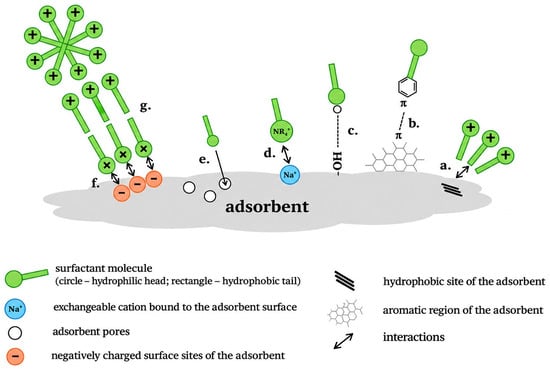
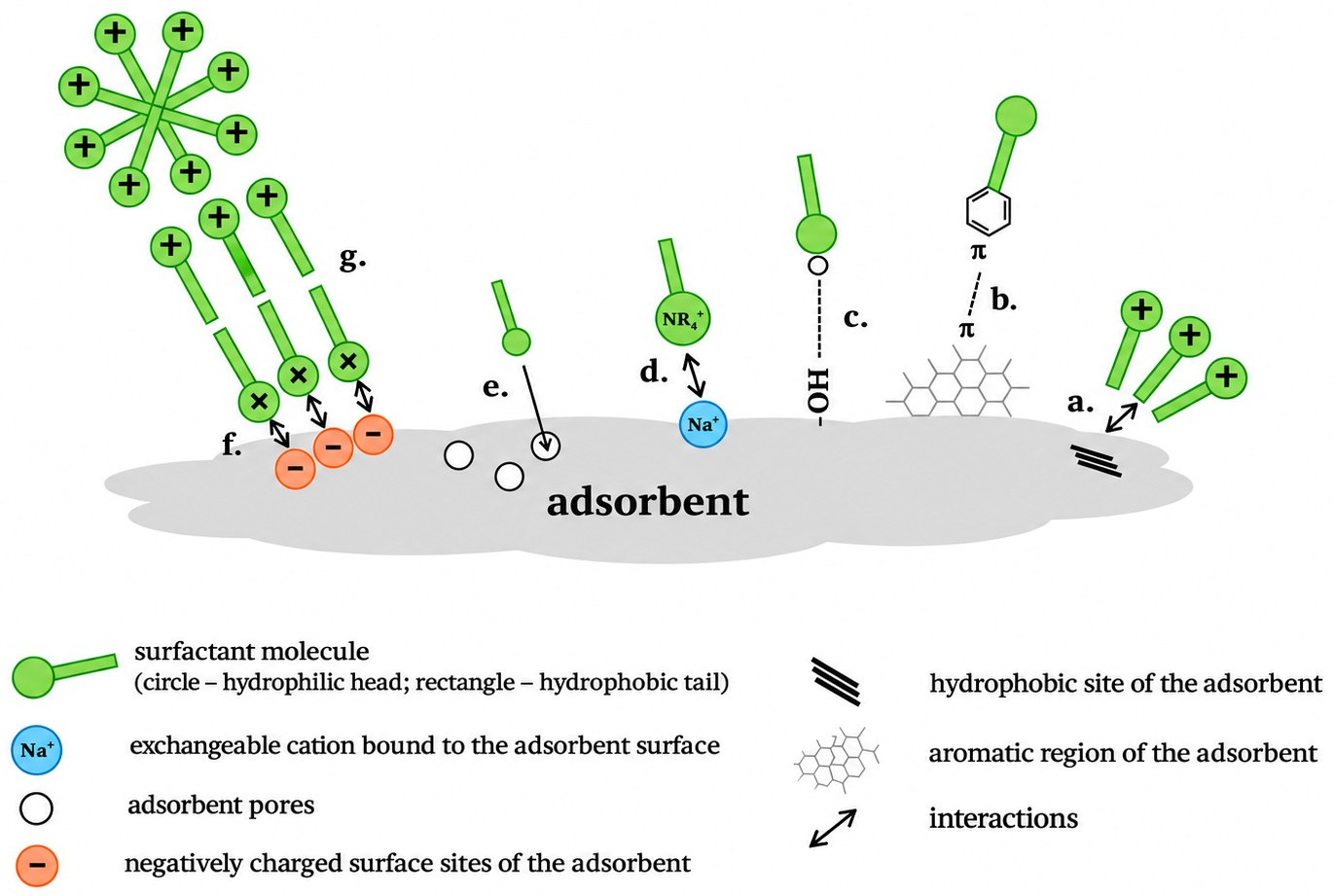
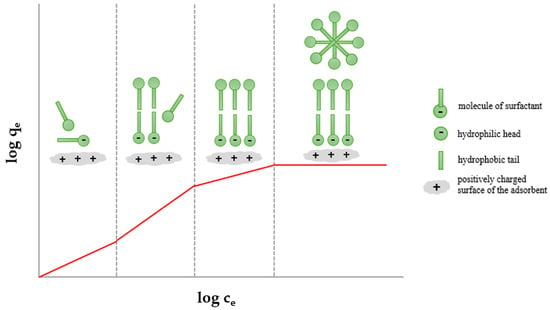
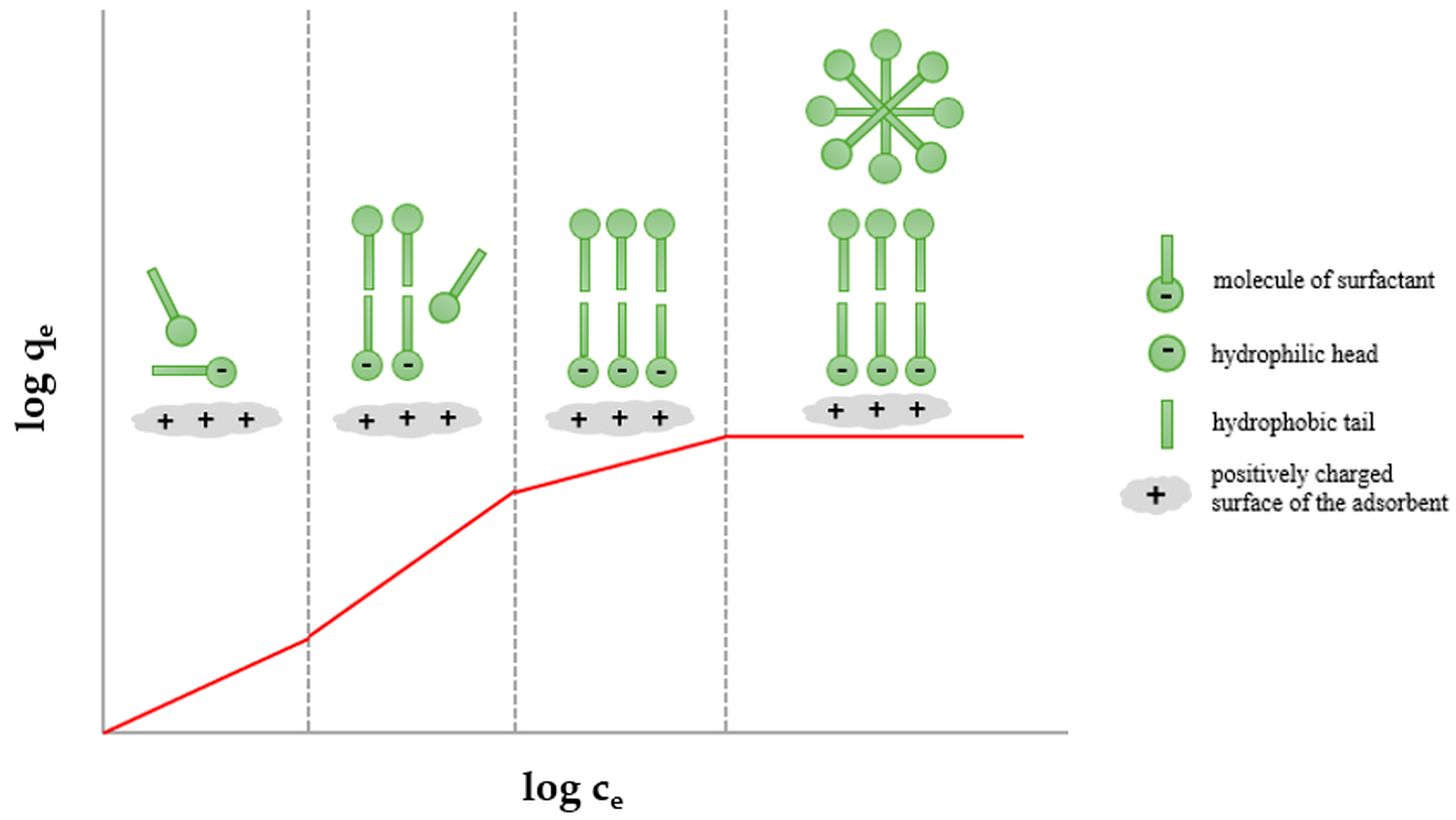

Disclaimer/Publisher’s Note: The statements, opinions and data contained in all publications are solely those of the individual author(s) and contributor(s) and not of MDPI and/or the editor(s). MDPI and/or the editor(s) disclaim responsibility for any injury to people or property resulting from any ideas, methods, instructions or products referred to in the content. |
© 2026 by the authors. Licensee MDPI, Basel, Switzerland. This article is an open access article distributed under the terms and conditions of the Creative Commons Attribution (CC BY) license.