

Journal Menu
► ▼ Journal Menu-
- Molecules Home
- Aims & Scope
- Editorial Board
- Reviewer Board
- Topical Advisory Panel
- Instructions for Authors
- Special Issues
- Topics
- Sections & Collections
- Article Processing Charge
- Indexing & Archiving
- Editor’s Choice Articles
- Most Cited & Viewed
- Journal Statistics
- Journal History
- Journal Awards
- Society Collaborations
- Conferences
- Editorial Office
- 30th Anniversary
Journal Browser
► ▼ Journal Browser-
arrow_forward_ios
Forthcoming issue
arrow_forward_ios Current issue - Vol. 31 (2026)
- Vol. 30 (2025)
- Vol. 29 (2024)
- Vol. 28 (2023)
- Vol. 27 (2022)
- Vol. 26 (2021)
- Vol. 25 (2020)
- Vol. 24 (2019)
- Vol. 23 (2018)
- Vol. 22 (2017)
- Vol. 21 (2016)
- Vol. 20 (2015)
- Vol. 19 (2014)
- Vol. 18 (2013)
- Vol. 17 (2012)
- Vol. 16 (2011)
- Vol. 15 (2010)
- Vol. 14 (2009)
- Vol. 13 (2008)
- Vol. 12 (2007)
- Vol. 11 (2006)
- Vol. 10 (2005)
- Vol. 9 (2004)
- Vol. 8 (2003)
- Vol. 7 (2002)
- Vol. 6 (2001)
- Vol. 5 (2000)
- Vol. 4 (1999)
- Vol. 3 (1998)
- Vol. 2 (1997)
- Volumes not published by MDPI
Need Help?
Announcements
27 January 2026
Meet Us at the 5th Molecules Medicinal Chemistry Symposium, 14–17 May 2026, Beijing, China
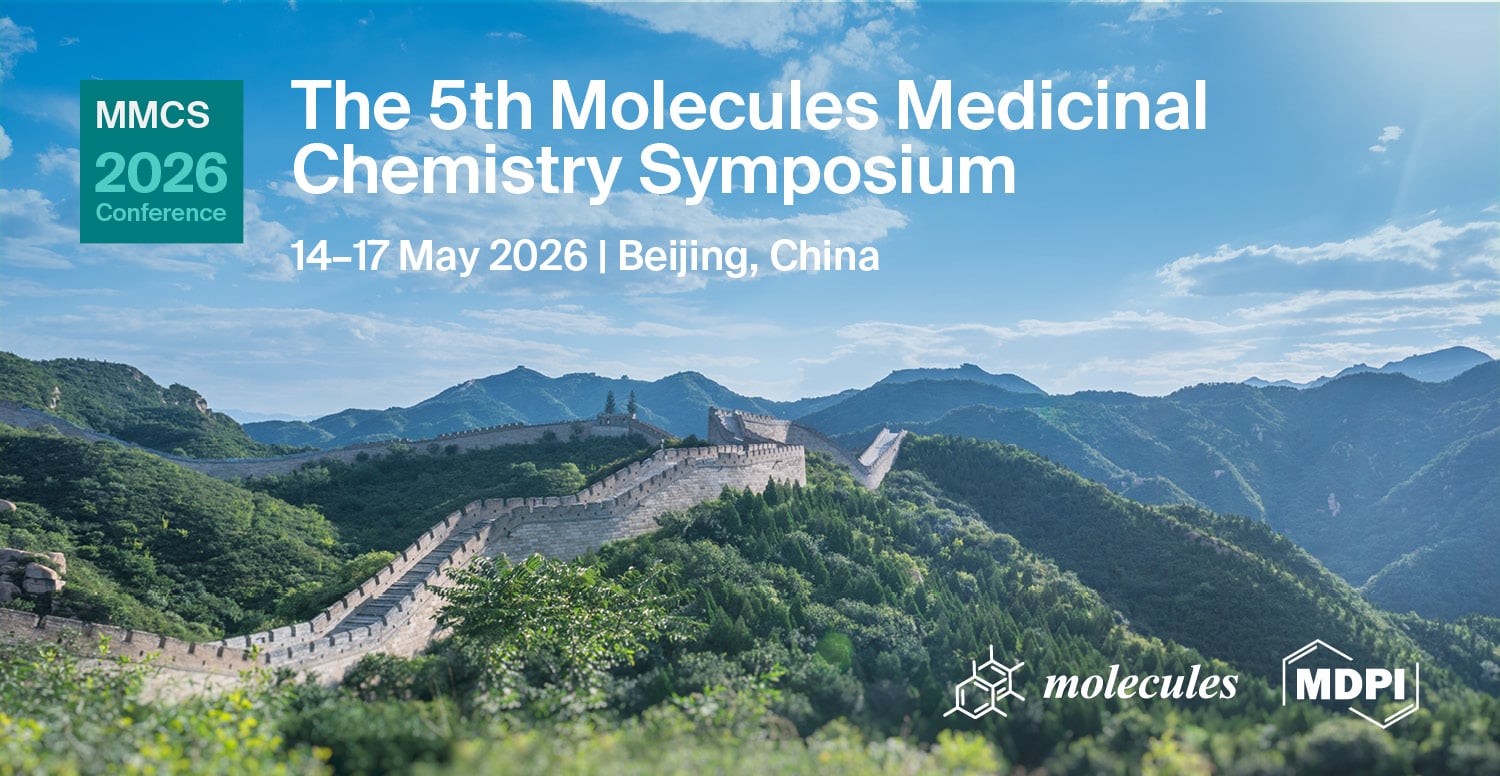
Conference: 5th MMCS: New Trends in Chemical Biology and Drug Discovery
Date: 14–17 May 2026, Beijing Time
Conference website: https://sciforum.net/event/MMCS2026
This conference is organized by the MDPI journal Molecules (ISSN: 1420-3049, IF: 4.6, and CiteScore: 8.6) and will take place in Beijing, China, from 14 to 17 May 2026 (Beijing time).
Conference Chairs:
- Prof. Dr. Xiaoguang Lei, College of Chemistry and Molecular Engineering, Peking University, China;
- Prof. Dr. Diego Muñoz-Torrero, Faculty of Pharmacy and Food Sciences, and Institute of Biomedicine (IBUB), University of Barcelona, Spain.
Topics of interest:
S1. Chemical biology for drug discovery;
S2. AI for drug discovery;
S3. New proximity-based drug modalities;
S4. Natural products in drug discovery;
S5. Biocatalysis for natural product and drug synthesis;
S6. Drug discovery targeting GPCRs and ion channels;
S7. DNA-encoded libraries in drug discovery;
S8. Medicinal chemistry tales.
Important dates:
Deadline for abstract submission: 13 March 2026;
Abstract acceptance notification: 27 March 2026;
Early bird registration deadline: 3 April 2026;
Covering author registration deadline: 3 April 2026;
Registration deadline: 14 May 2026.
Guide for authors:
To submit your abstract, please visit the following link: https://sciforum.net/user/submission/create/1319.
To register for the event, please visit the following link: https://sciforum.net/event/MMCS2026?section=#registration.
For more information, you may refer to the following link: https://sciforum.net/event/MMCS2026.
For any inquiries regarding the event, please contact mmcs2026@mdpi.com.
We look forward to seeing you at the 5th MMCS: New Trends in Chemical Biology and Drug Discovery.
22 January 2026
“Do Not Be Afraid of New Things”: Prof. Michele Parrinello on Scientific Curiosity and the Importance of Fundamental Research

In atomic and molecular simulation, researchers have long-needed efficient ways to predict material properties in order to focus on the most promising real laboratory tests instead of redundant work. Addressing this challenge, Prof. Michele Parrinello introduced two transformative methods that have redefined the field: the Car–Parrinello method, which serves as a “virtual lab” for studying reactions and electronic properties, and the Parrinello–Rahman method, a cornerstone for crystal phase transition studies. His work has reshaped the way that we study atomic systems, earning him the status of one of the most cited scholars in his field.
To honor his enduring legacy and continued impact, MDPI has established the Michele Parrinello Award. This award celebrates innovation and recognizes senior scientists who have made outstanding contributions to computational physical sciences, spanning the fields of physics, chemistry, and materials science.
We had the great honor of speaking with Prof. Parrinello in an exclusive interview, where he shared his perspectives on his current research focus, personal scientific experiences, support for basic research, and his advice for global researchers.
Access the full interview to hear his insights in this conversation.
11 May 2026
Molecules Webinar | Atom Economy Organic Synthesis, 22 May 2026

MDPI invites all esteemed experts to join the webinar entitled “Atom Economy Organic Synthesis”.
Synthetic efficiency is a cornerstone of green chemistry, enabling higher reaction yields, reduced waste, and more efficient use of time and resources. As one of the 12 principles of green chemistry, atom economy has been widely demonstrated in cascade reactions, multicomponent reactions, and one-pot synthesis, offering powerful strategies for more sustainable chemical processes. Advancing these approaches requires continued innovation and collaboration across disciplines to develop practical, scalable solutions.
The distinguished speakers of this webinar, Prof. Dr. Alexander Dömling, Prof. Dr. Rodolfo Lavilla, and Prof. Dr. Romano Orrù, are leaders in the development of new atom economic reactions and associated technologies for making bioactive molecules and functional materials.
Join us for this insightful session, where innovative research meets practical application, offering valuable perspectives for scientists and practitioners working towards more sustainable and efficient chemical synthesis.
We look forward to your participation in this event.
Webinar: Atom Economy Organic Synthesis
Date: 22 May 2026
Time: 13:00–15:15 (CEST) | 7:00–9:15 (EDT)
Webinar ID: 843 4010 1813
More information: https://sciforum.net/event/Molecules-39
Register for free via the following link:

Program:
|
Speaker/Presentation |
Time in CEST |
Time in EDT |
|
Prof. Dr. Wei Zhang (Chair) |
13:00–13:10 |
7:00–7:10 |
|
Prof. Dr. Alexander Dömling |
13:10–13:45 |
7:10–7:45 |
|
Prof. Dr. Rodolfo Lavilla |
13:45–14:20 |
7:45–8:20 |
|
Prof. Dr. Romano Orrù |
14:20–14:55 |
8:20–8:55 |
|
Q&A Session |
14:55–15:10 |
8:55–9:10 |
|
Prof. Dr. Wei Zhang (Chair) |
15:10–15:15 |
9:10–9:15 |
After registering, you will receive a confirmation email containing information on how to join the webinar. Registrations with academic or institutional email addresses will be prioritized.
Unable to attend? Feel free to still register; we will inform you when the recording is available.
Webinar Chair and Keynote Speakers:
- Prof. Dr. Wei Zhang, Department of Chemistry, University of Massachusetts Boston, Boston, USA;
- Prof. Dr. Alexander Dömling, 1 Innovative Chemistry Group, CATRIN, Palacky University, Olomouc, Czech Republic, 2 Institute of Molecular and Translational Medicine, Faculty of Medicine and Dentistry, Palacky University, Olomouc, Czech Republic;
- Prof. Dr. Rodolfo Lavilla, Laboratory of Medicinal Chemistry, Faculty of Pharmacy and Institute of Biomedicine (IBUB), University of Barcelona, Barcelona, Spain;
- Prof. Dr. Romano Orrù, Aachen Maastricht Institute of Biobased Materials, Maastricht University, the Netherlands.
For more information about this webinar, please visit the following link: https://sciforum.net/event/Molecules-39.
If you have any questions about this webinar, please contact journal.webinar@mdpi.com.
11 May 2026
Molecules | Noteworthy Research Articles Published in 2024–2025

Molecules (ISSN: 1420-3049) is fully open access, providing free and unlimited access to all articles worldwide. We highlight a selection of notable research published in 2024–2025, showcasing advances across the chemical sciences, including nanomaterials, sustainable chemistry, analytical techniques, and biomedical research. These works reflect innovative methodologies and emerging interdisciplinary trends. We invite you to explore the noteworthy articles below:
1. “Antioxidant and Anti-Inflammatory Effects of Vanillic Acid in Human Plasma, Human Neutrophils, and Non-Cellular Models In Vitro”
by Anna Magiera, Joanna Kołodziejczyk-Czepas and Monika Anna Olszewska
Molecules 2025, 30(3), 467; https://doi.org/10.3390/molecules30030467
Available online: https://www.mdpi.com/1420-3049/30/3/467
2. “An Explorative Study on Using Carbon Nanotube-Based Superhydrophobic Self-Heating Coatings for UAV Icing Protection”
by Jincheng Wang, James Frantz, Edward Chumbley, Abdallah Samad and Hui Hu
Molecules 2025, 30(17), 3472; https://doi.org/10.3390/molecules30173472
Available online: https://www.mdpi.com/1420-3049/30/17/3472
3. “The Ninhydrin Reaction Revisited: Optimisation and Application for Quantification of Free Amino Acids”
by Amelie Charlotte Stauß, Carolin Fuchs, Paulina Jansen, Sarah Repert, Kimberley Alcock, Sandra Ludewig and Wilfried Rozhon
Molecules 2024, 29(14), 3262; https://doi.org/10.3390/molecules29143262
Available online: https://www.mdpi.com/1420-3049/29/14/3262
4. “Concentration-Dependent Photoproduction of Singlet Oxygen by Common Photosensitizers”
by Grzegorz Szewczyk and Krystian Mokrzyński
Molecules 2025, 30(5), 1130; https://doi.org/10.3390/molecules30051130
Available online: https://www.mdpi.com/1420-3049/30/5/1130
5. “Human Mitragynine and 7-Hydroxymitragynine Pharmacokinetics after Single and Multiple Daily Doses of Oral Encapsulated Dried Kratom Leaf Powder”
by Marilyn A. Huestis, Martin A. Brett, John Bothmer and Ramsey Atallah
Molecules 2024, 29(5), 984; https://doi.org/10.3390/molecules29050984
Available online: https://www.mdpi.com/1420-3049/29/5/984
6. “Chemical Composition, and Antioxidant and Antimicrobial Activity of Oregano Essential Oil”
by Magdalena Walasek-Janusz, Agnieszka Grzegorczyk, Anna Malm, Renata Nurzyńska-Wierdak and Daniel Zalewski
Molecules 2024, 29(2), 435; https://doi.org/10.3390/molecules29020435
Available online: https://www.mdpi.com/1420-3049/29/2/435
7. “Modification of the Protein Amino Acid Content in Hen Eggs as a Consequence of Different Concentrations of Lupine and Soy in Feed”
by Aneta Tomczak, Magdalena Zielińska-Dawidziak, Piotr Klimowicz, Marcin Hejdysz, Sebastian Kaczmarek, Aleksander Siger and Adam Cieślak
Molecules 2024, 29(16), 3727; https://doi.org/10.3390/molecules29163727
Available online: https://www.mdpi.com/1420-3049/29/16/3727
8. “Squalane as a Promising Agent Protecting UV-Induced Inhibition of Collagen Biosynthesis and Wound Healing in Human Dermal Fibroblast”
by Katarzyna Wolosik, Magda Chalecka, Gabriela Gasiewska, Jerzy Palka and Arkadiusz Surazynski
Molecules 2025, 30(9), 1964; https://doi.org/10.3390/molecules30091964
Available online: https://www.mdpi.com/1420-3049/30/9/1964
9. “Metabolomic Insights into Wild and Farmed Gilthead Seabream (Sparus aurata): Lipid Composition, Freshness Indicators, and Environmental Adaptations”
by Frutos C. Marhuenda-Egea and Pablo Sanchez-Jerez
Molecules 2025, 30(4), 770; https://doi.org/10.3390/molecules30040770
Available online: https://www.mdpi.com/1420-3049/30/4/770
10. “Green Extraction of Antioxidant-Rich Flavonoids from Fagonia cretica Using Deep Eutectic Solvents”
by Jafar Khan, Sajjad Asaf, Lubna, Ashraf M. M. Abdelbacki, Rahmatullah Jan and Kyung-Min Kim
Molecules 2025, 30(4), 813; https://doi.org/10.3390/molecules30040813
Available online: https://www.mdpi.com/1420-3049/30/4/813
11. “Unlocking Antimicrobial Peptides: In Silico Proteolysis and Artificial Intelligence-Driven Discovery from Cnidarian Omics”
by Ricardo Alexandre Barroso, Guillermin Agüero-Chapin, Rita Sousa, Yovani Marrero-Ponce and Agostinho Antunes
Molecules 2025, 30(3), 550; https://doi.org/10.3390/molecules30030550
Available online: https://www.mdpi.com/1420-3049/30/3/550
12. “The Application of Ultrasmall Gold Nanoparticles (2 nm) Functionalized with Doxorubicin in Three-Dimensional Normal and Glioblastoma Organoid Models of the Blood–Brain Barrier”
by Kathrin Kostka, Viktoriya Sokolova, Aya El-Taibany, Benedikt Kruse, Daniel Porada, Natalie Wolff, Oleg Prymak, Michael C. Seeds, Matthias Epple and Anthony J. Atala
Molecules 2024, 29(11), 2469; https://doi.org/10.3390/molecules29112469
Available online: https://www.mdpi.com/1420-3049/29/11/2469
13. “Synthesis, Characterization, and Antioxidant Activity Evaluation of New N-Methyl Substituted Thiazole-Derived Polyphenolic Compounds”
by Alexandra Cătălina Cornea, Gabriel Marc, Ioana Ionuț, Cristina Moldovan, Anca Stana, Smaranda Dafina Oniga, Adrian Pîrnău, Laurian Vlase, Ilioara Oniga and Ovidiu Oniga
Molecules 2025, 30(6), 1345; https://doi.org/10.3390/molecules30061345
Available online: https://www.mdpi.com/1420-3049/30/6/1345
14. “Towards Imaging Tau Hyperphosphorylation: Is DYRK1A a Potential Target for Imaging Hyperphosphorylation of Tau? Molecular Modeling Assessment and Synthesis of [125I]Radioiodinated DYRK1A Inhibitor”
by Cayz G. Paclibar, Deanna M. Schafer, Agnes P. Biju, Fariha Karim, Stephanie A. Sison, Christopher Liang, Shamiha T. Ahmed and Jogeshwar Mukherjee
Molecules 2025, 30(5), 990; https://doi.org/10.3390/molecules30050990
Available online: https://www.mdpi.com/1420-3049/30/5/990
15. “Rapid Profiling of Volatile Organic Compounds Associated with Plant-Based Milks Versus Bovine Milk Using an Integrated PTR-ToF-MS and GC-MS Approach”
by Antonia Corvino, Iuliia Khomenko, Emanuela Betta, Federico Ivan Brigante, Luana Bontempo, Franco Biasioli and Vittorio Capozzi
Molecules 2025, 30(4), 761; https://doi.org/10.3390/molecules30040761
Available online: https://www.mdpi.com/1420-3049/30/4/761
16. “Sustainable Supercritical Carbon Dioxide Extraction of Value-Added Lignan from Sesame Meal: Achieving Green Neuroprotection and Waste Valorization by Optimizing Temperature, Solvent, and Pressure”
by Kuo-Ching Jan and Mohsen Gavahian
Molecules 2025, 30(3), 539; https://doi.org/10.3390/molecules30030539
Available online: https://www.mdpi.com/1420-3049/30/3/539
17. “Sustainable MXene Synthesis via Molten Salt Method and Nano-Silicon Coating for Enhanced Lithium-Ion Battery Performance”
by Hansu Kim, Yunki Jung, Wonhwa Lee, Young-Pyo Jeon, Jin-Yong Hong and Jea Uk Lee
Molecules 2025, 30(4), 812; https://doi.org/10.3390/molecules30040812
Available online: https://www.mdpi.com/1420-3049/30/4/812
18. “Integrating Molecular Dynamics, Molecular Docking, and Machine Learning for Predicting SARS-CoV-2 Papain-like Protease Binders”
by Ann Varghese, Jie Liu, Tucker A. Patterson and Huixiao Hong
Molecules 2025, 30(14), 2985; https://doi.org/10.3390/molecules30142985
Available online: https://www.mdpi.com/1420-3049/30/14/2985
19. “Effect of Print Orientation and Thermal Aging on the Flexural Strength of Zirconia-Reinforced Three-Dimensional-Printed Restorative Resin Materials”
by Yunus Emre Özden, Bengü Doğu Kaya, Pınar Yılmaz Atalı, Fusun Ozer and Zeynep Ozkurt Kayahan
Molecules 2025, 30(11), 2337; https://doi.org/10.3390/molecules30112337
Available online: https://www.mdpi.com/1420-3049/30/11/2337
20. “Siamese Networks for Clinically Relevant Bacteria Classification Based on Raman Spectroscopy”
by Jhonatan Contreras, Sara Mostafapour, Jürgen Popp and Thomas Bocklitz
Molecules 2024, 29(5), 1061; https://doi.org/10.3390/molecules29051061
Available online: https://www.mdpi.com/1420-3049/29/5/1061
21. “Synergistic Effects of Temozolomide and Doxorubicin in the Treatment of Glioblastoma Multiforme: Enhancing Efficacy through Combination Therapy”
by Laxmi Dhungel, Mandy E. Rowsey, Cayla Harris and Drazen Raucher
Molecules 2024, 29(4), 840; https://doi.org/10.3390/molecules29040840
Available online: https://www.mdpi.com/1420-3049/29/4/840
22. “Parametric Studies of Polyacrylamide Adsorption on Calcite Using Molecular Dynamics Simulation”
by Keat Yung Hue, Jin Hau Lew, Omar K. Matar, Paul F. Luckham and Erich A. Müller
Molecules 2025, 30(2), 285; https://doi.org/10.3390/molecules30020285
Available online: https://www.mdpi.com/1420-3049/30/2/285
23. “Improved Mechanical and Thermal Properties of Date Palm Microfiber-Reinforced PCL Biocomposites for Rigid Packaging”
by Sakib Hossain Khan, Hom N. Dhakal, Abu Saifullah and Zhongyi Zhang
Molecules 2025, 30(4), 857; https://doi.org/10.3390/molecules30040857
Available online: https://www.mdpi.com/1420-3049/30/4/857
24. “The Formation of σ-Hole Bonds: A Physical Interpretation”
by Jane S. Murray
Molecules 2024, 29(3), 600; https://doi.org/10.3390/molecules29030600
Available online: https://www.mdpi.com/1420-3049/29/3/600
25. “Performance of Copper as a Catalyst for Fenton-like Processes in Highly Saline Solutions”
by Xavier Orts, Jordi Arévalo, Antonio Arques, Ana M. Amat and Lucas Santos-Juanes
Molecules 2025, 30(11), 2298; https://doi.org/10.3390/molecules30112298
Available online: https://www.mdpi.com/1420-3049/30/11/2298
11 May 2026
Molecules | Noteworthy Review Articles Published in 2024–2025

Molecules (ISSN: 1420-3049) is fully open access. We highlight selected review articles from 2024–2025, covering bioactive compounds, nanomaterials, analytical techniques, and biomedical research. These works summarize recent advances and future perspectives across the chemical sciences. We invite you to explore the noteworthy review articles below:
1. “Application of Fourier Transform Infrared (FTIR) Spectroscopy in Characterization of Green Synthesized Nanoparticles”
by Sylwia Pasieczna-Patkowska, Marcin Cichy and Jolanta Flieger
Molecules 2025, 30(3), 684; https://doi.org/10.3390/molecules30030684
Available online: https://www.mdpi.com/1420-3049/30/3/684
2. “A Comprehensive Guide to Enzyme Immobilization: All You Need to Know”
by Marina Simona Robescu and Teodora Bavaro
Molecules 2025, 30(4), 939; https://doi.org/10.3390/molecules30040939
Available online: https://www.mdpi.com/1420-3049/30/4/939
3. “A Comprehensive Review of Bioactive Tannins in Foods and Beverages: Functional Properties, Health Benefits, and Sensory Qualities”
by Fernanda Cosme, Alfredo Aires, Teresa Pinto, Ivo Oliveira, Alice Vilela and Berta Gonçalves
Molecules 2025, 30(4), 800; https://doi.org/10.3390/molecules30040800
Available online: https://www.mdpi.com/1420-3049/30/4/800
4. “The Role of Brain-Derived Neurotrophic Factor as an Essential Mediator in Neuronal Functions and the Therapeutic Potential of Its Mimetics for Neuroprotection in Neurologic and Psychiatric Disorders”
by Tadahiro Numakawa and Ryutaro Kajihara
Molecules 2025, 30(4), 848; https://doi.org/10.3390/molecules30040848
Available online: https://www.mdpi.com/1420-3049/30/4/848
是5. “Zinc Toxicity: Understanding the Limits”
by Hannah Schoofs, Joyce Schmit and Lothar Rink
Molecules 2024, 29(13), 3130; https://doi.org/10.3390/molecules29133130
Available online: https://www.mdpi.com/1420-3049/29/13/3130
6. “Chitosan and Its Derivatives as Nanocarriers for Drug Delivery”
by Ranu Biswas, Sourav Mondal, Md Ahesan Ansari, Tanima Sarkar, Iustina Petra Condiuc, Gisela Trifas and Leonard Ionut Atanase
Molecules 2025, 30(6), 1297; https://doi.org/10.3390/molecules30061297
Available online: https://www.mdpi.com/1420-3049/30/6/1297
7. “Bioactive Compounds from Guava Leaves (Psidium guajava L.): Characterization, Biological Activity, Synergistic Effects, and Technological Applications”
by Hoang Duy Huynh, Parushi Nargotra, Hui-Min David Wang, Chwen-Jen Shieh, Yung-Chuan Liu and Chia-Hung Kuo
Molecules 2025, 30(6), 1278; https://doi.org/10.3390/molecules30061278
Available online: https://www.mdpi.com/1420-3049/30/6/1278
8. “Plant-Derived Terpenoids: A Plethora of Bioactive Compounds with Several Health Functions and Industrial Applications—A Comprehensive Overview”
by José S. Câmara, Rosa Perestrelo, Rui Ferreira, Cristina V. Berenguer, Jorge A. M. Pereira and Paula C. Castilho
Molecules 2024, 29(16), 3861; https://doi.org/10.3390/molecules29163861
Available online: https://www.mdpi.com/1420-3049/29/16/3861
9. “Artifacts and Anomalies in Raman Spectroscopy: A Review on Origins and Correction Procedures”
by Ravi teja Vulchi, Volodymyr Morgunov, Rajendhar Junjuri and Thomas Bocklitz
Molecules 2024, 29(19), 4748; https://doi.org/10.3390/molecules29194748
Available online: https://www.mdpi.com/1420-3049/29/19/4748
10. “Nanomaterials for Energy Storage Systems—A Review”
by Habeeb Mohammed, Md Farouq Mia, Jasmine Wiggins and Salil Desai
Molecules 2025, 30(4), 883; https://doi.org/10.3390/molecules30040883
Available online: https://www.mdpi.com/1420-3049/30/4/883
11. “Recent Advances in Antibacterial Coatings to Combat Orthopedic Implant-Associated Infections”
by Seref Akay and Anan Yaghmur
Molecules 2024, 29(5), 1172; https://doi.org/10.3390/molecules29051172
Available online: https://www.mdpi.com/1420-3049/29/5/1172
12. “Compounds Involved in the Invasive Characteristics of Lantana camara”
by Hisashi Kato-Noguchi and Midori Kato
Molecules 2025, 30(2), 411; https://doi.org/10.3390/molecules30020411
Available online: https://www.mdpi.com/1420-3049/30/2/411
13. “The Iodine/Iodide/Starch Supramolecular Complex”
by Szilard Pesek and Radu Silaghi-Dumitrescu
Molecules 2024, 29(3), 641; https://doi.org/10.3390/molecules29030641
Available online: https://www.mdpi.com/1420-3049/29/3/641
14. “Dual Inhibitors of Acetylcholinesterase and Monoamine Oxidase-B for the Treatment of Alzheimer’s Disease”
by Ayesha Asim, Michał K. Jastrzębski and Agnieszka A. Kaczor
Molecules 2025, 30(14), 2975; https://doi.org/10.3390/molecules30142975
Available online: https://www.mdpi.com/1420-3049/30/14/2975
15. “Pectin-Based Active and Smart Film Packaging: A Comprehensive Review of Recent Advancements in Antimicrobial, Antioxidant, and Smart Colorimetric Systems for Enhanced Food Preservation”
by Nurul Saadah Said and Won Young Lee
Molecules 2025, 30(5), 1144; https://doi.org/10.3390/molecules30051144
Available online: https://www.mdpi.com/1420-3049/30/5/1144
16. “The Impact of the CB2 Cannabinoid Receptor in Inflammatory Diseases: An Update”
by Volatiana Rakotoarivelo, Thomas Z. Mayer, Mélissa Simard, Nicolas Flamand and Vincenzo Di Marzo
Molecules 2024, 29(14), 3381; https://doi.org/10.3390/molecules29143381
Available online: https://www.mdpi.com/1420-3049/29/14/3381
17. “Can Plant Extracts Help Prevent Hair Loss or Promote Hair Growth? A Review Comparing Their Therapeutic Efficacies, Phytochemical Components, and Modulatory Targets”
by Joon Yong Choi, Min Young Boo and Yong Chool Boo
Molecules 2024, 29(10), 2288; https://doi.org/10.3390/molecules29102288
Available online: https://www.mdpi.com/1420-3049/29/10/2288
18. “Glycosylation Modulates the Structure and Functions of Collagen: A Review”
by Igor Tvaroška
Molecules 2024, 29(7), 1417; https://doi.org/10.3390/molecules29071417
Available online: https://www.mdpi.com/1420-3049/29/7/1417
19. “Bio-Based Surfactants and Biosurfactants: An Overview and Main Characteristics”
by Gloria Romero Vega and Paola Gallo Stampino
Molecules 2025, 30(4), 863; https://doi.org/10.3390/molecules30040863
Available online: https://www.mdpi.com/1420-3049/30/4/863
20. “An Overview of Cannabidiol as a Multifunctional Drug: Pharmacokinetics and Cellular Effects”
by Nadia Martinez Naya, Jazmin Kelly, Giuliana Corna, Michele Golino, Ariel H. Polizio, Antonio Abbate, Stefano Toldo and Eleonora Mezzaroma
Molecules 2024, 29(2), 473; https://doi.org/10.3390/molecules29020473
Available online: https://www.mdpi.com/1420-3049/29/2/473
21. “The Impact of Glycolysis and Its Inhibitors on the Immune Response to Inflammation and Autoimmunity”
by Beata Pająk, Rafał Zieliński and Waldemar Priebe
Molecules 2024, 29(6), 1298; https://doi.org/10.3390/molecules29061298
Available online: https://www.mdpi.com/1420-3049/29/6/1298
22. “Analysis of Structures of SARS-CoV-2 Papain-like Protease Bound with Ligands Unveils Structural Features for Inhibiting the Enzyme”
by Ann Varghese, Jie Liu, Bailang Liu, Wenjing Guo, Fan Dong, Tucker A. Patterson and Huixiao Hong
Molecules 2025, 30(3), 491; https://doi.org/10.3390/molecules30030491
Available online: https://www.mdpi.com/1420-3049/30/3/491
23. “Overview of Recent Advances in Rare-Earth High-Entropy Oxides as Multifunctional Materials for Next-Gen Technology Applications”
by Stjepan Šarić, Jelena Kojčinović, Dalibor Tatar and Igor Djerdj
Molecules 2025, 30(5), 1082; https://doi.org/10.3390/molecules30051082
Available online: https://www.mdpi.com/1420-3049/30/5/1082
24. “Molecular Subtypes and Targeted Therapeutic Strategies in Small Cell Lung Cancer: Advances, Challenges, and Future Perspectives”
by Daoyuan Huang, Jingchao Wang, Li Chen, Weiwei Jiang, Hiroyuki Inuzuka, David K. Simon and Wenyi Wei
Molecules 2025, 30(8), 1731; https://doi.org/10.3390/molecules30081731
Available online: https://www.mdpi.com/1420-3049/30/8/1731
25. “Metal–Flavonoid Interactions—From Simple Complexes to Advanced Systems”
by Paulina Katarzyna Walencik, Renata Choińska, Ewelina Gołębiewska and Monika Kalinowska
Molecules 2024, 29(11), 2573; https://doi.org/10.3390/molecules29112573
Available online: https://www.mdpi.com/1420-3049/29/11/2573
6 May 2026
Molecules | 30th Anniversary

The year 2026 marks the 30th anniversary of Molecules (ISSN: 1420-3049), a peer-reviewed open access journal on chemistry and all interfacing disciplines. With an Impact Factor of 4.6 and a CiteScore of 8.6, the journal is covered in Scopus, SCIE (Web of Science), PubMed, MEDLINE, PMC, Reaxys, CaPlus/SciFinder, MarinLit, AGRIS and other databases. The journal has published more than 57,000 papers from more than 226,000 authors, and around 80,000 reviewers have reviewed the journal at least once. We equally value the contributions made by our editors, authors, and reviewers.
To celebrate this important milestone, the journal’s Editor-in-Chief, Prof. Dr. Thomas J. Schmidt, has authored an editorial reflecting on his experiences with Molecules and sharing his visions for the future of open access publishing. You can read the full editorial here: https://www.mdpi.com/1420-3049/31/5/905.
We would like to express our sincerest gratitude to our readers, innumerable authors, anonymous peer reviewers, editors, and everyone working in some way for the journal, for your outstanding work in fostering the vision and supporting the mission of our journal. Without your support, we would never have achieved this significant milestone.
As we celebrate this milestone, we reflect on a decade of achievements and look forward to new opportunities in scholarly publishing. We invite you to join us in commemorating this special occasion and explore the curated content prepared for our anniversary.
If you have any questions, suggestions, or recommendations, please do not hesitate to contact molecules@mdpi.com.
Molecules Editorial Office
6 May 2026
Meet Us Virtually at the 4th International Online Conference on Biomedicines (ECB 2027), 10–12 May 2027

Building on the success of the 2025 edition, we are pleased to announce that the 4th International Online Conference on Biomedicines (ECB 2027) is calling for abstracts, aiming to once again garner leading researchers from around the world to discuss and share recent advances in biomedicines.
We cordially invite you to attend this event organized by MDPI Biomedicines (ISSN: 2227-9059, Impact Factor 3.9). It will take place from 10 to 12 May 2027, online, CEST.
Conference Chairs:
- Prof. Dr. Felipe Fregni, Harvard Medical School, USA;
- Prof. Dr. Georgia Levidou, Paracelsus Medical University, Germany;
- Assoc. Prof. Dr. Allan Stensballe, Aalborg University, Denmark;
- Dr. Dr. Timo Gaber, Charité – Universitätsmedizin Berlin, Germany.
Topics of interest:
S1. Immune System, Tumor Immunology and Autoimmune Disease;
S2. Diabetes, Obesity and Metabolic Diseases;
S3. Neuroscience and Neurodegeneration;
S4. Cardiology and Cardiovascular Diseases;
S5. Cancer Molecular Biology and Precision Medicine;
S6. Bone Biology and Regenerative Medicine;
S7. Translational Medicine and Nanomedicine;
S8. AI in Biomedicines.
Important dates:
Deadline for abstract submission: 15 January 2027;
Notification of acceptance: 15 March 2027;
Deadline for registration: 5 May 2027.
To submit your abstract, please click here.
To register for the conference, please click here.
For any inquiries regarding the event, please contact ecb@mdpi.com.
We look forward to seeing you at ECB 2027.
6 May 2026
MDPI INSIGHTS: The CEO's Letter #34 - MDPI US Office, Coatings 2026, Media and Partnerships, Recapping Poland Summit & Serbia Salon

Welcome to the MDPI Insights: The CEO's Letter.
In these monthly letters, I will showcase two key aspects of our work at MDPI: our commitment to empowering researchers and our determination to facilitating open scientific exchange.
Opening Thoughts

MDPI Opens First US Office in Philadelphia
I am delighted to highlight an important milestone in MDPI’s continued global development: the recent opening of our first office in the United States, located in Philadelphia.
This marks a significant step in building our engagement with one of the world’s most important research communities. The new office will serve as a hub for supporting scholars across the US, creating closer connections and more localized support.
As highlighted in recent coverage by our press release in InPublishing, this expansion reflects MDPI’s broader commitment to growing our international presence while remaining focused on the needs of the research community.
A Key Market for Research and Collaboration
The United States continues to play a central role in global research. To date, MDPI has published more than 237,000 articles affiliated with US institutions, and we collaborate with nearly 12,000 Editorial Board Members across the country. These relationships are fundamental to our mission of supporting Open Access and advancing scientific communication.
The opening of this office is not just about geography; it is about proximity to the communities we serve. It allows us to better understand the evolving needs of researchers while continuing to build collaboration and trust within the academic ecosystem.
The Team Behind this Milestone

This milestone reflects the efforts of teams across MDPI. I extend a special thank-you to Bob Vrooman (Head of Business Development, MDPI), who is leading this expansion, as well as to our colleagues in Toronto and across our North American teams for their continued support.
Bob shared: “MDPI is already a trusted partner of the North American research community, due in no small part to our dedicated team in Canada. Launching our first US office in Philadelphia is a great first step towards expanding MDPI’s market share and recognition in the US. I’m thrilled to be a part of this new phase in MDPI’s journey.”
As we continue to grow, our focus remains on supporting researchers globally and advancing Open Access with integrity.
Impactful Research

Coatings 2026: Highlights from Our Latest MDPI Conference (20-22 April)
I am pleased to share the successful completion of MDPI conference Coatings 2026, which took place last week in Athens from 20 to 22 April 2026. This conference brought together a diverse international community of researchers, industry experts, and partners, highlighting MDPI’s role not only as a publisher but also as a platform for scientific exchange and collaboration.
Conference Highlights
Coatings 2026 in numbers:
- The event attracted approximately 140 participants from 25 countries
- 143 submissions and a strong scientific program of talks and posters
- 2 keynote speakers and a wide range of invited contributions
- 7 sponsors and 11 media partners supporting the event
|
|
|
|
|
|


Scientific Programme
The program centered on “Safe and Sustainable by Design,” reflecting the growing importance of sustainability, regulatory frameworks, and technological innovation in materials science. Topics ranged from advanced coating technologies and additive manufacturing to AI-driven simulations and strategies to phase out potentially harmful substances in industrial processes.
Importantly, the conference brought together both academic and industrial perspectives, creating a space for dialogue on how research can translate into real-world impact. This is important as industries navigate environmental challenges, evolving regulations, and the need for more sustainable and circular approaches to production.
Thank You!
I would like to thank the entire conference team for their work in organizing this successful event. As we continue to grow, conferences like this play an important role in building our connection with global research communities, supporting interdisciplinary collaboration, and positioning MDPI at the intersection of science, technology, and societal impact.
 Members from Exelisis and MDPI EU Conference & Social Media team at the Coatings 2026 Conference in Athens, Greece.
Inside MDPI

Recent Media Coverage and Partnerships
Over the past two months, news from MDPI has enjoyed strong visibility across international publishing and academic media, reflecting our continued expansion and the increasing relevance of our work within the research community.
Below are some highlights covering partnerships, institutional agreements, and milestones that continue to shape our position in publishing – some of which are featured in leading industry platforms such as InPublishing, which is highly selective and reflects the growing recognition of MDPI’s growth within the publishing ecosystem.
Key Press Releases & Coverage (March–April 2026)
-
MDPI × Sikt (Norway): Partnership Renewal
We renewed our national Open Access agreement with Sikt, a key consortium partnership, continuing to support researchers across Norway through this partnership. The renewal was covered by several international publishing trade outlets.
Covered by: Research Information, STM Publishing News, ALPSP, Europe Says
-
MDPI × Jisc (UK): New Two-Year Open Access Agreement
A new two-year agreement with Jisc significantly expands MDPI’s footprint across UK academic institutions. Coverage appeared across major publishing industry titles in the UK and internationally.
Covered by: InPublishing, Research Information, STM Publishing News, ALPSP
-
MDPI Opens First US Office
The opening of our first US office marks an important milestone in our North American expansion to build engagement with one of the world’s leading research communities.
Coverage by: EurekAlert!, InPublishing, EdTech Innovation Hub, STM Publishing News, ALPSP
-
MDPI × SIGG: Italian Society of Gerontology and Geriatrics
We established a new partnership with the Italian Society of Gerontology and Geriatrics (SIGG), adding to our growing portfolio of society collaborations.
Coverage by: EurekAlert!, STM Publishing News, ALPSP
-
MDPI × Fast Track Health: New Journal Launch
The launch of a new journal in partnership with Fast Track Health reflects our continued expansion into emerging areas of health innovation.
Coverage by: EurekAlert!, Scienmag, STM Publishing News, ALPSP
-
MDPI 2025 Annual Report
Our 2025 Annual Report was also widely covered across international media, highlighting a 12% increase in submissions and continued investment in research integrity, infrastructure, and partnerships.
Coverage by: EurekAlert!, Research Information, STM Publishing News, ALPSP, Choice 360
Coverage also spanned multiple regions including Poland, Romania and South Korea, reflecting our ongoing efforts to communicate more effectively with regional research communities.
Looking Ahead
This coverage shows that MDPI is growing and building on its position through partnerships, visibility, and engagement across regions. As we continue to expand, our focus remains on supporting researchers globally, building on our institutional collaborations, and advancing Open Access with integrity.
Thank you to all teams involved in delivering these initiatives, and to our External Affairs team for ensuring our work is effectively communicated across the global publishing landscape!
Coming Together for Science

Recapping MDPI Poland Summit 2026 in Krakow (23 April)
On 23 April 2206, we hosted the first MDPI Poland Summit 2026 in Kraków, bringing together an engaged group of editors, researchers, and academic leaders from the country.
The Poland Summit welcomed some 45 participants, including Editors-in-Chief, Associate Editors, and Editorial Board Members, many with strong academic track records and international recognition.
Our engagements were open and constructive, focusing on MDPI’s positioning and reputation in Poland, alongside community interest in supporting our development, with active participation across our sessions, including Q&A and panel discussions.
|
|
|
|


MDPI Poland Summit Programme
From research integrity and peer review quality to AI in publishing and the future of academic communication, the agenda featured important topics currently shaping our industry.
During the day, MDPI colleagues shared a series of presentations covering:
- MDPI’s performance, growth, and impact in Poland: Stefan Tochev (CEO)
- Engagement with Academic Community: Dr. Marta Colomer (Public Affairs Lead)
- Research Integrity and Publication Ethics: Anna Pena (Research Integrity Manager)
- MDPI Editorial Process and Peer-Review Quality Metrics: Dr. Liliane Auwerter (Conference Organizer)
- AI in the Publishing Industry – Challenges, Innovation and MDPI’s vision: Dr. Enric Sayas (AI Product Owner)
- Panel Session: The Future of Academic Publishing, moderated by Dr. Marta Colomer
|
|
|
|
|
|
|
|


Poland as a Key Market for Open Access
The summit also highlighted the importance of Poland within the global research landscape.
In 2025:
- 75% of publications in Poland were made in Open Access
- 71% of those in Gold Open Access
- and over 344,000 publications produced in the last five years
MDPI plays a significant role in the Polish publishing ecosystem:
- #1 Open Access publisher in Poland
- 17% share of Open Access publications in 2025
- More than 12,500 publications from Polish institutions in 2025
- More than 91,000 publications overall since 1996
Looking Ahead
Events like the Poland Summit are an important part of how we evolve as an organization. They allow us to share the latest developments of MDPI and listen directly to our researchers and editors to better understand the market and align our development with the needs of the local community.
As MDPI continues to grow, this type of engagement will remain essential in ensuring that we are not only scaling globally, but doing so in a way that is aligned, trusted, and collaborative.

With Igor Matic (Office Manager, Krakow, Poland, MDPI) at the MDPI Poland Summit in Krakow.
Closing Thoughts

Recapping MDPI Serbia Salon 2026 in Belgrade (22 April)
On 22 April 2026, we hosted the MDPI Serbia Salon 2026 in Belgrade. The Salon welcomed over 50 participants, including more than 40 invited scholars from leading Serbian institutions, alongside colleagues from MDPI. The event also marked two important milestones: 30 years of MDPI and 10 years of our presence in Serbia, making it a celebration and an opportunity for reflection.

A Platform for Exchange
The Salon was designed not just as a series of presentations, but as a place for dialogue. Throughout the day, discussions focused on important topics around publishing today: research integrity and editorial standards, journal indexing and visibility, the evolving role of artificial intelligence, and funding and support for Open Access publishing.
|
|
|
|
|
|
|
|


Program Overview
- Opening the Salon MDPI Serbia 2026 – Serbia results and direction: Emir Ramadani (Operations Manager)
- Update on MDPI’s performance and growth: Stefan Tochev (CEO)
- Collaboration with MDPI – A personal perspective: Prof. Dr Srećko Stopić (Editorial Board Member)
- Linking Scientific Quality and Visibility: The role of indexing in publishing
- Research integrity and editorial ethics: Ana Stanković (Research Integrity Specialist)
- Artificial Intelligence in Scientific Publishing – Challenges, innovations and vision of MDPI: Dr Miloš Čučulović (Head of Technology Innovation)
It was encouraging to see the high level of engagement and discussion with the local academic community.
|
|
|
|
|
|
|
|


Publishing in Serbia
With 10 years of MDPI in Serbia (since 2016) and over 620 colleagues across 10 departments spread across offices in Belgrade and Novi Sad, MDPI continues to invest in the long-term development of the research community in Serbia and beyond.
Some high-level indicators illustrate both the strength of the local research ecosystem and MDPI’s role within it:
- 12,910 total publications in Serbia in 2025, of which 8,708 (67%) were Open Access (of which, in turn, 75% were Gold OA)
- A total of more than 55,000 publications (2021–2025), with 68% published Open Access
- 2,122 MDPI publications from Serbian institutions in 2025
- 25% of all Open Access publications in Serbia are published with MDPI
- More than 11,000 MDPI publications from Serbian institutions since 1996
- More than 75 Editorial Board Members from Serbia, including Editors-in-Chief and Associate Editors.
These figures reflect the growth of OA publishing in Serbia and the strong collaboration between MDPI and Serbia's research community.
Top 5 Publishers in Serbia (MDPI #1 with steady growth)

Looking Ahead
Research integrity and artificial intelligence will remain central topics for the industry. At the same time, clear communication of editorial processes will be essential in building trust and transparency.
Workshops and direct engagement remain among the most effective ways to strengthen these connections. As Open Access funding models continue to evolve, new opportunities for collaboration are emerging across institutions, publishers, and the broader research community.
Thank You!
The excellent feedback from participants shows the value of creating spaces where ideas can be exchanged openly and constructively. Sincere thanks to everyone who contributed to the success of this event: our speakers, participants, and especially the MDPI Serbia team for their great organization and support.

Chief Executive Officer
MDPI AG
24 April 2026
Meet Us Virtually at the 1st International Online Conference on Molecules (IOCMO 2027), 27–29 September 2027

Conference: The 1st International Online Conference on Molecules (IOCMO 2027)
Date: 27–29 September 2027
Conference Chair: Prof. Dr. Thomas J. Schmidt, Institute of Pharmaceutical Biology and Phytochemistry, University of Münster, Münster, Germany
We cordially invite you to attend the following event organized by the MDPI journal Molecules (ISSN 1420-3049, Impact Factor: 4.6). The conference will take place online from 27 to 29 September 2027.
Topics of interest:
S1. Organic Synthesis and Medicinal Chemistry;
S2. Natural Products Chemistry and Food Chemistry;
S3. Bioorganic Chemistry and Chemical Biology;
S4. Inorganic, Coordination, Photo- and Electrochemistry;
S5. Materials, Macromolecular and Nanochemistry;
S6. Analytical Chemistry and Molecular Sensing;
S7. Physical, Computational and Theoretical Chemistry;
S8. Applied and Green Chemistry, Sustainable Technologies.
Important dates:
Deadline for abstract submission: 28 May 2027;
Notification of acceptance: 29 June 2027;
Deadline for registration: 21 September 2027.
Best Oral Presentation Award and Best Poster Award:
- For the Best Oral Presentation Award, the winners will receive a certificate and CHF 150 each;
- For the Best Poster Award, the winners will receive a certificate and CHF 50 each.
Guide for authors:
To submit your abstract, please click on the following link: https://sciforum.net/user/submission/create/1822.
To register for the event, please click on the following link: https://sciforum.net/event/IOCMO2027?section=#registration.
For details regarding Abstract Submission, Poster and Slide Submission, and Publication Opportunities, please refer to the “Instructions for Authors” section on the following website: https://sciforum.net/event/IOCMO2027?section=#instructions.
For any enquiries regarding this event, please contact us at iocmo2027@mdpi.com.
We look forward to seeing you at IOCMO 2027.
24 April 2026
Prof. Dr. William Gerwick Appointed Chair of the 2026 Tu Youyou Award Committee
We are honored to announce that Prof. Dr. William Gerwick will serve as the Chair of the 2026 Tu Youyou Award Committee.
A world-renowned authority in marine natural products chemistry and pharmacology, Professor Gerwick is a Distinguished Professor at both the Scripps Institution of Oceanography and the Skaggs School of Pharmacy and Pharmaceutical Sciences at the University of California San Diego (UCSD). His pioneering work at the intersection of ocean sciences and drug discovery makes him a fitting leader for an award centered on transformative medicinal breakthroughs.
Under Professor Gerwick’s stewardship, the 2026 Tu Youyou Award Committee will focus on recognizing innovative and impactful research in natural products chemistry and medicinal chemistry, particularly work with the potential to drive meaningful advances in both scientific understanding and human health.
To provide further insight into his perspectives, we include below an interview with Professor Gerwick, in which he reflects on his scientific journey, his views on the field, and his vision for the Tu Youyou Award.
A Conversation with the Chair

1. Could you please introduce yourself and your research journey?
My research focuses on the natural products of marine algae and cyanobacteria, their application in medicine, their biosynthesis using genomic approaches, and innovative methods in the structure elucidation of natural products.
I received my BS degree from the University of California at Davis, my PhD from the University of California at San Diego, and conducted postdoctoral work at the University of Connecticut. After a couple of years in a junior faculty position at the Department of Chemistry at the University of Puerto Rico, I spent 21 years as Professor of Pharmacy at Oregon State University. In 2005, I returned to my PhD institution at the Scripps Institution of Oceanography and the Skaggs School of Pharmacy and Pharmaceutical Sciences at UC San Diego, where I am currently a Distinguished Professor of Oceanography and Pharmaceutical Sciences.
Throughout my career, I have been dedicated to advancing the field through both leadership and mentorship. I have served as president of the American Society of Pharmacognosy, chaired and co-chaired several major research conferences, and served as an associate editor for the Journal of Natural Products. I am a Fellow of the American Association for the Advancement of Science (AAAS) and of the American Society of Pharmacognosy. I have trained over 100 doctoral and postdoctoral students, and my research group has published nearly 500 papers and more than 25 patents on topics in the natural product sciences and medicinal chemistry.
2. What motivated you to accept the role of Chair of the 2026 Tu Youyou Award Committee?
Of course, I am a huge supporter of all awards that are given in recognition of excellent scientific research, and especially so in the natural products sciences and medicinal chemistry. However, this award is truly special in that it recognizes scientific excellence as well as impact, and is given in the name of an individual, Tu Youyou, who clearly had many challenges along the path to reach the pinnacle of her success. Not only was she the first Chinese person to win a Nobel prize in this area, but she was also the first Chinese woman to receive a Nobel prize, and this was achieved without graduate education in China or elsewhere. It’s a true testament to what can be achieved by hard work, determination, and vision. To read the history of her extraordinary approach to discovering novel antimalarial compounds from Traditional Chinese Medicine is truly inspirational. It is, therefore, the inspiration provided by the extraordinary life and career of Tu Youyou that motivated me to accept the Chair of the Award Committee for 2026.
3. How do you view the role of natural products chemistry and medicinal chemistry in today’s scientific landscape, and what major advances over the past decade have shaped this field?
A quite remarkable integration of fields is currently transforming natural products science and medicinal chemistry. In natural products, we are seeing integration of different omics methods, from metabolites to proteins to nucleic acids. Sophisticated biological and pharmacological approaches are driving the discovery of exquisitely potent and selective natural products. Advances are being made to integrate molecular-level recognition of natural products with chemical ecological studies, and sophisticated methods of structure determination using Artificial Intelligence or pioneering new tools such as microED are being applied with increasing frequency. High-level synthetic methodologies, such as protecting group-free synthetic routes, are enhancing medicinal chemistry, accelerating the identification of lead molecules with attractive pharmaceutical properties at an increasing pace.
4. How do you consider the balance between fundamental discovery (e.g., new molecules or mechanisms) and practical impact (e.g., therapeutic applications)?
Many individuals are excellent scientists and mentors, and have essential roles in developing our culture that values science and the scientific method. It should also be pointed out that not all scientific discoveries are going to have a broad societal impact, but they are nevertheless critical to the overall body and structure of science. But it is a truly remarkable individual who makes a key scientific discovery, recognizes its potential value to society in general, and then has the skills and determination to bring it forward as a useful product. That was the type of person the Tu Youyou is, and that is the type of person who is honored by the prize in her name.
5. What do you see as the key challenges or opportunities currently facing the field?
We are on the crux of an amazing revolution in many of the sciences, including natural products and medicinal chemistry; the purposeful application of Artificial Intelligence to solving many of the difficulties involved in the search for new pharmaceuticals from Nature. AI is transforming how we select organisms for study, what pharmaceutical targets to go after, rapidly resolving the chemical structures of new compounds, identifying efficient routes to their chemical synthesis, understanding their molecular mechanisms of action, and finally, designing their clinical application. The role of people in these pursuits is changing. Increasingly, the human role will be providing overall vision: what can we do? What should we do? And it is important to remember that AI is providing hypotheses, not truth. Scientists with expert domain knowledge will be critical for discerning the correctness of hypotheses put forth by AI. Altogether, advances in technology, expanding knowledge, and the appropriate use of AI methods are preparing society to be able to address emerging diseases, such as pandemics, as well as conditions that are not effectively treated by currently existing therapeutics.
6. How do you expect the Tu Youyou Award to contribute to the advancement of natural product chemistry, medicinal chemistry, and human health over the coming years?
The Tu Youyou Award is potentially transformative for the broad fields of natural products science and medicinal chemistry as it brings a significantly increased level of visibility to these topics and their contributions to human health. It will be crucial to have excellent communication to news agencies, social media and other communication outlets so that the general public is informed and educated on the high impact of these natural product/medicinal chemistry contributions. This will bring increased funding, attract promising students, and generally enrich the interface of these fields with the health sector.
7. What message would you like to convey to the research community and the public during this open nomination phase?
This prize gives broad societal visibility to the role that natural products have had in shaping a majority of our current medicines, as well as understanding the life forms with whom we share the planet. Further, it recognizes a woman scientist working under sub-optimal conditions who could persevere and make discoveries of global impact. The prize and what it represents, therefore, inspires current and future generations to engage in the study of Nature and its relationship to Human Health, to overcome adversity, and to aspire to making one’s life impactful.
About the Tu Youyou Award
Established in 2016, the Tu Youyou Award seeks to honor those who excel in the fields of natural products chemistry and medicinal chemistry. This award offers a total prize of CHF 100,000, which will be equally divided among the winners if there is more than one, with each recipient receiving an award medal and a certificate.
The 2026 Tu Youyou Award is open for nominations until 31 October 2026. We encourage all eligible candidates to participate in this prestigious recognition, as this award not only honors individual achievement but also encourages further scientific exchange, exploration and discovery in critical areas of medicine.
If you are interested in participating, please visit the Tu Youyou Award website for more information on the nomination requirements.
