
Clean Technol. 2026, 8(3), 77; https://doi.org/10.3390/cleantechnol8030077 - 18 May 2026
Abstract
►
Show Figures
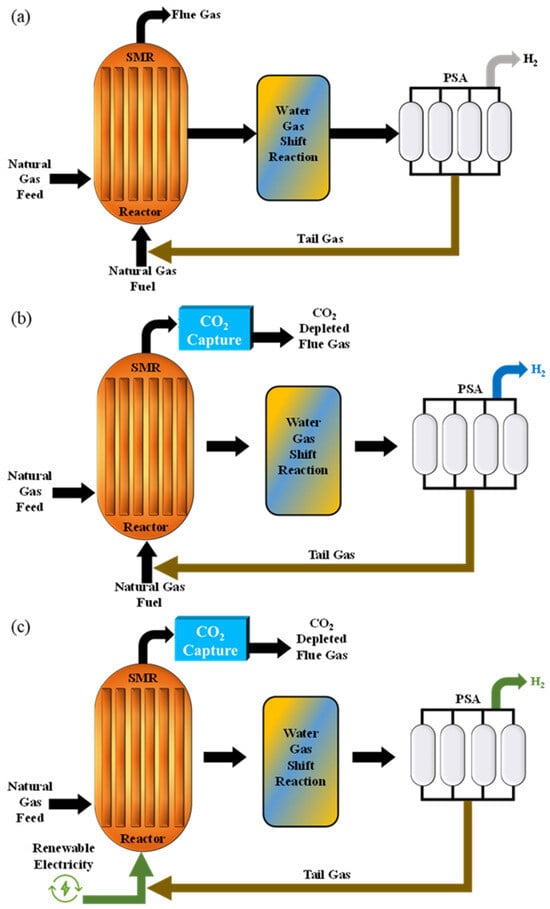
Given the large natural gas (NG) reserves of the Intermountain West (I-WEST) region in the USA, it can emerge as a leader in hydrogen (H2) production. Currently, H2 production via steam methane reforming (SMR) of NG releases carbon dioxide (CO
[...] Read more.
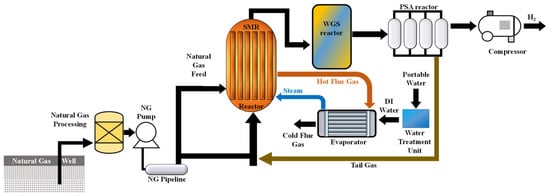
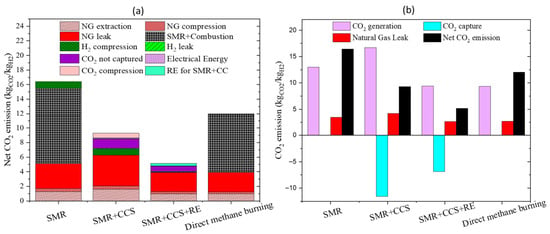
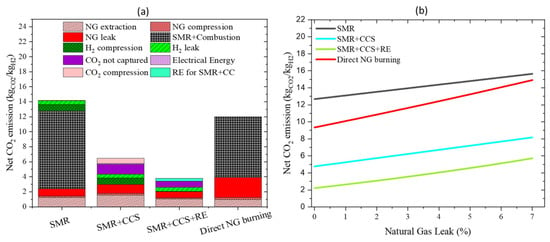
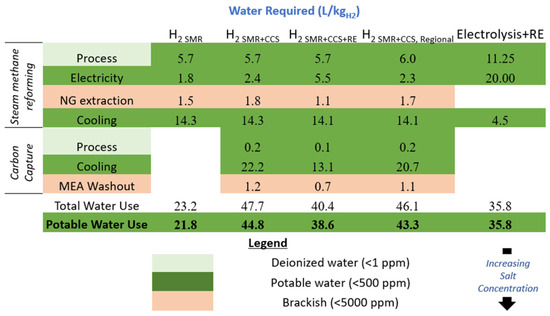
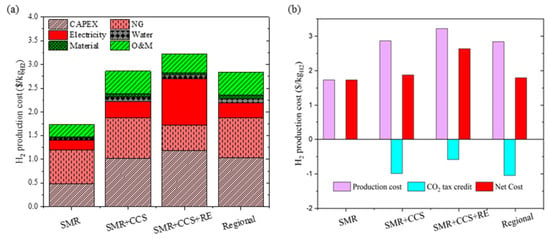
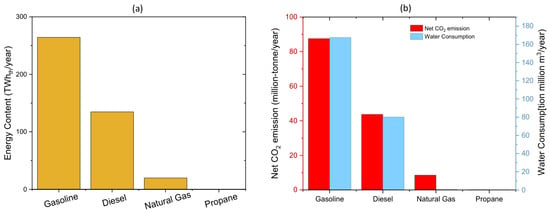
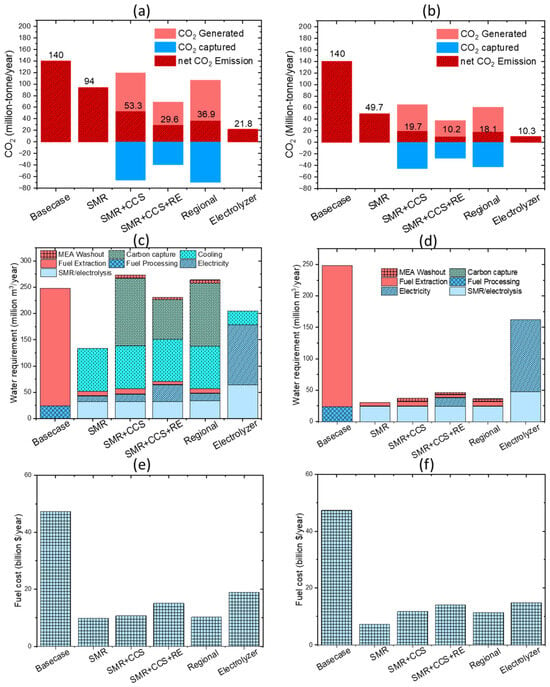
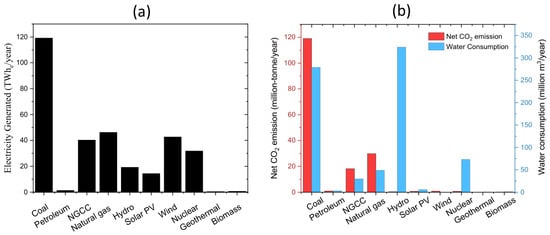
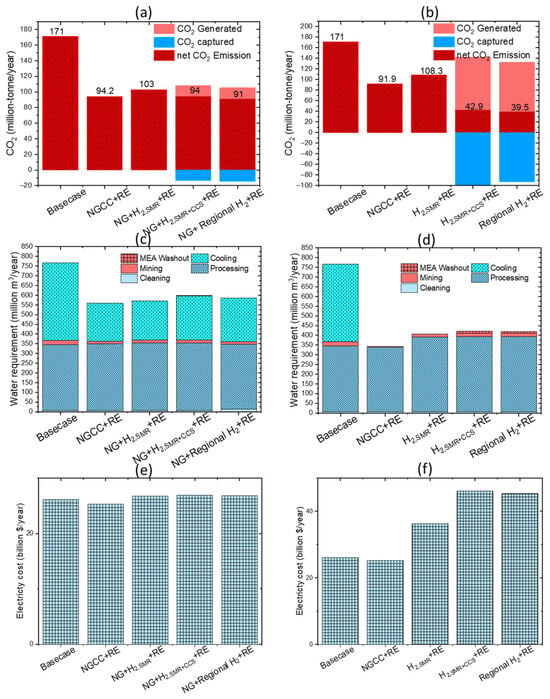
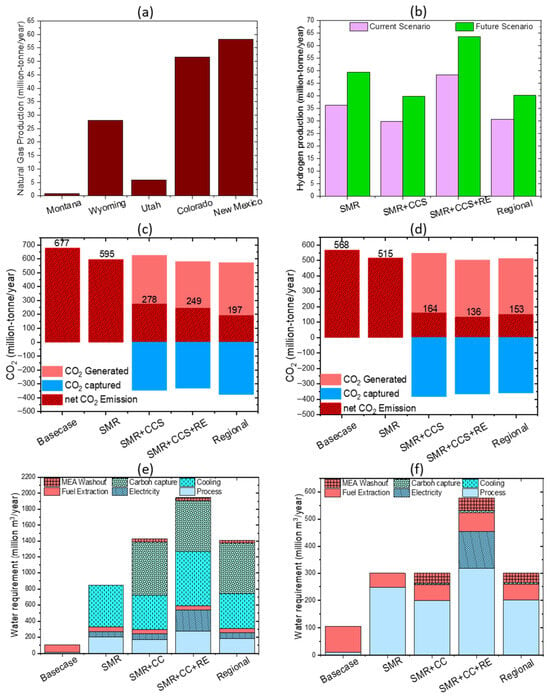
Given the large natural gas (NG) reserves of the Intermountain West (I-WEST) region in the USA, it can emerge as a leader in hydrogen (H2) production. Currently, H2 production via steam methane reforming (SMR) of NG releases carbon dioxide (CO2) and the natural gas infrastructure has fugitive NG and H2 losses during production, conversion and transportation. Integrated carbon capture and sequestration (CCS) is a promising approach for producing hydrogen and CO2 from the SMR process for industrial uses including power, chemicals and fuels. However, the NG losses and regional water availability can be limiting factors for H2 production. H2 production assessments are often made at the global scale and neglect regional factors such as abundant gas and limited water in the I-WEST. We demonstrate that a regional SMR process unit sitting near NG wells offers opportunities to significantly reduce fugitive NG losses. We show that regional H2 production by SMR has a lower emissions profile than widespread natural gas combustion in the I-WEST and reduces the H2 production cost as well. Replacing the I-WEST transportation sector with H2 fuel cell vehicles and using 100% H2-powered electricity can provide substantial reductions in water consumption and fuel costs. This is better than blending H2 with NG which is more expensive. The captured CO2 can be effectively used for enhanced oil recovery in I-WEST. Finally, the potential of utilizing produced, brackish and treated impaired water sources is assessed to meet the water needs for H2 production in the I-WEST.
Full article
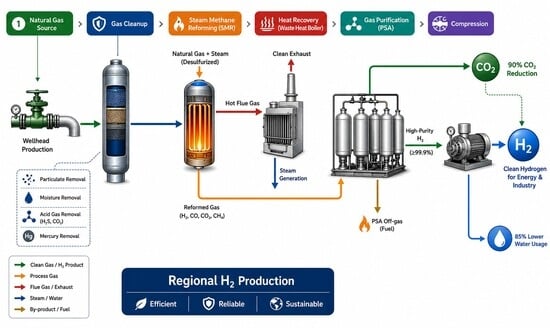
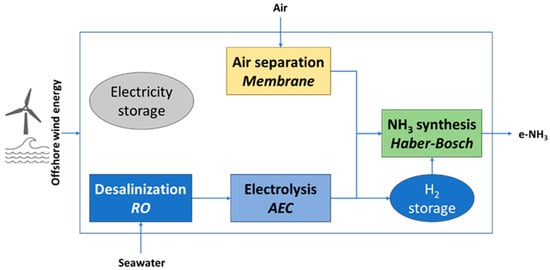
Graphical abstract