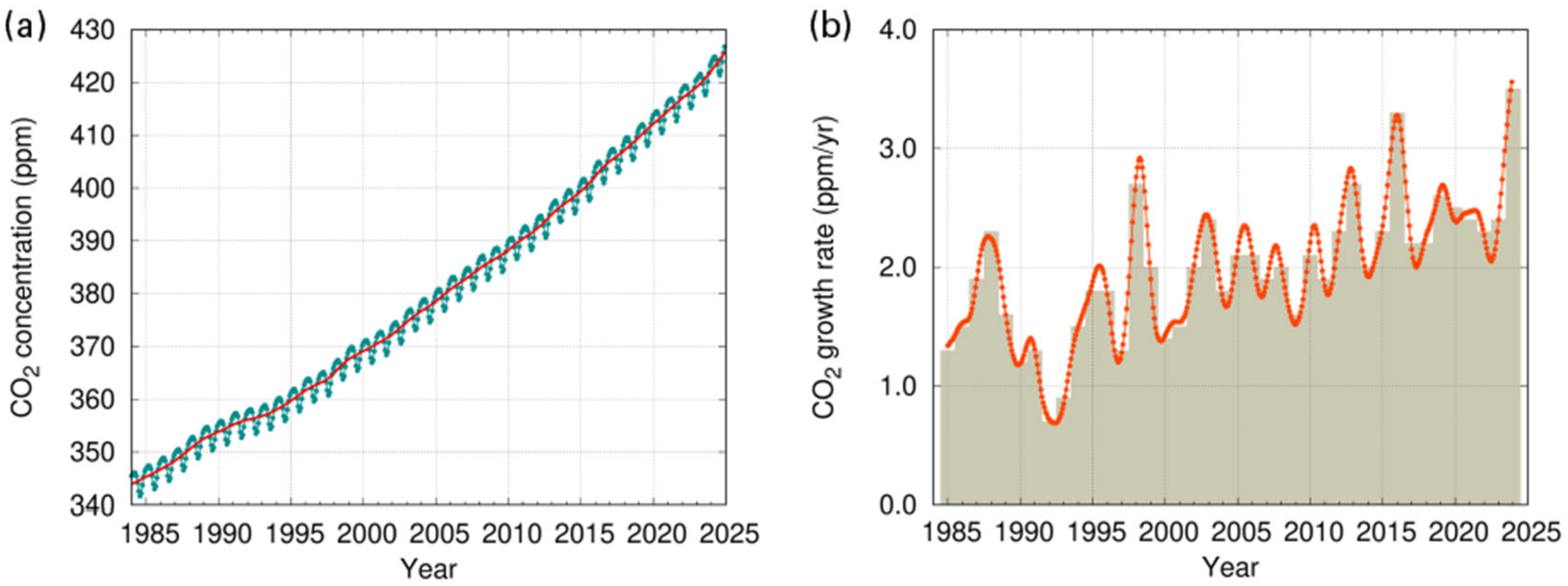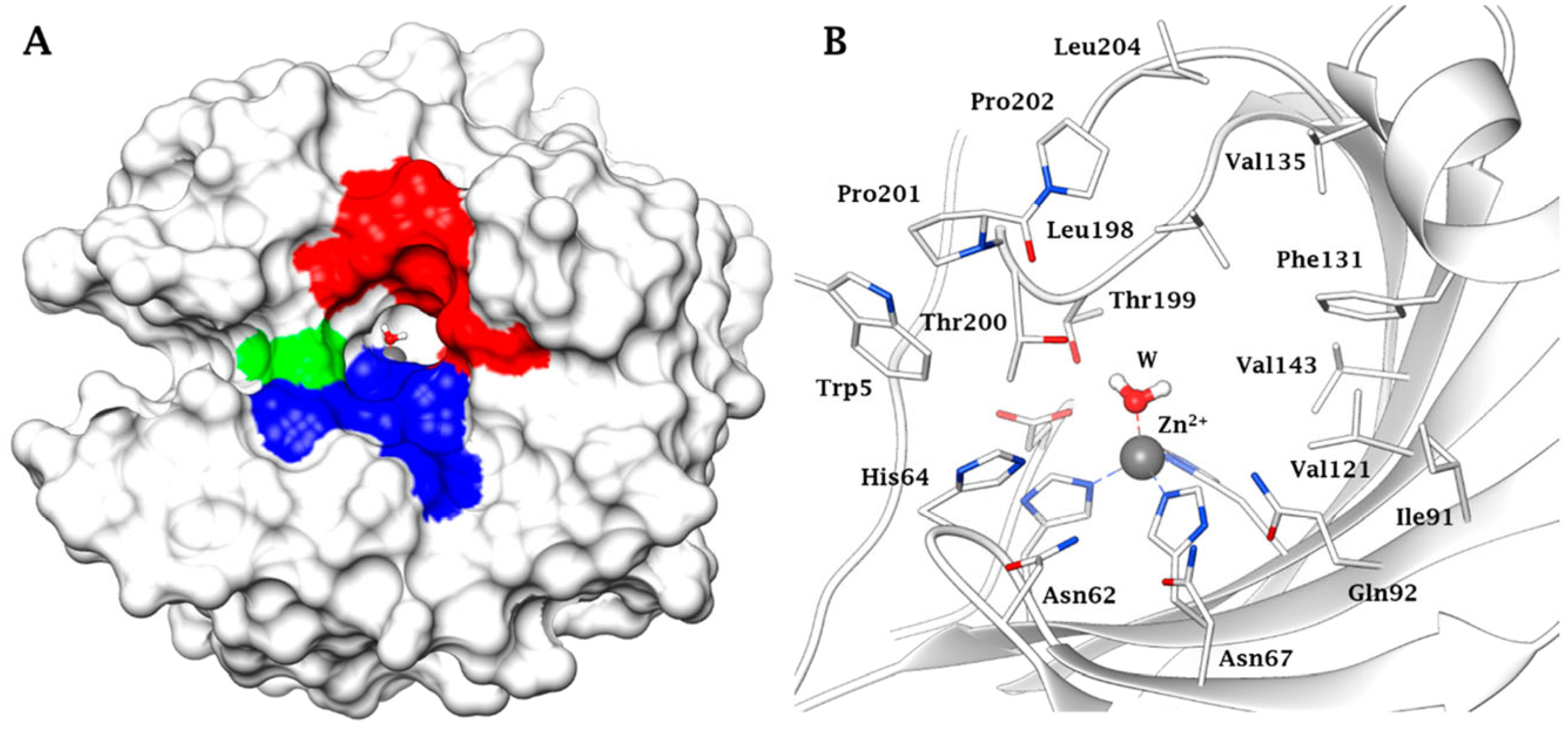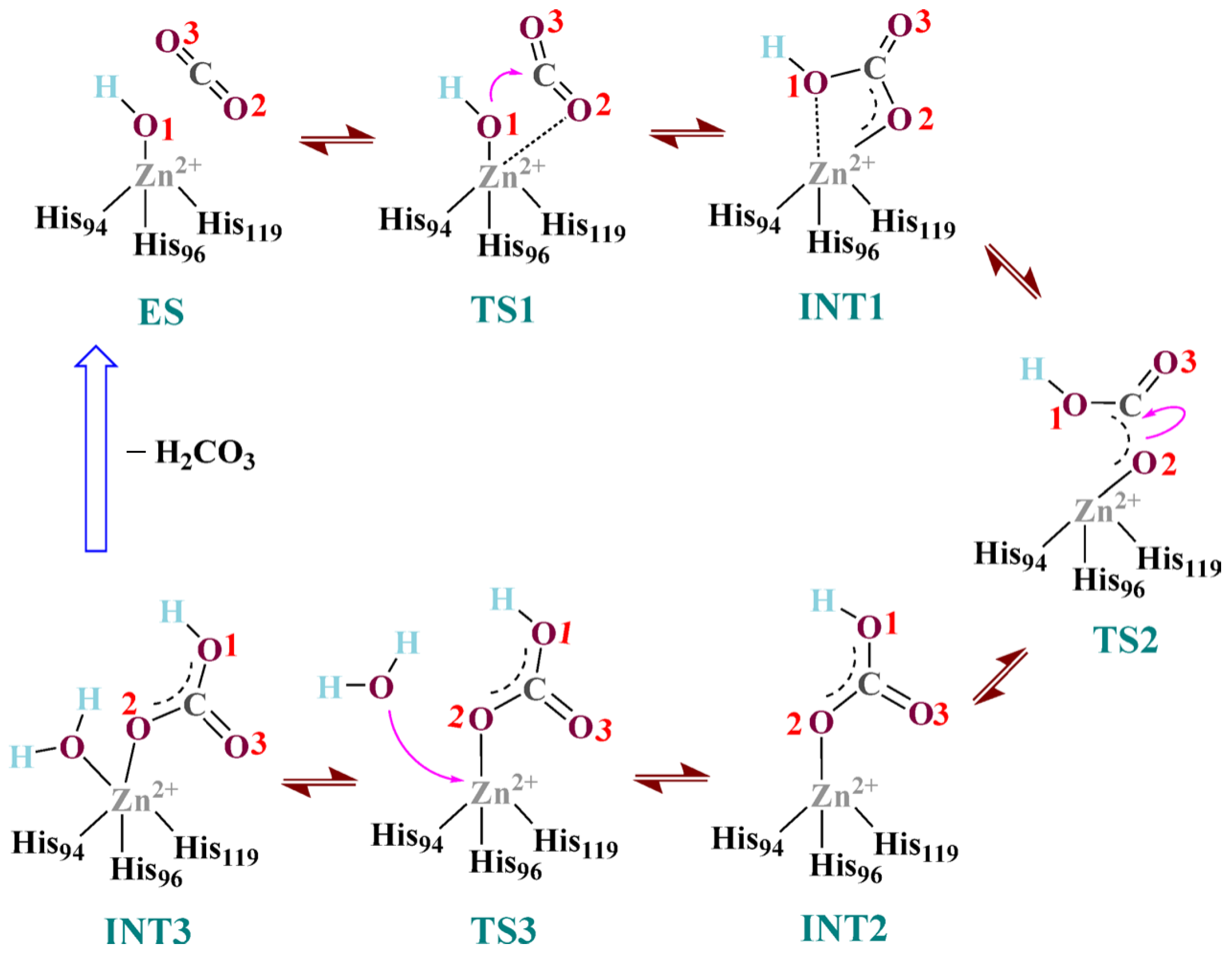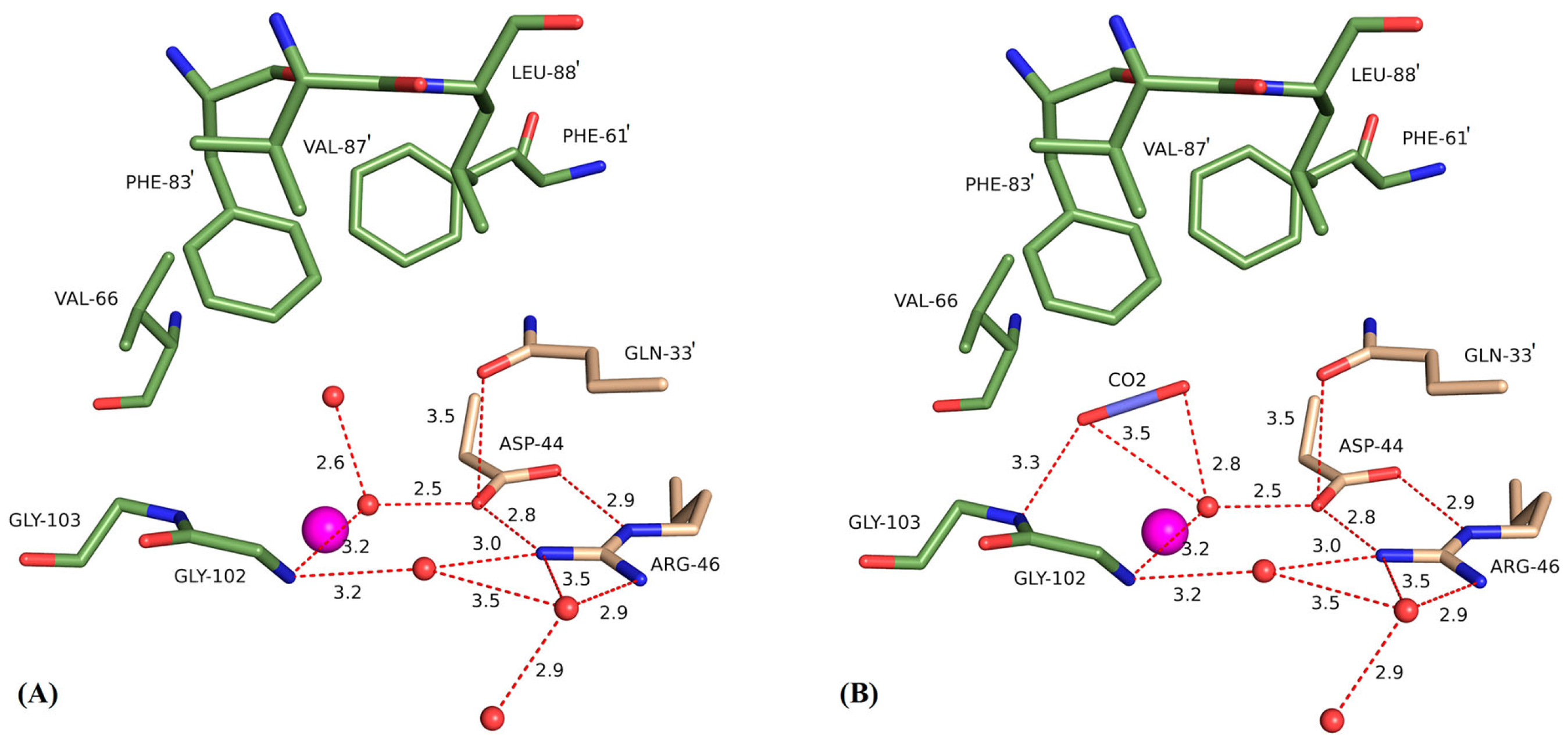

Engineering Carbonic Anhydrase for Enhanced CO2 Capture and Valorization: A Review

Abstract
1. Introduction

2. Catalytic Mechanism and Properties of CA
2.1. Origin and Catalytic Mechanism
2.2. Thermal Stability of CA
3. Engineering CA for CO2 Capture Application
3.1. Directed Evolution
3.2. Rational Design
3.3. Emerging Technology
4. Immobilization of CA for CO2 Sequestration
4.1. Carrier Materials for CA Immobilization
4.1.1. Inorganic Oxide Materials
4.1.2. Magnetic Materials
4.1.3. Carbon-Based Materials
4.1.4. Synthetic Polymers
4.1.5. Biopolymers
4.1.6. Metal–Organic Frameworks (MOFs)
4.2. Techniques for CA Immobilization
4.2.1. Adsorption
4.2.2. Entrapment
4.2.3. Covalent Coupling
4.2.4. Cross-Linked Enzyme Aggregates (CLEAs)
5. CA-Driven Pathways for CO2 Valorization
5.1. Development of High-Value-Added Products
5.2. Bioenergy Production
6. Conclusions and Future Perspectives
Author Contributions
Funding
Data Availability Statement
Conflicts of Interest
References
- Yuan, Y.Y.; Qian, C.X. Comparison and mechanism of CO2 sequestration by different carbonic anhydrase producing bacteria. Biochem. Eng. J. 2025, 222, 109812. [Google Scholar] [CrossRef]
- Xie, Y.; Tiong, M.; Liu, Q.; Wang, C.K.; Xue, W.Z.; Wu, T.; Zhang, S.W.; Hao, N. Recent applications of carbonic anhydrase and its mimics in CO2 capture and utilization technologies. Geoenergy Sci. Eng. 2025, 252, 213958. [Google Scholar] [CrossRef]
- IEA. CO2 Emissions in 2023; IEA: Paris, France, 2024; Available online: https://www.iea.org/reports/co2-emissions-in-2023 (accessed on 1 January 2024).
- IPCC. Global Warming of 1.5 °C; IPCC: Geneva, Switzerland, 2018. [Google Scholar]
- Vishal, V.; Chandra, D.; Singh, U.; Verma, Y. Understanding initial opportunities and key challenges for CCUS deployment in India at scale. Resour. Conserv. Recycl. 2021, 175, 105829. [Google Scholar] [CrossRef]
- Kumar, A.; Sharma, A.; Majumder, P.; Vishal, V.; Dutta, A. Chemical and microalgal conversion of carbon dioxide into fuels and materials: A review. Environ. Chem. Lett. 2025, 23, 1209–1229. [Google Scholar] [CrossRef]
- Lamb, W.F.; Wiedmann, T.; Pongratz, J.; Andrew, R.; Crippa, M.; Olivier, J.G.J.; Wiedenhofer, D.; Mattioli, G.; Al Khourdajie, A.; House, J. A review of trends and drivers of greenhouse gas emissions by sector from 1990 to 2018. Environ. Res. Lett. 2021, 16, 073005, Erratum in Environ. Res. Lett. 2022, 17, 049502. [Google Scholar] [CrossRef]
- Nanda, S.; Reddy, S.N.; Mitra, S.K.; Kozinski, J.A. The progressive routes for carbon capture and sequestration. Energy Sci. Eng. 2016, 4, 99–122, Erratum in Energy Sci. Eng. 2016, 4, 232. [Google Scholar] [CrossRef]
- Mac Dowell, N.; Fennell, P.S.; Shah, N.; Maitland, G.C. The role of CO2 capture and utilization in mitigating climate change. Nat. Clim. Change 2017, 7, 243–249. [Google Scholar] [CrossRef]
- Visser, P.M.; Verspagen, J.M.H.; Sandrini, G.; Stal, L.J.; Matthijs, H.C.P.; Davis, T.W.; Paerl, H.W.; Huisman, J. How rising CO2 and global warming may stimulate harmful cyanobacterial blooms. Harmful Algae 2016, 54, 145–159. [Google Scholar] [CrossRef]
- Atomi, H. Microbial enzymes involved in carbon dioxide fixation. J. Biosci. Bioeng. 2002, 94, 497–505. [Google Scholar] [CrossRef] [PubMed]
- Lan, X.; Chen, H.L.; Alex, V.; Kazuhiro, T.; Oksana, T. The State of Greenhouse Gases in the Atmosphere Based on Global Observations Through 2024; WMO Greenhouse Gas Bulletin No. 21; World Meteorological Organization (WMO): Geneva, Switzerland, 2025. [Google Scholar]
- Fedai, M.; Shen, J.L.; Bognár, Z.; Kwansa, A.L.; Grunden, A.; Helveg, S.; Salmon, S.; Yingling, Y.G. Advances in biomimetic carbonic anhydrase strategies for CO2 capture. Trends Biotechnol. 2025, 43, 3040–3055. [Google Scholar] [CrossRef]
- Bierbaumer, S.; Nattermann, M.; Schulz, L.; Zschoche, R.; Erb, T.J.; Winkler, C.K.; Tinzl, M.; Glueck, S.M. Enzymatic Conversion of CO2: From Natural to Artificial Utilization. Chem. Rev. 2023, 123, 5702–5754. [Google Scholar] [CrossRef]
- Talekar, S.; Jo, B.H.; Dordick, J.S.; Kim, J. Carbonic anhydrase for CO2 capture, conversion and utilization. Curr. Opin. Biotechnol. 2022, 74, 230–240. [Google Scholar] [CrossRef] [PubMed]
- Bond, G.M.; Stringer, J.; Brandvold, D.K.; Simsek, F.A.; Medina, M.G.; Egeland, G. Development of integrated system for biomimetic CO2 sequestration using the enzyme carbonic anhydrase. Energy Fuels 2001, 15, 309–316. [Google Scholar] [CrossRef]
- Lin, W.R.; Lai, Y.C.; Sung, P.K.; Tan, S.I.; Chang, C.H.; Chen, C.Y.; Chang, J.S.; Ng, I.S. Enhancing carbon capture and lipid accumulation by genetic carbonic anhydrase in microalgae. J. Taiwan Inst. Chem. Eng. 2018, 93, 131–141. [Google Scholar] [CrossRef]
- Ali, J.; Faridi, S.; Sardar, M. Carbonic anhydrase as a tool to mitigate global warming. Environ. Sci. Pollut. Res. 2023, 30, 83093–83112. [Google Scholar] [CrossRef]
- Singer, A.M.; Branham, M.; Hutchins, M.G.; Welker, J.; Woodard, D.L.; Badurek, C.A.; Ruseva, T.; Marland, E.; Marland, G. The role of CO2 emissions from large point sources in emissions totals, responsibility, and policy. Environ. Sci. Policy 2014, 44, 190–200. [Google Scholar] [CrossRef]
- Sharma, T.; Sharma, S.; Kamyab, H.; Kumar, A. Energizing the CO2 utilization by chemo-enzymatic approaches and potentiality of carbonic anhydrases: A review. J. Clean. Prod. 2020, 247, 119138. [Google Scholar] [CrossRef]
- Lindskog, S. Structure and mechanism of carbonic anhydrase. Pharmacol. Ther. 1997, 74, 1–20. [Google Scholar] [CrossRef]
- Akocak, S.; Supuran, C.T. Activation of α-, β-, γ- δ-, ζ- and η- class of carbonic anhydrases with amines and amino acids: A review. J. Enzym. Inhib. Med. Chem. 2019, 34, 1652–1659. [Google Scholar] [CrossRef]
- Supuran, C.T.; Capasso, C. An Overview of the Bacterial Carbonic Anhydrases. Metabolites 2017, 7, 56. [Google Scholar] [CrossRef]
- Mukherjee, S.; Sen, R.; Ralph, P.J.; Poddar, N. The catalytic role of carbonic anhydrase in optimizing carbon fixation in microalgal cultures. J. Clean. Prod. 2025, 512, 145461. [Google Scholar] [CrossRef]
- Krishnamurthy, V.M.; Kaufman, G.K.; Urbach, A.R.; Gitlin, I.; Gudiksen, K.L.; Weibel, D.B.; Whitesides, G.M. Carbonic anhydrase as a model for biophysical and physical-organic studies of proteins and protein-ligand binding. Chem. Rev. 2008, 108, 946–1051. [Google Scholar] [CrossRef]
- Smith, K.S.; Ferry, J.G. Prokaryotic carbonic anhydrases. FEMS Microbiol. Rev. 2000, 24, 335–366. [Google Scholar] [CrossRef]
- Somalinga, V.; Buhrman, G.; Arun, A.; Rose, R.B.; Grunden, A.M. A High-Resolution Crystal Structure of a Psychrohalophilic α-Carbonic Anhydrase from Photobacterium profundum Reveals a Unique Dimer Interface. PLoS ONE 2016, 11, e0168022. [Google Scholar] [CrossRef] [PubMed]
- Abubakari, S.-A.; Helal, A.; Khalil, A.B. A Review on CO2 Mitigation by Modified Microbial Carbonic Anhydrase Enzyme (CA). Arab. J. Sci. Eng. 2025, 51, 341–351. [Google Scholar] [CrossRef]
- Bulli, I.; Dettori, I.; Coppi, E.; Cherchi, F.; Venturini, M.; Mannelli, L.D.; Ghelardini, C.; Nocentini, A.; Supuran, C.T.; Pugliese, A.M. Role of Carbonic Anhydrase in Cerebral Ischemia and Carbonic Anhydrase Inhibitors as Putative Protective Agents. Int. J. Mol. Sci. 2021, 22, 5029. [Google Scholar] [CrossRef]
- Bose, H.; Satyanarayana, T. Microbial Carbonic Anhydrases in Biomimetic Carbon Sequestration for Mitigating Global Warming: Prospects and Perspectives. Front. Microbiol. 2017, 8, 1615. [Google Scholar] [CrossRef] [PubMed]
- Ghiasi, M.; Eghtedari, H.S. Green CO2-capture cluster model using bioengineering of carbonic anhydrase enzyme: QM and QM/QM′ approach. Sci. Rep. 2025, 16, 2806. [Google Scholar] [CrossRef] [PubMed]
- Wu, Z.H.; Nan, Y.; Zhao, Y.; Wang, X.Y.; Huang, S.Y.; Shi, J.F. Immobilization of carbonic anhydrase for facilitated CO2 capture and separation. Chin. J. Chem. Eng. 2020, 28, 2817–2831. [Google Scholar] [CrossRef]
- Faridi, S.; Satyanarayana, T. Characteristics of recombinant α-carbonic anhydrase of polyextremophilic bacterium Bacillus halodurans TSLV1. Int. J. Biol. Macromol. 2016, 89, 659–668. [Google Scholar] [CrossRef]
- Jo, B.H.; Hwang, I.S. Characterization and High-Level Periplasmic Expression of Thermostable α-Carbonic Anhydrase from Thermosulfurimonas Dismutans in Escherichia Coli for CO2 Capture and Utilization. Int. J. Mol. Sci. 2020, 21, 103. [Google Scholar] [CrossRef] [PubMed]
- James, P.; Isupov, M.N.; Sayer, C.; Saneei, V.; Berg, S.; Lioliou, M.; Kotlar, H.K.; Littlechild, J.A. The structure of a tetrameric α-carbonic anhydrase from Thermovibrio ammonificans reveals a core formed around intermolecular disulfides that contribute to its thermostability. Acta Crystallogr. Sect. D-Struct. Biol. 2014, 70, 2607–2618. [Google Scholar] [CrossRef] [PubMed]
- De Simone, G.; Monti, S.M.; Alterio, V.; Buonanno, M.; De Luca, V.; Rossi, M.; Carginale, V.; Supuran, C.T.; Capasso, C.; Di Fiore, A. Crystal structure of the most catalytically effective carbonic anhydrase enzyme known, SazCA from the thermophilic bacterium Sulfurihydrogenibium azorense. Bioorganic Med. Chem. Lett. 2015, 25, 2002–2006. [Google Scholar] [CrossRef]
- Di Fiore, A.; Capasso, C.; De Luca, V.; Monti, S.M.; Carginale, V.; Supuran, C.T.; Scozzafava, A.; Pedone, C.; Rossi, M.; De Simone, G. X-ray structure of the first ‘extremo-α-carbonic anhydrase’, a dimeric enzyme from the thermophilic bacterium Sulfurihydrogenibium yellowstonense YO3AOP1. Acta Crystallogr. Sect. D-Struct. Biol. 2013, 69, 1150–1159. [Google Scholar] [CrossRef] [PubMed]
- Di Fiore, A.; Alterio, V.; Monti, S.M.; De Simone, G.; D’Ambrosio, K. Thermostable Carbonic Anhydrases in Biotechnological Applications. Int. J. Mol. Sci. 2015, 16, 15456–15480. [Google Scholar] [CrossRef]
- Shao, P.J.; Ye, J.X.; Shen, Y.; Zhang, S.H.; Zhao, J.K. Recent advancements in carbonic anhydrase for CO2 capture: A mini review. Gas. Sci. Eng. 2024, 123, 205237. [Google Scholar] [CrossRef]
- Yadav, R.R.; Krishnamurthi, K.; Mudliar, S.N.; Devi, S.S.; Naoghare, P.K.; Bafana, A.; Chakrabarti, T. Carbonic anhydrase mediated carbon dioxide sequestration: Promises, challenges and future prospects. J. Basic Microbiol. 2014, 54, 472–481. [Google Scholar] [CrossRef]
- Zdarta, J.; Meyer, A.S.; Jesionowski, T.; Pinelo, M. A General Overview of Support Materials for Enzyme Immobilization: Characteristics, Properties, Practical Utility. Catalysts 2018, 8, 92. [Google Scholar] [CrossRef]
- Alvizo, O.; Nguyen, L.J.; Savile, C.K.; Bresson, J.A.; Lakhapatri, S.L.; Solis, E.O.P.; Fox, R.J.; Broering, J.M.; Benoit, M.R.; Zimmerman, S.A.; et al. Directed evolution of an ultrastable carbonic anhydrase for highly efficient carbon capture from flue gas. Proc. Natl. Acad. Sci. USA 2014, 111, 16436–16441. [Google Scholar] [CrossRef]
- Voyer, N.; Daigle, R.; Madore, É.; Fradette, S. Variants of Thermovibrio ammonificans Carbonic Anhydrase and CO2 Capture Methods Using Thermovibrio Ammonificans Carbonic Anhydrase Variants. U.S. Patent 10,415,028, 17 September 2019. [Google Scholar]
- Ribeiro, A.J.M.; Tyzack, J.D.; Borkakoti, N.; Holliday, G.L.; Thornton, J.M. A global analysis of function and conservation of catalytic residues in enzymes. J. Biol. Chem. 2020, 295, 314–324. [Google Scholar] [CrossRef] [PubMed]
- Warden, A.C.; Williams, M.; Peat, T.S.; Seabrook, S.A.; Newman, J.; Dojchinov, G.; Haritos, V.S. Rational engineering of a mesohalophilic carbonic anhydrase to an extreme halotolerant biocatalyst. Nat. Commun. 2015, 6, 10278. [Google Scholar] [CrossRef]
- Parra-Cruz, R.; Jäger, C.M.; Li Lau, P.; Gomes, R.L.; Pordea, A. Rational Design of Thermostable Carbonic Anhydrase Mutants Using Molecular Dynamics Simulations. J. Phys. Chem. B 2018, 122, 8526–8536. [Google Scholar] [CrossRef]
- Aggarwal, M.; Chua, T.K.; Pinard, M.A.; Szebenyi, D.M.; McKenna, R. Carbon Dioxide “Trapped” in a β-Carbonic Anhydrase. Biochemistry 2015, 54, 6631–6638. [Google Scholar] [CrossRef]
- Sharma, A.; Chiang, R.A.; Manginell, M.; Nardi, I.; Coker, E.N.; Vanegas, J.M.; Rempe, S.B.; Bachand, G.D. Carbonic Anhydrase Robustness for Use in Nanoscale CO2 Capture Technologies. Acs Omega 2023, 8, 37830–37841. [Google Scholar] [CrossRef]
- Parra-Cruz, R.; Lau, P.L.; Loh, H.S.; Pordea, A. Engineering of Thermovibrio ammonificans carbonic anhydrase mutants with increased thermostability. J. CO2 Util. 2020, 37, 1–8. [Google Scholar] [CrossRef]
- Mazurenko, S.; Prokop, Z.; Damborsky, J. Machine Learning in Enzyme Engineering. Acs Catal. 2020, 10, 1210–1223. [Google Scholar] [CrossRef]
- Macchiagodena, M.; Pagliai, M.; Andreini, C.; Rosato, A.; Procacci, P. Upgraded AMBER Force Field for Zinc-Binding Residues and Ligands for Predicting Structural Properties and Binding Affinities in Zinc-Proteins. Acs Omega 2020, 5, 15301–15310. [Google Scholar] [CrossRef]
- Huang, P.S.; Boyken, S.E.; Baker, D. The coming of age of de novo protein design. Nature 2016, 537, 320–327. [Google Scholar] [CrossRef] [PubMed]
- Zastrow, M.L.; Peacock, A.F.A.; Stuckey, J.A.; Pecoraro, V.L. Hydrolytic catalysis and structural stabilization in a designed metalloprotein. Nat. Chem. 2012, 4, 118–123. [Google Scholar] [CrossRef] [PubMed]
- Mohamad, N.R.; Marzuki, N.H.C.; Buang, N.A.; Huyop, F.; Wahab, R.A. An overview of technologies for immobilization of enzymes and surface analysis techniques for immobilized enzymes. Biotechnol. Biotechnol. Equip. 2015, 29, 205–220. [Google Scholar] [CrossRef]
- Rasouli, H.; Iliuta, I.; Bougie, F.; Garnier, A.; Iliuta, M.C. Hybrid enzymatic CO2 capture process in intensified flat sheet membrane contactors with immobilized carbonic anhydrase. Sep. Purif. Technol. 2022, 287, 120505. [Google Scholar] [CrossRef]
- Shen, J.; Yuan, Y.; Salmon, S. Durable and Versatile Immobilized Carbonic Anhydrase on Textile Structured Packing for CO2 Capture. Catalysts 2022, 12, 1108. [Google Scholar] [CrossRef]
- Shen, J.L.; Zhang, S.; Fang, X.M.; Salmon, S. Advances in 3D Gel Printing for Enzyme Immobilization. Gels 2022, 8, 460. [Google Scholar] [CrossRef]
- Maciel, A.D.; Christakopoulos, P.; Rova, U.; Antonopoulou, I. Carbonic anhydrase to boost CO2 sequestration: Improving carbon capture utilization and storage (CCUS). Chemosphere 2022, 299, 134419. [Google Scholar] [CrossRef] [PubMed]
- Shao, P.J.; Chen, H.; Ying, Q.; Zhang, S.H. Structure-Activity Relationship of Carbonic Anhydrase Enzyme Immobilized on Various Silica-Based Mesoporous Molecular Sieves for CO2 Absorption into a Potassium Carbonate Solution. Energy Fuels 2020, 34, 2089–2096. [Google Scholar] [CrossRef]
- Wang, R.; Wang, X.; Zhu, T. Research progress and application of carbon sequestration in industrial flue gas by microalgae: A review. J. Environ. Sci. 2025, 152, 14–28. [Google Scholar] [CrossRef]
- Vallés, D.; Furtado, S.; Villadóniga, C.; Cantera, A.M.B. Adsorption onto alumina and stabilization of cysteine proteinases from crude extract of Solanum granuloso-leprosum fruits. Process Biochem. 2011, 46, 592–598. [Google Scholar] [CrossRef]
- Cao, M.; Li, Z.H.; Wang, J.L.; Ge, W.P.; Yue, T.L.; Li, R.H.; Colvin, V.L.; Yu, W.W. Food related applications of magnetic iron oxide nanoparticles: Enzyme immobilization, protein purification, and food analysis. Trends Food Sci. Technol. 2012, 27, 47–56. [Google Scholar] [CrossRef]
- Faridi, S.; Bose, H.; Satyanarayana, T. Utility of Immobilized Recombinant Carbonic Anhydrase of Bacillus halodurans TSLV1 on the Surface of Modified Iron Magnetic Nanoparticles in Carbon Sequestration. Energy Fuels 2017, 31, 3002–3009. [Google Scholar] [CrossRef]
- Iliuta, I.; Rasouli, H.; Iliuta, M.C. Evaluation of intensified CO2 capture in packed-bed microreactors with immobilized carbonic anhydrase by combined theory and experiment. Chem. Eng. J. 2023, 455, 140625. [Google Scholar] [CrossRef]
- Leimbrink, M.; Nikoleit, K.G.; Spitzer, R.; Salmon, S.; Bucholz, T.; Górak, A.; Skiborowski, M. Enzymatic reactive absorption of CO2 in MDEA by means of an innovative biocatalyst delivery system. Chem. Eng. J. 2018, 334, 1195–1205. [Google Scholar] [CrossRef]
- Rasouli, H.; Nguyen, K.; Iliuta, M.C. Recent advancements in carbonic anhydrase immobilization and its implementation in CO2 capture technologies: A review. Sep. Purif. Technol. 2022, 296, 121299. [Google Scholar] [CrossRef]
- Wu, H.; Mu, W.M. Application prospects and opportunities of inorganic nanomaterials for enzyme immobilization in the food-processing industry. Curr. Opin. Food Sci. 2022, 47, 100909. [Google Scholar] [CrossRef]
- Sillu, D.; Achal, V. Carbon dioxide sequestration with carbonic anhydrase nanobiocatalysts: A review. Environ. Chem. Lett. 2024, 22, 2213–2239. [Google Scholar] [CrossRef]
- Adeel, M.; Bilal, M.; Rasheed, T.; Sharma, A.; Iqbal, H.M.N. Graphene and graphene oxide: Functionalization and nano-bio-catalytic system for enzyme immobilization and biotechnological perspective. Int. J. Biol. Macromol. 2018, 120, 1430–1440. [Google Scholar] [CrossRef]
- Fu, Y.Q.; Jiang, Y.B.; Dunphy, D.; Xiong, H.F.; Coker, E.; Chou, S.; Zhang, H.X.; Vanegas, J.M.; Croissant, J.G.; Cecchi, J.L.; et al. Ultra-thin enzymatic liquid membrane for CO2 separation and capture. Nat. Commun. 2018, 9, 990. [Google Scholar] [CrossRef] [PubMed]
- Heo, J.; Choi, M.; Rhyu, S.Y.; Lee, H.; Jung, S.; Kim, Y.; Choi, W.; Park, K.; Cho, Y.; Kang, S.W.; et al. Enzyme-based CO2/N2 separation nano-membrane via optimization of carbonic anhydrase-functionalized graphene oxide. Appl. Surf. Sci. 2023, 619, 156742. [Google Scholar] [CrossRef]
- Maksym, P.; Tarnacka, M.; Dzienia, A.; Matuszek, K.; Chrobok, A.; Kaminski, K.; Paluch, M. Enhanced Polymerization Rate and Conductivity of Ionic Liquid-Based Epoxy Resin. Macromolecules 2017, 50, 3262–3272. [Google Scholar] [CrossRef]
- Wen, H.; Zhang, L.; Du, Y.J.; Wang, Z.Y.; Jiang, Y.H.; Bian, H.J.; Cui, J.D.; Jia, S.R. Bimetal based inorganic-carbonic anhydrase hybrid hydrogel membrane for CO2 capture. J. CO2 Util. 2020, 39, 101171. [Google Scholar] [CrossRef]
- Hu, W.J.; Lu, S.L.; Ma, Y.; Ren, P.F.; Ma, X.E.; Zhou, N.Z.; Zhang, T.Z.; Ji, Z.L. Poly(dopamine)-inspired surface functionalization of polypropylene tissue mesh for prevention of intra-peritoneal adhesion formation. J. Mater. Chem. B 2017, 5, 575–585. [Google Scholar] [CrossRef]
- Krajewska, B. Application of chitin- and chitosan-based materials for enzyme immobilizations: A review. Enzym. Microb. Technol. 2004, 35, 126–139. [Google Scholar] [CrossRef]
- Kurita, K. Controlled functionalization of the polysaccharide chitin. Prog. Polym. Sci. 2001, 26, 1921–1971. [Google Scholar] [CrossRef]
- Sharma, A.; Bhattacharya, A.; Shrivastava, A. Biomimetic CO2 sequestration using purified carbonic anhydrase from indigenous bacterial strains immobilized on biopolymeric materials. Enzym. Microb. Technol. 2011, 48, 416–426. [Google Scholar] [CrossRef]
- Yadav, R.R.; Mudliar, S.N.; Shekh, A.Y.; Fulke, A.B.; Devi, S.S.; Krishnamurthi, K.; Juwarkar, A.; Chakrabarti, T. Immobilization of carbonic anhydrase in alginate and its influence on transformation of CO2 to calcite. Process Biochem. 2012, 47, 585–590. [Google Scholar] [CrossRef]
- Furukawa, H.; Cordova, K.E.; O’Keeffe, M.; Yaghi, O.M. The Chemistry and Applications of Metal-Organic Frameworks. Science 2013, 341, 1230444. [Google Scholar] [CrossRef] [PubMed]
- Morris, W.; Doonan, C.J.; Furukawa, H.; Banerjee, R.; Yaghi, O.M. Crystals as molecules: Postsynthesis covalent functionalization of zeolitic imidazolate frameworks. J. Am. Chem. Soc. 2008, 130, 12626–12627. [Google Scholar] [CrossRef]
- Liu, Q.; Chapman, J.; Huang, A.S.; Williams, K.C.; Wagner, A.; Garapati, N.; Sierros, K.A.; Dinu, C. User-Tailored Metal Organic Frameworks as Supports for Carbonic Anhydrase. Acs Appl. Mater. Interfaces 2018, 10, 41326–41337. [Google Scholar] [CrossRef]
- Zhang, S.H.; Du, M.N.; Shao, P.J.; Wang, L.D.; Ye, J.X.; Chen, J.; Chen, J.M. Carbonic Anhydrase Enzyme-MOFs Composite with a Superior Catalytic Performance to Promote CO2 Absorption into Tertiary Amine Solution. Environ. Sci. Technol. 2018, 52, 12708–12716. [Google Scholar] [CrossRef]
- Ren, S.Z.; Feng, Y.X.; Wen, H.; Li, C.H.; Sun, B.T.; Cui, J.D.; Jia, S.R. Immobilized carbonic anhydrase on mesoporous cruciate flower-like metal organic framework for promoting CO2 sequestration. Int. J. Biol. Macromol. 2018, 117, 189–198. [Google Scholar] [CrossRef]
- Khalil, A.; Abdullah, R.; Helal, A. Synthesis of Efficient Carbonic Anhydrase-Fe-MOF Composite for Enhancing CO2 Absorption. J. Biol. Chem. 2025, 301, 108899. [Google Scholar] [CrossRef]
- Asadi, V.; Kardanpour, R.; Tangestaninejad, S.; Moghadam, M.; Mirkhani, V.; Mohammadpoor-Baltork, I. Novel bovine carbonic anhydrase encapsulated in a metal-organic framework: A new platform for biomimetic sequestration of CO2. Rsc Adv. 2019, 9, 28460–28469. [Google Scholar] [CrossRef] [PubMed]
- Ren, S.Z.; Wang, Z.Y.; Bilal, M.; Feng, Y.X.; Jiang, Y.H.; Jia, S.R.; Cui, J.D. Co-immobilization multienzyme nanoreactor with co-factor regeneration for conversion of CO2. Int. J. Biol. Macromol. 2020, 155, 110–118. [Google Scholar] [CrossRef] [PubMed]
- Li, Y.; Wen, L.Y.; Tan, T.W.; Lv, Y.Q. Sequential Co-immobilization of Enzymes in Metal-Organic Frameworks for Efficient Biocatalytic Conversion of Adsorbed CO2 to Formate. Front. Bioeng. Biotechnol. 2019, 7, 394. [Google Scholar] [CrossRef]
- Xv, J.; Zhang, Z.Y.; Pang, S.Z.; Jia, J.H.; Geng, Z.X.; Wang, R.R.; Li, P.K.; Bilal, M.; Cui, J.D.; Jia, S.R. Accelerated CO2 capture using immobilized carbonic anhydrase on polyethyleneimine/dopamine co-deposited MOFs. Biochem. Eng. J. 2022, 189, 108719. [Google Scholar] [CrossRef]
- Chai, M.; Razmjou, A.; Chen, V. Metal-organic-framework protected multi-enzyme thin-film for the cascade reduction of CO2 in a gas-liquid membrane contactor. J. Membr. Sci. 2021, 623, 118986. [Google Scholar] [CrossRef]
- Peirce, S.; Russo, M.E.; De Luca, V.; Capasso, C.; Rossi, M.; Olivieri, G.; Salatino, P.; Marzocchella, A. Immobilization of Carbonic Anhydrase for Biomimetic CO2 Capture in a Slurry Absorber as Cross-Linked Enzyme Aggregates (CLEA). In Proceedings of the 12th International Conference on Chemical and Process Engineering (ICheaP), Milan, Italy, 19–22 May 2015. [Google Scholar]
- Wu, S.L.; Chen, J.R.; Ma, L.; Zhang, K.; Wang, X.X.; Wei, Y.P.; Xu, J.; Xu, X. Design of carbonic anhydrase with improved thermostability for CO2 capture via molecular simulations. J. CO2 Util. 2020, 38, 141–147. [Google Scholar] [CrossRef]
- Effendi, S.S.W.; Ng, I.-S. The prospective and potential of carbonic anhydrase for carbon dioxide sequestration: A critical review. Process Biochem. 2019, 87, 55–65. [Google Scholar] [CrossRef]
- Molina-Fernández, C.; Luis, P. Immobilization of carbonic anhydrase for CO2 capture and its industrial implementation: A review. J. CO2 Util. 2021, 47, 101475. [Google Scholar] [CrossRef]
- Forsyth, C.; Yip, T.W.S.; Patwardhan, S.V. Patwardhan, CO2 sequestration by enzyme immobilized onto bioinspired silica. Chem. Commun. 2013, 49, 3191–3193. [Google Scholar] [CrossRef]
- Oviya, M.; Giri, S.S.; Sukumaran, V.; Natarajan, P. Immobilization of Carbonic Anhydrase Enzyme Purified from Bacillus Subtilis Vsg-4 and its Application as CO2 Sequesterer. Prep. Biochem. Biotechnol. 2012, 42, 462–475. [Google Scholar] [CrossRef]
- Drozdov, A.S.; Shapovalova, O.E.; Ivanovski, V.; Avnir, D.; Vinogradov, V.V. Entrapment of Enzymes within Sol-Gel-Derived Magnetite. Chem. Mater. 2016, 28, 2248–2253. [Google Scholar] [CrossRef]
- Datta, S.; Christena, L.R.; Rajaram, Y.R.S. Enzyme immobilization: An overview on techniques and support materials. 3 Biotech. 2013, 3, 1–9. [Google Scholar] [CrossRef]
- Mulinari, J.; Oliveira, J.V.; Hotza, D. Lipase immobilization on ceramic supports: An overview on techniques and materials. Biotechnol. Adv. 2020, 42, 107581. [Google Scholar] [CrossRef]
- Fei, X.Y.; Chen, S.Y.; Liu, D.; Huang, C.J.; Zhang, Y.C. Comparison of amino and epoxy functionalized SBA-15 used for carbonic anhydrase immobilization. J. Biosci. Bioeng. 2016, 122, 314–321. [Google Scholar] [CrossRef]
- Rasouli, H.; Iliuta, I.; Bougie, F.; Garnier, A.; Iliuta, M.C. Enzyme-immobilized flat-sheet membrane contactor for green carbon capture. Chem. Eng. J. 2021, 421, 129587. [Google Scholar] [CrossRef]
- Al-Dhrub, A.H.A.; Sahin, S.; Ozmen, I.; Tunca, E.; Bulbul, M. Immobilization and characterization of human carbonic anhydrase I on amine functionalized magnetic nanoparticles. Process Biochem. 2017, 57, 95–104. [Google Scholar] [CrossRef]
- Kim, S.; Joo, K.I.; Jo, B.H.; Cha, H.J. Stability-Controllable Self-Immobilization of Carbonic Anhydrase Fused with a Silica-Binding Tag onto Diatom Biosilica for Enzymatic CO2 Capture and Utilization. ACS Appl. Mater. Interfaces 2020, 12, 27055–27063. [Google Scholar] [CrossRef] [PubMed]
- Cui, J.D.; Jia, S.R. Optimization protocols and improved strategies of cross-linked enzyme aggregates technology: Current development and future challenges. Crit. Rev. Biotechnol. 2015, 35, 15–28. [Google Scholar] [CrossRef] [PubMed]
- Vinoba, M.; Bhagiyalakshmi, M.; Jeong, S.K.; Yoon, Y.I.; Nam, S.C. Immobilization of carbonic anhydrase on spherical SBA-15 for hydration and sequestration of CO2. Colloids Surf. B-Biointerfaces 2012, 90, 91–96. [Google Scholar] [CrossRef]
- Peirce, S.; Russo, M.E.; Isticato, R.; Fernández Lafuente, R.; Salatino, P.; Marzocchella, A. Structure and activity of magnetic cross-linked enzyme aggregates of bovine carbonic anhydrase as promoters of enzymatic CO2 capture. Biochem. Eng. J. 2017, 127, 188–195. [Google Scholar] [CrossRef]
- Woo, K.M.; Lee, I.; Hong, S.G.; An, S.; Lee, J.; Oh, E.; Kim, J. Crosslinked chitosan coating on magnetic mesoporous silica with pre-adsorbed carbonic anhydrase for carbon dioxide conversion. Chem. Eng. J. 2015, 276, 232–239. [Google Scholar] [CrossRef]
- Pavan, M.; Reinmets, K.; Garg, S.; Mueller, A.P.; Marcellin, E.; Köpke, M.; Valgepea, K. Advances in systems metabolic engineering of autotrophic carbon oxide-fixing biocatalysts towards a circular economy. Metab. Eng. 2022, 71, 117–141. [Google Scholar] [CrossRef] [PubMed]
- Zaidi, S.; Srivastava, N.; Khare, S.K. Microbial carbonic anhydrase mediated carbon capture, sequestration & utilization: A sustainable approach to delivering bio-renewables. Bioresour. Technol. 2022, 365, 128174. [Google Scholar] [CrossRef] [PubMed]
- Ji, X.Y.; Su, Z.G.; Wang, P.; Ma, G.H.; Zhang, S.P. Integration of Artificial Photosynthesis System for Enhanced Electronic Energy-Transfer Efficacy: A Case Study for Solar-Energy Driven Bioconversion of Carbon Dioxide to Methanol. Small 2016, 12, 4753–4762. [Google Scholar] [CrossRef] [PubMed]
- Aleku, G.A.; Roberts, G.W.; Titchiner, G.R.; Leys, D. Synthetic Enzyme-Catalyzed CO2 Fixation Reactions. Chemsuschem 2021, 14, 1781–1804. [Google Scholar] [CrossRef]
- Chang, S.; He, Y.; Li, Y.X.; Cui, X.M. Study on the immobilization of carbonic anhydrases on geopolymer microspheres for CO2 capture. J. Clean. Prod. 2021, 316, 128163. [Google Scholar] [CrossRef]
- Chan, S.S.; Chan, K.S.; Leung, S.K.; Lam, W.Y.V.; Kwok, H.P.; Yau, T.Y.J.; Wong, S.Y.S.; Chan, C.Y. Study of Microalgae Biofixation with Bacteria Carbonic Anhydrase for Carbon Capture and Utilization. Sustainability 2024, 16, 11196. [Google Scholar] [CrossRef]
- McLaughlin, H.; Littlefield, A.A.; Menefee, M.; Kinzer, A.; Hull, T.; Sovacool, B.K.; Bazilian, M.D.; Kim, J.; Griffiths, S. Carbon capture utilization and storage in review: Sociotechnical implications for a carbon reliant world. Renew. Sustain. Energy Rev. 2023, 177, 113215, Erratum in Renew. Sustain. Energy Rev. 2023, 183, 113450.. [Google Scholar] [CrossRef]
- Jun, S.H.; Yang, J.; Jeon, H.; Kim, H.S.; Pack, S.P.; Jin, E.; Kim, J. Stabilized and Immobilized Carbonic Anhydrase on Electrospun Nanofibers for Enzymatic CO2 Conversion and Utilization in Expedited Microalgal Growth. Environ. Sci. Technol. 2020, 54, 1223–1231. [Google Scholar] [CrossRef]
- You, S.K.; Ko, Y.J.; Shin, S.K.; Hwang, D.; Kang, D.H.; Park, H.M.; Han, S.O. Enhanced CO2 fixation and lipid production of Chlorella vulgaris through the carbonic anhydrase complex. Bioresour. Technol. 2020, 318, 124072. [Google Scholar] [CrossRef] [PubMed]
- Lin, J.Y.; Effendi, S.S.W.; Ng, I.S. Enhanced carbon capture and utilization (CCU) using heterologous carbonic anhydrase in Chlamydomonas reinhardtii for lutein and lipid production. Bioresour. Technol. 2022, 351, 127009. [Google Scholar] [CrossRef]


Disclaimer/Publisher’s Note: The statements, opinions and data contained in all publications are solely those of the individual author(s) and contributor(s) and not of MDPI and/or the editor(s). MDPI and/or the editor(s) disclaim responsibility for any injury to people or property resulting from any ideas, methods, instructions or products referred to in the content. |
© 2026 by the authors. Licensee MDPI, Basel, Switzerland. This article is an open access article distributed under the terms and conditions of the Creative Commons Attribution (CC BY) license.
Share and Cite
Chen, X.; Ling, X.; Xu, Z.; Xia, Y. Engineering Carbonic Anhydrase for Enhanced CO2 Capture and Valorization: A Review. Clean Technol. 2026, 8, 63. https://doi.org/10.3390/cleantechnol8030063
Chen X, Ling X, Xu Z, Xia Y. Engineering Carbonic Anhydrase for Enhanced CO2 Capture and Valorization: A Review. Clean Technologies. 2026; 8(3):63. https://doi.org/10.3390/cleantechnol8030063
Chicago/Turabian StyleChen, Xin, Xiaofeng Ling, Zhen Xu, and Yuanfen Xia. 2026. "Engineering Carbonic Anhydrase for Enhanced CO2 Capture and Valorization: A Review" Clean Technologies 8, no. 3: 63. https://doi.org/10.3390/cleantechnol8030063
APA StyleChen, X., Ling, X., Xu, Z., & Xia, Y. (2026). Engineering Carbonic Anhydrase for Enhanced CO2 Capture and Valorization: A Review. Clean Technologies, 8(3), 63. https://doi.org/10.3390/cleantechnol8030063