
Article

Resource Recycling and Wastewater Remediation: Application of Turning Metal Scrap as Anode in Electrochemical Treatment of Soluble Cutting Fluids

1
Department of Bioenvironmental Energy, Pusan National University, Miryang-si 50463, Republic of Korea
2
Life and Industry Convergence Research Institute, Pusan National University, Miryang-si 50463, Republic of Korea
3
Department of Environmental Engineering, Dong-Eui University, Busan 47340, Republic of Korea
4
Department of Environmental Engineering, Korea Maritime & Ocean University, Busan 49112, Republic of Korea
5
Department of Polymer Engineering, Pukyong National University, Busan 48513, Republic of Korea
*
Authors to whom correspondence should be addressed.
Clean Technol. 2026, 8(2), 41; https://doi.org/10.3390/cleantechnol8020041
Submission received: 13 January 2026 / Revised: 27 February 2026 / Accepted: 12 March 2026 / Published: 16 March 2026

Highlights

What are the main findings?
  • Aluminum turning scrap demonstrated the most favorable balance between CODCr/TOC removal efficiency and specific energy consumption among the tested scrap-based anodes.
  • Electrolyte addition (particularly NaNO3) improved energy efficiency under constant-current operation, although pollutant removal slightly decreased.
What are the implications of the main findings?
  • Metal working turning scrap can be reutilized as a sustainable and cost-effective alternative anode material in electrochemical wastewater treatment.
  • Process optimization through electrolyte selection and pH control can enhance the trade-off between removal efficiency and energy consumption in scrap-based electrochemical systems.

Abstract

Soluble cutting fluids (SCFs) from metalworking processes pose significant treatment challenges. Here, SCFs were treated using a monopolar electrochemical (EC) system, using turning scrap generated from metalworking operations as the anode. The system was operated for 60 min under various conditions, including different anode materials, electrolyte addition, aeration, and initial pH. Treatment performance was evaluated in terms of chemical oxygen demand (CODCr) and total organic carbon (TOC) removal efficiencies and specific energy consumption (SEC) for CODCr removal. The Al scrap (20 g/L) showed the optimal overall performance, achieving CODCr and TOC removal efficiencies of 29.28% and 25.62%, respectively, with an SEC comparable to that of the Al electrode. Electrolyte addition improved the energy efficiency under all conditions, with NaNO3 10 mM yielding the lowest SEC (0.57 kWh/kg-CODCr), and aeration negatively affected both removal efficiency and energy consumption. Although acidic conditions (pH 2) resulted in high apparent removal, most of the reduction occurred during pre-treatment pH adjustment, and the highest energy efficiency was achieved at pH 7 (0.47 kWh/kg-CODCr). These results demonstrate that Al turning scrap is a promising alternative anode material for electrochemical treatment of SCFs with optimized electrolyte addition and operating pH enabling improved energy efficiency.

1. Introduction

Metalworking processes are widely employed to manufacture components in various industries such as machinery, electronics, and shipbuilding [1]. In these processes, cutting fluids play a critical role in providing cooling, lubrication, and cleaning functions, thereby significantly contributing to productivity improvements [2,3]. Cutting fluids are generally classified into oil- and water-based types, among which water-based cutting fluids are the most widely used because of their cost-effectiveness, low fire risk, and superior cooling performance [4]. However, wastewater generated from conventional SCFs typically exhibits high concentrations of chemical oxygen demand (COD) and total organic carbon (TOC) owing to the presence of surfactants, lubricants, and various additives, which are often refractory in nature [5]. Furthermore, SCF wastewater may contain toxic chemical constituents, such as biocides and corrosion inhibitors, raising concerns regarding the potential adverse effects on human health, including respiratory and skin disorders, particularly under occupational exposure conditions [6,7]. Moreover, the low biological oxygen demand (BOD)/COD ratio of SCF wastewater reflects its poor biodegradability [5,8], and the presence of oily pollutants further impairs the biological treatment performance by forming an oil layer on microbial surfaces, which hinders oxygen and nutrient transfer to the biomass [9,10]. In addition, SCF wastewater typically exists as a highly stable oil-in-water emulsion stabilized by surfactants, which hinders phase separation and significantly reduces the effectiveness of conventional physicochemical treatment processes such as gravity separation, coagulation–flocculation, and filtration [11,12].
To address this issue, electrochemical treatment methods have been investigated, in which electric energy is applied between electrodes to degrade pollutants in wastewater. Electrochemical treatment refers to a process in which an electrical current is applied between electrodes to induce a variety of physicochemical reactions such as coagulation, flotation, adsorption onto electrode surfaces, and electrochemical oxidation, thereby removing pollutants from wastewater [13,14]. Electrochemical treatment is an effective approach for removing refractory organic pollutants. In addition, this process requires a relatively small installation area and enables rapid pollutant removal within a short reaction time, making it an attractive alternative to conventional treatment technologies [15]. In contrast, electrochemical treatment processes commonly rely on sacrificial metal electrodes, particularly aluminum and iron, which are continuously consumed during operation as metal ions are released into the solution. Electrode consumption has been recognized as a major limitation because it increases the operational costs and generates secondary sludge [15,16]. Accordingly, the need to mitigate electrode consumption through the development of alternative electrode materials or configurations has been emphasized in previous studies [17]. Additionally, metalworking processes generate large quantities of metallic scrap, which is often oxidized and contaminated with cutting fluids during machining operations, diminishing its recycling value and consequently resulting in additional treatment and disposal burdens [18]. Under these circumstances, the reuse of waste metallic scrap as a functional material, rather than as a recyclable resource, has attracted increasing interest. However, its direct application as an electrode material in electrochemical treatment systems, particularly for SCF wastewater, has rarely been explored.
In this study, metallic scrap generated from metalworking processes was used as the anode in an electrochemical treatment system to treat SCFs originating from the same industrial sector. From a circular economy perspective, this approach represents a promising strategy for simultaneously addressing the electrode consumption issue inherent in conventional electrochemical processes while valorizing waste metallic scrap, thereby reducing both resource consumption and waste generation. Accordingly, this study aimed to evaluate the feasibility and performance of metallic scrap as an anode for the electrochemical treatment of SCFs. The treatment performance was assessed in terms of the CODCr and TOC removal efficiencies, as well as the SEC for CODCr removal.

2. Materials and Methods

2.1. Experimental Components

2.1.1. Test Sample

The experimental wastewater was prepared by diluting the W-1 type water-soluble cutting fluid obtained from Company U (Gimhae, Republic of Korea) to a concentration of 5% (v/v). According to previous studies [19], significant variations in electrical conductivity have been reported, particularly within the temperature range of 5–30 °C, which can substantially influence the electrochemical treatment performance. Therefore, prior to each experiment, the wastewater temperature was adjusted to 20 °C using a water bath to minimize temperature-induced variation. The characteristics of the 5% diluted wastewater samples are summarized in Table 1.

2.1.2. Turning Scraps

Turning scrap (i.e., the metal scrap generated during the turning process) was obtained from a domestic supplier, Company D (Suwon city, Republic of Korea). The scraps consisted of aluminum (Al), cast iron (Fe), and stainless steel (SUS); their average specific gravities are summarized in Table 2.

2.1.3. Electrode and Turning Scrap Case

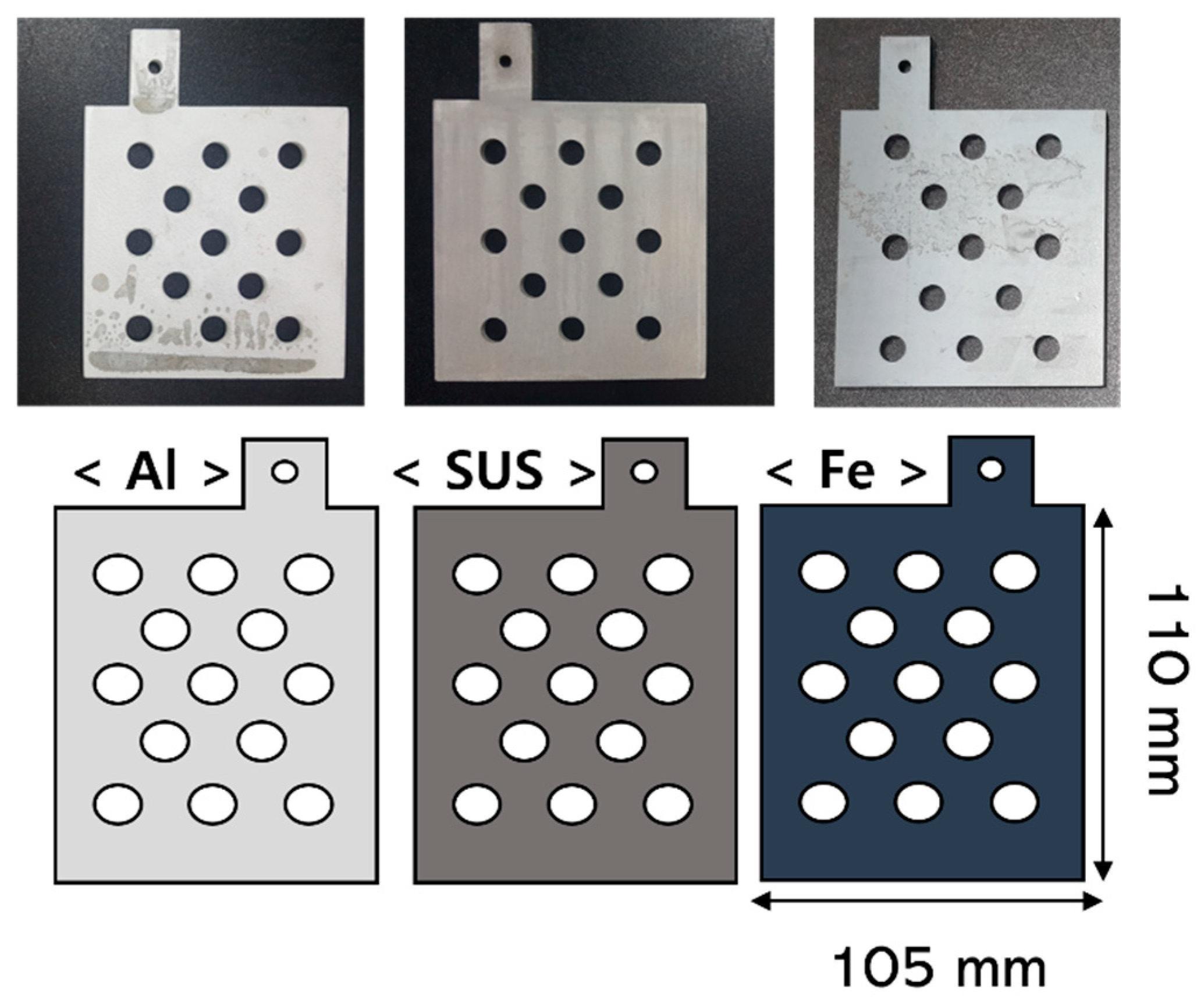
The electrodes used in this study were fabricated from Al, SUS, and Fe, with dimensions of 105 mm (W) × 110 mm (L) × 5 mm (H), similar to those of the turning scraps generated during metalworking processes. To eliminate regions with limited solution exchange and promote smooth circulation of the solution, the electrodes were perforated at regular intervals, as shown in Figure 1 [20].
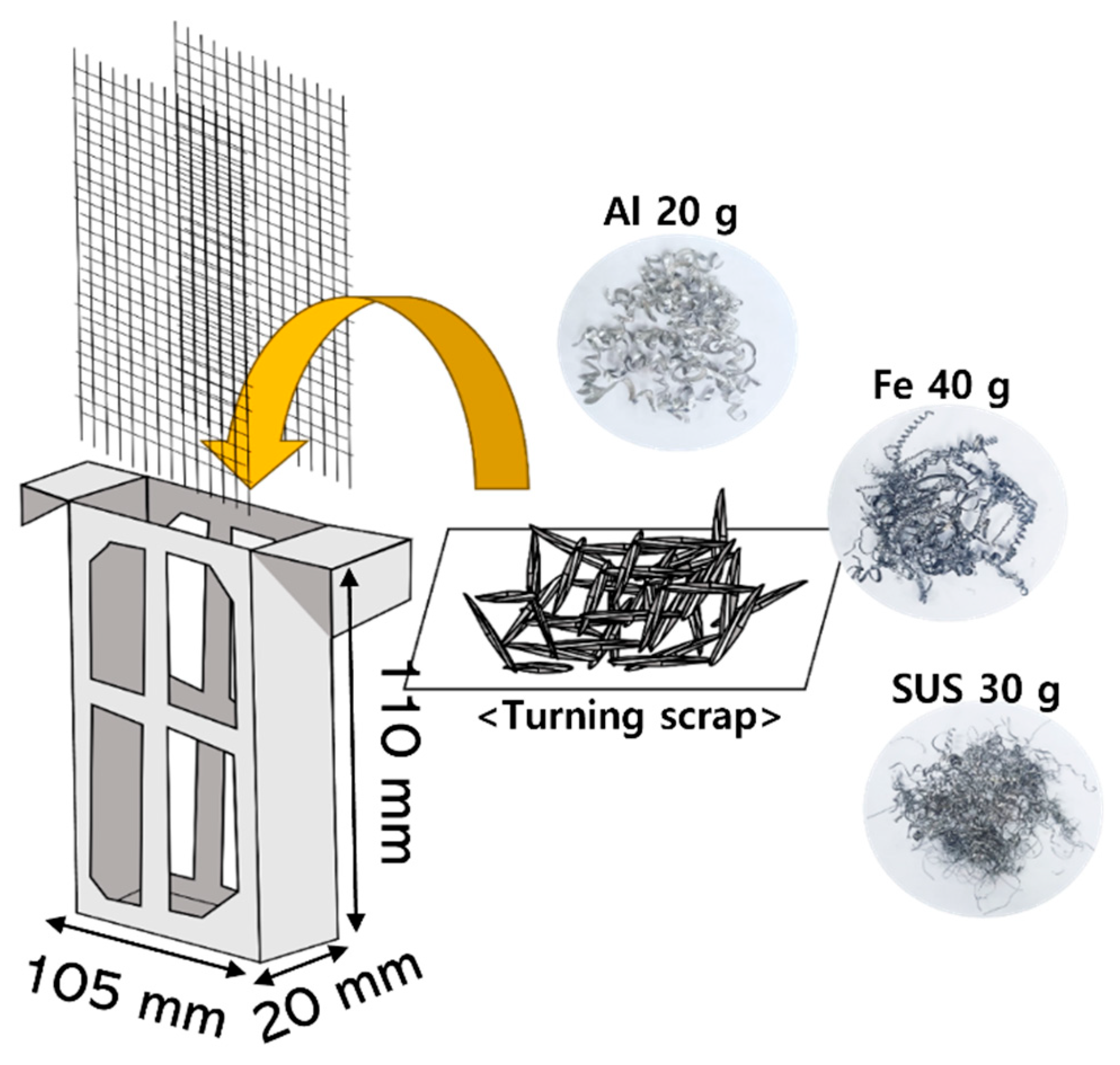
To employ turning scrap as the anode, a cage made of 1T-thick stainless steel with dimensions of 105 mm (W) × 20 mm (L) × 110 mm (H) was fabricated to contain the scrap (Figure 2). Considering the differences in material density and scrap morphology, the amount of each metal scrap was determined by filling the cage with an equivalent volumetric capacity rather than on a fixed mass basis. Consequently, Al, SUS, and Fe scraps were loaded at 20, 30, and 40 g, respectively, corresponding to fully packed conditions within the cage. This approach was adopted to ensure a comparable effective electrode volume and contact area during the electrochemical operation.

2.1.4. Electrolysis Apparatus

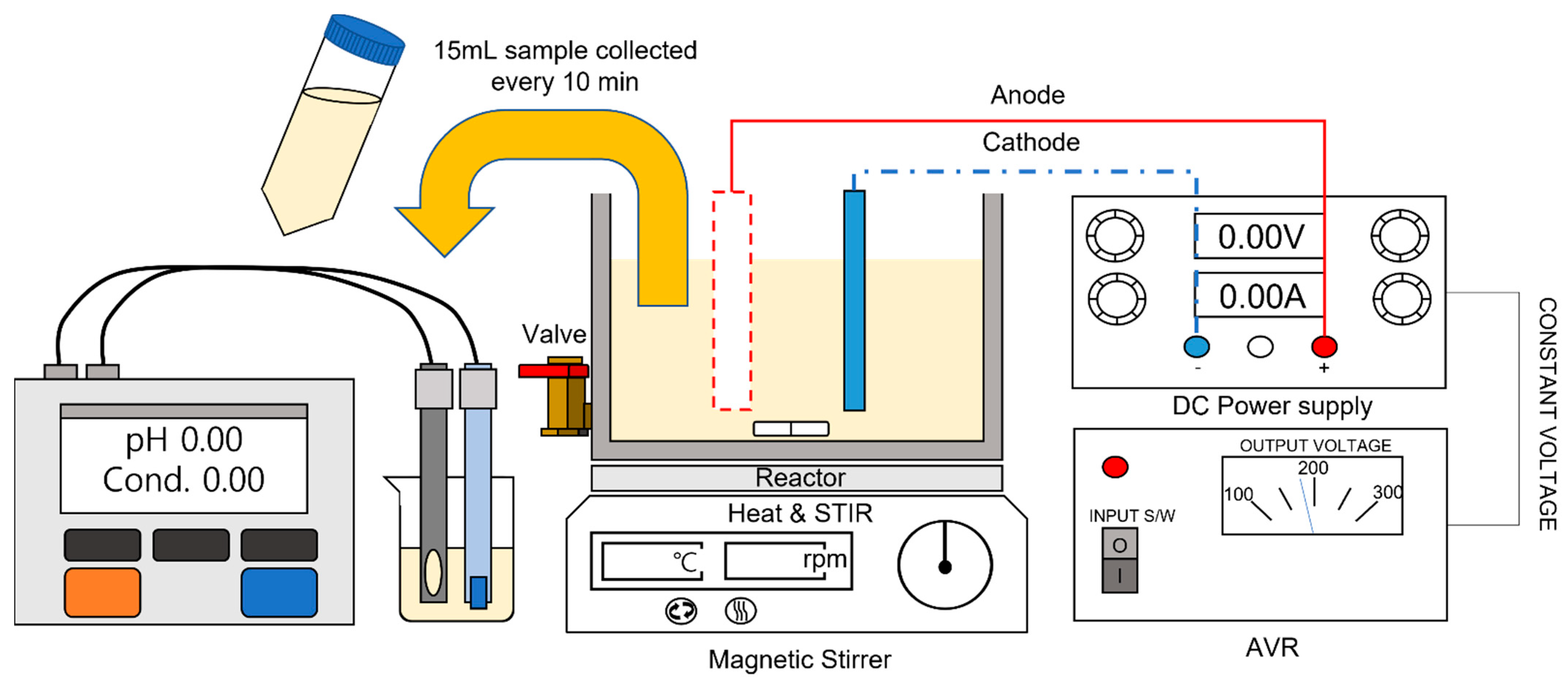
A schematic of the experimental setup used in this study is shown in Figure 3. The reactor containing the sample was constructed of 10 mm-thick acrylic with internal dimensions of 113 mm (W) × 117 mm (L) × 150 mm (H), and a valve was installed at the bottom of the reactor to facilitate periodic sampling. A Direct Current (DC) power supply was used to apply a constant current to the system, and an automatic voltage regulator was installed to prevent voltage fluctuations from the Alternating Current (AC) power source.
A magnetic stirrer equipped with a magnetic bar was used to maintain a homogeneous concentration of the solution throughout the experiment.

2.2. Experimental Conditions and Methods

2.2.1. Experimental Conditions

The fixed and variable parameters used in this study are listed in Table 3. In each experiment, 1000 mL of synthetic wastewater was introduced into the batch-type reactor, and six 15 mL samples were collected at 10 min intervals during 60 min of operation. All experiments were conducted in triplicate, and the reported values represent the median of the experimental results. Error bars shown in the figures indicate the corresponding variability. A single SUS electrode was installed as the cathode in the electrochemical treatment system; whereas, Al, SUS, and Fe electrodes, or their corresponding turns, were employed as the anode, depending on the experimental conditions. The distance between the electrodes was fixed at 40 mm. The system was operated under constant-current (galvanostatic) conditions, with a fixed current of 0.8 A applied throughout the experiments. The applied current of 0.8 A was selected based on preliminary tests performed under monopolar operating conditions, taking into account the voltage limitation of the DC power supply (0–60 V). Several current levels were evaluated in advance to ensure stable galvanostatic operation without exceeding the allowable voltage range across different electrode materials and experimental conditions. Based on these preliminary evaluations, a current of 0.8 A was determined to be suitable and was therefore adopted as the fixed operating condition throughout this study. To minimize experimental error resulting from electrode contamination after each run, the electrodes were immersed in a mixed acid solution (containing > 10% sulfuric acid and nitric acid) for ≥12 h. The electrodes were then thoroughly rinsed with distilled water and dried prior to reuse.

2.2.2. Measurement Instruments and Methods

The CODCr and TOC removal efficiencies and the SEC for CODCr removal were evaluated under various operating conditions, including different electrode materials, applied current, electrolyte addition, aeration, and initial pH. Detailed models and manufacturers of the equipment used are summarized in Table 4.
CODCr was analyzed using a water analyzer based on the spectrophotometric method [21], and TOC was analyzed using the non-purgeable organic carbon method [22].
The SEC for CODCr removal was calculated using Equation (1) [23,24]:
SEC = V I t C O D   ( kWh / kg- COD Cr ) ,
where V is the voltage across the electrodes (V); I is the current (A); t is time; and Δ C O D is the amount of COD removed.

3. Results and Discussion

3.1. Effect of Anode Materials

This section examines how anodic material influences pollutant removal and energy consumption under monopolar conditions (0.8 A, no supporting electrolyte), using a SUS electrode as the cathode. Both electrodes (Al, Fe, SUS) and their corresponding turning scraps were evaluated to identify material-dependent trends and performance gaps.

3.1.1. Effect of Anode Material on CODCr Removal

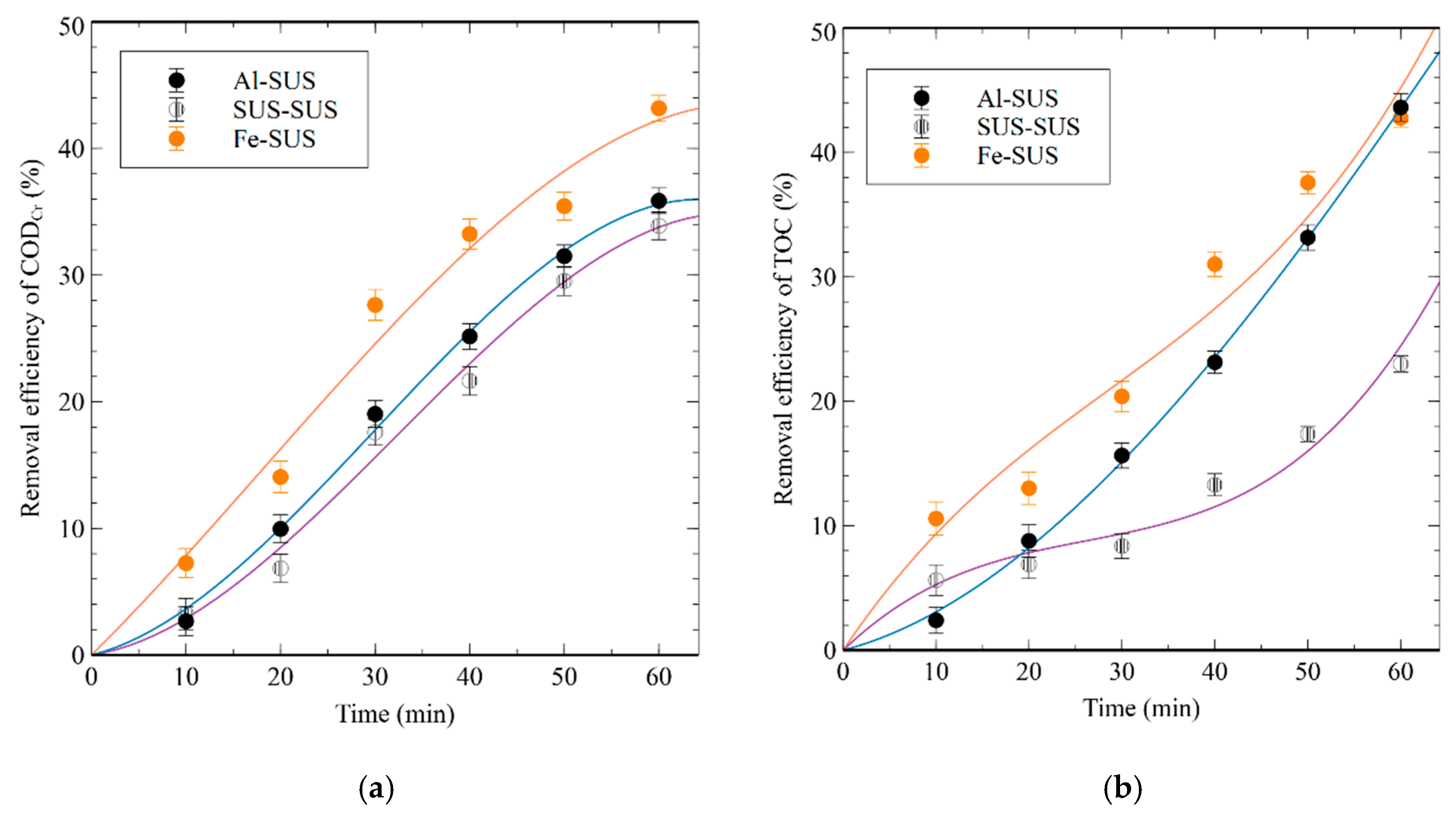
As shown in Figure 4a, the Fe electrode exhibited the highest removal efficiency (43.18%), followed by the Al electrode (35.87%), whereas the SUS electrode exhibited the lowest value (33.89%) after 60 min.
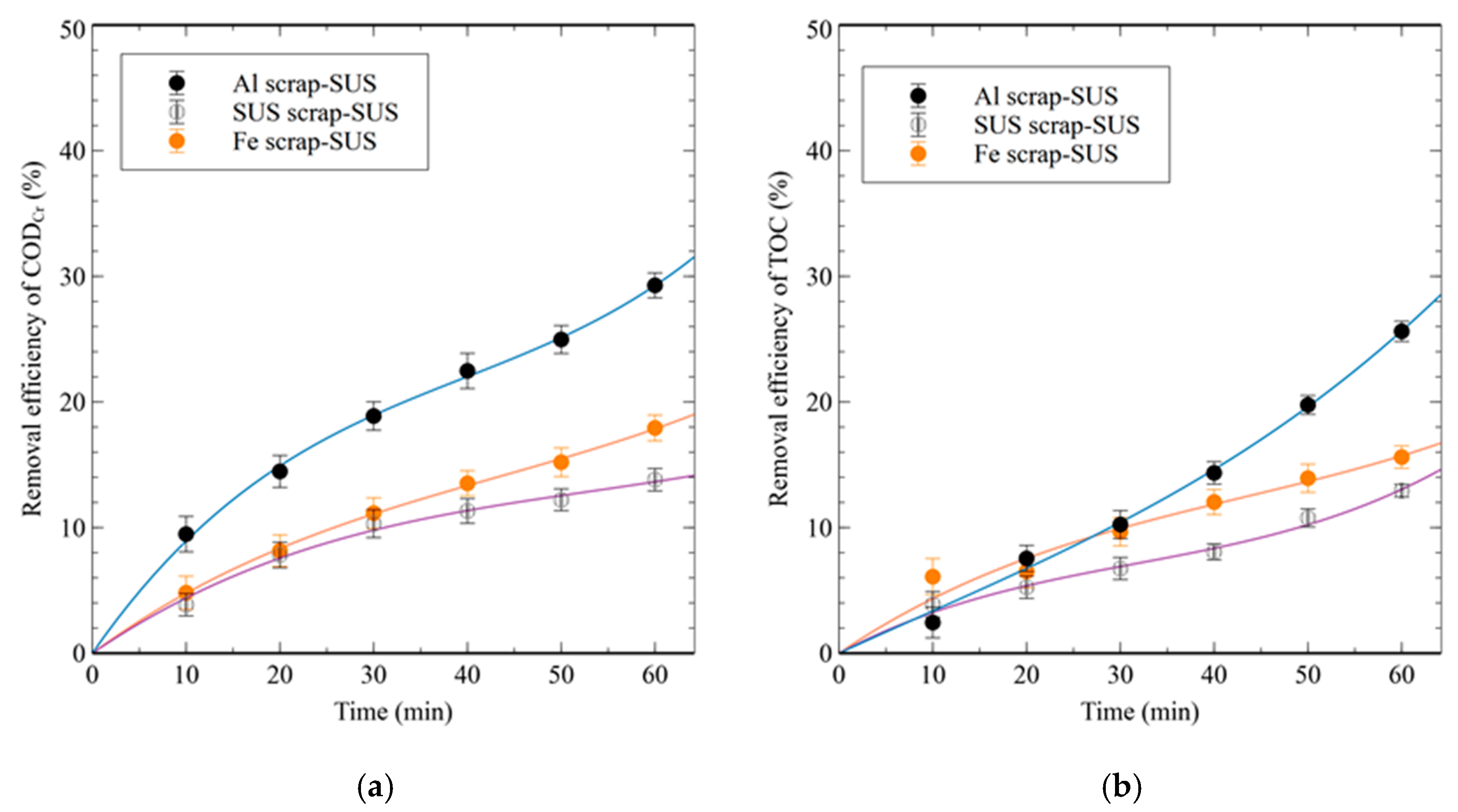
As shown in Figure 5a The use of turning scraps as anodes led to lower removal efficiencies than those achieved with conventional electrodes. Among the scrap materials, Al scrap (20 g/L) showed the highest CODCr removal efficiency (29.28%), while Fe scrap (40 g/L) and SUS scrap (30 g/L) reached 17.93% and 13.81%, respectively.
The consistent underperformance of SUS in both configurations suggests that its limited anodic dissolution reduced the electrocoagulation contribution to pollutant removal. These findings align with previous reports indicating superior removal performance of soluble Al-based anodes compared to stainless-steel systems under similar conditions [25].

3.1.2. Effect of Anode Material on TOC Removal

As shown in Figure 4b, A comparable material-dependent trend was observed for TOC removal. Under conventional electrode conditions, Fe and Al electrodes exhibited similar and relatively high efficiencies (43.78% and 43.62%, respectively), whereas SUS exhibited the lowest value (22.99%) after 60 min.
As shown in Figure 5b, Among the scrap materials, Al scrap (20 g/L) showed the highest TOC removal efficiency (25.62%), while Fe scrap (40 g/L) and SUS scrap (30 g/L) reached 15.61% and 12.94%, respectively.
The close correspondence between CODCr and TOC trends indicates that the influence of anodic material is not pollutant-specific but is instead governed by fundamental electrochemical dissolution behavior and coagulant generation capacity.

3.1.3. Effect of Anode Material on SEC

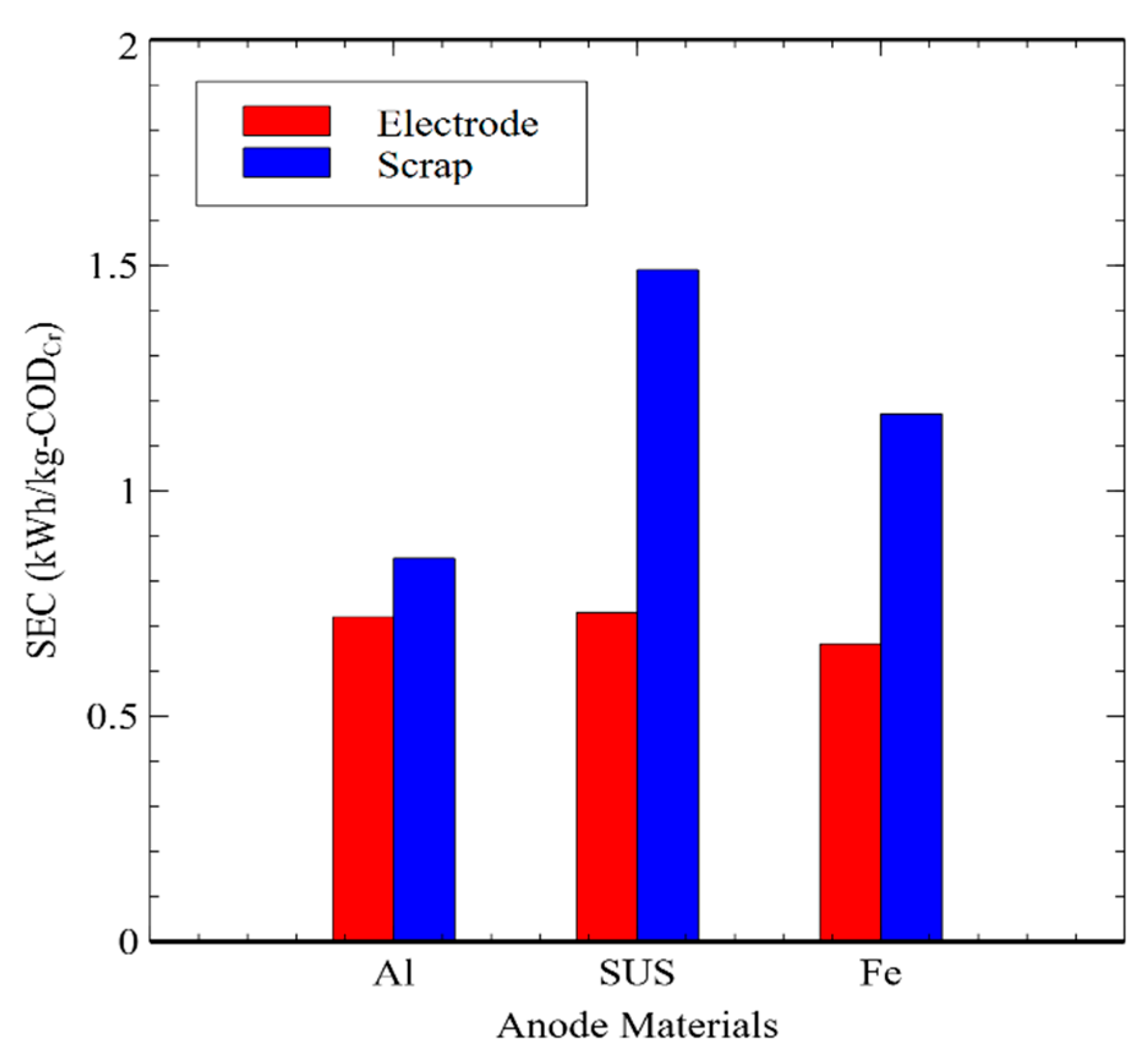
As shown in Figure 6, material-dependent differences were also evident in terms of SEC. The Fe electrode exhibited the highest energy efficiency (0.66 kWh/kg-CODCr) at the final reaction time of 60 min. In contrast, the Al electrode showed 0.72 kWh/kg-CODCr efficiency, and the SUS electrode showed the lowest efficiency (0.73 kWh/kg-CODCr).
For scrap-based anodes, SEC values increased for all materials, reflecting the reduced electrochemical efficiency associated with the packed scrap configuration. Nevertheless, Al scrap (20 g/L) demonstrated the most favorable SEC among the scrap materials (0.85 kWh/kg-CODCr) compared to 1.19 and 1.49 kWh/kg-CODCr for Fe scrap (40 g/L) and SUS scrap (30 g/L), respectively.
Under both electrode and scrap conditions, soluble materials such as Al and Fe exhibited higher removal efficiencies than the insoluble SUS. A similar trend was reported in a previous study [26,27], which also found that under conditions with an insoluble titanium (Ti) electrode as the cathode, the use of an Al anode resulted in higher energy efficiency compared to that using an SUS anode.
From an energy-efficiency perspective, it should be noted that SEC is inherently linked to CODCr removal, as defined in Equation (1) presented in Section 2.2.2. Accordingly, although the absolute SEC value obtained for Al scrap may appear relatively high, its lower SEC compared to other scrap materials reflects a more favorable trade-off between pollutant removal efficiency and energy consumption under identical operating conditions.
To place these findings in context, the comparison between conventional electrodes and scrap-based anodes under monopolar operating conditions consistently demonstrated that scrap anodes exhibited lower baseline performance than their conventional electrode counterparts under identical operating conditions, not only in terms of CODCr removal but also with respect to TOC removal and SEC. Accordingly, subsequent experiments such as electrolyte addition, were intentionally designed to enhance the treatment efficiency of scrap-based anodes rather than to repeat direct performance comparisons with conventional electrodes.

3.2. Effect of Electrolyte Addition

This section investigates the effects of supporting electrolyte addition under constant-current conditions (0.8 A) on CODCr and TOC removal, operating voltage, and SEC in scrap-based electrochemical systems. Particular emphasis is placed on elucidating how changes in solution conductivity influence both treatment efficiency and energy performance.

3.2.1. Effect of Electrolyte Addition on CODCr Removal

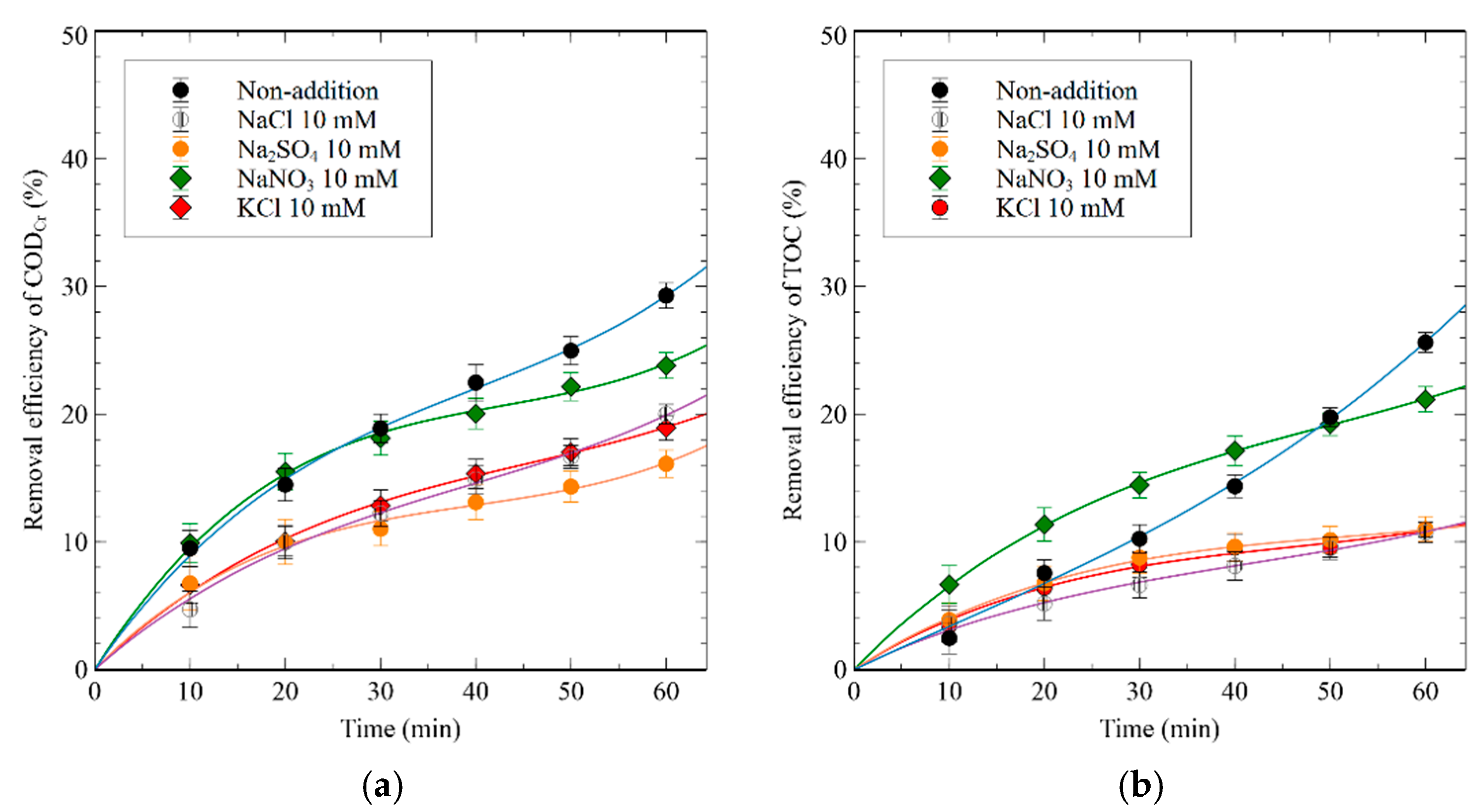
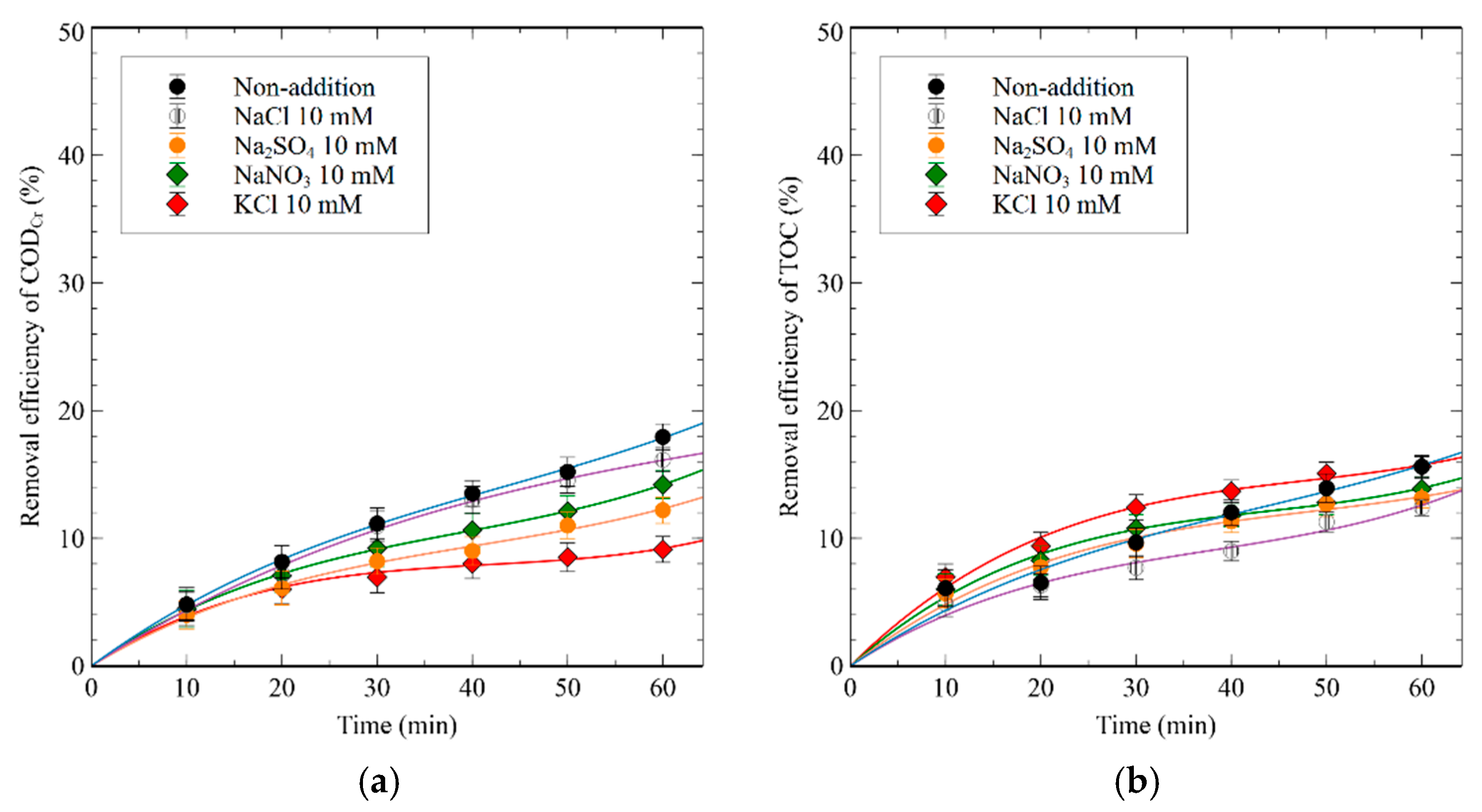
As shown in Figure 7a, when comparing the CODCr removal efficiency using Al scrap (20 g/L) as the anode, the non-addition exhibited the highest removal efficiency (29.28%) after 60 min. The addition of 10 mM NaNO3, NaCl, KCl and Na2SO4 reduced efficiencies of 23.80%, 20.00%, 18.93%, and 18.11%, respectively.
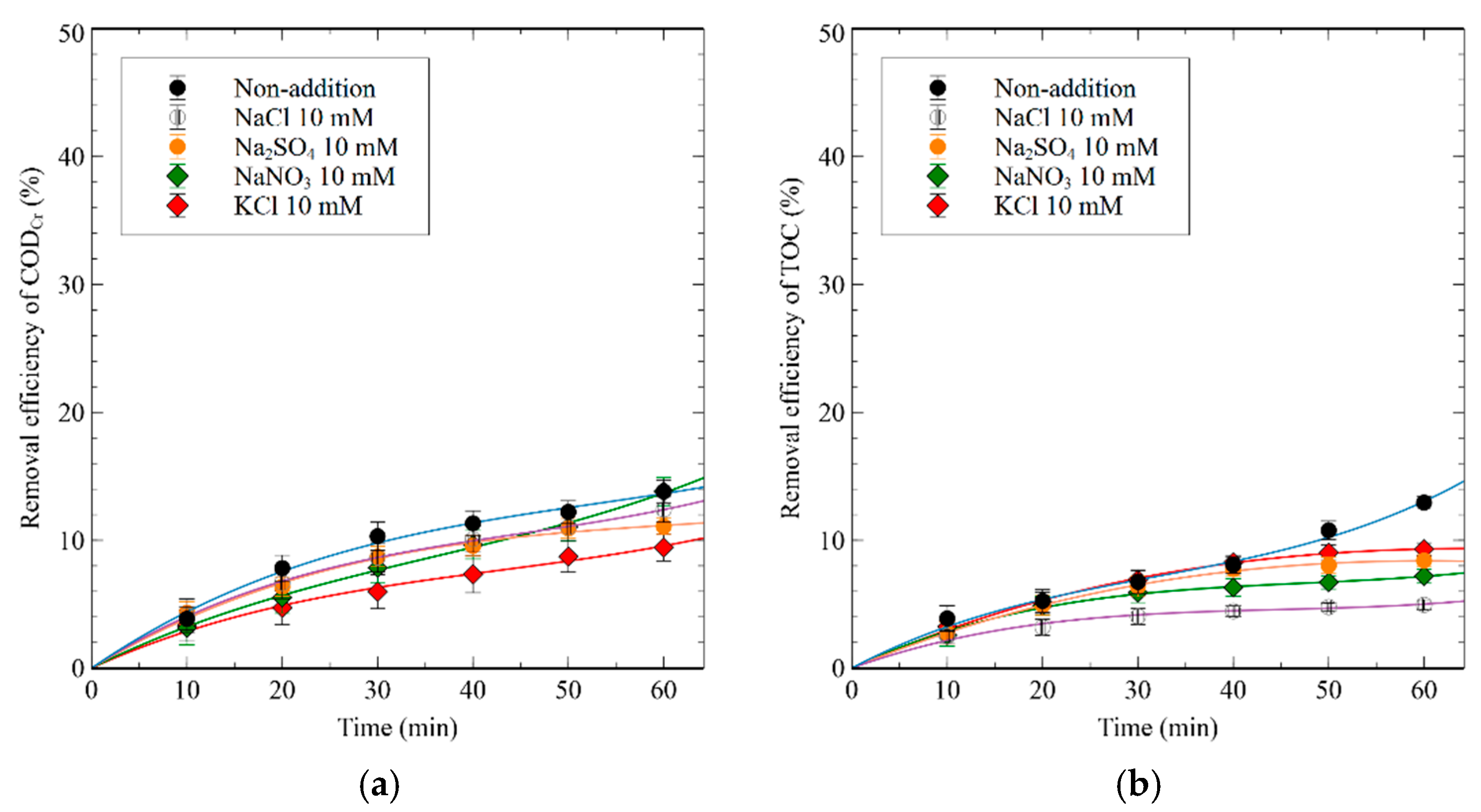
A similar tendency was observed (Figure 8a). Using SUS scrap (30 g/L) as the anode, non-addition and 10 mM NaNO3 exhibited the highest removal efficiency (13.81%). The addition of 10 mM NaCl, Na2SO4, KCl resulted in lower values of 12.40%, 11.08%, and 9.44%, respectively.
Figure 9a shows that using Fe scrap (40 g/L) as the anode, no addition exhibited the highest removal efficiency (17.93%). The addition of 10 mM NaCl, NaNO3, Na2SO4, KCl resulted in lower values of 16.14%, 14.20%, 12.20%, and 9.12%, respectively.

3.2.2. Effect of Electrolyte Addition on TOC Removal

A comparable trend was observed for TOC removal. As shown in Figure 7b, when comparing the TOC removal efficiency using Al scrap (20 g/L) as the anode, non-addition exhibited the highest efficiency (25.62%) at a final reaction time. The addition of 10 mM NaNO3, Na2SO4, KCl, NaCl resulted in lower values of 21.16%, 11.00%, 10.96%, and 10.73%, respectively.
A similar tendency was observed (Figure 8b), using SUS scrap (30 g/L) as the anode, non-addition exhibited the highest efficiency (12.94%). The addition of 10 mM KCl, Na2SO4, NaNO3, NaCl resulted in lower values of 9.29%, 8.41%, 7.19%, and 4.95%, respectively.
Figure 9b shows that using Fe scrap (40 g/L) as the anode, non-addition and 10 mM KCl exhibited the highest efficiency (15.61%). The addition of 10 mM NaNO3, Na2SO4, NaCl resulted in lower values of 13.86%, 13.13%, and 12.41%, respectively.
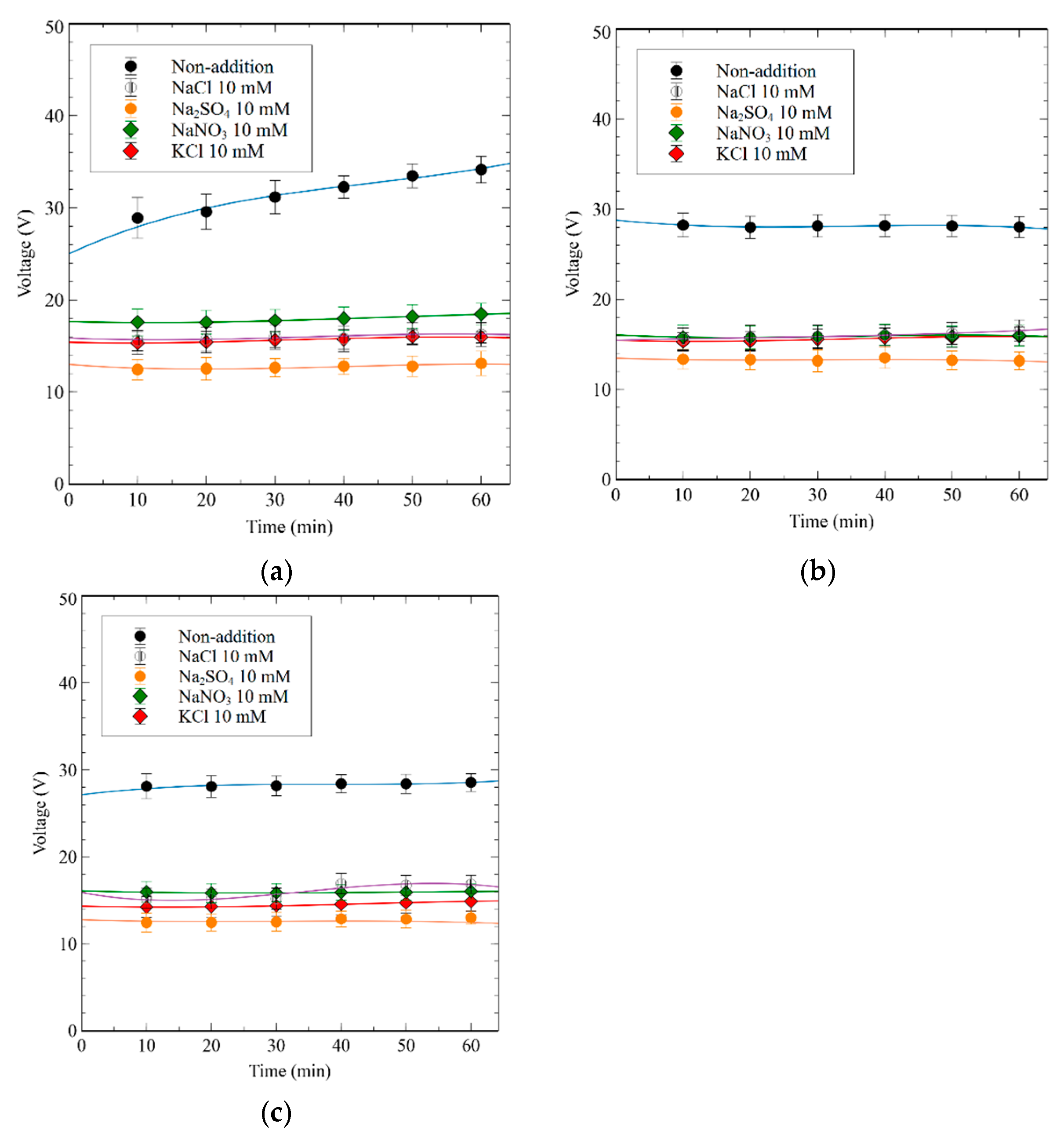
The decrease in CODCr and TOC removal efficiencies observed upon electrolyte addition can be explained by changes in electrochemical operating conditions. As electrolyte concentration increased, solution electrical conductivity (EC) also increased (Figure 10), leading to a reduction in the operating voltage required to maintain the imposed constant current.
The lower operating voltage may have been insufficient to provide the activation overpotential necessary to disrupt the passivation layer on the scrap anode [28]. Consequently, anodic dissolution and coagulant generation were limited, resulting in reduced pollutant removal efficiency. Similar voltage-dependent limitations have been reported previously for Al and Fe anodes, where insufficient voltage suppressed anodic dissolution and treatment performance [29,30].
Moreover, previous studies have demonstrated that voltage decreases with increasing wastewater conductivity under constant-current conditions [23], and have suggested that electrocoagulation systems may operate more efficiently under constant-voltage control rather than constant-current operation.

3.2.3. Effect of Electrolyte Addition on SEC

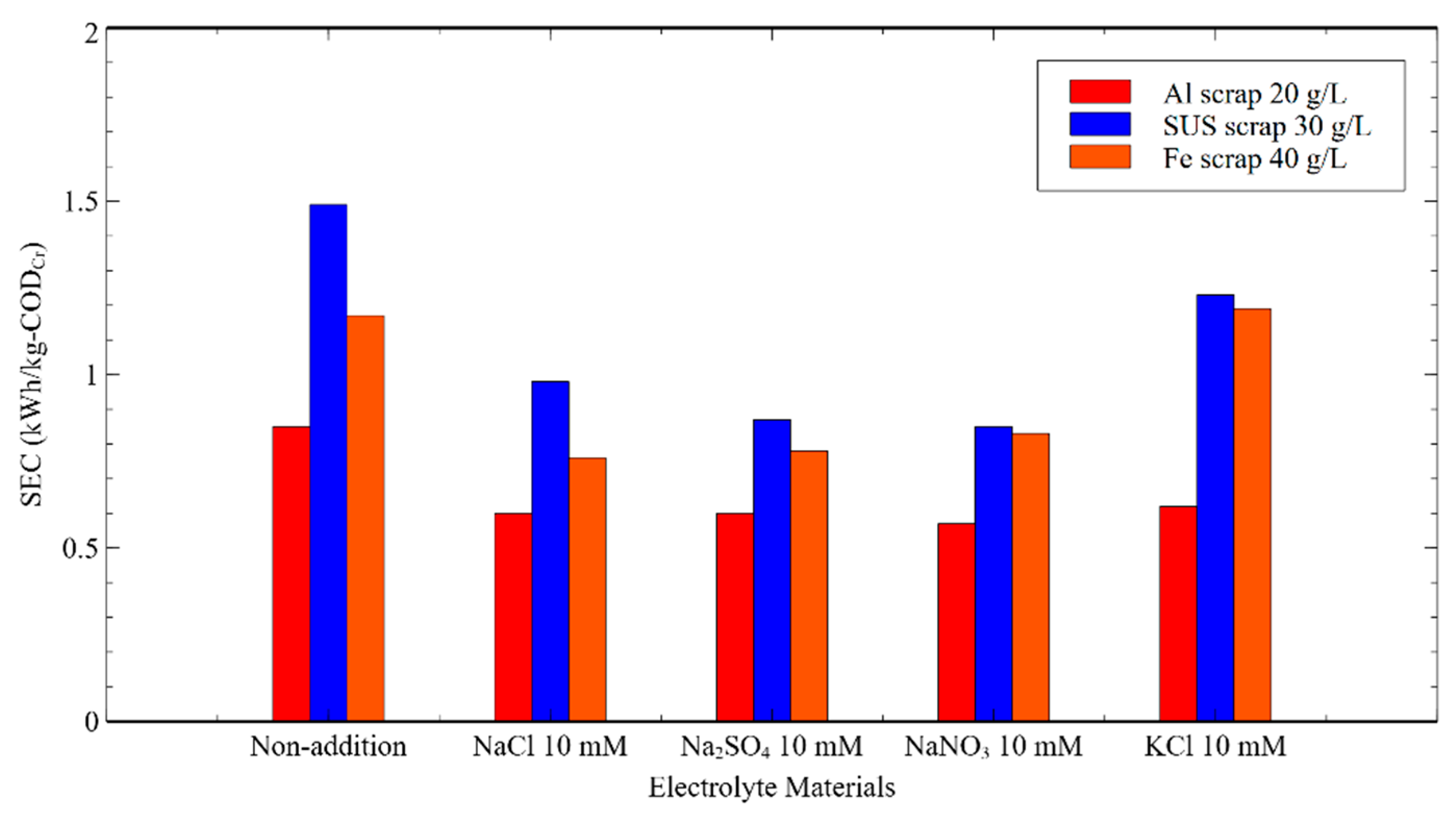
In contrast to removal efficiency, electrolyte addition significantly improved energy efficiency under constant-current operation. As shown in Figure 11, the SEC for CODCr removal was compared under the condition using Al scrap (20 g/L) as the anode, 10 mM NaNO3 exhibited the highest energy efficiency (0.57 kWh/kg-CODCr) at the final reaction time. In contrast, 10 mM NaCl and 10 mM Na2SO4 showed efficiency of 0.60 kWh/kg-CODCr, 10 mM KCl showed efficiency of 0.62 kWh/kg-CODCr, and non-addition showed the lowest efficiency (0.85 kWh/kg-CODCr).
A similar tendency was observed (Figure 11), using SUS scrap (30 g/L) as the anode, and 10 mM NaNO3 exhibited the highest energy efficiency (0.85 kWh/kg-CODCr) at the final reaction time of 60 min. In contrast, 10 mM Na2SO4 showed efficiency of 0.87 kWh/kg-CODCr, 10 mM NaCl showed efficiency of 0.98 kWh/kg-CODCr, 10 mM KCl showed efficiency of 1.23 kWh/kg-CODCr, and non-addition showed the lowest efficiency (1.49 kWh/kg-CODCr).
Figure 11 shows that, using Fe scrap (40 g/L) as the anode, and 10 mM NaCl exhibited the highest energy efficiency (0.76 kWh/kg-CODCr) at the final reaction time of 60 min. In contrast, 10 mM Na2SO4 showed efficiency of 0.78 kWh/kg-CODCr, 10 mM NaNO3 showed efficiency of 0.83 kWh/kg-CODCr, 10 mM KCl showed efficiency of 1.17 kWh/kg-CODCr, and non-addition showed the lowest efficiency (1.19 kWh/kg-CODCr).
Although the CODCr and TOC removal efficiencies were the highest under non-addition conditions across all anode types, the SEC exhibited an opposite trend, with electrolyte-added conditions showing improved energy efficiency. Notably, under Al and SUS scrap conditions, NaNO3 addition resulted in the lowest SEC among the electrolytes tested, indicating more efficient energy utilization under these specific conditions. This behavior can be attributed to the increased ionic conductivity provided by electrolyte addition, which reduces ohmic resistance between the electrodes and improves energy efficiency [31]. However, it should be noted that the favorable SEC observed with NaNO3 was evaluated in a comparative context, and the potential environmental implications of nitrate-based electrolytes must be carefully considered for practical applications.

3.3. Effect of Aeration

Based on the results presented in Section 3.1 and Section 3.2, Al scrap (20 g/L) was selected as the anode for the aeration experiments. In this section, the effect of aeration on the removal efficiency performance was evaluated under constant-current conditions (0.8 A) using a SUS cathode and the selected Al scrap anode without supporting electrolytes.

3.3.1. Effect of Aeration Addition on CODCr Removal

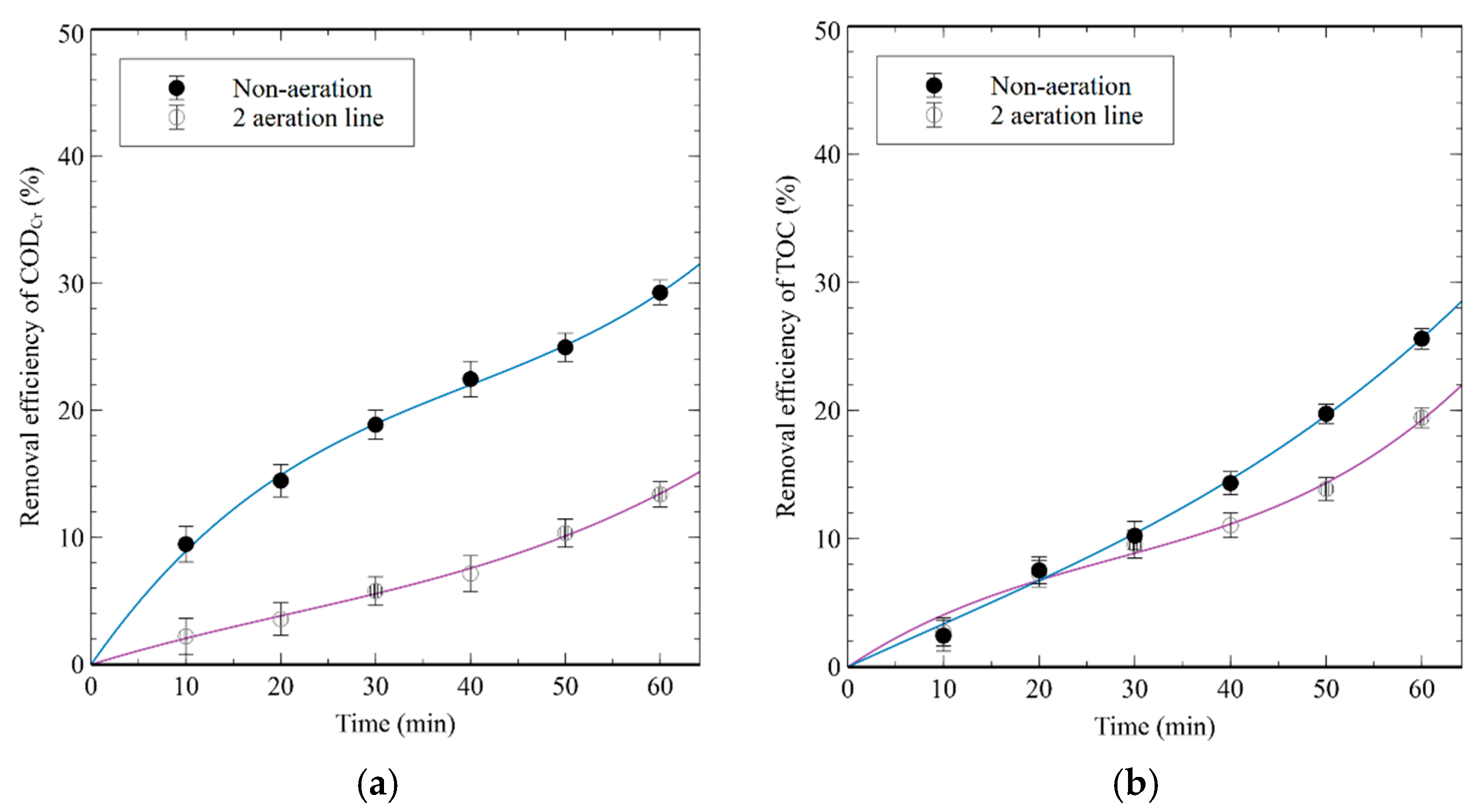
As shown in Figure 12a, when comparing the CODCr removal efficiencies using Al scrap (20 g/L) as the anode, non-aeration exhibited the highest efficiency (29.28%) at a final reaction time. In contrast, the 2 aeration line showed the lowest efficiency (13.40%).

3.3.2. Effect of Aeration on TOC Removal

As shown in Figure 12b, when comparing the TOC removal efficiencies using Al scrap (20 g/L) as the anode, non-aeration exhibited the highest efficiency (25.62%). In contrast, the two aeration lines exhibited the lowest efficiency (19.45%). Consequently, it was confirmed that the removal efficiencies of both CODCr and TOC decreased under aerated conditions. This phenomenon may have been attributed to additional hydrodynamic disturbances introduced during aeration, which could have destabilized the coagulated flocs [32]. A similar trend was reported in a previous study [33], in which a decrease in COD removal efficiency was observed when agitation and aeration were simultaneously applied. In addition, it was previously reported that COD concentrations, which initially decreased, subsequently increased under aerated conditions [34]. This behavior is attributed to the destabilization and breakup of the coagulated flocs induced by the air bubbles generated during the aeration process.

3.3.3. Effect of Aeration on SEC

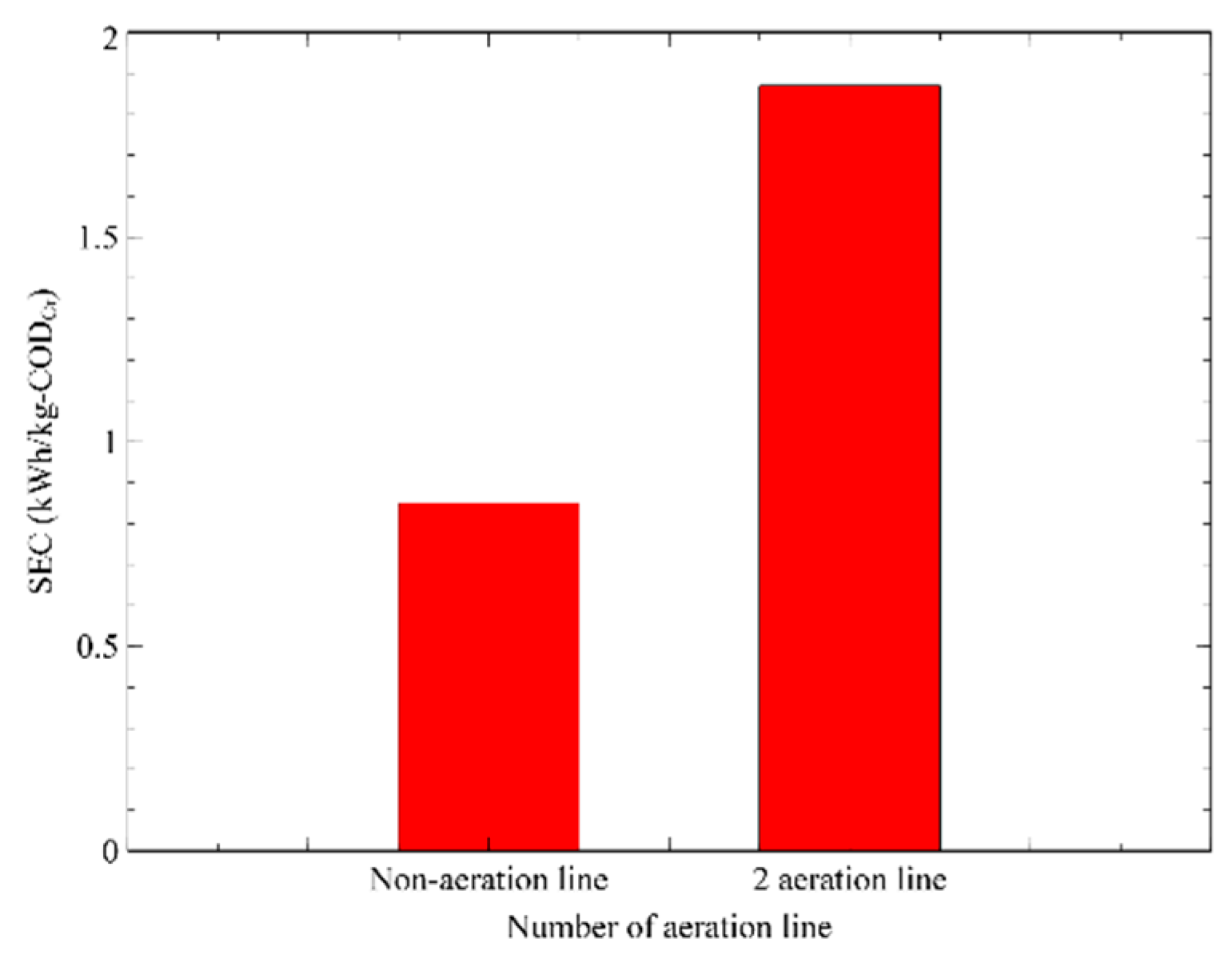
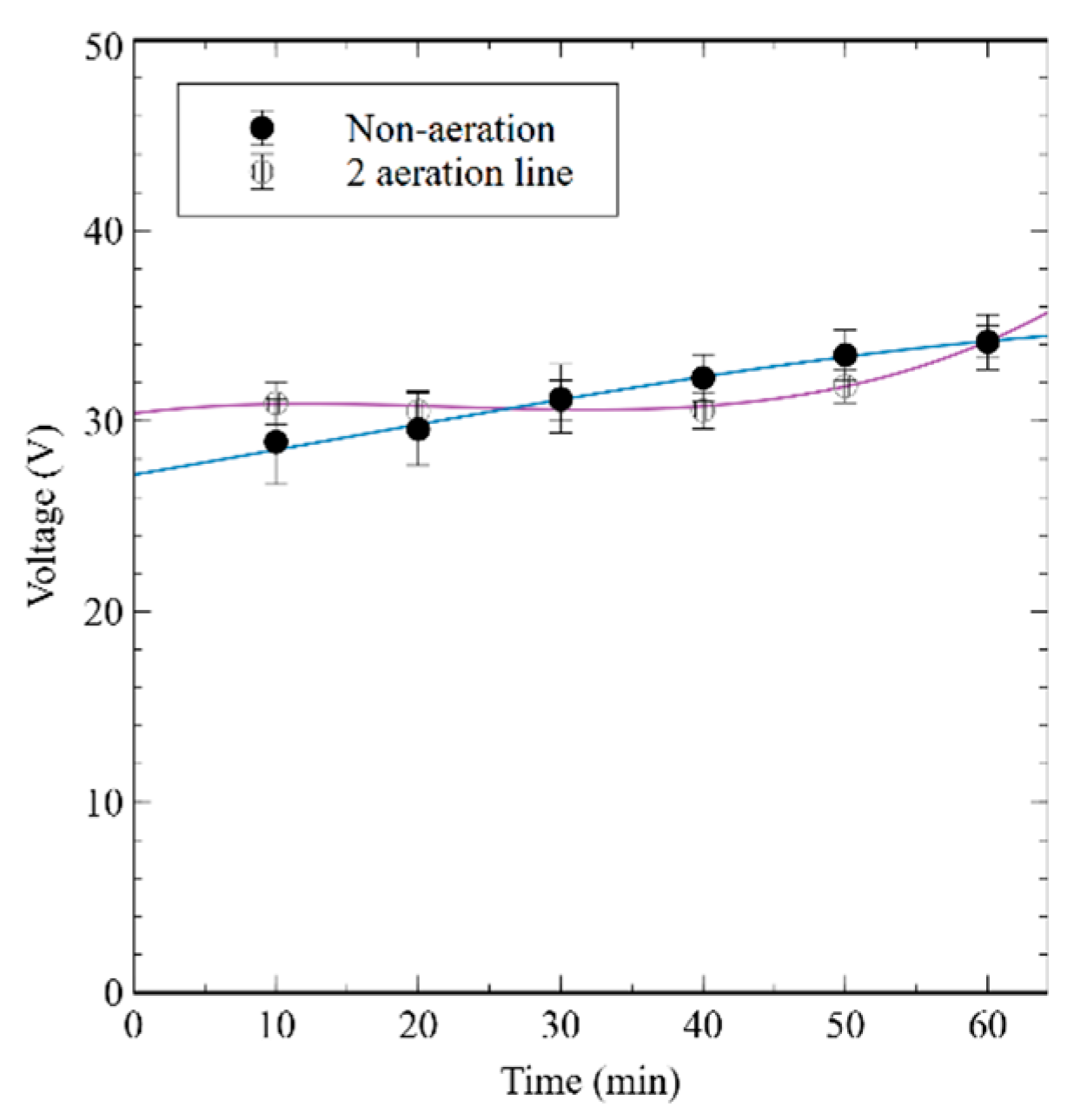
As shown in Figure 13, the SEC for CODCr removal was compared under the condition using Al scrap (20 g/L) as the anode, and non-aeration exhibited the highest energy efficiency (0.85 kWh/kg-CODCr) at the final reaction time. In contrast, the two aeration lines showed the lowest efficiency (1.87 kWh/kg-CODCr). However, the voltage profiles over time were nearly identical under the same applied current (Figure 14). This suggested that the increased specific energy consumption was not due to an increase in the overpotential or ohmic resistance caused by air bubbles, as reported previously [35]. Consistent with the explanation provided in Section 3.3.2, this was attributed to the destruction of the coagulated flocs by air bubbles.

3.4. Effect of Initial pH

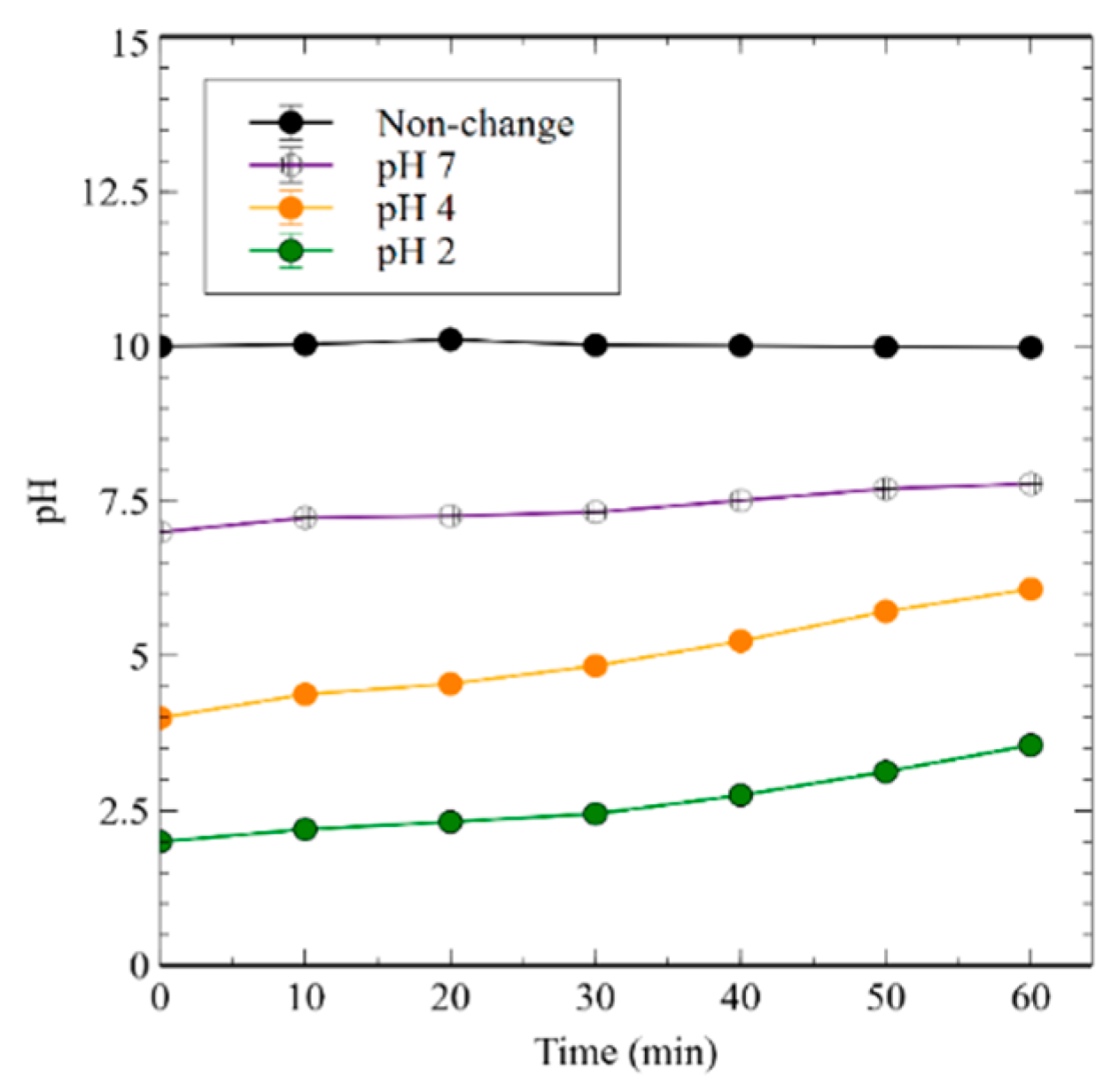
Based on the results presented in Section 3.1 and Section 3.2, Al scrap (20 g/L) was selected as the anode for the aeration experiments. In this section, the effect of the initial pH adjustment on the removal efficiency was evaluated under constant-current conditions (0.8 A) using an SUS cathode and the selected Al scrap anode, without supporting electrolytes. The initial pH was adjusted using NaOH and H2SO4. The temporal variations in solution pH under different initial pH conditions are shown in Figure 15.

3.4.1. Effect of Initial pH on CODCr Removal

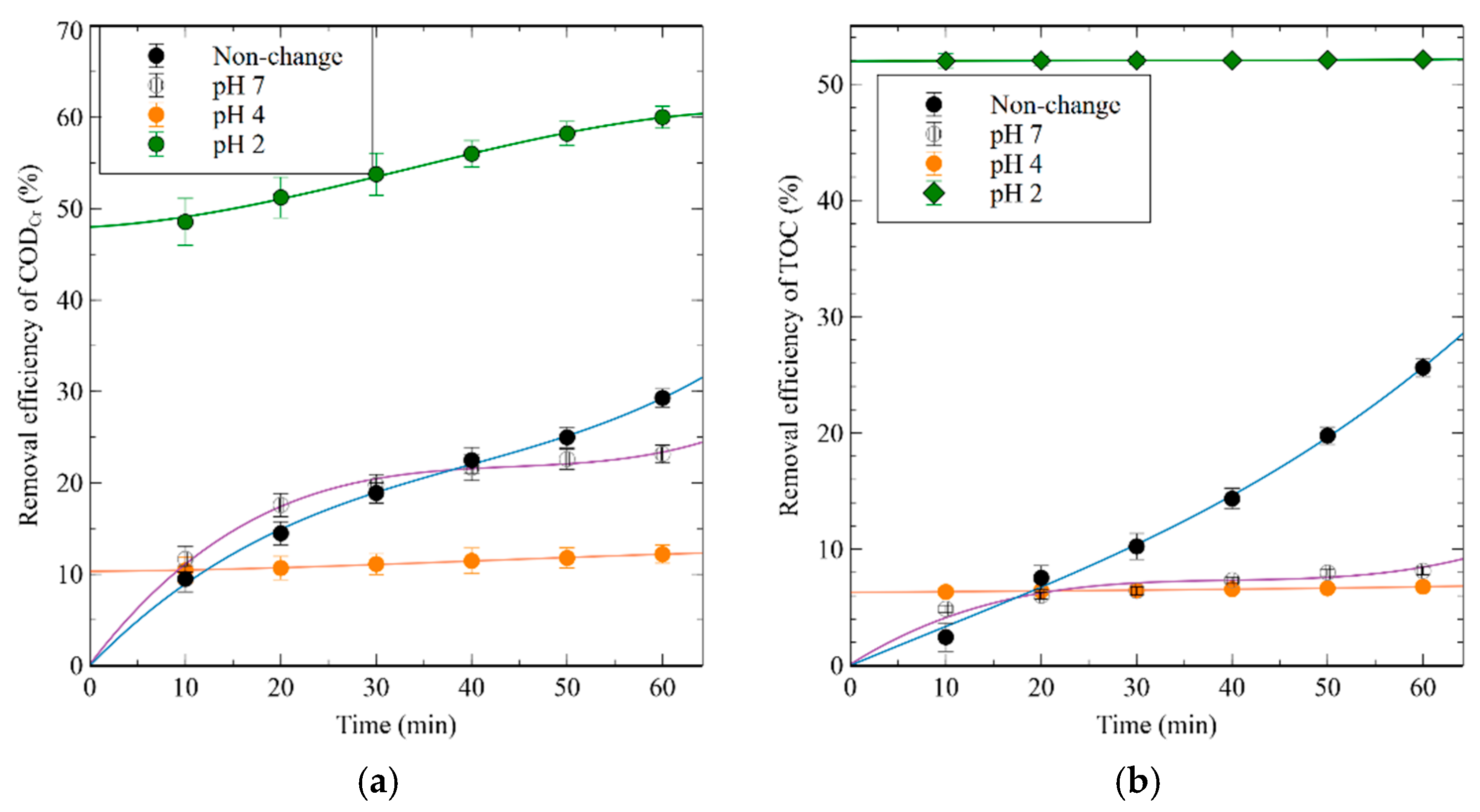
As shown in Figure 16a, when comparing the CODCr removal efficiencies using Al scrap (20 g/L) as the anode, pH 2 exhibited the highest efficiency (60.01%) at a final reaction time. In contrast, the efficiency at pH 10 (no change) was 29.28%, that at pH 7 was 23.15%, and that at pH 4 showed the lowest efficiency (12.19%). However, during the pH adjustment process, CODCr removal efficiencies of 0.15, 10.31, and 47.99% were observed under the pH 7, 4, and 2 conditions, respectively. These results indicated that a substantial portion of CODCr was already removed during the initial pH adjustment process, making it difficult to attribute the subsequent CODCr removal efficiency to the electrochemical treatment.

3.4.2. Effect of Initial pH on TOC Removal

As shown in Figure 16b, when comparing the TOC removal efficiency using Al scrap (20 g/L) as the anode, pH 2 exhibited the highest efficiency (52.11%) at a final reaction time. In contrast, pH 10 showed 25.62% efficiency, pH 7 showed 8.13% efficiency, and pH 4 had the lowest efficiency (12.19%). However, during the pH adjustment process, CODCr removal efficiencies of 0.10, 6.28, and 51.96% were observed for the pH 7, 4, and 2 conditions, respectively. These results indicated that a substantial portion of the TOC had already been removed during the initial pH adjustment process, making it difficult to clearly attribute the subsequent TOC removal efficiency to the electrochemical treatment.
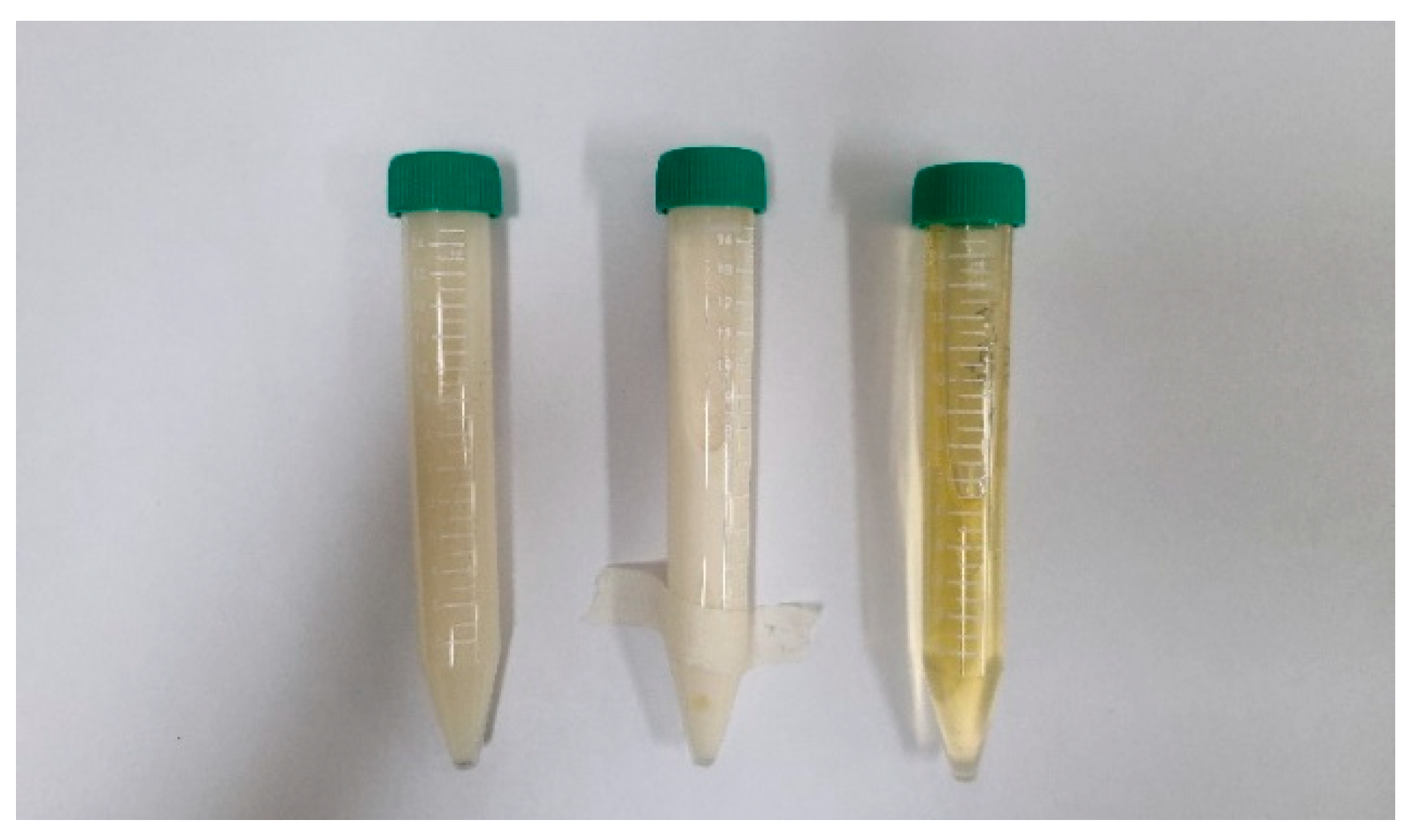
In this regard, both CODCr and TOC were substantially removed under the initial pH 2 adjustment conditions. This behavior is consistent with previously reported emulsion destabilization phenomena during acidification of oil-in-water systems [36,37]. Under strongly acidic conditions, the surface charge of surfactant molecules can be neutralized, leading to a loss of emulsion stability, as visually observed in Figure 17. Consequently, dispersed oil droplets may coalesce and separate from the aqueous phase, contributing to reductions in CODCr and TOC prior to electrochemical treatment. Therefore, the overall removal efficiencies observed after pH adjustment, particularly at pH 2, should be interpreted with caution, as they likely reflect the combined contribution of pH-induced physicochemical destabilization and subsequent electrochemical treatment rather than the effect of electrochemical processes alone.

3.4.3. Effect of Initial pH on SEC

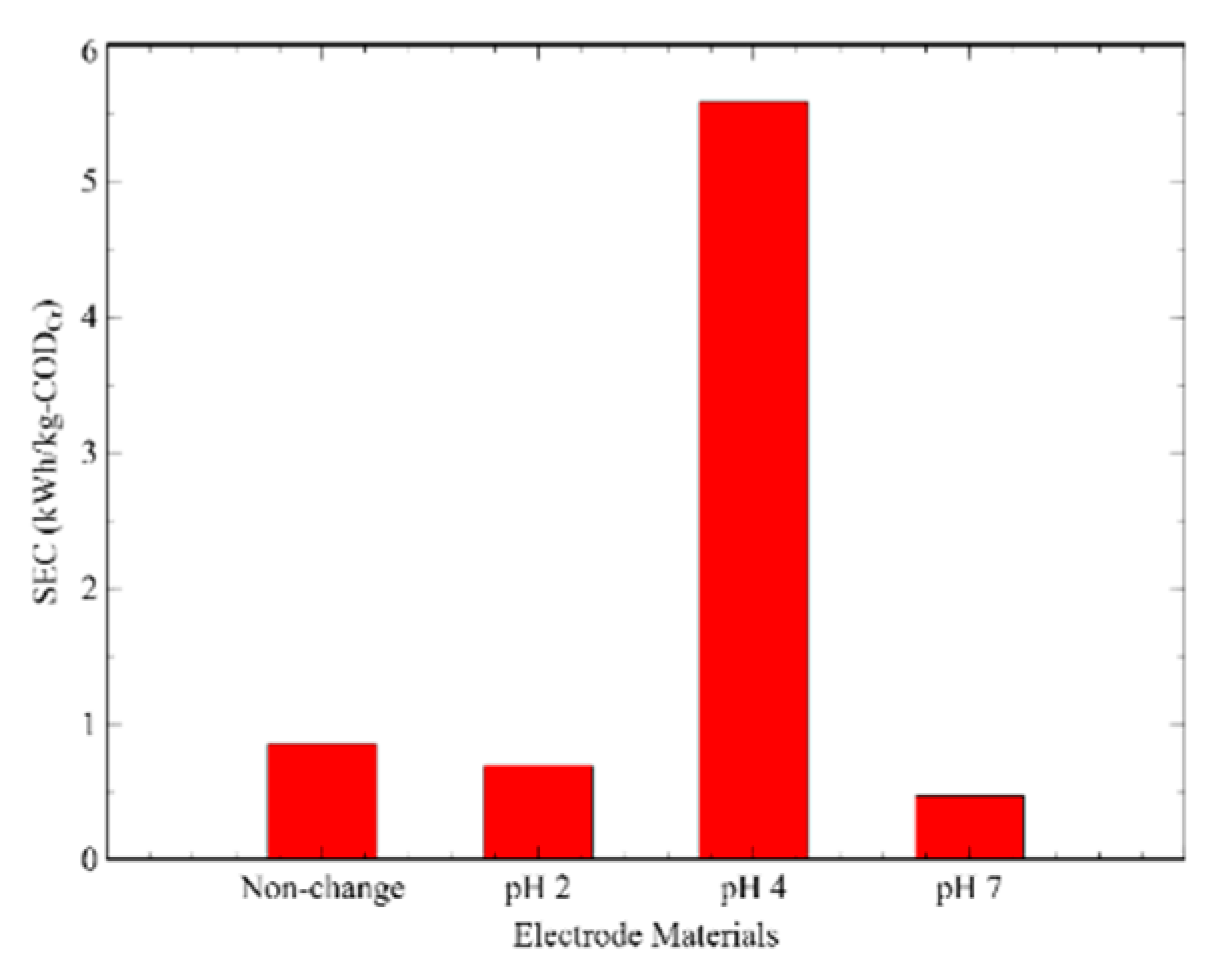
Based on the net CODCr removal achieved during the electrochemical treatment stage, excluding the CODCr removal occurring during the pH adjustment process, the SEC for CODCr removal was evaluated under the condition using Al scrap (20 g/L) as the anode. As shown in Figure 18, pH 7 exhibited the highest energy efficiency (0.47 kWh/kg-CODCr) at the final reaction time. In contrast, pH 2 showed efficiency of 0.69 kWh/kg-CODCr, pH 10 showed efficiency of 0.85 kWh/kg-CODCr, and pH 4 showed the lowest efficiency (5.58 kWh/kg-CODCr).
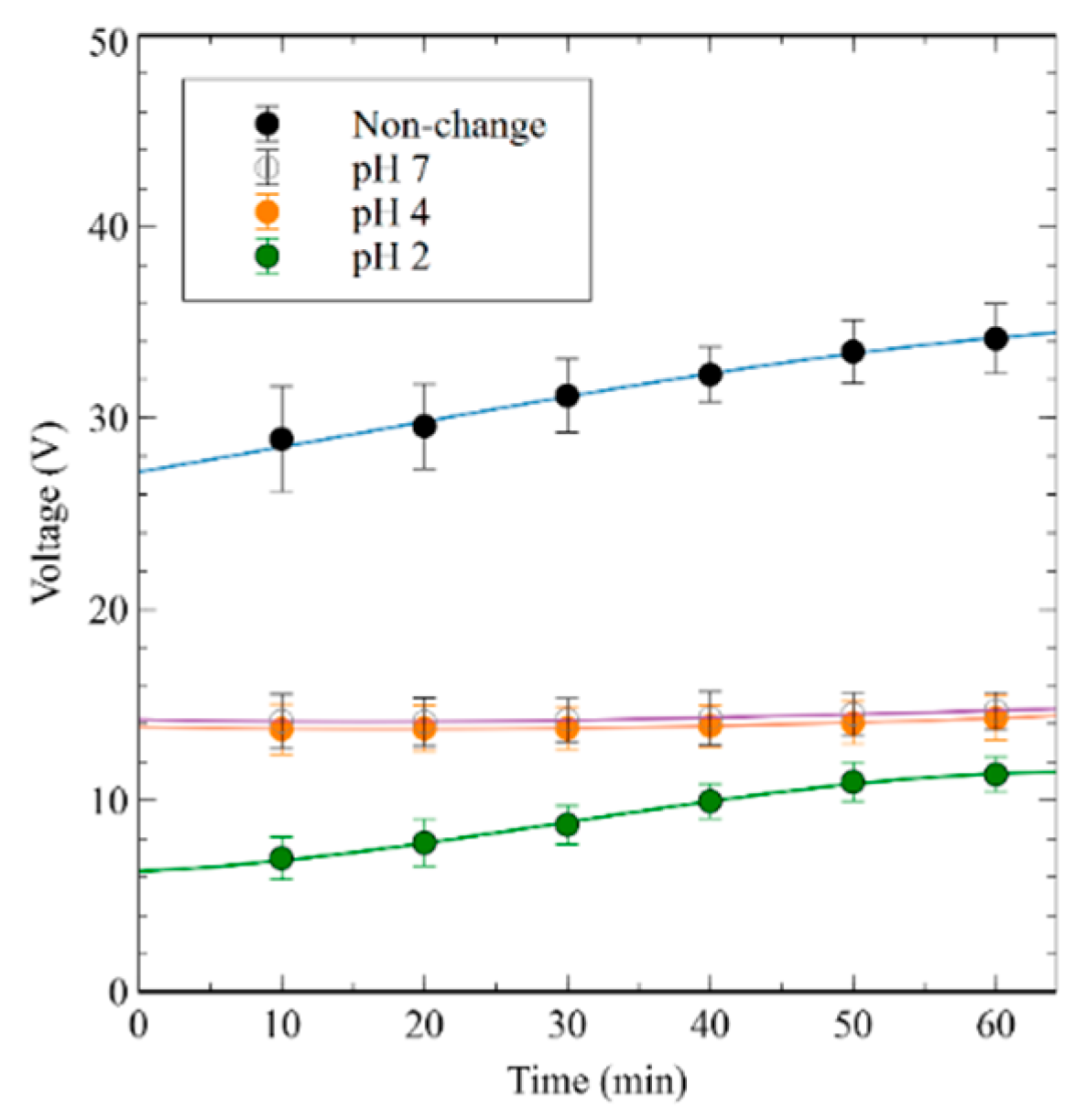
As shown in Figure 19, pH adjustment led to an increase in EC, which reduced the cell voltage required to maintain a constant current, thereby improving energy efficiency [38,39]. However, despite the enhanced EC, a significant deterioration in the energy efficiency was observed at pH 4. This behavior may have been attributed to the transitional nature of the electrochemical reaction pathways at this pH [40,41,42], where oxidative reactions dominate under strongly acidic conditions, and coagulation reactions, prevalent under near-neutral conditions, are both insufficiently developed [43,44].
Under varying initial pH conditions, the electrochemical treatment results indicated that energy consumption efficiency was maximized at pH 7. A similar trend was reported in a previous study [8,45], in which the highest removal efficiency was observed under neutral pH conditions. However, in the present study, the removal efficiency at pH 7 was lower than that under non-adjusted pH conditions. As discussed in Section 3.2, this can be attributed to the relatively low operating voltage at pH 7, which was insufficient to provide the activation energy required to disrupt the passivation layer formed on the scrap anode surface [28].

4. Conclusions

This study demonstrated the feasibility of using turning scrap as a sacrificial anode in a monopolar electrochemical system for the treatment of SCFs. The performance of scrap-based anodes was systematically evaluated in comparison with conventional electrodes under various operating conditions, including anode material, electrolyte addition, aeration, and initial pH.
Among the investigated materials, Al scrap exhibited the most balanced overall performance, achieving comparatively high CODCr and TOC removal efficiencies while maintaining favorable energy efficiency. Notably, Al scrap showed the smallest performance discrepancy relative to its conventional electrode counterpart, indicating its strong potential as a viable alternative anode material. These results suggest that metal scrap can be effectively reutilized in electrochemical wastewater treatment without a substantial loss in treatment performance.
The results further revealed that operational parameters exerted a strong influence on the trade-off between pollutant removal efficiency and energy consumption. While non-addition conditions generally resulted in higher CODCr and TOC removal, electrolyte addition significantly improved energy efficiency by enhancing solution conductivity and reducing ohmic resistance. In particular, NaNO3 addition led to lower specific energy consumption under certain conditions; however, its practical application should be carefully evaluated in light of potential environmental implications. Similarly, although acidic conditions (pH 2) enhanced apparent removal efficiencies, a substantial portion of this removal occurred during the pH adjustment step, highlighting the need for cautious interpretation of electrochemical treatment performance.
Overall, the findings emphasize that process optimization should focus on balancing removal efficiency and energy consumption rather than maximizing a single performance metric. Future studies should investigate system-scale optimization strategies, such as bipolar electrode configurations, electrode number, and applied current density, as well as conduct comprehensive economic and life-cycle assessments to further evaluate the long-term sustainability and practical applicability of scrap-based electrochemical treatment systems.

Author Contributions

Conceptualization, H.-k.L. and S.-h.J.; methodology, H.-k.L. and G.-e.K.; validation, G.-e.K. and S.-h.J.; formal analysis, H.-k.L. and H.-m.K.; investigation, H.-k.L.; data curation, H.-k.L.; writing—original draft preparation, H.-k.L.; writing—review and editing, G.-e.K., S.-h.J., B.-g.J., Y.-c.S., and W.-k.L.; visualization, H.-k.L.; supervision, G.-e.K. and S.-h.J.; project administration, S.-h.J. All authors have read and agreed to the published version of the manuscript.

Funding

This research received no external funding.

Institutional Review Board Statement

Not applicable.

Informed Consent Statement

Not applicable.

Data Availability Statement

The original contributions presented in this study are included in the article material. Further inquiries can be directed to the corresponding authors.

Conflicts of Interest

The authors declare no conflicts of interest.

Abbreviations

The following abbreviations are used in this manuscript:
AlAluminum
BODBiochemical oxygen demand
CODChemical oxygen demand
ECElectrical conductivity
FeIron
SCFsSoluble cutting fluids
SECSpecific energy consumption
SUSStainless steel
TOCTotal organic carbon

References

  1. Osama, M.; Singh, A.; Walvekar, R.; Khalid, M.; Gupta, T.C.S.M.; Yin, W.W. Recent developments and performance review of metal working fluids. Tribol. Int. 2017, 114, 389–401. [Google Scholar] [CrossRef]
  2. Debnath, S.; Reddy, M.M.; Yi, Q.S. Environmental friendly cutting fluids and cooling techniques in machining: A review. J. Clean. Prod. 2014, 83, 33–47. [Google Scholar] [CrossRef]
  3. Shokrani, A.; Dhokia, V.; Newman, S.T. Environmentally conscious machining of difficult-to-machine materials with regard to cutting fluids. Int. J. Mach. Tools Manuf. 2012, 57, 83. [Google Scholar] [CrossRef]
  4. Cheng, C.; Phipps, D.; Alkhaddar, R.M. Treatment of spent metalworking fluids. Water Res. 2005, 39, 4051–4063. [Google Scholar] [CrossRef] [PubMed]
  5. Kobya, M.; Demirbas, E.; Bayramoglu, M.; Sensoy, M.T. Optimization of Electrocoagulation Process for the Treatment of Metal Cutting Wastewaters with Response Surface Methodology. Water Air Soil Pollut. 2011, 215, 399–410. [Google Scholar] [CrossRef]
  6. Hai Nam, C.T.; Thu Hien, N.T.; Thu Huyen, N.T.; Hiep, H.H.; Thuong, N.T. Treatment of Cutting Oil-in-Water Emulsion by Combining Flocculation and Fenton Oxidation. J. Chem. 2021, 2021, 7248402. [Google Scholar] [CrossRef]
  7. Whittaker, S.G. Metalworking Fluids [Electronic Resource]: A Resource for Employers and Health & Safety Personnel in Washington State. Available online: https://search.worldcat.org/title/904728883 (accessed on 11 March 2026).
  8. Kobya, M.; Ciftci, C.; Bayramoglu, M.; Sensoy, M.T. Study on the treatment of waste metal cutting fluids using electrocoagulation. Sep. Purif. Technol. 2008, 60, 285–291. [Google Scholar] [CrossRef]
  9. Fotovat, F.; Hosseini, M. Treatment of oily wastewater by electrocoagulation: Simultaneous optimization of oil removal efficiency and specific energy consumption. J. Water Process Eng. 2023, 55, 104221. [Google Scholar] [CrossRef]
  10. Kundu, P.; Mishra, I.M. Treatment and reclamation of hydrocarbon-bearing oily wastewater as a hazardous pollutant by different processes and technologies: A state-of-the-art review. Rev. Chem. Eng. 2019, 35, 73–108. [Google Scholar] [CrossRef]
  11. Chawaloesphosiya, N.; Mongkolnauwarat, J.; Prommajun, C.; Wongwailikhit, K.; Painmanakul, P. Treatment of cutting-oily wastewater by electrocoagulation-flotation (ECF) process: Modeling approach. Environ. Eng. Res. 2015, 20, 392–396. [Google Scholar] [CrossRef]
  12. Bataller, H.; Lamaallam, S.; Lachaise, J.; Graciaa, A.; Dicharry, C. Cutting fluid emulsions produced by dilution of a cutting fluid concentrate containing a cationic/nonionic surfactant mixture. J. Mater. Process. Technol. 2004, 152, 215–220. [Google Scholar] [CrossRef]
  13. Lee, H.; Kim, G.; Jang, S.; Song, Y. Synergistic Effects of a Packed Bed Bipolar Electrolysis System Combined with Activated Carbon for Efficient Treatment of Dyeing Wastewater. Water 2025, 17, 1911. [Google Scholar] [CrossRef]
  14. Dube, A.; Malode, S.J.; Alshehri, M.A.; Shetti, N.P. Electrochemical water treatment: Review of different approaches. J. Environ. Manag. 2025, 373, 123911. [Google Scholar] [CrossRef]
  15. Chen, G. Electrochemical technologies in wastewater treatment. Sep. Purif. Technol. 2004, 38, 11–41. [Google Scholar] [CrossRef]
  16. Mollah, M.Y.A.; Schennach, R.; Parga, J.R.; Cocke, D.L. Electrocoagulation (EC)—Science and applications. J. Hazard. Mater. 2001, 84, 29–41. [Google Scholar] [CrossRef]
  17. Holt, P.K.; Barton, G.W.; Mitchell, C.A. The future for electrocoagulation as a localised water treatment technology. Chemosphere 2005, 59, 355–367. [Google Scholar] [CrossRef] [PubMed]
  18. Gaustad, G.; Olivetti, E.; Kirchain, R. Improving aluminum recycling: A survey of sorting and impurity removal technologies. Resour. Conserv. Recycl. 2012, 58, 79–87. [Google Scholar] [CrossRef]
  19. Shcherbakov, V.V.; Artemkina, Y.M.; Akimova, I.A. The Temperature Dependence of the Electrical Conductivity Activation Energy of the of Aqueous Electrolyte Solutions. Mater. Sci. Forum 2021, 1031, 228–233. [Google Scholar] [CrossRef]
  20. Pan, Z.; Yang, J.; Kong, J.; Loh, X.J.; Wang, J.; Liu, Z. “Porous and Yet Dense” Electrodes for High-Volumetric-Performance Electrochemical Capacitors: Principles, Advances, and Challenges. Adv. Sci. 2022, 9, e2103953. [Google Scholar] [CrossRef] [PubMed]
  21. HUMAS Co., Ltd. HS-3300 Water Analyzer User Guide HS-3300 UV/Visible Spectrophotometer; HUMAS Co., Ltd.: Seoul, Republic of Korea, 2020. [Google Scholar]
  22. Shimadzu Corporation. TOC Measurement Techniques: NPOC Method (Non-Purgeable Organic Carbon); Shimadzu TOC Application Note; Shimadzu Corporation: Kyoto, Japan, 2018. [Google Scholar]
  23. Tanatti, N.P.; Sengil, I.A.; Özdemir, A. Optimizing TOC and COD removal for the biodiesel wastewater by electrocoagulation. Appl. Water Sci. 2018, 8, 58. [Google Scholar] [CrossRef]
  24. Mahesh, S.; Garg, K.K.; Srivastava, V.C.; Mishra, I.M.; Prasad, B.; Mall, I.D. Continuous electrocoagulation treatment of pulp and paper mill wastewater: Operating cost and sludge study. RSC Adv. 2016, 6, 16223–16233. [Google Scholar] [CrossRef]
  25. Ng, S.P.; Wu, W.; Qian, M.; Zhu, Y.P.; Deng, X.; Chng, S.; Tan, Y.J.; Kek, Y.Q.; Yong, S.J.Z.; Low, L.W.; et al. Electrocoagulation of Spent Coolant by Dissimilar Fe-Al Combination. Electrochem 2025, 6, 26. [Google Scholar] [CrossRef]
  26. Sadik, M.A. A Review of Promising Electrocoagulation Technology for the Treatment of Wastewater. Adv. Chem. Eng. Sci. 2019, 9, 109–126. [Google Scholar] [CrossRef][Green Version]
  27. Majumder, S.; Rida, U. Removal of COD from Textile Mill Wastewater by Electro-Coagulation Process Using SS/Al as Composite Hydrogel Electrode. Int. J. Innov. Res. Sci. Eng. Technol. 2017, 6, 17242–17250. [Google Scholar]
  28. Szklarska-Smialowska, Z. Pitting corrosion of aluminum. Corros. Sci. 1999, 41, 1743–1767. [Google Scholar] [CrossRef]
  29. Terrones-Díaz, K.L.; Segura-Vera, S.S.; Huerta-Chombo, G.L. Favourable Conditions for the Removal of BOD and COD in Municipal Wastewater by Electrocoagulation. Sustainability 2025, 17, 7803. [Google Scholar] [CrossRef]
  30. Ebba, M.; Asaithambi, P.; Alemayehu, E. Development of electrocoagulation process for wastewater treatment: Optimization by response surface methodology. Heliyon 2022, 8, e09383. [Google Scholar] [CrossRef]
  31. Abdelhay, A.; Jum’h, I.; Albsoul, A.; Abu Arideh, D.; Qatanani, B. Performance of electrochemical oxidation over BDD anode for the treatment of different industrial dye-containing wastewater effluents. J. Water Reuse Desalination 2021, 11, 110–121. [Google Scholar] [CrossRef]
  32. Mickova, I. Advanced Electrochemical Technologies in Wastewater Treatment. Part II: Electro-Flocculation and Electro-Flotation. Am. Sci. Res. J. Eng. Technol. Sci. (ASRJETS) 2015, 14, 273–294. [Google Scholar]
  33. Trinh, D.T.T.; Binh, Q.A.; Ty, T.V.; Channei, D.; Nakaruk, A.; Khanitchaidecha, W. Evaluation of Magnetic Stirring and Aeration on Electrocoagulation Performance in Actual Industrial Treatment. Front. Environ. Sci. 2021, 9, 719248. [Google Scholar] [CrossRef]
  34. Martínez, V.; Rosales, F.; Amaya, K.; Campos, A.; Castro, R.; Ramón, A. Effect of High-Rate Aeration in the Electrocoagulation Treatment of Pharmaceutical and Synthetic Textile Industrial Wastewater Effluents. Afinidad 2024, 81, 251–258. [Google Scholar] [CrossRef]
  35. Cho, K.M.; Deshmukh, P.R.; Shin, W.G. Hydrodynamic behavior of bubbles at gas-evolving electrode in ultrasonic field during water electrolysis. Ultrason. Sonochem. 2021, 80, 105796. [Google Scholar] [CrossRef]
  36. Chen, C.; Lu, C.; Chang, C.; Yang, Y.; Maa, J. Influence of pH on the stability of oil-in-water emulsions stabilized by a splittable surfactant. Colloids Surf. Physicochem. Eng. Asp. 2000, 170, 173–179. [Google Scholar] [CrossRef]
  37. Daaou, M.; Bendedouch, D. Water pH and surfactant addition effects on the stability of an Algerian crude oil emulsion. J. Saudi Chem. Soc. 2011, 16, 333. [Google Scholar] [CrossRef]
  38. Darling, H.E. Conductivity of Sulfuric Acid Solutions. J. Chem. Eng. Data 1964, 9, 421–426. [Google Scholar] [CrossRef]
  39. Ghernaout, D. Electrocoagulation Process: A Mechanistic Review at the Dawn of its Modeling. J. Environ. Sci. Allied Res. 2019, 2, 22–38. [Google Scholar] [CrossRef]
  40. Brillas, E.; Sirés, I.; Oturan, M.A. Electro-Fenton Process and Related Electrochemical Technologies Based on Fenton’s Reaction Chemistry. Chem. Rev. 2009, 109, 6570–6631. [Google Scholar] [CrossRef] [PubMed]
  41. Matra, K.; Lerkmahalikit, Y.; Prasertkulsak, S.; Kongdee, A.; Pomthong, R.; Thongson, S.; Theepharaksapan, S. Hybrid RSM–ANN Modeling for Optimization of Electrocoagulation Using Aluminum Electrodes (Al–Al) for Hospital Wastewater Treatment. Water 2025, 17, 3003. [Google Scholar] [CrossRef]
  42. Karagözoğlu, M.B. Treatment of Landfill Leachate via Electrocoagulation and Electro-Fenton Processes: A Comparative Study. Iran. J. Chem. Chem. Eng. 2023, 42, 2372–2391. [Google Scholar] [CrossRef]
  43. Babuponnusami, A.; Muthukumar, K. A review on Fenton and improvements to the Fenton process for wastewater treatment. J. Environ. Chem. Eng. 2014, 2, 557–572. [Google Scholar] [CrossRef]
  44. Kang, Y.W.; Hwang, K. Effects of reaction conditions on the oxidation efficiency in the Fenton process. Water Res. 2000, 34, 2786–2790. [Google Scholar] [CrossRef]
  45. Abbas, F.; Asel, H. The Electrochemical removal of Oil and COD from petroleum wastewater. Wasit J. Eng. Sci. 2023, 11, 134–149. [Google Scholar] [CrossRef]
Figure 1. Schematic diagram of the electrode.
Cleantechnol 08 00041 g001
Figure 2. Schematic diagram of the turning scrap with case.
Cleantechnol 08 00041 g002
Figure 3. Schematic diagram of the electrolysis apparatus (Adapted from ref. [13]).
Cleantechnol 08 00041 g003
Figure 4. Effect of anode materials (electrode) on removal efficiency of: (a) CODCr, and (b) TOC (non-electrolyte addition).
Cleantechnol 08 00041 g004
Figure 5. Effect of anode materials (turning scraps) on removal efficiency of: (a) CODCr, and (b) TOC (non-electrolyte addition).
Cleantechnol 08 00041 g005
Figure 6. Effect of metal material on specific energy consumption (SEC) (non-electrolyte addition).
Cleantechnol 08 00041 g006
Figure 7. Effect of electrolyte addition on the removal efficiency of: (a) CODCr; and (b) TOC using Al scrap (20 g/L) as the anode.
Cleantechnol 08 00041 g007
Figure 8. Effect of electrolyte addition on the removal efficiency of: (a) CODCr; and (b) TOC using SUS scrap (30 g/L) as the anode.
Cleantechnol 08 00041 g008
Figure 9. Effect of electrolyte addition on the removal efficiency of: (a) CODCr; and (b) TOC using Fe scrap (40 g/L) as the anode.
Cleantechnol 08 00041 g009
Figure 10. Effect of electrolyte addition on cell voltage under constant-current conditions (0.8 A) using: (a) Al scrap (20 g/L), (b) SUS scrap (30 g/L), and (c) Fe scrap (40 g/L) as the anode.
Cleantechnol 08 00041 g010
Figure 11. Effect of electrolyte addition on SEC using: Al scrap (20 g/L), SUS scrap (30 g/L), and Fe scrap (40 g/L) as the anode.
Cleantechnol 08 00041 g011
Figure 12. Effect of aeration on the removal efficiency of: (a) CODCr, and (b) TOC using Al scrap (20 g/L) as the anode.
Cleantechnol 08 00041 g012
Figure 13. Effect of aeration on SEC using Al scrap (20 g/L) as the anode.
Cleantechnol 08 00041 g013
Figure 14. Effect of aeration on cell voltage under constant-current conditions (0.8 A) using Al scrap (20 g/L) as the anode.
Cleantechnol 08 00041 g014
Figure 15. Temporal variation in solution pH under different initial pH conditions using Al scrap (20 g/L) as the anode.
Cleantechnol 08 00041 g015
Figure 16. Effect of initial pH on removal efficiency of: (a) CODCr; and (b) TOC using Al scrap (20 g/L) as the anode.
Cleantechnol 08 00041 g016
Figure 17. Visual appearance of SCFs under different initial pH conditions: pH 7 (left), pH 4 (middle), and pH 2 (right).
Cleantechnol 08 00041 g017
Figure 18. Effect of initial pH on SEC using Al scrap (20 g/L) as the anode.
Cleantechnol 08 00041 g018
Figure 19. Effect of initial pH on cell voltage under constant-current conditions (0.8 A) using Al scrap (20 g/L) as the anode.
Cleantechnol 08 00041 g019
Table 1. Characteristics of SFCs (diluted to 5% [v/v], at 20 °C).
MaterialSpecific Gravity
Al2.6 g/cm3
SUS7.2 g/cm3
Fe7.9 g/cm3
Table 2. Specific gravity of scrap materials.
ParameterValue
pH10.00
EC1.00 mS/cm
CODcr109,200 mg/L
TOC26,300 mg/L
Table 3. Constant and variable conditions.
Constant &VariableItemsConditions
Constant conditionsFlow controlBatch type
Process time/Sampling time60 min/10 min
Quantity of SCFs1000 mL
Cathodic electrode materialSUS
Applied current0.8 A
Distance between electrode40 mm
Variable conditionsAnodic electrode materialAl, SUS, Fe
Anodic turning scrap materialsAl 20 g/L, SUS 30 g/L, Fe 40 g/L
Concentration of
electrolyte
Non-addition.
NaCl 10 mM, Na2SO4 10 mM,
NaNO3 10 mM, KCl 10 mM
Aeration lineNon-aeration, 2 aeration line
Initial pH10 (Non-change), 2, 4, 7
Table 4. Apparatus and equipment used in the experiments (Adapted from ref. [13]).
Machine NameModelManufacturer
Water analyzerHS-3300HUMAS Co.,
(Daejeon, Republic of Korea)
Total Organic Carbon AnalyzerMulti N/C 3100Analytik Jena.,
(Jena, Germany)
pH MeterpH 330iWTW GmbH.,
(Weilheim, Germany)
Electrical conductivity meterCond 7110WTW inoLab.,
(Weilheim, Germany)
Hotplate & Magnetic StirrerMS-300MTOPS
(Shen-zhen, China)
Regulated DC power supplyTDP-6020BTOYOTECH Co.,
(Dongguan, China)
Automatic Voltage RegulatorSYAVR-2KVASPSTSamyang AVR
(Bucheon-si, Republic of Korea)
Disclaimer/Publisher’s Note: The statements, opinions and data contained in all publications are solely those of the individual author(s) and contributor(s) and not of MDPI and/or the editor(s). MDPI and/or the editor(s) disclaim responsibility for any injury to people or property resulting from any ideas, methods, instructions or products referred to in the content.