
Article

Recent Advances in Sustainability Assessment of Medicinal Cannabis Cultivation and Production

1
Laboratory of Spectroscopy, Molecular Modeling, Materials, Nanomaterials, Water and Environment, High National School of Arts and Crafts (ENSAM), Mohammed V University in Rabat, Rabat 10100, Morocco
2
LISTI, National School of Applied Sciences of Agadir (ENSA), Agadir 80000, Morocco
3
Higher School of Education and Training, Chouaib Doukkali University, El Jadida 10000, Morocco
4
Interdisciplinary Applied Research Laboratory, International University of Agadir, Universiapolis, Agadir 80000, Morocco
5
Laboratory of Membranes, Materials and Environment, Faculty of Sciences and Technologies of Mohammedia, Hassan II University of Casablanca, Casablanca 28806, Morocco
6
CIRPEC, Faculty of Legal, Economic and Social Sciences, Souissi, Mohammed V University in Rabat, Rabat 10050, Morocco
7
LS3MN2E, CERNE2D, Faculty of Sciences, Mohammed V University in Rabat, Rabat 10050, Morocco
*
Author to whom correspondence should be addressed.
Clean Technol. 2026, 8(3), 60; https://doi.org/10.3390/cleantechnol8030060
Submission received: 12 March 2026 / Revised: 9 April 2026 / Accepted: 13 April 2026 / Published: 27 April 2026
(This article belongs to the Topic Green and Sustainable Chemical Processes)

Abstract

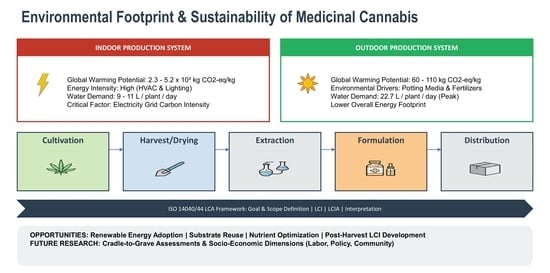
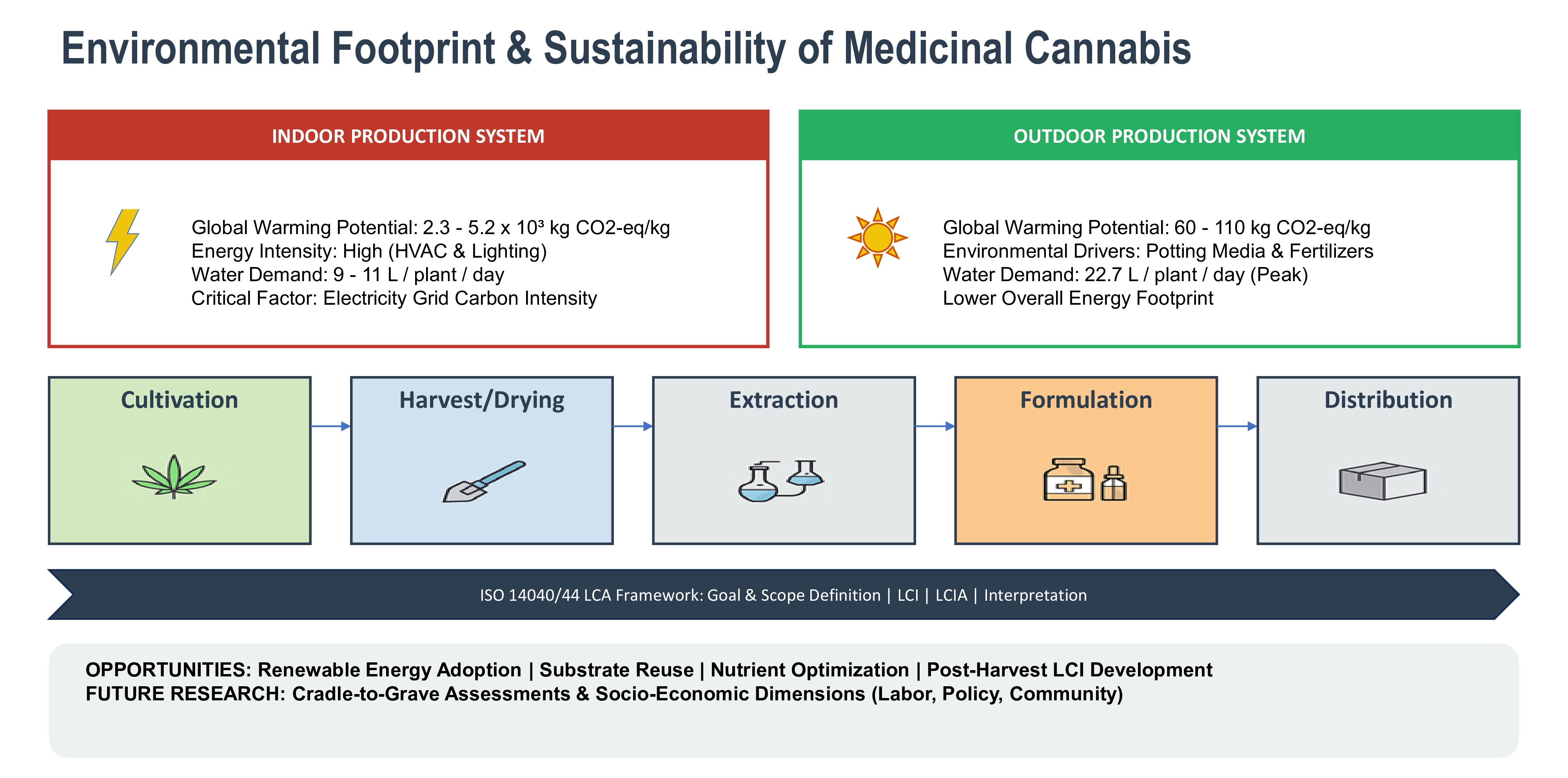
With the rapid growth of the medicinal cannabis sector, there is a growing concern regarding its environmental impact and sustainability. In recent years, life cycle assessment (LCA) studies on medicinal cannabis cultivation and processing have been conducted since 2021. However, there is a lack of comprehensive LCA studies that include all stages of medicinal cannabis cultivation and processing. In this systematic review, various LCA studies conducted from 2021 to 2025 using the ISO 14040/44 methodology are reviewed and discussed in terms of their goal and scope, life cycle inventory (LCI), life cycle impact assessment (LCIA), and result interpretation. Various environmental impact indicators are considered in this review, such as greenhouse gas emissions, energy demand, water usage, eutrophication, acidification, and resource depletion. All of these impact indicators point to a significant environmental impact of indoor cultivation in terms of greenhouse gas emissions, which vary from 2.3 × 10³ to 5.2 × 10³ kg CO2 eq kg−1 of dried cannabis product. Nevertheless, it is important to note that this is significantly influenced by regional electricity sources. Low-carbon-based electricity sources, especially hydro-based sources, can reduce emissions to a significant level. Cultivation outdoors presents significantly lower emissions of (60–110 kg CO2 eq kg−1), but fertilizers and substrates used in cultivation contribute significantly to emissions. Also, outdoor plants use 22.7 L plant−1 d−1 water at peak growth, while indoor plants use 9–11 L plant−1 d−1 water. Improvements in the life cycle of cannabis cultivation can be achieved through renewable energy use, water and fertilizers, substrate use and reuse, and inventories for post-harvesting activities like drying and extraction. Botanical parameters including genotype, planting density, and harvesting frequency are identified as significant but under-characterized determinants of LCA outcomes. Ethical and legal barriers are shown to be structural drivers of the LCA data gap. A SWOT analysis contextualizes the opportunities and constraints of the sector. Future research should focus on cradle-to-grave LCA and incorporate socio-economic factors for sustainability in the medicinal cannabis sector.

Graphical Abstract

1. Introduction

Medicinal cannabis (Cannabis sativa L.) has emerged as a significant pharmaceutical crop in the past decade [1]. Its legalization in many jurisdictions has expanded the production of high-value flowers and extracts rich in Δ9-tetrahydrocannabinol (Δ9-THC) and cannabidiol (CBD) [2]. As with other intensive crops, the environmental footprint of cannabis is becoming a focus of public and scientific attention [3,4]. In past research, emphasis was placed primarily on pharmacology and potential use [5], resulting in knowledge gaps with respect to resource use, greenhouse gas (GHG) emissions [6], water demand and ecosystem impact associated with cultivation [7,8]. In more recent research, life cycle assessments (LCAs) have been used to quantify impact in various production systems: indoor, greenhouse, and outdoor [4,9,10]. There is limited data available for medicinal-grade production, which often involves stringent quality controls and energy-intensive indoor operations [11].
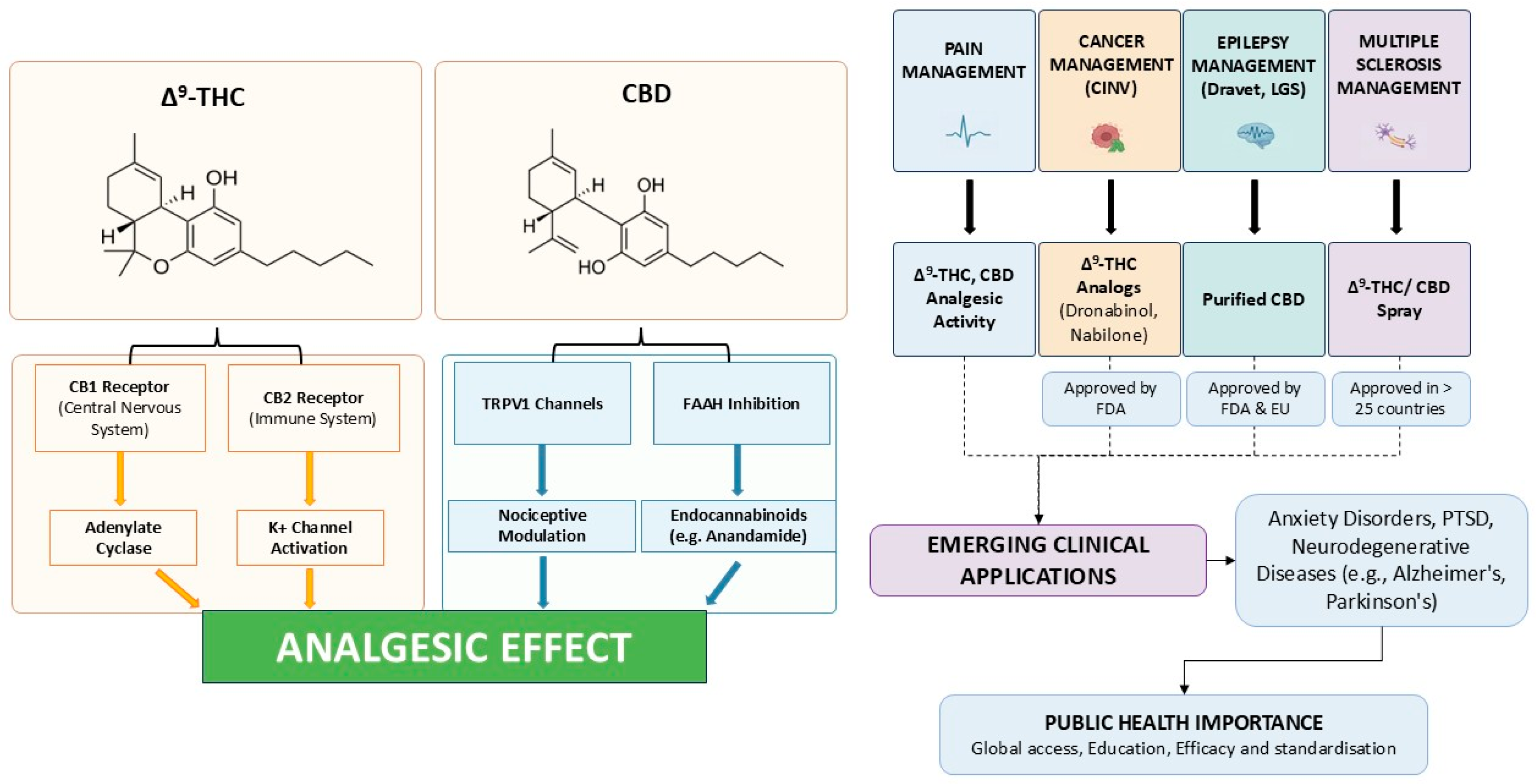
Medicinal cannabis is used in various therapeutic scenarios, thereby providing the rationale for conducting a thorough environmental assessment of its cultivation. In the management of pain, Δ9-THC and CBD have shown analgesic activity through different mechanisms. Δ9-THC exerts its effects by acting as a CB1 receptor agonist [12], thereby modulating pain signal transmission by inhibiting adenylate cyclase and activating inwardly rectifying potassium channels [2]. CBD, on the other hand, modulates pain signal transmission by acting on transient receptor potential vanilloid 1 channels and inhibiting fatty acid amide hydrolase [1].
In cancer management, cannabis-based medicine has shown efficacy as an antiemetic for chemotherapy-induced nausea and vomiting. Δ9-THC analogs, dronabinol, and nabilone have shown efficacy and have been approved by the FDA for this condition [13]. In epilepsy management, purified CBD has shown efficacy for Dravet syndrome and Lennox–Gastaut syndrome and has been approved by both the FDA and the European Union. In multiple sclerosis management [14], the Δ9-THC/CBD spray has shown efficacy in managing spasticity and neuropathic pain and has been approved in over 25 countries [15,16]. Other emerging trends include its application in anxiety disorders, post-traumatic stress disorder, and neurodegenerative diseases [2]. The entire process of cannabis cultivation and its application can be of direct public health importance.
The Figure 1 below summarizes and organizes all of this information. On the left side, it illustrates the chemical structures of the two main molecules, Δ9-THC and CBD, as well as their distinct mechanisms of action that lead to a shared analgesic effect. On the right-hand side, it organizes clinical applications into four main therapeutic areas (pain, cancer/CINV, epilepsy, multiple sclerosis) [2], detailing for each the analogs or pharmaceutical forms used and their specific regulatory approval status by the relevant authorities (FDA, EU). The figure also highlights the link to emerging trends and the overall impact on public health, encompassing issues of access, education, efficacy, and standardization, thereby providing a comprehensive overview of the medicinal cannabis value chain.
During the cultivation stage, the most significant inputs are seeds, fertilizers, water, and energy for lighting. This stage has been consistently reported to be the most energy-intensive stage [7], with more than 80% of total energy consumption and greenhouse gas emissions [4,10]. In fact, indoor cultivation has been reported to have a carbon footprint ranging from 2.3 × 10³ and 5.2 × 10³ kg CO2 eq kg−1 of dried flower, and this is directly related to the local electricity supply’s carbon intensity [3]. On the other hand, open-field cultivation drastically reduces the footprint by 60–110 kg CO2 eq kg−1, replacing artificial lighting with solar irradiance, thereby emphasizing the importance of LCA for land use assessment and hence its role in Global Assessment (GA) [4,17,18].
The second stage is harvesting and drying, which includes dehydrating the biomass using ventilation and dehumidification techniques. The processes require considerable amounts of thermal and electrical power, and maintaining a constant climate (20 °C and 50% RH) can require up to 25% of the total electrical load after cultivation [19,20]. The LCA identifies this “hotspot” as being related to the quality of phytochemicals (terpenes and cannabinoids) and environmental impact.
The process of extraction and purification requires thermal, mechanical, and solvent treatment, to obtain the active compounds such as cannabinoids, decarboxylate, and concentrate, and filter, respectively [19]. All these processes generate emissions and waste streams that need to be accounted for in the LCA inventory [21]. Subsequently, the process of packaging and formulation requires the production of capsules, tinctures, and carrier oils, and packaging materials such as plastic containers, aluminum seals, and glass bottles, and secondary packaging materials such as paper boxes, etc. [22]. Lastly, the transport process requires the distribution of the product to hospitals, pharmacies, or stores for sale. This process is normally taken to be the system boundary in most of the present studies, such that the results are only “cradle to distribution” rather than “cradle to grave” assessments, implying that other important stages such as product use, packaging disposal, and product end-of-life management are still not well understood. In addition, other factors such as methodological differences, inadequate data for the LC inventory, and regional differences in the energy systems are limiting the results obtained so far [23]. Thus, crucial downstream activities like product use, packaging disposal, and end-of-life handling have not received sufficient research attention. In addition, methodological differences, limited LC data availability, and diversity in energy systems in various regions have limited the reliability of existing research outcomes [7,24].
Despite its established therapeutic benefits [8,25], medicinal cannabis has continued to experience socio-regulatory challenges, which have significant implications for the development of the cannabis market and the feasibility of environmental assessment research [1,26]. The perception of cannabis-derived products has continued to be affected by decades of stigmatization, during which industrial hemp and medicinal cannabis were equated with illicit narcotics [27]. The equation of medicinal cannabis with illicit narcotics has continued to limit consumer, prescriber, and retail acceptability, even for products with concentrations of Δ9-THC below the threshold for psychoactivity (<0.2% w/w for industrial hemp, as established by the EU Regulation) [28].
With respect to supply chain regulation, the risk of diversion, or the diversion of lawfully produced cannabis for human consumption into the illicit supply chain [29], necessitates traceability, seed-to-sale, destruction of non-conforming products, and chain of custody documentation. Such regulatory compliance activities add costs, which are not always reflected in the scope of the LCA, thus constituting a systematic underestimation of the overall production costs. International control, as established by the 1961 United Nations Single Convention on Narcotic Drugs [30], as amended by the 1971 and 1988 conventions, and the 2020 Commission on Narcotic Drugs decision, has continued to limit access to licensed production facilities for research purposes, thus constituting the main data scarcity, which has significant implications for the quality of the LCA.
The aim of this review is to critically evaluate and synthesize the literature regarding the environmental impacts of medicinal cannabis cultivation and production, identifying methodological limitations, quantifying the environmental burdens, and highlighting the major opportunities for improving sustainability within the medicinal cannabis supply chain. This has been achieved by conducting a systematic literature search of the peer-reviewed literature published between 2021 and 2025. This aims to advance the state of knowledge in this emerging research area while highlighting gaps in the literature and avenues for future research to undertake comprehensive assessments of the medicinal cannabis supply chain.

2. Materials and Methods

2.1. Inclusion Criteria and Literature Review

The literature was reviewed systematically from January 2021 to September 2025 to determine the appropriate literature available on the LCA of medical cannabis. The reason for considering 2021 as the starting year of this systematic literature review is that it is considered the year in which the first peer-reviewed LCA of medicinal cannabis was published. For this work, tree scientific literature databases were considered, and they are Scopus, PubMed and Web of science. The Boolean operators were applied to design an efficient query using words such as “cannabis,” “medicinal cannabis,” “medicinal marijuana,” “life cycle assessment,” “LCA,” “environmental impact,” “carbon footprint,” “energy consumption,” “water consumption,” and “sustainability.” The literature search was carried out in English and French.
To ensure methodological rigor and objectivity, specific inclusion and exclusion criteria were formulated. The inclusion criteria were based on peer-reviewed articles, academic theses, and technical reports containing complete and/or partial LCAs, which had to contain at least one of the essential components of LCI, LCIA, and interpretation. Excluded articles were those based only on narrative reviews, conceptual and theoretical frameworks without underlying LCA data, and those based on LCA of industrial hemp intended for non-medicinal purposes, such as fiber, seeds, and composite materials. The selection criteria ensured that the review remained pertinent to environmental assessments related to medicinal cannabis cultivation and production systems. All selection criteria are presented in Table 1.
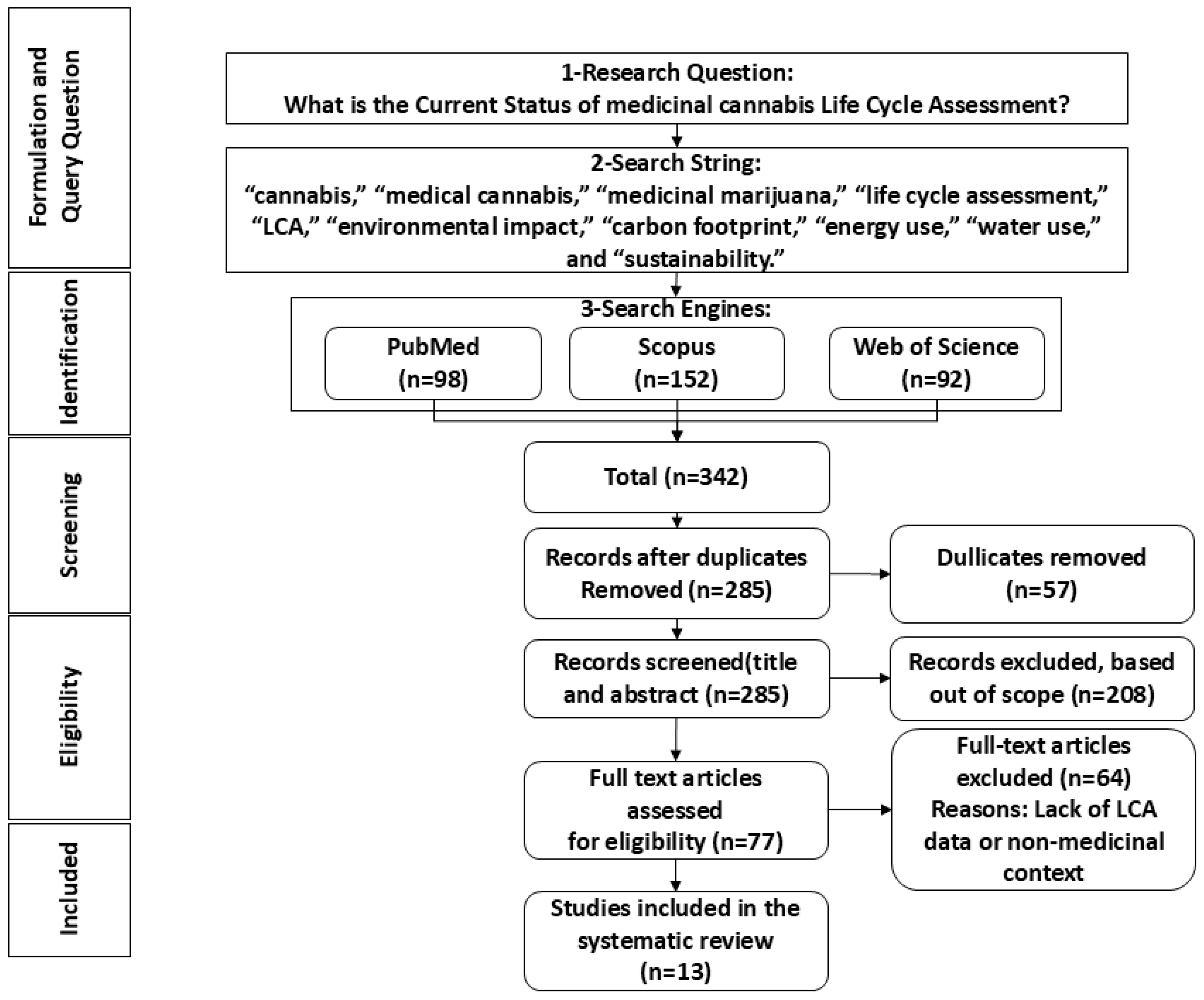
The selection process was carried out according to PRISMA methodology in three successive stages of selection by title and abstract, then by conclusions, and finally by evaluation of the full text to assess methodological validity. Out of 342 documents initially selected, 57 were removed after duplication, leaving 285 unique publications to be analyzed. Following this, 208 publications were removed after evaluation by title and abstract, and another 64 after evaluation of the full text for lack of LCA data and for not being relevant to a medicinal context, leaving 13 studies that fulfilled all criteria for inclusion, as described in Figure 2. The total of nine studies represents the most comprehensive data set currently available regarding environmental performance of medicinal cannabis systems, which is used to generate the comparative LCA production models described in the following chapters.
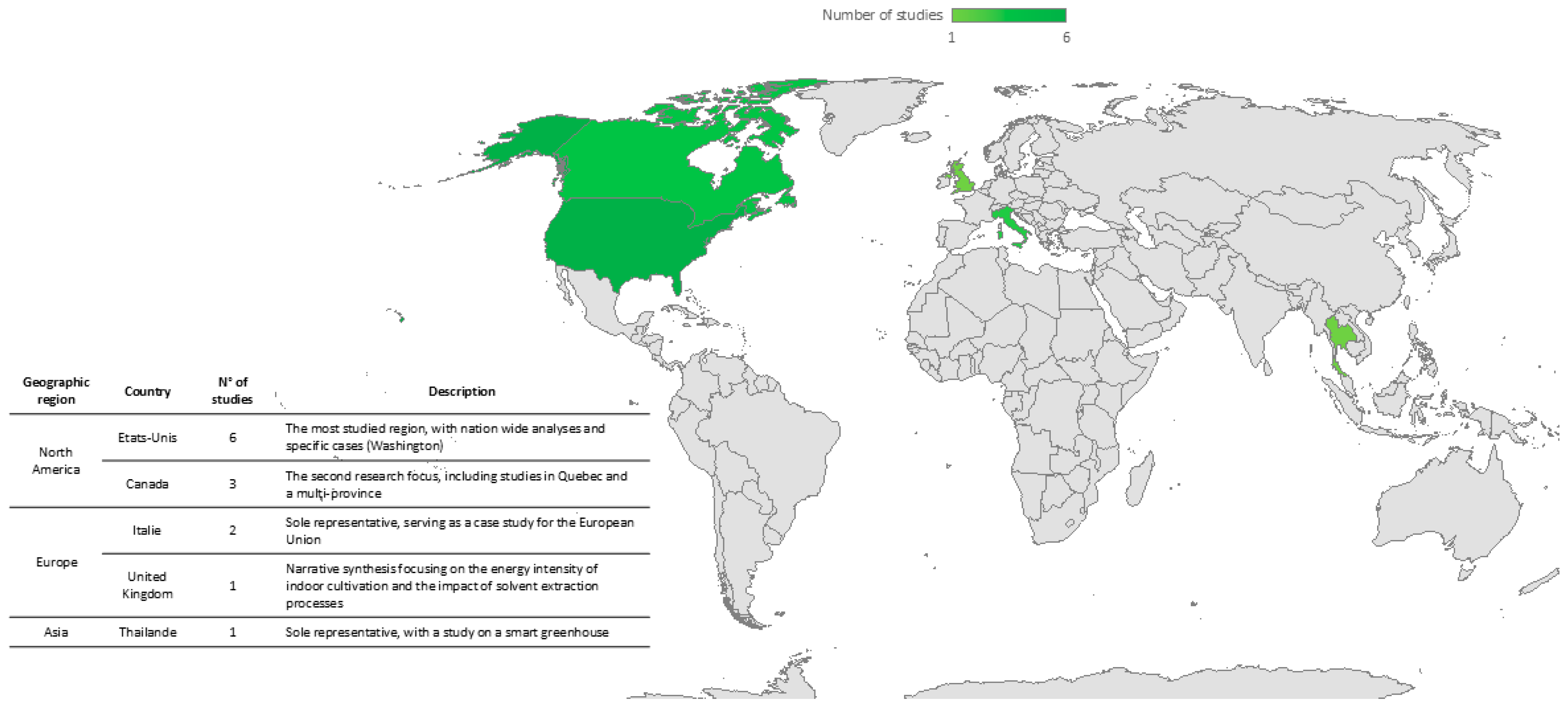
Whereas there were nine studies found, an analysis of their spatial distribution indicates that there is a focus on only seven unique geographical areas as depicted in Figure 3. This difference may be accounted for by the fact that there were two studies from America that covered multiple states. Such a distinction is crucial to ensure that there is a match between the document flow as depicted on the PRISMA diagram and the actual geographic reality of the production areas.

2.2. LCA Framework for Cannabis Systems

ISO 14040/44:2006 guidelines were followed as a basis to develop this review’s methodology. According to these guidelines, LCA is an iterative process consisting of four interconnected phases: goal and scope definition, LCI, LCIA, and interpretation [31,32].
In the goal and scope definition phase, the purpose of the study, the functional unit (FU), and boundaries of the LCAs are established. In medicinal cannabis LCAs, it is established that 1 kg of dried cannabis flowers is the most frequently applied FU to date [4], Nevertheless, alternative FUs such as 100 g of THC are proposed to establish a higher correlation to therapeutic value [9]. Boundaries of medicinal cannabis LCAs are generally established to cradle-to-gate, i.e., up to the gate of the farm or facility, although cradle-to-grave LCAs are limited in number to date [11].
LCI aims to quantify all relevant inputs and outputs of a medicinal cannabis LCA established in step 2. Inputs to medicinal cannabis include electricity, fuels, irrigation water, fertilizers, growing medium, and infrastructures, whereas outputs include emissions such as CO2, NO, VOCs, and wastewater effluents. Data are generally collected in foreground studies conducted in cultivation facilities or experimental trials and supplemented with background data from established databases such as ecoinvent [33].
During this phase, the flow of inventories is converted into environmental impact indicators using characterization factors [34]. The impact categories reported in LCAs of cannabis cultivation are GWP, eutrophication, acidification, human toxicity, photochemical ozone formation, and resource depletion [9]. ReCiPe and TRACI are often used as methods [35].
Lastly, interpretation is carried out to determine hotspots, compare scenarios, and develop mitigation strategies [31]. In this phase, sensitivity analysis is performed to evaluate the impact of assumptions related to factors such as yield, electricity mix, efficiency of HVAC, and functional unit selection [4]. The environmental impact of medicinal cannabis is compared with other systems, including agriculture [7].

3. Results and Discussion

3.1. Synthesis of LCA Studies

Table 2 provides a synthesis of key LCA studies on medicinal cannabis cultivation and processing, identified through the systematic review using the keywords and inclusion criteria.
As the numerous literature reviews demonstrate, energy consumption is the key factor determining the environmental footprint associated with cannabis cultivation. Available empirical analyses consistently show that indoor cultivation generates the highest environmental impacts per kilogram of dried flower produced. This result is primarily due to the energy intensity of artificial lighting systems, heating, ventilation, and air conditioning (HVAC), as well as dehumidification systems required to maintain stable environmental conditions for plant growth.
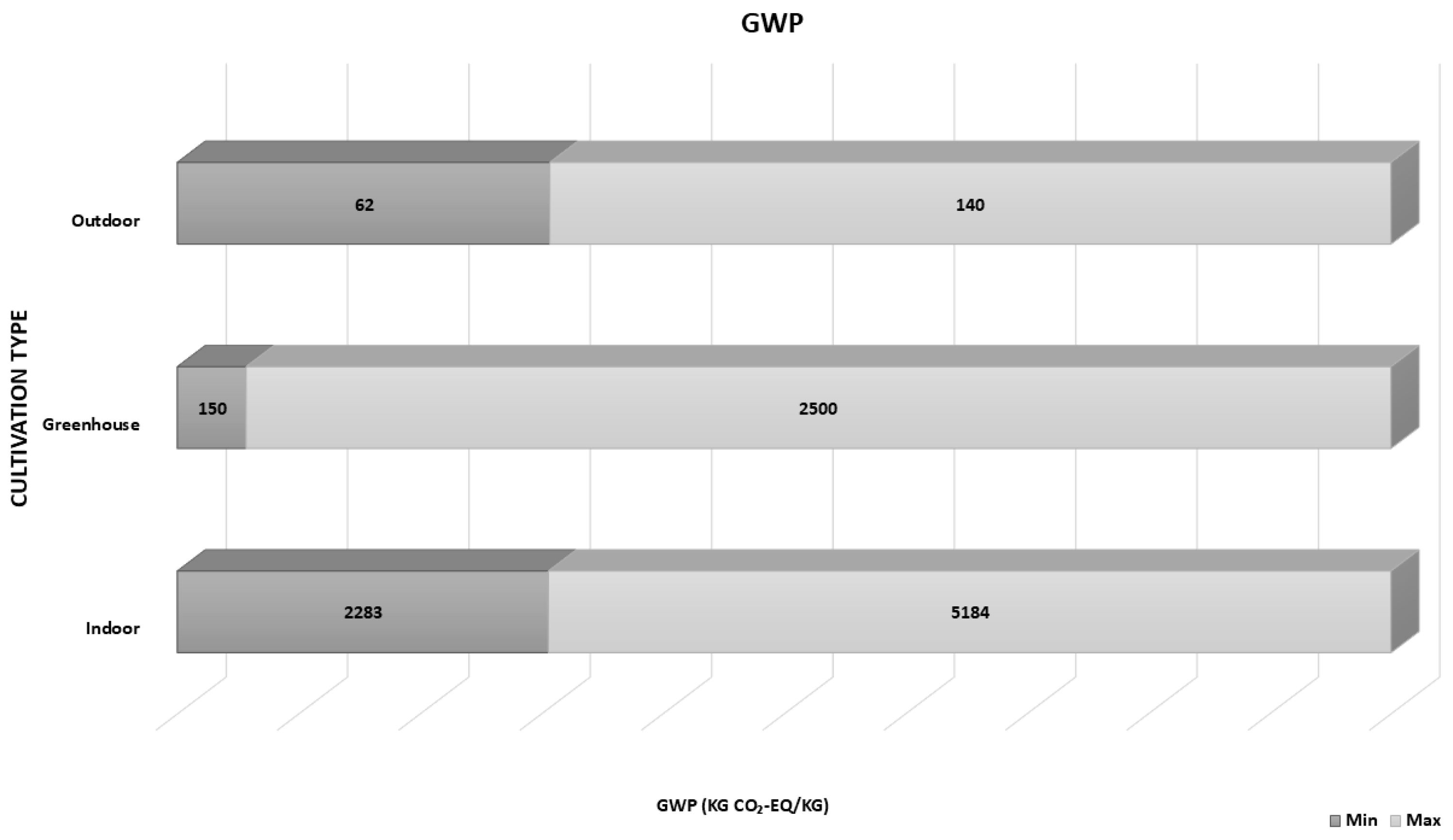
The electricity consumption of indoor facilities typically ranges from 2000 to over 5000 kWh per kilogram of dried flowers [4,24]. Lighting and climate control systems alone account for over 80% of total greenhouse gas emissions. The global warming potential (GWP) values reported in the literature generally range from 2283 to 5184 kg CO2 eq kg−1 of dried flower, with a national median estimated at approximately 3658 kg CO2 eq kg−1 [24].
This significant variability is primarily explained by the carbon intensity of the regional electricity mix and by heating requirements linked to local climate conditions. Facilities located in regions heavily dependent on coal or subject to harsh winters logically have the highest values.
At the sectoral level, it has been estimated that indoor cannabis cultivation could consume approximately 595 PJ per year and generate nearly 44 Mt CO2 eq annually [4], a magnitude comparable to that of certain national agricultural sectors.
Although general trends emerge for indoor facilities, atypical cases have been documented, Bottem and Ryan report that an optimized indoor facility in Washington State has a carbon footprint of only 12.4 kg CO2 eq kg−1, a value significantly lower than that of outdoor cultivation (27.5 kg CO2 eq kg−1) and hybrid greenhouse cultivation (140 kg CO2 eq kg−1) assessed in the same geographic context. This result, which may seem counterintuitive at first glance, is explained by the facility’s access to a highly decarbonized electricity mix, dominated by hydropower. This example illustrates the mitigation potential that can be achieved when the primary energy hotspot is effectively managed. It should nevertheless be emphasized that such performance cannot be generalized to facilities operating in more typical contexts, characterized by less favorable electricity grids.
Greenhouse systems are based on a hybrid model that combines natural solar radiation, supplemental lighting, and partial climate control. They generally reduce energy consumption by 40 to 60 percent compared to fully controlled indoor systems [10]. Published GWP values for greenhouses cover a wide range, from a few hundred to approximately 2500 kg CO2 eq kg−1 for the most energy-intensive configurations [4], while modern greenhouses optimized for mixed lighting can fall below 150 kg CO2 eq kg−1 [10]. A study of a smart greenhouse reports an intermediate value of approximately 622 kg CO2 eq kg−1 [36]. The environmental performance of greenhouse systems, however, remains strongly influenced by geographic location, seasonal heating needs in cold regions, and cooling requirements in hot areas [4].
Open-field cultivation is generally recognized as the most energy-efficient and lowest-emission system per unit of product. The reported values typically range from 60 to 110 kg CO2 eq kg−1 of dried flower in Quebec [40], which is up to two orders of magnitude lower than indoor systems. This reduction in emissions is primarily due to the exclusive use of solar radiation and natural ventilation. However, some open-field systems nationwide can reach 700 kg CO2 eq kg−1 depending on the agronomic practices employed [4].
Aside from the cultivation system, which may be classified into indoor, greenhouse, and outdoor cultivation, the botanical characteristics of cannabis varieties have been identified as important [41,42] yet less reported determinants of LCA results [43]. Three parameters have been identified as important determinants of LCA results:
1-Genotype: The chemotype or chemical phenotype of cannabis varieties is a key determinant of the functional unit denominator in potency-based LCAs. High-CBD cannabis varieties, such as Charlotte’s Web and Cannatonic, have been characterized to contain 10–20% CBD per weight, while balanced THC-CBD chemotypes may contain 5–10% each [44,45]. The difference in cannabinoid density among cannabis varieties may range from 10 to 40% [46], and per plant yield may vary, thereby affecting the environmental impact per milligram of active ingredient administered the most clinically relevant functional unit. Genotype may also influence crop morphology and canopy architecture, thereby affecting energy demand per unit of biomass in controlled environments.
2-Planting density: Increased planting density, such as 16–25 plants m−2 for sea-of-green cultivation systems and 1–4 plants m−2 for single plant cultivation systems [47,48], may decrease per plant yield and fertilizer demand per kilogram of yield [49]. In LCAs, planting density may influence allocation calculations per individual unit, thereby affecting LCI completeness and accuracy of system expansion calculations.
3-Harvesting frequency: In sea-of-green cultivation systems, 4–6 harvests per year may result in a greater yield per unit area, thereby increasing substrate turnover and waste generation per unit area [50]. Conversely, single-harvest systems may result in less substrate consumption per crop, thereby increasing infrastructure depreciation per crop. However, this aspect has not been addressed in previous LCA studies and is identified as a key area for further primary data collection.
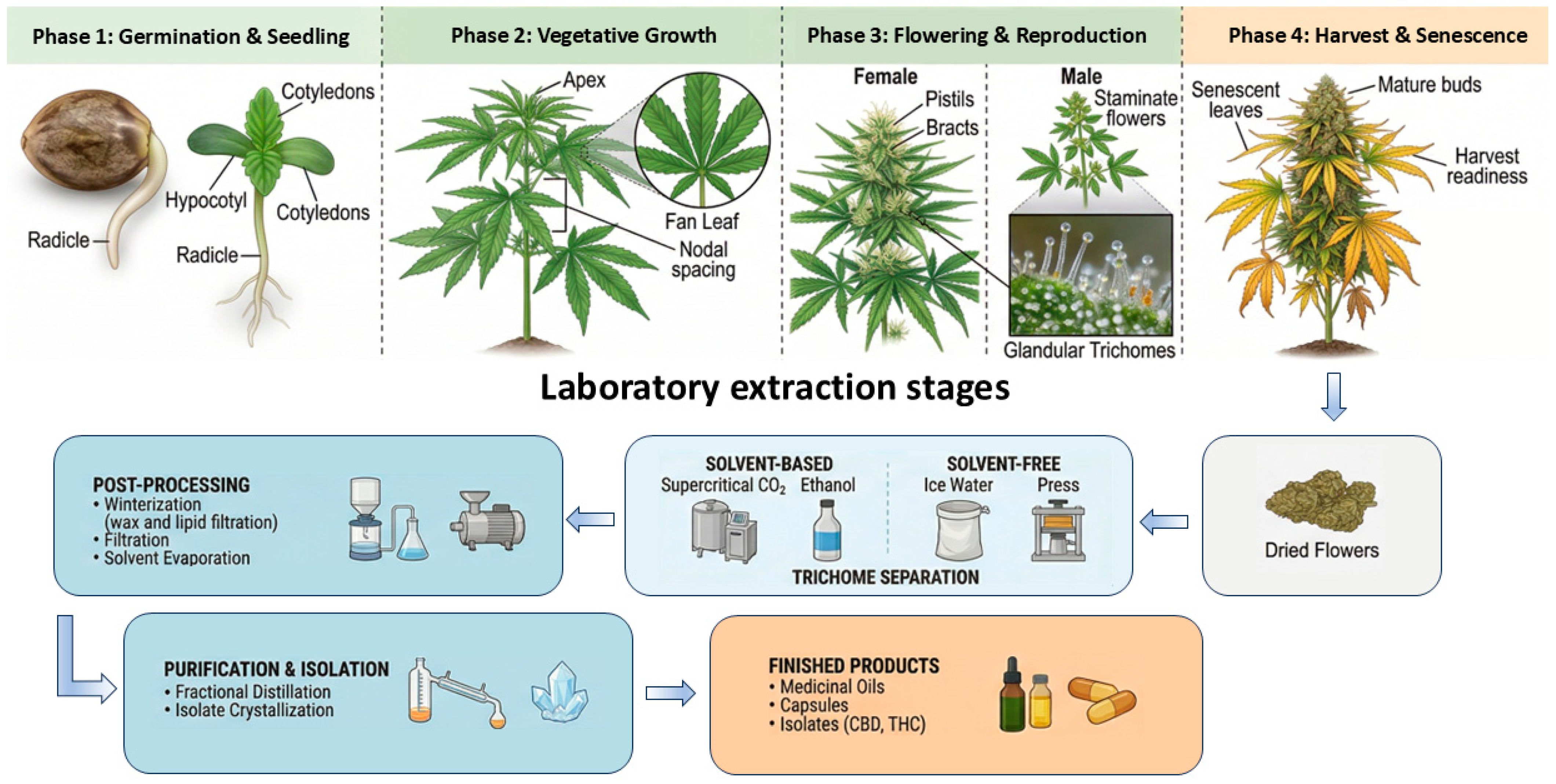
The process of converting plant biomass into purified extracts relies on an integrated value chain. Figure 4 presents a model of this chain, highlighting the key stages of biological maturation (phases 1 through 4), followed by the mechanical and chemical separation methods used to obtain THC and CBD isolates.
A comparative summary of the GWP values reported in the literature for the three growing systems is presented in Figure 5. This representation highlights the structural gap between indoor, greenhouse, and open-field systems, primarily determined by the carbon intensity of energy inputs.
Outdoor systems may face other environmental problems despite their low carbon footprint. For example, substrates containing peat may account for 65–75% of total GWP in some cases [9], owing to associated emissions from peat extraction. Fertilizer production and application may also be a concern and may potentially impact eutrophication and acidification categories [51]. Another concern is water management, water consumption may be as high as 22.7 L plant−1 day−1 during peak growth [52,53]. Although it is technically challenging to irrigate in controlled environments, it is believed that the increased water usage observed under outdoor conditions (22.7 L/plant/day during peak growth stages compared to 9–11 L/plant/day in controlled environments) can be ascribed to increased evapotranspiration under full sunlight and possibly larger biomass production under outdoor cropping conditions.
In addition, the type of functional unit (FU) used in LCA is fundamental in interpreting results. An FU of 1 kg of dry flowers might give preference to those crops that are cultivated in a way that maximizes biomass, regardless of Δ9-THC content. Δ9-THC or CBD concentrations are normally in the range of 5–25%, depending on the cultivar and growing practices [54]. Typical therapeutic doses administered vary between 5 and 30 mg per dose [55]. Consequently, a UF based on pharmacological function, for example, per milligram of active ingredient delivered, could alter the comparative hierarchy of systems by expressing impacts per effective therapeutic dose [44]. It should also be noted that most published LCAs stop at the cradle-to-gate stage and exclude post-harvest stages such as drying, extraction, purification, and formulation. However, these operations can be particularly energy-intensive drying alone can contribute several kilograms of CO2 eq per kilogram of product [24].
With regard to oil extraction, some estimates indicate emissions of between 3600 and 5900 kg CO2 eq per kilogram of oil produced [10]. This correspond to approximately 4 kg of CO2-eq per gram of concentrated oil. These findings collectively indicate that it is likely that the overall environmental impact of post-harvest processing may be comparable to that of the cultivation phase and in some cases may even surpass it.
The omission of post-harvest processing in the overall analysis presents a considerable potential for underestimation of the overall cannabis-based medicines’ footprint. Therefore, it is essential to extend the analysis to include cradle-to-grave assessments in order to achieve a more accurate and comprehensive representation of cannabis-based medicines’ life cycle.

3.2. Recommendations for Improving Sustainability

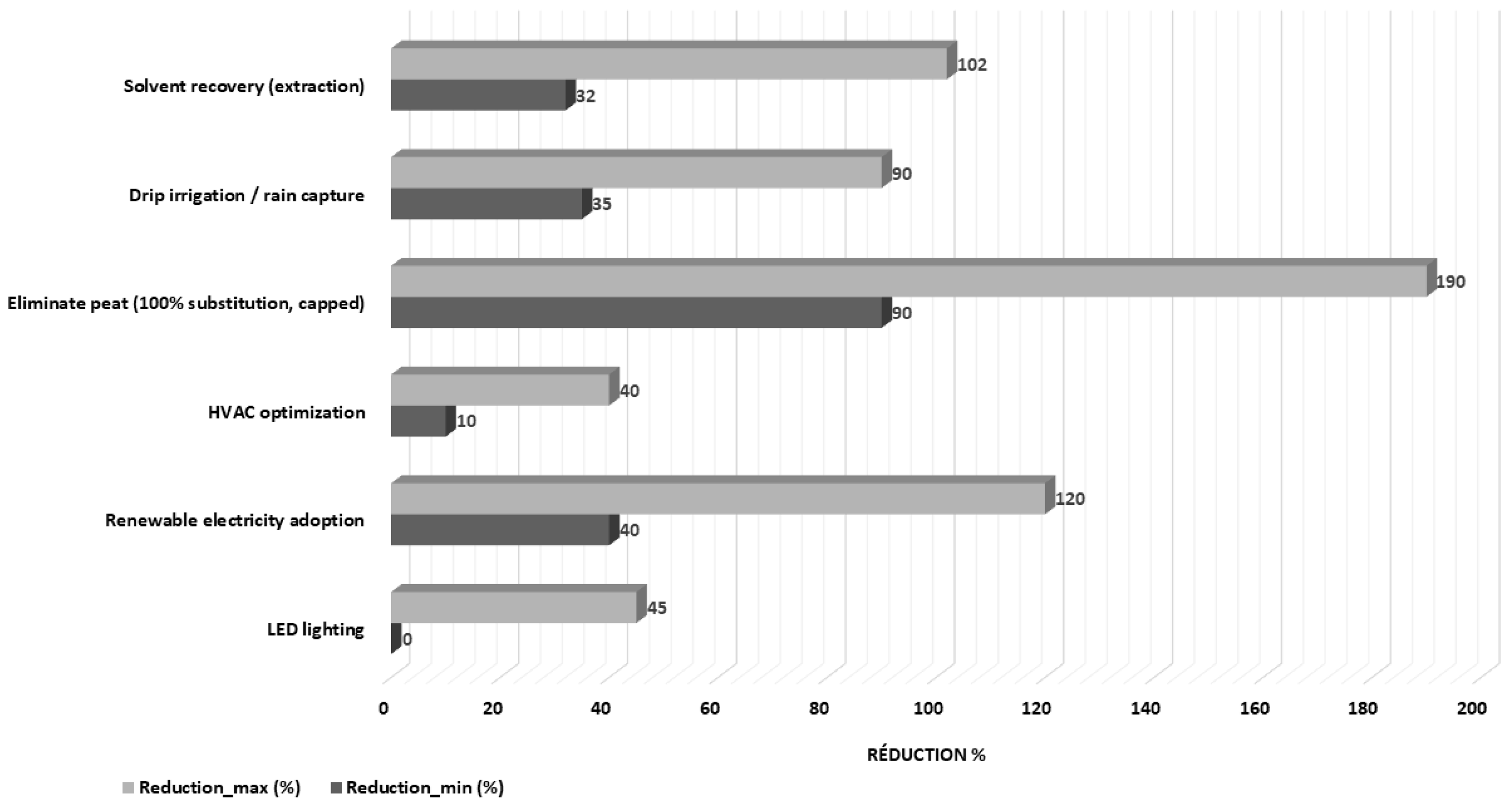
An analysis of the hotspots identified in the LCA literature on controlled-environment cannabis production underscores the predominance of energy consumption, the production and management of extraction solvents, and the use of peat-based substrates as principal contributors to environmental impacts. Recent research published in Nature Sustainability reports that the carbon footprint of indoor cultivation can range from 2283 to 5184 kg CO2 eq kg−1 of dried flower, with the majority of emissions attributable to the high electrical intensity of lighting and climate control systems [4]. Therefore, decarbonizing electricity and optimizing energy use are key priorities, The relative mitigation potential of key interventions is summarized in Figure 6.
More specifically, Figure 6 indicates substantial variability in the mitigation potential across intervention categories. The adoption of renewable electricity exhibits one of the highest reduction ranges approximately 40 to 120%, reflecting the dominant contribution of grid electricity to overall impacts, the maximum reduction of 120% observed for the adoption of renewable energies suggests not only the elimination of the carbon burden associated with electricity consumption, but also the accounting of impacts avoided through the expansion of the system or the reinjection of decarbonized surpluses into high-carbon regional energy mixes. In contexts characterized by carbon-intensive electricity mixes, this factor alone can yield transformative reductions. At the agronomic stage, peat use constitutes a significant source of emissions due to peatland oxidation and the energy required for extraction. Recent LCAs on growing media indicate that partial substitution of peat with bio-based alternatives (compost, plant fibers, hydrochar or biochar) can reduce the substrate’s global warming potential by 10 to 35% for intermediate substitution rates, with higher reductions when substitution is greater and alternative processes are optimized [7].
Moreover, water efficiency enhancement via localized irrigation, also known as drip irrigation, and alternative resource usage such as rainwater harvesting are cited as strategies that can lead to significant reductions in water resources and their consequences, provided that they are done in a properly sized and pump-efficient manner [49,53]. In addition, a switch to high-efficiency LED lighting technologies from high-pressure sodium (HPS) lighting is a known strategy to reduce electricity usage in controlled horticulture environments [59]. Again, however, this is contingent on light output, photoperiodicity, and HVAC usage.
As far as the extraction step is concerned, it has been identified in the LCA literature as one of the major mitigation options regarding the recovery of solvents through distillation/closed loop systems, which can reduce the impacts related to the production and disposal of new solvents [60]. By reducing the amount of new solvents to be produced, it is possible to significantly reduce emissions related to raw materials extraction, chemicals production, and transport.
Residual biomass valorization is another area that presents an enormous but underutilized potential in the circular economy. In the post-flower harvest stage, the residual biomass in the fields comprises considerable quantities of plant material such as stems, leaves, roots, and seed cakes that make up about 60–80% of the total above-ground dry weight [61]. The valorization options that can be implemented in the circular economy context comprise biocomposites (production of hempcrete from the residual biomass) [23], animal feed production (seed cakes and leaves) [62], biochar production (thermal degradation of woody biomass) [63], and anaerobic digestion with biomethane production [19]. The implementation of these valorization options in the life cycle assessment approach can decrease the environmental impact per functional unit by 15–40%, depending on the replacement factor of the substituted product.
However, the amount of these environmental benefits is highly dependent on the recovery rate and the carbon intensity of the energy mix powering the regeneration unit [64]. High recovery efficiencies combined with a low-carbon electricity mix can significantly enhance net GHG emission reductions, whereas energy-intensive regeneration supplied by carbon-intensive grids may partially offset the expected gains. Consequently, solvent recovery should be assessed within a systemic LCA framework that integrates both material circularity and the energy profile of the recovery infrastructure.

3.3. SWOT Analysis of LCA Application to Medicinal Cannabis

Table 3 synthesizes the principal strengths, weaknesses, opportunities, and threats associated with LCA methodology as applied to medicinal cannabis production systems, based on the 15 reviewed studies.
The SWOT analysis shows that, despite the establishment of a strong methodological basis, with its roots in the ISO 14040/44 framework [31,32], and the development of a growing body of evidence based on 13 different studies in various countries with different production structures, there are significant structural weaknesses in the published results. The critical weaknesses are the limited cradle-to-gate scope, the variability in functional unit definitions, and the lack of transparency in primary data sets. The opportunities are significant, including policy relevance to sustainability, the integration with the growing field of the circular economy through biomass valorization, and advances in cultivation technologies, all providing opportunities for environmental improvements or refinements in the methodology. The threats are largely structural or legal in nature, with scheduling constraints on access due to international scheduling, variability in grid carbon intensity limiting the generalizability across different regions, and the existence of an uncharacterized illicit production sector creating bias in global-level sustainability estimates.

4. Future Research and Knowledge Gaps

However, it is to be noted that despite the robustness of all the reviewed literature, there are a number of methodological limitations to be considered. Firstly, there is a large variability of FUs considered in all reviewed literature, ranging from mass-based FUs such as 1 kg of dried flowers to potency-based FUs such as 100 g of THC or CBD. Such variability limits direct comparability of results across different production systems and may lead to a level of bias in interpreting results.
Second, uncertainty in data still remains a significant concern due to limited access to primary data from licensed operations. As a result, a number of LCAs are conducted using modeled or secondary data, which may lead to a level of deviations in results in terms of energy, water, and material flows. Third, there is a significant level of geographical limitations in reviewed literature, with a large number of studies conducted in North America and a lack of representation of results from other climates (e.g., Europe, Africa, and Latin America). Such results should be extrapolated with caution to these regions, as differences in electricity mix, agronomic practices, and policy drivers may significantly impact LCA results.
In addition, the emphasis of system boundaries up to the gate does not include downstream activities such as formulation, distribution, and EoL management, thus creating the possibility of incomplete assessments of total environmental burdens of medicinal cannabis. It is also important to highlight the fact that most of the literature published has relied on secondary data, general modeling, and assumptions, especially for energy and water consumption, and agronomic inputs [10,20]. To develop high-quality databases for certain production facilities, there is a need for structured collaborations with licensed producers to gather representative primary data. This would greatly improve the accuracy and credibility of the results. In the future, research conducted using cradle-to-grave system boundaries and FUs would improve the results’ comparability and robustness.
Ethical and legal constraints are systemic factors in the life cycle assessment data gap in medicinal cannabis studies but are not sufficiently appreciated in the scientific community. Access challenges are significant in jurisdictions where cannabis is defined as a Schedule I/IV controlled substance under national and/or international laws. These include requirements from Institutional Review Board approvals for controlled substance studies, the licensing of investigators who handle plant materials, and confidentiality agreements that restrict licensed producers from disclosing information regarding production processes. These challenges make it necessary for life cycle assessors to rely on modeled data and/or industry averages, which introduce uncertainty in the inventory data at different stages of the life cycle assessment process. The self-censoring effect of authors who withhold disclosures in their publications to protect their business partners is also likely to affect the quality of the available evidence base. The United Nations Commission on Narcotic Drugs’ decision in 2020 [65] to reschedule cannabis from Schedule IV (the most restrictive category of controlled substances) to Schedule I of the 1961 Single Convention may be an initial step in the long process of relaxing access restrictions to cannabis in different jurisdictions and could potentially ease access in the future; however, its effect on the life cycle assessment data gap remains unrealized to date.
Moreover, there is limited literature on illicit or small-scale artisanal production. The current literature is almost entirely focused on legal and commercial crops, while unregulated production still makes up a significant percentage of the global market [66]. The development of proxy estimates or scenarios would also contribute to the completion of the overall picture of the environmental impacts of the sector. Finally, the integration of the social and economic dimensions still appears to be insufficient. Indeed, few studies combine environmental LCA with social LC analysis, such as working conditions, impacts on local communities, and governance, and life cycle cost analysis. Such an LCA-S-LCA-LCC approach would allow for a more holistic analysis of the sustainability of medicinal cannabis supply chains, in line with the principles of LC Management [67].
The opportunity to recover residual biomass is also an area that is largely untapped with regard to reducing environmental burdens. For instance, after harvesting flowers from cannabis plants, there is still a large quantity of biomass that is not utilized or valorized, such as stems, leaves, and roots. Such biomass has the opportunity to be utilized as biocomposites, health-oriented cannabis-based edible products, animal feed, renewable energy production materials, or even as materials to be utilized to produce biochar. Such an opportunity to valorize cannabis biomass has the potential to not only improve resource productivity but also minimize waste generation and its subsequent environmental burdens. If such an opportunity is included in LCA models, such as through system expansion or allocation methods, it is possible to obtain a more accurate assessment of the environmental burdens avoided with regard to biomass valorization pathways.
Lastly, alternative cultivation methods are still in their infancy. Techniques such as vertical farming, aeroponics, and in vitro cannabinoids are promising and may significantly impact medicinal cannabis value chains. LCAs are required to forecast their environmental impact and prevent any rebound effects that may occur due to increased energy demand. Moreover, the interface of LCA, policy-making, and markets is still in its infancy. If policy scenarios are considered, such as carbon pricing or renewable portfolio standards, it would help public policy-making to favor low environmental impact and high therapeutic value cannabis productions.

5. Conclusions

LCA provides a structured framework for quantifying the life cycle environmental impacts of medicinal cannabis production. The literature consistently shows that indoor cultivation systems are highly energy-intensive, particularly when supplied by fossil fuel-dominated electricity mixes, resulting in emissions of several thousand kg CO2 eq kg−1 of dried flower. On the other hand, outdoor systems tend to have lower carbon footprint scores, although this is largely influenced by upstream inputs such as peat-based substrates and agricultural inputs. From the comparative assessment of the carbon footprint of indoor and outdoor cultivation systems, it is evident that no system is better than the other but rather that the major hotspots vary. For indoor systems, electricity consumption and climate control are major contributors to carbon footprint scores. For outdoor systems, substrate production and input management are major contributors to carbon footprint scores. Water use is a major contributor to carbon footprint scores in both indoor and outdoor systems, although it is more pronounced outdoors. Nutrient and substrate management lead to eutrophication and acidification potentials. Extraction and post-harvest processing are also significant sources of GHG emissions, thus emphasizing the need to include these in the system boundaries beyond cultivation. The mitigation measures proposed in the LCA literature include electricity generation, efficient HVAC and LED solutions, replacement of peat-based substrates, precise fertilization, irrigation, and solvent recovery. Implementation of these measures can lead to a significant reduction in the environmental impact of medicinal cannabis cultivation. Future research should prioritize cradle-to-grave LCAs, harmonized FUs, integration of socio-economic indicators, and assessment of emerging technologies.

Author Contributions

Conceptualization, H.L. (Hamza Labjouj) and N.L.; methodology, H.L. (Hamza Labjouj) and N.L.; software, H.L. (Hamza Labjouj) and N.L.; data curation, H.L. (Hamza Labjouj) and S.E.; writing—original draft preparation, H.L. (Hamza Labjouj); writing—review and editing, H.L. (Hamza Labjouj), L.E.J., N.L., G.A.B., H.N., B.B., E.A.E.O., H.L. (Houda Labjar) and S.E.H.; investigation, H.L. (Hamza Labjouj). and N.L. All authors have read and agreed to the published version of the manuscript.

Funding

This research received no external funding.

Data Availability Statement

The original contributions presented in this study are included in the article. Further inquiries can be directed to the corresponding author.

Conflicts of Interest

The authors declare no conflicts of interest.

Abbreviations

LCALife Cycle Assessment
LCILife Cycle Inventory
LCIALife Cycle Impact Assessment
ISOInternational Organization for Standardization
GHGGreenhouse Gas
GWPGlobal Warming Potential
FUFunctional Unit
HVACHeating, Ventilation and Air Conditioning
CEAControlled Environment Agriculture
NOxOxides of Nitrogen
VOCsVolatile Organic Compounds
TRACITool for the Reduction and Assessment of Chemical and other Environmental Impacts
ReCiPeLife Cycle Impact Assessment Method
PRISMAPreferred Reporting Items for Systematic Reviews and Meta-Analyses
LEDLight Emitting Diode
HPSHigh Pressure Sodium
PVPhotovoltaic
PJ y−1Petajoules per year
Mt CO2 y−1Megatonnes of CO2 per year
NRNot Reported
S-LCASocial Life Cycle Assessment
LCCLife Cycle Costing
RHRelative Humidity
Kg CO2 eqkilogram CO2 equivalent
kWhKilowatt hour
L plant−1 d−1Liters per plant per day

References

  1. Andre, C.M.; Hausman, J.-F.; Guerriero, G. Cannabis sativa: The Plant of the Thousand and One Molecules. Front. Plant Sci. 2016, 7, 19. [Google Scholar] [CrossRef] [Scilit] [PubMed]
  2. Hoch, E.; Volkow, N.D.; Friemel, C.M.; Lorenzetti, V.; Freeman, T.P.; Hall, W. Cannabis, Cannabinoids and Health: A Review of Evidence on Risks and Medical Benefits. Eur. Arch. Psychiatry Clin. Neurosci. 2025, 275, 281–292. [Google Scholar] [CrossRef] [Scilit]
  3. Mills, E. The Carbon Footprint of Indoor Cannabis Production. Energy Policy 2012, 46, 58–67. [Google Scholar] [CrossRef] [Scilit]
  4. Summers, H.M.; Sproul, E.; Quinn, J.C. The Greenhouse Gas Emissions of Indoor Cannabis Production in the United States. Nat. Sustain. 2021, 4, 644–650. [Google Scholar] [CrossRef] [Scilit]
  5. Alvarez, J.-C.; Pape, E.; Grassin-Delyle, S.; Knapp, A. Cannabinoïdes de Synthèse: Aspects Pharmacologiques. Toxicol. Anal. Clin. 2015, 27, 23–32. [Google Scholar] [CrossRef] [Scilit]
  6. Bilgili, L. Operational Greenhouse Gas Emissions of Air, Rail, Road, and Sea Transport Modes in Life Cycle Perspective. In Transportation Energy and Dynamics; Sharma, S.K., Upadhyay, R.K., Kumar, V., Valera, H., Eds.; Springer Nature: Singapore, 2023; pp. 343–352. ISBN 978-981-99-2150-8. [Google Scholar]
  7. Zheng, Z.; Fiddes, K.; Yang, L. A Narrative Review on Environmental Impacts of Cannabis Cultivation. J. Cannabis Res. 2021, 3, 35. [Google Scholar] [CrossRef] [Scilit]
  8. Atakan, Z. Cannabis, a Complex Plant: Different Compounds and Different Effects on Individuals. Ther. Adv. Psychopharmacol. 2012, 2, 241–254. [Google Scholar] [CrossRef] [Scilit]
  9. Desaulniers Brousseau, V.; Goldstein, B.P.; Lachapelle, M.; Tazi, I.; Lefsrud, M. Greener Green: The Environmental Impacts of the Canadian Cannabis Industry. Resour. Conserv. Recycl. 2024, 208, 107737. [Google Scholar] [CrossRef] [Scilit]
  10. Bottem, R. Comparative Life Cycle Assessment of Cannabis Production Systems in Washington State. Doctoral Dissertation, Western Washington University, Bellingham, WA, USA, 2025. [Google Scholar]
  11. Kamminga, J.; Angela, M. The Blind Men and the Elephant: Measuring the Environmental Impact of Cannabis. J. Illicit. Econ. Dev. 2025, 7, 1–13. [Google Scholar] [CrossRef] [Scilit]
  12. Zou, S.; Kumar, U. Cannabinoid Receptors and the Endocannabinoid System: Signaling and Function in the Central Nervous System. Int. J. Mol. Sci. 2018, 19, 833. [Google Scholar] [CrossRef] [Scilit]
  13. Pellati, F.; Borgonetti, V.; Brighenti, V.; Biagi, M.; Benvenuti, S.; Corsi, L. Cannabis sativa L. and Nonpsychoactive Cannabinoids: Their Chemistry and Role against Oxidative Stress, Inflammation, and Cancer. BioMed Res. Int. 2018, 2018, 1691428. [Google Scholar] [CrossRef] [Scilit] [PubMed]
  14. Devinsky, O.; Marsh, E.; Friedman, D.; Thiele, E.; Laux, L.; Sullivan, J.; Miller, I.; Flamini, R.; Wilfong, A.; Filloux, F.; et al. Cannabidiol in Patients with Treatment-Resistant Epilepsy: An Open-Label Interventional Trial. Lancet Neurol. 2016, 15, 270–278. [Google Scholar] [CrossRef] [Scilit]
  15. Bethoux, F.A.; Farrell, R.; Checketts, D.; Sahr, N.; Berwaerts, J.; Alexander, J.K.; Skobieranda, F. A Randomized, Double-Blind, Placebo-Controlled Trial to Evaluate the Effect of Nabiximols Oromucosal Spray on Clinical Measures of Spasticity in Patients with Multiple Sclerosis. Mult. Scler. Relat. Disord. 2024, 89, 105740. [Google Scholar] [CrossRef] [Scilit]
  16. Überall, M.A. A Review of Scientific Evidence for THC:CBD Oromucosal Spray (Nabiximols) in the Management of Chronic Pain. J. Pain Res. 2020, 13, 399–410. [Google Scholar] [CrossRef] [Scilit]
  17. Nemecek, T.; Huguenin-Elie, O.; Dubois, D.; Gaillard, G.; Schaller, B.; Chervet, A. Life Cycle Assessment of Swiss Farming Systems: II. Extensive and Intensive Production. Agric. Syst. 2011, 104, 233–245. [Google Scholar] [CrossRef] [Scilit]
  18. Zambrano-Medina, Y.G.; Avila-Aceves, E.; Perez-Aguilar, L.Y.; Monjardin-Armenta, S.A.; Plata-Rocha, W.; Franco-Ochoa, C.; Chávez-Martínez, O. The Impact of Climate Change on Crop Productivity and Adaptation and Mitigation Strategies in Agriculture. In Transforming Agricultural Management for a Sustainable Future: Climate Change and Machine Learning Perspectives; Kanga, S., Singh, S.K., Shevkani, K., Pathak, V., Sajan, B., Eds.; Springer Nature: Cham, Switzerland, 2024; pp. 1–20. ISBN 978-3-031-63430-7. [Google Scholar]
  19. Griggs, A.T.; Roulier, A.; Granda, N.A.; Burek, J. Life Cycle Assessments of Residual Hemp Biomass from Cannabidiol Production Focusing on Disposal Pathways and Biomethane Recovery via Anaerobic Digestion. Resour. Conserv. Recycl. 2025, 223, 108525. [Google Scholar] [CrossRef] [Scilit]
  20. Meffo Kemda, M.; Marchi, M.; Neri, E.; Marchettini, N.; Niccolucci, V. Environmental Impact Assessment of Hemp Cultivation and Its Seed-Based Food Products. Front. Environ. Sci. 2024, 12, 1342330. [Google Scholar] [CrossRef] [Scilit]
  21. Buratti, C.; Barbanera, M.; Testarmata, F.; Fantozzi, F. Life Cycle Assessment of Organic Waste Management Strategies: An Italian Case Study. J. Clean. Prod. 2015, 89, 125–136. [Google Scholar] [CrossRef] [Scilit]
  22. Banerjee, R.; Ray, S.S. Sustainability and Life Cycle Assessment of Thermoplastic Polymers for Packaging: A Review on Fundamental Principles and Applications. Macromol. Mater. Eng. 2022, 307, 2100794. [Google Scholar] [CrossRef] [Scilit]
  23. Shanbhag, S.S.; Dixit, M.K.; Sideris, P. Examining the Global Warming Potential of Hempcrete in the United States: A Cradle-to-Gate Life Cycle Assessment. Dev. Built Environ. 2024, 20, 100572. [Google Scholar] [CrossRef] [Scilit]
  24. Mills, E. Energy-Intensive Indoor Cultivation Drives the Cannabis Industry’s Expanding Carbon Footprint. One Earth 2025, 8, 101179. [Google Scholar] [CrossRef] [Scilit]
  25. Nahtigal, I.; Blake, A.; Hand, A.; Florentinus-Mefailoski, A.; Hashemi, H.; Friedberg, J. The Pharmacological Properties of Cannabis. J. Pain Manag. 2016, 9, 481–491. [Google Scholar]
  26. Korf, D.J. Cannabis in Europe: Dynamics in Perception, Policy and Markets; Pabst Science Publishers: Lengerich, Germany, 2008. [Google Scholar]
  27. Chouvy, P.-A. The Myth of the Narco-State. Space Polity 2016, 20, 26–38. [Google Scholar] [CrossRef] [Scilit]
  28. Sgrò, S.; Lavezzi, B.; Caprari, C.; Polito, M.; D’Elia, M.; Lago, G.; Furlan, G.; Girotti, S.; Ferri, E.N. Delta9-THC Determination by the EU Official Method: Evaluation of Measurement Uncertainty and Compliance Assessment of Hemp Samples. Anal. Bioanal. Chem. 2021, 413, 3399–3410. [Google Scholar] [CrossRef] [Scilit]
  29. Pookkaman, W.; Samanchuen, T. An Innovation Framework of Medical Organic Cannabis Traceability in Digital Supply Chain. J. Open Innov. Technol. Mark. Complex. 2022, 8, 196. [Google Scholar] [CrossRef] [Scilit]
  30. Single Convention on Narcotic Drugs. Available online: https://www.unodc.org/unodc/en/treaties/single-convention.html (accessed on 2 April 2026).
  31. ISO 14044:2006; Life Cycle Assessment—Requirements and Guidelines, EN Environmental Management. European Committee for Standardization: Geneva, Switzerland, 2006.
  32. ISO 14040:2006; Environmental Management—Life Cycle Assessment—Principles and Framework. European Committee for Standardization: Geneva, Switzerland, 2006.
  33. Wernet, G.; Bauer, C.; Steubing, B.; Reinhard, J.; Moreno-Ruiz, E.; Weidema, B. The Ecoinvent Database Version 3 (Part I): Overview and Methodology. Int. J. Life Cycle Assess. 2016, 21, 1218–1230. [Google Scholar] [CrossRef] [Scilit]
  34. Hauschild, M.Z.; Huijbregts, M.A.J. Introducing Life Cycle Impact Assessment. In Life Cycle Impact Assessment; Hauschild, M.Z., Huijbregts, M.A.J., Eds.; Springer: Dordrecht, The Netherlands, 2015; pp. 1–16. ISBN 978-94-017-9744-3. [Google Scholar]
  35. Huijbregts, M.A.J.; Steinmann, Z.J.N.; Elshout, P.M.F.; Stam, G.; Verones, F.; Vieira, M.; Zijp, M.; Hollander, A.; van Zelm, R. ReCiPe2016: A Harmonised Life Cycle Impact Assessment Method at Midpoint and Endpoint Level. Int. J. Life Cycle Assess. 2017, 22, 138–147. [Google Scholar] [CrossRef] [Scilit]
  36. Chaiyat, N.; Klancoowat, W. Thermal, Energy, Economic, and Environmental Analysis of a Smart Wastewater Recovery System for Indoor Cannabis Production. Sustain. Technol. Entrep. 2023, 2, 100033. [Google Scholar] [CrossRef] [Scilit]
  37. de Ferreyro Monticelli, D.; Bhandari, S.; Eykelbosh, A.; Henderson, S.B.; Giang, A.; Zimmerman, N. Cannabis Cultivation Facilities: A Review of Their Air Quality Impacts from the Occupational to Community Scale. Environ. Sci. Technol. 2022, 56, 2880–2896. [Google Scholar] [CrossRef] [Scilit]
  38. Jelsma, M.; Kay, S. Cannabis and Climate: The Carbon Footprint and Energy Use of Indoor Cultivation; Transnational Institute (TNI): Amsterdam, The Netherlands, 2022. [Google Scholar]
  39. Campiglia, E.; Gobbi, L.; Marucci, A.; Rapa, M.; Ruggieri, R.; Vinci, G. Hemp Seed Production: Environmental Impacts of Cannabis sativa L. Agronomic Practices by Life Cycle Assessment (LCA) and Carbon Footprint Methodologies. Sustainability 2020, 12, 6570. [Google Scholar] [CrossRef] [Scilit]
  40. Desaulniers Brousseau, V.; Goldstein, B.P.; Sedlock, C.; Lefsrud, M. Environmental Impact of Outdoor Cannabis Production. ACS Agric. Sci. Technol. 2024, 4, 690–699. [Google Scholar] [CrossRef] [Scilit]
  41. Shiponi, S.; Bernstein, N. Response of Medical Cannabis (Cannabis sativa L.) Genotypes to P Supply under Long Photoperiod: Functional Phenotyping and the Ionome. Ind. Crops Prod. 2021, 161, 113154. [Google Scholar] [CrossRef] [Scilit]
  42. Gabriel, C.; Rhode, C.; Cronje, C.; Wyler, M.; Katsir, L.; Cropano, C.; Vogt, M.; Carrera, D.; George, G.M.; Ruckle, M.; et al. Genetic and Environmental Contributions to Agronomic Trait Variation in Cannabis sativa. Crop Sci. 2025, 65, e70168. [Google Scholar] [CrossRef] [Scilit]
  43. Roy, P.; Nei, D.; Orikasa, T.; Xu, Q.; Okadome, H.; Nakamura, N.; Shiina, T. A Review of Life Cycle Assessment (LCA) on Some Food Products. J. Food Eng. 2009, 90, 1–10. [Google Scholar] [CrossRef] [Scilit]
  44. Moreno-Chamba, B.; Salazar-Bermeo, J.; Hosseinian, F.; Martin-Bermudo, F.; Aguado, M.; De la Torre, R.; Martínez-Madrid, M.C.; Valero, M.; Martí, N.; Saura, D. Aromatic and Cannabinoid Profiles of Cannabis Inflorescences and Seed Oils: A Comprehensive Approach for Variety Characterization. Ind. Crops Prod. 2024, 210, 118143. [Google Scholar] [CrossRef] [Scilit]
  45. Russo, E.B. Taming THC: Potential Cannabis Synergy and Phytocannabinoid-Terpenoid Entourage Effects. Br. J. Pharmacol. 2011, 163, 1344–1364. [Google Scholar] [CrossRef] [Scilit]
  46. El Oihabi, M.; Soultana, M.; Ammari, M.; Ben Allal, L.; Fakih Lanjri, A. Diversity and Variability of Bioactive Compounds in Cannabis sativa: Effects on Therapeutic and Environmental Uses and Orientations for Future Research. Case Stud. Chem. Environ. Eng. 2024, 9, 100732. [Google Scholar] [CrossRef] [Scilit]
  47. Chouvy, P.-A. Cannabis Cultivation in the World: Heritages, Trends and Challenges. EchoGéo 2019, 02. [Google Scholar] [CrossRef] [Scilit]
  48. Chandra, S.; Lata, H.; ElSohly, M.A.; Walker, L.A.; Potter, D. Cannabis Cultivation: Methodological Issues for Obtaining Medical-Grade Product. Epilepsy Behav. 2017, 70, 302–312. [Google Scholar] [CrossRef] [Scilit]
  49. Büser, C.; Hartung, J.; Graeff-Hönninger, S. Subsurface Drip Irrigation Reduces Weed Infestation and Irrigation Water Use While Increasing Inflorescence and Cannabinoid Yield in an Outdoor Tunnel Cannabis sativa L. Production System. J. Cannabis Res. 2025, 7, 41. [Google Scholar] [CrossRef] [Scilit]
  50. Hourfane, S.; Mechqoq, H.; Bekkali, A.Y.; Rocha, J.M.; El Aouad, N. A Comprehensive Review on Cannabis sativa Ethnobotany, Phytochemistry, Molecular Docking and Biological Activities. Plants 2023, 12, 1245. [Google Scholar] [CrossRef] [Scilit] [PubMed]
  51. Brentrup, F.; Küsters, J.; Kuhlmann, H.; Lammel, J. Environmental Impact Assessment of Agricultural Production Systems Using the Life Cycle Assessment Methodology: I. Theoretical Concept of a LCA Method Tailored to Crop Production. Eur. J. Agron. 2004, 20, 247–264. [Google Scholar] [CrossRef] [Scilit]
  52. Bauer, S.; Olson, J.; Cockrill, A.; van Hattem, M.; Miller, L.; Tauzer, M.; Leppig, G. Impacts of Surface Water Diversions for Marijuana Cultivation on Aquatic Habitat in Four Northwestern California Watersheds. PLoS ONE 2015, 10, e0120016. [Google Scholar] [CrossRef] [Scilit]
  53. Dillis, C.; McIntee, C.; Butsic, V.; Le, L.; Grady, K.; Grantham, T. Water Storage and Irrigation Practices for Cannabis Drive Seasonal Patterns of Water Extraction and Use in Northern California. J. Environ. Manag. 2020, 272, 110955. [Google Scholar] [CrossRef] [Scilit]
  54. Dussy, F.E.; Hamberg, C.; Luginbühl, M.; Schwerzmann, T.; Briellmann, T.A. Isolation of Δ9-THCA-A from Hemp and Analytical Aspects Concerning the Determination of Δ9-THC in Cannabis Products. Forensic Sci. Int. 2005, 149, 3–10. [Google Scholar] [CrossRef] [Scilit]
  55. Potter, D.J.; Hammond, K.; Tuffnell, S.; Walker, C.; Di Forti, M. Potency of Δ9–Tetrahydrocannabinol and Other Cannabinoids in Cannabis in England in 2016: Implications for Public Health and Pharmacology. Drug Test. Anal. 2018, 10, 628–635. [Google Scholar] [CrossRef] [Scilit]
  56. Namdar, D.; Charuvi, D.; Ajjampura, V.; Mazuz, M.; Ion, A.; Kamara, I.; Koltai, H. LED Lighting Affects the Composition and Biological Activity of Cannabis sativa Secondary Metabolites. Ind. Crops Prod. 2019, 132, 177–185. [Google Scholar] [CrossRef] [Scilit]
  57. Mander, Ü.; Espenberg, M.; Melling, L.; Kull, A. Peatland Restoration Pathways to Mitigate Greenhouse Gas Emissions and Retain Peat Carbon. Biogeochemistry 2024, 167, 523–543. [Google Scholar] [CrossRef] [Scilit]
  58. Sdao, A.E.; De Lucia, B.; De Boni, A.; Ottomano Palmisano, G.; Roma, R. Peat Partial Replacement: Life Cycle Assessment and Eco-Efficiency in Potted Ornamental Sage Cultivation. Sustainability 2025, 17, 11238. [Google Scholar] [CrossRef] [Scilit]
  59. Adesina, I.; Bhowmik, A.; Sharma, H.; Shahbazi, A. A Review on the Current State of Knowledge of Growing Conditions, Agronomic Soil Health Practices and Utilities of Hemp in the United States. Agriculture 2020, 10, 129. [Google Scholar] [CrossRef] [Scilit]
  60. Amelio, A.; Genduso, G.; Vreysen, S.; Luis, P.; Bruggen, B.V. der Guidelines Based on Life Cycle Assessment for Solvent Selection during the Process Design and Evaluation of Treatment Alternatives. Green Chem. 2014, 16, 3045–3063. [Google Scholar] [CrossRef] [Scilit]
  61. Clarke, R.; Merlin, M. Cannabis: Evolution and Ethnobotany; University of California Press: Berkeley, CA, USA, 2013; ISBN 978-0-520-95457-1. [Google Scholar]
  62. Kamle, M.; Mahato, D.K.; Sharma, B.; Gupta, A.; Shah, A.K.; Mahmud, M.M.C.; Agrawal, S.; Singh, J.; Rasane, P.; Shukla, A.C.; et al. Nutraceutical Potential, Phytochemistry of Hemp Seed (Cannabis sativa L.) and Its Application in Food and Feed: A Review. Food Chem. Adv. 2024, 4, 100671. [Google Scholar] [CrossRef] [Scilit]
  63. Vávrová, K.; Solcova, O.; Knápek, J.; Weger, J.; Soukup, K.; Humešová, T.; Králík, T.; Bím, J. Economic Evaluation of Hemp’s (Cannabis sativa) Residual Biomass for Production of Direct Energy or Biochar. Fuel 2022, 329, 125435. [Google Scholar] [CrossRef] [Scilit]
  64. Tozzi, P.V.; Wisniewski, C.M.; Zalewski, N.J.; Savelski, M.J.; Slater, C.S.; Richetti, F.A. Life Cycle Assessment of Solvent Extraction as a Low-Energy Alternative to Distillation for Recovery of N-Methyl-2-Pyrrolidone from Process Waste. Green Process. Synth. 2018, 7, 277–286. [Google Scholar] [CrossRef] [Scilit]
  65. UN Commission on Narcotic Drugs Reclassifies Cannabis to Recognize Its Therapeutic Uses. Available online: https://www.who.int/news/item/04-12-2020-un-commission-on-narcotic-drugs-reclassifies-cannabis-to-recognize-its-therapeutic-uses (accessed on 30 March 2026).
  66. Hakkarainen, P.; Frank, V.A.; Barratt, M.J.; Dahl, H.V.; Decorte, T.; Karjalainen, K.; Lenton, S.; Potter, G.; Werse, B. Growing Medicine: Small-Scale Cannabis Cultivation for Medical Purposes in Six Different Countries. Int. J. Drug Policy 2015, 26, 250–256. [Google Scholar] [CrossRef] [Scilit]
  67. Moltesen, A.; Bonou, A.; Wangel, A.; Bozhilova-Kisheva, K.P. Social Life Cycle Assessment: An Introduction. In Life Cycle Assessment: Theory and Practice; Hauschild, M.Z., Rosenbaum, R.K., Olsen, S.I., Eds.; Springer International Publishing: Cham, Switzerland, 2018; pp. 401–422. ISBN 978-3-319-56475-3. [Google Scholar]
Figure 1. Mechanisms of action, approved and emerging therapeutic applications of the major cannabinoids, In the left panel, orange boxes represent the Delta-9-THC pathway and its associated receptors, while blue boxes indicate the CBD-mediated mechanisms. The green box represents the common analgesic outcome. In the right panel, distinct colors are used to categorize therapeutic areas: blue for pain management, orange for cancer management, teal for epilepsy, and purple for multiple sclerosis and emerging clinical applications.
Cleantechnol 08 00060 g001
Figure 2. PRISMA flowchart of the selection process.
Cleantechnol 08 00060 g002
Figure 3. Geographical distribution of the nine studies included in the systematic review, showing the spatial concentration of LCA research on medicinal cannabis production systems.
Cleantechnol 08 00060 g003
Figure 4. The life cycle of cannabis and the processing flow of extracts in the laboratory.
Cleantechnol 08 00060 g004
Figure 5. Comparison of cradle-to-gate GWP for indoor, greenhouse, and outdoor medicinal cannabis systems with regard to CO2 emissions [4,9,20,24,36,37,38].
Cleantechnol 08 00060 g005
Figure 6. Potential reduction ranges (%) for key mitigation strategies (LED, renewable electricity, HVAC optimization, peat substitution, drip irrigation/rainwater harvesting, solvent recovery) [4,19,56,57,58].
Cleantechnol 08 00060 g006
Table 1. Inclusion and exclusion criteria.
CategoryInclusion CriteriaExclusion Criteria
Type of publicationPeer-reviewed journal articles, academic theses, and technical reportsNon-scientific publications, conference abstracts without data
Publication periodFrom 2021 to December 2025Studies prior to 2021 without relevant reference data
LanguageEnglish or FrenchOther languages without accessible translation
TopicMedicinal or high-THC cannabis productionIndustrial hemp for fiber, seed, or composites
MethodologyComplete or partial LCA (inventory, impact, interpretation)Narrative reviews or theoretical frameworks without practical application
AccessibilityFreely accessible or available through institutional subscriptionsPaywalled papers unavailable through institutional access
Table 2. Summary of published LCA studies on medicinal cannabis.
System & LocationFUSystem BoundariesGWP (kg CO2
eq FU−1)
Energy Use (kWh FU−1)LCA Software/LCI DatabaseLCIA MethodKey Hotspots/Main DriversReference
Indoor (warehouse), USA (50 states, geographically resolved)1 kg dried flowerCradle-to-gate2283–5184 (median ≈ 3658)1817–4576Custom engineering model + ecoinvent v3.4 + US LCI Database (NREL)TRACI v2.1 (IPCC AR4, GWP100)Electricity grid, HVAC, lighting (>80% of total)[4]
Outdoor (farm), Washington, USA1 kg dried biomassSeed-to-sale27.5102SimaPro Craft 10.2 + ecoinvent v3.11 + US LCI DatabaseIPCC 2021 GWP 100 v1.03Electricity (pumps); propane; gasoline[10]
Mixed-light greenhouse, Washington, USA1 kg dried biomassSeed-to-sale140NMSupplemental lighting + HVAC
Indoor (efficient facility), Washington, USA1 kg dried biomassSeed-to-sale12.4NMOptimized electricity use
Indoor/Greenhouse/Outdoor, USA (national scale)1 kg dried flowerCradle-to-graveIndoor ~4500
Greenhouse ~2500
Outdoor ~700
NMCustom electricity energy model + EPA eGRID (no LCA software)IPCC GWP100 (simplified carbon footprint model)Sectoral energy use approximately 595 PJ y−1; ~44 Mt CO2-eq y−1[24]
Italy (EU) scenarios: outdoor/
organic, outdoor/conventional, indoor (incl. therapeutic flowers)
1 kg product (flowers or edibles)Cradle-to-gate collecting/estimatingScenario-specific LCA values reported (comparative Italy)Reported per scenarioSimaPro v9.0.0.49 + ecoinvent v3.6 + EU background dataCML-IA methodFertilizers; energy use for indoor systems[20]
Smart greenhouse, ThailandNMNM~622 (“smart greenhouse” case, estimated)Reportedno particular LCI database (collecting/estimating)ReCiPe (Midpoint)Cooling/heating; climate control[36]
Indoor (synthesis air/indoor), Global1 kg dried flower (reference synthesis)NM2200–6600 (reported LCA range)NMNo LCA software (narrative review-not a primary LCA)Multiple LCIA methods (synthesis of primary studies)HVAC; lighting; supplemental CO2[37]
Outdoor (pots), Québec, Canada1 kg flowerCradle-to-gate61.8–110.7/kgNegligibleOpenLCA 2.0.1+ ecoinvent v3.8 + Custom modelReCiPe 2016 Midpoint (H)Peat substrate (65–75%); fertilizers[9]
Indoor vs. Outdoor, Canada (multi-province)1 kg dried flowerCradle-to-gateIndoor ≈ 3260–5400; Outdoor ≈ 10% of indoor (e.g., ~326 in BC)High (indoor)HVAC/heating (gas) in cold climates; electricity mix
Global Synthesis1 kg dried flower (reference)NM2300–5200up to 5000 kWh kg−1 (indoor)No LCA software (literature synthesis)Multiple LCIA methods (synthesis)Supplemental CO2 = 11–25% of indoor emissions[38]
Hemp biomethane recovery, USA1 MJ biomethaneCradle-to-gateVariable (net negative)NRSimaPro 9.0TRACIAnaerobic digestion; biomass transport[19]
Indoor, UK narrative synthesis1 kg dried flowerCradle-to-distribution2300–50001800–4500Literature synthesisMultipleLighting; HVAC; solvent extraction[7]
Outdoor (field), Italy (Mediterranean)1 kg hemp seedCradle-to-farm-gate18.72 kg CO2 eq (highest scenario) (varies by genotype)NRSimaPro 9.0 + ecoinvent (European datasets)ReCiPe 2016 Midpoint (H) + Carbon FootprintN fertilization and planting density main drivers; genotype effect[39]
Outdoor cannabis, Québec, Canada1 kg dried flower or 100 g THCCradle-to-farm-gateVaries by fertilizer treatment (L+ vs. H−) (GWP reduced with optimized N/K)NROpenLCA software v2.0 + Custom model + ecoinvent v3.8ReCiPe 2016 Midpoint (H) (GWP, MFEP, TA, FD, MD)N fertilization (GWP); eutrophication (K/P); FU choice alters ranking[40]
Cannabis sector review, GlobalVarious FU (literature synthesis)Rapid literature review scope2300–5200 kg CO2 (indoor, from Summers) ~1.8 kg CO2 per gram (home cultivation)NRNo LCA software (rapid lit. review)Multiple LCIA methods (synthesis of primary studies)Fossil fuel heating dominant in cold climates; illicit cultivation unquantified[11]
NM = Not Mentioned; FU = Functional Unit; HVAC = Heating, Ventilation and Air Conditioning; GWP = Global Warming Potential; TRACI = Tool for the Reduction and Assessment of Chemical and other Environmental Impacts; ReCiPe = Life Cycle Impact Assessment method).
Table 3. SWOT analysis of LCA methodology applied to medicinal cannabis production systems.
StrengthsWeaknesses
Robust ISO 14040/44 framework provides standardized and replicable methodology
Growing evidence base across indoor, greenhouse, and outdoor systems
Demonstrated mitigation pathways: renewable electricity, LED, drip irrigation, peat substitution, solvent recovery
High cannabinoid value per unit product justifies environmental investment
Emerging policy frameworks (EU Green Deal, national carbon pricing) create compliance incentives
System boundaries rarely extend beyond cradle-to-gate post-harvest stages systematically omitted
Functional unit inconsistency (mass vs. potency-based) limits cross-study comparability
Primary data access severely restricted by commercial confidentiality of licensed producers
Geographic concentration: >80% of studies from North America limited global transferability
No standardized allocation method for multi-product cannabis systems
OpportunitiesThreats
Integration of cradle-to-grave system boundaries including product use and end-of-life
Harmonization of functional units (e.g., per therapeutic dose) to improve clinical LCA relevance
Carbon pricing mechanisms incentivize low-impact production innovations
Residual biomass valorization (stems, leaves, roots) via biochar, biocomposites, or anaerobic digestion
Prospective LCA benchmarking of vertical farming, aeroponics, and in vitro cannabinoid biosynthesis
Ethical and legal barriers restrict primary data collection from licensed production facilities
International scheduling (UN Single Convention) limits research access and data sharing globally
Grid carbon intensity variability undermines geographic generalizability of published GWP values
Illicit cultivation (significant global market share) remains entirely uncharacterized in the LCA literature
Rebound effects from emerging production technologies not yet quantified
Disclaimer/Publisher’s Note: The statements, opinions and data contained in all publications are solely those of the individual author(s) and contributor(s) and not of MDPI and/or the editor(s). MDPI and/or the editor(s) disclaim responsibility for any injury to people or property resulting from any ideas, methods, instructions or products referred to in the content.