

Journal Menu
► ▼ Journal Menu-
- Pharmaceuticals Home
- Aims & Scope
- Editorial Board
- Reviewer Board
- Topical Advisory Panel
- Early Career Editorial Board
- Instructions for Authors
- Special Issues
- Topics
- Sections & Collections
- Article Processing Charge
- Indexing & Archiving
- Editor’s Choice Articles
- Most Cited & Viewed
- Journal Statistics
- Journal History
- Journal Awards
- Society Collaborations
- Conferences
- Editorial Office
Journal Browser
► ▼ Journal BrowserNeed Help?
Announcements
24 June 2026
Pharmaceuticals Receives an Updated Impact Factor of 5.7
We are pleased to share that Pharmaceuticals (ISSN 1424-8247) was awarded an increased Impact Factor of 5.7 in the 2025 Journal Citation Reports™ released by Clarivate in June 2026. Pharmaceuticals ranks in Q1 (52 among 356 titles) in the “Pharmacology & Pharmacy, Chemistry, Medicinal” category (16 among 72 titles).
The 2025 Journal Impact Factor is calculated by dividing the number of citations received in 2025 to all publications in the journal from 2023 and 2024 by the total number of citable publications from those same years.
To learn more, visit our journal statistics website for detailed metrics or check out our news article for general information.
The support and dedication of all the editors, reviewers, authors, and readers are an integral part of the journal’s performance. We would like to take this opportunity to thank all of you who have contributed to the journal.
17 June 2026
2025 Impact Factors Released
Impact Factors measure how often articles in scientific journals are cited—specifically, the average number of citations received in a given year by articles published in that journal over the previous two years, as tracked in the Web of Science. For researchers, the number answers a practical question: how often is work published in this journal being picked up and built upon?
The metric is assigned to the journal as a whole, not to individual articles. A high Impact Factor tells you something useful about a journal's place in its field; it tells you less about any single paper within it.
For a complementary, article-level view, MDPI lists an Altmetric score on each article page. Where the Impact Factor tracks academic citations, the Altmetric score captures broader online attention: how an article is being shared, discussed, and referenced beyond the journal literature. Together, they offer two different ways of asking the same question: is this research reaching people?
With 2025 CiteScores from Scopus published a few weeks ago, Clarivate has now released this year's Journal Impact Factors in the Journal Citation Reports (JCR).
254 MDPI Journals Saw a Rise in Impact Factor
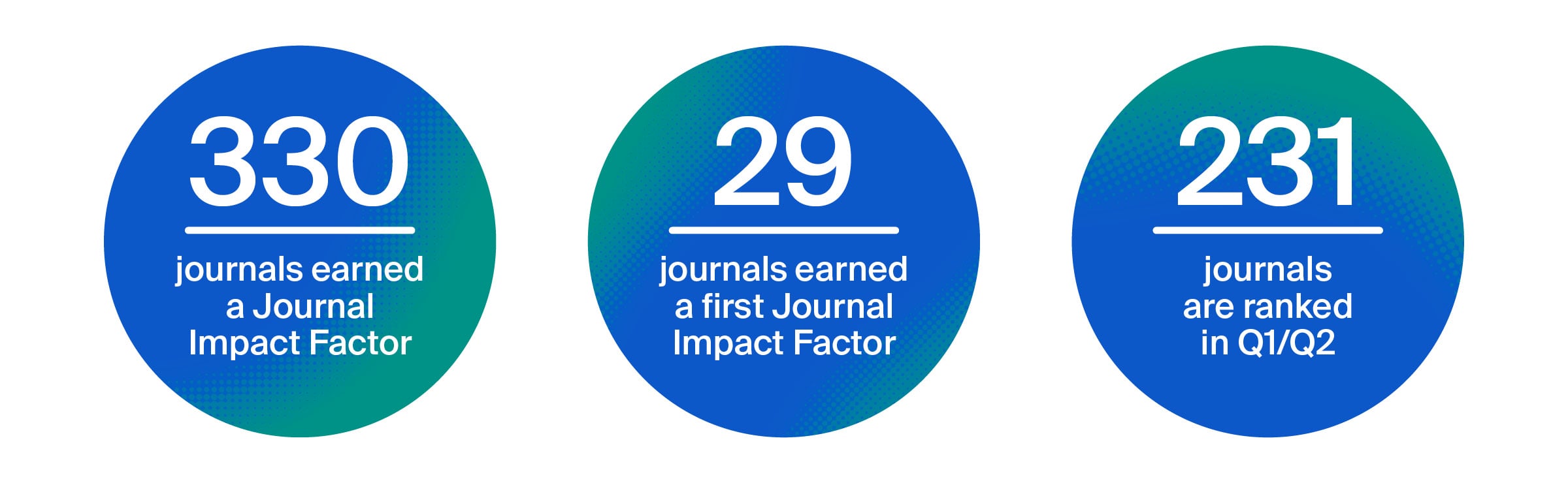
This year's JCR include 330 MDPI journals across a wide range of disciplines. Of these, 231 journals are placed in the top 50% (Q1 or Q2) of their respective subject categories, a result that spans fields as different as materials science, public health, environmental studies, and mathematics. 78 journals hold a top-quartile position (Q1), and 33 journals have a JIF of 5.0 or above.
- 330 journals earned a Journal Impact Factor (JIF)
- 29 journals earned a first JIF
- 254 journals had an increase in JIF
- 71% of ranked journals are in Q1 or Q2
For the full metrics on any MDPI journal, visit our Web of Science journals overview page or a journal's individual statistics page.
29 MDPI Journals Received Their First Journal Impact Factor
A first Impact Factor is a confirmation for an emerging journal. It marks the point at which a journal has been publishing long enough, and cited broadly enough, to enter the formal record of scientific influence. For the research communities those journals serve, it signals that the work being published is being read and built upon.
This year, 29 MDPI journals received a Journal Impact Factor for the first time, across a range of emerging and established research areas. Each represents years of editorial development and peer review—recognized in 2026 for the first time in the JCR.
This is also part of a longer shift in how science gets indexed. When the Emerging Sources Citation Index (ESCI) launched in 2016, 24 MDPI journals were included. By 2024 that number had grown to over 200, reflecting a broader change in the visibility of open access publishing within major citation tracking systems, not just at MDPI but across the sector.
Open Access with Impact
MDPI journals have received a total of 25.2 million citations in Web of Science. That figure matters less as a measure of MDPI's reach and more as a measure of what happens when research is freely available: it gets found, read, and used. Open access is only meaningful if the work actually travels and citations are one indicator that it does.
More than 4.6 million authors have published with MDPI. That breadth, across disciplines, institutions, and geographies, is what makes open access at this scale worth doing.
Thank You to the MDPI Scholarly Community
These results belong to the people who do the actual work: the Editors-in-Chief who set the standards, the Editorial Board Members and reviewers who hold them, and the authors who choose open access for their research. The numbers in the Journal Citation Reports are the downstream effect of decisions made at the desk, in the review, and at submission. Thank you for making them.
Data: 2025 Journal Impact Factors, Journal Citation Reports™ (Clarivate, 2026)
17 June 2026
Pharmaceuticals Webinar | Natural Pharmacons—Biologically Active Plant-Based Pharmaceuticals, 18 June 2026

Natural products and medicinal plants continue to play a central role in modern pharmaceutical research, offering a rich source of biologically active compounds with significant therapeutic potential. Advances in phytochemistry, pharmacology, biotechnology, and molecular sciences have greatly expanded our understanding of plant-derived metabolites and their possible applications in medicine and healthcare.
The webinar “Natural Pharmacons—Biologically Active Plant-Based Pharmaceuticals” is dedicated to highlighting recent scientific achievements and emerging perspectives in the field of natural product research. The event will bring together researchers and experts working on medicinal plants, phytopharmaceuticals, bioactive natural compounds, ethnopharmacology, pharmaceutical biotechnology, and related disciplines.
Through invited lectures and scientific discussions, participants will have the opportunity to explore current trends in the discovery, characterization, biological evaluation, and pharmaceutical application of plant-based compounds. The webinar also aims to encourage interdisciplinary collaboration and strengthen connections between traditional knowledge and evidence-based scientific research.
We warmly welcome all participants and thank our distinguished speakers and contributors for being part of this scientific event.
Keywords: natural pharmacons; medicinal plants; phytopharmaceuticals; pharmacognosy; phytochemistry; bioactive natural products; herbal medicines; ethnopharmacology; drug discovery from plants
Date: 18 June 2026
Time: 1:00 p.m. CEST | 7:00 p.m. CST Asia | 7:00 a.m. EDT
Webinar ID: 883 7616 8625
Webinar Secretariat: journal.webinar@mdpi.com
Website: https://sciforum.net/event/Pharmaceuticals-10
Register now for free!

Program:
| Speaker | Presentation | Time (CEST) | Time (CST Asia) |
| Dr. Marina Soković | Chair Introduction | 1:00–1:10 p.m. | 7:00–7:10 p.m. |
| Dr. Eman Zahran | Green Synthesis of MnO₂/MgO Nanoparticles via Sword Fern Extract for Pharmaceutical Applications | 1:10–1:25 p.m. | 7:10–7:25 p.m. |
| Prof. Dr. Gokhan Zengin | Recent Advancements on Enzyme Inhibitors | 1:25–1:40 p.m. | 7:25–7:40 p.m. |
| Dr. Iván Benito-Vázquez | Flavonoid Composition and Molecular Basis of the Potential Sexual-Enhancing Properties of a Turnera diffusa Extract (Liboost®) | 1:40–1:55 p.m. | 7:40–7:55 p.m. |
| Prof. Dr. İpek Süntar | Unlocking Nature’s Pharmacy: Preclinical and Ethnopharmacological Studies on Medicinal Plants | 1:55–2:10 p.m. | 7:55–8:10 p.m. |
| Dr. Filipa Mandim | Cell-Based Assays as Tools for Evaluating the Bioactive Potential of Plant-Derived Compounds | 2:10–2:25 p.m. | 8:10–8:25 p.m. |
| Q&A Session | 2:25–2:55 p.m. | 8:25–8:55 p.m. | |
| Dr. Dejan Stojković | Closing Remarks | 2:55–3:00 p.m. | 8:55–9:00 p.m. |
After registering, you will receive a confirmation email on how to join the webinar. Registrations with academic institutional email addresses will be prioritized.
Unable to attend? Register anyway, and we will let you know when the recording is available to view.
Webinar Chair and Keynote Speakers:
- Dr. Marina Soković, Department of Plant Physiology, Institute for Biological Research “Siniša Stanković”, National Institute of the Republic of Serbia, University of Belgrade, Serbia;
- Dr. Dejan Stojković, Department of Plant Physiology, Institute for Biological Research “Siniša Stanković”, National Institute of the Republic of Serbia, University of Belgrade, Serbia;
- Dr. Eman Zahran, Department of Pharmacognosy, Faculty of Pharmacy, Minya University, Egypt;
- Prof. Dr. Gökhan Zengin, Department of Biology, Faculty of Science, Selcuk University, Türkiye;
- Dr. Iván Benito-Vázquez, R&D Department, Pharmactive Biotech Products SLU, Spain;
- Prof. Dr. İpek Süntar, Department of Pharmacognosy, Faculty of Pharmacy, Gazi University, Türkiye;
- Dr. Filipa Mandim, Centro de Investigação de Montanha (CIMO), LA SusTEC, Instituto Politécnico de Bragança, Portugal.
Relevant Special Issue:
“Natural Pharmacons: Biologically Active Plant-Based Pharmaceuticals—4th Edition”
Guest Editors: Dr. Dejan Stojković and Dr. Marina Soković
Deadline for manuscript submissions: 15 October 2026
10 June 2026
Meet Us at the CCS–the 13th Natural Product Synthesis–Young Investigator Forum, 26–28 June 2026, Qingdao, China
Conference: CCS - the 13th Natural Product Synthesis - Young Investigator Forum
Organization: Chinese Chemical Society
Date: 26–28 June 2026
Place: Qingdao, China
MDPI journals will participate in the CCS - The 13th Natural Product Synthesis - Young Investigator Forum as an exhibitor. The conference will take place in Qingdao, China, from 26 to 28 June 2026.
The following MDPI journals will be represented at the symposium:
- Marine Drugs;
- Phycology;
- Antioxidants;
- Chemistry;
- Compounds;
- Cosmetics;
- Laboratories;
- Molbank;
- Pharmaceuticals;
- Sci. Pharm..
If you are planning to attend this conference, please feel free to start a conversation with us. Our delegates are looking forward to meeting you in person and answering any questions you may have.
For more information about the conference, please visit https://www.chemsoc.org.cn/meeting/NPSYIF2026/.
10 June 2026
Meet Us at the CRS 2026 Annual Meeting and Exposition, 6–9 July 2026, Lisbon, Portugal
Conference: The CRS 2026 Annual Meeting and Exposition
Date: 6–9 July 2026
Location: Lisbon, Portugal
This conference will be the 53rd annual conference of the Controlled Release Society. The annual CRS conference is the most important conference in the pharmaceutics field. The main topics of the conference include nanomedicine and nanoscale delivery, immuno delivery, oral delivery, skin and mucosal delivery, ocular delivery, bioengineering, gene delivery and gene editing, alternative methods to animal testing, long-acting drug delivery formulations, delivery to the nervous system, artificial intelligence, predictive models in pharmaceutical technologies, etc.
Pharmaceutics (ISSN 1999-4923) is a peer-reviewed, open access journal on the science and technology of pharmaceutics and biopharmaceutics and is published monthly online by MDPI. Pharmaceutics will participate in this event as an exhibitor together with twelve other MDPI journals.
The following open access journals from MDPI will be represented at the event:
- Pharmaceutics;
- Molecules;
- Biomedicines;
- Sci. Pharm.;
- JPM;
- Gels;
- Pharmacy;
- Immuno;
- Medicines;
- CIMB;
- Future Pharmacology;
- Pharmaceuticals;
- JPBI.
8 June 2026
Pharmaceuticals Receives an Increased CiteScore of 9.0

We are pleased to share that Pharmaceuticals (ISSN: 1424-8247) received an increased CiteScore of 9.0 in June 2026. The journal CiteScore ranks the journal 29 out of 191 titles (Q1) in the “Pharmaceutical Science” category, 29 out of 161 titles (Q1) in the “Drug Discovery” category, 39 out of 179 titles (Q1) in the “Molecular Medicine” category, an impressive achievement for a journal running in Volume 19.
You can find more statistics on our website.
The current CiteScores measure the average number of citations within a journal over a four-year window (2022–2025). The Scopus database provides a comprehensive suite of metrics that support informed publishing strategies, research evaluation and enable benchmarking of journal performance.
This achievement reflects the collective efforts of our authors, reviewers, and editors. Together we will continue to track the progress of Pharmaceuticals and its growing impact in medicinal chemistry and related drug sciences.
4 June 2026
Open Access, Broadly Recognized: 363 MDPI Journals Receive CiteScores for 2025
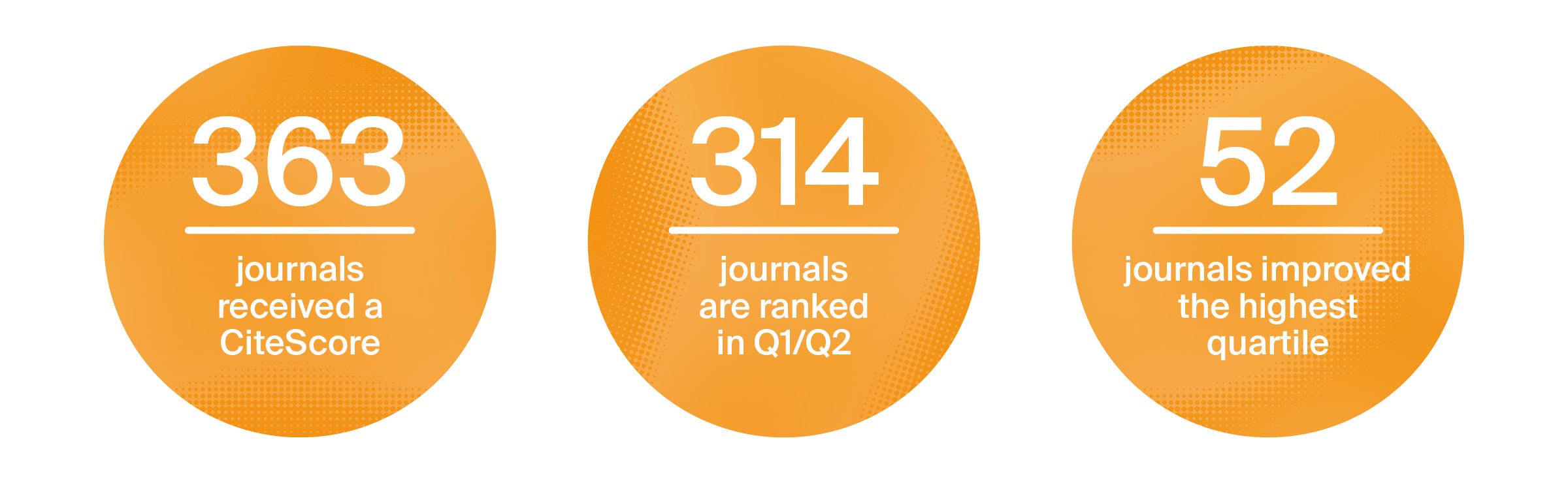
The 2025 CiteScore metrics have been officially released by Scopus, and the results confirm what has become a consistent pattern for MDPI's journal portfolio: broad recognition across disciplines, steady improvement across the majority of ranked titles, and a growing presence at the top of subject category rankings.
CiteScore, published annually by Elsevier's Scopus database, measures the average citations received by articles published in a journal over a four-year window. As a complement to the Journal Impact Factor, which uses a two-year window based on the Web of Science database, CiteScore provides an alternative, long-term perspective on citation performance.
The 365 MDPI journals in Scopus (as of May 2026) are indexed across a wide range of subject categories, ensuring that open access research remains highly discoverable to a global readership through one of the most widely used platforms in academic publishing.
Data Summary (2025 CiteScores)
- New Additions: 41 MDPI journals received a CiteScore for the first time.
- Trending Upward: 234 of 322 previously ranked journals (73%) saw an increase in their CiteScore compared to last year.
- High Visibility: 314 journals (86%) rank in Q1 or Q2 in at least one subject category.
- Elite Performance: 42 journals rank in the top 10% of their subject categories.
Portfolio Performance
Among the 322 journals that held a CiteScore in 2024, 234 saw an increase this year. Quartile improvements outnumbered declines across the portfolio, with 52 journals moving to a higher quartile and only 20 seeing a decline. Furthermore, no previously ranked journals were removed. The 42 journals now ranked in the top 10% of their subject categories are drawn from a strong foundation of 178 journals holding a Q1 position.
With the large majority of our indexed portfolio ranked in the top half of research fields, researchers can confidently choose MDPI to meet funder mandates for high-quality, fully compliant Open Access publishing.
Exceptional Achievements for Foods and Life
Notably, both Foods and Life achieved a 99th percentile ranking in their respective subject categories for the 2025 CiteScores. This outstanding placement positions them as leading journals in their fields and highlights the high visibility and global impact of the open access research they publish.
Journal Metrics and Beyond
Journal-level metrics describe outlets, not individual articles. An increasing number of funders and institutions—including signatories of DORA and the Coalition for Advancing Research Assessment—now explicitly encourage evaluation at the article level rather than by the journal in which research appears. MDPI supports this direction: we report CiteScore alongside the Journal Impact Factor, Journal Citation Indicator, and article-level usage data because no single number captures the full reach and contribution of published research.
Thank You
These results reflect the sustained effort of thousands of editors-in-chief, editorial board members, reviewers, and authors across every field MDPI serves. The metrics are the outcome; the work is yours.
3 June 2026
Pharmaceuticals Webinar | Therapies for Autoimmune Diseases, 17 June 2026

Welcoming message from the webinar chair:
It is my great pleasure to welcome you to this webinar, organized in the context of our Special Issue, “Therapies for Autoimmune Diseases”. We are delighted to have you with us, and we thank you for your interest and participation.
Autoimmune diseases affect a substantial proportion of the global population and represent a major public health challenge. Although these conditions are not currently curable, available therapies can provide meaningful clinical benefit and improve patients’ quality of life. However, commonly used treatments—particularly immunosuppressive agents—are associated with an increased risk of infections and, in some cases, malignancies. Therefore, there is a growing unmet need for more targeted and effective therapeutic strategies with improved safety profiles.
This webinar aims to provide a forum for the discussion of novel therapeutic approaches to autoimmune diseases. It brings together perspectives from basic and clinical immunology, fostering interdisciplinary exchange and the sharing of emerging concepts that bridge fundamental research and clinical application.
We are pleased to welcome two distinguished invited speakers, who will present their work on different aspects of this topic. We hope that their presentations and discussions will further stimulate scientific curiosity and contribute to the development of new and effective therapies for autoimmune diseases.
Thank you once again for joining us. We look forward to an engaging and fruitful webinar.
Warm regards,
Dr. Athanasios Sachinidis
Date: 17 June 2026
Time: 10:00 a.m. CEST | 4:00 p.m. CST Asia
Webinar ID: 830 3964 5862
Website: https://sciforum.net/event/Pharmaceuticals-9?subscribe
Register now for free!

Program:
| Speaker/Presentation | Time in CEST | Time in CST Asia |
| Host Pharmaceuticals Journal Introduction |
10:00–10:05 a.m. | 4:00–4:05 p.m. |
| Dr. Athanasios Sachinidis (Chair) Webinar Opening and Special Issue Introduction |
10:05–10:10 a.m. | 4:05–4:10 p.m. |
| Dr. Themis Alissafi Harnessing Immune Regulatory Network Metabolism to Combat Autoimmune Diseases |
10:10–10:30 a.m. | 4:10–4:30 p.m. |
| Prof. Michael P. Gantier Leveraging Ultra Short-RNA Therapeutics To Treat Autoimmunity |
10:30–10:50 a.m. | 4:30–4:50 p.m. |
| Q&A Session | 10:50–11:05 a.m. | 4:50–5:05 p.m. |
| Dr. Athanasios Sachinidis Closing of Webinar |
11:05–11:10 a.m. | 5:05–5:10 p.m. |
After registering, you will receive a confirmation email outlining how to join this webinar. Registrations with academic institutional email addresses will be prioritized.
Unable to attend? You can register anyway, and we will let you know when the recording is available to watch.
Webinar Chair and Speakers:
- Dr. Athanasios Sachinidis, 4th Department of Internal Medicine, Hippokration General Hospital, Aristotle University School of Medicine, Greece;
- Dr. Themis Alissafi, 1 Medical School, National and Kapodistrian University of Athens, Greece; 2 Immune Regulation Laboratory, Biomedical Research Foundation, Academy of Athens (BRFAA), Greece;
- Prof. Michael P. Gantier, 1 Centre for Innate Immunity and Infectious Diseases, Hudson Institute of Medical Research, Australia; 2 Department of Molecular and Translational Science, Monash University, Australia.
1 June 2026
Pharmaceuticals | Top Five Selected Papers Published in 2024–2025 in the “Radiopharmaceutical Sciences” Section

We invite you to explore the following top five papers published in 2024-2025 in the “Radiopharmaceutical Sciences” Section in Pharmaceuticals (ISSN: 1424-8247):
1. “Alpha-Emitting Radionuclides: Current Status and Future Perspectives”
by Matthias Miederer, Martina Benešová-Schäfer, Constantin Mamat, David Kästner, Marc Pretze, Enrico Michler, Claudia Brogsitter, Jörg Kotzerke, Klaus Kopka, David A. Scheinberg et al.
Pharmaceuticals 2024, 17(1), 76; https://doi.org/10.3390/ph17010076
Available online: https://www.mdpi.com/1424-8247/17/1/124
2. “Towards the Magic Radioactive Bullet: Improving Targeted Radionuclide Therapy by Reducing the Renal Retention of Radioligands”
by Kim E. de Roode, Lieke Joosten and Martin Behe
Pharmaceuticals 2024, 17(2), 256; https://doi.org/10.3390/ph17020256
Available online: https://www.mdpi.com/1424-8247/17/1/104
3. “[68Ga]Ga-FAPI-46 PET/CT for Staging Suspected/Confirmed Lung Cancer: Results on the Surgical Cohort Within a Monocentric Prospective Trial”
by Lucia Zanoni, Emilia Fortunati, Giulia Cuzzani, Claudio Malizia, Filippo Lodi, Veronica Serena Cabitza, Irene Brusa, Stefano Emiliani, Marta Assenza, Filippo Antonacci et al.
Pharmaceuticals 2024, 17(11), 1468; https://doi.org/10.3390/ph17111468
Available online: https://www.mdpi.com/1424-8247/17/3/281
4. “Mechanisms of Action of AGuIX as a Pan-Cancer Nano-Radiosensitizer: A Comprehensive Review”
by Clémentine Aubrun, Tristan Doussineau, Léna Carmès, Aurélien Meyzaud, Fabien Boux, Sandrine Dufort, Adeline Delfour, Olivier De Beaumont, Céline Mirjolet and Géraldine Le Duc
Pharmaceuticals 2025, 18(4), 519; https://doi.org/10.3390/ph18040519
Available online: https://www.mdpi.com/1424-8247/17/6/725
5. “Radioiodinated Bicyclic RGD Peptide Derivatives for Enhanced Tumor Accumulation”
by Naoya Kondo, Marika Kato, Aoi Oshima, Fuko Hirano, Anna Miyazaki and Takashi Temma
Pharmaceuticals 2025, 18(4), 549; https://doi.org/10.3390/ph18040549
Available online: https://www.mdpi.com/1424-8247/17/2/161
1 June 2026
Prof. Dr. Scott Reed Appointed Section Editor-in-Chief of Section “AI in Drug Development” in Pharmaceuticals

Prof. Dr. Scott Reed is a Professor in the Department of Chemistry and the Center for Advanced Computational Molecular Science at the University of Colorado Denver (CU Denver). With over two decades of research and academic experience, his work spans computational chemistry, artificial intelligence (AI), and machine learning (ML) for drug discovery and molecular design, as well as nanoscience, pharmacogenomics, green chemistry, and chemical education. At CU Denver, he leads an interdisciplinary research program integrating big data, chemoinformatics, and bioinformatics to develop reliable AI tools tailored for molecular and pharmaceutical applications. His current projects focus on enhancing the accuracy of large language models in chemical tasks, predicting adverse drug reactions via genomic and computational modeling, and advancing responsible AI for molecular science. Additionally, he actively trains students and early-career researchers in computational chemistry, AI-driven drug development, and bioinformatics, fostering the next generation of researchers in molecular and pharmaceutical science. In addition to his academic work, he is an entrepreneur and recently founded ChemIllusion, a company developing AI-powered molecular tools for scientists.
The following is a short Q&A with Prof. Dr. Scott Reed, who shared with us his vision for the journal and views on the field:
1. What appealed to you about the journal that made you want to take on the role as its Section Editor-in-Chief?
Artificial intelligence is transforming both pharmaceutical science and academic publishing at the same time. In drug discovery, there is tremendous excitement around the use of AI and machine learning to accelerate molecular design, improve prediction of drug safety and efficacy, identify new targets, and connect large biological and chemical datasets in ways that were previously impossible.
At the same time, generative AI presents both major challenges and major opportunities for scholarly communication. It is critical that we maintain integrity and trust in academic publishing while also recognizing the efficiencies that AI can bring.
Reducing tedium in scientific work is not a trivial matter. Time that scientists no longer spend on repetitive or administrative tasks can instead be devoted to deeper thinking, better experiments, and ultimately to improving human health and well-being. I was drawn to the opportunity to help shape a section that sits at the center of these changes: advancing AI-driven pharmaceutical science while maintaining high scientific standards.
2. What is your vision for the journal?
My vision is to take an expansive view of how machine learning and artificial intelligence can contribute to pharmaceutical science. I hope to see research manuscripts that span the full range of the field, including areas that have not traditionally been connected.
I am especially interested in work that bridges disciplines, combines computational and experimental approaches, and develops AI tools that are reliable, interpretable, and useful for real pharmaceutical applications.
Although generative AI can now produce customized summaries of the literature, there remains an important role for occasional review articles that offer expert judgment, critical perspective, and an opinionated viewpoint on specific intersections within the field.
3. What does the future of this field of research look like?
Machine learning has already become deeply embedded in many parts of the drug development pipeline, and I expect this role to continue expanding. Generative AI will increasingly contribute to molecular design, target identification, data interpretation, safety assessment, literature analysis, and decision support.
However, I do not think the field will experience a simple binary transition from human-designed drugs to AI-designed drugs. Instead, we will see a gradual progression in which AI plays a larger role across many stages of discovery and development. The most successful approaches will likely combine human expertise, experimental validation, and increasingly capable AI systems.
4. What do you think of the development of open access in the publishing field?
There is an ongoing debate about the legitimacy and ethics of how some companies have acquired data for training generative AI models. At the same time, many scientists have long embraced the open sharing of research results, as demonstrated by the growth and success of open access publishing.
While important ethical questions remain around data use, attribution, and training practices, we should also recognize the enormous contribution made by authors who have published their work openly. Open access research has helped build a broader scientific knowledge base, and AI is now making that knowledge more searchable, connected, and accessible than ever before.
We wish Prof. Dr. Scott Reed every success in his new position, and we look forward to his contributions to the journal.
