Next Issue
Volume 7, January
Previous Issue
Volume 6, November
error_outline You can access the new MDPI.com website here. Explore and share your feedback with us.


Eng, Volume 6, Issue 12 (December 2025) – 43 articles

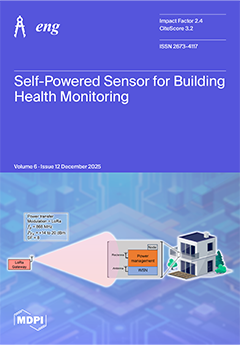
Cover Story (view full-size image): In this study, we present a fully autonomous sensor designed for building health monitoring. Powered by an integrated energy-harvesting module, the device operates without external wiring or batteries, enabling long-term deployment in hard-to-reach structural locations. By combining low-power sensing, robust wireless communication, and self-sustaining operation, the system ensures continuous data acquisition on building performance. The proposed solution supports more resilient and energy-efficient structural monitoring practices. View this paper
  • Issues are regarded as officially published after their release is announced to the table of contents alert mailing list.
  • You may sign up for e-mail alerts to receive table of contents of newly released issues.
  • PDF is the official format for papers published in both, html and pdf forms. To view the papers in pdf format, click on the "PDF Full-text" link, and use the free Adobe Reader to open them.
Order results
Result details
Section
Select all
Export citation of selected articles as:
47 pages, 2290 KB  
Article
Enhanced Henry Gas Solubility Optimization for Solving Data and Engineering Design Problems
by Jamal Zraqou, Ayman Alnsour, Riyad Alrousan, Hussam N. Fakhouri and Niveen Halalsheh
Eng 2025, 6(12), 374; https://doi.org/10.3390/eng6120374 - 18 Dec 2025
Viewed by 226
Abstract
Many engineering design problems are formulated as constrained optimization tasks that are nonlinear and nonconvex, and often treated as black boxes. In such cases, metaheuristic algorithms are attractive because they can search complex design spaces without requiring gradient information. In this work, we [...] Read more.
Many engineering design problems are formulated as constrained optimization tasks that are nonlinear and nonconvex, and often treated as black boxes. In such cases, metaheuristic algorithms are attractive because they can search complex design spaces without requiring gradient information. In this work, we propose an Enhanced Henry Gas Solubility Optimization (eHGSO) algorithm, which is an improved version of the physics-inspired HGSO method. The enhanced variant introduces six main contributions: (i) a more diverse, population-wide initialization strategy to cover the design space more thoroughly; (ii) adaptive temperature/pressure control parameters that automatically shift the search from global exploration to local refinement; (iii) an elitist archive with differential perturbation that accelerates exploitation around high-quality candidate designs; (iv) a simple combination of the global HGSO search moves with a lightweight gradient-free local search to refine promising solutions; (v) a constraint-handling mechanism that explicitly prioritizes feasible solutions while still allowing exploration near the constraint boundaries; and (vi) a complexity and ablation analysis that quantifies the impact of each mechanism and confirms that they introduce only modest computational overhead. We evaluate eHGSO on four classical constrained engineering design problems: the stepped cantilever beam, the tension/compression spring, the welded beam, and the three-bar truss. Its performance is compared with seventeen recent metaheuristic optimizers over multiple independent runs. eHGSO achieves the best average objective value on the cantilever, spring, and welded-beam problems and shares the best average result on the three-bar truss. Compared to the second-best method, the mean objective is improved by about 0.84% for the cantilever beam and 0.35% for the welded beam, while the spring and truss results are essentially equivalent at four significant figures. Convergence and robustness analyses show that eHGSO reaches high-quality solutions quickly and consistently. Overall, the proposed eHGSO algorithm appears to be a competitive and practical tool for constrained engineering design problems. Full article
(This article belongs to the Special Issue Interdisciplinary Insights in Engineering Research)
Show Figures

Figure 1

66 pages, 4022 KB  
Review
Thermal Management Challenges in 2.5D and 3D Chiplet Integration: A Review on Architecture–Cooling Co-Design
by Darpan Virmani and Baibhab Chatterjee
Eng 2025, 6(12), 373; https://doi.org/10.3390/eng6120373 - 17 Dec 2025
Viewed by 1123
Abstract
The increasing power density of 2.5D and 3D chiplets imposes severe thermal constraints that have a direct impact on the performance and long-term reliability of high-performance computing systems. Stacked and laterally integrated dies, which generate hundreds of watts per package, create localized hotspots [...] Read more.
The increasing power density of 2.5D and 3D chiplets imposes severe thermal constraints that have a direct impact on the performance and long-term reliability of high-performance computing systems. Stacked and laterally integrated dies, which generate hundreds of watts per package, create localized hotspots and inconsistent temperature fields, major obstacles to scalable heterogeneous integration. Research efforts have addressed these challenges by finite element and compact heat modeling, thermal interface material optimization (TIM), and advanced cooling solutions such as micro-channel liquid cooling and cold racks. While these approaches provide valuable insights, most remain case-specific, focusing on isolated packages or single design variables, and lack a general methodology for assessing thermal feasibility at an early stage. This review consolidates and critically analyzes contributions to thermal modeling at the package level, interposer thermal spreading, thermal characterization of TIMs, and the development of cooling technologies. A comparative review of published studies indicates a consistent threshold: 2.5D stacks are viable under air cooling at approximately 300 W, whereas 3D stacks require liquid or hybrid cooling in conjunction with high-performance thermal interface materials at about 350 W. The investigations identify interposer conductivity, thermal interface material thickness, and hotspot power distribution as the primary sensitivity elements. This study explores Thermal Feasibility Maps (TFMs), defined as multidimensional charts parameterized by architecture, cooling regime, and material stack. TFMs provide a systematic framework for comparing design trade-offs and support architecture cooling co-design in advanced chiplet systems. Full article
(This article belongs to the Topic Advanced Integrated Circuit Design and Application)
Show Figures

Figure 1

16 pages, 763 KB  
Article
In-Depth Exergy Analysis of the Thermochemical Conversion of Flax Straw via Pyrolysis
by Aknur Temireyeva, Yerbol Sarbassov and Dhawal Shah
Eng 2025, 6(12), 372; https://doi.org/10.3390/eng6120372 - 17 Dec 2025
Viewed by 231
Abstract
Pyrolysis is a promising thermochemical conversion process for transforming biomass waste into valuable products like bio-oil, syngas, and biochar. Understanding the thermodynamic efficiency of this process is important for optimizing its design and operation conditions. This study presents a novel approach for analyzing [...] Read more.
Pyrolysis is a promising thermochemical conversion process for transforming biomass waste into valuable products like bio-oil, syngas, and biochar. Understanding the thermodynamic efficiency of this process is important for optimizing its design and operation conditions. This study presents a novel approach for analyzing lignocellulosic biomass pyrolysis, including flax straw, by using conventional and advanced exergy techniques at different operating temperatures. Using Aspen Plus software, the pyrolysis process was accurately simulated, and system inefficiencies and possible areas for improvement were identified by performing both conventional and advanced exergy analysis. This study addresses the requirements to maximize the yield of valuable products, such as biochar, bio-oil, and biogas, while minimizing exergy losses. The pyrolysis reactor, cyclone, and flash were the main sources of exergy destruction, accounting for 32.2%, 31.8%, and 18.7% of the total exergy destruction, respectively. An advanced exergy analysis revealed that endogenous exergy, which is attributable to internal system irreversibilities, was the primary contributor to exergy destruction within the flax straw pyrolysis process. Notably, 35.6% of the total exergy loss can be potentially mitigated. The findings further suggest that temperature optimization has the potential to significantly reduce exergy destruction by 31.7% via enhancing reaction kinetics and overall conversion efficiency. Full article
(This article belongs to the Special Issue Advances in Decarbonisation Technologies for Industrial Processes)
Show Figures

Figure 1

11 pages, 3482 KB  
Article
Comprehensive Investigation of Relative Permittivity Effects on Perovskite Solar Cell Performance Using SCAPS-1D and Impedance Spectroscopy
by Abdelhadi Mortadi, Yassine Tabbai, Brahim Lizoul, Imane Salhi, El Hadi Chahid, Hamid Nasrellah, Redouane Mghaiouini and El Ghaouti Chahid
Eng 2025, 6(12), 371; https://doi.org/10.3390/eng6120371 - 17 Dec 2025
Viewed by 350
Abstract
Perovskite solar cells (PSCs) are promising photovoltaic technologies, yet their performance is critically influenced by the relative permittivity (εr) of the active layer, which governs charge carrier dynamics. This study employs SCAPS-1D simulations coupled with complex impedance and modulus spectroscopy to [...] Read more.
Perovskite solar cells (PSCs) are promising photovoltaic technologies, yet their performance is critically influenced by the relative permittivity (εr) of the active layer, which governs charge carrier dynamics. This study employs SCAPS-1D simulations coupled with complex impedance and modulus spectroscopy to systematically investigate the impact of varying the εr of the MAPbI3 layer from 4 to 12. We find that while the open-circuit voltage (Voc~1.05 V) and short-circuit current density (Jsc~25 mA cm−2) remain stable, the FF and efficiency η (%) decline from 78% to 70% and 20% to 17%, respectively, with increasing εr. Impedance analysis deconvoluted this trend, revealing a decrease in recombination time (τ1) and a peak in ionic transport time (τ2) at εr = 7. The optimal performance of 18.86% was achieved at a lower εr, demonstrating that minimizing recombination losses through permittivity engineering is crucial for advancing PSC efficiency. Full article
Show Figures

Figure 1

1 pages, 106 KB  
Correction
Correction: Hu et al. Driver Behavior-Driven Evacuation Strategy with Dynamic Risk Propagation Modeling for Road Disruption Incidents. Eng 2025, 6, 173
by Yanbin Hu, Wenhui Zhou and Hongzhi Miao
Eng 2025, 6(12), 370; https://doi.org/10.3390/eng6120370 - 17 Dec 2025
Viewed by 100
Abstract
The authors wish to make the following corrections to this paper [1]:In the original publication:Funding: This research received no external funding [...] Full article
17 pages, 38027 KB  
Article
Model-Driven Wireless Planning for Farm Monitoring: A Mixed-Integer Optimization Approach
by Gerardo Cortez, Milton Ruiz, Edwin García and Alexander Aguila
Eng 2025, 6(12), 369; https://doi.org/10.3390/eng6120369 - 17 Dec 2025
Viewed by 204
Abstract
This study presents an optimization-driven design of a wireless communications network to continuously transmit environmental variables—temperature, humidity, weight, and water usage—in poultry farms. The reference site is a four-shed facility in Quito, Ecuador (each shed 120m×12m) with a [...] Read more.
This study presents an optimization-driven design of a wireless communications network to continuously transmit environmental variables—temperature, humidity, weight, and water usage—in poultry farms. The reference site is a four-shed facility in Quito, Ecuador (each shed 120m×12m) with a data center located 200m from the sheds. Starting from a calibrated log-distance path-loss model, coverage is declared when the received power exceeds the receiver sensitivity of the selected technology. Gateway placement is cast as a mixed-integer optimization that minimizes deployment cost while meeting target coverage and per-gateway capacity; a capacity-aware greedy heuristic provides a robust fallback when exact solvers stall or instances become too large for interactive use. Sensing instruments are Tekon devices using the Tinymesh protocol (IEEE 802.15.4g), selected for low-power operation and suitability for elongated farm layouts. Model parameters and technology presets inform a pre-optimization sizing step—based on range and coverage probability—that seeds candidate gateway locations. The pipeline integrates MATLAB R2024b and LpSolve 5.5.2.0 for the optimization core, Radio Mobile for network-coverage simulations, and Wireshark for on-air packet analysis and verification. On the four-shed case, the algorithm identifies the number and positions of gateways that maximize coverage probability within capacity limits, reducing infrastructure while enabling continuous monitoring. The final layout derived from simulation was implemented onsite, and end-to-end tests confirmed correct operation and data delivery to the farm’s data center. By combining technology-aware modeling, optimization, and field validation, the work provides a practical blueprint to right-size wireless infrastructure for agricultural monitoring. Quantitatively, the optimization couples coverage with capacity and scales with the number of endpoints M and candidate sites N (binaries M+N+MN). On the four-shed case, the planner serves 72 environmental endpoints and 41 physical-variable endpoints while keeping the gateway count fixed and reducing the required link ports from 16 to 4 and from 16 to 6, respectively, corresponding to optimization gains of up to 82% and 70% versus dense baseline plans. Definitions and a measurement plan for packet delivery ratio (PDR), one-way latency, throughput, and energy per delivered sample are included; detailed long-term numerical results for these metrics are left for future work, since the present implementation was validated through short-term acceptance tests. Full article

(This article belongs to the Section Electrical and Electronic Engineering)
Show Figures

Figure 1

18 pages, 6849 KB  
Article
Neuro-Fuzzy Framework with CAD-Based Descriptors for Predicting Fabric Utilization Efficiency
by Anastasios Tzotzis, Prodromos Minaoglou, Dumitru Nedelcu, Simona-Nicoleta Mazurchevici and Panagiotis Kyratsis
Eng 2025, 6(12), 368; https://doi.org/10.3390/eng6120368 - 16 Dec 2025
Viewed by 288
Abstract
This study presents an intelligent modeling framework for predicting fabric nesting efficiency (NE) based on geometric descriptors of garment patterns, offering a rapid alternative to conventional nesting software. A synthetic dataset of 1000 layouts was generated using a custom Python algorithm that simulates [...] Read more.
This study presents an intelligent modeling framework for predicting fabric nesting efficiency (NE) based on geometric descriptors of garment patterns, offering a rapid alternative to conventional nesting software. A synthetic dataset of 1000 layouts was generated using a custom Python algorithm that simulates realistic garment-like shapes within a fixed fabric size. Each layout was characterized by five geometric descriptors: number of pieces (NP), average piece area (APA), average aspect ratio (AAR), average compactness (AC), and average convexity (CVX). The relationship between these descriptors and NE was modeled using a Sugeno-type Adaptive Neuro-Fuzzy Inference System (ANFIS). Various membership function (MF) structures were examined, and the configuration 3-3-2-2-2 was identified as optimal, yielding a mean relative error of −0.1%, with high coefficient of determination (R2 > 0.98). The model was validated through comparison between predicted NE values and results obtained from an actual nesting process performed with Deepnest.io, demonstrating strong agreement. The proposed method enables efficient estimation of NE directly from CAD-based parameters, without requiring computationally intensive nesting simulations. This approach provides a valuable decision-support tool for fabric and apparel designers, facilitating rapid assessment of material utilization and supporting design optimization toward reduced fabric waste. Full article
(This article belongs to the Special Issue Artificial Intelligence for Engineering Applications, 2nd Edition)
Show Figures

Figure 1

38 pages, 830 KB  
Article
Dynamics of a Wind-Driven Lotka–Volterra Amensalism System with Non-Selective Harvesting: Theoretical Analysis and Ecological Implications
by Qin Yue, Taimiao Bi and Fengde Chen
Eng 2025, 6(12), 367; https://doi.org/10.3390/eng6120367 - 15 Dec 2025
Viewed by 165
Abstract
This study investigates the dynamic behavior of a Lotka–Volterra amensalism system subject to non-selective harvesting, regulated by wind speed. We develop a coupled windharvesting population model that captures the dual regulatory mechanism of wind as an environmental factor on the marine ecosystem: it [...] Read more.
This study investigates the dynamic behavior of a Lotka–Volterra amensalism system subject to non-selective harvesting, regulated by wind speed. We develop a coupled windharvesting population model that captures the dual regulatory mechanism of wind as an environmental factor on the marine ecosystem: it weakens the amensalistic interaction between species by enhancing the dilution of inhibitory substances while simultaneously suppressing human harvesting intensity by impeding fishing operations. Using stability theory and the Lyapunov function method, we systematically analyze the existence and stability of equilibrium points and explore the ecological state transitions driven by varying wind speed. The results show that the system admits four possible equilibrium states. Among them, the positive equilibrium, whenever it exists, is globally asymptotically stable. As wind speed increases, the system undergoes sequential ecological regime shifts: from extinction of both species to dominance by a single species and finally to stable coexistence of both species. Numerical simulations confirm the theoretical findings and reveal the intrinsic mechanism by which wind promotes biodiversity: by reducing harvesting pressure and mitigating the amensalistic effect. The concept of critical wind speed proposed in this work offers a quantitative basis for managing wind conditions in marine protected areas and designing adaptive harvesting strategies, holding significant implications for marine conservation and sustainable fishery development. Full article
(This article belongs to the Section Chemical, Civil and Environmental Engineering)
Show Figures

Figure 1

12 pages, 1093 KB  
Article
Innovative Retarders for Controlling the Setting Characteristics of Fly Ash-Slag Geopolymers
by Shaise Kurialanickal John, Alessio Cascardi, Madapurakkal Nandana, Femin Kurian, Niyas Aruna Fathima, M. Muhammed Arif and Yashida Nadir
Eng 2025, 6(12), 366; https://doi.org/10.3390/eng6120366 - 15 Dec 2025
Viewed by 274
Abstract
Geopolymers, as sustainable alternatives to traditional cementitious materials, offer superior mechanical and durability properties; however, they face challenges with rapid setting, particularly in fly ash–slag systems. Retarders play a crucial role in tailoring the setting behavior and workability of geopolymers, especially in applications [...] Read more.
Geopolymers, as sustainable alternatives to traditional cementitious materials, offer superior mechanical and durability properties; however, they face challenges with rapid setting, particularly in fly ash–slag systems. Retarders play a crucial role in tailoring the setting behavior and workability of geopolymers, especially in applications where extended setting time or placement under challenging conditions is required. Geopolymers, unlike traditional Portland cement, undergo a rapid alkali-activation process involving dissolution, polymerization, and hardening of aluminosilicate materials. This can lead to very short setting times, particularly at elevated temperatures. In this scenario, the present study investigates the effect of different retarders-including cellulose, starch, borax, and their different combinations the setting time. The effectiveness of a retarder depends on the geopolymer formulation, including the type of precursor, activator, and curing conditions. The initial and final setting times improved by the addition of retarders, whereas most of the retarders had a negative effect on compressive strength. The optimum retarder combination was starch and borax, with a remarkable improvement in setting time and a positive result on the compressive strength, while maintaining reasonable workability. The retarder was equally effective under both ambient and oven-cured conditions and for different mix proportions of fly ash (FA) and slag, indicating that its effectiveness depends only on the type of precursors used. The study reveals the use of borax along with cellulose- or sugar-based compounds, which balances the reaction kinetics, resulting in balanced mechanical characteristics. Full article
(This article belongs to the Special Issue Emerging Trends in Inorganic Composites for Structural Enhancement)
Show Figures

Figure 1

32 pages, 15541 KB  
Article
Coupled CFD–DEM Modeling of Sinkhole Development Due to Exfiltration from Buried Pipe Defects
by Jun Xu, Bryce Vaughan and Fei Wang
Eng 2025, 6(12), 365; https://doi.org/10.3390/eng6120365 - 14 Dec 2025
Viewed by 213
Abstract
Leakage from defective buried pipelines can lead to progressive soil erosion and void formation, ultimately resulting in ground collapse or sinkhole development. To better understand the underlying mechanisms of this process, this research utilizes a coupled computational fluid dynamics (CFD)–discrete element method (DEM) [...] Read more.
Leakage from defective buried pipelines can lead to progressive soil erosion and void formation, ultimately resulting in ground collapse or sinkhole development. To better understand the underlying mechanisms of this process, this research utilizes a coupled computational fluid dynamics (CFD)–discrete element method (DEM) modeling approach to investigate soil erosion processes driven by water leakage from defective underground pipelines. The numerical model captures fluid–particle interactions at both macroscopic and microscopic scales, providing detailed insights into erosion initiation, void zone evolution, and particle transport dynamics under varying hydraulic and geometric conditions. Parametric studies were conducted to evaluate the effects of exfiltration pressure, defect size, and particle diameter on erosion behavior. Results show that erosion intensity and particle migration increase with hydraulic pressure up to a threshold, beyond which compaction and particle bridging reduce sustained transport. The intermediate defect size (12.7 mm) consistently produced the most continuous and stable erosion channels, while smaller and larger defects exhibited localized or asymmetric detachment patterns. Particle size strongly influenced erosion susceptibility, with finer grains mobilized more readily under the same flow conditions. The CFD–DEM simulations successfully reproduce the nonlinear and self-reinforcing nature of internal erosion, revealing how hydraulic gradients and particle rearrangement govern the transition from local detachment to large-scale cavity development. These findings advance the understanding of subsurface instability mechanisms around leaking pipelines and provide a physically consistent CFD–DEM framework that aligns well with published studies. The model effectively reproduces the key stages of erosion observed in the literature, offering a valuable tool for assessing erosion-induced risks and for designing preventive measures to protect buried infrastructure. Full article
(This article belongs to the Special Issue Fluid-Structure Interaction in Civil Engineering)
Show Figures

Figure 1

20 pages, 1213 KB  
Article
Optimization of Bunkering Logistics at Sea, Taking into Account Cost, Time and Technical Constraints
by Dmitry Pervukhin and Semyon Neyrus
Eng 2025, 6(12), 364; https://doi.org/10.3390/eng6120364 - 14 Dec 2025
Viewed by 333
Abstract
This study examines the organization of offshore bunkering operations with the aim of improving their economic and logistical efficiency. A mathematical model is proposed that minimizes the total cost of fleet refueling while accounting for technical limitations of vessels, service time windows, and [...] Read more.
This study examines the organization of offshore bunkering operations with the aim of improving their economic and logistical efficiency. A mathematical model is proposed that minimizes the total cost of fleet refueling while accounting for technical limitations of vessels, service time windows, and external operational constraints. The formulation extends classical vehicle routing approaches by incorporating fixed and variable costs as well as penalties for delays. A case study based on the Sea of Okhotsk fleet illustrates the application of the model to ten client vessels and four bunkering ships. Using mixed-integer programming combined with heuristic route construction, optimal routing solutions were obtained and tested under varying fuel prices, demand volumes, and fleet sizes. In a stylized one-day case study with ten client vessels located within a 100 km radius around Magadan, the results indicate that reducing the number of active bunkering vessels from four to three can lower overall operating costs while maintaining service quality, yielding indicative savings of approximately 12–18% relative to a simple sequential baseline policy in which bunkering vessels serve customers in a fixed order and the client set is partitioned roughly equally among vessels. The proposed approach provides a practical framework for decision-makers to enhance planning, resource allocation, and operational reliability in marine fuel supply chains. Full article
(This article belongs to the Special Issue Supply Chain Engineering)
Show Figures

Figure 1

18 pages, 6552 KB  
Article
Influencing Factors and Control Measures for Post-Construction Settlement of High-Fill Red Clay Embankment
by Jian-Bin Xie, Bin Wu, Rong-Gu Jia, Yu-Chen Yang, Ke-Nu Li and Xue-Min Zhang
Eng 2025, 6(12), 363; https://doi.org/10.3390/eng6120363 - 12 Dec 2025
Viewed by 234
Abstract
This study systematically investigates the post-construction settlement behavior of high-fill red clay embankments, focusing on the influences of three key factors (water content, degree of compaction, and lift thickness) and the effectiveness of geogrid-based reinforcement measures. A three-dimensional finite-element model based on the [...] Read more.
This study systematically investigates the post-construction settlement behavior of high-fill red clay embankments, focusing on the influences of three key factors (water content, degree of compaction, and lift thickness) and the effectiveness of geogrid-based reinforcement measures. A three-dimensional finite-element model based on the Mohr–Coulomb constitutive theory was established using MIDAS GTS NX 2022 R1 to simulate staged construction processes and long-term settlement under self-weight loading. The results indicate that settlement is predominantly concentrated in the upper fill zone adjacent to the slope surface, with displacement contours sagging inward toward the fill interior, while the underlying foundation undergoes negligible deformation. An elevated water content and reduced degree of compaction significantly enhance the compressibility of red clay, leading to increased settlement magnitudes and prolonged stabilization periods. Excessively thick lifts result in inadequate deep compaction, thereby inducing larger final settlements. Two reinforcement schemes (geogrid combined with anti-slide piles and geogrid combined with a gravity retaining wall) were verified to effectively mitigate post-construction settlement, with the former achieving a more pronounced improvement in the embankment stability coefficient. Based on the comprehensive analysis, optimal construction control parameters for high-fill red clay embankments are proposed: precise regulation of water content, maximization of compaction degree, and adoption of a lift thickness of approximately 30 cm. The findings of this study provide quantitative technical support and design references for the settlement control of similar high-fill red clay embankment projects in southern China’s mountainous and hilly regions. Full article
(This article belongs to the Special Issue Advanced Numerical Simulation Techniques for Geotechnical Engineering)
Show Figures

Figure 1

50 pages, 6918 KB  
Article
Development of a Methodology for Optimizing Repair Interval Timing for Mining Equipment Units
by Adil Kadyrov, Aliya Kukesheva, Miras Daribzhan and Aibek Aidraliyev
Eng 2025, 6(12), 362; https://doi.org/10.3390/eng6120362 - 11 Dec 2025
Viewed by 222
Abstract
This study presents a methodology for optimizing repair intervals of mining equipment by integrating economic efficiency and reliability criteria. A review of existing maintenance strategies revealed their limitations, and a mathematical model was developed that incorporates both projected financial expenditures and the probability [...] Read more.
This study presents a methodology for optimizing repair intervals of mining equipment by integrating economic efficiency and reliability criteria. A review of existing maintenance strategies revealed their limitations, and a mathematical model was developed that incorporates both projected financial expenditures and the probability of equipment failures, enabling more accurate prediction of the optimal repair timing. This study introduces a novel integration of the Weibull reliability distribution with a cost-convolution optimization model, explicitly capturing the trade-off between economic efficiency and failure risk. Unlike traditional fixed-schedule approaches, the proposed model provides analytically optimized repair intervals derived from observed degradation trends. Statistical analysis demonstrates that unplanned repairs are, on average, 56% more costly than scheduled ones, highlighting the need to revise current preventive maintenance practices. The cost comparison is based on 34 restoration records collected from publicly available supplier price lists and field maintenance logs, converted into a unified currency. Based on operational data and reliability parameter estimation, the optimal repair interval was determined to be 5129 machine hours, which minimizes both the probability of failure and total maintenance-related financial losses, while reducing unplanned downtime. Unlike traditional fixed-schedule approaches, the proposed model allows adaptive adjustment of maintenance intervals according to the actual degradation characteristics of the equipment. The practical significance of the research lies in its ability to help mining enterprises reduce expenditures on corrective repairs, extend the service life of machinery, and improve overall operational efficiency. The findings contribute to advancing maintenance optimization in the mining industry, supporting more sustainable and cost-effective equipment management. Full article
(This article belongs to the Special Issue Interdisciplinary Insights in Engineering Research)
Show Figures

Figure 1

20 pages, 2838 KB  
Article
Optimization of Metallic Support Geometry for Automotive Doors Using CAD, CAE, and Taguchi Method to Improve Structural Rigidity
by Abigail Guzmán-Siles, Eduardo Tovar-Martínez, María Guadalupe Navarro-Rojero, Víctor Hugo Mercado-Lemus, José Antonio Betancourt-Cantera, Isabel Pereyra, Miguel Ángel González-López, Jan Mayén-Chaires, Isaías E. Garduño and Mayra del Ángel-Monroy
Eng 2025, 6(12), 361; https://doi.org/10.3390/eng6120361 - 11 Dec 2025
Viewed by 304
Abstract
The structural performance of automotive doors is highly dependent on their metallic support; however, conventional development processes often involve multiple CAD-CAE iterations, which increase lead time and engineering effort. This study presents a methodology for optimizing metallic support geometry by integrating Computer-Aided Design [...] Read more.
The structural performance of automotive doors is highly dependent on their metallic support; however, conventional development processes often involve multiple CAD-CAE iterations, which increase lead time and engineering effort. This study presents a methodology for optimizing metallic support geometry by integrating Computer-Aided Design (CAD), Computer-Aided Engineering (CAE), and the Taguchi Design of Experiments (DOE). A Taguchi L16 orthogonal array was used to evaluate eight key geometric factors, including material thickness, fixation point configuration, and geometric reinforcements. Finite element simulations with a meshless solver significantly reduced pre-processing time without compromising accuracy. By analyzing the signal-to-noise (S/N) ratio, the optimal factor combination was identified, which maximized stiffness while minimizing displacement and ensuring robustness against material variability. The optimal design achieved a stiffness of 248 N/mm, a substantial increase over the baseline’s 39 N/mm. This design demonstrates the potential of this methodology to dramatically improve structural performance from the early stages of development and accelerate product development by reducing design iterations. Full article
Show Figures

Figure 1

31 pages, 5491 KB  
Article
Global Assessment of Radio Navigation Aid Networks and Their Contribution to Performance-Based Navigation Implementation
by Ivan Ostroumov, Nataliia Kuzmenko and Maksym Zaliskyi
Eng 2025, 6(12), 360; https://doi.org/10.3390/eng6120360 - 10 Dec 2025
Viewed by 393
Abstract
Throughout the history of civil aviation, radio navigation aids have played a crucial role in ensuring the safety and continuity of air transportation. Although the development of Global Navigation Satellite Systems (GNSS) over the past half-century has significantly improved positioning accuracy, the system’s [...] Read more.
Throughout the history of civil aviation, radio navigation aids have played a crucial role in ensuring the safety and continuity of air transportation. Although the development of Global Navigation Satellite Systems (GNSS) over the past half-century has significantly improved positioning accuracy, the system’s vulnerability to interference considerably reduces its reliability and poses a risk to civil aviation safety. This limitation highlights the crucial role of ground-based radio navigation networks in ensuring nominal flight operations. This study presents a comprehensive analysis of the global coverage and performance of radio navigation aid networks and assesses the implementation level of Performance-Based Navigation (PBN) by Air Navigation Service Providers (ANSPs) worldwide. A novel methodology is proposed for network performance evaluation, incorporating spatial characteristics of parameter distribution across global airspace using a geospatial indexing framework to determine airspace configurations compliant with various area navigation (RNAV) specifications. The performance of DME/DME, VOR/DME, and VOR/VOR positioning methods is evaluated within the official ICAO regional airspace structure. The results indicate that the European and North American regions currently maintain the most developed DME and VOR networks and propose reliable infrastructure sustainability. Globally, RNAV 1 capability is supported within approximately 20.2% of airspace using DME/DME and 3.45% using VOR/DME, while RNAV 5 coverage extends over 23.61% of global airspace, which approves resource efficiency distribution. RNAV 10 coverage could be supported by the VOR/VOR positioning method only in 13.48% of global airspace. Overall, the obtained results confirm the limited positioning performance of VOR network compared with DME, supporting the continuation of VOR network rationalization strategies and highlighting the need for optimized resource sharing to ensure the resilience and safety of the global air navigation system. Full article
Show Figures

Figure 1

13 pages, 1698 KB  
Article
Mechanical and Thermal Properties of Polyurethane Composites Reinforced with Giant Reed Fiber (Arundo donax) and Recycled Post-Industrial Polyurethane
by Wilson Alfonso Sandoval Niño, Andres Felipe Rubiano-Navarrete, Giovanni Barrera Torres, Karen Paola Cacua and Edwin Yesid Gomez-Pachon
Eng 2025, 6(12), 359; https://doi.org/10.3390/eng6120359 - 10 Dec 2025
Viewed by 246
Abstract
This study analyzes the development and characterization of hybrid polyurethane composites reinforced with agro-industrial residues of Arundo donax and recycled polyurethane. Formulations were prepared with different reinforcement concentrations (10%, 15%, and 20%) and alkaline treatments (0%, 5%, and 10% NaOH). Their mechanical performance [...] Read more.
This study analyzes the development and characterization of hybrid polyurethane composites reinforced with agro-industrial residues of Arundo donax and recycled polyurethane. Formulations were prepared with different reinforcement concentrations (10%, 15%, and 20%) and alkaline treatments (0%, 5%, and 10% NaOH). Their mechanical performance was evaluated through tensile and flexural tests, while their thermal behavior was assessed via thermal conductivity measurements. The results revealed that the formulation containing 15% reinforcement and a 5% alkaline treatment (B2) achieved the highest flexural strength (0.58 MPa), indicating efficient interfacial interaction between the fibers and the matrix. Furthermore, all reinforced formulations exhibited lower thermal conductivity values than the unreinforced polyurethane (0.166 W/m·°C), confirming their potential as thermal insulation materials. These findings demonstrate the feasibility of utilizing lignocellulosic and polymeric residues to produce sustainable bio-composites, contributing to the development of materials with enhanced mechanical and thermal properties and promoting the circular economy. Full article
Show Figures

Figure 1

27 pages, 7084 KB  
Article
Design and Structural Analysis of the Modular Post-Tensioned Steel Structure for Halls 3, 4 and 6 of Fira de la Gran Vía in Barcelona
by Ignacio Costales Calvo, Oriol Muntane i Raich, Xavier Gimferrer Vilaplana and Sandra Moliner Nuño
Eng 2025, 6(12), 358; https://doi.org/10.3390/eng6120358 - 8 Dec 2025
Viewed by 450
Abstract
This article presents the design process and structural analysis for Halls 3, 4, and 6 commissioned by Fira de la Gran Vía in Barcelona. Its objective is to document the complete development of a real structure—from the initial briefing to final execution—highlighting key [...] Read more.
This article presents the design process and structural analysis for Halls 3, 4, and 6 commissioned by Fira de la Gran Vía in Barcelona. Its objective is to document the complete development of a real structure—from the initial briefing to final execution—highlighting key decisions related to cost, quality, construction speed, and standardization. Rather than simply describing the finished building, the article compares alternative solutions considered at each stage and explains the rationale behind the choices made. Close collaboration between the architectural and structural teams has resulted in a cost-effective solution that has remained relevant twenty-five years after completion. Each structural component is examined in detail, considering its behavior, preliminary sizing, fabrication, transportation, and rapid on-site assembly, all essential under the client’s demanding schedule. It also describes how specific structural details were resolved under project constraints, including instances that required unconventional approaches. Finally, it discusses the role of prestressed longitudinal frames as a strategy for reducing steel consumption. This article underscores the value of integrated architectural and structural thinking in shaping the building from the ground up. Full article
Show Figures

Figure 1

22 pages, 3204 KB  
Review
Mapping the Sustainability-Resilience Nexus: A Scientometric Analysis of Global Supply Chain Risk Management
by Xiangcheng Meng, Ka-Po Wong, Chao Zhang and Tingxin Qin
Eng 2025, 6(12), 357; https://doi.org/10.3390/eng6120357 - 8 Dec 2025
Viewed by 421
Abstract
Global supply chains face unprecedented complexity as organizations must simultaneously achieve sustainability objectives and operational resilience amid evolving risk landscapes. Despite extensive research, the absence of systematic knowledge synthesis has limited understanding of how these dual imperatives intersect. This study conducts the first [...] Read more.
Global supply chains face unprecedented complexity as organizations must simultaneously achieve sustainability objectives and operational resilience amid evolving risk landscapes. Despite extensive research, the absence of systematic knowledge synthesis has limited understanding of how these dual imperatives intersect. This study conducts the first comprehensive scientometric analysis of global supply chain risk management research, examining 1228 peer-reviewed articles from major databases published from 2016 to June 2025. The study employed co-occurrence analysis, temporal burst detection, and network visualization to map the intellectual structure and evolutionary dynamics of this field. Our study reveals four distinct research clusters: risk factor identification (traditional and unconventional threats), environmental and social sustainability integration, technology-driven challenges, and innovative risk management methodologies. Temporal analysis demonstrates significant research acceleration post-2020, driven by pandemic disruptions, with emerging focus on cyberattacks, geopolitical conflicts, and ESG compliance challenges. The findings reveal critical gaps at the sustainability-resilience intersection, particularly paradoxical tensions where short-term resilience measures may compromise long-term sustainability goals. We propose four priority research directions: digital transformation frameworks balancing sustainability-resilience trade-offs, ESG-integrated early warning systems, adaptive governance mechanisms for unconventional risks, and policy frameworks addressing regulatory complexity. This systematic knowledge mapping provides theoretical foundations for future research and practical guidance for supply chain managers navigating dual sustainability-resilience objectives in an uncertain global environment. Full article
(This article belongs to the Special Issue Supply Chain Engineering)
Show Figures

Figure 1

23 pages, 6087 KB  
Article
A Machine Learning-Optimized Robot-Assisted Driving System for Efficient Flexible Forming of Composite Curved Components
by Wenliang Wang, Hexuan Shi, Xianhe Cheng, Rundong Ding, Junwei Sun, Yuan Li, Xingjian Wang, Shouzhi Hao, Jing Yan and Qigang Han
Eng 2025, 6(12), 356; https://doi.org/10.3390/eng6120356 - 7 Dec 2025
Cited by 1 | Viewed by 264
Abstract
Flexible forming technology breaks through the traditional reliance on rigid molds in the hot-pressing process and demonstrates great potential for fabricating large, lightweight composite components with curved geometries. However, the precise actuation and error control of discrete units in flexible molds remain key [...] Read more.
Flexible forming technology breaks through the traditional reliance on rigid molds in the hot-pressing process and demonstrates great potential for fabricating large, lightweight composite components with curved geometries. However, the precise actuation and error control of discrete units in flexible molds remain key technical challenges in the flexible forming of composites. This study proposes a high-precision and efficient method for the shape adjustment and error compensation of flexible multi-point molds. The proposed approach integrates the tangential offset unit configuration (TOUC) algorithm with an industrial robot to establish a robot-assisted precision driving system (RAPDS) for flexible molds. Furthermore, the main error-influencing factors of RAPDS are identified through correlation analysis and response surface modeling (RSM). Based on these findings, a backpropagation neural network (BPNN) is employed to predict adjustment errors, and heuristic algorithms guided by the structural characteristics of the BPNN are embedded into the framework to construct a bi-level optimization strategy that enhances model performance. The experimental results show that, compared with traditional methods, the robot-assisted flexible mold driving system improves the accuracy of shape adjustment by 31.0% and increases the production efficiency of composite components by 66.7%. Overall, this study develops a rapid, efficient, and highly precise flexible multi-point forming method for composite components, demonstrating strong potential for industrial applications. Full article
Show Figures

Figure 1

48 pages, 11913 KB  
Article
A Symbiotic Digital Environment Framework for Industry 4.0 and 5.0: Enhancing Lifecycle Circularity
by Pedro Ponce, Javier Maldonado-Romo, Brian W. Anthony, Russel Bradley and Luis Montesinos
Eng 2025, 6(12), 355; https://doi.org/10.3390/eng6120355 - 6 Dec 2025
Viewed by 615
Abstract
This paper introduces a Symbiotic Digital Environment Framework (SDEF) that integrates Human Digital Twins (HDTs) and Machine Digital Twins (MDTs) to advance lifecycle circularity across all stages of the CADMID model (i.e., Concept, Assessment, Design, Manufacture, In-Service, and Disposal). Unlike existing frameworks that [...] Read more.
This paper introduces a Symbiotic Digital Environment Framework (SDEF) that integrates Human Digital Twins (HDTs) and Machine Digital Twins (MDTs) to advance lifecycle circularity across all stages of the CADMID model (i.e., Concept, Assessment, Design, Manufacture, In-Service, and Disposal). Unlike existing frameworks that address either digital twins or sustainability in isolation, SDEF establishes a bidirectional adaptive system where human, machine, and environmental digital entities continuously interact to co-optimize performance, resource efficiency, and well-being. The framework’s novelty lies in unifying human-centric adaptability (via HDTs) with circular economy principles to enable real-time symbiosis between industrial processes and their operators. Predictive analytics, immersive simulation, and continuous feedback loops dynamically adjust production parameters based on operator states and environmental conditions, extending asset lifespan while minimizing waste. Two simulation-based scenarios in VR using synthetic data demonstrate the framework’s capacity to integrate circularity metrics (material throughput, energy efficiency, remanufacturability index) with human-machine interaction variables in virtual manufacturing environments. SDEF bridges Industry 4.0’s automation capabilities and Industry 5.0’s human-centric vision, offering a scalable pathway toward sustainable and resilient industrial ecosystems by closing the loop between physical and digital realms. Full article
Show Figures

Figure 1

17 pages, 7175 KB  
Article
Design and Numerical Evaluation of Trailing Edge Deflection Distance-Based Morphing Wing
by Periyasamy Sivanandi, Nathish Sanjay, Senthilkumar Chidambaram and Suresh Varatharaj
Eng 2025, 6(12), 354; https://doi.org/10.3390/eng6120354 - 6 Dec 2025
Viewed by 297
Abstract
This project’s focus is to create a morphing wing with variable geometry that will improve aerodynamic performance. The NACA 0018 airfoil, known for its stable aerodynamic characteristics and symmetrical shape, is chosen as a base airfoil for modification in this approach. To investigate [...] Read more.
This project’s focus is to create a morphing wing with variable geometry that will improve aerodynamic performance. The NACA 0018 airfoil, known for its stable aerodynamic characteristics and symmetrical shape, is chosen as a base airfoil for modification in this approach. To investigate the effects of flexible trailing edge deformation under aerodynamic loading, various new morphing airfoil designs have been designed and analyzed. Both the performance results of a conventional hinged wing design and morphing airfoil designs were compared. Identifying the most effective airfoil design that could produce higher lift-to-drag ratios, less turbulence, and better overall aerodynamic behavior was the main goal. Because of its elasticity and flexibility, natural rubber latex (Hevea brasiliensis) was utilized as the primary skin material. This allows for a seamless, hinge-free morphing wing. To evaluate aerodynamic efficiency, structural integrity, and material behavior under various situations, computational fluid dynamics simulations were carried out. The most promising airfoil design was determined based on performance. By reducing drag, increasing lift, and reducing mechanical complexity, this new approach offers a sustainable and effective substitute for traditional wing designs, advancing the development of adaptive aeronautical structures. Full article
Show Figures

Figure 1

22 pages, 2292 KB  
Article
Collapse Pressure Prediction for Marine Shale Wellbores Considering Drilling Fluid Invasion-Induced Strength Degradation: A Bedding Plane Slip Model
by Zhilei Zhang, Chunping Li, Yuan Geng, Baohua Yu, Sicong Meng and Lihui Wang
Eng 2025, 6(12), 353; https://doi.org/10.3390/eng6120353 - 5 Dec 2025
Viewed by 290
Abstract
The stability of deep marine shale wellbores is influenced by both bedding anisotropy and drilling fluid intrusion. Existing models fail to adequately account for the coupled effects of intrusion depth and strength degradation. This study, targeting Longmaxi Formation shale, established a collapse pressure [...] Read more.
The stability of deep marine shale wellbores is influenced by both bedding anisotropy and drilling fluid intrusion. Existing models fail to adequately account for the coupled effects of intrusion depth and strength degradation. This study, targeting Longmaxi Formation shale, established a collapse pressure prediction model incorporating drilling fluid intrusion depth through direct shear tests and nuclear magnetic resonance (NMR) techniques. Experimental results indicate that shear strength reaches its minimum at β = 45°, decreasing by approximately 60% compared to β = 0° or 90°. Intrusion causes exponential decay in bedding plane strength, with the cohesion degradation coefficient λc = 0.158 mm−1 significantly exceeding the internal friction angle degradation coefficient λφ = 0.089 mm−1. Sensitivity analysis indicates that bedding angle and invasion depth rank third (±3%) and fourth (±1.5%), respectively, in influencing collapse pressure. Field validation confirmed excellent model prediction accuracy (R2 = 0.956; RMSE = 0.55 MPa; MAPE = 1.05%), with all errors below 4%. This model accurately predicts the time-varying characteristics of collapse pressure, providing a theoretical basis for optimizing the design of drilling fluid density. Full article
Show Figures

Figure 1

15 pages, 1007 KB  
Article
Simulated Annealing Integrated with Discrete-Event Simulation for Berth Allocation in Bulk Ports Under Demurrage Constraints
by Enrique Delahoz-Domínguez, Adel Mendoza-Mendoza and Daniel Mendoza-Casseres
Eng 2025, 6(12), 352; https://doi.org/10.3390/eng6120352 - 5 Dec 2025
Viewed by 337
Abstract
Efficient berth allocation remains a critical challenge in bulk port operations due to the stochastic nature of vessel arrivals and the complex interaction among loading resources. This study proposes an integrated optimisation–simulation framework to minimise total demurrage costs under uncertainty. The mathematical model [...] Read more.
Efficient berth allocation remains a critical challenge in bulk port operations due to the stochastic nature of vessel arrivals and the complex interaction among loading resources. This study proposes an integrated optimisation–simulation framework to minimise total demurrage costs under uncertainty. The mathematical model was formulated as a mixed-integer linear program (MILP) to determine the optimal assignment and sequencing of vessels to berths and shiploaders, subject to time-window and capacity constraints. The MILP was solved using a Simulated Annealing (SA) metaheuristic to improve computational efficiency for large-scale instances. Subsequently, the optimised berth plans were evaluated in FlexSim, a discrete-event simulation environment, to assess the operational variability arising from stochastic factors, including vessel arrival times, service durations, and loader availability. System performance was measured through vessel waiting time, berth utilisation rate, and demurrage cost variability across multiple replications. Results indicate that the proposed SA–FlexSim framework reduced average demurrage costs by 28.7% compared to the deterministic MILP and by 21.3% relative to standalone SA, confirming its effectiveness and robustness under uncertain operating conditions. The hybrid methodology provides a practical decision-support tool for terminal operators seeking to enhance scheduling reliability and cost efficiency in bulk port environments. Full article
(This article belongs to the Special Issue Supply Chain Engineering)
Show Figures

Figure 1

22 pages, 5277 KB  
Article
Hierarchy of Electrorheological Responses in Aqueous Smectite Clay Dispersions in Relation to DLVO Potential Barriers
by Hiroshi Kimura and Akito Inoue
Eng 2025, 6(12), 351; https://doi.org/10.3390/eng6120351 - 4 Dec 2025
Viewed by 266
Abstract
This study systematically investigated the electrorheological (ER) behavior of four aqueous smectite clay dispersions—fluorinated hectorite (Ht-F), stevensite (Stv), hectorite (Ht), and saponite (Sap)—with emphasis on transparency, rheological responses, and interparticle interactions. Optical observations revealed that the transparency of the aqueous dispersions followed the [...] Read more.
This study systematically investigated the electrorheological (ER) behavior of four aqueous smectite clay dispersions—fluorinated hectorite (Ht-F), stevensite (Stv), hectorite (Ht), and saponite (Sap)—with emphasis on transparency, rheological responses, and interparticle interactions. Optical observations revealed that the transparency of the aqueous dispersions followed the order Ht-F > Stv > Ht > Sap, which corresponded well to the finer network structures previously observed in Cryo-SEM images. Whereas micrometer-sized poly(methyl methacrylate) (PMMA) dispersions exhibited electrically induced rapid and reversible separation (ERS) due to sedimentation, the nanosized clays, which do not settle, developed ER effects through field-driven flocculation and subsequent network formation. Under low-frequency AC fields, Ht-F showed highly reversible responses similar to Stv, whereas Sap exhibited irreversible stress increases, accompanied by suspected ion release under the field. Dynamic rheological measurements showed that application of electric fields enhanced the loss modulus (G″) more prominently than the storage modulus (G′), clearly indicating a strengthening of viscous behavior. Derjaguin–Landau–Verwey–Overbeek theory (DLVO) potential analysis yielded a barrier-height sequence (Stv < Ht-F < Ht < Sap) that directly paralleled the order of ER responsiveness. These results demonstrate that the ER hierarchy of aqueous smectites can be rationalized by DLVO interactions and provide design guidelines for environmentally compatible ER fluids. Full article
Show Figures

Graphical abstract

22 pages, 1441 KB  
Review
Use of Plant Growth Regulators for Sustainable Management of Vegetation in Highway
by Caio Lucas Alhadas de Paula Velloso, Job Teixeira de Oliveira, Fábio Henrique Rojo Baio, Fernando França da Cunha and Jaime Teixeira de Oliveira
Eng 2025, 6(12), 350; https://doi.org/10.3390/eng6120350 - 4 Dec 2025
Viewed by 397
Abstract
Plant growth regulators (PGRs) are natural or synthetic substances that control and manipulate plant physiological processes, controlling branching and vegetative growth. Maintaining roadside vegetation through frequent mowing is costly, dangerous, and unsustainable. This narrative literature review proposes a revolution in this management by [...] Read more.
Plant growth regulators (PGRs) are natural or synthetic substances that control and manipulate plant physiological processes, controlling branching and vegetative growth. Maintaining roadside vegetation through frequent mowing is costly, dangerous, and unsustainable. This narrative literature review proposes a revolution in this management by conducting a systematic literature review on the strategic application of PGRs on roadsides. Practices such as the application of plant growth regulators, the use of native cover crops, and bioengineering techniques with stabilizing species were analyzed. Previous studies have shown that the use of regulators such as mepiquat chloride and paclobutrazol reduces plant height and aboveground biomass, favoring growth control and compacting the plant architecture. The environmental and operational impacts related to vegetation control on roadside strips were also considered. Integrated with LiDAR technology for precise monitoring, this model establishes a new paradigm: smart, safe, and sustainable. Therefore, it is hoped that this compendium will fill a gap in national guidelines by offering an evidence-based protocol guideline for the use of PGR as an alternative to traditional management methods, thus reducing the number of mowing and weeding operations in highway right-of-way areas. Full article
(This article belongs to the Special Issue Interdisciplinary Insights in Engineering Research)
Show Figures

Figure 1

16 pages, 1532 KB  
Article
Engineering Auditory Cues for Gait Modulation: Effects of Continuous and Discrete Sound Features
by Toh Yen Pang, Frank Feltham and Chi-Tsun Cheng
Eng 2025, 6(12), 349; https://doi.org/10.3390/eng6120349 - 3 Dec 2025
Viewed by 496
Abstract
Auditory cueing has become an increasingly practical tool in gait rehabilitation; however, the specific sound features that modulate gait performance remain unclear. This study investigated how tempo and auditory continuity, two fundamental acoustic features, influence spatiotemporal gait parameters in healthy adults. Thirty-five participants [...] Read more.
Auditory cueing has become an increasingly practical tool in gait rehabilitation; however, the specific sound features that modulate gait performance remain unclear. This study investigated how tempo and auditory continuity, two fundamental acoustic features, influence spatiotemporal gait parameters in healthy adults. Thirty-five participants walked under six auditory conditions combining discrete, continuous, and hybrid feedback at slow (60 BPM) and fast (120 BPM) tempi, with gait metrics captured via a pressure-sensor walkway and subjective responses gathered through questionnaires. Compared with the silent baseline, auditory cueing significantly affected cadence [F(1.88, 63.75) = 8.95, p < 0.001, ηp2 = 0.21]; velocity [F(1.69, 57.49) = 10.15, p < 0.001, ηp2 = 0.23]; and stride length [F(1.74, 59.26) = 6.87, p = 0.003, ηp2 = 0.17]. Slower tempi reduced gait parameters, while the combined continuous and discrete conditions produced the greatest modulation. Participants reported that they had attempted to synchronize their steps with the auditory cues, which may have led to small adjustments in their natural walking speed and stride patterns, especially during the slower tempo. This suggests that rhythmic structure and sound continuity affect both perceptual and motor processes. Overall, sound continuity exerted a stronger influence on gait than tempo alone. These findings advance understanding of sensorimotor synchronization and highlight the potential of designing tailored auditory feedback systems to enhance movement awareness and inform clinical gait-rehabilitation strategies. Full article
(This article belongs to the Special Issue Interdisciplinary Insights in Engineering Research)
Show Figures

Figure 1

22 pages, 4098 KB  
Article
Study on the Acoustic Field Model and Operational Response of Noise from High Dam Flood Discharge
by Han Hu, Duan Chen and Siyu Chen
Eng 2025, 6(12), 348; https://doi.org/10.3390/eng6120348 - 2 Dec 2025
Viewed by 231
Abstract
The noise produced by high dam flood discharge is prolonged and propagates over a great distance, significantly impacting the lives of nearby residents. However, accurately predicting and mitigating this noise remains challenging due to the complex nature of its sources and the lack [...] Read more.
The noise produced by high dam flood discharge is prolonged and propagates over a great distance, significantly impacting the lives of nearby residents. However, accurately predicting and mitigating this noise remains challenging due to the complex nature of its sources and the lack of comprehensive models that are capable of deconstructing the overall sound field. This study systematically investigates the propagation characteristics and generation mechanisms of environmental noise from flood discharges at the Xiangjiaba Hydropower Station. A novel three-dimensional framework for classifying acoustic sources (point, line, and surface) is proposed. By integrating prototype observations with Strouhal-scaled hydraulic model tests, a multi-source sound field model was developed that employs a regression algorithm to quantify the power of individual sound sources based on holistic field measurements. The model achieves prediction accuracy within 1.5 dB when validated against prototype data. The results indicate that the rolling water surface in the stilling basin (surface source) is the dominant contributor to noise. A key quantitative finding is that, under identical discharge conditions, the noise intensity generated by surface spillways is three times greater than that produced by bottom spillways. Overall, this model serves as a critical tool for understanding acoustic characteristics and formulating noise-informed operational strategies. Full article
(This article belongs to the Special Issue Interdisciplinary Insights in Engineering Research)
Show Figures

Figure 1

22 pages, 4140 KB  
Review
Engineering Assessment of Small-Scale Cold-Pressing Machines and Systems: Design, Performance, and Sustainability of Screw Press Technologies in Serbia
by Ranko Romanić and Tanja Lužaić
Eng 2025, 6(12), 347; https://doi.org/10.3390/eng6120347 - 2 Dec 2025
Viewed by 487
Abstract
Cold pressing is a sustainable oil extraction method that operates without chemical solvents, requires relatively low energy input, and preserves bioactive compounds, making it a recognized green technology in line with circular economy principles. By enabling full utilization of raw materials and valorization [...] Read more.
Cold pressing is a sustainable oil extraction method that operates without chemical solvents, requires relatively low energy input, and preserves bioactive compounds, making it a recognized green technology in line with circular economy principles. By enabling full utilization of raw materials and valorization of by-products, it supports resource efficiency, waste reduction, and the development of bio-based products. This study provides the first comprehensive mapping of Serbia’s small-scale cold-pressed oil producers, based on data from the Central Register of Food Business Operators, local inspectorates, agricultural fairs, and social media, classified according to NUTS 2024 statistical regions. A total of 55 producers were identified, with over 60% operating as artisanal units (≤15 t/year), typically using screw presses of 20–50 kg/h capacity. Pumpkin seed was the most common raw material (30 producers), followed by sesame (21), hazelnut (20), sunflower (19), and flaxseed (19), while niche oils such as jojoba, argan, and rosehip were produced on a smaller scale. Medium and large facilities (>15 t/year) were concentrated in Vojvodina and central Serbia, focusing on high-volume seeds like sunflower and soybean. Integration of green screw press technologies, zero-kilometer supply chains, and press cake valorization positions this sector as a driver of rural development, biodiversity preservation, and environmental sustainability, providing a strong basis for targeted policy support and process optimization. Full article
Show Figures

Graphical abstract

16 pages, 1229 KB  
Systematic Review
Resilience of Post-Quantum Cryptography in Lightweight IoT Protocols: A Systematic Review
by Mohammed Almutairi and Frederick T. Sheldon
Eng 2025, 6(12), 346; https://doi.org/10.3390/eng6120346 - 2 Dec 2025
Viewed by 1063
Abstract
The rapid advancement of quantum computing poses significant threats to classical cryptographic methods, such as Rivest–Shamir–Adleman (RSA) and Elliptic Curve Cryptography (ECC), which currently secure Internet of Things (IoT) and cloud communications. Post-Quantum Cryptography (PQC), particularly lattice-based schemes, has emerged as a promising [...] Read more.
The rapid advancement of quantum computing poses significant threats to classical cryptographic methods, such as Rivest–Shamir–Adleman (RSA) and Elliptic Curve Cryptography (ECC), which currently secure Internet of Things (IoT) and cloud communications. Post-Quantum Cryptography (PQC), particularly lattice-based schemes, has emerged as a promising alternative. CRYSTALS-Kyber, standardized by the National Institute of Standards and Technology (NIST) as ML-KEM, has shown efficiency and practicality for constrained IoT devices. Most existing research has focused on PQC within the Transport Layer Security (TLS) protocol. Consequently, a critical gap exists in understanding PQC’s performance in lightweight IoT protocols. These are Message Queuing Telemetry Transport (MQTT) and Constrained Application Protocol (CoAP), particularly under adverse network conditions. To address this gap, this paper provides a systematic review of the literature on the network resilience and performance of CRYSTALS-Kyber when integrated into these protocols operating over lossy and high-latency networks. Additional challenges include non-standardized integration, resource limitations, and side-channel vulnerabilities. This review provides a structured synthesis of current knowledge, highlights unresolved trade-offs between security and efficiency, and outlines future research directions, including protocol-level optimization, lightweight signature schemes, and resilience testing of PQC-secured IoT protocols under realistic conditions. Full article
Show Figures

Figure 1

20 pages, 2955 KB  
Article
Design and Simulation of Thermally Stable Lead-Free BaHfSe3 Perovskite Solar Cells: Role of Interface Barrier Height and Temperature
by Moumita Mahanti, Sutirtha Mukherjee, Naoto Shirahata and Batu Ghosh
Eng 2025, 6(12), 345; https://doi.org/10.3390/eng6120345 - 1 Dec 2025
Viewed by 389
Abstract
Lead-free chalcogenide perovskites are emerging as promising alternatives to hybrid halide perovskites due to their superior thermal stability, non-toxicity, and strong optical absorption. In this study, the photovoltaic performance of single-junction BaHfSe3-based perovskite solar cells (PSCs) with the TCO/TiO2/BaHfSe [...] Read more.
Lead-free chalcogenide perovskites are emerging as promising alternatives to hybrid halide perovskites due to their superior thermal stability, non-toxicity, and strong optical absorption. In this study, the photovoltaic performance of single-junction BaHfSe3-based perovskite solar cells (PSCs) with the TCO/TiO2/BaHfSe3/Cu2O/Au configuration is systematically investigated using SCAPS-1D simulations. Device optimization identifies TiO2 and Cu2O as suitable ETL and HTL materials, respectively. The optimized structure—TCO/TiO2 (50 nm)/BaHfSe3 (500 nm)/Cu2O (100 nm)/Au—achieves a power conversion efficiency (PCE) of 24.47% under standard conditions. Simulation results reveal that device efficiency is influenced by absorber thickness and trap density. A detailed temperature-dependent study highlights that photovoltaic parameter efficiency is governed by the barrier alignment at the TCO/ETL interface. For lower TCO (Transparent Conducting Oxide) work functions (3.97–4.07 eV), PCE decreases monotonically with temperature, attributed to the increase in reverse saturation current resulting from a higher intrinsic carrier concentration. By contrast, higher TCO work functions (4.47–4.8 eV) yield an initial increase in efficiency with temperature, driven by reduced barrier height and favorable Fermi level shifts before efficiency declines at further elevated temperatures. These insights underscore the promise of BaHfSe3 as a lead-free, environmentally robust perovskite absorber for next-generation PSCs, and highlight the critical importance of interface engineering for achieving optimal thermal and operational performance. Full article
Show Figures

Figure 1

Previous Issue
Next Issue
Back to TopTop