Article

A Symbiotic Digital Environment Framework for Industry 4.0 and 5.0: Enhancing Lifecycle Circularity


1
Institute of Advanced Materials for Sustainable Manufacturing, Tecnologico de Monterrey, Mexico City 14380, Mexico
2
Department of Mechanical Engineering, Massachusetts Institute of Technology, Cambridge, MA 02139, USA
*
Author to whom correspondence should be addressed.
Eng 2025, 6(12), 355; https://doi.org/10.3390/eng6120355
Submission received: 23 September 2025 / Revised: 13 November 2025 / Accepted: 25 November 2025 / Published: 6 December 2025

Abstract

This paper introduces a Symbiotic Digital Environment Framework (SDEF) that integrates Human Digital Twins (HDTs) and Machine Digital Twins (MDTs) to advance lifecycle circularity across all stages of the CADMID model (i.e., Concept, Assessment, Design, Manufacture, In-Service, and Disposal). Unlike existing frameworks that address either digital twins or sustainability in isolation, SDEF establishes a bidirectional adaptive system where human, machine, and environmental digital entities continuously interact to co-optimize performance, resource efficiency, and well-being. The framework’s novelty lies in unifying human-centric adaptability (via HDTs) with circular economy principles to enable real-time symbiosis between industrial processes and their operators. Predictive analytics, immersive simulation, and continuous feedback loops dynamically adjust production parameters based on operator states and environmental conditions, extending asset lifespan while minimizing waste. Two simulation-based scenarios in VR using synthetic data demonstrate the framework’s capacity to integrate circularity metrics (material throughput, energy efficiency, remanufacturability index) with human-machine interaction variables in virtual manufacturing environments. SDEF bridges Industry 4.0’s automation capabilities and Industry 5.0’s human-centric vision, offering a scalable pathway toward sustainable and resilient industrial ecosystems by closing the loop between physical and digital realms.

1. Introduction

The digitalization of manufacturing has progressively transformed industrial systems into intelligent, interconnected environments. This transformation began in the 1980s with the integration of artificial intelligence (AI), which improved traditional production processes [1,2]. Two main trends have shaped this evolution: intelligent manufacturing, which uses AI for data-driven solutions, and smart manufacturing, which extends these capabilities through comprehensive data integration and knowledge management [3]. Core enabling technologies, such as cloud computing, data analytics, cyber-physical systems (CPS), and digital twins (DT), support seamless interaction between physical and digital realms [4]. Thus, smart manufacturing enables the optimization of the real-time process through simulations, feedback control, and machine learning algorithms [5].
Cyber-physical systems, first introduced by Helen Gill in 2006, integrate embedded digital systems with physical components, facilitating real-time communication between sensors, control units, and optimization processes [6]. Within the Industry 4.0 paradigm, CPS technologies have been widely adopted to enhance automation and system intelligence; however, they often neglect human and environmental considerations. Digital manufacturing partially addresses this limitation by combining the Internet of Things (IoT), AI, cloud computing, and data analytics to improve efficiency, productivity, and flexibility [7]. Moreover, emerging AI-based approaches increasingly emphasize sustainability in manufacturing [8]. Technologies such as virtual reality (VR) and AI are transforming process design, simulation, and execution, promoting both innovation and workforce training [9]. These tools enable a more adaptive and skilled workforce while supporting the broader transition toward data-informed and efficient production systems.
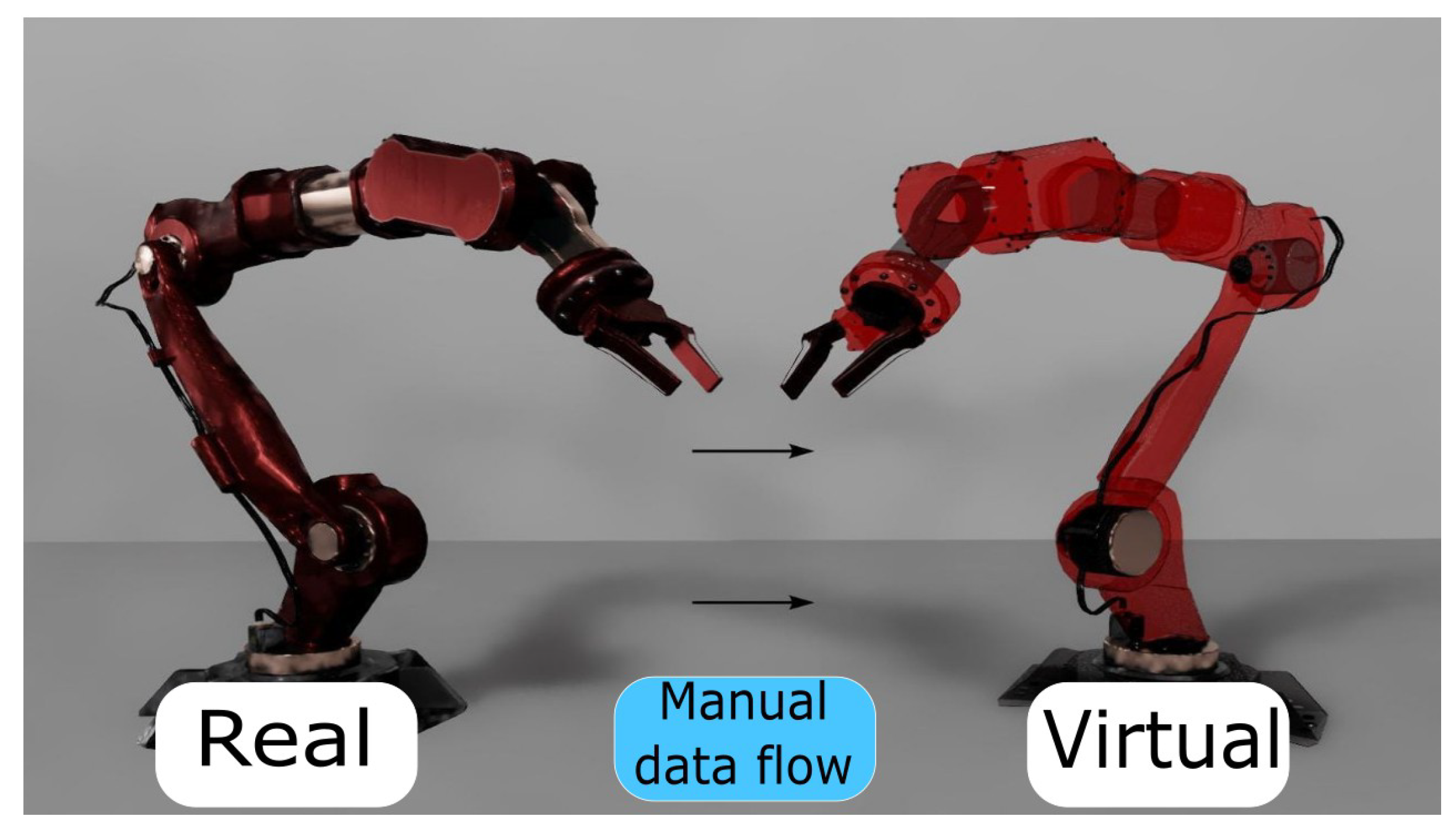
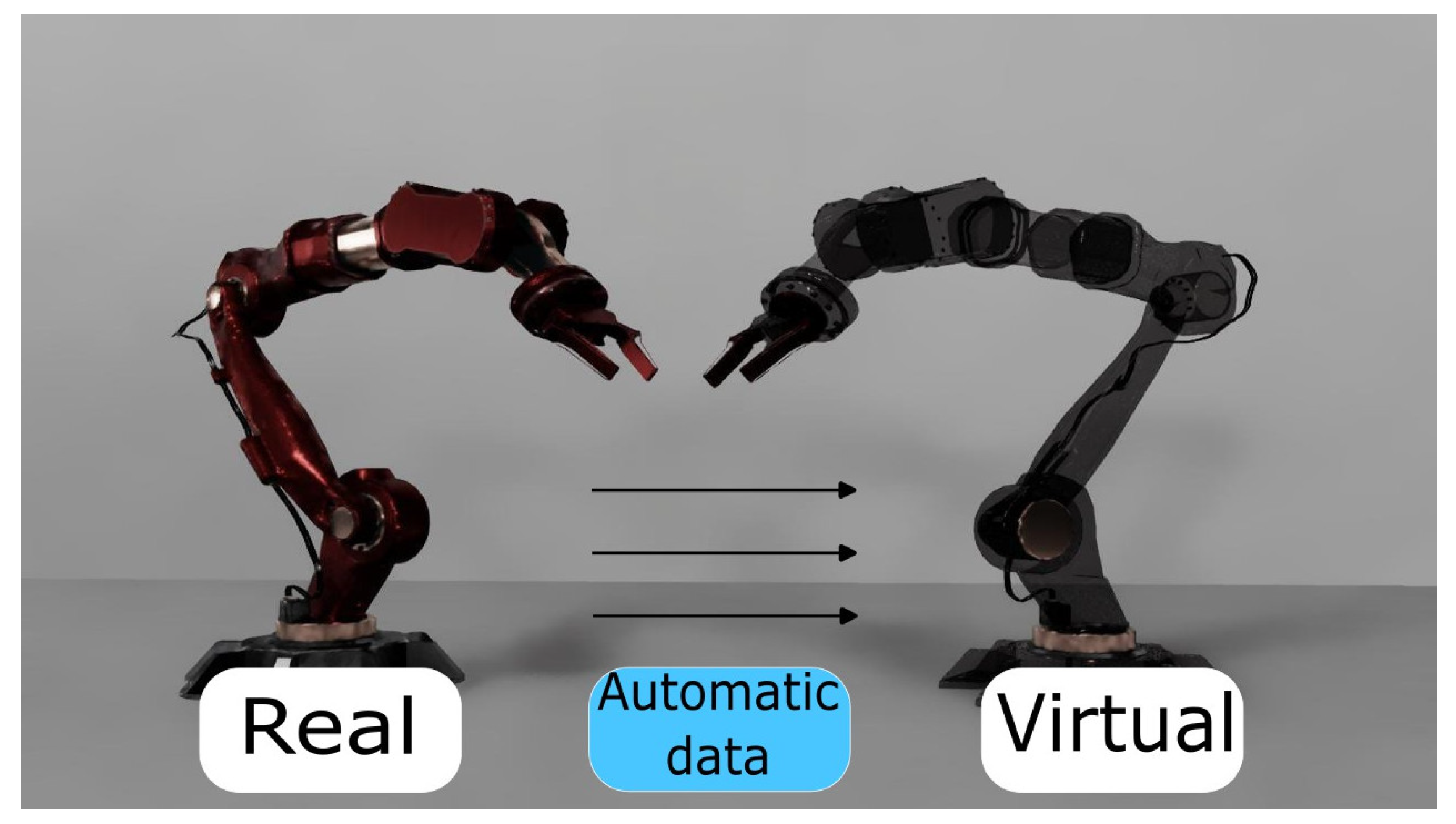
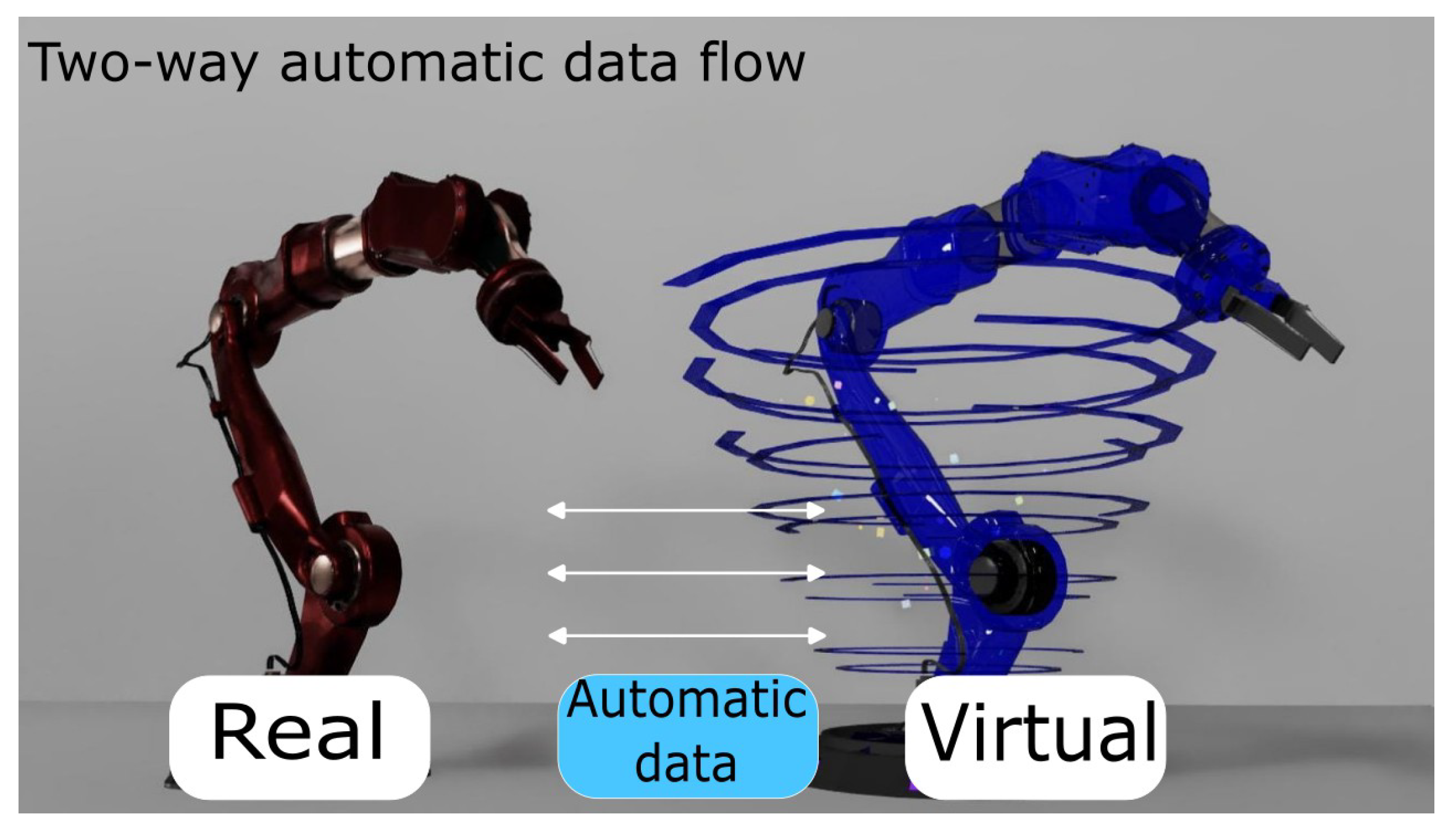
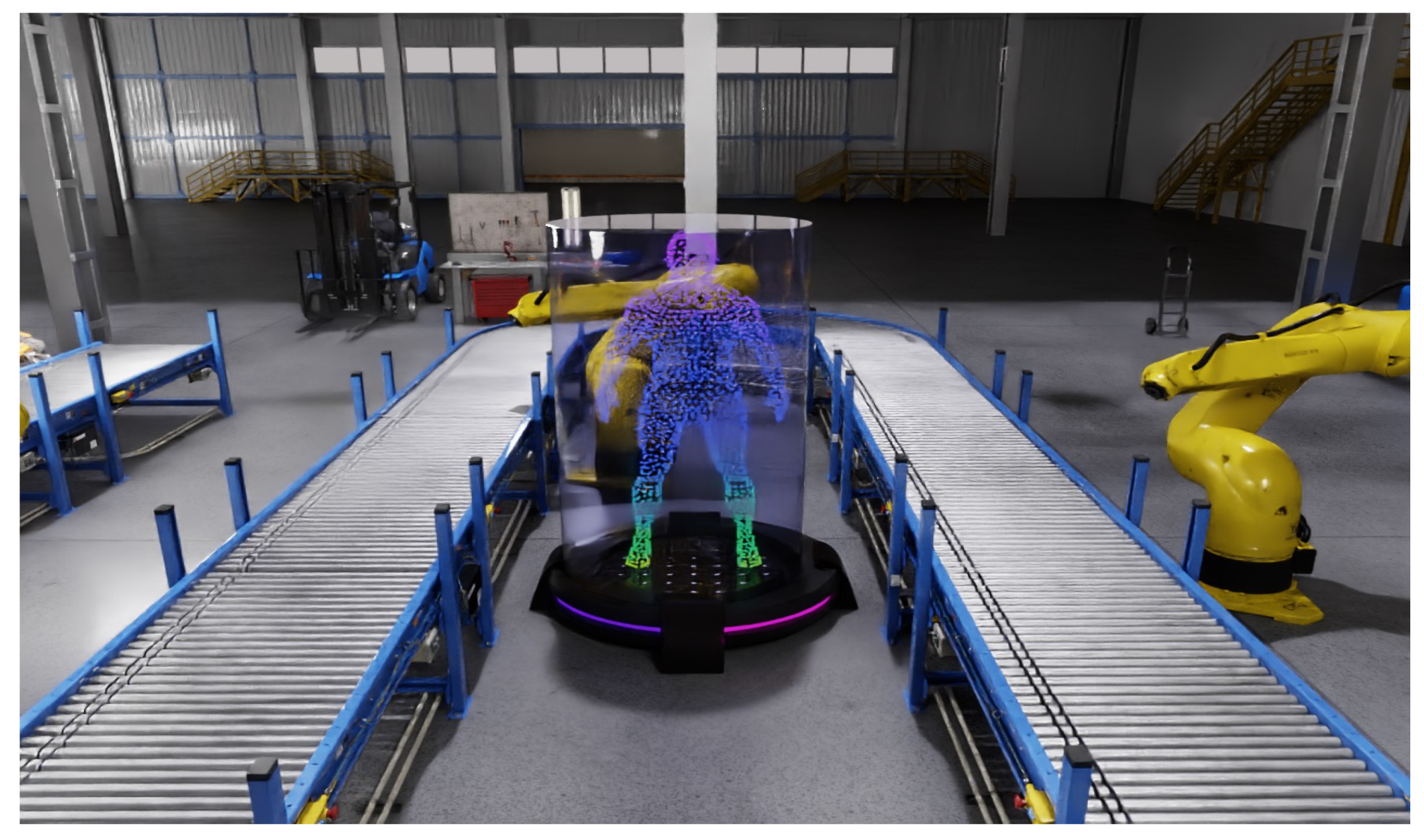
Digital twins, first conceptualized by Michael Grieves at the University of Michigan in 2003, have become central to these developments. Initially applied in aerospace for predictive maintenance and lifecycle management [10,11], DTs are now used across industries to create multiphysics high-fidelity virtual replicas of physical assets [12]. By integrating mathematical models, sensor data and predictive analytics [13], DTs enable real-time fault detection, forecasting, and performance optimization. It is useful to distinguish DTs from related constructs: digital models (DMs) and digital shadows (DSs). As noted in [14], DMs lack real-time data linkage, whereas DSs allow unidirectional data flow from the physical system to the virtual system [15]. In contrast, DTs establish bidirectional data exchange, ensuring that changes in one domain influence the other dynamically. Figure 1, Figure 2 and Figure 3 illustrate these structural differences.
The automotive sector, among others, has implemented CPS and DTs successfully to enhance adaptability and responsiveness in production lines [16]. Bidirectional exchange between virtual and physical systems supports rapid design modifications and operational adjustments. However, most DT applications remain machine-centric, rarely incorporating human performance, cognitive load, or well-being. While Industry 4.0 has achieved remarkable advances in automation and quality improvement [17], it still lacks a comprehensive, human-centered approach that considers operator welfare, ethical design, and sustainability.
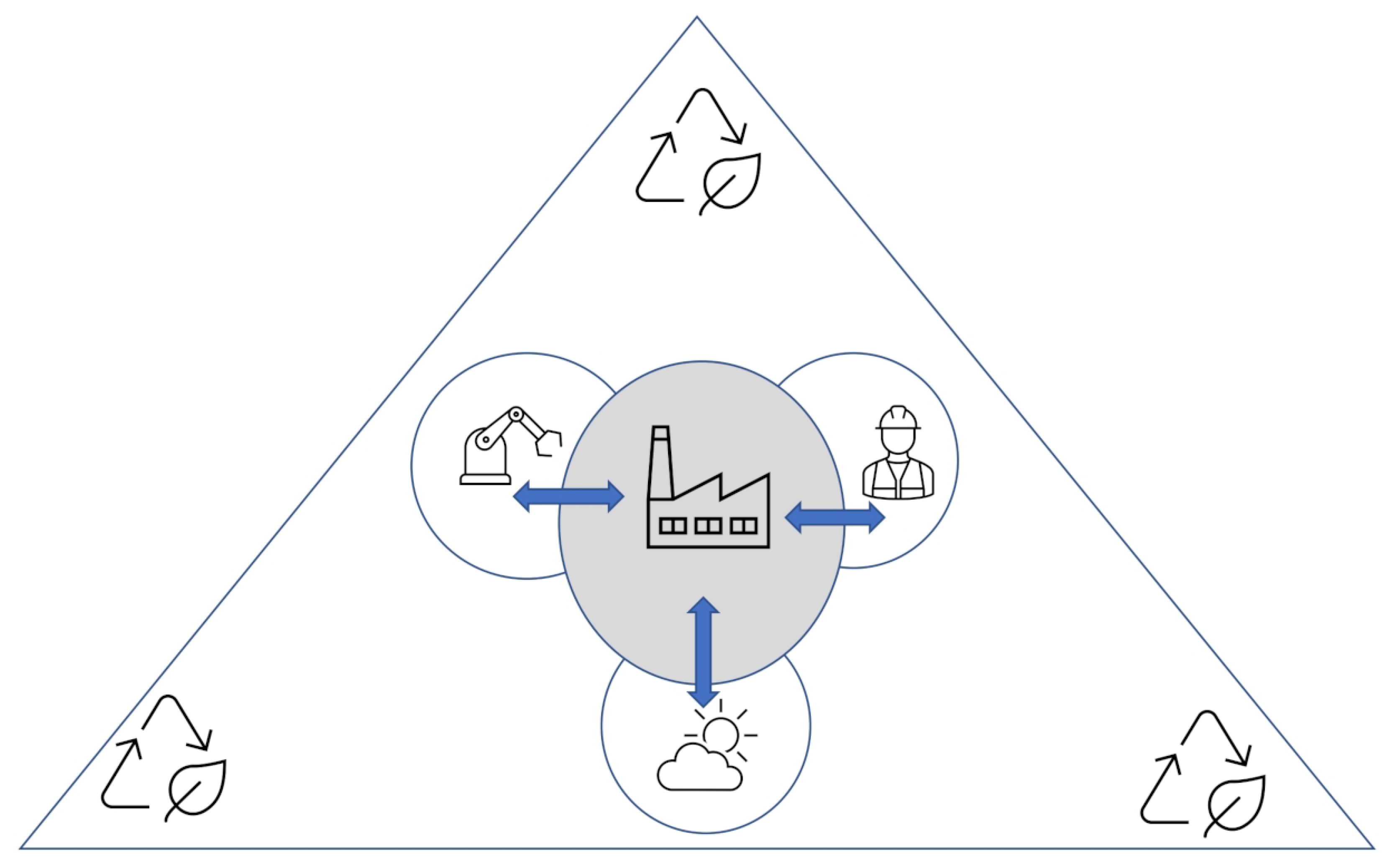
To address this gap, the present work introduces the Symbiotic Digital Environment Framework (SDEF), a unified approach that integrates Human Digital Twins (HDTs) and Machine Digital Twins (MDTs) throughout the manufacturing lifecycle. Building upon the CADMID model (Concept, Assessment, Design, Manufacturing, In-Service, Disposal) and circular economy principles (R10 strategies: Refuse, Rethink, Reduce, Reuse, Repair, Refurbish, Remanufacture, Repurpose, Recycle, and Recover), SDEF establishes a symbiotic relationship between operators, machines, and their environment. Using real-time physiological, cognitive and environmental data, the framework enables dynamic adaptation of processes, predictive maintenance, and continuous training of the workforce.
This methodology fosters a new generation of human-centered manufacturing systems in which digital entities respond intelligently to human states and contextual variables. In doing so, it advances the transition from the automation paradigm of Industry 5.0 to the human-centric and sustainable ethos of Industry 5.0 [18]. Ultimately, SDEF aims to create resilient industrial ecosystems that co-optimize efficiency, sustainability, and human well-being.
The remainder of this manuscript is organized as follows. Section 2 reviews the evolving role of human operators in advanced manufacturing systems. Section 3 details the proposed Symbiotic Digital Environment Framework and its operational architecture. Section 4 presents case studies that illustrate its application. Section 5 discusses the results and implications, and Section 6 concludes with perspectives for future research.

2. State of the Art of Human Operators in Advanced Manufacturing Systems

This section examines the relationship between humans and advanced manufacturing systems, focusing on the support provided by specialized machinery and the use of virtual representations through DTs. These concepts define a new paradigm of human-machine interaction that addresses both operational processes and operator limitations. Assistive technologies help overcome these limitations and reveal the gaps between industrial needs and human capabilities. Consequently, customized systems are required to improve performance, reduce environmental impacts, and adapt workspaces to promote well-being. In what follows, we synthesize the literature along nine themes digital technologies, human roles, automation levels, human digital twins, interaction, human limits, assistive technologies, Industry 5.0 challenges, and personality-cognition to surface a specific operational gap that motivates our framework.

2.1. Digital Technologies in the Industry

Factories can prototype, validate, and optimize workflows in immersive environments, accelerating training, decision-making, and human-robot collaboration by combining mixed reality with AI [19,20]. Moreover, embracing a deeper symbiosis between the internet and the human being [21]. These works can enable connected data, intelligent services, and human insight to co-evolve [22,23,24,25], further enhancing the quality, reliability, and scalability of these solutions across the product lifecycle in factories. In addition, virtual reality has been applied across many domains [26,27], accumulated evaluations and meta-analyses now translate into actionable industrial solutions in human-robot interaction [28] and metaverse style VR environments and meta analysis [29,30,31] where synthetic data generation has proven highly effective for estimation [32], training, validation, and safety testing.
Realizing that promise requires interoperable architectures that connect sensors, machines, data platforms, and XR interfaces. TwinXR addresses this by defining an ontology-based “digital twin document” that Unity3D XR 3.2 applications can query and control in real time, demonstrating efficient, standards-driven data exchange on industrial equipment [33]. In collaborative robot workcells, real-time simulation, coupled with an interactive VR module and open protocols (FIWARE/FIROS, WebSockets), synchronizes robot controllers with VR visualization, enabling users to observe and influence an assembly line in real time, using web-based human robot collaboration, remote interaction and interactive and immersive DT [34,35,36,37,38]. To consistently include people in the loop [39,40,41], AutomationML has been extended to encode human factors enabling tool-agnostic VR scenarios that simulate human-system interactions within the DT [42,43] in manufacturing [44]. Also, the egocentric audio in DT in virtual environments has been evaluated [45], as has the use of ML in simulated realities and VR based on eye tracking [46,47]. Bridging middleware such as nep2ros connects human-centered frameworks (NEP+) to ROS, enabling immersive human-in-the-loop assembly with acceptable latency between Unity3D XR 3.2 and physical robot control [48]. The infrastructure strongly shapes feasibility: architects anticipate that 6G-class bandwidth and latency will unlock complex, multi-user telepresence for shared DTs [49], while DDS-based streaming already enables telexistence, controlling a physical FANUC robot via its VR twin with minimal latency [50]. Across these efforts a layered, modular pattern is clear-devices and sensors feed data services, twin/simulation services run above them, and XR/UX caps the stack tied together with open interfaces (ROS, DDS, web APIs) and, increasingly, lightweight/open source tooling such as AnywhereXR for on-the-fly geospatial immersive twins [34,48,51]. The net effect is that a VR interface can now be "plugged into” a DT and function coherently, whether the twin represents a factory, a robot, a vehicle, or an entire city.
Evidence from applications illustrates both breadth and depth. In manufacturing, MR-enabled DTs support bi-directional human-robot collaboration (HRC): operators visualize system state and inject commands via HoloLens while the DT synchronizes changes back to the process [52]; pre-validating HRC configurations in VR improves ergonomics and productivity before physical deployment [34]. An industrial metaverse demonstrator shows teams trained in VR can perform collaborative assembly nearly as efficiently in reality, underscoring DT-VR’s value for scalable workforce training and interaction in factories [53,54]. Safety-aware HRC uses depth-updated twins with AR overlays to project dynamic safe zones, raising trust and reducing collision risk [55], while fenceless cells emerge by fusing fixed sensors, a mobile DT, and AI to manage large, flexible virtual safety regions [56]. Beyond factories, wind-farm twins fuse SCADA and forecasts to deliver in-situ, predictive VR monitoring [57]; in AEC, multi-user, human-centric frameworks and “Circular Twins” let teams explore generative building designs with live circularity metrics in VR, promoting sustainable choices earlier in design [58,59]. Urban planners use perception-driven DTs to test how people experience proposed environments by combining AI segmentation with VR walkthroughs [60], and emergency-response teams train safely in realistic VR twins of hazardous scenarios that mix human users and AI agents [61]. In healthcare, anatomical DTs combined with MR exoskeletons add haptics and monitoring for tele-rehab gains [62]; VR synchronized to fluoroscopy creates live 3D twins for steering microrobots with improved safety and precision [63]; and DT-based VR training for radiography measurably boosts confidence without radiation exposure [64] and an prototyping a VR sandbox [65]. Teleoperation also benefits: DT-VR training reduces lunar-rover task time and critical errors [66]; object-centric AR lowers workload versus joint-level teleop [67] and AR improves DT [68]; subsea ROV twins add multi-sensory haptics for better control in turbulence [69]; multi-UAV DT-VR interfaces support ultra-remote, multi-user operation [70]; and factory mobile-manipulator practice in VR closes skills gaps safely [71]. Not all systems aim at strict realism; “anomalous” VR environments can heighten engagement and perceived value in retail contexts when aligned with product storytelling [72].
Because people are deeply embedded in these DT-XR ecosystems, nature ecosystems, human factors, and user experience are pivotal [73]. Studies consistently report gains in learning, safety, decision quality, spatial understanding, and engagement: fewer errors after DT-VR training in space telerobotics [66], higher confidence and perceived safety in MR HRC training [74], faster maintenance learning in VR [64], better nuclear-context situational understanding [75], and emotionally engaging AR/VR twins that correlate with retention in informal science learning [76]. At the same time, simulator sickness and perceptual mismatches (vestibular/proprioceptive) can impair transfer if unmitigated [77,78]; behavioral gaps between VR and reality must be quantified, for example, pedestrians’ more cautious crossing behavior in AV VR studies, so findings generalize reliably [79]. Transparent twins with a clear state and manual override reduce cognitive load and build trust in adaptive systems [80]; VR control can match teach-pendant performance with only slightly higher stress, which typically declines with familiarity and better ergonomics [81]. Ethical, security, and privacy concerns emerge as monitoring becomes pervasive in immersive environments, while hypertext-inspired navigability patterns can help users manage complex information without overload in immersive analytics [82].
Despite rapid progress, key challenges remain. Interoperability is still uneven: even with TwinXR and AutomationML extensions, unified modeling and streaming standards for complex human-machine processes are incomplete, complicating virtual commissioning and ecosystem integration [33,42,48,83]. Real-time immersive twins strain networks; near-term designs rely on optimized local protocols as the field anticipates 6G capabilities [49,50]. Scaling beyond prototypes raises data-management, organizational, and workforce-readiness barriers as seen in mining, where pilots exist but whole-of-mine DT-XR remains difficult [84]. Worker-safety applications in industrial metaverses heighten privacy and cybersecurity demands [85]. Content creation and validation also carry cost: photogrammetry and AI accelerate twin building, yet accuracy, workload, and continuous model-plant calibration remain nontrivial [86,87,88,89]. Looking ahead, intelligence is infusing twins and interfaces, reinforcement learning for smart facilities [90], NLP for hands-free XR control [91], and even speculative BCI-enabled HDTs responsive to cognitive state [92], while embodiment taxonomies offer guidance for designing transparent agency across humans, avatars, AI, and robots [93]. Overall, when well-coupled, DT and XR yield tangible benefits, productivity and flexibility in manufacturing [34,94], improved training and safety [66,95], intuitive decision support [57,75], and systematic inclusion of human factors in design and operation [42,96,97], and are converging toward a unified, human-centric twin ecosystem poised to underwrite the next technological era [48,97,98].
Against this backdrop, much prior work either showcases siloed technologies or remains largely conceptual about circularity, lacking operational, real-time integration across production, use, and end-of-life. The remaining gap is a unified, human-centric DT-XR environment that operationalizes circularity with live sustainability KPIs and human decision-making spanning the entire lifecycle. The present paper addresses that gap by integrating DTs, HDTs, XR interfaces, and cyber-physical data streams into a closed-loop circular control environment embedded in day-to-day operations, thus shifting circularity from retrospective assessment to real-time action. To validate the approach, VR simulations serve as an immersive, interactive testbed in a realistic scenario: operators inspect the product twin and components; access lifecycle data on composition, provenance, and energy; simulate disassembly and reconfiguration; and trial circular strategies such as component replacement rather than full discard. Feedback loops map operator actions to sustainability indicators, reinforcing data-driven choices. Results can be used to show higher engagement, deeper understanding of lifecycle impacts, and clear system responsiveness and modularity, empirically validating the human-centric integration of HDTs and cyber-physical streams and demonstrating the framework’s fitness for operational circularity in factories. Taken together, these results show that DT-XR pipelines can include people in the loop, but they do not yet resolve how operator characteristics systematically shape decisions in production; we turn next to the human role in manufacturing to ground this need.

2.2. Human in Manufacturing

A previous study by Borreguero-Sanchidrián et al. analyzed scheduling challenges in aerospace manufacturing, focusing on optimizing operator allocation and assembly line efficiency [99]. The study considers scenarios where machines are interchangeable and specific operators are required, minimizing workforce and airframe costs. In that line, a proposed mixed integer linear programming model (MILP), validated with real industry cases, improves solution quality and computational efficiency [100]. Similarly, the proposal of Elyasi et al. aligns with Industry 4.0 principles, emphasizing flexibility through adaptable production plans [101]. This proposal provides decision-makers with multiple scheduling scenarios, optimizing worker allocation and inventory management in real time. Despite these advances, human operators remain essential for the management of complex tasks, particularly in aeronautics, where specialized skills are critical [102]. The study by ElMaraghy et al. reinforces this by optimizing operator allocation to ensure that technological efficiency gains are complemented by human expertise [103].
Maintenance also plays a key role in business performance, system reliability, and sustainable operations. Operator skills directly influence maintenance and production efficiency [104]. Sahoo and Lo analyzed the integration of new technologies with traditional manufacturing to enhance human performance, identifying research gaps on maintenance operators’ roles, trends, and challenges [105]. A review highlights three main areas: human reliability in maintenance [106], maintenance management strategies [107], and support technologies for maintenance tasks [108]. However, there is still limited consideration of the individual, organizational, technological, and environmental factors that affect human performance. Despite technological progress, operators remain indispensable due to their decision-making abilities and contextual understanding. Future research should focus on custom Human Reliability Assessment (HRA) methods [109], emerging assistive technologies, and the measurable impact of human performance on manufacturing systems, reaffirming the central role of human expertise in technology-driven industries.
Industry 4.0 is reshaping industrial workforces and redefining roles at the strategic, tactical, and operational levels. This transformation creates new career paths that require specialized skills suited to technologically advanced environments [110]. Integrating cutting-edge technologies fosters dynamic interaction between human workers and machines, which leads to the concept of “Smart Operators 4.0”, professionals trained in collaborative robotics, wearable devices, and augmented or virtual reality systems. This transition underscores the essential role of human operators in smart factories and the need for seamless human-technology integration. However, human variability presents challenges related to quality, safety, and productivity. Recent analyses examine the influence of Industry 4.0 technologies on operator performance, role diversification, and adaptation to new industrial paradigms [111]. Likewise, Barosz et al. compared human-operated and robot-controlled manufacturing lines, highlighting the precision and reliability of robotics [112]. Using FlexSim simulations and indicators such as Overall Equipment Effectiveness (OEE) and Overall Factory Efficiency (OFE), they quantified productivity differences, particularly in repetitive high-precision tasks [113]. Although automation improves efficiency in continuous multishift operations, it also demonstrates the financial viability of automation investments, especially in high-volume industries such as automotive manufacturing. Mathematical modeling, combinatorial optimization, Petri nets, and scenario analysis have been applied to evaluate productivity gains from human-to-robot transitions [114]. Despite automation benefits, human supervision control remains indispensable: operators continue to program, decide, and interpret information alongside digital systems. Effective design must ensure that human and automated agents complement each other to maximize efficiency, as human intelligence is vital for coordination, adaptation, and ethical decision-making in automated environments.
Thus, even as scheduling and automation mature, human variability remains pivotal, motivating a structured view of automation levels and their implications for the operator’s evolving role.

2.3. Automation Level in Manufacturing Companies

Manufacturing companies seek to increase process autonomy; however, technological and economic constraints limit complete automation to digitally advanced and sensor-equipped operations. Automation levels, ranging from 0 to 5, define the degree of human involvement, as shown in Table 1. This hierarchy describes the transition from full human control (Level 0) to minimal human intervention (Level 5) [115]. Consumer requirements also influence the selected automation level.
Integration of emerging technologies enables higher levels of automation, allowing industries to perform repetitive tasks with minimal human intervention. This progression redefines the operator’s role, leading to the concept of Operator 5.0, where human participation shifts from manual to cognitive tasks [116,117]. Consequently, new skills are required that emphasize intellectual engagement, problem solving, and adaptability. As automation advances, job satisfaction and efficiency metrics must also evolve, reflecting this transition toward more cognitively demanding and fulfilling work environments.

2.4. Human Digital Twins

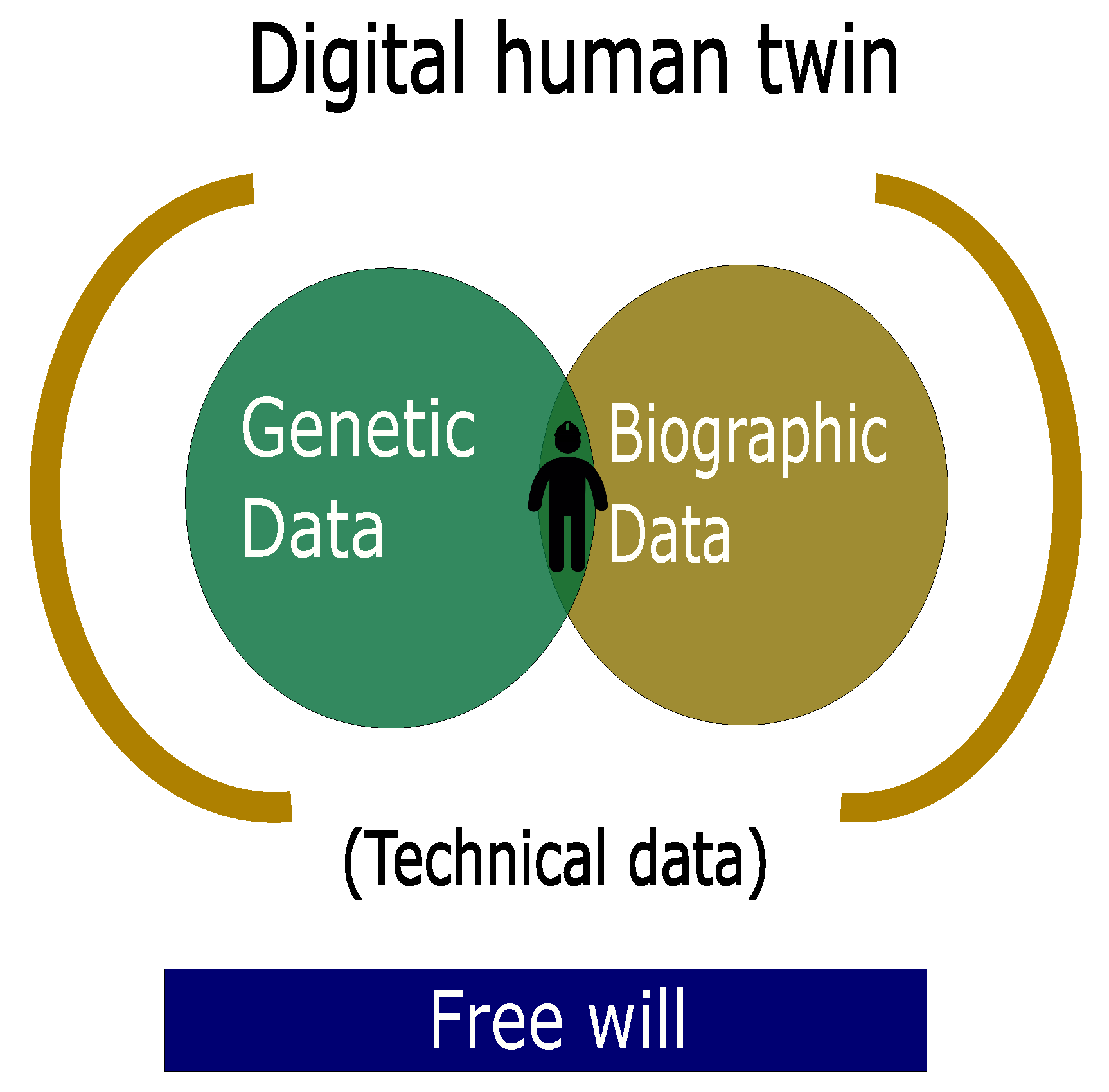
The concept of Human Digital Twins (HDTs) and their relationship with automation and human operators is central to Industry 4.0 and 5.0 [118]. HDTs are virtual replicas of individuals, originally developed in healthcare to detect early health problems. These models, created through advanced algorithms and machine learning, still lack a comprehensive representation of human behavior and personality, which are essential for realistic modeling. Data collection for HDTs differs from that for machine DTs [119] and poses unique challenges related to continuous updates, technical limitations, and ethical and privacy concerns. HDT data include genetic and biographical information that forms the digital counterpart of an individual’s identity (see Figure 4).
Advancing HDT development supports human operators in diverse sectors. In healthcare, HDTs enable personalized and preventive care, while in industrial environments they enhance understanding of worker health, ergonomics, and safety, improving both performance and well-being. However, integrating HDTs requires careful consideration of ethical issues, particularly data privacy and informed consent, to ensure that technological benefits do not compromise individual rights and autonomy [120].
HDTs are complex virtual representations that require the selective incorporation of specific attributes from individual data sources. These attributes can be categorized as shown in Table 2. Because not all attributes can be modeled simultaneously, particular characteristics are chosen to describe, predict, or visualize human characteristics or categories. An HDT thus encompasses models of anatomy, physiology, personality, perception, and cognition.
In industrial contexts, operators are increasingly performing tasks that require information processing, often leading to high cognitive demands and stress. This introduces the concept of mental workload [121], which helps to explain performance variations such as accidents, errors, and health problems caused by technological strain [122]. Therefore, reduced or poorly designed human-machine interaction can decrease overall manufacturing efficiency.

2.5. Interaction Between Machines and Human Operators

The taxonomy of AI illustrated in Figure 5 emphasizes the need for a virtual architecture that integrates Digital Twin (DT) and Human Digital Twin (HDT) technologies [123]. This model defines a collaborative framework across Levels 1–4, where human operators and machines interact, and Level 5, where stakeholders engage directly with automated production systems. This integration improves decision-making and overall efficiency in industrial operations. However, managing this interaction involves complex variables. For example, a crane operator must control the movement of a payload without excessive sway: an auxiliary control scheme could assist, but it must align with the operator’s commands to prevent confusion or frustration. Understanding operator cognition is therefore essential, since the human-machine interaction depends on both human capabilities and machine design [124].
Optimizing this interaction requires studying diverse operator profiles and machinery configurations. Machines provide advantages such as continuous operation and high speed, but they depend on stable energy sources, maintenance, and costly updates. In contrast, human adaptability and contextual reasoning remain irreplaceable. Integrating DT and HDT technologies within a unified virtual framework offers a promising path toward improving human-machine collaboration, provided that both cognitive and mechanical constraints are carefully considered.

2.6. Human Operator Limits

When operators perform tasks such as managing servo systems, their muscular movements are analyzed to minimize fatigue and evaluate mechanical efficiency, especially under strenuous conditions. These tracking tasks resemble multiple choice reaction time experiments, where the delay between stimulus and response is typically about 0.3 s. A response cannot usually be stopped within 0.2 s, highlighting inherent human reaction constraints. Therefore, practical system design must account for factors such as display magnification, removal of control restrictions, bimanual operation, high turning rates, and manageable inertia [125]. Appropriate training tools are essential to help operators develop tracking skills by decomposing stimulus-response components and adjusting task difficulty. Manual control ability is limited by both operator characteristics and available technology, affecting speed, frequency, and adaptability. Although these limitations were less critical in earlier systems, modern vehicles such as supersonic aircraft and spacecraft require faster and more precise human responses [126]. For example, a pilot who avoids a collision after emerging from a cloud formation performs a sequence of control actions within approximately 1.7 s.
Delays in perception and response depend on vigilance, sensory modality, and input signal characteristics such as form, intensity, and context. An effective system design must consider these factors to align input signals with the operator’s sensory and perceptual capabilities [127].
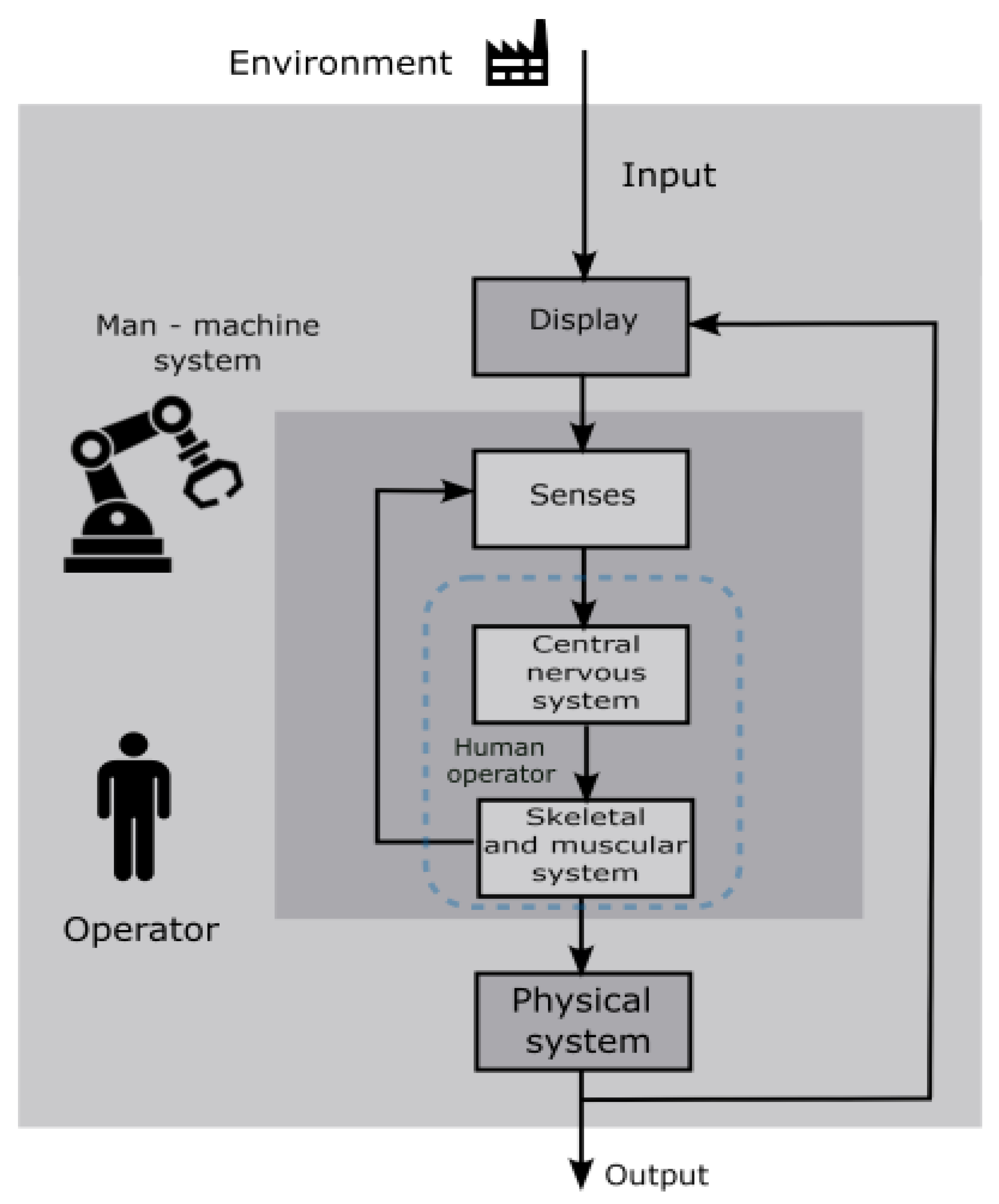
In addition, challenges arise in the human-machine relationships as automation increases (Figure 6). Operators may lose expertise due to reduced manual involvement, and overreliance on autonomous systems can lead to complacency. Trust and confidence grow when systems are predictable and reliable, yet prolonged reliance on automation can reduce operator adaptability and situational awareness [128].

2.7. Digital Assistive Technology

Digital assistive technologies can greatly improve the performance, safety, and inclusion of workers with disabilities in various industrial tasks. However, their long-term effectiveness depends on the acceptance of the user [129]. Achieving this requires aligning the support of the system with the needs, capabilities, and preferences of the user. Excessive or poorly timed assistance can reduce satisfaction and cause annoyance, especially during monitoring tasks.
A key challenge is maintaining situational awareness. When automation fails or behaves unexpectedly, operators may not be able to intervene effectively, leading to adverse outcomes. Historical incidents underscore the risks of system malfunction, overreliance on automation, and misinterpretation of critical cues. Overconfidence in automated systems, particularly among inexperienced users, further exacerbates these issues.
To mitigate such risks, assistive technologies should employ adaptive support strategies that balance aid and autonomy. Instead of taking full control, systems should intervene selectively, alerting users and increasing awareness while preserving operator engagement and decision-making responsibility [130].

2.8. Industry 5.0 and Challenges

The industrial drive for faster production and improved processes has led to the concept of Factories of the Future, which aims to equip operators with advanced technologies to perform daily tasks, often repetitive, more efficiently. Devices such as exoskeletons and smart wearables improve worker strength, monitor physiological conditions, and contribute to overall well-being. Studies suggest that these assistive technologies can increase productivity and reduce occupational health problems. However, their implementation does not necessarily guarantee improved health outcomes [131].
The technology can help operators develop new skills, particularly in supervision and system management by automating repetitive work. At the same time, Industry 5.0 emphasizes human-machine collaboration through technologies such as collaborative robots (cobots), which handle repetitive tasks such as manipulation and gripping while maintaining safe physical separation from human coworkers. This collaboration may involve communication, guidance, oversight, or shared task execution in dynamic workspaces [132].
Industry 5.0 envisions an ecosystem of intelligent self-directed systems capable of real-time information exchange through fast data networks. These systems will integrate AI, robotics, predictive maintenance, and flexible scheduling to create collaborative environments in which humans and machines pursue complementary objectives. However, the transition also raises social and ethical concerns. Increased automation can increase managerial control, intensify workloads, and reinforce gender segregation, while reducing decision-making autonomy [133]. Such changes can contribute to physical strain, mental health challenges, and job insecurity, whose long-term effects remain uncertain.
To address these challenges, emerging systems must go beyond technical safety requirements and account for real-world operator-environment interactions. Enhancing flexibility and decentralized decision-making allows workers to adapt tools to their needs, moving from repetitive physical tasks to cognitively demanding roles. This evolution supports the emergence of Super Operators; i.e., professionals capable of managing complex human-machine collaboration through advanced cognitive, technical, and ethical competencies [134].

2.9. Tailoring the Endeavors Using Personality and Cognitive Skills

This subsection grounds the human-centered dimension of the Symbiotic Digital Environment Framework (SDEF) in cognitive psychology and personality theory, showing how individual differences inform adaptive task allocation and operator-machine symbiosis.
According to Stanek and Ones, the cognitive skills required in manufacturing include multiple mental processes essential for task execution [135]. General mental ability (including problem solving, abstract thinking, and learning capacity) is critical for roles that require adaptability and complex reasoning, such as process improvement and troubleshooting. In maintenance and diagnostics, fluid intelligence supports the resolution of new problems, while invested intelligence, or domain-specific knowledge, underpins quality control and supervision tasks. Memory abilities (working, episodic, and long-term) are vital to manage complex instructions in assembly and logistics, while processing speed benefits fast-paced environments such as assembly lines [136]. Attention and executive control maintain performance in multitasking roles such as logistics and material handling, while visual-spatial processing assists in assembly and maintenance. Creative and divergent thinking fosters innovation [137], and verbal and numerical skills are crucial for the supervisory, reporting, and data analysis tasks involved in quality control and process optimization.
Decision-making and problem-solving are the foundation of leadership and supervisory functions, where rapid evidence-based action is essential. Understanding the cognitive strengths and weaknesses of the operators allows assigning roles aligned with their profiles, enhancing both individual and team performance. Manufacturing environments should therefore be designed to foster productive human-machine relationships and support cognitive diversity. Since operators rarely excel in all domains, personalizing production-line tasks can capitalize on strengths and mitigate weaknesses. For example, individuals with high openness and intellect are suited for innovative role-solving, while conscientious workers excel at tasks that require precision and consistency. This alignment improves efficiency, accuracy, learning, and satisfaction while reducing turnover [138]. Balanced teams that combine complementary cognitive and personality traits perform more effectively and collaboratively, advancing manufacturing goals related to quality, efficiency, and innovation.
Ren et al. report that complex assembly tasks often require rapid judgments under time pressure, increasing mental fatigue and error rates [139]. Similarly, Wollter Bergman et al. highlight how task design, time, physical load, motivation, teamwork, and product interface influence operator performance [140]. Adequate resources, such as experience, concentration, and self-monitoring, transform task demands into motivating challenges, improving work experience, and reducing fatigue from repetitive or heavy tasks.
Understanding how cognitive abilities and personality traits interact across manufacturing roles enables the creation of human-centered adaptive systems. Rather than assigning tasks uniformly, aligning individual profiles with role requirements enhances both efficiency and satisfaction. Table 3 summarizes this mapping, linking major manufacturing functions with their predominant cognitive skills, personality characteristics, and expected outcomes.
This structured mapping highlights how cognitive and personality dimensions jointly influence operator performance and task suitability. Integrating these associations into the Symbiotic Digital Environment Framework (SDEF) allows for predictive role assignment, adaptive workload distribution, and personalized human-machine interaction. By operationalizing psychological diversity in digital twin-based systems, SDEF advances toward a truly human-centered industry paradigm 5.0.
Finally, Hodgkinson et al. emphasize that cognitive and noncognitive differences strongly influence organizational behavior, from manufacturing operations to executive decision-making, making them key predictors of productivity and performance [141]. Their systematic assessment supports talent identification and management strategies in technology-driven industries [142].
Integrating these findings into SDEF allows predictive alignment between operator profiles and task complexity, forming the basis for adaptive workload distribution and personalized digital twin calibration. By explicitly linking personality-cognition mapping to adaptive digital environments, this work moves beyond static ergonomic design toward a dynamic, data-driven personalization of human-machine collaboration. This integration represents a novel contribution to Industry 5.0 research, embedding psychological diversity within digital-twin-based lifecycle management.

2.10. Synthesis and Research Gaps

Across themes, current work advances DT/XR integration, optimizes scheduling and maintenance around humans, and explores assistive and collaborative technologies in Industry 5.0. However, two gaps persist: (i) the absence of a unified, human-centric twin environment that operationalizes circularity with live sustainability KPIs across production-use-end-of-life, and (ii) the lack of systematic personalization that aligns operator cognitive/personality profiles with machine behavior in real time. These gaps motivate our framework, which integrates DTs, HDTs, XR interfaces, and cyber-physical data streams into a closed-loop, operator-aware environment for lifecycle circularity.
The preceding synthesis defines the conceptual foundations of the Symbiotic Digital Environment Framework (SDEF). It highlights the interdependence between digital twins, human digital twins, and XR interfaces in achieving adaptive circularity. Methodologically, this structure informs the framework design described in Section 3, where these dimensions are operationalized through immersive simulations and feedback loops to evaluate human-machine-environment symbiosis.

3. Proposed Digital Symbiotic Tailored Environment Between Machines, Environment and Operators (DSTEBMO) Using Digital Twins

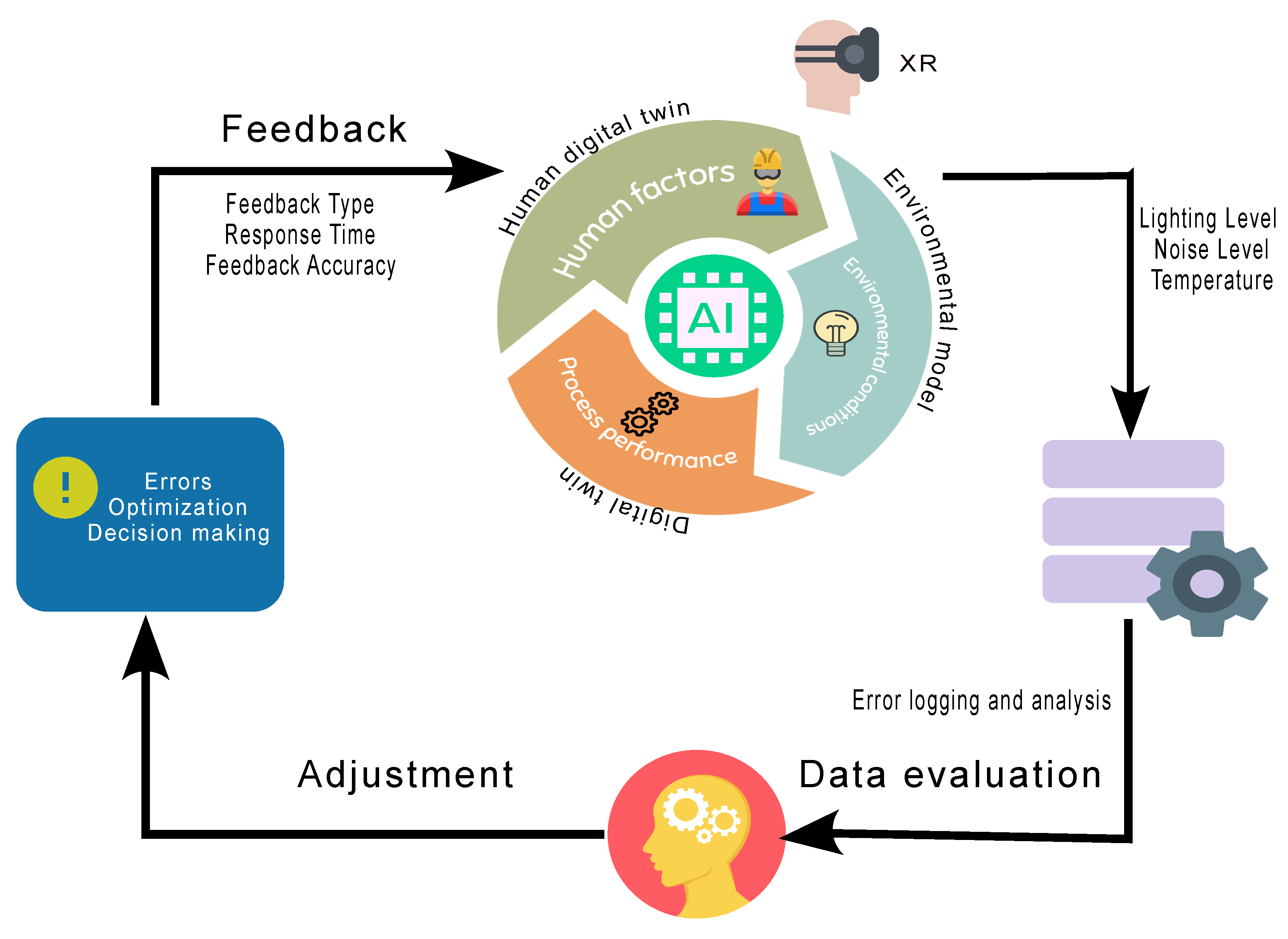
This proposal focuses on adaptive collaboration within a DSTEBMO, integrating machines with human operators using DTs. The goal is to create machinery that adapts to operators’ physiological and psychological states, particularly in industrial settings. For example, if HDTs detect fatigue, the machinery adjusts its pace or temporarily takes over specific tasks, reducing physical and mental strain. Real-time adjustments based on the operator’s state foster a more ergonomic workspace and mitigate stress. Predictive analytics improve safety by foreseeing and preventing unsafe situations, such as slowing down machinery when an operator’s heart rate increases. In critical cases, safety protocols are activated, such as halting equipment or alerting supervisors. Efficiency and productivity are optimized by aligning machine performance with the operator’s capabilities, and the system also collects data to train operators and improve workflows. This approach empowers operators with increased autonomy and job satisfaction and supports inclusive and equitable work tasks. The methodology is summarized in Figure 7.
This proposal promotes adaptable workstations designed to include operators with different physical abilities, health conditions, and skill levels. The symbiotic environment prioritizes the human element through technology that adjusts machines to individual needs, creating safer and more efficient operations while fostering accessibility and inclusion.
The operator-machine interaction is organized into levels that define coexistence. The proposal establishes operational conditions based on the characteristics of each operator through a holistic strategy that integrates physical, cognitive, and emotional attributes. This alignment ensures high performance and safety during collaboration.
The process begins with the creation of operator profiles that include anthropometric, physiological, and moral information. These profiles define initial machine settings that match the operator’s physical and cognitive capacities. Ergonomic adjustments align machinery with body dimensions, and physiological monitoring uses indicators such as heart rate and oxygen levels to maintain safe operation. Perceptual adaptations adjust the interfaces to visual abilities, while cognitive and experiential factors influence the machine response. Continuous monitoring provides real-time adjustments, maintaining synchronization with the operator’s progress. Adaptive learning gradually introduces advanced features as the skill increases. Moral and emotional aspects guide behavior, ensuring respect for cultural and ethical values. Emotional intelligence mechanisms detect stress or fatigue and recommend rest when necessary.
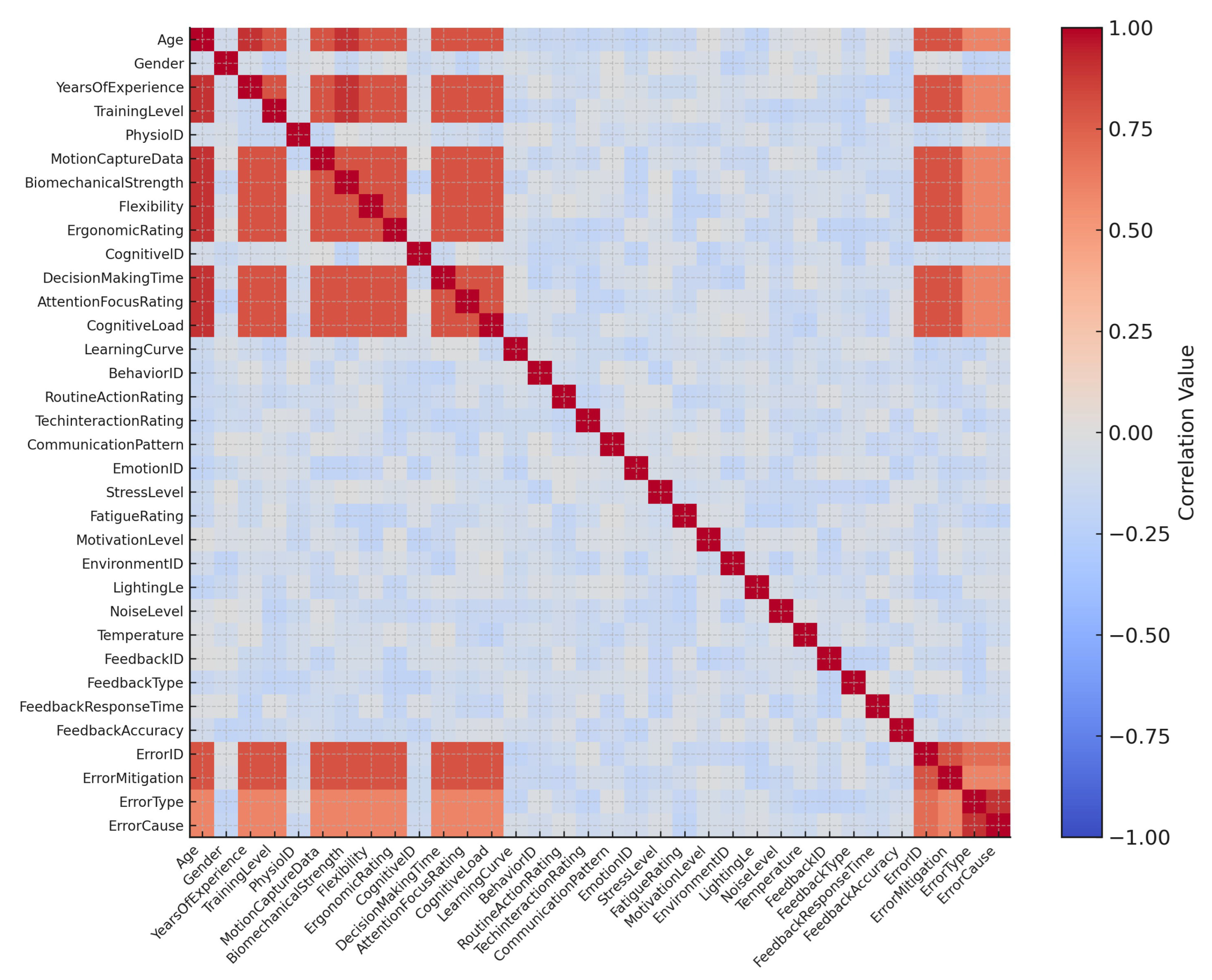
Communication and collaboration remain central to ensuring transparency and comfort in operator-machine interaction. Continuous feedback refines machine performance, supporting improvement as operational needs evolve. The framework supports adaptive behavior across automation levels through variables that describe operator-machine dynamics. Key correlations show that experience and age relate to efficiency in repetitive tasks, while younger operators with moderate experience excel in complex activities that require focused attention. Ergonomic scores and motion capture data are in sync with effective body movement, indicating that complex work benefits from operators with high ergonomic scores. The cognitive load aligns with the decision-making time, and experienced operators demonstrate precise judgment under higher mental demand.
Fatigue and stress share a strong relationship that influences concentration and overall performance. Technological proficiency improves efficiency in routine actions, while feedback speed affects accuracy. Patterns linking error type and cause reveal that distractions result in minor errors and equipment issues lead to significant faults. The learning curve influences decision-making, fatigue, and interaction with technology, highlighting the value of constant observation. Environmental aspects such as temperature and noise have a limited influence, encouraging further research under varying conditions. Understanding these elements creates a comprehensive view of operator performance and well-being.
The adaptability framework consists of five levels. Level 1, independent operation, involves no human variables, and operates based on standard protocols. Level 2, safety monitoring, tracks human proximity and emergency stops. Level 3, Basic Adaptation, involves monitoring the physiological state and adjusting machine operations accordingly. Level 4, responsive adaptation, continuously monitors fatigue and posture, allowing dynamic interaction. Finally, Level 5, complete adaptive collaboration, involves monitoring emotional states through facial recognition and voice analysis, along with cognitive abilities based on task success and feedback loops.
The integration of advanced technologies into industry introduces several dimensions that shape human adaptation, production balance, and the design of ethical systems. HDTs represent virtual counterparts of individuals that incorporate physiological, cognitive, and emotional attributes. These models create safe environments for learning and experimentation, allowing senior members and stakeholders to interact with new technologies through simulation. This process supports adaptation and confidence building as organizations evolve towards more digital operations.
In addressing the phenomenon of overproduction, DTs and symbiotic environments play a central role. DTs of manufacturing processes and products enable detailed simulations that predict production dynamics and prevent inefficiencies. Through collaboration between digital and physical systems, symbiotic environments facilitate real-time process adjustments that align output with demand, minimizing resource waste, and enhancing productivity. The implementation of transparency and ethical autonomous systems requires embedding ethical principles within their programming. These principles, grounded in social norms and legal frameworks, can be expressed through algorithms that promote fairness, accountability, and transparency in automated decision-making.
Explainable and verifiable ethical behavior strengthens trust in autonomous systems. Using techniques from explainable artificial intelligence, such as interpretable models and rule-based decision structures, systems can clarify the reasoning behind their actions. When incorporated into HDTs, these approaches ensure that decisions remain understandable and justifiable to human users. Verification and validation of ethical behavior are based on rigorous auditing mechanisms. Similarly to financial audits, ethical audits evaluate autonomous systems against predefined moral and legal standards. Independent assessments verify compliance and maintain confidence that the systems operate within acceptable ethical boundaries.
Addressing skill gaps for sustainable technological integration. Organizations can introduce specialized training and mentorship initiatives aimed at emerging positions such as Chief Robotics Officers (CROs). These programs strengthen the ability of the workforce to manage complex human-machine ecosystems and prepare leaders for evolving industrial roles.
One of the primary goals of this project is to develop a comprehensive set of variables that facilitate the integration and deeper understanding of human factors, DTs and environmental conditions, as illustrated in Figure 8. This information aims to enhance the interplay between these elements, leading to improved overall system performance and synergy.
The methodology for evaluating and optimizing human-robot interaction adopts a holistic perspective that integrates diverse variables to improve efficiency, safety, and operator satisfaction. It customizes the work environment and training programs to individual characteristics through continuous data collection, analysis, and adaptation. This approach creates a dynamic and responsive framework that is suitable for evolving industrial contexts.
Evaluation focuses on demographic, physical, physiological, cognitive, behavioral, emotional, and psychological aspects, along with environmental factors, feedback mechanisms, and error management. Integrating HDTs and DTs from machines establishes an adaptive system that enhances collaboration and performance. DTs simulate real-world behaviors and processes, enabling real-time analysis, prediction, and optimization. HDTs monitor the operator’s physical, cognitive, and emotional conditions to detect fatigue, stress, or overload, and adjust work conditions accordingly. Machine DTs track operational status and safety, adapting to the operator’s state to maintain consistent support and performance. Predictive analysis strengthens this environment. HDTs anticipate the operator’s needs and potential performance changes, while machine DTs forecast maintenance requirements and operational constraints. This alignment ensures that machine configurations match operator capacity and preferences, promoting efficient interaction.
HDTs also enable personalized training programs that adapt to each operator’s learning pace and style. Machines learn from operator behavior, refining their responses to improve assistance. Safety and ergonomics benefit from real-time assessments that recommend adjustments to prevent injury, while environmental conditions adapt to operator preferences and physiological responses to maintain well-being. The continuous exchange of information between HDTs, machine DTs, and the environment forms a feedback system that supports long-term improvement and operational excellence. This integration strengthens human-machine collaboration, improving adaptability, efficiency, and safety in industrial operations.
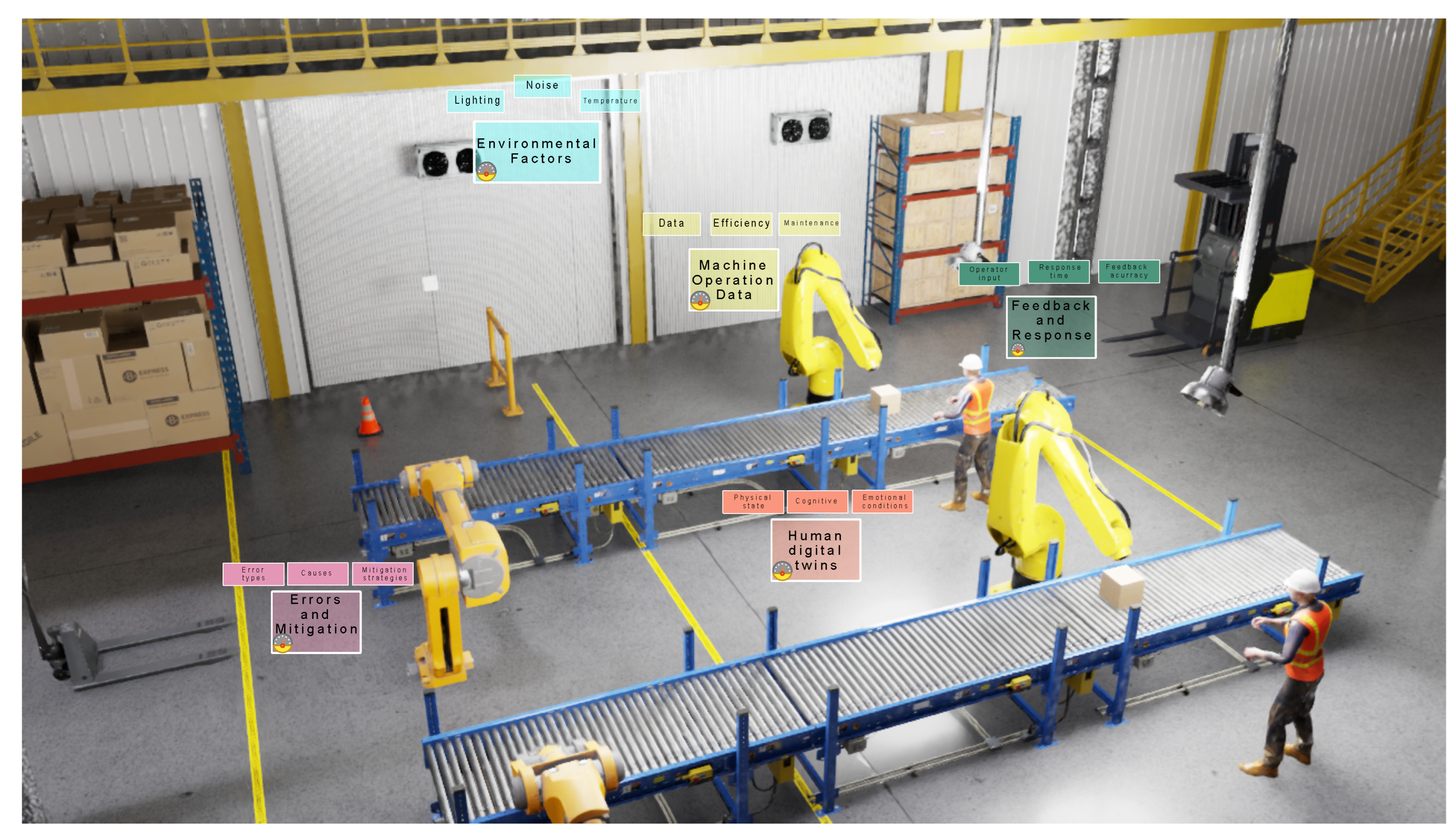
DTs of machines and environments focus primarily on collecting and analyzing data related to operational status, environmental conditions, and mechanical aspects of human-machine interactions, as described in Figure 9.
Environmental factors such as lighting, noise, and temperature influence operator performance and comfort. DTs monitor these variables and adjust them in real time to maintain optimal working conditions. Machine operation data include efficiency, maintenance needs, process bottlenecks, and safety parameters. This information supports predictive maintenance and improves operational performance. The feedback and response component reflects the machine’s interaction with the operator. DTs monitor response time, feedback type, such as visual, auditory, or haptic, and feedback accuracy to ensure effective communication between systems and users.
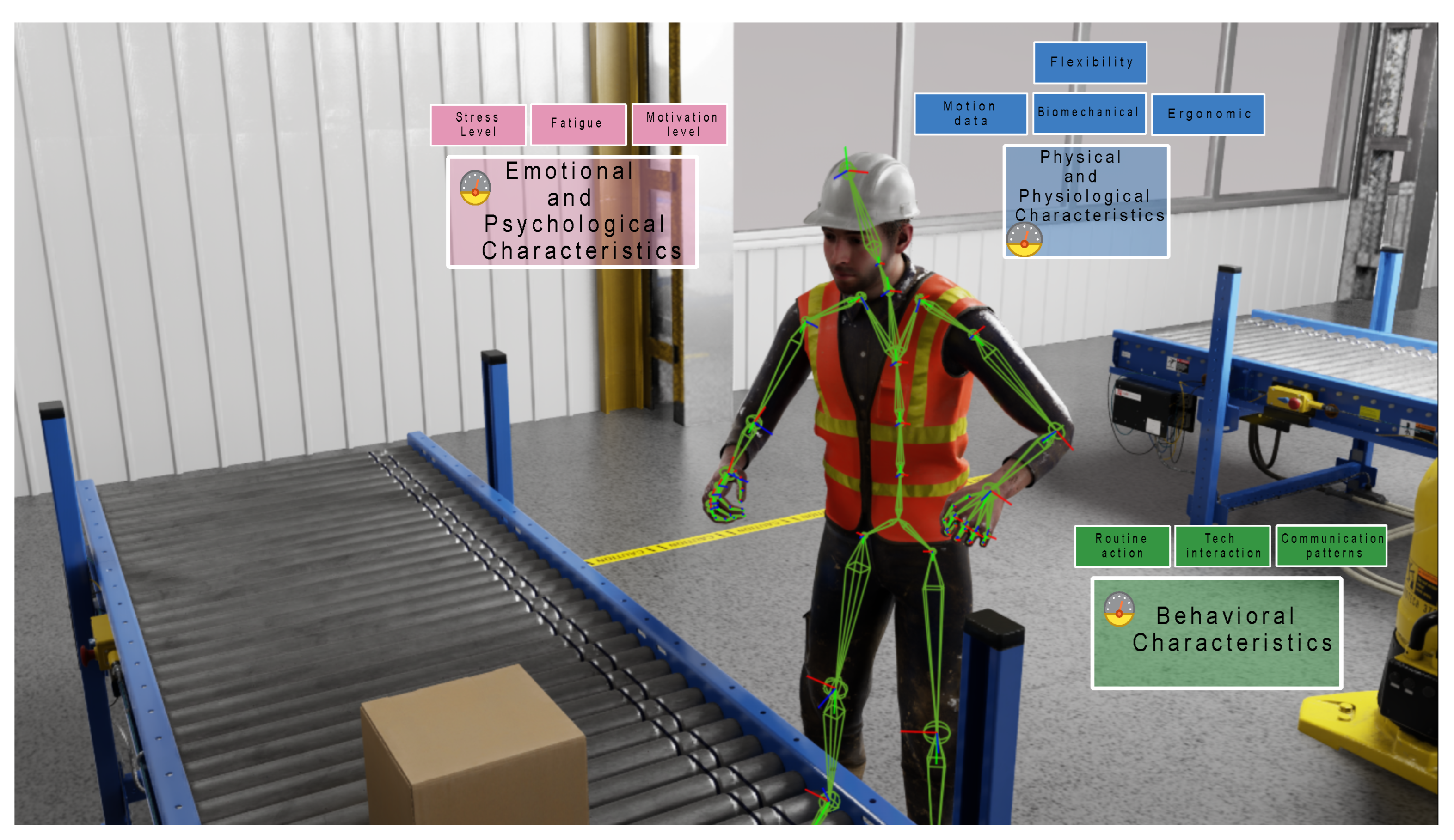
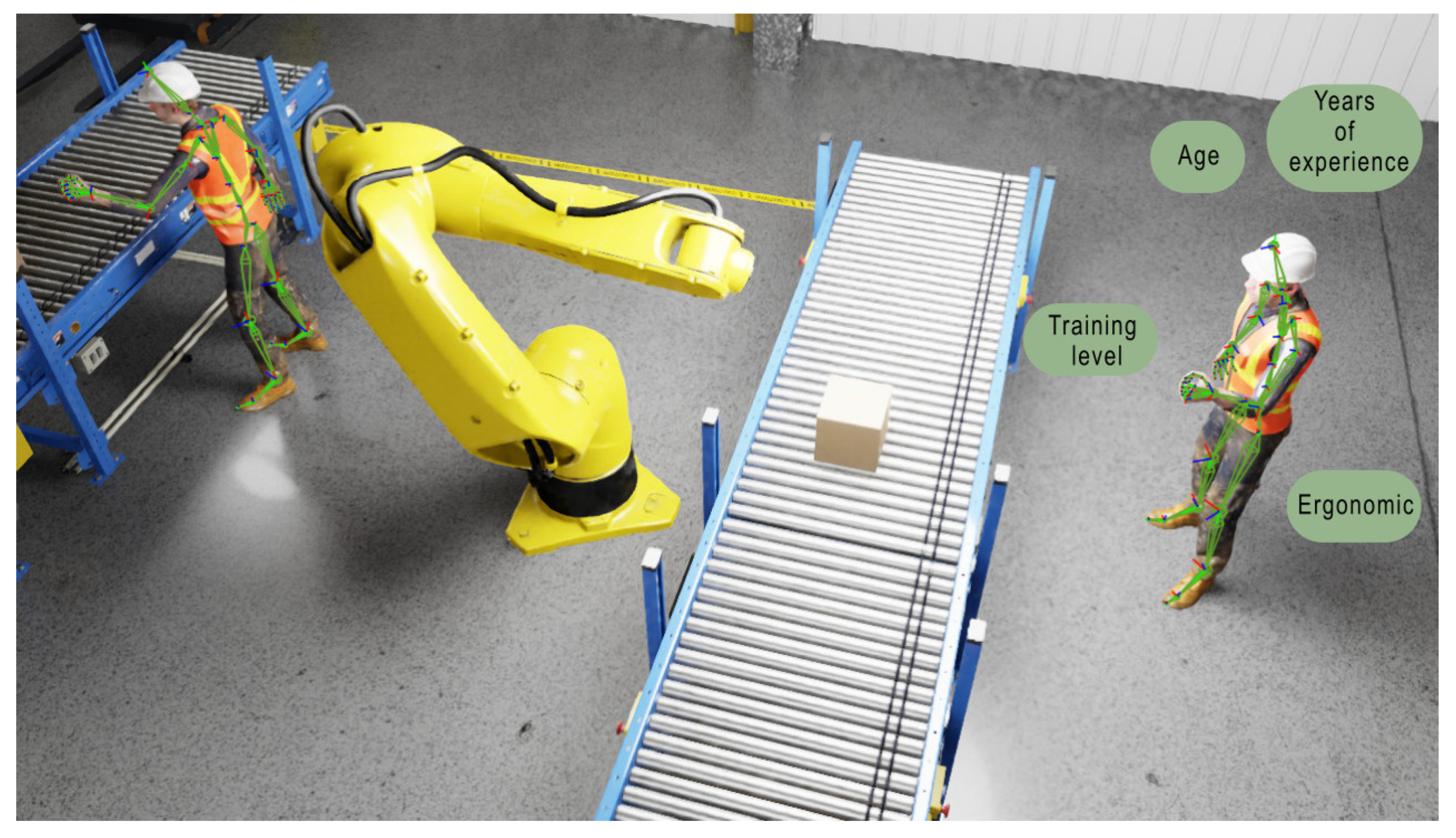
HDTs represent the operator’s physical, cognitive, and emotional dimensions, analyzing how these aspects shape interaction with machines. Demographic information such as age, experience, and training level is related to performance and guides personalized task assignment and training design. Physical and physiological data, including motion capture, biomechanical strength, flexibility, and ergonomic rating, allow HDTs to align tasks and environments with the operator’s physical capabilities. Cognitive variables such as decision-making time, focus on attention, cognitive load, and learning curve describe how operators process information and adapt to tasks.
Behavioral aspects, including routine actions, technology interaction, and communication patterns, inform the design of interfaces and workflows that match operator habits and preferences. Emotional and psychological characteristics, including stress, fatigue, and motivation, influence performance and well-being, encouraging continuous monitoring and support. HDTs also analyze errors and mitigation strategies from the human point of view. Understanding error patterns and causes enables the development of interventions that improve accuracy and strengthen human-machine collaboration.
The application of the methodology in the adaptation of the environment and training utilizes the unique capabilities of both DTs and HDTs. The system improves operational efficiency, safety and comfort by adjusting tasks, workstations, and environmental conditions based on extensive data collection and analysis. Personalized training programs, developed using the insights provided by HDTs, aim to enhance skills, reduce errors, and promote well-being. The combination of traditional and innovative training methods addresses the diverse learning styles and needs of operators, ensuring continuous improvement and adaptation to technological changes and demographics of the workforce.
This structured approach to integrating DTs and HDTs into the evaluation and enhancement of human-machine interactions creates a dynamic and responsive system that ensures that human operators and machines operate in an optimized environment that supports efficiency, safety, and satisfaction. The proposed evaluation criteria are described below, as shown in Figure 10.
The evaluation criteria integrate demographic, physical, cognitive, behavioral, emotional, environmental, and operational factors to assess and enhance human-machine interaction. Demographic information includes variables such as age, years of experience, and training level. These parameters, normalized on a [0–10] scale, are analyzed to identify correlations between personal attributes and performance, allowing for the customization of tasks and training programs. Physical and physiological characteristics cover motion capture data, biomechanical strength, flexibility, and ergonomic rating, also normalized on a [0–10] scale. Ergonomic assessments and physical performance tests determine the alignment between operator capabilities and job requirements.
Cognitive characteristics include decision-making time, attention focus, cognitive load, and learning curve, evaluated within the [0–10] range. Cognitive testing and performance monitoring assess how these variables influence task execution and information processing. Behavioral characteristics encompass routine action rating, technology interaction rating, and communication pattern, using a [0–10] normalization range. Behavioral assessments and analyses of technology interaction identify efficient interface designs and work habits.
Emotional and psychological characteristics involve stress level, fatigue rating, and motivation level, assessed on a [0–10] scale through psychological surveys and observational studies. These evaluations link emotional states with performance and overall interaction quality. Environmental factors include lighting, noise, and temperature, normalized on a [0–10] scale. Continuous environmental monitoring and operator feedback help determine conditions that sustain productivity and comfort.
Feedback and response criteria examine feedback type, response time, and feedback accuracy, each rated on a [0–10] scale. These indicators measure the effectiveness of communication mechanisms that support real-time adjustments and learning. Error and mitigation analysis incorporates variables such as error mitigation ([0–1]), error type ([0–2]), and error cause ([0–2]). Error logging and analysis reveal behavioral patterns and support the development of prevention and mitigation strategies.
These evaluation criteria create a multidimensional framework that improves operator performance, safety, and well-being while strengthening adaptive collaboration between humans and machines.
The application of the methodology for environment tailoring and training focuses on creating adaptive work settings and personalized learning programs that align with operator characteristics.
Environment tailoring involves customizing tasks, workstations, and environmental conditions to match the physical, cognitive, and emotional profiles of each operator. This approach improves efficiency, safety, and comfort while promoting inclusion within the workforce. Continuous improvement is supported through ongoing data collection and analysis, allowing the environment to evolve in response to technological progress and demographic changes.
Personalized training program development applies design principles that address the unique needs of each operator. The programs aim to strengthen skills, minimize errors, and support well-being. Implementation combines traditional instruction with interactive digital tools, practical exercises, and ergonomic training, accommodating different learning styles and preferences. Evaluation and adaptation occur through regular performance reviews and operator feedback, ensuring that training remains relevant and effective. These applications create a dynamic framework that connects environmental customization with individualized training, fostering continuous development and balanced human-machine collaboration.

3.1. Extended Reality in a Digital Symbiotic Environment

The assessment of the digital symbiotic environment is based on digital technologies, which enable the simulation of scenarios and the creation of DT models for both machines and human operators. Technologies such as extended reality (XR), which includes VR, augmented reality (AR), and mixed reality (MR), enable new features in this evaluation. VR allows users to immerse themselves in three-dimensional environments via avatars, while AR overlays virtual objects onto real-world spaces from a first-person perspective. MR combines elements of VR and AR, allowing users to interact with virtual objects within a 3D environment while incorporating virtual content into real-world surroundings. AR is often preferred due to its simplicity in hardware, including glasses [143].
VR offers full immersion, covering the entire field of vision, but may cause physical fatigue. MR provides a versatile option that combines the strengths and limitations of AR and VR, transitioning between them with a single device. XR bridges the gap between virtual avatars and real-world users, connecting digital and physical environments [144].
In the study by [145], markerless XR applications were compared with traditional paper-based instructions for training operators in wire harness operations. Two XR applications (CAD-based and Anchors-based) utilizing head-mounted displays (HMDs) improved learning speed, reduced errors, and sped up task completion compared to paper-based instructions. The paper emphasizes the need for further investigation into XR applications in manufacturing, particularly training, and explores user experience and usability in the industrial sector.
A platform designed for ergonomists assesses ergonomic risks in manual labor tasks, combining deep learning and computer vision for a semi-automated method of computing risk indices and analyzing worker movements within an XR setting [146]. Similarly, the dialog-based interaction aims to create a seamless human-machine interaction system for industrial settings by merging conventional human augmentation (HA) technologies [147]. This initiative seeks to improve operators’ acquisition and exchange of domain-specific knowledge, particularly during maintenance and assembly activities, reducing cognitive load and enhancing efficiency.
XR technologies to simulate and analyze the behavior of physically disabled individuals interacting with manufacturing systems. XR enables observation and evaluation of how physically disabled individuals interact with products and systems in a virtual environment, facilitating a better understanding of challenges and the development of customized solutions [148].
However, the challenges in the operation of unfamiliar devices, which hindered participation in the XR-based learning program [149]. Technical barriers, discomfort with head-mounted displays, and system compatibility issues were noted, highlighting the need to address these challenges to optimize the usability of XR and maximize its potential in educational settings.

3.2. Lifecycle Circularity of the Symbiotic Environment

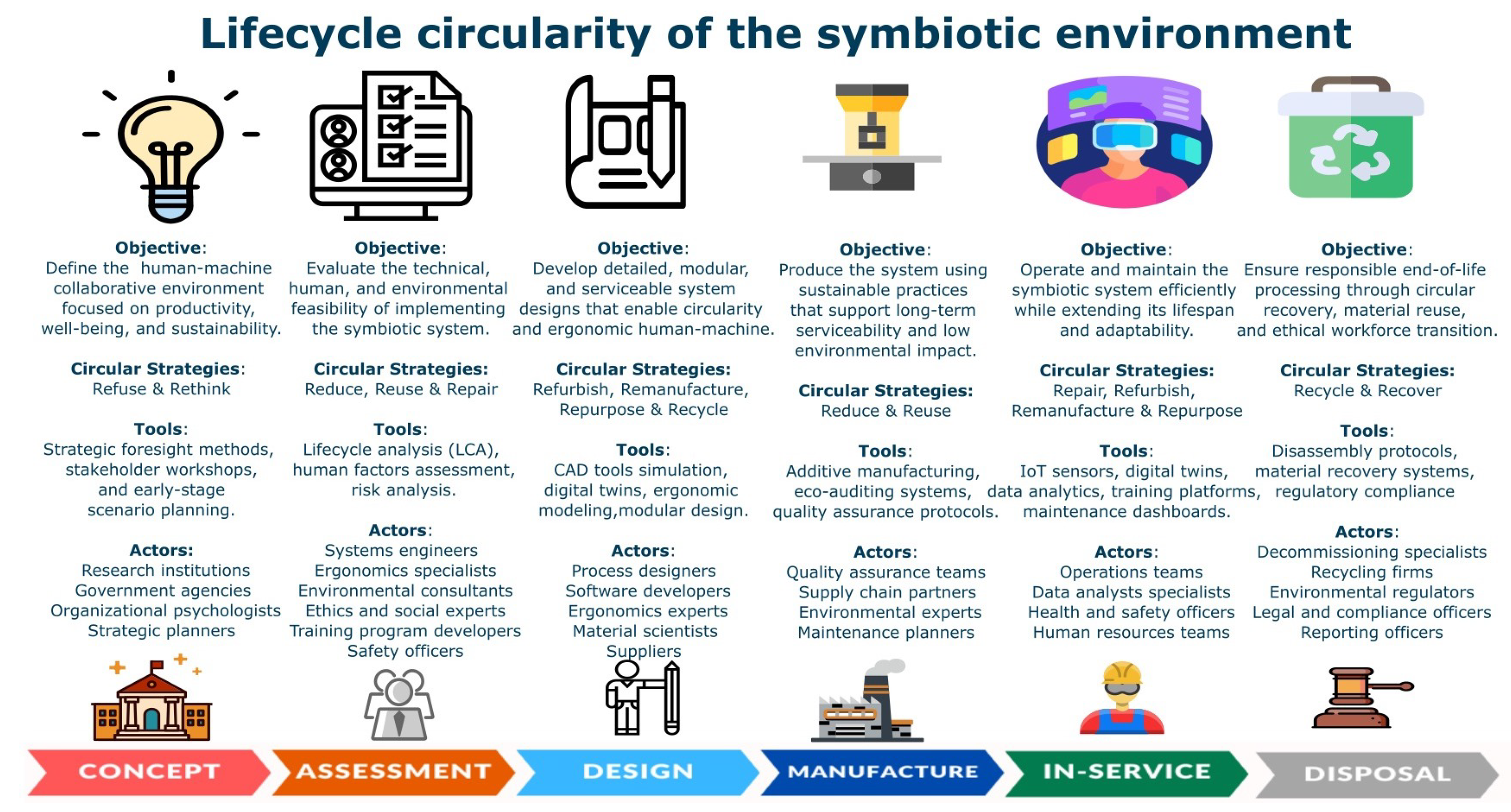
The framework proposed by [150] combines circular economy strategies called the R10 strategies [151] with the CADMID lifecycle model [152]. This model is used for designing sustainable space objects, but the same approach can be applied to other areas like the work described in symbiotic.pdf, as long as the focus stays on sustainability and avoids space-specific details. To use this framework in other systems, start by applying the CADMID stages. At each stage, make sure to include sustainability and circular economy goals. Finally, involve all key stakeholders from the beginning to the end of the life of the system [153]. This includes governments, companies, researchers, regulators, and consumers. Working together helps align goals, policies, funding, and innovation, just as the cooperative approach seen in the space sector.

4. Simulation-Based Scenarios in VR Using Synthetic Data

4.1. The Proposed VR Scenarios

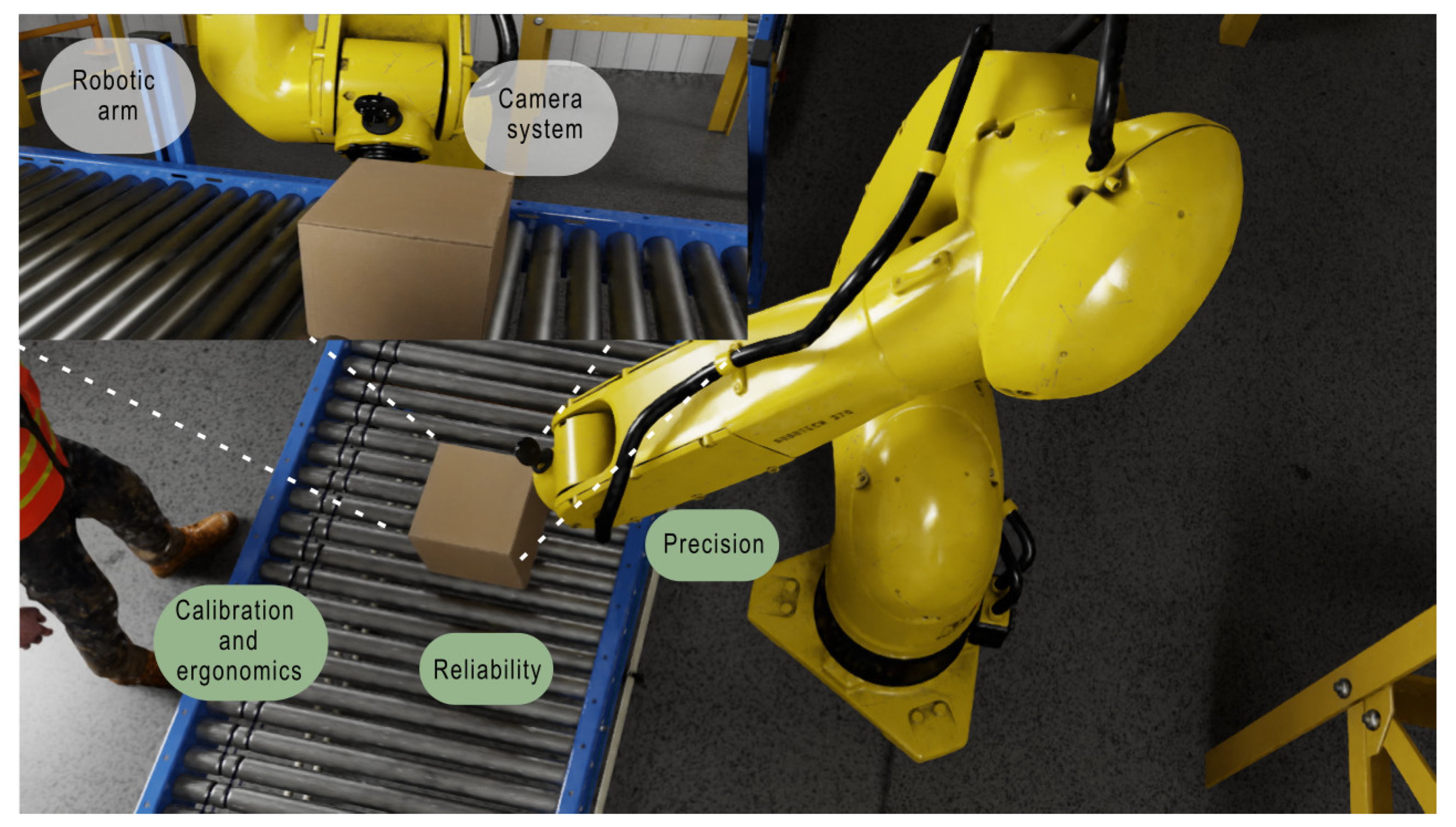
The manufacturing process used to generate the scenarios is described as follows. The study focuses on a robotic arm equipped with a specialized video camera designed to detect product defects. The arm’s primary function is to identify and collect products with production anomalies, operating on the basis of quality assessments from the video feed.
The factory employs a dynamic conveyor belt that adjusts its speed to synchronize with human operators. Although the conveyor’s speed is adjustable, it generally maintains a rate aligned with the robotic arm’s optimal working conditions. The video camera relies on specific lighting parameters to classify objects according to quality, allowing the robotic arm to identify defects and streamline the pick-and-place process.
In this setup, the robotic arm detects defects through its camera and collects defective products, while human operators manage packaging materials, ensuring that boxes are correctly filled and free of misplaced or wrongly sorted items.
The proposed VR environments are designed not only to analyze the relationship between operator performance, system efficiency, and decision-making in the production line, but also to evaluate the safety, controllability, and repeatability of manufacturing scenarios. It becomes possible to systematically observe how variations in environmental, operational, and human factors affect system stability and safety outcomes by creating controlled and replicable virtual conditions. Repeating experiments across multiple iterations allows for statistically robust analysis, ensuring that conclusions are not affected by random or isolated events.
Each scenario highlights critical aspects of the production process, demonstrating how different parameters influence results and identifying areas for improvement. These VR-based simulations provide a framework for studying complex factory conditions under safe, repeatable, and controlled circumstances, supporting the development of effective strategies to enhance both performance and safety in real industrial environments.
This proposal integrates HDTs, DTs, and environmental conditions within a VR environment, allowing for both real-time scenario presentations and offline evaluations. The virtual environment includes variables such as temperature, lighting, noise, and humidity factors that influence human and system performance. Incorporating these conditions improves the realism and completeness of the simulations. Synthetic data are used to generate these scenarios that capture the interactions between operators, machinery, and environmental factors.
An evaluation methodology is used in which multiple VR scenarios are executed and repeated to assess performance consistency, inform decision-making, and improve factory efficiency. This iterative and data-driven approach enables a deeper understanding of production dynamics and the identification of strategies to optimize safety, control, and operational performance in different aspects of the production line. Ultimately, this methodology supports the development of safer, more efficient, and sustainable production systems by replicating realistic yet fully controllable virtual experiments.

4.1.1. Operator Performance Case Study Description

This case focuses on the elements of humans that directly influence production. Variables such as age, experience, training level, and ergonomic conditions are critical as they determine the’ efficiency and error rates of operators, as shown in Figure 11. Understanding these factors allows for targeted improvements in training and ergonomic design, which is essential to reduce errors and improve performance. Combination with other scenarios: A more comprehensive view can be achieved by combining operator performance data with system performance and environmental impacts. For example, the impact of ergonomic improvements can be assessed not only through operator performance but also by observing changes in system efficiency and error rates under different environmental conditions.
This proposal employs synthetic data to create VR scenarios that improve accurate decision-making. This symbiotic environment integrates the operator, machinery, and environment into a cohesive system.

4.1.2. System Performance Case Study Description

This case emphasizes the technical factors that ensure the reliability and precision of automated systems such as robotic arms and computer vision systems, as in Figure 12. Regular calibration and ergonomic design improvements are crucial to maintaining high performance and minimizing errors in the production line. It is also possible to create a scenario that combines performance and decision-making. This scenario provides a holistic view by integrating operator performance, system performance, and decision-making variables. It highlights the interdependence of these factors and how they collectively influence error rates and overall efficiency. This comprehensive approach allows simultaneous analysis of multiple factors, such as how environmental conditions affect human and system performance or how ergonomic improvements influence decision-making and error mitigation. This integrated analysis facilitates a more nuanced understanding and enables more effective interventions.

4.1.3. Environmental Impact Study Description

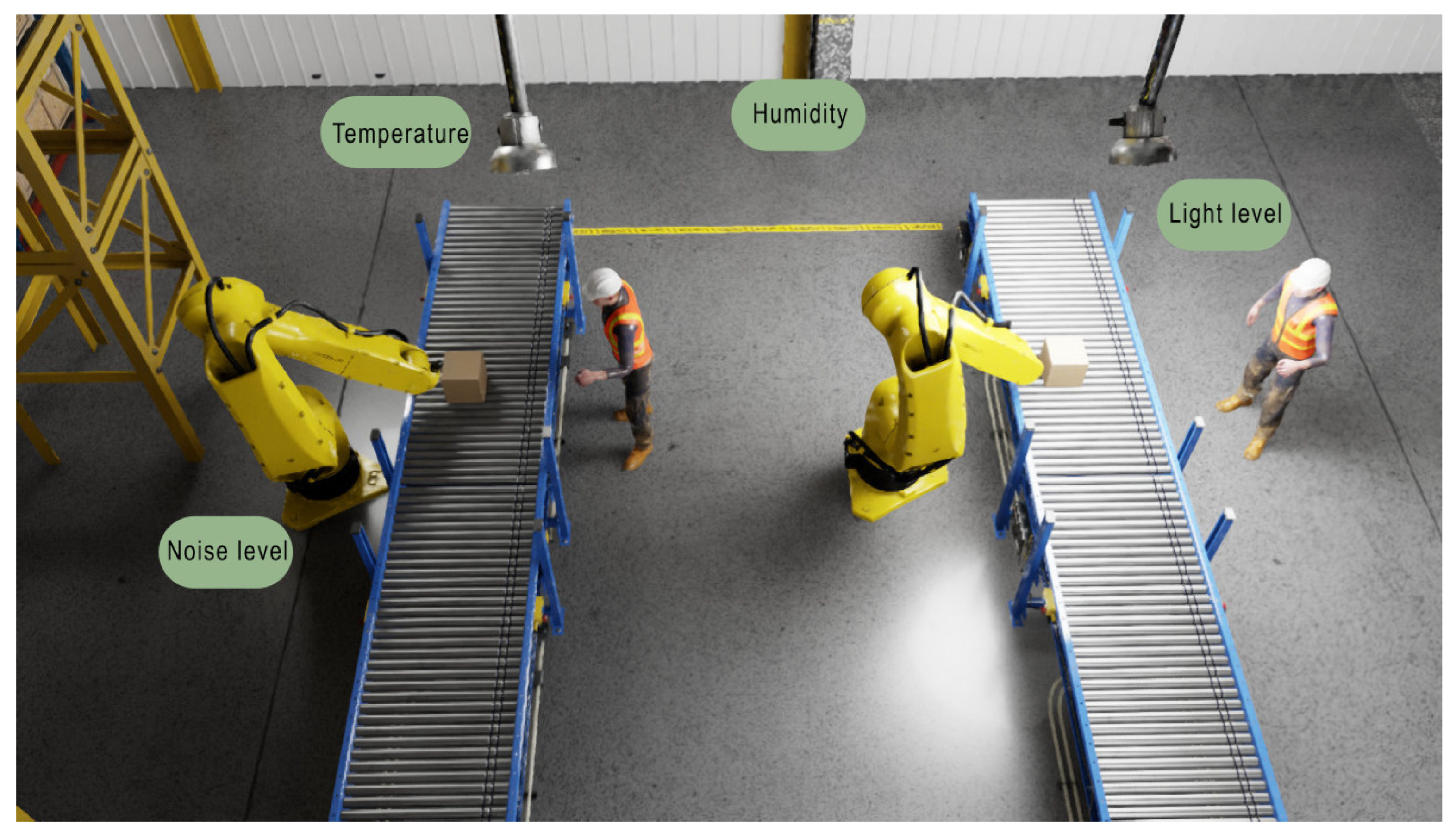
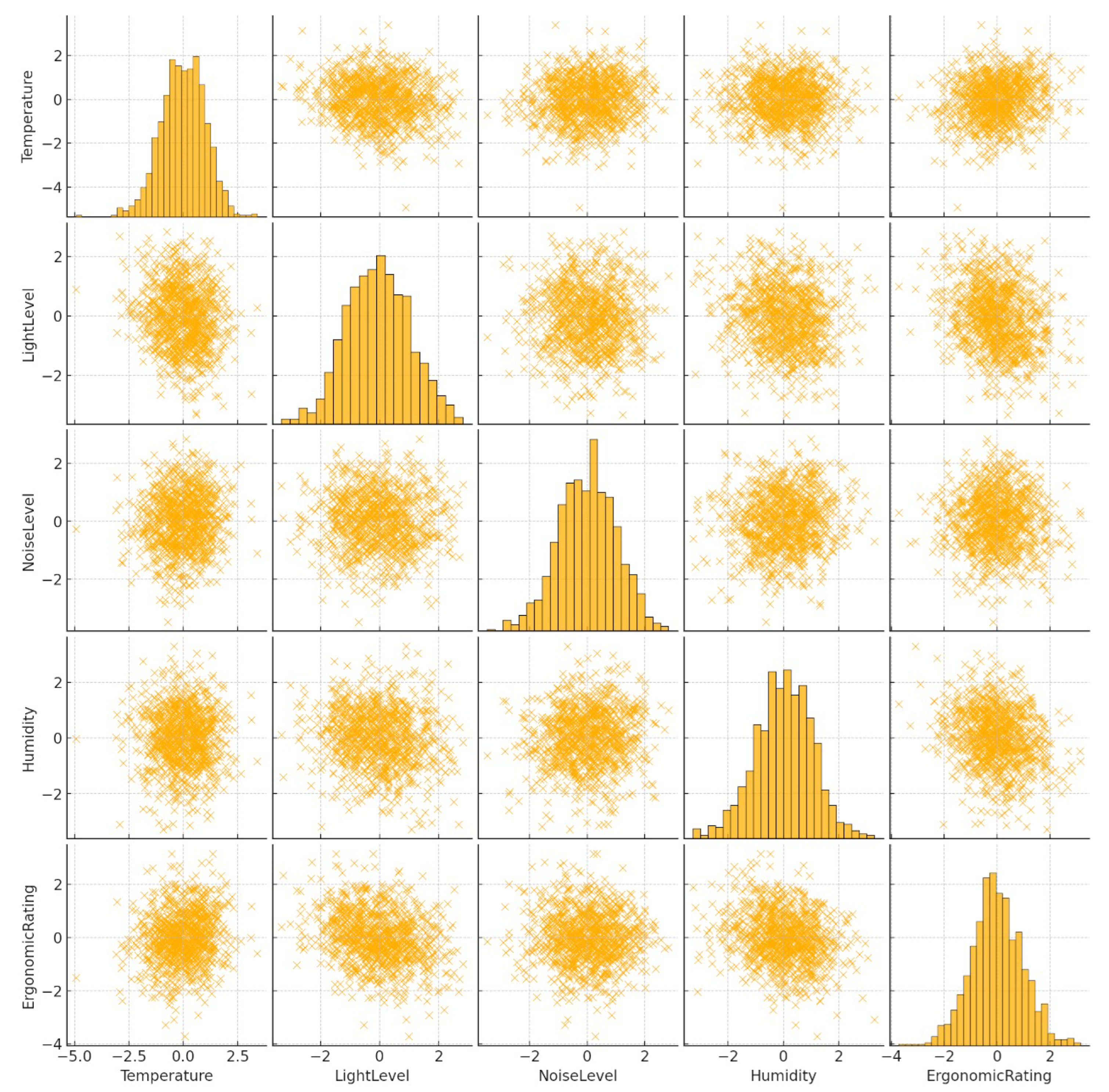
Environmental conditions such as temperature, light level, noise level, and humidity can significantly impact human and system performance, described in Figure 13. Studying these variables helps create optimal working conditions that improve productivity and reduce errors. By examining environmental impacts alongside operator and system performance data, specific conditions that maximize efficiency and minimize errors can be identified. For example, optimal lighting and temperature settings can be determined to benefit both operators and automated systems. Integrating these scenarios provides a multi-faceted approach to understanding and improving production line performance. By combining data from operator performance, system performance, decision-making variables, and environmental impacts, a comprehensive picture emerges. This holistic view allows the identification of key areas for improvement and the development of targeted strategies that address multiple aspects of the production process simultaneously. For example, the relationship between operator training levels and decision-making efficiency can be explored under different environmental conditions. Similarly, the impact of ergonomic enhancements’ on human and system performance can be assessed, leading to more effective and sustainable improvements. Continuous monitoring and data analysis across all these variables enable early identification of patterns and potential problems, allowing timely interventions and ongoing optimization of the production line.
Notably, some effects observed in these results, including the apparent association between higher temperatures, reduced cognitive load, and faster decision-making, may result from the assumptions underlying the synthetic data generation model rather than reflecting actual human-machine behavior. Consequently, these findings should be regarded as model-dependent artifacts and should not be directly extrapolated to real-world conditions without empirical validation. Future work will include detailed sensitivity analyses and calibration of the simulation using real operational traces to determine whether these correlations persist beyond the synthetic environment.

4.2. Operator Performance Case Study Performance

This case study focuses on operator-centric variables (e.g., Age, Years Of Experience, Training Level, Ergonomic Rating) and error-related outcomes (e.g., Error ID, Error Mitigation). It highlights how human factors influence quality and safety on the production line and informs targeted improvement strategies.
  • Data Views
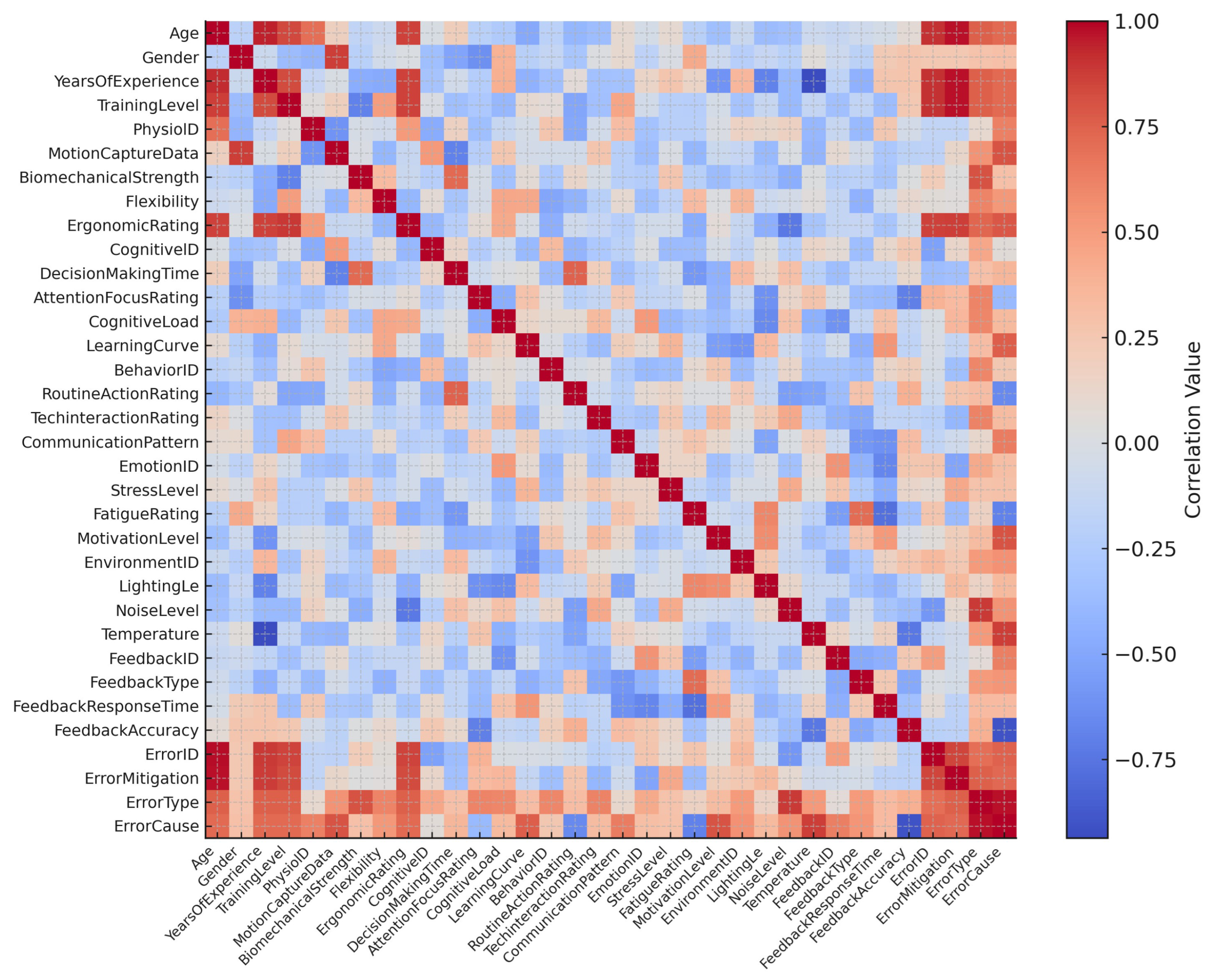
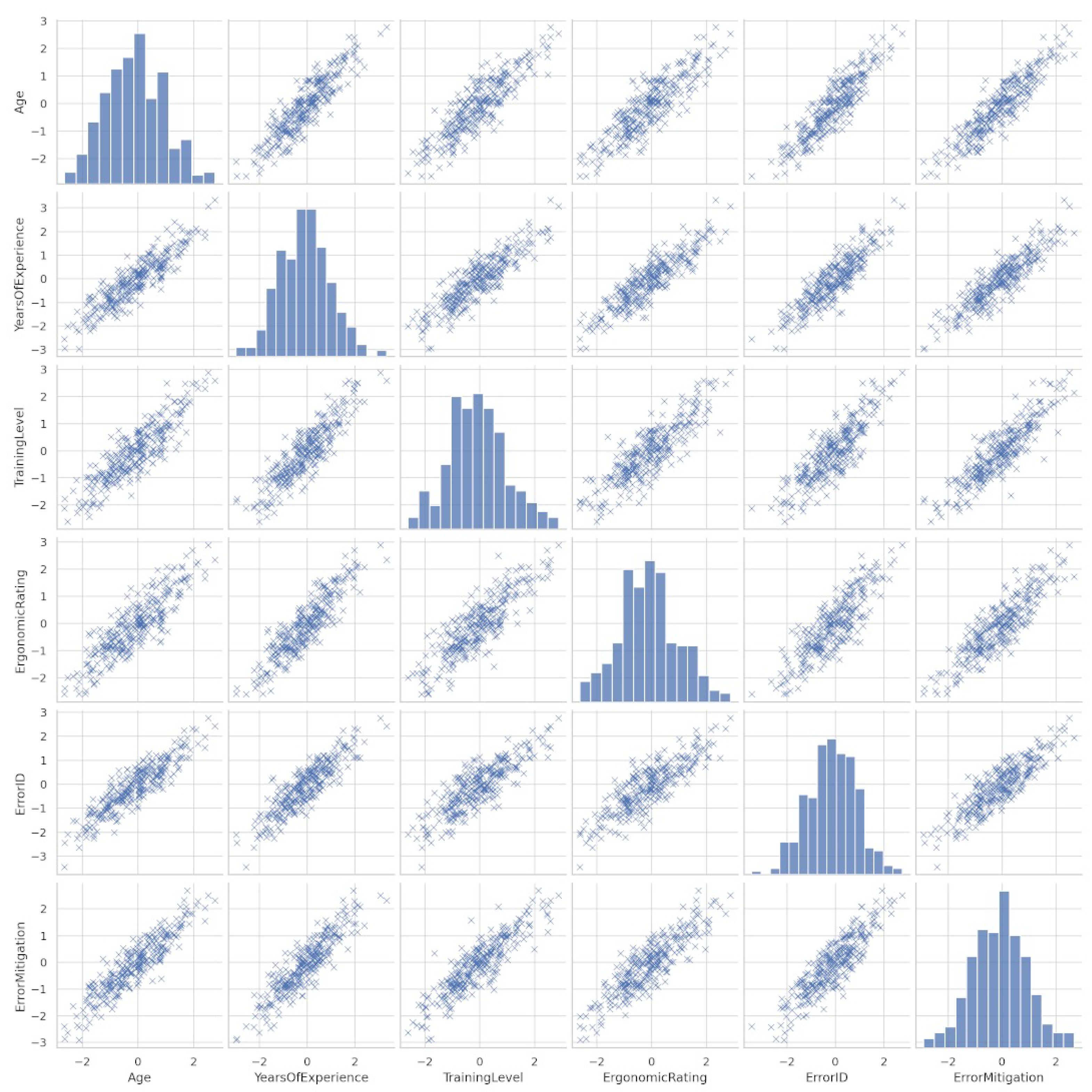
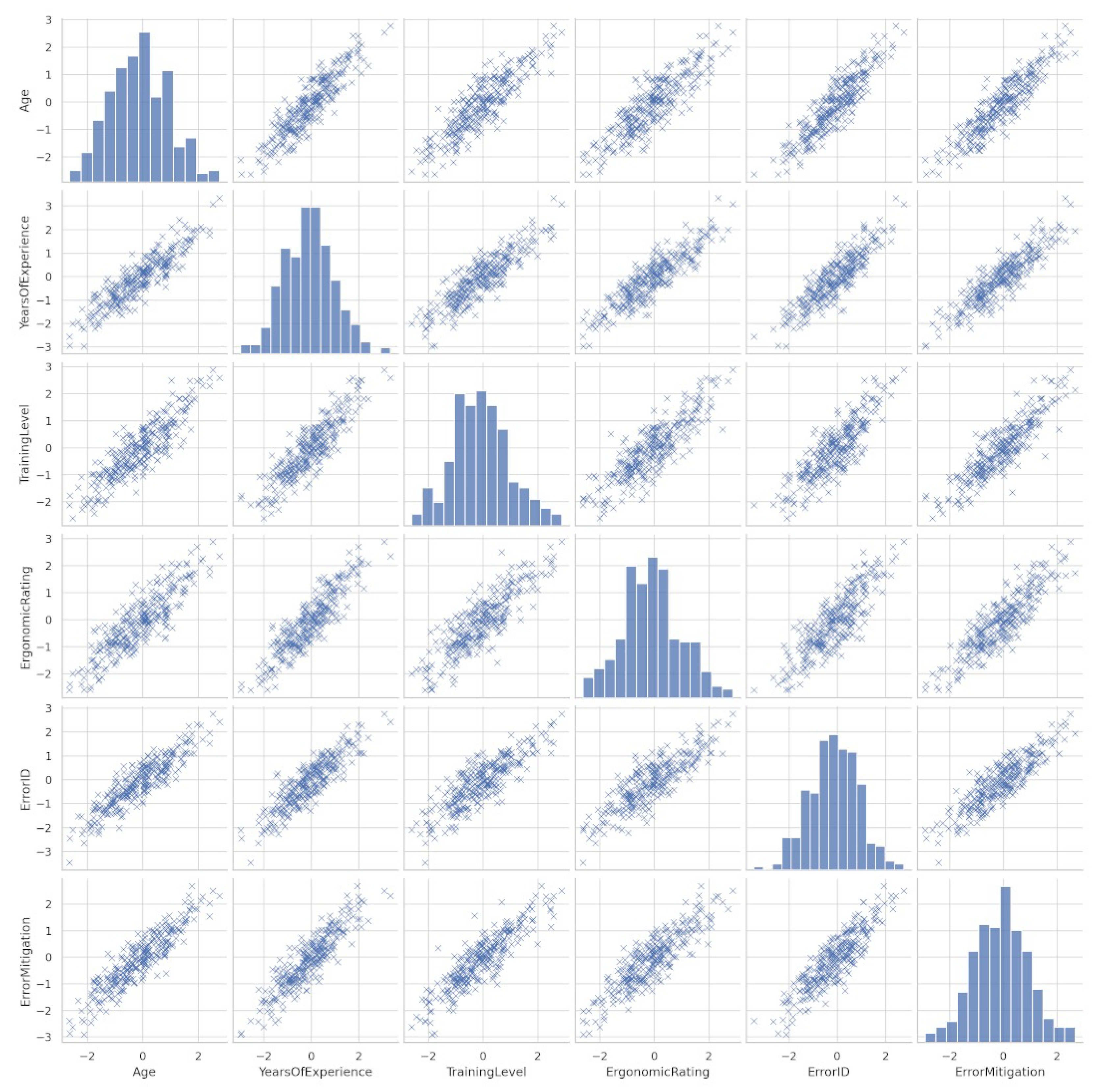
Figure 14 presents the correlation matrix for operator variables and error metrics. Figure 15 provides the corresponding pair plot to visualize distributions and pairwise relationships.
  • Key Findings
  • Experience and Training: Older and more experienced operators generally exhibit a lower error propensity; Training Level is positively associated with Error Mitigation and better handling of error scenarios.
  • Ergonomics: A higher Ergonomic Rating aligns with fewer errors and improved mitigation, indicating the importance of workstation design and comfort.
  • Distributional Notes: Core variables (Age, Years Of Experience, Training Level, Ergonomic Rating, Error ID, Error Mitigation) show approximately normal distributions (cf. pair plot diagonals).
  • Actionable Strategy
1.
Targeted Training: Analyze Error Type and Error Cause to identify common weaknesses; design focused modules and scenario-based practice to reinforce skills.
2.
Ergonomic Enhancements: Conduct workstation assessments; implement adjustments (e.g., seating, matting, lighting); train operators in ergonomic setup best practices.
3.
Experience Sharing: Establish recurring forums for peer exchange; create a lightweight knowledge repository for tips, failure modes, and countermeasures; foster continuous learning.

4.3. System Performance Case Study Behavior

This case study emphasizes system-level variables, including the robotic arm’s Motion Capture Data, Biomechanical Strength, Flexibility, and overall Ergonomic Rating, and examines their relation to error outcomes.
  • Data Views
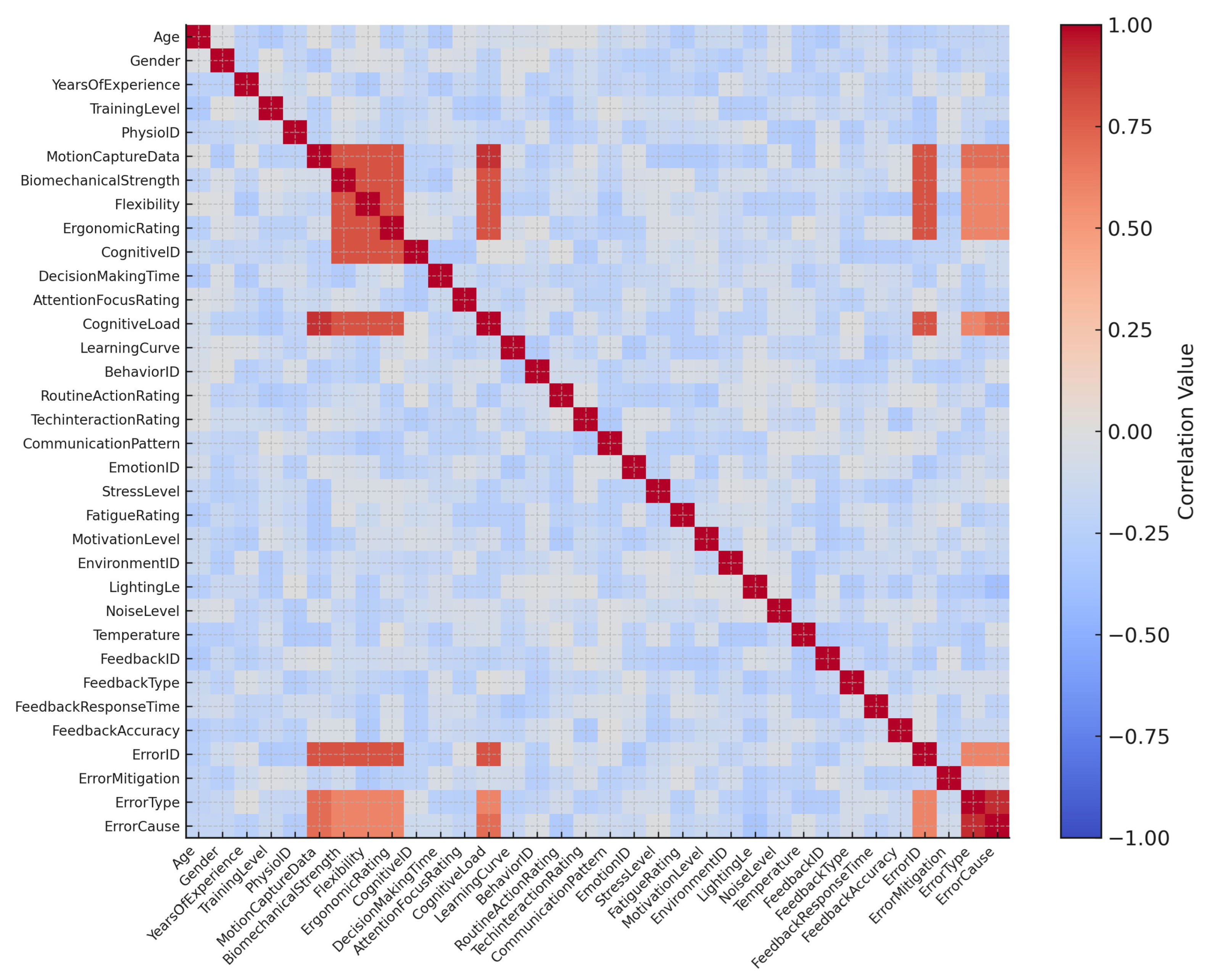
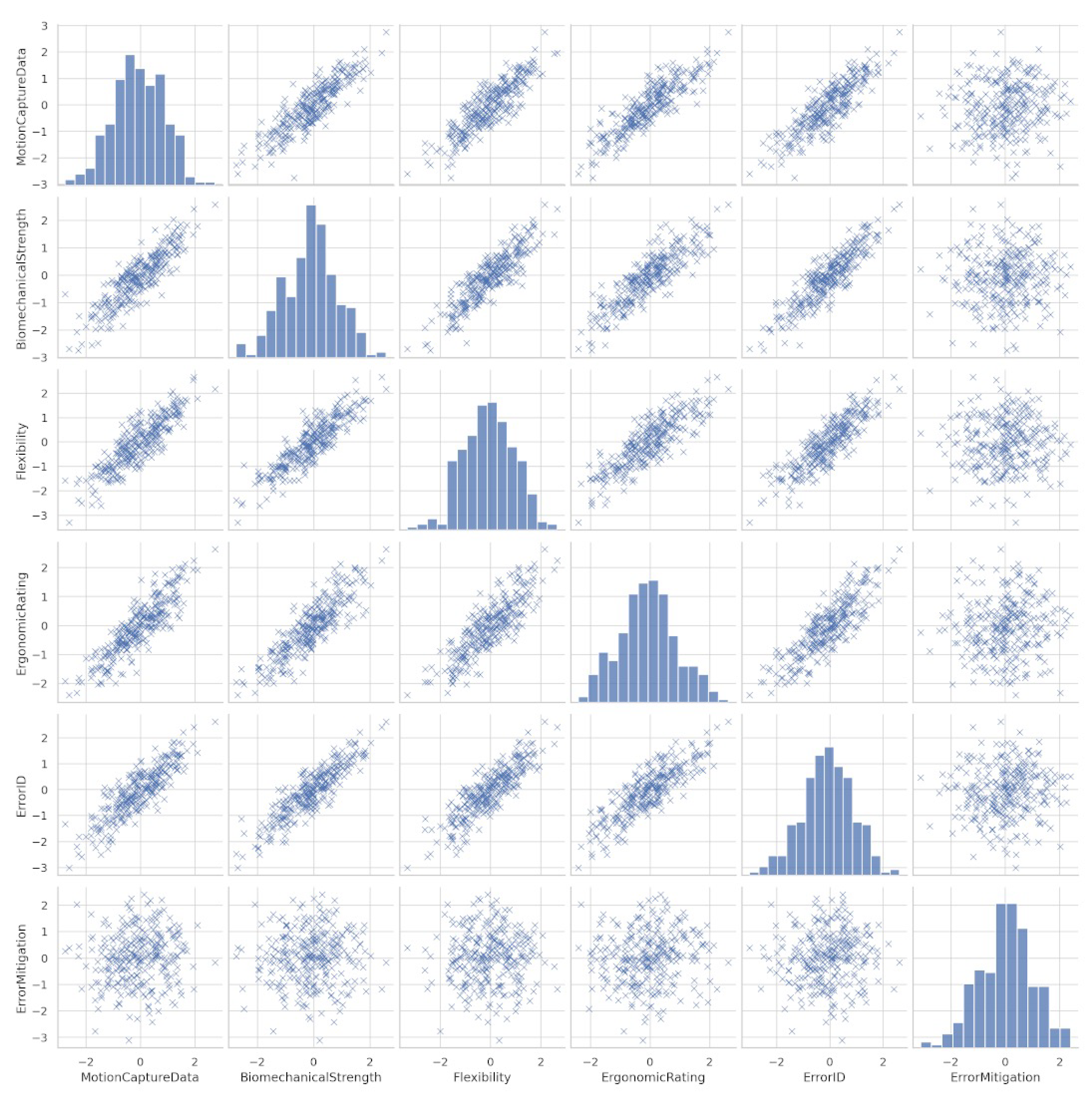
Figure 16 shows the system-specific correlation matrix (distinct from Figure 14). Figure 17 provides the pair plot for distributional and pairwise inspection of the system metrics.
  • Key Findings
  • Coupled Physical Metrics: Motion Capture Data, Biomechanical Strength, and Flexibility tend to improve together and align with higher Ergonomic Rating.
  • Errors vs. System Metrics: Associations between system metrics Error ID and Error Mitigation are comparatively weaker, suggesting that error management also depends on procedural, cognitive, or organizational factors beyond physical/ergonomic characteristics.
  • Distributional Notes: System variables (e.g., Motion Capture Data, Biomechanical Strength, Flexibility, Ergonomic Rating, Error ID, Error Mitigation) show approximately normal distributions (cf. pair plot diagonals).
  • Actionable Strategy
1.
Calibration and Monitoring: Establish routine calibration of the robotic arm and vision system; log calibration outcomes; implement real-time monitoring and alerts for drift or threshold breaches.
2.
Operator-Centered Ergonomics: Iterate UI/UX for clarity and reach; incorporate operator feedback loops to refine controls and displays; prioritize low-cognitive-load interfaces.
3.
Integrated Routines: Pair system-side improvements with operator upskilling (joint sessions for technicians and operators); include troubleshooting and basic maintenance to shorten recovery time.
Based on individual analysis of operator and system performance, it becomes evident that human and technical factors are deeply interdependent. Operator efficiency and decision quality influence how effectively automated systems perform, while system responsiveness and ergonomic design shape operator behavior and cognitive load. To capture these cross-effects and move from isolated metrics to an integrated understanding of human-machine synergy, the following case study combines both perspectives with decision-making variables, offering a unified view of overall production performance.

4.4. Combined Performance and Decision-Making Case Study

This case study integrates operator metrics, system metrics, and decision-making variables to provide a holistic view of the production process. It examines how factors such as Training Level, Decision-Making Time, and Ergonomic Rating interact to influence both human and system performance outcomes.
  • Data Views
Figure 18 presents the correlation matrix of combined variables, while Figure 19 displays the pair plot showing the interaction patterns and distributions.
  • Key Findings
  • Interconnected Human-System Factors: Higher Training Level correlates with faster Decision-Making Time and fewer errors, indicating that training enhances not only task execution but also real-time decision quality.
  • Decision-Making Dynamics: Decision-Making Time directly influences Error ID and Error Mitigation operators with moderate response times achieve better mitigation and fewer recurrent errors, balancing speed and accuracy.
  • Ergonomics and Cognitive Load: Ergonomic Rating positively impacts both operator performance and error reduction, suggesting that physical comfort supports cognitive efficiency.
  • Correlation Structure: Positive correlations among Age, Experience, and Training Level confirm that seniority and preparation reinforce safety performance. The distributions of all variables approximate normal patterns, reflecting a balanced dataset.
  • Integrated Strategy
To optimize decision-making and reduce cumulative error, the following combined strategy is proposed:
1.
Enhanced Training Programs: Develop cross-disciplinary training modules that link robotic system operation and cognitive decision-making. Include simulation-based exercises and dynamic performance feedback loops.
2.
Periodic Skill Assessment: Conduct quarterly evaluations to measure both operational precision and decision speed; use metrics to identify retraining needs and recognize high performers.
3.
Decision Support Integration: Implement real-time analytics and AI-based guidance to assist operators in critical scenarios. Visual cues and predictive alerts should be context-aware to reduce cognitive overload.
4.
Ergonomic and Cognitive Design: Adjust the layout of the interface and visual load in response to human-machine interaction data. Align physical comfort with cognitive accessibility for consistent operator engagement.
  • Synthesis and Implications
The combined analysis confirms that operator expertise, training, and ergonomic conditions significantly influence both human and system performance. A human-centered digital twin that adapts in real time to cognitive and ergonomic data can proactively manage error risk. Integrating decision-making analytics into system monitoring fosters a feedback ecosystem in which human and machine co-evolve toward adaptive efficiency and sustainability across the production lifecycle.

4.5. Environmental Impact Study Performance

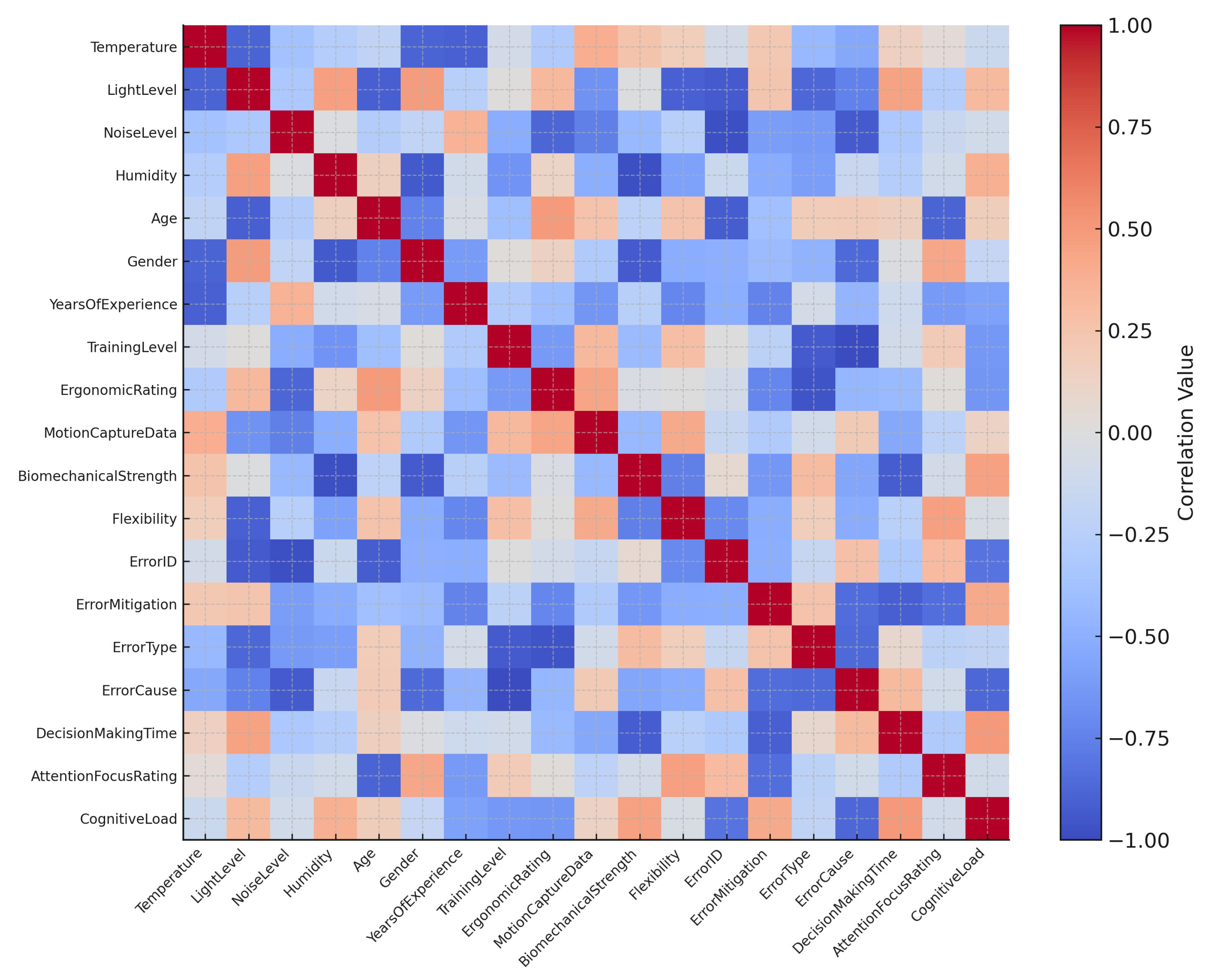
This proposed case study has a moderate negative correlation with cognitive load (−0.17) and decision-making time (−0.32), indicating that higher temperatures may be associated with decreased cognitive load and faster decision-making times. The level of light has a moderate positive correlation with the training level (0.23) and the mitigation of errors (0.18), suggesting that better lighting conditions may enhance training effectiveness and mitigation of errors. The noise level has a high positive correlation with humidity (1.00) and years of experience (0.32), indicating that higher noise levels are associated with higher humidity and may correlate with more experienced operators. Humidity has a high positive correlation with noise level (1.00), suggesting that areas with high humidity also experience higher noise levels.

4.5.1. Improvement Strategy

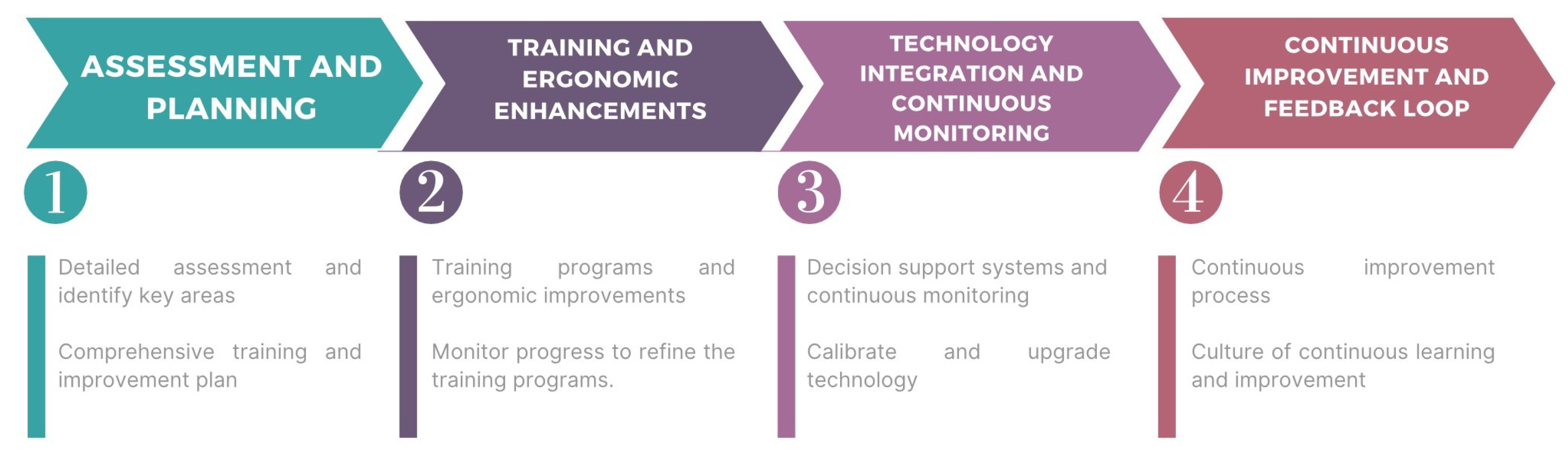
Environmental control aims to maintain optimal environmental conditions to enhance operator and system performance. This involves implementing climate control systems to regulate temperature and humidity and ensuring that adequate lighting and noise reduction measures are in place. Ergonomic and training enhancements aim to improve operator comfort and skills to reduce errors and improve performance. This includes conducting ergonomic assessments and implementing improvements, and developing comprehensive training programs focusing on system operation, decision-making, and error handling. The calibration and feedback mechanisms of the system ensure that the robotic arm and the computer vision system operate accurately and efficiently. This involves establishing a regular calibration schedule for all equipment, using precision tools and software for calibration, carefully documenting results, and implementing sensors and monitoring systems that provide real-time data on system performance. Continuous monitoring and data analysis aim to identify trends and potential issues early for timely interventions. This includes implementing a continuous monitoring system that tracks performance metrics in real-time, using data analytics to identify patterns and predict potential problems, setting up automated alerts for critical performance thresholds, and developing a feedback loop where operators can report issues and suggest improvements. The correlation matrix for this particular case is shown in Figure 20.
  • Key Observations:
    Environmental Variables:
    Temperature:
    ·
    Moderate negative correlation with Cognitive Load (−0.17) and Decision-Making Time (−0.32).
    ·
    Indicates that higher temperatures may be associated with a decreased cognitive load and faster decision-making times.
    Light Level:
    ·
    Moderate positive correlation with Training Level (0.23) and Error Mitigation (0.18).
    ·
    Suggests that better lighting conditions may enhance training effectiveness and error mitigation.
    Noise Level:
    ·
    High positive correlation with Humidity (1.00) and Years of Experience (0.32).
    ·
    Indicates that higher noise levels are associated with higher humidity and may correlate with more experienced operators.
    Humidity:
    ·
    High positive correlation with Noise Level (1.00).
    ·
    Suggests that areas with high humidity also experience higher noise levels.
    Operator Performance:
    Age:
    ·
    Moderate positive correlation with Years of Experience (0.61) and Gender (0.41).
    ·
    Suggests that older operators tend to have more experience and there may be a gender distribution skew in the data.
    Gender:
    ·
    Moderate positive correlation with Years of Experience (0.45) and Age (0.41).
    ·
    Indicates that there might be a higher proportion of one gender among the more experienced and older operators.
    Years of Experience:
    ·
    High positive correlation with Age (0.61) and moderate correlation with Noise Level (0.32).
    ·
    Suggests that more experienced operators are older and may be more accustomed to working in noisy environments.
    Training Level:
    ·
    Moderate positive correlation with Light Level (0.23) and Error Mitigation (0.18).
    ·
    Indicates that higher training levels are associated with better lighting conditions and improved error mitigation.
    System Performance:
    Motion Capture Data:
    ·
    Moderate positive correlation with Biomechanical Strength (0.15).
    ·
    Suggests that better motion capture data is associated with stronger biomechanical performance.
    Biomechanical Strength:
    ·
    Moderate positive correlation with Flexibility (0.18).
    ·
    Indicates that stronger biomechanical performance is associated with greater flexibility.
    Flexibility:
    ·
    Moderate positive correlation with Biomechanical Strength (0.18).
    ·
    Suggests that greater flexibility is associated with stronger biomechanical performance.
    Error Metrics:
    Error ID:
    ·
    Moderate positive correlation with Years of Experience (0.27) and Error Mitigation (0.18).
    ·
    Indicates that more experienced operators tend to have higher error identification rates and better error mitigation.
    Error Mitigation:
    ·
    Moderate positive correlation with Light Level (0.18) and Training Level (0.18).
    ·
    Suggests that better lighting conditions and higher training levels improve error mitigation.
    Decision-Making Variables:
    Decision-Making Time:
    ·
    Moderate negative correlation with Temperature (−0.32) and positive correlation with Attention Focus Rating (0.33).
    ·
    Indicates that higher temperatures may reduce decision-making time, while better attention focus improves decision-making efficiency.
    Attention Focus Rating:
    ·
    Moderate positive correlation with Decision-Making Time (0.33).
    ·
    Suggests that better attention focus is associated with longer decision-making times, possibly indicating more careful decision-making.
    Cognitive Load:
    ·
    Moderate positive correlation with Attention Focus Rating (0.33) and negative correlation with Temperature (−0.17).
    ·
    Indicates that a higher cognitive load is associated with better attention focus and lower temperatures.
  • Implications and Strategies:
    Environmental Control:
    Objective: Maintain optimal environmental conditions to enhance operator and system performance.
    Actions:
    ·
    Implement climate control systems to regulate temperature and humidity, creating a comfortable working environment.
    ·
    Ensure that proper lighting and noise reduction measures are in place to improve visibility and reduce cognitive load.
    Ergonomic and Training Enhancements:
    Objective: Improve operator comfort and skills to reduce errors and improve performance.
    Actions:
    ·
    Conduct ergonomic assessments and implement improvements, such as adjustable workstations and proper lighting.
    ·
    Develop comprehensive training programs that focus on system operation, decision-making, and error handling.
    System Calibration and Feedback Mechanisms:
    Objective: Ensure that the robotic arm and the computer vision system operate accurately and efficiently.
    Actions:
    ·
    Establish a regular calibration schedule for all equipment.
    ·
    Use precision tools and software for calibration and thoroughly document the results.
    ·
    Implement sensors and monitoring systems that provide real-time data on system performance.
    Continuous Monitoring and Data Analysis:
    Objective: Identify trends and potential problems early for timely interventions.
    Actions:
    ·
    Implement a continuous monitoring system that tracks performance metrics in real-time.
    ·
    Use data analytics to identify patterns, predict potential problems, and set automated alerts for critical performance thresholds.
    ·
    Develop a feedback loop where operators can report issues and suggest improvements.

4.5.2. General Findings

The plot illustrated in Figure 21 gives a thorough overview of the interrelationships between the variables in the dataset.
  • Distribution of Individual Variables
    Temperature, LightLevel, NoiseLevel, Humidity, and ErgonomicRating: The histograms on the diagonal show the distribution of each variable. These distributions seem to approximate normal distributions, centered around their means.
  • Pairwise Relationships
    Temperature vs. LightLevel: The scatter plot shows no clear correlation. The spread is random, indicating that these two variables are not linearly related.
    Temperature vs. NoiseLevel: Similar to LightLevel, no clear pattern or correlation is visible.
    Temperature vs. Humidity: There is no clear correlation; the data points are scattered randomly.
    Temperature vs. ErgonomicRating: The scatter plot shows no clear correlation, suggesting that temperature does not have a linear relationship with ergonomic ratings.
    LightLevel vs. NoiseLevel: The scatter plot does not show a clear pattern, indicating that there is no significant correlation between these variables.
    LightLevel vs. Humidity: Similar to NoiseLevel, no clear correlation is observed.
    LightLevel vs. ErgonomicRating: There is no visible pattern, indicating that there is no significant correlation.
    NoiseLevel vs. Humidity: The scatter plot does not show a clear correlation.
    NoiseLevel vs. ErgonomicRating: There is no clear pattern, indicating that there is no significant linear relationship.
    Humidity vs. ErgonomicRating: The scatter plot does not show a clear correlation.
  • General Observations
    Lack of Significant Correlations: The pair plots reveal that there are no significant linear correlations between Temperature, LightLevel, NoiseLevel, Humidity, and ErgonomicRating. The scatter plots are generally spread out without any discernible patterns.
    Distribution Patterns: Each variable’s distribution appears approximately normal, centered around their respective means, as shown by the histograms on the diagonal.
Strong positive correlations between variables such as age, years of experience, level of training, ergonomic rating, and decision-making time indicate that these factors are closely related. Improvements in one area often lead to improvements in others. Positive correlations involving error identification and mitigation suggest that factors such as experience, training, and ergonomic ratings positively impact error management and mitigation. A comprehensive strategy to improve production line performance should integrate training, ergonomic enhancements, technological improvements, and continuous monitoring. The combined approach ensures a cohesive understanding and interaction between operators, the robotic arm, and the computer vision system. Integrated training programs should cover operator skills and system operation, including collaborative training sessions in which operators and system engineers work together. Modules on troubleshooting and maintenance can enable operators to handle minor issues, reducing downtime, and improving overall efficiency. Implementing a continuous monitoring system that tracks real-time performance metrics can help identify trends and potential issues early, allowing timely interventions. Data analytics can identify patterns and predict potential problems, and automated alerts can be set up to meet critical performance thresholds. Regularly evaluating the performance of current systems and identifying areas for upgrades can ensure the technology used in the robotic arm and computer vision system remains state-of-the-art. Planning and budgeting for periodic technology refreshes can harness the latest advancements to reduce error rates and improve production efficiency.

4.6. Implementation Plan

Based on the results of the different simulation-based scenarios in VR using synthetic data, the following action plan is proposed. Figure 22 describes the proposed action plan in detail with the following characteristics.
  • Phase 1: Assessment and Planning
    Conduct a detailed assessment of current performance and identify key areas for improvement.
    Develop a comprehensive training and improvement plan based on the abovementioned strategies.
    Secure management buy-in and allocate resources for implementation.
  • Phase 2: Training and Ergonomic Enhancements
    Roll out the enhanced training programs and ergonomic improvements.
    Monitor progress and gather feedback from operators to refine the training programs.
  • Phase 3: Technology Integration and Continuous Monitoring
    Implement decision support systems and continuous monitoring mechanisms.
    Calibrate and upgrade technology as needed based on performance data.
  • Phase 4: Continuous Improvement and Feedback Loop
    Establish a continuous improvement process that includes regular assessments, feedback loops, and iterative enhancements.
    Encourage a culture of continuous learning and improvement among operators and system engineers.
Addressing these factors and implementing the strategies outlined, a factory can enhance the interaction between operators and robotic systems, leading to improved performance, reduced errors, and increased overall efficiency in the production line using a VR environment.

4.7. Description of the Lifecycle Circularity of the Symbiotic Environment

The traceability is comprised by CADMID model that structures the lifecycle of systems within human-machine symbiotic environments, integrating sustainability and circular economy principles in every phase.
In the Concept phase, the vision of a collaborative environment between humans and machines is defined, focusing on efficiency, adaptability, and well-being. Circular strategies such as Refuse (avoid unnecessary elements) and Rethink are introduced early. The main stakeholders include government agencies, management, R&D teams, psychologists, operators, and sustainability experts. In the Assessment phase evaluates technical and human feasibility, including AI, IoT, ergonomics, and sustainability trade-offs. Circular principles like Reduce, Reuse, and Repair are applied to minimize resources and extend system life. Stakeholders include systems engineers, human factors specialists, and environmental consultants. In the Design phase, specifications promote modularity, serviceability, and durability. Circular actions like Refurbishment, Remanufacturing, Repurpose, and Recycle are embedded into product architecture. Stakeholders include designers, software developers, materials scientists, and manufacturing engineers.
The Manufacture phase applies low-impact and circular production practices, such as Reduce and Refuse. Additive manufacturing and sustainable sourcing lower waste and emissions. Stakeholders include production engineers, QA teams, supply chain partners, and compliance officers. During the In-Service phase, system performance is maintained and improved through real-time monitoring and predictive analytics. Repair, Refurbish, Remanufacture, and Repurpose extend product life and adaptability. Stakeholders include operations teams, maintenance staff, data analysts, trainers, and health and safety officers.
Finally, the Disposal phase focuses on responsible end-of-life management. Recycle recovers materials, while Recover extracts remaining energy or value. Ethical and social aspects, such as workforce redeployment, are also addressed. Stakeholders include decommissioning specialists, recycling firms, regulators, and legal teams. The human-machine symbiotic environments support a closed-loop, sustainable, and collaborative system lifecycle, balancing technological efficiency with human and environmental well-being.
Figure 23 summarizes the lifecycle circularity of the symbiotic environment, highlighting the main objectives, tools, circular and sustainable strategies, and stakeholders from concept to disposal.

5. Discussion

The proposed Digital Symbiotic Environment Between Machines and Operators Using Tailored Endeavors makes a seminal contribution to the field of manufacturing digitalization. This study is distinguished by its in-depth analysis of how digital technologies can seamlessly integrate human aspects into manufacturing environments, fostering a symbiotic relationship that enhances both efficiency and adaptability. At the heart of the paper is the evolution of the workforce, highlighting the need to strike a balance between automation and human intervention. Through a comparative analysis of human-operated and robot-controlled systems, the study emphasizes that both efficiency and human factors must be optimized to enhance productivity, safety, and job satisfaction. This balance ensures that automation-such as robotics-augments rather than replaces indispensable human contributions, creating a collaborative and productive environment.
The study further explores the importance of human supervisory control, underscoring the need to enable machines and humans to operate in a complementary manner. This capability allows for problem-solving and decision-making in complex manufacturing systems, where technical performance and human-centric considerations are paramount. Ethical implications and employment challenges associated with increased automation-particularly with the rise of collaborative robots-are also addressed. This approach advocates for a proactive and thoughtful approach to integrating these technologies, aiming to mitigate risks such as job displacement and ethical dilemmas by emphasizing responsible and human-focused implementation.
The transition towards Industry 5.0 represents a paradigm shift that not only embraces automation and efficiency, but also emphasizes a human-centric approach that prioritizes workforce well-being, job satisfaction, and ethical responsibility. The proposed framework enables a digital symbiotic environment in which human digital twins integrate operator-specific data with machine digital twins, allowing for real-time monitoring, feedback, and optimization. This integration supports a dynamic balance between high automation and human supervision, taking advantage of human skills to complement robotic precision and flexibility. Ergonomic improvements and targeted training by continuous monitoring of environmental conditions and operator feedback contribute to reduced error rates and enhanced performance. Digital manufacturing solutions help reduce waste and energy consumption while aligning with responsible automation practices.
Despite these advances, challenges remain to adapt operator roles and skills to emerging technologies and to manage human variability within complex systems. Future research should focus on advancing digital twin technologies, incorporating AI and extended reality to support personalized operator assistance and immersive training, ensuring safe, efficient, and satisfying work environments aligned with Industry 5.0 principles.
While the synthetic data-based simulations provide valuable insights into the dynamic interactions among human, machine, and environmental variables, some relationships may not accurately represent real-world phenomena it is important to refine the data generation model, conducting sensitivity analysis, and calibrating it against real-world traces to validate and adjust these correlations under empirical conditions.
Looking ahead, the study anticipates deeper human-machine collaboration as a hallmark of Industry 5.0. It underscores the need for human-centric solutions to ensure that industrial environments remain balanced and sustainable, with a focus on human well-being and organizational needs alongside technological advancement. Additionally, the paper proposes customizing tasks based on operators’ cognitive and personality profiles-a strategy that can improve efficiency, increase job satisfaction, and foster stronger team dynamics, ultimately contributing to a more harmonious and productive workplace.
Lifecycle circularity further enhances this vision by embedding sustainability in all phases of the manufacturing system, following the principles of circular economy through the CADMID lifecycle model. The framework applies the R10 circular economy strategies to ensure that sustainability is a foundational element from the beginning of the system to the end-of-life. In the Concept stage, early strategies like Refuse and Rethink guide vision-setting and stakeholder alignment. The Assessment phase assesses technology readiness, human factors, and environmental trade-offs using strategies such as reducing, Reuse, and repairing. In the Design phase, a focus on modularity and durability supports Refurbish, Remanufacture, Repurpose, and Recycle. The Manufacture phase prioritizes low-waste processes and safe material choices, while In-Service uses predictive analytics and IoT to enable proactive maintenance and adaptive reuse. Finally, the Disposal phase employs Recycle and Recover strategies, ensuring responsible disassembly and ethical workforce transitions. This lifecycle approach and the symbiotic human-machine framework define a manufacturing paradigm that is efficient, resilient, sustainable, and aligned with the principles of Industry 5.0.
This paper offers a comprehensive and insightful perspective on the integration of digital technologies with human elements in modern manufacturing. Its detailed analysis and practical contributions provide valuable guidance for evolving manufacturing practices that ensure the demands of productivity while upholding the well-being and satisfaction of the human workforce in a more inclusive, sustainable and human-centered industrial future. Additionally, Appendix A introduces the DSTEBMO Framework Implementation Proposal. It outlines how the Symbiotic Digital Tailored Environment Between the Machines and Operators (DSTEBMO) framework will be deployed in an innovative manufacturing setting, specifically in a robotic pick-and-place cell. The appendix explains the technical architecture of its main components, emphasizing their roles, system layout, and integration to support real-world use within a factory cell.

6. Conclusions

This research presented a comprehensive Symbiotic Digital Tailored Environment Between Machines and Operators (DSTEBMO) framework that tightly weaves human operators, machines, and their shared environment into a unified, circular-economy lifecycle. By integrating both Human Digital Twins and Machine Digital Twins across all stages of the CADMID lifecycle is composed of Concept, Assessment, Design, Manufacture, In-Service, and Disposal phases the approach embeds R10 circularity strategies (Refuse, Rethink, Reduce, Reuse, Repair, Refurbish, Remanufacture, Reposition, Recycle, Recover) into decision-making processes. This end-to-end perspective aims to minimize material and energy waste while supporting sustainable design, predictive maintenance, and responsible end-of-life recovery.
Case studies in various manufacturing contexts demonstrated measurable improvements in operator-system performance and reductions in error rates. These results indicate potential paths toward improved productivity and resource efficiency, which in turn can contribute to long-term sustainability outcomes, such as reduced downtime and extended usability of the equipment. Real-time monitoring and predictive analytics of the symbiotic environment facilitate continuous feedback between physical and virtual operations, strengthening data-driven adaptation and process optimization.
Ethical considerations, workforce well-being, and human-centric design remain central to DSTEBMO. By maintaining human supervisory control, preventing over-automation, and ensuring transparent, explainable AI behaviors, the framework safeguards against job displacement while fostering operator engagement, morale, and retention. In addition, its integrated circularity indicators, such as material throughput, manufacturability indices, and resource utilization rates provide a foundation for future quantification of sustainability impacts.
In general, DSTEBMO advances Industry 4.0 and Industry 5.0 by defining a human-centered digital manufacturing ecosystem that operationalizes the principles of circularity through real-time data integration. It offers a practical blueprint for uniting lifecycle awareness, adaptive automation, and operator well-being in the pursuit of resilient and sustainable factories of the future.

Author Contributions

Conceptualization, P.P., J.M.-R., B.W.A. and R.B.; Methodology, P.P., J.M.-R., B.W.A., R.B. and L.M.; Software, P.P., J.M.-R., B.W.A., R.B. and L.M.; Validation, P.P., J.M.-R., B.W.A., R.B. and L.M.; Formal analysis, P.P., J.M.-R. and R.B.; Investigation, P.P., J.M.-R., B.W.A., R.B. and L.M.; Resources, P.P. and B.W.A.; Data curation, P.P., J.M.-R., B.W.A., R.B. and L.M.; Writing–original draft, P.P., J.M.-R., B.W.A., R.B. and L.M.; Writing–review & editing, P.P., J.M.-R., B.W.A. and R.B.; Visualization, P.P., J.M.-R., B.W.A., R.B. and L.M.; Supervision, P.P. and B.W.A.; Project administration, P.P.; Funding acquisition, P.P. and B.W.A. All authors have read and agreed to the published version of the manuscript.

Funding

This work was supported in part by the MIT–Tecnológico de Monterrey Program in Nanoscience and Nanotechnology.

Data Availability Statement

The original contributions presented in this study are included in the article. Further inquiries can be directed to the corresponding author.

Acknowledgments

The authors wish to acknowledge the support provided by Tecnológico de Monterrey, MIT, and the Institute of Advanced Materials for Sustainable Manufacturing during the course of this research.

Conflicts of Interest

The authors declare no conflict of interest.

Appendix A. DSTEBMO Framework Implementation Proposal (Robotic Pick-and-Place Cell)

This appendix outlines how the Symbiotic Digital Tailored Environment Between Machines and Operators (DSTEBMO) framework can be deployed in a smart manufacturing scenario, a robotic pick-and-place cell. It describes the technical design of the key components, emphasizing their functions, the composition of the system, and integration for practical implementation in a factory cell.

Appendix A.1. Human Digital Twin (HDT)

Key functions: HDT provides a real-time digital representation of the state of the human operator (e.g., skills, fatigue, ergonomic posture, cognitive load) and performance. By capturing operator-specific data and feeding them into the system, the HDT enables continuous monitoring, feedback, and optimization of operations alongside machine twins. It supports a human-centric approach by tailoring tasks or training to the operator’s profile, improving efficiency and well-being.
System components: Wearable sensors and interfaces (motion capture, biometrics, AR/VR devices) collect data on physical actions and physiological indicators. These data populate the operator’s digital model, which includes attributes such as experience level, ergonomic metrics, and real-time workload. A software or simulation environment (e.g., a cell VR model) hosts the HDT and continuously updates it with sensor input.
Integration: The HDT is bi-directionally connected to other system elements. It transmits real-time human status data into the digital twin environment, allowing machines and AI to adapt (e.g., slowing a robot if the operator is overloaded). In contrast, it provides feedback to the operator through alerts or augmented visuals. This integration ensures the dynamic balance between automation and human oversight, maintains safety, and minimizes errors.

Appendix A.2. Machine Digital Twin (MDT)

Key functions: MDT serves as a virtual mirror of the robotic cell (robot arm, conveyor, camera, etc.), enabling real-time equipment monitoring, operational simulation, and predictive optimization. It reflects the machine’s current state (positions, speeds, temperatures, performance metrics) and allows safe “what-if” simulations before physically applying changes.
System components: IoT sensors and control interfaces (robot encoders, motor currents, vision system outputs, conveyor sensors) provide data to a synchronized 3D model of the robot and conveyors. A virtual PLC/controller logic runs in parallel with the real controller for safe testing. Cloud or edge computing platforms host predictive models for maintenance and performance.
Integration: The MDT interacts with both the HDT and the environment model, adapting machine behavior to human and environmental input in real-time. For example, the robot’s path or speed may adjust based on operator pace or lighting conditions. Data from MDT feed AI algorithms for anomaly detection and optimization, creating a two-way flow between analysis and execution.

Appendix A.3. Environment Integration

Key functions: Environment integration models ambient and contextual factors such as lighting, noise, temperature, and workspace layout. This enables the system to evaluate how environmental conditions influence both human and machine performance.
System components: A network of environmental sensors (temperature, humidity, illumination, sound, air quality) provides data to the environmental digital twin, which may be integrated into the simulation model or exist as a separate data layer. The digital representation includes workspace geometry and object layout to accurately simulate real conditions.
Integration: Environmental data are continuously shared with both HDT and MDT. If low lighting affects vision sensors, for example, the system can increase light levels or slow inspection speeds. High noise or heat can signal operator fatigue to the HDT, prompting system adjustments. This synchronization of physical and digital workspaces helps maintain optimal performance and safety.

Appendix A.4. Data Architecture

Key functions: The data architecture ensures real-time data flow between physical devices (sensors and actuators) and digital twin layers (HDT, MDT, environment), supporting AI analytics and visualization.
System components: The architecture follows a layered, interoperable design.
  • Device layer: Sensors on operators, machines, and the environment transmit raw data via protocols such as MQTT or OPC-UA.
  • Integration layer: IoT gateways and simulation services aggregate and process data.
  • Application layer: Dashboards and XR interfaces allow real-time monitoring and interaction.
Communication across layers uses standardized interfaces (ROS, DDS, web APIs), ensuring interoperability and scalability.
Integration: Sensor readings are synchronized on a unified data bus accessible to HDT, MDT, and AI analytics. AI-generated commands (e.g., adjustment of conveyor speed) are redirected to the robot’s controller. The VR interface queries the data model to visualize live operational states. This modular architecture enables flexible, maintainable system upgrades without disrupting operations.

Appendix A.5. AI Models and Algorithms

Key functions: AI models provide the intelligence layer that transforms raw data into actionable insights for autonomous decision-making, quality control, and optimization.
System components:
  • Computer vision models for object detection and defect classification.
  • Predictive analytics to forecast equipment wear and maintenance needs.
  • Optimization algorithms (e.g., reinforcement learning) for robot path and cycle time optimization.
  • Decision-support systems that deliver real-time recommendations to operators.
Integration: AI algorithms consume HDT, MDT, and environmental data in real-time to generate insights and control actions. For example, if operator fatigue increases, AI can reallocate tasks or slow the conveyor. In contrast, under optimal conditions, it can accelerate throughput. These adaptive adjustments, verified through simulation before execution, ensure productivity and safety.

Appendix A.6. Feedback and Control Loops

Key functions: Feedback and control loops establish closed-loop operation between physical systems and their digital counterparts, enabling automatic correction and improvement.
System components: Sensors and digital twins continuously monitor process states, while controllers and actuators execute adjustments. Human interfaces (visual, auditory, or AR cues) provide immediate feedback to operators.
Integration: Real-time data discrepancies trigger corrections either automatically or through operator prompts. For example, if the HDT detects declining attention, the system may issue an alert or briefly pause operations. Similarly, lighting or environmental adjustments occur automatically based on sensor feedback. These continuous loops synchronize human, machine and environmental performance, reducing downtime, preventing errors, and improving resilience.
Summary: The proposed DSTEBMO implementation demonstrates how human, machine, and environmental digital twins can cooperate through AI-driven data architecture and control loops to achieve adaptive, resilient, and human-centered manufacturing operations.

References

  1. Fahle, S.; Prinz, C.; Kuhlenkötter, B. Systematic review on machine learning (ML) methods for manufacturing processes-Identifying artificial intelligence (AI) methods for field application. Procedia CIRP 2020, 93, 413–418. [Google Scholar] [CrossRef]
  2. Buchmeister, B.; Palcic, I.; Ojstersek, R. Artificial Intelligence in Manufacturing Companies and Broader: An Overview; DAAAM International: Vienna, Austria, 2019; pp. 81–98. [Google Scholar] [CrossRef]
  3. Davis, J.; Edgar, T.; Graybill, R.; Korambath, P.; Schott, B.; Swink, D.; Wang, J.; Wetzel, J. Smart Manufacturing. Annu. Rev. Chem. Biomol. Eng. 2015, 6, 141–160. [Google Scholar] [CrossRef]
  4. Sundarakani, B.; Kamran, R.; Maheshwari, P.; Jain, V. Designing a hybrid cloud for a supply chain network of Industry 4.0: A theoretical framework. Benchmarking Int. J. 2019, 28, 1524–1542. [Google Scholar] [CrossRef]
  5. Yang, H.; Kumara, S.; Bukkapatnam, S.T.; Tsung, F. The internet of things for smart manufacturing: A review. IISE Trans. 2019, 51, 1190–1216. [Google Scholar] [CrossRef]
  6. Diop, I.; Georges Abdul-Nour, G.; Komljenovic, D. A High-Level Risk Management Framework as Part of an Overall Asset Management Process for the Assessment of Industry 4.0 and Its Corollary Industry 5.0 Related New Emerging Technological Risks in Socio-Technical Systems. Am. J. Ind. Bus. Manag. 2022, 12, 1286–1339. [Google Scholar] [CrossRef]
  7. Vukadinovic, V.; Majstorovic, V.; Zivkovic, J.; Stojadinovic, S.; Djurdjanovic, D. Digital Manufacturing as a basis for the development of the Industry 4.0 model. Procedia CIRP 2021, 104, 1867–1872. [Google Scholar] [CrossRef]
  8. Cakmakci, M.; Ozkaya, B. Artificial Intelligence-based Prediction Models for Environmental Engineering. Neural Netw. World 2011, 21, 193–218. [Google Scholar] [CrossRef]
  9. Ponce, P.; Anthony, B.; Bradley, R.; Maldonado-Romo, J.; Méndez, J.I.; Montesinos, L.; Molina, A. Developing a virtual reality and AI-based framework for advanced digital manufacturing and nearshoring opportunities in Mexico. Sci. Rep. 2024, 14, 11214. [Google Scholar] [CrossRef] [PubMed]
  10. Kosse, S.; Vogt, O.; Wolf, M.; König, M.; Gerhard, D. Digital Twin Framework for Enabling Serial Construction. Front. Built Environ. 2022, 8, 864722. [Google Scholar] [CrossRef]
  11. Xiong, M.; Wang, H. Digital twin applications in aviation industry: A review. Int. J. Adv. Manuf. Technol. 2022, 121, 5677–5692. [Google Scholar] [CrossRef]
  12. Tao, F.; Cheng, J.; Qi, Q.; Zhang, M.; Zhang, H.; Sui, F. Digital twin-driven product design, manufacturing and service with big data. Int. J. Adv. Manuf. Technol. 2018, 94, 3563–3576. [Google Scholar] [CrossRef]
  13. Ponce, P.; Anthony, B.; Deshpande, A.S.; Molina, A. A Low-Cost Microcontroller-Based Normal and Abnormal Conditions Classification Model for Induction Motors Using Self-Organizing Feature Maps (SOFM). Energies 2023, 16, 7340. [Google Scholar] [CrossRef]
  14. Kritzinger, W.; Karner, M.; Traar, G.; Henjes, J.; Sihn, W. Digital Twin in manufacturing: A categorical literature review and classification. IFAC-PapersOnLine 2018, 51, 1016–1022. [Google Scholar] [CrossRef]
  15. Opoku, D.G.J.; Perera, S.; Osei-Kyei, R.; Rashidi, M. Digital twin application in the construction industry: A literature review. J. Build. Eng. 2021, 40, 102726. [Google Scholar] [CrossRef]
  16. Biesinger, F.; Meike, D.; Kraß, B.; Weyrich, M. A digital twin for production planning based on cyber-physical ystems: A Case Study for a Cyber-Physical System-Based Creation of a Digital Twin. Procedia CIRP 2019, 79, 355–360. [Google Scholar] [CrossRef]
  17. Zhong, R.Y.; Xu, X.; Klotz, E.; Newman, S.T. Intelligent Manufacturing in the Context of Industry 4.0: A Review. Engineering 2017, 3, 616–630. [Google Scholar] [CrossRef]
  18. Ghobakhloo, M.; Mahdiraji, H.A.; Iranmanesh, M.; Jafari-Sadeghi, V. From Industry 4.0 Digital Manufacturing to Industry 5.0 Digital Society: A Roadmap Toward Human-Centric, Sustainable, and Resilient Production. Inf. Syst. Front. 2024. [Google Scholar] [CrossRef]
  19. Li, W.; Wang, Y.; Yang, H.; Ye, Z.; Li, P.; Liu, Y.A.; Wang, L. Development of a mixed reality method for underground pipelines in digital mechanics experiments. Tunn. Undergr. Space Technol. 2023, 132, 104833. [Google Scholar] [CrossRef]
  20. Ribeiro de Oliveira, T.; Moura da Silva, M.; Nepomuceno Spinasse, R.A.; Giesen Ludke, G.; Ruy Soares Gaudio, M.; Iglesias Rocha Gomes, G.; Mestria, M. Systematic review of virtual reality solutions employing artificial intelligence methods. In Proceedings of the 23rd Symposium on Virtual and Augmented Reality, Virtual, 18–21 October 2021; pp. 42–55. [Google Scholar]
  21. Maier, M.; Hosseini, N.; Soltanshahi, M. INTERBEING: On the symbiosis between INTERnet and human BEING. IEEE Consum. Electron. Mag. 2023, 13, 98–106. [Google Scholar] [CrossRef]
  22. Zhao, F.; Deng, W.; Pham, D.T. A Robotic Teleoperation System with Integrated Augmented Reality and Digital Twin Technologies for Disassembling End-of-Life Batteries. Batteries 2024, 10, 382. [Google Scholar] [CrossRef]
  23. Wang, Q.; Jiao, W.; Wang, P.; Zhang, Y. Digital twin for human-robot interactive welding and welder behavior analysis. IEEE/CAA J. Autom. Sin. 2020, 8, 334–343. [Google Scholar] [CrossRef]
  24. Song, T.; Jiang, S.; Cai, N.; Chen, G. A strategy for human safety monitoring in high-temperature environments by 3D-printed heat-resistant TENG sensors. Chem. Eng. J. 2023, 475, 146292. [Google Scholar] [CrossRef]
  25. Vargas González, A.N.; Williamson, B.; LaViola, J.J., Jr. Authoring Moving Parts of Objects in AR, VR and the Desktop. Multimodal Technol. Interact. 2023, 7, 117. [Google Scholar] [CrossRef]
  26. Saunier, L.; Hoffmann, N.; Preda, M.; Fetita, C. Virtual reality interface evaluation for earthwork teleoperation. Electronics 2023, 12, 4151. [Google Scholar] [CrossRef]
  27. Plavsic, J.; Miskovic, I. VR-based digital twin for remote monitoring of mining equipment: Architecture and a case study. Virtual Real. Intell. Hardw. 2024, 6, 100–112. [Google Scholar] [CrossRef]
  28. Alves, S.F.; Uribe-Quevedo, A.; Chen, D.; Morris, J.; Radmard, S. Developing a VR simulator for robotics navigation and human robot interactions employing digital twins. In Proceedings of the 2022 IEEE Conference on Virtual Reality and 3D User Interfaces Abstracts and Workshops (VRW), Christchurch, New Zealand, 12–16 March 2022; pp. 121–125. [Google Scholar]
  29. Paul, G.; Abele, N.D.; Kluth, K. A review and qualitative meta-analysis of digital human modeling and cyber-physical-systems in Ergonomics 4.0. IISE Trans. Occup. Ergon. Hum. Factors 2021, 9, 111–123. [Google Scholar] [CrossRef] [PubMed]
  30. Massidda, M.; Bordignon, A.; Fabbri, F.; Nori, R.; Piccardi, L.; Travaglini, L.; Pescarin, S. Towards an Experiment Planner for Cognitive Studies in Virtual Heritage Environments. In Proceedings of the Eurographics Workshop on Graphics and Cultural Heritage, Darmstadt, Germany, 16–18 September 2024. [Google Scholar]
  31. Zhang, H.; Lee, S.; Lu, Y.; Yu, X.; Lu, H. A survey on big data technologies and their applications to the metaverse: Past, current and future. Mathematics 2022, 11, 96. [Google Scholar] [CrossRef]
  32. Sabbella, S.R.; Serrarens, P.; Leotta, F.; Nardi, D. Generating and Evaluating Synthetic Data in Virtual Reality Simulation Environments for Pose Estimation. In Proceedings of the 2024 33rd IEEE International Conference on Robot and Human Interactive Communication (ROMAN), Pasadena, CA, USA, 26–30 August 2024; pp. 2319–2326. [Google Scholar]
  33. Tu, X.; Autiosalo, J.; Ala-Laurinaho, R.; Yang, C.; Salminen, P.; Tammi, K. TwinXR: Method for using digital twin descriptions in industrial eXtended reality applications. Front. Virtual Real. 2023, 4, 1019080. [Google Scholar] [CrossRef]
  34. Cimino, A.; Longo, F.; Nicoletti, L.; Solina, V. Combining simulation and virtual reality for enabling interoperable digital twins in collaborative human-robot workspaces. Int. J. Prod. Res. 2025, 1–37. [Google Scholar] [CrossRef]
  35. Liu, X.; Li, G.; Xiang, F.; Tao, B.; Jiang, G. Web-based human-robot collaboration digital twin management and control system. Adv. Eng. Inform. 2024, 62, 102907. [Google Scholar] [CrossRef]
  36. Langås, E.F.; Bukhari, H.Z.; Hagen, D.; Zafar, M.H.; Sanfilippo, F. Inclusive digital twins with edge computing, cloud communication and virtual reality to achieve remote human-robot interaction. In Proceedings of the 2024 12th International Conference on Control, Mechatronics and Automation (ICCMA), London, UK, 11–13 November 2024; pp. 323–329. [Google Scholar]
  37. Wang, X.; Liang, C.J.; Menassa, C.C.; Kamat, V.R. Interactive and immersive process-level digital twin for collaborative human-robot construction work. J. Comput. Civ. Eng. 2021, 35, 04021023. [Google Scholar] [CrossRef]
  38. Fontanelli, G.A.; Sofia, A.; Fusco, S.; Grazioso, S.; Di Gironimo, G. Preliminary architecture design for human-in-the-loop control of robotic equipment in remote handling tasks: Case study on the NEFERTARI project. Fusion Eng. Des. 2024, 206, 114586. [Google Scholar] [CrossRef]
  39. Colaw, C.L.; Madison, G.; Tseng, B.; Griser, G.M.; Truelson, G.; Gallo, A.; Hurmuzlu, Y. Methodology for Enablement of Human Digital Twins for Quality Assurance in the Aerospace Manufacturing Domain. Sensors 2025, 25, 3362. [Google Scholar] [CrossRef] [PubMed]
  40. Dallel, M.; Havard, V.; Dupuis, Y.; Baudry, D. Digital twin of an industrial workstation: A novel method of an auto-labeled data generator using virtual reality for human action recognition in the context of human-robot collaboration. Eng. Appl. Artif. Intell. 2023, 118, 105655. [Google Scholar] [CrossRef]
  41. Zhao, Y.; Masuda, L.; Loke, L.; Reinhardt, D. Designing a dynamically configurable digital twin for human-robot collaboration tasks: A case of working environment configuration for the robotic lab. CAADRIA Proc. 2024, 3, 381–390. [Google Scholar]
  42. Valentini, L.; Khamaisi, R.K.; Peruzzini, M.; Raffaeli, R. Towards a Human-Centric Digital Twin: An AutomationML-Based Description to Include Human Factors in Machine Design. In Proceedings of the Flexible Automation and Intelligent Manufacturing: Manufacturing Innovation and Preparedness for the Changing World Order, Taichung, Taiwan, 23–26 June 2024; pp. 435–442. [Google Scholar]
  43. Cecil, J. Emergence of Next generation Digital Twin based Robotic frameworks for Cyber-Human-Physical contexts. In Proceedings of the 2024 IEEE International Systems Conference (SysCon), Montreal, QC, Canada, 15–18 April 2024; pp. 1–8. [Google Scholar]
  44. Akpan, I.J.; Offodile, O.F. The role of virtual reality simulation in manufacturing in Industry 4.0. Systems 2024, 12, 26. [Google Scholar] [CrossRef]
  45. Geronazzo, M. Egocentric audio in the digital twin of virtual environments. In Proceedings of the 2022 IEEE 2nd International Conference on Intelligent Reality (ICIR), Piscataway, NJ, USA, 14–16 December 2022; pp. 7–10. [Google Scholar]
  46. Patterson, M.C.; Cohen, S.; Bjornstad, J.; Amaro, R.; Tucker, J.; Gurley, A.; Kubik, K. Training Autonomous Robotic Tasks Through the Use of Machine Learning in Simulated Realities. Nucl. Technol. 2025, 1–9. [Google Scholar] [CrossRef]
  47. Jiang, Y.; Yao, Y.; Yu, Q.; Jiang, Z.; Liu, X.; Li, J.; Zhang, H. Integrating Virtual Reality-based eye-tracking with urban digital twin for unveiling pedestrian visual attention in wayfinding tasks. Travel Behav. Soc. 2026, 42, 101120. [Google Scholar] [CrossRef]
  48. Coronado, E.; Ueshiba, T.; Ramirez-Alpizar, I.G. A path to industry 5.0 digital twins for human-robot collaboration by bridging NEP+ and ROS. Robotics 2024, 13, 28. [Google Scholar] [CrossRef]
  49. Calandra, D.; Pratticò, F.G.; Cannavò, A.; Casetti, C.; Lamberti, F. Digital twin-and extended reality-based telepresence for collaborative robot programming in the 6G perspective. Digit. Commun. Netw. 2024, 10, 315–327. [Google Scholar] [CrossRef]
  50. Mazeas, D.; Erkoyuncu, J.A.; Noël, F. A telexistence interface for remote control of a physical industrial robot via data distribution service. In Proceedings of the IFIP International Conference on Product Lifecycle Management, Grenoble, France, 10–13 July 2022; pp. 388–398. [Google Scholar]
  51. Klippel, A.; Knuiman, B.; Zhao, J.; Wallgrün, J.O.; Grübel, J. AnywhereXR: On-the-fly 3D environments as a basis for open source immersive digital twin applications. Int. J. Digit. Earth 2025, 18, 2520000. [Google Scholar] [CrossRef]
  52. Benton, K., Jr.; Dewberry, N.; Jaiswal, C.; Chowdhury, S.; AlHmoud, I.; Suarez, D.; Gokaraju, B. Initial framework design of a digital twin mixed-reality-application on human-robot bi-directional collaboration for forming double curvature plate. Manuf. Lett. 2024, 41, 1476–1487. [Google Scholar] [CrossRef]
  53. Martínez-Gutiérrez, A.; Díez-González, J.; Perez, H.; Araújo, M. Towards industry 5.0 through metaverse. Robot. Comput.-Integr. Manuf. 2024, 89, 102764. [Google Scholar] [CrossRef]
  54. Hosseini, S.; Abbasi, A.; Magalhaes, L.G.; Fonseca, J.C.; da Costa, N.M.; Moreira, A.H.; Borges, J. Immersive interaction in digital factory: Metaverse in manufacturing. Procedia Comput. Sci. 2024, 232, 2310–2320. [Google Scholar] [CrossRef]
  55. Choi, S.H.; Park, K.B.; Roh, D.H.; Lee, J.Y.; Mohammed, M.; Ghasemi, Y.; Jeong, H. An integrated mixed reality system for safety-aware human-robot collaboration using deep learning and digital twin generation. Robot. Comput.-Integr. Manuf. 2022, 73, 102258. [Google Scholar] [CrossRef]
  56. Pitkäaho, T.; Kaarlela, T.; Pieskä, S.; Sarlin, S. Indoor positioning, artificial intelligence and digital twins for enhanced robotics safety. IFAC-PapersOnLine 2021, 54, 540–545. [Google Scholar] [CrossRef]
  57. Stadtmann, F.; Rasheed, A.; Rasmussen, T. Standalone, descriptive, and predictive digital twin of an onshore wind farm in complex terrain. J. Phys. Conf. Ser. 2023, 2626, 012030. [Google Scholar] [CrossRef]
  58. Mathias, P.M.; Javier, M.S.; Felipe, M.L.R. Virtual worlds in AECO operations: Towards a human-centric framework. Autom. Constr. 2025, 180, 106529. [Google Scholar] [CrossRef]
  59. Schützenhofer, S.; Pibal, S.; Wieser, A.; Bosco, M.; Fellner, M.; Petrinas, V.; Kovacic, I. Digital ecosystem to enable circular buildings-the circular twin framework proposal. J. Sustain. Dev. Energy Water Environ. Syst. 2024, 12, 1–20. [Google Scholar] [CrossRef]
  60. Luo, J.; Liu, P.; Xu, W.; Zhao, T.; Biljecki, F. A perception-powered urban digital twin to support human-centered urban planning and sustainable city development. Cities 2025, 156, 105473. [Google Scholar] [CrossRef]
  61. Torres, P.; Abio, A.; Busqué, R.; Brígido, A.; Cruz, S.A.; Da Silva, M.; Bonada, F. Efficiency and Reliability Enhancement of High Pressure Die Casting Process Through a Digital Twin. In Artificial Intelligence Research and Development; IOS Press: Amsterdam, The Netherlands, 2022. [Google Scholar]
  62. Ha, M.; Lee, J.; Cho, Y.; Lee, M.; Baek, H.; Lee, J.; Lee, W.G. A hybrid upper-arm-geared exoskeleton with anatomical digital twin for tangible metaverse feedback and communication. Adv. Mater. Technol. 2024, 9, 2301404. [Google Scholar] [CrossRef]
  63. Alabay, H.H.; Le, T.A.; Ceylan, H. X-ray fluoroscopy guided localization and steering of miniature robots using virtual reality enhancement. Front. Robot. AI 2024, 11, 1495445. [Google Scholar] [CrossRef] [PubMed]
  64. Lock, H.S.; Tan, P.Y.S.; Ng, C.Y.; Ooi, J. Exploring the potential of digital twin technology as a training tool for new radiographers. J. Med. Imaging Radiat. Sci. 2024, 55, 101431. [Google Scholar] [CrossRef]
  65. Novakovic, M.; Alves, S.F.; Uribe-Quevedo, A.; Morris, J. Prototyping a VR Sandbox for Scene Customization without 3D Authoring Skills. In Proceedings of the 2022 IEEE Games, Entertainment, Media Conference (GEM), St. Michael, Barbados, 27–30 November 2022; pp. 1–2. [Google Scholar]
  66. O’Keefe, X.; McCutchan, K.; Muniz, A.; Burns, J.; Szafir, D. Practice Makes Perfect: A Study of Digital Twin Technology for Assembly and Problem-solving using Lunar Surface Telerobotics. Adv. Space Res. 2025, 76, 1550–1562. [Google Scholar] [CrossRef]
  67. Wu, Y.; Zhao, B.; Li, Q. The Teleoperation of Robot Arms by Interacting with an Object’s Digital Twin in a Mixed Reality Environment. Appl. Sci. 2025, 15, 3549. [Google Scholar] [CrossRef]
  68. Liao, Z.; Cai, Y. AR-enhanced digital twin for human-robot interaction in manufacturing systems. Energy Ecol. Environ. 2024, 9, 530–548. [Google Scholar] [CrossRef]
  69. Xia, P.; Xu, F.; Song, Z.; Li, S.; Du, J. Sensory augmentation for subsea robot teleoperation. Comput. Ind. 2023, 145, 103836. [Google Scholar] [CrossRef]
  70. Chen, H.; Liu, F.; Yang, Y.; Meng, W. Multivr: Digital twin and virtual reality based system for multi-people remote control unmanned aerial vehicles. In Proceedings of the 2022 17th International Conference on Control, Automation, Robotics and Vision (ICARCV), Singapore, 11–13 December 2022; pp. 647–652. [Google Scholar]
  71. Galarza, B.R.; Ayala, P.; Manzano, S.; Garcia, M.V. Virtual reality teleoperation system for mobile robot manipulation. Robotics 2023, 12, 163. [Google Scholar] [CrossRef]
  72. Musolino, F.; Gentile, D.; Vangi, F.; Fiorentino, M. Design of experiment for evaluation of anomalous environments for product visualization in virtual reality. In Proceedings of the 2024 IEEE Conference on Virtual Reality and 3D User Interfaces Abstracts and Workshops (VRW), Orlando, FL, USA, 16–21 March 2024; pp. 851–852. [Google Scholar]
  73. Cirulis, A.; Taube, L.; Erics, Z. Automated generation of digital twin in virtual reality for interaction with specific nature ecosystem. In Proceedings of the 16th International Conference on Universal Access in Human-Computer Interaction, UAHCI 2022, Virtual, 26 June–1 July 2022; pp. 187–202. [Google Scholar]
  74. Tran, T.; Nguyen, Q.; Luu, T.; Tran, M.; Kua, J.; Hoang, T.; Dien, M. Empowering robotic training with kinesthetic learning and digital twins in human-centric industrial systems. J. Ind. Inf. Integr. 2025, 43, 100743. [Google Scholar] [CrossRef]
  75. Roy, S.; Singh, S. XR and digital twins, and their role in human factor studies. Front. Energy Res. 2024, 12, 1359688. [Google Scholar] [CrossRef]
  76. Harrington, M.C. Virtual nature makes knowledge beautiful. Front. Virtual Real. 2023, 4, 1100540. [Google Scholar] [CrossRef]
  77. Slob, N.; Hurst, W.; Van de Zedde, R.; Tekinerdogan, B. Virtual reality-based digital twins for greenhouses: A focus on human interaction. Comput. Electron. Agric. 2023, 208, 107815. [Google Scholar] [CrossRef]
  78. Flowers, B.A.; Rebensky, S. Are you Seeing what I’m Seeing?: Perceptual Issues with Digital Twins in Virtual Reality. In Proceedings of the 2022 IEEE Conference on Virtual Reality and 3D User Interfaces Abstracts and Workshops (VRW), Christchurch, New Zealand, 12–16 March 2022; pp. 126–130. [Google Scholar]
  79. Martín Serrano, S.; Izquierdo, R.; García Daza, I.; Sotelo, M.Á.; Fernández-Llorca, D. Behavioural gap assessment of human-vehicle interaction in real and virtual reality-based scenarios in autonomous driving. Int. J. Hum.-Comput. Interact. 2025, 41, 6879–6892. [Google Scholar] [CrossRef]
  80. Yigitbas, E.; Karakaya, K.; Jovanovikj, I.; Engels, G. Enhancing human-in-the-loop adaptive systems through digital twins and VR interfaces. In Proceedings of the 2021 International Symposium on Software Engineering for Adaptive and Self-Managing Systems (SEAMS), Madrid, Spain, 18–24 May 2021; pp. 30–40. [Google Scholar]
  81. Kuts, V.; Marvel, J.A.; Aksu, M.; Pizzagalli, S.L.; Sarkans, M.; Bondarenko, Y.; Otto, T. Digital twin as industrial robots manipulation validation tool. Robotics 2022, 11, 113. [Google Scholar] [CrossRef]
  82. Atzenbeck, C.; Eidloth, L. Harnessing Hypertext Paradigms to Augment VR Spaces. In Proceedings of the 7th Workshop on Human Factors in Hypertext, Poznan, Poland, 10–13 September 2024; pp. 1–10. [Google Scholar]
  83. Ding, K.; Fan, L.; He, C.; Long, F. Enhanced Lightweight Virtual Commissioning Technique for Human-Machine Collaboration Utilizing Meta-Digital Twin and AML Modeling. In Proceedings of the 2024 9th International Conference on Automation, Control and Robotics Engineering (CACRE), Jeju Island, Republic of Korea, 18–20 July 2024; pp. 460–469. [Google Scholar]
  84. Don, M.G.; Wanasinghe, T.R.; Gosine, R.G.; Warrian, P.J. Digital Twins and Enabling Technology Applications in Mining: Research Trends, Opportunities, and Challenges. IEEE Access 2025, 13, 6945–6963. [Google Scholar] [CrossRef]
  85. Zahid, A.; Ferraro, A.; Petrillo, A.; De Felice, F. Exploring the Role of Digital Twin and Industrial Metaverse Technologies in Enhancing Occupational Health and Safety in Manufacturing. Appl. Sci. 2025, 15, 8268. [Google Scholar] [CrossRef]
  86. Rudek, M.; Valle, A.P.R.; Bertolin, R. Enhancing Manufacturing Simulation: A Computer Vision Approach with Immersive Technologies and Digital Twins. In Proceedings of the 12th International Conference on Production Research–Americas, ICPR Americas 2024, Athens, OH, USA, 21–25 July 2024; pp. 489–497. [Google Scholar]
  87. Rudek, M.; Valle, A.P.; Bertolin, R. Building Realistic Environment from Computer Vision Approach Applied to Manufacturing Simulation in the Digital Twin Context. In Proceedings of the 5th International Conference on Innovative Intelligent Industrial Production and Logistics, IN4PL 2024, Porto, Portugal, 21–22 November 2024; pp. 223–235. [Google Scholar]
  88. Kleinbeck, C.; Zhang, H.; Killeen, B.D.; Roth, D.; Unberath, M. Neural digital twins: Reconstructing complex medical environments for spatial planning in virtual reality. Int. J. Comput. Assist. Radiol. Surg. 2024, 19, 1301–1312. [Google Scholar] [CrossRef] [PubMed]
  89. Di Gironimo, G.; Buonocore, S.; Micciche, G.; Reale, A.; Zoppoli, A. Preliminary architecture of the DTT remote handling test and training facility. Fusion Eng. Des. 2023, 195, 113978. [Google Scholar] [CrossRef]
  90. Shukla, I.; Agrawal, R.K.; Ervin, K.B.; Boone, J. AI on digital twin of facility captured by reality scans. In Artificial Intelligence and Machine Learning for Multi-Domain Operations Applications V; SPIE: Bellingham, WA, USA, 2023. [Google Scholar]
  91. Lukaj, V.; Catalfamo, A.; Fazio, M.; Celesti, A.; Villari, M. Optimized NLP models for digital twins in Metaverse. In Proceedings of the 2023 IEEE 47th Annual Computers, Software, and Applications Conference (COMPSAC), Torino, Italy, 26–30 June 2023; pp. 1453–1458. [Google Scholar]
  92. Zhu, H.Y.; Hieu, N.Q.; Hoang, D.T.; Nguyen, D.N.; Lin, C.T. A human-centric metaverse enabled by brain-computer interface: A survey. IEEE Commun. Surv. Tutor. 2024, 26, 2120–2145. [Google Scholar] [CrossRef]
  93. Hellström, T.; Kaiser, N.; Bensch, S. A Taxonomy of Embodiment in the AI Era. Electronics 2024, 13, 4441. [Google Scholar] [CrossRef]
  94. Raghunathan, A.V.; Sealy, W. An initial approach to industry 5.0. Manuf. Lett. 2024, 41, 1209–1215. [Google Scholar] [CrossRef]
  95. Inamura, T.; Yamada, H.; Morinaga, K.; Yamanobe, N.; Hanai, R.; Domae, Y. Development and evaluation of a human-robot collaborative training system for retail stores using virtual reality and digital twin technologies. J. Robot. Mechatron. 2025, 37, 478–487. [Google Scholar] [CrossRef]
  96. Asad, U.; Khan, M.; Khalid, A.; Lughmani, W.A. Human-centric digital twins in industry: A comprehensive review of enabling technologies and implementation strategies. Sensors 2023, 23, 3938. [Google Scholar] [CrossRef] [PubMed]
  97. Balla, M.; Haffner, O.; Kučera, E.; Pajpach, M. The Synergy of Man and Machine: The New Human-Centric Dimension of Digital Twin. In Proceedings of the 2025 Cybernetics & Informatics (K&I), Mikulov na Morave, Czech Republic, 2–5 February 2025. [Google Scholar]
  98. Zafar, M.H.; Langås, E.F.; Sanfilippo, F. Exploring the synergies between collaborative robotics, digital twins, augmentation, and industry 5.0 for smart manufacturing: A state-of-the-art review. Robot. Comput.-Integr. Manuf. 2024, 89, 102769. [Google Scholar] [CrossRef]
  99. Borreguero-Sanchidrián, T.; Pulido, R.; García-Sánchez, A.; Ortega-Mier, M. Flexible Job Shop Scheduling With Operators in Aeronautical Manufacturing: A Case Study. IEEE Access 2018, 6, 224–233. [Google Scholar] [CrossRef]
  100. Saleh, M.B.; Grunder, O.; el Hassani, A.H. Mixed-Integer Linear Programming for Specialized Education and Home Care Services. IFAC-PapersOnLine 2022, 55, 3130–3135. [Google Scholar] [CrossRef]
  101. Elyasi, M.; Altan, B.; Ekici, A.; Ozener, O.O.; Yanıkoglu, I.; Dolgui, A. Production planning with flexible manufacturing systems under demand uncertainty. Int. J. Prod. Res. 2024, 62, 157–170. [Google Scholar] [CrossRef]
  102. Lundberg, J.; Johansson, B.J.E. A framework for describing interaction between human operators and autonomous, automated, and manual control systems. Cogn. Technol. Work. 2020, 23, 381–401. [Google Scholar] [CrossRef]
  103. ElMaraghy, H.; Monostori, L.; Schuh, G.; ElMaraghy, W. Evolution and future of manufacturing systems. CIRP Ann. 2021, 70, 635–658. [Google Scholar] [CrossRef]
  104. Bocewicz, G.; Golińska-Dawson, P.; Szwarc, E.; Banaszak, Z. Preventive maintenance scheduling of a multi-skilled human resource-constrained project’s portfolio. Eng. Appl. Artif. Intell. 2023, 119, 105725. [Google Scholar] [CrossRef]
  105. Sahoo, S.; Lo, C.Y. Smart manufacturing powered by recent technological advancements: A review. J. Manuf. Syst. 2022, 64, 236–250. [Google Scholar] [CrossRef]
  106. Tavakoli, M.; Nafar, M. Human reliability analysis in maintenance team of power transmission system protection. Prot. Control Mod. Power Syst. 2020, 5, 1–13. [Google Scholar] [CrossRef]
  107. Hamasha, M.M.; Bani-Irshid, A.H.; Al Mashaqbeh, S.; Shwaheen, G.; Al Qadri, L.; Shbool, M.; Muathen, D.; Ababneh, M.; Harfoush, S.; Albedoor, Q.; et al. Strategical selection of maintenance type under different conditions. Sci. Rep. 2023, 13, 15560. [Google Scholar] [CrossRef] [PubMed]
  108. Silvestri, L.; Forcina, A.; Introna, V.; Santolamazza, A.; Cesarotti, V. Maintenance transformation through Industry 4.0 technologies: A systematic literature review. Comput. Ind. 2020, 123, 103335. [Google Scholar] [CrossRef]
  109. Rangra, S.; Sallak, M.; Schön, W.; Vanderhaegen, F. Human Reliability Assessment under Uncertainty–Towards a Formal Method. Procedia Manuf. 2015, 3, 3230–3237. [Google Scholar] [CrossRef]
  110. Valentina, D.P.; Valentina, D.S.; Salvatore, M.; Stefano, R. Smart operators: How Industry 4.0 is affecting the worker’s performance in manufacturing contexts. Procedia Comput. Sci. 2021, 180, 958–967. [Google Scholar] [CrossRef]
  111. Meindl, B.; Ayala, N.F.; Mendonça, J.; Frank, A.G. The four smarts of Industry 4.0: Evolution of ten years of research and future perspectives. Technol. Forecast. Soc. Change 2021, 168, 120784. [Google Scholar] [CrossRef]
  112. Barosz, P.; Golda, G.; Kampa, A. Efficiency Analysis of Manufacturing Line with Industrial Robots and Human Operators. Appl. Sci. 2020, 10, 2862. [Google Scholar] [CrossRef]
  113. Zhu, X.; Zhang, R.; Chu, F.; He, Z.; Li, J. A Flexsim-based Optimization for the Operation Process of Cold-Chain Logistics Distribution Centre. J. Appl. Res. Technol. 2014, 12, 270–278. [Google Scholar] [CrossRef]
  114. Kabashkin, I.; Sansyzbayeva, Z. Methodological Framework for Sustainable Transport Corridor Modeling Using Petri Nets. Sustainability 2024, 16, 489. [Google Scholar] [CrossRef]
  115. Miranda, J.; Pérez, R.; Borja, V.; Wright, P.; Molina, A. Sensing, smart and sustainable product development (S3 product) reference framework. Int. J. Prod. Res. 2017, 57, 4391–4412. [Google Scholar] [CrossRef]
  116. Mourtzis, D.; Angelopoulos, J.; Panopoulos, N. Operator 5.0: A Survey on Enabling Technologies and a Framework for Digital Manufacturing Based on Extended Reality. J. Mach. Eng. 2022, 22, 43–69. [Google Scholar] [CrossRef]
  117. Romero, D.; Stahre, J. Towards The Resilient Operator 5.0: The Future of Work in Smart Resilient Manufacturing Systems. Procedia CIRP 2021, 104, 1089–1094. [Google Scholar] [CrossRef]
  118. Miller, M.E.; Spatz, E. A unified view of a human digital twin. Hum.-Intell. Syst. Integr. 2022, 4, 23–33. [Google Scholar] [CrossRef]
  119. Shengli, W. Is Human Digital Twin possible? Comput. Methods Programs Biomed. Update 2021, 1, 100014. [Google Scholar] [CrossRef]
  120. Wang, B.; Zhou, H.; Yang, G.; Li, X.; Yang, H. Human Digital Twin (HDT) Driven Human-Cyber-Physical Systems: Key Technologies and Applications. Chin. J. Mech. Eng. 2022, 35, 11. [Google Scholar] [CrossRef]
  121. Okegbile, S.D.; Cai, J.; Niyato, D.; Yi, C. Human Digital Twin for Personalized Healthcare: Vision, Architecture and Future Directions. IEEE Netw. 2023, 37, 262–269. [Google Scholar] [CrossRef]
  122. Bindra, A.; Sameera, V.; Rath, G. Human errors and their prevention in healthcare. J. Anaesthesiol. Clin. Pharmacol. 2021, 37, 328. [Google Scholar] [CrossRef] [PubMed]
  123. Scataglini, S.; Truijen, S. Critical Appraisal of Using Digital Human Model, Virtual Human, Human Digital Twin and Digital Twin. In Proceedings of the 8th International Digital Human Modeling Symposium, Antwerp, Belgium, 4–6 September 2023; Lecture Notes in Networks and Systems. Springer Nature: Cham, Switzerland, 2023; pp. 154–158. [Google Scholar] [CrossRef]
  124. Beier, G.; Ullrich, A.; Niehoff, S.; Reibig, M.; Habich, M. Industry 4.0: How it is defined from a sociotechnical perspective and how much sustainability it includes–A literature review. J. Clean. Prod. 2020, 259, 120856. [Google Scholar] [CrossRef]
  125. Roman-Liu, D.; Mockałło, Z. Effectiveness of bimanual coordination tasks performance in improving coordination skills and cognitive functions in elderly. PLoS ONE 2020, 15, e0228599. [Google Scholar] [CrossRef]
  126. Gong, Q.; Chen, G.; Zhang, W.; Wang, H. The role of humans in flexible smart factories. Int. J. Prod. Econ. 2022, 254, 108639. [Google Scholar] [CrossRef]
  127. Parker, S.K.; Grote, G. Automation, Algorithms, and Beyond: Why Work Design Matters More Than Ever in a Digital World. Appl. Psychol. 2020, 71, 1171–1204. [Google Scholar] [CrossRef]
  128. Bellet, T.; Hoc, J.M.; Boverie, S.; Boy, G. From Human-Machine Interaction to Cooperation: Towards the Integrated Copilot. In Human-Computer Interactions in Transport; Wiley-ISTE: London, UK, 2011; pp. 129–156. [Google Scholar] [CrossRef]
  129. Weck, M.; Afanassieva, M. Toward the adoption of digital assistive technology: Factors affecting older people’s initial trust formation. Telecommun. Policy 2023, 47, 102483. [Google Scholar] [CrossRef]
  130. Armendia, M.; Alzaga, A.; Peysson, F.; Euhus, D. Twin-Control Approach: A Digital Twin Approach to Improve Machine Tools Lifecycle; Springer Nature: Cham, Switzerland, 2019; pp. 23–38. [Google Scholar] [CrossRef]
  131. Adel, A. Future of industry 5.0 in society: Human-centric solutions, challenges and prospective research areas. J. Cloud Comput. 2022, 11, 40. [Google Scholar] [CrossRef] [PubMed]
  132. Nahavandi, S. Industry 5.0–A Human-Centric Solution. Sustainability 2019, 11, 4371. [Google Scholar] [CrossRef]
  133. Boy, G.A. From automation to tangible interactive objects. Annu. Rev. Control 2014, 38, 1–11. [Google Scholar] [CrossRef]
  134. Cunha, L.; Silva, D.; Maggioli, S. Exploring the status of the human operator in Industry 4.0: A systematic review. Front. Psychol. 2022, 13, 889129. [Google Scholar] [CrossRef]
  135. Stanek, K.C.; Ones, D.S. Meta-analytic relations between personality and cognitive ability. Proc. Natl. Acad. Sci. USA 2023, 120, e2212794120. [Google Scholar] [CrossRef]
  136. Roberts, B.W.; Jackson, J.J. Sociogenomic personality psychology. J. Personal. 2008, 76, 1523–1544. [Google Scholar] [CrossRef]
  137. Ray-Subramanian, C. Visual-Spatial Ability. In Encyclopedia of Autism Spectrum Disorders; Volkmar, F.R., Ed.; Springer: New York, NY, USA, 2013; pp. 3326–3328. [Google Scholar] [CrossRef]
  138. Bezdrob, M.; Šunje, A. Transient nature of the employees’ job satisfaction: The case of the IT industry in Bosnia and Herzegovina. Eur. Res. Manag. Bus. Econ. 2021, 27, 100141. [Google Scholar] [CrossRef]
  139. Ren, B.; Zhou, Q.; Chen, J. Assessing cognitive workloads of assembly workers during multi-task switching. Sci. Rep. 2023, 13, 16356. [Google Scholar] [CrossRef] [PubMed]
  140. Wollter Bergman, M.; Berlin, C.; Babapour Chafi, M.; Falck, A.C.; Örtengren, R. Cognitive Ergonomics of Assembly Work from a Job Demands-Resources Perspective: Three Qualitative Case Studies. Int. J. Environ. Res. Public Health 2021, 18, 12282. [Google Scholar] [CrossRef]
  141. Hodgkinson, G.P.; Burkhard, B.; Foss, N.J.; Grichnik, D.; Sarala, R.M.; Tang, Y.; Van Essen, M. The Heuristics and Biases of Top Managers: Past, Present, and Future. J. Manag. Stud. 2023, 60, 1033–1063. [Google Scholar] [CrossRef]
  142. Abubakar, A.M.; Elrehail, H.; Alatailat, M.A.; Elçi, A. Knowledge management, decision-making style and organizational performance. J. Innov. Knowl. 2019, 4, 104–114. [Google Scholar] [CrossRef]
  143. Sung, E.C.; Bae, S.; Han, D.I.D.; Kwon, O. Consumer engagement via interactive artificial intelligence and mixed reality. Int. J. Inf. Manag. 2021, 60, 102382. [Google Scholar] [CrossRef]
  144. Dwivedi, Y.K.; Hughes, L.; Baabdullah, A.M.; Ribeiro-Navarrete, S.; Giannakis, M.; Al-Debei, M.M.; Dennehy, D.; Metri, B.; Buhalis, D.; Cheung, C.M.; et al. Metaverse beyond the hype: Multidisciplinary perspectives on emerging challenges, opportunities, and agenda for research, practice and policy. Int. J. Inf. Manag. 2022, 66, 102542. [Google Scholar] [CrossRef]
  145. Brunzini, A.; Ciccarelli, M.; Sartini, M.; Papetti, A.; Germani, M. A comparative study for the assessment of marker-less mixed reality applications for the operator training. Int. J. Comput. Integr. Manuf. 2024, 37, 1559–1581. [Google Scholar] [CrossRef]
  146. Generosi, A.; Agostinelli, T.; Ceccacci, S.; Mengoni, M. A novel platform to enable the future human-centered factory. Int. J. Adv. Manuf. Technol. 2022, 122, 4221–4233. [Google Scholar] [CrossRef]
  147. Serras, M.; García-Sardiña, L.; Simões, B.; Álvarez, H.; Arambarri, J. Dialogue Enhanced Extended Reality: Interactive System for the Operator 4.0. Appl. Sci. 2020, 10, 3960. [Google Scholar] [CrossRef]
  148. Fu, Y.; Li, S.; Chen, G.G. Motion/posture modeling and simulation verification of physically handicapped in manufacturing system design. Chin. J. Mech. Eng. 2013, 26, 225–231. [Google Scholar] [CrossRef]
  149. Kim, J.; Shin, H. Exploring the effects of extended reality head-mounted display nervous system assessment training for nursing students: A pilot feasibility study. Nurse Educ. Today 2024, 133, 106089. [Google Scholar] [CrossRef] [PubMed]
  150. Jami, H.S.D.A.; Sant, A.; Koul, V.; Persaud-Van Der Westhuizen, D.; Dey, R.P.; Sur, R.; Nakrimi, O.; Maldonado-Romo, J. A Circular Eco-Design Framework for Sustainable Space Objects Design. In Proceedings of the Global Space Exploration Conference (GLEX 2025), New Delhi, India, 7–9 May 2025; pp. 27–38. [Google Scholar] [CrossRef]
  151. Potting, J.; Hekkert, M.P.; Worrell, E.; Hanemaaijer, A. Circular Economy: Measuring Innovation in the Product Chain; Number 2544 in Planbureau voor de Leefomgeving; PBL Publishers: Gloucester, UK, 2017. [Google Scholar]
  152. Harrington, T.S.; Srai, J.S. Designing a concept of operations architecture for next-generation multi-organisational service networks. AI Soc. 2016, 38, 2533–2545. [Google Scholar] [CrossRef]
  153. Lindemann, C.; Reiher, T.; Jahnke, U.; Koch, R. Towards a sustainable and economic selection of part candidates for additive manufacturing. Rapid Prototyp. J. 2015, 21, 216–227. [Google Scholar] [CrossRef]
Figure 1. Digital Model Representation. A static virtual copy of the physical system with no data exchange, used mainly for design or visualization purposes, where the data flow goes from the physical model to its virtual representation.
Eng 06 00355 g001
Figure 2. Structure of the Digital Shadow. A virtual model that receives one way data from the physical system, allowing monitoring but no feedback control, where the data flow goes from the physical model to its virtual representation.
Eng 06 00355 g002
Figure 3. Complete Digital Twin Structure. A fully synchronized system with two way data exchange between the physical and virtual entities, enabling real-time interaction and control, where the data flow is bidirectional between the physical model and its virtual representation.
Eng 06 00355 g003
Figure 4. Genetic and biographical data.
Eng 06 00355 g004
Figure 5. Prospective integration of DT and HDT into a symbiotic environment.
Eng 06 00355 g005
Figure 6. Block diagram illustrating delay responses between operators and machines in a control system.
Eng 06 00355 g006
Figure 7. Symbiotic Model: human factors (Human Digital Twins), machines (Digital Twins), and environmental conditions.
Eng 06 00355 g007
Figure 8. General Description Human Factors, Machinery Factors, and Environmental Factors into a balanced structure connecting the operators, environment and machinery.
Eng 06 00355 g008
Figure 9. Operational status, environmental conditions, and the digital aspects of human-machine interactions.
Eng 06 00355 g009
Figure 10. Evaluation criteria in the environment for the operator.
Eng 06 00355 g010
Figure 11. Virtual representation of the operator performance.
Eng 06 00355 g011
Figure 12. Virtual representation of the System performance.
Eng 06 00355 g012
Figure 13. Virtual representation of the environmental impact.
Eng 06 00355 g013
Figure 14. Correlation matrix of operator performance data for operator performance case study.
Eng 06 00355 g014
Figure 15. Pair plot for operator performance case study.
Eng 06 00355 g015
Figure 16. Correlation matrix of system performance data.
Eng 06 00355 g016
Figure 17. Pair plot of system performance data.
Eng 06 00355 g017
Figure 18. Correlation matrix of combined performance and decision-making data.
Eng 06 00355 g018
Figure 19. Pair plot of combined performance and decision-making data.
Eng 06 00355 g019
Figure 20. Heat map of the correlation matrix for an environmental impact study.
Eng 06 00355 g020
Figure 21. Pair plot for an environmental impact study.
Eng 06 00355 g021
Figure 22. Plan of action using the proposed symbiotic environment.
Eng 06 00355 g022
Figure 23. Summary of the lifecycle circularity of the symbiotic environment.
Eng 06 00355 g023
Table 1. Automation levels.
LevelDescriptionRole of Human Operator
0No automation is implemented.Human operators fully manage and control the manufacturing process without assistive technology.
1The operator controls the process manually, with minimal or no assistive technology.Operators may receive guidance from digital systems, but final supervision and decisions remain human-led.
2Technology assists the operator in specific functions or tasks.Automation supports certain operations, but the operator retains primary process control.
3Partial automation is introduced in selected process areas.Operators remain necessary but increasingly focus on monitoring and optimizing automated sections.
4The process is fully automated.The operator acts primarily as a supervisor, intervening only in exceptional situations or emergencies.
5Automation uses advanced assistive technologies such as Artificial Intelligence (AI).The system performs monitoring, decision-making, and self-optimization autonomously, with minimal human supervision.
Table 2. Selected attributes for human operators.
CategoryFeaturesDescription
BodyAnthropometric, Biomechanics, Eye Movements, Gestures, PosturePhysical aspects of body size, movement, and positioning.
PhysiologyHeart Rate, Galvanic Skin Response, Muscle Tension, Blood Oxygen Level, Brain Waves, Pupillometry, Blink Rates, Peripheral Blood Flow [118]Measures related to bodily functions and physiological responses.
Perceptual AbilityAuditory, Speech Deciphering, Visual, Colour, Contrast, Pressure, Pain, Temperature SensitivityAbilities for processing and interpreting sensory information.
Cognitive AbilityKnowledge, Skills, Analysis, IdentificationMental capacities for understanding, learning, and problem-solving.
CharacteristicsPersonality Type, Pessimism, Optimism, Trust, DoubtEnduring traits that shape individual behavior.
EmotionalUnhappy, Disapprove, Enjoy, DelightedEmotional reactions and feelings.
MoralPersonal Values, Religious Beliefs, Cultural CustomsEthical, spiritual, and cultural principles.
BehaviorInteraction between Individuals and SystemsEngagement and communication between people and technological or organizational structures.
Table 3. Mapping of manufacturing roles to cognitive skills and personality traits.
Manufacturing RoleCore Cognitive SkillsPersonality TraitsExpected Outcomes
Assembly LineFine motor control, attention to detail, efficiency in repetitive tasks, spatial awarenessHigh conscientiousness (precision, orderliness), low neuroticism (emotional stability)Enhanced precision, consistency, and task reliability
Quality ControlAnalytical reasoning, pattern recognition, memory and anomaly detectionConscientiousness (accuracy), agreeableness-compassion (collaboration)Improved accuracy, collaborative problem-solving
Maintenance and TroubleshootingProblem-solving, technical understanding, cognitive flexibility, system reasoningOpenness (innovation), moderate to high extraversion (communication)Efficient problem-solving, adaptive maintenance
Process Improvement and OptimizationStrategic thinking, data analysis, trend identification, predictionHigh openness (creativity, intellect), perseverance (goal commitment)Innovation, long-term optimization, and learning
Logistics and Material HandlingOrganization, spatial planning, coordination, and schedulingConscientiousness (orderliness, dependability)Efficient operations, reduced errors, steady workflow
Supervisory and Leadership RolesDecision-making, emotional intelligence, strategic communication, team coordinationExtraversion (assertiveness, sociability), agreeableness (empathy, cooperation)Effective leadership, motivation, team cohesion
Disclaimer/Publisher’s Note: The statements, opinions and data contained in all publications are solely those of the individual author(s) and contributor(s) and not of MDPI and/or the editor(s). MDPI and/or the editor(s) disclaim responsibility for any injury to people or property resulting from any ideas, methods, instructions or products referred to in the content.