
You are currently viewing a new version of our website. To view the old version click .
Eng
  • Review
  • Open Access

8 December 2025

Mapping the Sustainability-Resilience Nexus: A Scientometric Analysis of Global Supply Chain Risk Management

,
,
and
1
Sub-Institute of Public Security, China National Institute of Standardization, Zhichun Road, Haidian District, Beijing 100191, China
2
School of Nursing, The Hong Kong Polytechnic University, Hung Hom, Kowloon, Hong Kong, China
*
Author to whom correspondence should be addressed.
This article belongs to the Special Issue Supply Chain Engineering

Abstract

Global supply chains face unprecedented complexity as organizations must simultaneously achieve sustainability objectives and operational resilience amid evolving risk landscapes. Despite extensive research, the absence of systematic knowledge synthesis has limited understanding of how these dual imperatives intersect. This study conducts the first comprehensive scientometric analysis of global supply chain risk management research, examining 1228 peer-reviewed articles from major databases published from 2016 to June 2025. The study employed co-occurrence analysis, temporal burst detection, and network visualization to map the intellectual structure and evolutionary dynamics of this field. Our study reveals four distinct research clusters: risk factor identification (traditional and unconventional threats), environmental and social sustainability integration, technology-driven challenges, and innovative risk management methodologies. Temporal analysis demonstrates significant research acceleration post-2020, driven by pandemic disruptions, with emerging focus on cyberattacks, geopolitical conflicts, and ESG compliance challenges. The findings reveal critical gaps at the sustainability-resilience intersection, particularly paradoxical tensions where short-term resilience measures may compromise long-term sustainability goals. We propose four priority research directions: digital transformation frameworks balancing sustainability-resilience trade-offs, ESG-integrated early warning systems, adaptive governance mechanisms for unconventional risks, and policy frameworks addressing regulatory complexity. This systematic knowledge mapping provides theoretical foundations for future research and practical guidance for supply chain managers navigating dual sustainability-resilience objectives in an uncertain global environment.

1. Introduction

Global supply chains are fundamentally important to the world economy, as global players access markets across borders to import and export goods and services [1]. The importance of global production networks lies in their capacity to facilitate connections between producers and consumers from different nations, thereby enabling efficient resource utilization, value addition in the production chain, and economies of scale [2]. However, the logistics inherent in such supply chains also present significant drawbacks [3]. The COVID-19 pandemic, for example, exposed the vulnerability of global supply chains to disruptions and caused shortages of critical goods and materials. This interdependence in global value chains implies that a systemic shock in one region can ripple through every link in the chain, impacting businesses and consumers worldwide [4]. As supply chains globally expanded, businesses and countries are more interconnected than ever, exposing these entities to various risks such as natural disasters, supplier disruptions, and cybersecurity threats [5,6,7]. Therefore, the risk associated with international supply chains must be thoroughly evaluated and managed to minimize potential disruption and its impacts. Understanding and managing risks in international supply chains is therefore essential for maintaining the resilience and continuity of international trade [8,9,10].
Research synthesis regarding scientific progress in the field is necessary for high-level production efficiency and operational profitability of global supply chain systems [11,12,13]. Traditionally, previous research was mainly conducted through literature reviews on sustainable supply chain management and supply chain risk management [14,15,16], which are inherently subjective and biased [17]. Yet, while quantitative reviews of international supply chain management remain rare and inadequate, they are more objective and precise for determining the current research status and identifying future research orientations through results verified by statistical and computational procedures [18,19].
This study addresses these gaps and concerns by contributing to risk management in supply chains through a bibliometrics-based quantitative review using scientific mapping and scientometric network analysis. These approaches enable surveying risk management methods in the global supply chain and provide a transparent, reproducible, and principled appraisal of the research topics, areas, and disciplinary scopes [18]. The findings offer insight to researchers and practitioners regarding strategies and practices involved in risk management within global supply chain contexts. Beyond content alignment, the bibliometric analysis addresses a critical methodological need in this field. Previous literature reviews have been largely subjective and limited in scope. Our transparent, reproducible analysis using HistCite, Gephi, Pajek, and CiteSpace provides the systematic knowledge mapping that enables evidence-based theory development and practical guidance.
This research has four primary objectives: (1) employing scientific mapping techniques to identify the influential journals, keywords, and research status; (2) identifying the existing trends, patterns, and interconnections among research themes; (3) discussing the existing research gaps and limitations; and (4) providing a research framework to guide future implementation of risk management in global supply chain.

2. Materials and Methods

This paper employed a three-part approach to analyze and systematically review the literature, synthesizing research themes and emerging research foci on risk management strategies within the international supply chain. A science mapping method was adopted to conduct scientometric visualization and bibliometric analysis. It is worth mentioning that the study does not empirically validate the correlation of keywords, nor does it quantify the magnitude of trade-offs or synergies among citations.

2.1. Literature Collection

The first stage of this review process involved undertaking a bibliometric search to identify relevant studies from three databases: Web of Science, Scopus, and Google Scholar.
Bibliometrics quantitatively analyzes publication and citation patterns, such as journals, articles, and references, to systematically identify relevant literature. Articles were searched using the terms “risk management” and “international supply chain” from 2016 to June 2025, yielding 1394 articles. Conference papers with limited informational value were subsequently filtered out, as they usually have been published without a peer-review process and received relatively low rates of citation [19]. Ultimately, 1228 journal articles were selected as literature samples for subsequent scientometric analysis.

2.2. Scientometric Analysis

In the second stage, a scientometric analytic approach was employed to ensure a comprehensive and robust analysis, leveraging the specialized capabilities of four software packages: HistCite (v 2.0), Gephi (v 0.9.2), Pajek 64, and CiteSpace (v 5.7. R2) [20,21]. This strategy allowed for methodological triangulation by examining the research landscape from distinct but complementary perspectives.
The workflow was structured as follows: First, HistCite was used for preliminary descriptive bibliometrics analysis, enabling the quantification of core metrics such as publication output trends, contributing countries, and leading source journals. Second, Gephi was leveraged for its superior network rendering capabilities to visualize the static intellectual structure. Its advanced layout algorithms provided a clearer depiction of the co-occurrence and co-citation networks, facilitating the identification of the four distinct research clusters. Third, to trace the primary knowledge diffusion pathways through the literature over time, Pajek 64 and CiteSpace served as the primary engines for dynamic network analysis, specifically to perform temporal burst detection on keywords and identify pivotal publications that mark paradigm shifts in the research field [22]. The synergistic use of these tools provided a multi-faceted understanding of the field’s structure, evolution, and emerging frontiers by visualizing systematic knowledge mapping that enables theory development and practical guidance.

2.3. Temporal Trend Analysis

While bibliometric analysis can examine massive datasets and provide an overview of the overall publication trends for specific theme, it provides limited details regarding research content [23]. Therefore, content analysis of articles was also conducted to understand and examine how the research topics have shifted over time [22]. Building upon the scientometric analysis from previous steps, this qualitative analysis provides an in-depth review of primary research objectives, highlights current gaps and limitations, and outlines promising avenues for future work in global supply chain risk management [24]. Finally, we propose a research framework that connects these identified topics with future research directions and perspectives, offering guidance for both academic researchers and industry practitioners.

3. Results

3.1. Descriptive Analysis

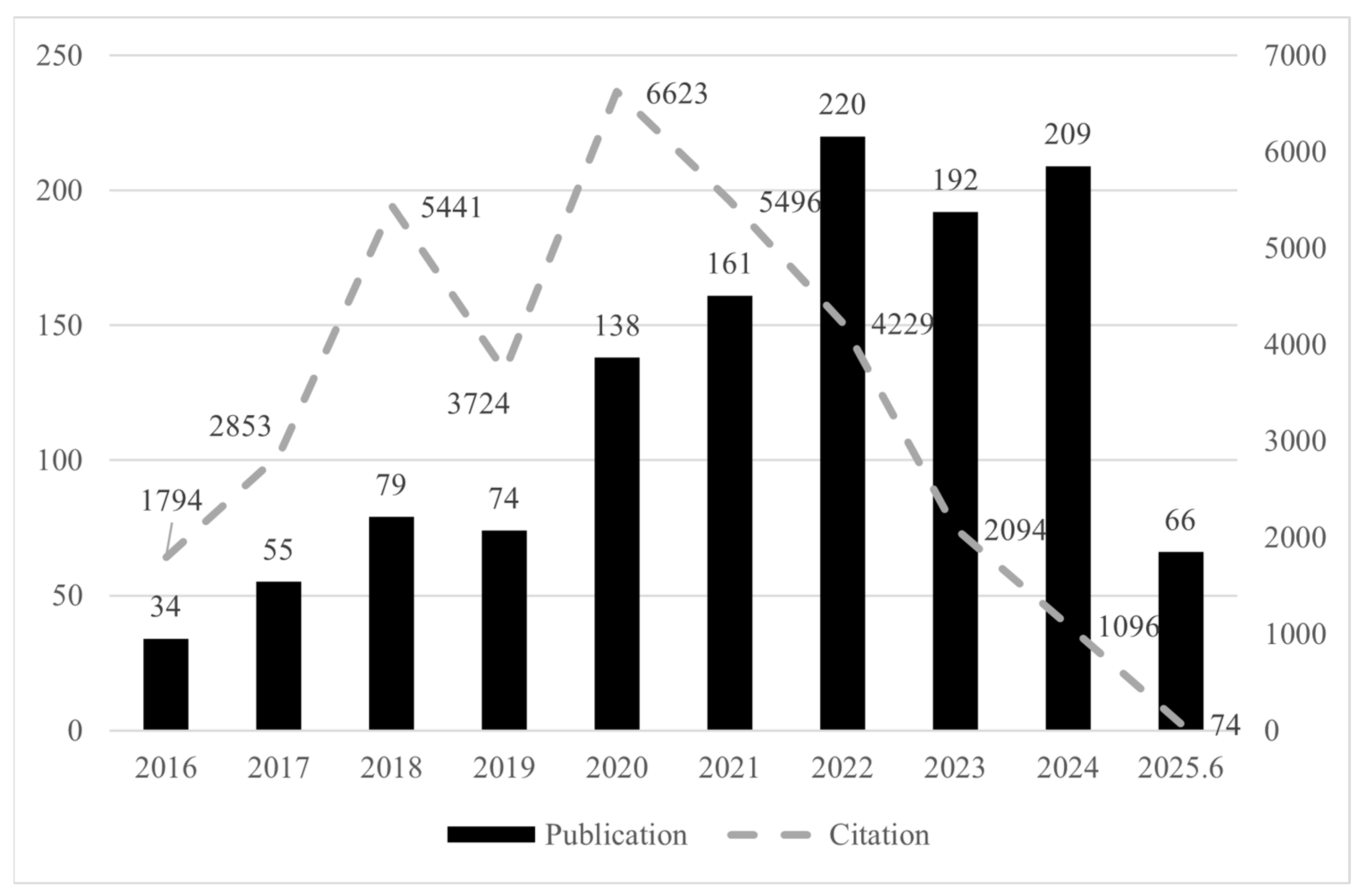
Annual publication counts for the period from 2016 to June 2025 are shown in Figure 1. Since 2016, scholars have increasingly focused on risk management in the global supply chain. A notable surge occurred between 2019 and 2022, likely driven by the pandemic-induced supply chain disruptions, which led to a dramatic rise in publications (peaking at 220 articles in 2022). This growing body of literature reflects significant scholarly attention to international supply chain risk management, solidifying its role as a critical component of industrial safety research.
Figure 1. Annual variations in publications on risk management in the international supply chain.
The substantial global citation count demonstrates the robust development of this research field. In total, 1228 articles were retrieved, which have been cited 33,424 times worldwide, with an average of 27 citations per article. Citations peaked at a record 6623 in 2020 before declining, likely because newly published papers require time to accumulate citations (Figure 1).

3.2. Regional Cooperation Analysis

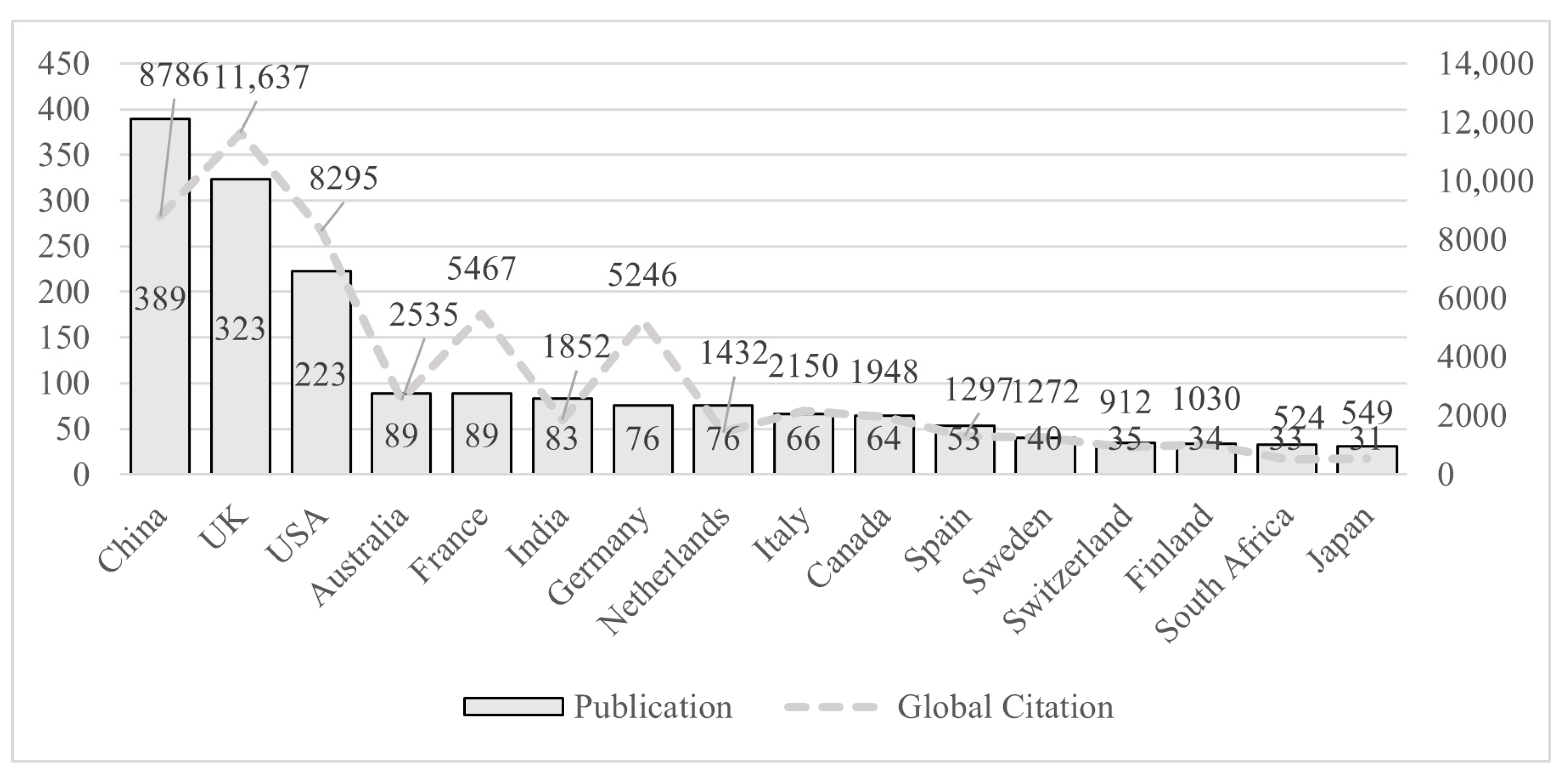
The geographical distribution of scholarly collaboration underscores both the international prominence and the widespread academic engagement in supply chain risk management. In total, 1228 articles originated from 110 distinct countries and regions. As illustrated in Figure 2, the 16 most prolific nations—each contributing at least 30 publications—account for the majority of output and cumulative citation impact. A positive correlation is evident between publication volume and citation performance: countries that publish more articles also accumulate greater total citations. For example, the downtrend is observed in terms of publication and citation volume compared with China (389 and 8786) and Japan (31 and 549), which indicates a same-directional trend of change.
Figure 2. Top 16 most productive countries for paper publication in global range.
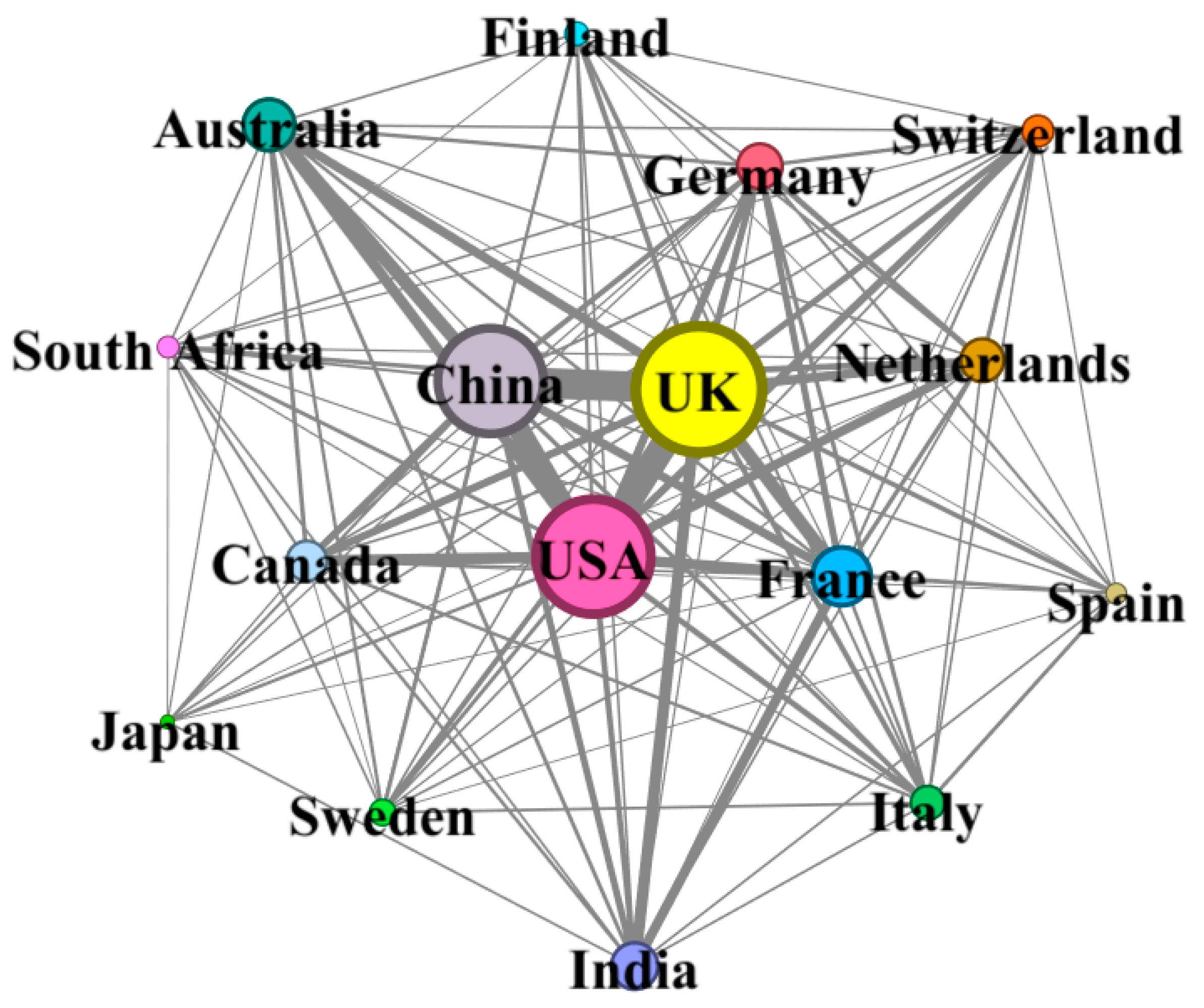
Gephi was further applied to visualize the cooperative relationships among the above 16 countries, as shown in Figure 3. Node sizes and edge thicknesses correspond to the citation relationships between countries [25]. Given their large node sizes and thick edges, the USA, UK, and China were identified as three influential countries with frequent cooperation with other countries, such as Australia, Spain, Sweden, and Canada. China is the only developing country among the leading contributors and active cooperators, as evidenced by its remarkable node size and edge thickness. Given the country’s rapid economic development and growth in international trade over the past several decades, the Chinese government and society have prioritized the resilience of the supply chain system connecting producers and consumers across national boundaries to achieve a sustainable business operation across industries [26].
Figure 3. Countries’ cooperation network on risk management in the international supply chain.

3.3. Influential Contributors Identification

Table 1 presents the top 10 research institutes by publication count and total global citation score (TGCS). The Hong Kong Polytechnic University leads with 53 publications, which have 2832 TGCS. The University of Cambridge follows with 31 publications, which received a significant 2070 TGCS, thereby indicating high impact. Other prominent contributors include the University of Southern Denmark, with 24 publications and 1091 citations, and the University of Sussex, with 24 publications that have 1026 citations. Additional notable institutions include the Polytechnic University of Milan, Tsinghua University, and the University of Groningen.
Table 1. Top 10 productive institutes in the research field.
Table 2 lists the top 10 journals in terms of publication count and citation impact (TGCS) within the field. Sustainability leads with 88 publications, which have accumulated a total of 4785 citations global, thereby reflecting its significant influence. The International Journal of Production Research follows closely with 84 publications and 4689 TGCS, thereby indicating substantial contributions to the literature. Other influential journals include the International Journal of Production Economics (71 publications and 3388 citation score), the International Journal of Operations & Production Management (61 publications and 3144 global citations), and Supply Chain Management—An International Journal (50 publications and 2367 TGCS). Additional journals, such as Energies and Applied Sciences, provide focused insights with fewer than 50 documents but demonstrate varying levels of citation impacts.
Table 2. Top 10 productive journals in the research field.

3.4. Clustering Analysis of Keywords Cooccurrence

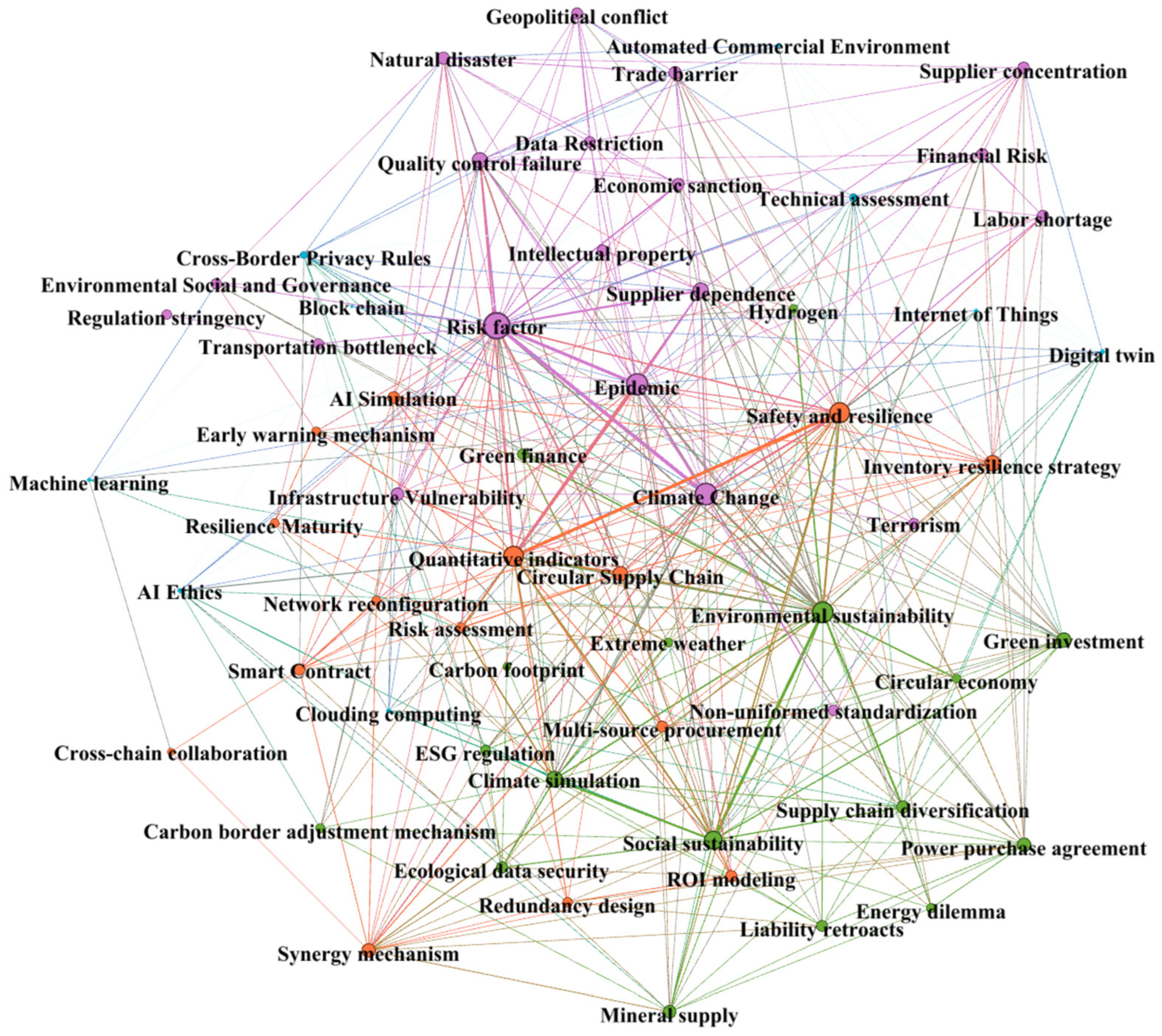
Keyword cooccurrence analysis enables the exploration of inter-study relationships and the detection of emerging research themes. Using Gephi, a network was constructed from the keywords listed in each publication, thereby facilitating visualization of thematic citation linkages. A total of 217 distinct keywords were extracted from the 1228 papers; by applying a minimum cooccurrence threshold of four joint appearances to filter out weak associations, the set was reduced to 62 significant keywords. Clustering analysis was conducted by calculating the quantity of cooccurrence among the keywords to provide a graphical presentation of the knowledge increment and cluster the studies into categories. As depicted in Figure 4, four clusters were generated based on topic proximity related to risk management in global supply chain and distinguished by different colors, namely, pink for cluster 1, green for cluster 2, blue for cluster 3 and orange for cluster 4.
Figure 4. Network visualizations of keywords with clustering classification.
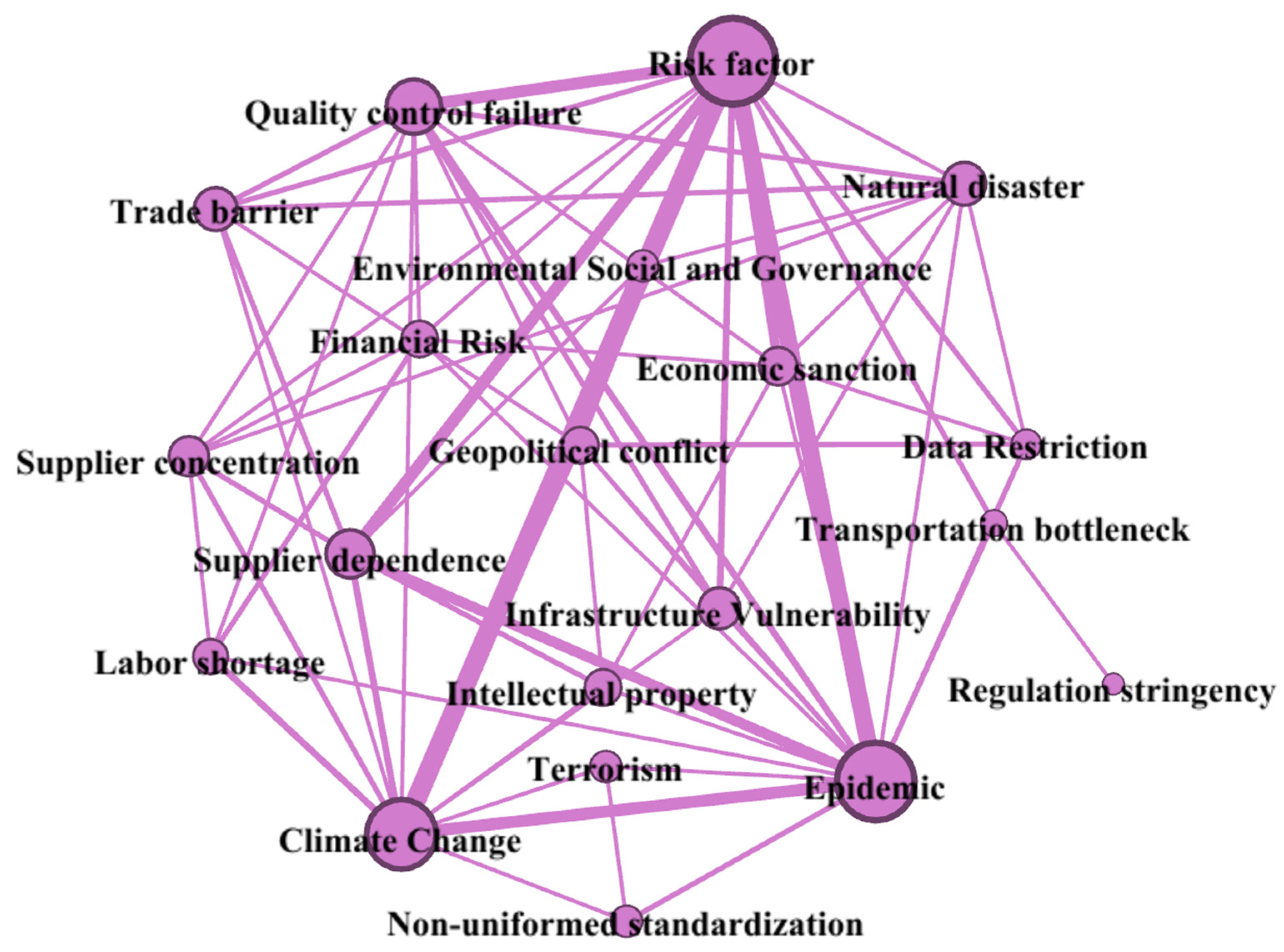
The four clusters are shown in Figure 5, Figure 6, Figure 7 and Figure 8. The rationale and algorithm of clustering were described in Appendix A, and both have been verified by Van Eck and Waltman for the rationality and reliability [20,27].

3.4.1. Recognition of Risk Factors

Cluster 1 in Figure 5 encompasses 21 key themes related to the risk and hazard-related theories in international supply chain management. Previous studies have focused on risk factor identification, such as financial risks, natural disasters, labor shortages, epidemics, and transportation bottlenecks. For instance, the impact of the “Quadruple Whammy,” namely, Brexit, COVID-19, regional conflicts (Russia–Ukraine and Israel–Palestine), and natural disasters, on global supply chains in the food industry was examined [28,29]. In addition, considering the technical development in the framework of Industry 4.0, the risk analytics in the cyber–physical supply chain were conducted, revealing hazard mechanisms related to cybersecurity and intellectual property [30,31]. Furthermore, the identified risk factors within this cluster can be categorized into two groups: (1) traditional hazards concerning labor, various natural disasters, poor financial conditions, the products quality failure and (2) unconventional risk factors arising from the emerging global circumstances and technical developing trends, such as cyberattacks, data restrictions, geopolitical conflicts, economic sanctions, climate change, and epidemics.
Figure 5. Cooccurrence network of author keywords in cluster 1.

3.4.2. Environmental and Social Sustainability

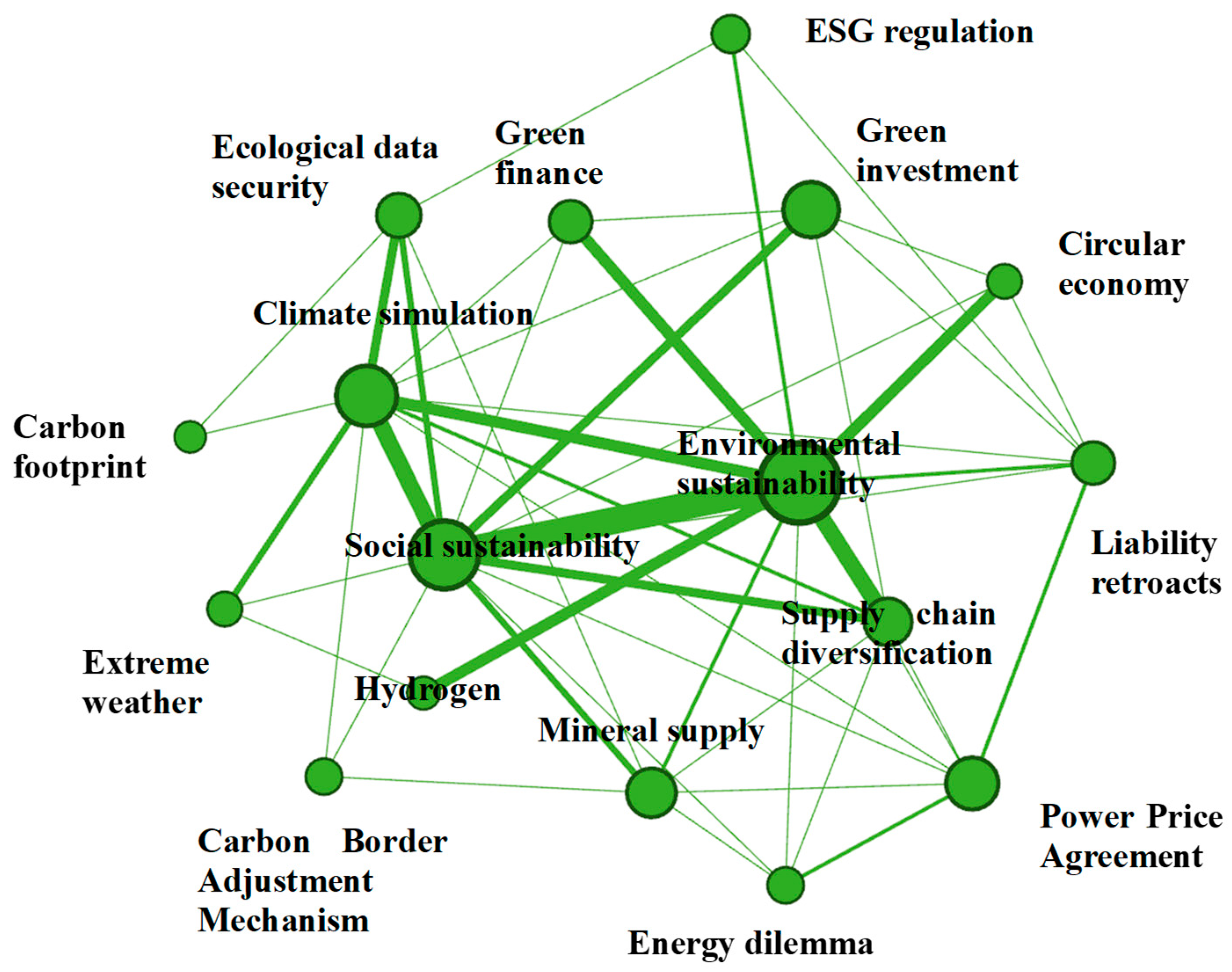
The 17 keywords in cluster 2 (Figure 6) signify a maturation of supply chain risk management, moving beyond purely economic threats to integrate complex environmental and social sustainability challenges. The keywords reveal three interconnected sub-themes. The first is risk quantification and compliance, where frameworks like “ESG regulation” are used to assess risks in specific sectors like the copper industry [32], often complemented by tools for managing a firm’s “carbon footprint” [33]. The second sub-theme is systemic operational transformation, addressing deep-seated issues like the “energy dilemma” through techno-economic analysis of innovations like the green hydrogen supply chain [34]. The third and most forward-looking sub-theme is the focus on data-driven and systemic enablers for GSCM. Here, research explores how internal digital systems, such as Enterprise Resource Planning (ERP), can be enhanced to improve resource planning and firm performance through green supply chain management [35]. This is further advanced by the development of adaptive, cloud-based big data analytics models designed to ensure “ecological data security” and support complex decision-making in sustainable supply chains [36].
Figure 6. Cooccurrence network of author keywords in cluster 2.

3.4.3. Challenges Derived from Technological Boom

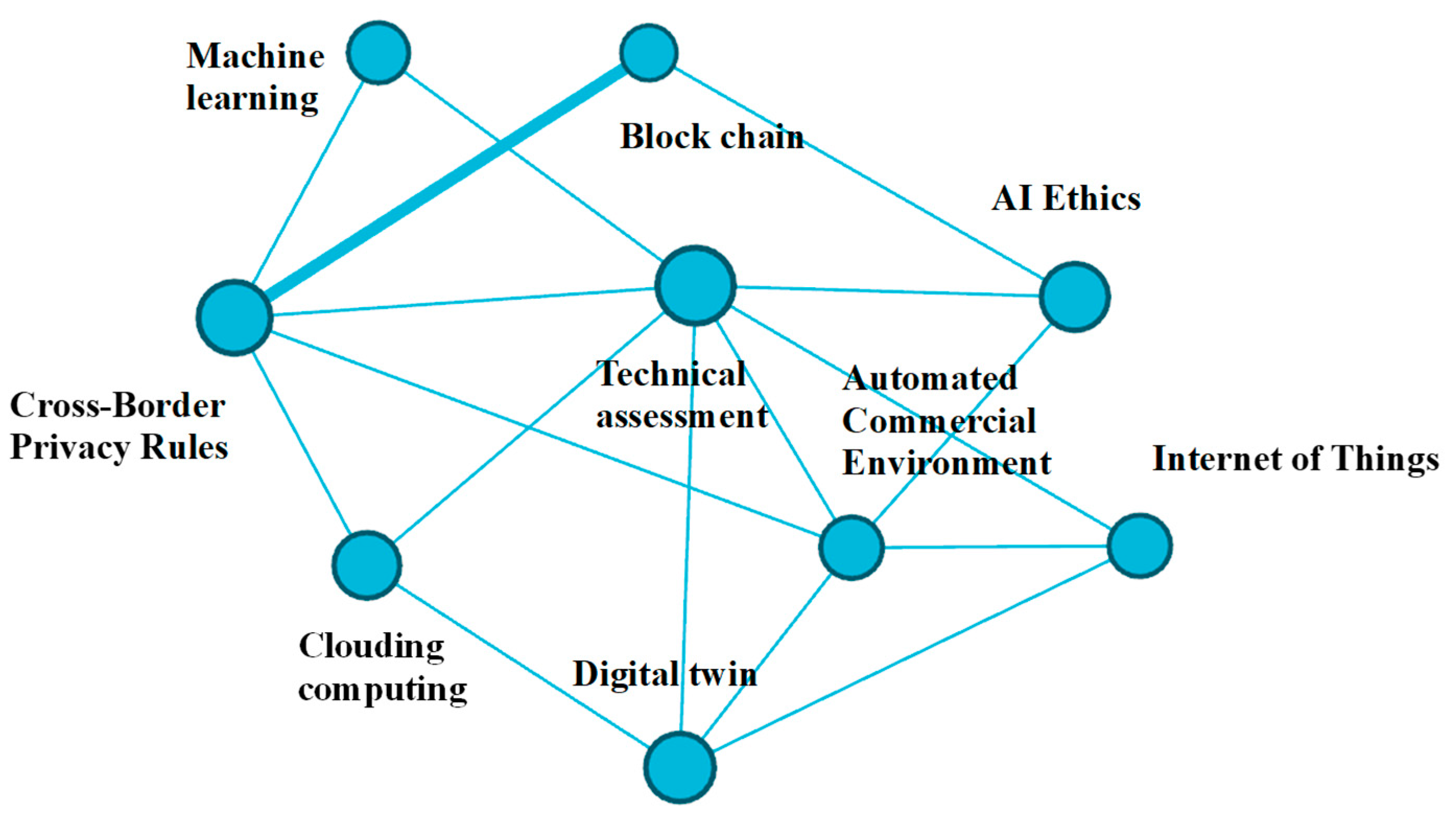
As shown in Figure 7, cluster 3 reveals critical risks that stem not only from external threats but from the inherent complexity of the technologies themselves, raising profound arguments around technical evaluation and ethical governance. The first challenge, technical evaluation, concerns the difficulty of ensuring these complex systems perform as intended. For instance, the integration of the Internet of Things (IoT) creates immense system complexity and data heterogeneity, making it difficult to validate the integrity of data streams from diverse suppliers [37,38]. Hardware tampering, such as malicious chip implantation, represents an extreme form of this risk, where the technology’s foundational reliability is compromised. The second set of challenges revolves around ethical risks and governance. Even when functioning correctly, these technologies introduce new dilemmas. The widespread deployment of cloud-based artificial intelligence (AI) and the digital twin model raises concerns about algorithmic bias, which could lead to discriminatory supplier deselection [39], and the potential for data abuse in transparent systems like the Automated Commercial Environment (A modernized system developed by USA with the aim of tracking, controlling, and processing all imports and exports using data collection and monitoring) [40]. Furthermore, the application of blockchain technology involves significant legal and compliance risks due to varying international data privacy laws and contract regulations [41]. Collectively, these themes highlight a critical gap between technological planning (the intended benefits) and its successful and safe enactment in complex, real-world supply chains, a central challenge for risk management.
Figure 7. Cooccurrence network of author keywords in cluster 3.

3.4.4. Innovative Methods of Risk Management
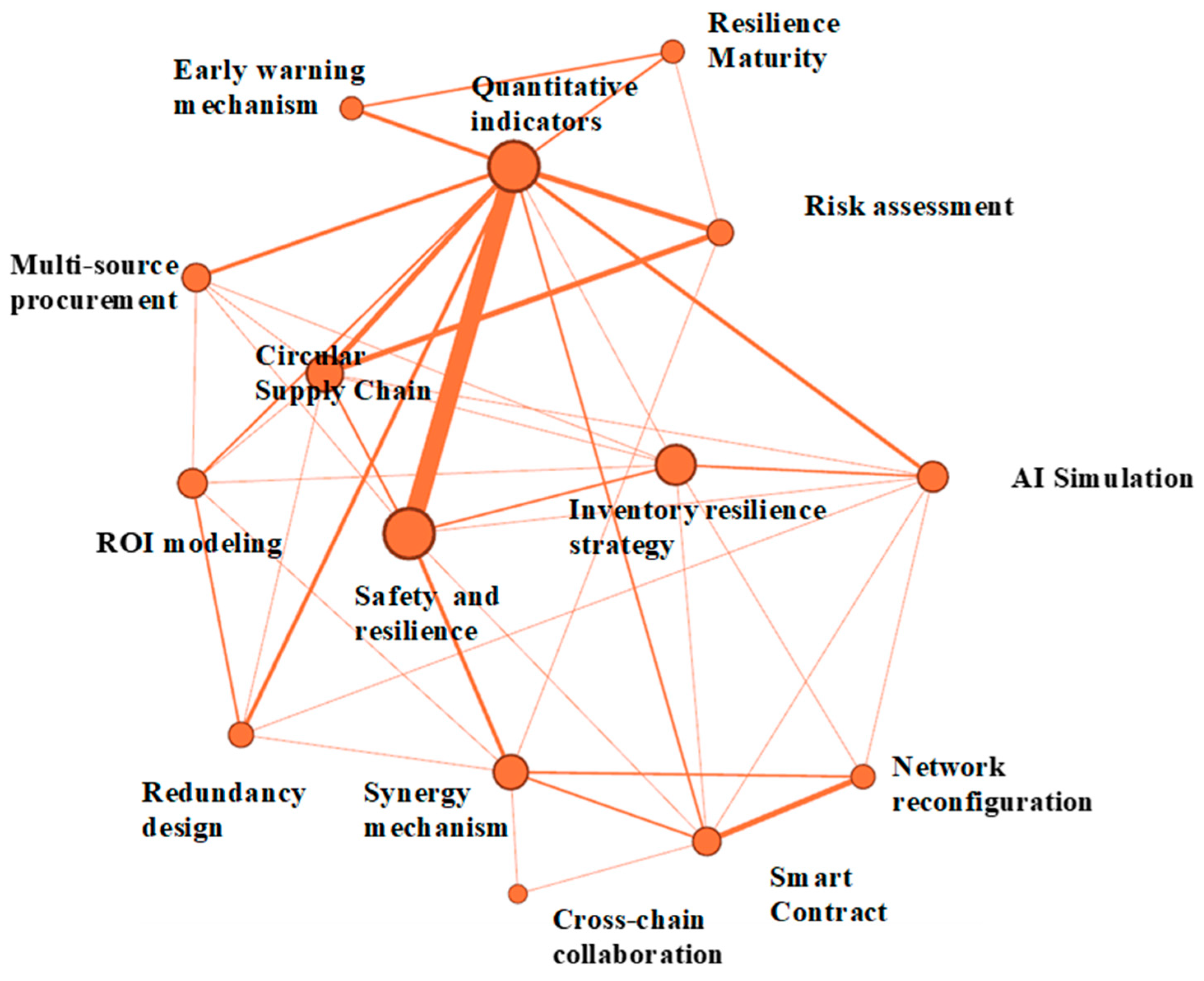
Figure 8 demonstrates that the 15 keywords in cluster 4 are related to methodological innovation in risk management for the international supply chain. Specific indicators were developed to quantitatively assess the levels of risk and resilience maturity within the global supply chain across corresponding industries, such as petrochemicals and building construction [42,43]. Establishing an early warning mechanism may prevent and resolve exogenous risks and ensure supply industry resource security [44,45]. Guercini et al. proposed a network reconfiguration method for the international supply chains considering inventory resilience, redundancy design, and multisource procurement [46]. Under the current trend of digitization, machine learning and AI were applied to predict supply chain fraud, while a blockchain-based system for managing cross-border supply chains with smart contract integration was developed to automate customs clearance and regulatory compliance processes [47,48,49,50].
Figure 8. Cooccurrence network of author keywords in cluster 4.

3.5. Temporal Trend Analysis

To validate the temporal dynamics inferred from keyword analysis, we applied the burstiness detection method to each cluster, extracting the terms with the strongest bursts. The burstiness refers to keywords that appear with high frequency in articles published within a short period of time, indicating the importance and attention rate of the keyword in the research field [22]. High burst-strength terms indicate pronounced short-term growth and often presage the emergence of new research trends. Pajek 64 was adopted to pre-identify key research topics within each cluster by calculating weight using the following equation:
W e i g h t i j = T P i j T S S j
where TPij represents the aggregate of paths in network j, including keyword i, and TSSj represents the sum of paths between the origins and terminuses in network j. A total of 10 terms with highest weight were identified in clusters 1, 2 and 4. For cluster 3, all nine keywords remained. Readers who are interested can refer to [51].
CiteSpace’s burst-detection analysis was further applied to assess the burstiness of identified keywords in each cluster. Table 3 presents keyword burstiness for key research topics in cluster 1. Scholars have focused significantly on risk factor recognition in the international supply chain, as demonstrated by the explosive dominance of the keywords “risk factor” and “quality control failure” from 2016 to 2020. Critical issues and triggering factors were identified in previous studies from 2017 to 2019, namely, “natural disaster,” “climate change”, and “financial risks”. From 2019 to 2021, cybersecurity and data restriction security were primary concerns for scholars. Due to the COVID-19 pandemic, “epidemic” exhibited a high burst between 2020 and 2024. Recently, the term “geopolitical conflicts” (2025) has emerged as a research hotspot due to international trade wars and geopolitical tensions. The analysis demonstrates that recent studies have emphasized non-conventional risk factors, such as cybersecurity, pandemics, and geopolitical conflicts.
Table 3. Burstiness of key research topics in cluster 1.
Table 4 shows the temporal trend for the top 10 research topics in cluster 2. Beginning in 2016, the concept of “environmental and social sustainability” has become crucial, given widespread supply chain vulnerabilities and severe disruptions in the international supply chain. Firms have adopted various environmental and social sustainability practices in recent times to reduce their carbon footprint and improve their image on the social front. As such, they recognize sustainable sourcing as critical for ensuring disruption-free supply chains. Research on “green and circular economy” was highlighted by scholars (2018–2019). The security of ecological data was also identified as important (2019–2020). After 2020, energy consumption challenges became a key issue for cross-border supply chains due to stringent international environmental protection laws. Meanwhile, hydrogen was considered an ideal energy source for global application (2021–2022). With global acceleration toward carbon neutrality, “carbon footprint” (high burstiness in 2023–2024) has recently attracted considerable interest due to the need to comply with ESG regulations in the EU.
Table 4. Burstiness of key research topics in cluster 2.
For cluster 3, Table 5 describes the burstiness for research topics related to the challenges from technological advancement. Previous studies focused on assessing the potential risk from newly emerged technologies in supply chain management beginning in 2016, as evidenced by the “technical assessment” keyword outbreak during this period. Several emerging technologies were examined sequentially due to their potential impact on cross-border supply chains, namely, “artificial intelligence” (2017–2018), “machine learning” (2018–2019), “cloud computing” (2019–2020), “Internet of Things” (2020–2021), “blockchain” (2021–2022), and “digital twin” (2022–2023). The impact of AI on international trade was examined by assessing the effect of AI modeling on accurate security decision-making in the global supply chain. Related research expanded to include cloud computing and machine learning for the optimization of AI modeling. With IoT technology, research after 2020 mainly focused on traceability systems for risk monitoring using IoT and blockchain. After 2023, cross-border privacy became an academic hotspot due to the ACE 2.0 application in the United States. This application may enhance data transparency and visual supervision throughout the entire supply chain network, thereby reducing data abuse risks.
Table 5. Burstiness of key research topics in cluster 3.
Table 6 lists the 10 most important research topics and their burstiness in cluster 4, which focuses on innovative risk management methods for the international supply chain. The improvement of “safety and resilience” has been attracting scholars’ attention since 2016. Subsequently, the research on management innovation in the international supply chain further became an academic hotspot, followed by the application of new methodologies, represented by the keywords “early warning system,” “inventory resilience strategy,” “redundancy design,” and “network reconfiguration” (2019–2021). From 2021 to 2023, “multisource procurement” and “cross-chain collaboration” showed remarkable burstiness. The former reduces dependency on any single source by diversifying the supplier bases, while the latter facilitates information sharing and coordinated supply chain management planning. Smart contracts (exhibiting strong burstiness after 2024) provide secure and transparent mechanisms for automating and enforcing safety agreements, thus enhancing the integrity and reliability of the international supply chain.
Table 6. Burstiness of key research topics in cluster 4.

5. Conclusions

This study was conducted to make a quantitative and systematic review of 1228 journal articles on risk management in international supply chains from 2016 to 2025 and identify the promising research opportunity using scientometric network analysis. The annual developing trend and regional distribution of publications are generated. In addition, the interrelationships among institutions and journals were identified to determine the influential contributors. Keywords co-occurrence and temporal trend analysis were examined to reveal the promising research domains for risk management in the international supply chain.

5.1. Theoretical and Practical Implications

The innovation and significance of the study were reflected by its theoretical and practical implications. For its theoretical implications, this study contributed to the knowledge development of risk management of international supply chains through quantitative methodology. Four main research areas were distinguished, which can represent the dominant, emergent themes identified through the analysis: (1) recognition of risk factors, (2) environmental and social sustainability, (3) challenges derived from technological booming, and (4) innovative methods of risk management. Importantly, the analysis reveals the emerging complexity of managing supply chains in an era where sustainability and resilience objectives must be pursued simultaneously, often creating tensions that require strategic navigation and innovative solutions. The scientometric analysis offered insights into the future implications of research directions that could benefit academics and industry practitioners in enhancing risk management in the international supply chain.
This study makes a significant contribution to understanding the evolving landscape where supply chain managers must navigate the complexity of achieving both sustainability and resilience objectives. The identified clusters demonstrate that modern supply chain risk management cannot be understood in isolation from environmental, social, and technological considerations. The temporal analysis reveals how external shocks, such as the COVID-19 pandemic and geopolitical conflicts, have accelerated the recognition that sustainable practices and resilient capabilities are not separate objectives but interconnected elements of comprehensive risk management strategies.
To delineate future research avenues in supply chain management, this study proposes several key insights for scholars, which are of importance for orienting further research on supply chain management. The findings particularly highlight the need for research that addresses the paradoxes and trade-offs inherent in pursuing dual sustainability-resilience objectives, as well as the opportunities for developing synergistic approaches that advance both goals simultaneously. Further research directions were proposed in terms of four aspects: (1) synergies and trade-offs in digital transformation for sustainable-resilient supply chains, (2) integrating ESG strategies with supply chain risk management for enhanced resilience, (3) managing paradoxes in sustainable-resilient supply chain design under unconventional risks, and (4) policy and regulatory frameworks for navigating sustainability-resilience complexity in global trade.
For practitioners, this study provides a roadmap for understanding how different risk factors, technological innovations, and management approaches can be leveraged to build supply chains that are both environmentally responsible and operationally robust. The identified research clusters offer practical guidance for organizations seeking to develop integrated strategies that address sustainability requirements while maintaining the flexibility and redundancy necessary for resilience against disruptions. In addition, the findings prompt the government to improve relevant laws and regulations (such as environmental protection laws, green supply chain standards), establish a clearer policy framework and incentive measures, and guide the transformation and upgrading of industries.

5.2. Limitations and Future Research

Despite its contributions, this study has certain limitations. The citation network analysis did not distinguish negative citations, although prior research indicates their impact on overall citation metrics is minimal [77,78]. Second, by limiting the review to English-language journal articles indexed in Google Scholar, Scopus, and Web of Science, recent publications in other languages or hosted on alternative databases may have been overlooked. Furthermore, there may be some exclusions of research topics and keywords in this study due to the synonymous terms of search string during paper collection. Further study is recommended to expand the search range of databases and keywords when collecting studies. Additionally, the potential for author bias in the qualitative interpretation of clusters and future directions should be noted, and the study does not empirically validate the relationships between sustainability and resilience identified in the literature, nor does it quantify the magnitude of trade-offs or synergies between these objectives.
Future research should build upon these findings by conducting empirical studies that test the theoretical relationships identified in this bibliometric analysis. Specifically, researchers should investigate the conditions under which sustainability and resilience objectives are mutually reinforcing versus competing and develop quantitative models that can guide practitioners in optimizing the balance between these dual imperatives. Furthermore, longitudinal case studies examining how organizations navigate the complexity of pursuing both sustainability and resilience over time would provide valuable insights for theory and practice.

Author Contributions

Conceptualization, X.M. and C.Z.; methodology, X.M.; software, K.-P.W.; validation, C.Z. and T.Q.; formal analysis, X.M.; investigation, X.M.; resources, T.Q.; data curation, X.M.; writing—original draft preparation, X.M.; writing—review and editing, C.Z. and K.-P.W.; visualization, X.M. and K.-P.W.; supervision, C.Z. and T.Q.; project administration, X.M.; funding acquisition, X.M. All authors have read and agreed to the published version of the manuscript.

Funding

This research was funded by the Fundamental Research Fund (512025Y-12522).

Institutional Review Board Statement

Not applicable.

Data Availability Statement

No new data were created or analyzed in this study. Data sharing is not applicable to this article.

Conflicts of Interest

The authors declare no conflicts of interest.

Abbreviations

The following abbreviations are used in this manuscript:
ACEAutomated Commercial Environment
CBAMCarbon Border Adjustment Mechanism
ESGEnvironmental, Social and Governance
CBPRCross-Border Privacy Rules

Appendix A

After inputting the bibliographic data into Gephi, a similarity matrix was constructed through algorithmic measurement of similarity among publications, which aimed to construct a 2D map by positioning n papers located as nodes based on their similarity S, which can be calculated as follows:
S i j = 2 m c i j w i w j
where c i j represents the quantity of links (e.g., cooccurrence and cocitation links) between nodes i and j. w j and w i denote the aggregates of links of nodes j and i, respectively. m refers to the sum of links in the network.
The clustering principle requires finding a positive integer xi for each node i that indicates the cluster where node i belongs. This approach is based on equation maximization expressed as
V X 1 , X 2 , X 3 , X n = 1 2 m i < j δ x i , x j w i j ( c i j γ w i w j 2 m )
where δ x i , x j is 1 when x i = x j . Otherwise, δ x i , x j is 0. wij can be calculated by using the equation below. Meanwhile, m refers to the sum of links in the network.
w i j = 2 m w i w j
Readers who are interested in the theoretical details of the algorithm can refer to Waltman et al. [20].

References

  1. Muhammad Yusuf, A.; Soediantono, D. Supply Chain Management and Recommendations for Implementation in the Defense Industry: A Literature Review. Int. J. Soc. Manag. Stud. 2022, 3, 63–77. [Google Scholar]
  2. Kwak, D.-W.; Sanchez-Rodrigues, V.; Mason, R.; Pettit, S.; Beresford, A. Risk Interaction Identification in International Supply Chain Logistics: Developing a Holistic Model. Int. J. Oper. Prod. Manag. 2018, 38, 372–389. [Google Scholar] [CrossRef]
  3. Grossman, G.M.; Helpman, E.; Lhuillier, H. Supply Chain Resilience: Should Policy Promote Diversification or Reshoring? J. Polit. Econ. 2021, 131, 12. [Google Scholar]
  4. Orlando, B.; Tortora, D.; Pezzi, A.; Bitbol-Saba, N. The Disruption of the International Supply Chain: Firm Resilience and Knowledge Preparedness to Tackle the COVID-19 Outbreak. J. Int. Manag. 2020, 28, 100876. [Google Scholar] [CrossRef]
  5. Puzzello, L.; Raschky, P. Global supply chains and natural disasters: Implications for international trade. In Asia and Global Production Networks; Edward Elgar Publishing: Cheltenham, UK, 2014; pp. 112–147. [Google Scholar]
  6. Chopra, S.; Sodhi, M. Reducing the risk of supply chain disruptions. MIT Sloan Manag. Rev. 2014, 55, 73–80. [Google Scholar]
  7. Melnyk, S.A.; Schoenherr, T.; Speier-Pero, C.; Peters, C.; Chang, J.F.; Friday, D. New challenges in supply chain management: Cybersecurity across the supply chain. Int. J. Prod. Res. 2022, 60, 162–183. [Google Scholar] [CrossRef]
  8. Kwak, D.W.; Seo, Y.J.; Mason, R. Investigating the relationship between supply chain innovation, risk management capabilities and competitive advantage in global supply chains. Int. J. Oper. Prod. Manag. 2018, 38, 2–21. [Google Scholar] [CrossRef]
  9. Um, J.; Han, N. Understanding the relationships between global supply chain risk and supply chain resilience: The role of mitigating strategies. Supply Chain Manag. Int. J. 2021, 26, 240–255. [Google Scholar] [CrossRef]
  10. Baldwin, R.; Freeman, R. Risks and global supply chains: What we know and what we need to know. Annu. Rev. Econ. 2022, 14, 153–180. [Google Scholar] [CrossRef]
  11. Pournader, M.; Kach, A.; Talluri, S. A review of the existing and emerging topics in the supply chain risk management literature. Decis. Sci. 2020, 51, 867–919. [Google Scholar] [CrossRef] [PubMed]
  12. Koberg, E.; Longoni, A. A systematic review of sustainable supply chain management in global supply chains. J. Clean. Prod. 2019, 207, 1084–1098. [Google Scholar] [CrossRef]
  13. Gereffi, G.; Lee, J. Why the world suddenly cares about global supply chains. J. Supply Chain Manag. 2012, 48, 24–32. [Google Scholar] [CrossRef]
  14. Gurtu, A.; Johny, J. Supply chain risk management: Literature review. Risks 2021, 9, 16. [Google Scholar] [CrossRef]
  15. Fan, Y.; Stevenson, M. A review of supply chain risk management: Definition, theory, and research agenda. Int. J. Phys. Distrib. Logist. Manag. 2018, 48, 205–230. [Google Scholar] [CrossRef]
  16. Kano, L.; Tsang, E.W.K.; Yeung, H.W. Global value chains: A review of the multi-disciplinary literature. J. Int. Bus. Stud. 2020, 51, 577–622. [Google Scholar] [CrossRef]
  17. McLaren, C.D.; Bruner, M.W. Citation network analysis. Int. Rev. Sport Exerc. Psychol. 2022, 15, 179–198. [Google Scholar] [CrossRef]
  18. Wilding, R.; Wagner, B.; Colicchia, C.; Strozzi, F. Supply chain risk management: A new methodology for a systematic literature review. Supply Chain Manag. 2012, 17, 403–418. [Google Scholar] [CrossRef]
  19. Butler, L.; Visser, M.S. Extending citation analysis to non-source items. Scientometrics 2006, 66, 327–343. [Google Scholar] [CrossRef]
  20. Waltman, L.; Van Eck, N.J.; Noyons, E.C.M. A unified approach to mapping and clustering of bibliometric networks. J. Informetr. 2010, 4, 629–635. [Google Scholar] [CrossRef]
  21. Bastian, M.; Heymann, S.; Jacomy, M. Gephi: An open source software for exploring and manipulating networks. In Proceedings of the International AAAI Conference on Web and Social Media, San Jose, CA, USA; 2009; Volume 3, pp. 361–362. [Google Scholar]
  22. Chen, C. CiteSpace II: Detecting and visualizing emerging trends and transient patterns in scientific literature. J. Am. Soc. Inf. Sci. Technol. 2006, 57, 359–377. [Google Scholar] [CrossRef]
  23. Esen, M.; Bellibas, M.S.; Gumus, S. The evolution of leadership research in higher education for two decades (1995–2014): A bibliometric and content analysis. Int. J. Leadersh. Educ. 2020, 23, 259–273. [Google Scholar] [CrossRef]
  24. Jia, S.; Bava Harji, M. Themes, knowledge evolution, and emerging trends in task-based teaching and learning: A scientometric analysis in CiteSpace. Educ. Inf. Technol. 2023, 28, 9783–9802. [Google Scholar] [CrossRef]
  25. Prell, C. Social Network Analysis: History, Theory and Methodology; Sage: Thousand Oaks, CA, USA, 2012. [Google Scholar]
  26. Thürer, M.; Tomašević, I.; Stevenson, M.; Qu, T.; Huisingh, D. A systematic review of China’s belt and road initiative: Implications for global supply chain management. Int. J. Prod. Res. 2020, 58, 2436–2453. [Google Scholar] [CrossRef]
  27. Arruda, H.; Silva, E.R.; Lessa, M.; Proença, D.; Bartholo, R. VOSviewer and bibliometrix. J. Med. Libr. Assoc. 2022, 110, 392. [Google Scholar] [CrossRef]
  28. Jagtap, S.; Trollman, H.; Trollman, F.; Garcia-Garcia, G.; Parra-López, C.; Duong, L.; Martindale, W.; Munekata, P.E.S.; Lorenzo, J.M.; Hdaifeh, A.; et al. Surviving the storm: Navigating the quadruple whammy impact on Europe’s food supply chain. Int. J. Food Sci. Technol. 2024, 59, 3652–3666. [Google Scholar] [CrossRef]
  29. Meier, M.; Pinto, E. Covid-19 supply chain disruptions. Covid Econ. 2020, 48, 139–170. [Google Scholar] [CrossRef]
  30. Ivanov, D.; Dolgui, A.; Sokolov, B.; Werner, F.; Ivanova, M. Intellectualization of control: Cyber-physical supply chain risk analytics. IFAC PapersOnLine 2019, 52, 355–360. [Google Scholar] [CrossRef]
  31. Ivanov, D.; Sethi, S.; Dolgui, A.; Sokolov, B. A survey on control theory applications to operational systems, supply chain management, and Industry 4.0. Annu. Rev. Control 2018, 46, 134–147. [Google Scholar] [CrossRef]
  32. Anani, A.; Adewuyi, S.O.; Gonzales, C.G. Sustainable copper supply chains: Evaluating ESG risks through the lens of regulatory compliance and risk assessment strategies. Extr. Ind. Soc. 2025, 23, 101662. [Google Scholar] [CrossRef]
  33. Ghosh, P.; Jha, A.; Sharma, R.R.K. Managing carbon footprint for a sustainable supply chain: A systematic literature review. Mod. Supply Chain Res. Appl. 2020, 2, 123–141. [Google Scholar] [CrossRef]
  34. Kim, S.; Park, J.; Chung, W.; Bang, S.; Lee, D. Techno-economic analysis for design and management of international green hydrogen supply chain under uncertainty: An integrated temporal planning approach. Energy Convers. Manag. 2024, 301, 118010. [Google Scholar] [CrossRef]
  35. Tarigan, Z.J.H.; Siagian, H.; Jie, F. Impact of enhanced Enterprise Resource Planning (ERP) on firm performance through green supply chain management. Sustainability 2021, 13, 4358. [Google Scholar] [CrossRef]
  36. Roy, S.; Paul, A.; Paul, A.; Majumder, K. Ranking barriers of supply chain management by MCDM method during disaster management: A case study of India. Int. J. Syst. Dyn. Appl. 2021, 10, 1–16. [Google Scholar] [CrossRef]
  37. Stefanovic, N.; Radenkovic, M.; Bogdanovic, Z.; Lalic, B.; Despotovic-Zrakic, M. Adaptive Cloud-Based Big Data Analytics Model for Sustainable Supply Chain Management. Sustainability 2025, 17, 354. [Google Scholar] [CrossRef]
  38. Kumar, P.; Singh, R.K. Application of Industry 4.0 technologies for effective coordination in humanitarian supply chains: A strategic approach. Ann. Oper. Res. 2022, 319, 379–411. [Google Scholar] [CrossRef]
  39. Onder, M.P.; Pederson, J.T. International data exchange solutions for transport logistics. In ITS for Freight Logistics; The Institution of Engineering and Technology: London, UK, 2022. [Google Scholar] [CrossRef]
  40. Shapiro, B. Multimodal freight transportation security in the United States. In Multimodal Transport Security: Frameworks, Policy Applications for Freight and Passenger Transport; Edward Elgar Publishing: Cheltenham, UK, 2016; p. 83. [Google Scholar]
  41. Chang, Y.; Iakovou, E.; Shi, W. Blockchain in global supply chains and cross border trade: A critical synthesis of the state-of-the-art, challenges and opportunities. Int. J. Prod. Res. 2020, 58, 2082–2099. [Google Scholar] [CrossRef]
  42. Helbig, C.; Gemechu, E.D.; Pillain, B.; Young, S.B.; Thorenz, A.; Tuma, A. Extending the geopolitical supply risk indicator: Application of life cycle sustainability assessment to the petrochemical supply chain of polyacrylonitrile-based carbon fibers. J. Clean. Prod. 2016, 137, 1170–1178. [Google Scholar] [CrossRef]
  43. Baryannis, G.; Validi, S.; Dani, S.; Antoniou, G. Supply chain risk management and artificial intelligence: State of the art and future research directions. Int. J. Prod. Res. 2019, 57, 2179–2202. [Google Scholar] [CrossRef]
  44. Nagy, J.; Foltin, P. Increase supply chain resilience by applying early warning signals within big-data analysis. Ekon. Vjesn. Contemp. Business Entrep. Econ. Issues 2022, 35, 467–481. [Google Scholar] [CrossRef]
  45. Ju, C.; Trinh, T.K. A Machine Learning Approach to Supply Chain Vulnerability Early Warning System: Evidence from US Semiconductor Industry. J. Adv. Comput. Syst. 2023, 3, 21–35. [Google Scholar] [CrossRef]
  46. Guercini, S.; Perna, A.; Runfola, A.; Guercini, G. A network perspective on supply chain management in the structural reshaping of globalization. J. Bus. Ind. Mark. 2025, 40, 834–840. [Google Scholar] [CrossRef]
  47. Han, S.; Xiaoxue, W.; Xiaohui, Y.; Yongzhang, Z. Assessment of key metals supply risk in China’s strategic emerging industries. Resour. Sci. 2024, 46, 2124–2136. [Google Scholar] [CrossRef]
  48. Lokanan, M.E.; Maddhesia, V. Supply chain fraud prediction with machine learning and artificial intelligence. Int. J. Prod. Res. 2025, 63, 286–313. [Google Scholar] [CrossRef]
  49. Khan, R.S.; Sirazy, M.R.M.; Das, R.; Sheikh, A.A. An ai and ml-enabled framework for proactive risk mitigation and resilience optimization in global supply chains during national emergencies. Sage Sci. Rev. Appl. Mach. Learn. 2022, 5, 127–144. [Google Scholar]
  50. Mittal, U.; Panchal, D. AI-based evaluation system for supply chain vulnerabilities and resilience amidst external shocks: An empirical approach. Rep. Mech. Eng. 2023, 4, 276–289. [Google Scholar] [CrossRef]
  51. De Nooy, W.; Mrvar, A.; Batagelj, V. Exploratory Social Network Analysis with Pajek; Cambridge University Press: Cambridge, UK, 2005. [Google Scholar]
  52. Agostini, L.; Galati, F.; Gastaldi, L. The digitalization of the innovation process: Challenges and opportunities from a management perspective. Eur. J. Innov. Manag. 2020, 23, 1–12. [Google Scholar] [CrossRef]
  53. Rachinger, M.; Rauter, R.; Müller, C.; Vorraber, W.; Schirgi, E. Digitalization and its influence on business model innovation. J. Manuf. Technol. Manag. 2019, 30, 1143–1160. [Google Scholar] [CrossRef]
  54. Gaivoronskaya, Y.V.; Mamychev, A.Y.; Petrova, D.A.; Yakushev, A.N. Typology of Risks and Threats Caused by Digitalization. Rev. Tur. Estud. Práticas 2020, 5, 1–12. [Google Scholar]
  55. Fruhwirth, M.; Pammer-Schindler, V.; Thalmann, S. Knowledge Leaks in Data-Driven Business Models? Exploring Different Types of Knowledge Risks and Protection Measures. Schmalenbach J. Bus. Res. 2024, 76, 357–396. [Google Scholar] [CrossRef]
  56. Sunmola, F.; Baryannis, G.; Tan, A.; Co, K.; Papadakis, E. Holistic Framework for Blockchain-Based Halal Compliance in Supply Chains Enabled by Artificial Intelligence. Systems 2025, 13, 21. [Google Scholar] [CrossRef]
  57. Lingam, Y.K. The role of Artificial Intelligence (AI) in making accurate stock decisions in E-commerce industry. Int. J. Adv. Res. Ideas Innov. Technol. 2018, 4, 2281–2286. [Google Scholar]
  58. Adobor, H.; McMullen, R.S. Supply chain resilience: A dynamic and multidimensional approach. Int. J. Logist. Manag. 2018, 29, 1451–1471. [Google Scholar] [CrossRef]
  59. Lee, H.L.; Rammohan, S.V. Improving social and environmental performance in global supply chains. In Sustainable Supply Chains: A Research-Based Textbook on Operations and Strategy; Springer International Publishing: Cham, Switzerland, 2016; pp. 439–464. [Google Scholar]
  60. Gazzola, P.; Sepashvili, E.; Pezzetti, R. How sustainable enterprises can drive the sustainable development. Eur. Sci. J. 2018, 26–36. [Google Scholar] [CrossRef]
  61. Dauvergne, P.; Lister, J. Big brand sustainability: Governance prospects and environmental limits. Glob. Environ. Change 2012, 22, 36–45. [Google Scholar] [CrossRef]
  62. Ali, R.F.; Jahankhani, H.; Ali, K.; Hassan, B. Blockchain-Based Security Factors on Sustainable Supply Chain Management in UK Manufacturing Firms: A Hybrid SEM-ANN Approach. Systems 2024, 12, 208. [Google Scholar] [CrossRef]
  63. Gouda, S.K.; Saranga, H. Sustainable supply chains for supply chain sustainability: Impact of sustainability efforts on supply chain risk. Int. J. Prod. Res. 2018, 56, 5820–5835. [Google Scholar] [CrossRef]
  64. Farooque, M.; Zhang, A.; Thürer, M.; Qu, T.; Huisingh, D. Circular supply chain management: A definition and structured literature review. J. Clean. Prod. 2019, 228, 882–900. [Google Scholar] [CrossRef]
  65. Veenstra, A.W. International trade, global supply chains and compliance. In Operations, Logistics and Supply Chain Management; Springer International Publishing: Cham, Switzerland, 2018; pp. 131–161. [Google Scholar]
  66. Kim, S.; Kim, C. Enhancing Logistics Performance through Increased Trust and Collaboration in Supply Chain Risk Management: A Focus on the Distribution Network of Manufacturing Companies. Systems 2024, 12, 141. [Google Scholar] [CrossRef]
  67. Chu, C.Y.; Park, K.; Kremer, G.E. A global supply chain risk management framework: An application of text-mining to identify region-specific supply chain risks. Adv. Eng. Inform. 2020, 45, 101053. [Google Scholar] [CrossRef]
  68. Varzandeh, J.; Farahbod, K.; Jake Zhu, J. Global Logistics and Supply Chain Risk Management. J. Bus. Behav. Sci. 2016, 28, 124–130. [Google Scholar]
  69. Ghadge, A.; Jena, S.K.; Kamble, S.; Misra, D.; Tiwari, M.K. Impact of financial risk on supply chains: A manufacturer-supplier relational perspective. Int. J. Prod. Res. 2021, 59, 7090–7105. [Google Scholar] [CrossRef]
  70. Ivanov, D.; Das, A. Coronavirus (COVID-19/SARS-CoV-2) and supply chain resilience: A research note. Int. J. Integr. Supply Manag. 2020, 13, 90–102. [Google Scholar] [CrossRef]
  71. Manners-Bell, J. Supply Chain Risk Management: Understanding Emerging Threats to Global Supply Chains; Kogan Page Publishers: London, UK, 2017. [Google Scholar]
  72. Oh, J.; Choi, Y.; In, J. A conceptual framework for designing blockchain technology enabled supply chains. Int. J. Logist. Res. Appl. 2023, 26, 1315–1333. [Google Scholar] [CrossRef]
  73. Zahoor, N.; Wu, J.; Khan, H.; Kleyn, D.; Rana, S. De-globalization, international trade protectionism, and the reconfigurations of global value chains. Manag. Int. Rev. 2023, 63, 823–859. [Google Scholar] [CrossRef]
  74. Kazancoglu, Y.; Lafci, C.; Berberoglu, Y.; Demir, B.; Kaya, S.K. The effects of globalization on supply chain resilience: Outsourcing techniques as interventionism, protectionism, and regionalization strategies. Oper. Manag. Res. 2024, 17, 505–522. [Google Scholar] [CrossRef]
  75. Hao, X. Import competition and pressure in the international crude oil trade: A network analysis. Resour. Policy 2023, 82, 103468. [Google Scholar] [CrossRef]
  76. Dong, L.; Kouvelis, P. Impact of tariffs on global supply chain network configuration: Models, predictions, and future research. Manuf. Serv. Oper. Manag. 2020, 22, 25–35. [Google Scholar] [CrossRef]
  77. Garfield, E. Is citation analysis a legitimate evaluation tool? Scientometrics 1979, 1, 359–375. [Google Scholar] [CrossRef]
  78. Pilkington, A.; Meredith, J. The evolution of the intellectual structure of operations management—1980–2006: A citation/co-citation analysis. J. Oper. Manag. 2009, 27, 185–202. [Google Scholar] [CrossRef]
Disclaimer/Publisher’s Note: The statements, opinions and data contained in all publications are solely those of the individual author(s) and contributor(s) and not of MDPI and/or the editor(s). MDPI and/or the editor(s) disclaim responsibility for any injury to people or property resulting from any ideas, methods, instructions or products referred to in the content.

Article Metrics

Citations

Article Access Statistics

Multiple requests from the same IP address are counted as one view.